
Teardrop Banner
Teardrop banner with large printing area. Professionally upgraded with carbon composite poles, lightweight and easy to install. Equipped with metal rings, carry bag and bases for multi-scene .


 Article
 Specifications
- Origin
- Shandong, China
- Brand
- WZRODS
- Item Code
- FB18/FB22/FB35/FB48/FB56
- Flag Fabric
- Nylon
- Application Spec
- Trade Shows, Outdoor Events, Sports Events, Retail Promotion
- Logo Service
- Customize design
- Target User
- Agriculture, Automotive, Barber Shop, Salon & Spa, Financial Institutions, Hotel and Resort, Insurance, Nonprofit Organizations, Real Estate/Construction, Travel Agency,
- Pole Material
- Carbon Composite
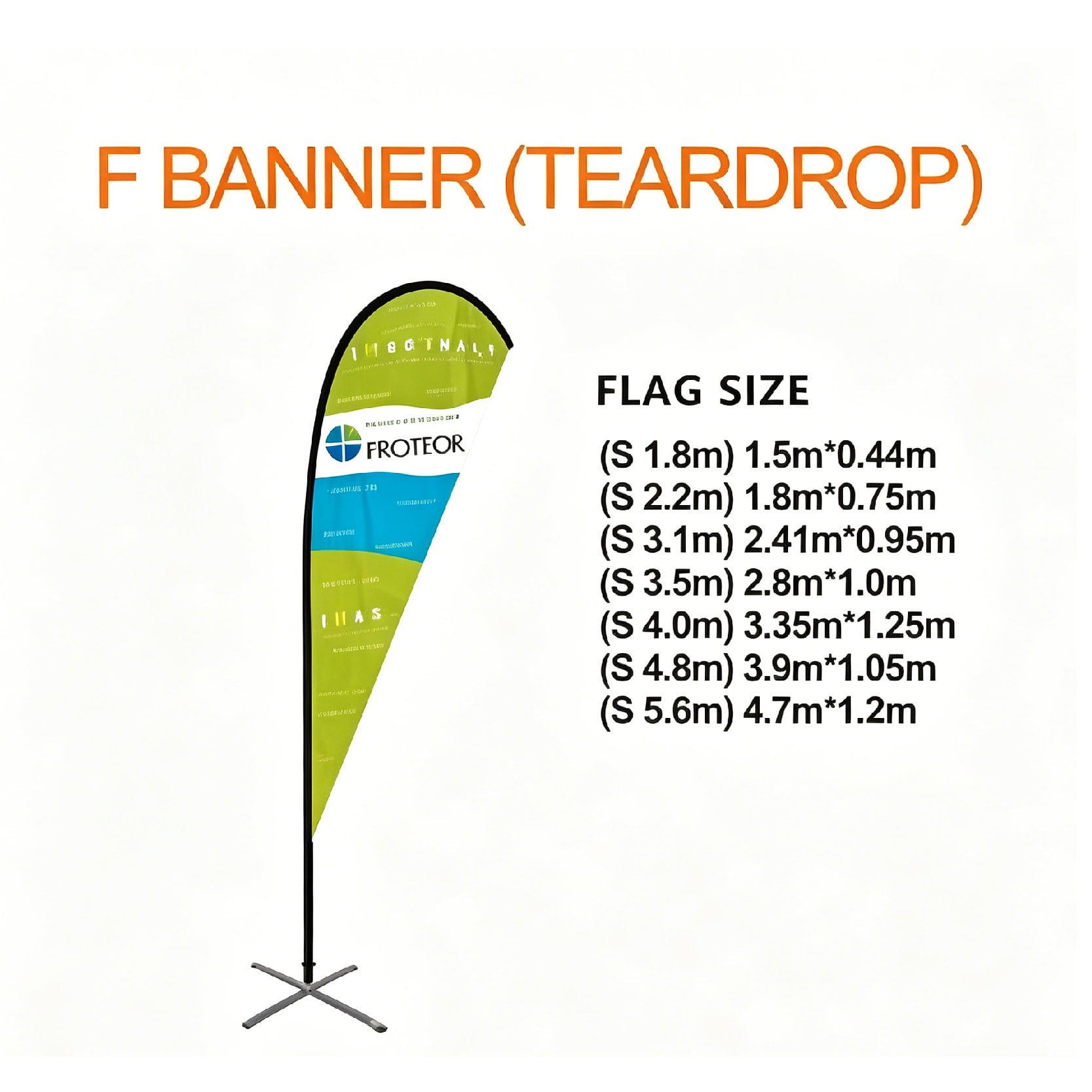
- F2.2M Size
- 1.85*0.75M
- F3.5M Size
- 2.8*1M
- F4.8M Size
- 3.9*1.05M
- Pole Design
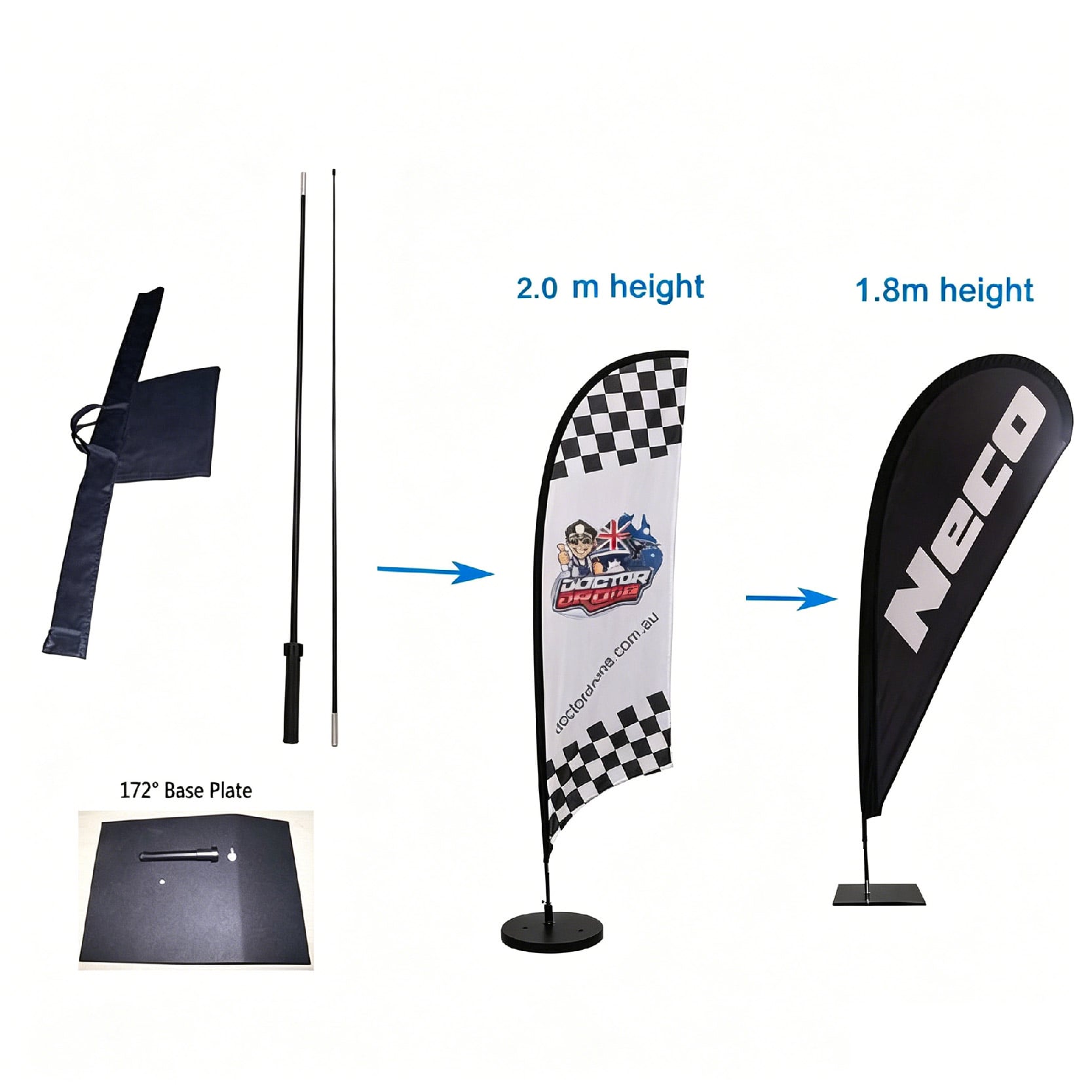
- Plug-in Assembly Design
- Packing
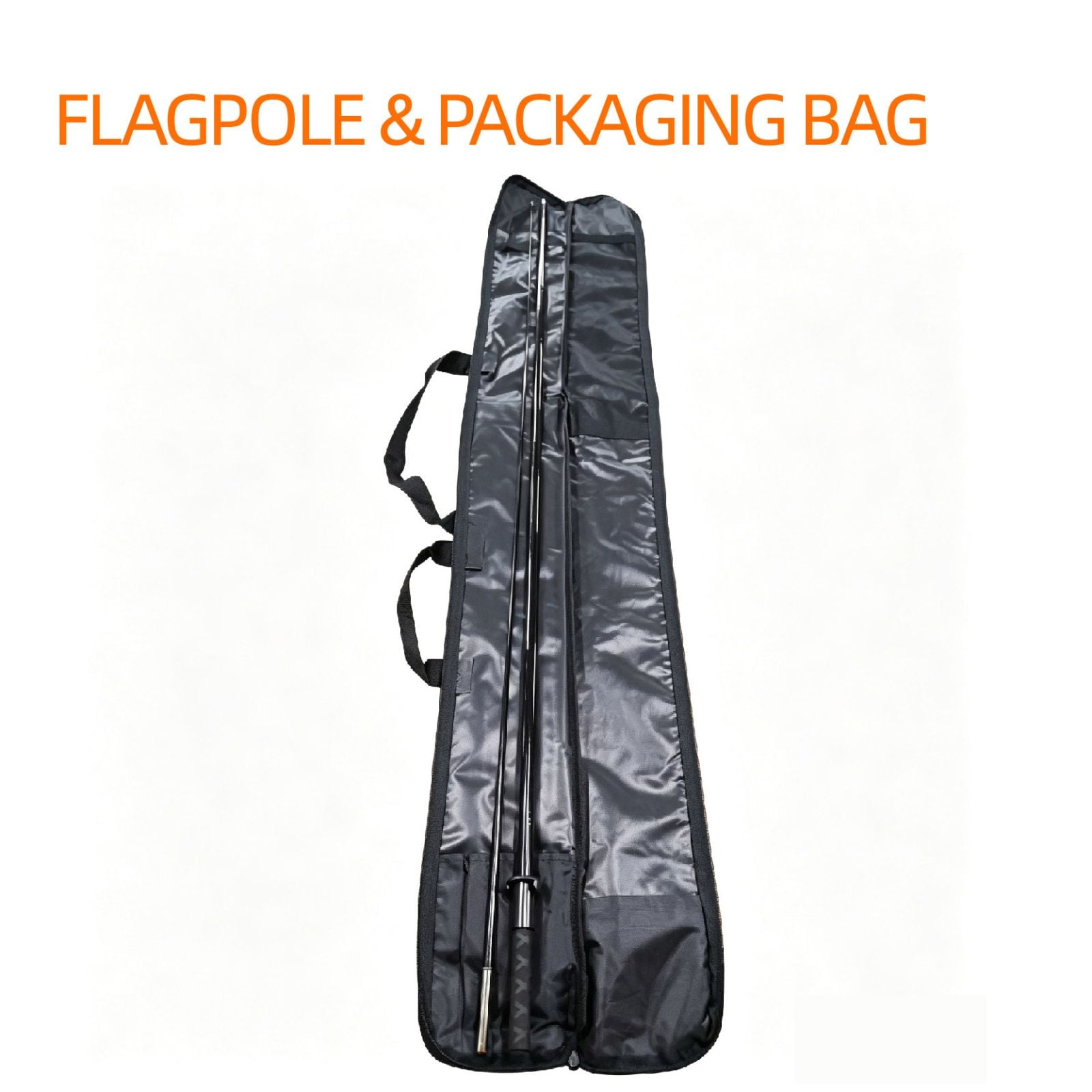
- 600D carry bag/210D string bag/Non-woven bag
 Product Description
Shipping & Packaging
- Unit Weight
- 0.500
- Unit Size
- 56X10X10
- Packaging
- Standard export carton
- Lead Time
- 15-30 days
Pricing
- MOQ
- 2 piece
- Price Range
- USD 3 – 3.4
* FOB Qingdao. Excludes shipping & taxes. Accessories & customization confirmed separately.
 Sample Service
- Sample Available
- Yes
- Sample Price
- piece 342.23
- Max Sample Qty
- 1
 Customization Options

Light Custom
Logo, color, size adjustments
Teardrop Banner - The Complete B2B Buyer's Resource - WZRODS
F Banner (Teardrop) Buyer’s Guide — WZRODS body { font-family: 'Segoe UI', Tahoma, Geneva, Verdana, sans-serif; line-height: 1.7; color: #1e1e1e; max-width: 860px; margin: 0 auto; padding: 2em 1.5em; background: #fff; } h1 { font-size: 2.4em; margin-bottom: 0.2em; color: #000; } h2 { font-size: 1.7em; margin-top: 2.2em; border-bottom: 2px solid #ddd; padding-bottom: 0.2em; color: #0b0b0b; } h3 { font-size: 1.2em; margin-top: 1.5em; color: #2c3e50; } p { margin: 1em 0; } table { border-collapse: collapse; width: 100%; margin: 1.4em 0; font-size: 0.95em; } th, td { border: 1px solid #aaa; padding: 0.65em 0.9em; text-align: left; vertical-align: top; } th { background: #f0f0f0; } .note { background: #f7f7f7; padding: 0.9em 1.2em; border-left: 4px solid #555; margin: 1.4em 0; } .faq-item { margin-bottom: 1.8em; } .faq-question { font-weight: 700; margin-bottom: 0.15em; }
Anatomy of a Teardrop Collapse on the Show Floor
A 3.5‑meter teardrop banner at a Hamburg automotive expo leaned at an angle that wasn’t in the design brief. The pole bent. Not broken—bent. It stayed bent. The graphic, double‑stitched nylon with a flawless print, wrinkled. The brand—a European lubricant manufacturer—looked cheap.
The cause wasn’t a freak storm. The banner spec called for 6063‑T5 aluminum poles, 1.0 mm wall. The distributor’s rep had insisted “all teardrop poles are the same.” They’re not.
Freight doors opened. A gust at 6.2 m/s funneled across the floor—normal for an exhibition. The top connector deformed plastically. The lower joint loosened. An aluminum‑on‑aluminum friction fit, perfect in a clean mock‑up, had picked up carpet dust. Static friction dropped. The banner started to oscillate. Twelve minutes later the graphic was dragging on the carpet runner. A staffer tried to tighten the base, but the pole had lost all spring‑back. They pulled the banner. Next door, a carbon composite system stood rock‑steady.
Why did the aluminum fail? 6063‑T5 has a tensile yield strength of about 145 MPa. In a teardrop pole of 20 mm diameter, a gust load of only 45 N at the tip can exceed the yield point if the moment arm is long. Once bent, it’s done. Carbon composite flexes without permanent set. The successful system used a glass‑filled nylon insert at the joint—maintaining friction even with dust. It’s those details, not the material name, that separate a reliable asset from a liability.
This guide treats the teardrop banner as an engineered system, not a container‑load commodity. Component integration determines brand consistency, assembly speed, lifetime cost, and import compliance. I’ll walk through each subsystem, using failure data to show how the right spec turns a $3 pole blank into a strategic asset.
Evaluating a Teardrop System Like an Engineer
A teardrop banner isn’t a pair of sticks and a piece of cloth. It’s a tensioned frame, a printed graphic, a ground‑anchoring base, and a carry case that must perform as one unit across assembly cycles, wind, humidity, and handling by non‑technical staff. Sourcing by price per pole alone ignores four cost centers that dwarf the unit price: freight, replacement, labor, and brand risk.
1. Pole Material and the Flex‑vs.‑Yield Problem
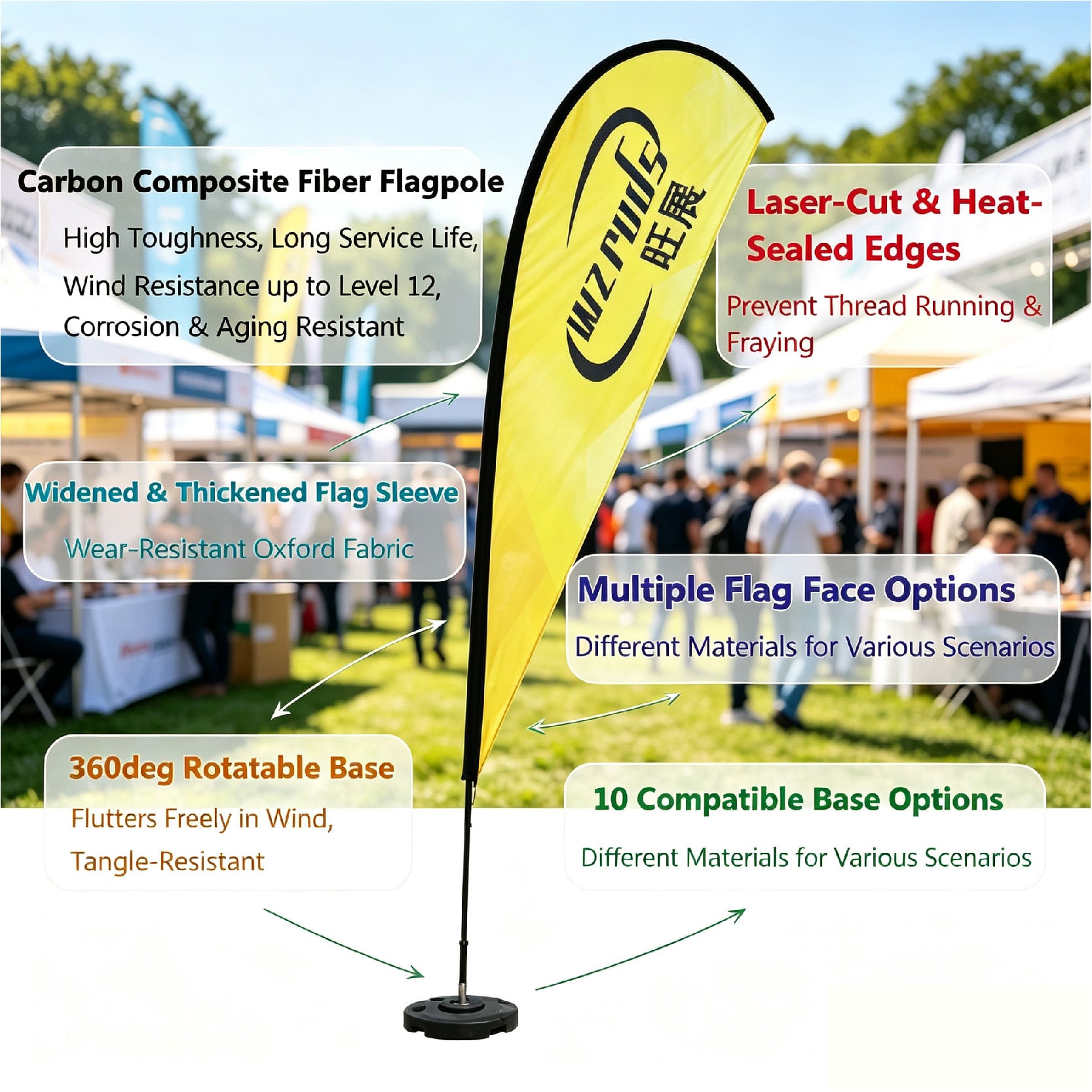
The pole is the backbone. 6xxx‑series aluminum is cheap to extrude, but alloy and temper matter critically. 6061‑T6 yields around 276 MPa. 6063‑T5, commonly used to cut cost, comes in at roughly 145 MPa. On a 4.8‑meter teardrop, that difference means staying upright in a 5 m/s breeze or permanently leaning.
Carbon composite eliminates the yield‑permanence problem. T300‑grade carbon fibers (3K tow) in an epoxy matrix provide a flexural modulus that lets the pole bend and snap back. In‑house cycle testing shows a 3.5‑meter carbon pole withstands over 8,000 cycles of 300 mm tip deflection with no permanent deformation. An equivalent‑weight aluminum pole fails before 800 cycles.
Spec sheets must list fiber type, resin system, and wall thickness—not just “carbon composite.” Ask for flexural strength and modulus test reports. If a supplier can’t produce them, you’re buying black plastic pipe.
2. Joints and Connectors: Where Everything Fails
The plug‑in design is standard: a smaller‑diameter tube slides into the next segment. The interference fit must hold clamping force under vibration, twisting, and thermal expansion. Aluminum connectors work initially, but aluminum‑on‑aluminum has a high coefficient of thermal expansion (23 µm/m °C) and low galling resistance. Repeated assembly in a dusty hall can gall the surface, killing friction.
The better approach is a glass‑filled nylon insert fitted to the female end—a bearing surface and friction stabilizer. It costs less than $0.15 per joint and eliminates the most common field failure. When evaluating a sample, measure extraction force after 50 insertions on a slightly dusty surface. Force shouldn’t drop more than 15%. If it does, you’ll be replacing poles mid‑season.
3. Graphic Attachment: Metal Rings and Sleeves
The graphic is tensioned by a pole pocket or bungee loops that hook onto metal rings. Rings must be stainless steel (304 grade) or marine‑grade anodized aluminum. Zinc‑plated steel rusts after one coastal event. Pole‑end fittings holding the ring need a mechanical fastener, not just adhesive—UV and cyclic loading degrade glue bonds.
On the F‑Banner, rings are crimped into a machined aluminum cap that threads onto the pole tip, making replacement possible without discarding the pole. The nylon fabric (110 g/m² double‑ripstop) must carry the tension load without tearing at the stitch line. A seam failing at 20 kg of force is unsafe for a 4.8‑meter teardrop in wind. Seams are tested to 45 kg minimum.
4. Bases and Ground Anchoring
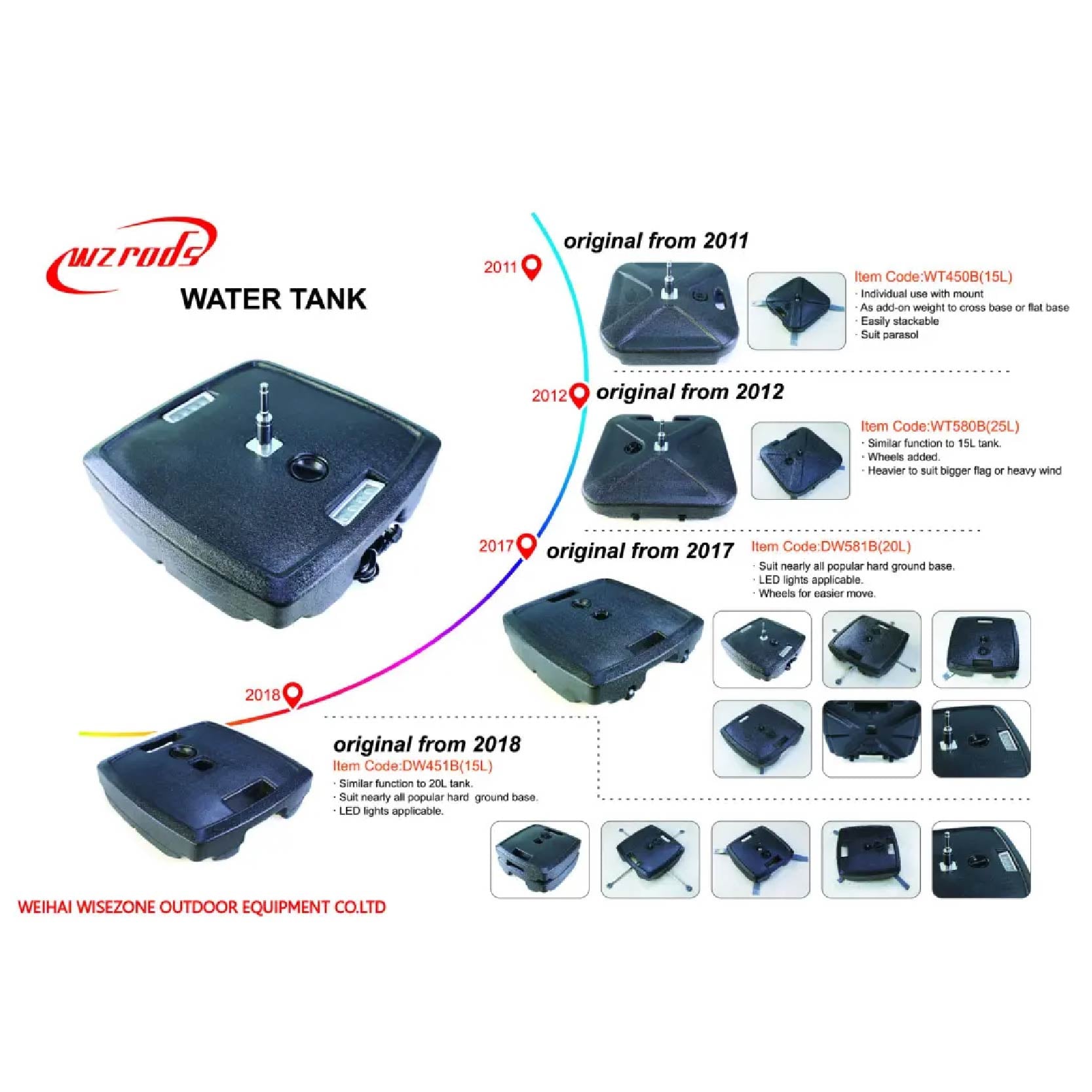
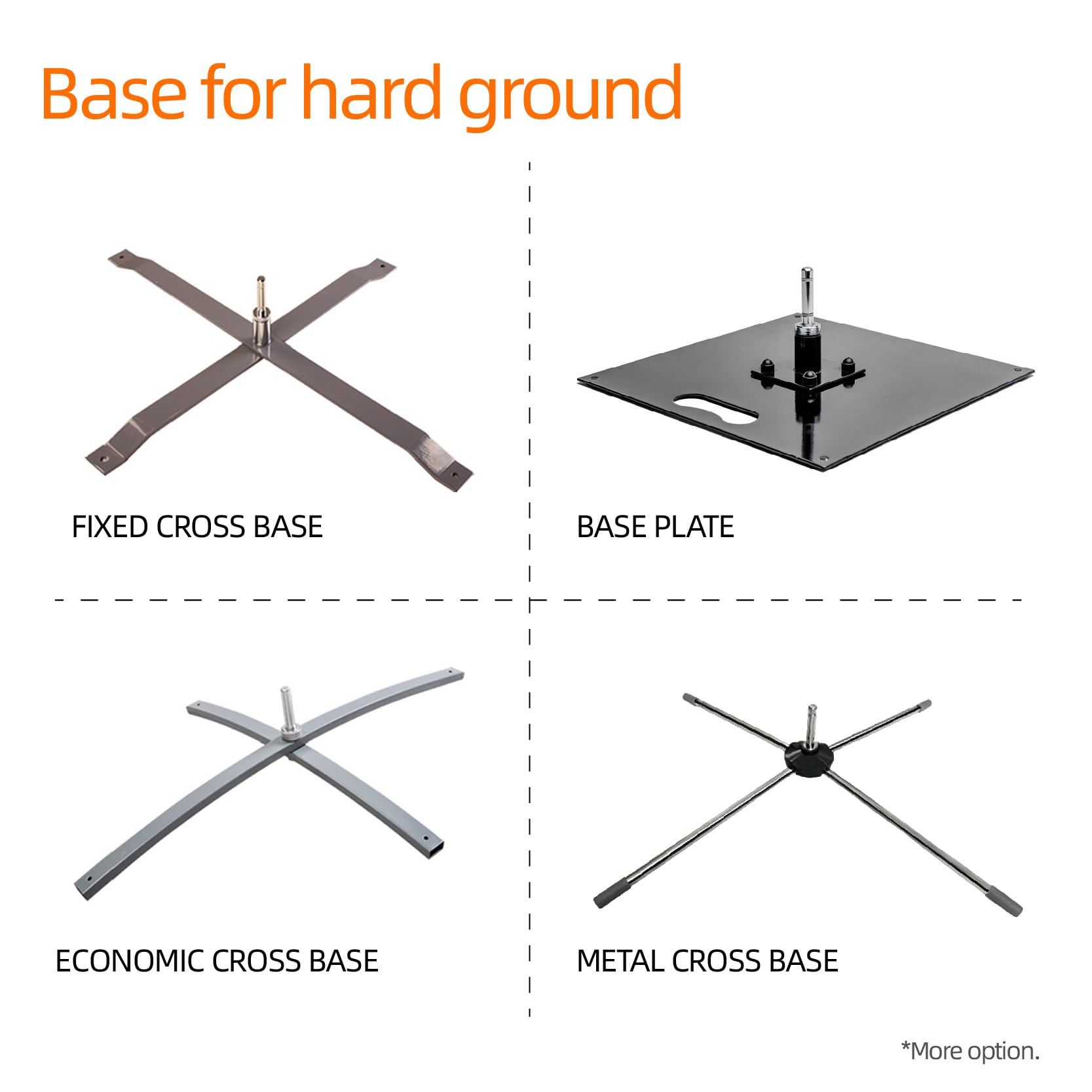
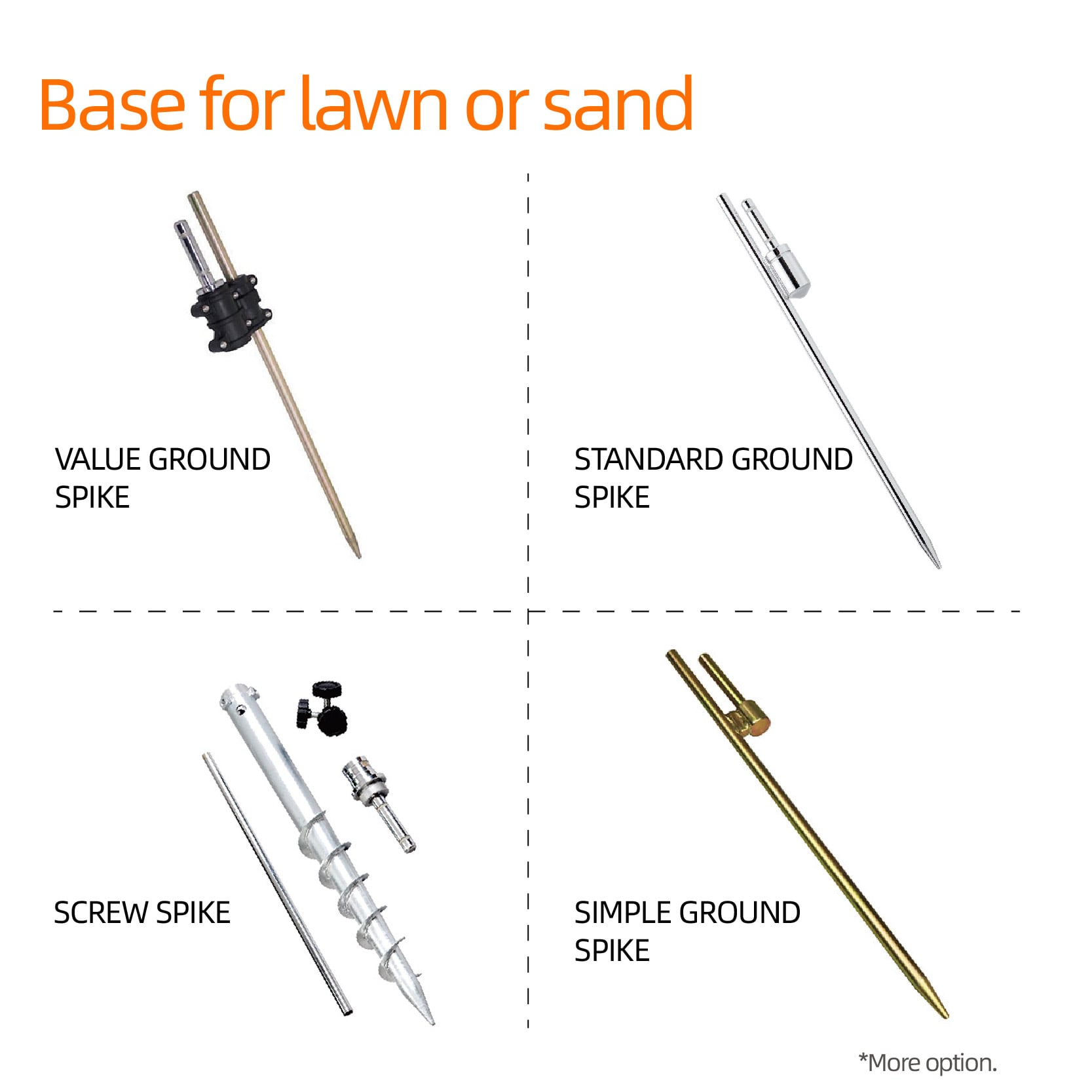
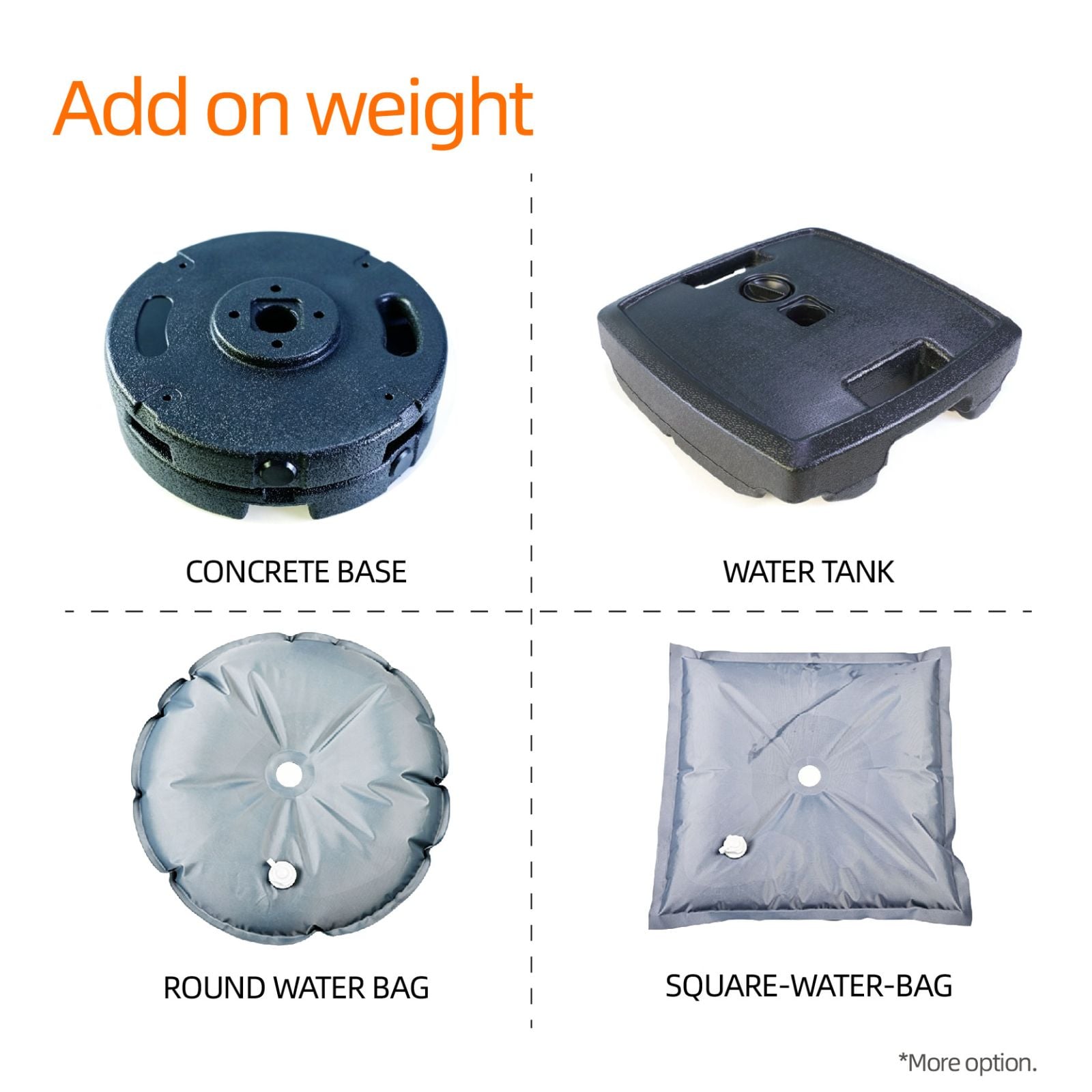
The base is often underspecified. A plastic water‑fillable base works indoors on calm days, but outdoor grass or pavement demands a steel cross‑base or spike base. The F‑Banner system offers: a 15‑liter water‑fillable base for light outdoor use, a 12 kg cast‑iron base for moderate wind, and a ground‑spike kit for grass.
The pole‑to‑base interface must have zero play. A 2° wobble at the base amplifies to a 15 cm sway at the tip of a 3.5‑meter banner, fatiguing the joint. Look for a tapered socket with a locking ring.
5. Carry Case as Protection
Don’t treat the bag as a throwaway. A 600D polyester carry bag with padded dividers stops poles from scratching one another in transit. Scratches on carbon composite shafts concentrate stress and can lead to premature fracture under repeated flexing. The bag must also protect the printed graphic from abrasion. The standard pack includes a separate sleeve for the fabric. Saving $2 on a thin non‑woven bag can cost you a $35 graphic reprint and a disappointed client.
Carbon Composite vs. Aluminum: A Technical Comparison That Dictates Profitability
Distributors often default to aluminum because it’s the historic material. The physical and economic differences are now too large to ignore. The table summarizes key parameters for a 3.5‑meter teardrop pole set (three sections).
| Parameter | WZRODS Carbon Composite | Standard Aluminum (6063‑T5) | Standard Aluminum (6061‑T6) |
|---|---|---|---|
| Pole weight (complete set) | 0.50 kg | 1.15 kg | 1.12 kg |
| Flexural yield behavior | Elastic to >300 mm deflection; full recovery | Permanent deformation at ~80 mm tip deflection | Permanent deformation at ~130 mm |
| Salt‑fog corrosion resistance (ASTM B117, 96 h) | No oxidation; no strength loss | White rust, pitting; section loss 0.08 mm | Pitting; section loss 0.06 mm |
| Thermal expansion (coefficient) | 2 µm/m °C (axial) | 23 µm/m °C | 23 µm/m °C |
| Electromagnetic interference | Transparent; no effect on RFID or wireless | Conductive; can detune nearby antennas | Same as left |
| Freight class density (per pole set, crated) | ~6 kg/carton (12 sets) → lower freight cost | ~13 kg/carton (12 sets) | ~12.5 kg/carton |
| Typical HTS code (US import) | 3926.90.9988 (other articles of plastics) – duty ~5.3% | 7616.99.5190 (articles of aluminum) – duty ~2.5% | Same as left |
| Unit ex‑works price (pole set, MOQ 500) | $3.20 | $1.80 | $2.20 |
On unit price, aluminum is $1.40 cheaper. But landed cost, replacement rate, and assembly labor shift the math. Aluminum systems see 12–18% failure per outdoor season; carbon composite, under 2%. A full 40‑HQ container of 12,142 carbon pole sets weighs 6,071 kg—versus 13,963 kg for aluminum. Ocean freight and drayage scale with weight. The duty gap (5.3% vs. 2.5%) shrinks because carbon’s lower freight reduces the customs value, but the real savings come from avoiding replacements.
The Economics of the Show Floor: A Total Cost of Ownership Model
Does a higher unit price ever break even? Consider a distributor supplying 200 teardrop banners to an event agency running 18 outdoor promotional stops across Southeast Asia in a year. Local crew sets up and tears down, often with minimal training. Labor: $25 per stop for setup of one banner. The aluminum 6063‑T5 system fails at the fifth stop—bent pole, unusable. The agency express‑ships a replacement pole set from a regional warehouse: $22 freight plus $1.80 for the pole. Over 18 stops, aluminum fails 3.2 times on average (field data). Carbon composite fails zero times under the same usage; let’s assume one freak accident. Total cost of ownership for 200 banners:
| Cost Element (per 200 units, one‑year season) | Carbon Composite | Aluminum (6063‑T5) |
|---|---|---|
| Ex‑works price | $640 | $360 |
| Ocean freight & insurance (to Rotterdam) | $210 | $470 |
| Import duty estimated (@ respective rates) | $45 | $21 |
| Landing cost subtotal | $895 | $851 |
| Replacement poles (shipping + unit) during year | $64 (1 unit) | $76 (3.2 units × $23.80) |
| Extra assembly labour due to replacements (30 min × $25/h) | $12 | $48 |
| Total cost for one season | $971 | $975 |
| Cost per banner‑event | $0.27 | $0.27 |
Even with conservative numbers, carbon composite breaks even in year one. The gap opens in year two, when aluminum banners need full replacement while carbon composite continues. The agency’s brand manager avoids three calls about a bent pole—those intangible costs aren’t zero. For the distributor, lower return rates cut reverse logistics and after‑sales costs, making the long‑term relationship smoother and higher‑margin. That’s predictable show‑floor economics.
Where the Teardrop Performs: Application Profiles That Demand Carbon Composite
Not every venue needs carbon. But several high‑risk environments make the spec non‑negotiable.
Coastal and Tropical Outdoor Events
In Miami, Dubai, Singapore, or Brisbane, salt‑laden air attacks aluminum within weeks. Anodized layers scratch during assembly, exposing raw aluminum that forms white oxide blooms, fouling graphic sleeves. Carbon composite is intrinsically corrosion‑proof. For a beachfront launch agency, switching to carbon eliminated pole polishing between events and extended graphic life—no sharp corrosion pits to snag. One Cancún distributor reported aluminum teardrop poles pitted to fracture after one season; carbon poles on the same truck looked new after three years.
Temporary Installations Requiring Rapid Setup
At retail grand openings or pop‑up stores, the banner must go up in under 90 seconds, by a store manager—not a rigger. Carbon’s ultra‑light weight (0.5 kg for the whole 3.5 m pole set) lets a single person hold the graphic and insert segments without help. Low thermal expansion means plug‑joints don’t stiffen in direct sun, avoiding the “telescope jam” that plagues aluminum on hot asphalt. In a study with a US real estate franchise, assembly time dropped from 3 min 20 sec to 1 min 40 sec after switching to carbon, saving $0.70 per setup at a $25 hourly rate.
RF‑sensitive Environments
Convention centers increasingly deploy RFID attendee tracking or Wi‑Fi‑based analytics. Aluminum poles are inadvertent reflectors that create dead spots. Carbon composite poles are microwave‑transparent. It’s a niche differentiator, but it wins tenders when the AV team reviews the spec.
Inside the WZRODS Production Line: How a Teardrop Pole Becomes a Reliable Asset
The carbon composite pole starts as prepreg sheets of T300 3K plain‑weave fabric, pre‑impregnated with a toughened epoxy. Sheets are CNC‑cut to precise ply shapes, then rolled onto a polished‑steel mandrel. Every layup is weighed before and after to catch missing plies. The wrapped mandrel cures in a rotational oven under a controlled temperature ramp (2 °C/min to 130 °C, hold 90 min) to ensure full cross‑linking without exotherm runaway. After cure, the pole is extracted, trimmed, and ends are machined for connectors.
Each pole goes onto a three‑point bending fixture applying a 200 N load at mid‑span while recording deflection. Data is plotted against a master curve; any pole deviating more than 5% is scrapped. The assembled pole set then undergoes a 50‑cycle fitment test with a digital force gauge measuring extraction force. Only sets maintaining ≥80 N after 50 cycles pass. Stainless‑steel rings are pull‑tested to destruction on a sample basis; a lot fails if any ring pulls out below 220 kg.
Graphic printing uses a UV‑curable flatbed with flexible inks that stay crack‑free at the tight bend radius of a teardrop curve. Fabric is cut with ultrasonic blades to seal edges. Final packout: pole set in a polyethylene sleeve, folded graphic in a polybag, base, and carry bag, all in a master carton with corner protectors. Barcode labels track each lot, enabling traceability back to the layup technician and raw‑material batch.
This isn’t a factory‑tour gloss—these are the process controls a distributor should demand in an audit. If a supplier can’t show real‑time SPC charts from the curing oven and bending test, they aren’t manufacturing carbon composite; they’re assembling parts from unknown sources.
Macro Trends Reshaping the Banner Hardware Market
Three trends are pushing teardrop specs away from cheap aluminum toward integrated composite solutions.
Sustainability reporting. Corporates now report Scope 3 emissions from promotional materials. A carbon composite pole lasts 4–5 times longer than aluminum, cutting replacement‑related manufacturing and shipping emissions. The 60% weight reduction also slashes transport fuel burn. Some European buyers assign a shadow carbon cost in tenders; carbon composite banners score higher.
Venue fire‑code harmonization. NFPA 701 (US) and EN 13773 (EU) require flame‑retardant fabric in exhibition halls. Some venues are moving toward total‑system approvals that include the pole. Carbon composite’s low‑smoke, low‑toxicity performance (when epoxy is designed as an intumescent) gives specifiers comfort. WZRODS supplies NFPA 701 test certificates for the nylon fabric and can provide the pole’s flame‑spread index on request.
Just‑in‑time event inventory. Lead times are compressing. Distributors can’t hold deep stock of many SKUs; they need a universal pole system that works across graphic sizes and bases and that can drop‑ship fast. Carbon composite’s lighter weight makes express air shipment feasible without the punitive cost of heavy metal. A distributor can hold a small buffer stock and replenish in days, not weeks.
All three trends point toward fewer premium, multi‑use pole systems displacing a sea of disposable single‑season aluminum imports.
Upgrade Path: Migrating Your Product Line to Carbon Composite Teardrops
For a distributor selling aluminum banners, migrating to carbon isn’t a rip‑and‑replace. It’s a phased premium line extension.
Step 1: Pilot with the High‑Failure‑Rate Sizes
Our after‑sales data shows that 80% of field failures occur on the two largest sizes: 3.5 m (FB35) and 4.8 m (FB48). Offer only those two SKUs in carbon composite, keeping the 2.2 m in aluminum for low‑risk indoor use. That removes the bulk of warranty claims. Bundle a “Wind‑Rated Kit” that pairs the carbon pole set with the heavier cast‑iron base. Price it 20% above the aluminum equivalent. The pitch: “No bent poles for one year, guaranteed.” The guarantee is credible because the product rarely fails.
Step 2: Educate the Sales Force with a Failure Kit
Give each rep a bent aluminum segment, a carbon composite segment, and a printed TCO sheet. During a customer visit, hand the bent aluminum to the client and ask them to try to bend the carbon by hand. They can’t. A tactile demonstration beats any brochure.
Step 3: Adjust HTS Codes and Documentation
Work with a customs broker to map carbon composite poles under 3926.90.9988 and request a binding ruling if necessary. Include the composite breakdown (fiber content, resin) on the commercial invoice to avoid delays. Prepare a one‑page compliance sheet: NFPA 701 for the fabric, and a statement that the poles are non‑corrosive and conflict‑mineral‑free. Corporate purchasers will clear internal audits faster.
Step 4: Bundle with Branded Carry Cases
Because carbon pole sets weigh half as much, you can upsell a custom‑printed carry case that doubles as a portable branding tool. The logo on the bag builds brand presence from arrival. Marginal cost is low; perceived value is high.
By structuring the upgrade around risk reduction and total cost, you shift the conversation from “we’re more expensive” to “we make your event season predictable.” That’s a proposition a professional buyer can justify to a CFO.
Frequently Asked Questions
Our standard MOQ is 2 pieces for the complete banner system, but for pole‑only orders we recommend 100 units to optimize freight and unit cost. For a container program, we load approximately 12,142 pole sets in a 40‑HQ. Price breaks apply at 500, 2,000, and 5,000 units.
Lead time is 15–30 days, depending on order size and graphic customization. For repeat orders without artwork changes, we can ship within 12 days. We hold raw material for standard pole diameters in stock to avoid resin expiry delays.
Yes. Every shipment includes a batch‑specific certificate for the nylon fabric. We can also supply a test report for the pole assembly’s surface burning characteristics if your venue requires it.
About the Author
Wei Chen, Senior Product Specialist
B.S. Supply Chain Management, Michigan State University; Certified Professional in Supply Management (CPSM)
12 years in B2B display hardware sourcing. Former procurement manager for a top 20 US promotional products distributor. Specializes in aluminum pole systems and import compliance.
Reviewed by WZRODS Technical Team. Updated: 2026-07-04
 Comments (0)
No comments yet. Be the first to comment!
Leave a Comment
Related Products
Combo Pole
Golf flag pins
110° H banner
Magnum banner
Wall Mounted Flagpole
SF Banner
Budget 2in1 flag system
4 in 1 flag System
T Banner
H Banner
Related Articles
How to Choose the Right Feather Flag Base for Different Surfaces
Feather Flag - Professional Banner Poles & Systems Manufacturer - WZRODS
How to choose a high-quality backpack flag
The backpack flag concept centers on a frame carried on the back, similar to a backpack, specifically engineered to support a raised flag or banner.
29kg Concrete Flag Base Buying Guide: What Importers Must Know - WZRODS
For the professional distributor or rental house, evaluating the wholesale 29kg Concrete Base bulk factory price requires understanding how weight, material, and logistics interact to protect your margin.
29kg Concrete Flag Base - The Complete B2B Buyer's Resource - WZRODS
WZRODS DY451B: 29 kg, HDPE shell, concrete core. Stackable, portable, rust-proof. FOB price US$5.75–$6.85 at MOQ 2 units. Those numbers look unremarkable. Factor in landed cost—import duties lower than aluminum’s under relevant HTS codes, freight savings from less weight per unit of stabilizing mas
Wide Tube Cross Base - The Complete B2B Buyer's Resource - WZRODS
The Wide Tube Cross Base, manufactured by Wzrods in Shandong, China, solves one problem: reliable stability for poles under three meters, without the freight costs and warehouse footprint that heavier alternatives demand.