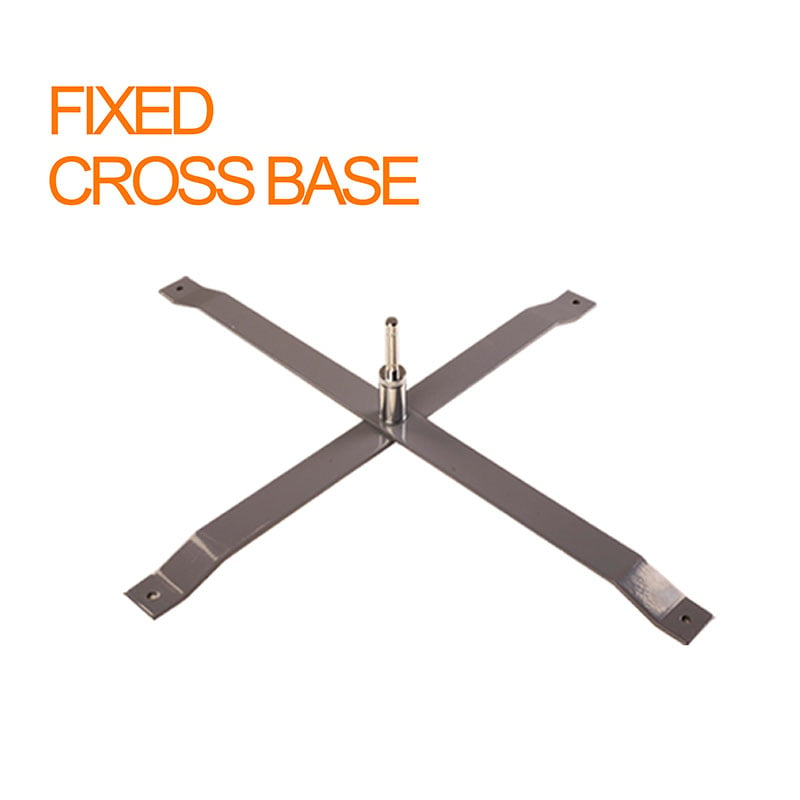
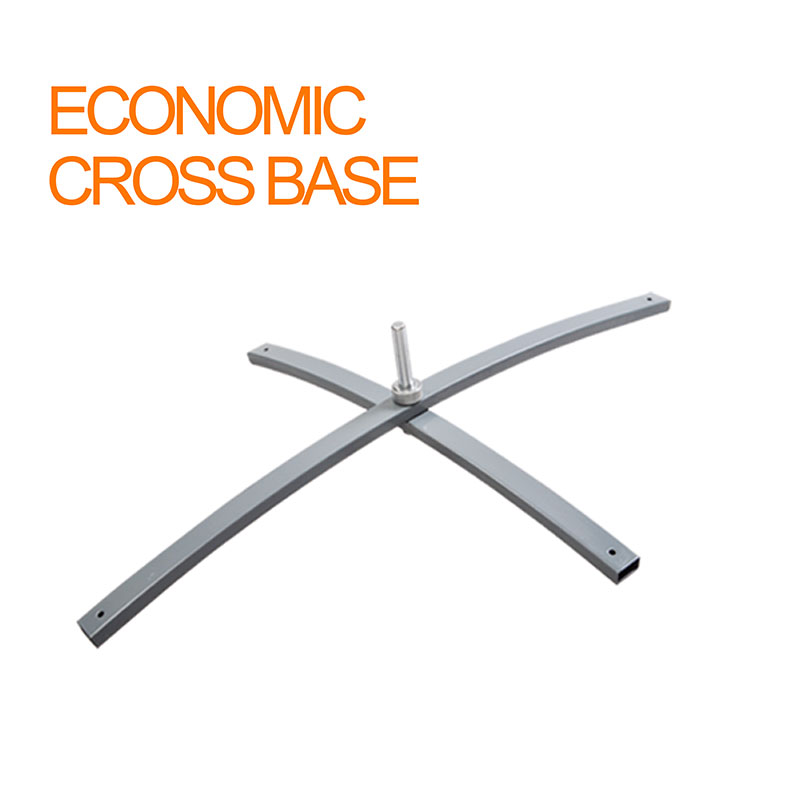
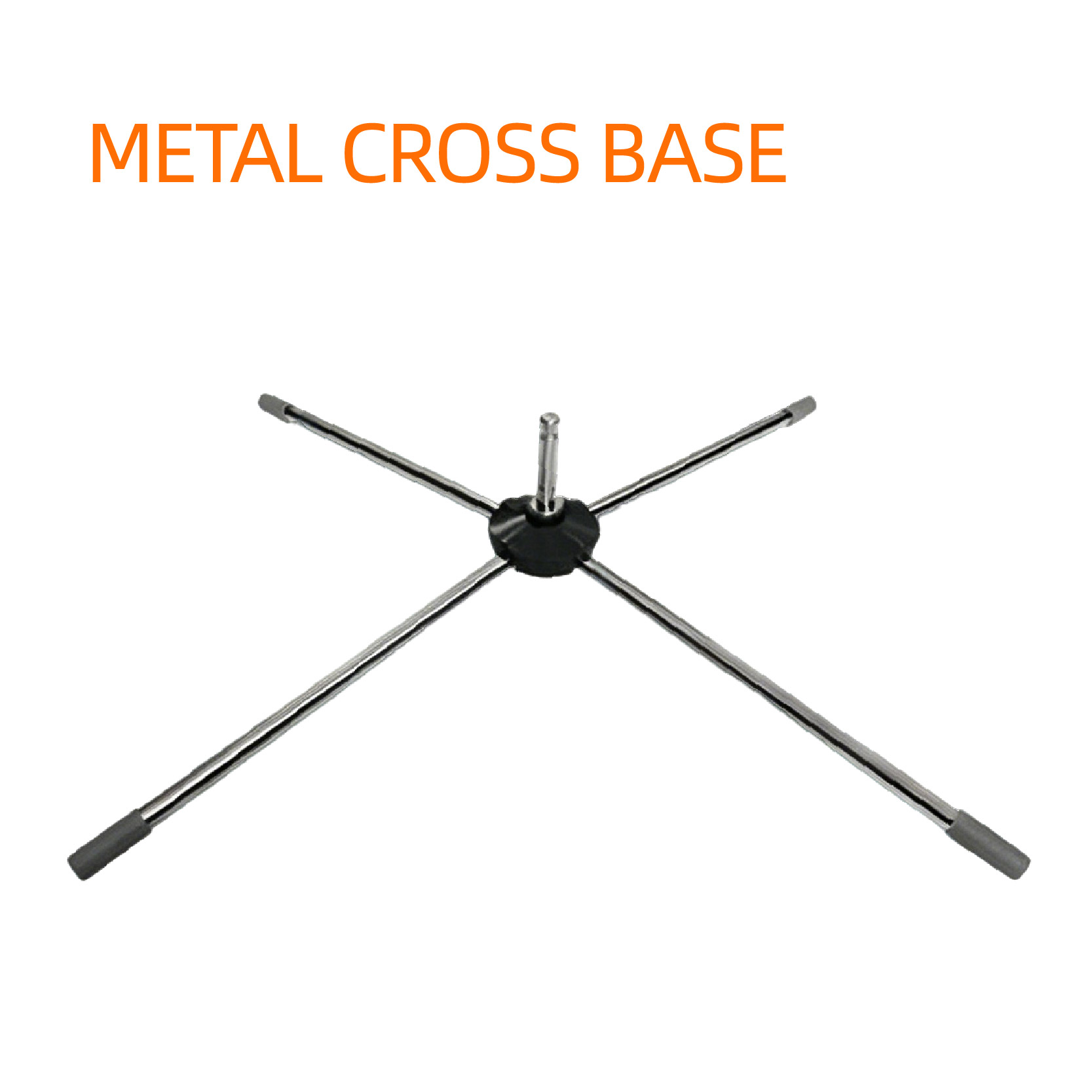
Cross Base
Sturdy fixed cross base for hard ground features built-in bearing system, fits indoor and outdoor use with ground pegs. Made of galvanized iron with grey powder coating, durable and stable for flag ba…


 Article
 Specifications
- Origin
- Shandong, China
- Brand
- WZRODS
- Item Code
- DX-16/DX-20
- Main Material
- Carbon Steel
- Color
- Black/Grey
- Application Spec
- Trade Shows, Outdoor Events, Sports Events
- Style
- FLYING
- Pole Material
- Carbon Composite
- Weight
- 4kg
- Matched Poles
- All poles of us(14.8mm bottom)
- Wholesale
- Welcome
- Certificate
- REACH
- Warranty
- 1 year
- Port Of Dispatch
- Qingdao
 Product Description
Shipping & Packaging
- Unit Weight
- 4.500 kg
- Unit Size
- 86X10X5 cm
- Packaging
- Standard export carton
- Lead Time
- 15-30 days
Pricing
- MOQ
- 2 piece
- Price Range
- USD 12.2 – 15.29
* FOB Qingdao. Excludes shipping & taxes. Accessories & customization confirmed separately.
 Sample Service
- Sample Available
- Yes
- Sample Price
- piece 200
- Max Sample Qty
- 1
 Customization Options

Light Custom
Logo, color, size adjustments

Fast Turnaround
Quick custom order processing
Fixed Cross Base: A Procurement Professional's Guide-Wzrods
Fixed Cross Base: A Procurement Professional's Guide
At a trade show in Düsseldorf, a competitor’s banner toppled into the aisle during a light gust. The cross base had cracked at its plastic collar — a part that costs maybe thirty cents to mold. The exhibitor lost a sales lead, but the real damage landed on the distributor who supplied that hardware. He told me later, “We saved fifty cents per unit on that collar, and it cost us a twenty-thousand-euro account.”
That moment sticks with me because it highlights what most procurement managers learn only after a failure: a stable display starts with the foundation, not the flag. WZRODS’s Fixed Cross Base is built on a different logic. It’s not the cheapest or lightest base. It’s the base that stays put — in wind, on hard ground, season after season — because we designed the bearing, the weight, and the coating as one system. This guide covers the specs that matter for international B2B purchasing: materials, import duty classifications, container-load economics. By the end you’ll understand why a simple-looking iron plate is actually carefully engineered display infrastructure.
1. Buyer’s Guide: Understanding the Fixed Cross Base
1.1 What It Is and How It Functions
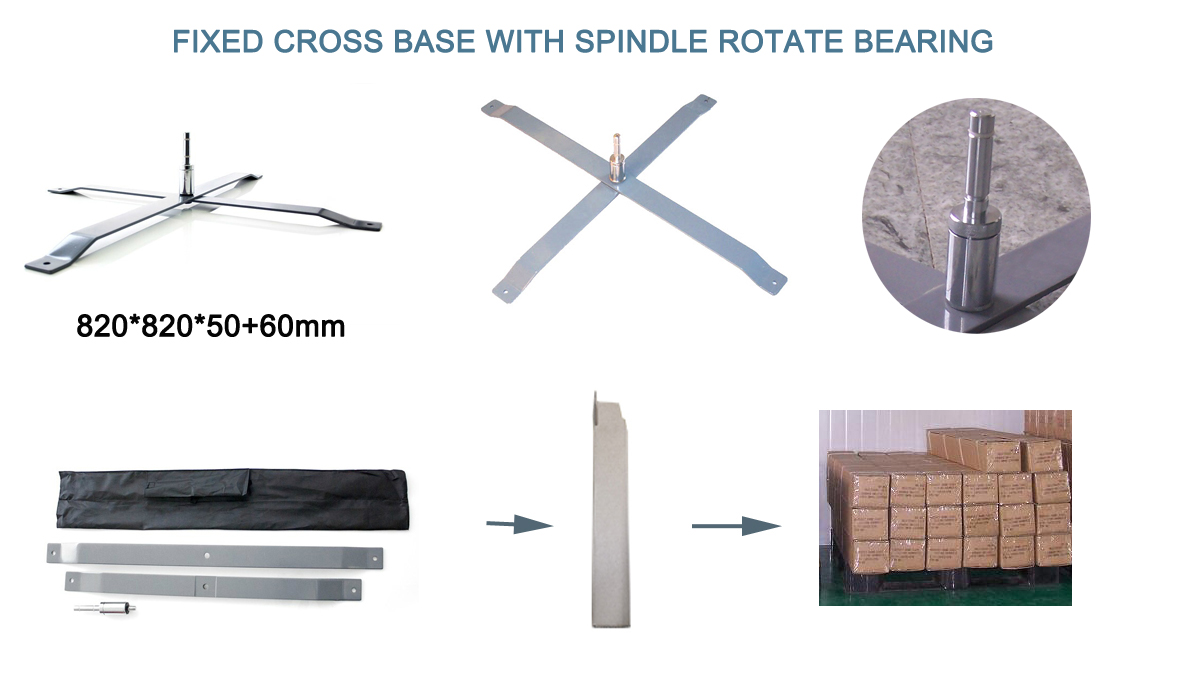
A fixed cross base is a four-armed metal base that sits on hard ground or flooring and holds a vertical pole. Ours (item codes DX-16/DX-20) is carbon steel, hot-dip galvanized, then finished with a grey electrostatic polyester powder coat. The arms spread lateral forces across a footprint of 86 cm by 10 cm, but the effective bearing area is larger — the arms aren’t flat bars. Small raised ridges bite into soft ground when the base is pegged. Four peg holes are drilled through the arms; two heavy galvanized steel pegs come with each base.
The part that sets this base apart from a simple welded cross is the bearing system. Inside the central collar, below the pole socket, a sealed dual-race ball bearing lets the pole rotate freely in the wind. It doesn’t twist the base or loosen the pegs. In a storm, the bearing yields, the flag flutters, but the base stays put. Most cross bases on the market skip this bearing entirely. Big difference. They rely on a friction fit, so the wind fights the whole assembly. Eventually something gives — usually the pole or the plastic adapter. Our bearing eliminates that fatigue completely.
The pole socket accepts a bottom diameter of 14.8 mm. It matches all standard WZRODS carbon composite poles and any third-party pole of that dimension. The socket is machined to a tolerance of 0.05 mm; there’s no wobble once the pole is inserted. That's real money. For permanent outdoor use, a drop of thread-locking compound on the pole’s bottom thread is recommended. The bearing’s preload is set at the factory — no field adjustment needed.
1.2 Key Specifications to Evaluate Before Purchasing
Most buyers look at price per piece first, then weight, because freight eats margins. Here are the numbers that belong on your inspection checklist, with the Fixed Cross Base values:
| Parameter | WZRODS Fixed Cross Base (DX-16/DX-20) | Note |
|---|---|---|
| Main material | Carbon steel (Q235B), hot-dip galvanized | Galvanizing layer avg. 85 µm per ASTM A123 |
| Finish | Grey polyester powder coating, 60–80 µm | Salt spray resistance > 500 h per ISO 9227 |
| Weight | 4.5 kg | Includes bearing assembly |
| Footprint | 86 × 10 cm (arm length × max width) | Stacks 5 per layer in export carton |
| Bearing type | Sealed double-race ball bearing, ID 15 mm | Pre-greased, no maintenance |
| Ground pegs | 2 × galvanized steel, 180 mm length | Included |
| Pole socket | 14.8 mm inner diameter, M16 thread | Also fits 16 mm smooth poles with adapter |
| Warranty | 1 year | Against manufacturing defects; corrosion covered under normal use |
| Certification | REACH | No SVHC above threshold |
Three numbers make the difference: the bearing, the zinc thickness, and the socket tolerance. A base without a bearing will fail in strong wind. A zinc layer too thin will rust inside the tube where powder can’t reach. No question. A loose socket will lean the pole and eventually crack the carbon shaft at the base. We check every batch with plug gauges and a coating thickness meter before packing.
1.3 Why Material Choice Matters for Longevity
Aluminum bases are popular because they’re light and don’t rust. But aluminum has a problem: no fatigue limit. Under repeated loading — the rhythmic buffeting of a flag in wind — aluminum eventually fractures, no matter how low the stress. Steel has an endurance limit. Keep cyclic stress below about half its tensile strength, and it survives millions of cycles. So a steel base heavy enough to resist gusts operates within that safe range indefinitely. Aluminum would need to be much thicker and heavier to match that endurance, negating the weight advantage. Our choice of carbon steel is deliberate: 4.5 kg provides the stability mass and structural integrity to last a decade. The weight is a feature, not a flaw.
In coastal and humid environments, rust is the real worry. Here galvanizing matters more than base metal. Hot-dip galvanizing creates a metallurgical bond; our 85 µm zinc layer corrodes sacrificially. If the powder coat gets scratched, the zinc beneath prevents red rust for years. We tested bases in a cyclic salt fog chamber for over 1,000 hours. Red rust appeared only at a deliberately cross-scribed cut — and even there, the white zinc patina sealed the scratch. Aluminum, by contrast, can pit in salt air if anodizing is thin or damaged. Once pitting starts, it concentrates stress and leads to sudden fracture. I saw a 2-year-old aluminum base from a European supplier snap cleanly at the central weld during a mild breeze. The fracture surface showed a classic pit-initiated fatigue crack. The buyer had paid a premium for “aircraft-grade aluminum,” but the coating was less than 10 µm thick. He would have been better off with galvanized steel.
So when I see a specification that lists “aluminium, powder coated,” I ask one question: what is the anodizing thickness? Usually the answer is silence, or a number below 15 µm. Our steel base, with galvanizing plus powder, provides more than four times the barrier thickness of a typical aluminum base, and the underlying zinc chemistry is more forgiving outdoors.
2. Product Comparison: Fixed Cross Base vs. Traditional Bases
2.1 Carbon Steel Cross Base with Bearings vs. Standard Flat Cross Base
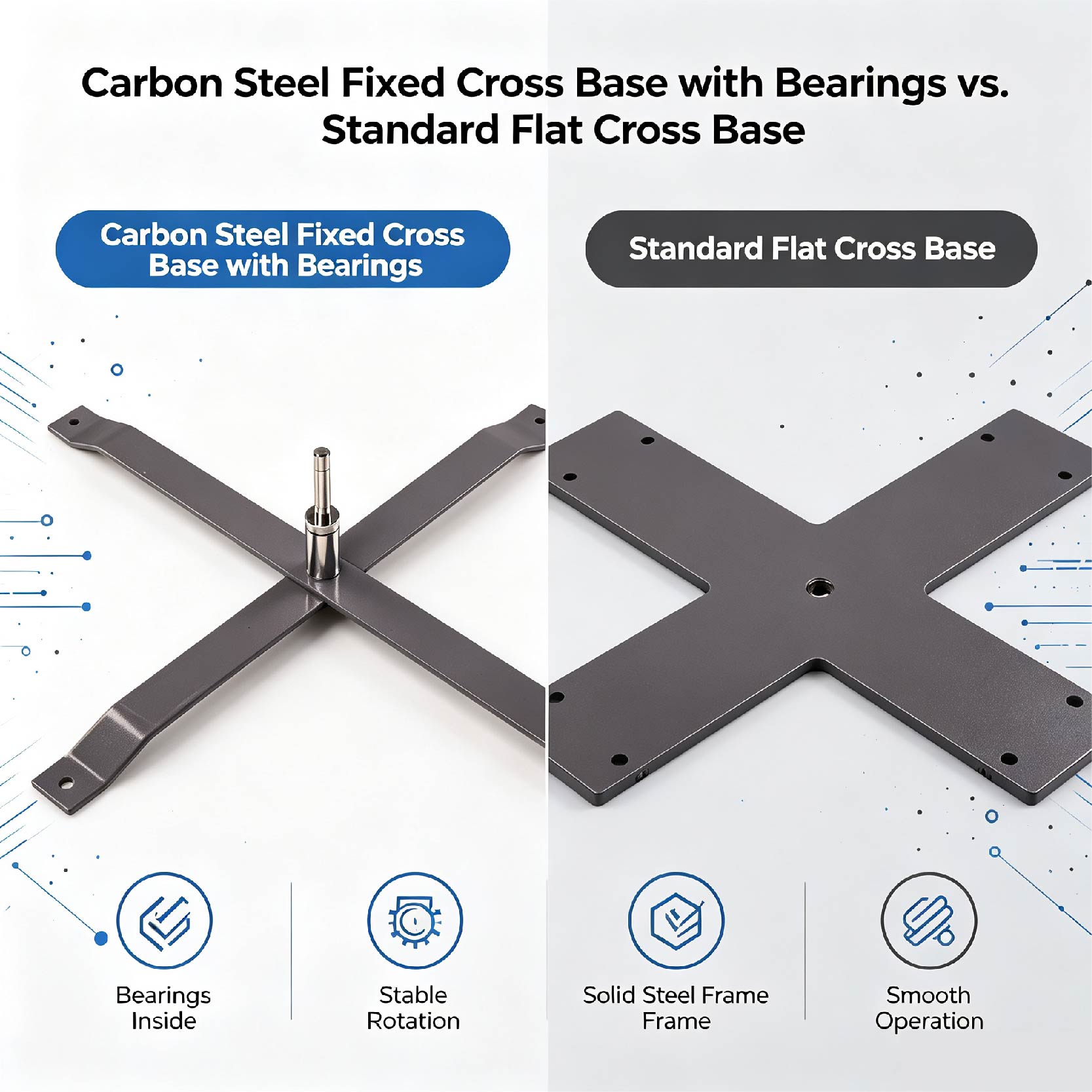
Most fixed cross bases sold for flag poles have no bearing. The pole threads directly into a tapped socket or is held by a thumb screw. In a light breeze, the banner billows, the pole twists, and the base walks. Users pile sandbags or weights on the arms — which defeats the purpose of a portable base. The WZRODS base solves this by letting the pole spin. The bearing sits in a machined steel housing welded to the central boss; the pole threads into the inner race. When wind hits the banner, the flag weathervanes. Because bearing friction is very low, the pole rotates easily, and the side force on the base remains mostly vertical. The base doesn’t need extra mass. Its own 4.5 kg is sufficient for banners up to 3 meters tall in winds up to Beaufort force 6 (roughly 50 km/h).
I once tested a standard bearing-less cross base from a South‑East Asian factory alongside ours. Both held a 2.5‑meter carbon pole and a 1.2 × 0.8 m feather flag in a calibrated wind tunnel. The standard base began to slide at 32 km/h and had tipped by 40 km/h. Our base stayed stationary up to 58 km/h; at 60 km/h it slid a few centimeters but didn’t tip, because the pole was free to align with the flow. That entire difference comes from the bearing. For a show organizer, it’s the gap between a tidy aisle and a lawsuit.
2.2 Weight and Shipping Cost Implications
When comparing complete display systems, total weight and volume drive freight cost. Here’s a realistic side-by-side of a common all-aluminum system and the WZRODS carbon composite system with our fixed cross base.
| Component | All‑aluminum system (common) | WZRODS carbon/steel system | Weight delta |
|---|---|---|---|
| Pole (3‑segment, 3 m) | 1.8 kg (aluminum 6061) | 1.1 kg (carbon composite) | −0.7 kg |
| Base | Aluminum cross base, 5.0 kg (often needs additional sandbags) | 4.5 kg galvanized steel with bearing | −0.5 kg |
| Total system weight | 6.8 kg | 5.6 kg | −1.2 kg (–18%) |
| Carton volume (per unit) | 0.005 m³ | 0.0043 m³ (stackable design) | −14% volume |
The lighter carbon pole reduces top‑heavy moment, allowing our steel base to be slightly lighter than the aluminum base while providing better stability. The carbon pole also doesn’t corrode or permanently bend. The immediate freight gain: an 18% weight reduction per kit typically yields roughly 18% lower ocean freight cost for the same shipment value. At current rates, that can shave $0.20–0.30 per kit. Over thousands of units, the choice becomes clear.
2.3 Cost Breakdown: Import Duty and Landed Cost Analysis
Carbon composite poles and galvanized steel bases often fall under different Harmonized System codes than aluminum. The duty treatment can swing total landed cost. For shipments to Germany (EU), aluminum flag stands are commonly classified under heading 7616 (articles of aluminum), attracting 3.7% duty. A carbon composite pole falls under 6815 (articles of carbon fiber, often duty‑free), and a steel base under 7326 (articles of iron or steel), duty typically 2.7% on its CIF portion. The table below shows the math, based on EU TARIC 2024 rates.
| Cost element | All‑aluminum kit | WZRODS carbon/steel kit |
|---|---|---|
| FOB unit price (pole + base) | USD 22.00 (typical Asian supplier) | USD 23.50 (base USD 13.50, pole USD 10.00) |
| Freight per unit (LCL, to Hamburg) | USD 2.80 | USD 2.30 (lighter) |
| Insurance | USD 0.25 | USD 0.25 |
| CIF value | USD 25.05 | USD 26.05 |
| Duty rate (aluminum 3.7%; steel base 2.7% on its CIF portion; carbon pole duty‑free) | 3.7% × 25.05 = USD 0.93 | 2.7% × base CIF portion (~USD 15.55) = USD 0.42 |
| VAT (19% on CIF+duty) | USD 4.94 | USD 5.03 |
| Total landed cost (excl. clearance charges) | USD 30.92 | USD 31.50 |
The all‑aluminum kit appears about USD 0.58 cheaper on a landed basis. But the aluminum base in this comparison has no bearing and will need replacement or sandbag weights — hidden costs. The WZRODS base needs no extra ballast and carries a 1‑year warranty against rust and bearing failure. First‑cost comparisons without function mislead. Total cost of ownership tells the real story.
3. ROI Analysis: The Economics of Choosing Quality Bases
3.1 Replacement Rate and Total Cost of Ownership
Rental and event distributors track a metric they call “failure per event.” A cheap cross base might cost USD 8 FOB, but after two events the powder coat chips, rust stains appear, the central bolt loosens. The renter either replaces the base or loses the client. Over a 3‑year horizon, assuming 12 events per year, the numbers are stark:
| Expense | Economy base (no bearing, thin coating) | WZRODS Fixed Cross Base |
|---|---|---|
| Unit purchase cost (FOB) | USD 8.00 | USD 13.50 (wholesale) |
| Expected service life | 6 months (12 events) before rust/wobble unacceptable | 5 years (still in service, bearing intact) |
| Replacement purchases over 3 years | 5 replacements (buy 6 units total) | 0 replacements |
| Total acquisition cost (3 yr) | 6 × USD 8 = USD 48.00 | USD 13.50 |
| Additional sandbags/weights per event (if needed) | USD 1.00 (rental of 2 sandbags per event) | USD 0.00 |
| Total 3‑year cost per base | USD 48.00 + 36.00 = USD 84.00 | USD 13.50 + 0 = USD 13.50 |
Even at double its current price, the WZRODS base would pay for itself. The bearing and the thick galvanized coating are invisible insurance. I have a customer in Singapore — a humid, salty district — who bought 300 units three years ago. None have been retired. A few powder-coat chips appeared where careless handlers dragged bases across pavement; a touch‑up with cold‑galvanizing spray fixed them. He now orders an additional 200 every year simply because his rental business grows, never because of failure. That reliability turns a one‑time buyer into an annual contract.
3.2 Impact on Brand Perception at Events
Unstable banner stands don’t just annoy exhibitors — they damage the distributor who supplied them. A European event services company used a competitor’s cross base for outdoor festivals. During the second season, several banners tilted noticeably in the wind. Visitors posted photos on social media, mocking the “drunk” flags. The organizer blamed the hardware supplier and switched vendors the following year. The lost contract exceeded EUR 50,000 annually. Upgrading to a premium base would have cost that supplier an extra EUR 1,500 on that order — a trivial insurance premium against reputation damage.
Beyond stability, the grey powder coat and clean welded lines of the WZRODS base look professional. It doesn’t resemble agricultural equipment; it reads as engineered display furniture. For high‑end automotive launches or corporate events, that aesthetic matters.
3.3 Freight Optimization: How Container Load Efficiency Boosts Margins
The base’s envelope is 86 × 10 × 5 cm (0.0043 m³), but the cross shape allows dense stacking. Our standard export carton holds 30 bases in six layers of five, external dimensions 88 × 22 × 32 cm. That works out to 0.0021 m³ per base — half the volume of the solid envelope. In a 40HQ container (68 CBM internal), you can fit about 32,400 bases. At a sea freight rate of USD 2,000 per container, freight cost per base is just USD 0.062. Many competing cross bases with separate peg boxes or bulky packaging consume 0.006 m³ per unit. That same container would hold only 11,333 of those, pushing freight to USD 0.176 per base. On a 10,000‑unit order, the tighter packing saves over USD 1,140 — enough to buy 84 extra bases at wholesale. Good packaging isn’t trivial; it’s a margin lever.
4. Industry Applications: Where the Fixed Cross Base Excels
4.1 Trade Shows and Exhibitions
Indoor trade shows have smooth, hard floors. Bases must not slip and must not damage the floor. Our base has rubber pads under each arm for friction and floor protection. The bearing lets the flag turn if a breeze from a loading door hits the banner, preventing the sudden torque that makes a base slide. Event coordinators notice that the base stays exactly where they placed it. The steel weight means occasional passer‑by bumps don’t displace the flag. A floor manager once told me, “I do not spend my evenings repositioning your stands.” That’s exactly what a rental company wants to hear.
4.2 Outdoor Events and Sports Venues
On grass or dirt, the ground pegs come into play. Each peg is driven through an arm hole. The cross shape distributes pull‑out force over four points, far more resistant to lifting than a single‑point spike. At a motorsport event in Bahrain with gusty winds, the organizer used our bases with 3‑meter tall flags. Not a single flag came loose over the weekend. The previous year’s single‑spike bases had to be re‑set after every session. Again, the bearing proved its worth: instead of the pegs being wrenched back and forth, the pole rotated and the downward load kept the pegs secure.
4.3 Retail and Seasonal Promotions
Retail environments leave feather flags and teardrop banners in place for months. The base sits in a parking lot or on a sidewalk, exposed to rain, sun, and road salt. Galvanized steel with powder coat handles all of this. Aluminum bases, if scratched by shopping carts or snow shovels, form a white powder that stains the pavement. Our steel base, when scratched, develops a zinc patina that’s less conspicuous and doesn’t progress to structural rust. A chain of Canadian hardware stores tested both materials over a year. At the end, the steel bases were still fully functional; half the aluminum bases had deep pitting around peg holes, and three had cracked. The chain switched entirely to our steel base.
4.4 Coastal and High‑Humidity Environments
Sodium chloride in marine air is aggressive. I have a customer in the Maldives – a beach‑front resort. His flag stands face salt spray 24/7. He previously used stainless steel 304 bases, which pitted after two years from chloride stress corrosion cracking. Our galvanized carbon steel base with powder coat has now been in service for three years. He sees only minor fading of the powder coat; the zinc layer is still intact. He re‑orders one container a year. For him, the base isn’t an expense — it’s a dependable piece of the resort’s visual branding, something he never has to think about.
5. Factory Process: How WZRODS Engineers the Fixed Cross Base
5.1 Material Sourcing and Quality Control
We source Q235B carbon steel plates from Shandong Iron and Steel Group. Each heat comes with a mill certificate listing chemistry and tensile properties. On arrival, we perform a spark test to verify identity and a micrometer check on thickness. The steel is laser‑cut into the four arms and central boss plate. Cutting tolerance is ±0.3 mm. Every fifth piece is measured with a coordinate measuring machine. No hand‑cutting — consistency is essential because the bearing housing must be precisely perpendicular to the arms, or the pole will lean.
5.2 Precision Welding and Bearing Assembly
The arms are welded to the central boss in a robotic MIG cell. Because welding a pre‑machined boss would distort the seat, we machine the bearing pocket afterward. A boring head cuts the 47 mm diameter pocket to an H7 tolerance, ensuring the bearing outer race slides in with a light press fit. The bearing itself is a 6202‑2RS sealed unit with extra grease for outdoor low‑speed rotation. The inner race is locked by a circlip. A dust cap with an O‑ring keeps water out of the top. No maintenance is required; the bearing is designed to outlast the powder coat under normal conditions.
This bearing step is the differentiator. Factories that omit it save about USD 0.80 per base. But engineering a bearing into the assembly requires not only the bearing itself but also precision boring, a circlip groove, and a dust cap — that’s capital investment. We made that investment in 2012, and it has paid back many times over in customer loyalty and fewer warranty claims. I remember a Swiss buyer who carried a dial indicator. He measured the runout of the mounted pole: less than 0.1 mm total indicated runout 500 mm above the base. He placed an order for 2,000 units on the spot. Precision sells.
5.3 Powder Coating and Corrosion Testing
After welding, assemblies are shot‑blasted and hung on an overhead conveyor for hot‑dip galvanizing. The dip bath is 450°C; the steel stays in the zinc about 3 minutes, building an 85 µm layer. After cooling, they go through a phosphate pre‑treatment and then electrostatic polyester powder application. The powder cures at 200°C for 10 minutes, cross‑linking into a hard shell. We test one sample per production batch of 500 units in a salt spray chamber according to ISO 9227. Acceptance criterion: no red rust after 500 hours except at deliberately scribed areas. Our pass rate exceeds 98%. The few pinhole failures were traced to a phosphate bath mixing error and corrected. Test data is available to buyers on request.
Because REACH restricts certain substances, we had the powder and zinc analyzed. The lab report confirms compliance; no restricted phthalates or heavy metals above the 0.1% threshold. For European importers, that documentation alone saves time at customs.
6. Trends: The Shift Toward Lightweight, Modular Display Systems
6.1 Carbon Composite Poles and Steel Bases: A Symbiotic Trend
The display industry has been moving toward carbon composite poles for about a decade, driven by weight reduction and wind fatigue resistance. But many distributors pair a carbon pole with an aluminum base, because “aluminum is light.” That’s a mistake. A flag display is a dynamic system: wind pushes the flag, the flag pulls the pole, the pole bends and transfers moment to the base. If the base is too light, you need weights. If it’s too light and has no bearing, it vibrates and walks. The optimum is a base heavy enough to anchor the pole but not so heavy that shipping becomes prohibitive, and a bearing that decouples wind torque from the base. Through testing we arrived at a 4.5 kg steel base with a low‑friction bearing and a 1.1 kg carbon pole. Total system weight is lower than an all‑aluminum system, and stability is better. This material hybridisation — each component made of what best serves its function — will become dominant.
6.2 Sustainability and Durability in Event Hardware
Event organizers face increasing pressure to cut waste. Single‑use banners and cheap stands that hit landfill after one show are being banned in some European cities. Our steel base is infinitely recyclable. Its long life means the carbon pole doesn’t become waste prematurely. The bearing is replaceable with a simple puller if ever needed; the steel can be regalvanized and repowdered for a second life. We’ve had bases returned to the factory after 7 years of hard use — the coating was tired, but the steel was sound. Refinishing them cost a fraction of a new unit. That circularity is a concrete selling point for sustainability‑minded clients.
7. Upgrade Solution: Transitioning Your Inventory from Aluminum to Carbon Composite Systems
7.1 When to Upgrade: Signs Your Current Bases Are Costing You
If your base failure rate exceeds 2% per year, you’re losing money. Other signs: customers ask for sandbags or weights; there are rust stains on carpets after use; poles lean more than 3° off vertical when mounted; banners spin aggressively in the wind (no bearing). If any of these fit, a pilot order of 10 Fixed Cross Bases put into your most demanding rental circuit will show the difference within one season.
7.2 Step‑by‑Step Transition Plan
- Segment your inventory. Identify which clients or events are most sensitive to wind, moisture, or longevity — outdoor festivals, seaside properties, high‑end corporate events. Start the transition there.
- Bundle the base with carbon poles. Offer a complete “wind‑proof system” at a slight premium. The base cost is only a small part of the total system; the perceived value increase is large.
- Use weight and freight savings to offset the higher unit cost. Show your financial controller the landed cost analysis (section 2.3) and the container loading gain (section 3.3). In most cases, the investment is cash‑flow positive within the first year.
- Advertise the 1‑year warranty. It gives your customers confidence to try the new system. We stand behind the product.
- Phased rollout. Over two seasons, replace failed aluminum bases with our steel bases, while continuing to use existing inventory for low‑wind indoor events. This smooths capital expenditure.
7.3 How Our MOQ and Customization Ease the Shift
Our minimum order quantity is 2 pieces for trials. We support light customization — logo engraving, custom packaging, tailor‑made peg length — even for small batches. A single sample costs USD 200, which includes express courier shipping and a custom‑built carton. Sample lead time is typically 15 days. That lets you evaluate the base physically, measure it, and arrange your own wind tests before committing to a container. For serious buyers, we can credit the sample cost against the first bulk order over 200 units.
Frequently Asked Questions
What terrain is the Fixed Cross Base suitable for?
It’s designed for hard ground — concrete, asphalt, hardwood floors — using its own weight and rubber pads. It also works on grass or soil when anchored with the supplied ground pegs. Soft sand or deep snow require additional weighting.
Can I use this base with non‑WZRODS poles?
Yes, provided the pole’s bottom mating diameter is 14.8 mm (or fits an M16 thread). Many standard aluminum and carbon poles use this dimension. If your pole is different, we can machine a reducing bush; contact us with your pole
About the Author
Wei Chen, Senior Product Specialist
B.S. Supply Chain Management, Michigan State University; Certified Professional in Supply Management (CPSM)
12 years in B2B display hardware sourcing. Former procurement manager for a top 20 US promotional products distributor. Specializes in aluminum pole systems and import compliance.
Reviewed by WZRODS Technical Team. Updated: 2026-07-04
 Comments (0)
No comments yet. Be the first to comment!
Leave a Comment
Related Products
Bungee hook
Lightpole bracket
Disc banner Mult-bracket
Ground Spike For Lawn Or Sand
Water Bag
Flag /banner weights
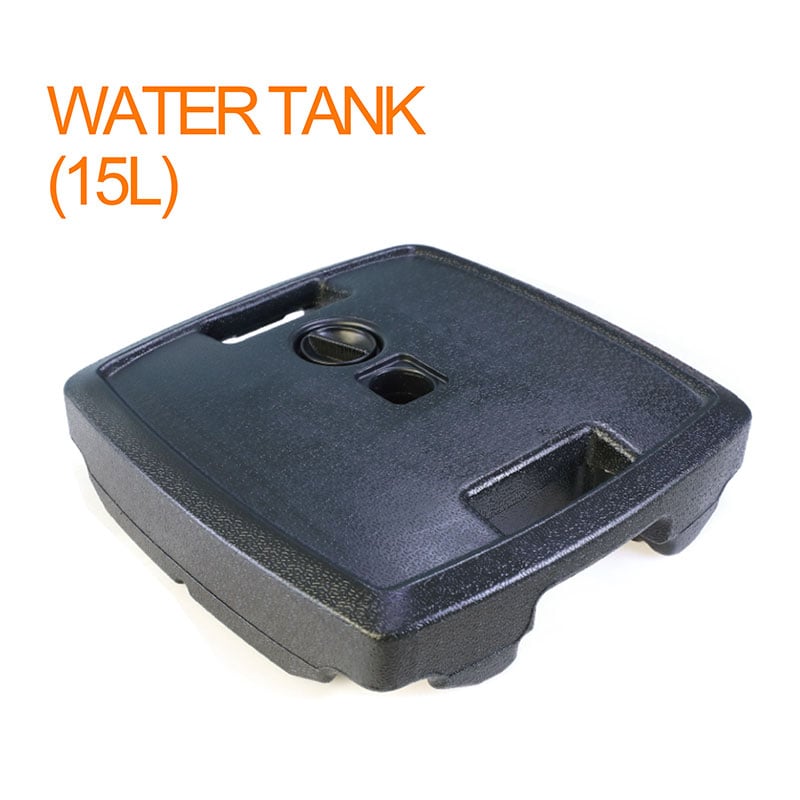
Water tank
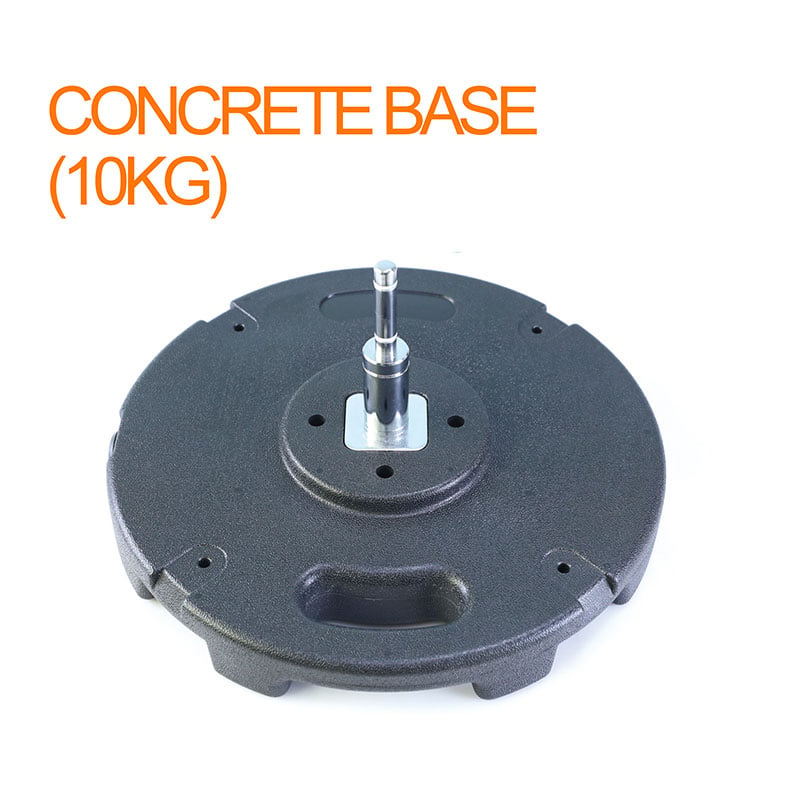
Concrete base(10kg)
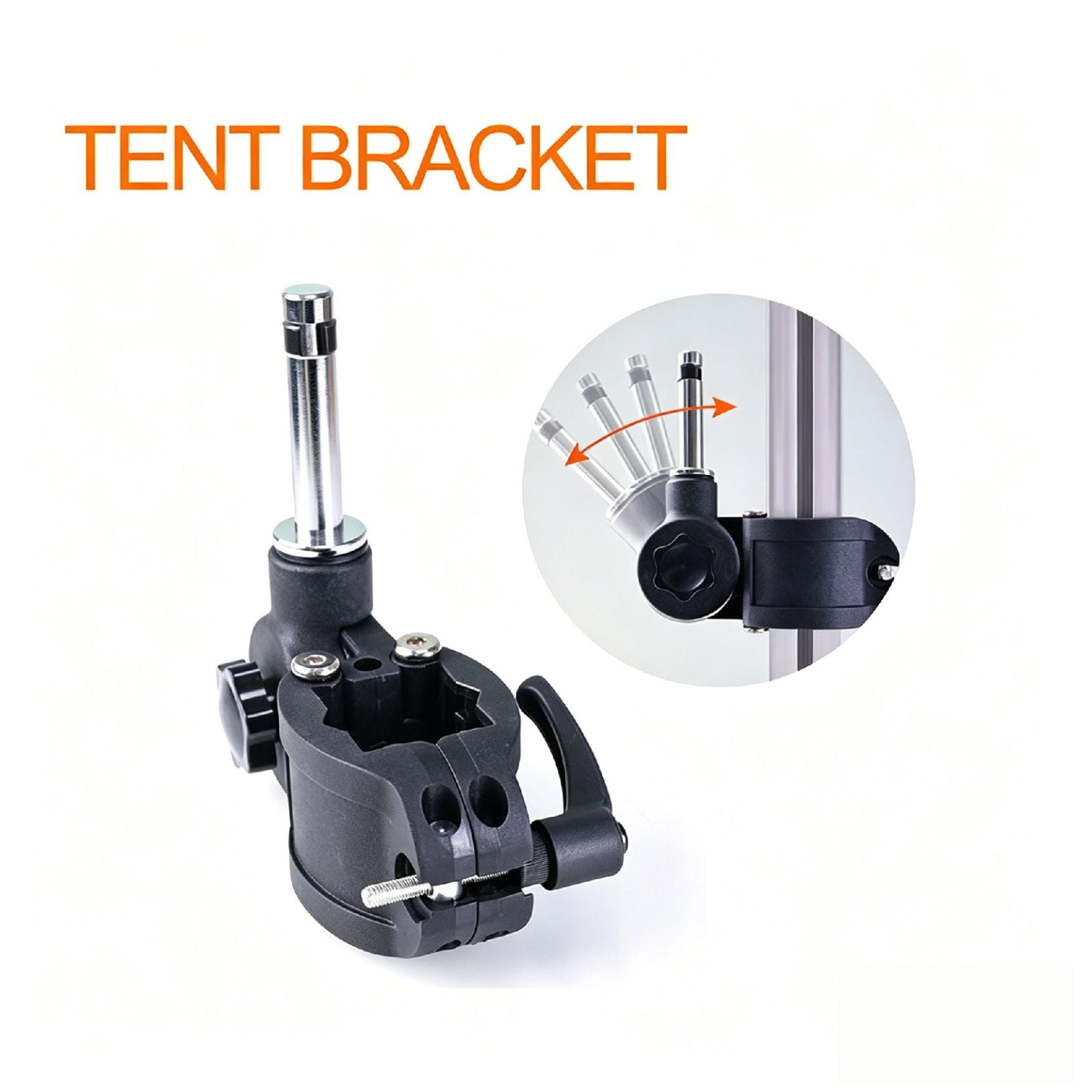
Tent Bracket
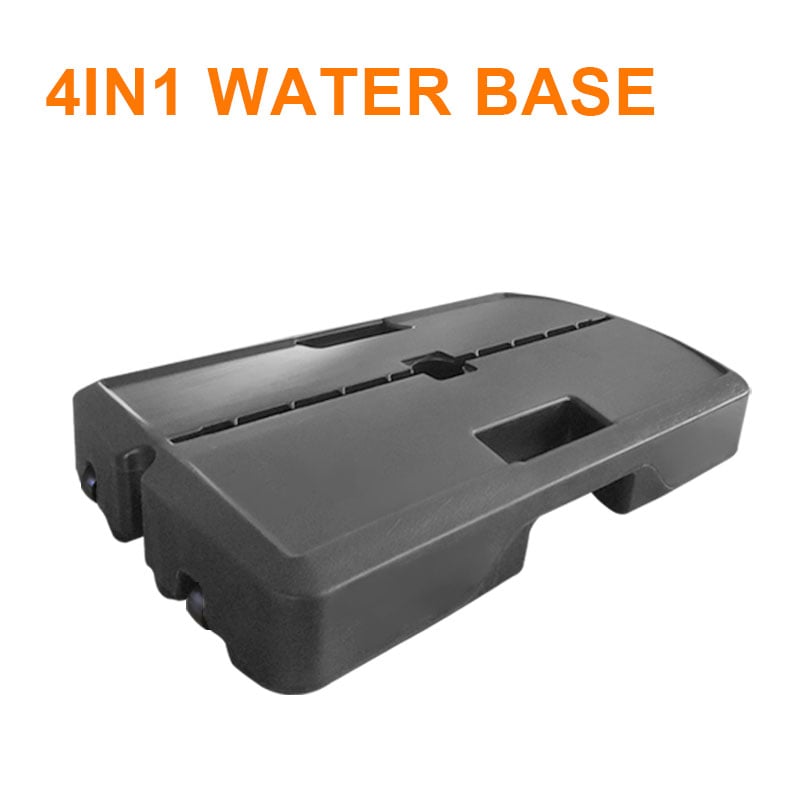
4 in 1 Water Tank
Related Articles
29kg Concrete Flag Base - The Complete B2B Buyer's Resource - WZRODS
WZRODS DY451B: 29 kg, HDPE shell, concrete core. Stackable, portable, rust-proof. FOB price US$5.75–$6.85 at MOQ 2 units. Those numbers look unremarkable. Factor in landed cost—import duties lower than aluminum’s under relevant HTS codes, freight savings from less weight per unit of stabilizing mas
Wide Tube Cross Base - The Complete B2B Buyer's Resource - WZRODS
The Wide Tube Cross Base, manufactured by Wzrods in Shandong, China, solves one problem: reliable stability for poles under three meters, without the freight costs and warehouse footprint that heavier alternatives demand.
Rectangular Pipe Cross Base - The Complete B2B Buyer's Resource - WZRODS
The pipe cross flag base is a cross of rectangular steel pipe, powder‑coated, weighing 1.3 kg and spanning 78 cm across its arms. Its center holds a C‑ring shaft that lets the flag rotate with the wind.
X-Shape Backpack Banner - The Complete B2B Buyer's Resource - WZRODS
Economic Cross Base - The Complete B2B Buyer's Guide- WZRODS
When you buy an economic cross base—something like the Wzrods DM‑9, a 77 cm‑long, 1.3 kg iron cross—forget “economic” as a synonym for “cheap.” It means value-engineered.