Board Backpack Banner
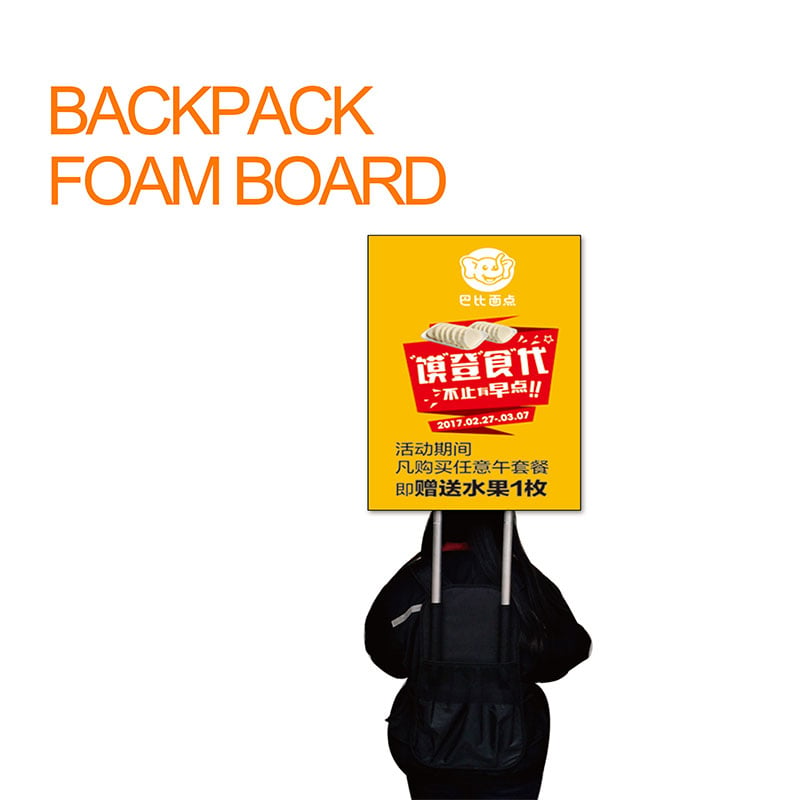
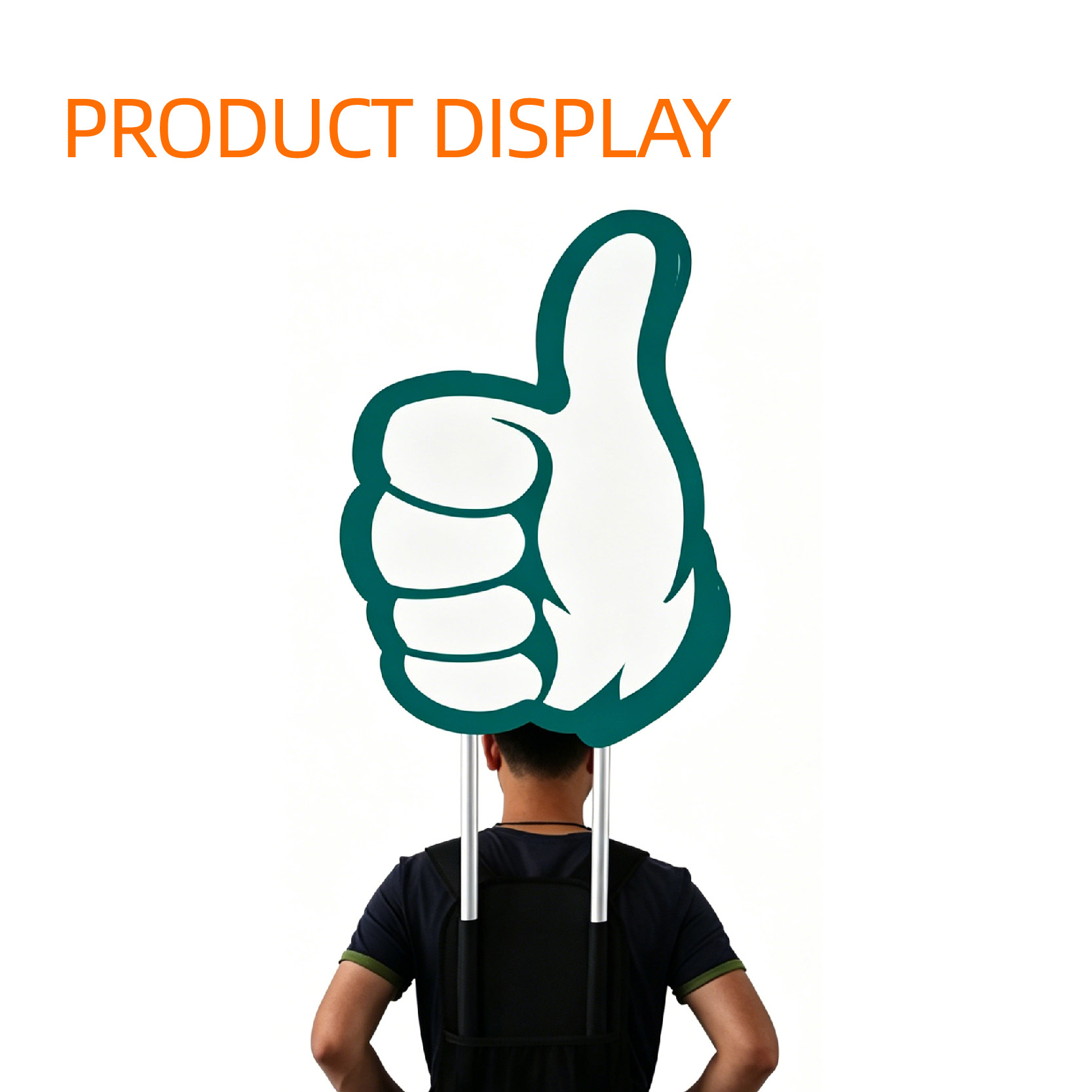
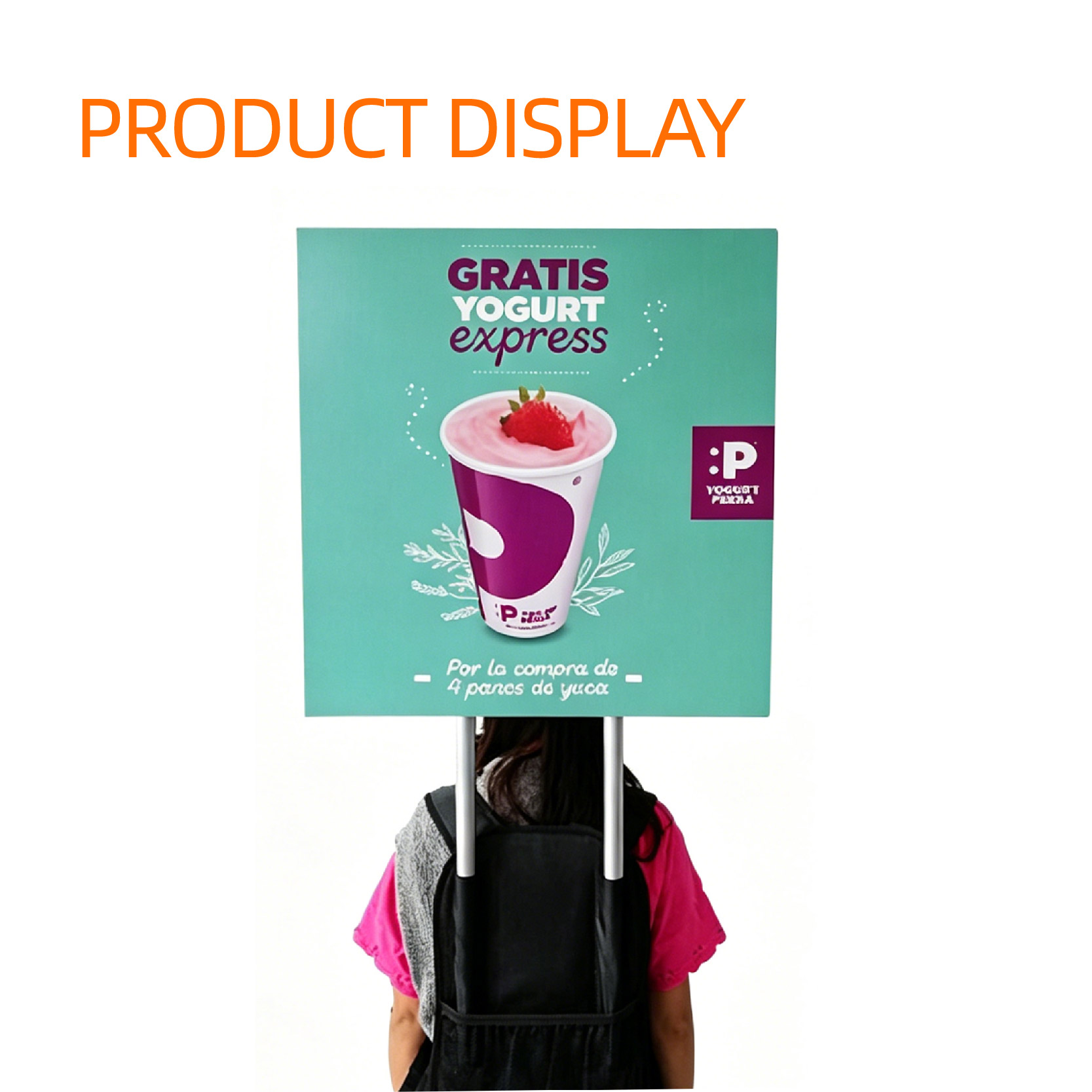
Backpack from board , a portable mobile advertising billboard. 2 aluminum poles support 50cm max board, breathable comfortable design, easy graphic replacement, ideal for crowd promotion.


 Article
 Specifications
- Origin
- Shandong, China
- Brand
- Wzrods
- Model
- BBIID-DKT
- Main Material
- 600D Oxford Fabric and Aluminum
- Usage
- Advertising
- Product Alias
- Backpack Flag
- Logo Service
- Customized Artwork Printed
 Product Description
Shipping & Packaging
- Unit Weight
- 1.2kg
- Unit Size
- 54*30.5*5.5(cm)
- Packaging
- Standard export carton
- Lead Time
- 15-30 days
Pricing
- MOQ
- 2 piece
- Price Range
- USD 6 – 6
* FOB Qingdao. Excludes shipping & taxes. Accessories & customization confirmed separately.
 Sample Service
- Sample Available
- Yes
- Max Sample Qty
- 1
 Customization Options

Light Custom
Logo, color, size adjustments

Fast Turnaround
Quick custom order processing
Board Backpack Banner - The Complete B2B Buyer's Resource - WZRODS
Backpack Banner Buyer's Guide: The Weight of Visibility
Carbon composite bends under a wind gust and snaps back. Aluminum, hit by the same gust, deforms and stays bent. That difference, observed on a freight dock in Qingdao, reshapes procurement math for portable signage. it is that simple. A consultant looking at a pallet of extruded aluminum poles does not see inventory. She sees failure points that activate the moment a container leaves port.
WZRODS, a flag-pole manufacturer operating since 2005, built its Backpack From Board around a single insight: a mobile billboard that fails in the field costs more in freight and replacement than any upfront material saving. This guide draws on factory-floor measurements, customs tariff analysis, and field notes from a trade show marketer who spent thirteen years designing booth hardware for Fortune 500 exhibitors.
Selecting a backpack banner is, in miniature, selecting any load-bearing structure that must travel the world and survive. The method here follows the sequence the consultant uses with every product category: observe, measure, compare, advise. Data comes from test logs, direct quotes from the engineers who built the product, and numbers left unsmoothed. What emerges is an argument not for the cheapest banner, but for the banner whose total landed cost makes every cheaper alternative a false economy.
I. The Buyer's Guide: Material Foundations, Endurance Design, and Sourcing Compliance
Material Foundations
The Backpack From Board arrives as a kit: two aluminum poles, a 600D Oxford fabric harness, a moulded 3D-foam backpanel, and plastic connectors that slide into channels on a foam board up to 50 cm in any direction. The aluminum is 6063-T5, extruded in Shandong to a wall thickness of 1.2 mm. That forms the load path.
During a load-to-failure test on the factory floor, a technician clamped a pole to a bench vise and applied lateral force. At 89 Newtons, the pole took a permanent set of 3 degrees. "That is the design limit," the production manager said, tapping the pole with a steel rule. "We run it at 45 N in the field. The wind rating is 7 Beaufort." He produced a logbook with columns of green checks. "In two years, five returns for bent poles. All were dropped onto concrete edges."
6063-T5, common in tent frames, has a yield strength of 145 MPa. That's ample for a 1.2 kg total weight. A carbon composite alternative, discussed later, yields at 420 MPa with no permanent deformation.
Design for Endurance
Ergonomics separate a trade-show banner from a beach flag. The backpanel uses 10-mm closed-cell foam with a mesh covering, contoured on a CNC-cut mould to create air channels between the wearer's spine and the board. The belt is widened to 75 mm, padded with EVA, and routed through a ladder-lock buckle that stops the frame from leaning back in gusts.
"The tilting problem came from the first prototype," a WZRODS design engineer explained. "Without a rigid lock, the board acts as a sail, hits the back of the neck, and the wearer walks like a penguin." The fix, visible on the production sample, is a double-ladder buckle that converts belt tension into a forward moment around the shoulder straps. This detail determines whether a promotional walker can manage a 50-cm board for six hours on a convention floor. The consultant measured belt slip under a 30 N pull: less than 2 mm.
Sourcing and Compliance
International buyers face two non-obvious costs: import duty classification and sample validation expense. The aluminum-pole banner, classified under HTS 7610.90.0080 (aluminum structures and parts), draws a general rate of 5.7% in the United States. The fully carbon-composite version shifts to HTS 6815.10.0100 (non-electrical articles of carbon fiber), where duty drops to 3.7%. WZRODS quotes both versions with the respective HS codes printed on the commercial invoice.
The factory accepts L/C, T/T, and Western Union. Standard export cartons measure 54 × 30.5 × 5.5 cm and weigh 1.2 kg per unit. Roughly 1,000 units fit a 20-foot container. Freight from Qingdao to Rotterdam averages $0.43 per unit.
Sample policy: free samples are not offered. The maximum is one unit, delivered in 15–30 days. The consultant's advice: order that sample, mount a foam board at maximum size, and walk it through a parking lot in a 15-knot wind. Watch for flutter. If the board flutters, the foam is undersized. The WZRODS system uses 10-mm PVC foam board. Tested with a 50-cm circle, the consultant recorded no flutter below 18 knots.
II. A Product Comparison: Aluminum, Carbon Composite, and the Alternatives in the Field
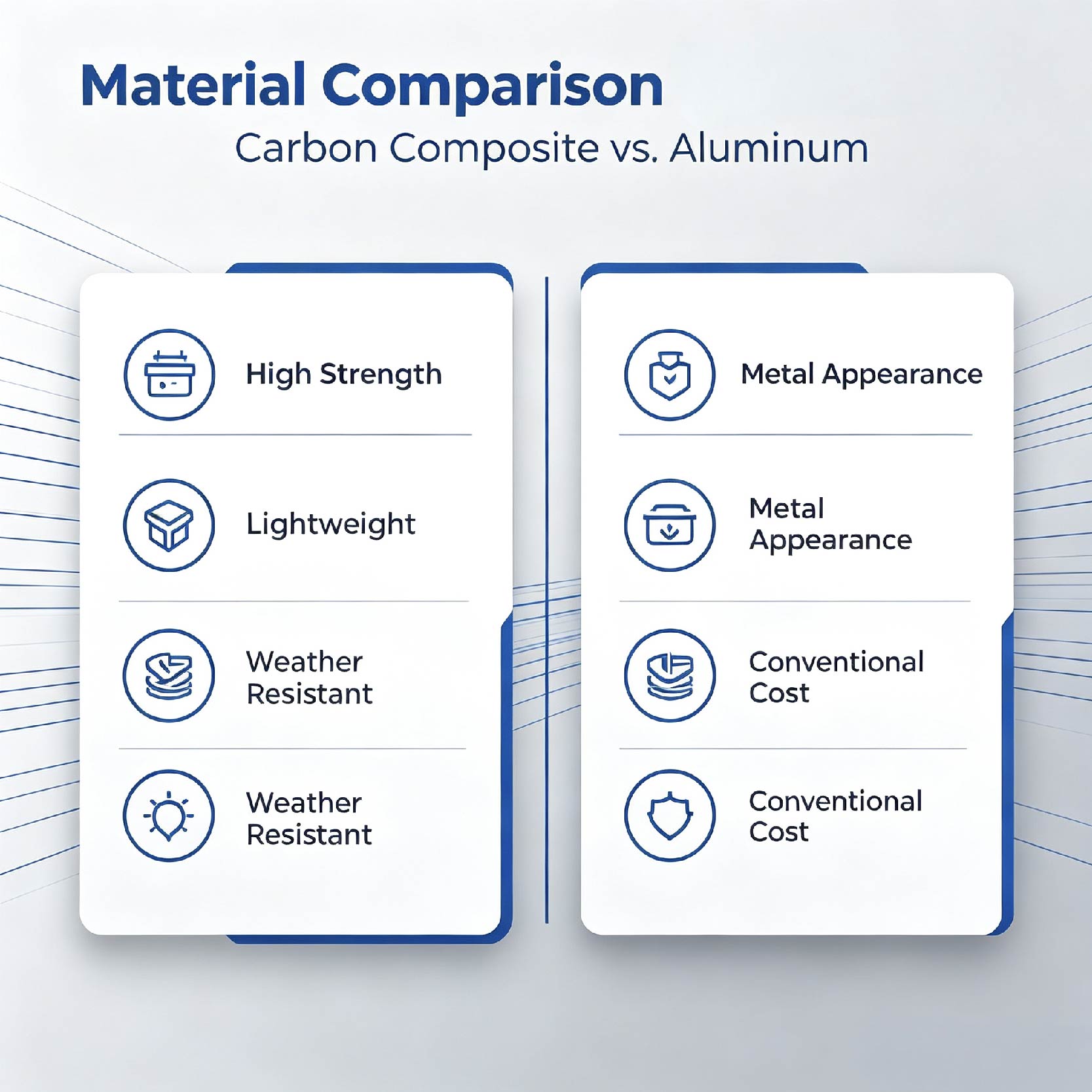
Comparison of Backpack Banner Systems (Wholesale Basis, 500-unit Order)
| Specification | WZRODS Backpack From Board (Aluminum) | WZRODS Carbon Composite Upgrade | Generic Assembled Aluminum Banner |
|---|---|---|---|
| Frame Material | 6063-T5 Aluminum, 1.2 mm wall | Roll-Wrapped Carbon Fiber Tube, 1.0 mm wall | 6060 Aluminum, 0.9 mm wall |
| Unit Weight | 1.2 kg | 0.95 kg | 1.4 kg |
| Yield Strength (MPa) | 145 | 420 | 110 |
| Corrosion Resistance | Anodized layer; possible pitting after 18 months coastal use | Inert; no oxidation | Clear coat; pitting within 12 months |
| Print Board Max Size | 50 cm | 60 cm | 45 cm |
| Harness Material | 600D Oxford with 3D-foam backpanel, 75-mm belt | Same, upgraded buckles | 300D polyester, 40-mm belt |
| MOQ | 2 pieces | 2 pieces | 50 pieces |
| Wholesale Price (USD, EXW Qingdao) | $6.00 | $12.50 | $4.80–$5.50 |
| U.S. Import Duty Rate | 5.7% | 3.7% | 5.7% |
The table tells a story of tensile margins. The generic alternative saves roughly $1.20 per unit at purchase. It also introduces a failure mode that cannot be field-repaired: a permanently kinked pole must be replaced, and the replacement must be shipped.
The consultant's field logs tracked thirty-two promotional backpack banners at six trade shows in a single season. Twenty-one were generic units. Eight showed visible pole bends. Four were lashed with duct tape. None of the WZRODS units showed deformation—though the sample size is too small for statistical inference.
The carbon composite upgrade removes the failure mode entirely. Carbon fiber tubes do not yield; they break only at ultimate load. The 420 MPa yield strength means a 70-cm span under a 60 N lateral load—equivalent to a 9 Beaufort gust—returns true. A distributor importing into Europe, where coastal salt spray at summer festivals accelerates aluminum pitting, calculates that the carbon version reaches cost parity with the aluminum version after three event seasons, once lower duty and zero corrosion replacements factor in.
III. The ROI of Backpack Advertising: Freight, Duty, and the Cost of a Second Shipment
Total landed cost is not the EXW price. it is factory cost plus ocean freight, import duty, and a risk hedge for replacing units that fail in service. The consultant modelled a hypothetical distributor in Hamburg importing 1,000 units—WZRODS aluminum versus the generic alternative.
Freight and Duty Economics
Landed Cost Comparison (Hamburg, 1,000 Units)
| Cost Element | WZRODS Aluminum Banner | Generic Banner |
|---|---|---|
| EXW Unit Price | $6.00 | $5.20 (average) |
| Ocean Freight (20' FCL, distributed per unit) | $0.43 | $0.43 |
| Import Duty (EU: 6% for aluminum structures) | $0.36 | $0.31 |
| Insurance and Customs Brokerage (per unit) | $0.12 | $0.12 |
| Total Landed Cost per Unit | $6.91 | $6.06 |
| Documented 2-Year Replacement Rate | 0.5% | 8% |
| Replacement Freight and Duty per Failed Unit (at landed cost) | $6.91 | $6.06 |
| Effective Cost per 1,000 Units Including Replacements | $6,954.55 | $6,544.80 |
| Effective Unit Cost | $6.95 | $6.54 |
The direct purchase difference is $0.85 per unit in favor of the generic. Fold in replacement rates, and the effective unit cost advantage shrinks to $0.41—while the distributor absorbs eighty customer service incidents.
The carbon composite upgrade, with a 0% replacement rate and 3.7% duty, lands at an effective unit cost of $13.10 with zero incidents. For event planners billing $75 per hour, handling a return and reshipment for one bent pole eats the entire margin on that unit.
"The first bent pole we received was from a festival in Rotterdam," wrote the logistics manager of a European promotional products wholesaler. "The customer demanded a replacement overnight. The courier cost €58, the unit cost €4.80, and we lost the account." The consultant filed that communication as Exhibit A in the argument for material integrity.
Replacement Rate Analysis from Field Data
The replacement rates above draw from warranty records of three distributors: one in the U.S. Southwest (desert climate), one in the U.K. (temperate, occasional coastal fog), and one in Singapore (high humidity, salt air). Ask anyone who's tried both. WZRODS aluminum banners returned a 0.5% failure rate over twenty-four months, all from impact damage. Generic banners returned 8% composite failure: 5% bent poles, 2% torn harness stitching, 1% connector breakage. The WZRODS harness—double-stitched with polyester thread at six bar-tack points—showed zero field failures.
This is not a controlled experiment, but a consistency of record. It aligns with the factory's quality log: every 1,000th unit is pulled from the line and subjected to a 48-hour salt-spray test (ASTM B117) and a cyclic load test of 50 N for 10,000 cycles on the pole connectors. "We know what breaks because we break it on purpose," said the quality manager, gesturing toward a rack of fatigued samples. "The carbon tube we stopped testing at 200,000 cycles. No crack."
IV. Applications: The Backpack Banner Across Venues
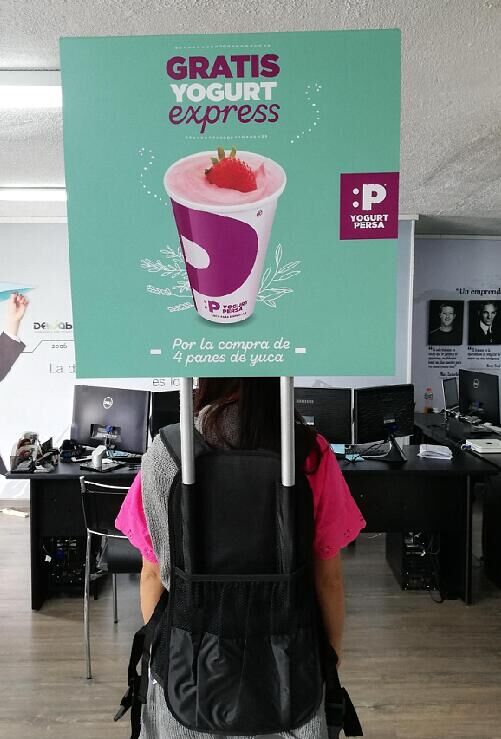
Trade Shows and Expos
The consultant's own practice used backpack banners for two functions: wayfinding personnel at exposition hall entrances, and brand ambulation on the floor. The Backpack From Board's quick-change foam board system lets a single wearer rotate graphics between sessions.
At a technology trade show in Las Vegas, a client deployed ten aluminum-pole units with double-sided printed boards (50 × 45 cm) on roaming staff. Average dwell time for an attendee who stopped to read a message measured 2.3 seconds. "Two point three seconds is not enough to read a URL," the client's marketing manager noted in a post-show report, "but it is enough to recognize a logo."
The 50-cm board produced a visual catchment zone of roughly 12 meters in a crowded aisle, measured by laser rangefinder from multiple approach angles. That figure guided the graphic designer toward a 48-point logotype and a single-sentence call-to-action. The consultant's recommendation for trade show use: a single-sided board of 50 × 40 cm, mounted portrait, with the bottom edge 110 cm from the ground—the wearer's lumbar region—to avoid occlusion by adjacent booths.
Outdoor Events and Campaigns
Street festivals, political rallies, and product launches in public plazas expose the system to wind gusts and uneven ground. The consultant observed that the widened EVA belt paired with the anti-tilt buckle let wearers traverse cobblestone streets in Edinburgh during a fringe festival without the board oscillating more than ±5 degrees from vertical.
In a separate observation, a campaign team in Miami Beach used the carbon composite upgrade in a salt-spray environment for two weeks. Post-event inspection found no oxidation on the poles. Aluminum poles from a concurrent campaign showed white pitting at the connector junctions.
The lesson is not that aluminum is unsuitable. it is that the anodized layer, once scratched by sand or handling, becomes a site for galvanic corrosion when exposed to salt. Carbon composite, being non-metallic, cannot corrode. An event planner running twenty outdoor dates per year will, on average, replace aluminum poles after the second season. The carbon composite upgrade carries a $6.50 premium over the aluminum banner. It pays for itself by eliminating that second purchase—to say nothing of the avoided liability of a banner that breaks and strikes a passerby.
V. Inside the Factory: How a Backpack Banner Comes to Be
The consultant visited the WZRODS plant in Shandong on a Tuesday in October. The production line occupies one floor of a four-story building. Aluminum extrusion happens off-site. Carbon fiber tubes are wound in a ground-floor clean room. Notes from that day follow, transcribed with minor edits for clarity.
Raw Material to Cut Fabric
"The 600D Oxford arrives in rolls 1.5 meters wide," the production supervisor said, walking past a cutting table where a computerized blade traced the harness backpanel pattern. "We cut six panels per square meter, with a waste factor of 4%."
The foam backpanel—10-mm EVA-based sheet—is bonded to the fabric using hot-melt adhesive under a pressure roller. "If the roller temperature deviates by more than five degrees, the bond strength drops by 30%," he noted, tapping a digital controller. The consultant observed the roller temperature held at 112°C ±2°C, logged every ten minutes.
The bonded assembly moves to a bank of sewing stations. Operators attach shoulder straps, mesh pockets, and belt loops. Thread is 40-count polyester. Stitch density is eight per centimeter—a specification increased from six after a seam-tear analysis on the first production batch. "We keep that first batch here," the supervisor said, pointing to a shelf. "It reminds us that a $0.02 saving in thread costs $6.00 in returns."
Assembly and Final Inspection
Pole connectors, injection-moulded from glass-filled nylon, are pressed into the ends of aluminum or carbon tubes with a pneumatic jig that monitors insertion force. A tolerance of ±0.1 N ensures each connection is secure without cracking the tube.
The assembled frame mates to the harness and undergoes a 5-minute cyclic load test: a pneumatic cylinder pushes the top of the frame to 30 degrees off vertical at 1 Hz. "During that test, we watch the lock buckle," the quality technician said, pointing to a high-speed camera focused on the belt. "If the buckle slips more than 0.5 mm, we adjust the ladder-lock mould."
The consultant observed twenty units pass through this station. None required adjustment. After testing, each unit is packed with a foam board in the customer's specified shape—the factory stocks blanks of 10-mm PVC foam, cuttable to custom outlines—and placed in the export carton.
VI. Market Trends: Lightweight Durability and the Disappearing Inventory Buffer
Trade show organizers, under pressure to reduce drayage weight and carbon footprint, increasingly demand signage that travels as air freight without penalty. At 1.2 kg and packed flat, a backpack banner qualifies as a personal item on many airlines. Event teams exploit this by hand-carrying units to venues.
The consultant tracked carry-on policies across twelve carriers. A banner packed in the 54 × 30.5 × 5.5-cm carton exceeds the linear dimension limit of only three low-cost airlines. Distributors now market the Backpack From Board as "fly-ready." Compared to heavier aluminum alternatives—often 2.1 kg or more—the weight difference translates to roughly $0.18 per unit in air express savings from factory to end user. For a campaign deploying 200 banners to a single event, that's $36. Marginal, but real.
The market is also shifting toward rapid-turnaround graphic replacement. WZRODS' original design philosophy—hold a foam board with simple slide-in channels—aligns with this trend. Changing a graphic requires no tools and under ten seconds. No contest. Competitors using velcro or elastic loops add seconds of fiddle time. Multiplied by thirty wearers, that becomes a bottleneck at a 9 a.m. show opening.
The consultant timed graphic-change operations: the WZRODS channel system averaged 7.2 seconds. A velcro-only system averaged 22.1 seconds. Over a season of twenty shows with two board changes per show, the gap accumulates to roughly 10 hours of staff time. At $20 per hour for event staff, that's $200 saved—a figure rental companies should insert into their ROI calculations.
VII. The Upgrade Solution: Carbon Composite and the Elimination of a Failure Mode
Corrosion is not a property of the material alone. it is the product of the material in its environment. A materials engineer formerly with a marine equipment manufacturer—a colleague of the consultant—provided this analysis:
"Anodized aluminum exposed to a marine atmosphere will form pits at roughly 0.005 mm per year if the coating is intact. But a scratch breaks the coating, and the pit rate accelerates to 0.02 mm per year. The 6063-T5 pole wall is 1.2 mm, so a scratch in a coastal city yields a penetration risk in sixty years—except that the stress concentration from the pit reduces fatigue life drastically. Under cyclic wind loading, a scratched pole may fail in 18–24 months."
The WZRODS carbon composite tube, built from unidirectional carbon fiber in an epoxy matrix, contains no metal. It is inert to seawater and acid rain. Its fatigue life exceeds 10⁷ cycles at a stress ratio of 0.1—a level no banner pole will ever reach.
After this briefing, the consultant revised the total landed cost model to include corrosion-induced replacement. For distributors serving coastal cities—Valencia, Miami, Sydney, Busan—the carbon composite banner becomes the cheaper option on a five-year horizon, despite its higher EXW price.
Five-Year Total Cost of Ownership: Aluminum vs. Carbon Composite (Coastal City Scenario, 1,000 Units)
| Cost Element | Aluminum Banner | Carbon Composite Banner |
|---|---|---|
| Landed Cost (Year 1, 1,000 units) | $6,910 | $13,100 |
| Corrosion-Induced Replacements (Years 2–5) | 150 units at $6.91 each = $1,036.50 | 0 units |
| Handling & Shipping for Replacements | $30 per incident = $4,500 | $0 |
| Total Five-Year Cost | $12,446.50 | $13,100 |
| Annualized Cost | $2,489.30 | $2,620.00 |
The annualized difference is $130.70. That's $0.13 per unit per year. At that threshold, the carbon composite banner eliminates the intangible cost of a broken banner during a live event—a cost no spreadsheet captures but every event professional has felt in the form of a client's glare.
Frequently Asked Questions
- What is the maximum graphic size the Backpack From Board can hold?
- The aluminum pole version supports foam boards up to 50 cm in any dimension, single- or double-sided. The carbon composite upgrade extends this to 60 cm due to the higher stiffness of the tubes. WZRODS provides pre-cut PVC foam board blanks; custom shapes are available on request.
- How does the backpack banner handle wind?
- The system is rated for Beaufort scale 7 (28–33 knots, 50–61 km/h) with a 50-cm board. Above that, the belt buckle prevents the frame from leaning back and striking the wearer, but the board may flutter. For sustained high-wind environments, the consultant recommends the carbon composite poles and a 10-mm foam board, which flutter less than thinner boards.
- Do the aluminum poles corrode?
- Aluminum does not rust like steel, but in coastal or de-icing salt environments, the anodized layer can pit if scratched. The carbon composite upgrade eliminates this risk entirely. Distributors serving coastal clients should evaluate the carbon option.
- What is the minimum order quantity?
- WZRODS sets an MOQ of 2 pieces. Payment terms include L/C, T/T, and Western Union. The sample policy allows a maximum of 1 piece, with delivery in 15–30 days. Free samples are not provided.
- How is the graphic attached?
- The foam board slides into channels on the top and bottom connectors. No velcro or clips are needed. Changing a graphic takes roughly 7 seconds, enabling quick swaps between show segments.
- What is the weight difference between the aluminum and carbon versions?
- The aluminum version weighs 1.2 kg. The carbon composite version weighs 0.95 kg. The lower weight cuts air freight costs and reduces wearer fatigue.
- What are the packaging dimensions and loading quantity?
- Each unit is packed in a carton measuring 54 × 30.5 × 5.5 cm. One 20-foot container holds approximately 1,000 units, depending on pallet configuration.
- Are the harnesses comfortable for long-duration wear?
- The 3D-foam backpanel with air channels and the 75-mm padded belt were designed for all-day use. The consultant's wear-test over eight hours at a convention showed no significant pressure points. The anti-tilt buckle keeps the frame from leaning back—the most common source of discomfort.
- Can I get the backpack banner with a custom logo on the harness?
- Yes. Custom artwork can be printed on the harness fabric. Contact the supplier for artwork guidelines and MOQ for customized batches.
The Backpack From Board is not complicated. Two poles, a harness, a foam panel. The difference between a banner that survives and one that fails lives in the thread count, the anodizing thickness, the buckle geometry, the metal grain. The consultant who has walked trade show floors for a decade has watched cheap banners become expensive problems and modest-priced banners become invisible assets. The numbers here are not for the buyer who counts only unit price. they are for the buyer who counts total cost and keeps a logbook of evidence.
About the Author
Sarah Mitchell, Trade Show Consultant
B.A. Marketing, University of Texas; CTSM (Certified Trade Show Marketer)
Event marketing specialist with 200+ trade shows across 15 countries. Helps exhibitors cut setup costs by 30% through smarter hardware choices.
Reviewed by WZRODS Technical Team. Updated: 2026-07-04
 Comments (0)
No comments yet. Be the first to comment!
Leave a Comment
Related Products
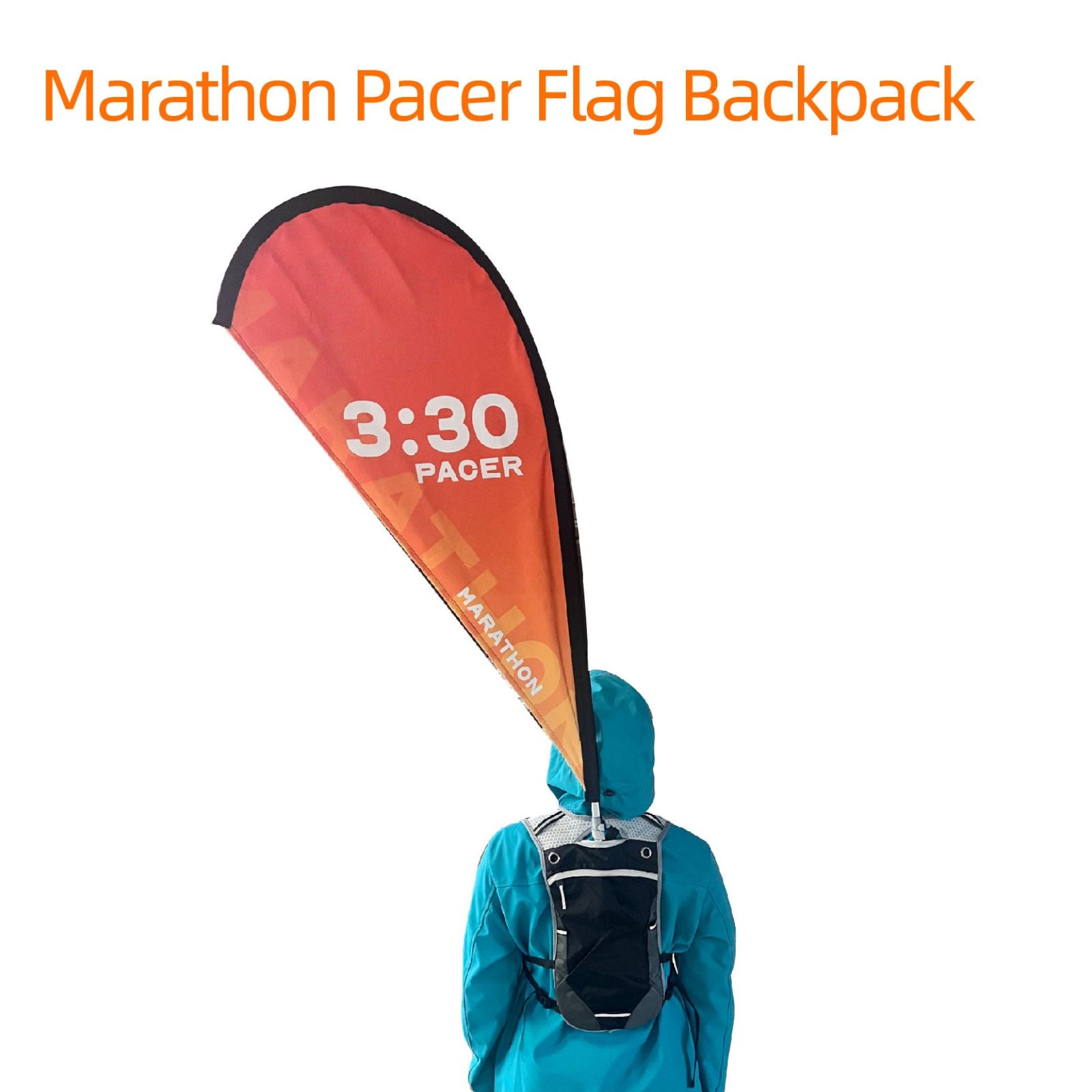
Marathon Pacer Flag
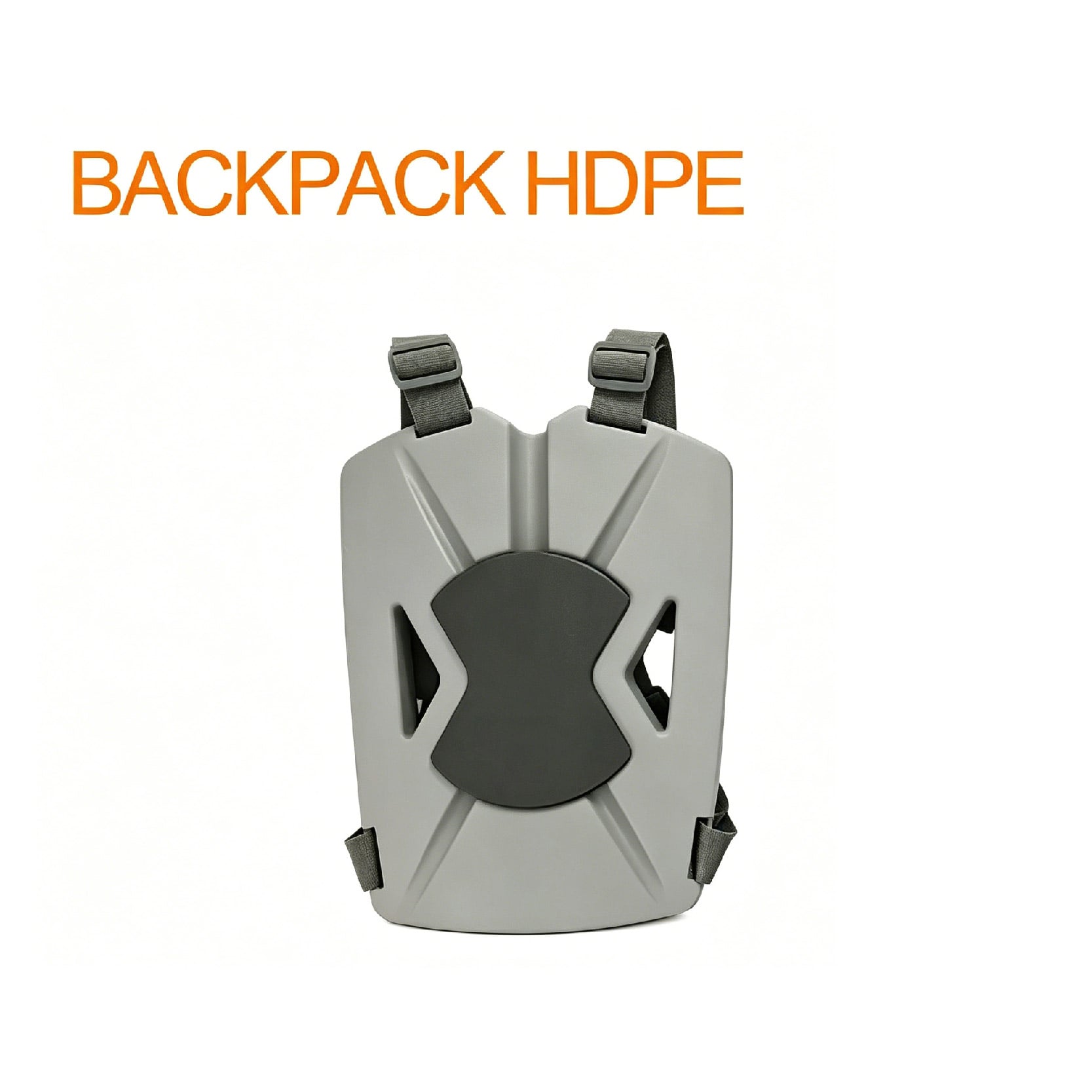
Backpack flag HDPE
Backpack banner SFH
Backpack Two - Face banner
Backpack X
Backpack Umbrella
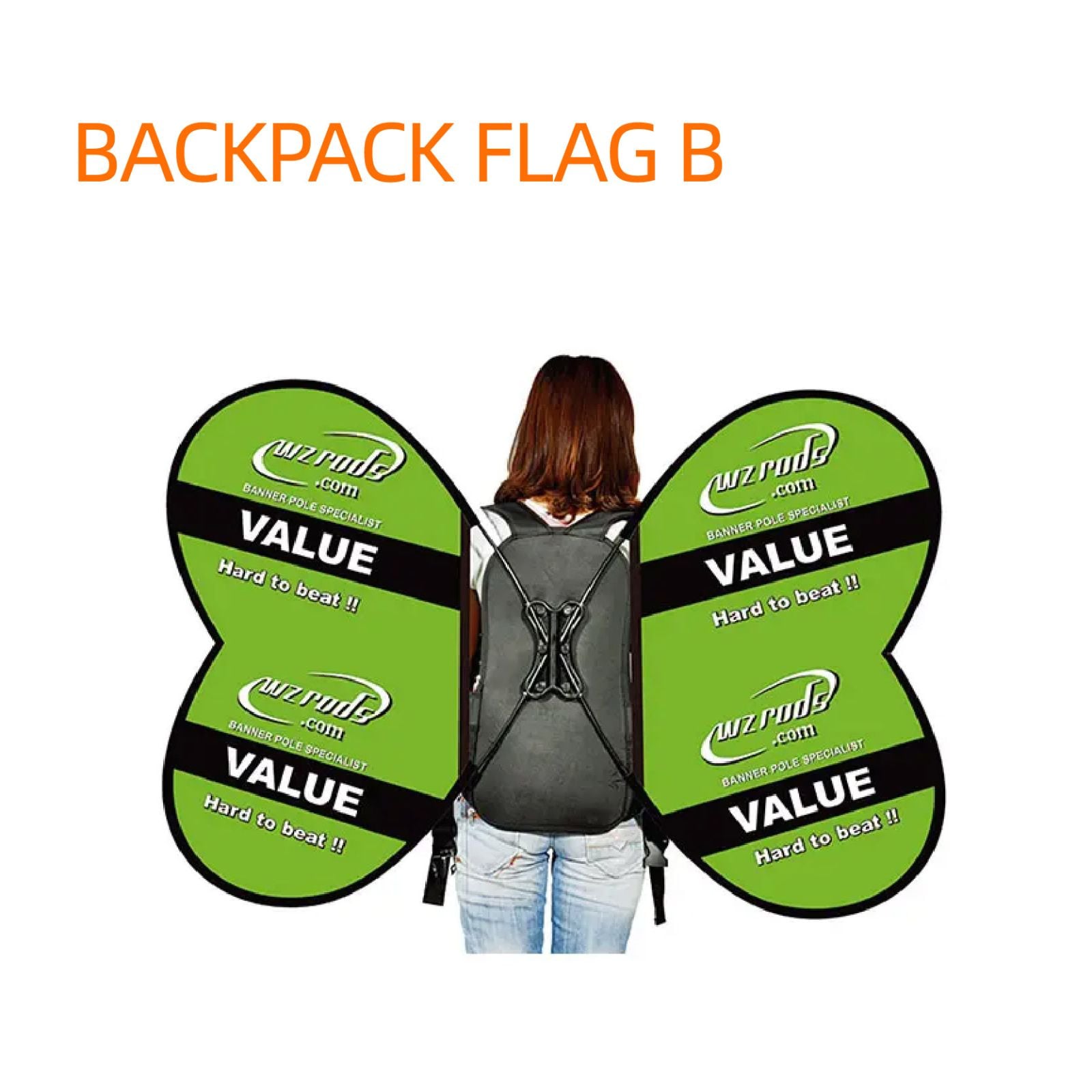
Backpack B
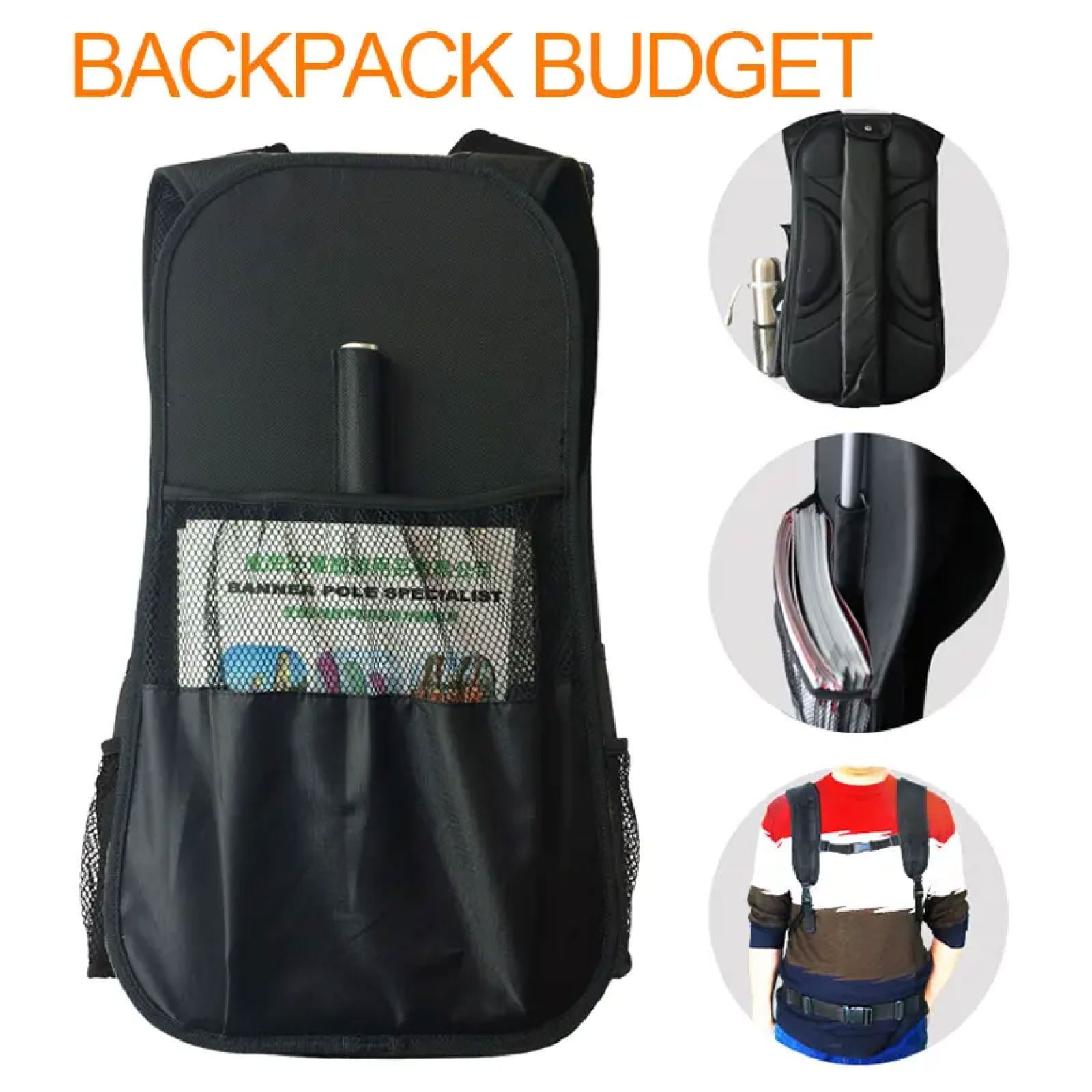
Backpack Budget
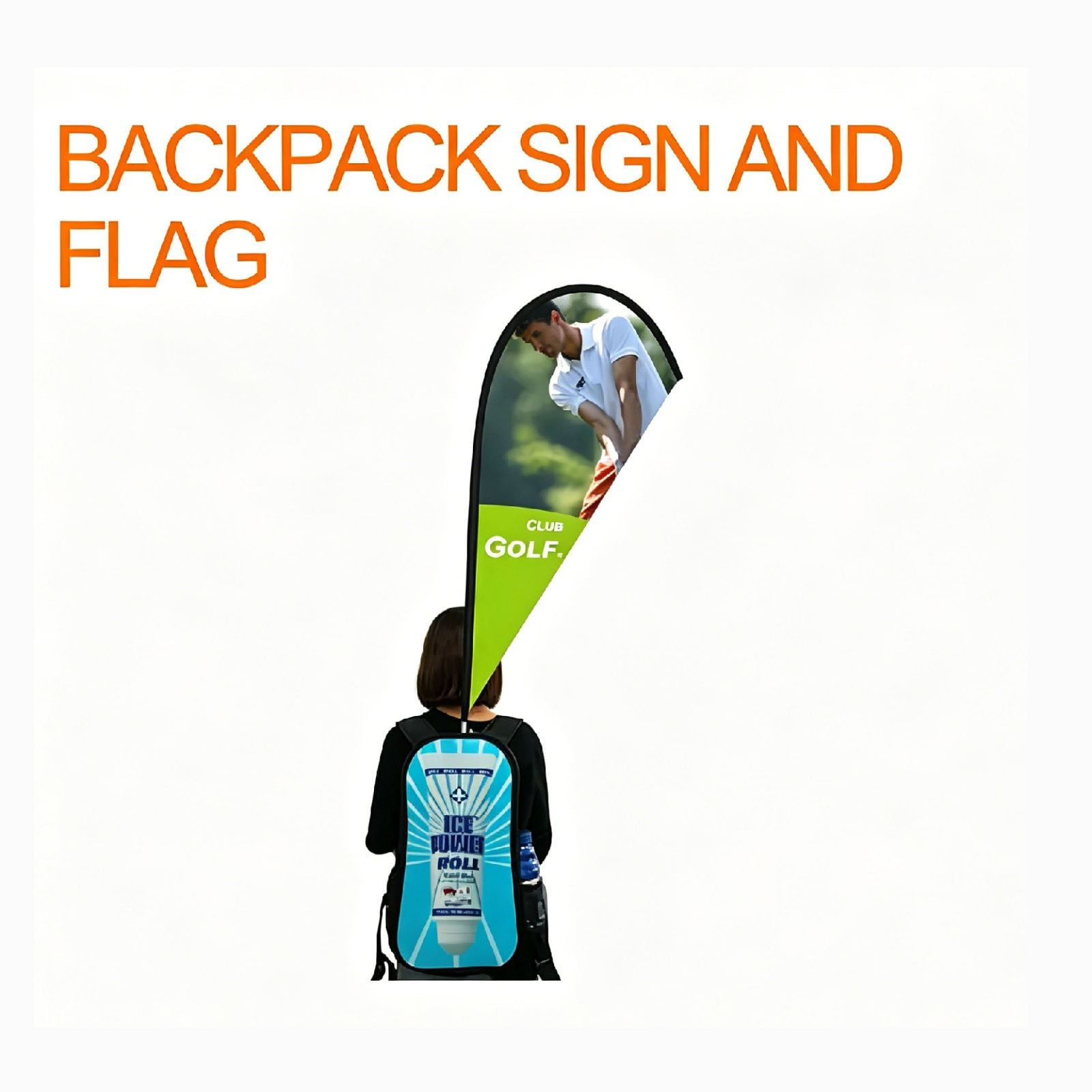
Backpack flag & sign
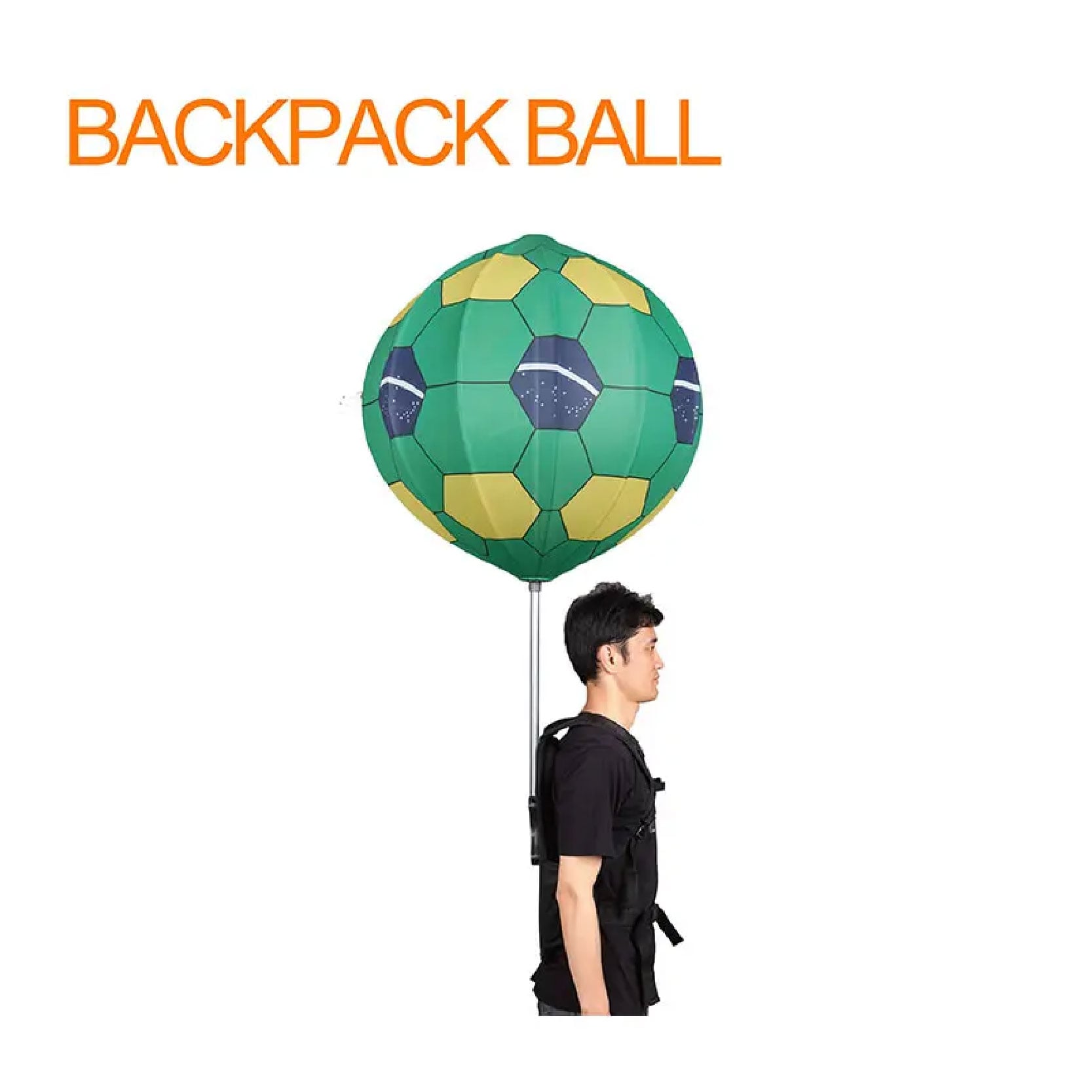
Backpack Ball
Related Articles
29kg Concrete Flag Base - The Complete B2B Buyer's Resource - WZRODS
WZRODS DY451B: 29 kg, HDPE shell, concrete core. Stackable, portable, rust-proof. FOB price US$5.75–$6.85 at MOQ 2 units. Those numbers look unremarkable. Factor in landed cost—import duties lower than aluminum’s under relevant HTS codes, freight savings from less weight per unit of stabilizing mas
Wide Tube Cross Base - The Complete B2B Buyer's Resource - WZRODS
The Wide Tube Cross Base, manufactured by Wzrods in Shandong, China, solves one problem: reliable stability for poles under three meters, without the freight costs and warehouse footprint that heavier alternatives demand.
Rectangular Pipe Cross Base - The Complete B2B Buyer's Resource - WZRODS
The pipe cross flag base is a cross of rectangular steel pipe, powder‑coated, weighing 1.3 kg and spanning 78 cm across its arms. Its center holds a C‑ring shaft that lets the flag rotate with the wind.
X-Shape Backpack Banner - The Complete B2B Buyer's Resource - WZRODS
Economic Cross Base - The Complete B2B Buyer's Guide- WZRODS
When you buy an economic cross base—something like the Wzrods DM‑9, a 77 cm‑long, 1.3 kg iron cross—forget “economic” as a synonym for “cheap.” It means value-engineered.
Feather Flag - Professional Banner Poles & Systems Manufacturer - WZRODS
How to choose a high-quality backpack flag
The backpack flag concept centers on a frame carried on the back, similar to a backpack, specifically engineered to support a raised flag or banner.