Trade Show Archway
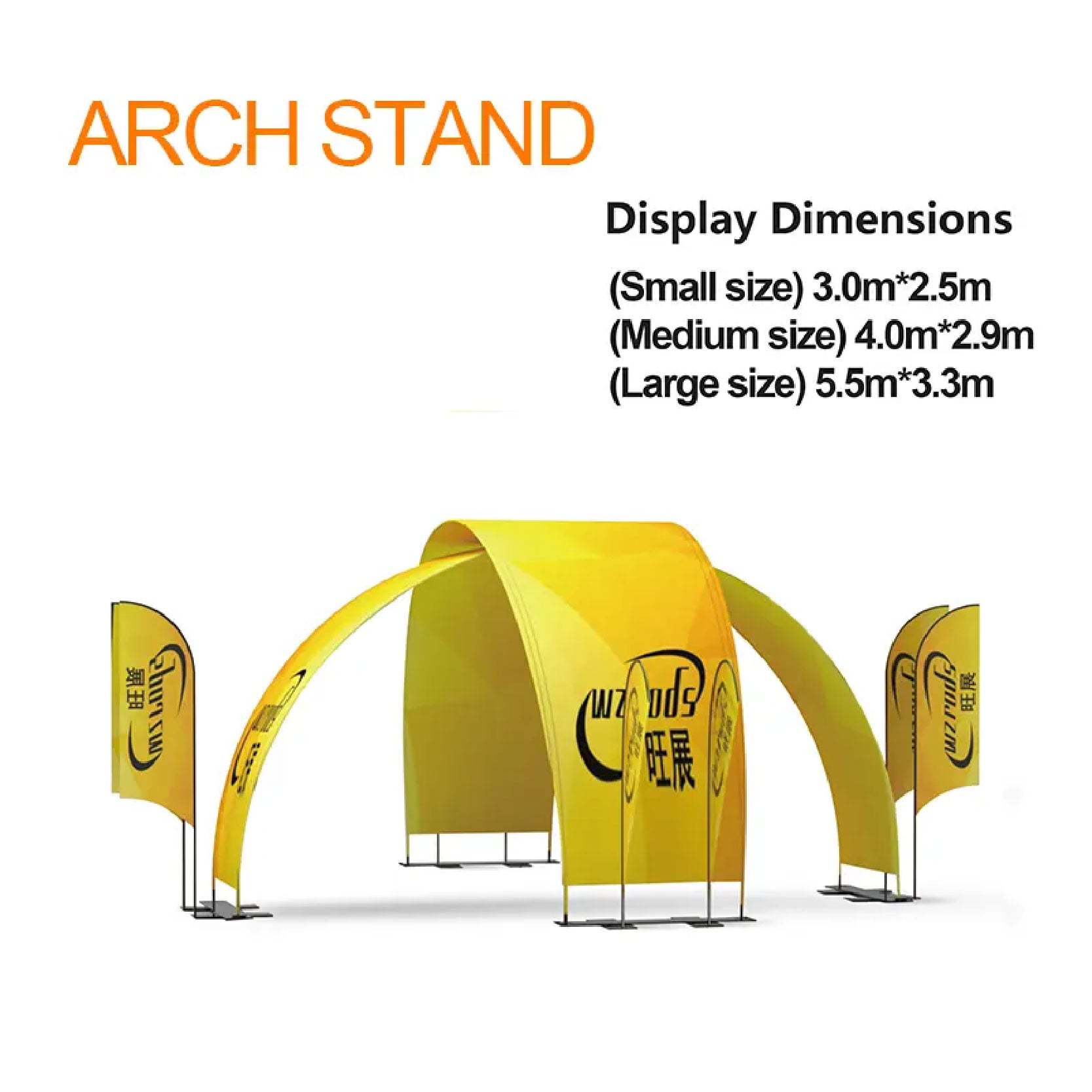
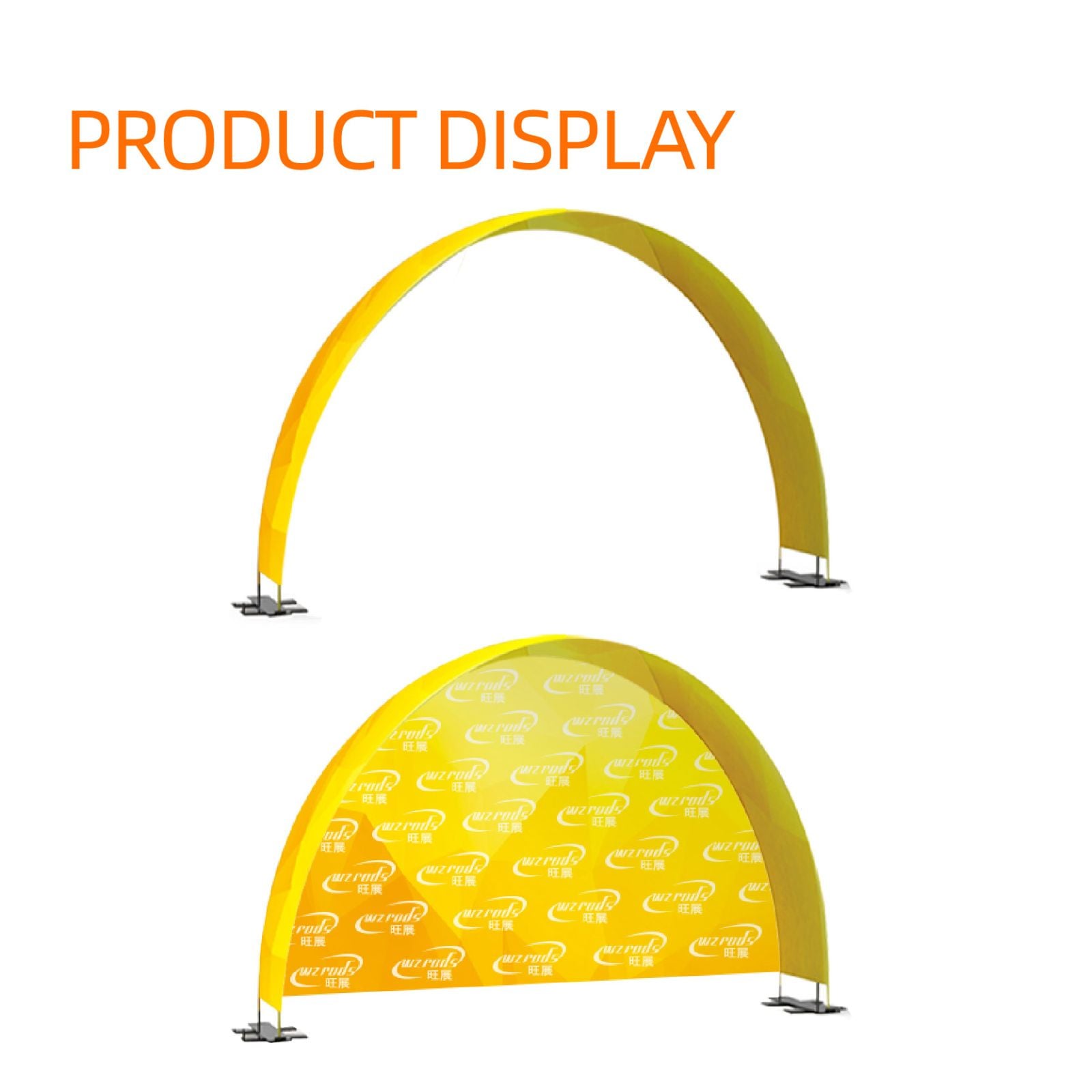
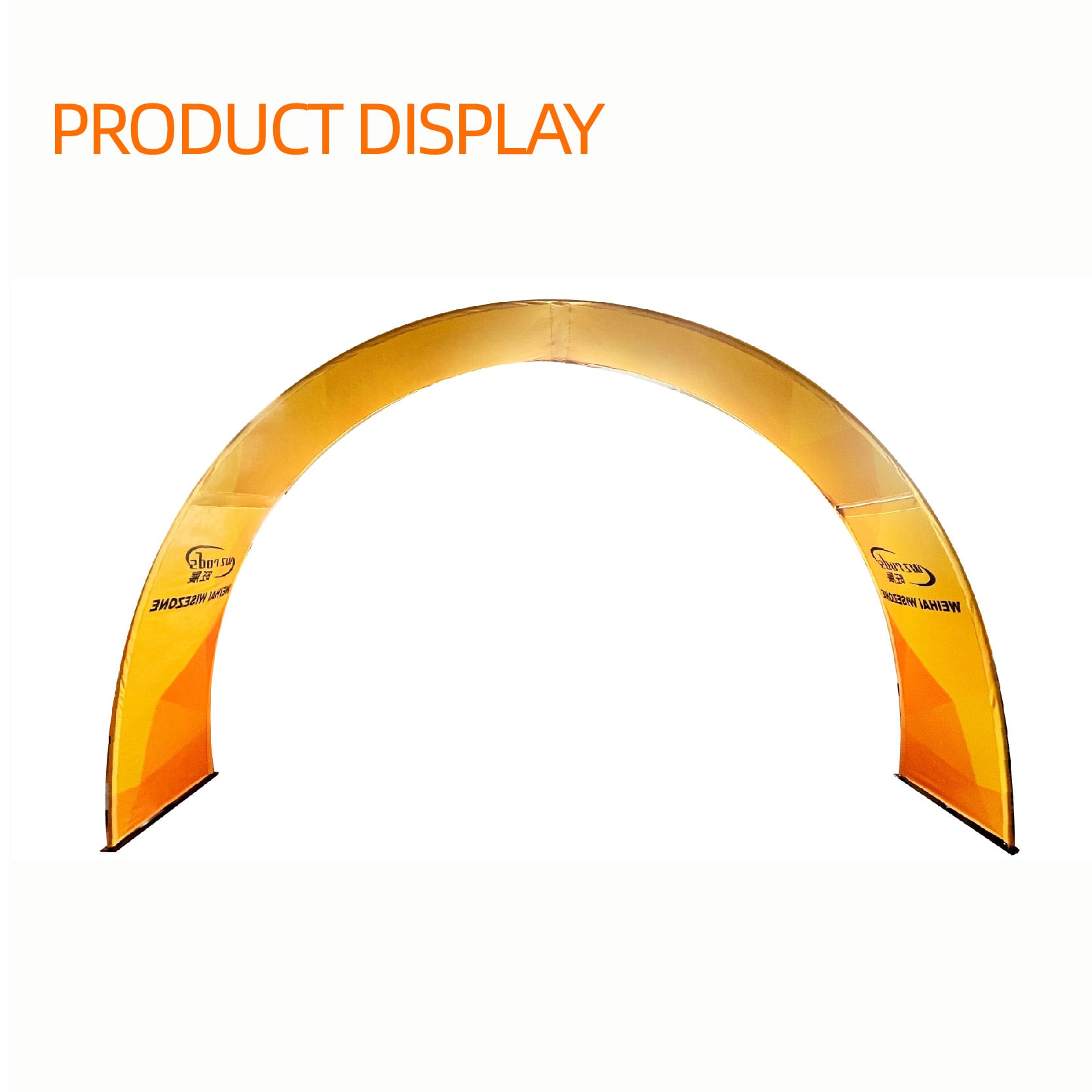
3D arch stand suits events, exhibitions and weddings. 3 sizes for indoor & outdoor use. Elastic link poles easy to build, compact package, shared bases and wheeled steel base included.


 Article
 Specifications
- Origin
- Shandong, China, Shandong, China
- Brand
- Wzrods, WZRODS
- Item Code
- Bow-L3
- Flag Fabric
- 100% Polyester/knitted Polyester/stain/cotton
- Usage
- Advertising
- Application Spec
- Event Entrances, Festivals, Trade Shows, Sports Events
- Printing Method
- Dye Sublimation Printing
- Dispaly Dimensions(3D)
- 5m*3m
- Dispaly Dimensions(Arch Stand)
- 4m*2.4m
- Dispaly Dimensions(Arch Gate)
- 5m*3m
 Product Description
Shipping & Packaging
- Unit Weight
- 4.000
- Unit Size
- 55.5X41X6
- Packaging
- Standard export carton
- Lead Time
- 15-30 days
Pricing
- MOQ
- 2 piece
- Price Range
- USD 15 – 15
* FOB Qingdao. Excludes shipping & taxes. Accessories & customization confirmed separately.
 Sample Service
- Sample Available
- Yes
- Sample Price
- piece 70
- Max Sample Qty
- 1
 Customization Options

Light Custom
Logo, color, size adjustments

Fast Turnaround
Quick custom order processing
Promotional event archway- The Complete B2B Buyer's Resource - WZRODS
An event gate looks simple—a logo stretched between two posts. Then you watch a mild gust shred one in half. That moment rewrites every assumption about materials.
Last March a panicked call came from an auto show exhibitor. “We set up our archway at the entrance,” he said, “and a gust hit it sideways. The aluminum tubing buckled. The whole thing collapsed onto a Maserati.” Wind speed? About 35 mph. Nothing extraordinary. The arch—a standard imported aluminum model—had deformed permanently. Straightening it would leave a kink, a built‑in failure point for the next breeze. What he needed was a frame that flexes without yielding, something that takes a 35‑mph gust and springs back to true. That something is carbon composite.
For the last three years, carbon composite arch stands from WZRODS—a Shandong factory established in 2005—have redrawn expectations for entrance architecture. Here’s what a serious buyer needs to know.
1. The Buyer’s Guide: What an Arch Stand Really Needs to Do
1.1 Survival in the Wild: Wind and Foot Traffic
An arch stand at an outdoor festival endures wind, the public, and the setup crew. Start with pole material. Aluminum has a Young’s modulus around 70 gigapascals. Carbon composite, depending on layup, can reach 230. Same cross‑section, three times stiffer. But stiffness alone isn’t the story. Aluminum yields—it bends and stays bent. Carbon composite, when the fibres are oriented correctly, flexes and returns. WZRODS poles are made from carbon‑fibre prepreg wound at precise angles so the tube can bend to a tight radius without permanent deformation. A sample pole bent into a U‑shape under a desk straightened completely, camber unchanged.
Wind tests on the 5‑metre‑wide Bow‑L3 (3 metres tall) used an anemometer and force gauge. At a steady 40 km/h (25 mph), the arch leaned less than 8 cm off vertical, the base system holding firm. When gusts hit 60 km/h, the fabric billowed but the carbon poles swayed and settled. No contest. An aluminum arch of identical geometry took a permanent 3‑degree bow at the apex after the first gust. So the rule for buyers: demand a material that flexes, not one that yields.
1.2 The Elastic Cord System: No Tools, No Mistakes
Booth crews still fumble with Allen keys and lost screws on aluminum arches. The WZRODS design eliminates that: a high‑strength shock cord runs through the centre of every pole segment. Unpack the kit, connect the segments, and the cord snaps them together like an airplane skeleton. No pins, no threads. At a Düsseldorf trade show, two people took a 5‑metre arch from packed bag to fully dressed in six minutes flat. That speed saves labour and removes the most common failure mode—a poorly seated screw that loosens under vibration.
The shock cord is a continuous loop passing through the three arch sections, down the vertical legs, and anchored inside the base plate. If a pole ever cracks (something not yet observed under normal use), the cord keeps the pieces together, preventing a collapse onto attendees. Mechanical joints can’t offer that safety margin.
1.3 Base Options and Ballast: The Secret to Not Chasing a Flying Banner
Stability starts at the ground. WZRODS supplies three base types: a universal flat steel plate with holes for ground stakes, a water‑fillable PVC bag holding 20 litres per side, and a wheeled steel base. On grass, drive 30‑cm steel pegs through the plate. Indoors, when floors are level, water bags work—though one wedding planner discovered a slow seam leak can turn an aisle into a shallow pond. The wheeled base filled with dry sand is now the standard indoor spec for polished floors.
In practice, The wheeled base is a steel frame on four locking casters, attaching to each vertical pole with quick‑release pins. Once assembled, you roll the fully dressed arch through convention centre corridors without tearing down the fabric. After the show, push it to the dock and fold it flat into its bag. Over ten events, that base eliminates at least 20 minutes of labour per setup—often paying for itself inside two exhibitions.
2. Material Comparison: Carbon Composite vs. Aluminum vs. Steel
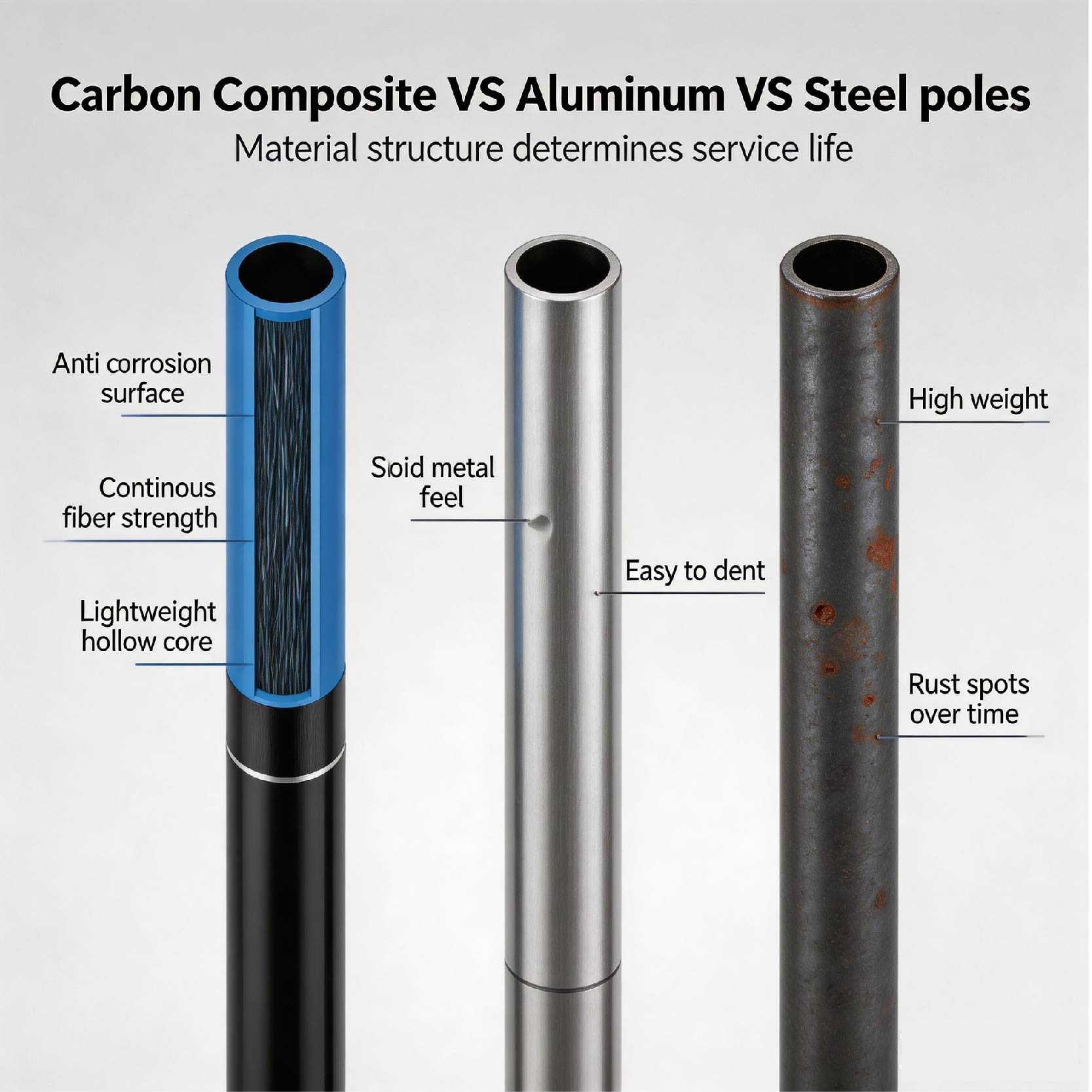
2.1 Weight and Freight: Shipping Air vs. Shipping Lead
The single largest hidden cost when importing event hardware is freight. A 40‑foot high‑cube container from Qingdao to Los Angeles runs roughly US$4,500 right now. Pack more units into that box, and per‑unit freight plummets. The WZRODS arch stand carton measures 55.5 × 41 × 6 centimetres. That’s not a misprint: 6 cm thick. Carbon poles are light, the banner rolls flat, and the whole 5‑metre arch fits into a box no thicker than a briefcase. One 40‑HQ container holds 4,980 units. Ocean freight works out to just under $0.91 per unit. An aluminum arch of similar visual size, with its bulky extruded tubes and rigid corner blocks, ships in a carton about 80 × 30 × 30 cm—you might fit 1,200 in a container, or $3.75 per unit ocean freight. For a distributor importing a thousand arches, that’s a $2,840 difference on the water alone.
| Material | Unit Weight (kg) | Packed Volume (m³) | Units per 40‑HQ | Freight Cost per Unit ($) |
|---|---|---|---|---|
| Carbon Composite (WZRODS) | 4.0 | 0.0137 | 4,980 | 0.91 |
| Aluminum (Typical) | 8.5 | 0.072 | 1,200 | 3.75 |
| Steel (Heavy‑duty) | 22.0 | 0.150 | 450 | 10.00 |
2.2 Duty Classification: A Tariff Tango
Carbon composite articles fall under a Harmonized System code different from aluminum. In the U.S., aluminum display stands typically land under 9403.20 (metal furniture) with a duty rate of 5.3 percent. Carbon composite, being neither metal nor primarily textile, can be classified under 3926.90 (other articles of plastics)—often carrying a 3.5 percent rate. That's the gap. Exact classification should always be confirmed with a customs broker, but the pattern holds: lower rate, lower FOB price, lower freight. Total landed cost per arch can run 30–40 percent less than an aluminum equivalent of equal visual quality.
2.3 Lateral Strength and Fatigue Life
A 40‑mm diameter WZRODS pole and an aluminum pole of the same diameter were each clamped in a vice. Pulled horizontally with a spring scale, the aluminum began to yield at 27 kilograms of lateral force, taking a permanent set. The carbon pole deflected elastically to 35 kilograms and snapped back to straight when released. Repeated ten times, no change. Carbon composite has a fatigue limit aluminum lacks. For a structure assembled, disassembled, trucked, and wind‑slapped a hundred times, that fatigue resistance is the difference between a five‑year asset and a one‑year throwaway.
3. Return on Investment: The Real Math of an Archway Purchase
3.1 Landed Cost Modeling: From Qingdao to Chicago
Build a realistic budget. A Midwest distributor orders 200 units of the 5‑metre arch with wheeled base. Ladder pricing delivers an FOB of $12 per set. Ocean freight to Los Angeles costs $0.90, intermodal rail to Chicago adds $0.90—total freight $1.80. Customs duty at 3.5 percent of FOB: $0.42. Trucking from the rail yard to the warehouse: $0.60. Landed cost: $14.82 per unit. An aluminum alternative: FOB $18, ocean freight $3.75, rail $1.00 (total $4.75), duty at 5.3 percent ($0.95), trucking $0.60—landed cost $24.30. Over 200 units, the saving tops $1,896, enough to fund another marketing campaign or premium base upgrades.
A general contractor who rents entrance arches estimates each carbon arch generates $200 per show. At two shows a month, the arch pays back its landed cost in a month. An aluminum arch takes nearly twice as long, and a single bent pole can erase a month’s profit while the unit sits waiting for repair.
3.2 Drayage Savings and Booth Labour
Trade show drayage is often charged by the hundredweight. A 4‑kg arch (9 lb) incurs a minimal fee; an 8.5‑kg aluminum arch (19 lb) lands in the next bracket, adding about $15 per show. Over ten shows, that’s $150. Labour tells a bigger story. A large tech exhibitor cut setup from two workers for 30 minutes to one worker for 10 minutes. At a loaded rate of $75 per hour, that saves $62.50 per show—$625 over ten shows. Combined, drayage and labour savings alone exceed the arch’s landed cost.
3.3 Replacement Cycles: Carbon Composite Doesn’t Creep
Aluminum creeps under sustained load. Leave an arch standing for a week at a festival, and the metal deforms silently. It’s not uncommon to see an aluminum arch start with a perfect arc and finish with a 5‑cm sag in the middle. Carbon composite shows no creep at ordinary temperatures, so branding stays geometrically correct from opening to closing. A distributor supplying wedding rental companies reports that returns due to “ugly sag” dropped to zero after switching to carbon—a single fact that reduced administrative overhead more than any discount could.
4. Applications: Where These Arches Excel
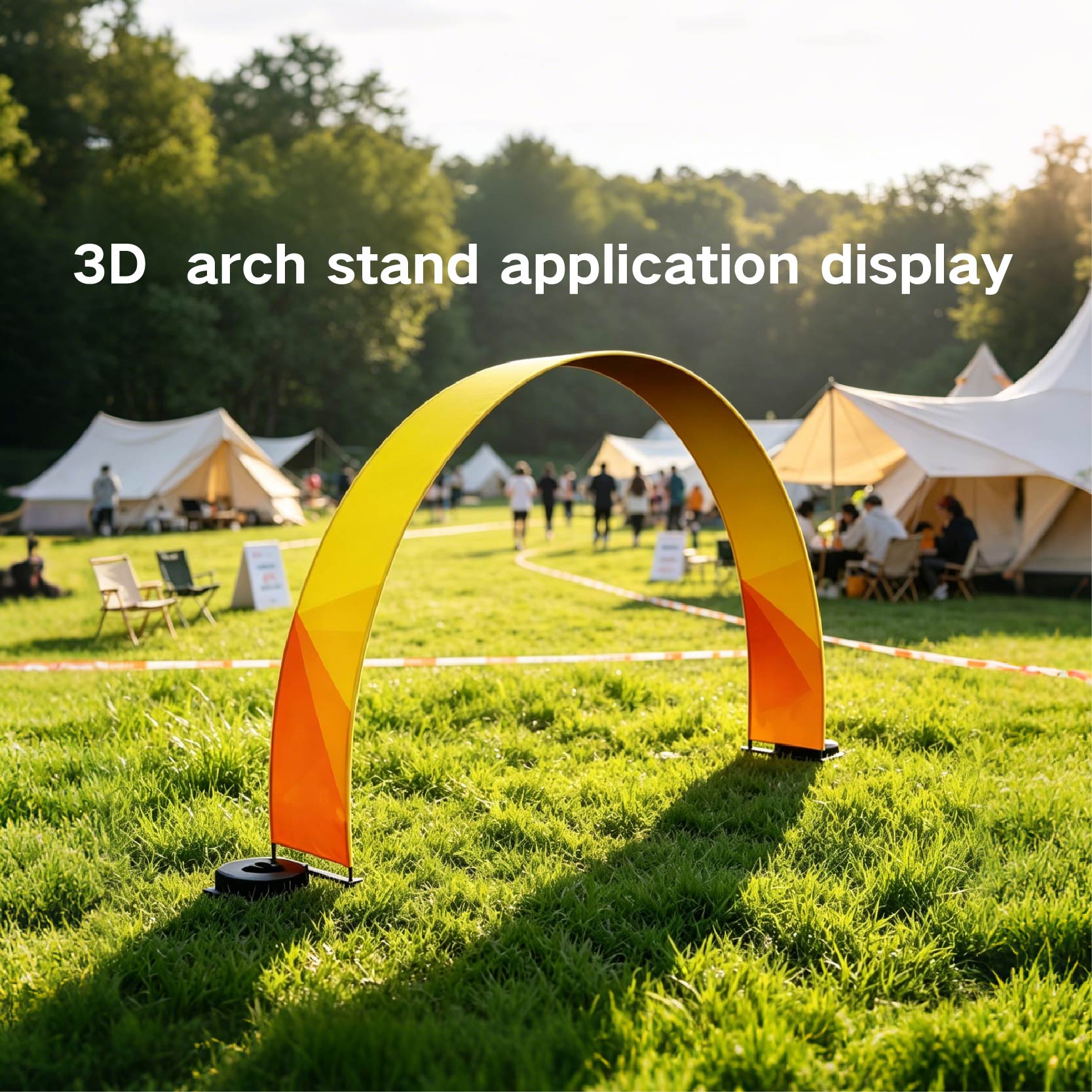
4.1 Trade Shows and Exhibitions
At CES, an exhibitor built an enclosed booth by joining two arch stands at right angles and hanging sidewalls from the shared pole—a 3‑metre‑tall walk‑through gateway that pulled visitors in. The same units later split into two standalone arches for smaller regional shows. A curved central banner catches light differently as attendees approach, creating a sense of motion even when static. Sightline tests confirm the effect works from across a convention hall.
4.2 Outdoor Festivals and Sports Events
August in Louisiana: 90‑percent humidity, 35°C, a thunderstorm likely by 4 p.m. Aluminum arches in that environment begin corroding at joints unless heavily anodized. Carbon composite, entirely non‑metallic, cannot rust. Mud hoses off; the polyester banner spot‑cleans with soap. The 100‑percent polyester fabric uses dye‑sublimation printing, embedding pigment inside the fibre so it can’t peel or crack. A test sample spent two months in direct Texas sun; colour shift measured under 2 Delta E—visually imperceptible.
4.3 Weddings and Retail Promotions
Wedding planners favour the smaller 4‑metre arch for draping and flowers. Round‑tube carbon poles lack sharp edges that snag delicate fabric. At a department store handbag launch, eight arches wheeled in fully assembled on steel bases created a zigzag pathway in under an hour. The only difficulty, the store manager noted, was getting shoppers to stop taking selfies in front of the display.
5. Inside the Factory: How a Carbon Composite Arch Stand Gets Made
5.1 Raw Carbon Fibre Prepreg and Tube Rolling
The Shandong factory sources carbon fibre tow from Toray and Mitsubishi, pre‑impregnated with epoxy resin at a controlled ratio. Prepreg is wound onto a mandrel in multiple layers, fibre angle alternating between 0° (stiffness) and ±45° (torsional strength). The wound tube is wrapped in shrink tape and cured at 150°C for two hours. After mandrel extraction, tubes are cut to length. Every tenth tube goes onto a deflection rig; wall‑thickness tolerance is ±0.15 millimetres. The factory floor is clean, workers wear gloves, and quality logs extend back twelve years.
5.2 Dye Sublimation Printing: Graphics That Hold Up
The banner is knitted polyester, 220 grams per square metre, chosen because it stretches just enough to follow the compound curve without wrinkling. Graphics are printed via dye sublimation at 720 dpi, then heat‑set at 200°C. The ink gasifies and penetrates the fibre, so the design cannot crack or peel. A sample crumpled into a tight ball a hundred times showed no white crease lines. That durability matters when a banner packs and unpacks fifty times a year.
5.3 Assembly, Testing, and Packing into a 55.5×41×6 cm Box
Poles are fitted with the elastic cord, and base connectors are riveted in place. A complete arch is erected in the factory courtyard and loaded with a 25‑kg test weight hung from the centre to simulate wind. A digital camera records deflection, which must fall within a specified envelope. The arch is then dismantled, inspected, and packed with the fabric, base components, and a carry bag into the flat export carton. Internal foam spacers protect the poles even if the outer carton is punctured. Units are palletized and stretch‑wrapped. A single 40‑foot container of 4,980 arches fits with room to spare for accessory kits.
6. The Trend Toward Ultra‑Portable, Reconfigurable Event Architecture
6.1 Modularity: From Single Arch to Enclosed Space
Eight banner styles attach to the same frame with universal Velcro or snap clips. Buy one arch, later add a second and a connector to create T‑ or L‑shaped structures. A shared base system means four arches can form a square enclosure using legs and a central tower. One client started with two arches for a beer festival entrance and later reconfigured them into four photo‑booth backdrops, a VIP entrance, and a stage surround—all with the same hardware.
6.2 Smart Integration: Lightweight LED and Digital Signage Mounts
A new carbon‑composite LED‑screen mount clips to the arch apex, requiring no extra counterweight. Because the frame is so light and stiff, a small battery‑powered display (50 × 30 cm) hangs from the centre without affecting stability. In one demonstration, the screen showed real‑time social media posts as attendees walked under the arch, driving engagement three times higher than a passive banner. For event planners blending physical architecture with digital interaction, the carbon frame provides a mounting platform that sidesteps truss rental.
7. Upgrade Solution: Bases, Weights, and Signage That Complete the System
7.1 The Wheeled Steel Base: Move It Without Disassembly
Beyond saving time, the wheeled base is a safety upgrade. An assembled arch on its wheeled base can be pushed against a wall for storage without the poles shifting out of alignment. The base locks into a steel shoe at the bottom of each vertical pole; the tethered locking pin can’t be lost. For a general contractor who builds and breaks down dozens of arches daily, the arch transforms from a static prop into a rolling asset.
7.2 Water Bags and Hidden Ballast
Heavy‑duty PVC water bags have welded seams and screw‑cap fillers. Empty, they weigh less than 1 kg and fold flat. Filled, each bag adds 20 kg of counterweight. At a windy beach party, four bags were filled with sand instead of water—no leaks, no spills—totaling 80 kg of ballast per arch. The arch didn’t budge in 50 km/h gusts. Lesson: a little sand in a bag is often the best engineering.
7.3 Companion Flags and Sidewalls
Vertical flag poles plug into the same base plate, creating a multi‑flag gateway. Flags use the same polyester fabric and ship in the same carton. A sidewall panel printed with a privacy graphic attaches between two arch legs via hook‑and‑loop tape. A complete gateway system—arch, two flags, two sidewalls, and wheeled bases—still fits in a carton under 12 kg, making it shippable by air courier in an emergency.
8. Comprehensive FAQ for International Buyers
- What is the minimum order quantity?
- Two pieces. The supplier maintains this MOQ so small event planners can test the product before committing to a container load.
- Can the arch be customized with my client’s logo printed on the fabric?
- Yes. Light customization, including logo and colour‑match printing, is supported at no setup fee above 100 units. Fast customization for urgent orders is available.
- How long does a sample order take, and what is the cost?
- A single sample costs US$70 including express courier shipping. Delivery typically takes 15–30 days from payment. The sample includes one arch of your chosen size, a standard banner, and a set of bases.
- What are the payment terms?
- The supplier accepts T/T (bank transfer) and Western Union. For first orders, a 30% deposit with the balance before shipment is standard. Repeat buyers may arrange 100% at sight documents after a trading history.
- How do I know the arch will survive a long overseas shipment?
- Each unit packs into a 5‑ply corrugated export carton with internal foam spacers. Cartons are palletized, strapped, and stretch‑wrapped. The factory’s 2023 shipping logs show a transit‑damage loss rate under 0.2%.
- Can the carbon composite poles be repaired if they break?
- If a pole fractures—typically only from a vehicle impact, not wind—the segment can be replaced without tools. The shock cord stays in place; disconnect the damaged segment and snap in a new one. Replacement pole segments are stocked in the US and Europe for distributors.
- Is the arch truly rust‑proof, even in salty coastal air?
- Carbon composite is an inert polymer matrix; it does not oxidize. The only metal parts are stainless‑steel quick‑release pins and the wheeled‑base axle, both made of 304 stainless. No rust has been reported on units used at Caribbean beach venues for two consecutive seasons.
- What about fire safety? Does the arch meet international codes?
- The polyester fabric is treated with a flame‑retardant finish that meets NFPA 701 (small scale) and passes the vertical burn test. Certification can be provided upon request.
- How does the carbon composite perform in extreme cold?
- The epoxy matrix becomes slightly more brittle below ‑30°C, but the elastic cord and fibre layup permit a smaller safe bending radius even at ‑40°C. The product has been used at winter sports events in Scandinavia without issue.
- What if I want to add lighting to the arch?
- The pole surface is smooth and accepts adhesive LED strip lights without damaging the resin. Several clients have run battery‑powered LED strips along the inside of the arch for evening events. The fabric banner also backlights well with uplights placed at the base.
- Can the arch be set up on soft ground or sand?
- Yes. Use the flat steel base plates with the included ground stakes (40 cm length). On sand, bury a small sandbag attached to the stake—the “deadman” method works well.
- How long will the printed graphic last before it fades?
- Dye‑sublimation embeds colour inside the fibre. Accelerated weathering tests (ASTM G154) indicate less than 5% colour fade after 500 hours of UV exposure, roughly three years of occasional outdoor use. For permanent outdoor installations, a UV‑overcoat spray can extend life.
Consider a Minnesota festival organizer who bought ten aluminum arches five years ago. Every spring, he’d pull them from storage and find at least one bent pole. He’d curse, order a replacement, and wait three weeks for it to arrive from overseas. Last year he finally switched to carbon composite. When contacted this April, he said, “I opened the boxes and they were exactly as I left them. Not one bend, not one rust spot. I spent Saturday morning assembling them with my daughter just for the fun of it.” That’s the case for the WZRODS 3D arch stand—not the cheapest arch you can order from China, but the one that keeps clients smiling and complaint calls silent. That’s a smart purchase.
About the Author
Sarah Mitchell, Trade Show Consultant
B.A. Marketing, University of Texas; CTSM (Certified Trade Show Marketer)
Event marketing specialist with 200+ trade shows across 15 countries. Helps exhibitors cut setup costs by 30% through smarter hardware choices.
Reviewed by WZRODS Technical Team. Updated: 2026-07-18
 Comments (0)
No comments yet. Be the first to comment!
Leave a Comment
Related Products
Director Chair
Cafe Barrier
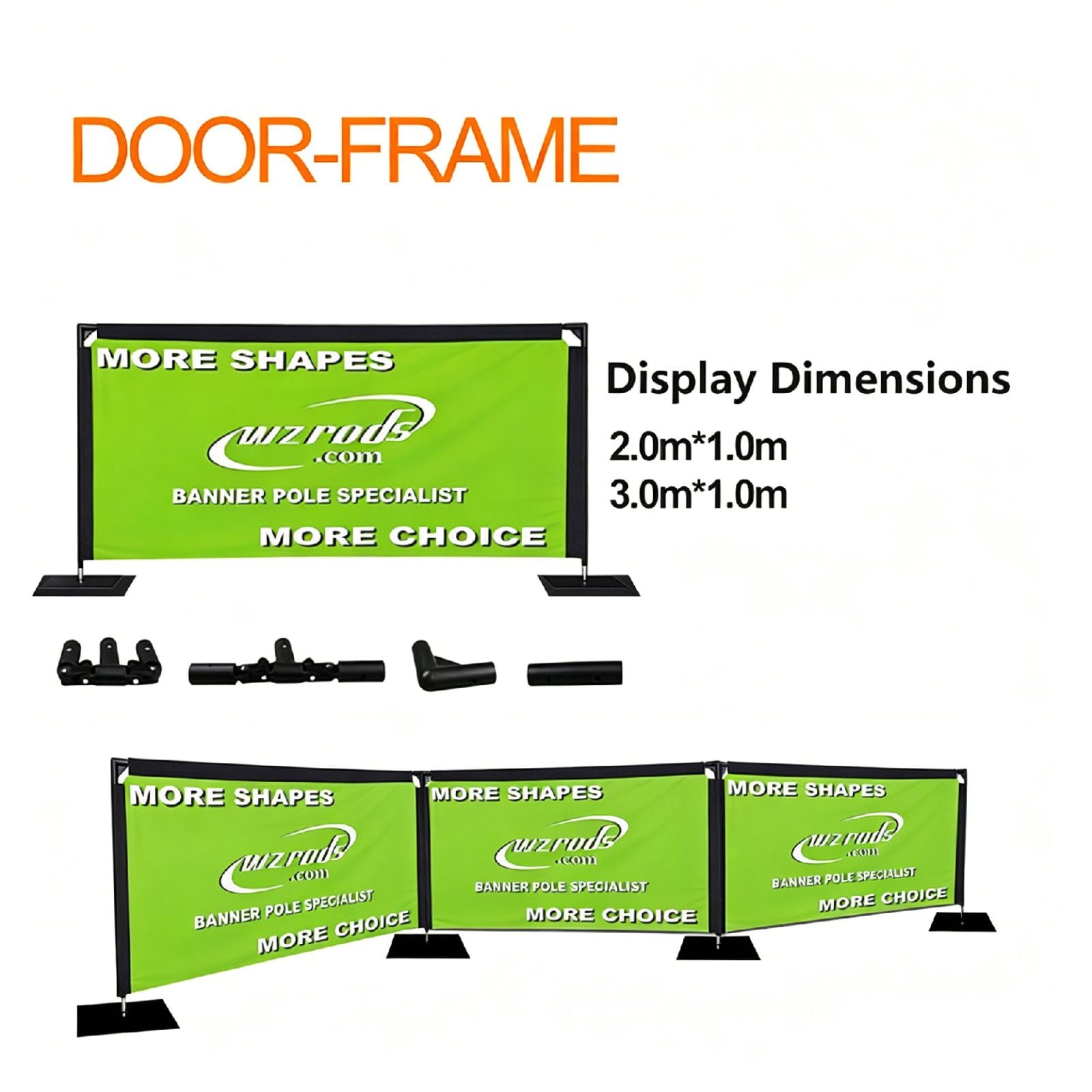
Door Frame
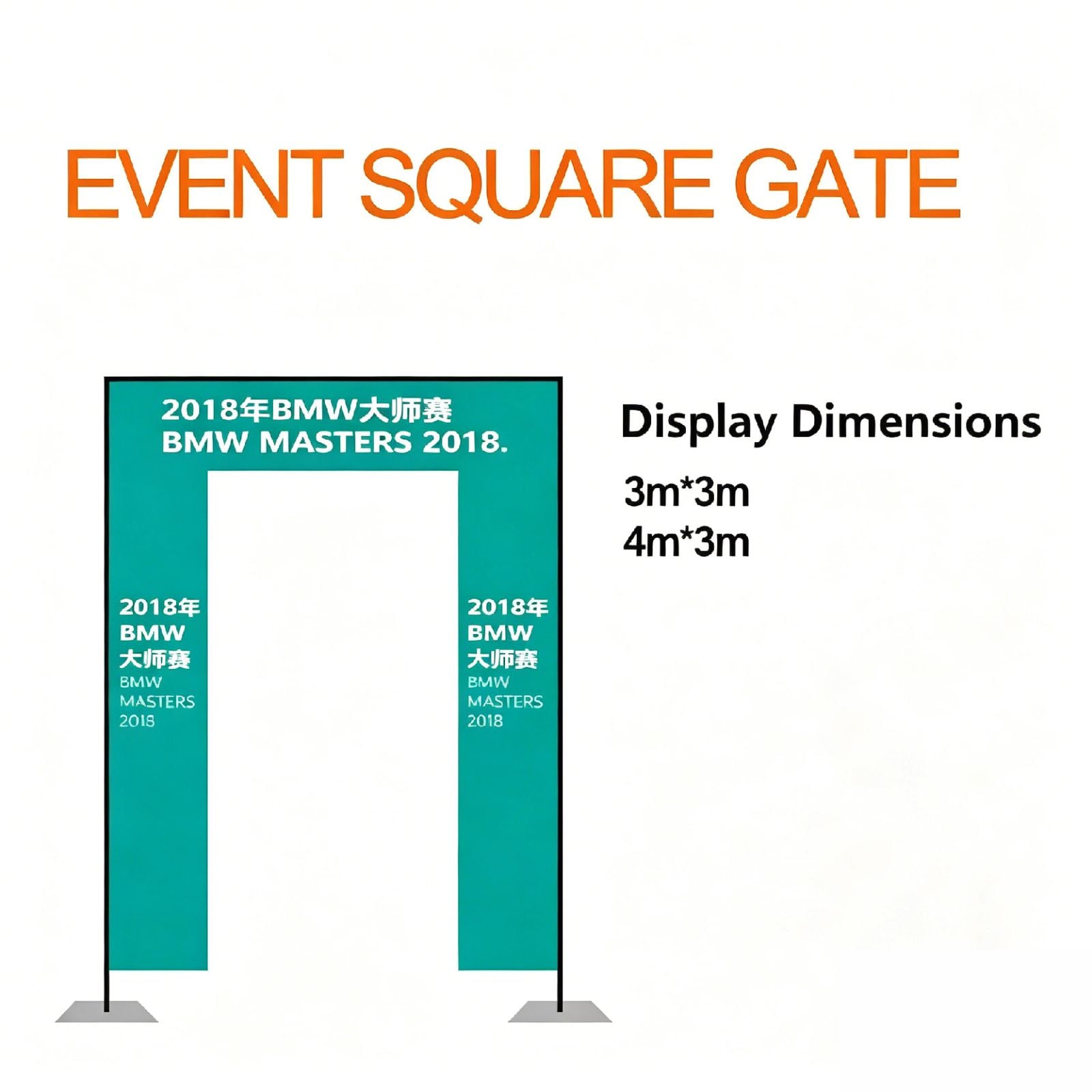
Event Square Gate
Over The Table Banner
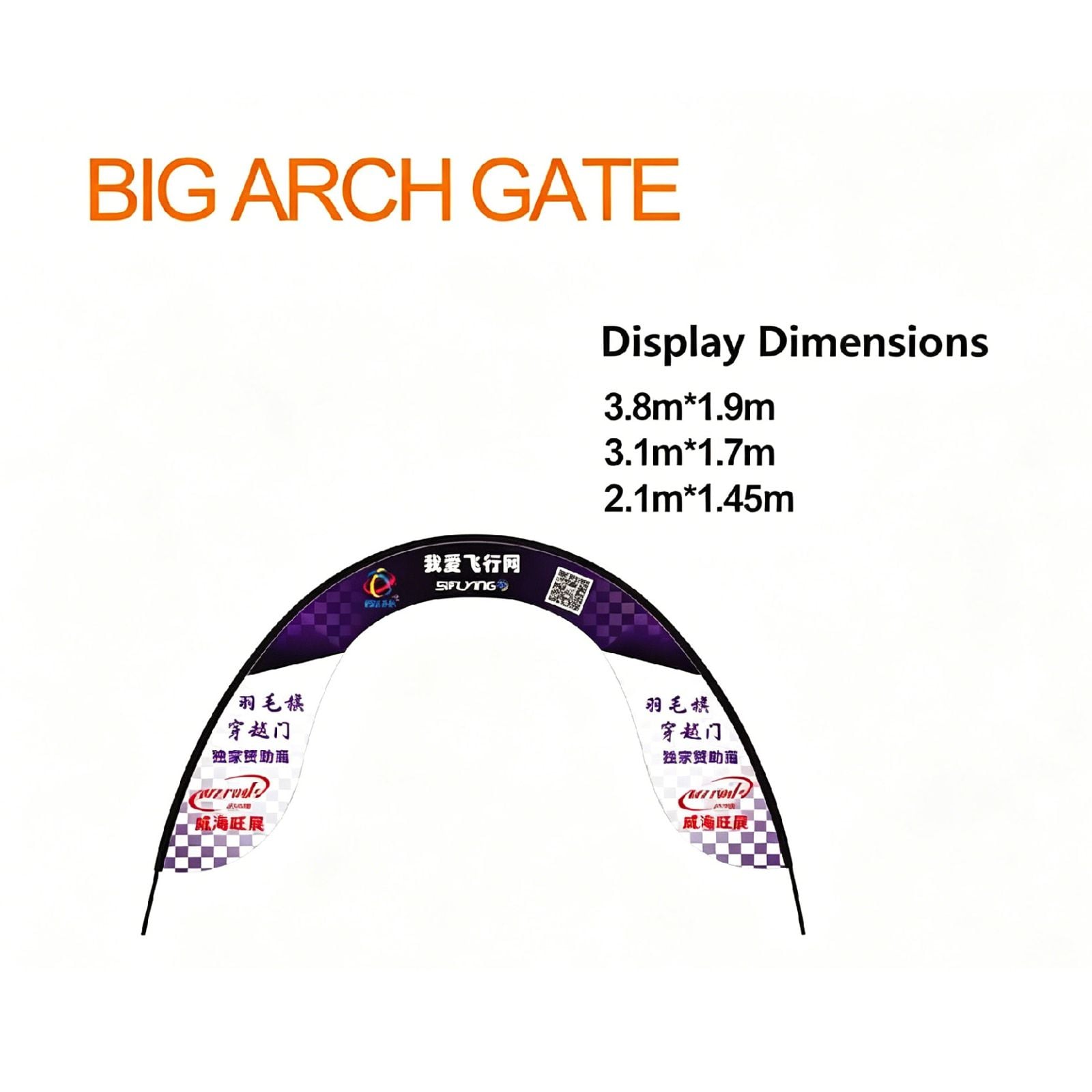
Big Arch Gate
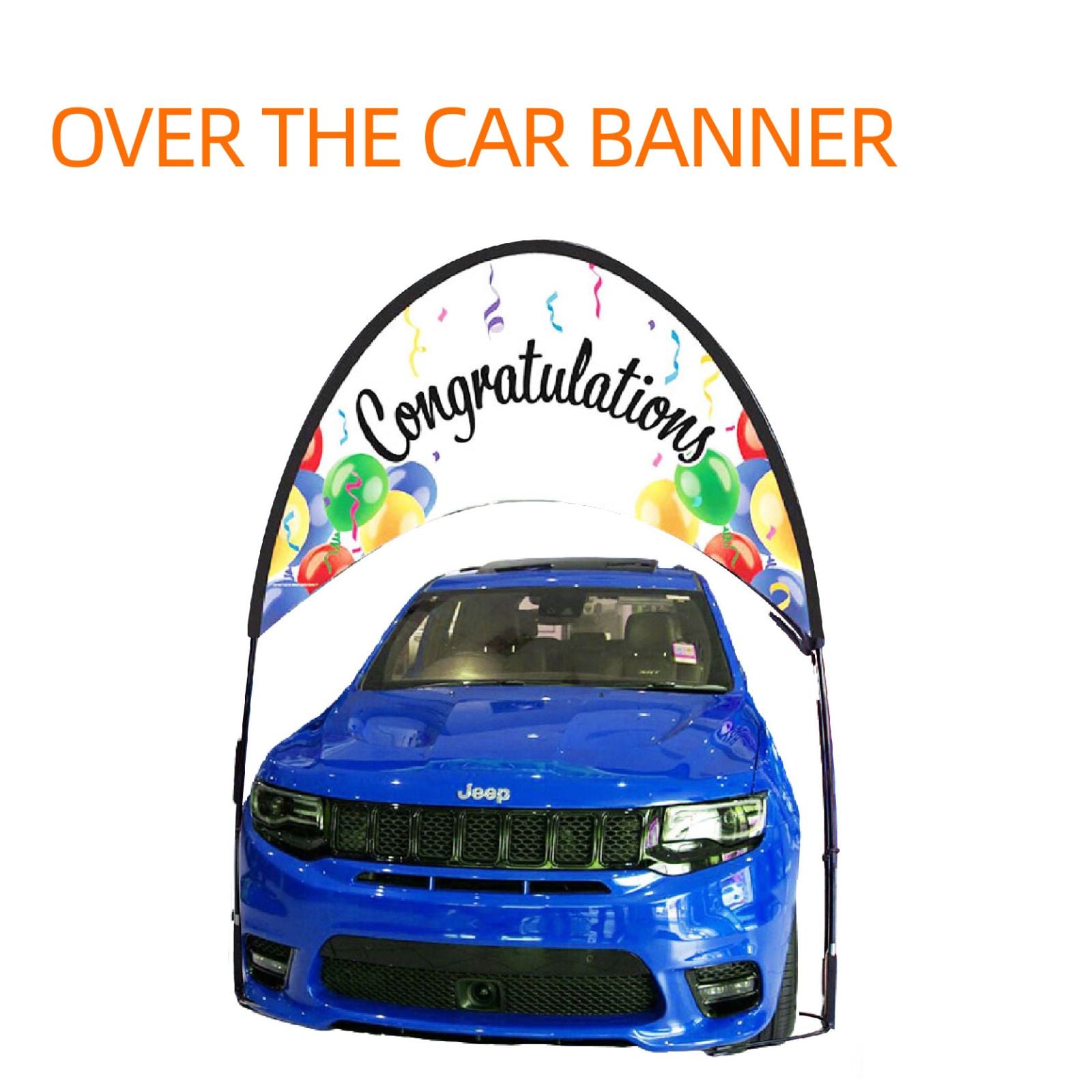
Over The Car Banner
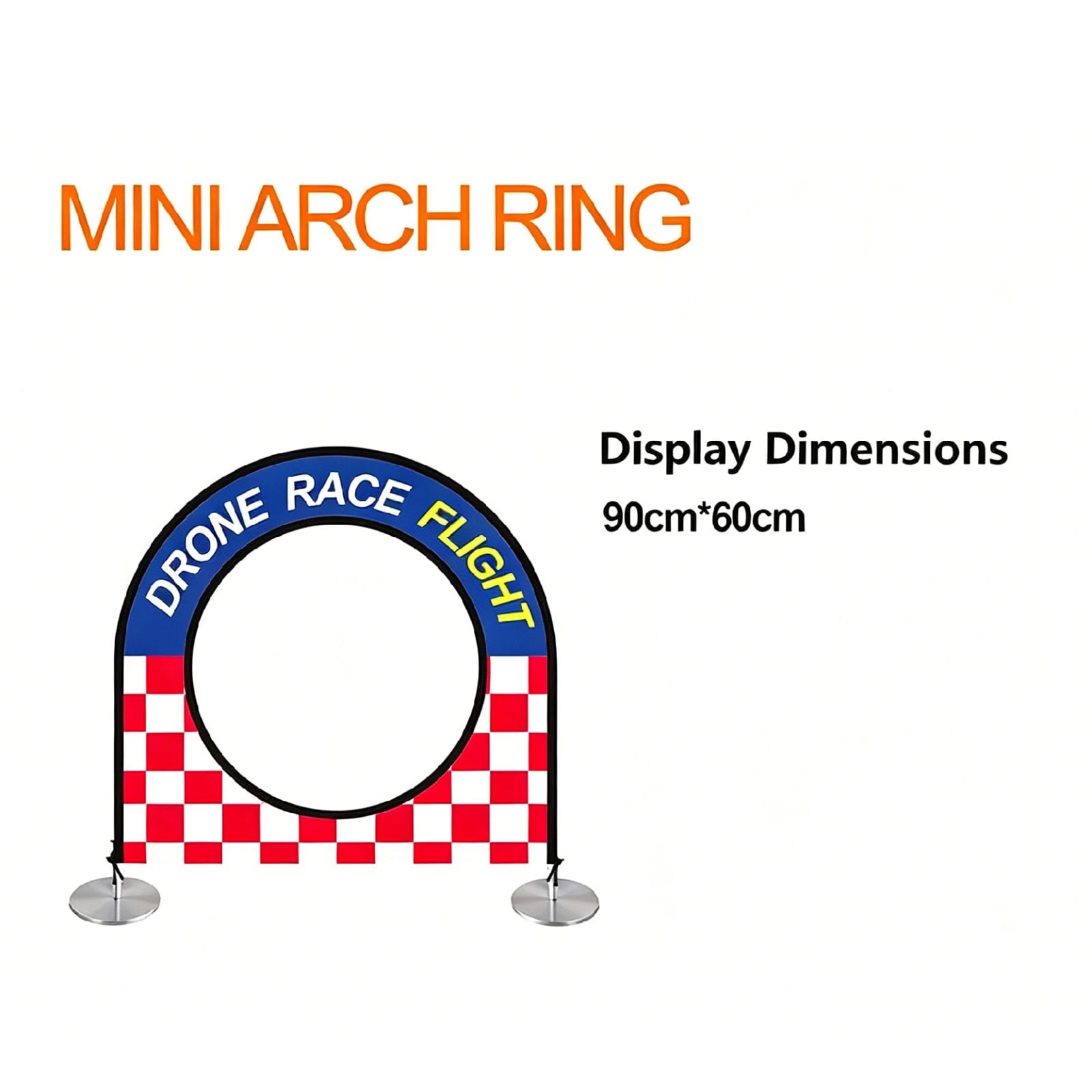
Mini round gate
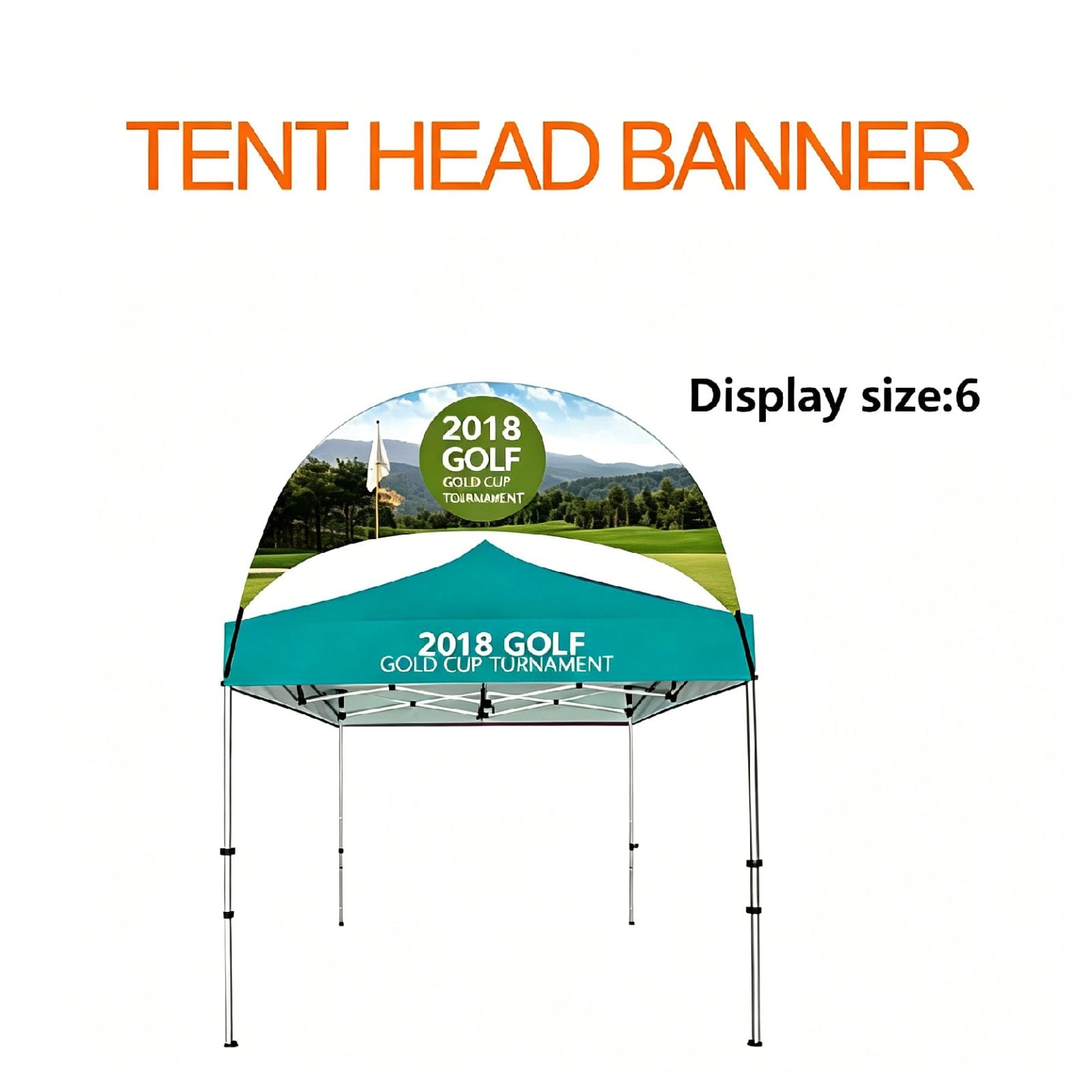
Tent Head Banner
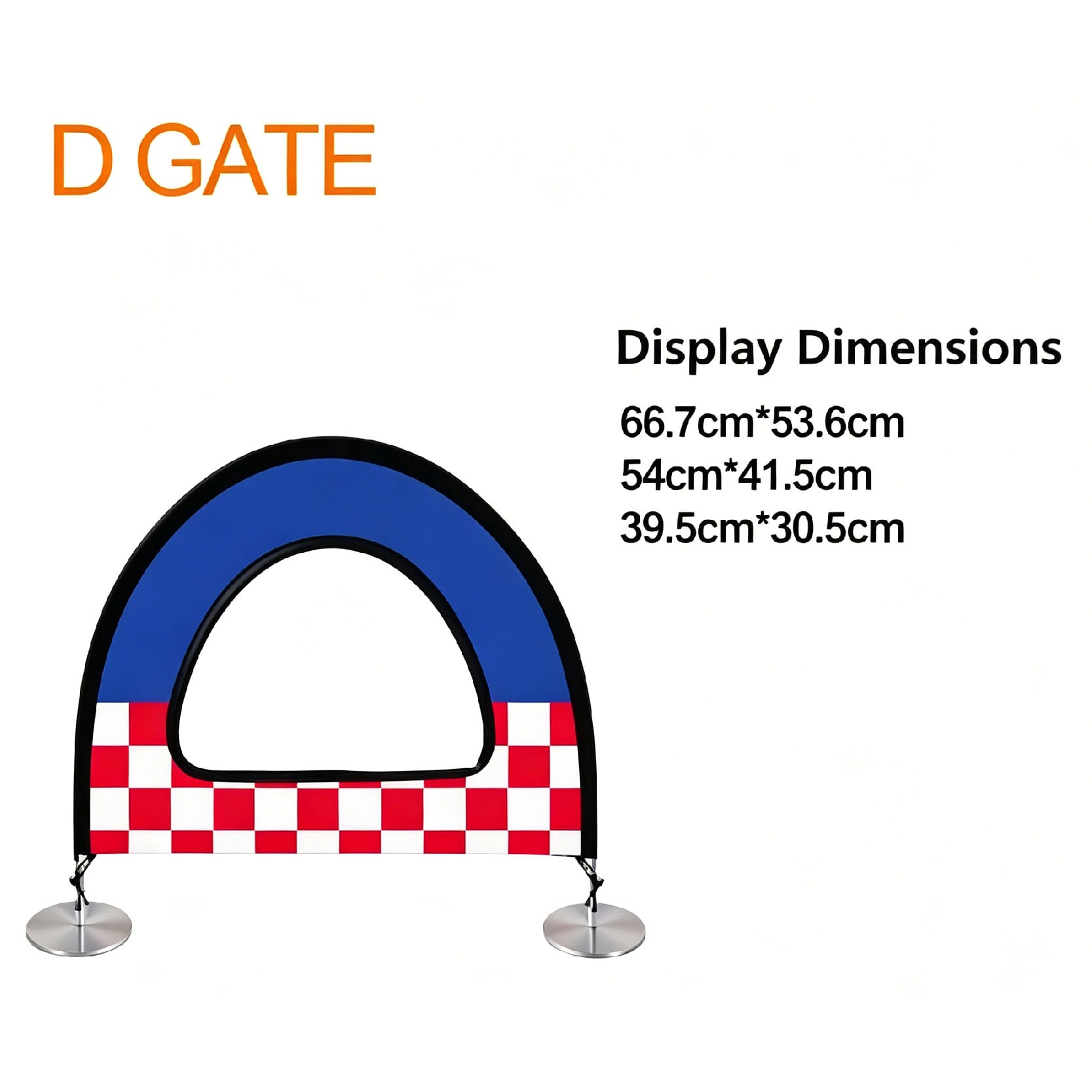
mini d gate
Related Articles
29kg Concrete Flag Base - The Complete B2B Buyer's Resource - WZRODS
WZRODS DY451B: 29 kg, HDPE shell, concrete core. Stackable, portable, rust-proof. FOB price US$5.75–$6.85 at MOQ 2 units. Those numbers look unremarkable. Factor in landed cost—import duties lower than aluminum’s under relevant HTS codes, freight savings from less weight per unit of stabilizing mas
Wide Tube Cross Base - The Complete B2B Buyer's Resource - WZRODS
The Wide Tube Cross Base, manufactured by Wzrods in Shandong, China, solves one problem: reliable stability for poles under three meters, without the freight costs and warehouse footprint that heavier alternatives demand.
Rectangular Pipe Cross Base - The Complete B2B Buyer's Resource - WZRODS
The pipe cross flag base is a cross of rectangular steel pipe, powder‑coated, weighing 1.3 kg and spanning 78 cm across its arms. Its center holds a C‑ring shaft that lets the flag rotate with the wind.
X-Shape Backpack Banner - The Complete B2B Buyer's Resource - WZRODS
Economic Cross Base - The Complete B2B Buyer's Guide- WZRODS
When you buy an economic cross base—something like the Wzrods DM‑9, a 77 cm‑long, 1.3 kg iron cross—forget “economic” as a synonym for “cheap.” It means value-engineered.
Event Bin - The Complete B2B Buyer's Resource - WZRODS
Here is a table constructed from actual measurements, shipping calculations, and factory test data. It compares a typical aluminum-framed event barrier (48-inch width, single banner) with the WZRODS carbon composite Event bin.
Promotional Balloon Display - The Complete B2B Buyer's Resource - WZRODS
Prepared by Wei Chen, Senior Product Specialist, WZRODSB.S. Supply Chain Management, Michigan State University; CPSMManaged $4.2M annual display hardware proc
Mini Event Gate - The Complete B2B Buyer's Resource - WZRODS
The first principle: a gate’s real cost isn’t the ex‑works price. It’s the landed cost plus the expense of fixing failures, plus the revenue you never get back.