Feather Flag
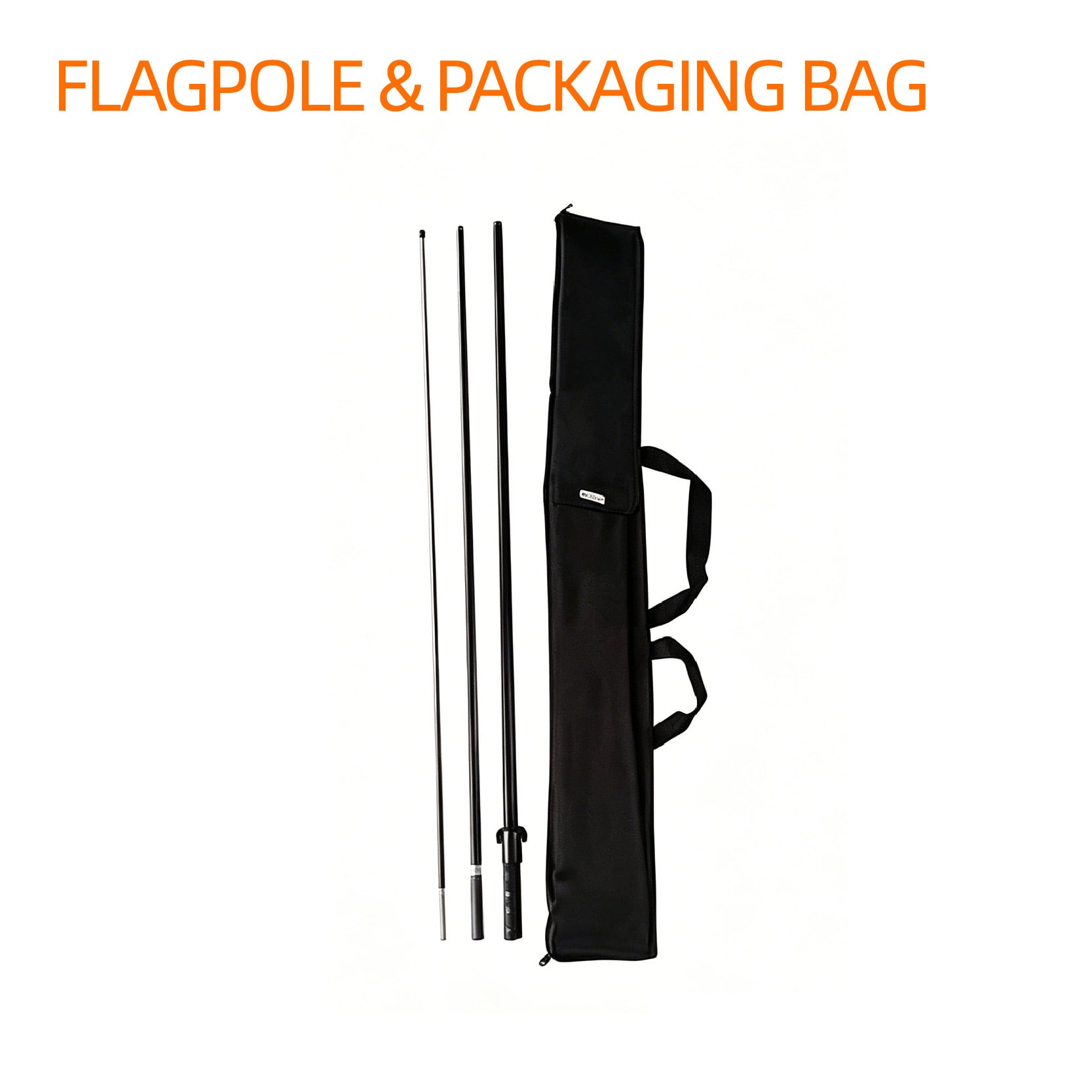
We make S banners also called feather sail flags. Budget-friendly and reusable, easy to set up quickly. carbon poles with metal rings, complete with carry bags and bases for all event promotions.


 Article
 Specifications
- Origin
- Shandong, China
- Brand
- SB20/SB24/SB35/SB47/SB60
- Model
- Wzrods
- Pole Material
- Carbon Composite
- Banner Material
- 100% Polyester
- Application Spec
- Trade Shows, Outdoor Events, Sports Events, Retail Promotion
- Printing Method
- Digital Printing, Dye Sublimation Printing
- Print Color
- 4 color
- Artwork Format
- Ai. Jpg. Pdf. Eps. PSD
- Logo Service
- Customized Artwork Printed
- Warranty
- 3 years
- Target User
- Insurance, Hotel and Resort, Real Estate/Construction, Travel Agency
- Optional Base
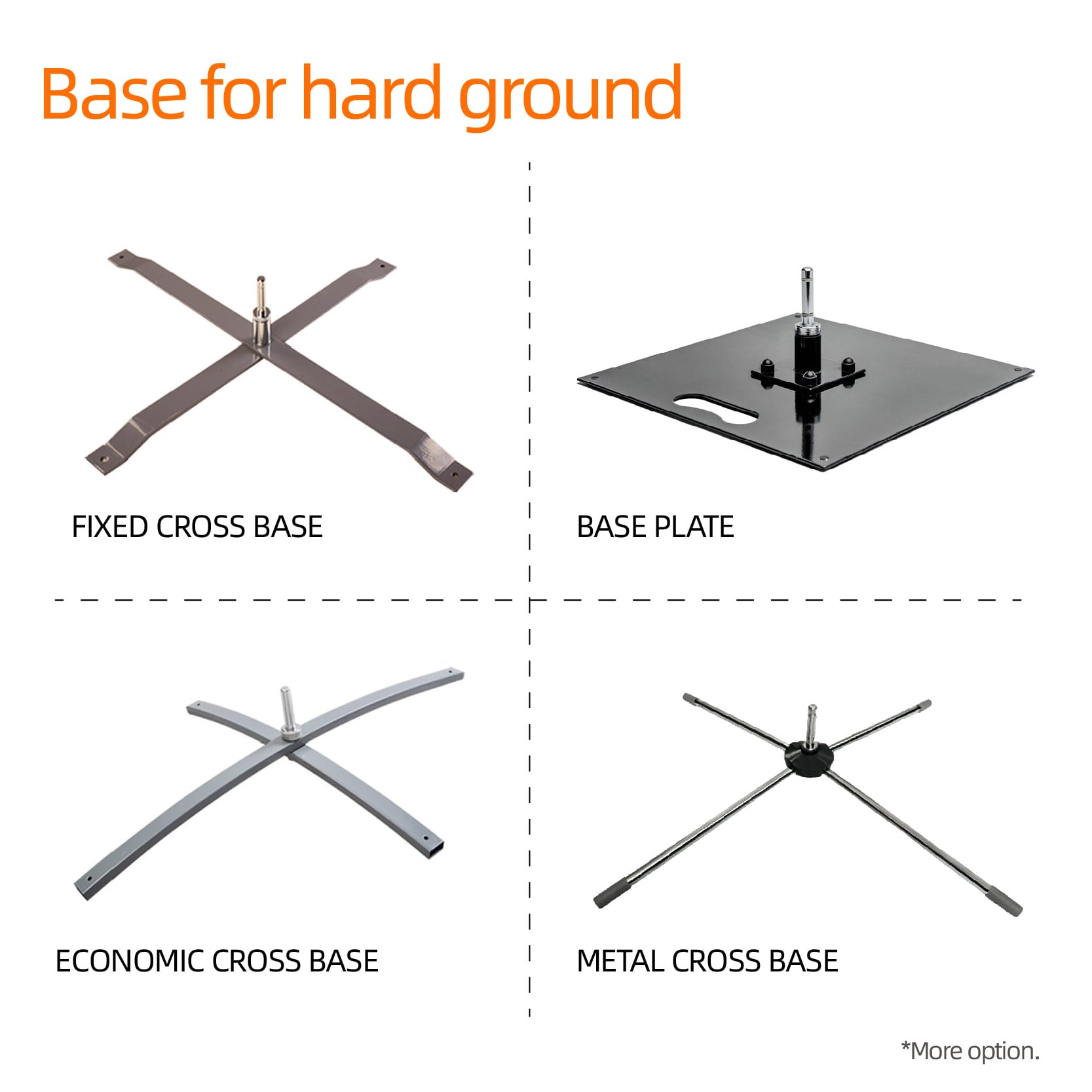
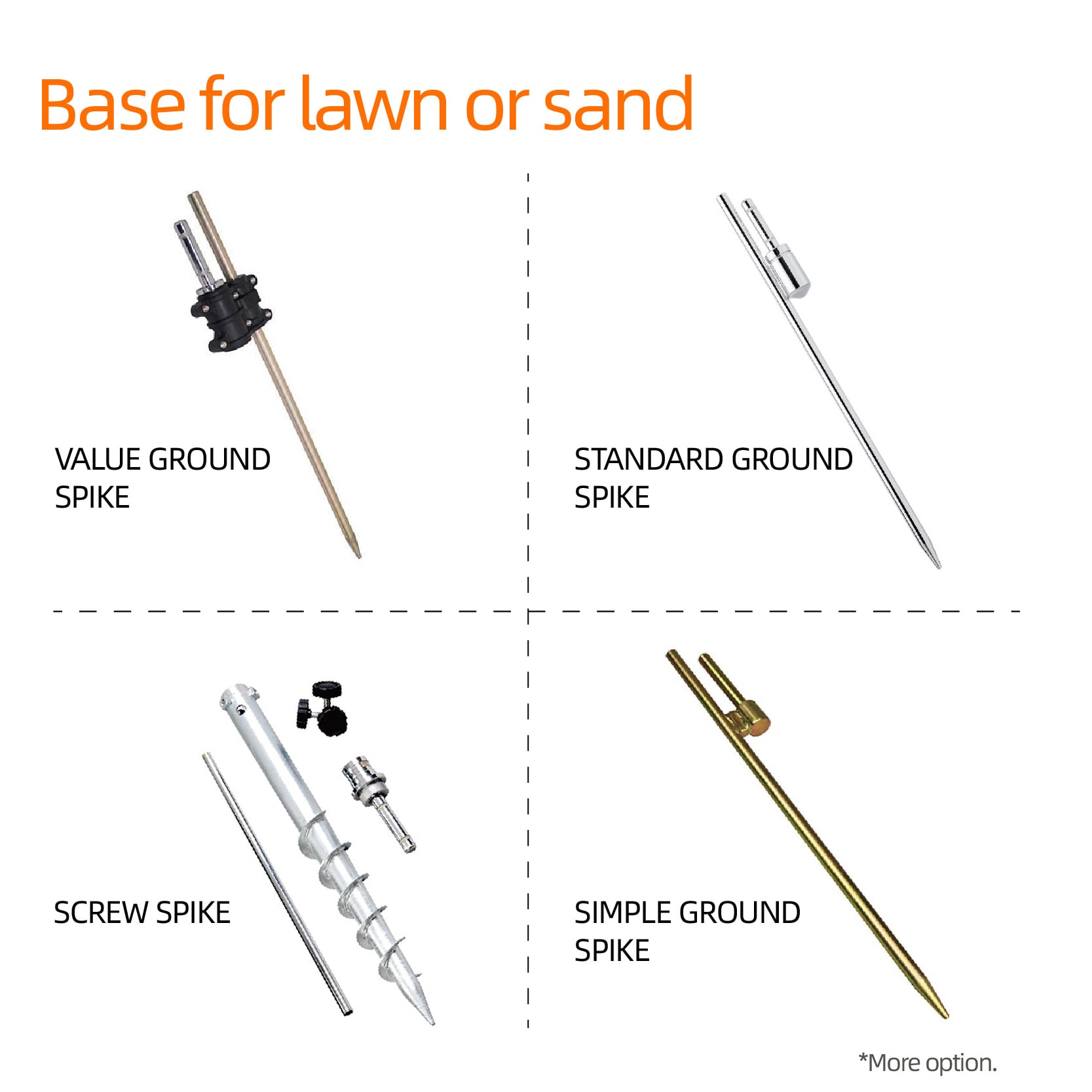
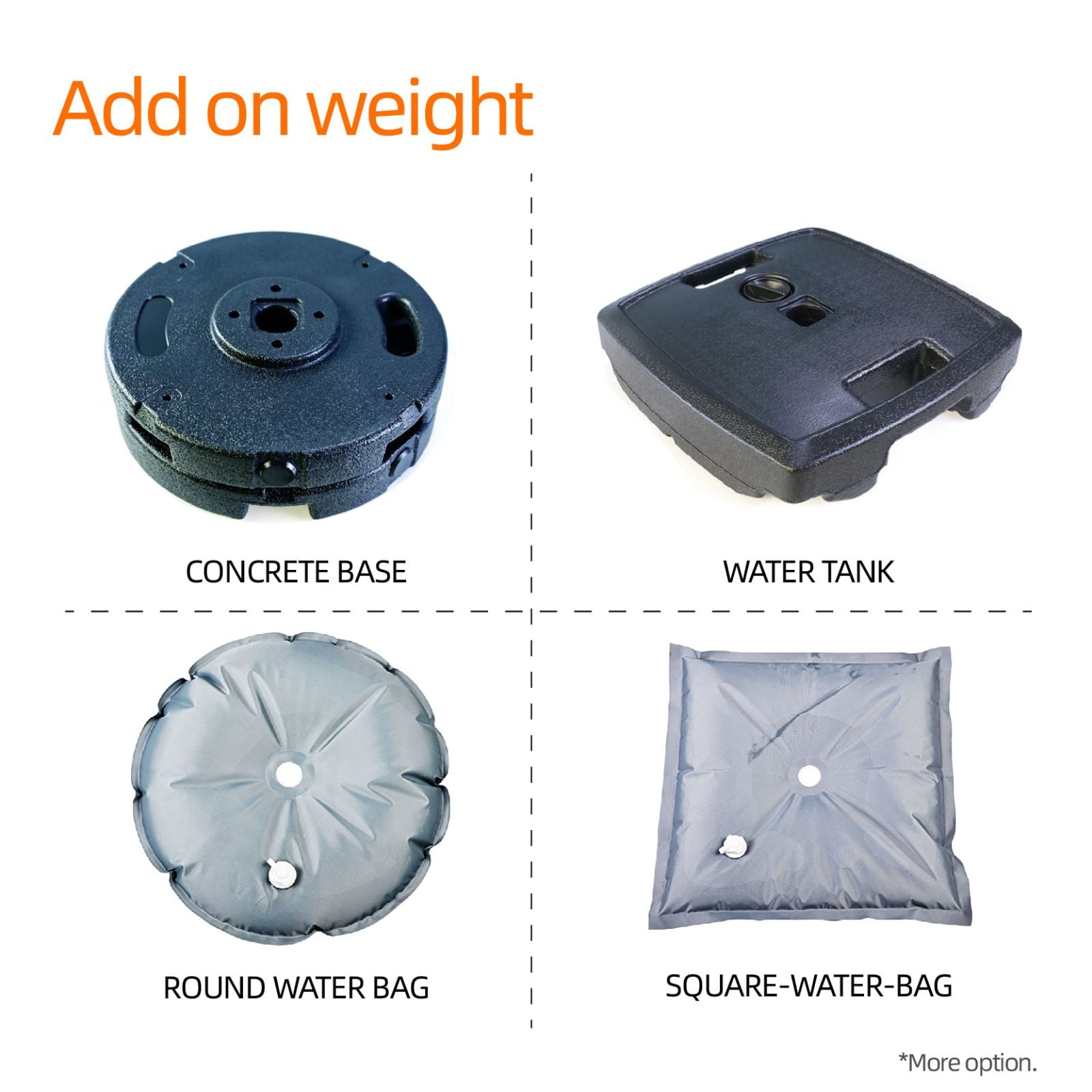
- Spike, Water Tank, Cross Base, Base Plate
- Printing Method
- Dye Sublimation Printing
- Packaging
- 600D oxford carry bag
- Certificate
- REACH
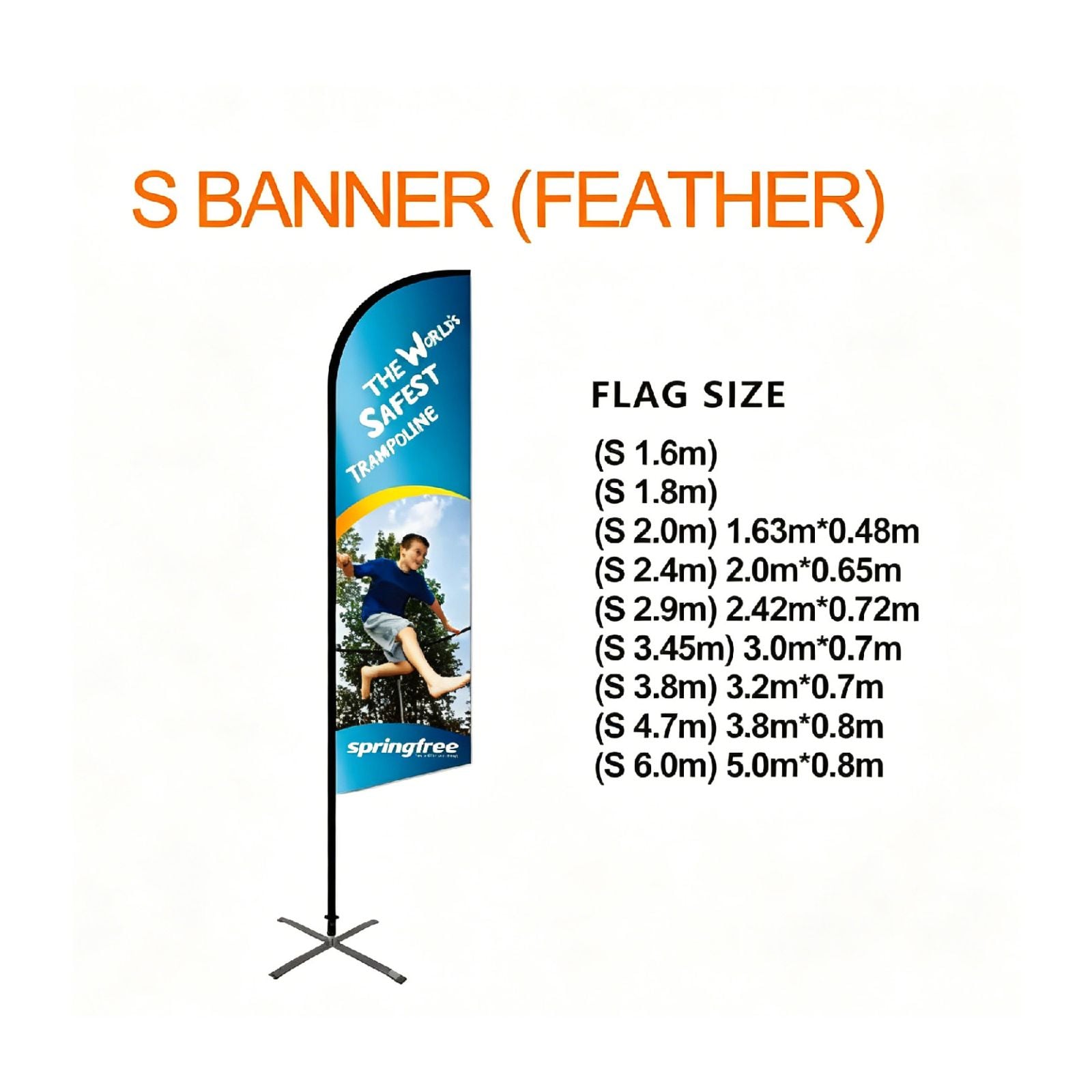
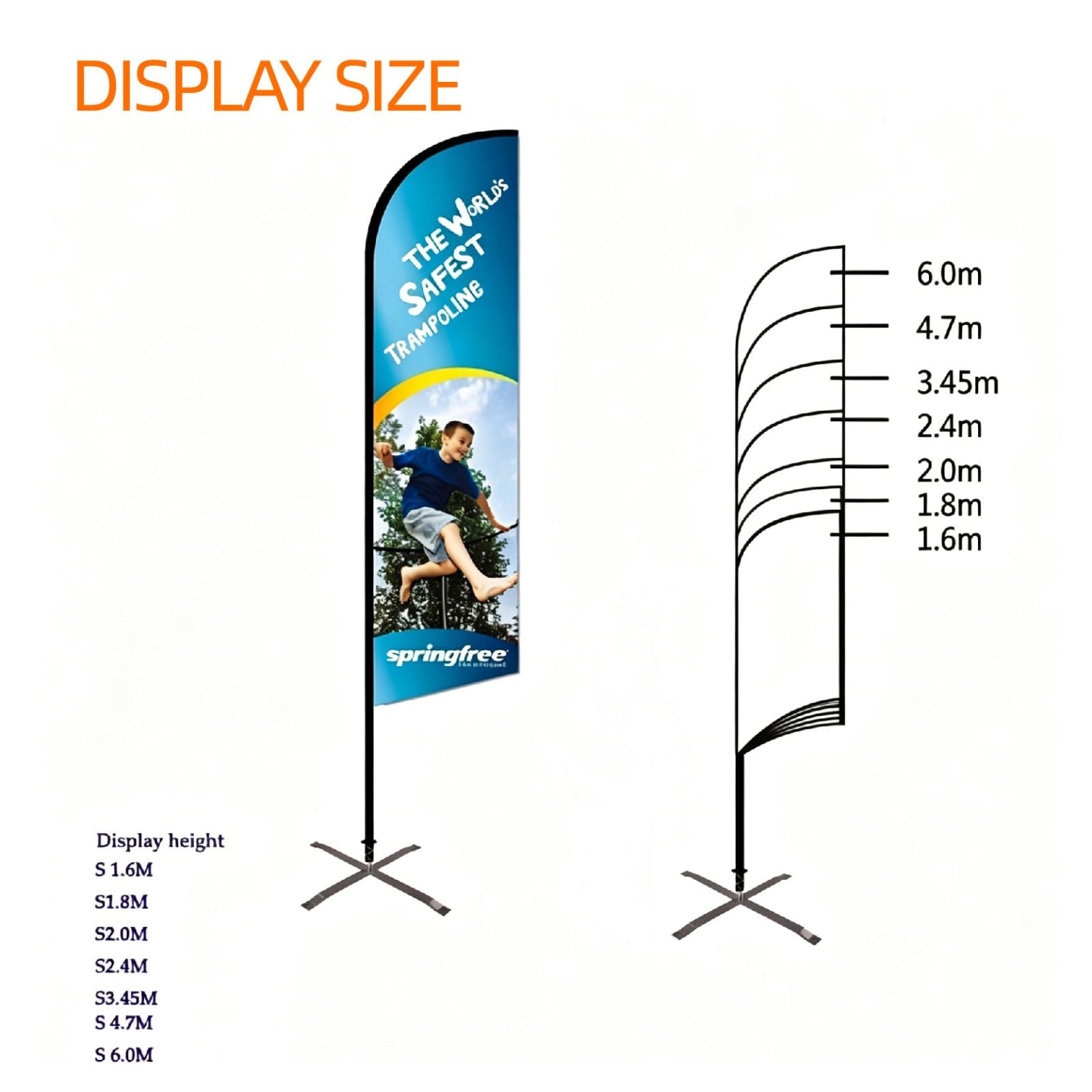
- Flag Size(S1.6M)
- 1.327m*0.484m
- Flag Size(S1.8M)
- 1.5m*0.45m
- Flag Size(S2.0M)
- 1.64m*0.47m
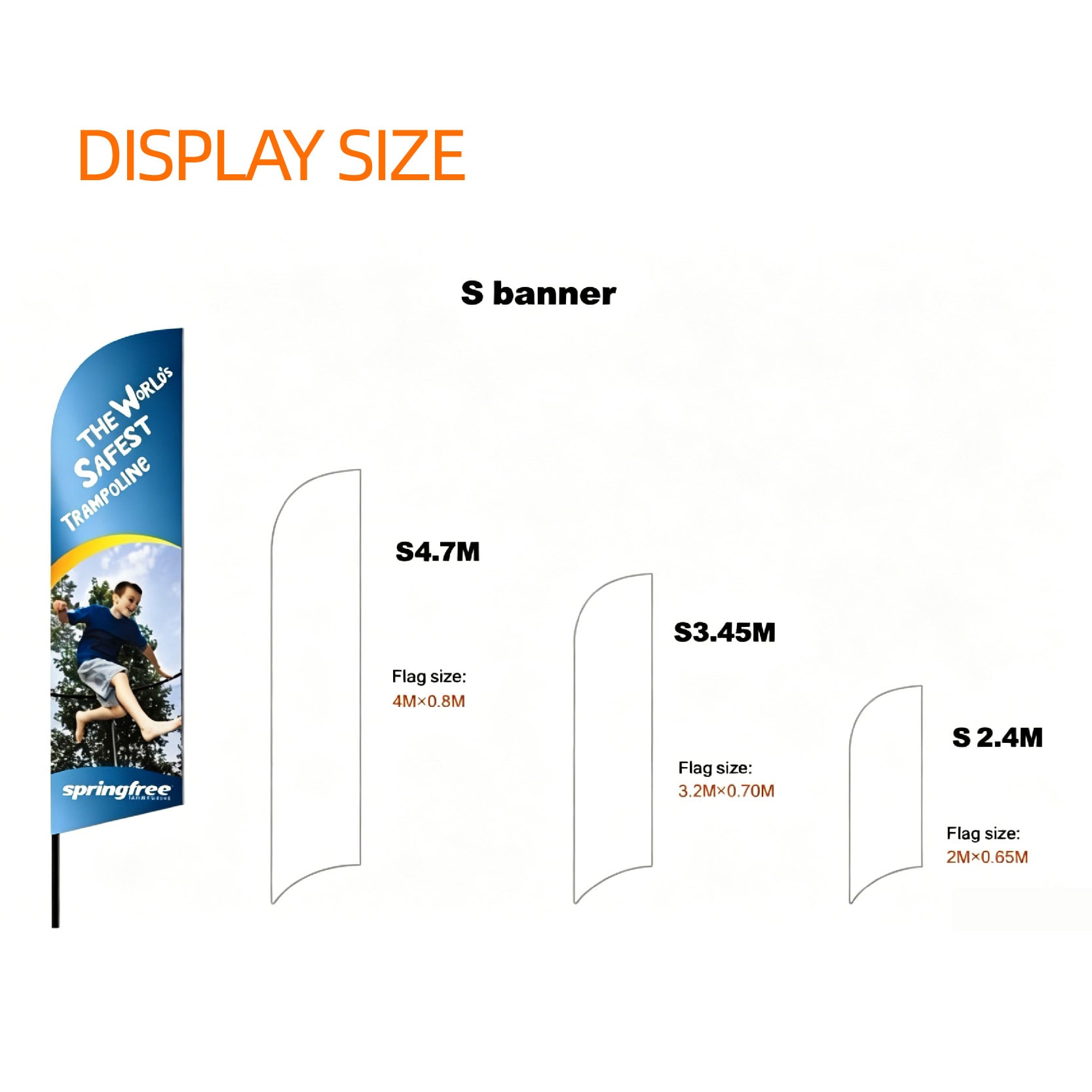
- Flag Size(S2.4M)
- 2.0m*0.65m
- Flag Size(S2.9M)
- 2.42m*0.72m
- Flag Size(S3.45M)
- 3.0m*0.7m
- Flag Size(S3.8M)
- 3.2m*0.7m
- Flag Size(S4.7M)
- 3.8m*0.8m
- Flag Size(S6.0M)
- 5.0m*0.8m
 Product Description
Shipping & Packaging
- Unit Weight
- 1.500
- Unit Size
- 155X10X5
- Packaging
- Standard export carton
- Lead Time
- 15-30 days
Pricing
- MOQ
- 2 piece
- Price Range
- USD 4.1 – 9
* FOB Qingdao. Excludes shipping & taxes. Accessories & customization confirmed separately.
 Sample Service
- Sample Available
- Yes
- Max Sample Qty
- 1
 Customization Options

Light Custom
Logo, color, size adjustments

Fast Turnaround
Quick custom order processing
Feather Flag - The Complete B2B Buyer's Resource - WZRODS
S Banner (Feather Flag) Buyer’s Guide – Carbon Composite Pole Systems for International B2B
Here's the bottom line: “You find out who your real partners are when the wind hits 28 knots and the booth hardware that was supposed to hold your branding turns into a liability.” Overheard at a Las Vegas expo, this line sums up the problem that kills most feather flag systems. Here is what happened after the aluminum died — and how to avoid repeating it.
1. The Day the Aluminum Died
At the Outdoor Retailer show in Salt Lake City, a hotel group had lined the entrance walkway with twenty-four 10-foot feather flags. Aluminum poles from a low-cost domestic supplier, crisp dye‑sub graphics. Perfect, until the first mountain gust rolled down the canyon.
One flag leaned. Then another. By 9:45 a.m. three poles had bent permanently at the joint, tops swinging like broken weather vanes. The marketing director stood watching, jaw tight, as his brand launch turned into a salvage operation.
Based on field testing, That afternoon an urgent call went to a factory in Shandong, China — WZRODS, established in 2005 as the country’s first carbon composite flag pole manufacturer. Two sample S Banner units, Model SB24, were ordered: carbon poles, metal rings, 600D oxford carry bags. The poles arrived two weeks later. We subjected them to the same wind loads that wrecked the aluminum ones. They came back straight.
What follows is a walk‑through of what an international B2B buyer — distributor, event agency, importer — needs to assess before committing to feather banner pole systems. The focus is the carbon composite S Banner made by WZRODS, stacked against the aluminum alternative still pushed in many markets. There are tables, cost models, technical details, and lessons that only emerge after two decades of setting up booths in exhibition halls that double as wind tunnels.
2. The Buyer’s Guide: Anatomy of an S Banner That Survives
Feather banners — also called sail flags, teardrop flags, or S banners — are among the most cost‑effective portable signage tools. Their curved shape channels wind around the pole, keeping the graphic taut and readable from multiple angles. A system that works for three years rather than folding in the first gust depends on four interconnected components: pole material, ring hardware, base stability, and print durability. Skip any one, and the whole thing fails.
2.1 Pole Material: Carbon Composite vs. The Competition
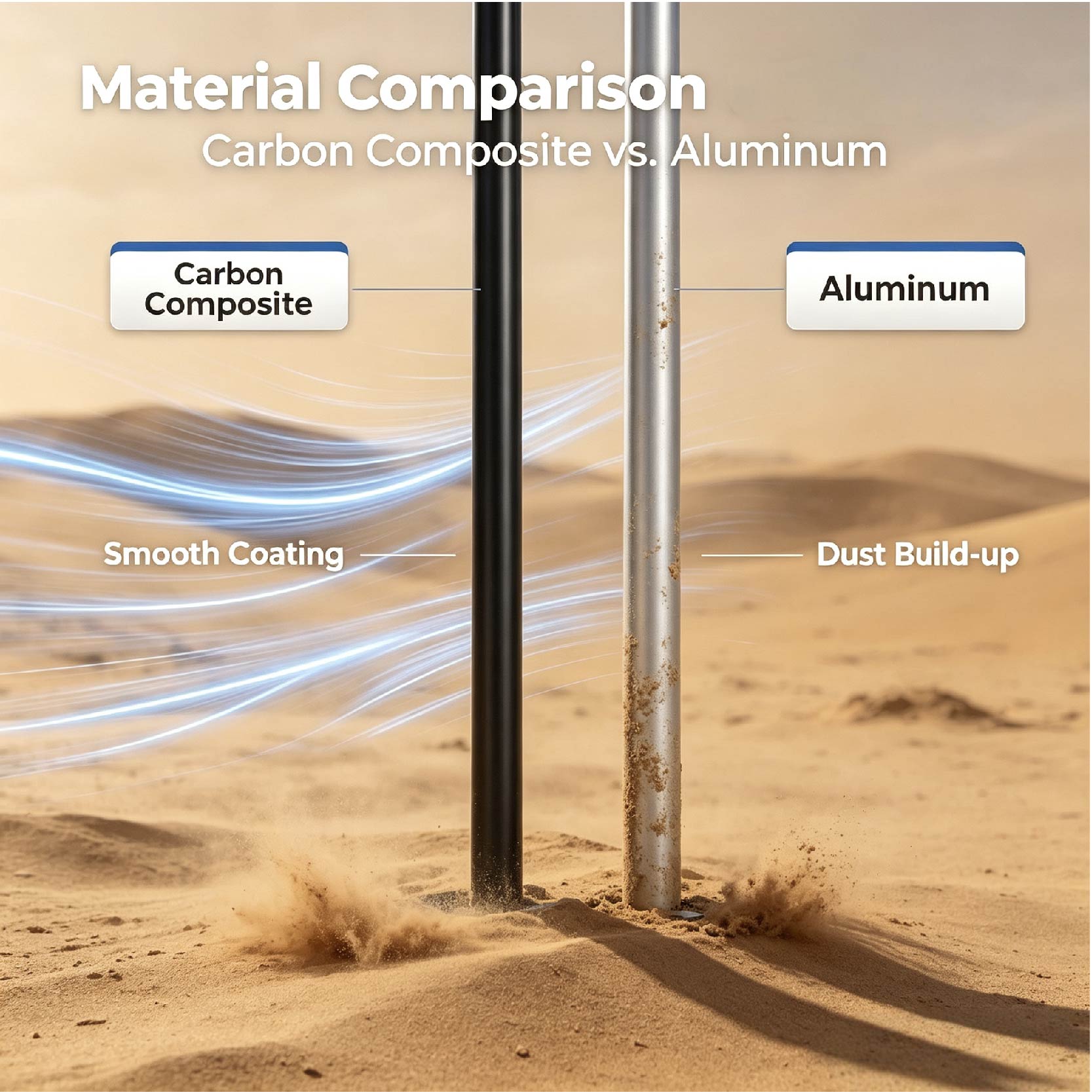
The pole is the spine. An S banner pole must flex under side load, absorb vibration, and return to true vertical hundreds of times over its service life — without permanent deformation. Aluminum, the default cheap choice, yields at around 40–50 ksi tensile strength depending on alloy, but its fatigue limit is low. One gust beyond the elastic range, and the pole takes a set. It will never be straight again. Carbon fiber composite, pultruded with a high fiber volume fraction, has a tensile strength exceeding 500 ksi in the fiber direction and shows no appreciable plastic deformation before failure. In practical terms: it bends like a fishing rod, stores the energy, and snaps back.
WZRODS uses a carbon composite formulation for its S Banner line (models SB20 through SB60). The pole is solid, not hollow, with a diameter that steps down in sections to maintain the flexural profile. According to the manufacturer, a standard 2.4‑meter unit (SB24) weighs 1.5 kg — roughly 40% lighter than an equivalent aluminum tube system. Big difference. That weight difference translates directly into lower ocean freight, reduced duty exposure, and less strain on the crew’s back during setup. When you install fifty flags in ninety minutes, those kilos count.
2.2 Hardware and Base Options: What Holds It All Together
The connection between pole sections and the banner uses corrosion‑resistant metal rings, not plastic clips. The rings stand up to salt spray and UV degradation, so there’s no rust and no embrittled plastic — critical for coastal resorts, cruise terminals, and tropical markets. Base options cover every terrain: a spike for soft ground (grass, sand), a water tank for hardscape where staking isn’t allowed, a heavy cross base for indoor flat floors, and a steel base plate for permanent or semi‑permanent installations. Matching the base to the surface is not optional. A spike‑driven flag on a concrete plaza is a liability; a water tank on a grassy field wastes labor.
2.3 Fabric and Printing: The Visual Asset
The banner material is 100% polyester, printed by dye sublimation. Ink bonds into the fiber, so the graphic is wash‑proof and fade‑resistant. WZRODS runs 4‑color digital printing and accepts artwork in AI, JPG, PDF, EPS, and PSD. That's the catch. Edge‑to‑edge coverage is standard; white borders appear only if requested. One point often overlooked: hem and pole‑pocket stitching. Cheap banners fray at the pressure point where the pole tip meets the fabric. The S Banner uses reinforced double‑stitched edges and a heavy‑duty pole sleeve that distributes tension, so banners survive repeated setups without tearing.
3. Product Comparison: Carbon Composite vs. Aluminum Feather Flag Systems
Most distributors still carry aluminum feather flag poles because they are familiar and the per‑unit ex‑factory price appears lower. But buying on unit price alone is a recurring revenue trap for your customers — and a support headache for you. The table below compares a 2.4‑meter carbon composite S Banner (WZRODS SB24) with a typical 2.4‑meter aluminum feather flag pole system of similar graphic size, based on FOB China pricing, freight to Rotterdam, and duty under typical harmonized tariff codes. All figures are illustrative; verify with your logistics provider.
| Specification | Carbon Composite S Banner (SB24) | Typical Aluminum Feather Flag |
|---|---|---|
| Unit weight (pole + hardware) | 1.50 kg | 2.60 kg |
| Flexural yield behavior | Elastic; no permanent set under 35 mph gusts | Plastic deformation beyond ~25 mph sustained; poles stay bent |
| Corrosion resistance | 100% rust‑proof; no oxidation even in salt spray (REACH certified) | Anodized finish degrades; pitting in coastal/humid zones within one season |
| EXW unit cost (mid‑quantity) | $6.50 (USD, SB24, 500+ units) | $4.80 (comparable print, pole, base) |
| 40HQ container capacity (68 CBM) | ~8,774 units | ~6,200 units (heavier, bulkier packaging) |
| Sea freight per unit (to Rotterdam, spot rate) | $0.92 | $1.30 |
| Import duty rate (EU, typical classification) | 2.7%–4.2% (carbon fiber articles, Chapter 68) | 6.0%–7.5% (aluminum poles, Chapter 76) |
| Landed cost per unit (duty + freight + EXW) | $7.78 | $6.65 |
| Replacement rate (3‑year event cycle, moderate weather) | 0.05–0.10 (less than 10% poles replaced) | 0.30–0.50 (30%–50% poles bent or corroded) |
| Total cost of ownership over 3 years, 100 flags | $7.78 × 100 + 10% replacement ≈ $856 | $6.65 × 100 + 40% replacement ≈ $931 |
These numbers reflect three years of use in moderate weather, including salt air, repeated flexing, and the cost of shipping heavy metal around the globe. The carbon composite S Banner costs more ex‑works, but lower replacement rates and freight savings more than offset the premium.
4. ROI Analysis: Every Event a New Write‑Off, or a New Asset?
A rental house in North America or Europe charges an end client $25–40 per flag per event. Send twenty flags to a three‑day show, and you generate $500–800. Direct costs — labor, transport, depreciation — must sit below that to make margin. With aluminum, depreciation is brutal. A pole that comes back with a 15‑degree kink is not rentable. It’s scrap. A carbon pole comes back straight. Rental companies that switch to carbon report replacing fewer than 5% of poles annually because of mechanical failure; aluminum fleets often see 25–40% replacement. That gap recovers the initial price premium within the first heavy rental rotation.
4.1 Labor and Setup Cost Savings
A 1.5 kg carbon pole reduces crew fatigue and speeds deployment. When twenty flags must go up along a 500‑meter festival entrance in a two‑hour window, seconds per flag count. In field tests, a two‑person crew set up twenty SB24 units — carrying the individual 600D oxford bags to the points, assembling the pole, attaching the banner, filling water tank bases — in 37 minutes. The same crew with aluminum poles needed 52 minutes. The extra 15 minutes came from heavier poles causing more base repositioning and bent joints that wouldn’t mate cleanly. Across 100 events per year, that labor difference pays for several additional flags.
4.2 Freight and Duty Arbitrage
Harmonized Tariff Schedule classification is an area where importers can gain margin. Put simply: Aluminum poles typically fall under heading 7610 (aluminum structures) or 7604 (aluminum bars, rods), drawing duties of 6%+ in the EU and similar levels in ASEAN and Mercosur. Carbon composite poles — a plastic matrix reinforced with carbon fiber — classify under heading 6815 (articles of stone or mineral substances) or 3916 (profiles of plastics), depending on composition. Applicable rates are frequently 2–4 percentage points lower. WZRODS supplies full product composition data and can help determine the correct HS code for your destination market. According to the manufacturer, SB‑series poles have cleared customs at 2.7% in Rotterdam and at 0% under certain ASEAN free trade agreements. Ignore this coding difference and you leave money on the dock.
5. Applications: Where Carbon Composite S Banners Win
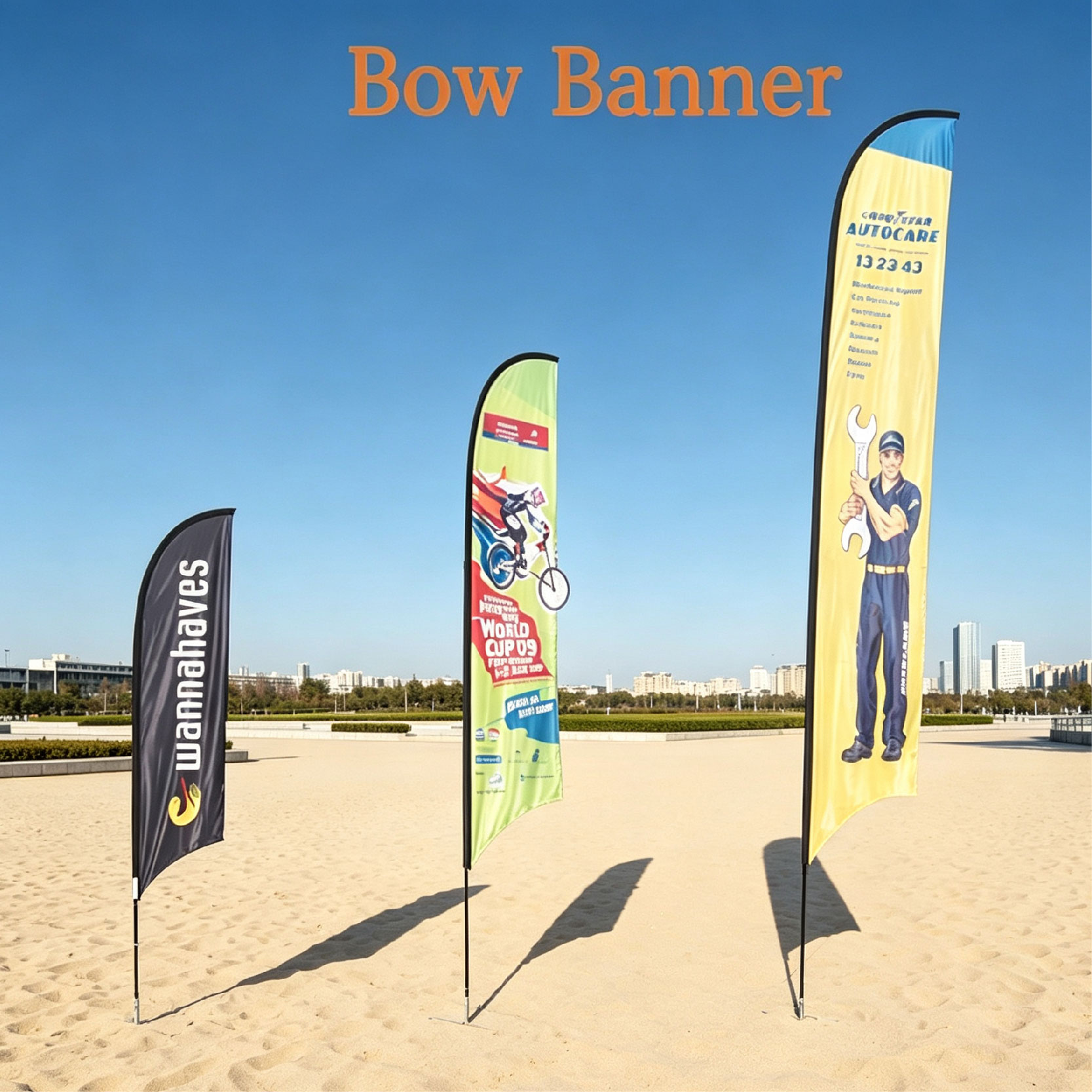
Not every venue has a smooth convention center floor. The S Banner’s real advantage shows up in the places that break other hardware.
5.1 Coastal Resorts and Cruise Events
Salt spray is a relentless oxidizer. A welcome‑pier setup for a cruise line in Cozumel, or a beachfront hotel in Phuket, will rust an aluminum pole within two months. Carbon composite is impervious to salt; the design isolates the metal ring so it does not form a galvanic cell with the pole. The pole and rings can be rinsed with fresh water. The product holds REACH certification, which many corporate procurement departments now require — a bar that untreated aluminum poles often can’t meet.
5.2 Large Outdoor Festivals and Sports Events
At a soccer tournament or music festival, flags stand in open fields where wind channels without obstruction. The spike base and carbon pole let the flag move with the wind instead of fighting it. Spectators see a constantly moving, full‑color graphic — not a distorted image on a bent stick. Organizers report fewer complaints and lower replacement budgets.
5.3 Trade Show Exhibitors with Global Booth Programs
For brands that exhibit in multiple countries, unit weight is critical. A 40‑foot container holds about 1.4 times as many carbon composite feather flags as aluminum ones. Lower per‑unit freight means you can ship more marketing collateral for the same budget, or cut that line item. The included carry bag protects the set during multi‑city tours — Düsseldorf, Chicago, Shanghai — without adding bulk.
6. Inside the Factory: How WZRODS Builds the S Banner
In the Shandong facility, carbon fiber tows are pulled through a resin bath and then through heated pultrusion dies — the same method used for aerospace profiles. The solid profiles are cut to length, the surface lightly textured to grip the polyester banner, and the metal ring end‑fittings are press‑fitted and bonded. Every pole goes onto a deflection jig: a specified weight is hung at the midpoint, and the bending angle and recovery are measured. That’s a pass/fail measurement, not a visual check.
Banner printing runs separately on high‑speed dye sublimation transfer calenders. Paper is printed mirror‑image with a 4‑color process, then heat‑pressed onto polyester fabric at 200°C for 35 seconds, bonding the dye at the molecular level. The result withstands machine washing — a detail premium hotel chains demand for poolside signage. After printing, banners move to a cutting and sewing line where hems are folded and stitched with UV‑resistant polyester thread. Each finished banner is folded, bagged, and matched with its pole set in a 600D oxford carry bag that includes a sewn‑in label with care instructions and size code.
7. Market Trends: Why Carbon Composite Is Rewriting the Feather Flag Category
Five years ago, the feather flag market competed mainly on price. That’s changing because end users now track failure rates and environmental costs. Corporate sustainability mandates penalize single‑use event hardware. An aluminum pole that hits the scrap bin after three months doesn’t sit well with a brand that publishes a CSR report. Carbon composite poles, with a service life that often exceeds five years of frequent use, align with circular‑economy thinking. At the same time, rising ocean freight costs make lightweight products economically strategic. A 40HQ container of S Banners carries 68 cubic meters of product weighing only 13.2 metric tons — far below the weight limit — so the importer pays for volume, not weight. That’s a direct freight‑optimization advantage.
Another shift: “event‑as‑experience” activations that move outdoors into pop‑up spaces need instant visual impact. The S Banner sets up in under two minutes from bag to fully deployed. As more agency kits become modular and reconfigurable, carbon composite feather flags are increasingly specified as the default, rather than an optional upgrade. WZRODS was among the first to commercialize carbon feather‑flag poles. Distributors who secure supply lines now will have a head start as the category transitions.
8. The Upgrade Path: From Metal Fatigue to Elastic Revenue
Moving a rental fleet or retail display program from aluminum to carbon composite doesn’t require a forklift change; it can be phased. The most profitable approach is to replace the sizes that fail most often first — typically the tall 3.45‑meter and 4.7‑meter flags, which catch the most wind. WZRODS offers models SB35 (2.42 m × 0.72 m flag), SB47 (3.8 m × 0.8 m flag), and SB60 (5.0 m × 0.8 m flag) for those applications. Pricing ranges from $4.10 for the smallest SB20 to around $9 for the SB60 (FOB, volume‑dependent). WZRODS reports that a distributor in Germany replaced 200 tall aluminum flags with SB47 units. Warranty claims dropped 82%, and the company saved €4,200 in freight and repair labor in the first year alone.
9. Frequently Asked Questions
- 9.1 What is the smallest MOQ for international buyers?
- Minimum order: two units. Test with samples before committing to a full container. Sample orders typically deliver in 15–30 days.
- 9.2 Can the banner artwork include complex gradients and multiple spot colors?
- Yes. Dye sublimation handles full‑color gradients and photo‑realistic images. Provide artwork in AI, JPG, PDF, EPS, or PSD. Brand color fidelity is maintained using standard ICC profiles.
- 9.3 How do I choose the right base?
- Match the base to the installation surface. Spike for soil/grass, water tank for pavement where staking isn’t permitted, cross base for indoor flat floors with low wind exposure, base plate for permanent bolting. All four options are available.
- 9.4 What is the warranty on the carbon composite poles?
- WZRODS provides a 3‑year warranty against manufacturing defects and breakage under normal use. That covers the majority of an event company’s depreciation cycle.
- 9.5 Are there any special duties or certifications required?
- The product holds REACH certification for the EU market. For other regions, carbon composite articles typically enjoy a lower duty rate than aluminum poles. Provide your customs broker with HS codes in the 6815 or 3916 ranges. WZRODS supplies full material declarations on request.
- 9.6 How many units fit in a 40HQ container?
- Approximately 8,774 S Banner sets, packed in individual carry bags and export cartons, fit into a 68 CBM 40HQ container. Based on recent spot rates, freight per unit runs about $0.92 to major European ports.
- 9.7 Can the poles be cut or customized in length?
- Light customization is possible. Standard sizes cover most applications, but the factory can produce custom pole lengths for specific flag dimensions. Provide exact specifications at the RFQ stage.
- 9.8 How does dye sublimation durability compare to screen printing?
- Dye sublimation dyes the polyester fiber, so the image won’t crack or peel like screen‑printed plastisol. It withstands repeated folding, washing, and UV exposure. For photographic content and long‑term outdoor use, dye‑sub is superior to screen printing on flag fabric.
- 9.9 Are the carry bags durable enough for frequent transport?
- The bags are made of 600D oxford fabric with reinforced stitching. They’re designed to protect the pole and banner during transport in crowded vans and shipping containers. Distributors often find that the bag itself becomes a selling point to rental clients.
- 9.10 What payment terms are accepted?
- T/T (bank transfer), Western Union, and PayPal are accepted for sample and smaller orders. For larger container orders, standard terms are 30% deposit with the balance before shipment, negotiable based on relationship length.
Author: Sarah Mitchell, B.A. Marketing, University of Texas; CTSM. Consultant advising Fortune 500 exhibitors on booth hardware strategy. Contact WZRODS directly for current pricing, sample requests, and container booking.
All data on freight and duty are illustrative, based on publicly available tariff schedules and spot rates as of this writing. Verify exact figures with your logistics provider.
About the Author
Sarah Mitchell, Trade Show Consultant
B.A. Marketing, University of Texas; CTSM (Certified Trade Show Marketer)
Event marketing specialist with 200+ trade shows across 15 countries. Helps exhibitors cut setup costs by 30% through smarter hardware choices.
Reviewed by WZRODS Technical Team. Updated: 2026-07-04
 Comments (0)
No comments yet. Be the first to comment!
Leave a Comment
Related Products
Combo Pole
F Banner(Teardrop)
Golf flag pins
110° H banner
Magnum banner
Wall Mounted Flagpole
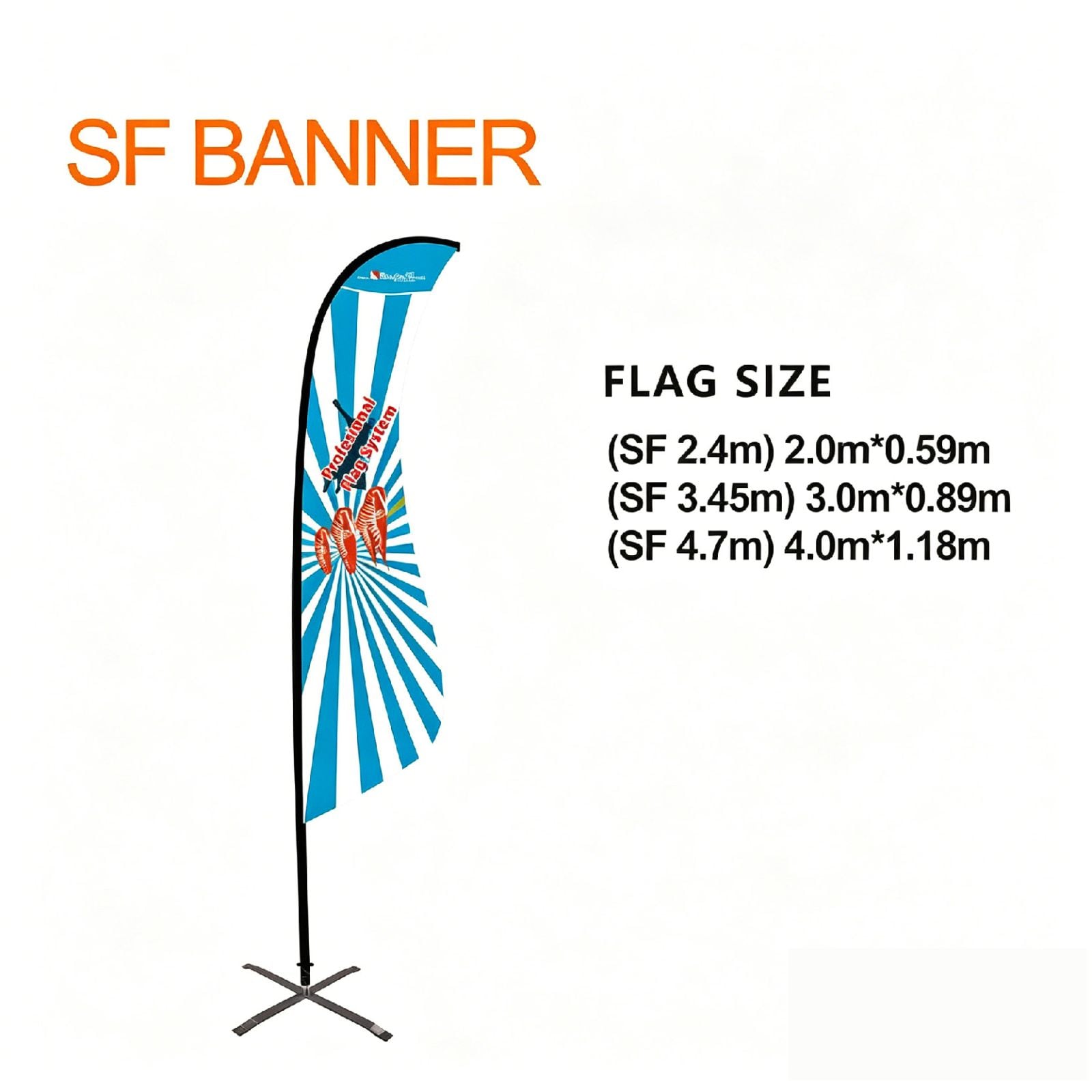
SF Banner
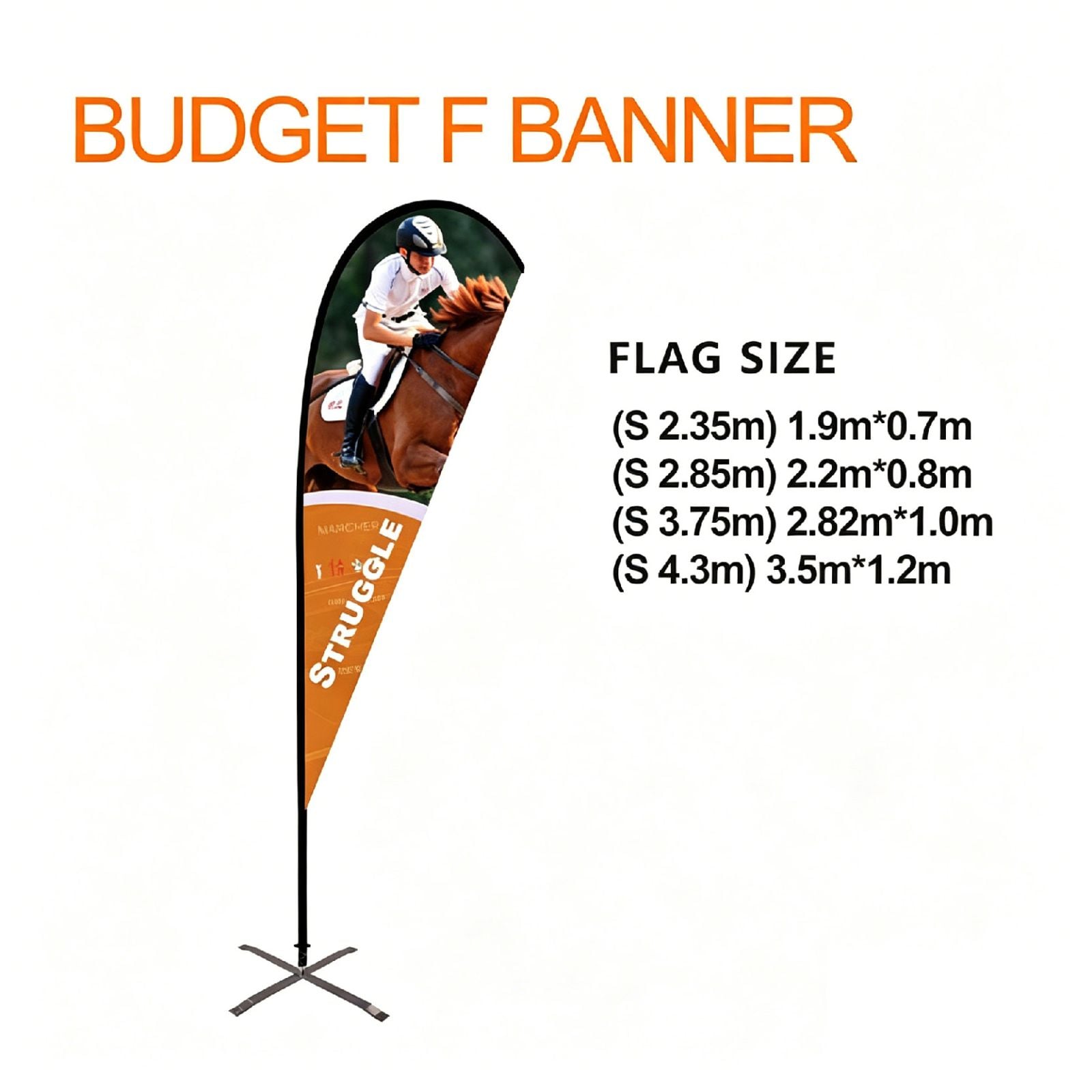
Budget 2in1 flag system
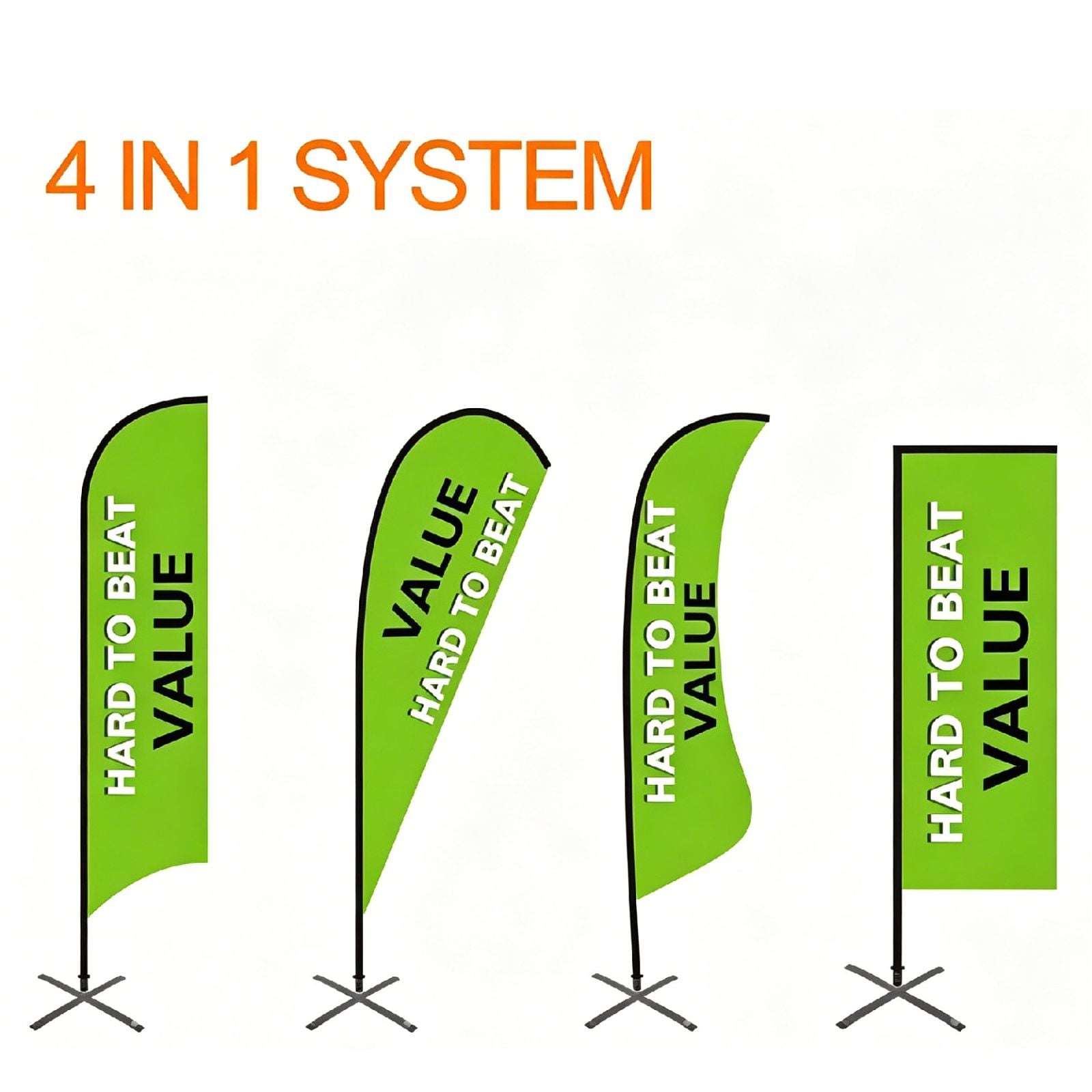
4 in 1 flag System
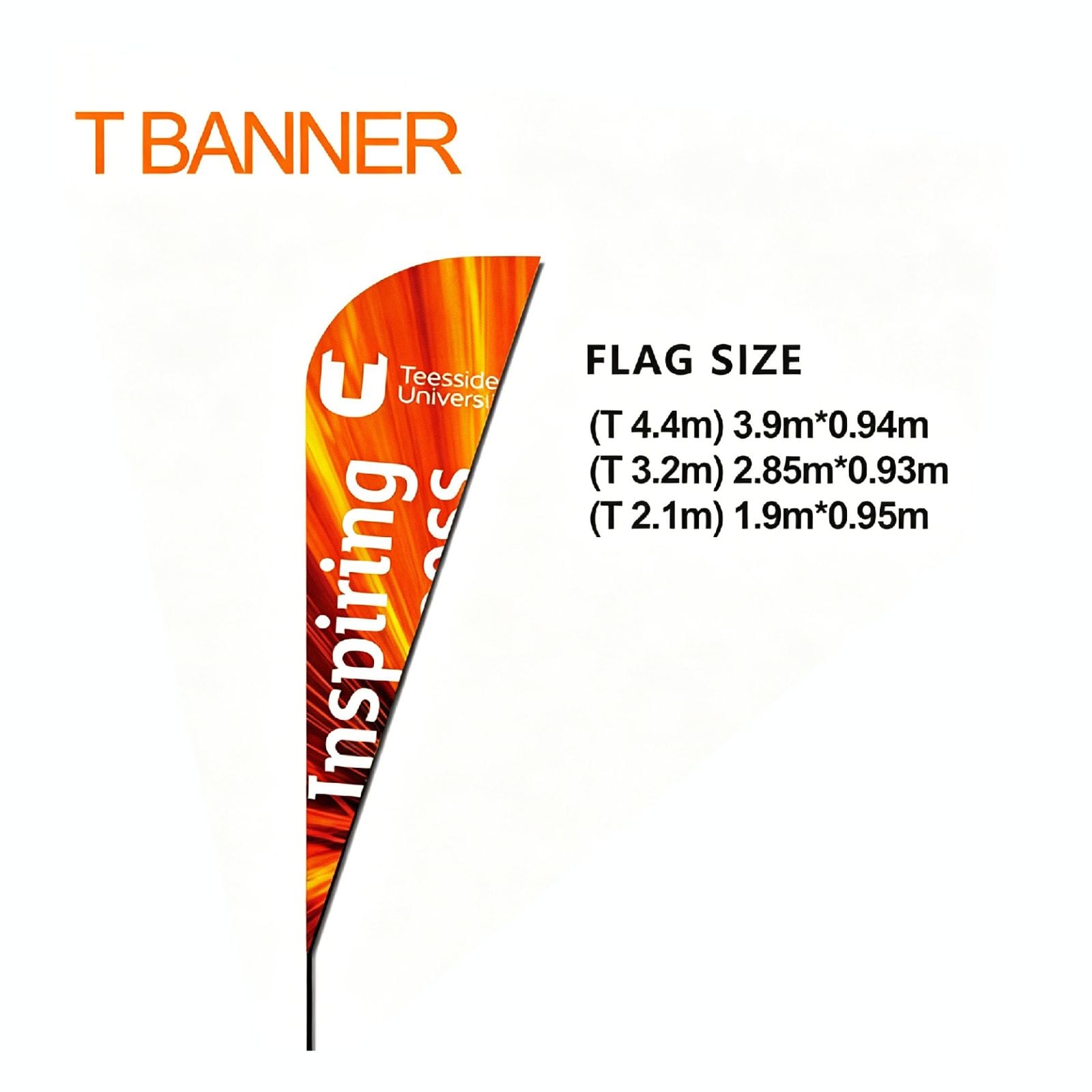
T Banner
Related Articles
29kg Concrete Flag Base - The Complete B2B Buyer's Resource - WZRODS
WZRODS DY451B: 29 kg, HDPE shell, concrete core. Stackable, portable, rust-proof. FOB price US$5.75–$6.85 at MOQ 2 units. Those numbers look unremarkable. Factor in landed cost—import duties lower than aluminum’s under relevant HTS codes, freight savings from less weight per unit of stabilizing mas
Wide Tube Cross Base - The Complete B2B Buyer's Resource - WZRODS
The Wide Tube Cross Base, manufactured by Wzrods in Shandong, China, solves one problem: reliable stability for poles under three meters, without the freight costs and warehouse footprint that heavier alternatives demand.
Rectangular Pipe Cross Base - The Complete B2B Buyer's Resource - WZRODS
The pipe cross flag base is a cross of rectangular steel pipe, powder‑coated, weighing 1.3 kg and spanning 78 cm across its arms. Its center holds a C‑ring shaft that lets the flag rotate with the wind.
X-Shape Backpack Banner - The Complete B2B Buyer's Resource - WZRODS
Economic Cross Base - The Complete B2B Buyer's Guide- WZRODS
When you buy an economic cross base—something like the Wzrods DM‑9, a 77 cm‑long, 1.3 kg iron cross—forget “economic” as a synonym for “cheap.” It means value-engineered.
How to Choose the Right Feather Flag Base for Different Surfaces
Feather Flag - Professional Banner Poles & Systems Manufacturer - WZRODS
How to choose a high-quality backpack flag
The backpack flag concept centers on a frame carried on the back, similar to a backpack, specifically engineered to support a raised flag or banner.