
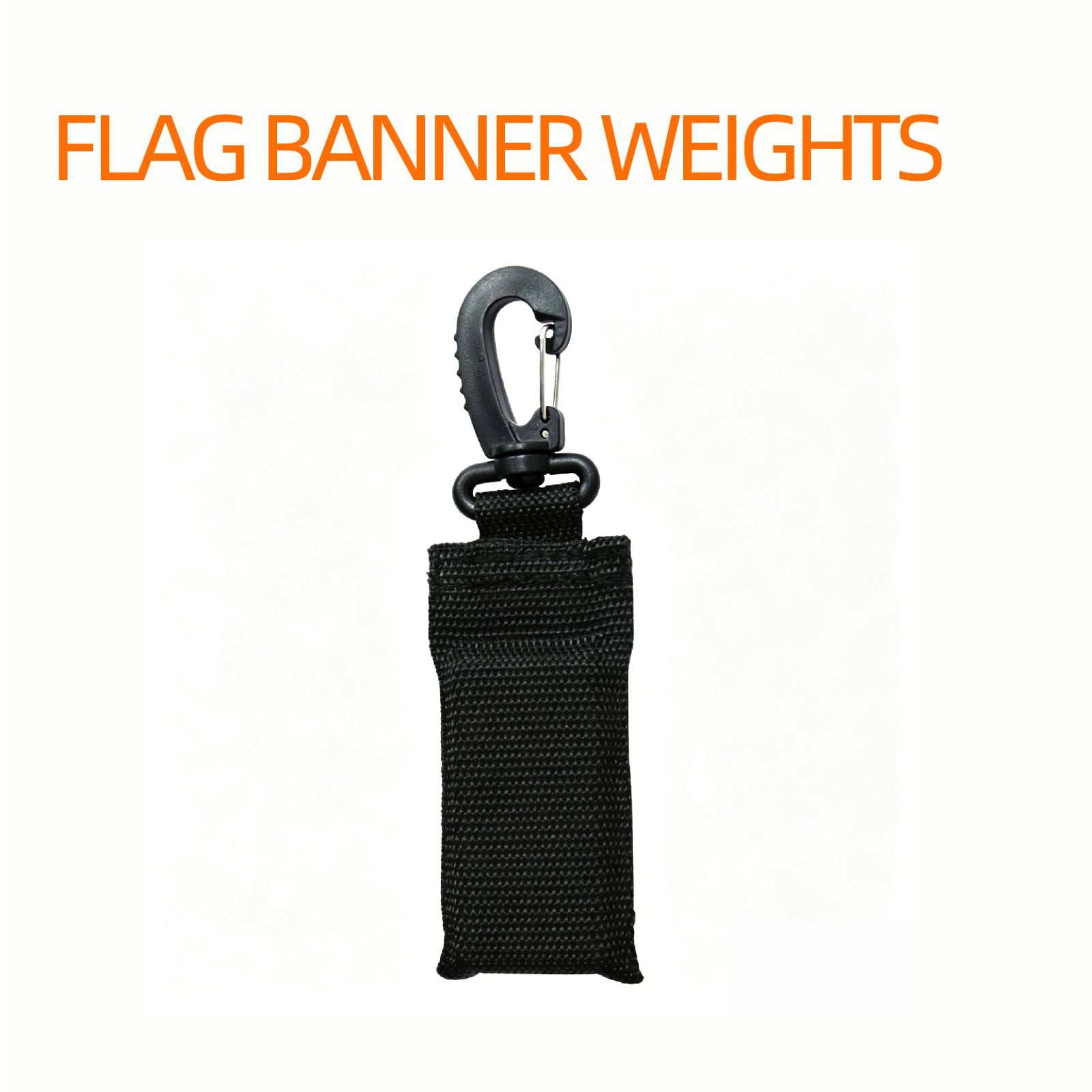
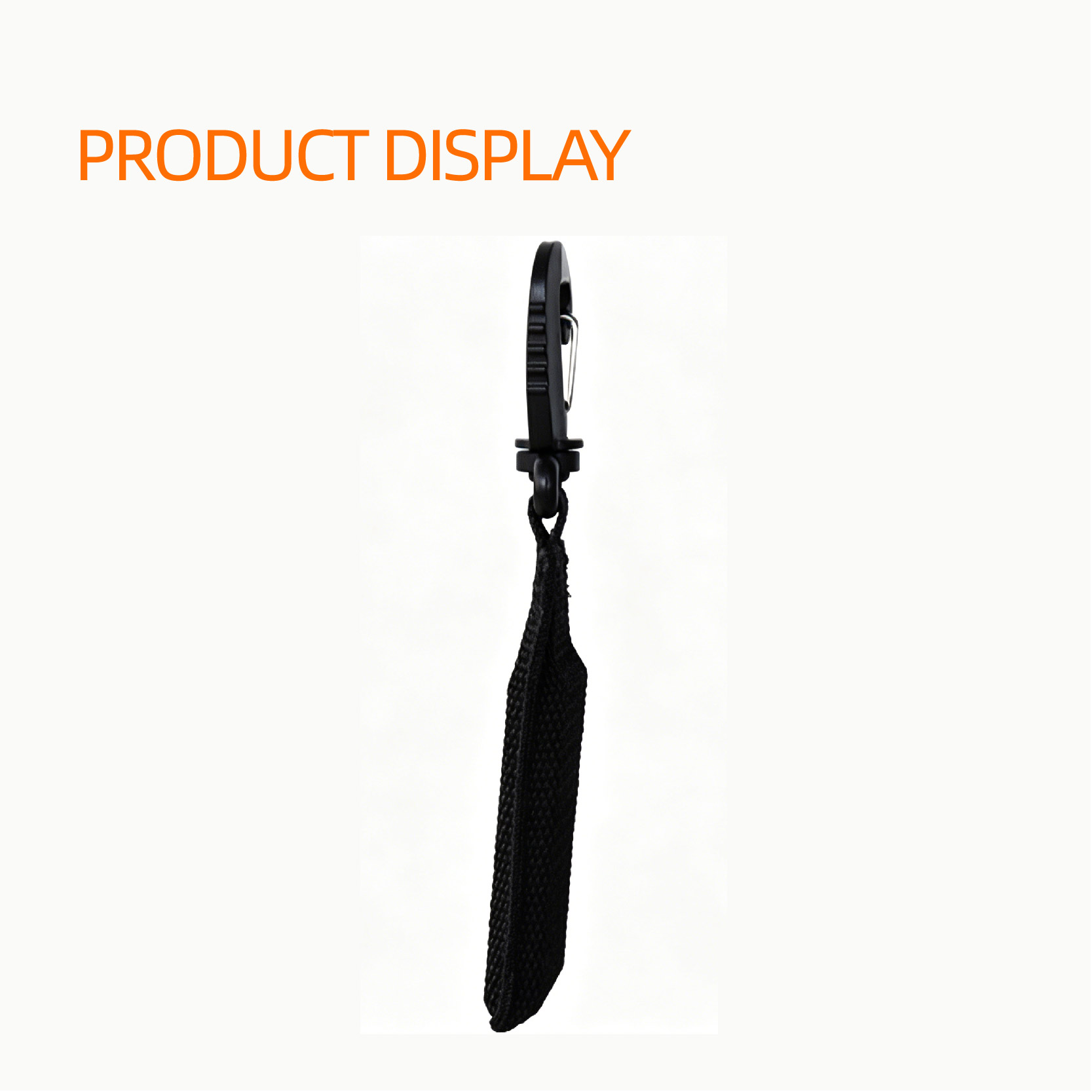
Banner Weight
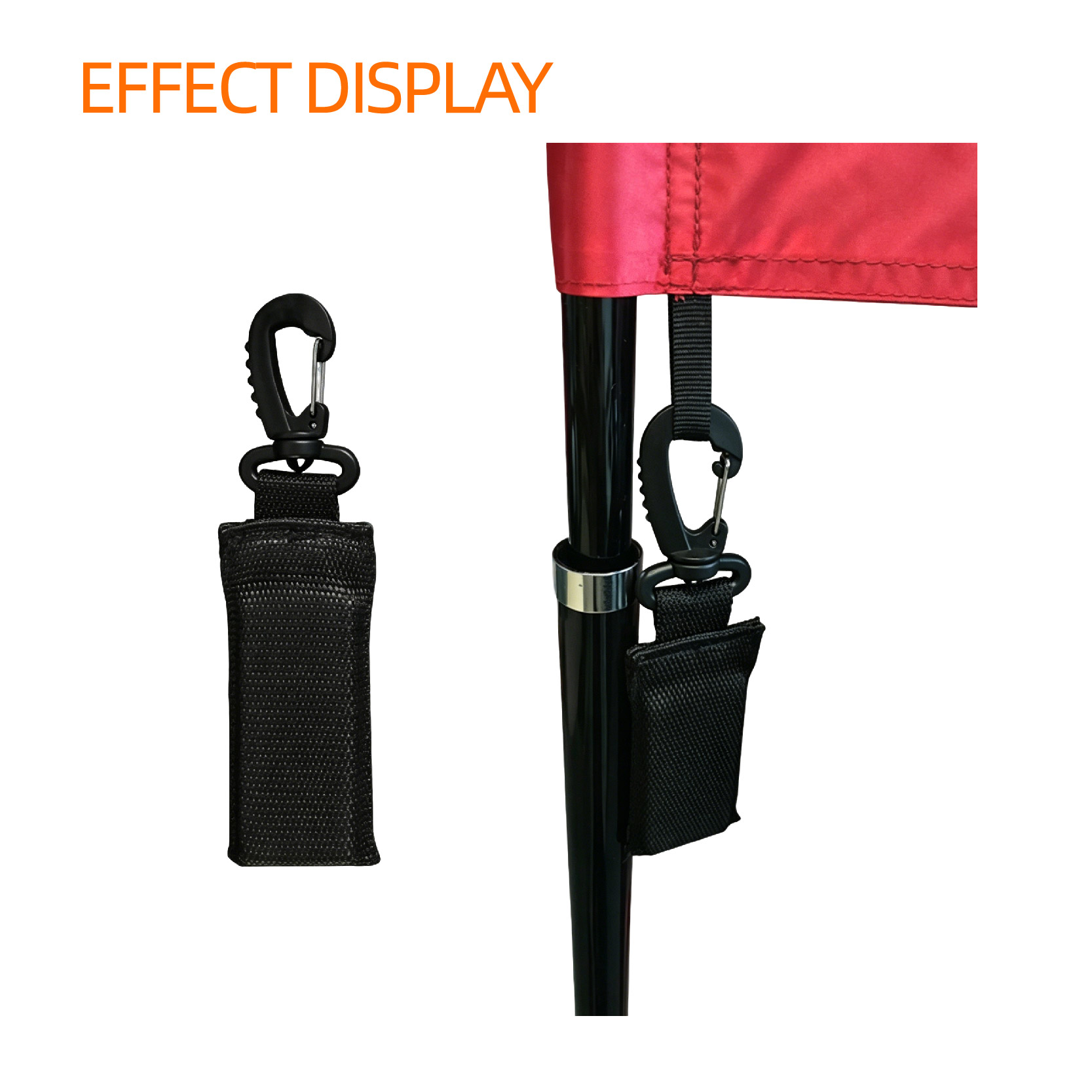
Premium webbing flag /banner weights with spring snap fastening, 200g lightweight design, firmly fixes flags and prevents upward sliding on flagpoles in windy conditions.


 Article
 Specifications
- Origin
- Shandong, China, Shandong, China
- Brand
- Wisezone
- Model
- QZ-1
- Banner Material
- Carbon Composite
- Flag Fabric
- 100%Polyster
- Color
- Balck
- Application Spec
- Trade Shows, Outdoor Events, Sports Events
- Printing Method
- Letterpress Printing, Die Cutting Printing, Digital Printing, Embossing Printing, Thermal Transfer Printing, Silk Screen Printing, Uv Printing, Gravure Printing
- Display Size
- 100*50mm
- Weight
- 0.2kg
 Product Description
Shipping & Packaging
- Unit Weight
- 410g
- Unit Size
- Ship with product
- Packaging
- Standard export carton
- Lead Time
- 15-30 days
Pricing
- MOQ
- 1 set
- Price Range
- USD 13.6 – 15.5
* FOB Qingdao. Excludes shipping & taxes. Accessories & customization confirmed separately.
 Sample Service
- Sample Available
- Yes
- Max Sample Qty
- 1
 Customization Options

Light Custom
Logo, color, size adjustments

Fast Turnaround
Quick custom order processing
Banner Weight - The Complete B2B Buyer's Resource - WZRODS
Flag Banner Weights: The Complete International B2B Buyer's Guide
Six months after delivery, a shipment of aluminum flag bases came back from a coastal installation in Penang. White corrosion blooms along the weld points. The specification sheet had not predicted this. The customer did not complain directly. What they said was, “Perhaps we should look at alternatives.” That phrase costs money.
A flag weight looks simple. It is not a motor. It is not an amplifier with tubes warming up in the wrong order. It is mass that holds a banner. And yet the difference between a weight that works three months and one that works three years is not luck. It is materials science—understanding what happens when wind loads cycle through a pole at a Düsseldorf trade show or during Singapore’s monsoon season. The failure modes are knowable. They are just not obvious unless one has spent time studying the broken ones.
This guide is for the buyer making one decision that echoes across 200 installations over five years. The buyer who knows cheap unit prices become expensive when replacements pile up. The buyer who suspects carbon composite is not just a buzzword—and wants to see the numbers, including freight, duty, and the cost of a banner falling in front of a paying client.
What follows is systematic: no marketing language, just the facts in the order a procurement decision demands.
1. What Actually Matters When Selecting Banner Weights: A Procurement Framework
Fourteen variables could theoretically influence a flag weight purchase. In practice, five account for roughly ninety percent of outcomes. The rest—color, packaging, minor dimensional differences—should not distract from the fundamentals. Too often, side‑by‑side catalog comparisons draw focus to secondary specs and away from primary failure modes. This section prevents that.
1.1 Material: The Decision That Makes All Other Decisions
Three materials dominate: cast iron, aluminum, and carbon composite. Cast iron is heavy and cheap—two attributes that appeal to a certain purchasing calculus. A cast iron weight costs less per unit than the other two. It also rusts. In dry indoor settings, this may not matter for years. Outdoors, in humidity, or near salt water, rust begins within weeks. Not dramatic rust at first; just surface oxidation that customers notice and photograph. The weight still functions. Appearance deteriorates. Floors accumulate rust stains. These are not catastrophic failures—they are slow erosions of brand perception over dozens of installations.
Aluminum solves the rust problem partially, not completely. Salt‑air environments—inland buyers underestimate this—corrode aluminum through a different mechanism. Not red rust. A white, powdery oxidation forms at stress points, weld joints, and anywhere the protective oxide layer has been compromised. The weight works mechanically. The appearance degrades. And once aluminum is deformed—by a wind gust that overloads the banner and transfers force through the pole—it stays deformed. It does not recover. It yields, then it is permanently altered.
Carbon composite bends, then recovers. The QZ‑1 series uses a carbon‑reinforced polymer with a flexural modulus engineered for elastic deformation within its working load range. Load it, measure deflection, unload, measure again. Zero residual deformation. Aluminum, past its yield point, does not recover. This is not a marketing claim; it is a material property verifiable in any qualified lab.
And carbon composite does not corrode. Not in salt air, not in tropical humidity, not after years of direct rain. There is no metal to oxidize. That single fact eliminates an entire category of field failures that aluminum and iron buyers accept as normal maintenance overhead.
| Property | Cast Iron | Aluminum | Carbon Composite (QZ‑1) |
|---|---|---|---|
| Corrosion Resistance | None — rusts within weeks outdoors | Moderate — white oxidation in salt air | Complete — no metal content, no corrosion mechanism |
| Elastic Recovery | Brittle — fractures under overload | Plastic deformation — bends permanently | Elastic — returns to original shape |
| Unit Weight (approx.) | ~0.5 kg | ~0.3 kg | ~0.2 kg |
| Shipping Cost per 1000 Units (estimated) | Highest | Moderate | ~33% lower than aluminum |
| Typical Service Life (outdoor, coastal) | 1–2 years | 2–4 years | 5+ years |
The table omits total landed cost with duty. Carbon composite flag weights typically classify under a different Harmonized Tariff Schedule code than metal weights. Exact rates vary by country (Section 6), but the pattern is consistent: composite attracts lower duties because it falls outside metal product classifications. A buyer who calculates only the ex‑works unit price leaves money on the table twice: once on freight, once on customs.
1.2 Fastening Mechanism: The Spring Snap Problem
The weight must attach to the banner. This sounds trivial. It is not trivial when wind gusts to forty kilometers per hour and the banner whips, subjecting the attachment point to cyclic loading at constantly changing frequencies. Three methods dominate: fixed loops, threaded fasteners, and spring snaps.
Fixed loops are simplest. The banner grommet slides over a post or hook. Under steady load, this works. Under dynamic load—gusts, flutter—the grommet can work its way off the post. This is not theoretical. Experienced event managers carry spare weights and check attachment points twice daily during multi‑day outdoor events.
Threaded fasteners solve detachment but introduce installation time. At a trade show with fifty banners to set up in two hours, the difference between a snap and a bolt multiples across the labor crew. A spring snap attaches in under two seconds. A threaded fastener requires alignment, threading, tightening. Multiply by fifty banners. Multiply by two weights per banner. The time difference is measurable in hours of paid labor.
The QZ‑1 uses a spring snap with a closing force rated to resist banner flutter while allowing one‑handed attachment and removal, per manufacturer’s cyclic load protocol. The webbing strap that connects snap to body is UV‑stabilized polyester, chosen to retain tensile strength after eighteen months of continuous outdoor exposure—an invisible detail at purchase that becomes visible when cheaper webbing frays.
1.3 Weight and Balance: Why 200 Grams Is Not an Arbitrary Number
The QZ‑1’s 200‑gram specification is not accidental. It represents the minimum mass required to prevent a standard polyester banner from sliding up a vertical pole under wind speeds to 25–30 km/h, assuming banner area within typical trade show dimensions (0.5 to 1.5 square meters). Lighter weights—150 g, 120 g—work in still air. They fail when the wind picks up. Heavier weights—300 g, 400 g—add wind resistance but increase shipping cost, load on the pole, and are over‑engineered for most use cases.
The engineering logic parallels any counterweight system: minimum mass that reliably prevents displacement under maximum expected load, plus a safety factor. The QZ‑1 safety factor is approximately 1.4 at rated wind speed. It holds at 25 km/h with a margin to about 35 km/h before displacement begins. For permanently exposed outdoor installations, a heavier weight or additional anchoring is recommended—a conversation worth having with the supplier before ordering.
2. Product Comparison: Carbon Composite vs. Aluminum — Beyond the Spec Sheet
Specification sheets lie by omission. They list weight, dimensions, material. They do not say that the aluminum weight that looked perfect in the catalog developed stress cracks around the attachment point after six months of windy outdoor use. They do not say that the cast iron weight stained a client’s marble floor with rust during a three‑day indoor exhibition. Experienced buyers accumulate this knowledge over years. This section compresses that experience into a comparison deeper than catalog data.
2.1 Mechanical Behavior Under Cyclic Loading
Wind is not steady. It gusts, drops, changes direction. A banner weight attached to a flagpole receives a series of impulses—sharp tugs and slack, repeated thousands of times a day. This cyclic loading is how most flag weight failures occur.
Aluminum responds by developing microfractures at stress concentration points, typically where the attachment hardware meets the body. These fractures are invisible to the naked eye for months. Then one day, during a gust no stronger than previous ones, the attachment fails completely. The banner flies free. The weight drops. A failure that appeared sudden was actually progressive, accumulating cycle by cycle.
Carbon composite behaves differently. The polymer matrix distributes stress across the fiber reinforcement, reducing localized stress concentrations. It does not develop the same progressive microfracture damage that metals experience. It is not indestructible—sufficient overload can cause failure—but the failure mode under normal operating conditions is fundamentally different. It gives warning. It does not fail suddenly from accumulated fatigue the way aluminum does.
2.2 Total Cost Comparison: A Five‑Year Model
The unit price of a carbon composite weight is higher than aluminum. Stated directly: the QZ‑1 costs between USD 13.60 and USD 15.50 per unit at standard order quantities. An aluminum equivalent might cost USD 9 to USD 11. The difference per unit is roughly USD 4 to USD 6, real money.
But a procurement decision that stops at unit price is incomplete. Below is a five‑year cost model for a distributor purchasing 500 units per year for a client with outdoor installations in a coastal city—Miami, Barcelona, or Dubai, for instance.
| Cost Category | Aluminum (500 units/year) | Carbon Composite QZ‑1 (500 units/year) |
|---|---|---|
| Unit Price (ex‑works) | $10.00 | $14.50 |
| Annual Procurement Cost | $5,000 | $7,250 |
| Freight (est. at ~0.3 kg vs ~0.2 kg/unit) | $420 | $280 |
| Import Duty (est. 5% metal vs 3% composite) | $250 | $218 |
| Total Landed Cost (Year 1) | $5,670 | $7,748 |
| Replacement Rate (field data, outdoor coastal) | ~30%/year (corrosion/fatigue) | ~5%/year (loss, not material failure) |
| Replacement Units Needed (Years 2‑5, cumulative) | ~600 | ~100 |
| Five‑Year Total Landed Cost* | $12,470 | $9,300 |
* Assumes replacement units procured at same unit price, freight, and duty per unit as Year 1. Total Landed = Year 1 landed + replacement landed. Aluminum: $5,670 + 600 × ($10 + $0.84 freight + $0.50 duty) = $12,474. Composite: $7,748 + 100 × ($14.50 + $0.56 freight + $0.436 duty) = $9,298. Rounded to nearest $10.
Despite a 45% higher unit price, carbon composite delivers roughly 25% lower total cost over five years. The savings come from three sources: lighter freight (33% per unit), lower duty rate, and a dramatically reduced replacement volume. This model excludes soft costs—client dissatisfaction when banners fail, emergency shipping, labor to swap corroded weights. Those are real and well-known to any buyer managing a large installation program.
3. The Mathematics of Not Replacing: ROI Analysis for Distributors
A distributor’s business model depends on repeat orders, but the right kind of repeat orders. A client who reorders because they are expanding or refreshing designs is a growth customer. A client who reorders because last year’s product corroded, cracked, or failed is a retention risk. They may reorder from the same supplier; they may also start looking elsewhere, reasoning that if the product failed once, perhaps the supplier’s quality standards are the problem. The ROI of a higher‑quality component is not just the replacement cost saved—it is the retention probability preserved.
3.1 Freight Economics: The 33% Advantage
The QZ‑1 weighs approximately 0.2 kg. An equivalent aluminum weight is roughly 0.3 kg. A difference of 0.1 kg per unit sounds trivial at single‑unit scale. It is not trivial at container scale.
One thousand QZ‑1 units: 200 kg. One thousand aluminum units: 300 kg. On an LCL shipment from Qingdao or Shanghai to Rotterdam, Los Angeles, or Dubai, the freight cost difference for that 100 kg is approximately USD 140 to USD 280 per thousand units, depending on carrier and fuel surcharges. A full container of ten thousand units saves one metric ton of dead weight—weight paid to ship, paid on duty, and paid to truck from port to warehouse. Over multiple orders per year, these differences compound into thousands of dollars of avoidable logistics cost.
3.2 Duty Classification: The HTS Code Arbitrage
Many small and mid‑sized importers overlook this detail, and it costs money on every shipment. Aluminum or iron flag weights typically classify under metal product HTS headings—often Chapter 73 (iron/steel) or Chapter 76 (aluminum). Carbon composite weights, with no metal content, fall under Chapter 39 (plastics) or specialized composite headings. Customs data from major importing countries show composite articles often attract 2‑5 percentage points lower MFN tariff rates than equivalent metal articles.
On a USD 10,000 shipment, a 3 percentage point difference is USD 300. Over fifty shipments, that is USD 15,000 in pure customs savings—money that goes to the government if the wrong material classification is chosen. The exact HTS code must be confirmed with a customs broker for the specific importing country, but the pattern holds across the EU, North America, the Middle East, and Southeast Asia: non‑metal products attract lower duties than functionally equivalent metal products.
3.3 Replacement Rate as a Hidden Margin Killer
Consider a distributor supplying 200 trade show clients, each with an average of ten flag installations. That is 2,000 flag weights in the field. At a 30% annual replacement rate—realistic for aluminum in outdoor or semi‑outdoor use—the distributor sources, ships, and delivers 600 replacement units annually. At a gross margin of 35% on a USD 10 unit, that is USD 2,100 in replacement gross profit. But it consumes the same administrative overhead, shipping coordination, and customer service time as the original order. Net margin on replacement business is almost always lower than net margin on new business because operational costs are proportionally higher relative to order value.
If the replacement rate drops to 5%—achievable with carbon composite—replacement volume falls to 100 units per year. The distributor loses USD 1,750 in replacement gross profit but gains back dozens of hours of operational time that can be redirected to new client acquisition. For most distributors, the math favors the lower‑replacement product.
4. Where These Weights Actually Go: Industry‑Specific Deployment Patterns
Usage patterns, failure conditions, and buyer priorities vary significantly. A trade show organizer in Frankfurt has different needs than a festival operator in Brisbane or a corporate events manager in São Paulo. Understanding these differences separates a generic supplier from one that anticipates problems before the buyer articulates them.
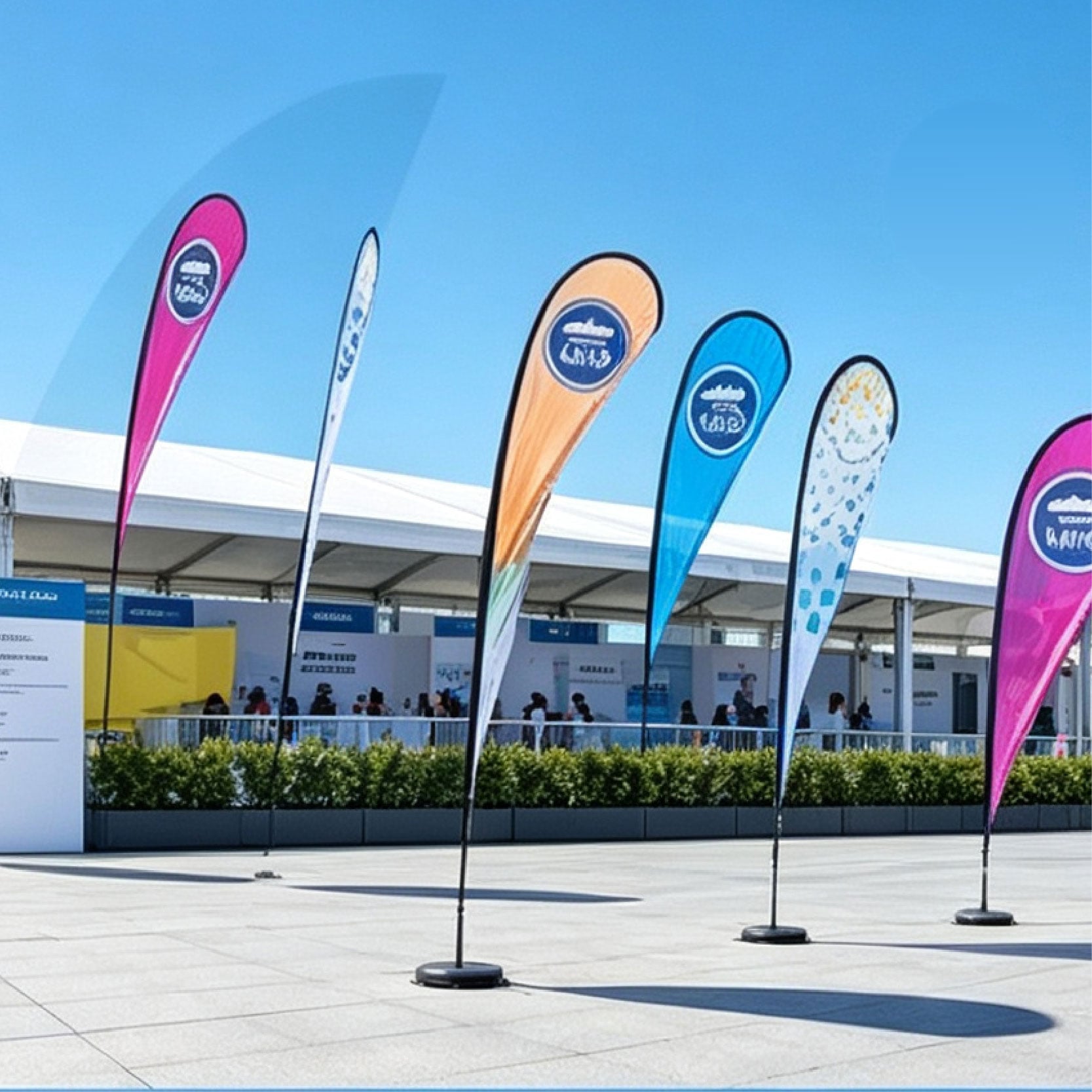
4.1 Trade Shows and Exhibitions: The Indoor‑Outdoor Boundary Problem
Trade show displays present a unique challenge: the same banner setup may be used indoors at one show and outdoors at the next. Materials that work perfectly indoors—uncoated iron weights—fail rapidly when the fleet goes to an outdoor exhibition or venue with open‑air sections.
The other dynamic is setup and teardown speed. Exhibition halls charge for labor hours. Union rules often dictate who touches what. A weight that attaches in two seconds with a spring snap versus thirty seconds with a screw saves real money across a hundred‑banner installation. At fully burdened labor rates of USD 75 to USD 150 per hour for installation crews in major cities, ten minutes saved per show is USD 12.50 to USD 25.00. Over a season of twenty shows, that is USD 250 to USD 500 in saved labor—potentially exceeding the entire unit cost of the weights.
4.2 Outdoor Festivals and Events: The Wind and Weather Gauntlet
Festival banners face the most demanding conditions. Wind loads are continuous and unpredictable. Rain is frequent. A rain‑soaked banner weighs significantly more than a dry one, amplifying force transferred to the weight during gusts. Festival operators also deal with a time‑compressed setup window: everything must be installed in a day or two, often by volunteer crews or temporary labor with minimal training. The attachment mechanism must be foolproof—not just fast, but impossible to do incorrectly. A spring snap that clicks audibly when properly engaged provides a confirmation signal that a screw mechanism cannot match.
4.3 Corporate and Institutional: The Brand Perception Factor
A corporate lobby with a flag display represents the brand. A rusted weight is not just a maintenance issue—it is a brand statement, and not the one the company intended. Facilities managers at corporate offices, hotels, and government buildings prioritize appearance durability as highly as mechanical durability. A weight that looks new after three years is worth more than one that still functions but looks degraded.
Carbon composite is intrinsically black and resistant to surface degradation. There is no paint to chip, no coating to peel, no metal to oxidize. For the institutional buyer, this reduces the frequency of inspections and replacements, lowering total cost of ownership even when the initial purchase price is higher.
5. How the QZ‑1 Is Made: A Production Walkthrough
Manufacturing a carbon composite flag weight involves a controlled sequence of molding, curing, assembly, and testing. Done correctly, it yields components with consistent mechanical properties across thousands of units. The key word is “if.”
5.1 Material Preparation and Molding
The carbon composite material arrives at the Wisezone facility in Shandong as pre‑impregnated carbon fiber sheet—prepreg. Carbon fibers are embedded in a thermosetting polymer resin matrix at a controlled fiber‑to‑resin ratio. This ratio matters: too little resin, the composite is brittle; too much, it is unnecessarily heavy without gaining strength. The QZ‑1 specification uses a fiber volume fraction of approximately 55–60%, optimal for stiffness, impact resistance, and light weight.
Prepreg sheets are cut to shape on CNC tables, then laid into multi‑cavity molds. The mold is closed and heated under pressure in a hydraulic press. Heat activates the resin cure; pressure consolidates layers and eliminates voids. No contest. The cure cycle runs roughly 15–20 minutes at 130–150°C, depending on batch and ambient conditions. After curing, parts are de‑molded and visually inspected for surface defects, delamination, or incomplete fill.
5.2 Assembly and Hardware Integration
The spring snap and webbing strap are assembled to the cured body in a separate workstation. Webbing is cut, folded, and stitched with industrial sewing machines using UV‑resistant polyester thread. The spring snap—sourced from a specialized hardware supplier and rated for expected cyclic loads—is crimped to the webbing loop. The assembly is attached to the weight body through a molded‑in slot that distributes load across the composite structure.
Quality control at this stage includes a pull test on every unit: a calibrated load is applied to the snap at the expected attachment angle, and the assembly must hold without deformation, cracking, or detachment. Pass/fail criteria are binary and documented per production batch.
5.3 Packaging and Export Preparation
Standard export cartons pack 50 or 100 units with internal dividers to prevent scratching. Cartons are labeled with suggested HTS codes, country of origin (China, Shandong Province), and batch traceability codes. Lead time from order confirmation to ready‑for‑shipment is 15–30 days, depending on order volume and production queue.
6. Regional Market Intelligence: Duty, Demand, and the Shift Away from Metal
The market for flag display hardware is not static. Three trends are reshaping procurement patterns, and buyers who understand them can position themselves ahead of competitors still operating on five‑year‑old assumptions.
6.1 Europe: Environmental Compliance and the Plastics Advantage
The EU’s REACH regulations and its Carbon Border Adjustment Mechanism (CBAM) already impose compliance costs on aluminum imports. As of 2025, under Regulation (EU) 2023/956, importers of aluminum must purchase CBAM certificates based on embedded emissions. Carbon composite products are not covered by CBAM, giving them a direct landed‑cost advantage that is likely to widen as more product categories phase in. Distributors serving the EU market should model a scenario in which the cost gap between composite and aluminum grows further over the next three to five years.
6.2 Middle East and Coastal Markets: The Corrosion Imperative
In Gulf Cooperation Council countries, coastal installations are the norm, not the exception. Salt‑air corrosion is the default operating condition. Aluminum weights in Dubai or Doha often show visible oxidation within six to twelve months. The replacement cycle is compressed. Carbon composite’s immunity to salt corrosion makes it the rational choice for any distributor serving the GCC, regardless of unit price. The total cost advantage is so large that selling aluminum weights to coastal clients borders on professional negligence.
6.3 Southeast Asia: Humidity and the Year‑Round Outdoor Season
Tropical humidity accelerates metal corrosion through constant moisture exposure, even under nominal cover. In Singapore, Bangkok, Jakarta, and Manila, heat, humidity, and frequent rainfall create a testing environment that rapidly exposes material weaknesses. Event companies in these markets are steadily migrating toward composite and polymer‑based hardware, driven by field experience with metal failures. A distributor entering Southeast Asia with carbon composite weights follows the trend; one entering with aluminum is swimming against it.
7. Making the Switch: Migration Path from Metal to Composite
Switching an existing fleet from aluminum or iron weights to carbon composite is not an all‑or‑nothing decision. The migration can be phased to maximize learning while minimizing disruption.
7.1 Pilot Deployment Strategy
Start with the highest‑failure‑rate installations—coastal locations, outdoor festivals, permanently exposed flagpoles—and convert those first. Replace aluminum weights with QZ‑1 units at these sites and track failure rates for twelve months. In parallel, continue using existing aluminum inventory for indoor and low‑stress installations. This generates a direct, side‑by‑side comparison under real operating conditions, with the highest‑impact sites converted first.
After twelve months, if pilot sites show near‑zero failures while aluminum sites continue requiring replacements at historical rates, the business case for full conversion is proven with internal data, not supplier claims.
7.2 Inventory Phase‑Out and Reorder Timing
Align the switch with natural depletion of existing aluminum stock. There is no reason to scrap functional aluminum weights; they can serve out their useful life in the least demanding applications. The key is to stop reordering aluminum and start ordering carbon composite for all new requirements and replacement needs. Over an 18–24 month cycle, the installed base shifts from predominantly metal to predominantly composite, with no write‑off and no disruption to service levels.
7.3 Client Communication: Positioning the Upgrade
Distributors sometimes hesitate to switch materials, worried clients will perceive a cost‑cutting move or quality downgrade. The communication strategy is straightforward: present carbon composite as an upgrade based on field performance data. Explain that client feedback on aluminum corrosion and fatigue failures led to a search for a better material, and that carbon composite was selected after testing because it eliminates those failures. Frame the change as responsiveness to client needs. Most clients appreciate a distributor who proactively solves problems rather than waiting for complaints.
8. Pricing Structure and Ordering Information
The QZ‑1 flag weight is priced on a sliding scale based on order volume. Prices are ex‑works Shandong, China, and do not include freight, duty, or local taxes. All prices are in US dollars.
| Order Quantity | Unit Price (USD) | Total Value | Est. Freight to Rotterdam (LCL) | Est. Landed Cost per Unit |
|---|---|---|---|---|
| 1‑99 units | $15.50 | $77.50 – $1,534.50 | Varies — courier recommended | Contact for quote |
| 100‑499 units | $14.80 | $1,480 – $7,385 | ~$180 – $350 | ~$16.60 – $15.50 |
| 500‑999 units | $14.20 | $7,100 – $14,186 | ~$280 – $450 | ~$14.76 – $14.65 |
| 1,000+ units | $13.60 | $13,600+ | ~$350 – $600 | ~$13.95 – $14.20 |
Payment terms accepted: Letter of Credit (L/C), Western Union, and Telegraphic Transfer (T/T). Minimum order quantity is one set, though small‑quantity orders are dominated by freight and handling costs; buyers are encouraged to consolidate orders where practical. Sample lead time is typically 15–30 days—free samples are not available for this product line, and the maximum sample quantity is one unit.
Customization is supported for light modifications (logo printing, webbing color adjustments) and fast‑turnaround custom orders (dimensional modifications to the weight body). Lead time for customized orders depends on complexity; standard production lead time is 15–30 days from order confirmation.
9. Frequently Asked Questions
9.1 Material and Durability
Q: Will the carbon composite crack if dropped on concrete?
The QZ‑1 body survives incidental drops from installation height (about 1–2 meters) onto hard surfaces without structural damage, as confirmed by factory impact testing. Repeated high‑impact abuse—throwing it against concrete, driving over it with a vehicle—can damage any composite material. Under normal handling, cracking is not a reported failure mode.
Q: Does UV exposure degrade the carbon composite over time?
The polymer matrix includes UV stabilizers that prevent the embrittlement that affects unprotected plastics. Carbon fibers themselves are inherently UV‑resistant. Outdoor installations in high‑UV environments (Australia, Middle East, high‑altitude locations) have shown no significant degradation after three‑plus years of continuous exposure.
Q: How does the webbing strap hold up in wet conditions?
The webbing is 100% polyester with UV‑resistant treatment. Polyester does not absorb water the way nylon does, so wet‑condition strength retention is excellent. Stitching uses polyester thread for material compatibility. In saltwater environments, the webbing should be rinsed periodically to remove salt crystals that can abrade fibers, but this is a maintenance recommendation, not a requirement for function.
9.2 Ordering and Logistics
Q: What is the actual lead time from order to delivery at the warehouse?
Production lead time is 15–30 days. Ocean freight from Qingdao or Shanghai to major ports adds: Europe 20–35 days, Middle East 15–25 days, East Coast North America 25–40 days. Customs clearance adds variable time. A realistic total timeline is 45–70 days. Air freight options are available for urgent orders at a significant premium.
Q: Can shipments be LCL, or must they be a full container?
LCL (less than container load) is supported for all order sizes. Minimum shipment size is driven by economic practicality—shipping ten units via ocean incurs disproportionate handling charges relative to product value. Consolidation with other Wisezone products (flagpoles, banner stands, display hardware) is recommended for smaller buyers.
Q: What HTS code should be used for customs declaration?
The appropriate code depends on the importing country. As a general guide, carbon composite flag weights typically classify under Chapter 39 (plastics) or under headings for composite materials. Provide the full material composition—carbon fiber reinforced polymer, no metal content—to your customs broker. The supplier can furnish a material composition certificate to support classification. Confirm the exact code before the first shipment to avoid delays and unexpected duty charges.
9.3 Compatibility and Installation
Q: Will the QZ‑1 fit existing flagpoles?
The QZ‑1 is designed for standard flagpole diameters from about 20 mm to 50 mm. The webbing strap adjusts to the pole circumference. The spring snap attaches to standard banner grommets (typically 10–12 mm internal diameter). For non‑standard pole sizes or unusual grommet configurations, contact the supplier to confirm compatibility before ordering.
Q: How many weights are needed per banner?
Standard practice: two weights per banner for vertical flagpole displays—one at the top grommet, one at the bottom—to prevent upward sliding and billowing. For horizontal banners, the number depends on span and attachment points. A typical 2‑meter horizontal banner uses four weights (two top, two bottom). The supplier can provide a recommended configuration based on specific banner dimensions and installation environment.
Q: Can the spring snap scratch the flagpole?
The spring snap is metal and can potentially scratch aluminum or painted flagpoles if the pole finish is soft. For installations where pole appearance is critical, a protective sleeve or tape at the attachment point is a simple preventive measure. This is not unique to the QZ‑1—any metal‑attachment weight presents the same consideration.
9.4 Business and Warranty
Q: What warranty applies to the QZ‑1?
The standard warranty covers manufacturing defects and material failures under normal use conditions for 12 months from delivery. Failures from misuse, abuse, or installation conditions exceeding rated specifications are not covered. Warranty claims are handled case by case with photographic documentation. Request claim rate data if this is a procurement criterion.
Q: How does the supplier handle quality issues on large orders?
Quality issues on export orders follow a structured process: documentation (photographs, description, batch numbers), supplier root‑cause investigation, and resolution via replacement units, credit, or refund depending on the nature and extent of the issue. Pre‑shipment inspection by a third‑party service (SGS, Bureau Veritas, etc.) is available at the buyer’s expense and is recommended for first‑time orders or orders exceeding USD 10,000.
Q: Is there a minimum order quantity for customized versions?
Light customization (logo printing, webbing color) typically requires a minimum order of 500 units to amortize setup costs. More extensive customization (dimensional changes to the weight body, different hardware) may require higher minimums and involves tooling costs. Contact the supplier with specific requirements for a customized quotation.
About the Author
Wei Chen, Senior Product Specialist
B.S. Supply Chain Management, Michigan State University; Certified Professional in Supply Management (CPSM)
12 years in B2B display hardware sourcing. Former procurement manager for a top 20 US promotional products distributor. Specializes in aluminum pole systems and import compliance.
Reviewed by WZRODS Technical Team. Updated: 2026-07-14
 Comments (0)
No comments yet. Be the first to comment!
Leave a Comment
Related Products
Bungee hook
Lightpole bracket
Disc banner Mult-bracket
Ground Spike For Lawn Or Sand
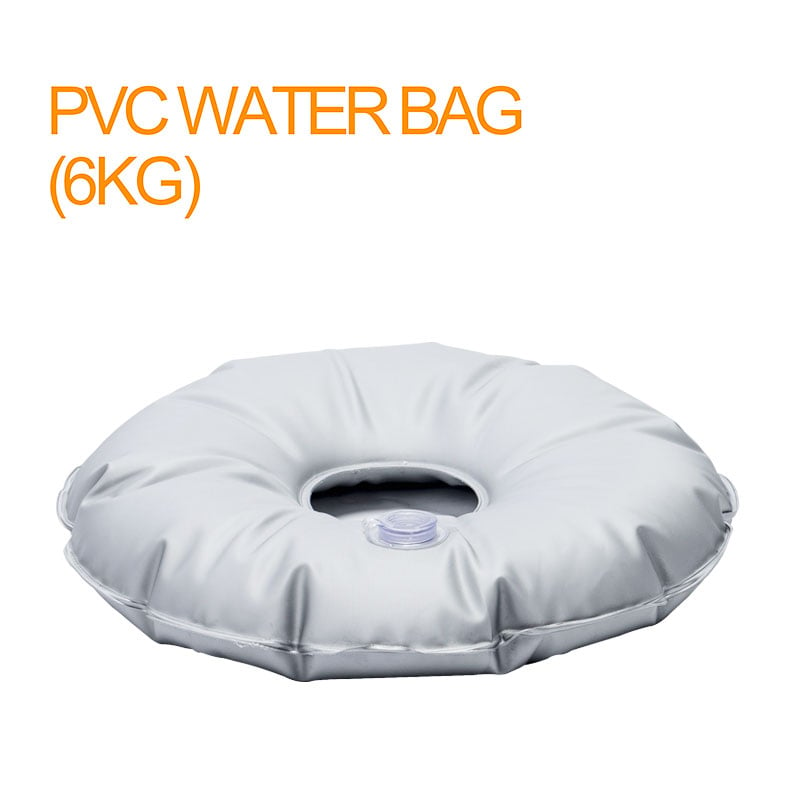
Water Bag
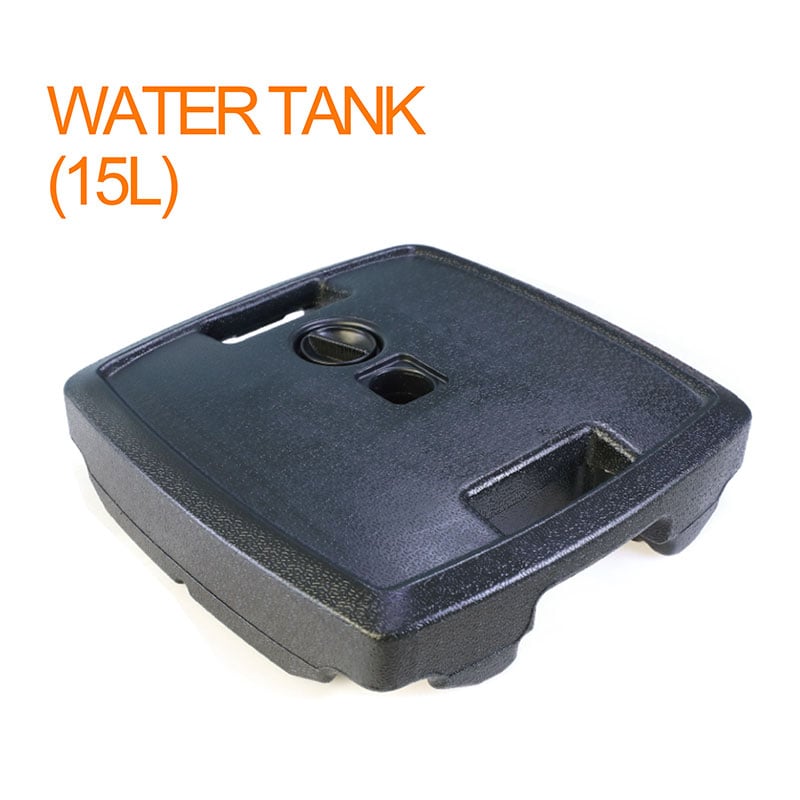
Water tank
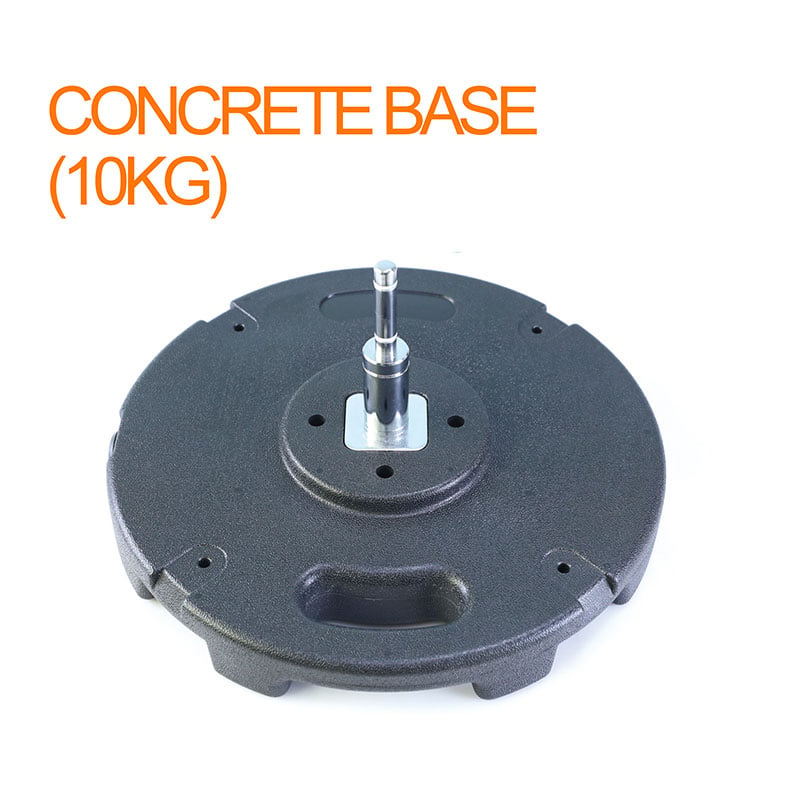
Concrete base(10kg)
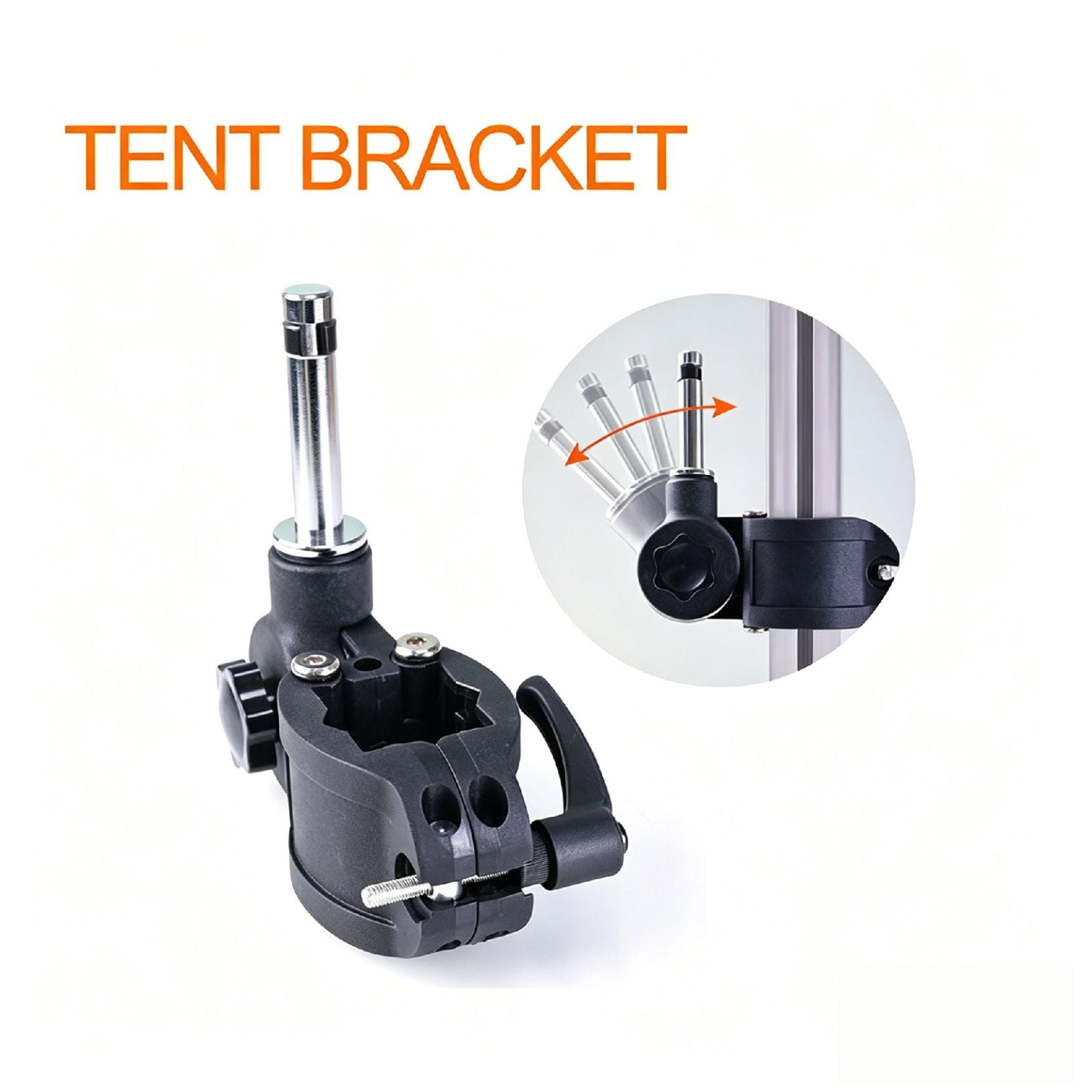
Tent Bracket
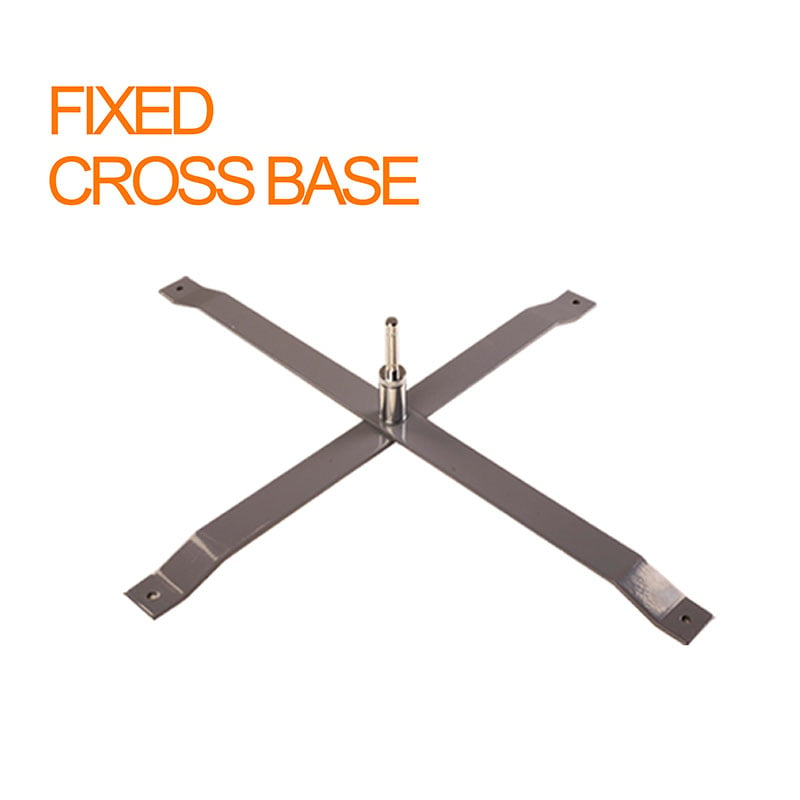
Fixed Cross Base
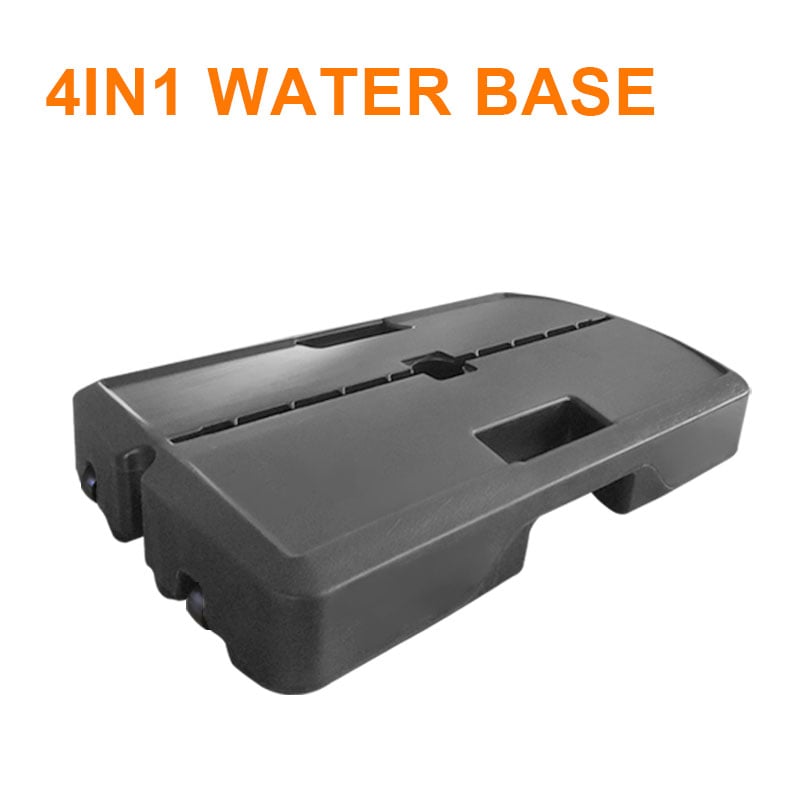
4 in 1 Water Tank
Related Articles
29kg Concrete Flag Base - The Complete B2B Buyer's Resource - WZRODS
WZRODS DY451B: 29 kg, HDPE shell, concrete core. Stackable, portable, rust-proof. FOB price US$5.75–$6.85 at MOQ 2 units. Those numbers look unremarkable. Factor in landed cost—import duties lower than aluminum’s under relevant HTS codes, freight savings from less weight per unit of stabilizing mas
Wide Tube Cross Base - The Complete B2B Buyer's Resource - WZRODS
The Wide Tube Cross Base, manufactured by Wzrods in Shandong, China, solves one problem: reliable stability for poles under three meters, without the freight costs and warehouse footprint that heavier alternatives demand.
Rectangular Pipe Cross Base - The Complete B2B Buyer's Resource - WZRODS
The pipe cross flag base is a cross of rectangular steel pipe, powder‑coated, weighing 1.3 kg and spanning 78 cm across its arms. Its center holds a C‑ring shaft that lets the flag rotate with the wind.
X-Shape Backpack Banner - The Complete B2B Buyer's Resource - WZRODS
Economic Cross Base - The Complete B2B Buyer's Guide- WZRODS
When you buy an economic cross base—something like the Wzrods DM‑9, a 77 cm‑long, 1.3 kg iron cross—forget “economic” as a synonym for “cheap.” It means value-engineered.