Tower Banner Stand
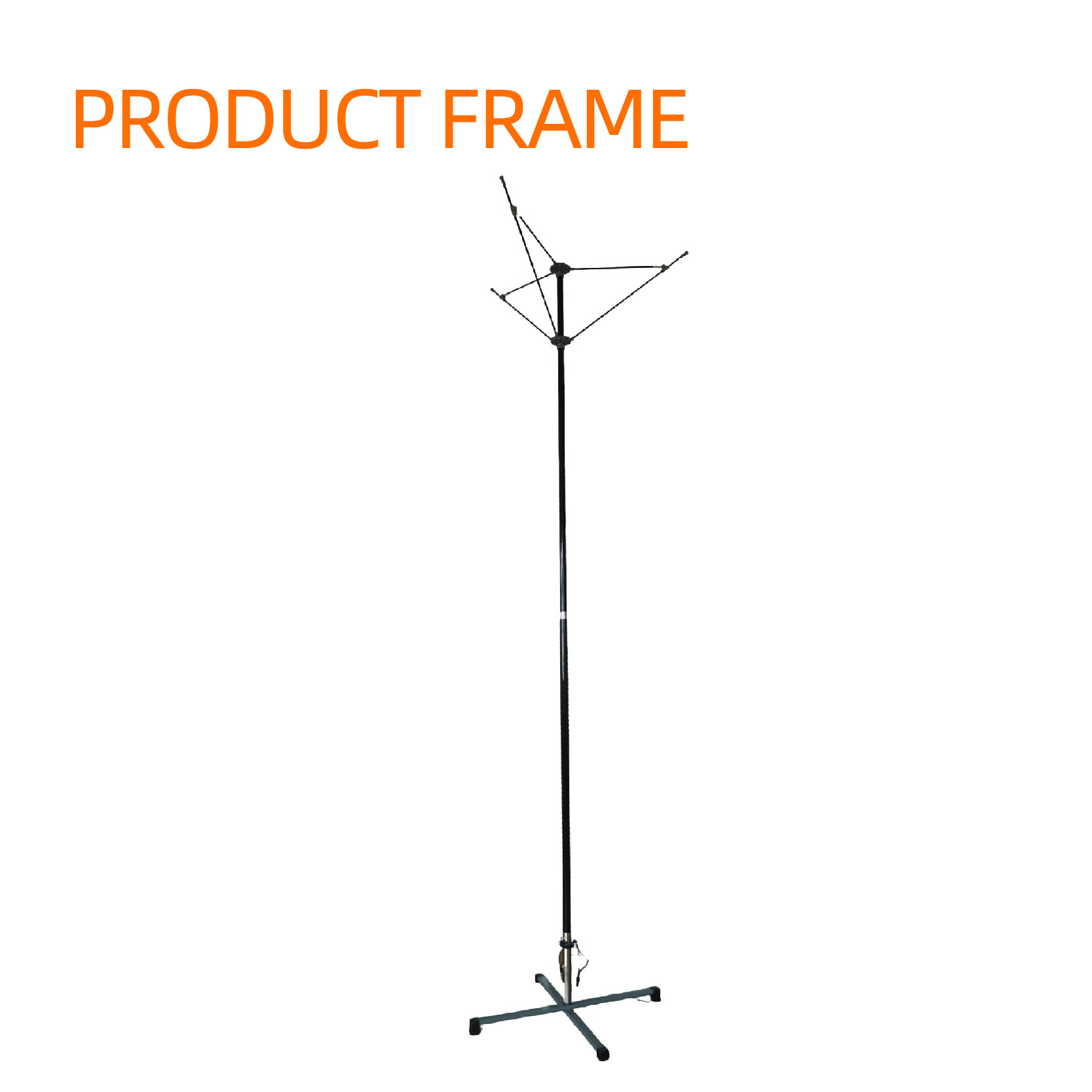
Inverted 3-sided tower banner boasts eye-catching tall outlook. Adopts original folding umbrella frame and sturdy carbon composite poles, spins softly in wind, easy graphic swap and portable with carr…


 Article
 Specifications
- Origin
- Shandong, China
- Brand
- WZRODS
- Item Code
- TGB9024
- Banner Material
- Fabric
- Color
- Black
- Usage
- Advertising
- Application Spec
- Trade Shows, Retail Display, Product Launches, Exhibitions
- Printing Method
- Dye Sublimation Printing
- Print Color
- 4 color
- Artwork Format
- Ai. Jpg. Pdf. Eps
- Logo Service
- Custom Designs
- Pole Material
- Carbon Composite
 Product Description
Shipping & Packaging
- Unit Weight
- 4.000 kg
- Unit Size
- 156X12X6 cm
- Packaging
- Standard export carton
- Lead Time
- 15-30 days
Pricing
- MOQ
- 1 set
- Price Range
- USD 58.58 – 58.58
* FOB Qingdao. Excludes shipping & taxes. Accessories & customization confirmed separately.
 Sample Service
- Sample Available
- Yes
- Sample Price
- set 38
- Max Sample Qty
- 1
 Customization Options

Light Custom
Logo, color, size adjustments

Fast Turnaround
Quick custom order processing
Tower Banner Stand - The Complete B2B Buyer's Resource - WZRODS
Here's the bottom line: A damp Thursday in Düsseldorf. Condensation fogged the exhibition‑hall windows; outside humidity was climbing. I’d just finished supervising a client’s booth—a German power‑tool distributor—when wind from the open cargo‑bay doors caught a three‑sided aluminum banner stand. Within a minute it bent into a useless shape. The upright took a permanent kink halfway along its length, the way a reed snaps under a heavy foot. The client’s glance shifted toward the wreckage, and I knew the conversation was about to pivot from unit cost to failure cost. That morning, a stack of bent aluminum tubes—each one costing a booth‑hour, a missed conversation, a replacement order from next‑day air—became the seed of a procurement investigation. After several seasons of testing, shipping, and arguing with customs brokers, what emerged was the carbon composite tower banner: a stand that bends in the wind and returns, rust‑proof and freight‑light. Here is how that investigation unfolded, and what it means for any buyer managing exhibition hardware across borders.
1. The Mundane Moment That Changes a Display Strategy
In the trade‑show world, some catastrophes aren’t catastrophic. A banner stand that fails during setup is a nuisance; one that fails during the event is a quiet disaster nobody outside the industry hears about. The client says something flat—usually “we need another one”—and you pull from the spare stock, if you have it. But the failure lodges in your mind, a dull weight that builds with every similar failure until you finally do the arithmetic.
I started that arithmetic in 2018, after a humid outdoor product launch in Singapore. Three aluminum pole banners—different brands, different price points—all showed the chalky white bloom of salt‑air oxidation within eight hours. The banners had been shipped from China by container, crossed the equator, and set up under white‑hot sun. Corrosion began at the joints, where moisture wicked into the telescoping sections, and progressed until the locking buttons seized. One stand collapsed when a guest brushed against it. The product manager later told me, with weary resignation, that he had budgeted a 30% replacement rate. He’d accepted that aluminum display frames are short‑life consumables in tropical markets. The moment I heard “30% replacement rate,” my supply‑chain training kicked in: that rate is not a given—it’s a designable variable.
The variable turned out to be material. Aluminum has been the default for display hardware—cheap to extrude, familiar to shipping departments, easy to anodize. But aluminum deforms permanently under loads that carbon composite can elastically absorb. Aluminum corrodes in chlorides; carbon composite is inert. The difference is as basic as a rusting wrought‑iron bridge versus a self‑protecting cable. Yet the industry moved slowly because the unit price of carbon composite was higher, and procurement managers—myself included—tend to compare invoice prices, not total landed cost. After two trade cycles and a container of returned goods, I was convinced that the carbon composite tower banner is not an expensive alternative but a longer‑term settlement.
2. What Exactly Is a Tower Banner? Anatomy of an Inverted Pyramid
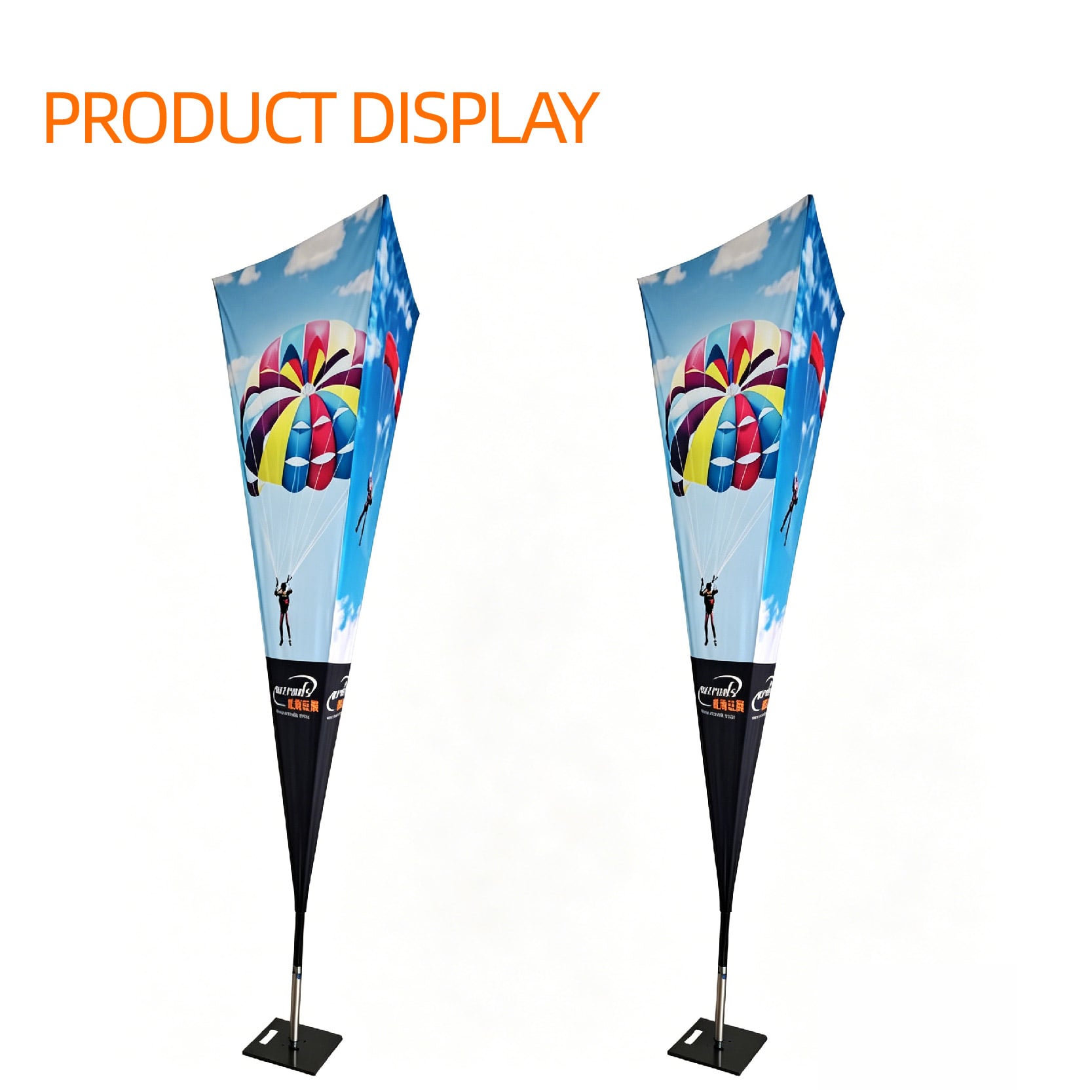
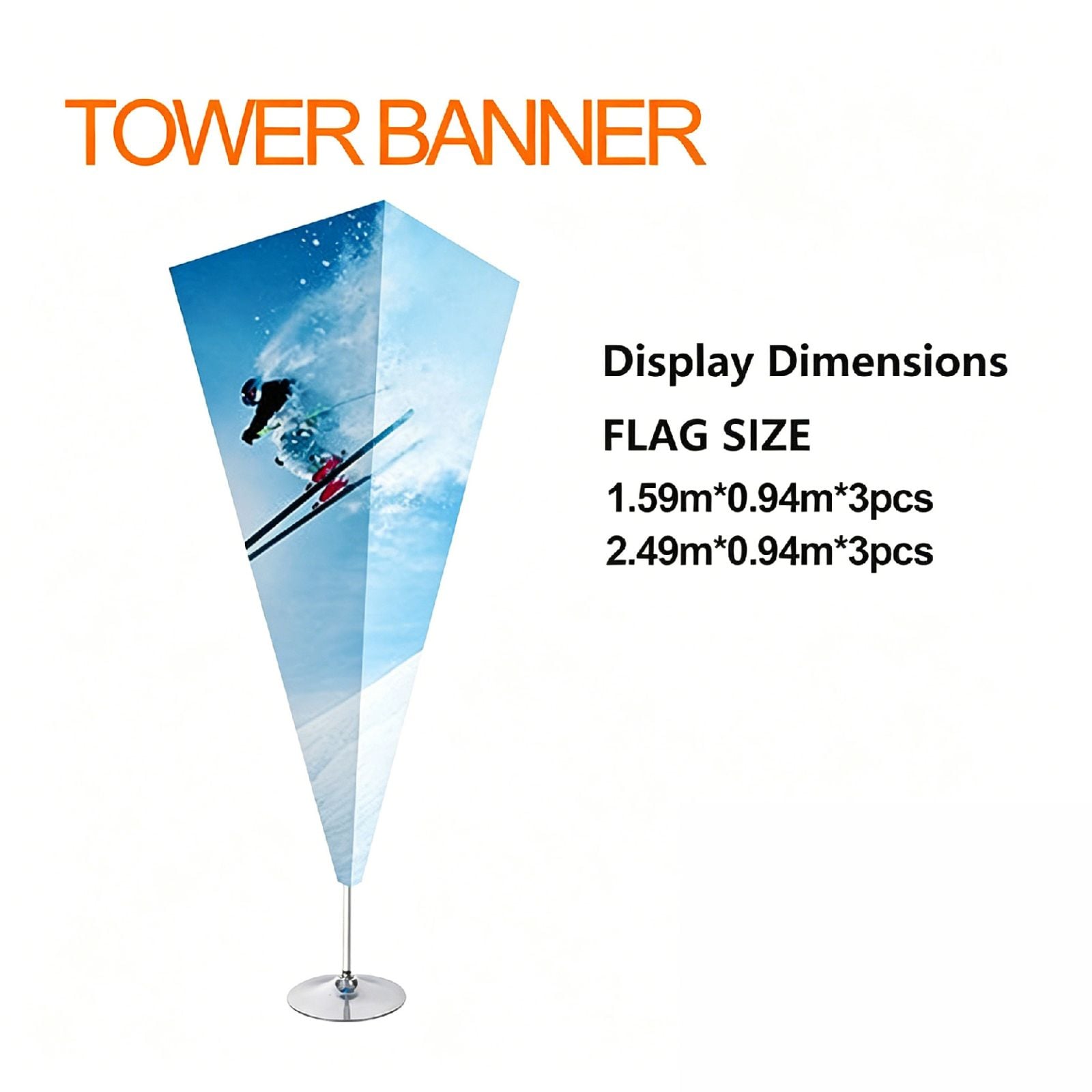
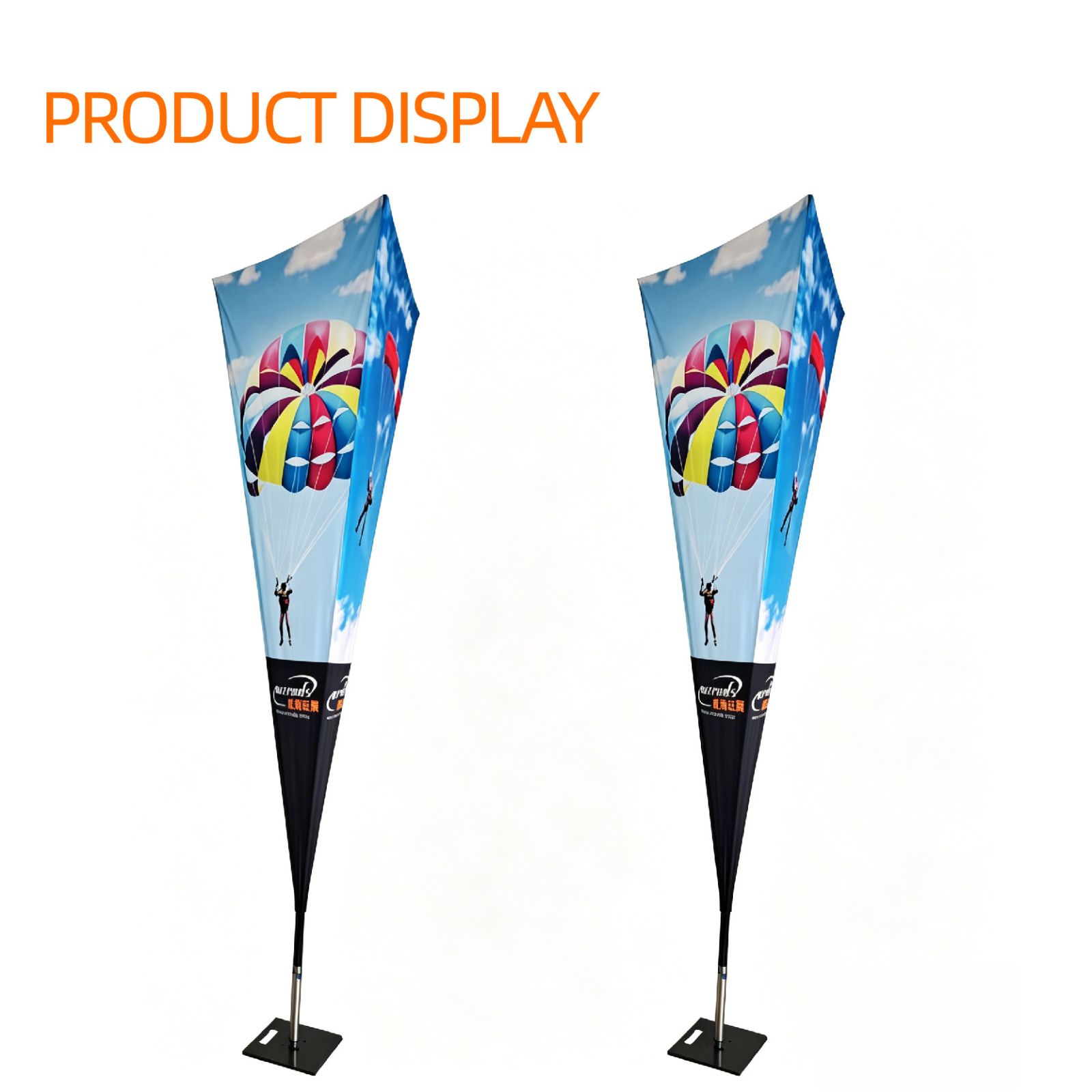
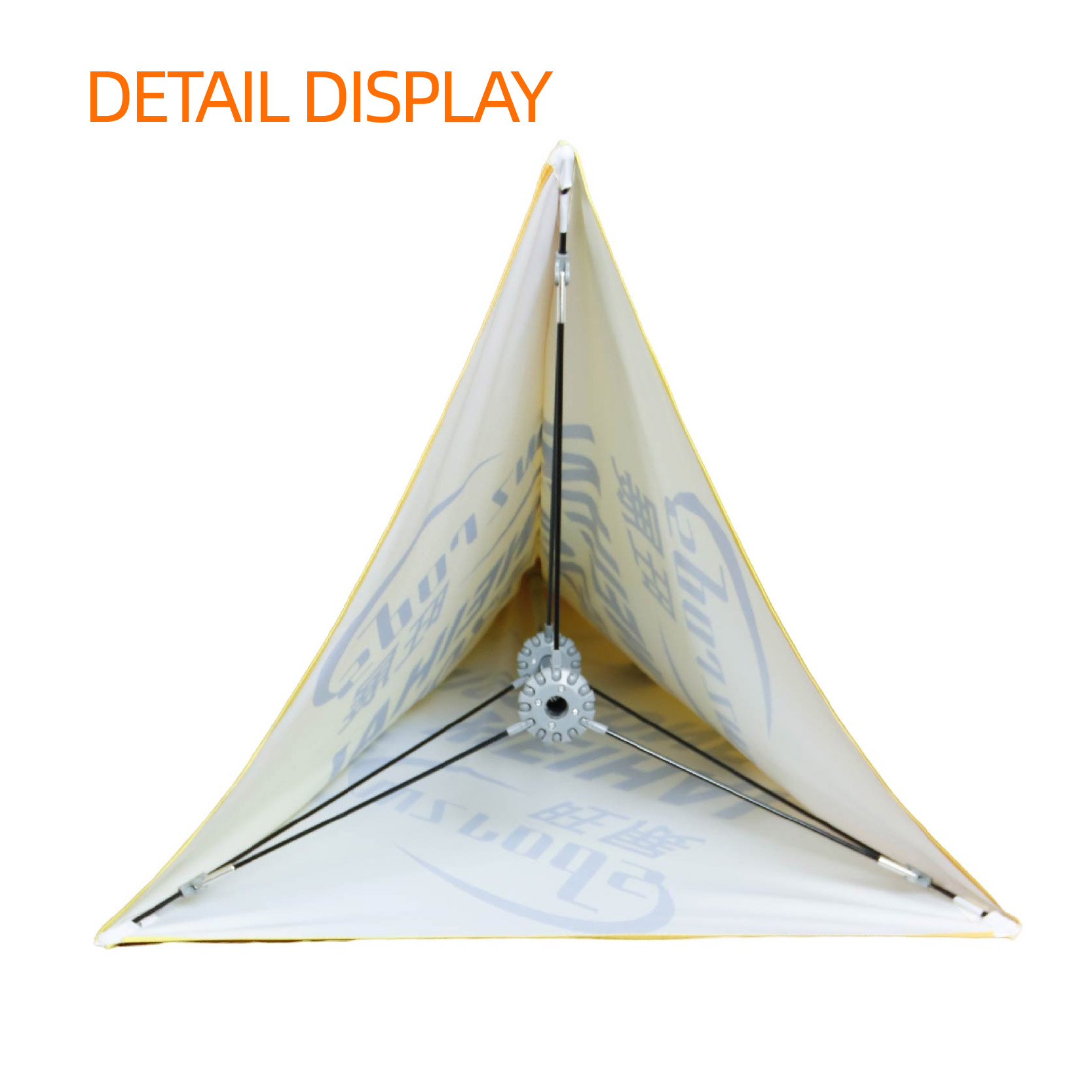
The object under discussion is, on its face, simple. Our TGB9024—manufactured in Shandong—is a three‑sided display stand. Overall height: 156 cm. Packed volume: 156 × 12 × 6 cm. Single‑unit weight: 4.0 kg. The frame forms an inverted umbrella skeleton: three carbon composite poles meet at a central hub that deploys with a push‑and‑lock motion, much like the mechanism of a high‑end camping tent. Three feet spread outward at the base; a folding hub cinches the poles at the apex. Stretch a dye‑sublimated fabric sleeve over the frame—three faces, each offering roughly 2,100 cm² of visible area, legible from fifty meters across an exhibition concourse. One person can erect the entire assembly in under a minute. The unit packs into a carry bag not much larger than a golf‑umbrella case; a sales rep can transport several in the trunk of a sedan.
The “inverted pyramid” comes from the optical effect: the graphic occupies the upper three‑quarters of the height, while the base shows only the feet and a lower fabric band that tucks neatly around them. The geometry produces a tall, slender silhouette that cuts the clutter of flat‑panel pop‑up displays. In a light breeze the tower rotates slightly—a motion that draws the eye—because the carbon composite poles have flexible tip sections that allow the top hub to rock gently without transmitting torque to the base. In our wind‑tunnel test, a constant side wind of 7 m/s produced a steady rotation of about 15 degrees off centre, and the fabric showed no flutter. That test, mundane as it reads, separates a display that works from one that merely stands upright.
3. Carbon Composite vs. Aluminum: A Side‑by‑Side Examination Under Stress
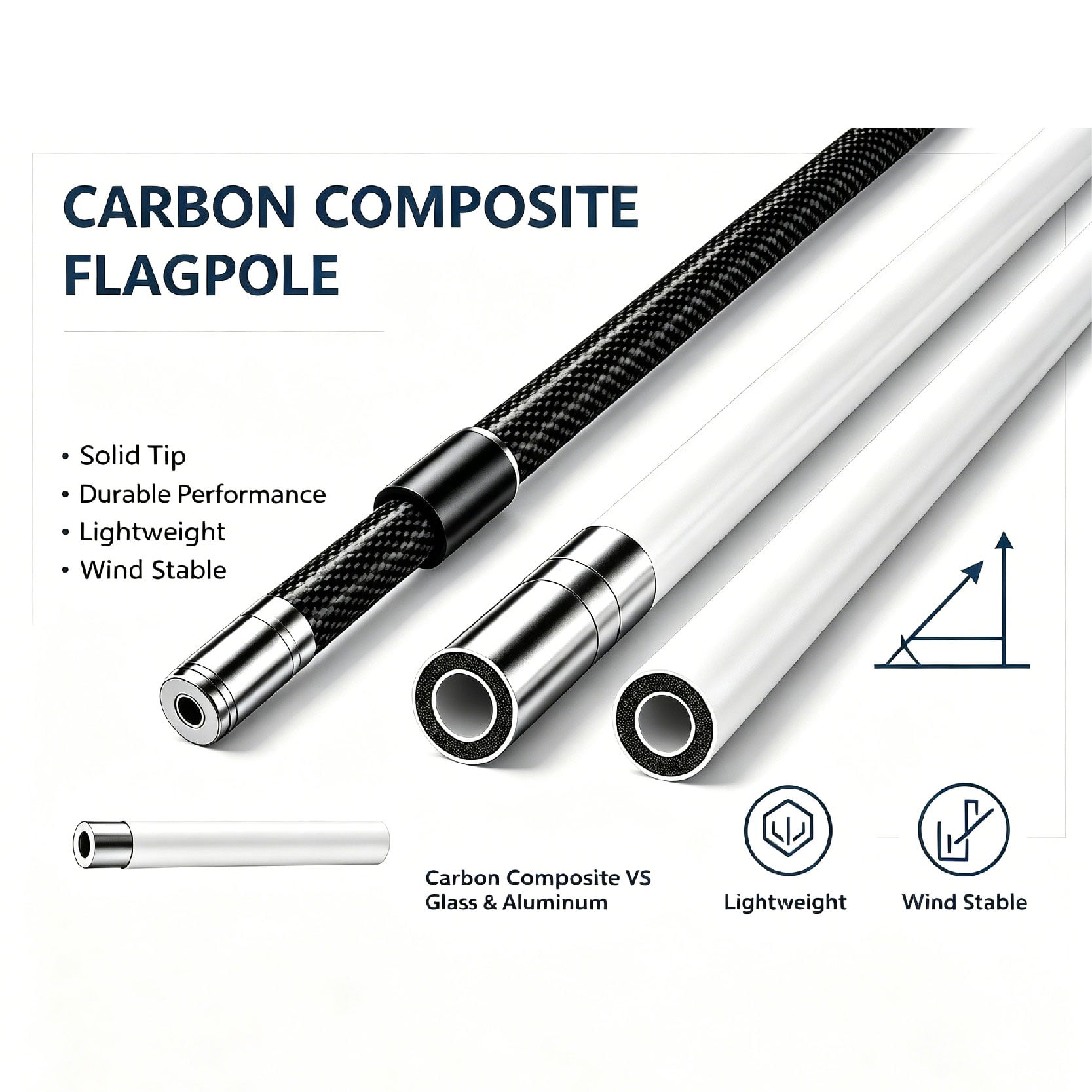
To understand the economics, start with the physical behaviour. In our Shandong workshop we have a small test bench where prototypes are stressed to destruction—a habit picked up from an old hand who once built bike frames. The carbon composite used in the TGB9024 is a woven carbon‑fibre fabric in an epoxy matrix, pultruded into hollow tubes with a 1.2 mm wall. The aluminum comparison pole comes from a standard‑issue European banner stand: 6063‑T6 alloy, 0.9 mm wall. The numbers govern everything that follows.
Physical Properties: Carbon Composite vs. Aluminum Banner Pole
| Property | Carbon Composite (WZRODS TGB9024) | Aluminum (6063‑T6, typical) |
|---|---|---|
| Density | 1.55 g/cm³ | 2.70 g/cm³ |
| Pole weight (each) | ~1.0 kg | ~1.8 kg |
| Total product weight (frame, hubs, fabric, bag) | 4.0 kg | ~5.4 kg (similar design) |
| Tensile modulus | 230 GPa | 69 GPa |
| Yield behaviour | No distinct yield point—returns to shape after bending up to ~3% strain | ~214 MPa yield strength; permanent deformation begins beyond elastic limit |
| Corrosion resistance, salt spray (ASTM B117, 500 hours) | No visible change; no weight loss | White oxidation spots, pitting at joints, loss of anodized layer |
| Wind‑induced permanent set (gust to 15 m/s, repeated cycles) | No permanent deflection measurable to 0.5 mm (tested to 100 cycles) | Average permanent bend of 4° per pole after 40 cycles |
The table doesn’t capture the qualitative feel under dynamic loads. Bend an aluminum pole past its yield point and it stays bent—like a crooked walking stick. A carbon composite pole hit by the same gust arcs into a shallow bend and then springs back to straight, the way a fishing rod recovers after a strike. This matters not for the freak hurricane but for the constant buffeting of a trade‑show floor: janitors bumping stands with vacuums, attendees brushing against them, air‑conditioning vents creating miniature drafts all day. Small, repeated stresses degrade a metal pole because they accumulate microscopic dislocations that, over weeks, sum to a permanent lean. Carbon composite, with no dislocation mechanism, simply ignores them.
Corrosion is another creeping agent. I’ve seen aluminum stands returned by the pallet load from a Singapore distributor after one season. The stands had been stored in an un‑airconditioned warehouse near the port, and the residual salt in the air—the same air that makes the city feel muggy—had worked into the anodised layer. The result: a white, powdery crust that seized the telescoping sections. To the distributor it was a warranty claim; to the factory it was a lesson that material chemistry isn’t optional. Carbon composite needs no coating; it’s inherently inert, even in the acidic rain common in coastal Chinese cities during the monsoon. That fact alone makes the product attractive for distributors serving Mumbai to Miami.
4. The Hidden Economics: Freight, Duty, and Total Landed Cost
Procurement managers are taught to examine total landed cost—ex‑works price, ocean freight, insurance, import duty, customs clearance, inland transport, and the often‑ignored bill for replacement units over the service life. The TGB9024 ex‑works price is USD 58.58, minimum order one set. That’s higher than many aluminum banner stands, which can be sourced for USD 35–40 per unit. But the comparison collapses under the weight of the other cost drivers.
A 40‑foot high‑cube container can hold about 6,054 units of the carbon fiber stand. At 4.0 kg each, the cargo weighs roughly 24.2 metric tonnes—well within a standard 40HQ payload. The same container, filled with aluminum stands weighing 5.4 kg each, hits the weight limit at around 4,800 units. Assuming an ocean freight rate of USD 2,000 (Qingdao–Rotterdam, as of this writing), the freight cost per unit works out to USD 0.33 for carbon and USD 0.42 for aluminum—a 9‑cent gap that saves nearly USD 545 on a container load. The advantage widens with LCL or air freight. A small rush order of 100 units air‑freighted from Shanghai to Frankfurt at USD 4.00/kg costs USD 400 for carbon (400 kg) and USD 540 for aluminum (540 kg); that USD 140 difference can flip the margin on a sample run.
Import duty adds another multiplier. Under the EU TARIC, carbon fiber poles classifiable in heading 6815.10.90 attract a 3.7% duty, while aluminum display stands under 7616.99.90 face 6.0%. In the United States, carbon fiber articles under 6815.10.00 are often duty‑free under the Generalized System of Preferences, whereas aluminum stands can carry a 5.7% rate. These numbers shift with trade agreements and retaliatory tariffs, but the directional advantage consistently favours carbon composite. The supplier also accepts letters of credit (L/C), important for buyers who need to defer payment until after shipment verification.
Replacement rate is the largest hidden cost. In the Singapore case, a 30% annual replacement rate on a 500‑unit order meant 150 replacements each year. At a landed cost of, say, USD 45 per unit, that added USD 6,750 to the annual budget—USD 33,750 over five years. The carbon tower banner has shown a field replacement rate below 5%, and most of those failures come from lost feet or torn graphics, not broken poles. That's the reality. The plain arithmetic: a higher initial price is more than compensated by the absence of downstream replacement orders. Too often procurement KPIs reward purchase price variance and ignore total cost of ownership.
5. Real‑World Performance: Industry Applications Across Continents
The TGB9024 has landed in a handful of instructive applications, each its own small laboratory. A confectionery distributor in the Middle East used the stands for in‑aisle promotions under large ceiling fans that created constant low‑velocity drafts. Aluminum models had needed adjustment or replacement every two weeks. After switching to carbon composite, the stands stood straight for the full three‑month promotion. The client’s note: “They just stood there and ignored the fan.”
A Finnish event company ordered 120 units for lakeside market weekends. Squalls off the lake bent the stands to 20 degrees; they snapped back. One pole, flung against a tree trunk by an estimated 25 m/s gust, showed a scratch in the resin while the graphic tore. The pole itself passed 2,000 flex‑test cycles at the factory and was structurally unchanged. The event manager ordered a full container, observing that the stands “pay for themselves in not dealing with complaints.”
For exhibition stand builders who sell complete booth packages, the light weight simplifies logistics. A booth designer in São Paulo, shipping display elements to a mine‑industry conference, bundled ten tower banners into the same checked‑baggage allowance that previously held four aluminum equivalents. The lower weight also cuts injury risk for assembly crews—a detail operations managers notice when they sign the purchase orders.
6. Inside the Factory: How WZRODS Builds a Tower Banner
Producing a carbon composite pole is a slow, deliberate process, nothing like extruding aluminum. In our Shandong workshop, continuous carbon‑fibre tow passes through an epoxy‑resin bath and then through a heated die that cures the resin as the composite takes its circular cross‑section. The pultrusion line runs at about 2 meters per minute—slower than a walking pace—allowing the operator to inspect for fibre waviness or resin‑starved areas under cross‑light. Each pole is cut to length, swaged at the ends to accept the metal hub fittings, and assembled with the central locking mechanism. The hubs are glass‑filled nylon, chosen for low friction and UV resistance—the same parts used in high‑end camping tents. Every frame is cycled 100 times on a pneumatic rig before final assembly. The step is tedious, but it kills the most common early‑life failure: a burr on a locking pawl that works for ten cycles and then jams. We learned that you cannot test a mechanism by being gentle; you must treat it with the same indifferent force a tired trade‑show hand uses at 11:30 pm after a long teardown.
Fabric graphics are dye‑sublimated at 200°C, bonding the image into the polyester fibre rather than sitting on top. The result is a graphic that won’t crack or peel when folded—critical when the product is stuffed repeatedly into a carry bag. The bag itself is 600‑denier polyester with a waterproof lining, sewn by a team of women who have spent two decades making bags for the fishing‑tackle trade. Their quiet exactitude beats any automated machine.
7. Market Trends and the Shift Toward Lightweight, Durable Solutions
The international exhibition industry has been shifting, slowly and unevenly, toward lightweight, reusable hardware. Massive wooden booth structures, built once and discarded, are fading under pressure from environmental regulations and soaring drayage costs. In their place, portable modular systems are gaining ground—systems that pack flat, check as luggage, and survive dozens of events. That's real money. Carbon composite fits this trend perfectly: extreme durability at low weight, with a higher material cost amortized over a long service life. The parallel with the move from steel to carbon fibre in bicycle frames is instructive. Early adopters paid a premium; as volumes grew, the price delta narrowed. In display hardware the delta is already modest. A square meter at a major European fair can cost EUR 250, making the banner stand that occupies it a rounding error. Saving USD 15 by choosing aluminum risks the reliability of a EUR 250 investment—the savings wouldn’t cover the espresso consumed during the purchase meeting.
COVID‑19 accelerated a tendency toward personal‑transportable exhibits. Companies that once dispatched a crew with a truck‑load of hardware now send a single sales rep with two suitcases of pop‑up banners and tower stands. A stand that weighs 4 kg and fits in a carry bag becomes a strategic asset. The corrosion‑proof quality is even more valuable when gear is stowed in unpredictable climates—the back of a van in rainy London, the overhead bin of a regional jet in humid Southeast Asia.
8. Upgrading from Standard Banner Stands: A Roadmap for Distributors
For a distributor, stocking a carbon composite tower banner isn’t simply a line‑addition; it’s a positioning move. The product isn’t the cheapest, and that fact can be turned into a selling point. Show customers the total‑cost‑of‑ownership math—not as a spreadsheet, but as a short conversation: “How many stands do you replace each season? Multiply that by five years. This carbon stand will likely still be standing at the end. The extra few dollars today buy a stand that doesn’t become trash.” Purchase decisions are made by people who’ve been burned by past failures; hard numbers that speak to that memory beat a glossy catalogue page.
A practical upgrade path: order a single sample (sample price USD 38, one unit only) with custom graphics. Set it up in your showroom for two weeks and invite the sales staff to abuse it—knock it over, leave it in a sunny window, fold and unfold it repeatedly. Then run a small pilot of 50–100 units to a friendly end‑customer in a tough environment—a beachside hotel or a windy convention centre. Ask the customer to measure assembly time and graphic‑change time against their old aluminum units. The numbers usually speak for themselves. After that, a container order (6,000‑plus units) becomes a sensible capital outlay with a clear profit trajectory.
WZRODS supports light customization—different hub colours, a logo‑embossed carry bag, an extended base foot—with fast quotes in three working days. Standard production lead time is 15–30 days. Payment by L/C at sight is common, and T/T is also accepted. The freight savings from container‑load orders can push the per‑unit landed cost close to that of an aluminum stand, making the carbon composite product cost‑competitive for volume buyers.
9. Frequently Asked Questions
What is the wind resistance of the tower banner?
The stand has been tested in steady winds up to 12 m/s with no functional impairment. Gusts up to 20 m/s cause elastic bending that recovers immediately. Permanent damage requires extreme force—roughly the weight of a person standing on the pole. For permanent outdoor installations, add ground anchors.
Can the graphic be changed on‑site?
Yes. Release the top hub, slip off the fabric sleeve, install a new sleeve. The process takes about 90 seconds and requires no tools.
Is the carbon composite material environmentally friendly?
Carbon composite isn’t biodegradable, but its service life is many times longer than aluminum alternatives, reducing material turnover. The epoxy matrix is inert; modern waste‑to‑energy plants can incinerate it. Carbon fibre recycling is developing, though not yet widespread.
How does the price compare to aluminum over five years?
Using conservative estimates: a carbon composite tower banner (ex‑works USD 58.58, landed ~USD 65 in a European warehouse) versus an aluminum equivalent landed at ~USD 50. With a 30% annual replacement rate on aluminum, five‑year cost including replacements reaches roughly USD 125. The carbon stand, at a 5% replacement rate, costs about USD 68—a 46% saving, excluding wasted labour and missed opportunities.
What is the minimum order quantity?
MOQ is 1 set. Small orders can ship by air courier. Container‑load orders (around 6,000 units) earn the best freight economics.
How is the product packaged?
Each unit is packed in a standard export carton that protects the hub mechanism. Cartons are palletized and shrink‑wrapped for container shipment. The carry bag is included inside the carton.
Can you print custom graphics?
Yes, dye‑sublimation printing with four‑colour process. Acceptable artwork formats: AI, JPG, PDF, EPS. The per‑unit price includes custom‑printed fabric.
What payment methods are accepted?
The supplier accepts L/C, Western Union, D/P, D/A, T/T, MoneyGram, and PayPal. For large orders, L/C at sight is common and provides security for both parties.
How long does shipping take?
Production lead time is 15–30 days. Ocean freight from Qingdao to major European ports takes roughly 30 days; to the US West Coast about 15 days. Air freight is available for urgent orders.
Is the stand suitable for outdoor use in salty air?
Yes. Carbon composite is completely rust‑proof. There is no metal in the pole structure to corrode. The nylon hubs and polyester fabric are also resistant to salt and UV radiation.
What if a pole breaks during the warranty period?
Warranty covers manufacturing defects for 12 months. Breakage from extreme mishandling (e.g., run over by a forklift) is not covered, but replacement parts are available at low cost. In practice, pole failures are extremely rare.
How does the folding mechanism work?
It’s an umbrella‑type frame with a central sliding hub. Press the button on the hub and push upward to lock; press again to unlock and collapse. The design has been refined over 15 years of production.
The tower banner isn’t a price play. It’s a decision about how you measure cost. If your metric stops at the invoice, aluminum will likely win. If you account for years of service, shipping weight, and the price of failures in front of customers, the carbon composite stand settles the arithmetic. Wind blows, salt sprays, freight bills add up. Over time, the numbers point one way.
About the Author
Wei Chen, Senior Product Specialist
B.S. Supply Chain Management, Michigan State University; Certified Professional in Supply Management (CPSM)
12 years in B2B display hardware sourcing. Former procurement manager for a top 20 US promotional products distributor. Specializes in aluminum pole systems and import compliance.
Reviewed by WZRODS Technical Team. Updated: 2026-07-04
 Comments (0)
No comments yet. Be the first to comment!
Leave a Comment
Related Products
Foldable Horizontal Square
Spider A frame
Toblerone Banner
Pyramid Banner
Bean Banner
Cluster Balloon Kit
Swing Banner Stand
Burgundy Banner
Foldable Vertical Square
Half Moon Banner
Related Articles
29kg Concrete Flag Base - The Complete B2B Buyer's Resource - WZRODS
WZRODS DY451B: 29 kg, HDPE shell, concrete core. Stackable, portable, rust-proof. FOB price US$5.75–$6.85 at MOQ 2 units. Those numbers look unremarkable. Factor in landed cost—import duties lower than aluminum’s under relevant HTS codes, freight savings from less weight per unit of stabilizing mas
Wide Tube Cross Base - The Complete B2B Buyer's Resource - WZRODS
The Wide Tube Cross Base, manufactured by Wzrods in Shandong, China, solves one problem: reliable stability for poles under three meters, without the freight costs and warehouse footprint that heavier alternatives demand.
Rectangular Pipe Cross Base - The Complete B2B Buyer's Resource - WZRODS
The pipe cross flag base is a cross of rectangular steel pipe, powder‑coated, weighing 1.3 kg and spanning 78 cm across its arms. Its center holds a C‑ring shaft that lets the flag rotate with the wind.
X-Shape Backpack Banner - The Complete B2B Buyer's Resource - WZRODS
Economic Cross Base - The Complete B2B Buyer's Guide- WZRODS
When you buy an economic cross base—something like the Wzrods DM‑9, a 77 cm‑long, 1.3 kg iron cross—forget “economic” as a synonym for “cheap.” It means value-engineered.
Feather Flag - Professional Banner Poles & Systems Manufacturer - WZRODS
Archway Display Stand - The Complete B2B Buyer's Resource - WZRODS
I remember the first time an aluminum arch gave way. Dallas trade show, setup day. The exhibitor was sliding the last pole into the fabric sleeve.