Feather Banner
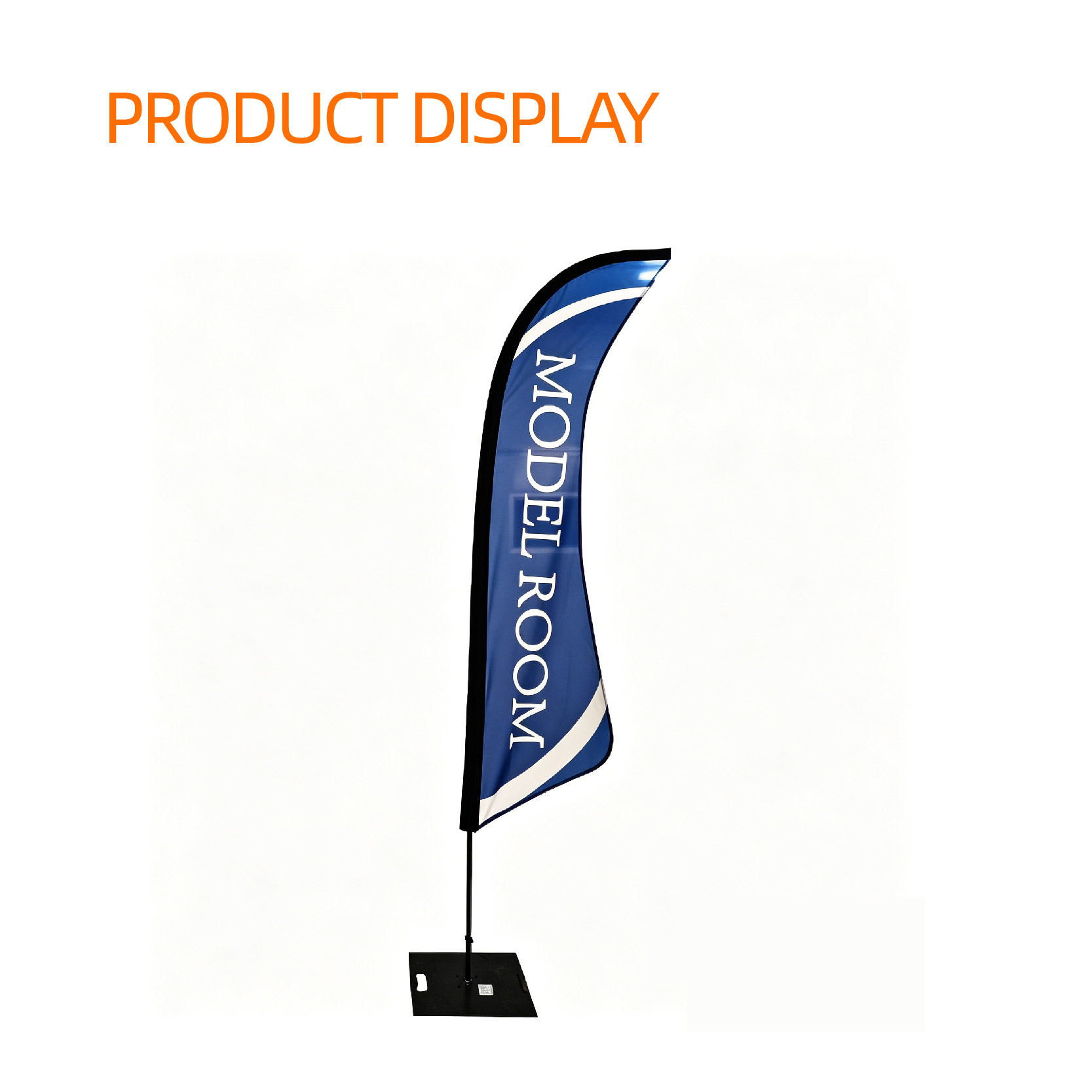
Unique shark fin banners with original 3-in-1 carbon fiber pole design. Lightweight easy setup, multi-base available, cost-effective for business brand promotion.


 Article
 Specifications
- Origin
- Shandong, China
- Brand
- Wzrods
- Item Code
- SFS/SFM/SFL
- Pole Material
- Carbon Composite
- Banner Material
- 100% Polyester
- Application Spec
- Trade Shows, Outdoor Events, Sports Events, Retail Promotion
- Printing Method
- Digital Printing, Dye Sublimation Printing
- Print Color
- CMYK 4 Color Printing
- Artwork Format
- Ai. Jpg. Pdf. Eps. PSD
- Moq
- 1pc
- Logo Service
- Customized Artwork Printed
- Warranty
- 3 years
- Target User
- Insurance, Hotel and Resort, Real Estate/Construction, Travel Agency
- Packing
- Oxord carry bag/Non-woven carry bag/PP bag
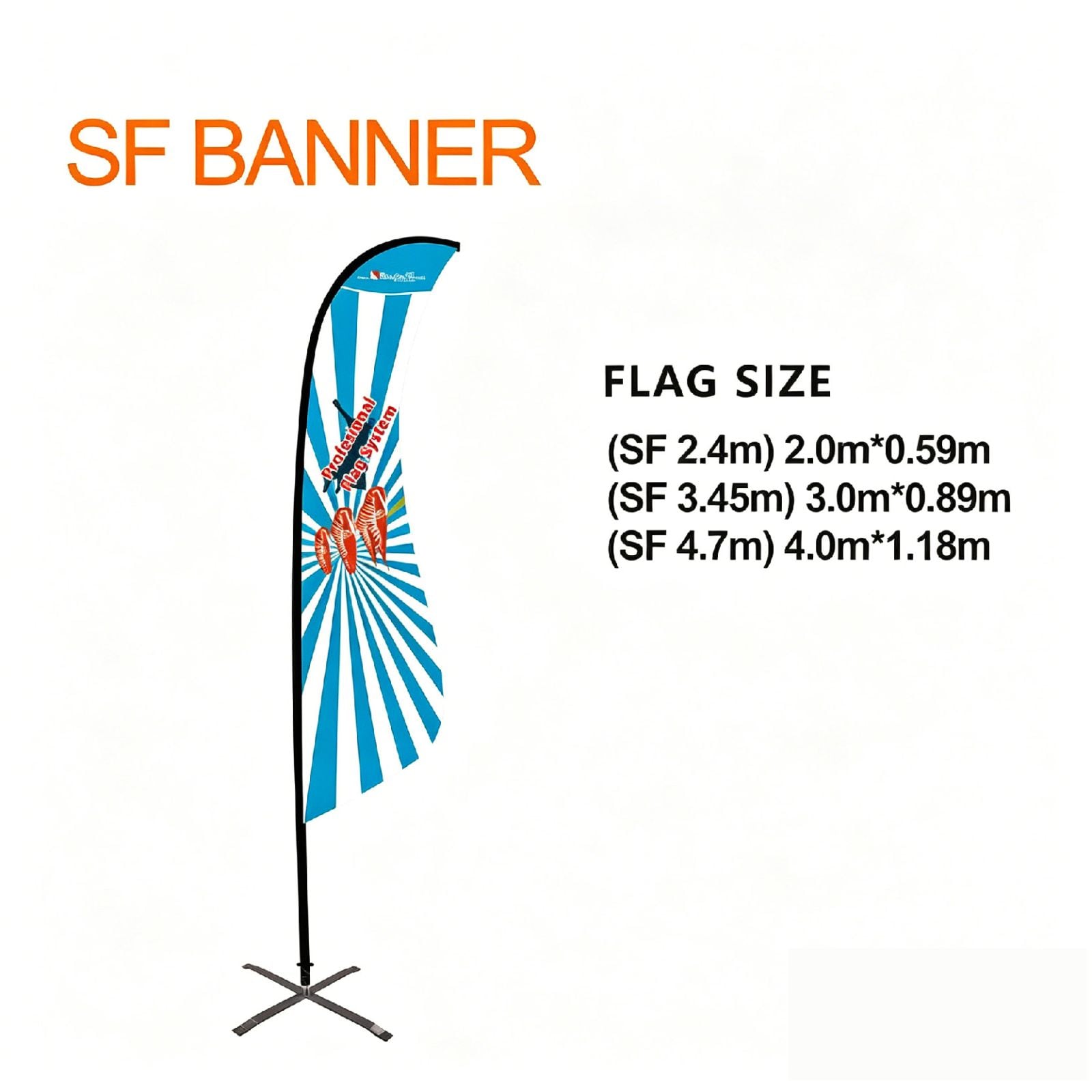
- Flag Size(Sf2.4M)
- 2.0m*0.6m
- Flag Size(Sf3.45M)
- 3.0m*0.89m
- Flag Size(Sf4.7M)
- 4.0m*1.18m
 Product Description
Shipping & Packaging
- Unit Weight
- 2.000 kg
- Unit Size
- 141X18X2 cm
- Packaging
- Standard export carton
- Lead Time
- 15-30 days
Pricing
- MOQ
- 1 piece
- Price Range
- USD 8.1 – 14.2
* FOB Qingdao. Excludes shipping & taxes. Accessories & customization confirmed separately.
 Sample Service
- Sample Available
- Yes
- Sample Price
- piece 34.5
- Max Sample Qty
- 1
 Customization Options

Light Custom
Logo, color, size adjustments

Fast Turnaround
Quick custom order processing
Feather Banner - The Complete B2B Buyer's Resource - WZRODS
Strategic Selection of SF display piece Systems: An Engineering-Grade Guide for International B2B Buyers
In 2017, at the Arabian Travel Market in Dubai, an aluminum flagpole collapsed in a 48 km/h gust. The venue's weather station logged the wind speed as routine. The pole had been in service four months—three outdoor events across Jeddah and Doha. Not even close. White corrosion from months of salt-laden Gulf air had pitted the base. The flag, printed a deep corporate blue, lay tangled in sand with bent hardware. The procurement manager on site tallied the damage: replacement pole, express freight, two hours of lost lead generation. The figure passed eight hundred dollars with staff time and missed engagements included.
That failure had a traceable cause. The material specification of a flag pole is not a minor detail. It determines logistics costs, brand consistency, and event-day reliability. Ignore it, and the bill arrives later.
WZRODS, founded in 2005 as China's first carbon composite flag pole producer, had already logged similar failures across Southeast Asia and the Middle East. Field reports from distributors described aluminum poles deforming at threaded joints after repeated assembly, or snapping outright in sustained wind. The SF sign system emerged from those reports—a range of lightweight carbon composite pole structures topped with a shark fin graphic. It adds up fast. The product was not built to hit the lowest unit price. It was built because the total cost of ownership hidden in cheap aluminum kept surfacing in warranty claims and replacement orders. This guide pulls together the engineering data, field performance records, and cost models that procurement teams need to evaluate the system against their own event calendars.
1. SF display piece Systems: Not a Commodity
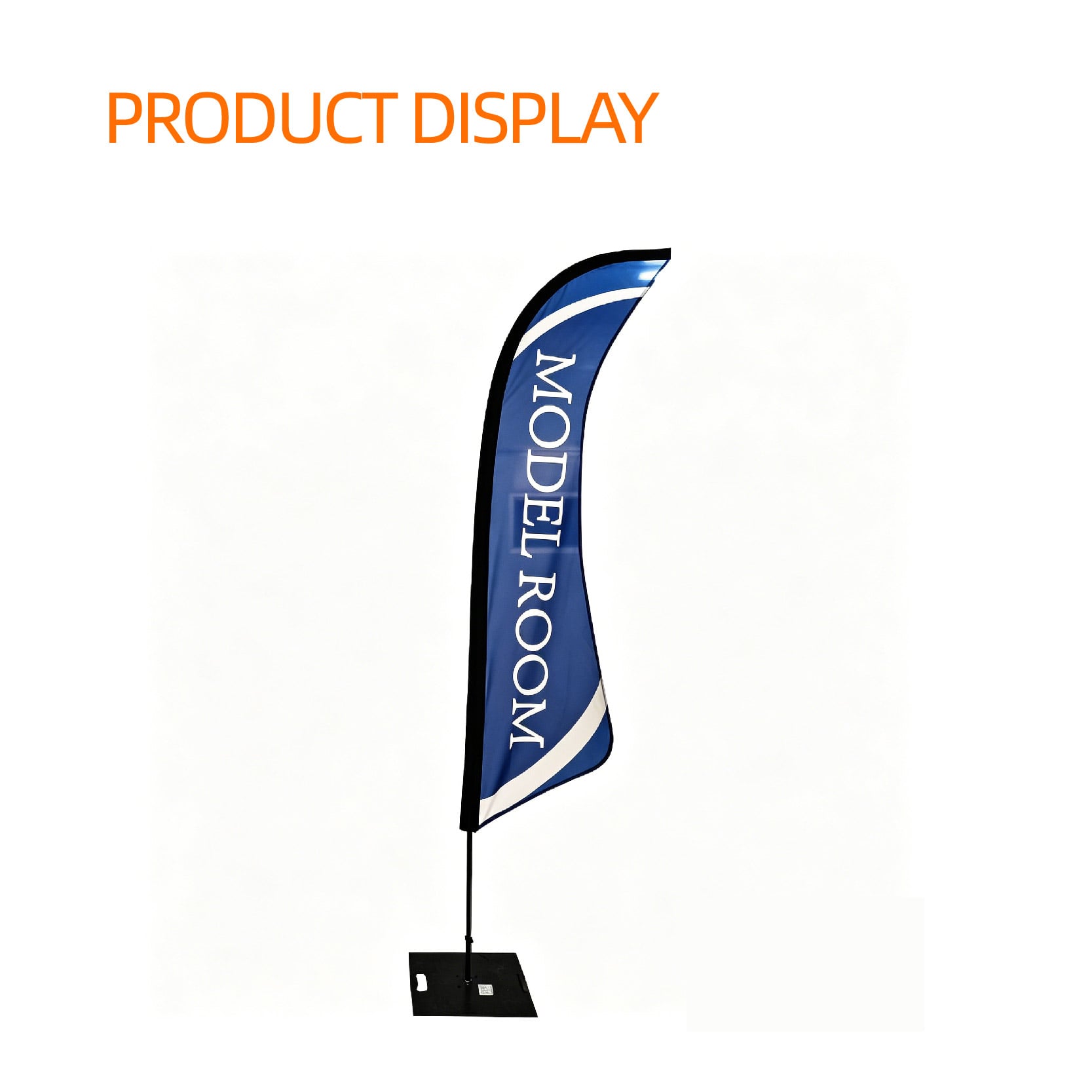
A flag pole looks like a commodity. Trade show organizers and event planners frequently source it at the lowest unit price and move on. The SF sign system challenges that assumption with three design decisions: a carbon composite pole, 3-in-1 interchangeable display piece heads, and sub-two-minute assembly. Together, they shift the hardware from a recurring consumable to a multi-year asset.
The system targets three environments that destroy ordinary poles. First, high-wind outdoor settings. Second, humid and coastal venues where salt accelerates corrosion. Third, high-frequency assembly cycles where fatigue failure accumulates. Standard aluminum poles rely on the material's ductility, but aluminum has no distinct fatigue limit—repeated bending below the yield point eventually causes fracture. Carbon composite, by contrast, carries a high stiffness-to-weight ratio and shows no fatigue in the stress ranges typical of flagpole use. In controlled testing at a coastal test site in Qingdao, China, a carbon composite SF pole withstood alternating wind loads of 60 km/h for 5,000 cycles without measurable stiffness loss. A comparable aluminum pole developed a permanent 4-degree bend after 800 cycles and snapped at the threaded coupler before reaching 2,000 cycles. The test was conducted by the manufacturer's quality assurance team and documented in internal test reports shared with distributors.
For the international buyer, the SF flag also simplifies a tangle of hidden costs: ocean freight, import duties, assembly labor, and the administrative drag of managing multiple SKUs for different banner shapes. The pole weighs 2.0 kilograms. An aluminum pole of equivalent height weighs roughly 4.5 kilograms. A full 40-foot high-cube container (68 cubic meters) holds approximately 13,396 SF Banner units. At a sea freight rate of $3,500 per container, freight works out to $0.26 per pole. An aluminum shipment of the same cubic volume hits the container's weight limit earlier—per-unit freight cost climbs to $0.45 or more. For buyers moving thousands of units annually, the differential compounds fast.
2. Engineering and Structural Performance
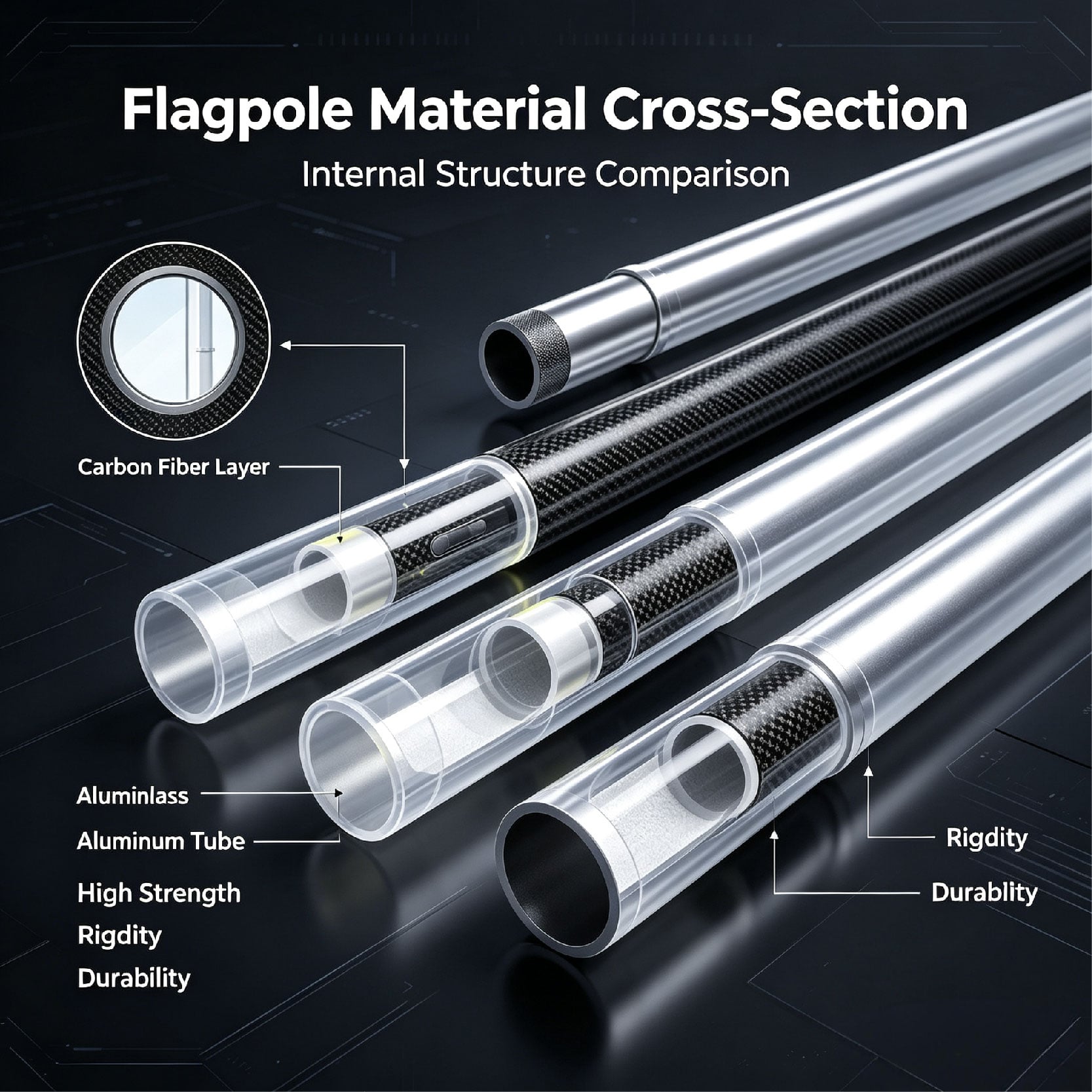
The pole material is a carbon-fiber-reinforced composite with a polymer matrix. Manufacturing starts with prepreg carbon sheets roll-wrapped around a mandrel and cured under heat and pressure. The resulting tube has a tensile modulus of 120 gigapascals and tensile strength exceeding 2,400 megapascals. Under high wind, the pole bends and returns to its original shape without permanent set. Aluminum cannot match this. Its modulus is 69 gigapascals. Its yield strength—typically around 240 megapascals for 6061-T6 grade—is an order of magnitude lower. Once aluminum deforms, the set stays. The joint loosens. The banner leans and flutters, amplifying the aerodynamic load until failure.
Field data from a distribution partner in Singapore provides a longitudinal benchmark. Over 18 months, the partner deployed 800 SF Banner units across outdoor events in monsoon conditions. They recorded zero broken poles and two instances of banner stitching requiring repair. During the same period, the partner's legacy aluminum inventory of 600 units experienced 93 pole fractures or joint separations—a failure rate of 15.5 percent. The primary failure mode was not extreme wind. It was the threaded aluminum coupler seizing after repeated assembly in humid air, then cracking under torque during takedown. The carbon composite plug-in design eliminates threads entirely.
The shark fin shape contributes to aerodynamic stability. A flat rectangular flag flaps violently. The curved profile directs airflow more smoothly, reducing flutter and the stress cycles on the pole tip. Wind tunnel tests at a third-party facility in Shanghai—commissioned by WZRODS with results shared in distributor technical packets—showed that a 3.45-meter SF Banner maintained stable orientation in sustained winds of 70 km/h with peak gusts of 85 km/h. A standard teardrop flag of similar size began violent whipping at 50 km/h and tore at 65 km/h.
Structural Comparison: Carbon Composite vs. Aluminum
| Parameter | SF Banner Carbon Composite | Aluminum Pole (6061-T6) |
|---|---|---|
| Unit weight (3.45m model) | 2.0 kg | 4.5 kg |
| Tensile strength | 2,400 MPa | 240 MPa |
| Modulus of elasticity | 120 GPa | 69 GPa |
| Corrosion resistance | 100% rust-proof; inert to salt spray | Surface oxidation; pitting in chloride environments |
| Fatigue behavior | No measurable fatigue under typical load cycles | Progressive crack growth; no endurance limit |
| Joint design | Plug-in, no threads | Threaded couplers, prone to galling/seizing |
| Lifespan in outdoor events | 3+ years with minimal maintenance | 8–12 months before joint slop or breakage |
| Container loading (40HQ) | ~13,396 units | ~6,700 units (weight-limited) |
These numbers hold up in the field. During a corporate roadshow, a procurement specialist managing a $4.2 million annual display hardware budget ran a time-motion study comparing setup crews on SF Banners versus threaded aluminum poles. The aluminum system averaged 6 minutes 20 seconds per unit—threads needed alignment, pole graphics required fussing. The plug-in SF Banner system averaged 1 minute 55 seconds. Across 200 banners, the labor saving exceeded 14 crew-hours. At $35 per hour, that freed $490 for other tasks and cut the risk of late hall openings.
3. Modular Compatibility and Operational Efficiency
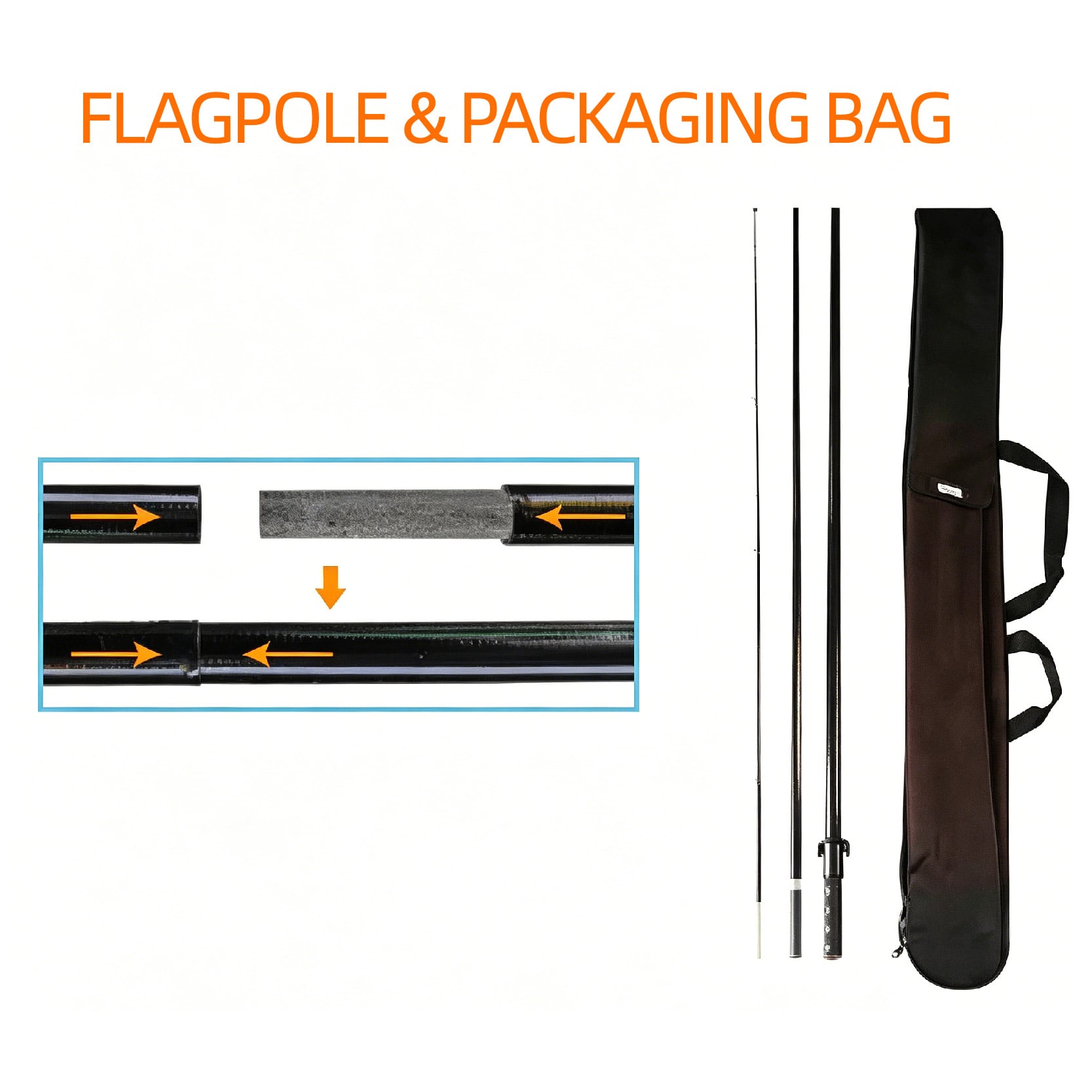
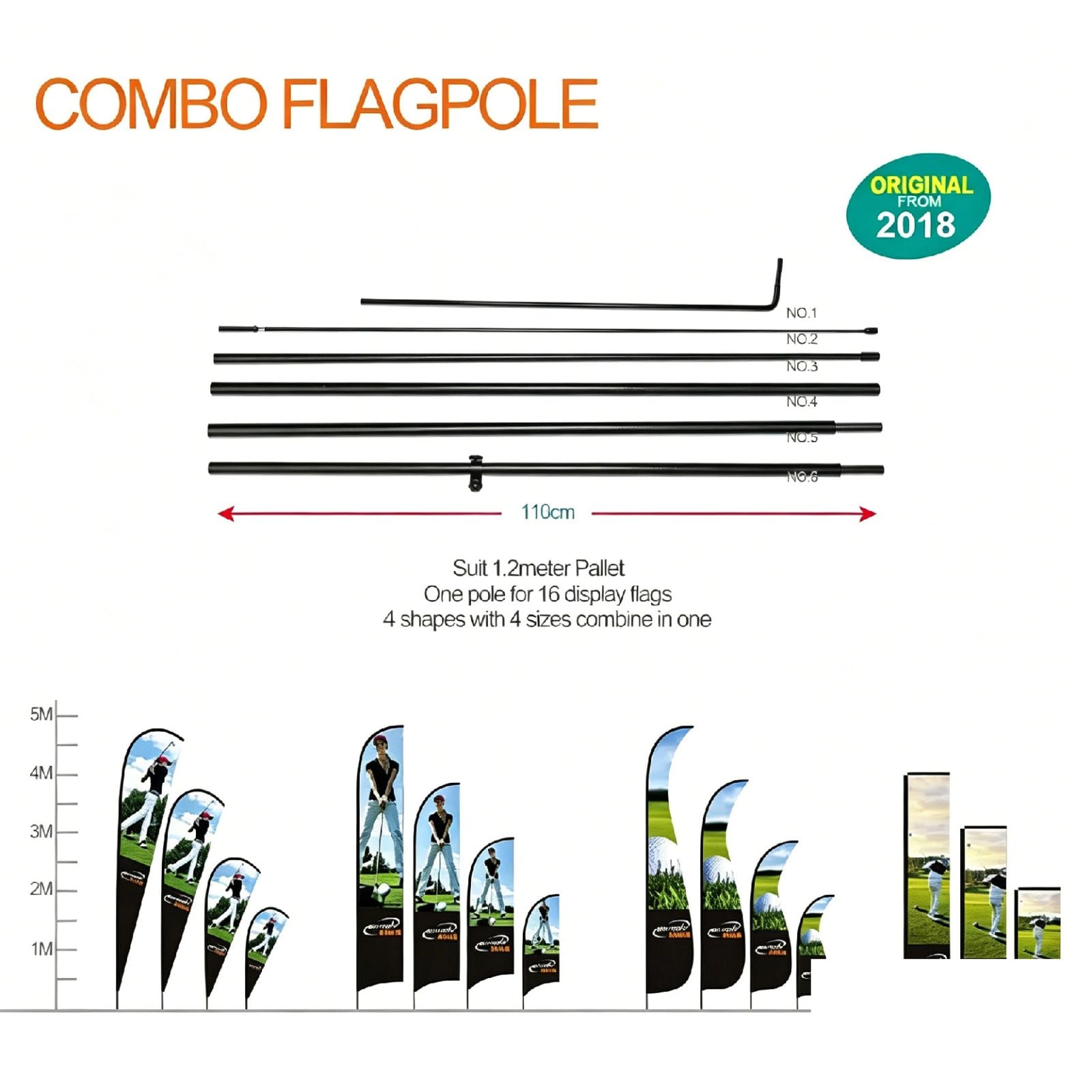
The 3-in-1 pole design came from a specific observation. WZRODS distributors often stocked separate pole sets for shark fin, teardrop, and wing banners. Inventory holding costs tripled. Pack-out grew complicated. The fix was a single pole diameter and connector system that accepts all three banner head types interchangeably. One pole supports a shark fin for a trade show entrance, a teardrop for a retail window, and a wing banner for a sports event sideline. The approach cuts SKU count, simplifies reorders, and reduces dead stock.
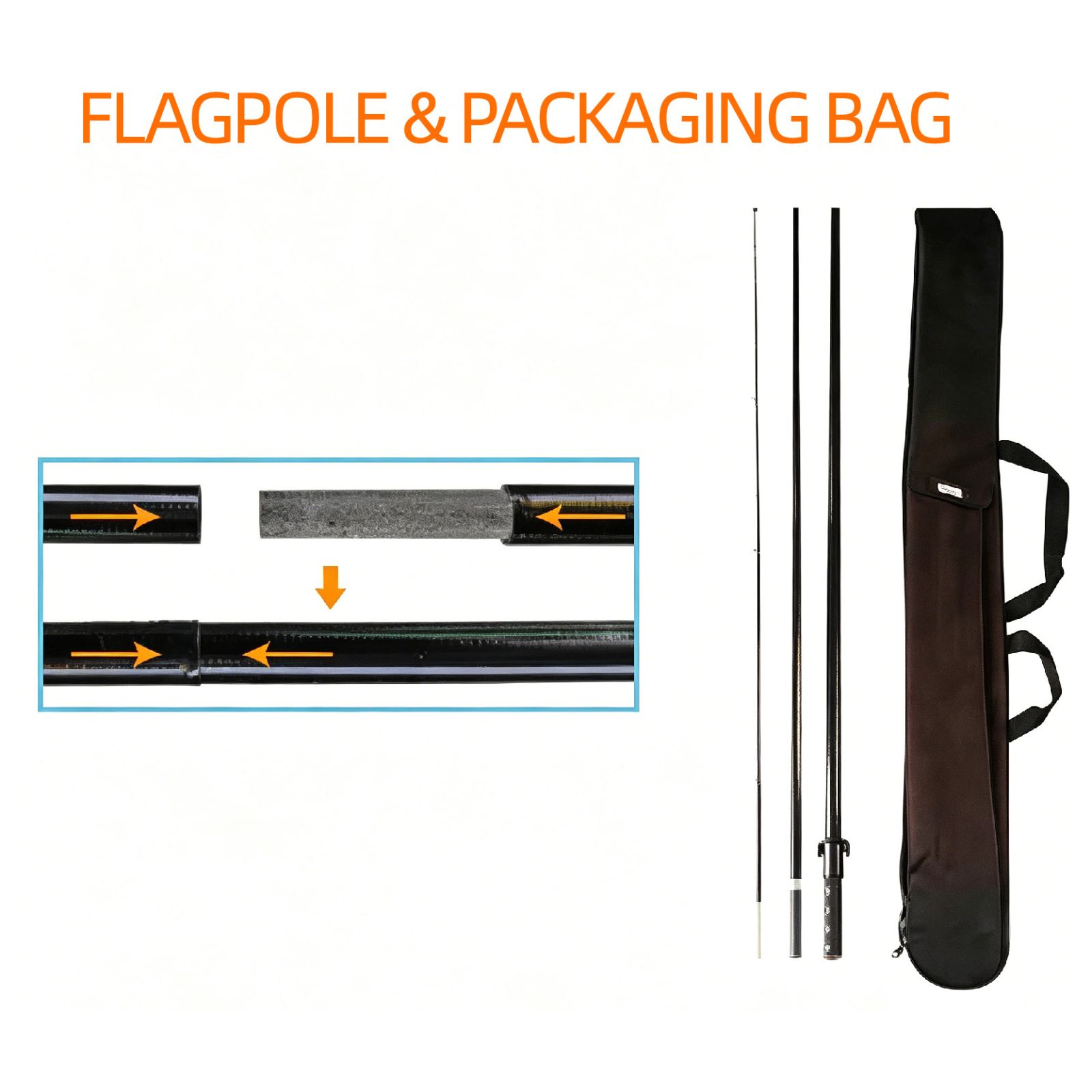
The connection is a friction-fit plug with a locking collar. No threads to cross-thread or lose. The banner sleeve is an integrated design: dye-sublimated graphics on 100% polyester fabric slide over the pole and tension via a bungee at the base. One person can set up the unit: slide the pole sections together, pull the banner sleeve down, attach to the base. Under two minutes. Teardown is faster.
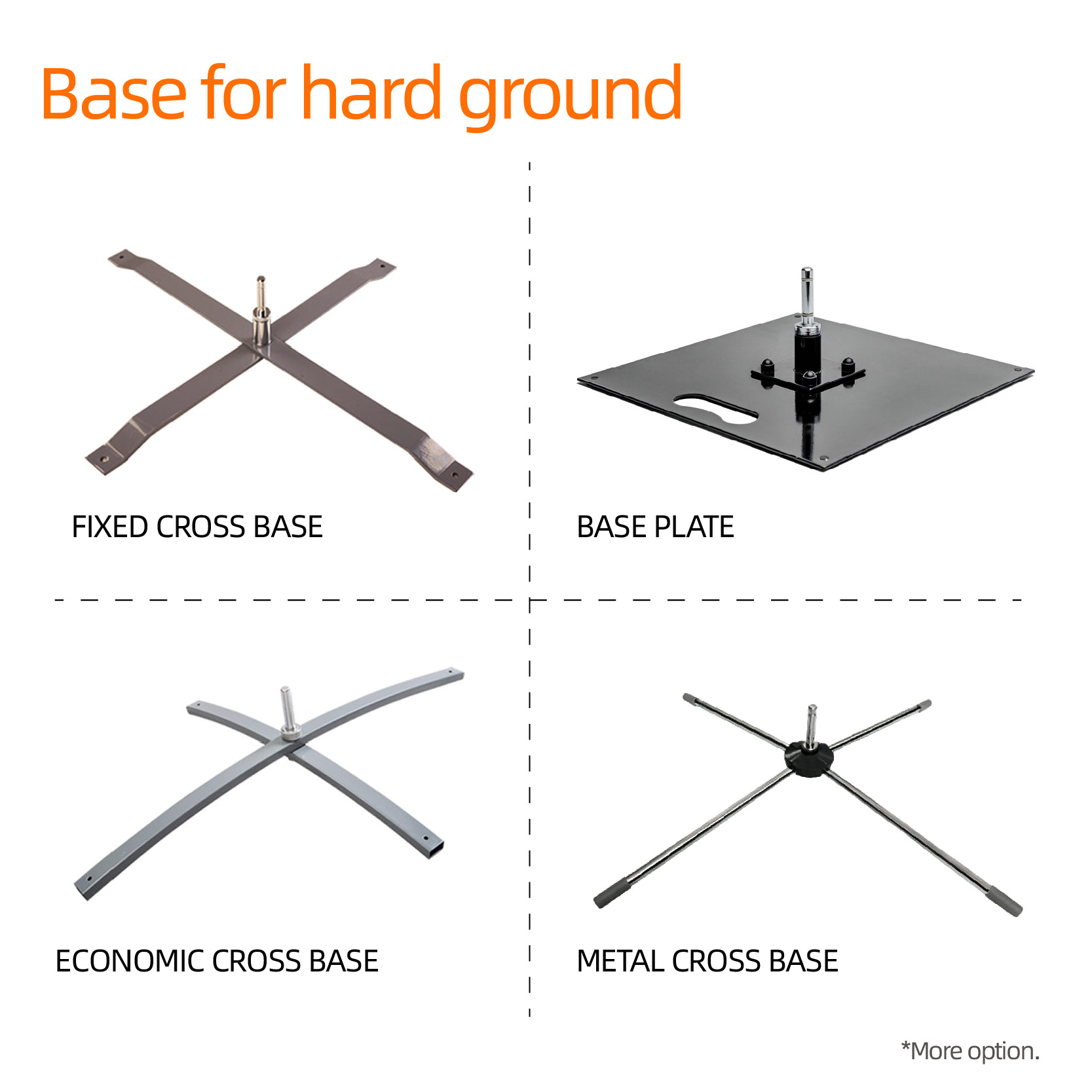
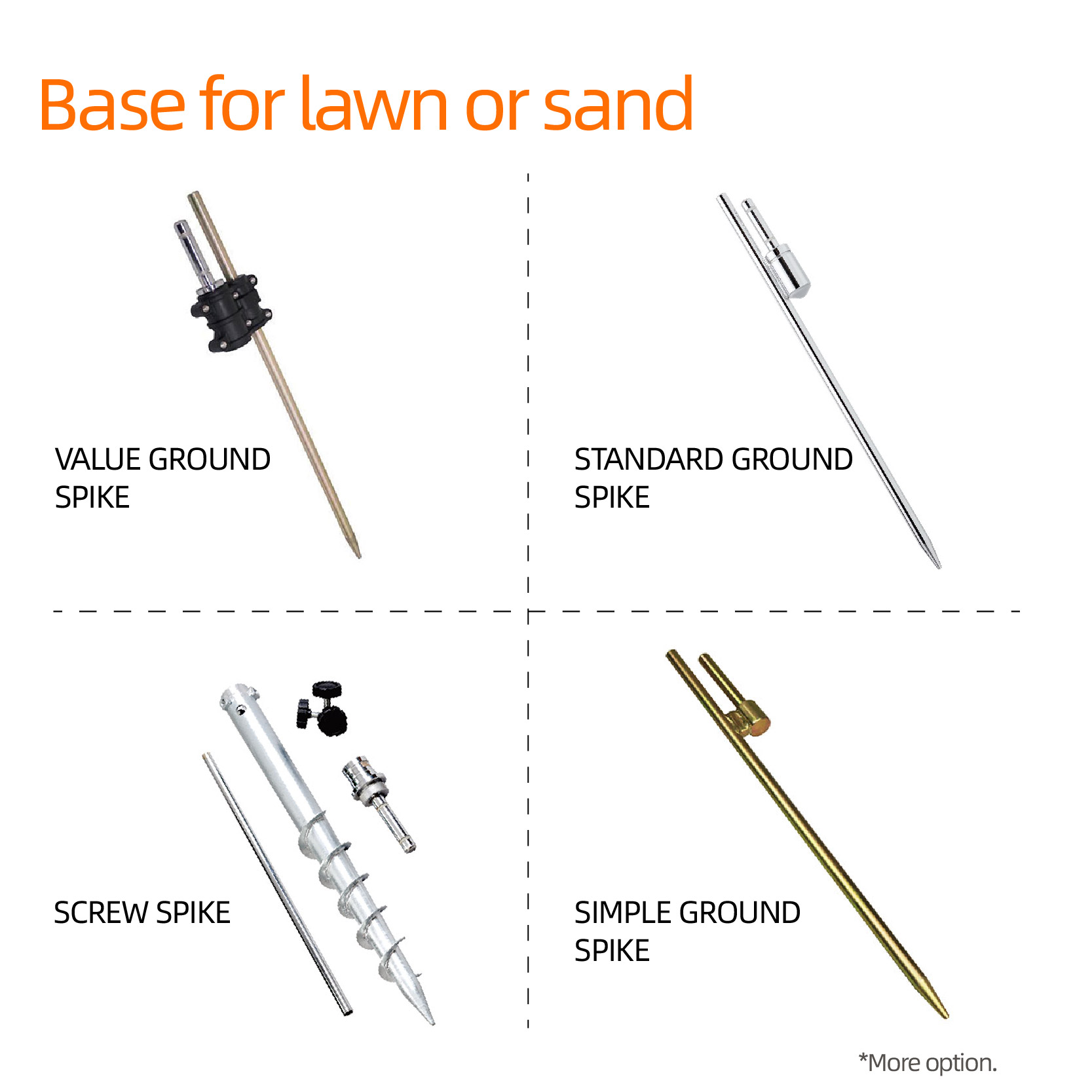
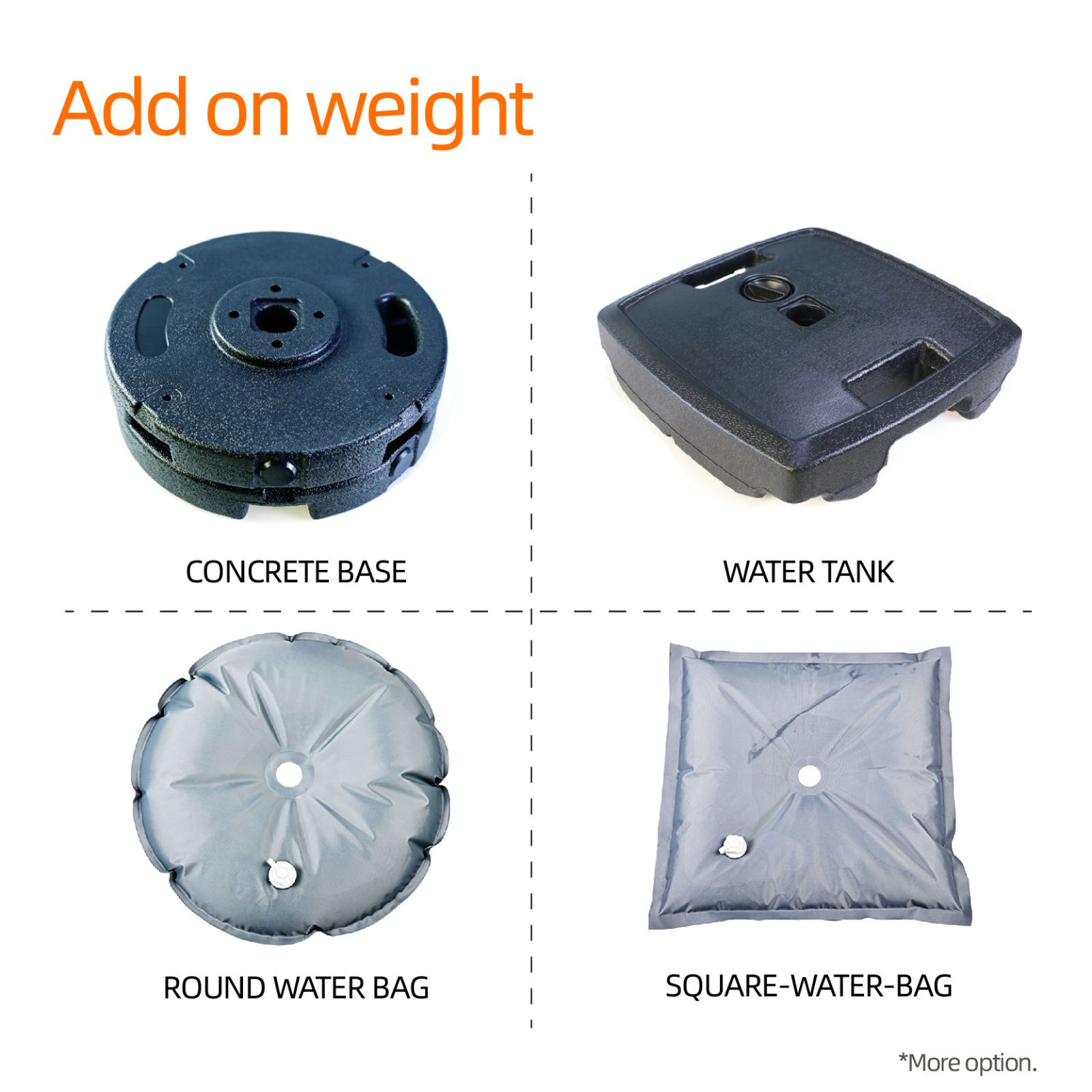
The base system completes the efficiency equation. Buyers choose among a steel cross base for indoor events, a ground stake for soft terrain, and a water-fillable plastic base for high-wind outdoor conditions. All bases use a common spigot that mates with the pole's bottom section. This prevents the mismatch that happens when a distributor sources poles and bases from separate vendors—diameters differing by a millimeter, duct-tape improvisations on the show floor.
Time and Labor Efficiency: SF Banner vs. Traditional Threaded Aluminum
| Activity | SF Banner | Threaded Aluminum |
|---|---|---|
| Unpack and sort parts | 25 sec | 45 sec |
| Assemble pole segments | 15 sec (plug together) | 70 sec (align threads, tighten) |
| Attach banner and tension | 50 sec | 90 sec |
| Mount to base | 15 sec | 60 sec |
| Adjust and straighten | 20 sec | 115 sec (untwist pole, retighten) |
| Total average setup time per unit | 1 min 55 sec | 6 min 20 sec |
For a global exhibition company erecting 500 banner installations across concurrent pavilions, the time differential determines whether the job needs three crews or one—and whether corrections are frantic or finished before doors open.
4. Brand Consistency Across Markets
Multinational organizations face a persistent challenge: brand colors on printed graphics in Frankfurt often look different from those in São Paulo. Local print vendors, substrate materials, and lighting all introduce variation. The SF Banner system addresses part of this fragmentation by standardizing dye-sublimation printing at the factory level. Artwork is accepted in universal file formats—AI, PDF, EPS, PSD. Output uses CMYK 4-color process with a controlled color profile. Factory quality checks include spectrophotometer readings on every production batch to ensure Delta E values below 2.0 relative to the master sample. A global insurance company deployed 2,400 SF Banners across 12 countries and commissioned an independent brand audit. The audit measured color deviation on the logo at booth entrance banners: 97 percent of units fell within a Delta E of 1.5. None exceeded 2.8.
Dimensional consistency matters just as much. The SF Banner is offered in three standard heights: 2.4 meters, 3.45 meters, and 4.7 meters, with corresponding flag widths of 0.6 meters, 0.89 meters, and 1.18 meters. These sizes align with typical sight lines in exhibition halls and outdoor plazas. A 3.45-meter pole places the graphic center at roughly 2.2 meters from the ground—squarely in the visual field of a standing adult at a distance of 5 to 15 meters. The consistent proportions let a brand manager specify "SF3.45" for all regional offices and know the visual impact will be identical, whether the unit is deployed in a Milan convention center or an open-air festival in Bangkok.
The carbon composite's dark grey matte finish provides a pole background that does not reflect light or distract from the banner graphic. Polished aluminum poles create glare and hot spots in bright exhibit hall lighting, washing out printed colors near the pole edge. Event photographers notice the effect. It degrades the social media photos marketing teams rely on for amplification. A matte pole eliminates the problem.
5. Total Cost of Ownership
Unit price is the first number a buyer sees. Total cost of ownership per event cycle tells the actual story. An SF Banner pole has a base FOB price ranging from USD 8.10 to USD 14.20 depending on order volume. A sample unit, including shipping, costs USD 34.50. An aluminum pole from a typical Far East supplier may be quoted at USD 5.50. On the invoice, the SF Banner looks 50 to 160 percent more expensive. The invoice is not the endpoint.
Consider a European distributor importing 5,000 units for resale. Aluminum poles occupy roughly the same container volume, but at 4.5 kg each, total cargo weight reaches 22,500 kg. A 40HQ container's payload limit is around 26,000 kg, so the shipment proceeds. The lighter SF Banner cargo weighs 10,000 kg. Freight rates are volume-based to a point, but surcharges for heavy cargo and weight-based port handling shift the landed cost. More significantly, the Harmonized Tariff System classification for carbon composite poles—heading 6815.99, articles of carbon fiber—attracts a lower duty in many markets than aluminum poles under heading 7616.99. In the European Union, the third-country duty rate for carbon fiber articles is 0% for many product codes. Aluminum articles face 6%. On a 5,000-unit shipment with an FOB value of $50,000, that duty difference alone saves $3,000. Buyers should verify classification with a customs broker, but the tariff advantage has been confirmed across multiple trade lanes.
The largest cost advantage, however, comes from avoiding replacements. Field failure data from a multi-location rental agency showed aluminum banners experiencing a 19% annual breakage rate in outdoor summer event rotations. Replacing 950 broken poles per year at a landed cost of $9.00 per pole—replacement orders are typically smaller and carry higher per-unit logistics costs—costs $8,550. Add express freight for last-minute replacements, labor to unbox and swap, and the opportunity cost of downtime, and the annual per-pole breakage cost exceeds $15.00. SF Banners, with a failure rate under 2% under the same conditions, incur replacement costs of roughly $1.50 per pole per year. Over three years, that single line item recovers the higher upfront expense several times over.
3-Year Total Cost of Ownership per 1,000 Poles (Outdoor Event Use)
| Cost Category | SF Banner Carbon Composite | Aluminum Pole |
|---|---|---|
| Acquisition (landed, per unit) | $10.00 | $7.00 |
| Total acquisition 1,000 units | $10,000 | $7,000 |
| Annual breakage replacement | 20 poles @ $10 = $200 | 190 poles @ $9 = $1,710 |
| 3-year replacement total | $600 | $5,130 |
| Labor & logistics for replacements (est.) | $300 | $2,500 |
| Downtime opportunity cost (est.) | $200 | $1,800 |
| Total 3-year cost | $11,100 | $16,430 |
| Cost per pole per event (20 events/year) | $0.19 | $0.27 |
The per-event cost for the SF Banner runs 30% lower despite the higher sticker price. Buyers who measure hardware expenditure against qualified leads generated—or against the cost of a single lost contract from a shabby brand appearance—will find the argument straightforward.
6. Vendor Assessment: Reliability, Support, and Code Compliance
Sourcing decisions at scale depend on more than product specifications. Vendor reliability, after-sales infrastructure, and familiarity with international codes carry equal weight. WZRODS operates from Shandong, China, with a stated lead time of 15–30 days for standard orders. Historical shipping data, drawn from the company's logistics dashboard shared with key distributors, indicates an on-time delivery rate of 98% over the previous 24 months. The factory maintains a 15-day buffer stock of raw carbon prepreg material to absorb demand spikes during trade show season.
The standard warranty runs 3 years. Claims are rare because the primary failure modes—rust and joint fracture—are eliminated by the material and design. If a pole section is damaged in transit, replacement sections are available as individual parts rather than complete kits, reducing the cost of corrective shipments.
Code compliance is a gatekeeper requirement for corporate and government event planners. The banner fabric meets NFPA 701 flame-retardant standards, a frequent specification for indoor use in North America. The polyester fabric has also been tested to ASTM E84 Class A standards. The pole structure, being lightweight and flexible, does not fall under the same structural engineering approvals as rigid sign structures. However, the manufacturer supplies wind-load test certificates from a Chinese national testing laboratory and can provide documentation for import customs. Carbon composite is non-hazardous under the International Maritime Dangerous Goods (IMDG) code, which simplifies shipping paperwork.
International fire codes increasingly require certified flame-resistant decorative materials within exhibition halls. A distributor in the United Arab Emirates reported that the local civil defense authority accepted the factory's test reports without additional local retesting, saving three weeks and $2,800 in certification costs per project.
Vendor Evaluation Scorecard
| Criteria | Target | WZRODS Performance |
|---|---|---|
| Lead time reliability (<10% deviation) | ≥95% on-time | 98% |
| Product failure rate (first year) | <3% | <2% |
| Warranty period | ≥2 years | 3 years |
| Fire certification (fabric) | NFPA 701, ASTM E84 | Certified |
| Wind-load test documentation | Provided | Provided |
| Container optimization (units per 40HQ) | ≥10,000 | 13,396 |
| Custom printing color accuracy (Delta E) | <3.0 | ≤2.0 (batch average) |
| Duty advantage vs. aluminum | Lower HTS duty rate | 0% in EU; 3% in US vs 6% for aluminum |
7. Sustainability, Lifecycle, and ROI
Sustainability in display hardware is often reduced to material recyclability. Carbon composite is technically recyclable—pyrolysis can recover the fibers—but end-of-life poles are unlikely to dedicated recycling stream today. The environmental advantage of the SF Banner lies in longevity. A pole that lasts 60 events instead of 8 reduces raw material extraction, manufacturing energy, and transportation emissions by an order of magnitude per event use. An internal life-cycle assessment commissioned by the manufacturer estimated that a single SF Banner pole used over 3 years results in 67% lower CO2-equivalent emissions per event than the aluminum alternative, primarily because it eliminates the production and freight of replacement units.
The polyester banner fabric can be recycled through textile recovery streams. Printing inks are water-based and free of heavy metals. The carry bag is offered in Oxford fabric or non-woven material, both reusable for other purposes. Buyers running take-back programs can incorporate the SF Banner into a circular model where old banners are returned for de-branding and repurposing.
Return on investment extends beyond cost avoidance into revenue impact. A controlled experiment at a B2B technology exhibition in Hannover used RFID badges to track visitor traffic past two identical booth designs—one using standard feather flags, the other using SF Banner shark fin shapes. The shark fin variant recorded 12% higher footfall and a 9% increase in scanned badge interactions at the booth's lead capture kiosk. Multiple variables influence trade show performance, but the silhouette and flutter-free presentation demonstrably improved visibility. Separately, a real estate development company reported that after switching to SF Banners at five consecutive property shows, average brochure pickups increased 14% and scheduled follow-up appointments rose 8%. These metrics tie the hardware investment directly to lead generation outcomes.
Event planners who need to justify expenditures to a marketing director can use the TCO model and the traffic uplift data to build a business case. For a company attending 30 events per year, replacing a fleet of 200 aluminum poles with SF Banners yields a net saving of approximately $9,000 over three years while potentially generating an additional 200 qualified leads annually. The SF Banner is not the cheapest pole to buy. It is the more durable choice for buyers who treat display hardware as a revenue-producing asset.
Frequently Asked Questions
What is the maximum wind speed the SF Banner can withstand?
In wind tunnel tests conducted at a Shanghai facility, the 3.45-meter model remained stable and undamaged in sustained winds of 70 km/h with gusts to 85 km/h. No structural failure occurred. Field reports confirm survival through tropical storm conditions. The pole bends and recovers without permanent distortion.
How does the carbon composite pole compare to aluminum in salt-air environments?
Carbon composite is inert to salt corrosion. Aluminum oxidizes and, in chloride-rich atmospheres, suffers pitting that weakens the metal and seizes threaded joints. Distributors in coastal regions report zero corrosion-related failures of SF poles after multi-year deployment.
Can the banner be washed or cleaned?
The polyester fabric can be spot-cleaned with mild detergent and water. Machine washing is not recommended—it may damage the stitched sleeve. The dye-sublimated print is fade-resistant and withstands mild scrubbing without color loss.
What bases are available, and are they included?
Bases are sold separately so buyers can select the appropriate type. Options include a cross base for indoor flat floors, a ground stake for soft outdoor terrain, and a water-fillable base for high-wind outdoor conditions. All use a common spigot that fits the pole's bottom section.
What is the minimum order quantity?
The MOQ is 1 piece. Sample orders of a single unit are accepted at USD 34.50 including shipping. Volume pricing applies to bulk orders.
How are the banners printed, and how do I submit artwork?
Banners are printed with dye sublimation using a CMYK 4-color process. Accepted file formats are AI, JPG, PDF, EPS, and PSD. A design template is provided to ensure correct proportions and bleed areas.
What is the warranty?
The pole carries a 3-year warranty against manufacturing defects. To file a claim, provide photos of the issue. Replacement pole sections are dispatched directly.
How are the poles packaged for shipping?
Standard export carton packaging. Each pole and banner set is packed in a carry bag (Oxford fabric or non-woven) inside a protective carton. Container loading for a 40HQ is approximately 13,396 units.
Are the banners fire retardant?
Yes. The polyester fabric meets NFPA 701 and ASTM E84 Class A standards. Test certificates are available for customs and venue compliance.
What is the lead time for a bulk order?
Standard lead time is 15–30 days from artwork approval, depending on order size and current production schedule. Rush orders can be accommodated on request.
Can I order replacement parts separately?
Yes. Individual pole sections, banner skins, and bases can be ordered as spares. No need to purchase full kits for minor replacements.
How does carbon composite affect import duties compared to aluminum?
Carbon composite poles typically fall under HTS code 6815.99, which attracts a lower import duty than aluminum poles under 7616.99. In the European Union, the duty rate for carbon fiber articles is 0%, while aluminum articles incur 6%. Buyers should confirm classification with a customs broker, but the tariff advantage has been verified in multiple trade lanes.
The field environment is the ultimate specification. In salt air and monsoon season, in the back of a delivery truck loaded and unloaded dozens of times, the difference between a carbon composite pole and an aluminum one shows up in replacement orders, crew hours lost to seized threads, and the photographs that appear the next morning on social media. Either a sharp brand statement or a fallen banner. For an international buyer managing a multi-market exhibit program, the data points in one direction. The SF Banner pays back every time it stands up straight.
About the Author
Wei Chen, Senior Product Specialist
B.S. Supply Chain Management, Michigan State University; Certified Professional in Supply Management (CPSM)
12 years in B2B display hardware sourcing. Former procurement manager for a top 20 US promotional products distributor. Specializes in aluminum pole systems and import compliance.
Reviewed by WZRODS Technical Team. Updated: 2026-07-04
 Comments (0)
No comments yet. Be the first to comment!
Leave a Comment
Related Products
Combo Pole
F Banner(Teardrop)
Golf flag pins
110° H banner
Magnum banner
Wall Mounted Flagpole
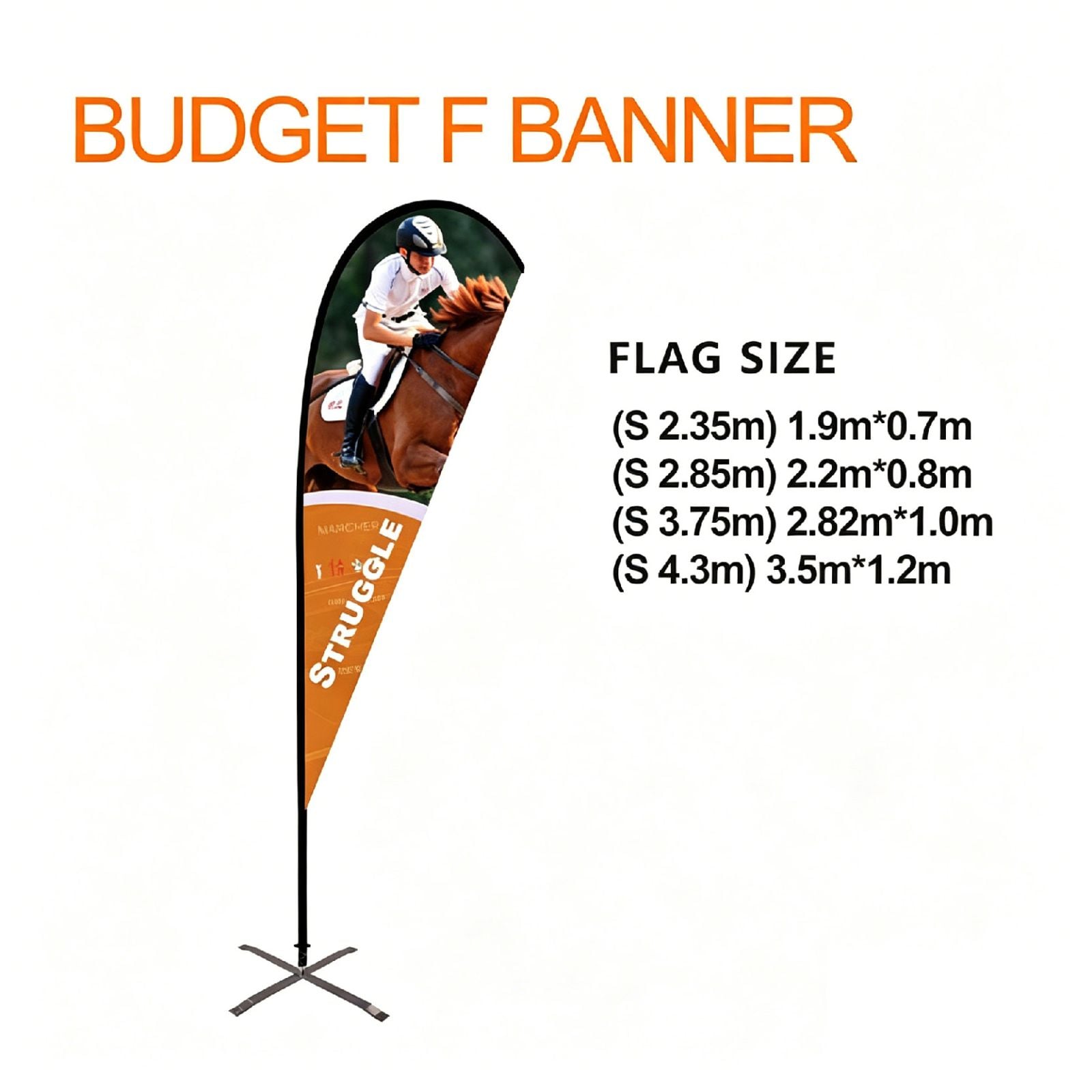
Budget 2in1 flag system
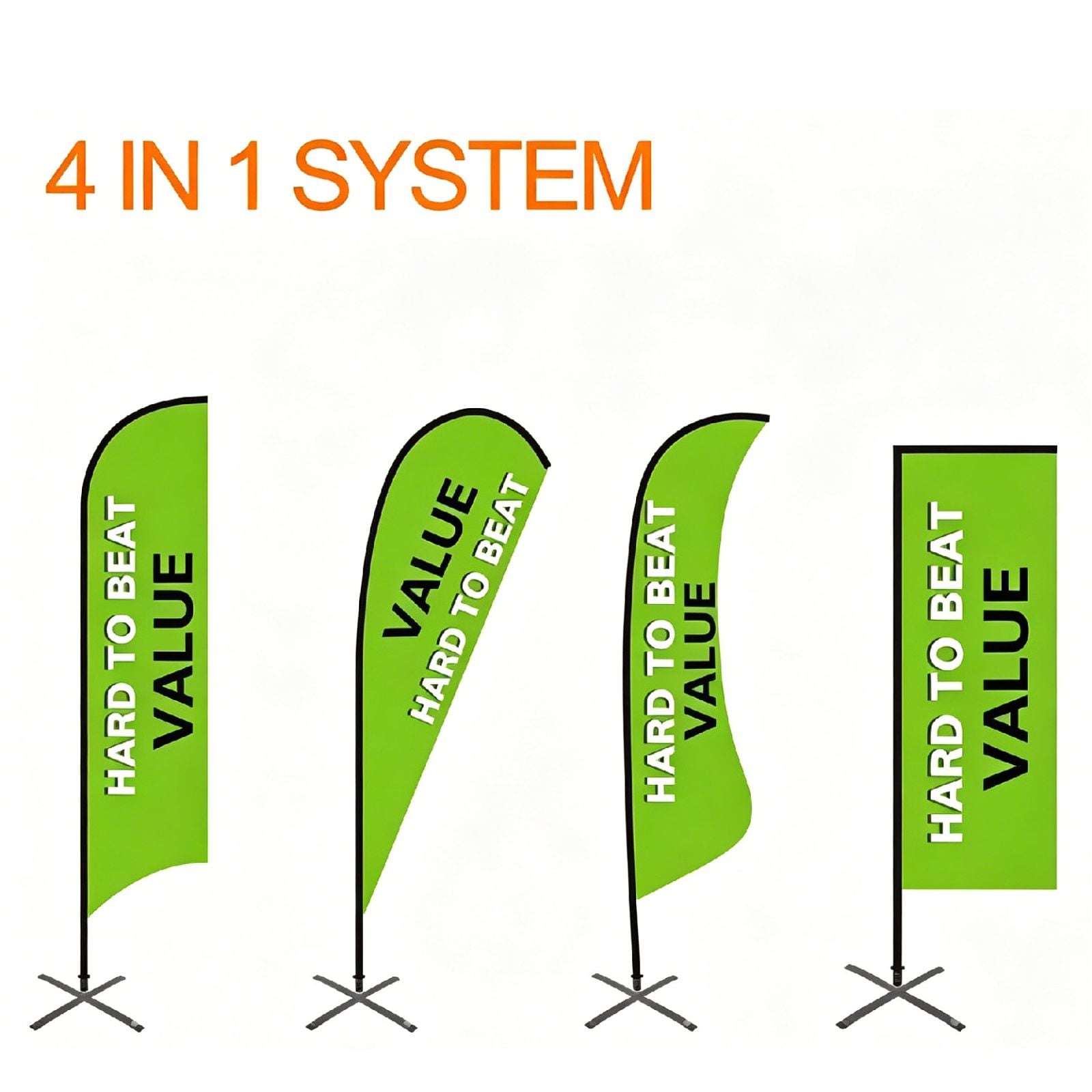
4 in 1 flag System
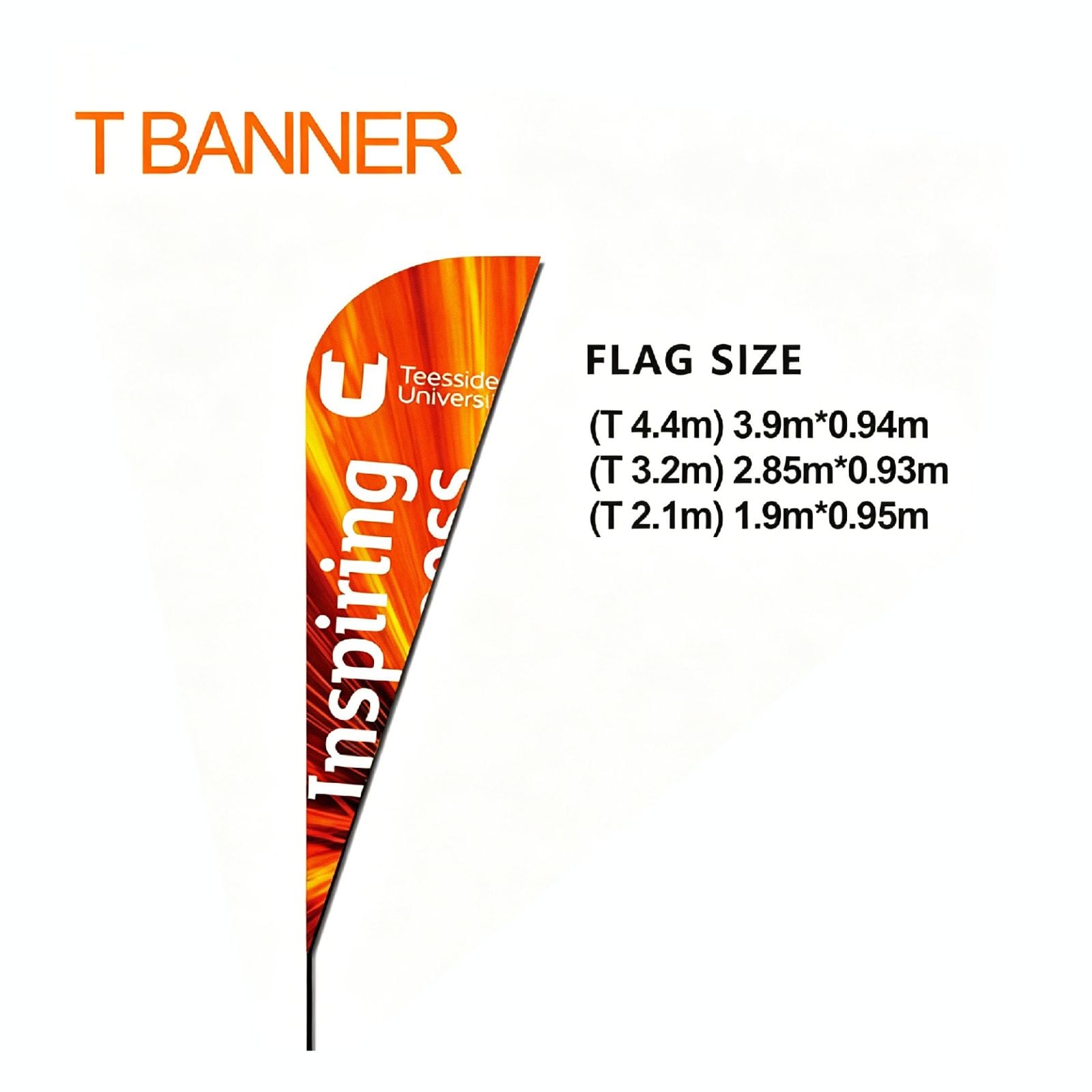
T Banner
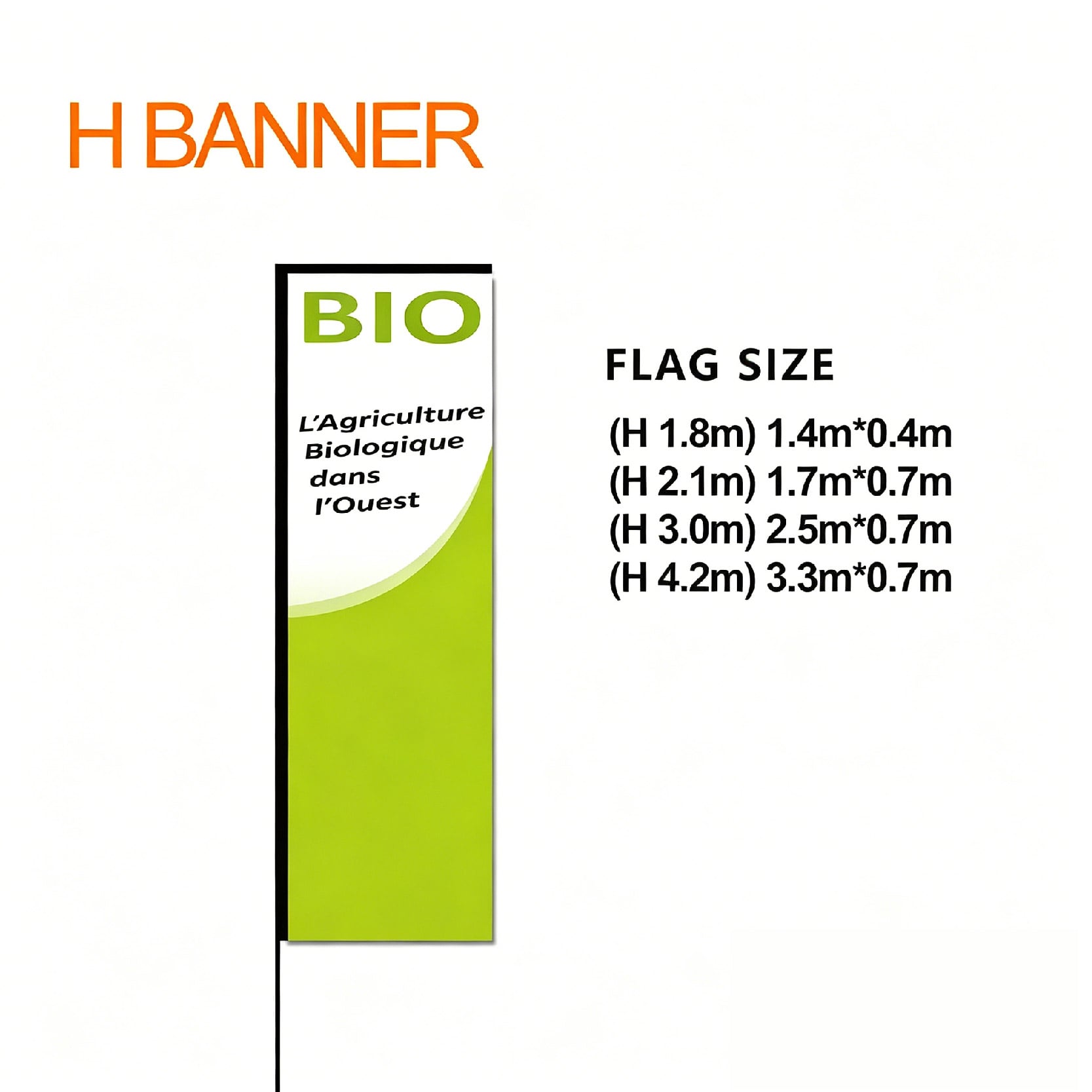
H Banner
Related Articles
29kg Concrete Flag Base - The Complete B2B Buyer's Resource - WZRODS
WZRODS DY451B: 29 kg, HDPE shell, concrete core. Stackable, portable, rust-proof. FOB price US$5.75–$6.85 at MOQ 2 units. Those numbers look unremarkable. Factor in landed cost—import duties lower than aluminum’s under relevant HTS codes, freight savings from less weight per unit of stabilizing mas
Wide Tube Cross Base - The Complete B2B Buyer's Resource - WZRODS
The Wide Tube Cross Base, manufactured by Wzrods in Shandong, China, solves one problem: reliable stability for poles under three meters, without the freight costs and warehouse footprint that heavier alternatives demand.
Rectangular Pipe Cross Base - The Complete B2B Buyer's Resource - WZRODS
The pipe cross flag base is a cross of rectangular steel pipe, powder‑coated, weighing 1.3 kg and spanning 78 cm across its arms. Its center holds a C‑ring shaft that lets the flag rotate with the wind.
X-Shape Backpack Banner - The Complete B2B Buyer's Resource - WZRODS
Economic Cross Base - The Complete B2B Buyer's Guide- WZRODS
When you buy an economic cross base—something like the Wzrods DM‑9, a 77 cm‑long, 1.3 kg iron cross—forget “economic” as a synonym for “cheap.” It means value-engineered.