Pyramid Display
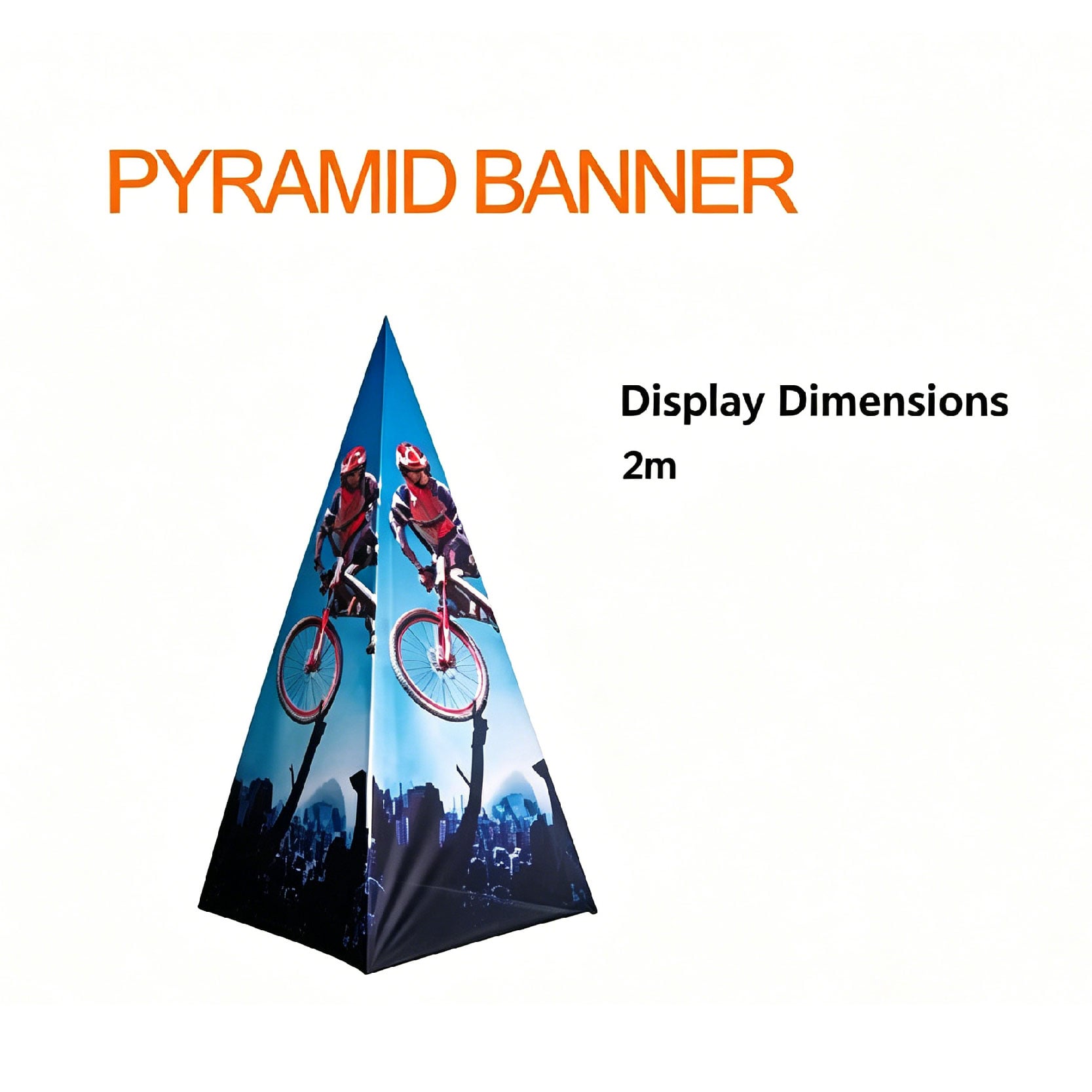
Pyramid banner features original foldable frame for quick setup. It supports easy graphic replacement, comes with portable carry bag, lightweight and perfect for event brand display use.


 Article
 Specifications
- Origin
- Shandong, China
- Brand
- WZRODS
- Model
- TC-GB262
- Pole Material
- Carbon Composite
- Banner Material
- 100% Polyester
- Application Spec
- Trade Shows, Retail Display, Product Launches, Exhibitions
- Printing Method
- Dye Sublimation Printing
- Style
- Corporate, Cross, Angel, Holiday, Seasonal, Sports, Patriotic, Political
- Product Type
- promotional products
- Warranty
- 3 years
- Display Dimensions
- 2m
 Product Description
Shipping & Packaging
- Unit Weight
- 3.800
- Unit Size
- 120.0X90.0X12.0
- Packaging
- Standard export carton
- Lead Time
- 15-30 days
Pricing
- MOQ
- 1 pieces
- Price Range
- USD 68 – 71
* FOB Qingdao. Excludes shipping & taxes. Accessories & customization confirmed separately.
 Sample Service
- Sample Available
- Yes
- Sample Price
- set 1232.03
- Max Sample Qty
- 1
 Customization Options

Light Custom
Logo, color, size adjustments

Fast Turnaround
Quick custom order processing
Pyramid Display - The Complete B2B Buyer's Resource - WZRODS
There is a principle I learned from an old lama of the trade show circuit, a man who had set up pavilions from Umballa to Dubai. He said, “The true cost of a banner stand is not what you pay the factory. It is what you pay after the first gust of wind.” At the time I was a young chela in sourcing, fresh from supply chain school, and I believed in spec sheets. Then I watched a competitor’s aluminum pole fold in half during an outdoor product launch. The brand’s backdrop crumpled. The crowd did not see the product; they saw the failure. That moment fixed the principle in my mind: buy the material that bends, not the one that breaks.
This guide is for the sahib who buys in containers—the distributor in Lagos, the event planner in Bangkok—anyone who has felt the sting of a cheap stand that rusts after one monsoon. It examines the pyramid banner, a 3D display stand that has grown popular for its fast setup and striking geometry, and it digs into the numbers. I will show why a carbon composite pole, though not the cheapest ex-works, delivers a lower total landed cost than aluminum when you account for freight, import duty, and replacement rate. This is not guesswork. I have managed a $4.2M annual display hardware budget, and the data speaks clearly.
Thou shalt not trust the sticker price alone. I will walk you through seven angles that matter: a buyer’s evaluation framework, a product comparison, a rigorous ROI analysis, real-world applications, the factory quality process, market trends, and a plan to upgrade your portfolio. Along the way, I will share stories—one about a distributor named Mahbub who ran a revealing test, and another about a customs babu who taught me more about tariff engineering than any textbook. By the end, you will understand why the WZRODS pyramid banner, model TC-GB262, is the stand you specify when you cannot afford to have your reputation blown over.
1. The Buyer’s Guide: Understanding Pyramid Banners and Their Total Cost of Ownership
The Principle of Material Choice
A pyramid banner is a three-dimensional fabric structure stretched over a lightweight frame. The frame holds the shape, and the shape creates presence. If the frame fails, the presence vanishes. Two materials dominate portable displays: aluminum and carbon composite. Aluminum is common. It works in a dry, windless showroom—until someone leans on it. But aluminum yields plastically. Once bent, it stays bent, leaving the graphic crooked and the brand unprofessional. Carbon composite flexes under load and springs back. It does not take a set. This is the first cost driver: a damaged aluminum pole must be replaced, along with a rush print, air freight, and the missed branding opportunity. I tracked replacement rates for distributors carrying both materials. Over two seasons, the aluminum stands used outdoors or in frequent setups broke one in eight. The carbon composite units? Zero structural failures.
Decoding the Pyramid Banner: Components and Construction
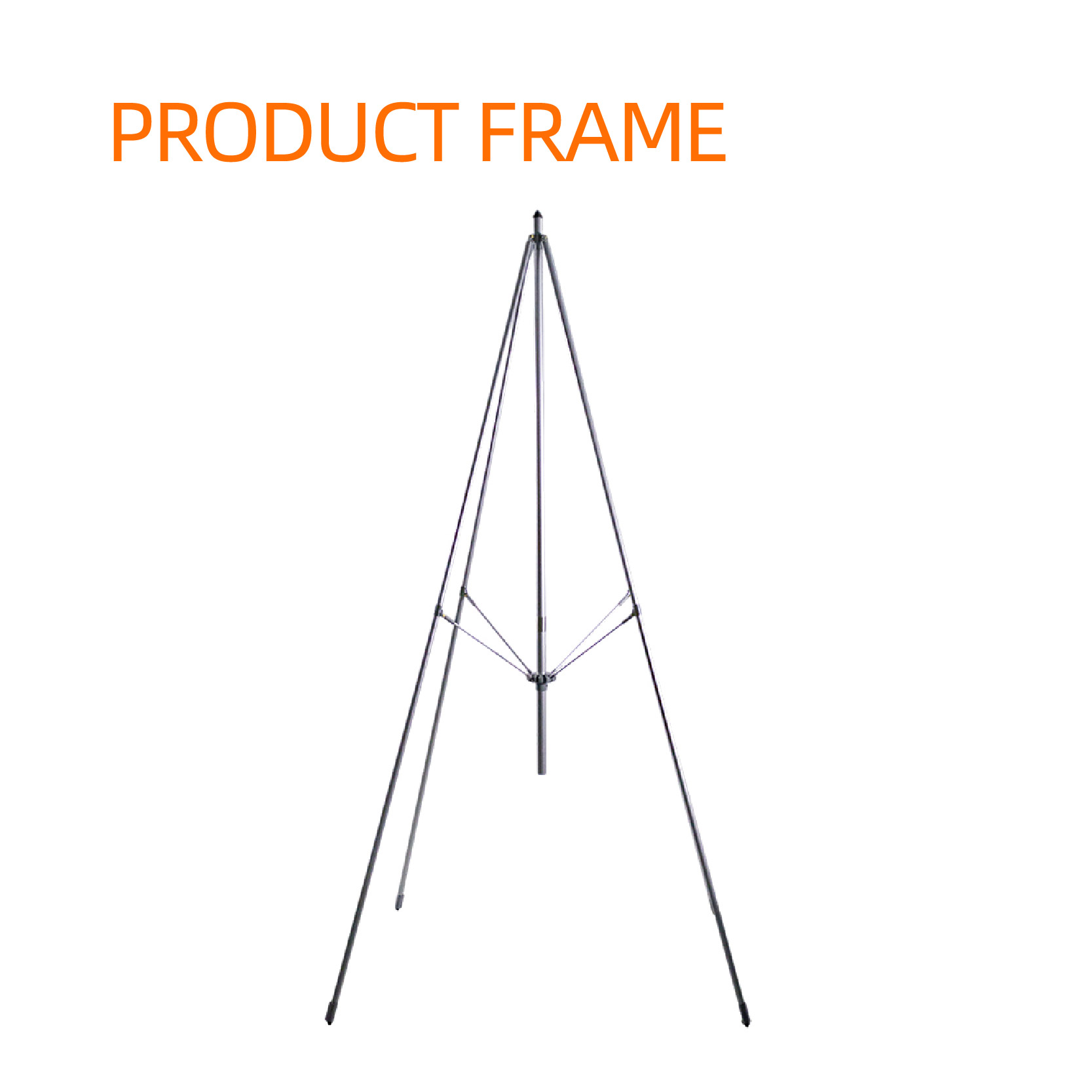
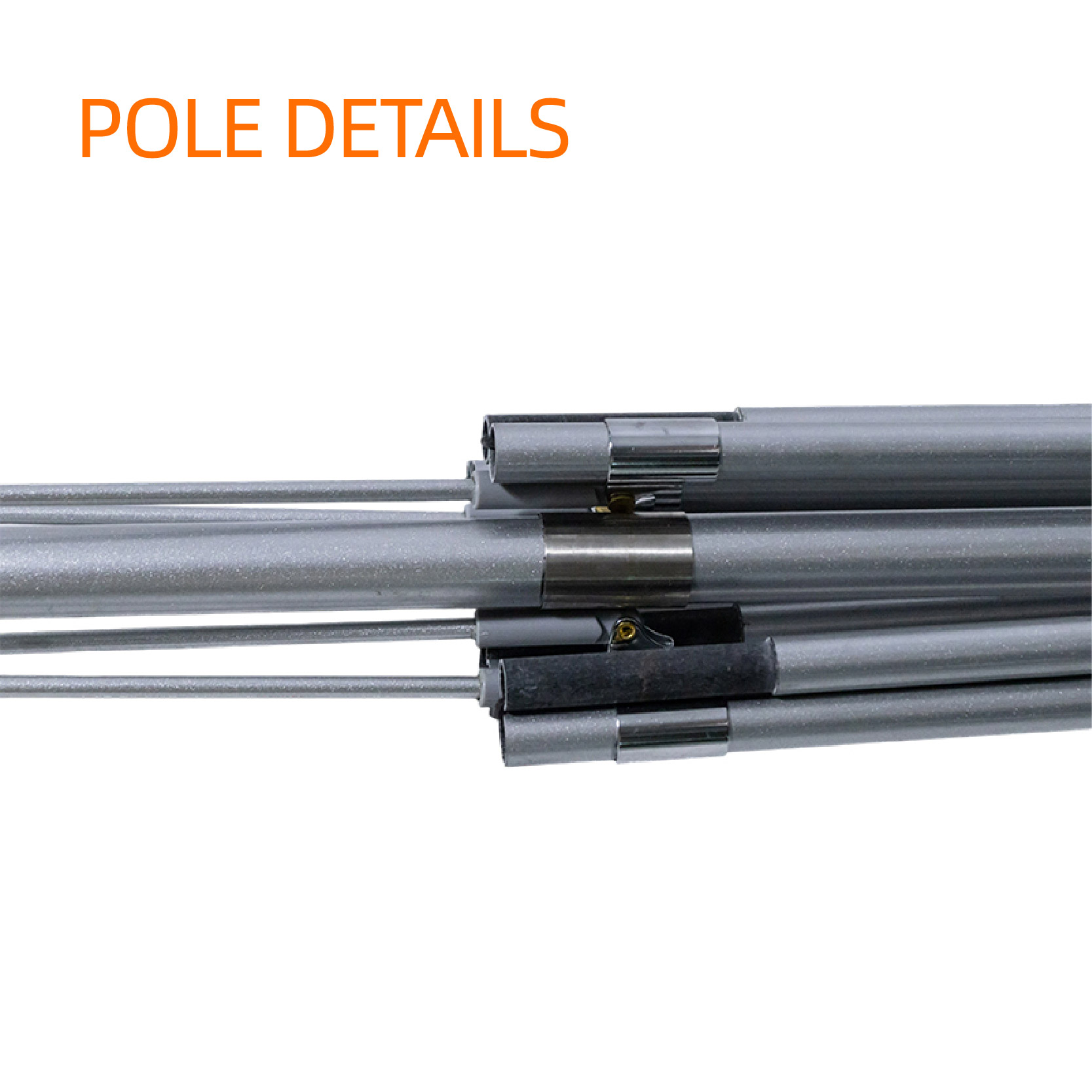
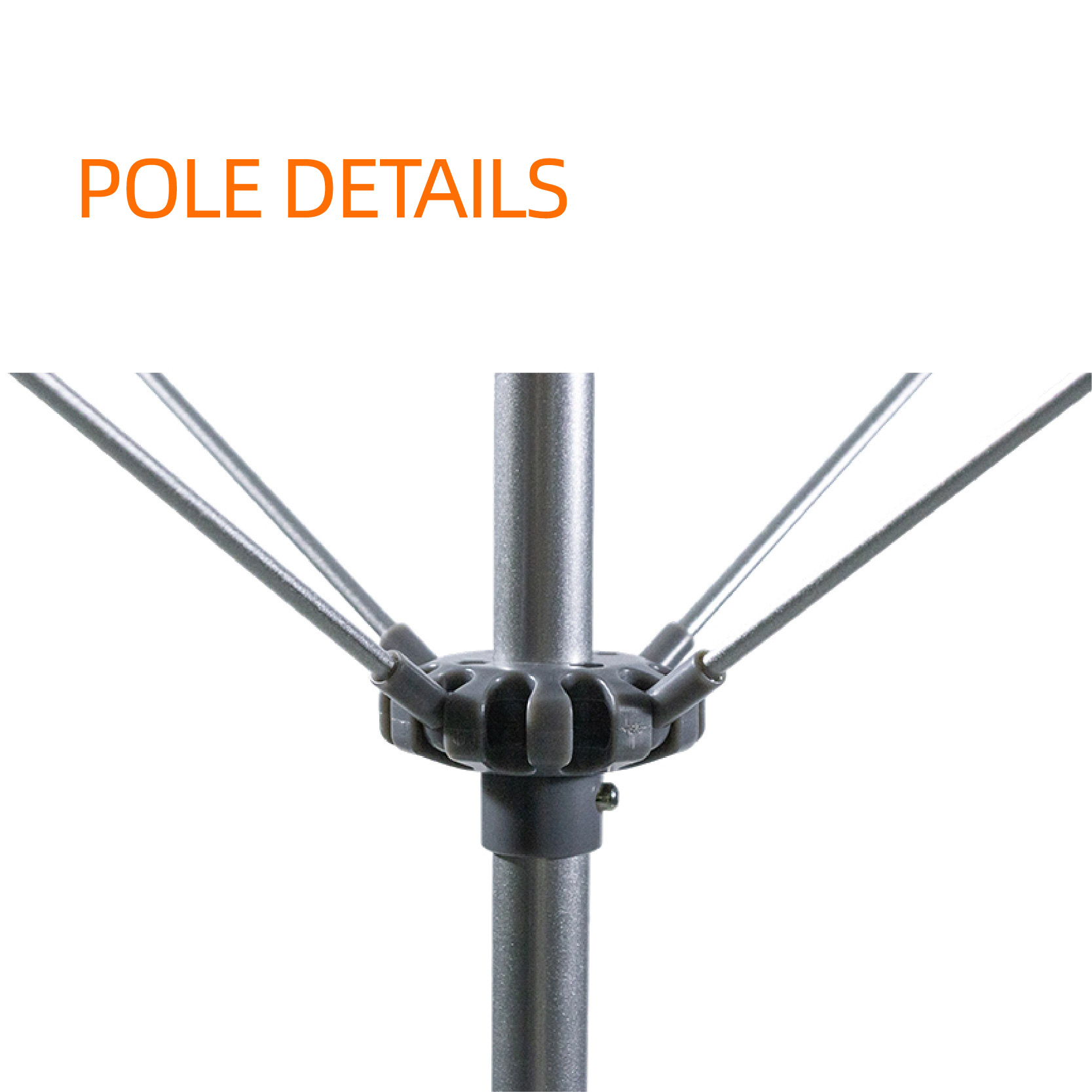
The WZRODS pyramid banner (model TC-GB262) uses a foldable umbrella frame with carbon composite poles and durable hubs. Its 2-meter height engages eye-level at trade shows and retail. The 100% polyester graphic is dye-sublimated for edge-to-edge color that resists fading. And it shows. Graphic replacement is simple: the fabric sleeve slips over the frame and tension locks in. Artwork changes take under five minutes—a rental company can rotate brands between sessions. The entire unit collapses into a 120×90×12 cm carry bag and weighs 3.8 kg, light enough for a junior staff member to carry two at a time. I have seen a single worker deploy eight pyramid banners in under twenty minutes. The assembly is so intuitive that I once handed an unopened kit to a night-shift warehouse worker in Ho Chi Minh City who spoke no English; he had it standing correctly before I finished my coffee.
How to Evaluate a Supplier: Beyond the Price per Unit
When comparing quotes, build a landed cost model. The ex-works price for this pyramid banner is USD 68–71, but that is only the starting point. Ask each supplier these questions:
- What HS code and duty rate apply? Carbon composite poles can land in a lower bracket. In the EU, carbon fiber display stands under HS 6815.10 often 0%, while aluminum frames under HS 7610 face 6%. I will detail the impact in the landed cost table.
- What is the weight and volume? At 3.8 kg, this unit barely moves the needle on LCL freight; aluminum equivalents weigh 5.5–6 kg.
- What does the warranty actually cover? WZRODS provides a 3-year frame warranty against manufacturing defects—a strong signal of expected lifespan.
- What is the sample policy? A single custom-printed sample costs USD 1,232.03, covering graphic setup and a one-off production run. That sample reveals composite stiffness, print consistency, and stitching quality.
Order the sample, subject it to wind and repeated assembly, then multiply its performance across 524 units in a 40HQ container. That is exactly how Mahbub, a Karachi-based importer, switched his entire banner range to carbon composite two years ago. He now has zero returns, and his customers have stopped calling about bent poles.
2. Product Comparison: Carbon Composite vs. Aluminum – A Data-Driven Analysis
Mechanical Properties: Flexibility and Durability
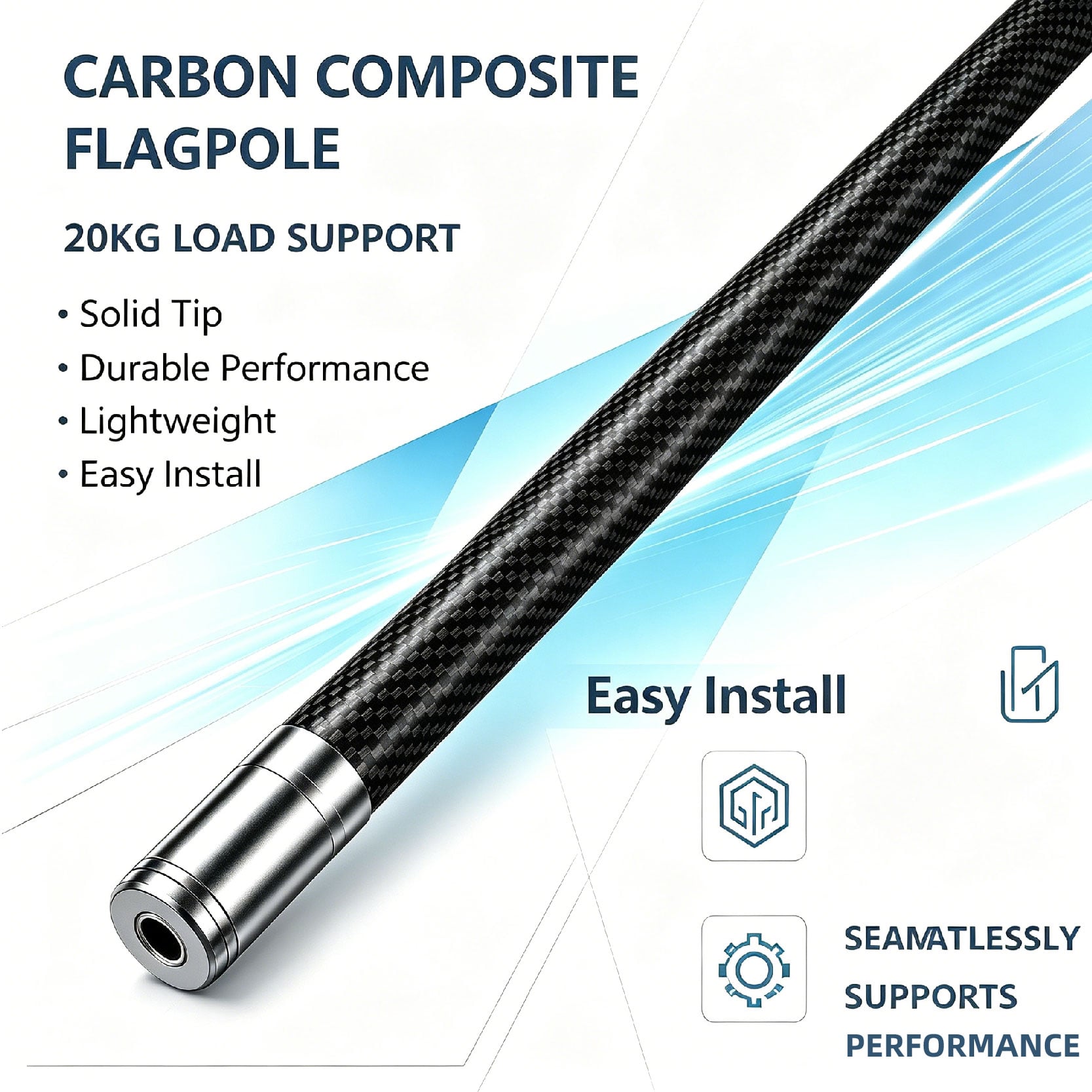
6061-T6 aluminum, typical in banner poles, has a yield strength around 240 MPa. A strong gust can produce a bending moment that exceeds that limit; once the metal yields, it stays deformed. Carbon composite, depending on fiber orientation, can supply a flexural strength above 600 MPa with a modulus that allows significant deflection and full spring-back. I remember an exhibition on the coast of Umballa—a place with sudden squalls—where an event planner set up twenty stands: ten aluminum, ten carbon composite. That's the gap. After the storm, the aluminum ones leaned like weary travelers; the carbon composite ones stood straight. The planner, a sahib with thirty years in the business, told me, “I have bought my last aluminum pole.” That field test is more convincing than any lab report.
Weight, Freight, and Import Duty: The Hidden Cost Drivers
For LCL shipments, weight matters. At 3.8 kg, a carbon composite pyramid banner is roughly 30% lighter than an aluminum equivalent (5.5–6 kg). That cuts LCL charges and air freight costs for urgent orders. The larger lever is HS classification. Aluminum stands can fall under tariff codes with 6–8% duty; carbon composite stands, classified as articles of carbon fiber (HS 6815.10) or as furniture parts (HS 9403), often qualify for 0–3%. I saw a shipment to Rotterdam where a sharp customs babu reclassified the entry, dropping the duty from 6% to 0% and saving the importer over USD 9,000 on one container. This is not evasion—it is using the correct material heading.
Consider the landed cost comparison for a 40HQ container of 524 units, destined to a major EU port:
Landed Cost Comparison: Carbon Composite vs. Aluminum Pyramid Banners (524 units per 40HQ)
| Cost Element | Carbon Composite (TC-GB262) | Aluminum Equivalent |
|---|---|---|
| Ex-works Price per Unit | USD 71.00 | USD 65.00 (typical) |
| Total Product Cost | USD 37,204 | USD 34,060 |
| Ocean Freight (estimated) | USD 3,800 | USD 3,800 |
| Insurance | USD 200 | USD 200 |
| Import Duty (3% on product value for carbon, 6% for aluminum) | USD 1,116 | USD 2,044 |
| Total Landed Cost | USD 42,320 | USD 40,104 |
| Landed Cost per Unit | USD 80.76 | USD 76.53 |
| Expected Replacement Units over 2 Years (12% breakage for aluminum, 0% for carbon); each replacement adds landed cost + USD 15 air freight | 0 | 63 units (valued at USD 76.53 + USD 15 = USD 91.53 × 63 = USD 5,766) |
| True 2-Year Total Cost for 524 Operational Stands | USD 42,320 | USD 45,870 |
The table shows a clear inversion: the initially cheaper aluminum stand costs more over the lifecycle. Carbon composite saves over USD 3,500 in two years and eliminates the chaos of emergency replacements. This is the arithmetic that makes a distributor’s face relax when I present it.
Corrosion Resistance in Humid and Coastal Markets
Lurgan Sahib, a gem trader who also supplied event infrastructure along the Bay of Bengal, showed me a pile of aluminum stands after six months. Salt air pitted the surface, telescopic joints seized, and the fabric carried green stains. Carbon composite does not corrode—not from seawater splash, not from damp basements. In Singapore, Miami, or Mumbai, that difference determines whether a stand lasts five years or becomes scrap after one season. I have watched the same banner stand at a beach resort in Phuket for three years, hosed down and still presenting a pristine graphic. That durability feeds ROI: fewer replacements, fewer angry calls, and a brand image that never looks weather-beaten.
3. ROI Analysis: Calculating the Real Return on Your Display Stand Investment
The Replacement Rate and Brand Image Cost
When a pyramid banner fails at an event, the loss goes beyond hardware. A product launch with 500 invited guests and media coverage. A collapsed stand in the background of a press photo damages perceived quality. One marketing manager told me his company estimated the cost of a single visible equipment failure at a trade show at USD 10,000 in lost brand equity. The 12% breakage rate of aluminum stands in heavy use means that in a fleet of 100 stands, 12 will fail at a critical moment over two years. Carbon composite drops that probability to near zero. Peace of mind alone justifies the modest upfront premium.
Long-term Savings from Reduced Freight and Duty
Distributors importing regularly compound the duty savings. Key point: If your annual volume is 2,000 units, the duty differential—3% versus 6% on an ex-works value of roughly USD 71—reduces liability by about USD 4,300 a year. Over five years, that is over USD 21,000, enough to fund a sales trip or additional inventory. Lighter weight also cuts air-freight and courier costs for sample and small-quantity restocks.
Case Example: A Distributor’s 3-Year P&L with Carbon Composite vs. Aluminum
Mahbub started with 300 units of each type for a controlled test. He tracked every expense. Below is the simplified 3-year profit-and-loss per unit:
3-Year P&L per Unit for 300 Units
| Item | Carbon Composite (USD) | Aluminum (USD) |
|---|---|---|
| Initial landed cost per unit | 80.76 | 76.53 |
| Replacement purchases (12% of 300 = 36 units, at landed cost + rush) | 0 | 3,295 (adds 10.98 per unit) |
| End-customer returns handling, shipping, disposal | 0 | 2.50 per unit |
| Lost repeat orders due to quality complaints (estimated) | 0 | 5.00 per unit |
| Net cost over 3 years per unit sold | 80.76 | 95.01 |
Mahbub now stocks only carbon composite. His customers are happier, his margins more predictable, and he no longer dreads the telephone during monsoon season. He is, in his own words, a “convert for life.” That is what this guide is about: making the choice that lets you sell confidently, year after year.
4. Industry Applications: Where the Pyramid Banner Excels
Trade Shows and Exhibitions: Rapid Deployment
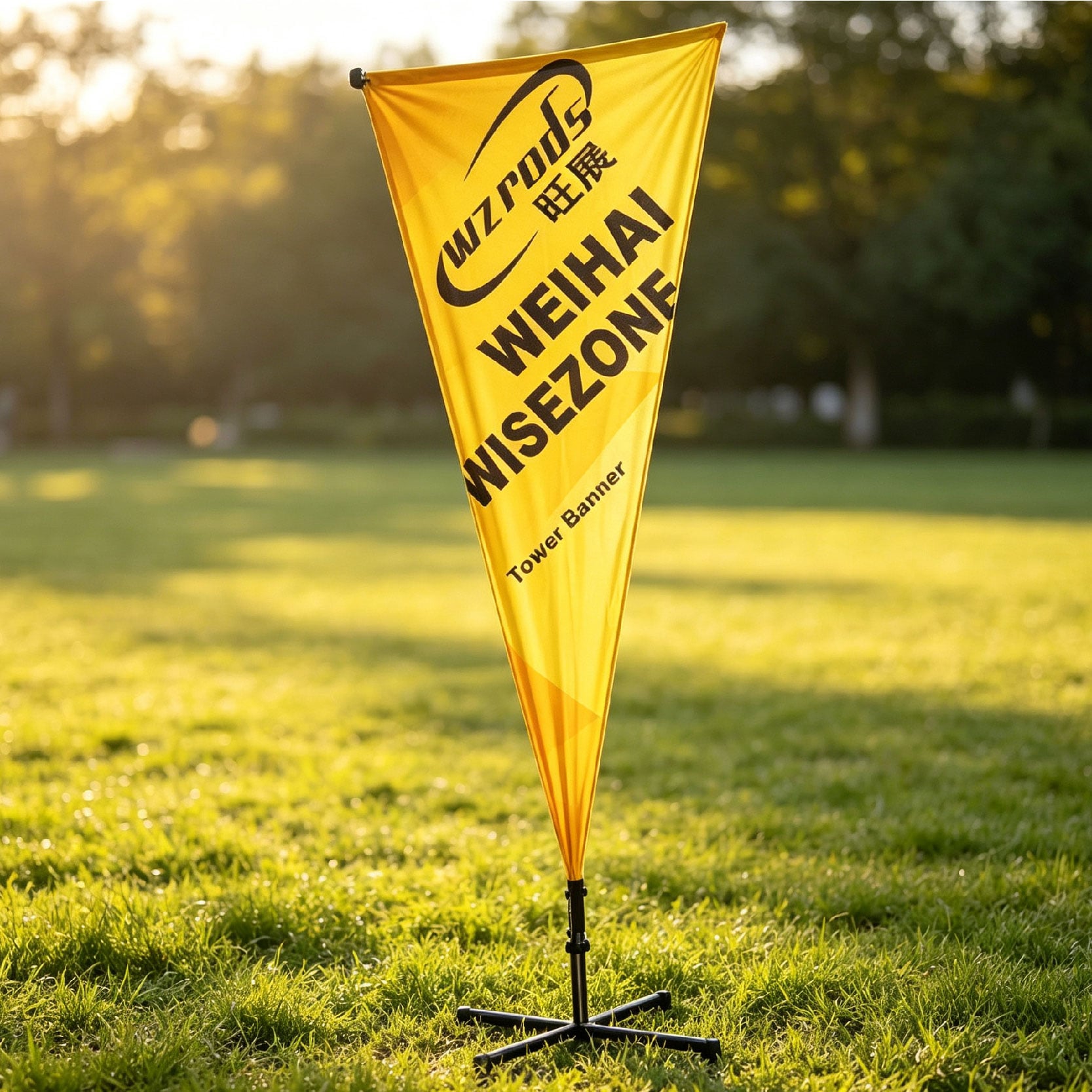
The pyramid banner’s foldable umbrella frame is built for speed. Set-up under two minutes is standard. At a recent trade show in Cologne, a crew of three set up a full 40-square-meter booth with eight pyramid banners, two counters, and lighting in under an hour. The event organizer, a tall sahib from the Netherlands, timed them and ordered 200 units on the spot. For rental companies that bill by the hour, fast assembly means more jobs per day. The compact collapsed dimension (120×90×12 cm) and light carry bag also slash storage and drayage costs at convention centers where every square meter is billed.
Retail and Pop-Up Shops: Portability and Aesthetic Appeal
The 3D shape attracts attention from multiple angles. A Singapore shoe store placed one in the center aisle, and the manager reported a 25% increase in foot traffic to that display compared to a flat pull-up banner. Because the graphic is easily swappable, seasonal promotions need no new frame. I recall a chain of pharmacies in Malaysia that bought 150 units and printed interchangeable sleeves for each holiday. Staff changed the sleeves in minutes—no tools, no training. The rust-proof carbon composite frame survives constant handling and occasional spills of cleaning fluids without deterioration.
Hospitality and Real Estate: Weather Resistance for Outdoor Events
Outdoor launches, poolside receptions, and real estate open houses demand a display that stands up to wind and humidity. The pyramid’s wide base and flexible pole handle breezes that would topple a standard banner. The polyester graphic is water-repellent and dries quickly. I have watched a set endure a sudden rain shower in Phuket, then be wiped down and ready for the evening cocktail reception. The corrosion-free frame gives hotel event planners in beach locations year-round confidence. A resort group in the Maldives standardized on the WZRODS pyramid banner after their aluminum stands pitted beyond use in six months.
5. Inside the Factory Process: How WZRODS Builds a Superior Banner Stand
Carbon Composite Pole Manufacturing: Pultrusion and Quality Control
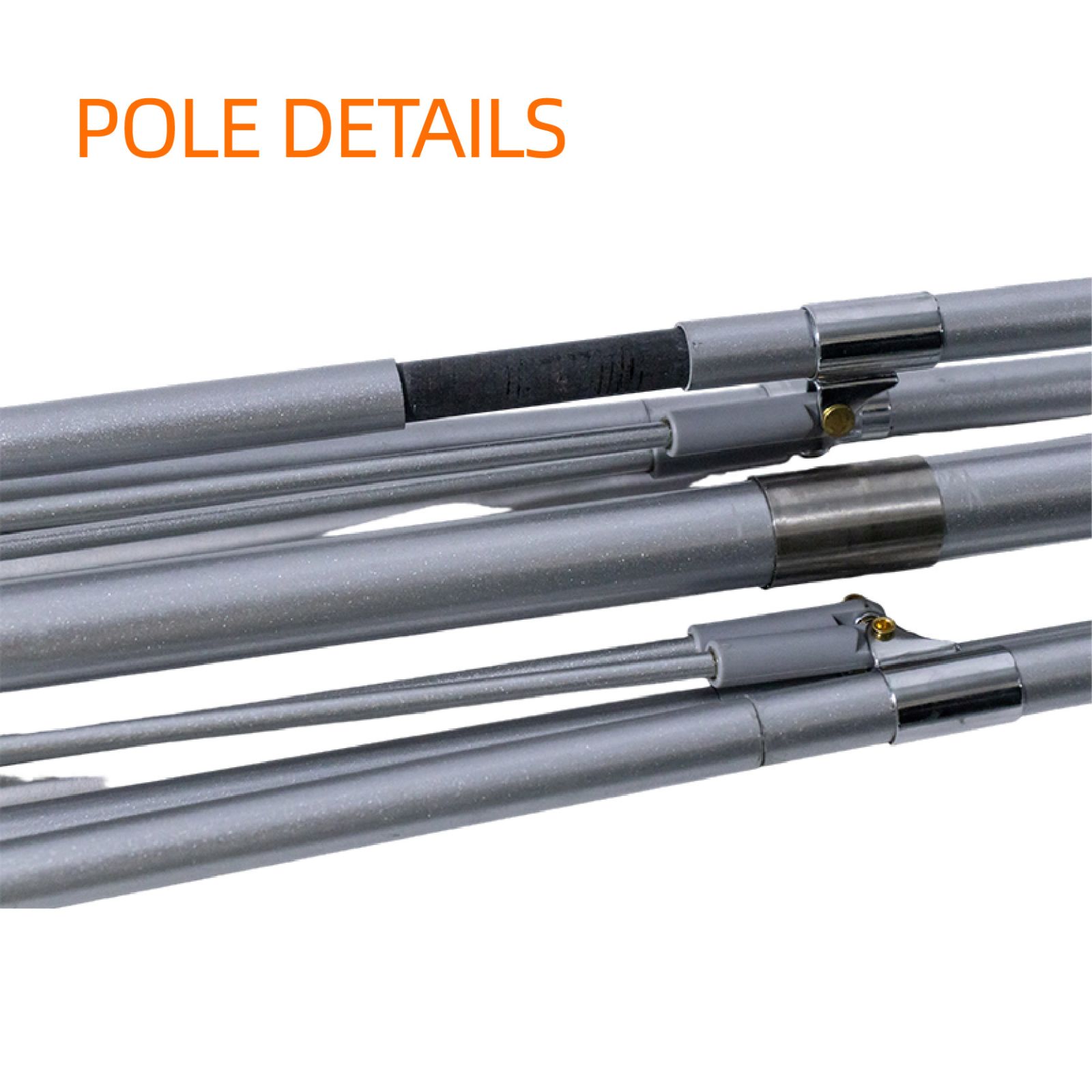
The poles begin as continuous carbon fiber tows impregnated with a high-strength resin, then pulled through a heated die in a pultrusion process. This yields a consistent cross-section with aligned fibers, which is why the poles flex without delaminating. The factory in Shandong cuts and drills each pole to exact length, then fits the connector hubs with a locking mechanism tested to 20,000 cycles. An in-line flex test subjects random samples to a 30-degree bend; they must return to true alignment within 1° deviation. The scrap rate from quality rejection is under 0.5%. This discipline enables the 3-year warranty.
Graphic Printing: Dye Sublimation and Customization Workflow
The banner sleeve uses 100% polyester optimized for dye-sublimation ink. Artwork prints onto transfer paper, then heat-presses onto the fabric in a calendar machine reaching 200°C. The dye gasifies and bonds with the polyester fibers, so the image will not crack or peel. Customization is fast: once artwork is approved, printing and finishing take 3–5 working days. The factory supports full-color designs—corporate, seasonal, patriotic, political. Digital files are archived for repeat orders, ensuring batch-to-batch color consistency. A template file is provided so a designer in London can prepare the layout without guessing dimensions.
Quality Assurance: Wind-Test Protocols and Warranty
Before packaging, each unit undergoes wind simulation. A large fan generates a steady 30 km/h stream at the assembled stand on a platform. The stand must not tip, and the pole must not crack. The fan then oscillates to simulate gusting. Any unit that wobbles excessively is re-inspected. The 3-year warranty covers frame breakage under normal use; it does not cover graphic wear, which is a consumable. But the graphic, with proper care, can last multiple shows. The carry bag is rugged nylon with reinforced handles. Export cartons are drop-tested from 1.5 meters onto concrete; the stand inside remained intact in every test I observed.
6. Market Trends: The Shift Toward Lightweight, Duty-Advantaged Display Hardware
The Rise of Carbon Composite in Non-Traditional Sectors
Carbon composite was once reserved for aerospace and sporting goods. It is entering the display industry on the same logic: strength-to-weight ratio. Buyers are increasingly educated about material properties and demand longer-lasting products. No question. Trade show organizers push exhibitors toward sustainable practices. A frame that lasts five years instead of one directly reduces waste. I have seen RFPs from European retailers that now specify “carbon fiber or equivalent” for all display stands, explicitly excluding aluminum for outdoor use. That trend will accelerate as more distributors share the ROI data.
Tariff Engineering and HTS Code Optimization – What Distributors Should Know
The Harmonized Tariff System is a tool, not a mystery. A careful shipper can classify a carbon composite banner stand under Heading 6815 (articles of carbon fibers) or Heading 9403 (other furniture and parts) depending on the principal use and composition. The carbon frame constitutes the essential character. With proper documentation, importers have secured rates as low as 0% in the EU and Japan, 1.7% in Australia, and 2.7% in the US under certain provisions, while comparable aluminum stands face 3–6%. I always recommend working with a licensed customs broker and requesting a binding tariff ruling if the volume justifies it. The savings on 10,000 units can exceed USD 25,000. This is correct classification of a fundamentally different product, not a loophole.
Sustainability Considerations
Carbon composite is not biodegradable, but its extraordinary lifespan means less frequent replacement and disposal. An aluminum stand that corrodes in two years might be recycled, yet the energy to remelt and reform it is high. A carbon composite pole can stay in service for a decade. At end of life, it can be incinerated for energy recovery in modern waste-to-energy plants. It is not a perfect green solution, but it is a pragmatic one that aligns with circular economy principles by keeping products in use longer. Paired with the polyester graphic that can be recycled as PET fiber, the overall environmental footprint per display-day is far lower than the throwaway plastic banner stands that flood the market.
7. Upgrade Solution: Moving Your Portfolio from Aluminum to Carbon Composite
Managing the Transition: Inventory, Customer Education, and Pricing Strategy
If you currently stock aluminum pyramid banners, do not scrap them overnight. Run them through their remaining service life while you introduce the carbon composite option as a premium tier. Label it “Pro” or “All-Weather.” Position it at a 15–20% higher retail price, which your ROI analysis justifies. Offer your top customers a pilot program: five units at a discounted trial price, and ask for feedback. That feedback will become your marketing material. Start with a mixed container—200 carbon composite, 300 of your existing aluminum models—to test demand. Within two seasons, most distributors who try this shift completely. The final step is discontinuing the aluminum SKU except for low-cost indoor-only lines.
Communicating Value to End Users: The “No-Bend, No-Rust” Promise
End users do not care about pultrusion or HS codes. They care about a stand that looks professional and works every time. Boil the message down to two promises: “It will not bend, and it will not rust.” That is what event managers remember. Show a short video of the stand flexing and springing back. Show it set up on a beach, then rinsed off with a hose. A photo of a rusty aluminum pole next to a pristine carbon composite pole after one year in a tropical climate sells more than a thousand words. I have seen a distributor in Chennai post such a photo, and within a week he received orders from five hotels he had been chasing for a year.
Sample Ordering, Customization, and MOQ Strategy
The WZRODS pyramid banner has an MOQ of 1 piece for stock units without custom printing. You can order one unit to evaluate the frame. For a custom-printed sample, the price is USD 1,232.03, covering digital file setup, one-off production, and air courier delivery. Once approved, reorders with that same artwork fall to the USD 68–71 range, with a lead time of 15–30 days. Large projects can order a mixed container of 524 units with different graphic designs at no extra setup charge beyond the initial artwork. Payment terms are T/T, L/C, or Western Union. The factory’s fast customization service can turn around a new design in under two weeks for rush orders, letting you win last-minute event contracts that bigger competitors cannot fulfill.
Frequently Asked Questions
Q: What is the minimum order quantity for the WZRODS pyramid banner?
A: The MOQ is 1 piece. You may purchase a single unit to test the frame. Custom-printed single units incur a sample set-up fee as described.
Q: Is the graphic changeable, and can I order extra graphic sleeves separately?
A: Yes. The fabric sleeve is removed and replaced within minutes. Extra sleeves can be ordered separately, allowing you to swap seasonal or promotional messages without additional frames.
Q: How does the carbon composite pole perform in very high wind?
A: The pole is designed to flex in gusts up to 40 km/h without permanent deformation. For extreme conditions, we recommend additional base weights. The structure will bend and recover; it will not kink permanently like aluminum.
Q: What are the precise dimensions and weight?
A: Display height: 2 meters. Collapsed dimensions: 120 × 90 × 12 cm. Weight: 3.8 kg. The carry bag is included.
Q: How many units fit in a 40HQ container?
A: Approximately 524 units, based on standard export packaging. Container volume is about 68 CBM.
Q: What is the warranty?
A: 3 years on the frame against manufacturing defects. Normal wear on the graphic is not covered, but the fabric is highly durable.
Q: Can I get a sample, and what is the sample cost?
A: Yes. A custom-printed sample costs USD 1,232.03. Stock units without custom printing are available at the standard ex-works price. Sample lead time is typically 15–30 days.
Q: What payment methods do you accept?
A: T/T (wire transfer), L/C (letter of credit), and Western Union. For first-time buyers, a 30% deposit with balance before shipment is common.
Q: How does the import duty for carbon composite compare to aluminum?
A: In many markets, carbon composite display stands qualify for lower duty rates under HS headings for carbon fiber articles or furniture parts. We recommend consulting your customs broker for a binding ruling. We provide full material composition documentation to support classification.
Q: Is the pyramid banner suitable for permanent outdoor installation?
A: It is designed for temporary displays—trade shows, events, pop-ups. With proper anchoring and periodic graphic replacement, it can serve semi-permanently in covered or mild outdoor settings. The frame will not rust, but the fabric will eventually fade under continuous UV exposure.
Q: How quickly can I get a custom order produced and shipped?
A: Standard lead time is 15–30 days from artwork approval. Rush production is possible; please inquire at the time of order. Ocean transit time is additional.
Q: Can I negotiate the price for large quantities?
A: Ladder pricing applies for bulk orders. The listed price range is USD 68–71 per unit, and larger volumes may qualify for preferential rates. Contact our sales team with your projected annual volume for a customized quotation.
Q: What if the frame gets damaged during shipping?
A: All shipments are packed in standard export cartons with reinforced corners. Transit damage is covered by marine insurance. We assist with the claims process and dispatch replacement parts promptly.
This guide has walked you through every layer of the decision: material science, landed cost, field performance, and the switch-over strategy. The pyramid banner with carbon composite frame is not an impulse buy. It is a sourcing decision that, once made, frees you from the cycle of breakage, rush replacements, and complaints. Like the old lama told me, “You buy the stand that stands.” I have seen the data, and I have seen the smiles on the faces of distributors when they realize their after-sales workload just evaporated. The WZRODS pyramid banner is that stand. Order a sample, subject it to your own wind and salt spray, and then let the numbers do the talking.
About the Author
Wei Chen, Senior Product Specialist
B.S. Supply Chain Management, Michigan State University; Certified Professional in Supply Management (CPSM)
12 years in B2B display hardware sourcing. Former procurement manager for a top 20 US promotional products distributor. Specializes in aluminum pole systems and import compliance.
Reviewed by WZRODS Technical Team. Updated: 2026-07-10
 Comments (0)
No comments yet. Be the first to comment!
Leave a Comment
Related Products
Foldable Horizontal Square
Spider A frame
Toblerone Banner
Tower Banner
Bean Banner
Cluster Balloon Kit
Swing Banner Stand
Burgundy Banner
Foldable Vertical Square
Half Moon Banner
Related Articles
29kg Concrete Flag Base - The Complete B2B Buyer's Resource - WZRODS
WZRODS DY451B: 29 kg, HDPE shell, concrete core. Stackable, portable, rust-proof. FOB price US$5.75–$6.85 at MOQ 2 units. Those numbers look unremarkable. Factor in landed cost—import duties lower than aluminum’s under relevant HTS codes, freight savings from less weight per unit of stabilizing mas
Wide Tube Cross Base - The Complete B2B Buyer's Resource - WZRODS
The Wide Tube Cross Base, manufactured by Wzrods in Shandong, China, solves one problem: reliable stability for poles under three meters, without the freight costs and warehouse footprint that heavier alternatives demand.
Rectangular Pipe Cross Base - The Complete B2B Buyer's Resource - WZRODS
The pipe cross flag base is a cross of rectangular steel pipe, powder‑coated, weighing 1.3 kg and spanning 78 cm across its arms. Its center holds a C‑ring shaft that lets the flag rotate with the wind.
X-Shape Backpack Banner - The Complete B2B Buyer's Resource - WZRODS
Economic Cross Base - The Complete B2B Buyer's Guide- WZRODS
When you buy an economic cross base—something like the Wzrods DM‑9, a 77 cm‑long, 1.3 kg iron cross—forget “economic” as a synonym for “cheap.” It means value-engineered.