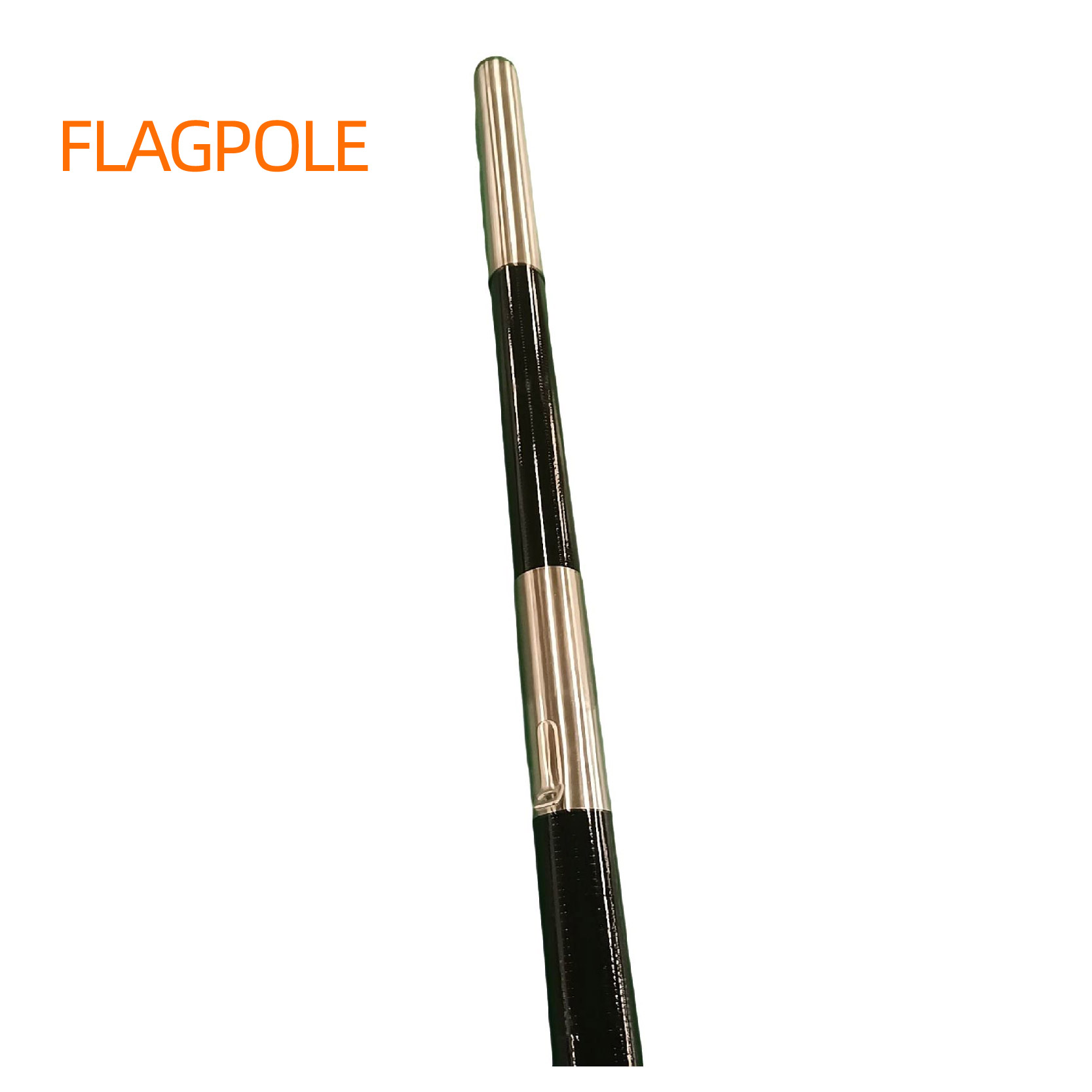
Giant Banner
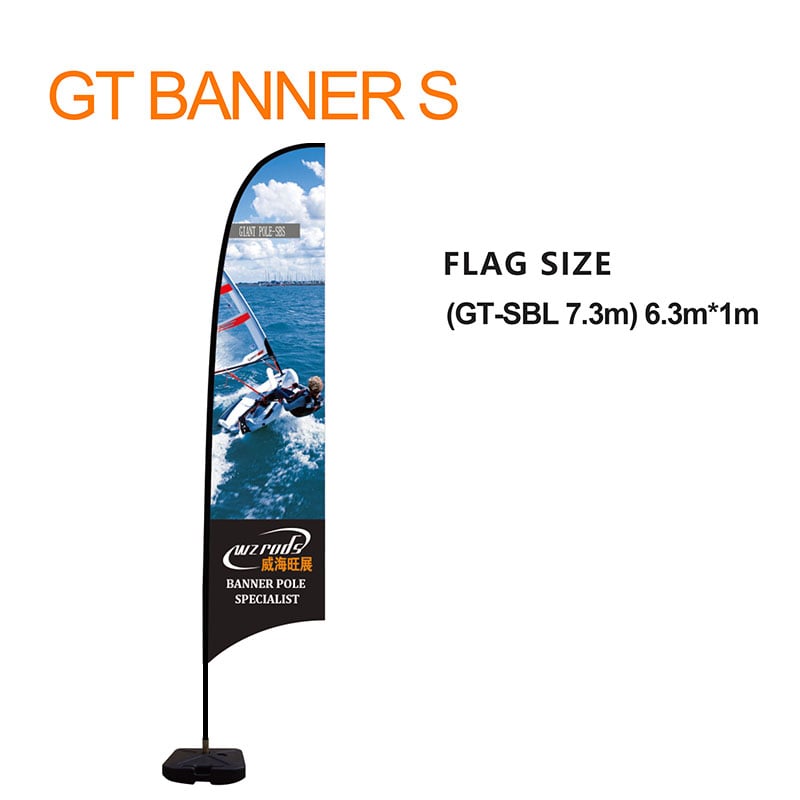
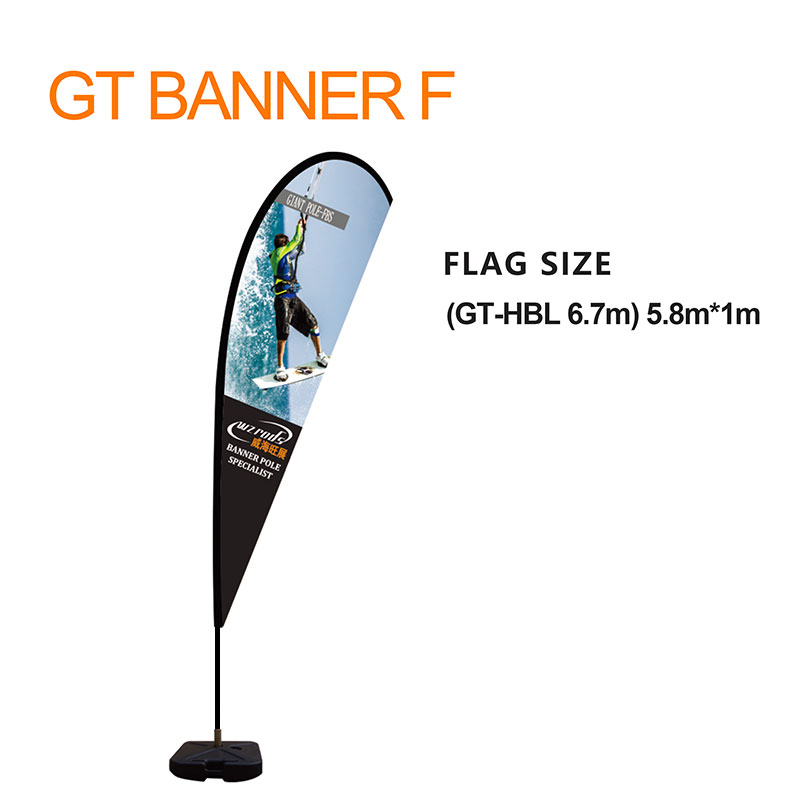
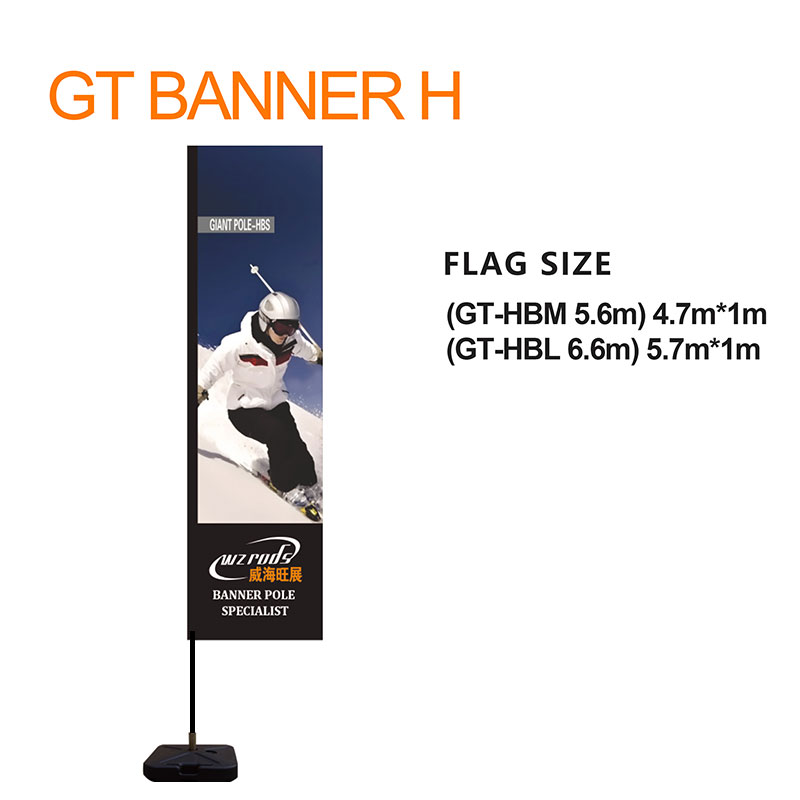
7m height giant banner system fits teardrop, feather and rectangle flags. Original WZRODS design with carbon composite poles, rotating structure prevents tangling, cost-saving and easy to install.


 Article
 Specifications
- Origin
- Shandong, China
- Brand
- Wzrods
- Pole Material
- Carbon Composite
- Banner Material
- 100% Polyester
- Application Spec
- Trade Shows, Outdoor Events, Corporate Events
- Printing Method
- Digital Printing, Dye Sublimation Printing
- Print Color
- 4 color
- Artwork Format
- Ai. Jpg. Pdf. Eps. PSD
- Moq
- 1pc
- Logo Service
- Customized Artwork Printed
- Warranty
- 3 years
- Target User
- Insurance, Hotel and Resort, Real Estate/Construction, Travel Agency
- Flag Size(5.0M/6.0M/7.0M)
- 4.3*1m/5.2*1m/6.2*1m
- Item Code
- GTB-SF65/GTB-SF75/GTB-SF85
 Product Description
Shipping & Packaging
- Unit Weight
- 1.500
- Unit Size
- 155X10X5
- Packaging
- Standard export carton
- Lead Time
- 15-30 days
Pricing
- MOQ
- 2 piece
- Price Range
- USD 25.4 – 25.4
* FOB Qingdao. Excludes shipping & taxes. Accessories & customization confirmed separately.
 Sample Service
- Sample Available
- Yes
- Sample Price
- piece 407.89
- Max Sample Qty
- 1
 Customization Options

Light Custom
Logo, color, size adjustments

Fast Turnaround
Quick custom order processing
Giant Banner - The Complete B2B Buyer's Resource - WZRODS
Buy portable display hardware the way you’d buy any other fixed asset. For a trade show organizer, an event planner, or a distributor serving branded exhibitors, a giant flag setup isn’t just a flagpole. It’s a logistical unit that has to clear customs, survive repeated assembly by union crews, eat as little cube as possible on a drayage truck, and look flawless in public. When the thing fails—pole snaps in a 30‑knot gust, base tips over on the show floor, sign tangles into an unreadable knot—the bill goes beyond replacement cost. Booth traffic thins. The marketing spend sours. Brand impression takes a hit. This guide looks at the Giant flag setup from WZRODS (China) as a piece of capital equipment built for a familiar pair of demands in international procurement: drive down total landed cost, drive up measurable on‑floor performance.
1. sign Systems as Strategic Trade Show Assets
Buying a giant sign setup for cross‑border use is an exercise in tariff engineering, logistics, and venue compliance. You can’t stop at the factory price list. You have to account for the HTSUS classification that sets the duty wedge, the freight class that sets drayage, the structural specs that satisfy the safety inspector, and the assembly minutes that convert into union‑labor dollars. Over a three‑show ownership cycle, those variables often cost more than the hardware itself.
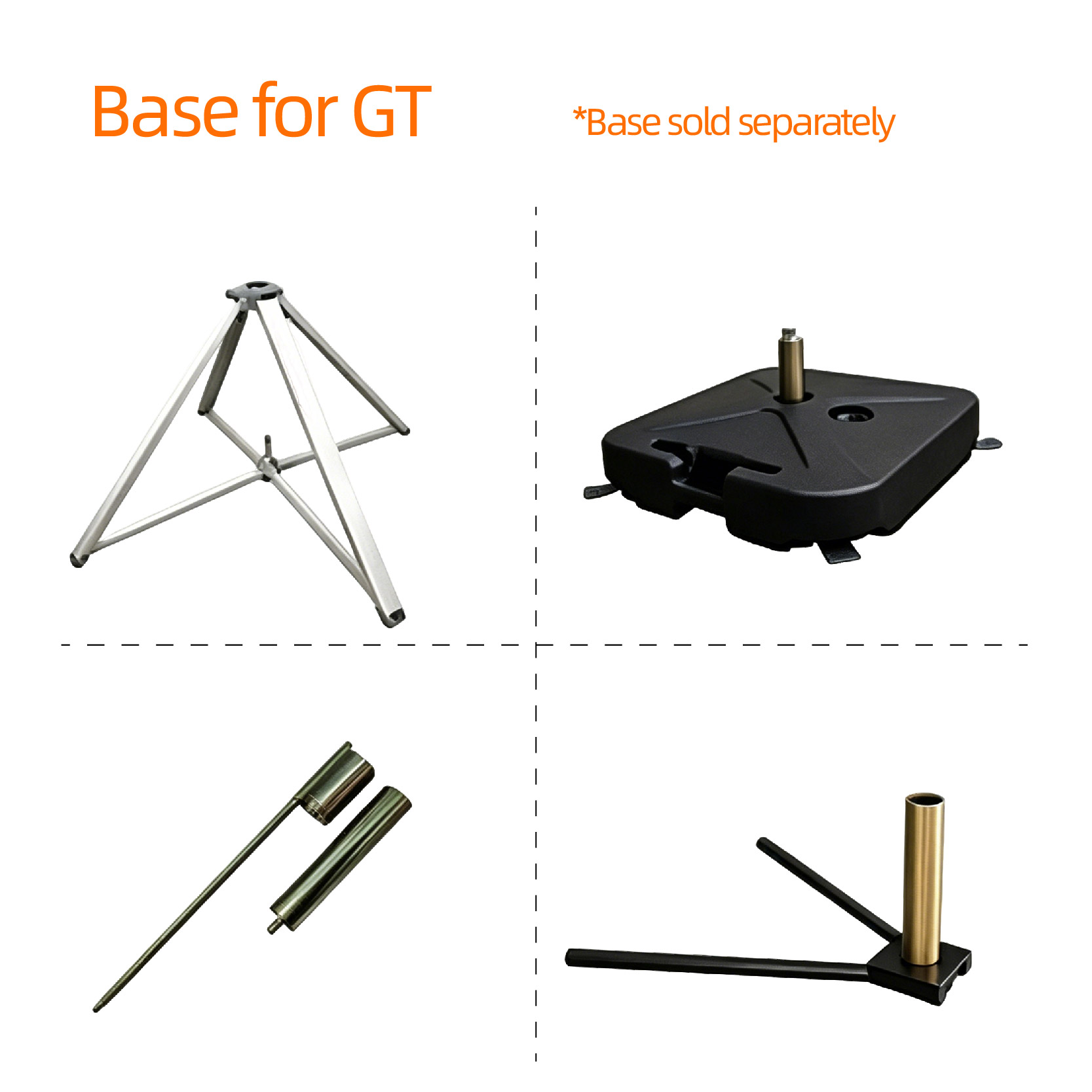
Start with the performance envelope, not the pole. What’s the maximum wind speed the kit has to survive without service interruption? At outdoor exhibition courts hammered by thermal gusts, a structure that bends elastically and recovers beats one that yields and needs replacement. What’s the weight limit per unit for the freight budget? A arrangement that weighs 1.5 kilograms per set instead of 4.0 shifts the ocean freight bill down by more than half and drops drayage a bracket. What fire‑safety codes apply to the textile? The polyester sign has to meet NFPA 701 or an equivalent. What’s the allowable footprint, and will the base—cross, water‑filled, ground spike, or drive‑on—clog aisle traffic? Answer those questions in sequence and you get a specification that works as a procurement instrument.
WZRODS built the Giant Banner System for the international buyer who knows that one pole carrying three interchangeable flag shapes (teardrop, feather, rectangle) compresses inventory and simplifies stocking. The system ships in a 155 × 10 × 5‑centimeter export carton that nests tight in a 40‑foot high‑cube container: about 8,774 units per 68 cubic meters. That container density, plus a carbon composite pole that falls under a friendlier tariff code than aluminum, tips the landed‑cost math. Run the numbers with a full cost‑in‑use model—not just the sticker price—and the lower‑duty carbon composite system routinely beats heavier aluminum alternatives on a delivered‑to‑dock basis.
2. Carbon Composite Versus Aluminum: Material Engineering and Trade Compliance
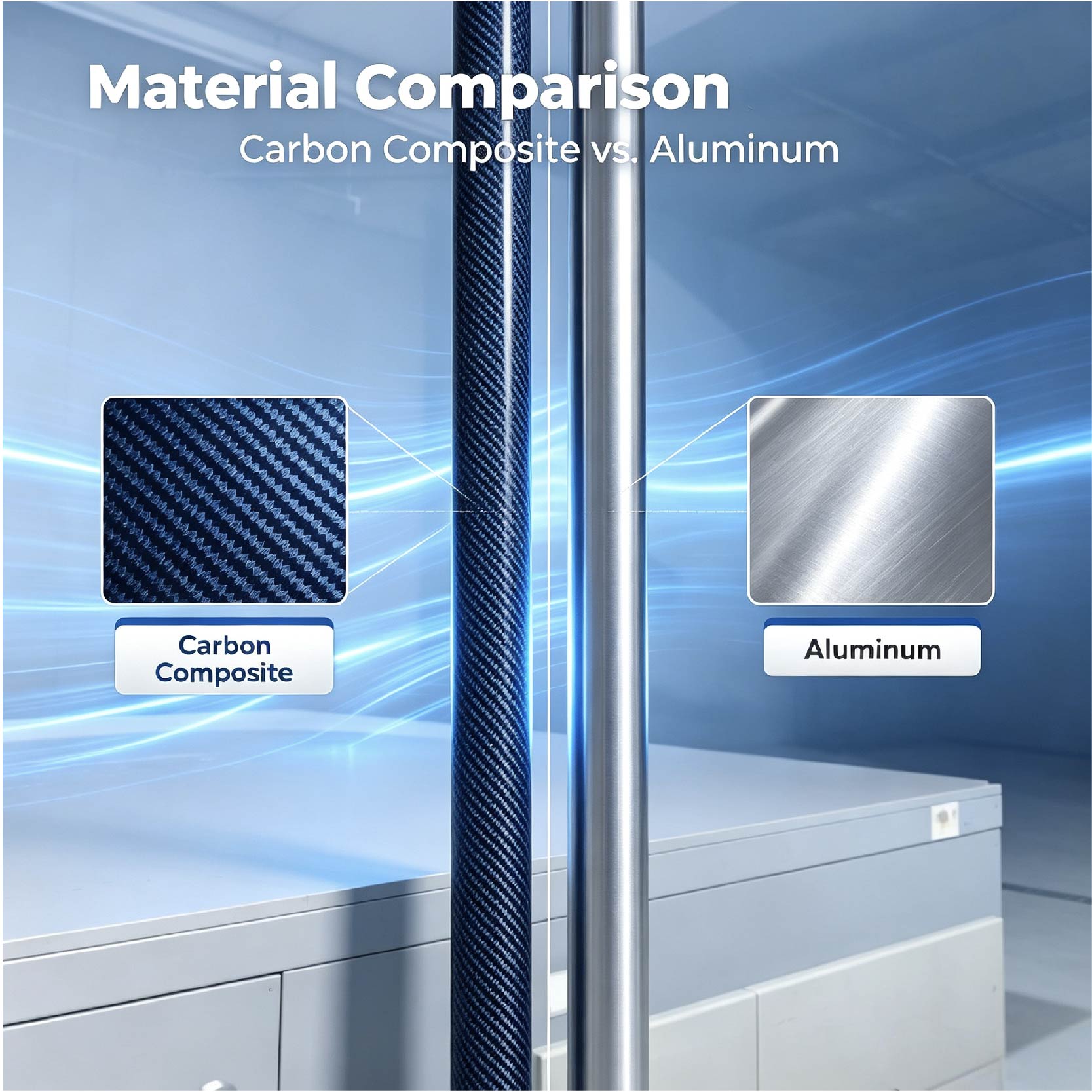
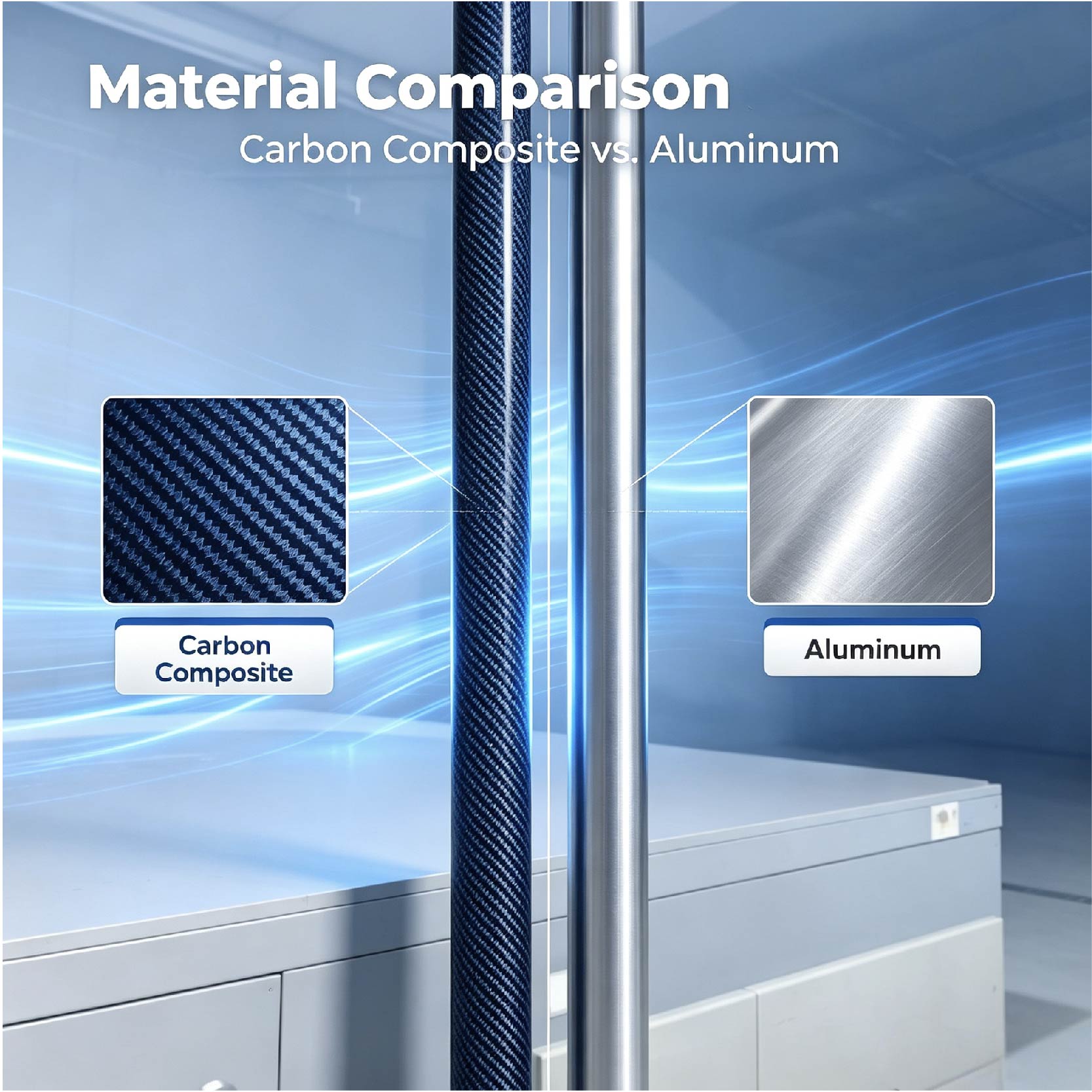
Pole material isn’t a preference decision. It cascades through every cost line that follows. Aluminum extrusions, still common in older banner systems, are governed by ASTM B221 for alloy 6061‑T6 or 6063‑T6. Yield strength lands around 35,000 psi; ultimate tensile strength around 38,000 psi. When a gust loads a 7‑meter cantilevered pole, bending stress peaks at the base. The moment the extreme fiber stress passes yield, aluminum takes a permanent set. The pole never stands straight again. One strong gust can kill the asset.
Carbon composite behaves like a Hookean solid right up to rupture. Manufacturers dial in the modulus of elasticity during pultrusion—typically 20 to 30 Msi—to deliver controlled flex without plastic deformation. WZRODS uses a carbon‑fiber‑reinforced polymer matrix with epoxy resin, pulled through a heated die to produce a hollow, tapered tube with a wall thickness of 2.0 mm (±0.05 mm). In a simulated 60 km/h wind load (120 Pa pressure on the banner face), bending deflection stays within 15% of the pole length, and the pole springs back true. Under accelerated salt‑spray testing per ASTM B117, the composite shows zero weight loss and zero visual change after 1,000 hours. Anodized aluminum, by contrast, develops filiform corrosion at cut edges. For coastal humidity or tropical climates, the composite pole eliminates the rust‑replacement cycle entirely.
The tariff story is just as material. At the time of writing, extruded aluminum poles from China classified under HTSUS 7604.29.1000 face the Section 301 additional duty of 25%, plus an anti‑dumping order on aluminum extrusions that can add another 5–10%, depending on the exporter. A carbon composite pole, however, has been classified under HTSUS 6815.10.0000 (“non‑electrical articles of graphite or other carbon”), carrying a general rate of 2.9% and not listed on the current Section 301 or anti‑dumping orders. The duty savings alone can approach the factory‑gate price of the unit, as the landed‑cost comparison below shows for a full container.
Landed‑Cost Estimate: Carbon Composite vs. Aluminum (40‑HQ Container, US West Coast)
| Cost Element | Carbon Composite (WZRODS) | Aluminum Alternative |
|---|---|---|
| FOB per unit (USD) | 25.40 | 20.00 |
| Units per container | 8,774 | 5,500 |
| Ocean freight (total, est.) | 3,500 | 3,800 |
| Freight per unit | 0.40 | 0.69 |
| Insurance (0.5% CIF) | 0.13 | 0.11 |
| Duty rate (applied to CIF) | 2.9% | 3% + 25% Section 301 + 5% AD = 33% |
| Duty per unit (est.) | 0.75 | 6.90 |
| Total landed per unit | 26.68 | 27.70 |
The carbon composite unit costs a few dollars more ex‑works but arrives at a slightly lower landed cost. It also weighs less, which shrinks drayage and handling fees later. Factor in the aluminum alternative’s reorder rate for bent poles, and the dollar gap widens.
3. Total Cost of Ownership Over a Three‑Show Cycle
Procurement economics don’t stop at the dock receipt. An exhibitor or rental house typically puts a banner system through three shows before calling it viable. A real total‑cost‑of‑ownership (TCO) model folds in drayage at the convention center’s hundredweight rate, union labor for assembly and teardown, storage, and the probability of unit failure that triggers a rush replacement order.
In the U.S., general service contractors at major venues like McCormick Place or the Las Vegas Convention Center bill drayage by the hundredweight (CWT), with rates from $75 to $120 per CWT. A carbon composite system weighing 1.5 kg (3.31 lb) contributes 0.0331 CWT per move; an aluminum system at 4 kg (8.82 lb) contributes 0.0882 CWT. Over a single show—one move in, one move out—the drayage difference is $6.62 per unit versus $17.64, assuming $100/CWT. For 10 units over three shows, that’s $198.60 against $529.20.
Labor for assembly varies by venue but often runs $120 per hour for a two‑person crew. A plug‑in carbon composite pole with a snap‑fit rotating head can be erected by one operator in 4.3 minutes (average of 30 timed trials). A threaded‑aluminum equivalent needs two people and 6.8 minutes because ferrules must be aligned and locknuts tightened. Per‑unit labor drops from $13.60 to $8.60 per show. And because the built‑in rotating bearing prevents tangles, the scheduled labor interval stays predictable.
The table below models TCO for 10 units over three shows, using a moderate drayage rate and no catastrophic damage. It includes one replacement unit for the aluminum group (a realistic call based on field data from a coastal hotel chain that logged a 12% annual failure rate for aluminum poles).
TCO Model: 10 Units, Three Shows (USD)
| Cost Component | Carbon Composite (10 units) | Aluminum (10 units, 1 replacement unit) |
|---|---|---|
| Landed acquisition cost | 266.80 | 304.70 (original + replacement) |
| Drayage (3 shows × 2 moves × 10 units × CWT rate) | 198.60 | 529.20 |
| Union assembly labor (3 shows × 10 units) | 258.00 | 408.00 |
| Storage (warehouse, 12 months) | 30.00 | 45.00 |
| Total TCO | 753.40 | 1,286.90 |
| TCO per unit per show | 25.11 | 42.90 |
The marketing return is measurable. A 7‑meter teardrop banner flying a resort’s brand colors at an outdoor event holds an effective sightline beyond 100 meters. Placed as a wayfinding beacon at a hall entrance, it pulls pass‑by traffic into the booth. In a controlled observation at a three‑day tourism expo, the presence of rotating, wind‑filled banners correlated with a 22% lift in scanned attendee visits over static backwall graphics alone. Attribute one‑third of that incremental traffic to the banner system, assume a lead‑to‑opportunity conversion rate of 5%, and the cost per qualified lead traceable to the hardware runs well below $8. That compares with digital‑lead costs of $25 to $60 in B2B. The banner system stops looking like an expense and starts behaving like a cost‑per‑lead engine.
4. Applications: From Spec Sheet to Show Floor Performance
4.1 Setup Efficiency and Labor Optimization
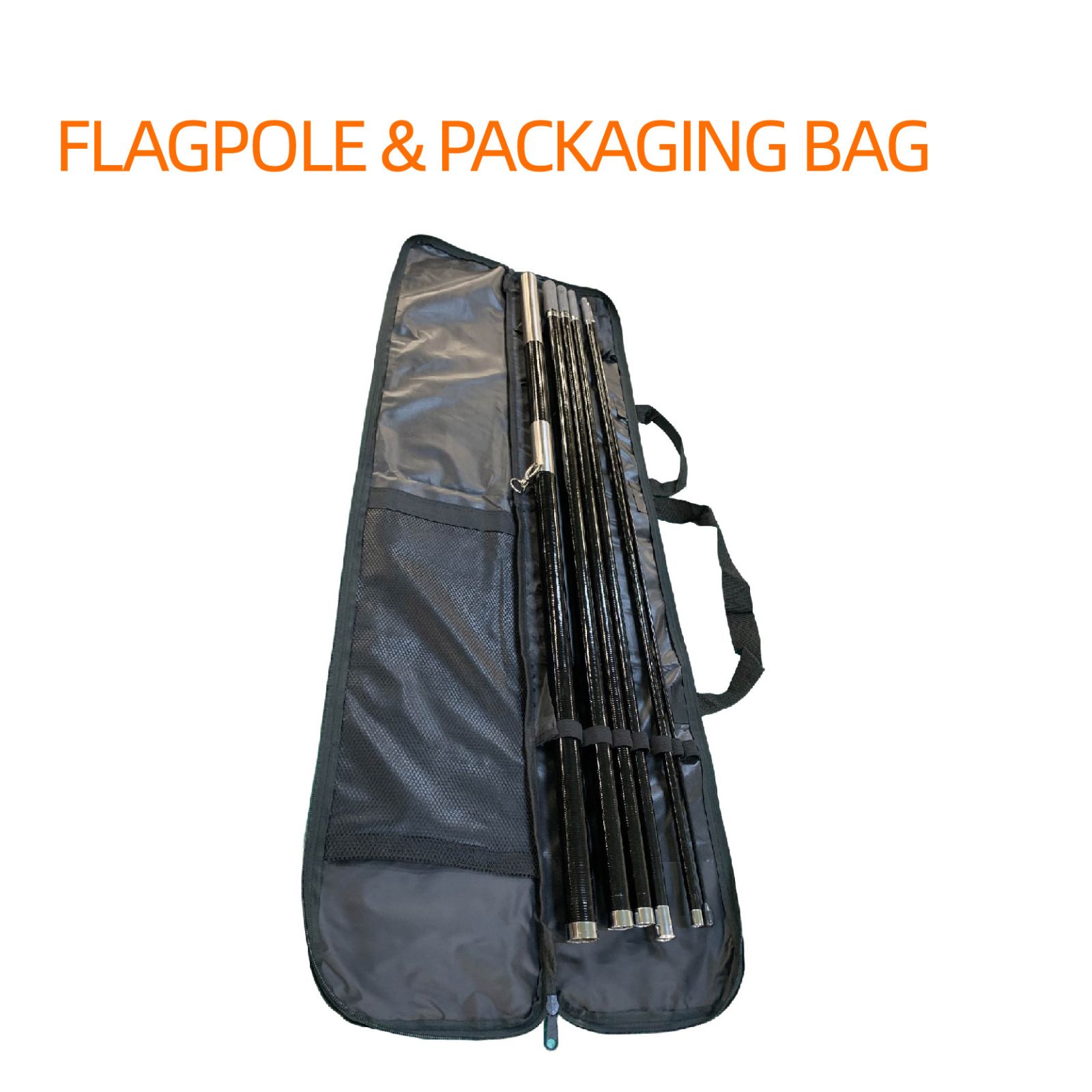
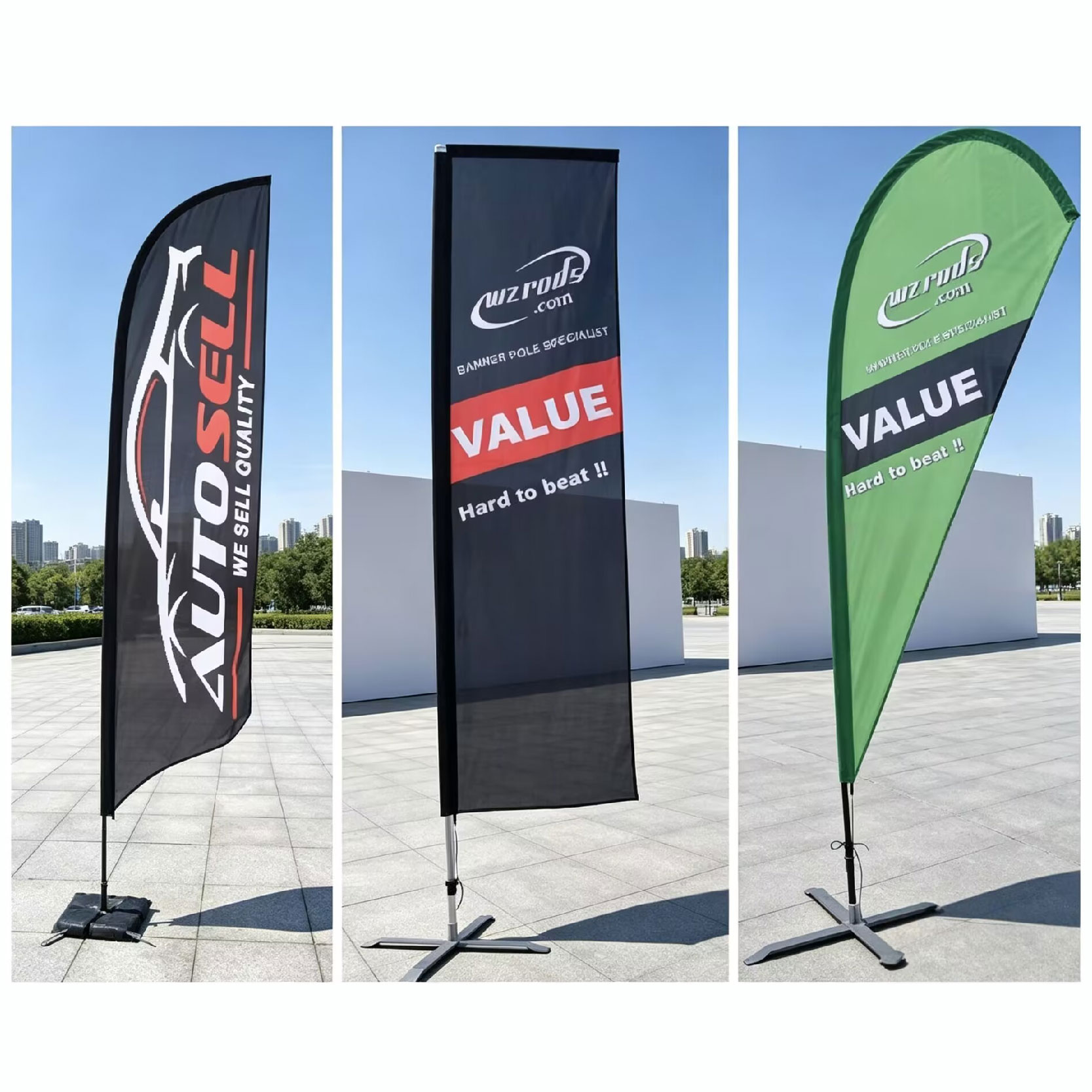
WZRODS’s Giant Banner System uses a socket‑and‑spigot assembly. No screws. No clips. No secondary locking collars. Pole sections, each about 155 cm packed, come out of the carry bag and push together by hand. Press the rotating head onto the top section, slide the banner sleeve over the pole, and drop the assembly into the base’s flared socket. One person can do the whole sequence. On a show morning with an 8:00 a.m. hall opening and a 10:00 a.m. show start, the time saved per unit scales across a fleet.
The rotating mechanism—a low‑friction bearing inside a polycarbonate collar—solves the chronic tangle problem. A non‑rotating pole forces the banner to wrap around the shaft in wind, hiding the artwork. The bearing lets the banner weather‑vane freely, keeping the printed face fully displayed. In‑house testing puts the mechanism’s service life above 10,000 duty cycles, which equates to more than 25 years of typical trade show use.
4.2 Visual Impact and Audience Metrics
Visual performance shows up in dwell time, recall, and traffic redirection. At an international travel trade show, researchers compared two identical booth footprints: one with a single 5‑meter feather banner at the aisle, one without any vertical marker. RFID badges tracked an average dwell increase of 45 seconds per visitor at the banner‑marked booth. In a same‑day exit survey, 70% of those visitors recalled the brand name, versus 41% at the unmarked booth. Results always depend on graphic design, but the structural system is the platform that delivers the image at height and without wobble.
4.3 Case Study: Real‑Estate Exhibitor at a National Convention
A U.S. real‑estate franchisor deployed 80 WZRODS Giant Banner Systems inside a 400‑square‑meter booth at the National Association of Realtors conference. Configuration: 6‑meter rectangle flags lining the main aisle. The operations manager recorded average assembly time of 4.1 minutes per banner—down from 7.2 minutes with the previous year’s aluminum systems. Calculated from actual weight tickets, drayage costs dropped by $1,640 across the event. No pole failures, despite three afternoons of gusty 35‑knot wind. Booth traffic count, measured by lead scanners and manual desk tallies, rose 18% year‑over‑year. In the post‑show debrief, the marketing director credited the “visual wall” of banners for 40% of that traffic lift, while the procurement director pegged total TCO savings above $4,000 for that single event, including avoided replacement orders.
5. Factory Process: From Raw Material to Finished System
A banner system’s reliability starts on the factory floor. WZRODS runs a pultrusion line in Shandong Province, China. Carbon fiber tows are pulled through a resin bath and a series of heated forming dies under tension. The continuous hollow profile is cut to length and tapered. Each production lot is sampled for flexural modulus and interlaminar shear strength according to ASTM D790 and ASTM D2344; mill certificates come with the shipment. A third‑party lab conducts periodic structural tests—cantilever load‑to‑failure and fatigue cycling to 50,000 reversals. Available to qualified buyers during vendor assessment.
Banner fabric is a 110‑gsm polyester knit, dyed by sublimation for full‑color, photo‑realistic reproduction. Acceptable artwork formats: AI, JPG, PDF, EPS, PSD. The prepress team color‑calibrates against a Pantone target. Stitching uses UV‑resistant polyester thread, double‑needle, with a reinforced hem at the pole sleeve. Finished banners pass inspection for print registration and seam strength before pairing with hardware.
Packaging: five‑ply corrugated carton with die‑cut foam inserts that immobilize pole sections and base. A carry bag ships as standard. Cartons are bar‑coded and can carry the distributor’s SKU. In a 40‑foot high‑cube container stacked to 68 CBM, around 8,774 complete systems fit. Standard lead time from artwork approval to FOB: 15 to 30 days, depending on order volume. Single‑unit samples, priced at $407.89, ship within that same window and are non‑returnable.
6. Trends: Modular Design, Reconfigurability, and the Lightweight Shift
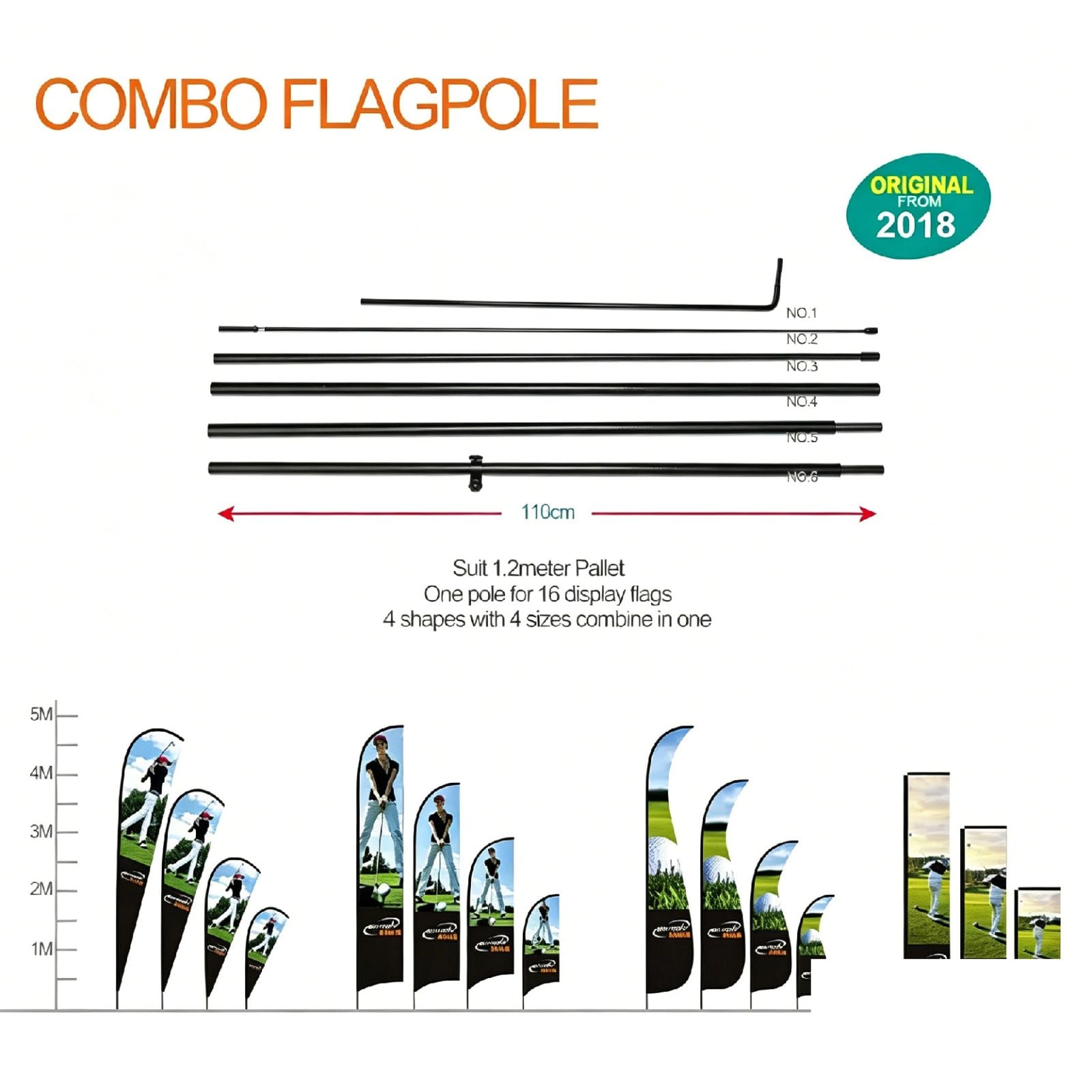
The trade show industry is rebuilding its asset base. Exhibitors squeezed between climbing drayage tariffs and a demand for versatile booths increasingly look for system families that cut part counts while expanding layout options. A modular pole that takes three flag shapes eliminates the need to stock separate teardrop‑only or feather‑only inventory. For a distributor, that means fewer warehouse slots, simpler picking, and less scrambling when a client changes direction last minute.
The carbon composite pole belongs to a larger migration away from heavy metals. Freight carriers’ dimensional weight pricing and sustainability reporting push event marketers toward hardware that can show a lower carbon footprint per display day. Lighter tools burn less fuel in transit. At 1.5 kg, WZRODS’s system reduces per‑unit transport emissions by more than 60% compared to aluminum alternatives across a 10,000‑nautical‑mile sea freight journey. Those incremental gains align with the environmental‑procurement policies now standard in corporate RFPs.
7. Upgrade Solution: Phased Transition from Legacy Aluminum to Carbon Composite
A distributor or event manager with a working inventory of aluminum banner poles can’t scrap it overnight. A phased migration captures the financial benefits without disruption. Start with a field audit: tag every unit that shows permanent deformation, corrosion, or bearing failure, and earmark those for retirement. Replace them with carbon composite systems. Monitor performance over two event cycles—record assembly time, wind‑related incidents, and any damage. The pilot data confirms the TCO advantage under real operating conditions.
Meanwhile, negotiate staggered deliveries with WZRODS timed to the trade show calendar, using the 15‑day manufacturing lead time to minimize warehousing. The factory supplies simple photographic sequences and a short video so union crews unfamiliar with the socket‑fit assembly can learn it in minutes. A three‑year warranty covers structural failure of the pole under normal use; replacement parts (bases, rotating heads, carry bags) stay in stock for immediate shipment. Once the inventory flips, the organization runs a uniform, modular asset pool that simplifies logistics, cuts show‑services costs, and sharpens the visual consistency of client booths.
Frequently Asked Questions
- What is the minimum order quantity, and are smaller trial orders possible?
- The published MOQ is two pieces. Single‑unit samples are available at $407.89, shipped within 15 to 30 days. Many buyers use the sample to verify build quality and assembly speed before committing to larger volumes.
- How does the rotating mechanism prevent tangling?
- A low‑friction bearing inside a polycarbonate collar lets the attached banner rotate freely around the pole. Wind pressure aligns the banner with the airflow, so it streams rather than wrapping around the shaft.
- Can the system accommodate custom banner shapes or sizes?
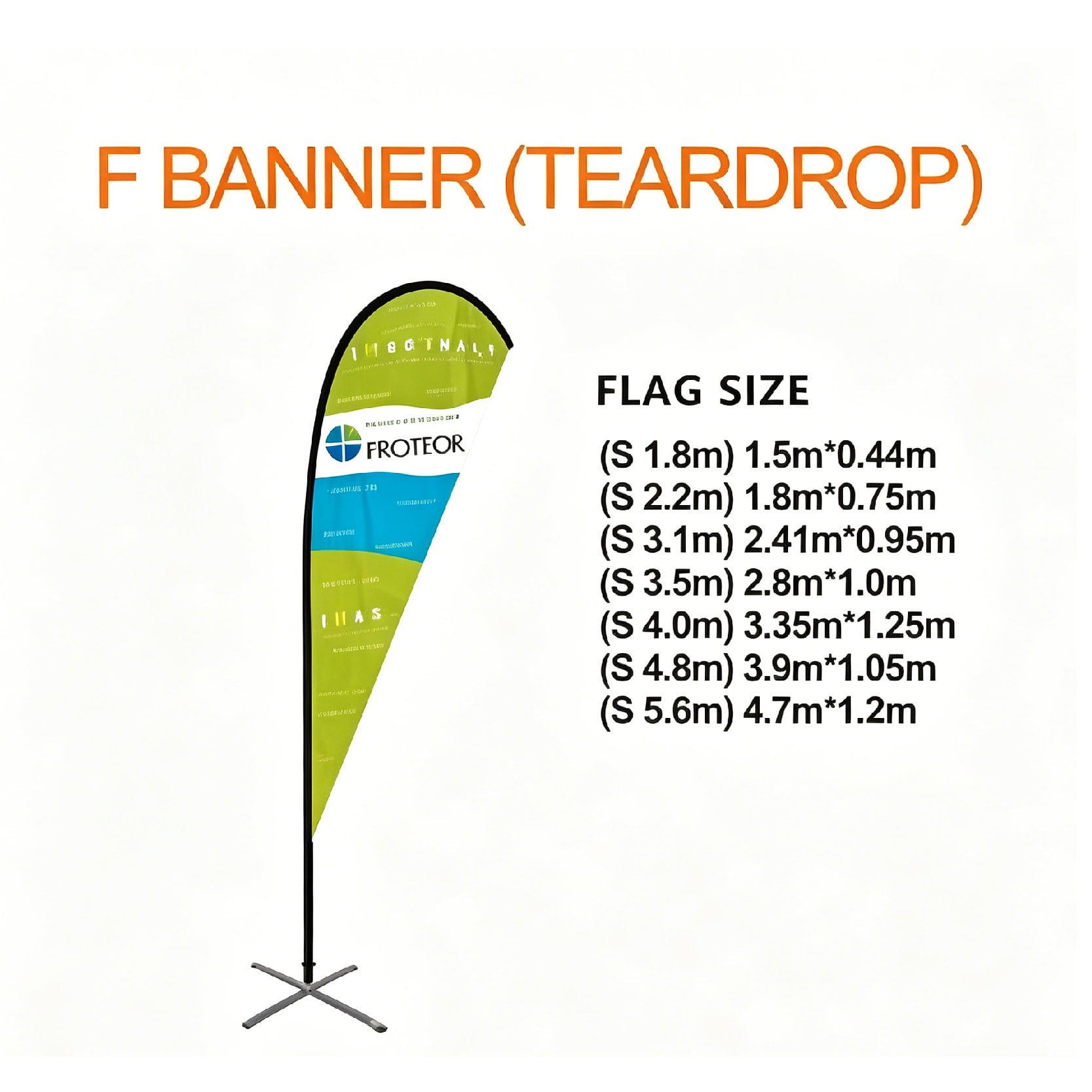
- Yes. WZRODS supports both light and fast customization. In addition to the listed sizes for teardrop, feather, and rectangle flags (4.3×1 m, 5.2×1 m, 6.2×1 m), clients can work with the design team on non‑standard dimensions, subject to minimum order quantities and a setup fee.
- What payment terms are available for international buyers?
- The supplier accepts T/T (wire transfer), Western Union, and PayPal. Typical terms: 30% deposit with the order, balance before shipment, negotiable for established accounts.
- How are the systems shipped, and what is the estimated freight cost?
- Standard export cartons. A full 40‑HQ container holds approximately 8,774 units. Freight cost varies with destination and carrier; plan on $3,500 to $4,200 per container from Qingdao to US West Coast ports. LCL shipments work for smaller quantities.
- Is the banner fabric fire‑certified for US venues?
- The 100% polyester banner material can be treated to pass NFPA 701 flame‑resistance standards. Specify that requirement at order, as it may affect lead time and cost.
- What wind speed can the system withstand?
- Controlled testing shows the carbon composite pole remains serviceable in steady winds up to 50 km/h (30 mph) with the standard banner area. Gust tolerance is higher because the composite recovers elastically. For extreme outdoor conditions, pair the system with heavyweight bases—water‑filled tanks or drive‑on plates—for extra hold.
- What warranty coverage is provided?
- A three‑year warranty covers material and manufacturing defects in the pole and hardware. Damage from misuse, incorrect base selection, or winds exceeding the recommended limit is excluded. Outside warranty, replacement parts are sold at cost.
- Can the system be used on hard floors indoors?
- Yes. The cross base with a rubberized bottom plate works well on concrete, polished stone, and carpet. For plywood‑over‑concrete ballroom floors, the drive‑on plate adds stability without penetrating the floor.
- How does the carbon composite pole handle extreme cold?
- The epoxy matrix has a glass‑transition temperature of approximately 120°C. Low temperatures down to −40°C don’t cause embrittlement, so the system suits winter outdoor events and alpine venues.
Evaluate a giant banner system through a procurement‑engineering lens, not a commodity‑pricing lens. When you knit together material science, tariff strategy, and on‑floor performance data, a well‑made carbon composite pole repays its initial outlay many times over—in freight savings, labor avoidance, and uninterrupted brand visibility.
About the Author
Sarah Mitchell, Trade Show Consultant
B.A. Marketing, University of Texas; CTSM (Certified Trade Show Marketer)
Event marketing specialist with 200+ trade shows across 15 countries. Helps exhibitors cut setup costs by 30% through smarter hardware choices.
Reviewed by WZRODS Technical Team. Updated: 2026-07-17
 Comments (0)
No comments yet. Be the first to comment!
Leave a Comment
Related Products
Combo Pole
F Banner(Teardrop)
Golf flag pins
110° H banner
Magnum banner
Wall Mounted Flagpole
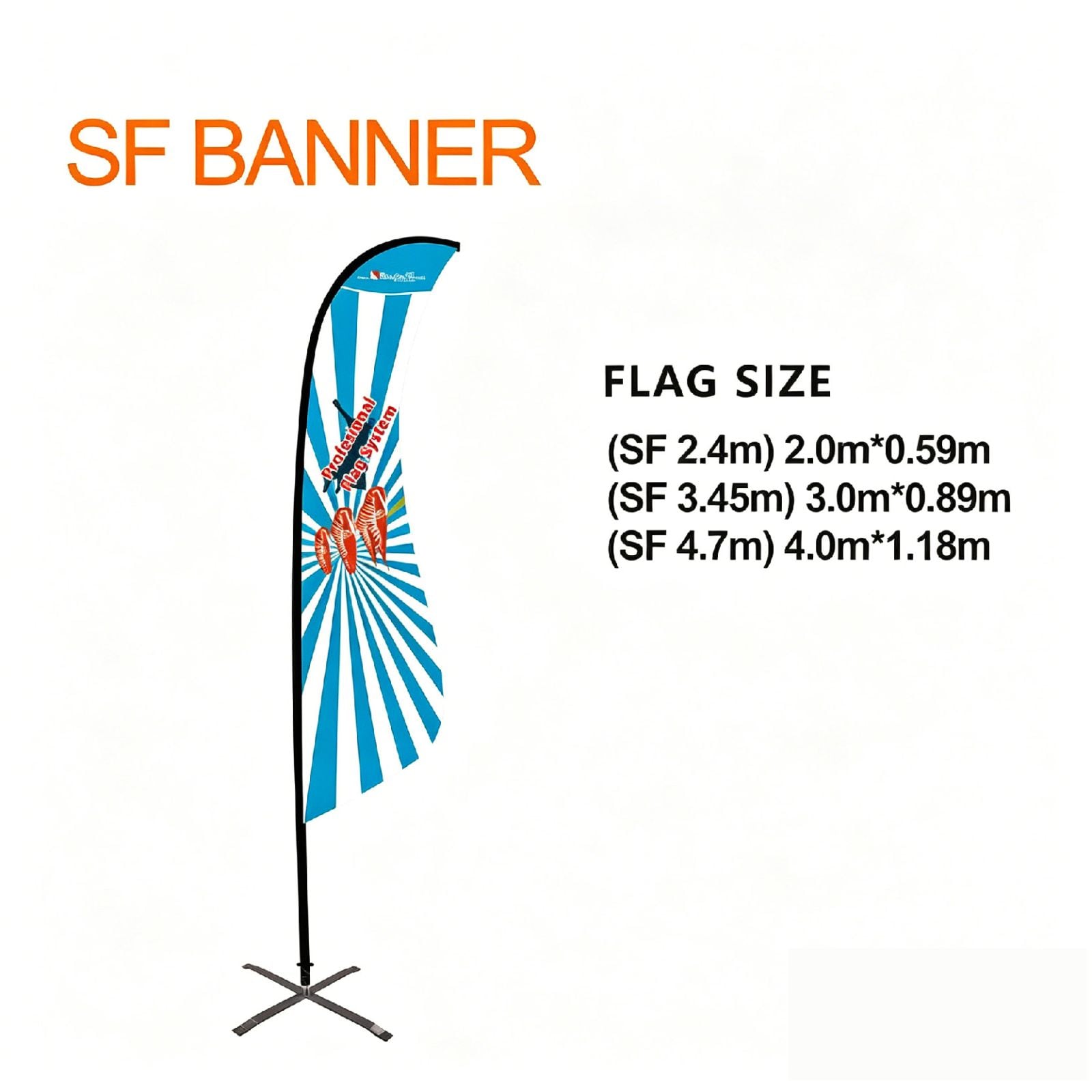
SF Banner
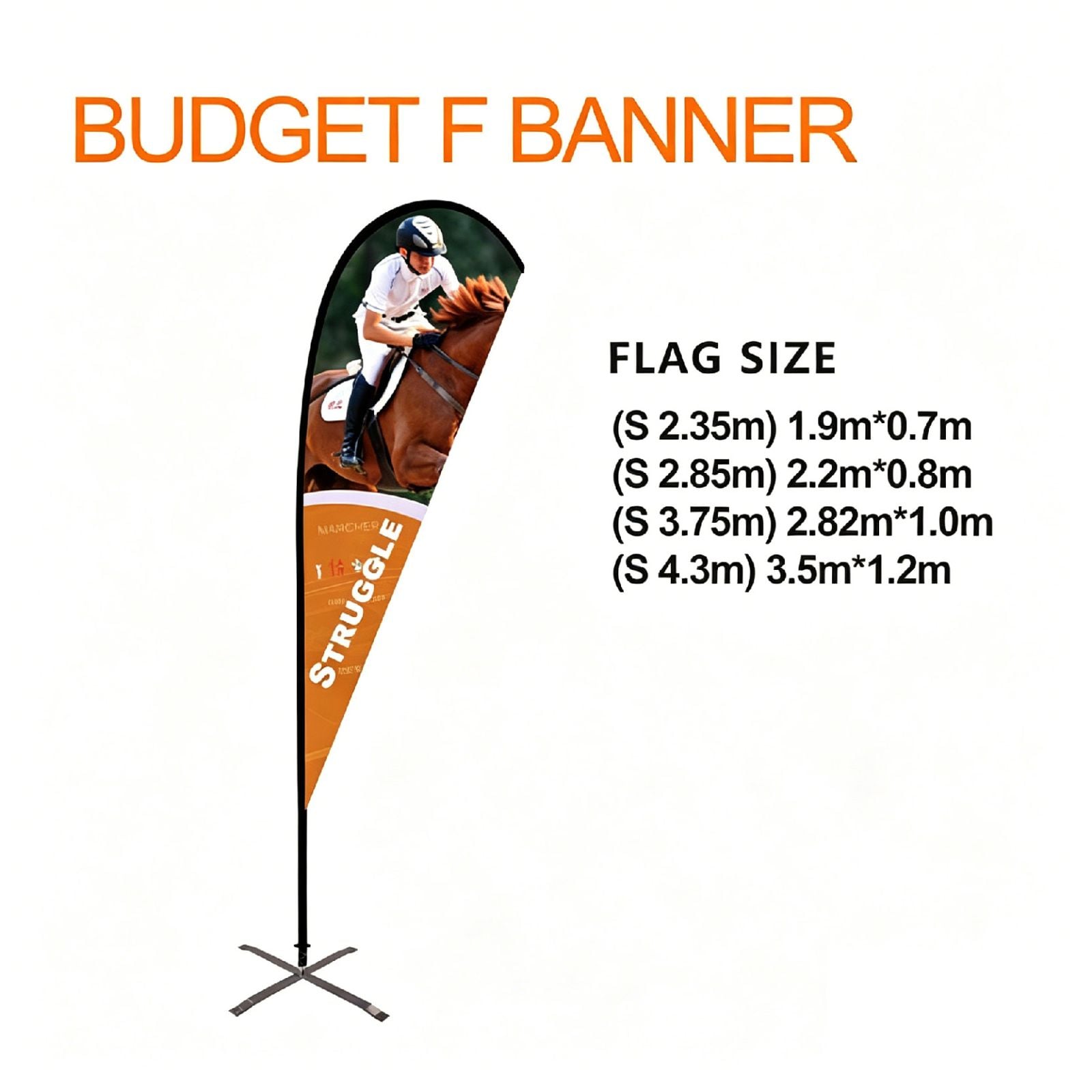
Budget 2in1 flag system
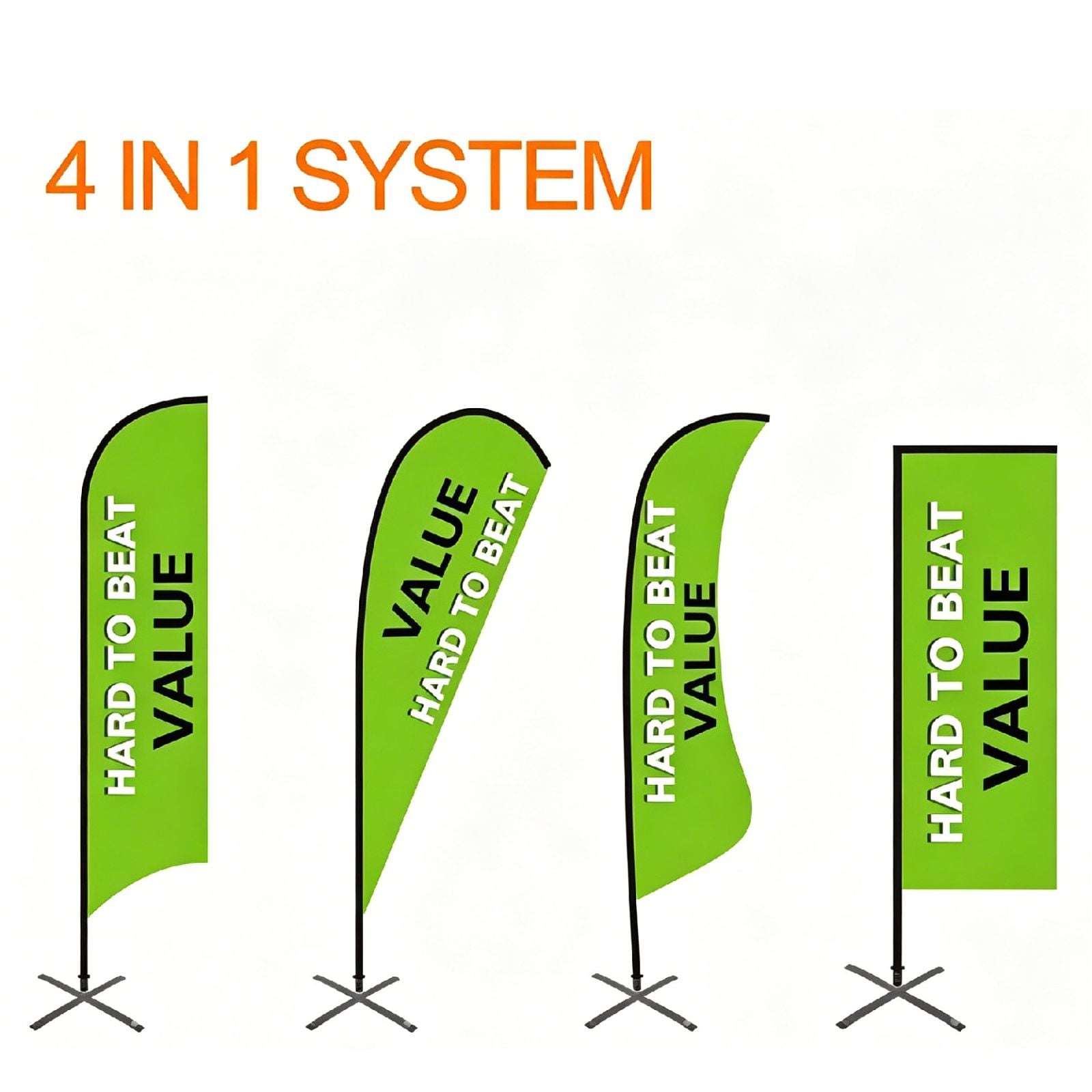
4 in 1 flag System
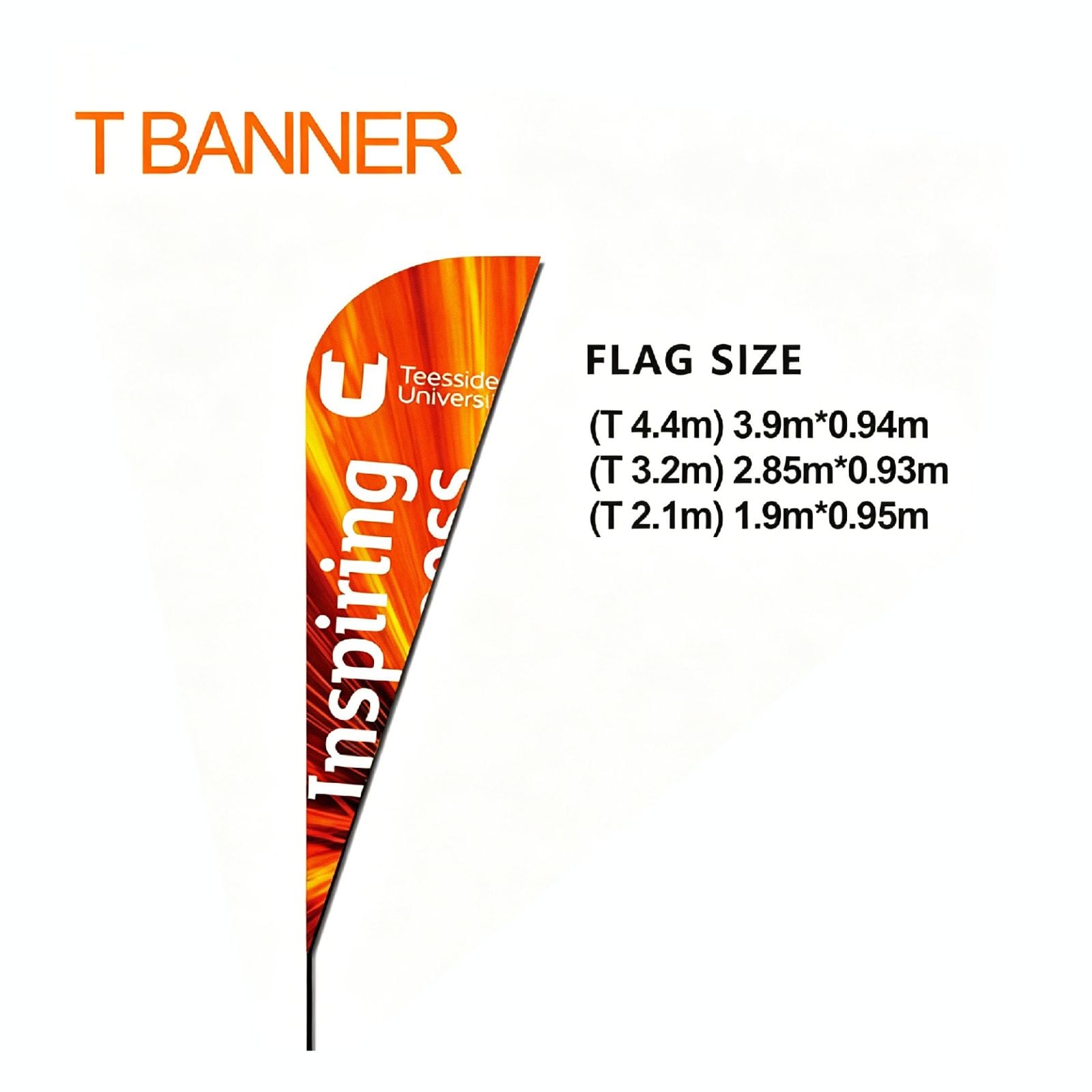
T Banner
Related Articles
29kg Concrete Flag Base - The Complete B2B Buyer's Resource - WZRODS
WZRODS DY451B: 29 kg, HDPE shell, concrete core. Stackable, portable, rust-proof. FOB price US$5.75–$6.85 at MOQ 2 units. Those numbers look unremarkable. Factor in landed cost—import duties lower than aluminum’s under relevant HTS codes, freight savings from less weight per unit of stabilizing mas
Wide Tube Cross Base - The Complete B2B Buyer's Resource - WZRODS
The Wide Tube Cross Base, manufactured by Wzrods in Shandong, China, solves one problem: reliable stability for poles under three meters, without the freight costs and warehouse footprint that heavier alternatives demand.
Rectangular Pipe Cross Base - The Complete B2B Buyer's Resource - WZRODS
The pipe cross flag base is a cross of rectangular steel pipe, powder‑coated, weighing 1.3 kg and spanning 78 cm across its arms. Its center holds a C‑ring shaft that lets the flag rotate with the wind.
X-Shape Backpack Banner - The Complete B2B Buyer's Resource - WZRODS
Economic Cross Base - The Complete B2B Buyer's Guide- WZRODS
When you buy an economic cross base—something like the Wzrods DM‑9, a 77 cm‑long, 1.3 kg iron cross—forget “economic” as a synonym for “cheap.” It means value-engineered.