
Mini Event Gate
Mini round gate with durable polyester fabric. Tough composite fiber poles, easy assembly, windproof design, portable with carry bag and multi optional bases.


 Article
 Specifications
- Origin
- Shandong, China
- Pole Material
- Carbon Composite
- Banner Material
- 100% Polyester
- Application Spec
- Event Entrances, Festivals, Trade Shows, Sports Events
- Printing Method
- Digital Printing, Thermal Transfer Printing, Silk Screen Printing
- Technique
- Printed
- Item Code
- CYY-M1/M2/M3;CYM-M1/M2/M3;CYY-1
- Display Size
- inner diameter 1.4m;outer diameter1.9m
- Display Size(Mini Ring Gate S/M/L)
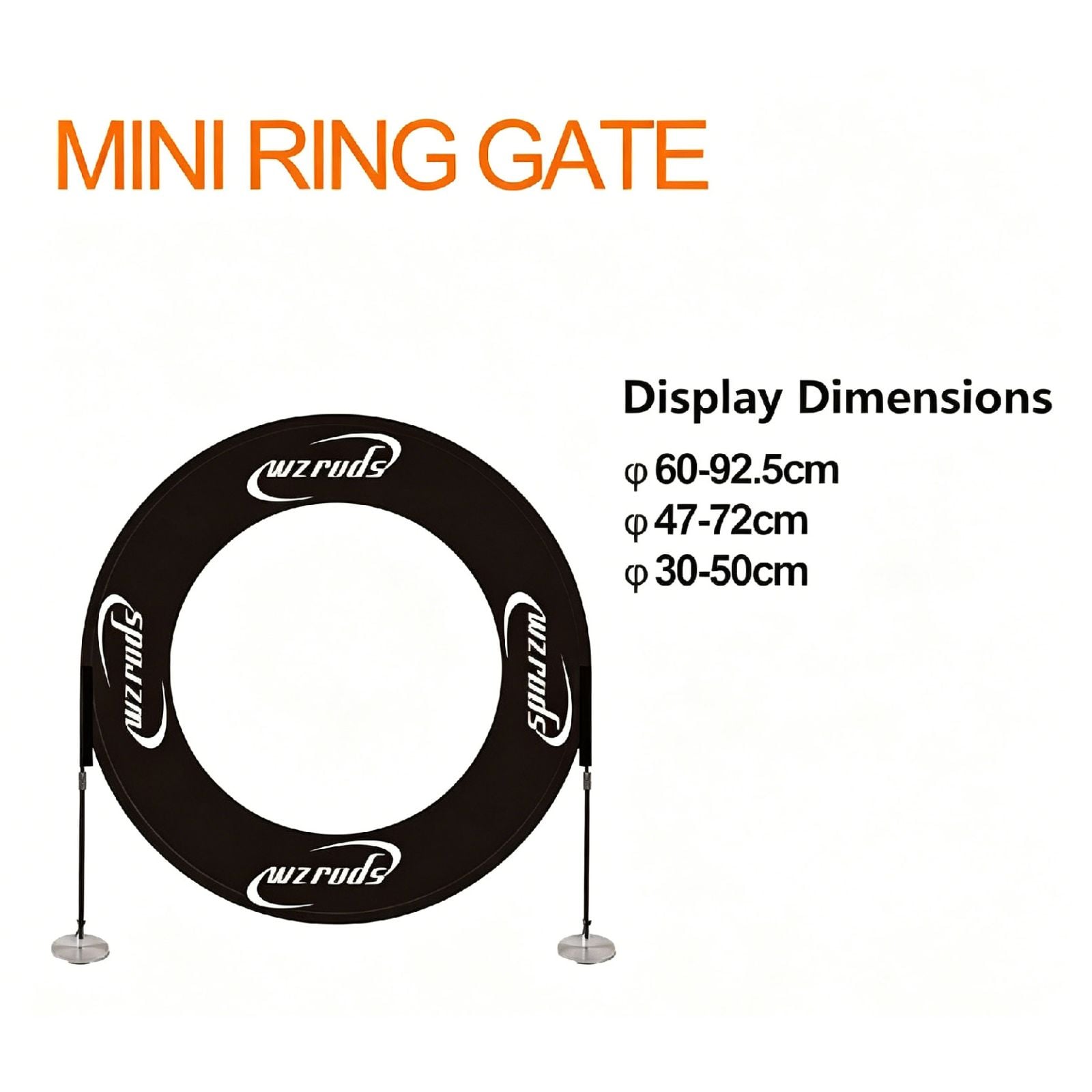
- 30cm*50(cm)/48cm*72(cm)/60cm*90(cm)
- Display Size(Mini Arch Gate S/M/L)
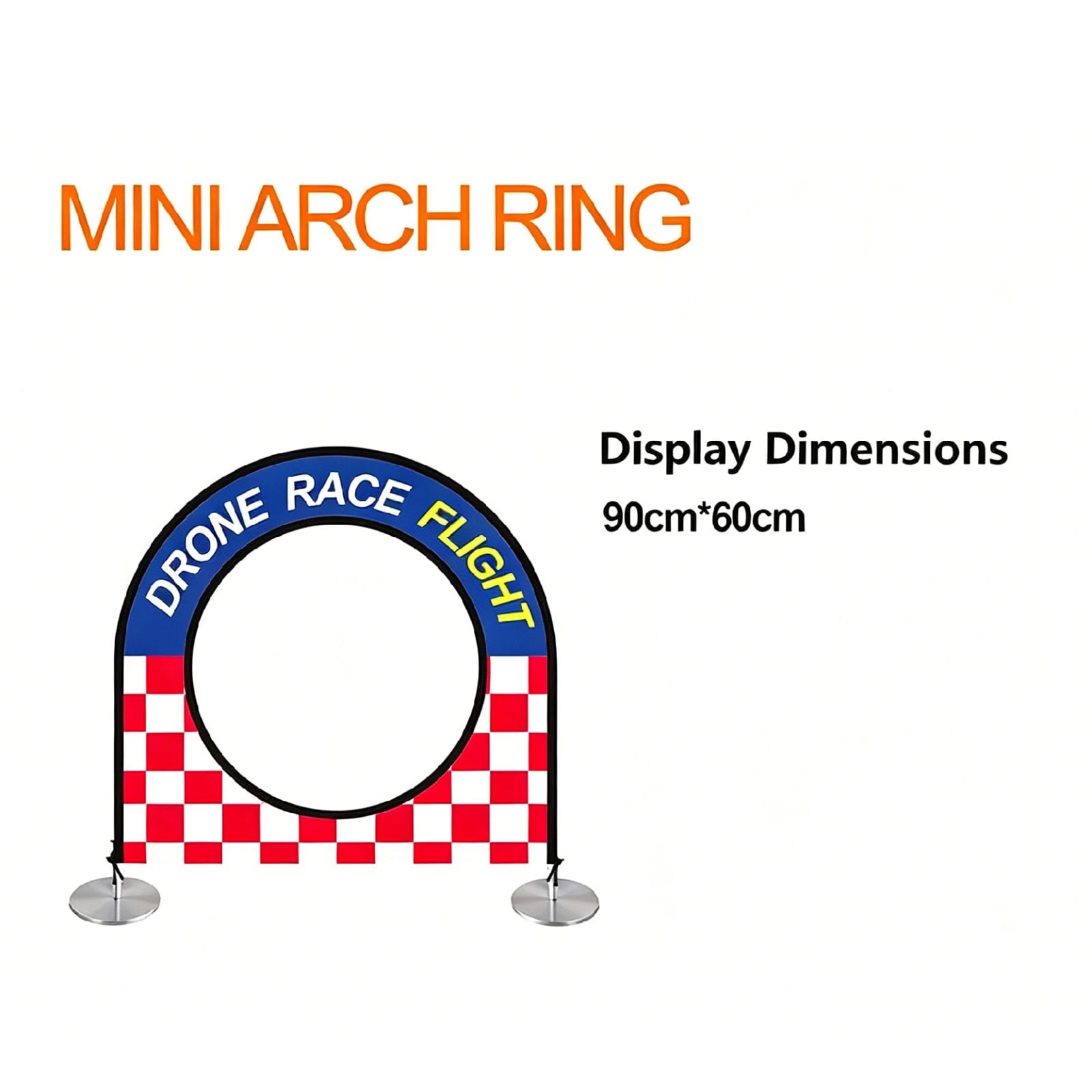
- 41*37(cm)/56*49(cm)/69*60(cm)
- Display Size(Round Gate)
- φ1.9*φ1.4m
- Description
- drone racing gate
- Port Of Dispatch
- qingdao/shanghai
- Base Type
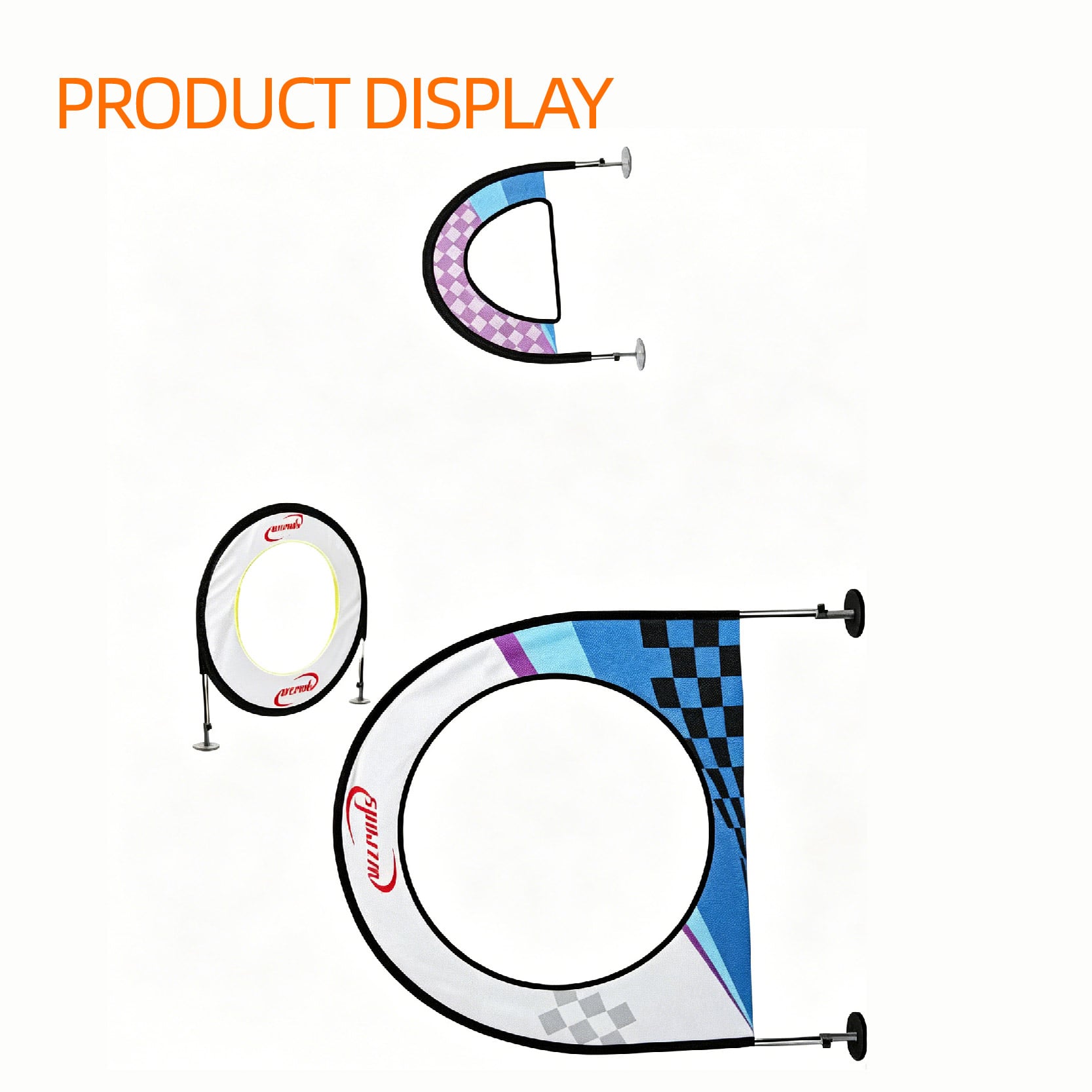
- suction cup,iron plate,spike
- Brand
- Wzrods
- Customized Logo
- Min. order: 2 pieces
- Graphic Customization
- Min. order: 2 pieces
 Product Description
Shipping & Packaging
- Unit Weight
- 1.000 kg
- Unit Size
- 100X50X40 cm
- Packaging
- box
- Lead Time
- 15-30 days
Pricing
- MOQ
- 1 set
- Price Range
- USD 2.8 – 4.5
* FOB Qingdao. Excludes shipping & taxes. Accessories & customization confirmed separately.
 Sample Service
- Sample Available
- Yes
- Sample Price
- USD 50
 Customization Options

Light Custom
Logo, color, size adjustments

Fast Turnaround
Quick custom order processing
Mini Event Gate - The Complete B2B Buyer's Resource - WZRODS
The first principle: a gate’s real cost isn’t the ex‑works price. It’s the landed cost plus the expense of fixing failures, plus the revenue you never get back. I learned this when a container crossed the steamer lanes from Qingdao to Mombasa. The aluminum gates inside had riveted joints that worked loose. Salt air triggered a corrosion that left ivory dust on every surface—the hardware looked like relics from Kurtz’s compound. The distributor had saved $0.40 per unit on ex‑works. Factor in the 12% duty differential, the air‑freighted replacements, and the lost reorder from a trade‑show organizer who never trusted that SKU again, and the actual cost per event nearly doubled. That year I began specifying carbon composite for all tropical and marine markets.
My name is Wei Chen. I manage $4.2 million in annual display‑hardware spend, hold a CPSM and a supply‑chain degree from Michigan State. What follows is the logic I use when buying round gates: material science first, then import arithmetic, then application fit, and finally how to qualify a supplier so a sample becomes a reliable program.
1. Buyer’s Guide: The Anatomy of a Round Gate Decision
Evaluating the Materials Backbone
Each autumn, a pilgrimage of exhibitors descends on Frankfurt’s Messe. You’ll see round gates—circular arches framing brand activations—thrashed by conditions no catalog shows. Wind gusts off a lake. Forklift operators in a hurry. Setup crews working in pre‑dawn darkness. Pole material decides whether the gate lasts the season. Aluminum, the default for years, bends permanently at stress points and, in salt air, corrodes into ivory dust that mars graphics and weakens ferrules. Carbon composite doesn’t corrode. Overload it and it flexes, then returns to true. Aluminum bends and stays bent. For a buyer writing specs across geographies, that single property eliminates half the replacement claims before they start.
The gate I now specify (item codes CYY‑M1/M2/M3, CYM‑M1/M2/M3, CYY‑1) uses a carbon‑composite pole system weighing 1.0 kg. Outer diameter 1.9 m, inner clearance 1.4 m—enough for a person or a racing drone to pass without clipping. The banner is 100% high‑strength polyester warp‑knitted fabric. Unlike lighter woven polyester, it doesn’t fray at grommet edges after repeated tension cycles. Its bias stretch holds print registration even when wind hooks and fixing strings are tensioned for high‑wind setups.
Decision Tree for Gate Selection
A framework strips out the noise. I qualify a round gate through three filters:
- Environment: Coastal or humid? No ferrous metals, no untreated aluminum. Carbon composite becomes mandatory.
- Frequency of Assembly: If the gate goes up and down more than 20 times a season, pole‑joint design and carry‑bag quality become cost drivers. A missing ferrule can kill a setup.
- Print and Brand Impact: Large‑format graphics demand smooth fabric tension. Puckering at a seam signals sloppy cutting or cheap polyester. It’s the difference between a premium activation and a temporary barrier.
After those filters, the choice narrows to a handful of SKUs. I then compare landed cost, not ex‑works price. That’s where the carbon‑composite gate gains an advantage invisible on a pro‑forma invoice.
Base Options and Wind Resistance
The gates ship with three base options: suction cup for smooth indoor floors, iron plate for hard outdoor surfaces, spike for soft ground. Each has a different grip moment. I once watched a competing gate with a lightweight plastic base slide across a polished concrete hall during a keynote, dragging the arch into the A/V rig. The iron plate’s low center of gravity prevents that class of failure. Outdoors, built‑in wind hooks at multiple anchor points and the included fixing strings hold the gate upright in sustained 25 km/h winds without extra weighting. The polyester fabric has a slight porosity that relieves peak wind pressure—something solid barrier skins lack. I learned about the fabric‑as‑sail problem the hard way in a stadium gantry test; the round gate’s small projected area and aerodynamic behaviour are underappreciated advantages.
2. Product Comparison: Carbon Composite vs. Aluminum vs. Steel
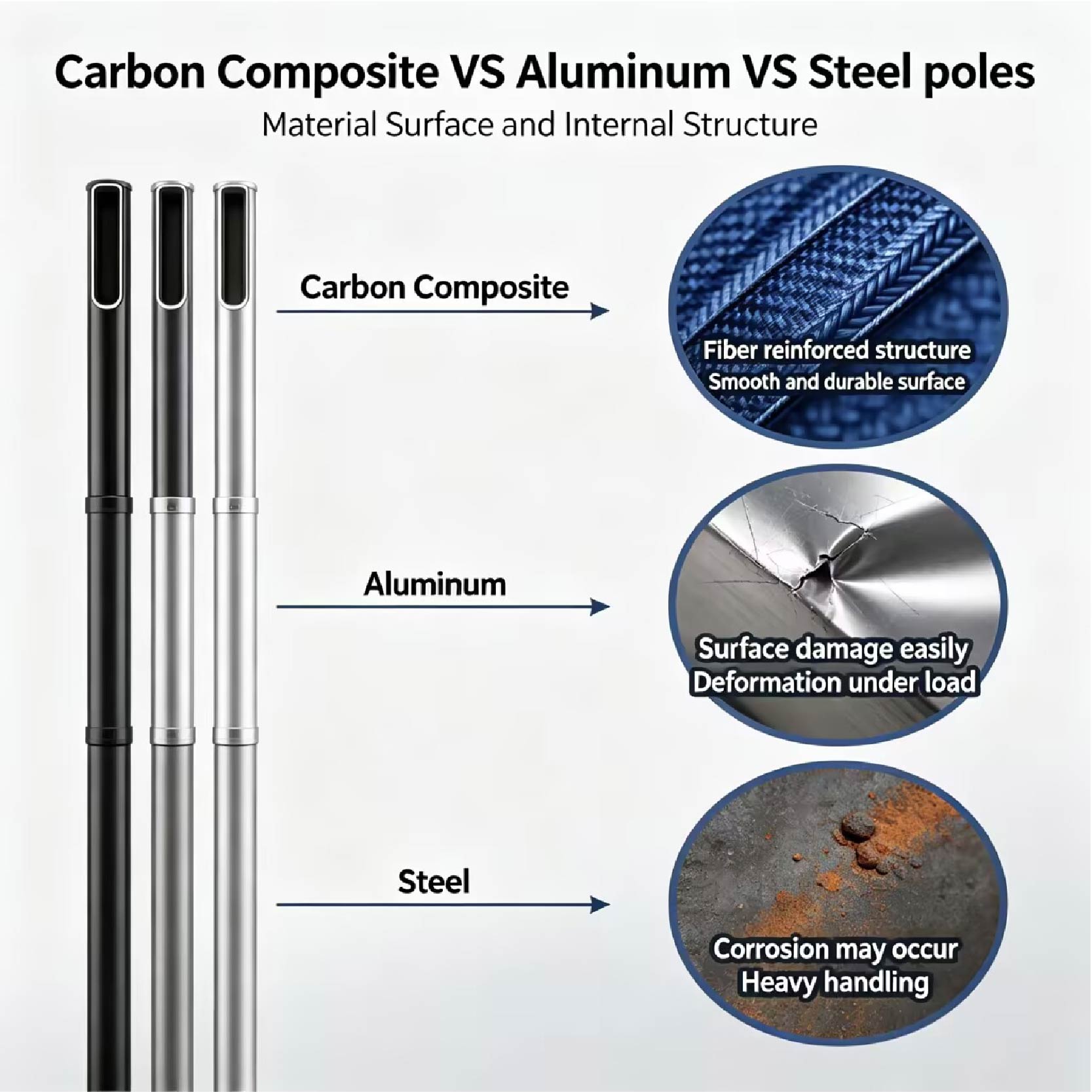
Material Properties Under Stress
| Property | Carbon Composite | Aluminum | Steel |
|---|---|---|---|
| Weight per set (kg) | 1.0 | 1.8–2.5 | 3.0–5.0 |
| Corrosion resistance | 100% rust‑proof | Anodized; pits in salt air | Requires galvanization; coating chips |
| Deformation response | Elastic: returns to shape | Plastic: permanent bend | Low elastic limit; dents |
| Wind survival (typical) | 25+ km/h with anchors | 20 km/h; damage above 25 | 30 km/h; heavy, tips on soft ground |
| Import duty (HS code basis) | Lower (composite codes) | Higher (base metal codes) | Highest |
Steel gates are leftover from permanent installations—heavy, labour‑intensive, paint‑dependent. Aluminum has been the compromise, but its failure mode—bend without recovery—creates a steady churn of replacement parts that strains distributor margins. Carbon composite changes the breakage pattern from catastrophic to benign. At the WZRODS factory in Shandong, I watched a test: a delivery truck drove over a pole section. The carbon fibres crackled audibly, then the pole snapped back to true. The aluminum control stayed flattened. That demonstration converts a skeptical distributor.
Total Landed Cost Simulation
| Cost Factor (per unit) | Carbon Composite Gate | Aluminum Gate |
|---|---|---|
| Ex‑works price (indicative) | $2.80–$4.50 | $2.20–$3.80 |
| Freight (FCL per unit) | $0.45 | $0.70 |
| Import duty (est. 3% vs 6%) | $0.10 | $0.18 |
| Warranty replacement cost/yr | $0.05 (0.3% claim × $15) | $0.75 (5% claim × $15) |
| Total landed + 1‑yr warranty | $3.40–$5.10 | $3.83–$5.43 |
On paper, the aluminum gate looks cheaper ex‑works. By the time the container clears customs and the first season’s spares ship, the carbon‑composite gate is 8–15% less expensive at the high end and still cheaper at the low end. For a buyer who thinks in margin retention over repeat orders, carbon composite is the lower‑risk inventory line.
3. ROI Analysis: The Arithmetic of a Smarter Long‑Term Choice
When a Gate Becomes a Revenue Stream
A distributor marking up 40% on a $3.50 ex‑works gate sells for $4.90, a $1.40 gross profit. A 5% aluminum failure rate burns $0.75 per unit in air‑freight replacements—more than half the margin. Carbon composite, with a 0.3% claim rate, costs only $0.05 per unit in warranty. That’s $0.70 extra profit per gate. Multiply by 1,000 units and $700 drops straight to the key point. In display‑hardware distribution, profitability lives in a hundred small decisions like that.
The rental maths are even sharper. Deploy a carbon‑composite gate 100 times; the aluminum alternative fails after 70 cycles. The carbon gate’s purchase price might be higher, but its cost per event is lower. That argument wins inventory buyers: the gate is not an expense; it’s a tool that earns its keep.
Duty and Freight: The Hidden Levers
A procurement mentor of mine, Marlow, hammered home that tariff‑code misclassification is the easiest money to leave on the table. Carbon‑composite poles for sporting or display purposes can be classified under HS 9506 (articles for athletics) or HS 6815 (articles of carbon fibres). Aluminum poles typically fall under HS 7610. EU TARIC data shows composite sporting equipment at 2–4% duty, while aluminium structures face 6%. In India, an additional safeguard duty on aluminium widens the gap. In Brazil, Mercosur’s external tariff favours Chinese composite goods. Across these markets the landed‑cost advantage can reach 8–12 percentage points.
Inventory Turn and Cash Flow
A 1.0‑kg gate that packs 340 units in a 40HQ container cuts per‑unit freight and speeds turnover. Distributors can test demand with a small trial order, reducing working‑capital strain. WZRODS’s sample gate costs $50 plus freight and arrives in 15–30 days. I’ve seen a distributor use that sample to land a 50‑unit pilot order from a major drone racing league.
4. Applications: Where the Round Gate Fits
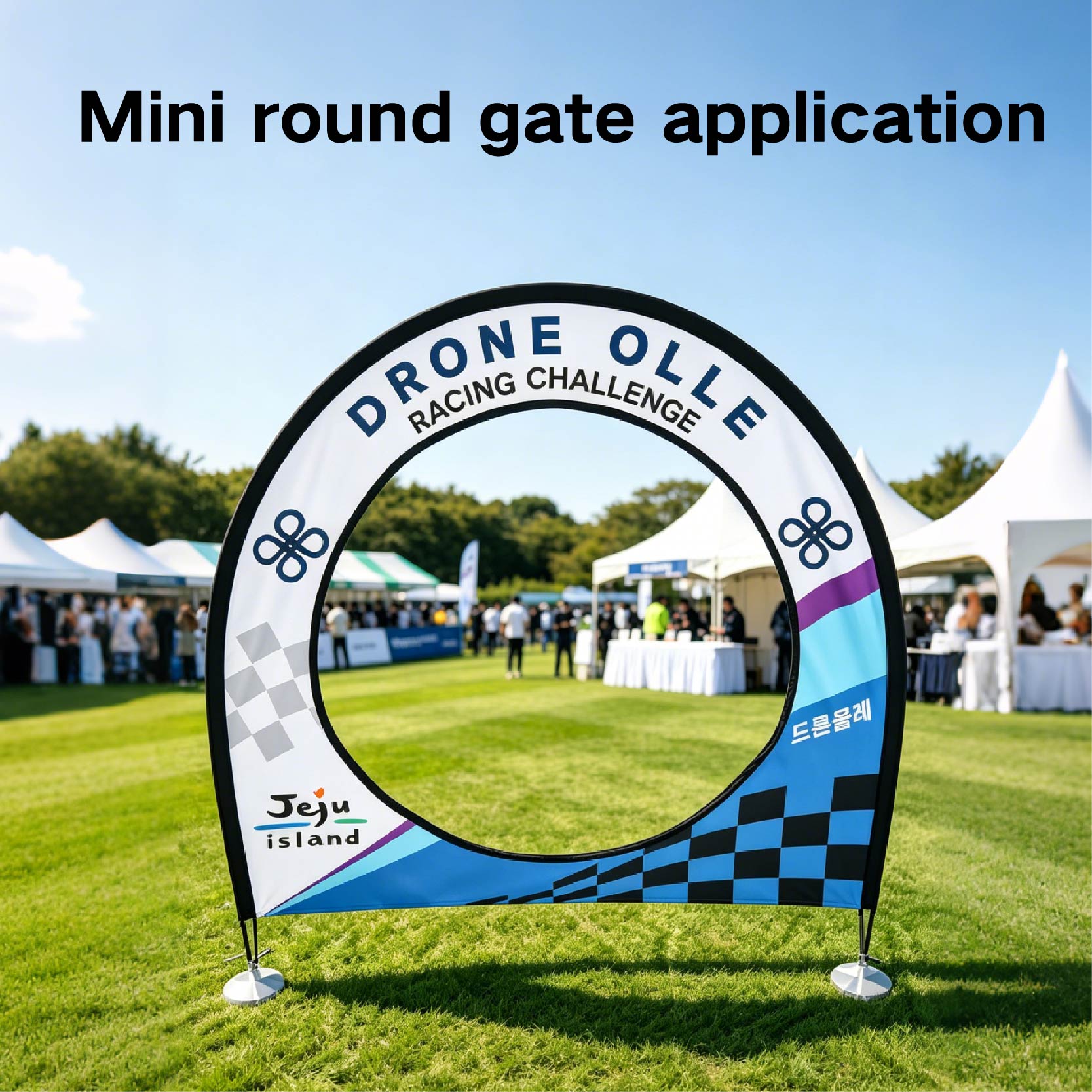
Drone Racing and FPV Competitions
This is the original design intent—and the most demanding application. In a multi‑gate course, each gate must hold its shape because a deformed gate changes the racing line and causes drone clips. The carbon poles, after a collision, spring back instantly. The 1.4 m inner clearance stays consistent. The included carry bag lets a race crew pack an entire track into one van. Consistency is not a nice‑to‑have; it’s race integrity.
Trade Shows and Exhibitions
Exhibition halls are air‑conditioned deserts: low humidity, abrasive carpet, constant traffic. The suction‑cup base holds without floor tape, avoiding venue penalties. A 1.9‑m outer diameter creates a branded arch that guides visitors while keeping sightlines open—critical for open‑plan layouts. A single booth‑staffer can reposition it without calling a rigging crew.
Sports Events and Festivals
Outdoor events in humid or coastal areas—marathon finish lines in Miami, triathlon transitions in Phuket, music‑festival entrances in Brighton—destroy metal hardware. The carbon gate’s rust‑proof characteristic and its ability to handle wind without permanent distortion make it the default for serial event planners. Spike anchors secure the gate without turf damage. Wind hooks and fixing strings are not accessories; deploy them as standard, not an afterthought on a windy day.
5. Factory Process: From Raw Material to Shipment
Material Sourcing and Pole Fabrication
WZRODS (est. 2005), China’s first carbon‑composite flag‑pole manufacturer, applies the same pultrusion technology to the mini round gate. Continuous carbon fibres are aligned in a resin matrix under tension, yielding a pole with uniform cross‑sectional strength. Its smooth finish never snags the banner sleeve. Internal ferrules replace rivets—nothing to vibrate loose. Diameter varies by less than 0.3 mm along the pole, critical for a consistent ferrule fit.
Fabric Cutting and Printing
The 100% polyester warp‑knitted fabric is cut on automated tables with ultrasonic edge sealing to prevent fraying. For full‑colour logos and gradients, UV‑cured digital inks bond to the polyester without cracking. High‑volume single designs run silk screen for opacity and cost efficiency. Short runs and intricate multi‑colour graphics use thermal transfer. All seams use anti‑wick thread that doesn’t draw moisture into the seam—a detail that matters where mould can ruin a banner in weeks.
Assembly and Packaging
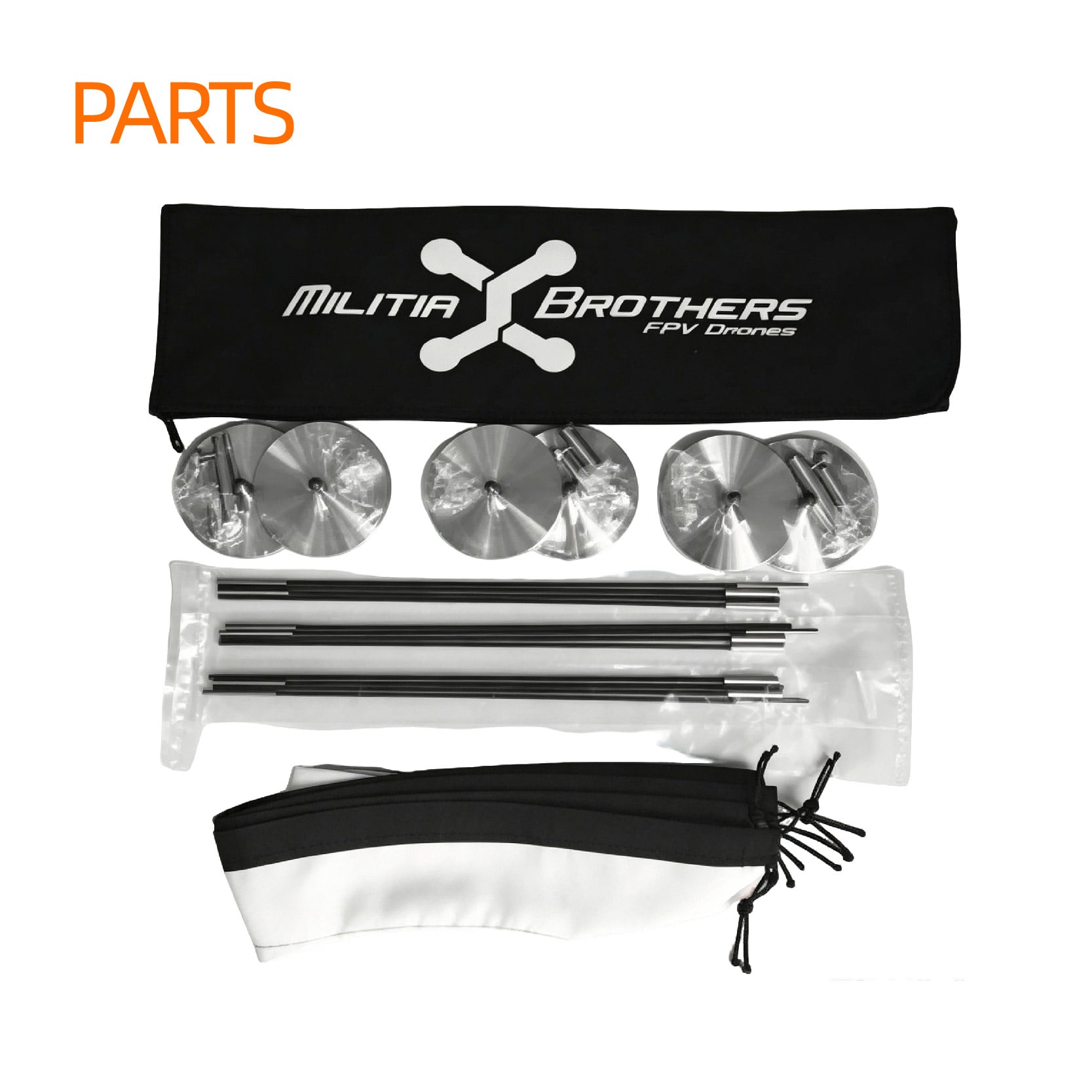
Every set includes poles, fabric, base, wind hooks, fixing strings and a carry bag with a printed checklist sewn into the pocket. The bag is fabricated from the same polyester and reinforced at stress points. Each gate undergoes a dry‑assembly check before packing. Random samples from each batch are subjected to a lateral load test simulating a 30 km/h wind. That's the difference. The factory in Shandong dispatches through Qingdao or Shanghai ports with lead times of 15–30 days. Box packaging is standard; branded packaging requires a minimum order of 100 units.
6. Trends: The Shift to Composite Hardware in Event Infrastructure
Decline of Metal in Marine and Humid Markets
Across the Gulf, Southeast Asia and the Caribbean, event organizers are writing blanket bans on untreated metal structures because corrosion has become a safety risk, accelerated by tighter insurance rules. Carbon composite isn’t just a replacement; it’s becoming the specification. Trade‑show organizers in Dubai now recommend composite frames for all temporary outdoor signage—a category that includes round gates. Distributors still stocking aluminum are, to borrow a helmsman’s term, steering by a compass that points to a market that no longer exists.
Lightweighting and Freight Rationalization
Global container rates now embody the old steamboat economics—every kilogram costs. A 1.0‑kg gate versus a 2.5‑kg gate isn’t marginal when you load 340 units. It’s the difference between a full container and the need to air‑freight overflow. Ask anyone who's tried both. Lightweighting is a procurement discipline, not a trend. WZRODS’s weight target was a deliberate design outcome, not a by‑product of cutting corners.
Growth of Drone Sports and Portable Event Formats
Leagues like the Drone Racing League and MultiGP have created demand for standardized gates that a small crew can transport and set up. The race format—timed laps through gates—demands dimensional consistency that casual barriers don’t provide. When a league buys 50 gates for a season, they don’t want a practice day lost to bent poles. That reliability translates directly into distributor reorders, which is why the carbon‑composite gate has become the reference standard without any marketing push—just repeat‑purchase behaviour.
7. Upgrade Solution: Transitioning from Aluminum to Carbon Composite
The Trigger Points for a Gate Migration
Most distributors wait for a complaint—a corrosion claim, a replacement order that arrives too late, or a competitor offering composite at a slightly higher price that steals the account. A more disciplined approach is to proactively migrate a portion of inventory before the pain becomes acute. I recommend a parallel‑inventory strategy: keep aluminum for price‑sensitive indoor‑only accounts and introduce carbon composite as the weather‑proof premium SKU. Over 12–18 months, as failure data accumulates, the sales team will naturally push the composite line because it generates fewer post‑sale headaches. At that point, phase out the aluminum SKU or relegate it to economy pricing.
Implementation: From Sample to Container
Start with a $50 sample. It’s a negligible investment to test customer reaction and let your warehouse team practice assembly. Many distributors film a short video bending the pole by hand and letting it snap back—wind‑resistance proof that becomes a powerful sales asset. Once the sample is validated, trial 20–40 units in mixed sizes (mini gates 30×50 cm, 48×72 cm, 60×90 cm and the full‑size 1.9‑m round gate) to gauge demand across applications. After a successful season, container orders unlock lower per‑unit freight and volume pricing.
Customization and MOQ Considerations
Custom graphics require a minimum of 2 pieces. That low MOQ lets distributors offer private‑label options without large inventory risk. Standard lead times of 15–30 days cover custom printing if design files are approved quickly. For larger runs, switch to silk screen to reduce per‑unit cost. Choose the printing method by the design’s complexity and the expected graphic lifetime: thermal transfer for short runs, digital for photo‑realistic images, silk screen for bold, durable branding.
Frequently Asked Questions
1. What is the minimum order quantity?
WZRODS’s MOQ is 1 set for standard products. Custom‑logo orders require a minimum of 2 pieces, so distributors can test the market without excess inventory.
2. What are the payment terms?
The factory accepts T/T, L/C, and Western Union. New accounts typically start with a 30% deposit and 70% before shipment. Established relationships may negotiate open‑account terms.
3. How long is the lead time?
15–30 days from order confirmation, depending on volume and customization. Sample orders often ship in 10–15 days when inventory is available.
4. Can I get a free sample?
Free samples are not currently offered. The sample price is $50 plus freight, covering material and labour. Many distributors use the sample as a demo tool; it typically pays for itself with the first customer conversion.
5. What base options are available, and which one should I choose?
Suction cup for smooth indoor floors, iron plate for hard outdoor surfaces (concrete, asphalt), spike for soft ground (grass, dirt). The iron plate offers the greatest stability in most outdoor conditions. For mixed‑venue end‑users, stock the iron plate as default and offer suction cups as an accessory.
6. Is the gate easy to assemble?
Assembly requires no tools. The poles join with internal ferrules—no rivets to lose. A single person can assemble one gate in under three minutes with minimal practice. The carry bag contains a visual instruction card sewn inside.
7. How does the gate hold up in windy conditions
About the Author
Wei Chen, Senior Product Specialist
B.S. Supply Chain Management, Michigan State University; Certified Professional in Supply Management (CPSM)
12 years in B2B display hardware sourcing. Former procurement manager for a top 20 US promotional products distributor. Specializes in aluminum pole systems and import compliance.
Reviewed by WZRODS Technical Team. Updated: 2026-07-17
 Comments (0)
No comments yet. Be the first to comment!
Leave a Comment
Related Products
Director Chair
Cafe Barrier
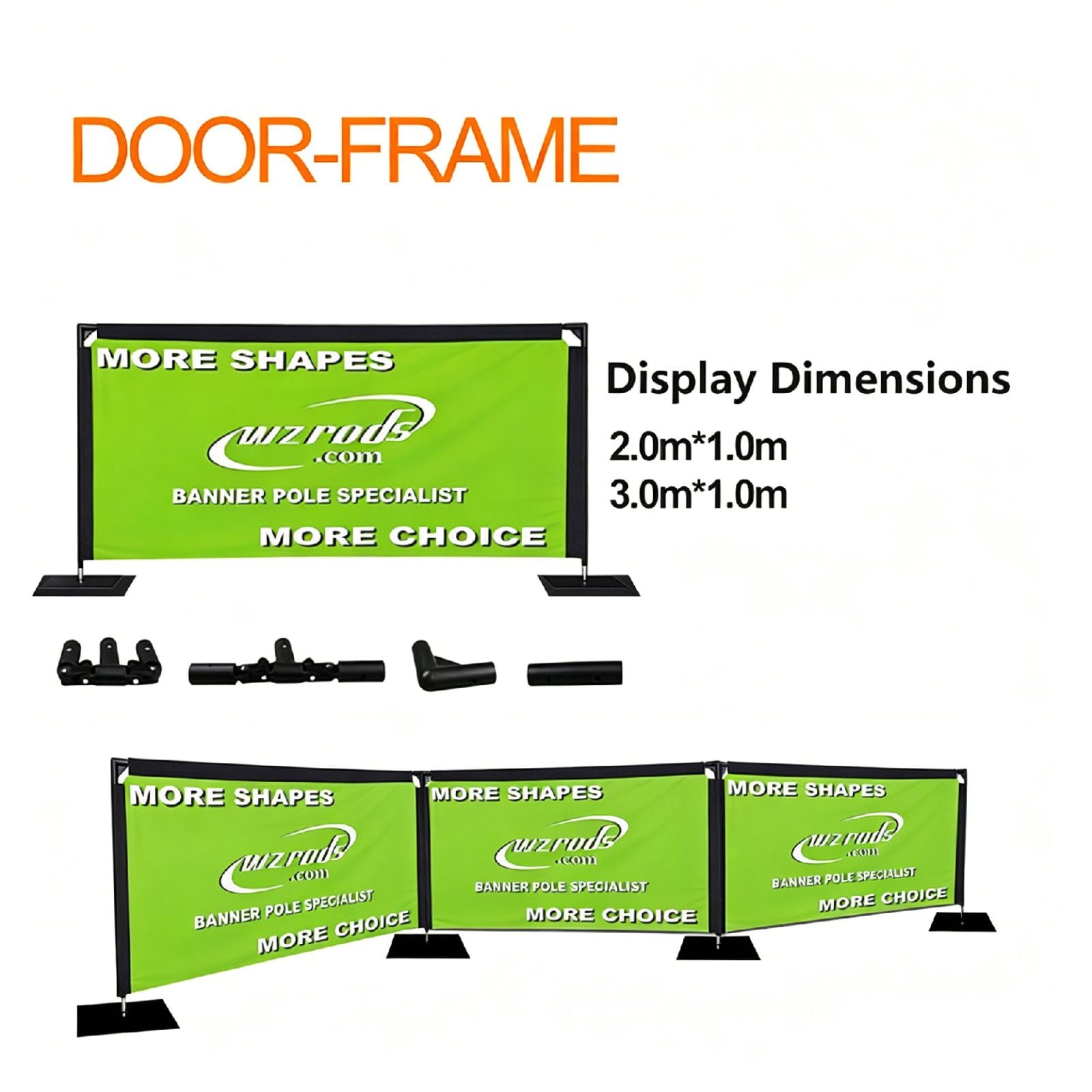
Door Frame
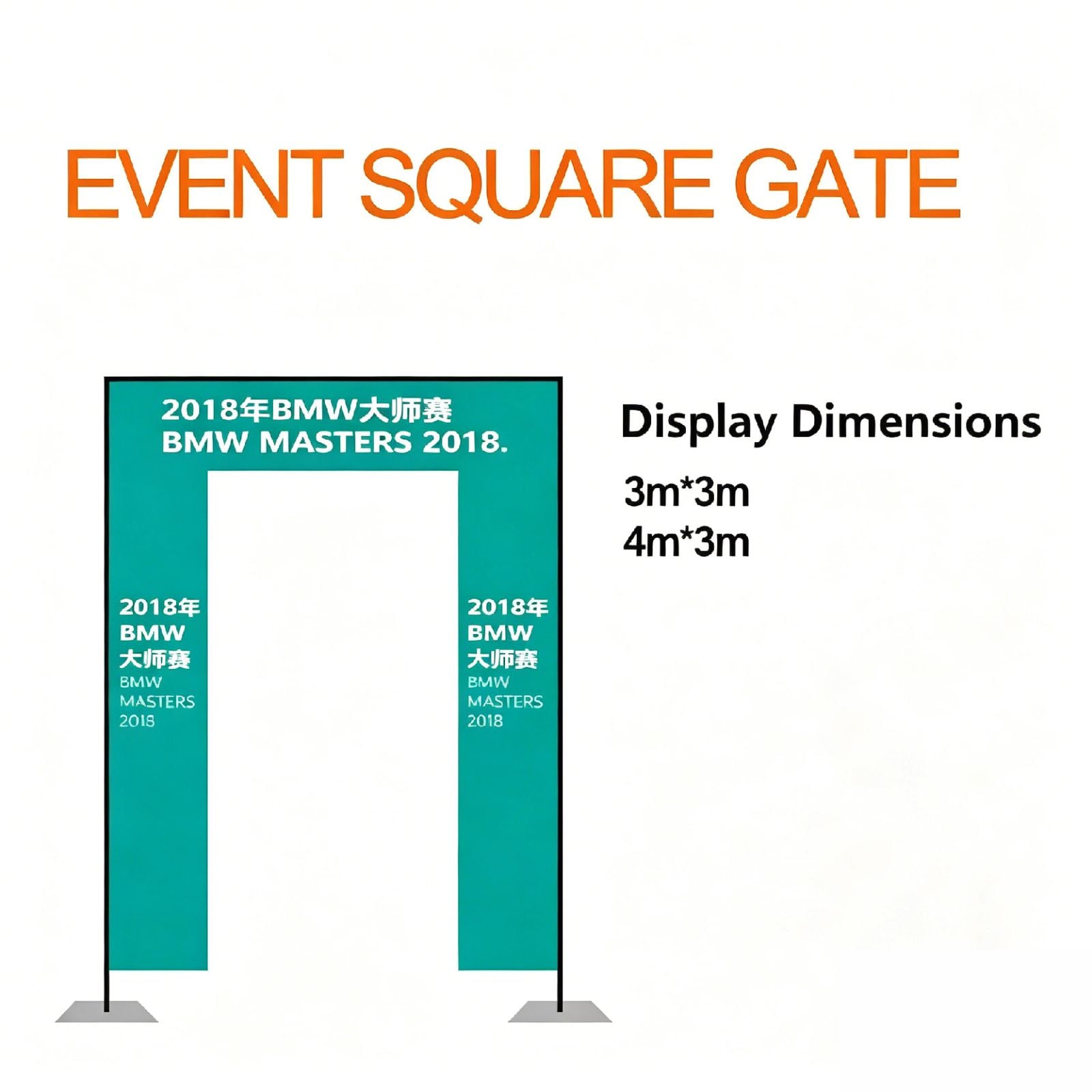
Event Square Gate
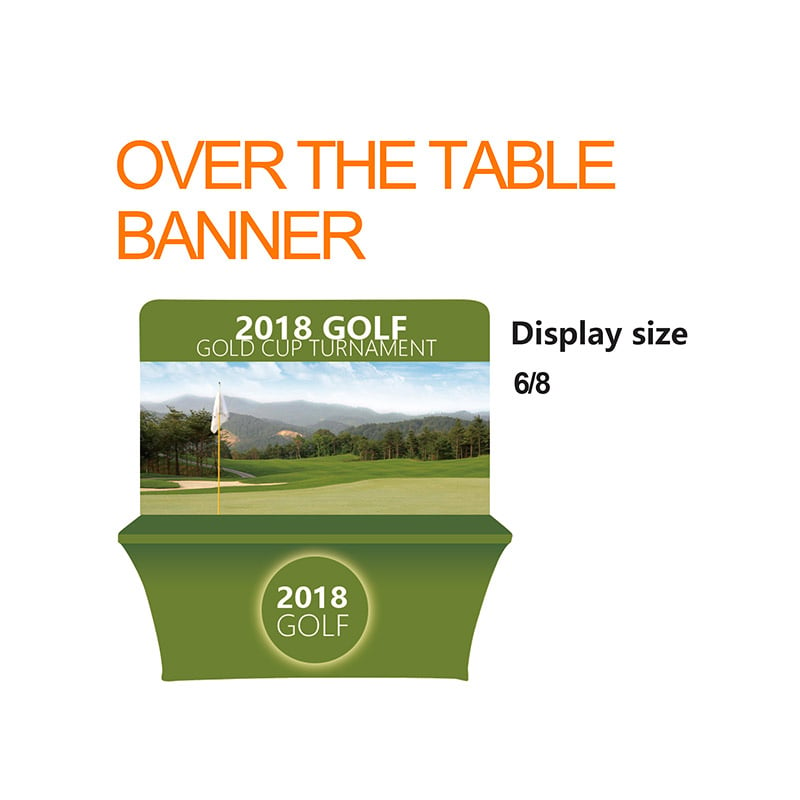
Over The Table Banner
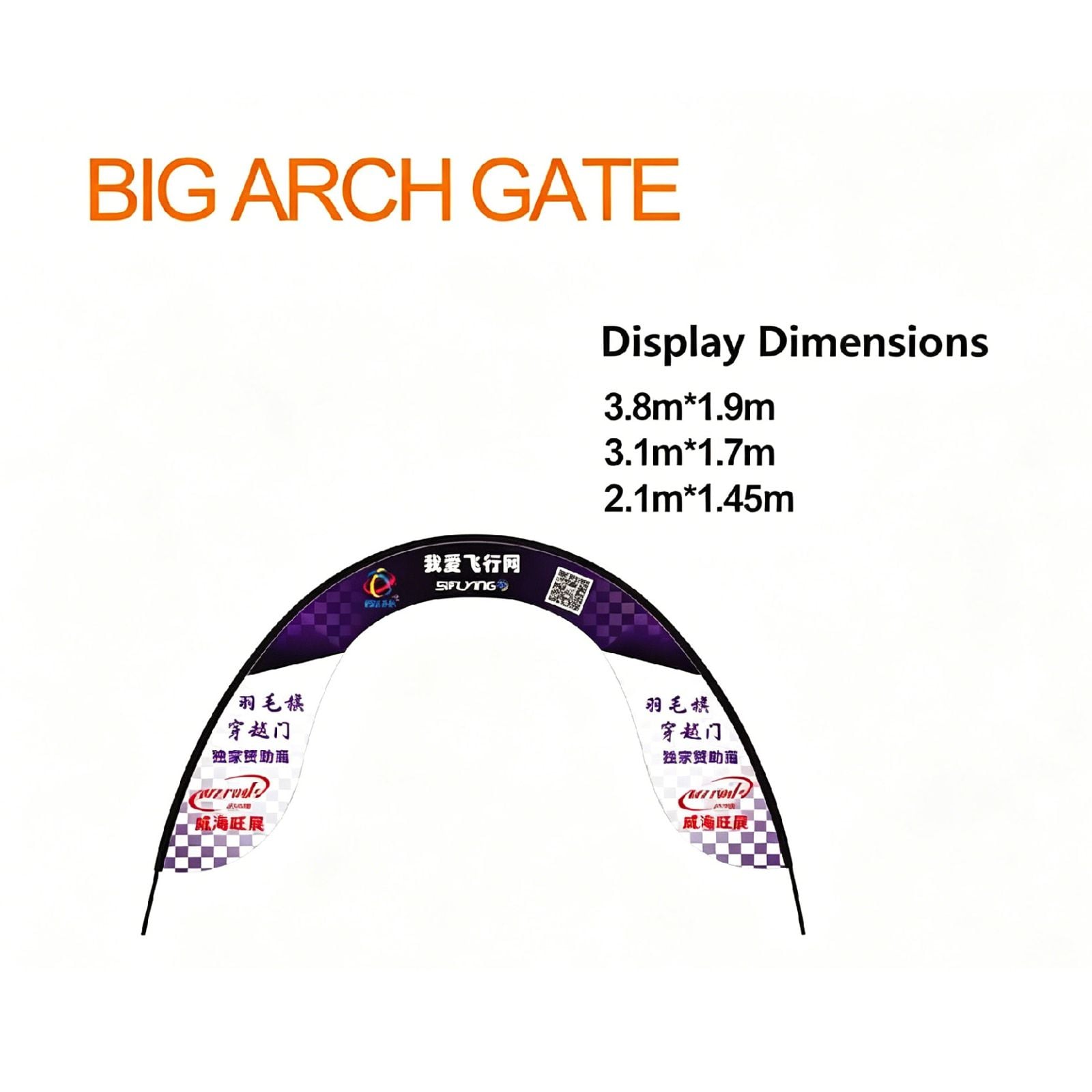
Big Arch Gate
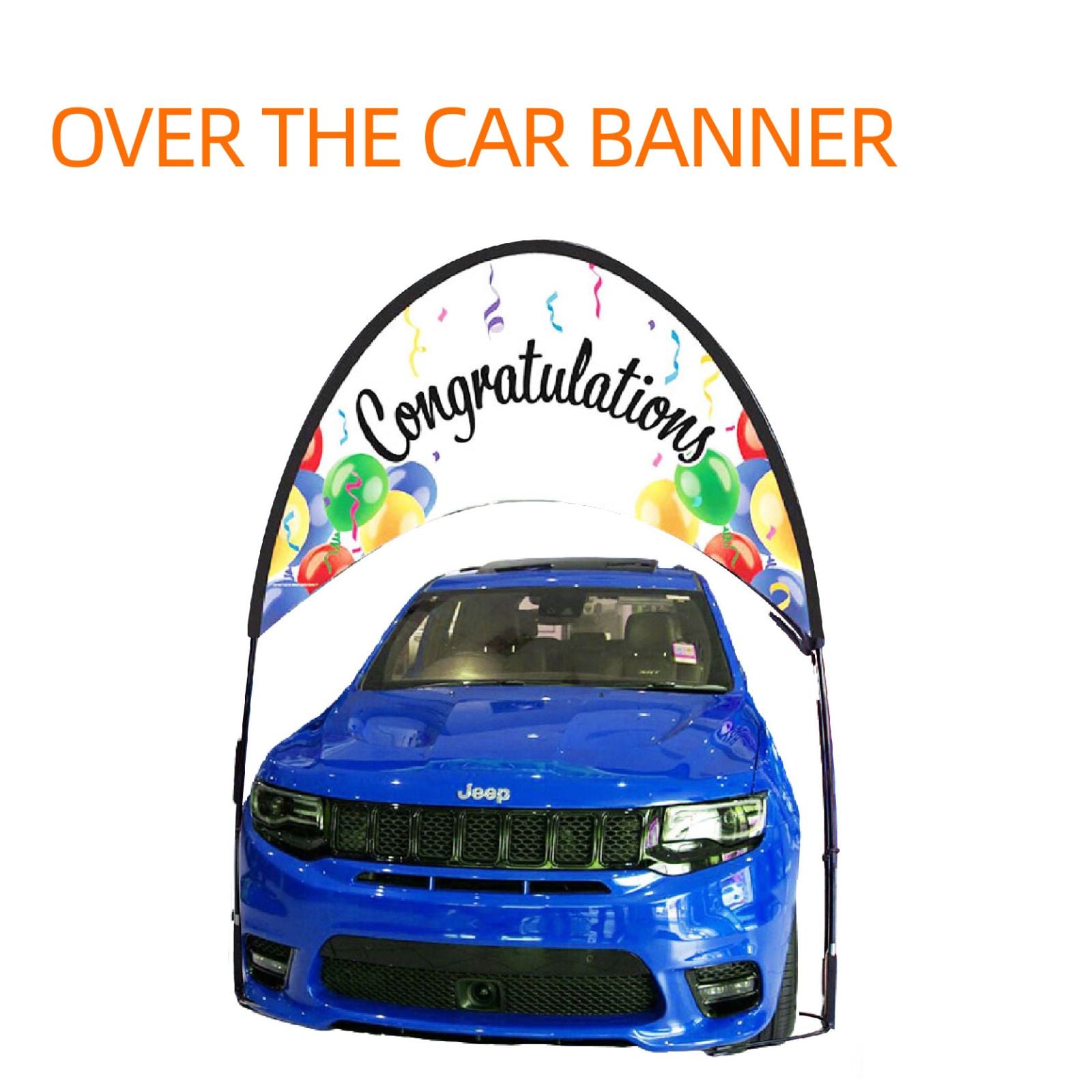
Over The Car Banner
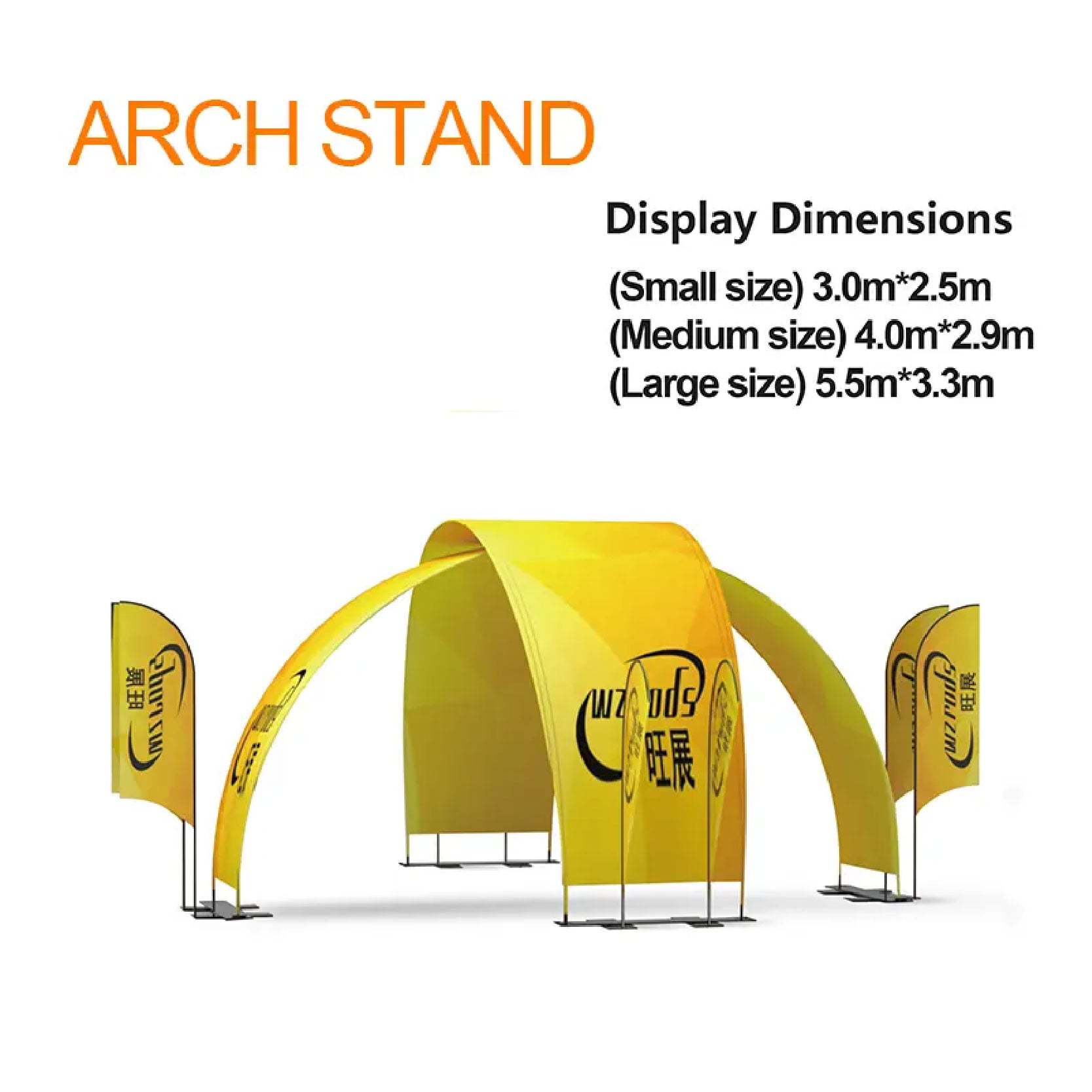
3D Arch Stand
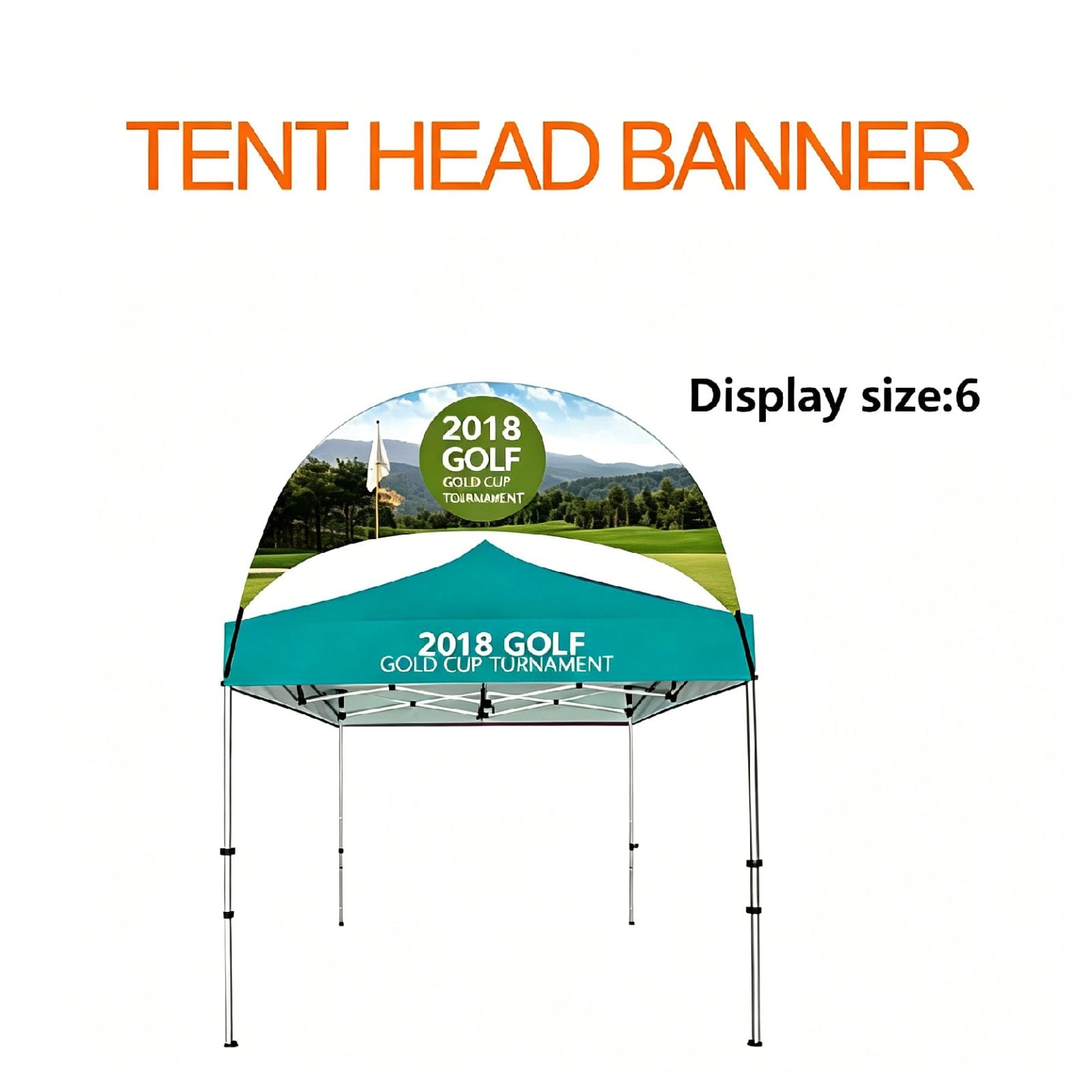
Tent Head Banner
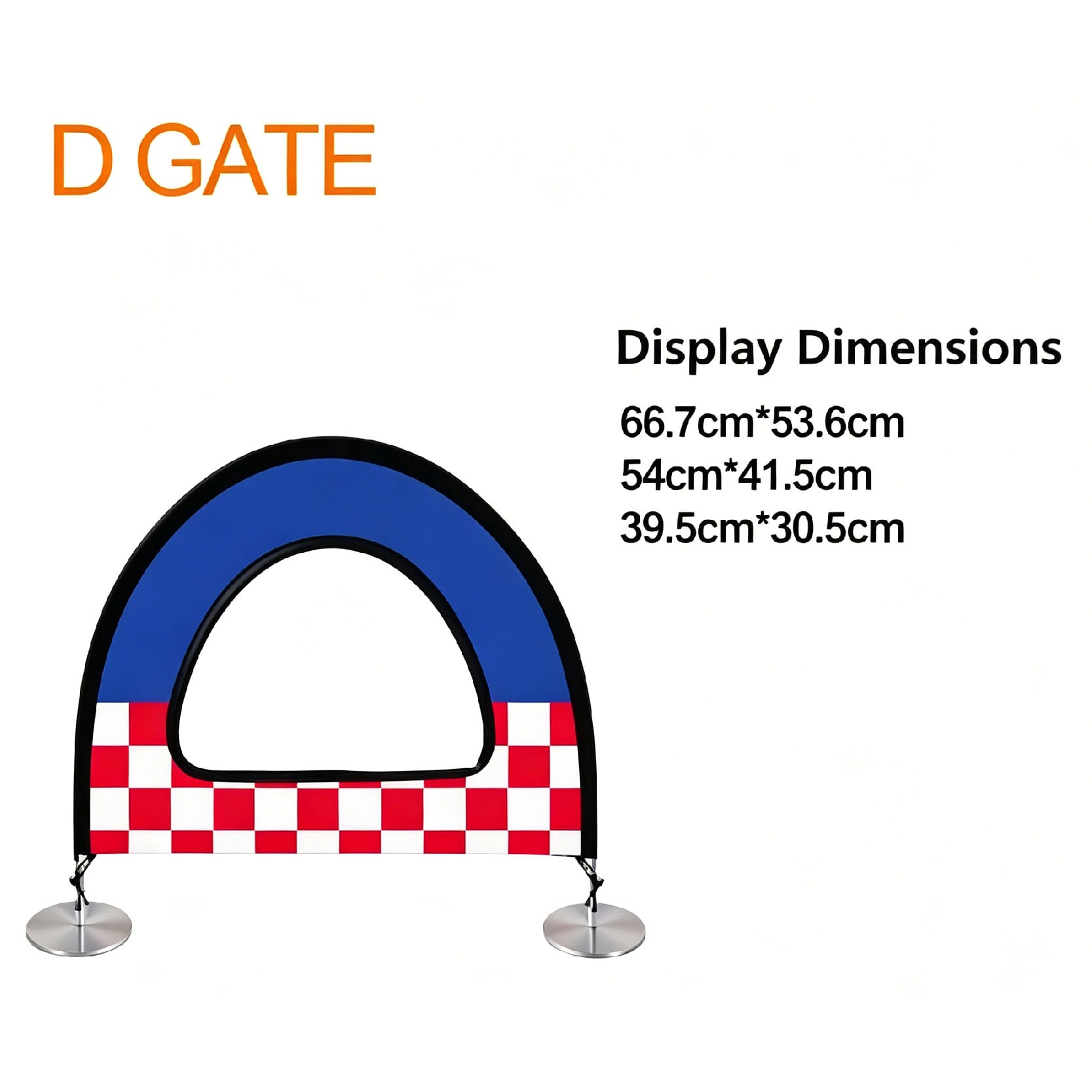
mini d gate
Related Articles
29kg Concrete Flag Base - The Complete B2B Buyer's Resource - WZRODS
WZRODS DY451B: 29 kg, HDPE shell, concrete core. Stackable, portable, rust-proof. FOB price US$5.75–$6.85 at MOQ 2 units. Those numbers look unremarkable. Factor in landed cost—import duties lower than aluminum’s under relevant HTS codes, freight savings from less weight per unit of stabilizing mas
Wide Tube Cross Base - The Complete B2B Buyer's Resource - WZRODS
The Wide Tube Cross Base, manufactured by Wzrods in Shandong, China, solves one problem: reliable stability for poles under three meters, without the freight costs and warehouse footprint that heavier alternatives demand.
Rectangular Pipe Cross Base - The Complete B2B Buyer's Resource - WZRODS
The pipe cross flag base is a cross of rectangular steel pipe, powder‑coated, weighing 1.3 kg and spanning 78 cm across its arms. Its center holds a C‑ring shaft that lets the flag rotate with the wind.
X-Shape Backpack Banner - The Complete B2B Buyer's Resource - WZRODS
Economic Cross Base - The Complete B2B Buyer's Guide- WZRODS
When you buy an economic cross base—something like the Wzrods DM‑9, a 77 cm‑long, 1.3 kg iron cross—forget “economic” as a synonym for “cheap.” It means value-engineered.
Event Bin - The Complete B2B Buyer's Resource - WZRODS
Here is a table constructed from actual measurements, shipping calculations, and factory test data. It compares a typical aluminum-framed event barrier (48-inch width, single banner) with the WZRODS carbon composite Event bin.
Mini D-Gate - The Complete B2B Buyer's Resource - WZRODS
I still remember the sound: a sharp metallic whang, then the flap of torn polyester. Friday afternoon, Dongguan exhibition hall.
Promotional event archway- The Complete B2B Buyer's Resource - WZRODS
For the last three years, carbon composite arch stands from WZRODS—a Shandong factory established in 2005—have redrawn expectations for entrance architecture. Here’s what a serious buyer needs to know.