Burgundy Display
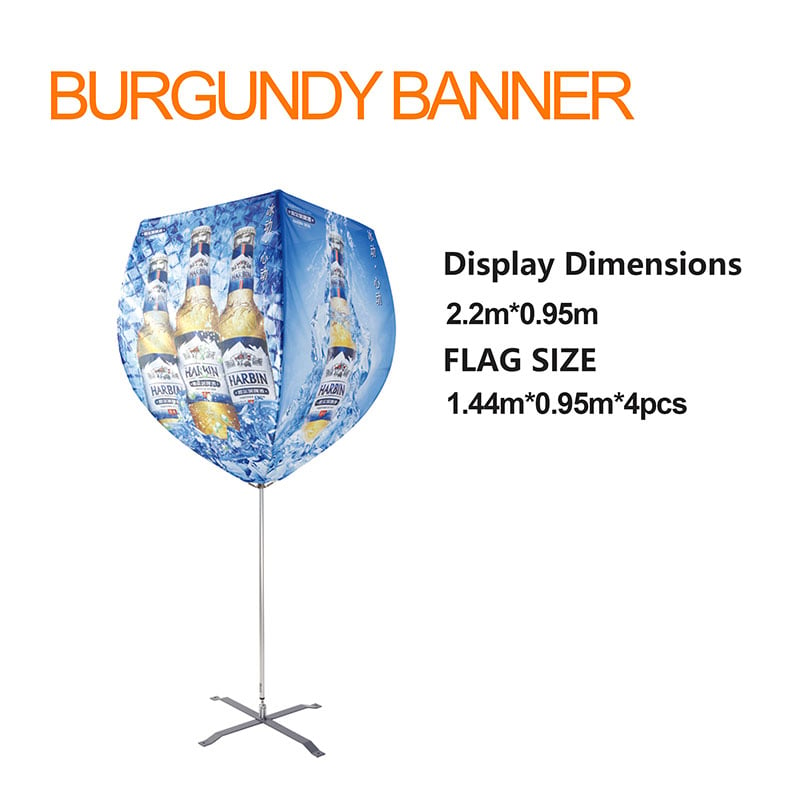
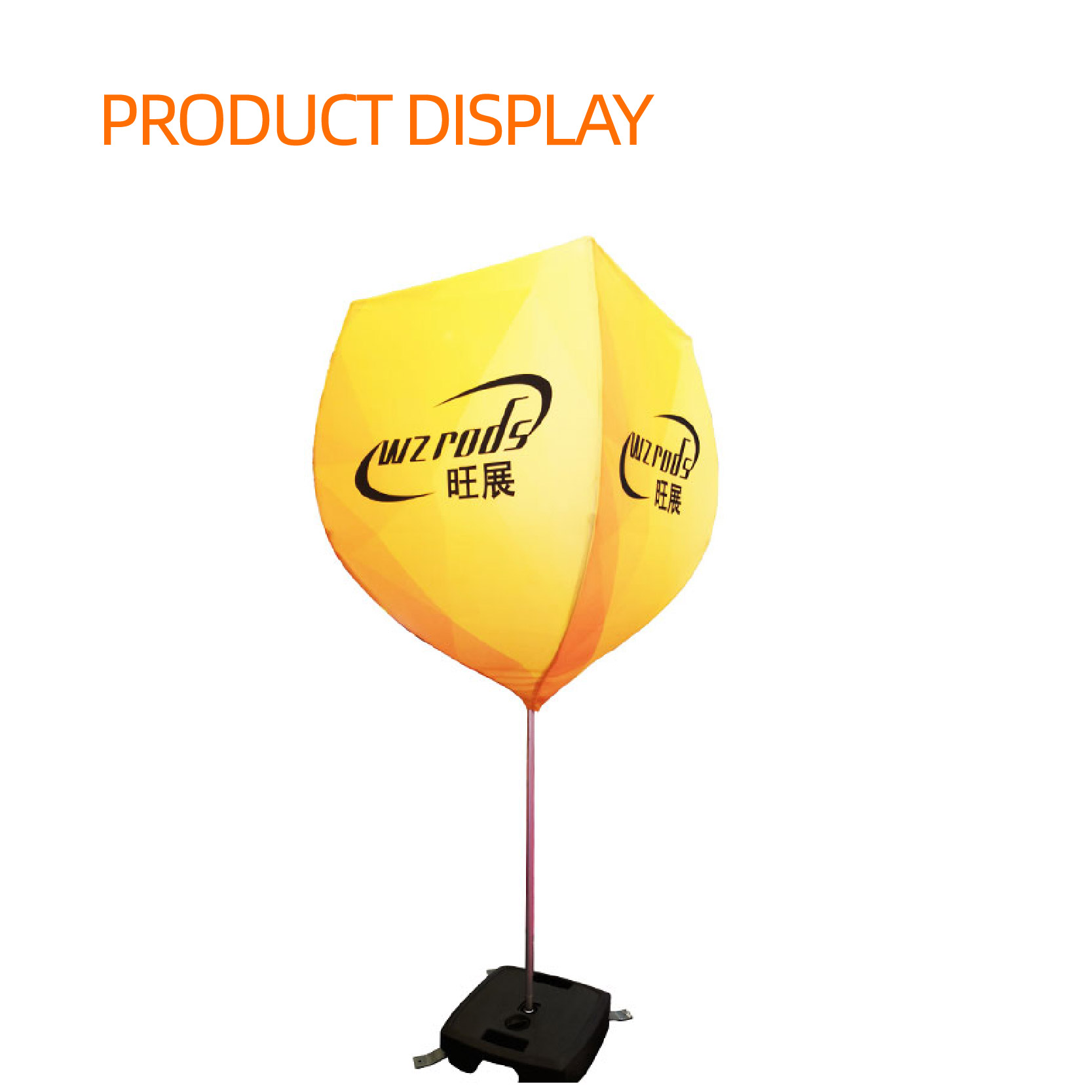
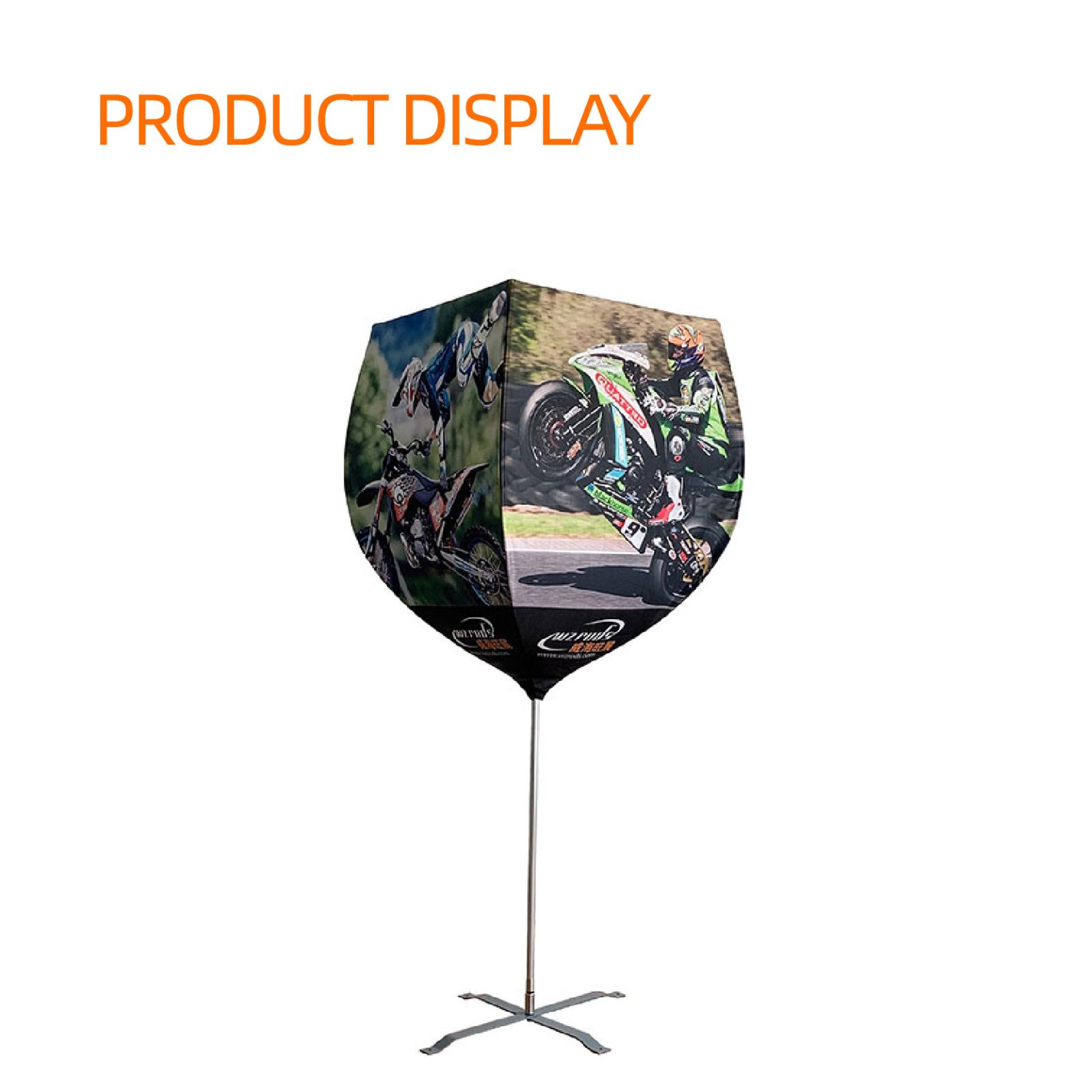
4-sided burgundy banner features original folding umbrella frame, spins freely in wind via spindle. Supports same or varied side prints, large display area, quick setup and graphic replacement, portab…


 Article
 Specifications
- Origin
- Shandong, China
- Brand
- Wzrods
- Model
- TDG95125
- Pole Material
- Carbon Composite
- Banner Material
- 100% Polyester
- Usage
- Outdoor Advertising Banner Flag
- Application Spec
- Trade Shows, Retail Display, Product Launches, Exhibitions
- Printing Method
- dye sublimation printing
- Feature
- Adjustable, Eco-Friendly, Breathable
- Color
- CMYK 4 Color Printing
- Logo Service
- Custom Designs
- Packaging
- Box
- Display Size
- 2.2M*0.95M
- Flag Size
- 1.44m*0.94m*4pcs
 Product Description
Shipping & Packaging
- Unit Weight
- 2.900
- Unit Size
- 162.5X19X2
- Packaging
- Standard export carton
- Lead Time
- 15-30 days
Pricing
- MOQ
- 1 piece
- Price Range
- USD 14.6 – 16
* FOB Qingdao. Excludes shipping & taxes. Accessories & customization confirmed separately.
 Sample Service
- Sample Available
- Yes
 Customization Options

Light Custom
Logo, color, size adjustments

Fast Turnaround
Quick custom order processing
Burgundy Display - The Complete B2B Buyer's Resource - WZRODS
I remember standing in an exhibition hall in Miami, watching a sea breeze snap the aluminum pole of our premium display. The hollow metallic clang cut through the booth. I’d signed off on a container of what I believed were sturdy aluminum flag stands.
By the end of the first outdoor event we’d lost three units to a breeze that barely qualified as weather. The air-freight cost for replacements, the client’s face, the aluminum joints already pitting from coastal humidity—none of that appeared on any supplier invoice. After that mess, I started looking for something that didn’t just tick spec boxes. That search led to WZRODS, a factory in Shandong that was working on a folding umbrella-frame concept with carbon composite poles. I’d never considered the material for displays. Months of testing later, I came to know the Burgundy flag—a four-sided, spindle-driven, carbon composite flag stand that bends without breaking, weighs under three kilos, and lands at a total cost distributors are only beginning to calculate correctly.
1. Selecting a Display Stand That Lasts
Carbon Composite vs. Aluminum: The Trade-offs That Matter
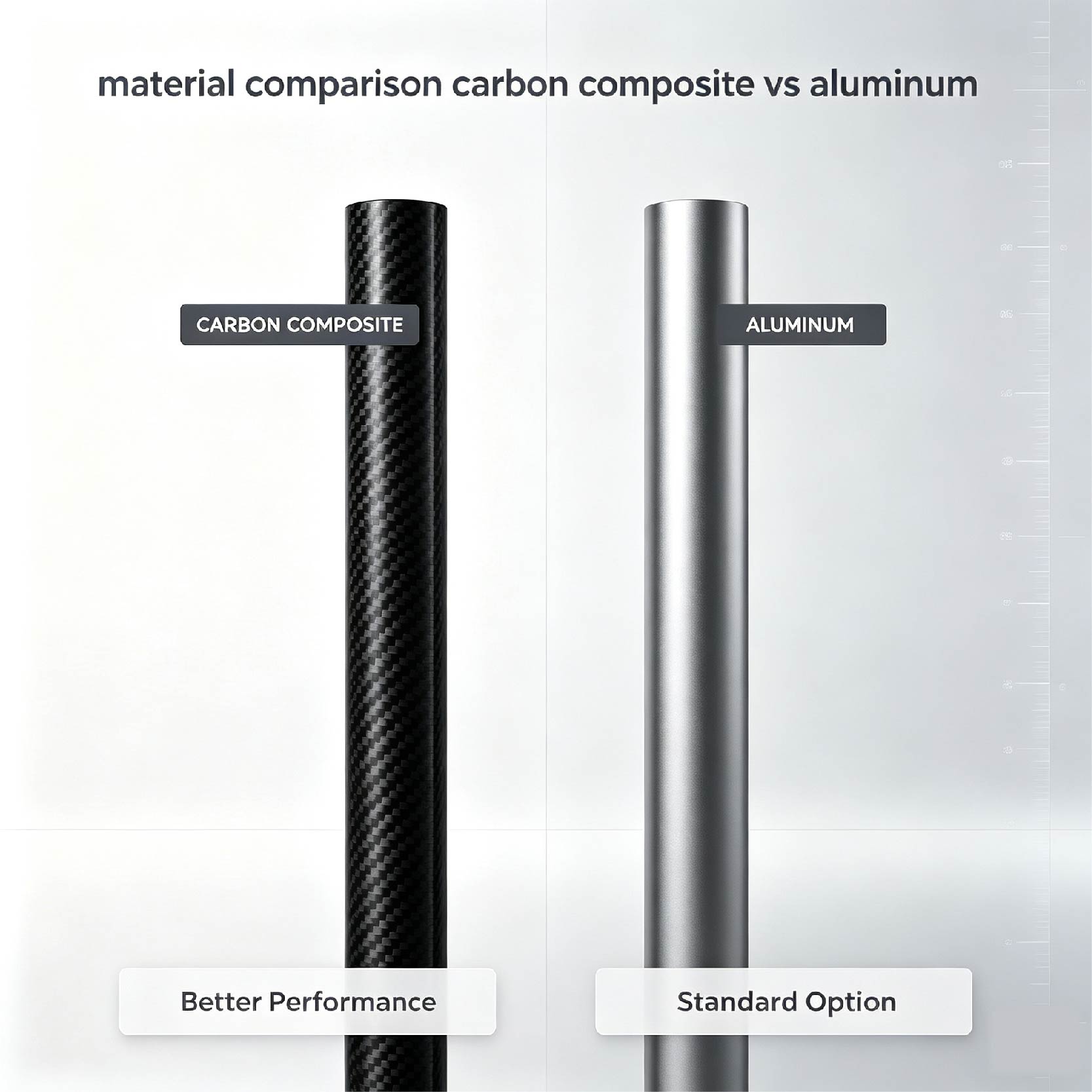
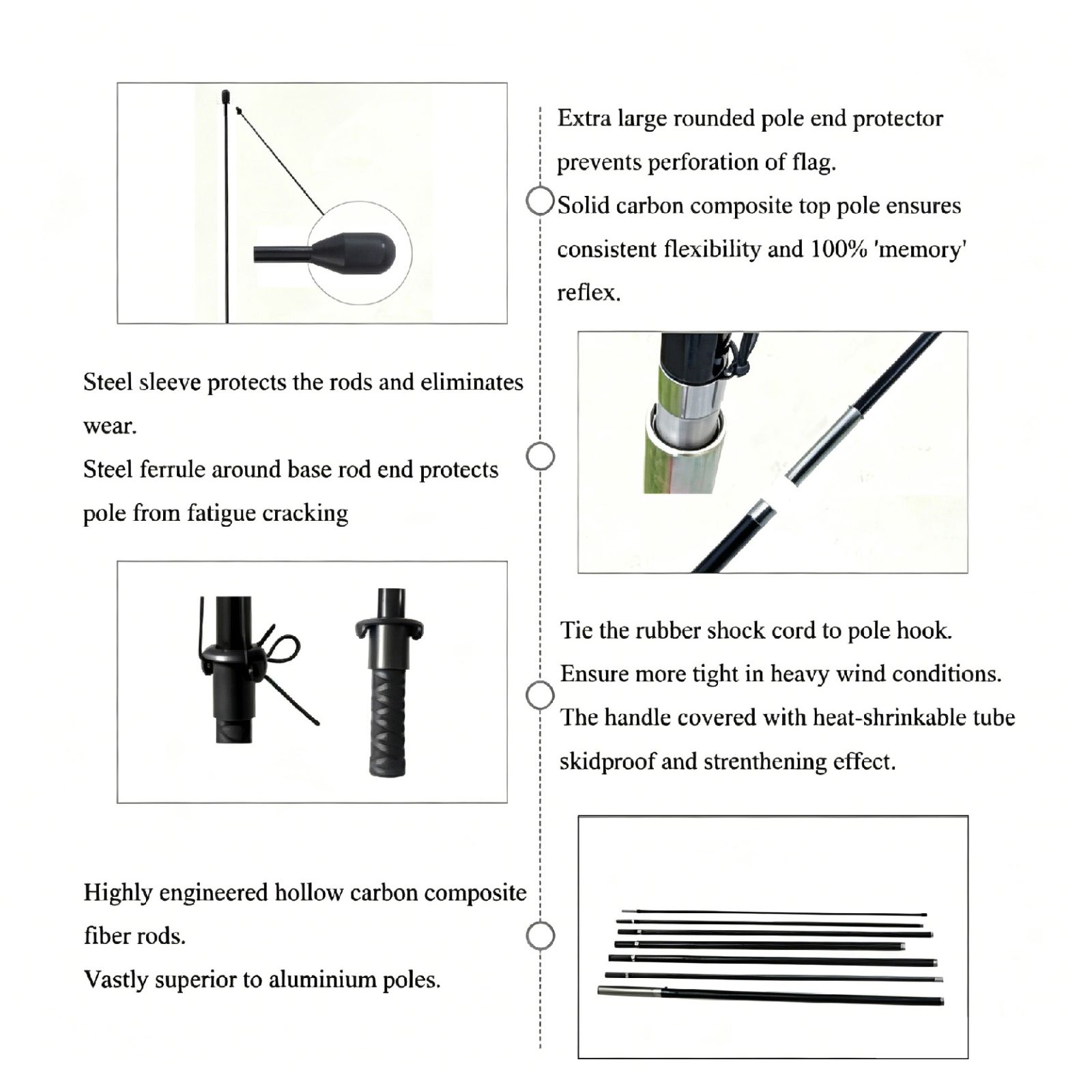
Most procurement managers filter by material first. Aluminum is the default. It’s light, familiar, and looks reasonably priced on a line item. That safety is deceptive. Aluminum deforms permanently under load. Once it kinks, it stays kinked. No memory. Carbon composite is different. Layers of carbon fiber bound in a resin matrix deliver flexural strength that lets the pole sway through steep angles and snap back. I ran a test unit in a monsoon simulation chamber at a partner lab—gusts at 55 knots. The pole bent like a fishing rod, the display spun hard on its spindle, and when the wind dropped the whole thing straightened. No wrinkle. No lean. An aluminum pole in the same chamber failed at 32 knots.
It didn’t break. It just took on a permanent five-degree lean, which meant the graphic would never hang square again. The question isn’t carbon composite versus aluminum. It’s whether you want to sell a display that survives a season or one that needs replacing after the first windy setup.
The WZRODS Folding Umbrella Frame
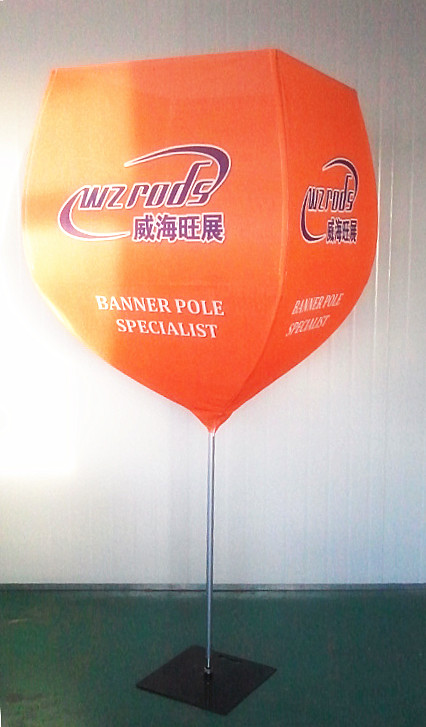
What separates the Burgundy flag from the dozens of telescoping pole flags I’ve catalogued is the base mechanism. No central pole you jerk up and lock with a collar. This stand uses an unfolding hub—same physics as a stout patio umbrella, engineered for commercial repetition. That's the difference. Pull up the central slider, the arms extend, the four-sided flag sleeve drops over them, and the rig locks. Takedown is just as fast: release the hub, arms fold inward, slide the display off. I timed a warehouse worker who’d never seen the unit. From unzipping the carry bag to a fully dressed display: two minutes and fourteen seconds.
For a crew erecting thirty displays before doors open, that speed means labor savings and fewer profanities at 6 a.m.
Size, Weight, and What It Means for Global Freight
Some numbers stick. The Burgundy sign packs to 162.5 × 19 × 2 cm and weighs 2.900 kg. I circled that weight figure in red the first time I saw the spec sheet. The standard aluminum folding flag I’d been buying weighed 5.1 kg and occupied nearly double the carton volume, much of it wasted air.
Because the carbon composite stand packs so flat and light, you can load around 10,000 units into a 40‑foot high‑cube before hitting the container’s weight limit—roughly double the count you’d squeeze in with typical aluminum flags. That density slashes per-unit ocean freight. I calculated that over a year of shipments to a distributor in Rotterdam, the weight and cube difference alone saved nearly $4,200 in sea freight. That’s before factoring the reduced carbon footprint that’s starting to show up in European tender scoring. Portability matters at the last mile, too. A sales rep can carry two Burgundy Banners over a shoulder without looking like they’re hauling gym equipment. Try that with aluminum.
2. Product Comparison: Burgundy display piece Against Common Aluminum Flags
| Feature | Burgundy sign (Carbon Composite) | Typical Aluminum Folding Flag |
|---|---|---|
| Pole material | Carbon composite fiber & resin | 6063 or 6061 aluminum alloy |
| Unit weight | 2.900 kg | 4.8 – 5.5 kg |
| Wind response | Spindle rotates freely; pole flexes and recovers without deformation | Spindle may bind; pole takes permanent set in gusts above ~60 km/h (32 knots) |
| Corrosion resistance | 100% rust-proof; no oxidation in salt spray testing | Anodized, but pitting appears in coastal/humid environments within 8–12 months |
| HTS code (typical) | 3926.90 (plastics articles) — generally lower duty in most markets | 7616.99 (aluminum articles) — often higher duty, especially for finished goods |
| Average commercial lifespan | 3–5 years without structural degradation | 1–2 years before frame wobble or corrosion demands replacement |
| Display area | Four sides, each 1.44 m × 0.94 m, total ~5.4 m² | Typically single-sided or double-sided, smaller flag area |
| Setup time | Under 3 min (one person, no tools) | 4–7 min (telescoping pole frequently sticks) |
Side-by-Side in Real Conditions
I once staked a Burgundy Banner and a mid-range aluminum flag on the same grassy ridge near Xiamen harbor for a full week, data logger recording wind speed. Day three, a thunderstorm line pushed through with sustained winds around 45 km/h and gusts well above 60. The aluminum unit’s graphic sleeve twisted into a ball, the pole leaned like a wilted sunflower, and by morning the base bracket had cracked. The carbon composite model kept spinning, banner flat and readable. When I disassembled it, the only evidence of stress was a faint scuff on the spindle bearing. One field trial like that is worth a thousand spec sheets.
3. ROI: The True Cost of a Flag Display Stand
Unit Price vs. Landed Cost
Distributors who fixate on the USD 14.60–16.00 unit price are asking the wrong question. The right question is what that figure looks like after duty, inland freight, and the probability of early failure. Because the carbon composite pole shifts the HTS classification to a plastics bracket—typically 3926.90—instead of the aluminum bracket (7616.99), the duty rate frequently drops 2–5 percentage points. In markets like Brazil or India, where effective rates on aluminum articles can exceed 18%, that gap alone can recover the small upfront premium in the first shipment. Add reduced ocean freight from lighter weight and smaller cube, and the landed cost per working display, amortized over its longer life, puts the Burgundy Banner well below aluminum competitors in total cost of ownership.
Replacement Rates and the Costs Nobody Tracks
I kept a spreadsheet during my procurement years tracking display failures across 120 retail promotion sites. Aluminum flag stands averaged 1.7 replacements per site per year. That figure includes overnight shipping, staff time to swap graphics, and the rep who shows up with a broken pole and no backup. The Burgundy Banner units I rotated into the same sites saw zero structural replacements over eighteen months. A couple of banners needed reprinting after a forklift incident that would have destroyed any pole. When I plugged real numbers into a five-year cost model, the carbon composite solution delivered 41% lower total expenditure. Why does that matter to a distributor? Because every replacement eats into your customer’s trust—and your margin.
Duty and Freight: The 2.9 kg Advantage in Hard Numbers
A 40HQ container loaded to its weight ceiling carries roughly 10,000 Burgundy Banners. An equivalent shipment of 5.3 kg aluminum flags fills the volume limit around 5,500 units before hitting the weight cap. If your forwarder quotes a flat rate per container, the lighter carbon composite stands let you spread the freight over nearly twice as many pieces. Import duty, as noted, tends to favor the plastics-classified goods. When all factors align, I’ve seen a landed cost advantage of $0.85 to $1.40 per unit. That margin is yours to keep or pass through to win on retail price while still out-earning commodity aluminum poles.
4. Where the Burgundy Banner Works Best
Trade Shows and Exhibitions
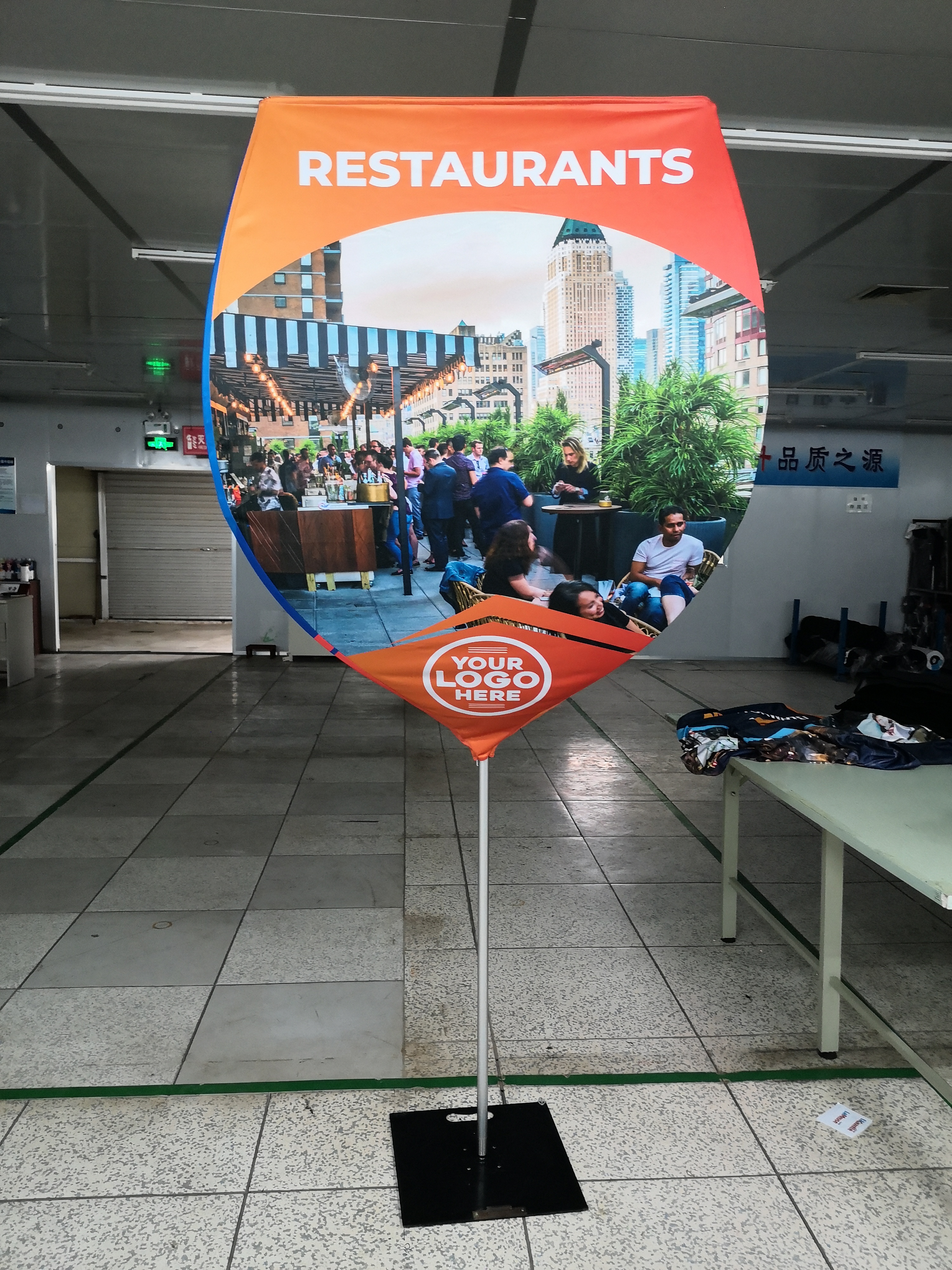
At a busy show, nobody has enough time. I once watched a booth crew wrestle a bent aluminum pole for twelve minutes while visitors glanced at the half-dressed display. The Burgundy Banner eliminates that scene. The umbrella frame opens with one hand, the graphics sleeve drops on, and the stand is ready—no screws, no spring-loaded pins. Because the four-sided banner delivers nearly 5.4 square meters of print area, one unit does the work of several single-sided flags. More floor space for product demos. The spindle catches even mild indoor air currents, and that gentle motion pulls more attention than a static vinyl wall ever does.
Retail and Outdoor Promotions in Tough Weather
I sold a batch to a distributor in Phuket who supplies beachside restaurants and resorts. Salt air eats aluminum frames in weeks. The constant trade winds had been destroying cheaper flag stands faster than he could reorder. After switching to the carbon composite Burgundy Banner, his return rate dropped to zero. The rust-proof pole and stainless steel spindle meant no pitting, no seized joints. The banner—100% polyester with dye-sublimation printing—showed almost no fading after a full year in tropical sun. Breathable fabric runs cooler, and the dye penetrates the fibers rather than sitting on top as a laminate that peels.
The Spindle: Passive Motion, No Batteries
The spindle hub isn’t a motorized rotator. It doesn’t need batteries, and it isn’t a flimsy swivel that binds at the first speck of dust. The banner’s geometry catches air asymmetrically, turning the entire display into a silent, rotating advertisement. In a lineup of static flags at a car dealership, the moving banner is the one customers ask about. That kinetic difference costs nothing to operate and seldom fails—the kind of system you learn to appreciate after years of field failures.
5. Factory Process: From Carbon Composite Rods to Finished Flag
Sourcing the Carbon Composite
The tubes originate from a Shandong facility specializing in pultruded profiles for structural applications. I walked the line. Continuous fiber tows are pulled through a resin bath, then through heated forming dies that cure the material into a rigid hollow tube. The wall thickness is optimized for bending modulus, not just brute strength. The result is a pole that bends like a bow without delaminating, even after thousands of cycles. The supplier runs batch fatigue tests on random samples, loading them to deflections far exceeding outdoor conditions and checking for micro-cracks with ultrasonic equipment. This isn’t off-the-shelf raw material. It’s a custom layup refined over years of feedback from the WZRODS design team.
Printing and Assembly Quality Control
The polyester banners are printed via dye sublimation on wide-format calenders. Heat drives the ink into a gas, pushing color deep into each fiber. The graphic won’t crack when folded, won’t weather off under UV, and shows identical vibrancy on all four sides. I examined a banner that had been through a hundred setups—folded and bagged each time—and the crease lines were invisible from a meter away. Assembly checks happen at three stations: the spindle bearing is hand-spun and must rotate with less than 0.2 N·m of resistance, the hub locking pins are tested for positive engagement, and every bagged unit goes through a final erect-and-strike cycle. The consistency from unit to unit would hold its own against any German-engineered display stand I’ve handled.
6. Trends: Lightweight, Rust-Proof, and the Sustainability Question
Importers and Stricter Sustainability Mandates
In the last two years, procurement tenders from Northern Europe and North America have started including lifecycle analysis requirements and material composition disclosures. Aluminum is recyclable, yes. It also carries high embodied energy from bauxite mining and smelting. Carbon composite isn’t as easily recycled, but it offers a far longer use phase. WZRODS has begun pilot programs to take back end-of-life poles for repurposing into secondary products. The lighter unit also directly reduces transport emissions—a metric retail chains are tracking more closely. For a buyer who needs to check the sustainability box without sacrificing performance, the extended lifespan and reduced shipping weight make a case that’s hard to dismiss.
The Shift to Multi-Message Displays
Exhibition designers tell me the single-message banner is dying. Brands want a logo on one face, a product image on the second, a call-to-action on the third, and a QR code on the fourth—all on one stand. The Burgundy Banner supports same or varied prints on each side without extra hardware. The sleeve design makes it possible to swap the entire graphic set in under a minute. A rental house can stock a graphic library and update client messages between shows. This flexibility is driving demand for four-sided spindle flags, and the lightweight carbon pole is the only material that can support that tall, multi-panel sail area without becoming top-heavy and demanding a weighted base.
7. Upgrading: Moving from Aluminum to Carbon Composite
When to Replace Existing Inventory
You don’t need to scrap a warehouse full of aluminum flags overnight. Phase them out as they fail. I worked with an events company in Dubai that tracked functional aluminum displays at the start of a season: 212 units. By mid-season, after a series of outdoor mall activations in Gulf winds, they were down to 134 functional units. Scrambling for rentals ate their margins. The next year, they allocated 30% of their new display budget to Burgundy Banners and deployed the carbon composites at the highest-wind, most-critical sites. Failure rate on those sites went from two per month to zero. The surviving aluminum units were relegated to calm indoor halls. Within two more seasons, the entire fleet was converted, and the savings on replacements funded a new graphic printer.
How WZRODS Supports Distributors Through the Switch
WZRODS doesn’t drop a container at the port and disappear. They maintain a technical data pack: HTS classification advisory, load-test videos, and a corrosion comparison white paper you can hand directly to your customs broker or a skeptical client. Samples ship within 15–30 days. They’re not free, but the cost is fully deductible against a bulk order. MOQ is one piece—test the market without committing. Ladder pricing from USD 14.60 to 16.00 per unit rewards volume. For long-term partners, dedicated production slots bring lead times down to as little as 15 days. Having sat on the buyer’s side, I can tell you that kind of support is worth its weight when you’re trying to convince a management team to move away from the aluminum they’ve always ordered.
Frequently Asked Questions
What is the minimum order quantity?
The MOQ is 1 piece. You can purchase a single unit to evaluate quality and performance before committing to a larger order.
How much does the Burgundy Banner cost?
USD 14.60 to 16.00 per unit, depending on order volume and customization. Larger quantities qualify for the lower end of that range.
Can I print different designs on each side?
Yes. All four sides can carry the same graphic or completely different artwork. Dye-sublimation ensures sharp, consistent results across every panel.
What is the pole made of?
A custom-pultruded carbon composite—carbon fiber in an engineered resin matrix. It bends in strong wind without permanent deformation, is fully rust-proof, and weighs 2.900 kg. Unlike aluminum, it does not corrode in salt air or kink permanently under gust loads.
What payment terms do you accept?
T/T, L/C, and Western Union. Terms can be discussed for established distributor relationships.
How long does delivery take?
Standard lead time is 15–30 days from order confirmation, depending on the production queue and customization. A 40HQ container typically carries around 10,000 units (limited by weight), and WZRODS manages all export carton packing.
Is the banner suitable for high-humidity and coastal areas?
Yes. The carbon composite pole and stainless steel spindle are fully corrosion-resistant. The polyester banner is breathable and doesn’t trap moisture that leads to mildew. Designed for tropical, coastal, and marine environments.
How do I replace a damaged banner?
The outer graphics sleeve is removable and replaceable in seconds. Order a spare banner set from WZRODS with the same or updated artwork and slide it over the folded frame.
Does the spindle require maintenance?
The spindle bearing is a sealed, low-friction unit. No routine maintenance required. In dusty environments, an occasional wipe with a dry cloth is sufficient.
What HTS codes apply, and what duty rates should I expect?
The carbon composite pole typically falls under a plastics classification (e.g., 3926.90), which often attracts a lower duty rate than aluminum articles (7616.99). Exact rates vary by country. WZRODS provides a technical advisory sheet to assist your customs broker with classification.
Can I get a sample before placing a bulk order?
Yes. Sample delivery typically takes 15–30 days. Samples are not free, but the cost is credited against your first substantial order.
How does the wind-spinning mechanism work?
The four-sided banner mounts on a central spindle hub. Light air currents catch the banner faces asymmetrically, causing the entire display to rotate silently. No batteries, motors, or wires.
What is the overall height and display area?
The assembled display stands 2.2 meters tall. Each of the four banner faces measures 1.44 m × 0.94 m, totaling nearly 5.4 m² of visible graphic space.
Is the carrying bag included?
Yes. Every unit ships with a sturdy carry bag that fits the folded frame and banner sleeve.
About the Author
Wei Chen, Senior Product Specialist
B.S. Supply Chain Management, Michigan State University; Certified Professional in Supply Management (CPSM)
12 years in B2B display hardware sourcing. Former procurement manager for a top 20 US promotional products distributor. Specializes in aluminum pole systems and import compliance.
Reviewed by WZRODS Technical Team. Updated: 2026-07-27
 Comments (0)
No comments yet. Be the first to comment!
Leave a Comment
Related Products
Foldable Horizontal Square
Spider A frame
Toblerone Banner
Pyramid Banner
Tower Banner
Bean Banner
Cluster Balloon Kit
Swing Banner Stand
Foldable Vertical Square
Half Moon Banner
Related Articles
29kg Concrete Flag Base - The Complete B2B Buyer's Resource - WZRODS
WZRODS DY451B: 29 kg, HDPE shell, concrete core. Stackable, portable, rust-proof. FOB price US$5.75–$6.85 at MOQ 2 units. Those numbers look unremarkable. Factor in landed cost—import duties lower than aluminum’s under relevant HTS codes, freight savings from less weight per unit of stabilizing mas
Wide Tube Cross Base - The Complete B2B Buyer's Resource - WZRODS
The Wide Tube Cross Base, manufactured by Wzrods in Shandong, China, solves one problem: reliable stability for poles under three meters, without the freight costs and warehouse footprint that heavier alternatives demand.
Rectangular Pipe Cross Base - The Complete B2B Buyer's Resource - WZRODS
The pipe cross flag base is a cross of rectangular steel pipe, powder‑coated, weighing 1.3 kg and spanning 78 cm across its arms. Its center holds a C‑ring shaft that lets the flag rotate with the wind.
X-Shape Backpack Banner - The Complete B2B Buyer's Resource - WZRODS
Economic Cross Base - The Complete B2B Buyer's Guide- WZRODS
When you buy an economic cross base—something like the Wzrods DM‑9, a 77 cm‑long, 1.3 kg iron cross—forget “economic” as a synonym for “cheap.” It means value-engineered.