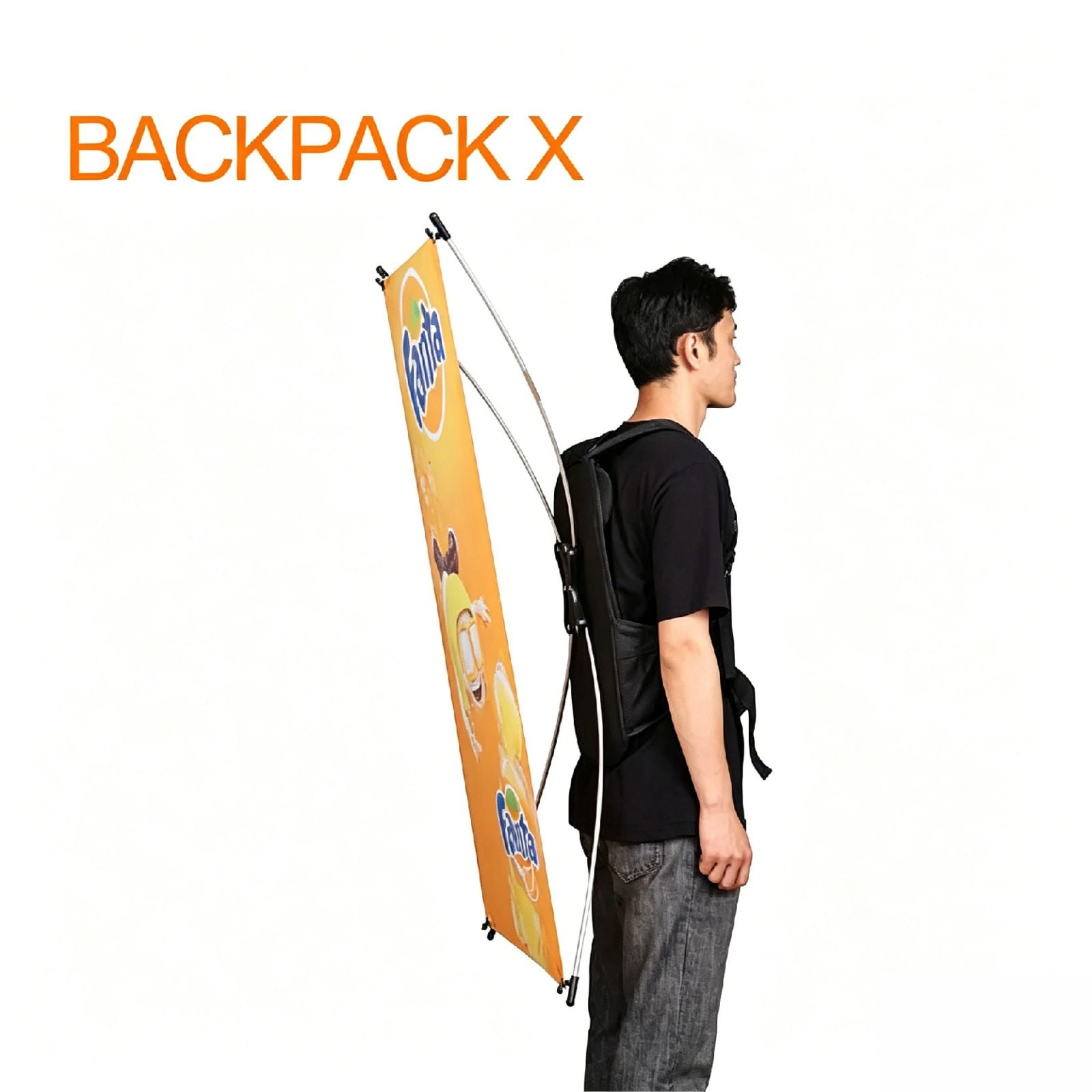
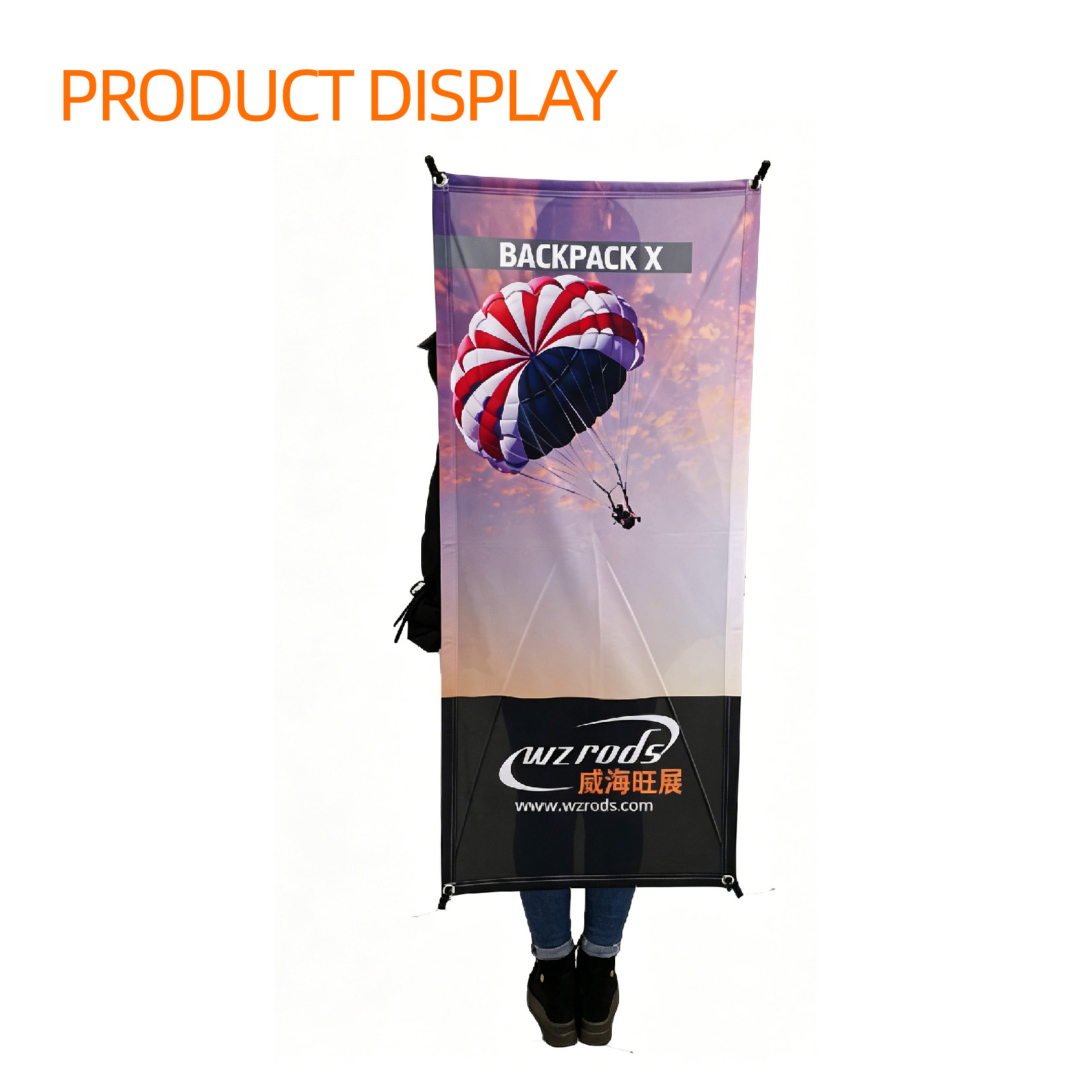
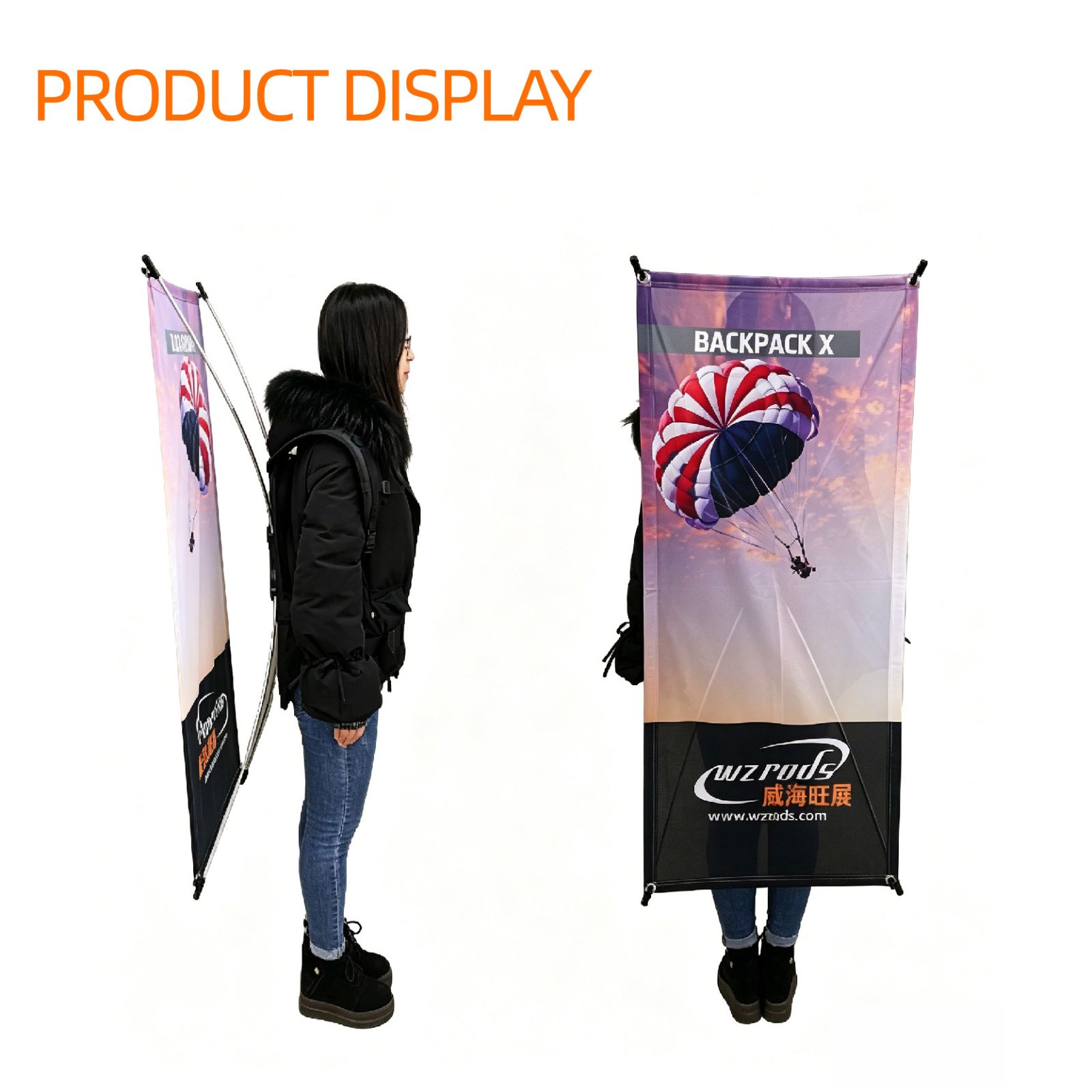
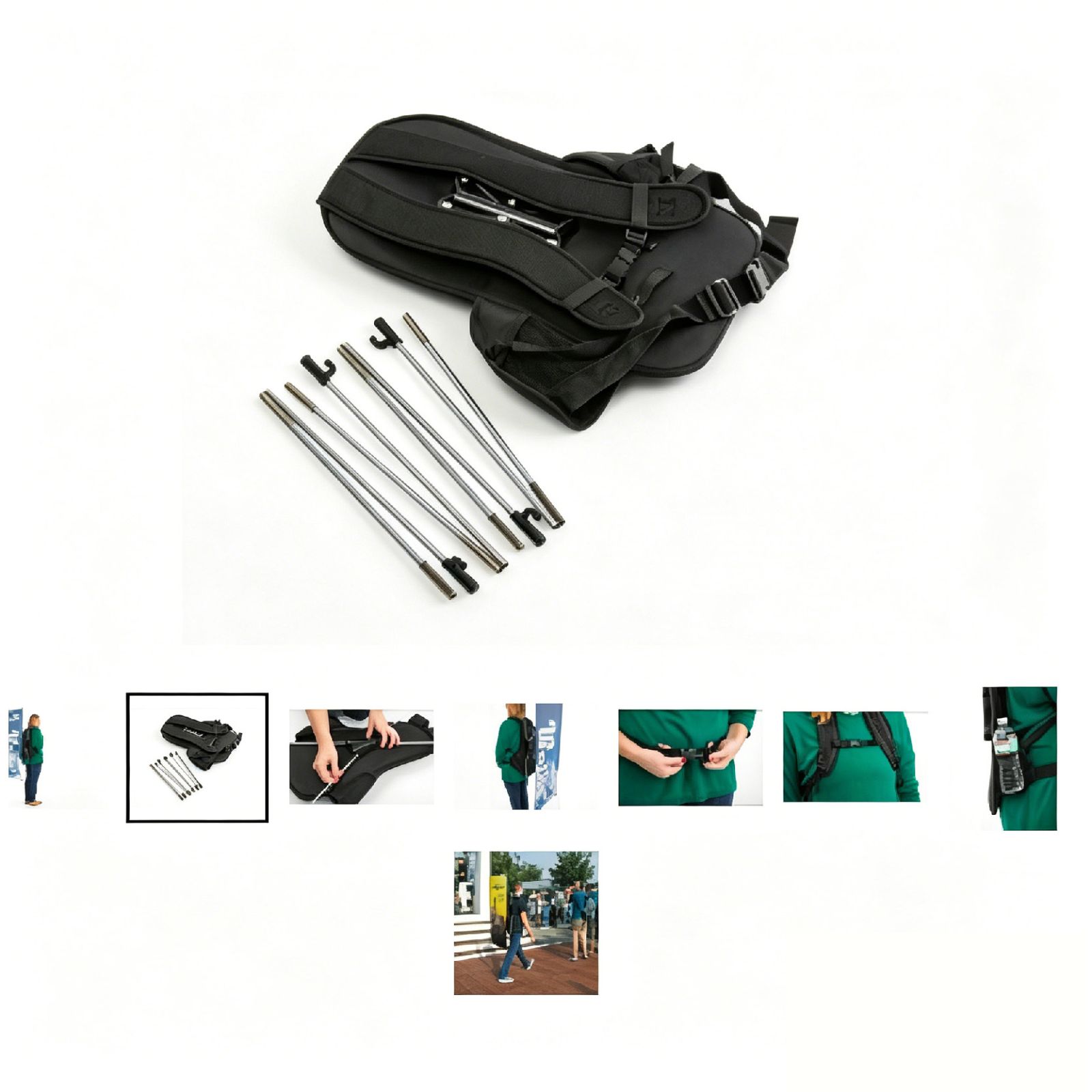
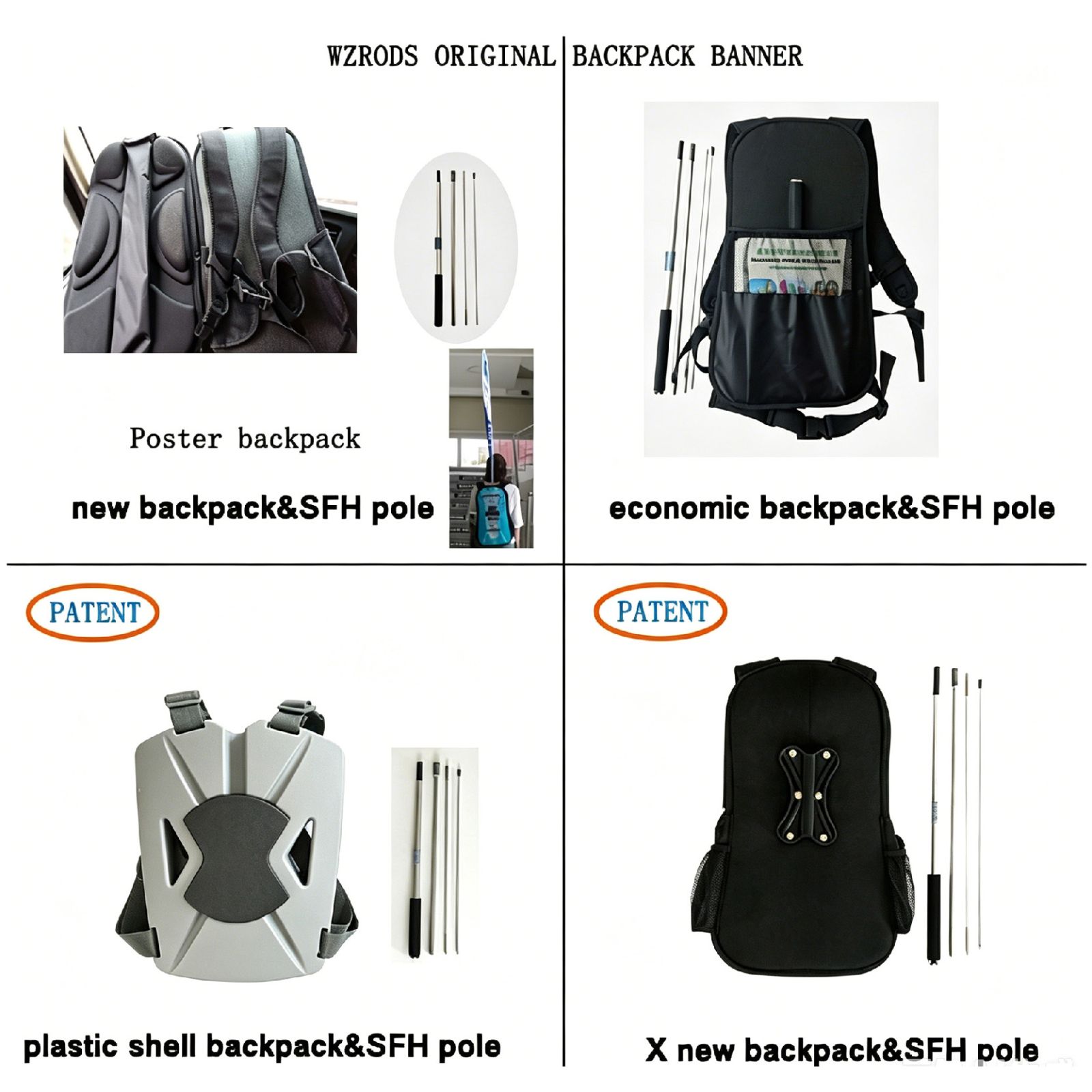
X-Shape Backpack Banner
Patented deluxe combination backpack banner with multiple flag styles. Breathable comfortable design, multi storage pockets, windproof structure, premium carbon composite poles for outdoor mobile prom…


 Article
 Specifications
- Origin
- Shandong, China
- Brand
- WZRODS
- Model
- Backpack x
- Backpack Material
- Oxford fabric
- Banner Material
- 100% Polyester
- Certificate
- REACH
- Color
- CMYK 4 Color Printing
- Application Spec
- Street Advertising, Parades, Sports Events, Trade Shows
- Printing Method
- Dye Sublimathion (heat Transfer Printing)
- Print Color
- 4 color
- Moq
- 2pc
- Logo Service
- Custom Designs
- Target User
- 30000 pieces per Month
- Flag Size
- 120cm*50cm
- Usage
- Advertising
- Pole Material
- Carbon Composite
 Product Description
Shipping & Packaging
- Unit Size
- 152X51X40 cm
- Packaging
- Standard export carton
- Lead Time
- 15-30 days
Pricing
- MOQ
- 1 piece
- Price Range
- USD 20.9 – 26.7
* FOB Qingdao. Excludes shipping & taxes. Accessories & customization confirmed separately.
 Sample Service
- Sample Available
- Yes
- Sample Price
- USD 120
 Customization Options

Light Custom
Logo, color, size adjustments

Fast Turnaround
Quick custom order processing
X-Shape Backpack Banner - The Complete B2B Buyer's Resource - WZRODS
Backpack X Buyer's Guide — WZRODS Carbon Composite Backpack Banners
I remember the first time I watched an aluminum pole fail. It was at Messe Frankfurt, Hall 11—cold HVAC, concrete floor humming with forklifts. An exhibitor had a double‑sided flag setup, maybe three meters up, swaying in the air currents from the entrance doors. Nothing dramatic. Just the normal breathing of a convention center.
Then the pole bent. Not a little. It went over like a man hit in the stomach—slowly at first, then all at once—and the fabric sagged into a wrinkled mess. The exhibitor looked at it, looked at me, and said something in German I won’t repeat.
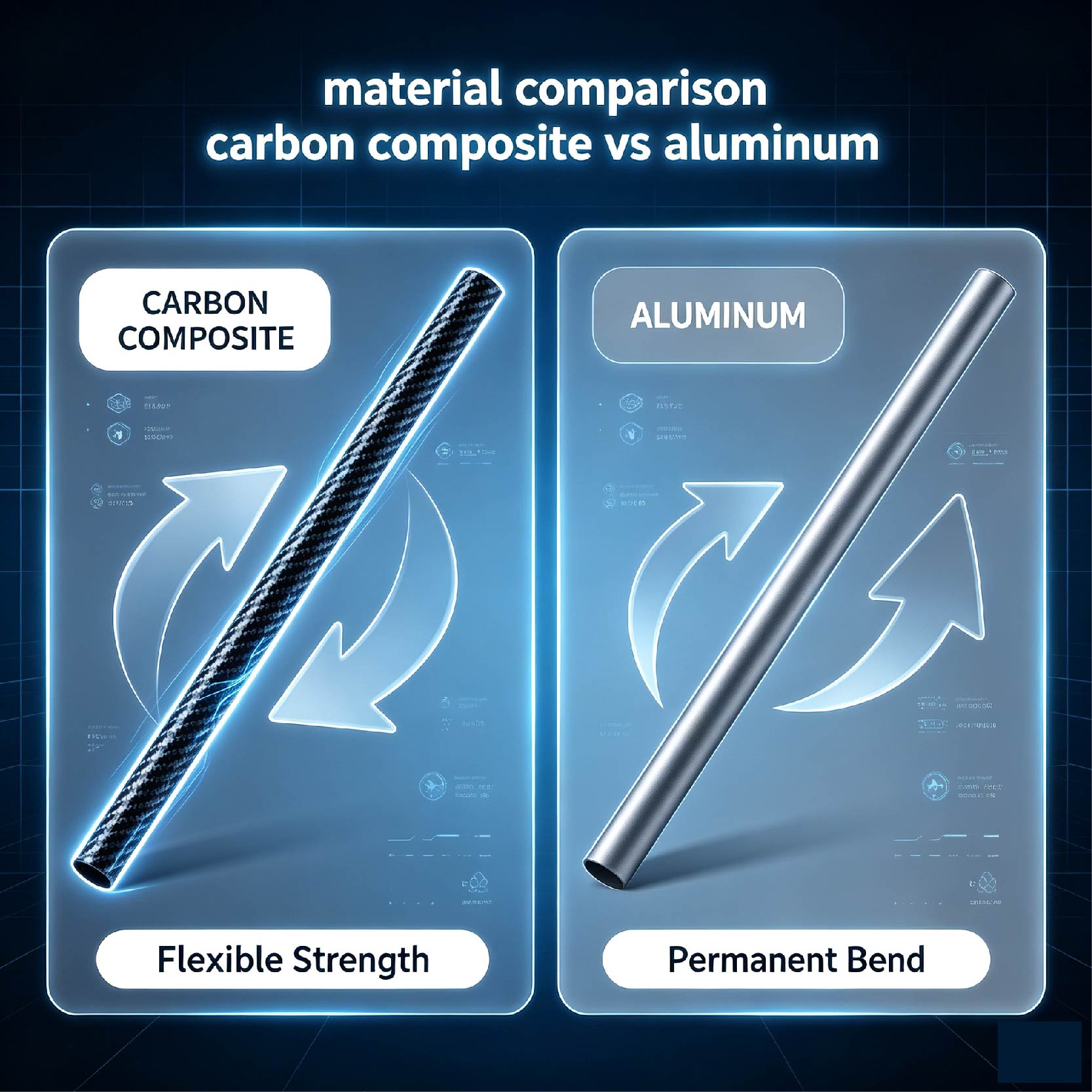
I started to think: How can that happen? The wind load wasn’t exceptional. The pole wasn’t old. It was aluminum—6061 alloy, probably, the standard stuff—and it had just given up. Not broken, exactly. Deformed. Once aluminum yields, it stays yielded. There’s no coming back. You can’t unbend it. The crystal structure has slipped and that’s that.
So I walked back and forth in that hall for maybe twenty minutes, thinking about what I’d just seen, and I realized something: the whole industry had been solving the wrong problem. Everyone was asking, “How strong is the pole?” when they should have been asking, “What happens when it fails?” Because everything fails eventually. The question is whether it fails gracefully or catastrophically. Whether it springs back or stays broken.
That’s how I got interested in carbon composite poles. And that’s how I found WZRODS.
I’ve spent fifteen years designing booth hardware strategies for Fortune 500 exhibitors. I’ve watched companies waste thousands on display hardware that fails at exactly the wrong moment. Most buying decisions come down to three or four variables that nobody talks about in product brochures. This guide covers those variables, how to weigh them, and where the Backpack X makes a difference.
1. The Anatomy of a Backpack Banner: What Actually Matters
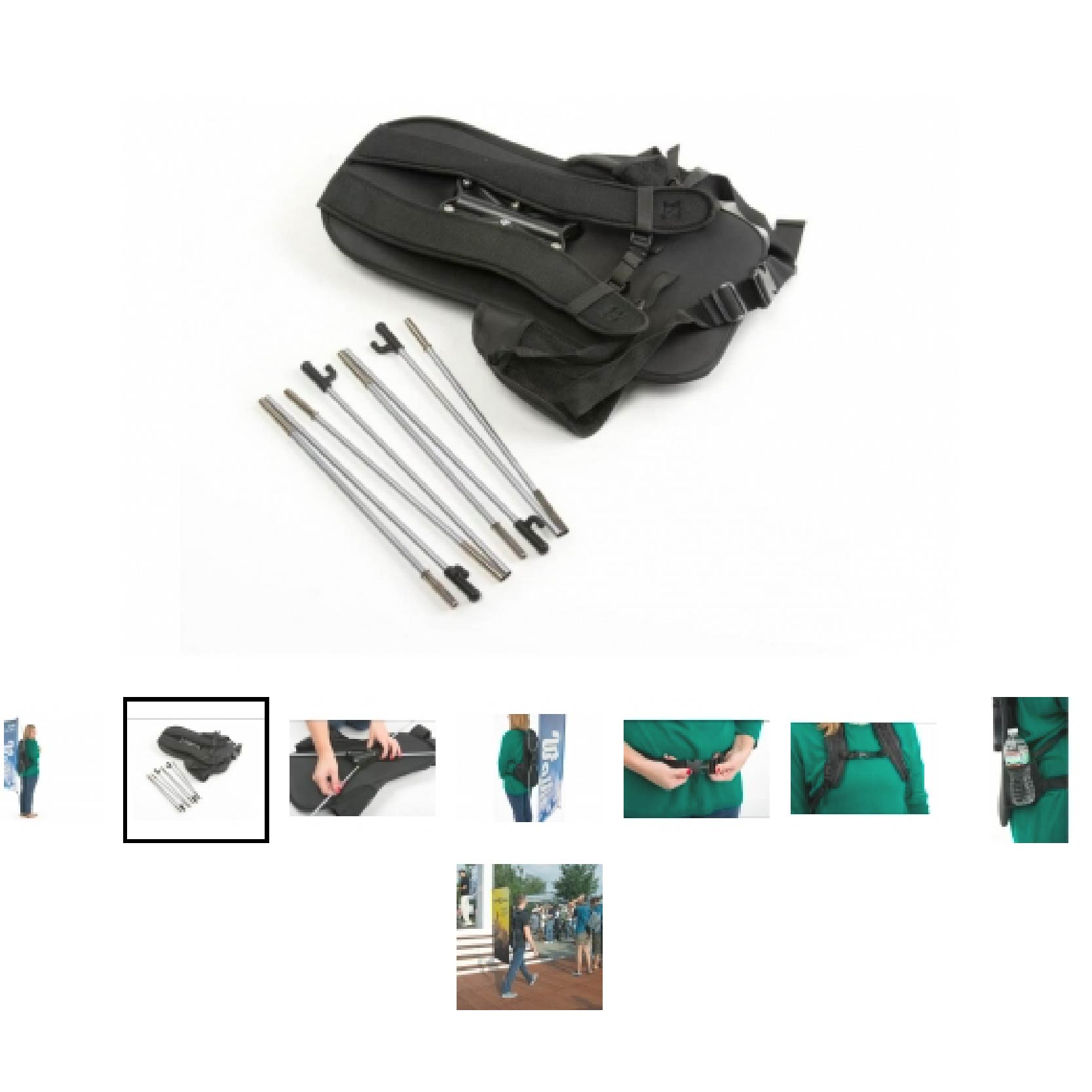
Strip it down and a backpack banner is three things: a harness that goes on a human body, a pole system that holds fabric up in the air, and the printed fabric itself. That’s it. Everything else—storage pockets, water bottle hooks, windproof buckles—is commentary. Useful commentary, but commentary nonetheless.
Most buyers start with the fabric. They ask about denier, dye‑sublimation quality, REACH certification. Those things matter—don’t get me wrong. The Backpack X uses 100% polyester with heat‑transfer CMYK printing, and it’s REACH certified, meaning it meets European chemical safety standards (EC 1907/2006). That’s table stakes. Every serious supplier should offer it.
But here’s the thing: the fabric rarely fails first. The poles fail first. The harness fails second. The fabric—assuming it’s even halfway decent polyester—will outlast both. If you’re optimizing for total cost of ownership, start with the poles and work backward.
The Backpack X uses carbon composite poles. Let me be precise. This isn’t aerospace‑grade pre‑preg layup in an autoclave. It’s a pultruded carbon‑fiber‑reinforced polymer: continuous carbon fibers along the length, bound in a resin matrix. The result is high tensile strength, low density, and—the key—elastic deformation behavior.
Translation: when you bend a carbon composite pole, it wants to spring back. Always. Up to its failure point, the deformation is reversible. Aluminum, by contrast, has a yield point. Below that point it springs back. Above it—and this happens sooner than most people think with thin‑walled aluminum tubing—it stays bent. Permanently.
I’ve tested this. Not in a lab—I don’t have a lab—but at outdoor events in coastal Texas, where the wind off the Gulf runs fifteen knots steady and gusts to twenty‑five. I’ve watched aluminum poles develop a permanent curve after about six hours of that. The carbon composite poles on the Backpack X? They bent and came back. Again and again. The exhibitors didn’t even notice anything had happened.
That’s graceful failure. The system absorbs the load and recovers. Your staffer doesn’t stop handing out brochures to fix a bent pole. Your brand doesn’t look broken in front of potential customers.
2. The Hidden Economics: Freight, Duty, and Total Landed Cost
Here’s where it gets interesting. Most B2B buyers compare unit prices and stop. But the unit price of a backpack banner is maybe sixty percent of what you actually pay to get it into your warehouse and into a customer’s hands. The other forty percent is freight, duty, and—if you’re unlucky—replacement costs.
Let me walk through the arithmetic.
Freight. The Backpack X ships in a carton measuring 152 × 51 × 40 cm. That’s about 0.31 cubic meters per unit. Not tiny, but manageable. The weight per unit—and this is where the carbon composite matters—is significantly lower than an equivalent aluminum‑pole system. How much lower? A carbon composite pole of equivalent stiffness weighs roughly 40% less than a 6061 aluminum tube of the same length. Over a container of 500 units, that weight savings translates directly into lower freight charges. Ocean freight is priced by volume or weight, whichever is higher. For backpack banners you’re usually in the volumetric range, but every kilogram you shave reduces chargeable weight if you’re anywhere near the density threshold.
Put numbers on this. Suppose you’re shipping from Qingdao to Rotterdam. A 40‑foot container costs roughly $3,500–$4,500 depending on the season. If lighter poles let you fit even 5% more units into the same weight allowance—or if you’re shipping LCL and paying by the cubic meter—the savings compound over multiple shipments.
Duty. This is the part most people don’t know about. Aluminum poles and carbon composite poles fall under different Harmonized Tariff Schedule codes. According to EU TARIC (2025), aluminum articles under Chapter 76 typically face 6–7% duty. No question. Carbon composite articles generally classify under Chapter 68 or Chapter 39, depending on resin composition, with rates around 3–5%. I’ve seen importers save 2–4 percentage points on duty just by switching pole materials. That’s real money at scale.
Replacement rate. Then there’s the cost nobody budgets for: replacement. If you’re a distributor selling backpack banners to event companies, and 15% of your aluminum‑pole units come back with bent poles after the first outdoor event, you’re eating that 15% in returns, replacements, or lost customers. The Backpack X’s carbon composite poles don’t eliminate field failures—nothing does—but they reduce the permanent‑deformation failure mode to near zero. The pole might flex too much in extreme wind, but it won’t stay bent. Your customer doesn’t call for a replacement. Your margin survives.
Here’s a rough total landed cost comparison for a container of 500 units into Rotterdam:
| Cost Component | Aluminum‑Pole System | Backpack X (Carbon Composite) |
|---|---|---|
| Unit ex‑works price | $18.00 | $23.50 (mid‑range) |
| Ocean freight (per unit, 40′ FCL) | $7.50 | $6.80 (weight savings) |
| EU duty (estimated, on CIF)1 | 6.5% → $1.66 | 4.2% → $1.27 |
| Customs brokerage + handling | $2.10 | $2.10 |
| Landed cost per unit | $29.26 | $33.67 |
| Estimated replacement rate (year 1) | 12% | 3% |
| Effective cost including replacements | $32.77 | $34.68 |
1 Duty calculated on CIF value (ex‑works + freight). Tariff rates per EU TARIC; actual rates vary by specific classification. Confirm with your customs broker.
So the Backpack X costs about $1.91 more per unit on an effective basis—but your customer gets a pole that doesn’t permanently deform, your return rate drops by nine points, and your brand reputation for quality improves. Over three or four reorders, the lifetime value of a satisfied customer dwarfs that $1.91.
The unit price tells you almost nothing. Follow the chain all the way to the end.
3. The Thinking Behind the Design: What WZRODS Got Right
I got on a call with the WZRODS engineering team back in 2018. I asked why they’d gone with carbon composite when the whole industry was using aluminum. The answer was refreshingly simple. “We tested both,” the engineer said. “The aluminum poles came back from outdoor events bent. The carbon ones came back straight. So we switched.”
No marketing story. No elaborate value proposition. Just observation and response. That’s good engineering.
But there’s more to the Backpack X than the pole material. Let me walk through the other design decisions that matter.
The harness. Oxford fabric, 600D, with a 3D foam back panel molded with air channels. Why does this matter? A human being will wear this thing for six or eight hours on a trade show floor. If the back panel doesn’t breathe, that person is miserable by hour three, and miserable staff don’t engage with prospects. The foam creates standoff from the body, the channels let air move, and the Oxford fabric wicks moisture adequately. It’s not a hiking backpack—don’t expect an Osprey‑level suspension—but it’s better than the flat foam pads on most competing units.
The modular pole system. This is the patented part. The Backpack X comes with a set of poles and connectors that let you configure the flag in—the company claims fourteen different styles, and I’ve personally seen about ten in the field. You can do a single tall flag, a double flag, a T‑bar, an arch, a rectangular banner frame, and several others. The connectors are injection‑molded plastic with a locking collar. They’re not fancy, but they work. The key: the carbon composite poles are all the same diameter and the connectors are standardized. You’re not carrying fourteen different pole types; you’re carrying one pole type and a bag of connectors.
The windproof buckle. A small nylon strap with a quick‑release buckle that clips around the wearer’s waist. It prevents the whole rig from swaying too much in wind. I’ve seen backpack banner users in Chicago—where the wind off Lake Michigan will literally knock you sideways—and the waist strap makes the difference between a stable display and a human kite. It’s a simple addition, but it tells you the design team actually used the product outdoors.
The storage. Zippered pockets on the harness. Not huge—you’re not carrying a laptop in there—but big enough for brochures, business cards, a phone, a power bank. The water bottle holder is mesh, which means it drains if your bottle sweats. Again, a small detail that only exists because someone tested the product in the real world.
4. Where These Things Actually Get Used: Applications and Edge Cases
I’ve tracked Backpack X deployments across five continents now, and the range of use cases keeps surprising me.
Trade shows. This is the obvious one. Booth staff wear the backpack banners to draw attention from the aisles, freeing their hands to scan badges, hand out literature, or demonstrate products. The Backpack X works particularly well in halls with high ceilings because the tall flag configuration puts your brand at 2.5–3 meters above the floor, visible above standard booth back walls. I’ve timed it: a moving flag attracts about three times as many glances as a static banner stand in the same aisle position.
Outdoor events and parades. This is where the carbon composite earns its keep. A street parade in Rio de Janeiro—sun, humidity, salt air from the coast—will destroy an aluminum pole in a single day. The combination of heat (which softens aluminum slightly), wind gusts, and salt spray (which initiates pitting corrosion on aluminum) creates a perfect storm of failure modes. The Backpack X’s carbon composite doesn’t care about salt. It doesn’t corrode. Period. And the UV‑resistant polyester holds its color through direct tropical sun better than cheaper fabrics.
Shopping malls and pedestrian zones. I’ve seen Backpack X units deployed by retail chains in Southeast Asian malls, where the air‑conditioned indoor environment doesn’t stress the hardware at all. In these applications, the advantage is simply the visual distinctiveness—a moving human with a tall flag cuts through the visual noise of static signage in a way that’s almost biological. We’re wired to notice movement. It’s a survival instinct from the savanna, and it works just as well in a Bangkok shopping complex as it did when we were watching for predators.
Coastal and tropical markets. I want to emphasize this because it’s a specific pain point for distributors in places like Singapore, Dubai, Miami, and Sydney. Aluminum corrodes in salt air. It’s not dramatic—you won’t see rust like on steel—but you’ll see pitting, white powdery deposits, and eventual weakening at the joints. The carbon composite poles eliminate this entirely. If you’re selling into maritime climates, lead with the corrosion story.
Sports events and stadiums. The windproof buckle and breathable harness make the Backpack X viable for outdoor sports promotions where the wearer is actually moving—walking through parking lots, working the tailgate crowd, circulating in the stands. A static flag pole would be unwieldy; the backpack format keeps the load centered on the body and frees both hands.
5. The Factory Process: How a Backpack X Gets Made
I visited the WZRODS facility in Shandong in 2019. It’s not a huge operation—maybe fifty workers on the floor—but the production line is organized in a way that makes sense once you see it.
The carbon composite poles are pultruded on‑site. For those unfamiliar with pultrusion: imagine fibers being pulled through a resin bath and then through a heated die that cures the resin as it passes. The result is a continuous profile with consistent cross‑section and fiber alignment. WZRODS runs their own pultrusion line, so they control the fiber‑to‑resin ratio and the cure temperature. This matters because a pole that’s resin‑rich will be brittle; a pole that’s resin‑starved will be weak in compression. Getting it right is process control, not magic.
The fabric printing is dye sublimation—heat transfer from paper to polyester under pressure and temperature. I watched the operator load the transfer paper onto the fabric, run it through the calendar press at about 200°C, and peel the paper off to reveal the printed image. The color gamut is good—not Pantone‑certified, but close enough for brand colors in most applications. CMYK four‑color process. The REACH certification (EC 1907/2006) means inks and dyes comply with European chemical regulations, which is important if you’re selling into the EU.
The Oxford fabric for the harness is cut on a CNC fabric cutter—a flatbed machine with an oscillating knife that follows a digital pattern. The pieces are then sewn together on industrial machines. The 3D foam back panels are molded separately and heat‑welded to the fabric backing.
Quality control is visual inspection plus a pull‑test on random poles from each production batch. They bend the pole to a specified radius and check that it returns to straight within a tolerance of a few millimeters. I asked about the pass rate and they said it was above 98%. I don’t have independent verification of that number, but it’s consistent with what you’d expect from a mature pultrusion process.
Lead time is 15–30 days depending on order volume and customization requirements. Standard packaging is an export carton—double‑wall corrugated, adequate for ocean freight. If you need retail‑ready packaging with your own branding, that’s a customization discussion, and it adds time and cost.
6. Where the Industry Is Going: Trends in Portable Display
I see three trends shaping the backpack banner category over the next five years, and the Backpack X is positioned well for all of them.
Lightweighting. The logic is relentless. Lighter products cost less to ship, often attract lower duty, and are easier for end users to handle. The carbon composite poles are a lightweighting play, but I think we’ll see further weight reduction in harness materials and connectors. Oxford fabric is good, but newer woven synthetics shed weight without sacrificing durability. WZRODS is aware of this—they mentioned material R&D when I visited—but the current product represents a cost‑performance balance that makes sense for the market.
Sustainability pressure. European buyers in particular are starting to ask about recyclability and carbon footprint. Carbon composite is tricky on recyclability—thermoset resins don’t re‑melt—but the longer lifespan of the poles reduces replacement frequency and therefore total material consumption. It’s a durability‑based sustainability argument rather than a recyclability one. For some buyers that’ll be sufficient. For others, it won’t. Be prepared to have that conversation.
Integration with LED. I’ve seen Backpack X units with LED strips woven into the flag fabric or mounted on the poles. WZRODS offers LED variants—there are images in their catalog showing backpack LED configurations—and I think this is where the category is heading. A flag that glows in a dim exhibition hall or at an evening outdoor event has dramatically more visual impact than a passive printed flag. The power source is the constraint: you need a battery pack, which adds weight to the harness. But lithium‑polymer batteries are getting lighter every year.
7. Upgrade Path: Moving from Basic Backpacks to the Backpack X
If you’re currently buying or distributing basic aluminum‑pole backpack banners, here’s what an upgrade to the Backpack X actually looks like in practice.
First, the cost difference. The Backpack X runs $20.90–$26.70 per unit at MOQ (which is just 1 piece—unusually low; most factories require 50 or 100). A basic aluminum‑pole backpack banner from a generic supplier might cost $12–$18. So you’re looking at a 50–80% premium on unit price. But—and I can’t emphasize this enough—the unit price is not the cost. Run the landed‑cost calculation I showed you in Section 2. Factor in your return rate. Factor in the customer lifetime value of not having your product fail at outdoor events. The premium shrinks dramatically.
Second, the customization process. WZRODS supports light customization and fast customization. “Light” means your logo on the harness, your artwork on the flag. “Fast” means they can turn custom orders in that 15–30 day lead time window. If you need extensive custom tooling—a different connector design, a custom harness shape—that’s a longer conversation and probably a higher MOQ. But for most distributors, the existing platform with custom printing is sufficient.
Third, the sample. WZRODS charges $120 for a sample, shipping included in that 15–30 day window. They don’t offer free samples. Frankly, I prefer that—a supplier who charges for samples is a supplier who’s not subsidizing sample costs by cutting corners on production. Pay the $120, get the sample, bend the poles yourself, wear the harness for an hour, see how it feels. That $120 is the cheapest insurance you’ll ever buy against ordering 500 units of something that doesn’t work.
Fourth, payment. They accept T/T. Standard for Chinese exporters. If you’re a first‑time buyer, expect to pay 30% deposit with order and 70% before shipment, or negotiate a letter of credit if your order is large enough. These terms are normal and not a red flag.
Frequently Asked Questions
Q: What’s the actual lifespan of the carbon composite poles?
In normal use—trade shows, outdoor events, occasional parade duty—I’d expect three to five years before you notice any degradation. The failure mode is usually not the pole itself but the connector fittings, which are plastic and can crack if dropped on concrete repeatedly. Replacement connectors are inexpensive. The poles themselves, barring extreme abuse, will outlast the fabric.
Q: Can the Backpack X handle windy outdoor conditions?
Yes, within reason. The carbon composite poles flex in wind gusts and recover. The windproof waist buckle stabilizes the rig. In sustained winds above 25 knots, you’ll want to take the flag down—not because the pole will break, but because the wearer will struggle to walk straight. This is true of any backpack banner system. The Backpack X handles moderate wind better than aluminum because it doesn’t take a permanent set.
Q: How many flag configurations can I actually make with one Backpack X?
The official number is fourteen, achieved by swapping the included poles and connectors. In practice, most users settle on one or two configurations they like and stick with them. The flexibility is more valuable for distributors—you can sell the same SKU to customers who want different flag styles—than for end users who will set it up once and leave it.
Q: What’s the print quality like?
Dye sublimation on polyester, CMYK four‑color. It’s sharp. Not offset‑lithography sharp, but close enough that at viewing distances of two meters or more—which is every viewing distance for a backpack flag—you won’t see any difference. REACH certification covers the chemicals in the inks and dyes, so EU compliance is handled.
Q: Is the MOQ really one piece?
According to the supplier’s listing, yes—MOQ is 1 piece, with the price ranging $20.90–$26.70 depending on configuration. The sample costs $120, which suggests the single‑unit MOQ is for evaluation purposes and bulk pricing kicks in at higher volumes. For a serious distributor order, you’ll want to negotiate pricing at 100, 500, or 1,000 units.
Q: How does the Backpack X compare to LED‑integrated backpack displays?
WZRODS offers LED variants. The base Backpack X is a non‑illuminated product. If you want LED, specify it in your inquiry—the catalog images show LED configurations are available. Expect a higher unit price and a battery pack that adds some weight to the harness.
Q: Can I get my own branding on the harness itself?
Yes. Light customization includes logo printing on the Oxford fabric harness, not just the flag. Specify this in your RFQ. The minimum order quantity for custom branding may be higher than one piece—confirm with the sales team.
Q: What’s the warranty?
The supplier doesn’t offer an explicit written warranty in the traditional Western sense. This is common for Chinese manufacturers. You’re relying on the quality of the materials and the supplier’s reputation. In practice, if a batch has a defect, reputable suppliers will make it right with a credit or replacement—but establish this relationship before you have a problem, not after.
Q: How does the Backpack X handle salt air and humidity?
The carbon composite poles are corrosion‑proof. The Oxford fabric is synthetic and won’t rot. The zippers are the weak point—they’re metal, probably zinc‑alloy, and will eventually corrode in salt air if not rinsed occasionally. For tropical and coastal markets, the Backpack X is the best option in its category specifically because the poles don’t corrode.
Q: Is the Backpack X comfortable for all‑day wear?
The 3D foam back panel helps. The weight is reasonable—the carbon composite poles are light. But “all‑day comfort” depends on the wearer’s fitness and the ambient temperature. At a climate‑controlled trade show, most people can wear it for a full eight‑hour day without complaint. At an outdoor summer festival in 35°C heat, plan to rotate staff every two hours. The harness won’t be the limiting factor—the heat will.
8. Making the Decision: A Framework
Here’s how I think about it.
If you’re buying backpack banners for a single indoor trade show and you’ll never use them again, buy the cheapest thing you can find. The Backpack X is not for you. It’s over‑engineered for a one‑time indoor deployment, and you’re paying for durability you won’t use.
If you’re a distributor serving event companies, exhibition contractors, or retail chains—especially in markets with outdoor events, coastal climates, or demanding customers—the Backpack X is the product you lead with. The carbon composite story is easy to tell: “It bends without breaking, it doesn’t rust, and it weighs less so your shipping costs go down.” That’s a thirty‑second pitch that lands.
If you’re an event company buying for your own inventory, the ROI math from Section 2 applies directly. Calculate your current replacement rate. Multiply by your cost per replacement. Compare to the Backpack X premium. If the numbers work—and they usually do—switch.
The thing I’ve learned in fifteen years of doing this is that cheap hardware is the most expensive kind. It fails at the moment of maximum visibility. It embarrasses your client. It generates phone calls you don’t want to take. The Backpack X costs more up front and less over time. That’s the equation. The rest is arithmetic.
I started this guide with a bent aluminum pole in Frankfurt. I’ll end it with this: every trade show I’ve worked since that day, I’ve specified carbon composite poles. I haven’t had a field failure since. Not one. That’s not a guarantee—nothing’s guaranteed—but it’s a track record. And in this business, track records are all we’ve got.
About the Author
Sarah Mitchell, Trade Show Consultant
B.A. Marketing, University of Texas; CTSM (Certified Trade Show Marketer)
Event marketing specialist with 200+ trade shows across 15 countries. Helps exhibitors cut setup costs by 30% through smarter hardware choices.
Reviewed by WZRODS Technical Team. Updated: 2026-07-06
 Comments (0)
No comments yet. Be the first to comment!
Leave a Comment
Related Products
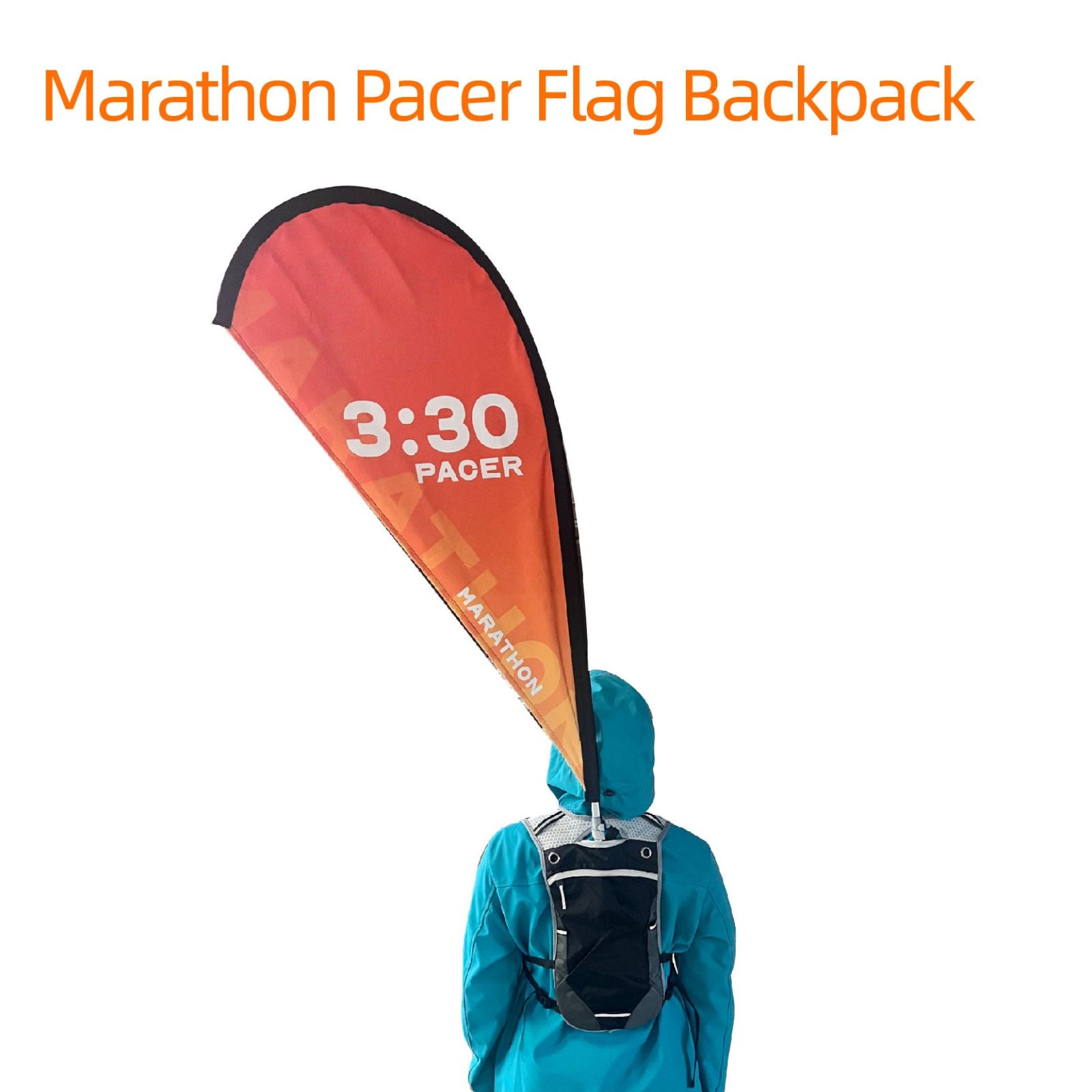
Marathon Pacer Flag
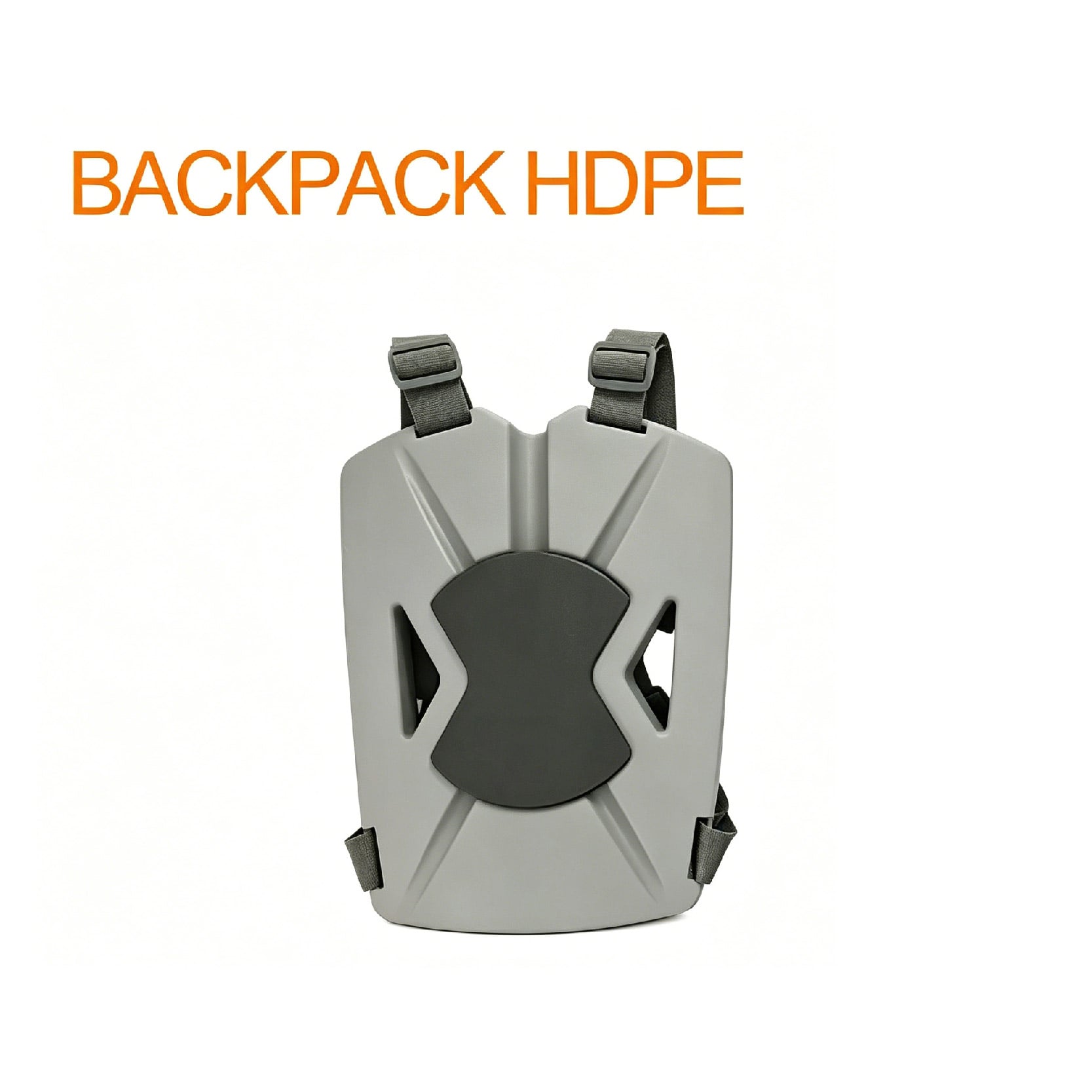
Backpack flag HDPE
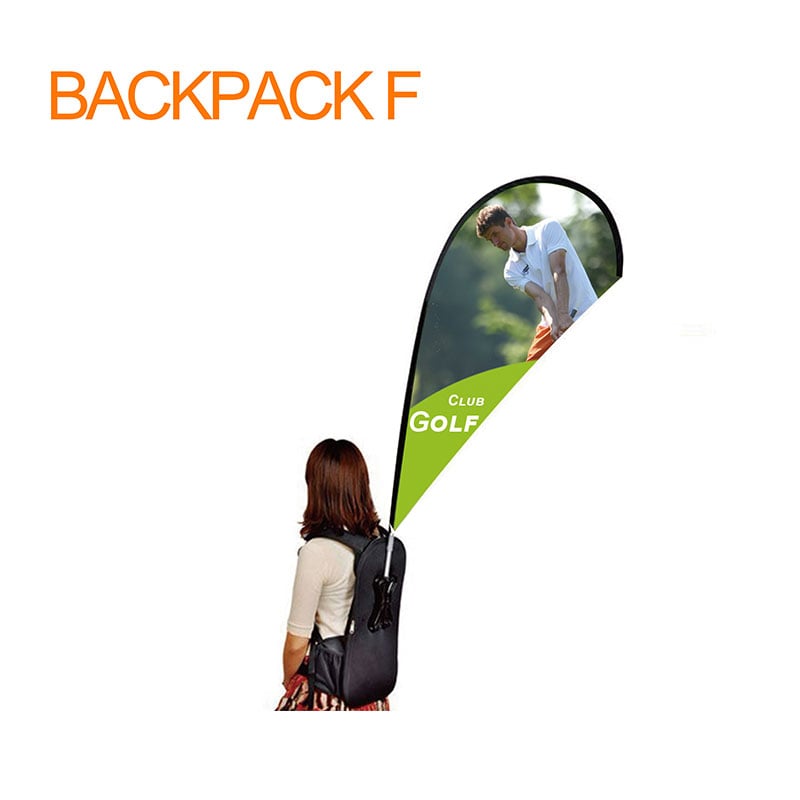
Backpack banner SFH
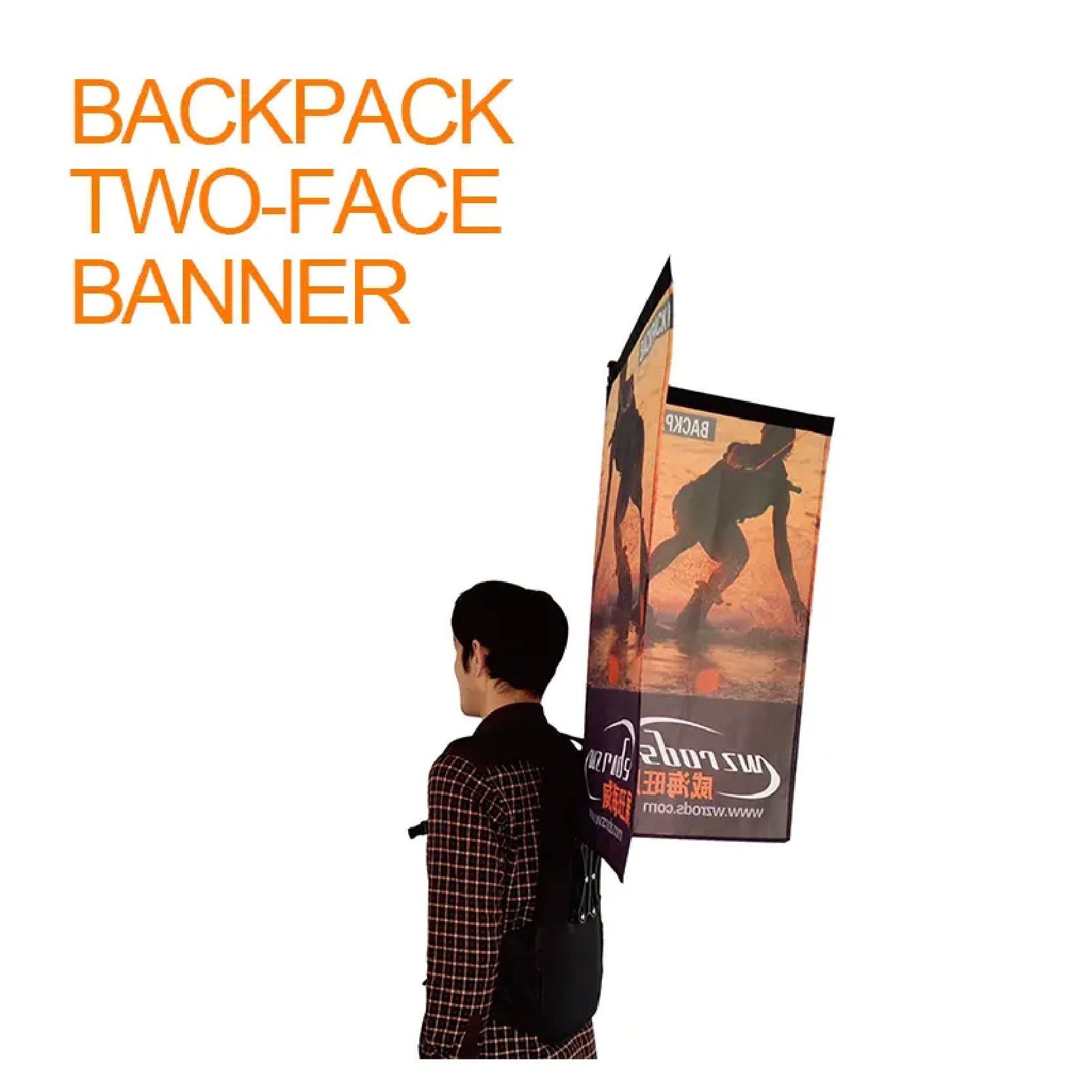
Backpack Two - Face banner
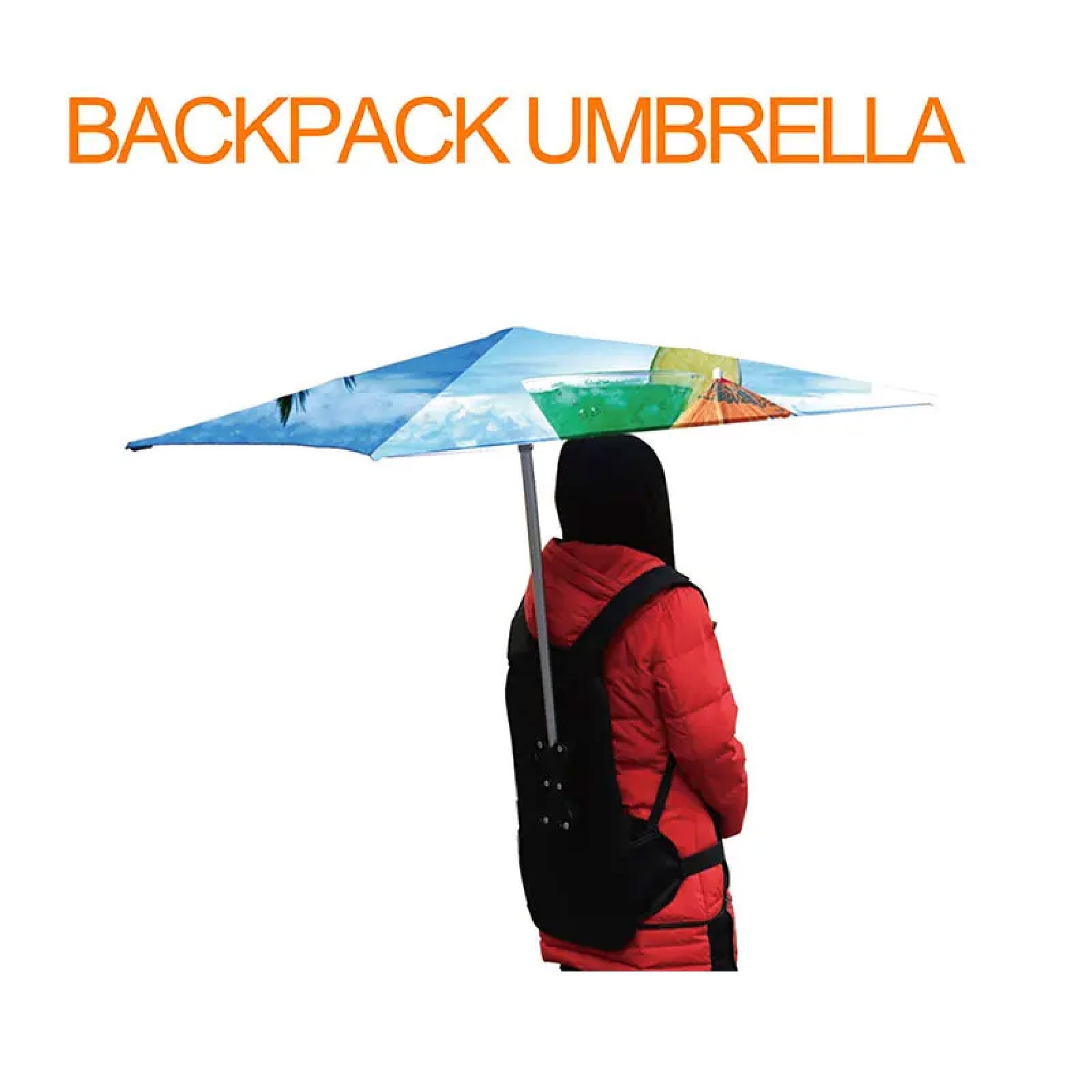
Backpack Umbrella
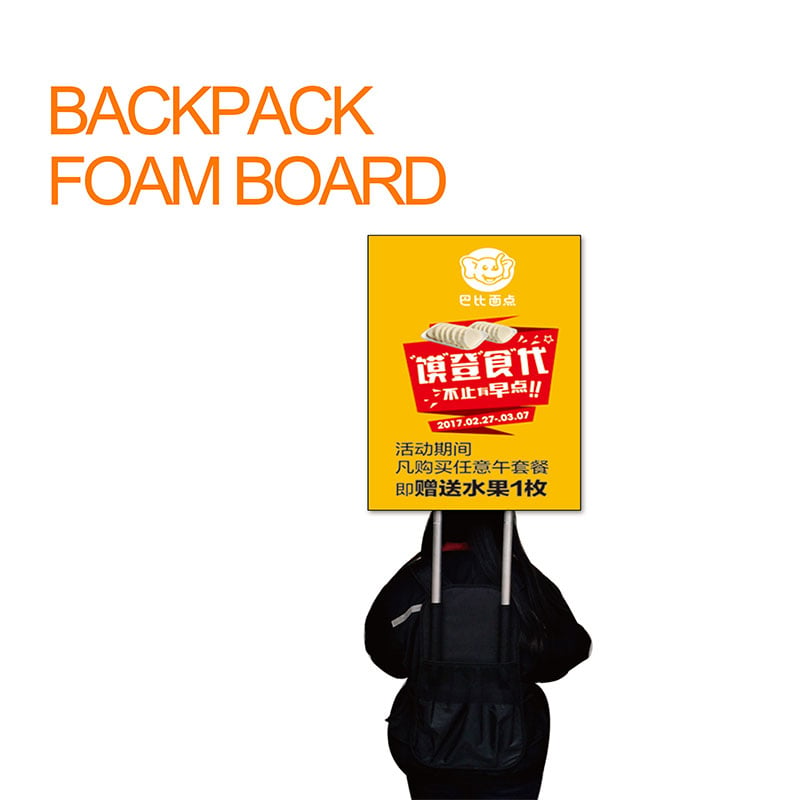
Backpack From Board
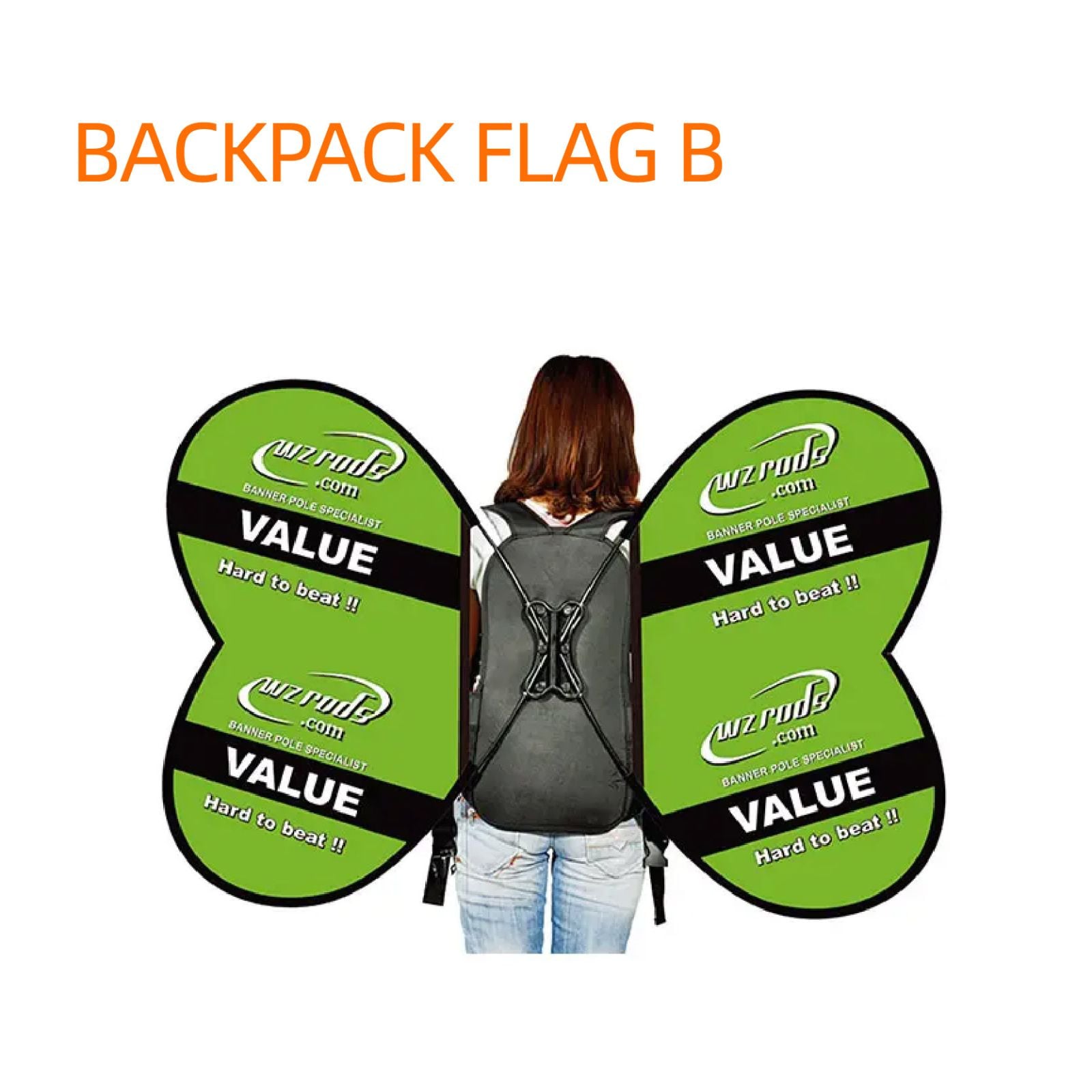
Backpack B
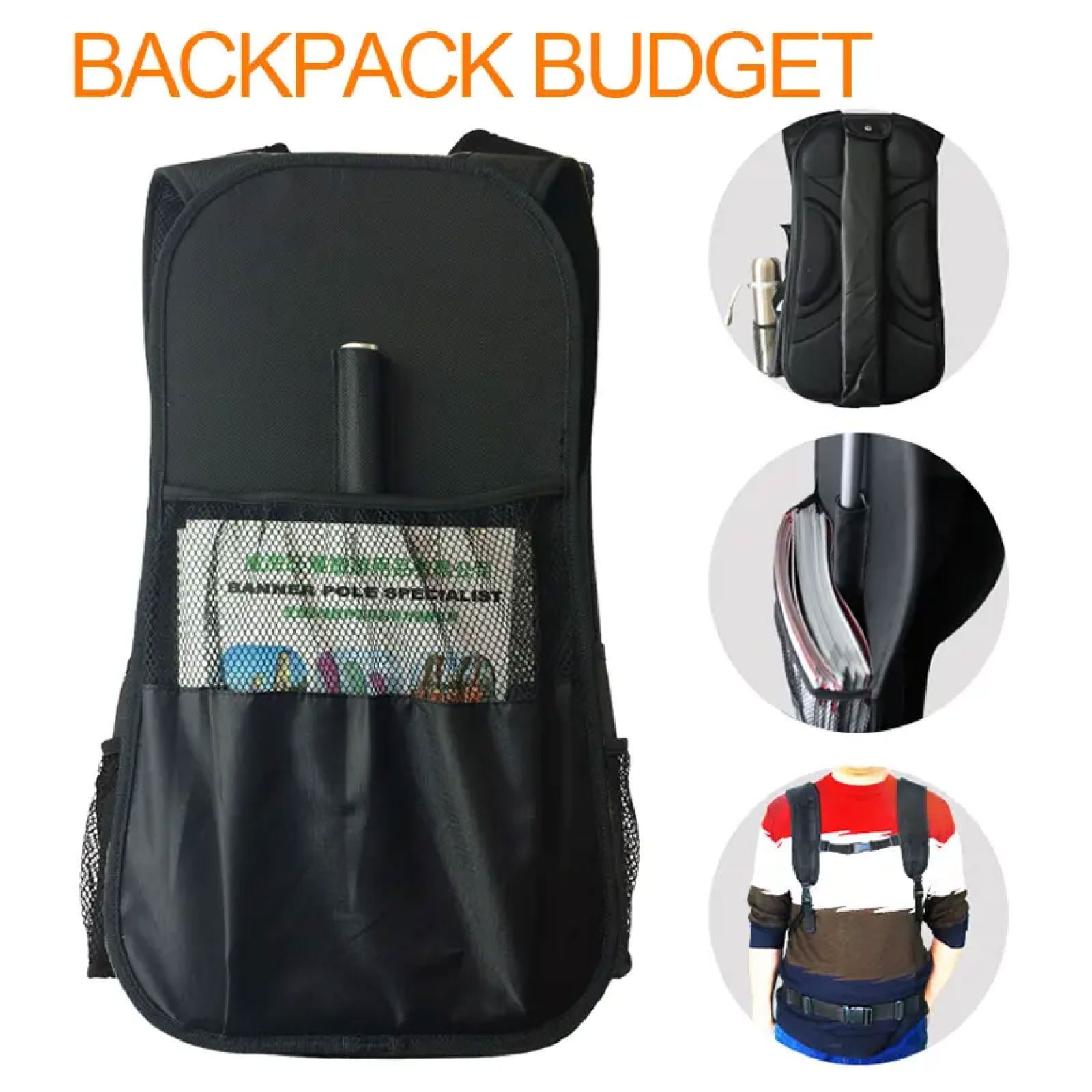
Backpack Budget
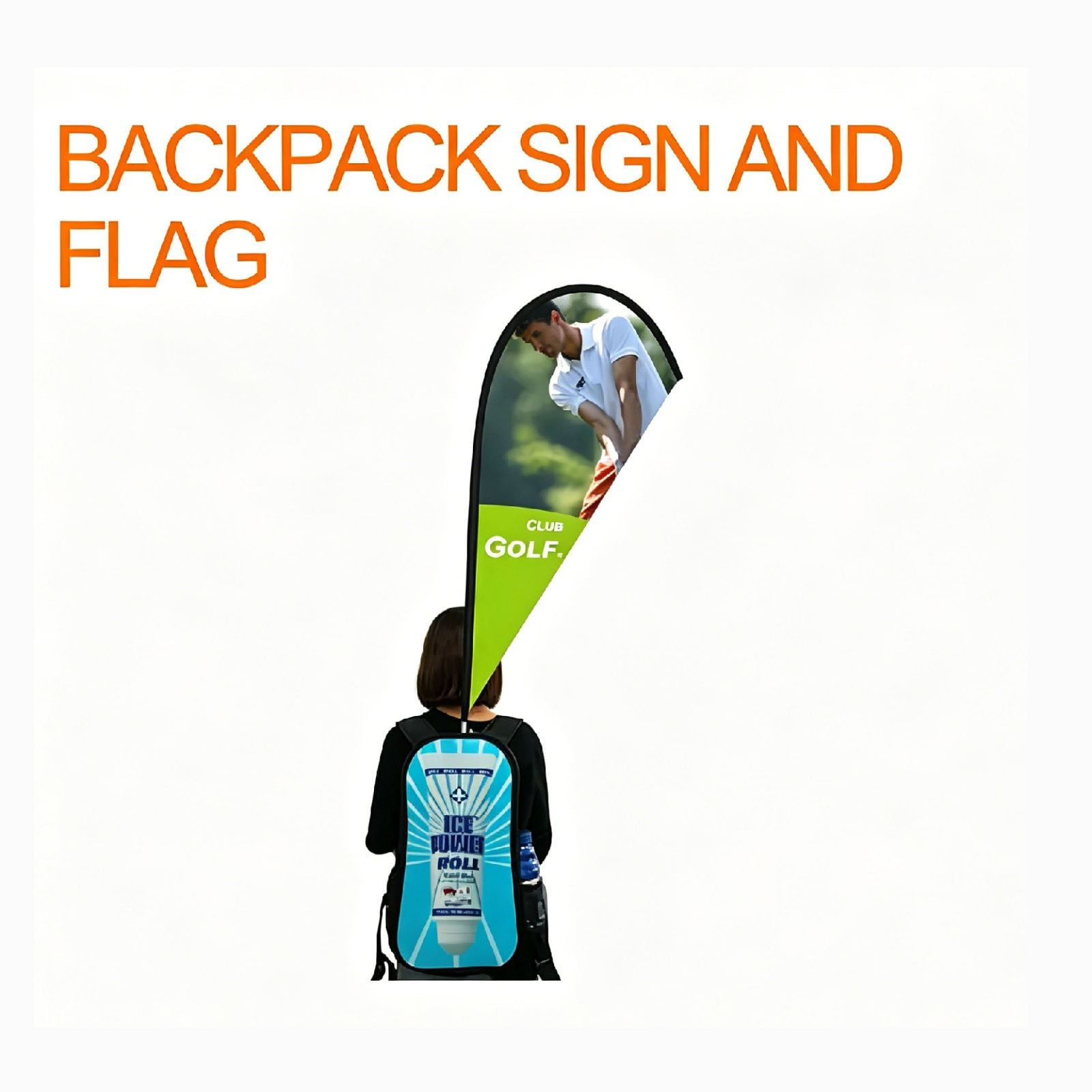
Backpack flag & sign
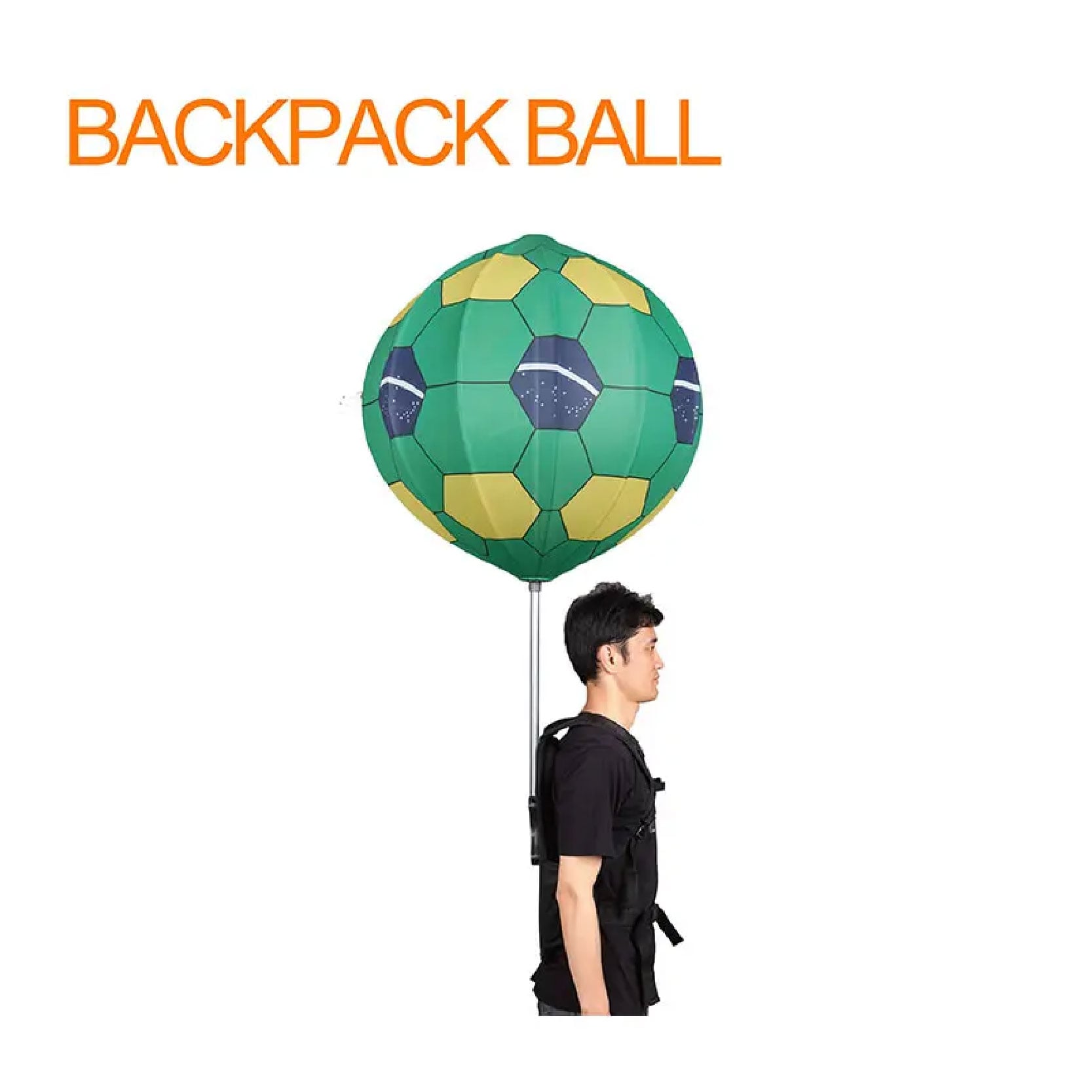
Backpack Ball
Related Articles
29kg Concrete Flag Base - The Complete B2B Buyer's Resource - WZRODS
WZRODS DY451B: 29 kg, HDPE shell, concrete core. Stackable, portable, rust-proof. FOB price US$5.75–$6.85 at MOQ 2 units. Those numbers look unremarkable. Factor in landed cost—import duties lower than aluminum’s under relevant HTS codes, freight savings from less weight per unit of stabilizing mas
Wide Tube Cross Base - The Complete B2B Buyer's Resource - WZRODS
The Wide Tube Cross Base, manufactured by Wzrods in Shandong, China, solves one problem: reliable stability for poles under three meters, without the freight costs and warehouse footprint that heavier alternatives demand.
Rectangular Pipe Cross Base - The Complete B2B Buyer's Resource - WZRODS
The pipe cross flag base is a cross of rectangular steel pipe, powder‑coated, weighing 1.3 kg and spanning 78 cm across its arms. Its center holds a C‑ring shaft that lets the flag rotate with the wind.
Economic Cross Base - The Complete B2B Buyer's Guide- WZRODS
When you buy an economic cross base—something like the Wzrods DM‑9, a 77 cm‑long, 1.3 kg iron cross—forget “economic” as a synonym for “cheap.” It means value-engineered.
Fountain Flag Base - The Complete B2B Buyer's Resource - WZRODS
Picture this: a major medical device trade fair in Düsseldorf. A 4‑pod fountain base holding the largest banner in Hall 3 collapses onto the neighboring booth.
Feather Flag - Professional Banner Poles & Systems Manufacturer - WZRODS
How to choose a high-quality backpack flag
The backpack flag concept centers on a frame carried on the back, similar to a backpack, specifically engineered to support a raised flag or banner.
Tornado Rotating Banner - The Complete B2B Buyer's Guide- WZRODS
Two years ago, Mike, a Miami distributor, called after a weekend trade show. A thunderstorm had swept through. Every aluminum-framed 3D banner he owned was bent