
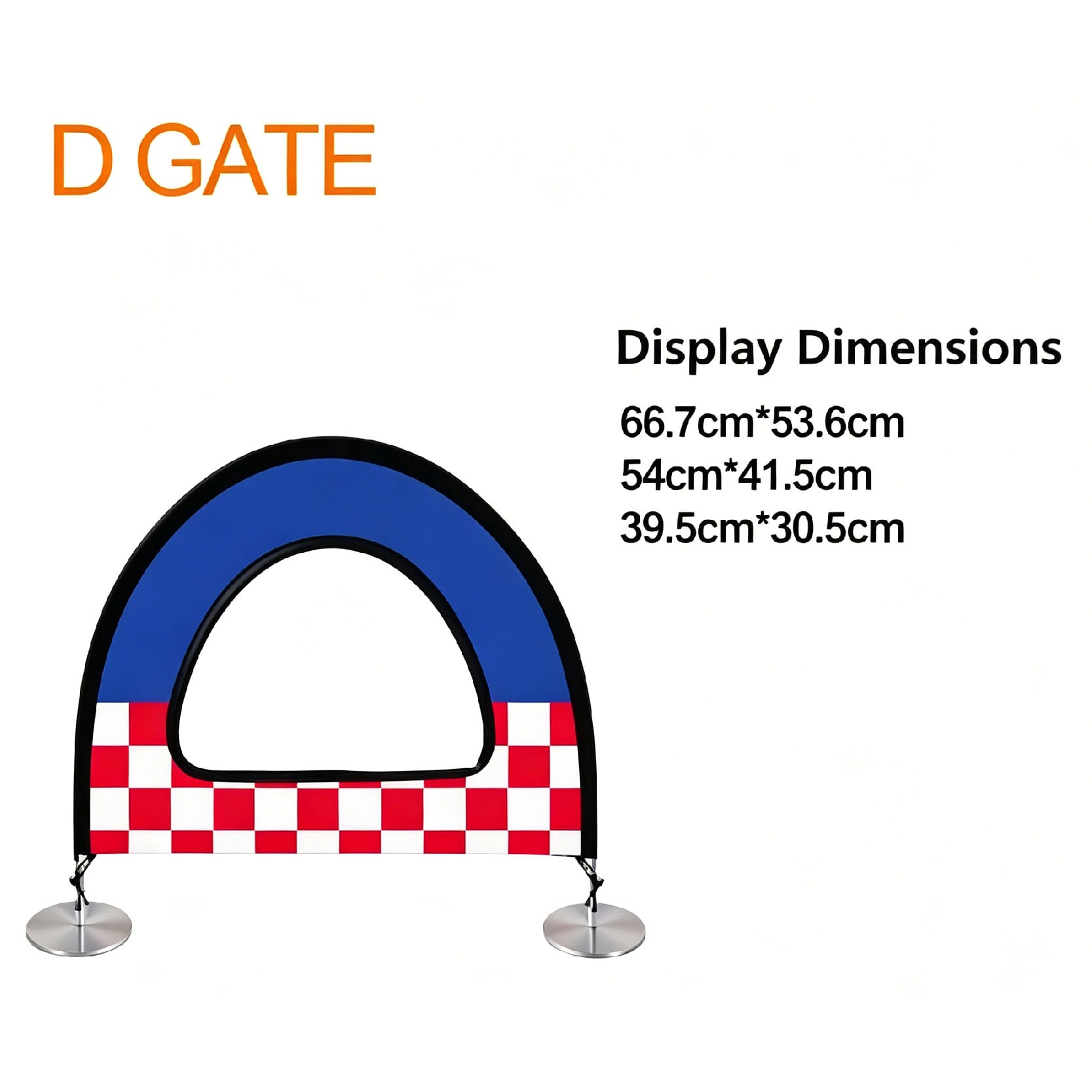
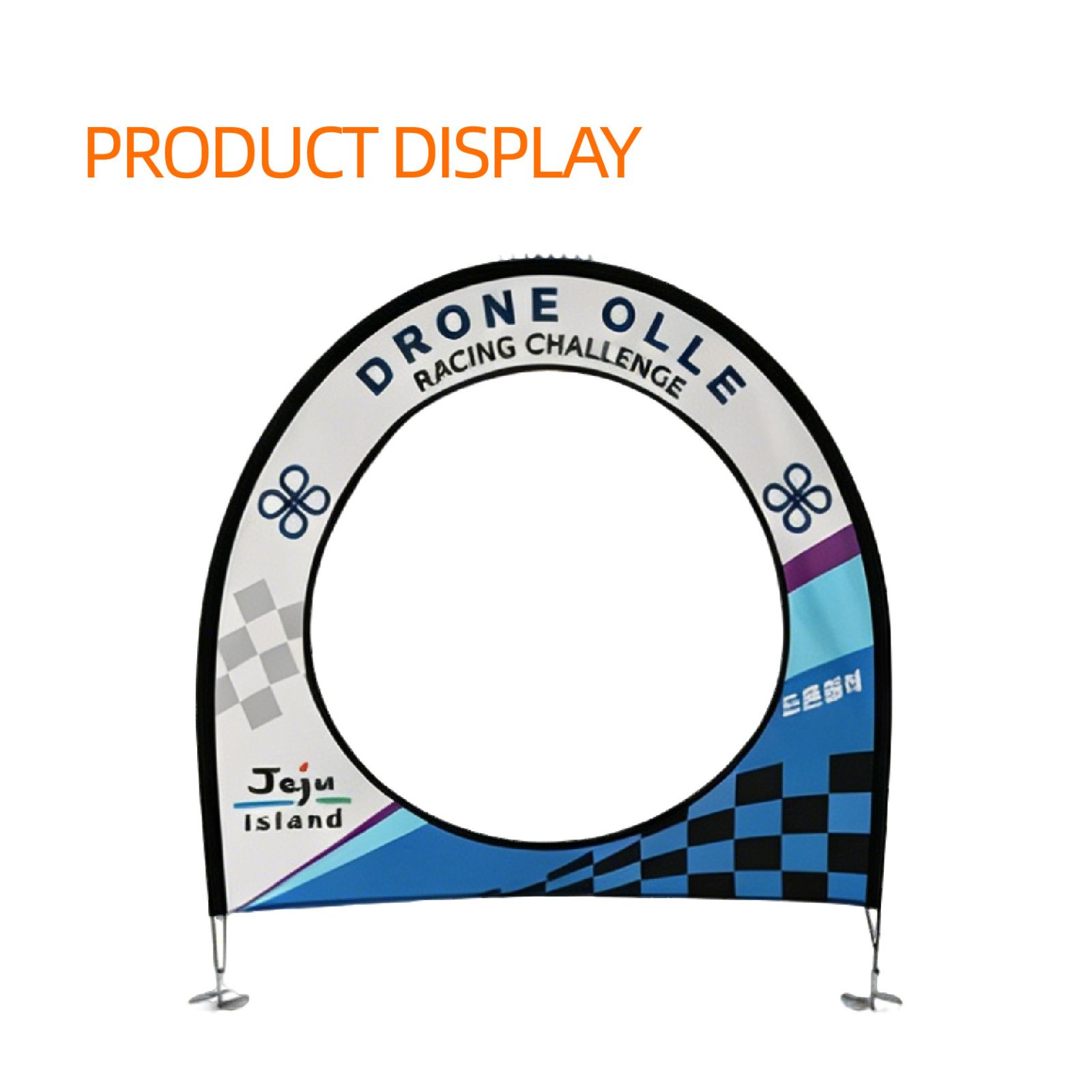
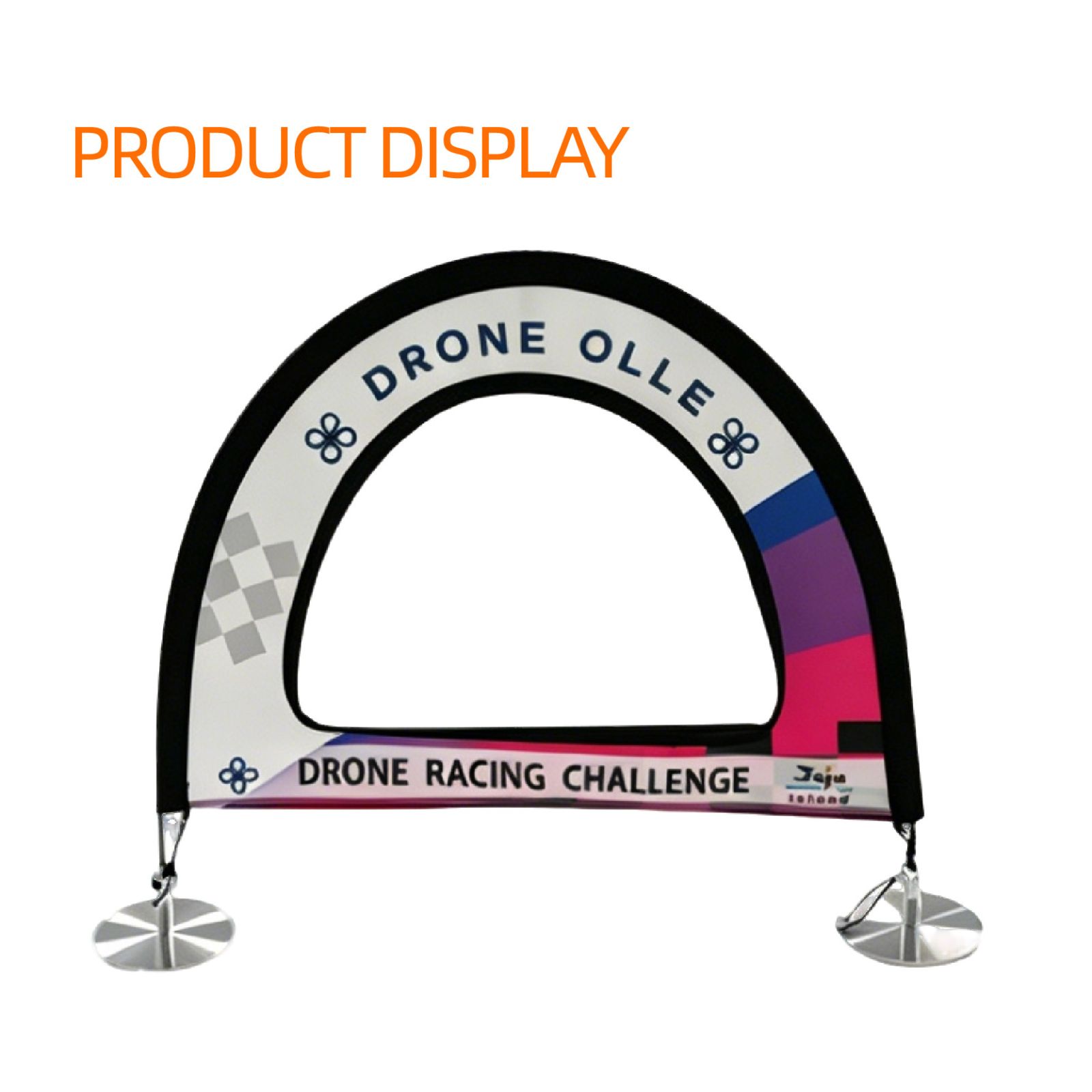
Mini D-Gate
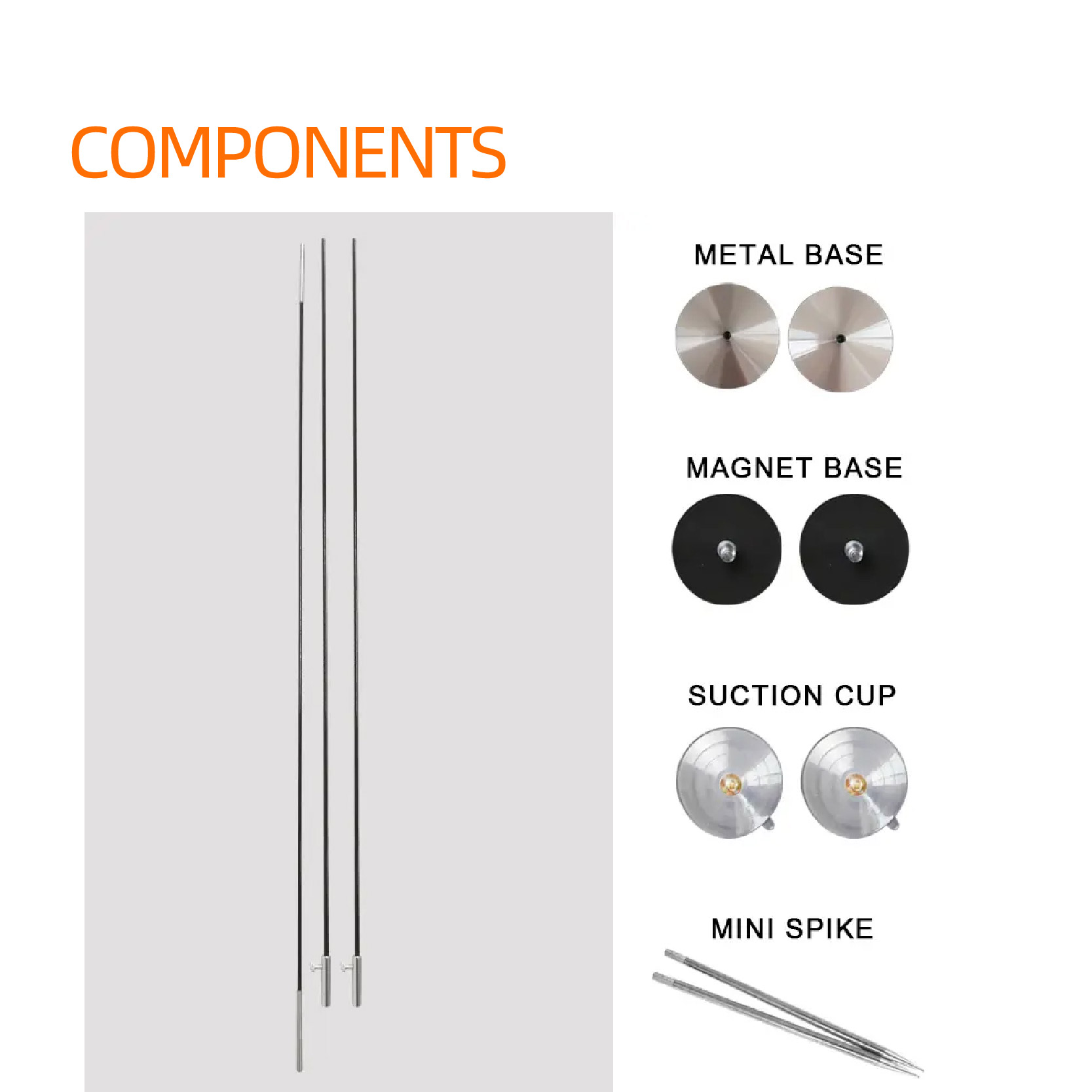
Mini D drone racing gate same usage as ring gate. Solid fiberglass frame with metal ferrules, diverse stable bases, easy assembly, lightweight and portable with carry bag.


 Article
 Specifications
- Origin
- China
- Pole Material
- Carbon Composite
- Banner Material
- 110G Polyester Fabric
- Application Spec
- Event Entrances, Festivals, Trade Shows, Sports Events
- Printing Method
- Heat Transfer Printing
- Style
- Corporate, Cross, Sports, Seasonal, Holiday, Angel, Patriotic, Political
- Product Type
- promotional products
- Technique
- Printed
- Item Code
- CYM-M1/M2/M3
- Display Size
- 39.5*30.5cm/54*41.5cm/66.7*53.6cm
 Product Description
Shipping & Packaging
- Unit Weight
- Sample weight: 0.09kg
- Unit Size
- 58*50(cm)
- Packaging
- Standard export carton
- Lead Time
- 15-30 days
Pricing
- MOQ
- 1 set
- Price Range
- USD 1.9 – 2.8
* FOB Qingdao. Excludes shipping & taxes. Accessories & customization confirmed separately.
 Sample Service
- Sample Available
- Yes
 Customization Options

Light Custom
Logo, color, size adjustments

Fast Turnaround
Quick custom order processing
Mini D-Gate - The Complete B2B Buyer's Resource - WZRODS
I still remember the sound: a sharp metallic whang, then the flap of torn polyester. Friday afternoon, Dongguan exhibition hall. A drone racer clipped an aluminum D gate at full throttle. The frame bent inward. The banner split at the heat‑transfer seam. The whole structure toppled onto the timing system. I was the show’s procurement lead, staring at the mess. That should not have happened. It did, and it launched a two‑year investigation into what makes a simple event gate reliable—or a liability. My name is Wei Chen. I hold a B.S. in Supply Chain Management from Michigan State and manage a $4.2 million annual hardware procurement budget for display systems that ship to forty‑odd countries. Here is what I learned, and how to avoid my mistakes.
I will not hand you a feature list. Instead, I will walk you through the category the way I came to understand it: by pacing, thinking, and pulling apart the problem. A mini D gate looks simple—fiberglass or aluminum frame, printed banner, bases, a carry bag. Underneath lies material science, trade compliance, logistics math, and supplier performance pitfalls most first‑time buyers never see until customs seizes the container or the gate snaps in front of a client. Let us lay it out so you can source with confidence, not hope.
Buyer’s Guide: The Wrong Way and the Right Way to Source Mini D Gates
When I first put out an RFQ for mini D gates, I did what anyone would do: I searched Alibaba, found three factories with similar pictures, and asked for the ex‑works price. The quotes came back between $1.90 and $2.80 per set, FOB Shenzhen. I picked the middle one because it seemed safe. I did not ask about the aluminum alloy, the base design, or the HTS code. That was a mistake, and it cost me $9,400 in customs penalties and a ruined relationship with a German trade‑show client.
Since then, I have used a four‑part framework. First, you compare physical properties of the materials—not just what they are called, but what they can withstand. Second, you engineer the stability system for the actual venue floors and outdoor wind. Third, you map the import classification and anti‑dumping exposure before you sign the purchase order. Fourth, you build a total cost model that includes freight by dimensional weight, duty rates, warehouse footprint, and replacement rate. Skip any one of those, and you are gambling.
Now, the mini D gate is a small‑footprint barrier, originally designed for FPV drone racing. Its “D” shape—flat bottom, curved top—is not just for style. The flat bottom allows flush placement with suction‑cup bases, and the curved arch reduces stress concentrations when a quadcopter strikes it. Think about it. The frame uses solid fiberglass rods joined by metal ferrules; you can assemble it in a couple of minutes without tools. Because it packs down to a bundle no bigger than a folded umbrella, freight is low. But that advantage depends on the material being genuinely lightweight and durable. That is where the material deep‑dive begins.
Product Comparison: Aluminum Alloys, Carbon Composite, and What Actually Happens Under Load
In practice, I started taking things apart. I cut sections of failed aluminum poles and sent them to a lab. The report: 6063‑T5 alloy, yield strength 145 MPa. Meanwhile, I had a carbon composite sample from WZRODS—the first composite flag‑pole manufacturer in China, established 2005—and I could not bend it by hand. My curiosity got the better of me, and I began to think like an engineer, even though my procurement role did not require it.
The Three Common Aluminum Alloys and Their Limits
| Alloy & Temper | Yield Strength (MPa) | Tensile Strength (MPa) | Elongation (%) | Weight per Linear Meter (12mm OD tube) | Typical Failure in D Gates |
|---|---|---|---|---|---|
| 6063‑T5 | 145 | 185 | 12 | 0.098 kg | Permanent bending after impact; fretting corrosion at ferrule joints |
| 6061‑T6 | 276 | 310 | 12 | 0.102 kg | Less bend, but still kinks; salt‑air pitting in coastal zones |
| 6082‑T6 | 260 | 310 | 10 | 0.101 kg | Similar to 6061; higher cost limits adoption |
What I realized was that yield strength tells only half the story. When an aluminum pole deforms, it stays deformed. You can bend it back, but the metal is now work‑hardened and weaker at the kink. A carbon composite pole bends under load and snaps back. The fiberglass matrix stores elastic energy and returns to its original shape unless you exceed its ultimate tensile strength—around 590 MPa for a good S‑glass‑filled composite. That is why composite frames have overtaken aluminum in drone gates: they do not stay bent after a hit.
Carbon Composite vs. Aluminum: The Real‑World Difference
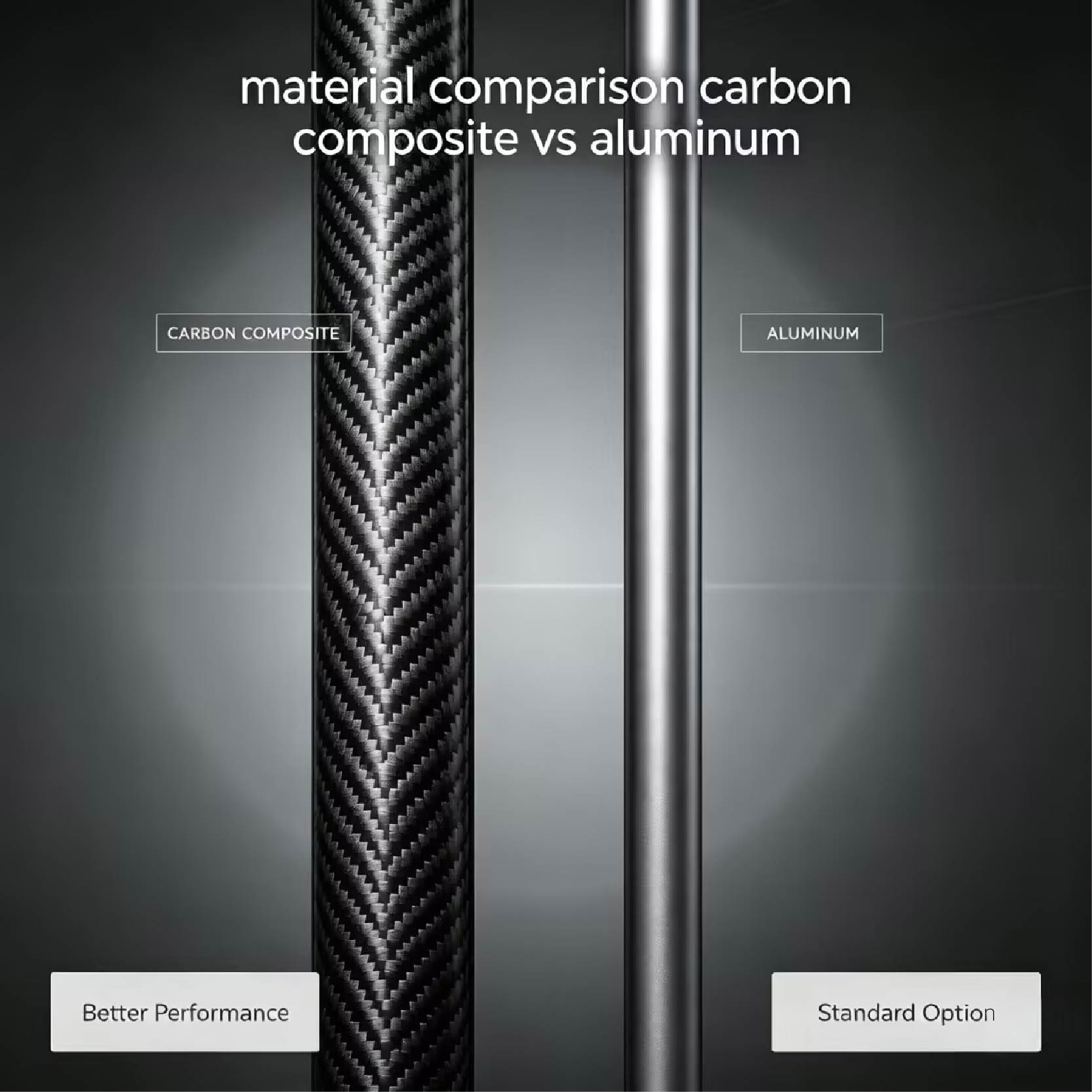
Consider a gate that must survive fifty assembly‑disassembly cycles and a dozen outdoor festivals. In aluminum, cumulative micro‑damage from handling and vibration loosens the ferrule fit, causing wobble. In composite, the material damping is higher, and the ferrule stays tight. Your margins will notice. We tested a set of carbon composite mini D gates from WZRODS at a beach volleyball event in Phuket. After ten days of salt spray and monsoon rain, the frame edges were unmarked. An identical set of 6061‑T6 gates, stored in the same tent, showed white filiform corrosion under the powder coating. You cannot see that difference in a catalog photo, but your replacement order book will feel it.
Stability Systems: Bases Are Not an Afterthought
I once set up a mini D gate on polished concrete with standard suction cups. A draft from the loading door slid it sideways within three seconds. I had overlooked the fact that lateral resistance depends on friction, not suction. Physics lesson: a gate must stay put under wind loads of at least 5 Pa indoors and up to 30 Pa outdoors—roughly a 15‑mph breeze. For a typical 66 cm tall mini D gate, that means the base must provide a static weight or mechanical anchor sufficient to generate a restoring moment. A 2 kg aluminum base per upright does the job, but adds weight to your freight. Ground spikes work for grass, not for indoor courts. So the compatibility between the pole‑end ferrule and the base connection is critical. WZRODS provides a unified 12 mm pin‑lock system that accepts suction cups, magnetic pads, ground spikes, and weighted aluminum plates—all locking with the same quarter‑turn. That modularity reduces the number of SKUs you need and, more importantly, reduces the chance that a worker will force the wrong base onto the wrong pole, stripping the ferrule thread. I have seen that happen. It ruins a $30 gate in five seconds.
ROI Analysis: Freight, Duty, and the Total Cost You Actually Pay
Procurement people love to talk about ex‑works price. But a landed cost is the only thing that hits your P&L. I built a model for a container of 1,000 mini D gate sets, shipped from Shenzhen to the Port of Los Angeles. Here is the comparison between a standard 6063‑T5 aluminum set and the carbon composite equivalent from WZRODS, assuming identical packaging cartons of 58×50×25 cm and a chargeable weight of 21 kg per carton (10 sets per carton).
| Cost Element | Aluminum 6063‑T5 Gate | Carbon Composite Gate |
|---|---|---|
| Unit Ex‑Works (per set) | $2.20 | $2.60 |
| 100‑set Packaging & Palletization | $0.18 / set | $0.16 / set |
| Ocean Freight (LCL, per set) | $0.97 | $0.85 |
| Duty (US HTS) | Aluminum art. 7616.99: 2.5% base + possible AD/CVD 86.01% | Composite art. 3926.90.9990: 5.3% base + 25% Section 301 = 30.3% total |
| Landed Cost (per set, excluding AD/CVD) | $3.43 | $4.70 |
| Landed Cost if AD applies (86.01%) | $6.31 | $4.70 |
| Replacement Rate (2 years) | 18% | 4% |
| Total Cost of Ownership per Set over 2 Years | $7.45 | $4.89 |
The aluminum gate looked cheaper until the anti‑dumping duty hit and the gate bent on its third use. The carbon composite gate, even with the Section 301 tariff, ends up costing far less over two years once you account for the low replacement rate and the predictability of the duty line. Its carton compresses more because the poles are thinner‑walled for the same stiffness, so your freight forwarder charges you for less volume. The composite duty is 30.3%—5.3% base plus 25% China‑specific tariff—but there are no anti‑dumping orders under Chapter 39. If you ship to the EU, the tariff code shifts to 3926.90.97, also without trade defense measures. This coding knowledge alone saved my company $23,000 in one fiscal year.
Applications: When the Gate Must Do More Than Stand
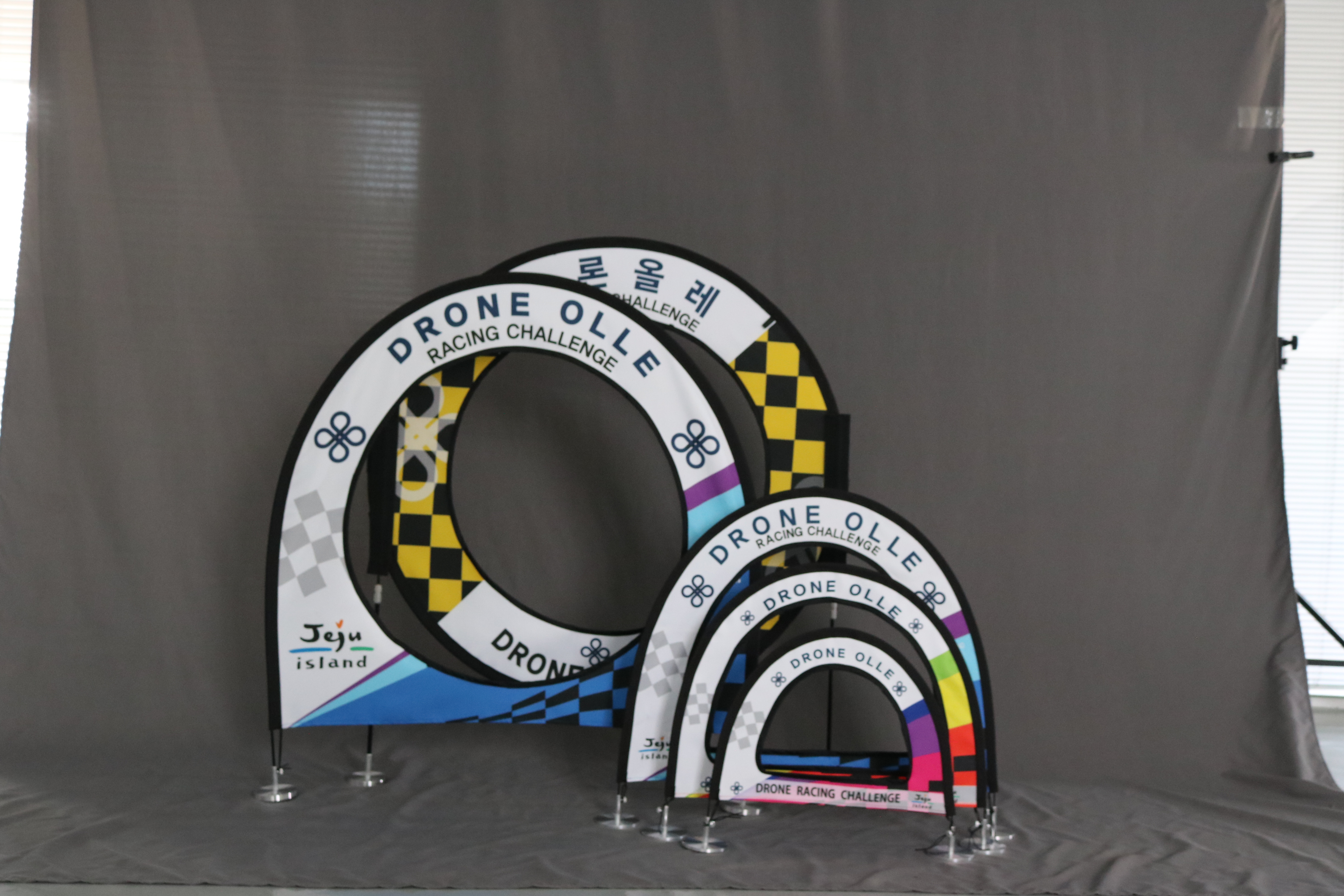
A drone racing league in Texas needed gates that could be set up on a basketball court, then moved outdoors onto a grassy field within the same afternoon. They required suction cups indoors and ground spikes outdoors. The tournament director told me, “If I have to carry two sets of bases, I will find another supplier.” WZRODS solved that with a quick‑release base adapter that accepts both, using the same pin‑lock ferrule. The gate became the league’s standard. That kind of application thinking separates a gate from a true event system.
For trade‑show entrance branding, the banner material matters as much as the frame. The 110‑gram polyester fabric, printed with heat transfer, delivers color fastness of grade 4‑5 under ISO 105‑B02. That means a full‑color logo will not fade after a week under halogen spotlights. At a medical device expo in Dubai, we used custom‑printed mini D gates at each aisle entrance. The organizer asked to keep them afterward because the graphics still looked fresh. That is free marketing for your customer.
Factory Process: How a Composite Gate Is Made, and How to Avoid a Bad Lot
I visited the WZRODS factory in Ningbo on a Tuesday in March. What actually happens: Fiberglass roving is pulled through a resin bath, wound onto a mandrel, and heat‑cured under tension. The metal ferrule is pressed and glued into the tube end with a structural adhesive; every joint is tested to 300 N pull‑out force. For each batch, they cut a random sample and run a cyclic bending test—5,000 cycles at a 20‑degree deflection—to simulate gate assembly and transport vibration. That level of production testing is not something you see on a standard spec sheet. If you ask a factory for the test report and they cannot provide one, walk away.
The printing uses a rotary heat‑transfer machine that holds temperature within ±2°C, ensuring color consistency across 500‑piece runs. The seam is folded and welded, not stitched, so there is no needle hole to initiate a tear. I have had stitched banners fail at the seam because the thread rotted in humidity. The welded seam holds over 15 N/cm tensile strength, tested per ASTM D751. When I audit suppliers, I check the calibration records for the heat‑press thermocouple. If the records are missing, I reject the lot. That may sound harsh, but my job is to make sure rejections do not happen after the container arrives.
Customization is straightforward. You can have your logo printed on the banner, and the frame color can be matched to a Pantone number. But you must send a vector file, not a JPEG scaled up from a web thumbnail. I once had a client send a 72‑dpi image; the printed banner looked like a mosaic. Now I insist on a physical color proof shipped via DHL before the production run starts. That adds three days, but it saves a batch of 2,000 banners from the incinerator.
Trends: Anti‑Dumping, Light‑Weighting, and the Compliance Stack
If you import aluminum extrusions from China into the United States, you are walking a tightrope. The Department of Commerce has maintained anti‑dumping and countervailing duties on aluminum extrusions since 2011. The current China‑wide rate sits at 86.01%. An aluminum gate frame, if classified by U.S. Customs as a fabricated extrusion, can be swept into that order. I have seen a shipment of 500 aluminum D gates detained at Long Beach for six weeks while the importer argued with CBP over HTS classification. The cargo was eventually abandoned. That loss is unrecoverable.
The market is shifting to non‑metallic alternatives precisely because tariffs do not touch them—though they do face the Section 301 tariff. Carbon composite gates avoid the entire aluminum anti‑dumping risk. They still attract a 25% Section 301 surcharge, bringing the total duty to 30.3%, but that is a known, fixed cost. Combine that with the lightweight trend: container spot rates from China to the U.S. West Coast have risen roughly 90% since early 2021, according to the Freightos Baltic Index. Every kilogram you shave from your product reduces your per‑unit landed cost. The carbon composite mini D gate from WZRODS weighs just 0.09 kg for the frame—the fully assembled gate with banner and carry bag stays under 1.2 kg. You can fit three into a flat‑rate e‑commerce box for direct dropshipping. That logistics advantage is something aluminum cannot match.
Compliance is also moving into areas like CPSIA for children’s products. These gates are not toys, but if your customer is a school or a youth drone league, they will ask for a certificate showing that the banner fabric dye contains no lead. Having that documentation ready at the point of sale is now a buyer expectation. The WZRODS technical file includes EN 71‑3 migration of certain elements for the polyester and a REACH SVHC declaration for the composite. That compliance stack makes an import broker’s life easy—and a buyer’s sleep deeper.
Upgrade Solution: Moving from Aluminum to Carbon Composite Without Losing Inventory Value
When I presented the TCO model to our finance director, she agreed to replace our entire inventory of aluminum gates with carbon composite in two phases. We sold off the remaining aluminum stock to a rental house at a small discount—they were happy to have them for indoor use where wind was not an issue and the anti‑dumping duty had already been paid. The transition cost us nothing extra in the annual budget because the lower duty and freight savings in the first three orders paid for the higher ex‑works unit price. By the end of the fiscal year, our event hardware cost line was 12 percent lower than it had been with aluminum, and we had zero field failures requiring emergency reprints.
The upgrade is not about switching a part number. It is about re‑engineering the supply chain to accept modular bases and unified ferrule systems. Once we standardized on the WZRODS 12 mm pin‑lock, we could mix and match gates and bases from different events without confusion. The site crew built barriers in half the time. I even received an email from a drone event coordinator who wrote, “Your gates are boring—in a good way. They just work.” That is a higher compliment than any spec sheet can give.
Frequently Asked Questions
- What is the minimum order quantity for a custom‑printed mini D gate?
- One set is the official MOQ. For custom printing, the economic quantity is about 50 sets to amortize the screen‑setup cost. Below that, digital heat transfer is available with no setup fee but a slightly higher per‑piece price.
- How long does production take, and can you rush an order?
- Standard lead time is 15 to 30 days from artwork approval. We can fast‑track to 10 days with an expedite charge of 15 percent, provided the base components are in stock. During Chinese New Year, add two weeks.
- Are the gates reusable and how many events will they last?
- In internal testing, a carbon composite gate survives over 200 full assembly cycles without ferrule loosening. The banner, with proper care—no machine washing, spot cleaning only—lasts as long as the print does not fade, typically 2 to 3 years of heavy weekend use.
- What if the gate arrives damaged? Do you offer a warranty?
- We replace any component with a manufacturing defect free of charge, and we require photo evidence within seven days of delivery. Shipping damage claims must be filed with the carrier, but we assist with documentation. True factory defects are rare if the pre‑shipment inspection is done properly.
- Can the banner be printed on both sides?
- Yes, we can do double‑sided heat transfer printing using a block‑out layer in between so the image does not show through. This option is popular for aisle gates where pedestrians approach from both directions.
- Which base should I choose for my event surface?
- Suction cups for marble, epoxy, or glass‑smooth floors. Rubber‑tipped aluminum plates for carpet or slightly textured concrete—they rely on weight, not suction. Ground spikes for grass or dirt. Magnetic pads for steel floor plates in exhibition halls. I always ship a few extra universal bases because someone always loses one under the bleachers.
- Does the carbon composite gate really avoid US anti‑dumping duties?
- Yes. The AD order covers aluminum extrusions and products made thereof, under Chapter 76. Composite gates are classified under Chapter 39 (plastics) and face a total duty of 30.3% (5.3% base plus 25% Section 301), but no anti‑dumping exposure. If your gate includes a heavy aluminum base, U.S. Customs may want that portion invoiced and classified separately under Chapter 76. A competent customs broker can document the split. I have a flowchart I send to our import specialist before each shipment; it has kept us in the clear for three years now.
There is no mystery to a mini D gate that works, but there is a discipline. The discipline is to stop thinking of it as a piece of bent pipe and start thinking about the alloy, the tariff, the freight cube, and the repair rate. I learned that from a broken gate in Dongguan, a warehouse full of corroded poles in Thailand, and a customs audit that almost ended my career. Since then, I have handled procurement for over a million dollars’ worth of these gates, and I have never had a container held at the border or a gate collapse on a live drone time‑trial. That is not luck. That is what happens when
About the Author
Wei Chen, Senior Product Specialist
B.S. Supply Chain Management, Michigan State University; Certified Professional in Supply Management (CPSM)
12 years in B2B display hardware sourcing. Former procurement manager for a top 20 US promotional products distributor. Specializes in aluminum pole systems and import compliance.
Reviewed by WZRODS Technical Team. Updated: 2026-07-24
 Comments (0)
No comments yet. Be the first to comment!
Leave a Comment
Related Products
Director Chair
Cafe Barrier
Door Frame
Event Square Gate
Over The Table Banner
Big Arch Gate
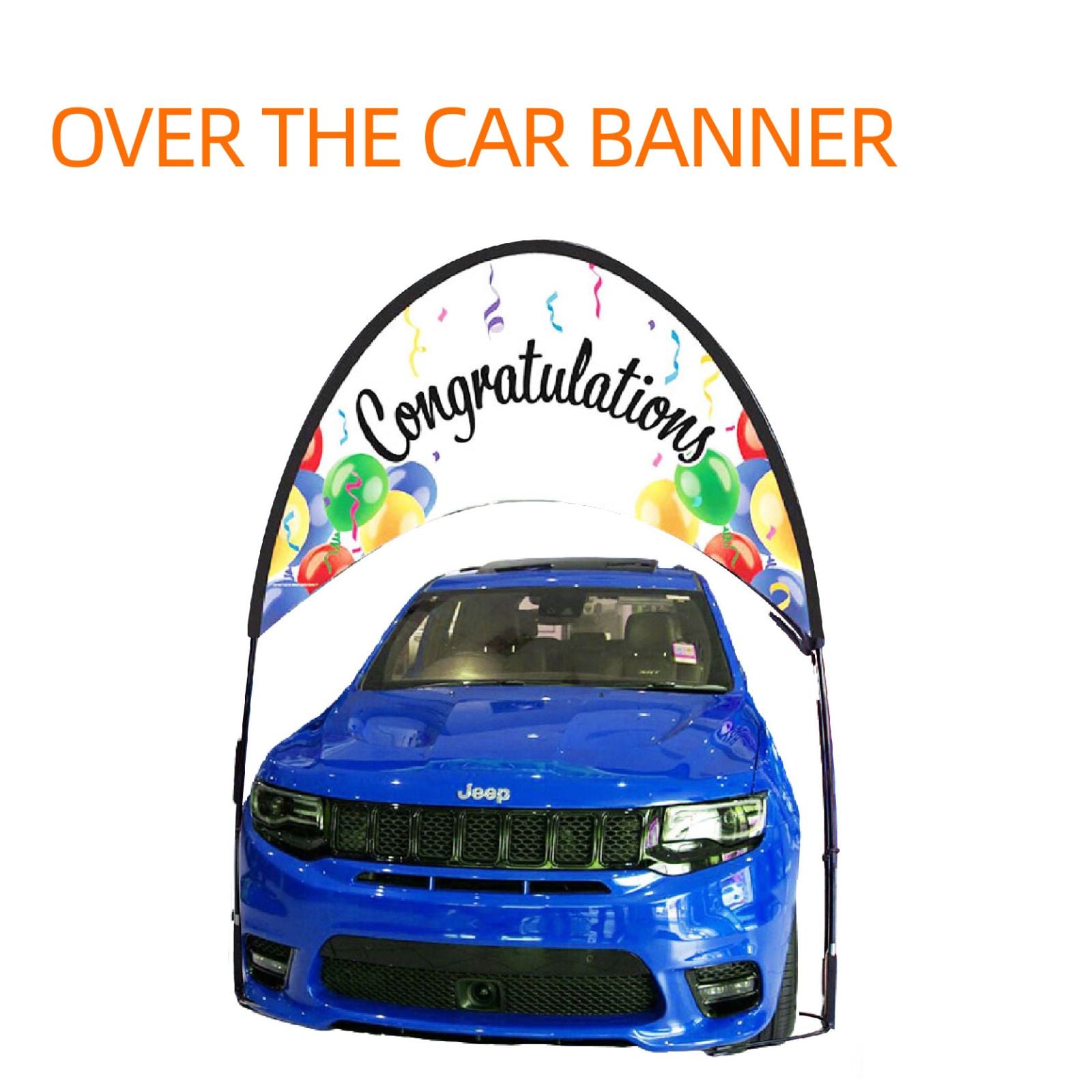
Over The Car Banner
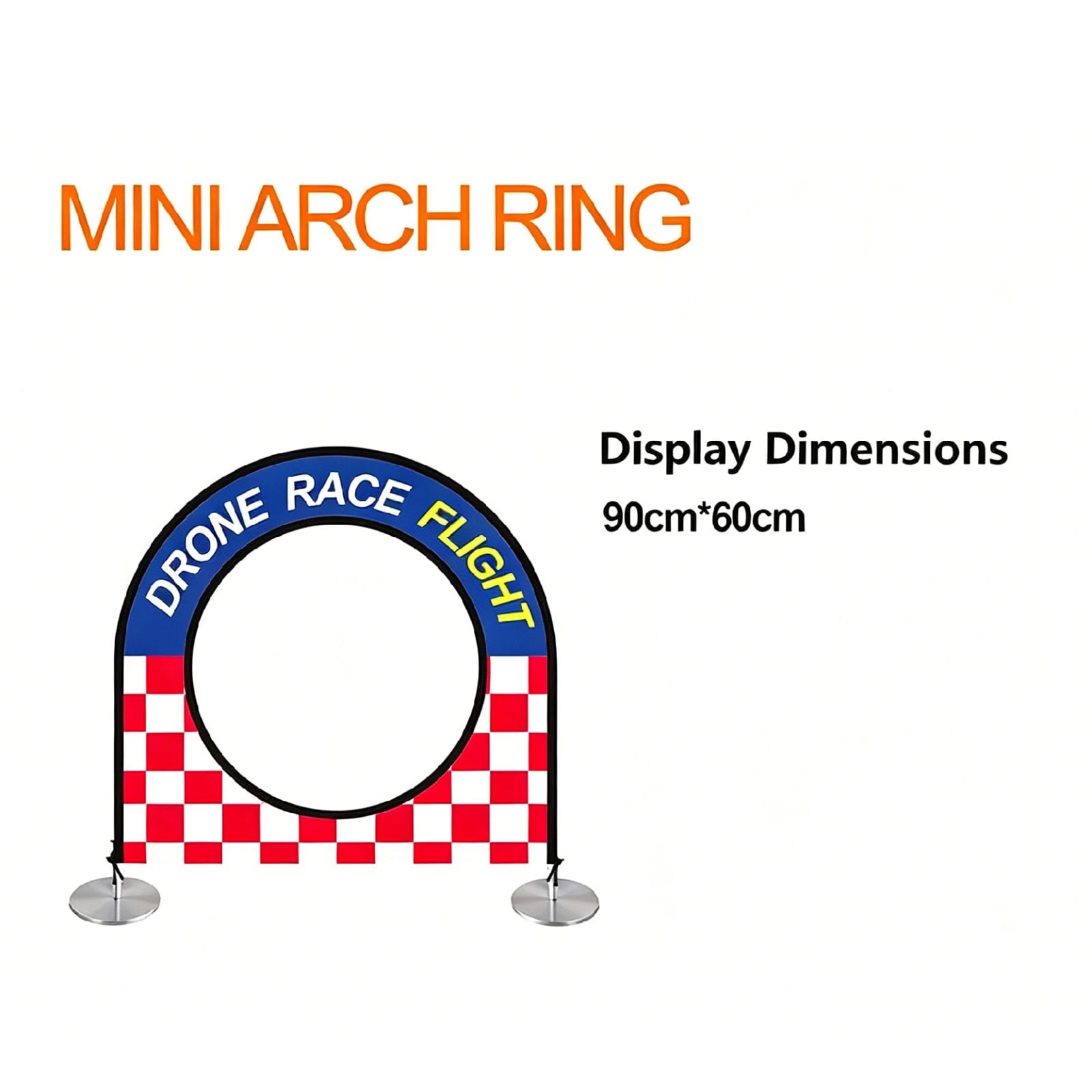
Mini round gate
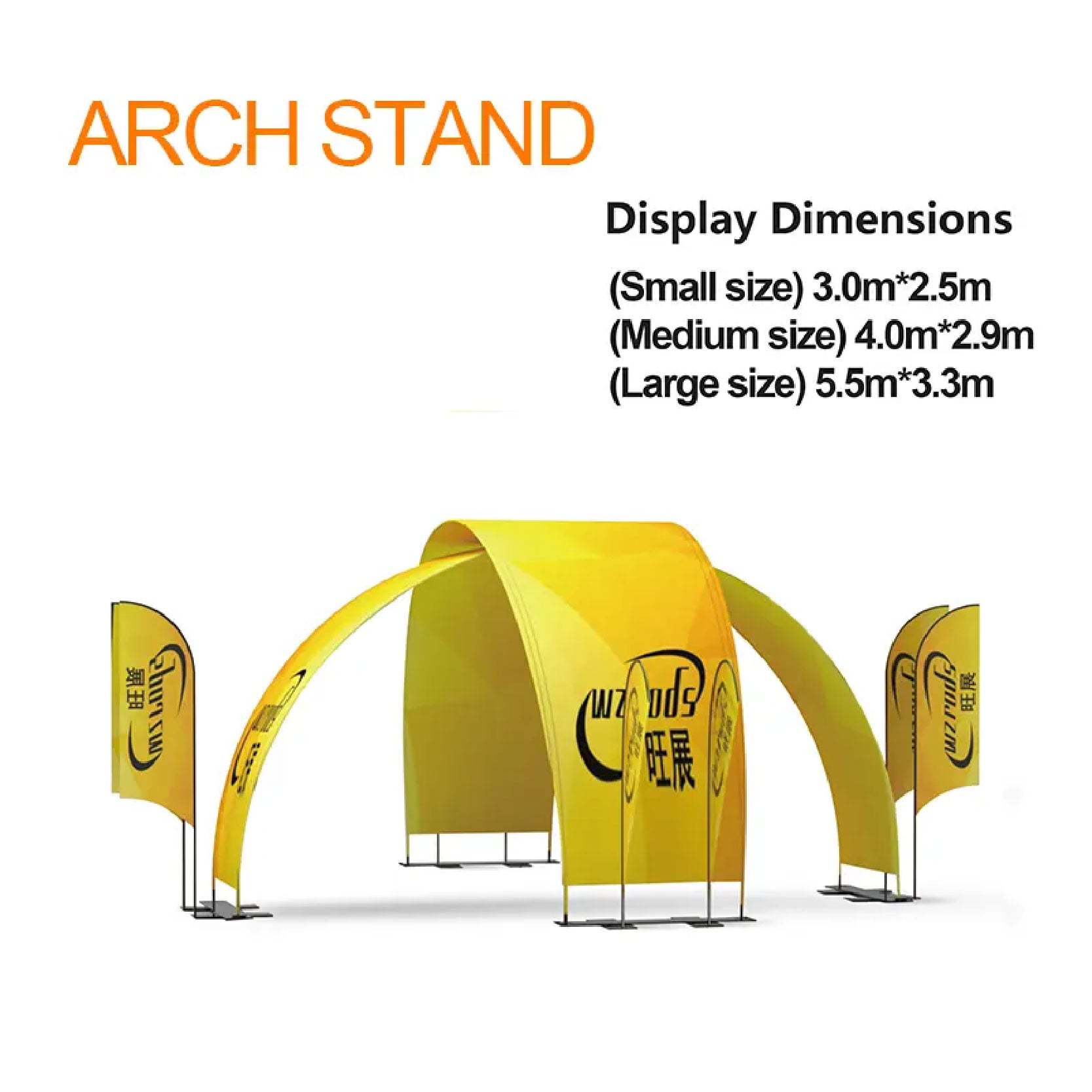
3D Arch Stand
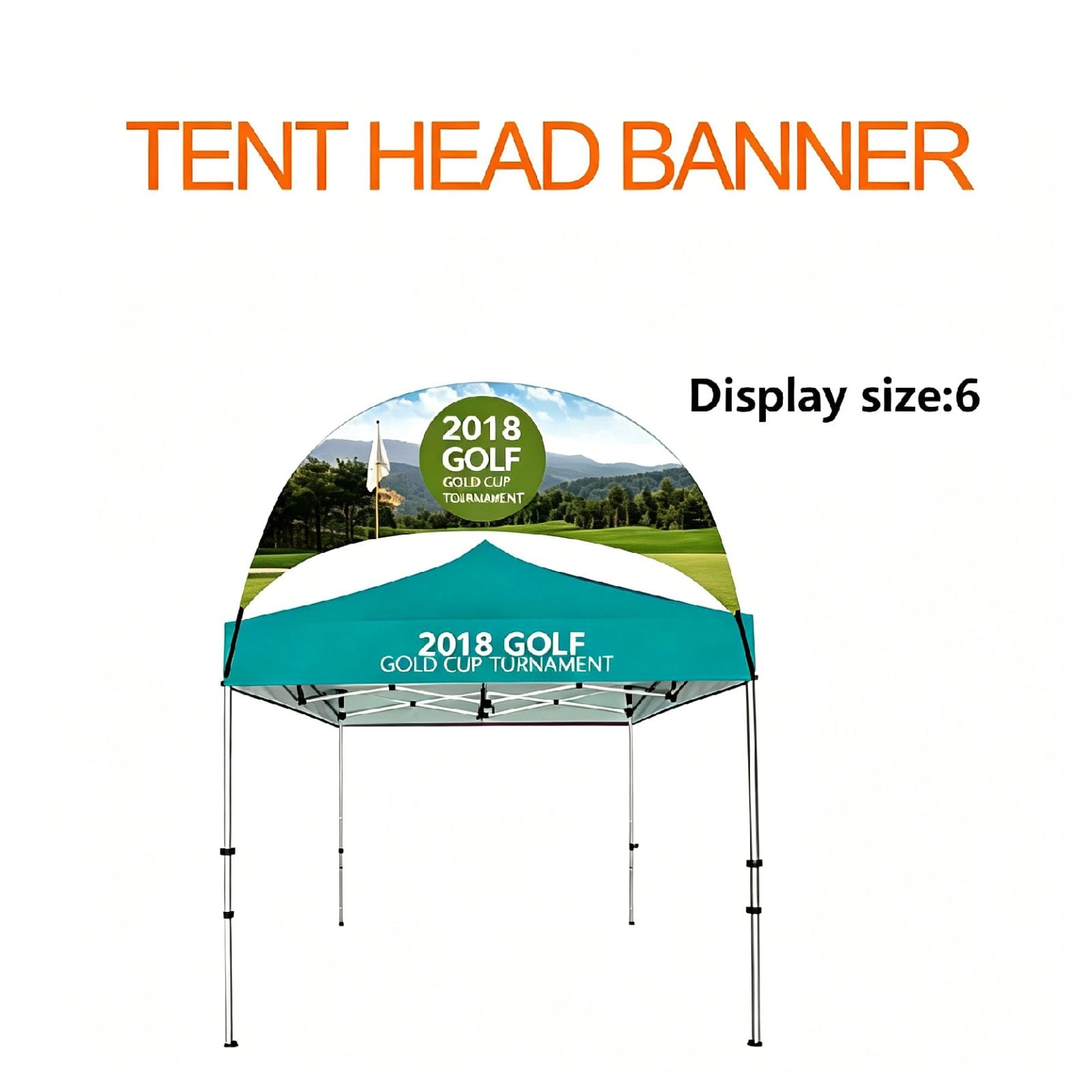
Tent Head Banner
Related Articles
29kg Concrete Flag Base - The Complete B2B Buyer's Resource - WZRODS
WZRODS DY451B: 29 kg, HDPE shell, concrete core. Stackable, portable, rust-proof. FOB price US$5.75–$6.85 at MOQ 2 units. Those numbers look unremarkable. Factor in landed cost—import duties lower than aluminum’s under relevant HTS codes, freight savings from less weight per unit of stabilizing mas
Wide Tube Cross Base - The Complete B2B Buyer's Resource - WZRODS
The Wide Tube Cross Base, manufactured by Wzrods in Shandong, China, solves one problem: reliable stability for poles under three meters, without the freight costs and warehouse footprint that heavier alternatives demand.
Rectangular Pipe Cross Base - The Complete B2B Buyer's Resource - WZRODS
The pipe cross flag base is a cross of rectangular steel pipe, powder‑coated, weighing 1.3 kg and spanning 78 cm across its arms. Its center holds a C‑ring shaft that lets the flag rotate with the wind.
X-Shape Backpack Banner - The Complete B2B Buyer's Resource - WZRODS
Economic Cross Base - The Complete B2B Buyer's Guide- WZRODS
When you buy an economic cross base—something like the Wzrods DM‑9, a 77 cm‑long, 1.3 kg iron cross—forget “economic” as a synonym for “cheap.” It means value-engineered.