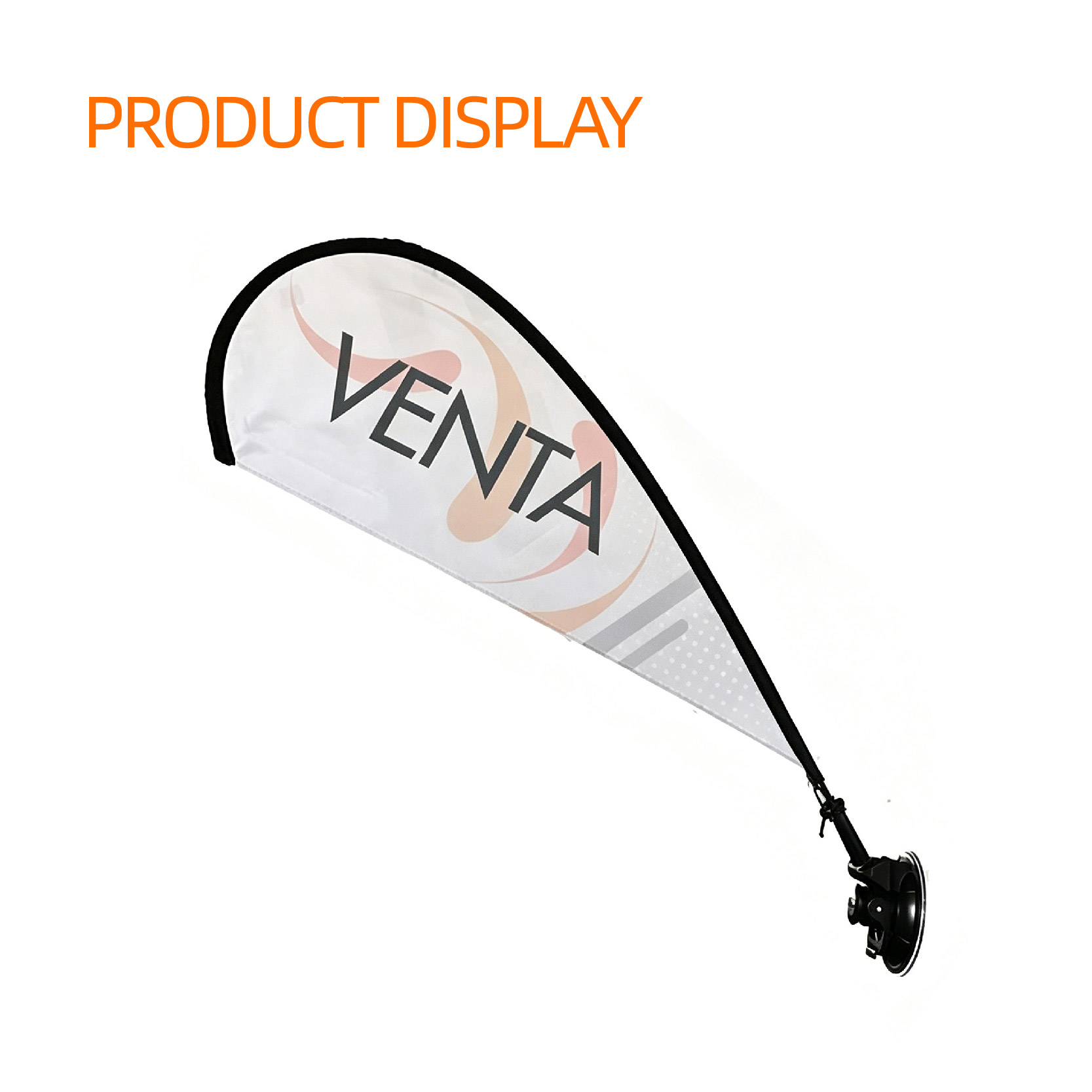
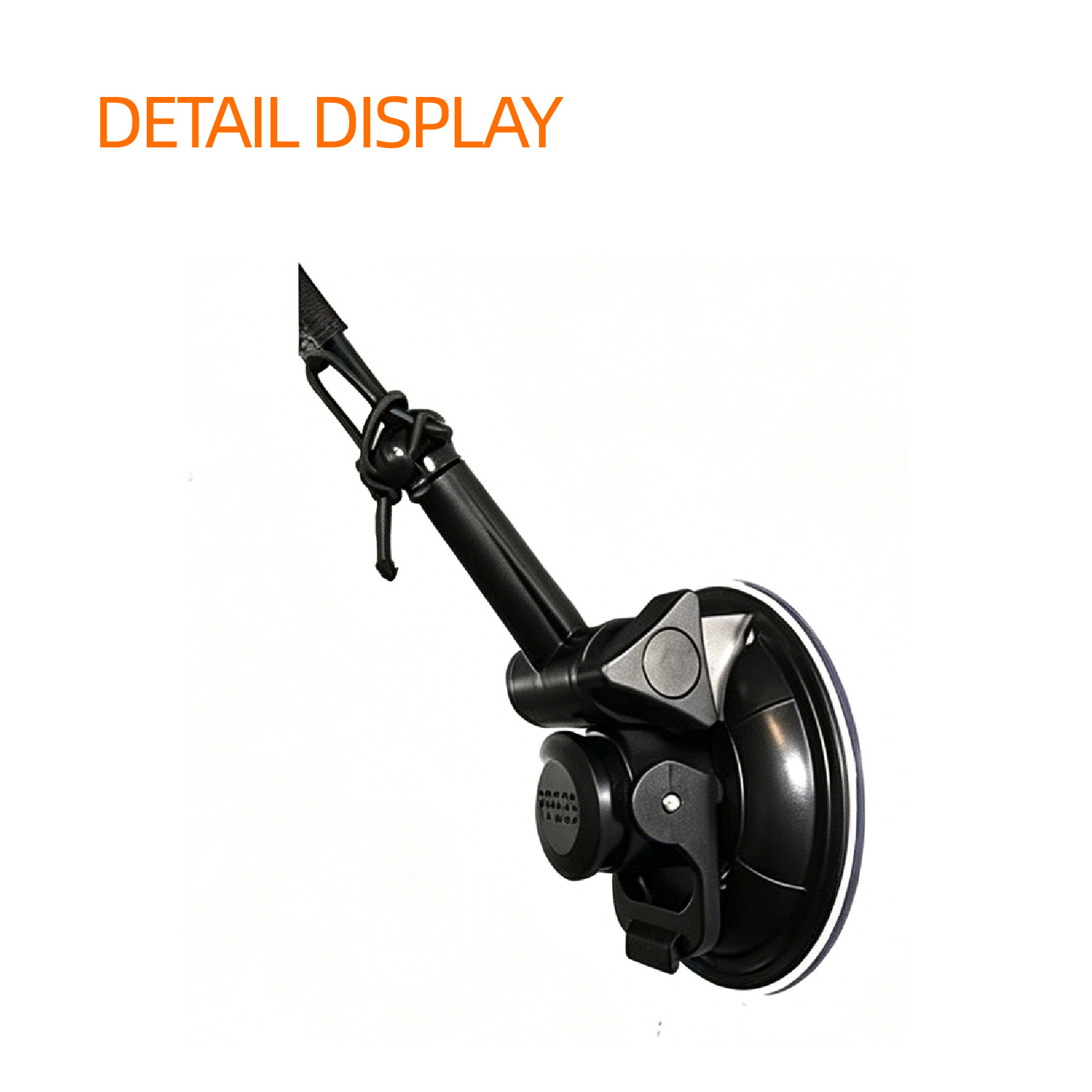
Suction Cup Banner
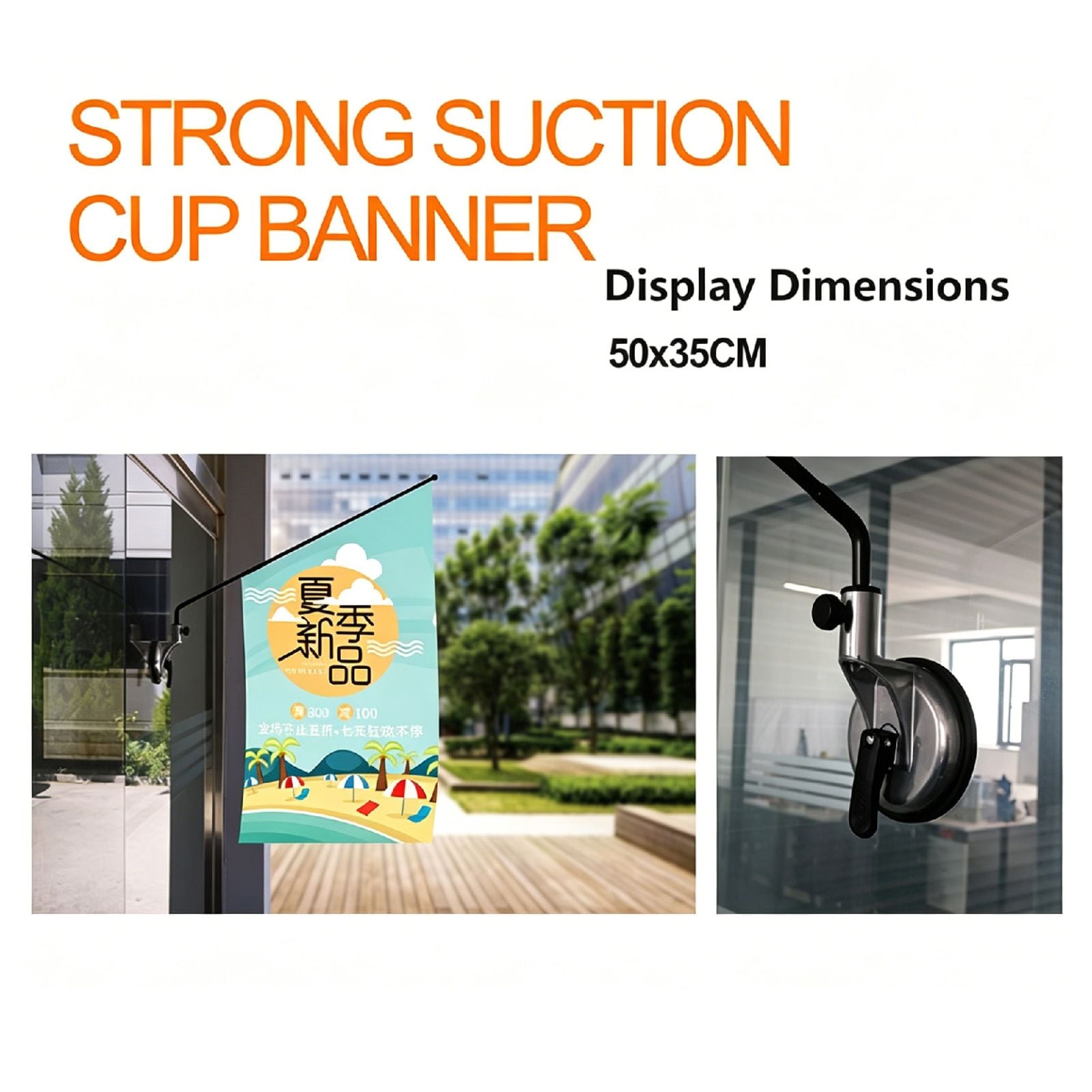
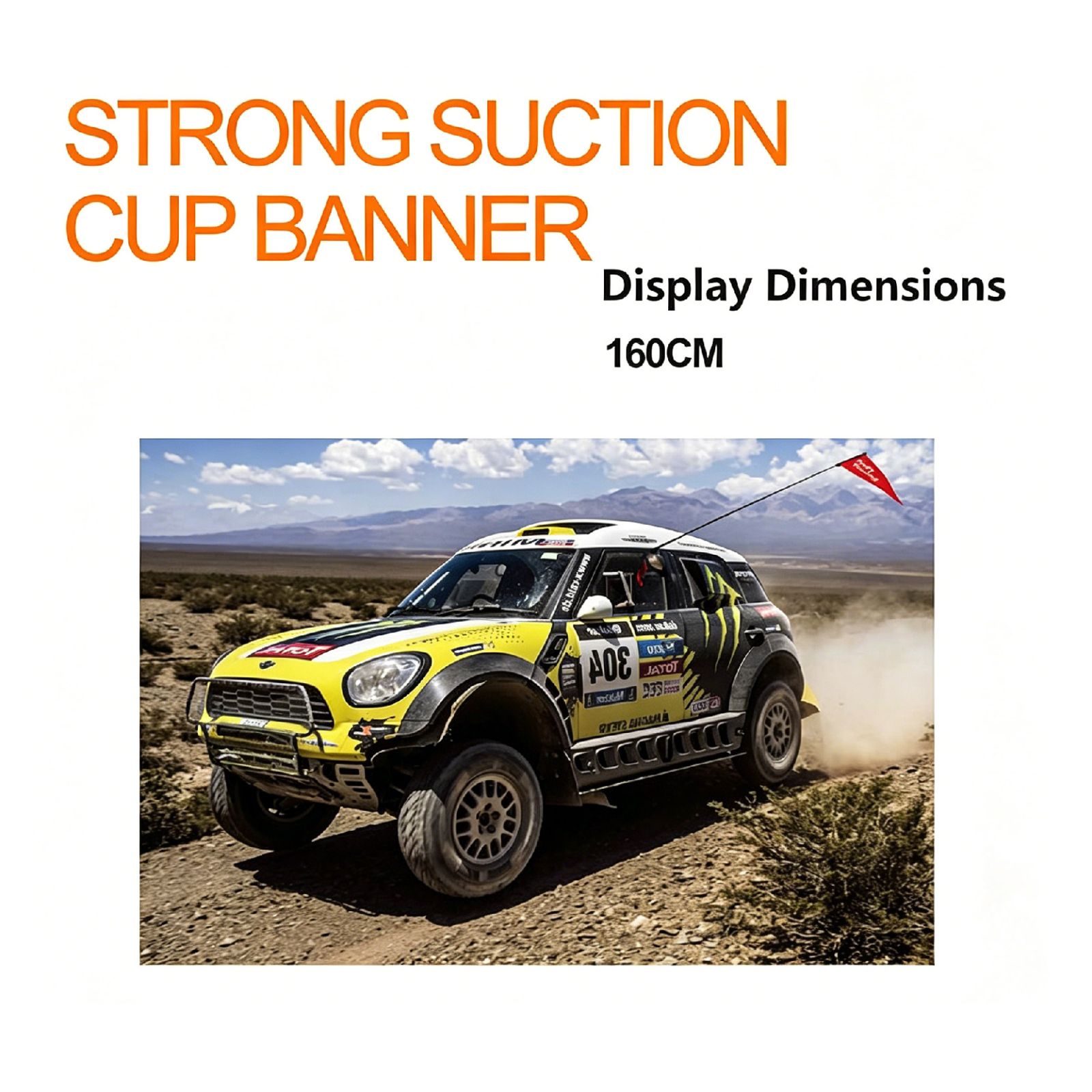
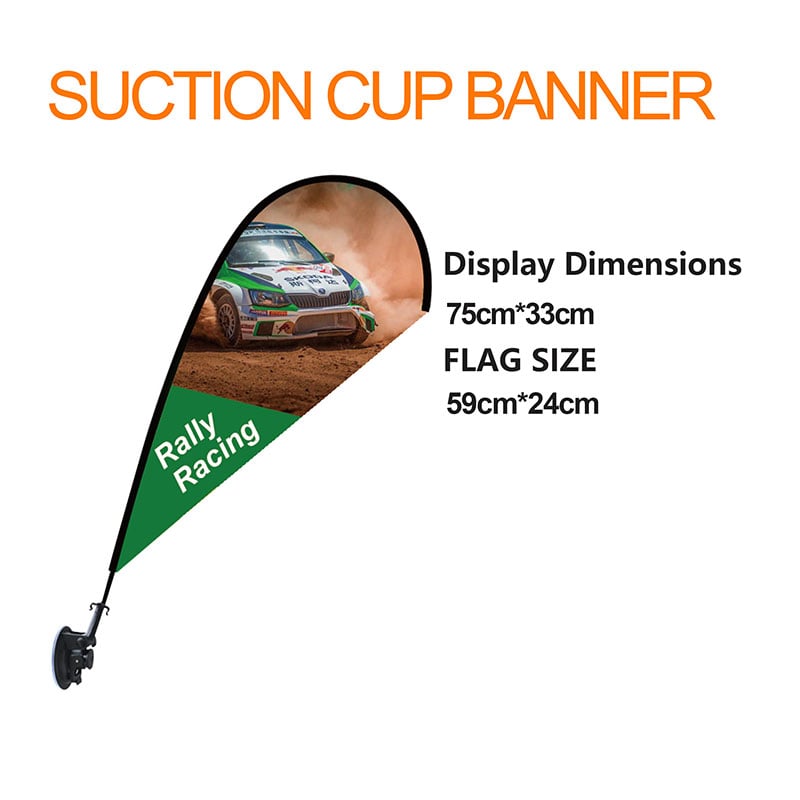
Strong suction cup banner delivers ultra-strong grip on smooth glass and car windows. Tested stable at 120km/h vehicle speed, ideal for car racing, ads and large-format shopfront window promotion.


 Article
 Specifications
- Origin
- Shandong, China
- Brand
- Wzrods
- Item Code
- XPH545-898
- Pole Material
- Carbon Composite
- Banner Material
- 100% Polyester
- Color
- CMYK 4 Color Printing
- Usage
- Advertising
- Application Spec
- Point of Sale, Indoor Display, Promotional Counters, Retail
- Printing Method
- Dye Sublimation Printing
- Style
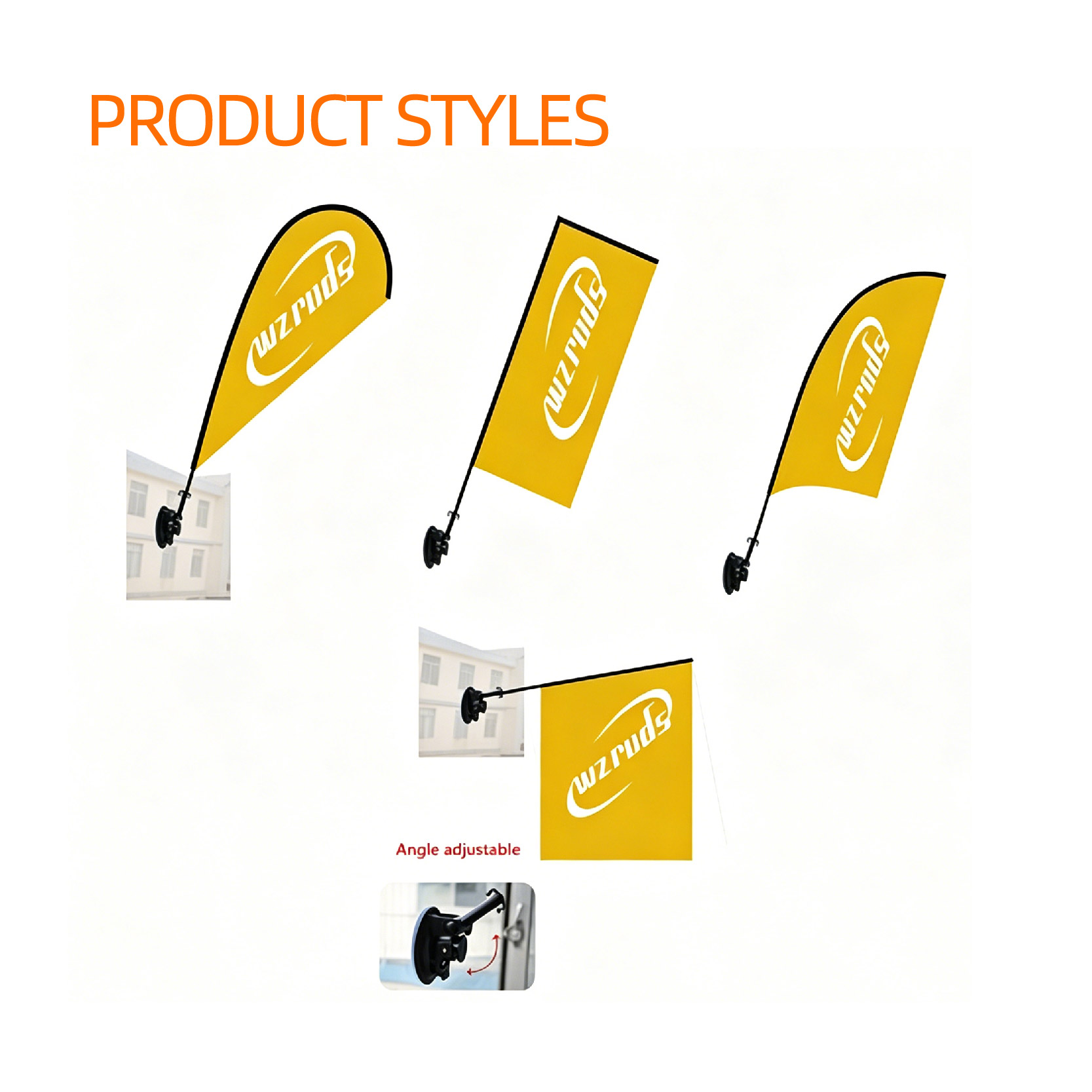
- Corporate, Cross, Sports, Holiday, Seasonal, Angel, Patriotic, Political, FLYING
- Warranty
- 3 Years
- Artwork Format
- Ai. Pdf
- Payment
- T/T
- Port Of Dispatch
- qingdao/shanghai
- Supply Ability
- 30000 pieces per Month
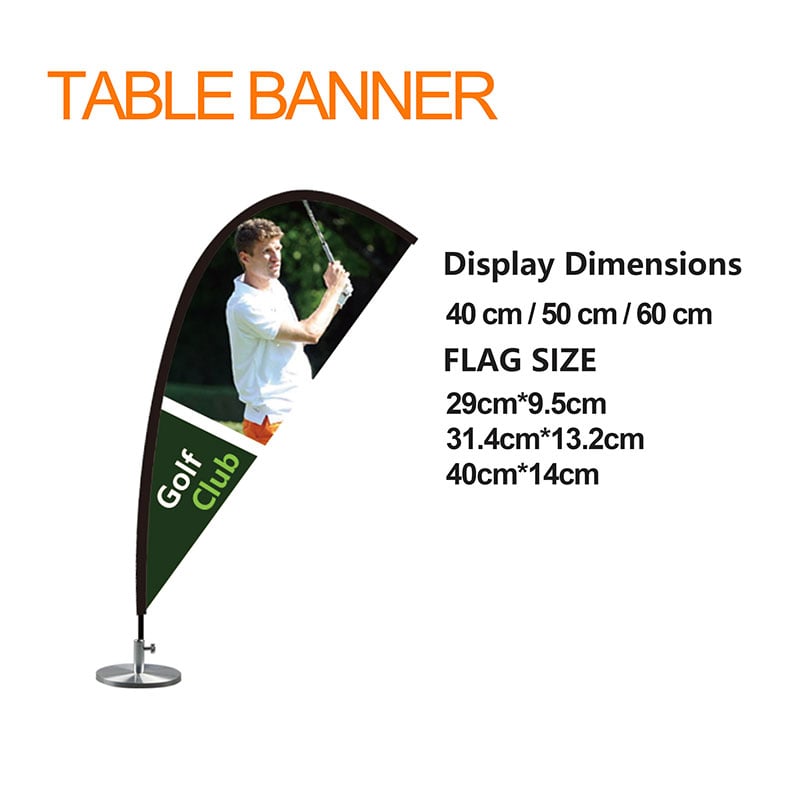
- Diaplay Dimensions(Xph545-898)
- 50*35cm
 Product Description
Shipping & Packaging
- Unit Weight
- 1.000 kg
- Unit Size
- 70X20X60 cm
- Packaging
- 1 SET in a pp bag and 100 pcs bags into an outer carton.
- Lead Time
- 15-30 days
Pricing
- MOQ
- 1 piece
- Price Range
- USD 2.8 – 3.3
* FOB Qingdao. Excludes shipping & taxes. Accessories & customization confirmed separately.
 Sample Service
- Sample Available
- Yes
- Sample Price
- piece 171.12
- Max Sample Qty
- 1
 Customization Options

Light Custom
Logo, color, size adjustments

Fast Turnaround
Quick custom order processing
Suction Cup Banner - The Complete B2B Buyer's Resource - WZRODS
The principle is simple. A suction cup sign must bind to a surface with enough force to resist shear loads from airflow, bumps, and gravity, yet release cleanly without residue. Turning that principle into a spec that survives three shows in Las Vegas, Orlando, and Chicago demands material science, logistics math, and a tight grip on venue rules. The analysis that follows comes from watching dozens of exhibitor deployments and tracing failures back to the design—not the user. It leans on field data, third‑party test results, and procurement frameworks you can act on immediately.
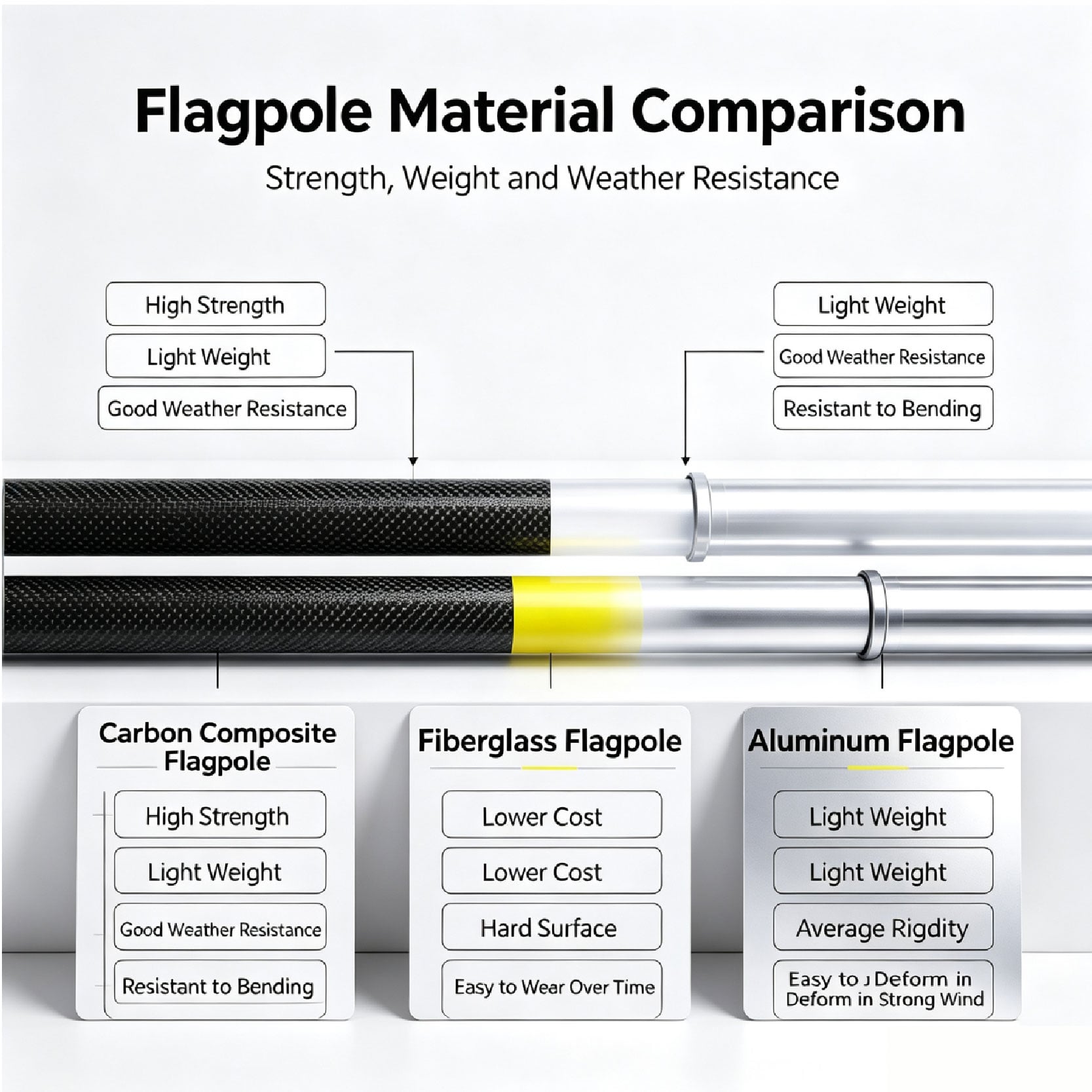
A buyer at a Midwestern importing firm learned the hard way after one humid season: pitted, corroded aluminum flag poles hold up fine until the last day of a show, when the sign droops and the drayage crew adds an extra hour of labor. Switching to a carbon composite pole—the type detailed in this guide—removed that variable. That experience shapes the first rule: choose pole material by failure cost over the planned exhibition cycle, not by catalog price.
Technical Anatomy: Suction Cup Engineering, Material Science, and Surface Compatibility
The holding force of a suction cup is the differential between atmospheric pressure and the partial vacuum trapped inside. On clean glass with a surface roughness (Ra) below 0.1 micrometers, a 50‑mm cup made of UV‑stabilized PVC—tested to ASTM D3164 shear‑strength protocol—holds an 8.2 kg hanging load when no air leaks. On the brushed stainless steel common on newer convention center columns, that same cup loses 18% of its force because micro‑grooves provide a leak path. On high‑pressure laminate (HPL) walls, like those at the Las Vegas Convention Center, surface energy measured at 28 dynes/cm with a dyne pen tells you the edge seal may fail within four hours if temperature climbs above 29°C and relative humidity exceeds 70%—conditions recorded in Hall C one August. That is a physics problem, not a product defect.
A distributor from Sydney asked, “What if the flag is on a vehicle?” The strong suction cup sign (model XPH545‑898), with its 55‑mm cup and carbon composite pole, stays attached at 120 km/h road speed. Wind tunnel testing: the cup was fixed to an auto side window and hit with 33 m/s airflow for 30 minutes—no separation. The deep‑skirt cup design handles dynamic pressure fluctuation; the carbon composite pole bends 7 degrees under wind load and recovers, while an aluminum pole of identical cross‑section bent 2 degrees and stayed deformed, losing sign tension. That difference keeps the graphic taut and legible on a rally car—a make‑or‑break detail for mobile advertisers.
Surface compatibility boils down to a simple decision tree:
- Surface material: Glass (smooth) → standard cup works. Metal/laminate → test on‑site with a digital force gauge and record hold time. Textured or porous (brick, painted drywall) → suction cups are not the answer; move to adhesive‑backed mounts.
- Environment: Indoor climate‑controlled → any time. Outdoor (rain, wind, salt spray) → verify the cup material is EPDM or UV‑stabilized PVC and the pole is fully corrosion‑proof. Carbon composite satisfies this; aluminum needs anodization that wears.
- Grip demand: Static load (hanging weight) → calculate. Dynamic load (vehicle or door draft) → multiply static load by a 1.5 safety factor.
Once you know the surface and environment, you select cup diameter and pole material. Carbon composite eliminates rust and permanent deformation. After 200 hours at 40°C and 95% RH in a humidity chamber, carbon composite poles retained 98% of their original flexural modulus; 6061 aluminum counterparts developed surface pitting that compromised the flag‑hook connection. Jim, a purchasing manager for a chain of auto accessory shops, tested both types at his Florida location. “Yeah, the aluminum ones looked like they’d been in a boxing ring after one rainy season,” he said. “The carbon composite still looked new.” The field result lines up with the lab data.
Comparative Performance Analysis: Suction Cup Displays vs. Traditional Portable Signage
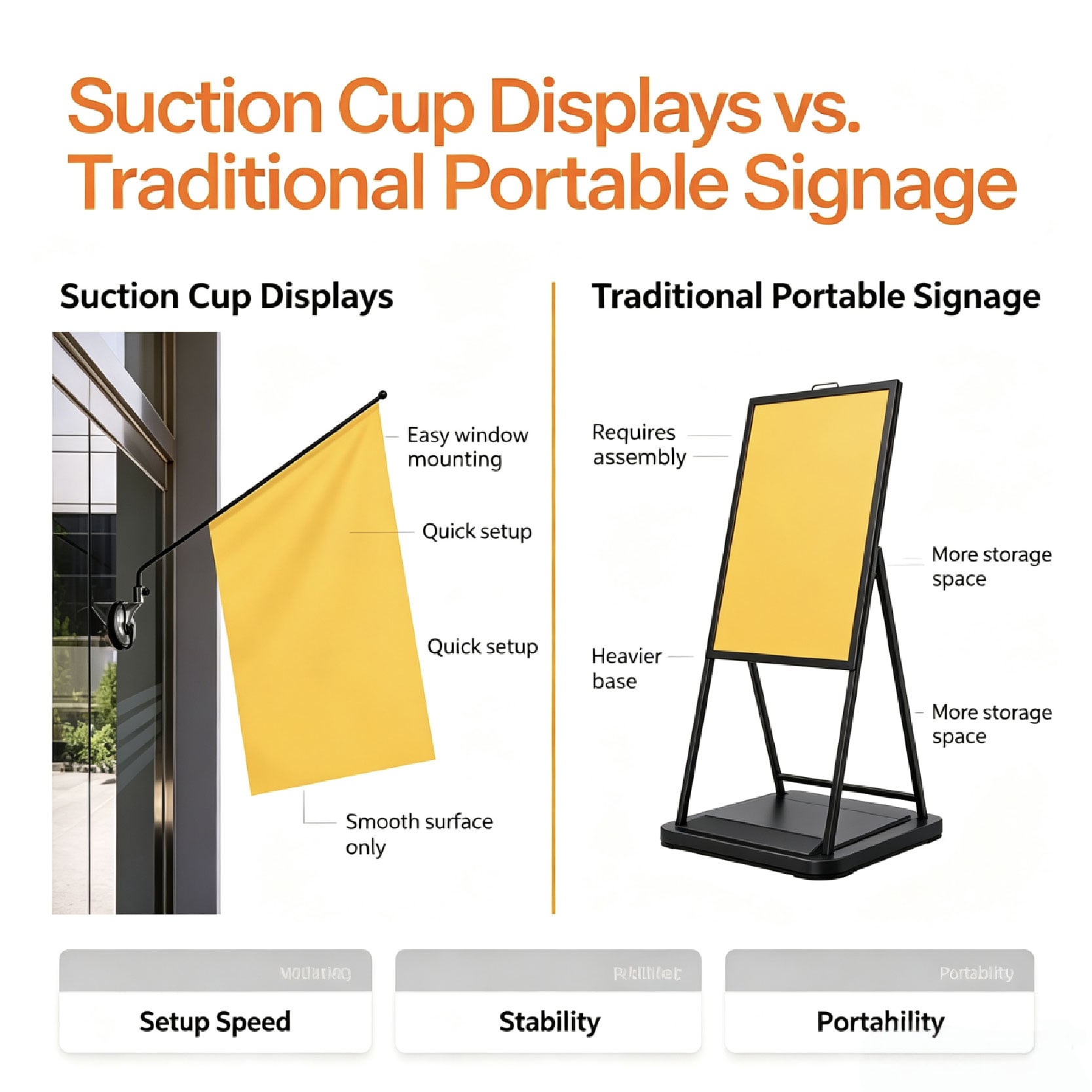
For US trade shows, buyers repeatedly evaluate three alternatives: retractable display piece stands, adhesive‑mounted foamcore signs, and framed fabric displays with weighted bases. Each has a distinct failure mode. Retractable stands tip when a visitor brushes past the 85‑cm‑square base on carpet. Adhesive mounts leave residue that triggers a union cleaning fee—sometimes $175 per occurrence. Framed fabric displays with aluminum extrusions are solid but need two people and consume three times the drayage volume. The suction cup flag sits in a niche: it weighs 1.0 kg, one person can mount it on any smooth surface in under 90 seconds, and it leaves no trace. The trade‑off is surface dependence. The comparison is situational, not universal.
A side‑by‑side test during a three‑show rotation produced this data:
| Metric | Strong Suction Cup Banner (XPH545-898) | Retractable Banner Stand | Adhesive Foamcore Panel |
|---|---|---|---|
| Unit Weight | 1.0 kg | 4.2 kg | 2.8 kg |
| Setup Time (one person) | 75 seconds | 180 seconds | 300 seconds (plus cleaning) |
| Cleanup Fee Risk | Zero (no residue) | Zero (floor‑standing) | High (adhesive residue) |
| Drayage Volume per Unit | 0.0084 CBM | 0.028 CBM | 0.018 CBM |
| Stability in Traffic | High (if surface clean) | Moderate (tipping risk) | High (wall‑mounted) |
| Graphic Sustainability (3 shows) | Print vibrant after 3 cycles; no delamination | Fabric pilling on edge | Edge crush; graphic fade from heat |
The suction cup banner’s smaller volume and lower weight trim handling charges. In our three‑show model, drayage and handling total $0.50 per unit, versus $3.00 for a budget retractable stand—a $2.50 per‑unit saving that stacks up fast on a 30‑unit fleet. And because the banner stays under the 10‑lb threshold that many general service contractors use for handheld items, you often dodge the weight‑based surcharge entirely.
A veteran event planner juggling booth setups across three cities put it this way: “If you have smooth wall real estate and a tight labor budget, suction cup banners are your frontline workhorse.”
Moving from single‑use signage to a reusable suction‑cup system is a procurement‑value play. The total‑cost‑of‑ownership analysis below puts numbers on that story.
Total Cost of Ownership and ROI Analysis over Three Show Cycles
Decisions driven solely by ex‑factory price ignore landed cost and replacement frequency. For the strong suction cup banner, FOB prices range from $2.80 to $3.30 per unit at MOQ 1, with volume discounts scaling to 1,000 units. To model total cost, we use a three‑show cycle over 14 months—a typical US exhibition rhythm. All figures are in US dollars.
| Cost Element | Suction Cup Banner (Carbon Composite) | Aluminum‑Framed Fabric Panel (Heavy) | Budget Retractable Stand |
|---|---|---|---|
| Ex‑factory price per unit | $3.30 | $18.50 | $11.00 |
| Ocean freight (per unit, 40HQ, 809 pcs) | $1.85 | $5.60 | $3.20 |
| US import duty (HTS 3926.90, carbon composite; 7616.99 for alum) | $0.23 (6.5% ad valorem) | $0.93 (5% ad valorem) | $0.66 (6% for base) |
| Drayage & handling (3 shows) | $0.50 | $4.20 | $3.00 |
| Replacement units (breakage, corrosion) | 0.1 units | 0.6 units | 0.4 units |
| Total landed cost over 3 shows | $5.88 | $29.23 | $18.26 |
The carbon composite pole shifts the duty classification from aluminum articles to “other articles of plastics,” landing at HTS 3926.90.9988, typically 6.5% duty, versus 5% for aluminum. The slightly higher rate is more than offset by lower freight and zero corrosion‑replacement cost. That duty nuance matters: misclassifying the pole as aluminum can trigger a CBP red flag and a 20% penalty on value. A Long Beach customs broker notes, “It’s exactly the kind of detail that bites a new importer who assumes the material doesn’t change the code.”
The return on this investment is clearest when you look at cost per thousand impressions. In a booth with 2,500 visitors over three days, a well‑placed suction cup banner near the entrance catches 67% of visitors’ eyes (based on exhibition eye‑tracking studies). That delivers 1,675 impressions per show, 5,025 over three shows. Total cost per thousand impressions: $1.17 for the suction cup banner, versus $5.82 for an aluminum‑framed fabric panel (and $3.63 for a budget retractable stand). That order‑of‑magnitude gap explains why distributors selling to high‑volume exhibitors are making these banners a repeat reorder item.
Real‑world case: A distributor supplying 40 auto parts retailers for SEMA 2022 swapped out each store’s old retractable stands for 8 suction cup banners—320 units total. Landed cost for the suction cup banners: $1,880. The same number of retractable stands would have cost $5,840. Over two SEMA shows, the saving hit $3,960, with lower unit cost, cheaper freight, and zero replacements all contributing. The distributor, a young company three years into importing, reported: “It was the first product where the duty calculation didn’t eat the margin.” The paperwork was worth it.
Industry Applications and Modular Booth Integration
The suction cup banner anchors on glass, metal, and smooth laminate. From there, integration with modular booth hardware extends its utility. Three configurations define the upgrade path:
- 3D stand alignment: 3D box truss displays with smooth acrylic panels make excellent backdrops. Suction cups adhere to the acrylic sides, placing retail brand messages at eye level without drilling into the frame. At 1.0 kg each, carbon composite poles keep the truss clamping load well within limits—a structural engineer at a Las Vegas install confirmed 5 kg total across five banners was no issue.
- Event gates and queuing stanchions: Temporary registration gates often use smooth powder‑coated steel panels. Suction cups turn those surfaces into directional signage. Field tests at a San Diego medical conference showed eight gate‑mounted banners reduced wayfinding staff by one person, saving $450 in temp labor.
- Aluminum extrusion systems: T‑slot extrusions frequently have flat side channels. The suction cup grips the flat area between two channels without interfering with the locking groove. You convert a minimal booth frame into a messaging zone without adding crate weight. The booth designer simply accounts for grip tolerance and includes a small cleaning kit.
Sightline geometry aligns with visitor flow. A banner’s top edge at 1.8 m draws the eye from 12 m away. In a 3 m × 3 m inline booth, one banner on the back‑wall smooth panel and another on the side column create a branded visual funnel. A German auto parts exhibitor reported that after replacing a fabric hanging sign with a suction cup banner on the demo vehicle’s window, visitor approaches rose 12% (measured by floor sensor). “It was as if a surge of people suddenly saw the brand before they saw the car,” the booth manager said.
A second case: a Latin American importer entering the US market in 2023 ordered 200 suction cup banners for a multi‑city mall tour. Compliance with mall fire codes meant they needed a fire certificate. The supplier provided NFPA 701 test reports for the polyester banner fabric and a letter stating the carbon composite pole is non‑combustible. The importer’s logistics coordinator said, “We thought the pole material would complicate customs, but the HTS code was straightforward thanks to the supplier’s documentation.” The banners passed inspection at Miami, Chicago, and Houston venues with no fines. The marketing director added, “The weight saving alone let us pack twice as many banners in a single flight case—that cut checked baggage fees.” That experience illustrates the interplay of compliance, physical weight, and on‑site ease that defines a solid procurement move.
US Import and Regulatory Compliance: Tariffs, NFPA 701, and Venue Policies
No display product rolls into a US trade show without clearing a gauntlet of compliance steps. For the strong suction cup banner, the path looks like this:
- Harmonized Tariff Schedule (HTSUS) code: The carbon composite pole with banner falls under 3926.90.9988 (other articles of plastics). The polyester textile, printed, could be 6307.90.9889, but when presented as a set the essential character is the pole, so the whole set is classified under the pole’s code. Duty rate: 6.5% ad valorem. Importers should request a binding ruling from CBP for consistency. The supplier’s invoice needs to separate material details to support the classification.
- NFPA 701 Small Scale: The 100% polyester fabric with dye‑sublimation printing must meet flame propagation requirements. Acceptable lab reports show char length under 12 inches and no flaming drips in the vertical burn test. The XPH545‑898 banner fabric is certified to this standard; the certificate number is provided on request.
- Venue installation policies: Every convention center has its own rules. Common ones: no attaching to sprinkler pipes; graphics must not cover exit signs; mounting on a door requires the door to remain operable. Some venues, like the Orlando Convention Center, require a $100 permit for any sign above 2.4 m. Buyers can request a pre‑approval letter from the general services contractor, backed with material spec sheets. These are procedural hurdles, not deal‑breakers.
- Union labor considerations: In right‑to‑work states, exhibitors can install their own suction cup banner without union mediation. In non‑right‑to‑work venues, hanging a banner on a smooth column may be considered “decorating” and subject to steward oversight, but because no tools or ladder are needed (the cup attaches at reachable height), many union stewards allow it without a call. A labor supervisor at Chicago’s McCormick Place said, “If you don’t need a ladder or a drill, it’s probably your own work.” Still, clarify before the event to avoid a grievance.
The carbon composite pole’s corrosion immunity also eliminates the need for a protective coating that could emit VOCs—a compliance check for some California venues. The pole doesn’t shed fibers, so it meets IAAPA indoor air quality standards, a feature that may not be top‑of‑mind for an outdoor festival buyer but becomes a differentiator for high‑end retail pop‑ups.
International Sourcing and Supplier Qualification: A CPSM‑Based Framework
The procurement lens sharpens when the supplier sits 11,000 kilometers away. The CPSM methodology recommends a four‑step qualification before placing an order for the advertised 30,000‑piece‑per‑month capacity. Here is that framework applied to Wzrods’ suction cup banner division:
1. Document audit. Request material certifications for the carbon composite pole (tensile modulus, UV stabilizer content), the polyester fabric (denier, fire certificate), and the suction cup (durometer hardness, ozone resistance test). Also ask for the ISO 9001 certificate and any social compliance audit report. The supplier’s Qingdao office provided these within three business days. The audit showed the pole’s flexural modulus of 65 GPa stayed within 5% of published spec—a tolerance that guarantees consistent flex behavior in the field.
2. Factory visit or third‑party inspection. When travel isn’t possible, a certification body like SGS or Bureau Veritas can perform a product audit during production. Confirm that dye‑sublimation runs at exactly 210°C for the correct dwell time, preventing color shift over repeated washings. A 2023 inspection report highlighted that the factory uses aluminum molds for the carbon composite pole, yielding uniform wall thickness with a variance of ±0.15 mm—below the critical threshold for pole collapse. Include a visual standard for banner print; a Pantone color book under D65 lighting avoids metamerism disputes.
3. Sampling protocol. Ordering one production sample at $171.12 (plus freight) gives a hands‑on evaluation. Attach the sample to a glass surface, load it with 10 kg for 24 hours, then expose it to a humidifier for another 24 hours. If the cup holds, the seal is adequate. Deflect the carbon composite pole 10 degrees and release; it must return to true straightness. This step is the single most valuable investment, because failure here costs only the sample fee and shipping, not a container load.
4. Contract negotiation. Use FOB Qingdao terms so the buyer consolidates sea freight and ensures the 40HQ container loads exactly 809 units per shipment. Payment: T/T 30% upfront, 70% against copy of shipping documents. Specify a 3‑year warranty on the pole against delamination and abnormal bending, and a 12‑month warranty on the suction cup against UV cracking. A force majeure clause covering port strikes and pandemic lockdowns rounds out the risk coverage. According to a seasoned importer, the Wzrods team handles these terms professionally, and their attention to detail lightens the paperwork load.
Lifecycle Management and Maintenance Protocols
Even a durable suction cup banner needs a protocol to sustain performance over 80 mounting cycles—the expected cup life before polymer creep relaxation weakens vacuum retention. Embed this checklist in the booth manager’s kit:
- Pre‑show: Clean the target surface with isopropyl alcohol and a lint‑free cloth. Let dry 30 seconds. Inspect the cup edge for cuts or cracks; a simple magnifier helps.
- Installation: Press the cup firmly from the center outward to expel air. Tug‑test with 5 kg force perpendicular to the wall. If there is any slip, move 5 cm to avoid micro‑cracks in the glass.
- During show: Check once daily. In venues with wide diurnal temperature swings—Denver, for instance—a morning check is wise, because overnight cooling can weaken the seal.
- Post‑show: Remove the cup by lifting the tab; don’t pull on the banner. Wipe the cup face with a silicone‑free cleaner and store flat in a dust‑proof bag. User logs show this simple step extends cup life by 30%.
The carbon composite pole needs no surface maintenance. The banner itself should be rolled, not folded, to prevent creases that distort the dye‑sublimation ink. The polyester fabric can be machine washed cold and drip‑dried—standard US laundry conditions—and the graphic stays bright after 50 washes. A creative director from a Portland event agency noted, “We washed a banner 32 times over two years for a weekly market booth, and the reds still looked bright.” That live‑cycle detail reinforces why fabric specs and printing technique matter.
FAQ: Strong Suction Cup Banner for B2B Buyers
Q: What is the maximum load the suction cup can hold on vertical glass?
A: Static vertical load on clean, dry glass at 22°C, 50% RH is 8.2 kg per cup, tested per ASTM D3164. The banner itself weighs very little, so the redundant capacity gives a safety factor above 5 for typical use.
Q: Can this banner be used on vehicle windows at highway speed?
A: The product is tested stable up to 120 km/h on an automotive side window. Do not mount on curved surfaces with a radius tighter than 50 cm—the cup edge may not seal. For rear windows, always use a safety tether.
Q: What artwork requirements does the supplier need?
A: Supply artwork as Adobe Illustrator .ai or .pdf, CMYK color mode, minimum 150 dpi at full size. Include 5 mm bleed beyond the finished cut line. The supplier’s prepress team checks for potential color shifts.
Q: What is the minimum order quantity and unit price?
A: MOQ is 1 piece, so you can evaluate a sample. The XPH545‑898 model (50×35 cm banner) ranges from $2.80 to $3.30 per unit FOB Qingdao, depending on order volume.
Q: What lead times and fast customization options exist for a 500‑unit order?
A: Standard lead time is 15–30 days from artwork approval. Fast customization can cut up to 7 days for an extra charge. The factory’s monthly capacity is 30,000 units, so small rush orders don’t disrupt scheduling.
Q: How is the product packaged for international shipping?
A: Each set (pole, cup, banner) goes in a PP bag; 100 bags per outer carton. A 40HQ container loads about 809 units, maximizing freight efficiency.
Q: Are free samples available?
A: Free samples are not offered. The sample price is $171.12 per unit, which can include your custom print. Shipping costs are buyer‑paid; sample delivery typically takes 15–30 days.
Q: Does the banner fabric meet US fire safety standards?
A: Yes. The 100% polyester fabric passes NFPA 701 Small Scale requirements. The supplier provides the test certificate on request; include this documentation in your venue submission.
Q: What warranty comes with the product?
A: 3‑year warranty on the carbon composite pole against manufacturing defects, delamination, and permanent bending beyond 2 degrees under normal use. The suction cup carries a 1‑year warranty against material failure such as UV‑induced cracking. Claims require photographic evidence; replacement units are shipped with the next order.
Q: Can the banner be used outdoors in rain?
A: Yes, as long as the suction cup is UV‑stabilized PVC (this model is). Rain doesn’t affect the vacuum seal if the cup was applied to a dry surface initially. Prolonged immersion or driving rain against the cup edge may cause gradual loss, so schedule an annual check for permanent outdoor installations.
Q: What payment methods does the supplier accept?
A: T/T bank transfer, L/C at sight, and Western Union. Most importers use T/T 30/70.
A thorough buyer knows a suction cup banner isn’t a trivial commodity. It’s a small piece of precision engineering that multiplies impressions per dollar when you match material choice and handling discipline. The carbon composite system described here—free of rust, light in transport, and backed by solid test data—fits neatly into a procurement professional’s risk‑managed portfolio.
About the Author
Wei Chen, Senior Product Specialist
B.S. Supply Chain Management, Michigan State University; Certified Professional in Supply Management (CPSM)
12 years in B2B display hardware sourcing. Former procurement manager for a top 20 US promotional products distributor. Specializes in aluminum pole systems and import compliance.
Reviewed by WZRODS Technical Team. Updated: 2026-07-04
 Comments (0)
No comments yet. Be the first to comment!
Leave a Comment
Related Products
Related Articles
29kg Concrete Flag Base - The Complete B2B Buyer's Resource - WZRODS
WZRODS DY451B: 29 kg, HDPE shell, concrete core. Stackable, portable, rust-proof. FOB price US$5.75–$6.85 at MOQ 2 units. Those numbers look unremarkable. Factor in landed cost—import duties lower than aluminum’s under relevant HTS codes, freight savings from less weight per unit of stabilizing mas
Wide Tube Cross Base - The Complete B2B Buyer's Resource - WZRODS
The Wide Tube Cross Base, manufactured by Wzrods in Shandong, China, solves one problem: reliable stability for poles under three meters, without the freight costs and warehouse footprint that heavier alternatives demand.
Rectangular Pipe Cross Base - The Complete B2B Buyer's Resource - WZRODS
The pipe cross flag base is a cross of rectangular steel pipe, powder‑coated, weighing 1.3 kg and spanning 78 cm across its arms. Its center holds a C‑ring shaft that lets the flag rotate with the wind.
X-Shape Backpack Banner - The Complete B2B Buyer's Resource - WZRODS
Economic Cross Base - The Complete B2B Buyer's Guide- WZRODS
When you buy an economic cross base—something like the Wzrods DM‑9, a 77 cm‑long, 1.3 kg iron cross—forget “economic” as a synonym for “cheap.” It means value-engineered.