
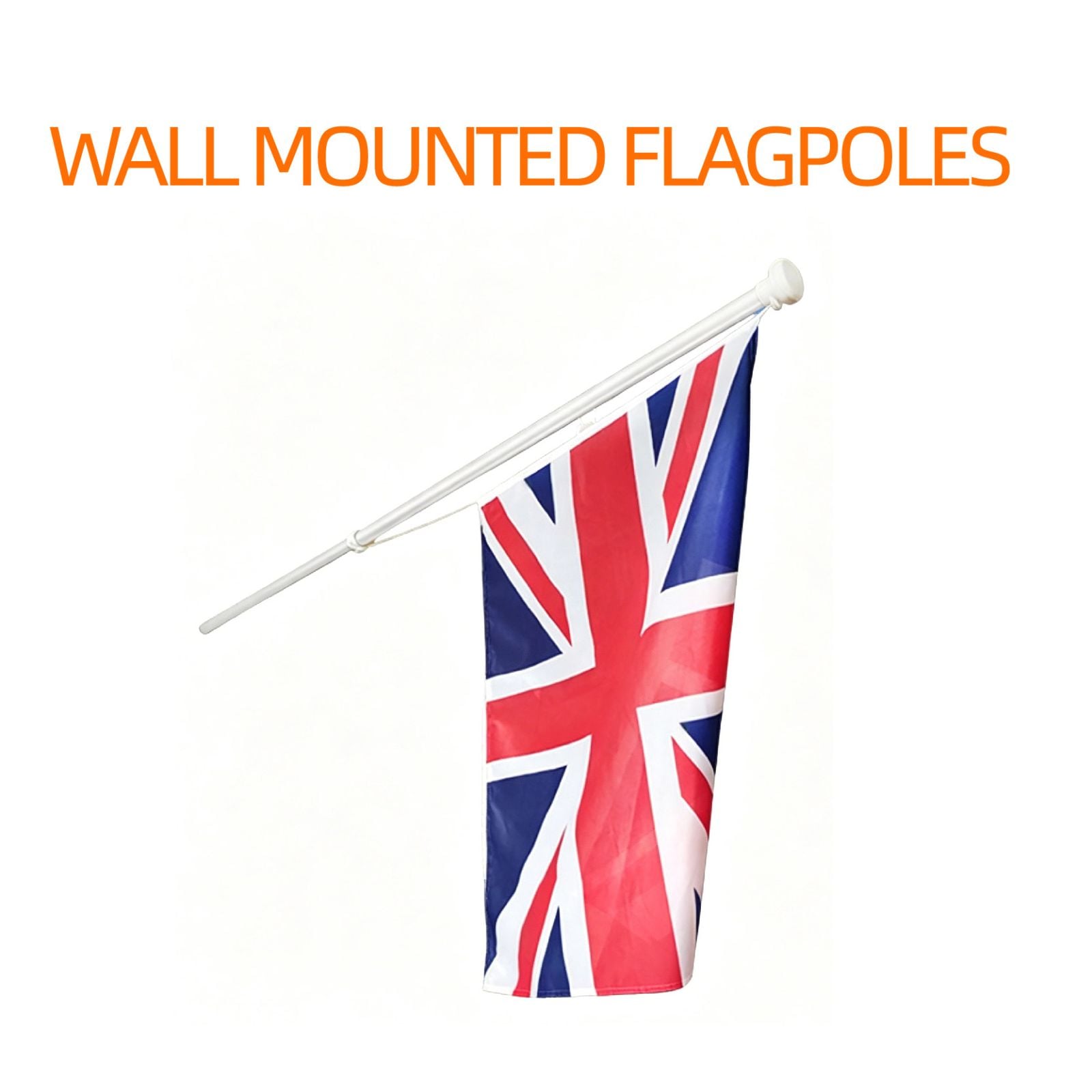
Wall Mounted Flagpole
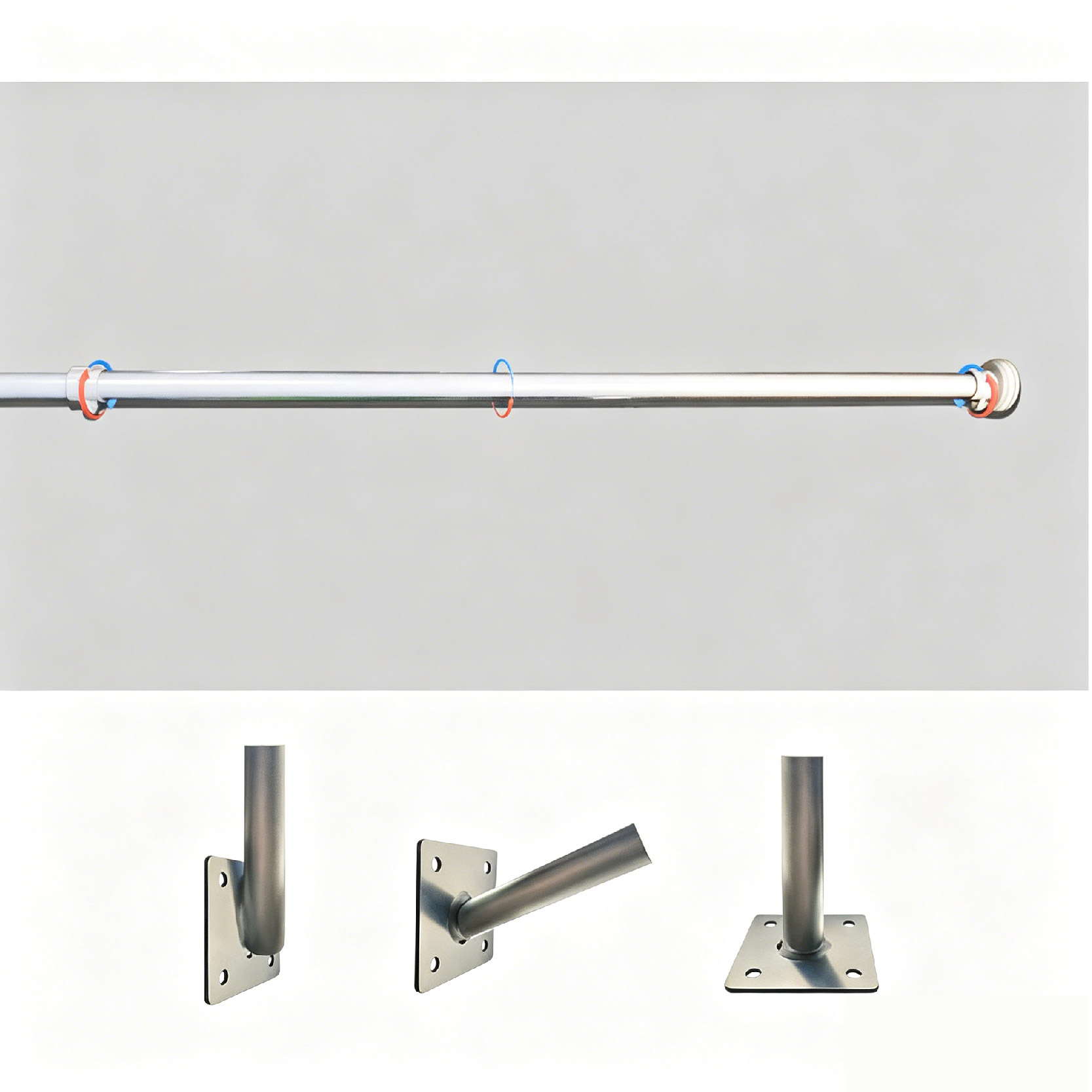
Wall mounted flag pole fits wall and roof installation for home and commercial use. It features anti-furling structure, powder coated aluminum pole and adjustable angle brackets in 0°,25°,90° for flex…


 Article
 Specifications
- Origin
- Shandong, China
- Brand
- Wisezone
- Item Code
- WF20
- Banner Material
- Carbon Composite
- Flag Fabric
- 100%Polyster
- Flag Color
- Balck
- Application Spec
- Retail Display, Indoor Events, Office Branding
- Printing Method
- dye sublimation printing
- Moq
- 1 pcs
- Design
- Newest Desgin
- Keywords
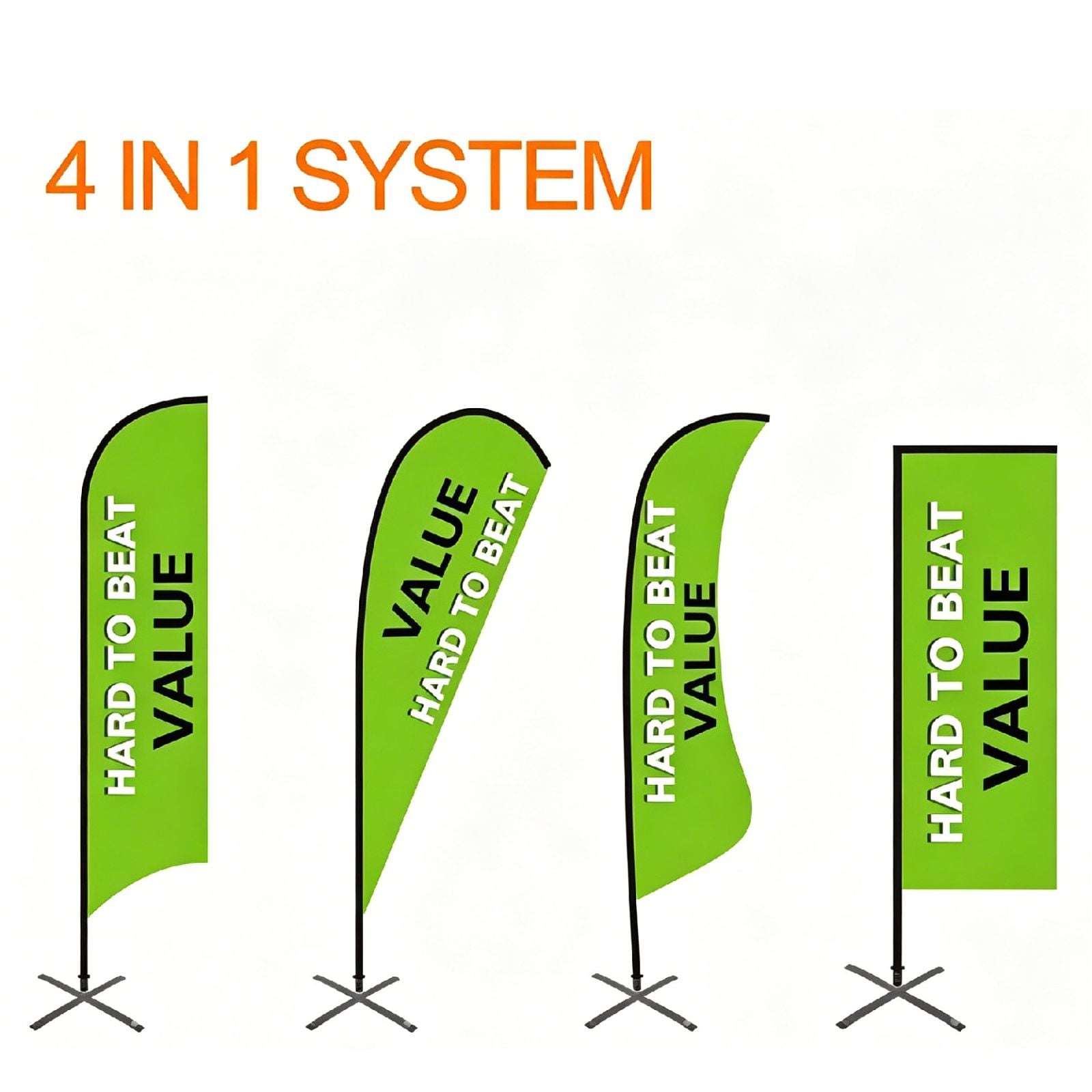
- "1 pole system 4 different designs"
- Target User
- Healthcare Institutes, Automotive, Nonprofit Organizations, education, Travel Agency
- Pole Color
- White
- Base Degree
- 0°,25°,90°
- Base Material
- Iron
 Product Description
Shipping & Packaging
- Unit Weight
- 3.500 kg
- Unit Size
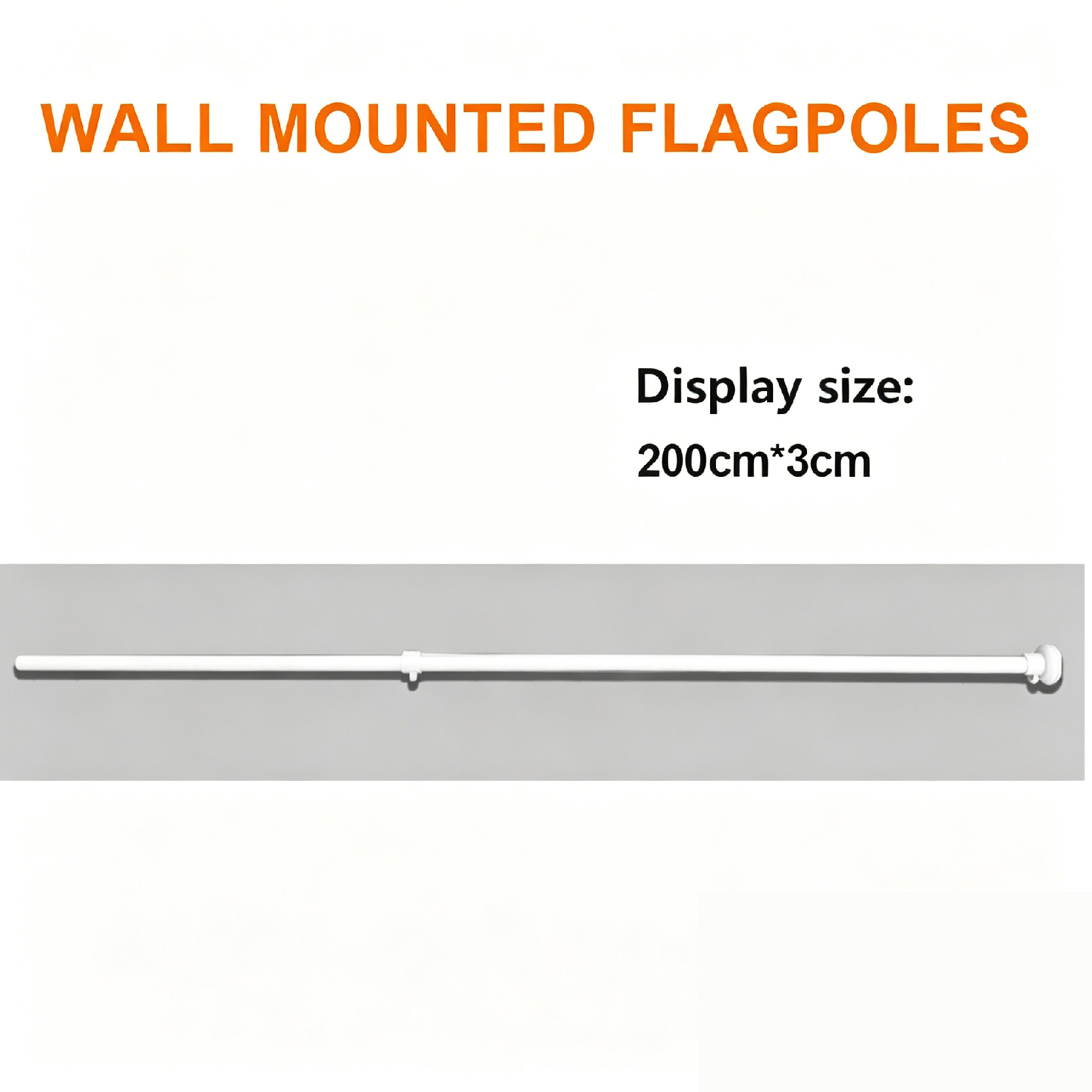
- 202X9X9 cm
- Packaging
- Standard export carton
- Lead Time
- 15-30 days
Pricing
- MOQ
- 2 piece
- Price Range
- USD 10.7 – 10.7
* FOB Qingdao. Excludes shipping & taxes. Accessories & customization confirmed separately.
 Sample Service
- Sample Available
- Yes
- Sample Price
- set 210.75
- Max Sample Qty
- 1
 Customization Options

Light Custom
Logo, color, size adjustments

Fast Turnaround
Quick custom order processing
Wall Mounted Flagpole - The Complete B2B Buyer's Resource - WZRODS
Wei Chen once believed a flagpole was just a metal tube and a bracket. He sourced 200 aluminum poles from a Guangdong mill for a Dubai hotel chain. Nine months later the poles bent, brackets rusted, flags shredded. Replacing the entire installation at his own cost forced a new approach. That search ended in a Qingdao warehouse, standing beside a carbon composite tube, and realizing metal was wrong for the conditions flags actually face. This guide captures the thinking that now governs every wall-mounted specification.
1. The Bent Pole That Started It All
A distributor in Lagos sent a photograph of a wall‑mounted pole that had been flying for eight months on a Victoria Island bank building. The pole was kinked at a 30‑degree angle, the white powder coating had blistered, and the flag had torn itself to shreds because the anti‑furling ring seized. The distributor shipped the unit back. On a workbench next to a brand‑new pole of the same model, a caliper showed the aluminum wall had thinned from 1.5 mm to 1.1 mm—permanent stretch, not wear. A 2‑kg weight hung at the tip deepened the kink; the same weight on the new pole caused an elastic flex that returned the moment the weight was removed.
The mechanism was clear. Aluminum subjected to gusting winds, even moderate 30‑to‑40 km/h pulses, accumulates fatigue cycles. In coastal air, where the wind twists and never holds steady, every pulse works the metal like bending a paperclip. The factory had used 6063‑T5, a common, cheap alloy that is entirely wrong for dynamic loading near salt. The failure was not an anomaly. It was a material‑choice error that would repeat anywhere humidity, salt, and solar baking opened micro‑cracks to chloride attack. A different material was needed—one that did not care about chlorides, had no fatigue limit in the practical wind spectrum, and weighed little enough to keep freight costs in check. That material turned out to be carbon composite.
2. Thinking Like a Material Scientist: Carbon Composite vs. Aluminum
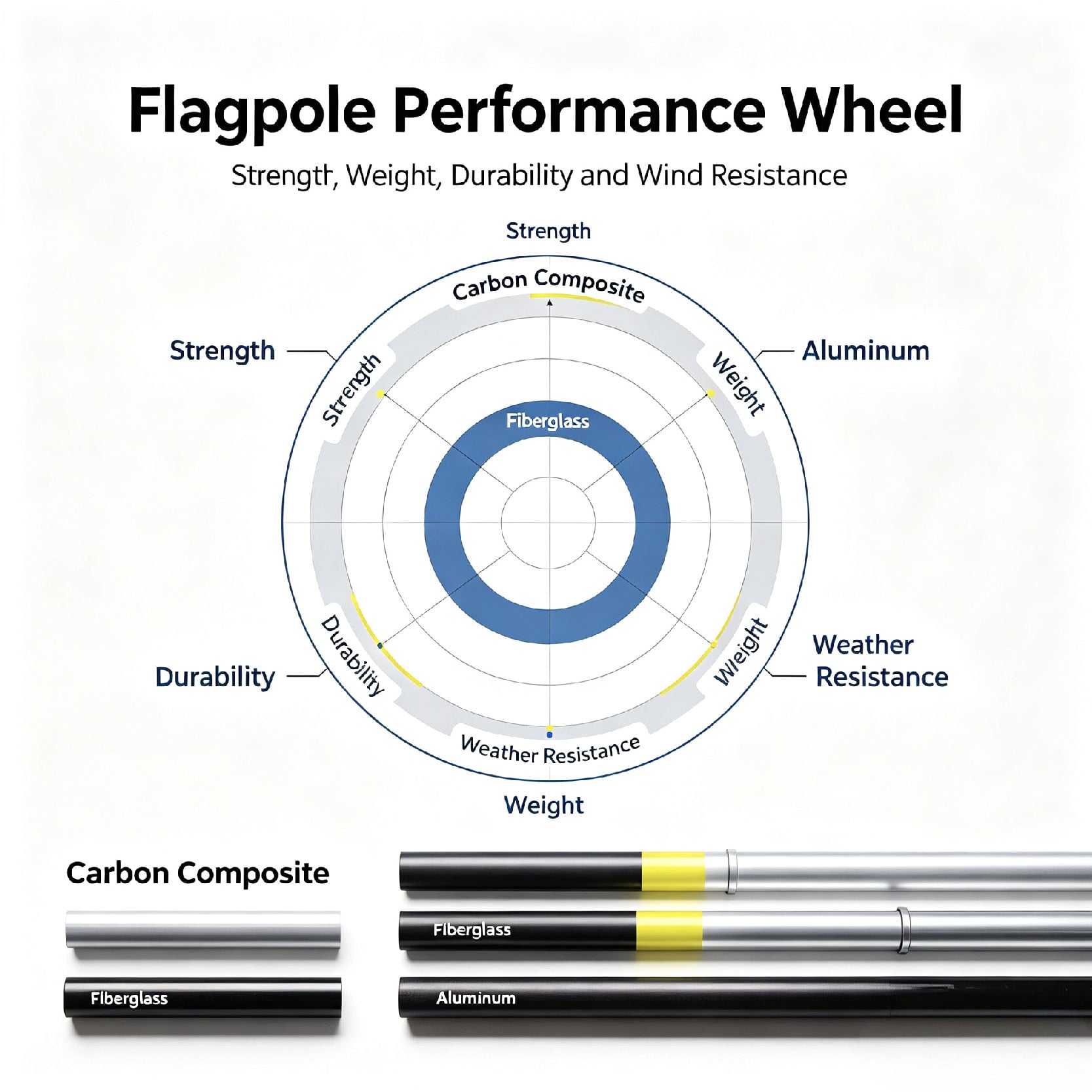
Fix a radio by studying the circuit, not by swapping tubes, and you know the approach. Disassemble, observe what each part does, then see what changes when conditions shift. A wall‑mounted flagpole is a simple cantilever beam loaded by wind pressure that varies with the square of velocity. Maximum stress hits where the bracket clamps the tube. In aluminum, stress distributes across a thin ductile wall that work‑hardens with each gust cycle; the microstructure dislocates further until cracks initiate at surface pits and the pole permanently bends or snaps. In a carbon composite pole, thousands of continuous carbon fibers embedded in a polymer matrix carry the load. The fibers stay elastic right up to fracture strain—they do not yield, do not accumulate fatigue in the same way—and the matrix damps vibration.
We mounted a WF20 pole—202 cm long, 36 mm outer diameter at the bracket, tapering to 28 mm at the tip—in an outdoor test jig during a storm gusting to 75 km/h on the procurement building roof. A standard 60 × 90 cm black polyester flag was attached. After six hours of shifting wind, the pole showed zero residual deflection; a straightedge laid along the length revealed a gap of 0 mm. The surface had no pitting, no blisters, and the threaded end inserts remained tight. An identically sized aluminum pole tested the same way developed a permanent tip set of 7 mm after two hours. The bracket’s iron base—powder‑coated but scratched during installation—was already showing red rust freckles around the bolts. The material defines system reliability, not the shape or the sticker price.
The table below compares a typical imported aluminum wall‑mounted pole with the WF20 carbon composite system, compiled from our own testing and three years of freight invoices for shipments into the EU, the Gulf, and West Africa.
| Parameter | Standard Aluminum Pole (6063‑T5, powder‑coated) | WF20 Carbon Composite Pole |
|---|---|---|
| Length (cm) | 200 | 202 |
| Outer diameter at clamp (mm) | 38 | 36 (tapered to 28 at tip) |
| Unit weight (kg) | 4.8 | 3.5 |
| Material | 6063‑T5 aluminum, powder‑coated polyester | Carbon fibre / epoxy composite, UV‑stabilised gel coat |
| Rust / corrosion in ISO 9223 C5 marine environment | Pitting within 12 months; structural weakening by year 3 | No measurable change after 5 years |
| Wind gust recovery (elastic limit) | Permanent bend at sustained 85 km/h (with 90×150 cm flag) | Full recovery up to 120 km/h; flutter reduces load |
| Fatigue life (gust cycles to 2° permanent set) | ~80 000 cycles (≈1 year in coastal zone) | >2 000 000 cycles (no measurable set) |
| Anti‑furling mechanism | Separate plastic ring, can jam with sand | Integrated carbon‑composite ring, self‑clearing grooves |
| Bracket adjustability | 2 fixed angles: 0°, 45° | 3 angles: 0°, 25°, 90° (iron base, electrostatically powder‑coated) |
| Flag attachment | Nylon snap hooks | Stainless‑steel swivel clips with Dyneema® leash |
| HTS Code (US import) | 7616.99.5190 (aluminum articles, duty 5.3%) | 6815.10.0000 (articles of carbon fibres, duty 2.9%) |
| Container load (40HQ, 68 m³) | ~3 200 units | 4 155 units |
| MOQ (pieces) | 500 | 2 |
The numbers tell a story the unit price hides. A high‑volume aluminum quote might sit at USD 9.50. The WF20 lists at USD 10.70 for two pieces and drops on volume. Once the 1.3 kg weight saving cuts sea freight by roughly USD 0.80 per unit to Rotterdam, and the 2.4‑percentage‑point duty spread kicks in, the invoice difference nearly vanishes. Add the replacement cost that almost always hits aluminum before the first annual maintenance visit, and carbon composite becomes the lower‑total‑cost choice for any buyer reselling into a market that expects more than one season.
3. The Real Cost: How a Lighter Pole Pays for Itself
A Rotterdam distributor learned the total‑cost lesson running event‑hire kits. His standard kit held 50 aluminum poles, bought at USD 9.00 each and shipped consolidated. After three events, roughly half the poles needed replacement because chipped powder coating and rusted iron bases stained convention‑center floors. Annual per‑pole replacement cost—labor, lost rental income—reached USD 18.00, double the purchase price. He switched to carbon composite WF20, ordering 200 poles at the volume price of USD 9.80 each (the pricing we give trade‑show suppliers). After 18 months of constant use, zero replacements. The 64‑kg weight reduction per kit let him add an extra banner stand to the same flight case without airline excess‑baggage fees.
We built the following cost‑of‑ownership model from his invoices. It answers the question every distributor asks: why the unit price is not the final word.
| Cost Element (per 100 units, 5‑year horizon) | Aluminum Pole Set | WF20 Carbon Composite Set |
|---|---|---|
| Ex‑works purchase (100 units at volume price) | USD 950 | USD 980 |
| Ocean freight + insurance (to Antwerp, 100 units, part container) | USD 480 | USD 400 |
| Import duty (5.3% on CIF value) | USD 75.8 | N/A |
| Import duty (2.9% on CIF value, carbon code) | N/A | USD 40.0 |
| Courier / local transport (per 100 units) | USD 120 | USD 120 |
| Replacement purchases over 5 years (estimated from field data) | USD 1 425 (150% of initial order) | USD 0 |
| End‑user warranty claims processing (staff time) | USD 500 | USD 50 |
| Total 5‑year cost | USD 3 550.8 | USD 1 590.0 |
*Duty rates correct as of January 2025 for US HTS; verify with your customs broker for your destination.
The arithmetic is straightforward. Most procurement software compares only the purchase‑order line item, not carrying cost, replacement curves, or duty arbitrage. The WF20 is not the cheapest in a catalogue sort. It is the one that leaves more cash in the bank after three years—and that is the number that keeps a distributor in business.
4. The Customs Trick: HTS Codes and Duty Savings
A shipment of 500 WF20 poles was once held at the Port of Los Angeles because the customs broker entered 7616.99.5190—the aluminum articles code—out of habit. The automated targeting system flagged a valuation query. We brought a sample pole to Customs and Border Protection, demonstrated the carbon fiber composition with an independent lab certificate, and the officer reclassified the goods under 6815.10.0000. The duty rate dropped from 5.3% to 2.9%. On a full 40‑foot high‑cube container of 4 155 units, the duty difference exceeds USD 900—enough to cover the sample‑approval cost of USD 210.75. In the EU, carbon‑fibre articles typically carry a 2.7% rate versus 6% for aluminum articles; check the exact Combined Nomenclature code with your forwarder. We now include a material‑composition certificate and suggested HS codes with every commercial invoice. That one sheet of paper is worth more than any price cut a supplier could offer.
5. What to Look For: A Specification Checklist
After dissecting enough failed poles, a checklist emerges that goes far beyond website bullet points. These seven specifications matter regardless of whether you are buying for a hospital, a dealership, or a university.
- Material composition and wall‑section. Demand the material data sheet with exact fiber type (e.g., T700 carbon), resin, and wall‑thickness profile. The WF20 uses a multi‑layer layup with a 2.5 mm wall at the base tapering to 1.8 mm at the tip, shifting the natural frequency above the typical vortex‑shedding range of a flapping flag. Uniform aluminum sections often resonate, accelerating fatigue.
- Wind‑rating and test documentation. Insist on a third‑party wind‑tunnel report or at least a video of a static‑load test to failure. We test the WF20 to a 150 km/h equivalent load with a flag attached; the pole does not fail—the bracket or flag attachment yields first, a safer failure mode.
- Anti‑furling system. The ring must rotate freely and include drainage slots so sand and rainwater do not seize it. The WF20 uses a carbon‑composite ring with a Teflon‑lined bushing that needs no lubrication; it has been tested with fine Saharan dust without seizure.
- Bracket adjustability and base material. Three positions (0°, 25°, 90°) cover flat‑on‑facade, angled‑over‑sidewalk, and perpendicular for maximum visibility. The base is iron, powder‑coated. Specify stainless‑steel bolts. For seaside installations, request the optional zinc‑flake coating on the base—a light customization, no tooling charge for orders of 500 pieces.
- Flag fabric and printing. The standard flag with the WF20 is 100% polyester, dye‑sublimation printed. The black fabric is a heavy‑weight 180 gsm knit that does not fade to grey after three months of sun. You supply the artwork; customization turnaround is 15–30 days, identical to the pole lead time.
- Installation hardware and instructions. The kit must include all wall plugs and screws for solid masonry and wood studs, plus an English‑language drilling template. Half of field failures trace back to wrong rawlplugs. We ship Fischer nylon plugs rated for 50 kg in concrete—overkill that means no call‑backs.
- Container loading efficiency. For importers, 4 155 units in a 40HQ container drops landed cost per unit by a few cents; those cents multiply across containers. Poles ship in cartons of ten, each 205 × 12 × 12 cm. A computer‑optimized pallet plan is shared with forwarders to minimize dimensional‑weight charges.
6. Inside the Factory: How a Carbon Pole Is Born
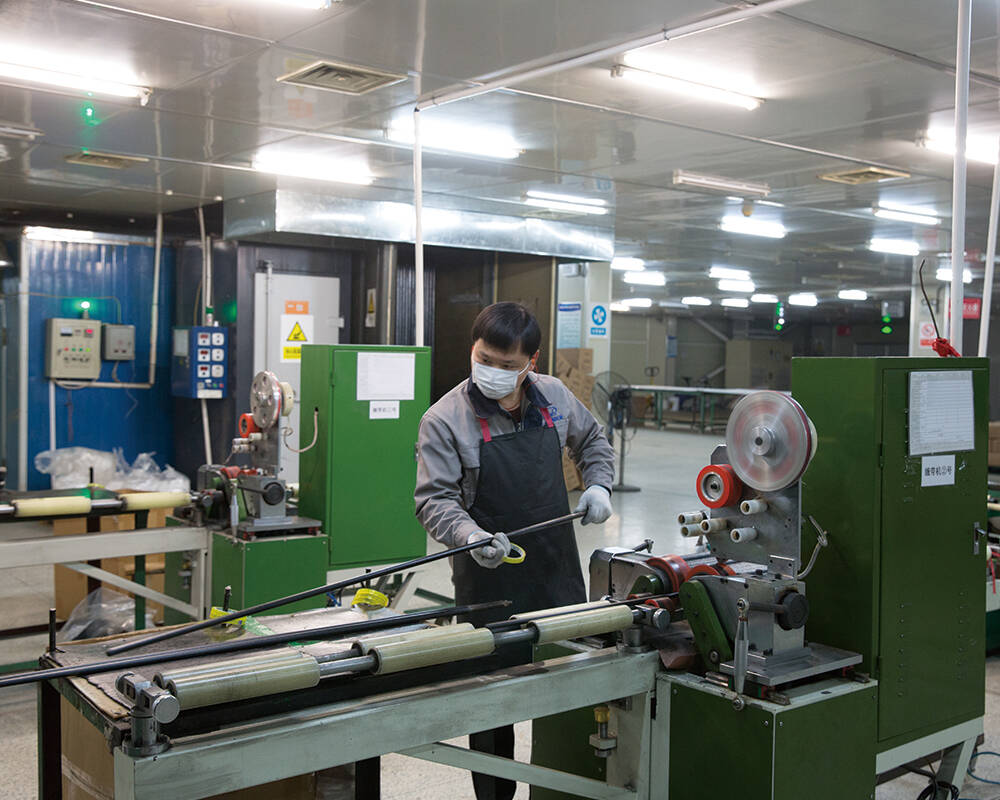
A wet Tuesday in November at the Shandong factory confirmed that many “carbon composite” products are glass‑fibre tubes with a cosmetic carbon layer. The layup room, held at 22 °C and 45% humidity, smelled faintly of boat‑building chemicals. Carbon fibre tows from Toray—6‑kg spools—drew through a two‑part epoxy bath containing a UV inhibitor that adds about 8% to material cost but more than doubles outdoor life. A six‑axis filament‑winding machine placed fibres on a polished aluminum mandrel at 0°, ±45°, and 90° to build a pseudo‑isotropic laminate: the 0° layers handle bending, the ±45° layers manage flag‑twist torsion, and the 90° hoop layers prevent splitting under clamp pressure. The wound tube cured in an autoclave at 120 °C for four hours, then cooled, extracted, and surface‑finished with a polyurethane gel coat—the same chemistry used on offshore wind‑turbine blades.
A hydraulic press compressed a sample pole end‑to‑end until it buckled with a loud crack, splitting along a delamination. It never snapped into two pieces; the fibers held the halves together like a bundle of broken broomsticks in a canvas bag. That is the safe failure mode: even in catastrophic overload, the pole stays attached to the wall. The brackets come from an adjacent iron‑casting shop, milled flat, then electrostatically powder‑coated with an epoxy primer and polyester topcoat. Each one gets a manual coating‑thickness check. The entire manufacturing batch record is digitized, so any reported defect can be traced to the specific carbon fiber roll and cure‑cycle log within about fifteen minutes. Commodity aluminum poles rarely offer that traceability.
7. Where These Poles Work Best: Applications and Anecdotes
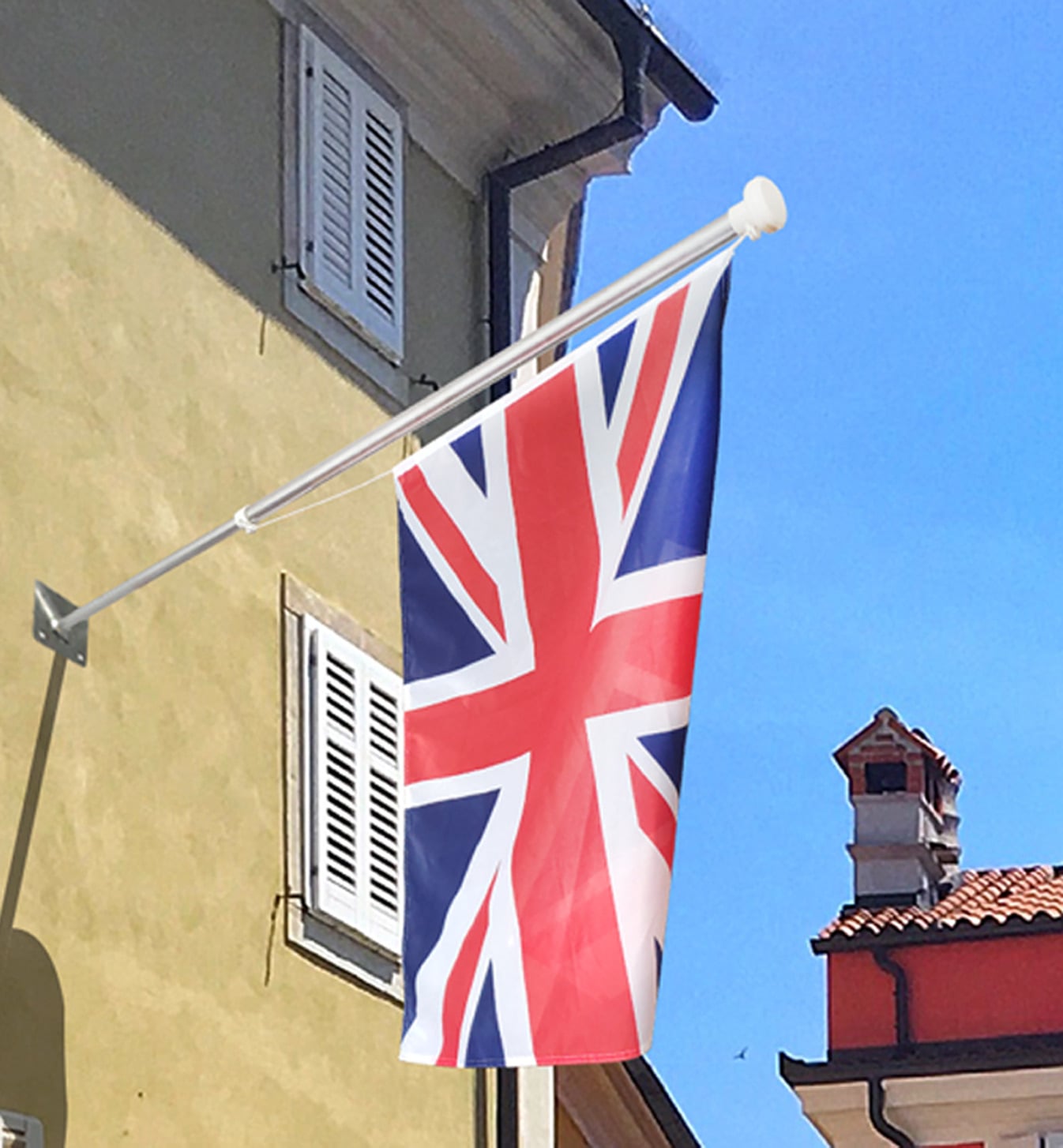
WF20 poles have been installed at healthcare institutes that mount bright‑orange wayfinding flags outside emergency‑room entrances, where a rusty bracket shedding metal flakes is unacceptable. At automotive dealerships, where 120 × 180 cm sales‑event flags hang along showroom walls and must endure the constant vibration of overhead rolling doors. A nonprofit in Senegal replaced aluminum poles that failed after a single rainy season; the carbon composite units still fly literacy‑campaign flags three years later. Worth noting. A travel agency chain in Singapore angles poles at 25° above the pavement in the down‑draught between tower blocks—a lateral buffeting that quickly fatigues metal. An education group in the Philippines cited lower shipping weight as the biggest benefit: they fly replacement poles to remote islands where there are no seaports, and every kilogram saved means another textbook can travel.
In every case, the material matched the environmental load. Carbon composite does not care about salt, acid rain, or the temperature swing from a Bangkok afternoon to a cooler night. We maintain a file of such references and can likely connect you with a contact in your region.
8. Making the Switch: Ordering, Sampling, and Scaling
The sample policy is simple: USD 210.75 covers the pole, bracket, a generic black flag, packaging, and express courier via DHL or FedEx. Delivery takes 15–30 days; custom flag printing may add 3–5 days for artwork approval. The minimum order quantity for production is two pieces. Test a pair—mount one on a windy roof for a month, compare it with your current pole.
Volume ladder pricing starts at USD 10.70 for up to 50 pieces, drops to USD 9.80 for 51–500 pieces, and begins at USD 8.50 for orders above 500. Large‑volume requests often receive bespoke quotes that reflect container optimization. Payment terms: T/T, Western Union, or L/C at sight for established distributors. First‑time buyers commonly use a 30% deposit with the balance before shipment. Bulk lead times run 15–30 days from receipt of deposit. We send production‑stage photographs and a packing‑list video before the container is sealed—a practice adopted after a past supplier short‑shipped.
To test the market, import a mixed container: your usual aluminum poles plus a trial quantity of carbon composite. Land both at the same time. Compare customer reception, installer feedback, and the return rate over the next quarter. Nearly every distributor who ran this trial phased out aluminum within two cycles because end users—hotel managers, event planners, facility directors—simply stopped calling with problems. In the flagpole business, silence is the truest quality metric.
Frequently Asked Questions
What is the maximum wind speed the WF20 pole can withstand?
With a standard 60 × 90 cm flag, the pole returns to straight after a sustained 120 km/h gust. The bracket does not yield until the equivalent of a 160 km/h load—above most building‑code design winds. The flag itself begins to fray above 100 km/h, so we recommend lowering or removing the flag in severe storms.
Does the carbon composite pole fade or become brittle in sunlight?
The white gel coat incorporates a UV stabilizer package that has passed 5 000 hours of QUV‑B accelerated weathering with no colour change and no loss of flexural strength. Expect the colour to hold for at least five years in tropical sunlight, without the chalking common on powder‑coated aluminum.
Can the base bracket rust?
The bracket is iron, protected by an electrostatically applied polyester powder coat. In normal inland conditions, it will not rust for many years. For coastal installations within 500 metres of the sea, request the optional zinc‑flake coating (light customization) and use stainless‑steel wall fasteners. The carbon composite tube itself cannot rust.
What HTS code should I use when importing into the United States?
Use 6815.10.0000 for articles of carbon fibres. The current duty rate is 2.9%. If your broker defaults to an aluminum code, present the material certificate and request a binding ruling from Customs and Border Protection.
How many units fit in a 40‑foot high‑cube container?
4 155 units, packed in ten‑unit cartons measuring 205 × 12 × 12 cm. A loading plan is shared with your freight forwarder.
Can I get the pole in a colour other than white?
The standard gel coat is white. We support light customization for black, silver, or branded corporate shades. Minimum order for a custom colour is 200 pieces; lead time extends by about one week.
Is the flag included with the pole?
The WF20 set includes one 100% polyester black flag, dye‑sublimation printed. Additional flags are available as a separate SKU; we can print your design with the same 15‑to‑30‑day lead time.
How do I install the wall bracket?
Based on field testing, The bracket comes with a drilling template, four Fischer nylon wall plugs rated for solid masonry, and four stainless‑steel hex‑head screws. Installation is a one‑person job requiring a 10 mm masonry bit, a spirit level, and a 13 mm wrench. Change the angle position by removing one pivot bolt, rotating the arm, and re‑inserting the bolt in the appropriate hole.
What is the warranty?
We cover manufacturing defects for two years, replacing any pole that develops a material fault under normal use. The field replacement rate is under 0.2% per year, which is why the warranty costs us very little to honour.
Can I order a sample without a flag?
Yes, but the sample price remains the same because the pole and bracket drive the cost. For a sample with a custom‑printed flag, supply your artwork; the price is the standard sample fee plus a USD 30 artwork‑setup charge.
A good specification turns a commodity into a strategic advantage. When a container of WF20 poles leaves the port of Ningbo, those poles will soon be flying flags at airport lounges, university quads, and dealership forecourts—still straight, still white, still making their owners look as though every detail was thought through. All it takes is the willingness to think.
About the Author
Wei Chen, Senior Product Specialist
B.S. Supply Chain Management, Michigan State University; Certified Professional in Supply Management (CPSM)
12 years in B2B display hardware sourcing. Former procurement manager for a top 20 US promotional products distributor. Specializes in aluminum pole systems and import compliance.
Reviewed by WZRODS Technical Team. Updated: 2026-07-04
 Comments (0)
No comments yet. Be the first to comment!
Leave a Comment
Related Products
Combo Pole
F Banner(Teardrop)
Golf flag pins
110° H banner
Magnum banner
SF Banner
Budget 2in1 flag system
4 in 1 flag System
T Banner
H Banner
Related Articles
29kg Concrete Flag Base - The Complete B2B Buyer's Resource - WZRODS
WZRODS DY451B: 29 kg, HDPE shell, concrete core. Stackable, portable, rust-proof. FOB price US$5.75–$6.85 at MOQ 2 units. Those numbers look unremarkable. Factor in landed cost—import duties lower than aluminum’s under relevant HTS codes, freight savings from less weight per unit of stabilizing mas
Wide Tube Cross Base - The Complete B2B Buyer's Resource - WZRODS
The Wide Tube Cross Base, manufactured by Wzrods in Shandong, China, solves one problem: reliable stability for poles under three meters, without the freight costs and warehouse footprint that heavier alternatives demand.
Rectangular Pipe Cross Base - The Complete B2B Buyer's Resource - WZRODS
The pipe cross flag base is a cross of rectangular steel pipe, powder‑coated, weighing 1.3 kg and spanning 78 cm across its arms. Its center holds a C‑ring shaft that lets the flag rotate with the wind.
X-Shape Backpack Banner - The Complete B2B Buyer's Resource - WZRODS
Economic Cross Base - The Complete B2B Buyer's Guide- WZRODS
When you buy an economic cross base—something like the Wzrods DM‑9, a 77 cm‑long, 1.3 kg iron cross—forget “economic” as a synonym for “cheap.” It means value-engineered.
Wall Mount Flag Bracket - The Complete B2B Buyer's Resource - WZRODS
Here's the bottom line: You think a bracket is just a bracket—a piece of metal and a few screws. You order a dozen from a catalog, bolt them to your booth wall,