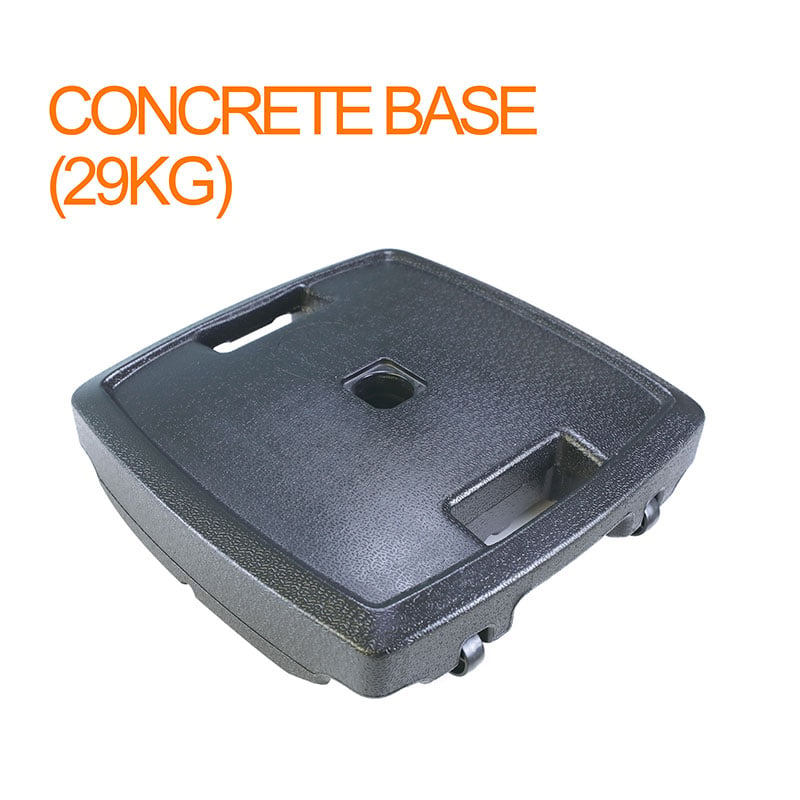
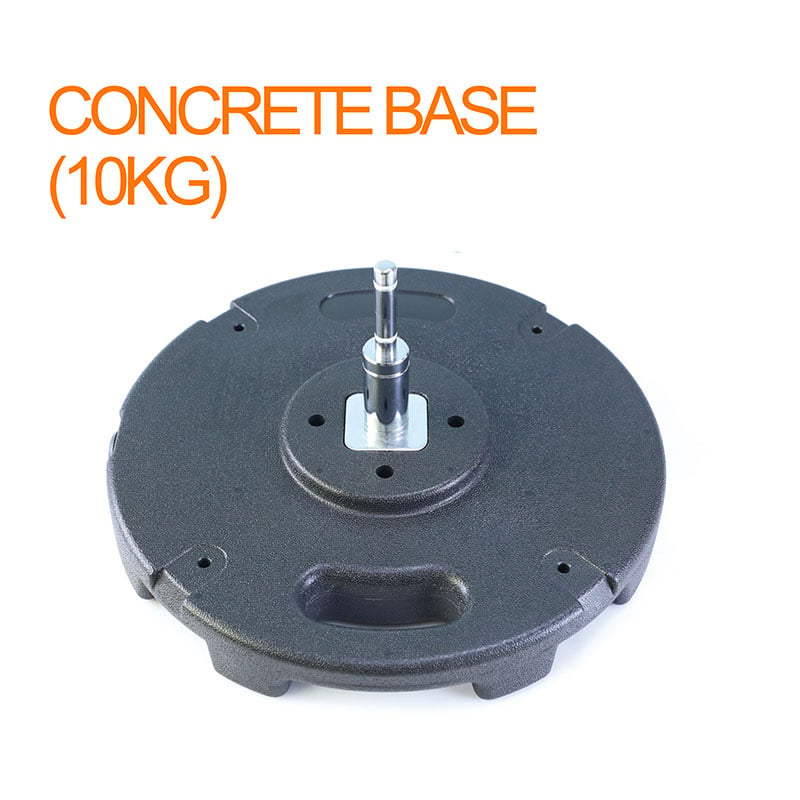
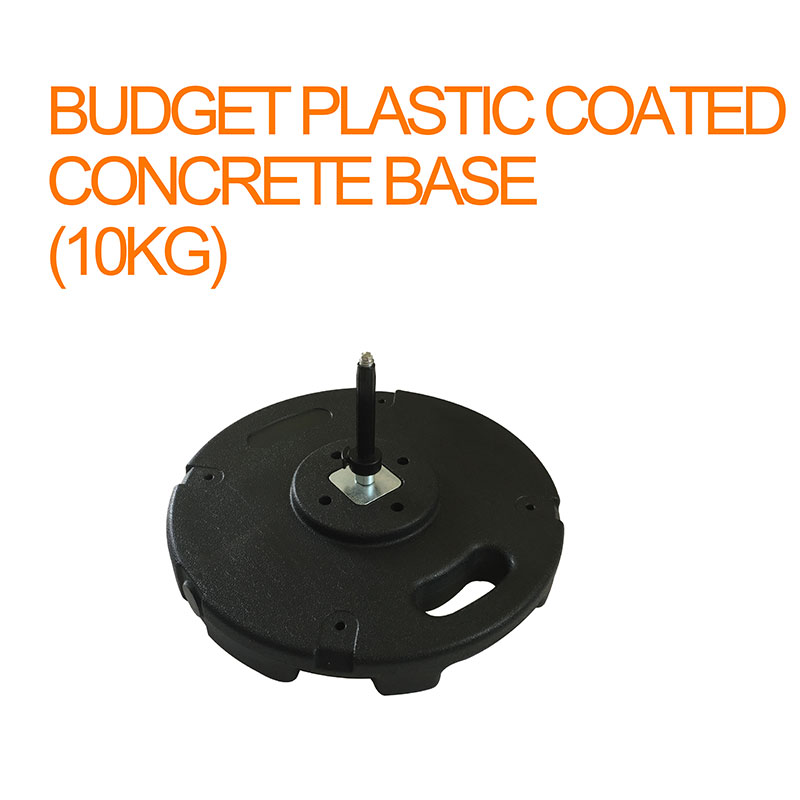
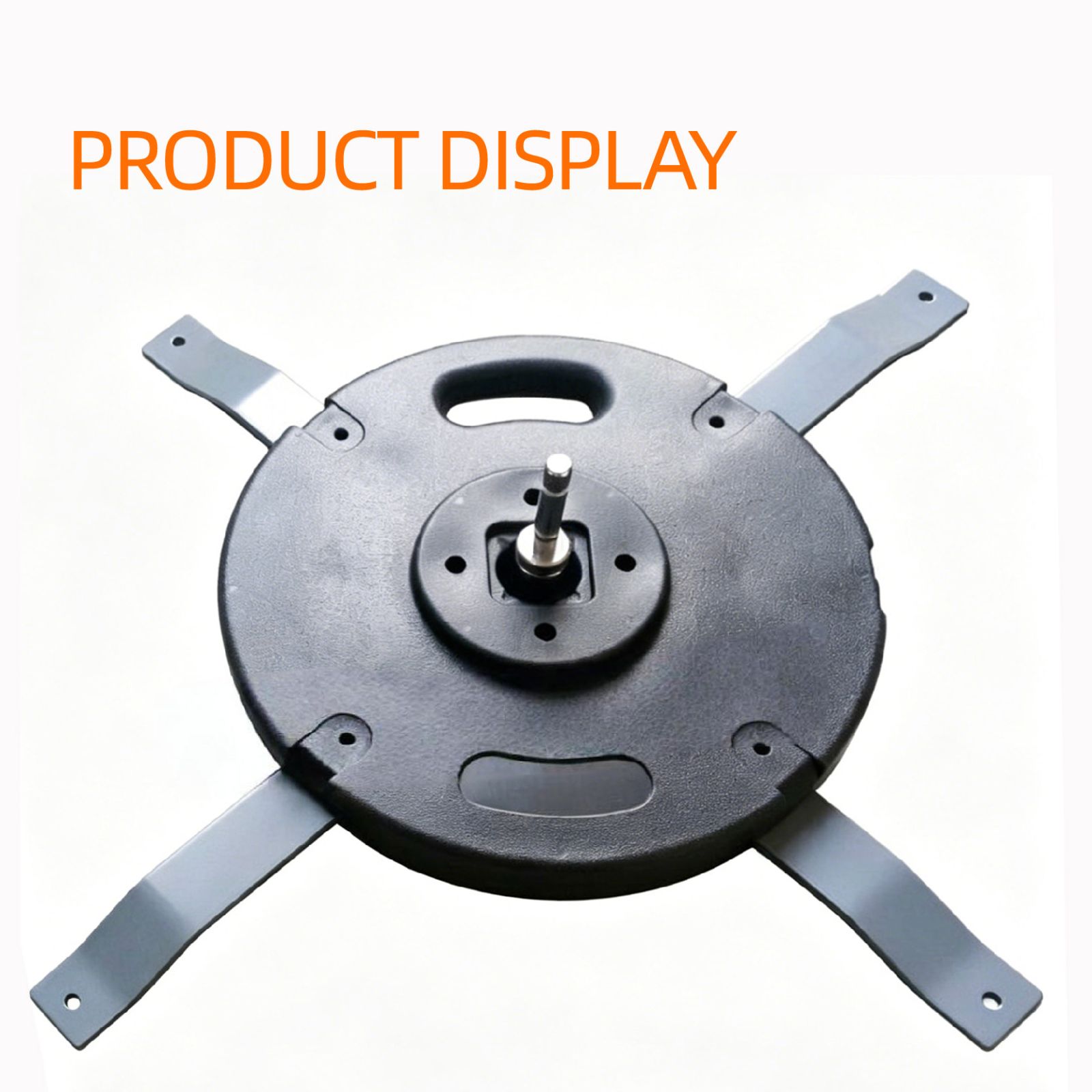
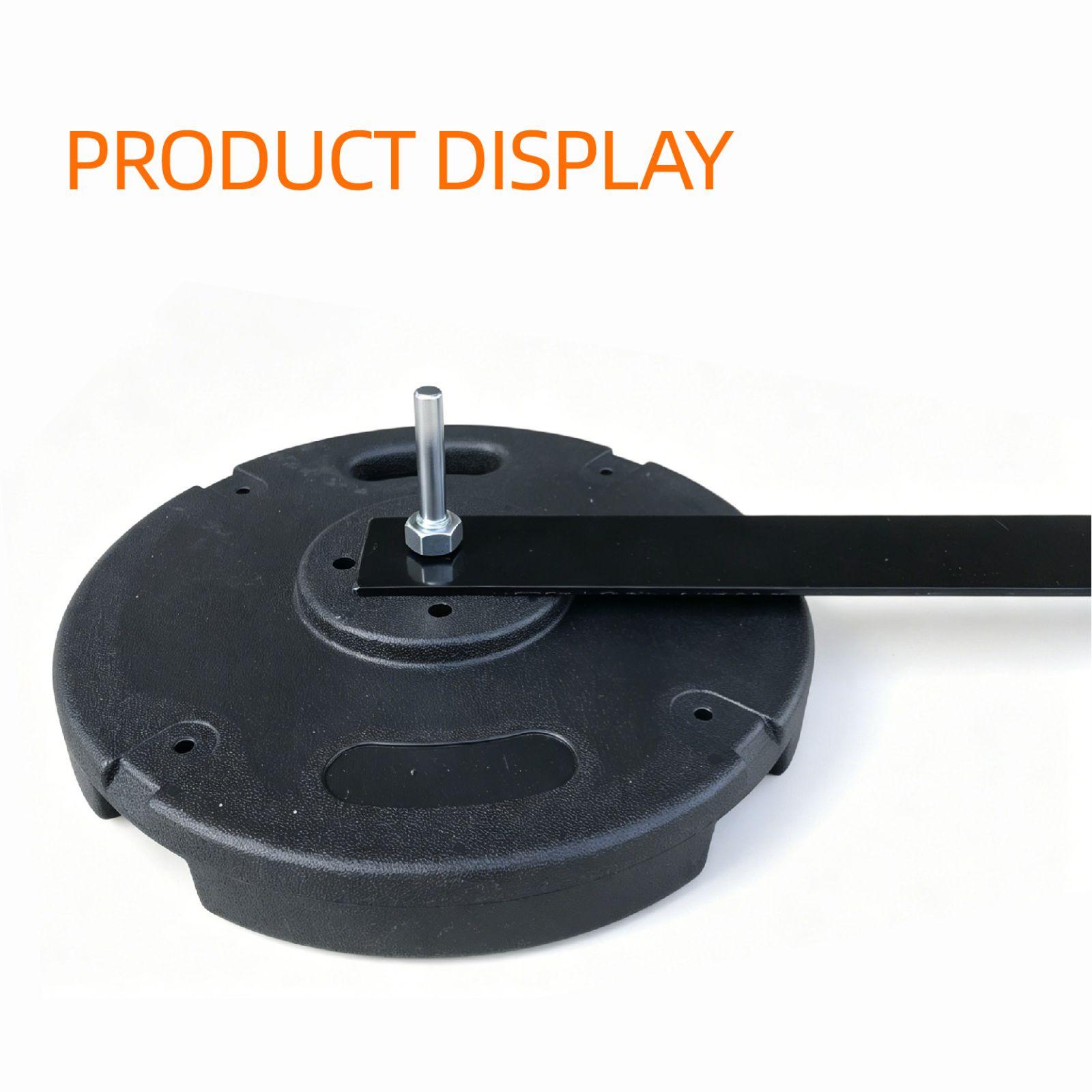
10kg Concrete Flag Base
WZRODS design from 2014. Concrete base with HDPE moulded shell and concrete inside is intended for our flag bases, available in 10kg or 29kg weights—one of the most value-for-money flag base options. …


 Article
 Specifications
- Origin
- Shandong, China
- Brand
- WZRODS
- Item Code
- WT-21(10KG)
- Main Material
- Filled With Cement
- Color
- Black
- Application Spec
- Trade Shows, Outdoor Events, Sports Events
- Target User
- anyone who want brand marketing
- Size
- 42*42*9.5(cm)
- Weight
- 10KG
- Package
- Carton / Pallet
- Material
- HDPE/Cement
- Shape
- Round
 Product Description
Shipping & Packaging
- Unit Weight
- 1.530 kg
- Unit Size
- 158X18X19 cm
- Packaging
- Standard export carton
- Lead Time
- 15-30 days
Pricing
- MOQ
- 2 piece
- Price Range
- USD 5.75 – 6.85
* FOB Qingdao. Excludes shipping & taxes. Accessories & customization confirmed separately.
 Sample Service
- Sample Available
- Yes
- Sample Price
- piece 300
- Max Sample Qty
- 1
 Customization Options

Light Custom
Logo, color, size adjustments

Fast Turnaround
Quick custom order processing
Table Flag Stands: The Complete Size Guide
Table Flag Stands: The Complete Size Guide
A table flag stand is a small object that fails in very public ways. Too light, and it tips the moment a door opens. Too tall, and it blocks the sightline between two people trying to close a deal. Too wide, and it steals the space where the coffee cups were supposed to go. The good news is that the sizing problem is not complicated once you know which four numbers actually matter — and the answer is usually decided by the table, not by the flag.
The 60-second answer
If you only read one paragraph: match the stand's total height above the tabletop to the seated eye level of the people using the table, then size the base to the flag area. For a standard 75 cm banquet or exhibition table, that means a stand 38–42 cm tall carrying a 20 × 30 cm flag on a 15–18 cm base weighing 0.8–1.5 kg. Anything taller than about 48 cm belongs in the centre of a large round table or against a back wall, not between two seated people.
| Application | Flag (W × H) | Height above tabletop | Base diameter | Base weight |
| Desk / reception mini | 10 × 15 cm | 22–25 cm | 8–10 cm | 0.15–0.3 kg |
| Boardroom / conference | 15 × 22 cm | 30–35 cm | 12–14 cm | 0.4–0.7 kg |
| Standard trade show table | 20 × 30 cm | 38–42 cm | 15–18 cm | 0.8–1.5 kg |
| Large tabletop / centrepiece | 30 × 45 cm | 55–60 cm | 20–25 cm | 2–4 kg |
| Outdoor tabletop (exposed) | 20 × 30 to 30 × 45 cm | 40–60 cm | 25–30 cm | 4–8 kg |
What "size" actually means on a table flag stand
Buyers often ask for "a table flag stand" as though it were one specification. In practice a stand is defined by four independent measurements, and getting three of them right still leaves you with a product that tips over:
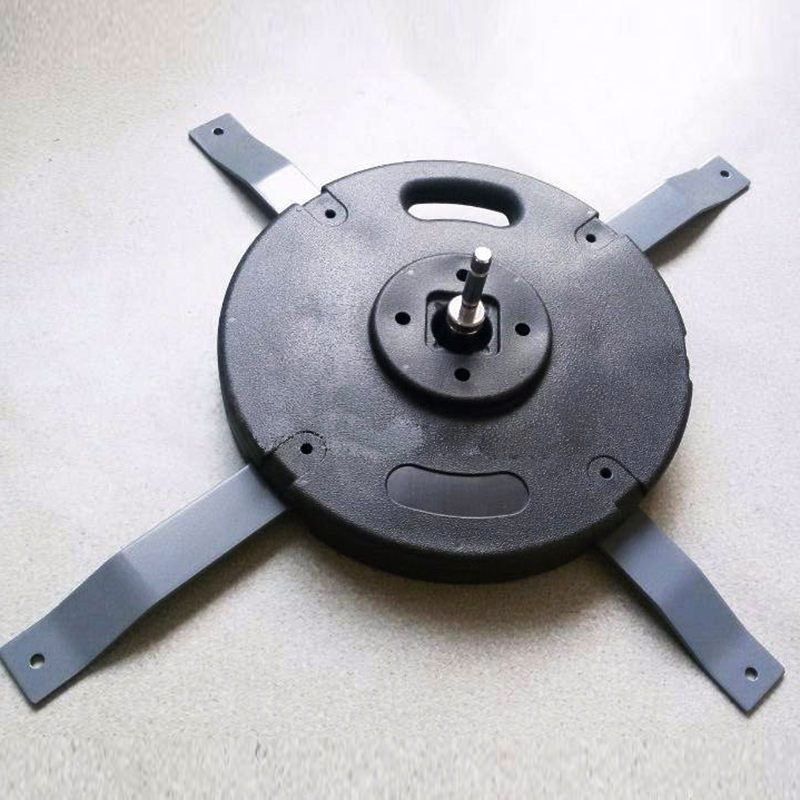
- Base footprint. The diameter of a round base, or the span of a cross base. This controls both stability and how much table you lose.
- Base weight. Separately from footprint. A 20 cm plastic shell filled with sand and a 20 cm solid casting behave completely differently in a gust — and in a suitcase.
- Overall height. From the tabletop to the top of the pole. This is the number that decides whether your flag blocks a conversation.
- Flag graphic size. Width and height of the printable area. This decides legibility at distance and, crucially, the wind load the base has to resist.
Add two secondary numbers that cause most of the technical support tickets we see: the pole diameter (typically 3–4 mm on desk-tier stands, 5–6 mm on standard tabletop, 8–10 mm on large tabletop) and the spigot or socket diameter where the pole meets the base. A base with the wrong socket size is scrap metal, however good the rest of the specification looks.
Rule 1: Keep the flag below seated eye level
This is the rule most catalogues ignore, and it is the one that decides whether your table flag reads as professional or as an obstacle.
A standard folding banquet table or exhibition trestle is 74–76 cm high. Seated eye level for an average adult at that table sits roughly 118–125 cm from the floor. So the usable vertical window above the tabletop is about 40 to 48 cm — enough for the flag to sit just below eye level, fully readable from across the room, without cutting the table in half visually.
Two exceptions are worth knowing:
- Large round tables. On a 180 cm round seating eight to ten, sightlines cross the perimeter of the table, not the centre. A centrepiece stand at 55–60 cm is fine and often preferable, because it lifts branding above the glassware line.
- Back-of-counter and back-wall displays. If nobody needs to see over the stand, height is free. A 60 cm stand behind a reception counter is doing the same job as a small poster.
Rule 2: Base diameter scales with height, and roughly a third of it
A workable starting ratio for still indoor air is a base diameter of at least one-third of the overall stand height. A 40 cm stand wants a 13–15 cm base; a 60 cm stand wants 20 cm or more. In outdoor or exposed conditions, push that ratio toward one-half, and then re-check the weight.
Footprint is also a table-space budget. Reserve at least 30 cm of clear space around each stand — the flag needs room to swing, and your guests need room for glassware. On a 183 × 76 cm trestle that realistically means two or three standard stands, not five.
Rule 3: Base weight scales with flag area, not with habit
Overturning resistance is base weight multiplied by base radius. Wind force is flag area multiplied by wind pressure. So if you double the flag area without touching the base, you double the overturning moment — you either double the base weight, double its diameter, or split the difference. This is where most cheap table flag stands quietly fail.
A worked check, exposed outdoor table, 20 × 30 cm flag. Flag area 0.06 m². A 40 km/h gust is 11.1 m/s, giving a dynamic pressure of about 75 Pa (½ρv², ρ = 1.225 kg/m³). At a drag coefficient of roughly 1.2 that is about 5.4 N acting 0.4 m up the pole — an overturning moment of roughly 2.2 N·m. A 1 kg base with a 7.5 cm radius resists about 0.74 N·m and will tip. You need roughly 3 kg at that radius, or 1.5 kg at 15 cm. Assumptions: uniform pressure, no sheltering, static loading. Treat the result as a floor, not a ceiling — then test the actual product.
This is precisely why hollow water-fill bases are a poor fit in hot markets. A Dubai exhibition contractor replaced its entire water-fill stock after summer temperatures above 50 °C deformed the shells and the bases leaked — and venue staff could not find a water source during show build-up anyway. Switching to solid cast ballast took base failure rates from 15% to 0% and cut warehouse space by 35% because the units stacked. Solid mass does not need a water supply, does not evaporate, and does not turn into a puddle on a carpeted stand.
Indoor versus outdoor: where the weight jumps
The single biggest sizing error we see in distributor orders is treating an indoor stand specification as an outdoor one. The gap is not marginal:
- Indoor, still air: 0.8–1.5 kg on a 15–18 cm base comfortably carries a 20 × 30 cm flag.
- Indoor, near a door or HVAC vent: treat as exposed. Double the base weight or halve the flag.
- Outdoor, sheltered terrace: 4–8 kg on a 25–30 cm base, or a cross base with an added weight plate.
- Outdoor, open ground or coastal: leave the tabletop entirely and move to a floor system. No table stand is the right answer here.
The pole matters more than most buyers expect
On a table flag stand the base is the visible engineering; the pole is the hidden failure point. Aluminium and low-grade steel poles take a permanent bend the first time a flag catches a gust, and a bent pole will not sit straight in the socket again. Fibreglass is better but fatigues.
WZRODS has been pultruding carbon composite poles since 2005 — the company started in Weihai, one of the world's largest fishing-rod manufacturing centres, which is where the carbon fibre and fibreglass composite expertise came from. The same logic that makes a carbon pole survive 160 km/h+ on a beach flag applies to the tabletop version: the pole flexes and returns instead of deforming, weighs roughly 40% less than the aluminium equivalent, and cannot rust. For coastal, tropical and Gulf markets, the rust point alone usually settles the specification.
When the tabletop is the wrong answer
Table flag stands stop being the right tool above roughly 30 × 45 cm of flag area or 60 cm of height. Beyond that, the base weight required to keep the thing upright exceeds what a table can sensibly carry. That is the moment to step down to a floor system — and it is where the base specification changes character.
The WZRODS concrete base, designed in 2014, is the workhorse for that step. It is a 42 × 42 × 9.5 cm HDPE moulded shell filled with solid concrete, available at 10 kg and 29 kg, and it does two jobs that matter for event work:
- Stackable. Two innovation points define the design — the units stack for storage and transport, and they work either alone with a spigot or as additional weight on a metal base plate or fixed cross base. That second use is the original WZRODS configuration and it is what lets a distributor stock one base SKU across several stand families.
- No water, no hollow shell. Solid fill removes the heat-deformation and leakage failure mode that hollow plastic bases suffer in 50 °C+ conditions.
The 10 kg unit also carries a handle and wheels for repositioning, and accepts LED uplighters for evening display. At 10 kg it sits in the 10–20 kg ISTA drop-test bracket, which means packaging must survive a 61 cm drop on the most vulnerable corner, edge or face without product damage — worth writing into your packaging spec rather than assuming. Roughly 1,258 units fit a 40HQ (68 CBM), and list pricing runs USD 5.75–6.85 per unit with MOQ from two pieces, so it is a low-risk line to test alongside a table flag programme.
Hot climates, UV and dust: sizing adjustments for the Gulf
The Gulf is a useful stress test for any tabletop flag programme, because the environment attacks three things at once. Summer temperatures exceed 50 °C, sandstorms are frequent, and UV is relentless — current conditions in the UAE sit around 35 °C with UV index 6 on a moderate day. Anodised aluminium fittings in desert conditions can show surface oxidation within six months, and standard flag fabrics deform and fade under sustained heat. Specify Qualicoat Class 2 powder coating on metal components and high-temperature polyester rated to around 120 °C on the fabric.
Demand is real and measurable. China's 2025 exports to the UAE under HS 761090 — the bases, weights and brackets category — reached USD 85.1 million, according to TradeDataService Comtrade summaries. Jebel Ali is the region's largest transshipment hub, with China-origin sea freight landing in roughly 20–25 days; Saudi-bound cargo typically clears via Dammam or Jeddah. Dubai works well as a regional distribution base, and the dirham's peg at 3.6725 to the dollar removes the currency risk that complicates pricing elsewhere in the region.
Freight and landed cost: the weight conversation
Table flag stands are a volume-and-weight product, and both drive your landed cost. A carbon composite system weighs around 10 kg against roughly 16.7 kg for the aluminium equivalent — about 40% lighter, which translates directly into lower freight cost per unit and better container utilisation.
There is a duty angle too. Carbon composite poles fall under different HTS codes from aluminium structures, and in several markets that classification carries a lower rate. The precise rate is market-specific, so confirm the code with your customs broker rather than taking a supplier's word for it. Factor duty, freight and replacement rate together before comparing quotes — the cheapest table flag stand on the invoice is rarely the cheapest over three years, and a 3-year warranty only means something if the product does not come back.
The spec sheet to send your supplier
If you want a quotation you can actually compare, send these eight lines:
- Table type and dimensions (round/trestle/counter, height, usable depth)
- Required flag graphic size in mm, width × height
- Required overall height above the tabletop
- Base type (round solid, cross, water-fill — and why) plus target weight
- Socket / spigot diameter and pole diameter
- Indoor or outdoor, and whether the location is exposed to wind
- Climate: max temperature, humidity, coastal salt exposure
- Packaging standard: ISTA drop-test bracket appropriate to the shipping weight, not a generic "export carton"
On the supply side, look for factory-direct production with private label and neutral packaging support, a low MOQ that allows mixed-model market testing, and an export record long enough to have seen your market's failure modes before. WZRODS has been manufacturing since 2005, ships to 80+ countries, holds a 3-year warranty across the range, and operates a quality management system that has been running for more than 20 years — with supplier selection based on material performance and batch stability rather than lowest price. Primary export ports are Qingdao and Shanghai. Samples are paid, limited to one unit, and typically dispatch within the standard 15–30 day production window.
Frequently Asked Questions
What size table flag stand fits a standard 6 ft folding table?concrete base
Two or three stands at 38–42 cm overall height with 20 × 30 cm flags on 15–18 cm bases weighing 0.8–1.5 kg each. Space them at least 30 cm apart so the flags can swing without tangling, and keep the total occupied footprint under about 15% of the table surface so there is still room for product samples and glassware.
How tall can a table flag be before it blocks sightlines?
About 48 cm above the tabletop for anything placed between two seated people, given a 74–76 cm table and seated eye level of 118–125 cm from the floor. Centre-of-table placements on large rounds and back-of-counter displays are exempt — there, 55–60 cm works well because nobody needs to see over the stand.
How heavy should the base be for outdoor use?
For a 20 × 30 cm flag in a sheltered outdoor position, plan on 4–8 kg on a 25–30 cm base. Run the numbers rather than guessing: a 40 km/h gust on that flag generates roughly 2.2 N·m of overturning moment, which a 1 kg base on a 7.5 cm radius does not resist. If the location is genuinely exposed, use a floor stand instead.
Are water-fill bases a good option?
Only in temperate, indoor, well-supported venues — and even then, somebody has to find a water source during build-up. In hot climates they are a liability: above 50 °C the shells can deform and leak, and a failed base at a show is not a recoverable error. Solid ballast avoids the failure mode entirely and stacks for storage.
When should I move from a table flag stand to a floor stand?
When the flag exceeds roughly 30 × 45 cm, or the required height exceeds 60 cm, or the stand will be outdoors and exposed. At that point the base weight needed outgrows a tabletop. A 10 kg or 29 kg concrete base with a spigot, or used as added weight on a metal base plate or cross base, covers that step without changing your pole and flag inventory.
References
- TradeDataService (Comtrade summary), HS 761090 — Bases, Weights & Brackets, China exports to United Arab Emirates, 2025: USD 85.1 million (data updated 2026-11-01).
- IMF World Economic Outlook — UAE real GDP growth projection 3.5% (2031); UAE GDP 2024 USD 552.3 billion.
- UAE Central Bank / pegged exchange rate: 1 USD ≈ 3.6725 AED.
- ISTA drop-test weight brackets: <10 kg / 76 cm; 10–20 kg / 61 cm; 20–30 kg / 46 cm; >30 kg / 30 cm.
- WZRODS manufacturing records: founded 2005; 20+ years quality management; 80+ countries served; 3-year warranty; export ports Qingdao and Shanghai; REACH Certificate of Compliance TR20165959 (ground spike).
- WZRODS product data: Concrete base WT-21 (10 kg), 42 × 42 × 9.5 cm, HDPE shell with concrete fill, stackable, spigot or add-on weight configuration, available in 10 kg and 29 kg; approx. 1,258 units per 40HQ (68 CBM); USD 5.75–6.85 per unit; MOQ 2 pieces; lead time 15–30 days.
- Field case study: Dubai exhibition contractor, water-fill to solid cast base conversion — failure rate 15% to 0%, warehouse space saving 35%.
- Market conditions: UAE current weather 35 °C, wind 7.5 km/h, UV index 6; regional summer temperatures 50 °C+; Qualicoat Class 2 and 120 °C-rated polyester specifications per Gulf event-equipment practice.
- Overturning calculation in this article is the author's own worked example using standard fluid dynamics (q = ½ρv², ρ = 1.225 kg/m³, Cd ≈ 1.2, static loading, no sheltering) and should be verified by physical testing.
 Comments (0)
No comments yet. Be the first to comment!
Leave a Comment
Related Products
Bungee hook
Lightpole bracket
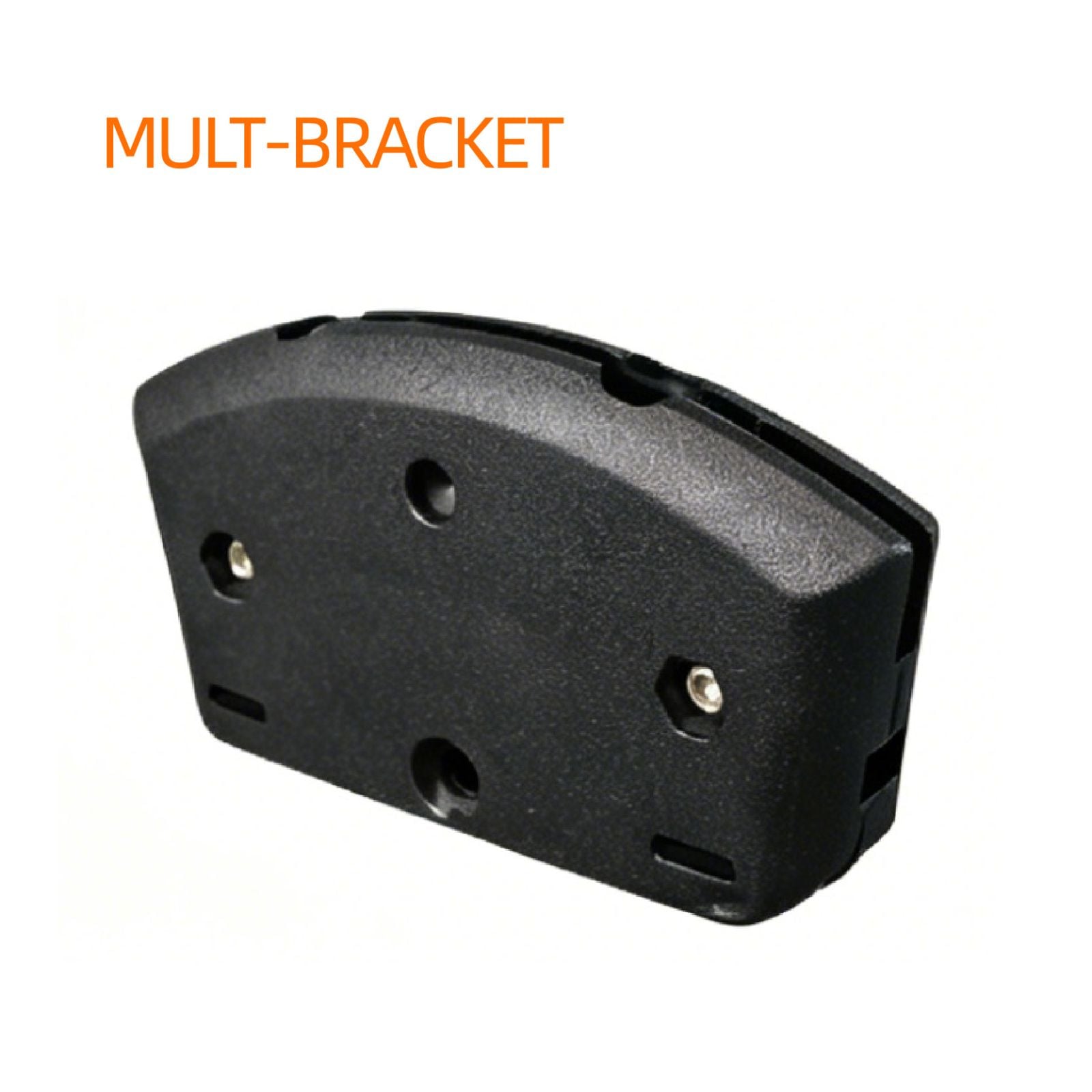
Disc banner Mult-bracket
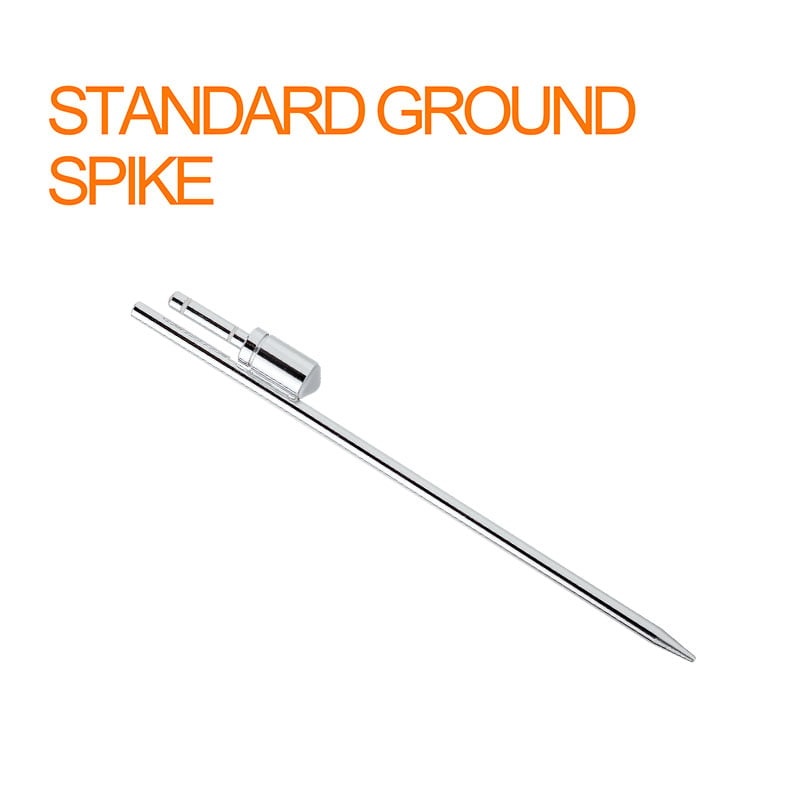
Ground Spike For Lawn Or Sand
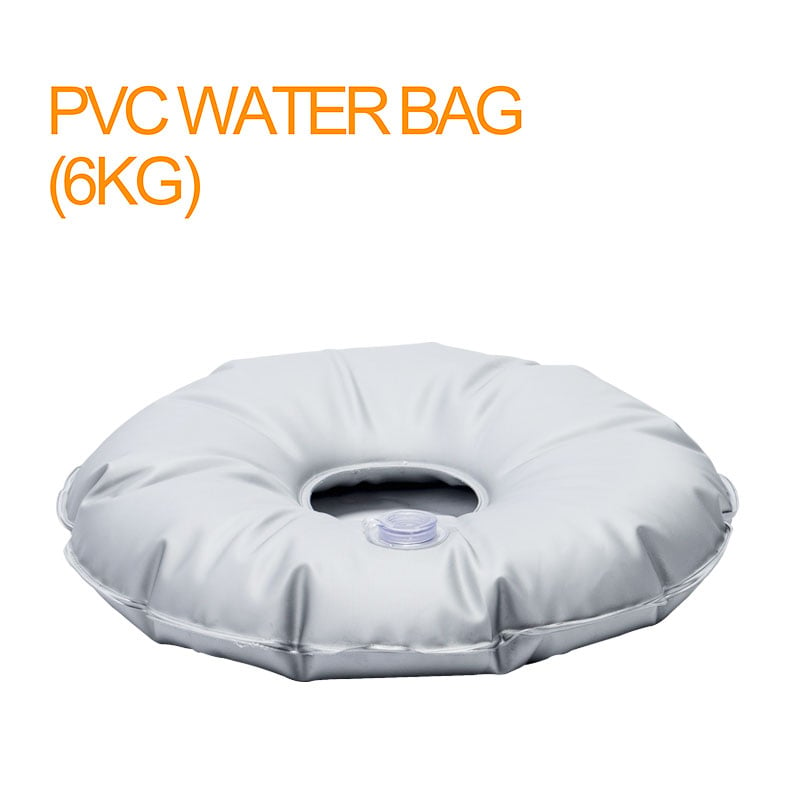
Water Bag
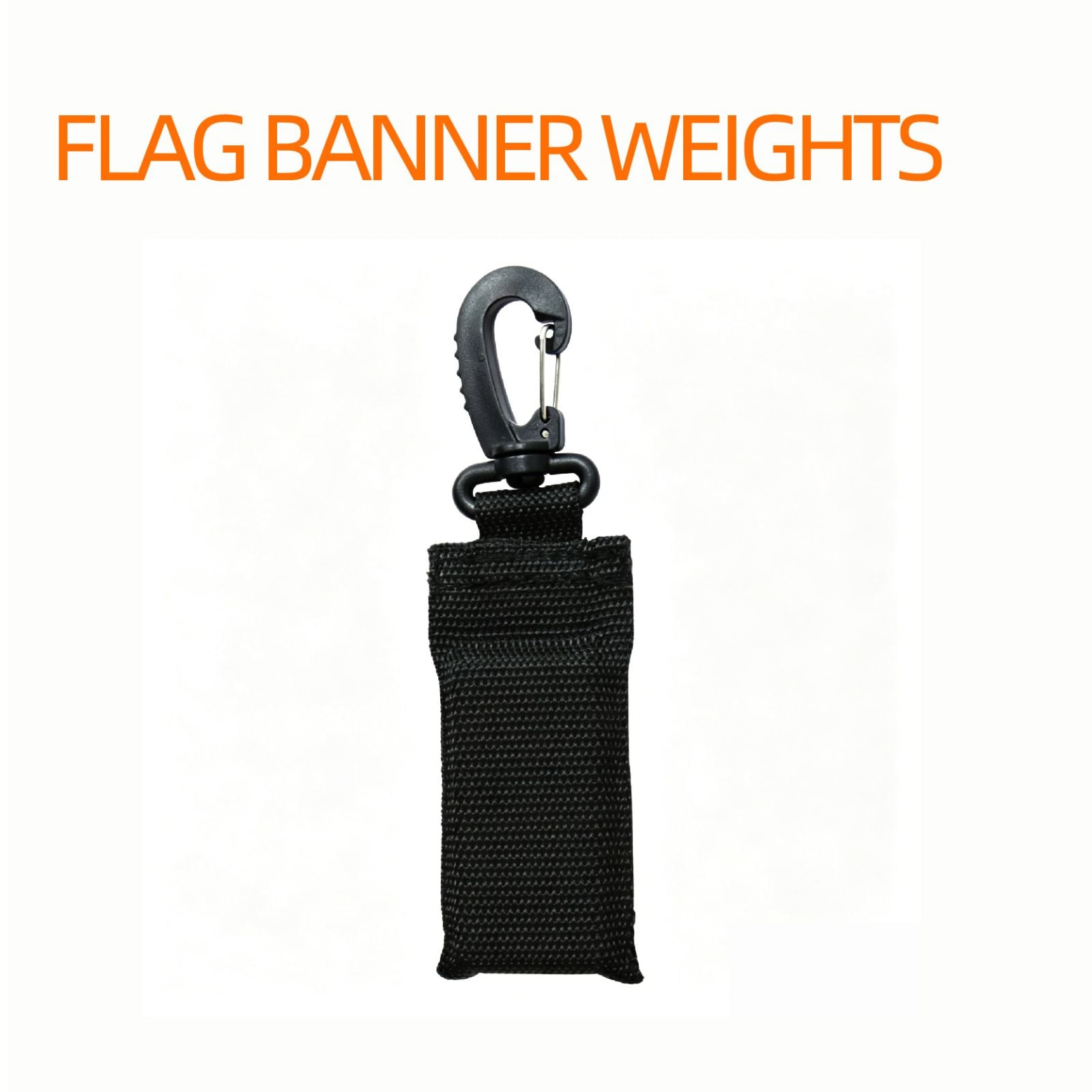
Flag /banner weights
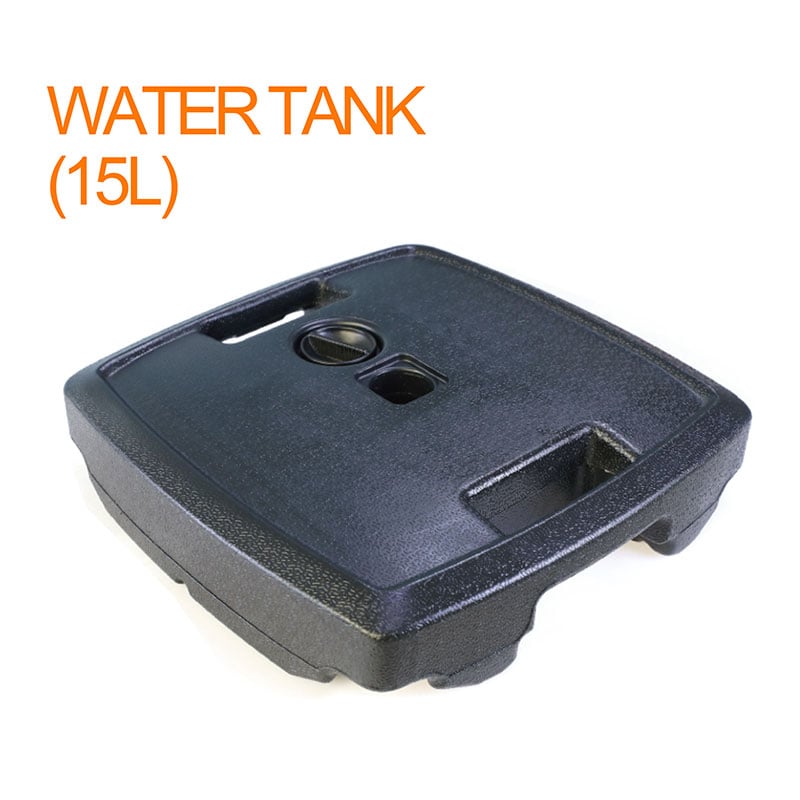
Water tank
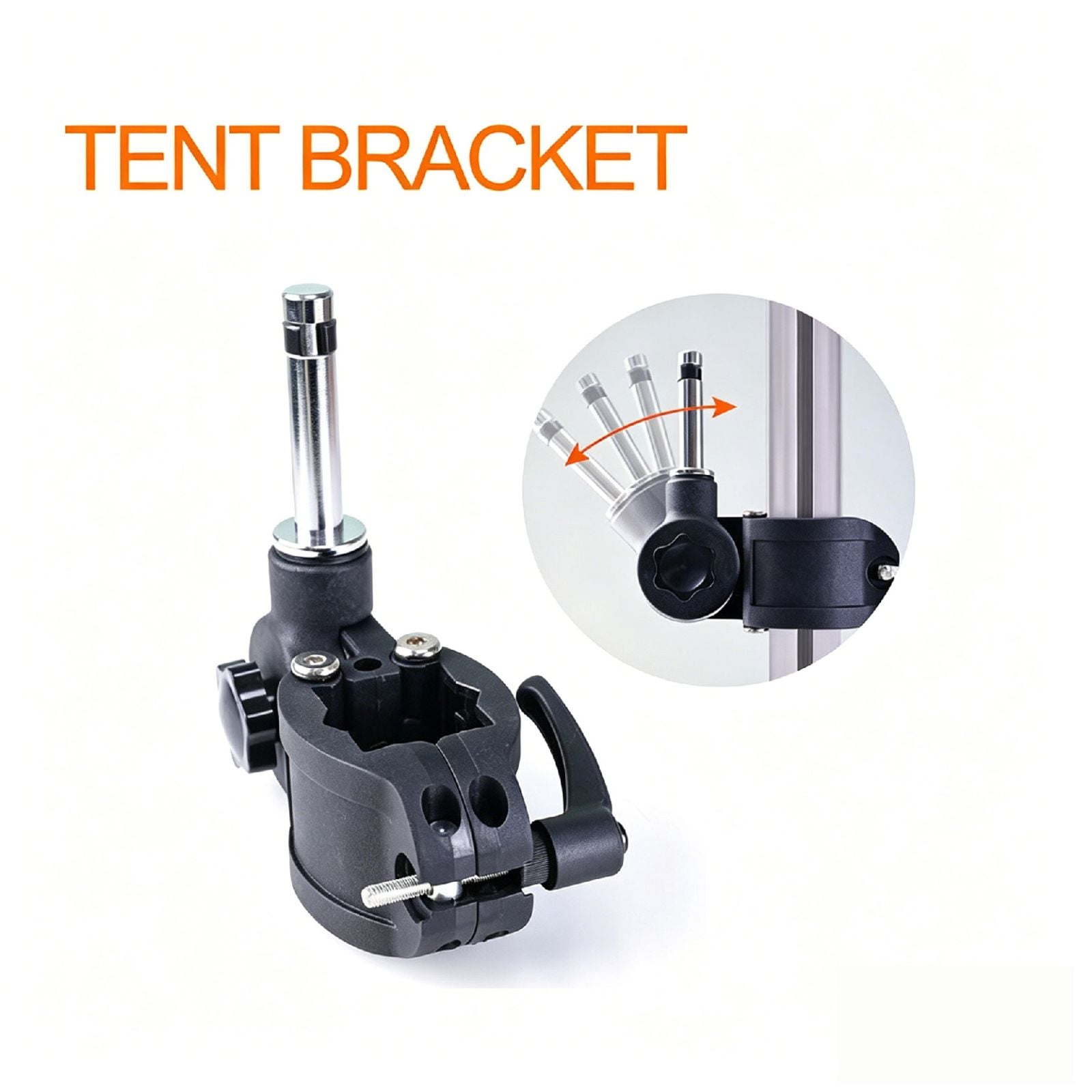
Tent Bracket
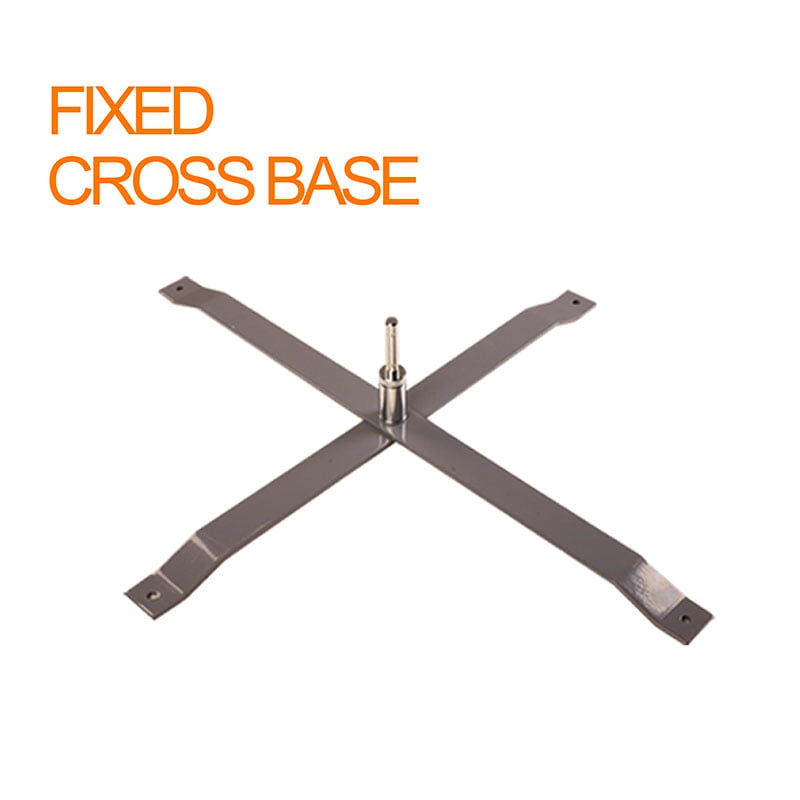
Fixed Cross Base
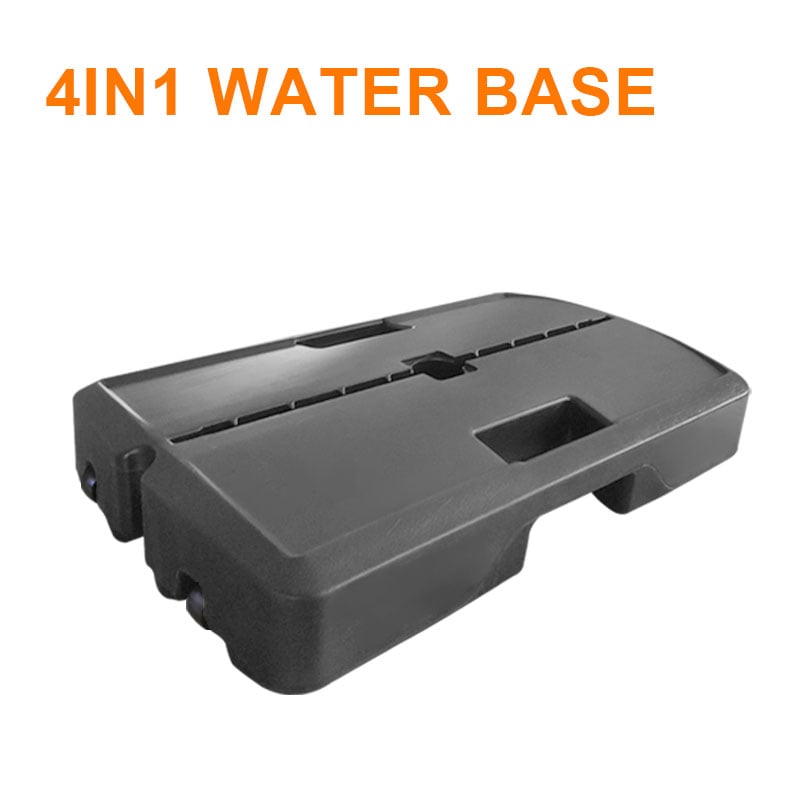
4 in 1 Water Tank
Related Articles
Portable Flagpoles: Pack, Carry, and Set Up Anywhere
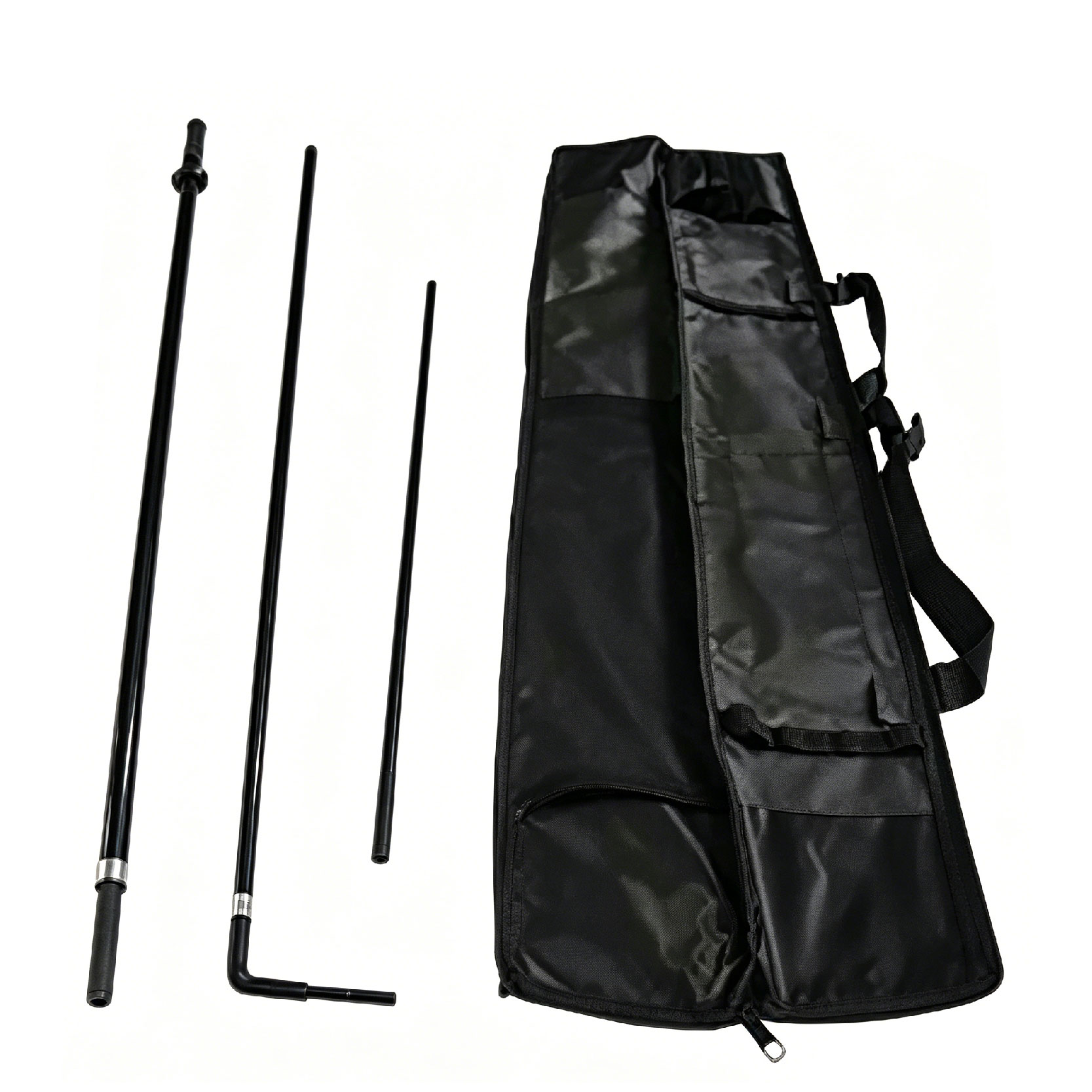
This guide answers the practical question directly — how do you travel with a portable flagpole — and then goes further, into the specifications that determine whether a pole survives the trip and the deployment.
Ground Banner Stands: The Outdoor Setup Guide
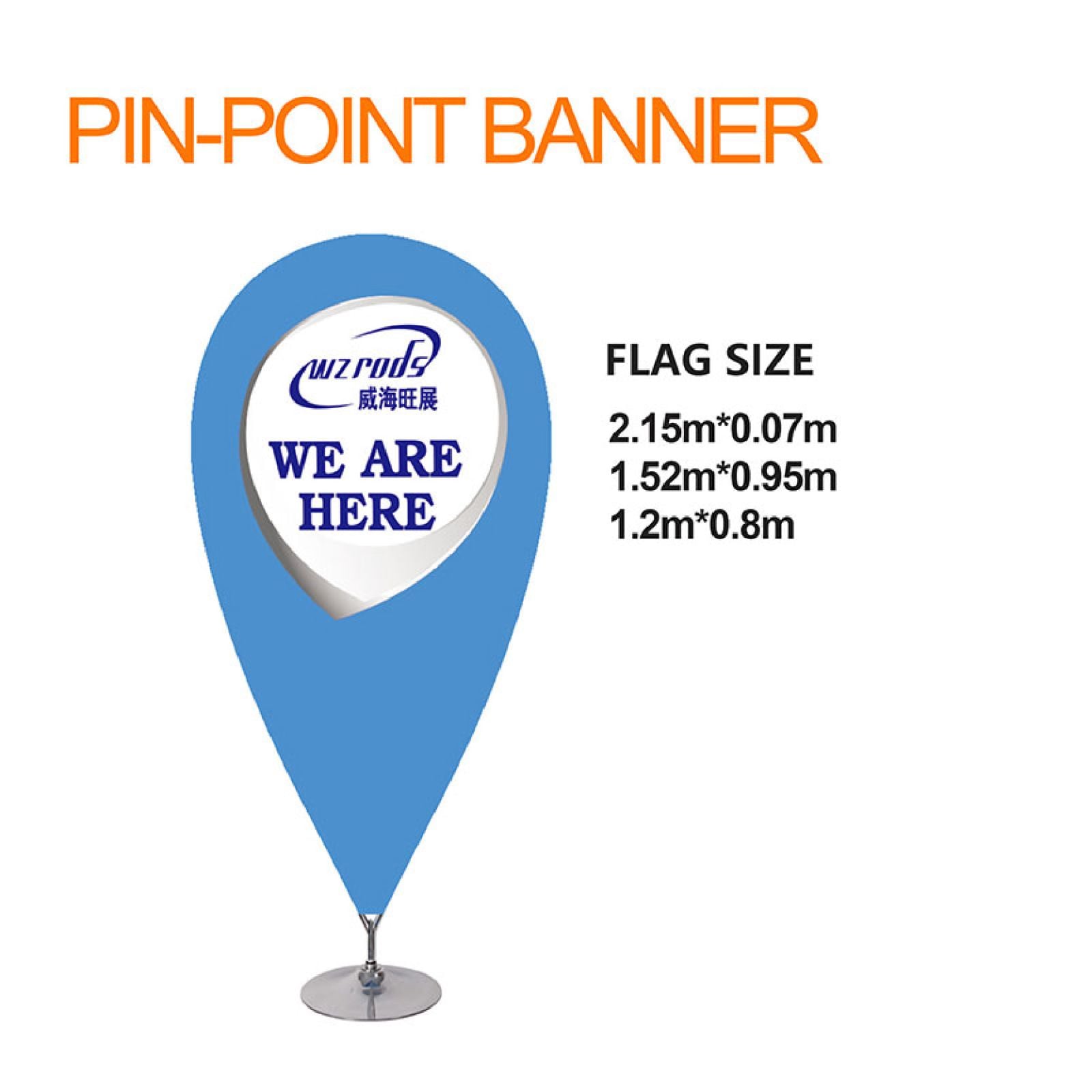
Ground Banner Stands: The Outdoor Setup GuideEvery outdoor banner failure we hear about follows the same script: the pole was fine, the print was fine
Portable Flag Stands: The Event Pro's Pick
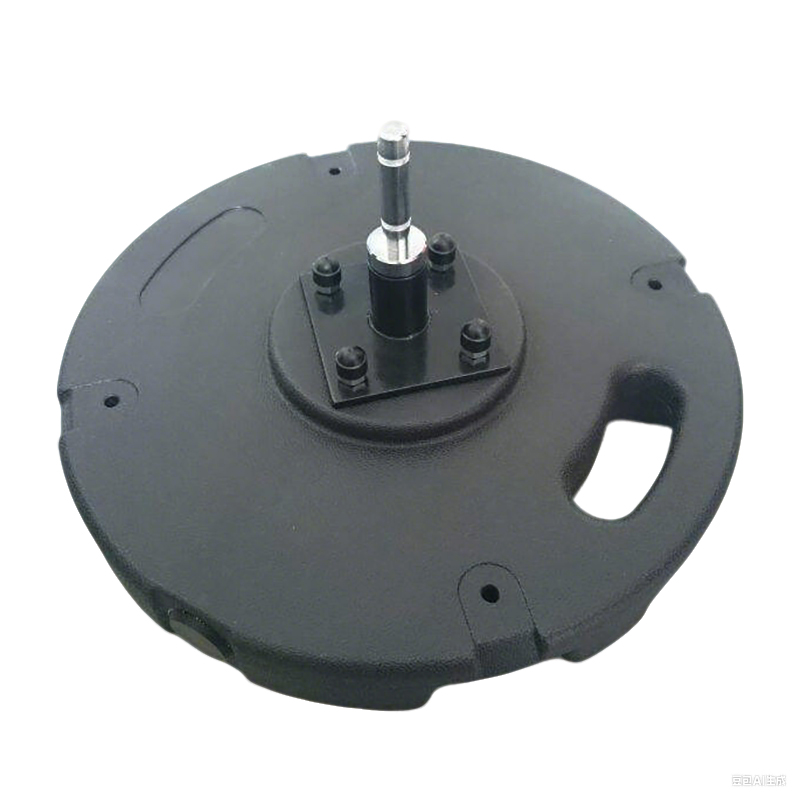
Portable flag stands need balanced portability and wind stability. WZRODS WT-21 stackable solid bases with carbon poles scale weight on-site, outperforming water-fill and aluminum setups.
Best Flag Poles for Windy Areas: The Survivor's Guide
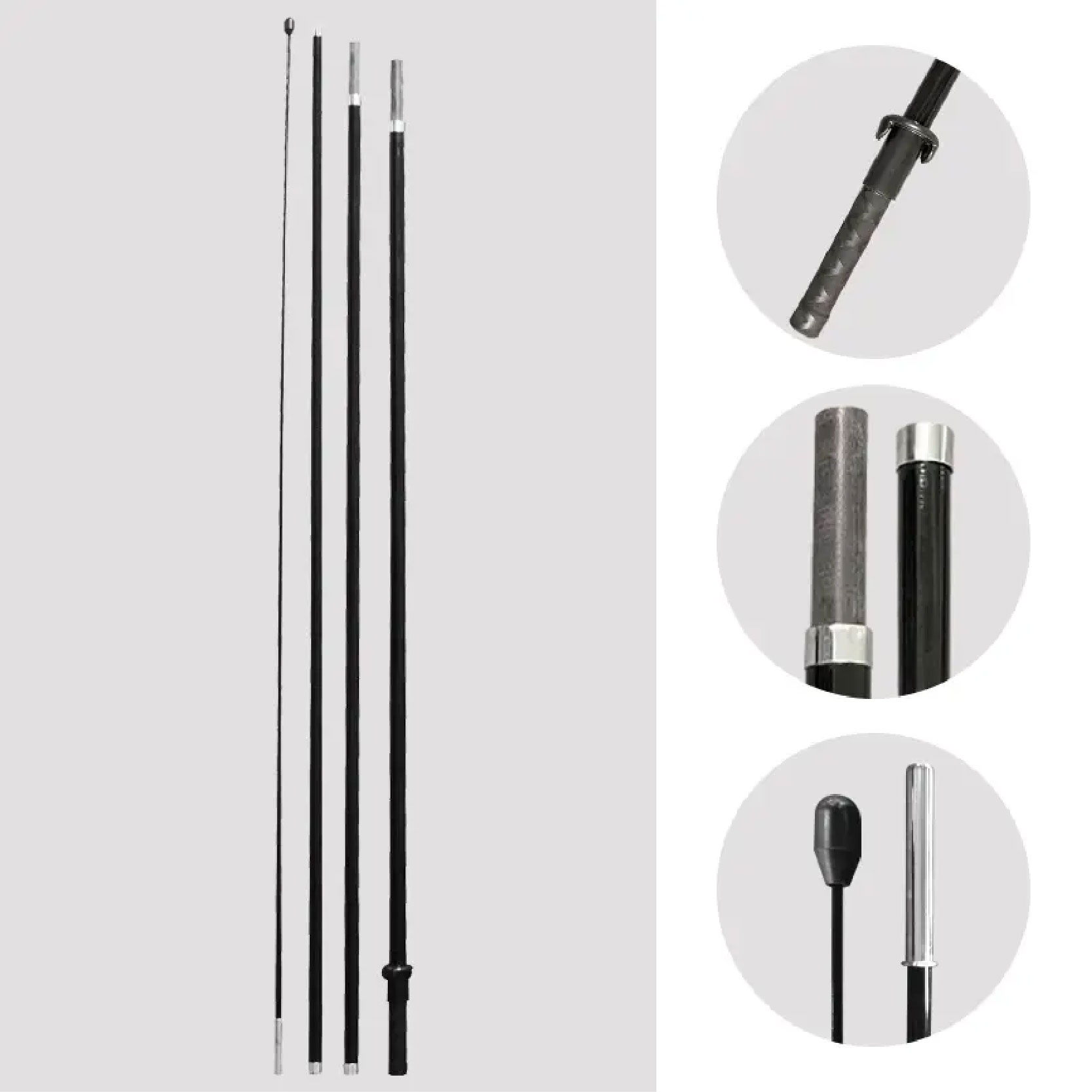
This guide is written for people who have to put a number behind that claim: distributors quoting a tender, event planners specifying a system for a coastal venue, importers comparing total landed cost across a season.
29kg Concrete Flag Base - The Complete B2B Buyer's Resource - WZRODS
WZRODS DY451B: 29 kg, HDPE shell, concrete core. Stackable, portable, rust-proof. FOB price US$5.75–$6.85 at MOQ 2 units. Those numbers look unremarkable. Factor in landed cost—import duties lower than aluminum’s under relevant HTS codes, freight savings from less weight per unit of stabilizing mas