
Flag Pole System
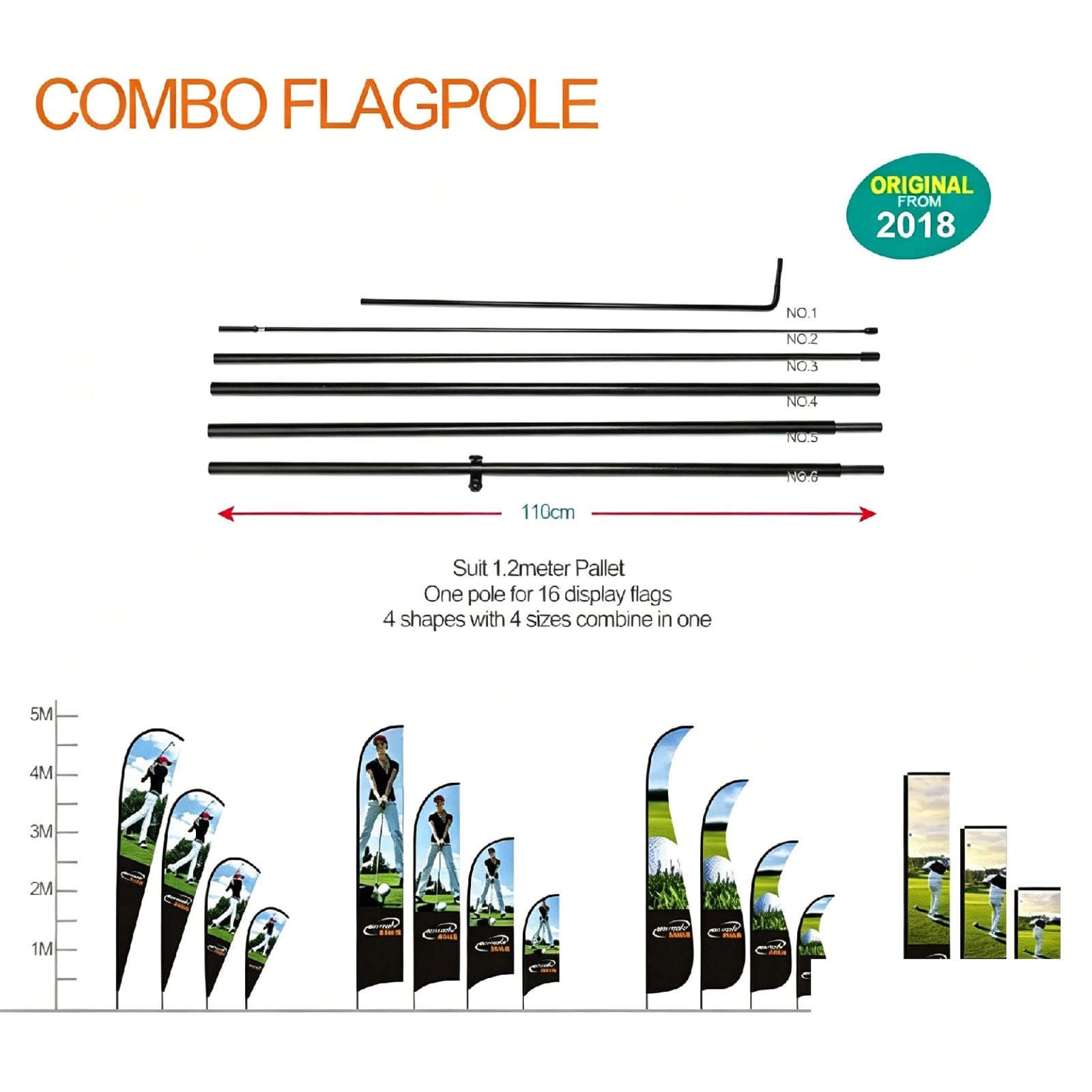
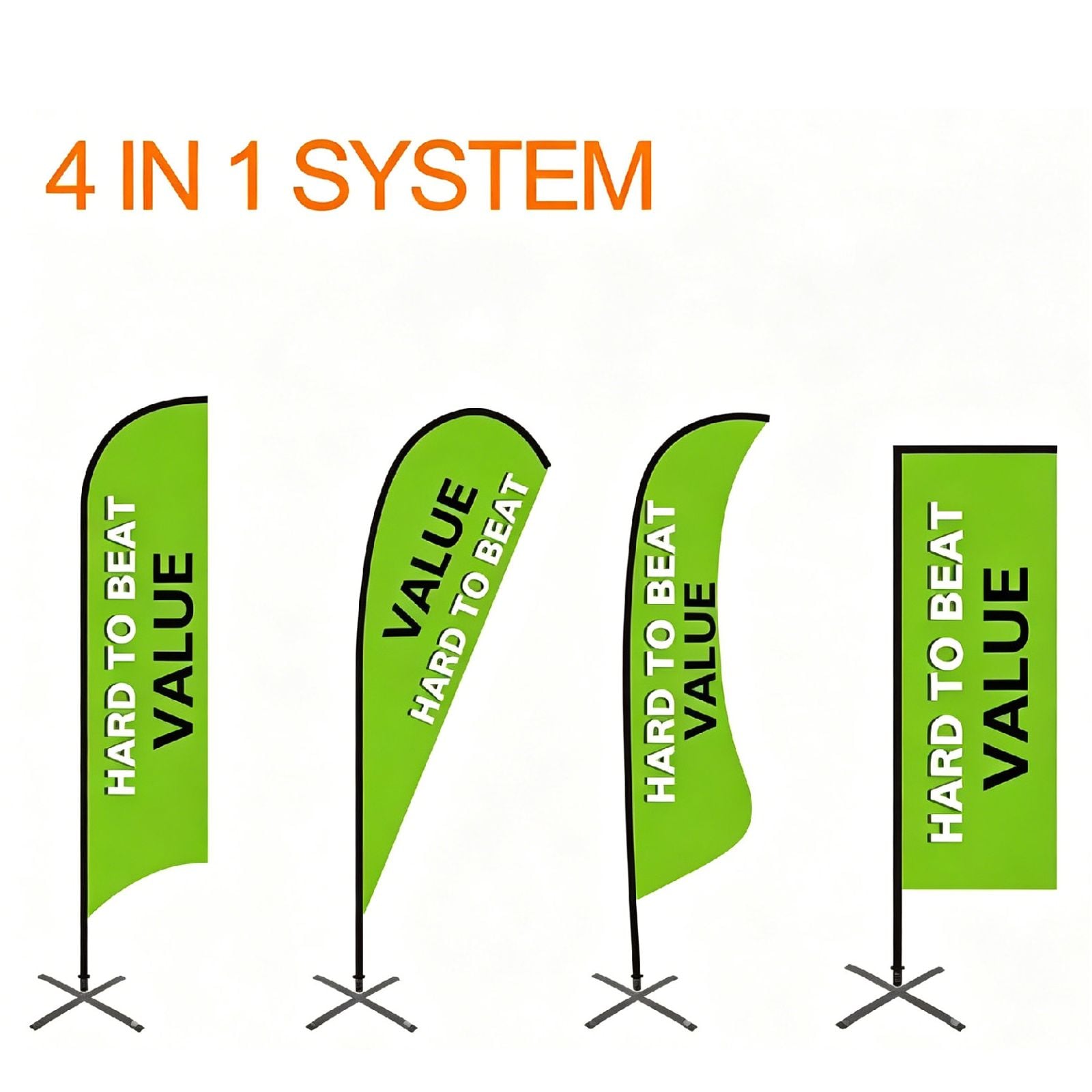
Upgraded combo flag pole fits 4 sizes and 4 flag styles. Versatile multi-functional design cuts purchase cost, lowers inventory and eases flexible order matching.


 Article
 Specifications
- Origin
- Shandong, China
- Brand
- WZRODS
- Pole Material
- Carbon Composite
- Color
- Black
- Application Spec
- Trade Shows, Outdoor Events, Corporate Events
- Target User
- anyone who want brand marketing
- Flag Length
- maximum length 116cm
- Pole Design
- Plug-in Assembly Design
- Moq
- 1 PCS
- Packing Length
- suit for EU pallet
- Feature
- One pole for 16 display flags
- Packing
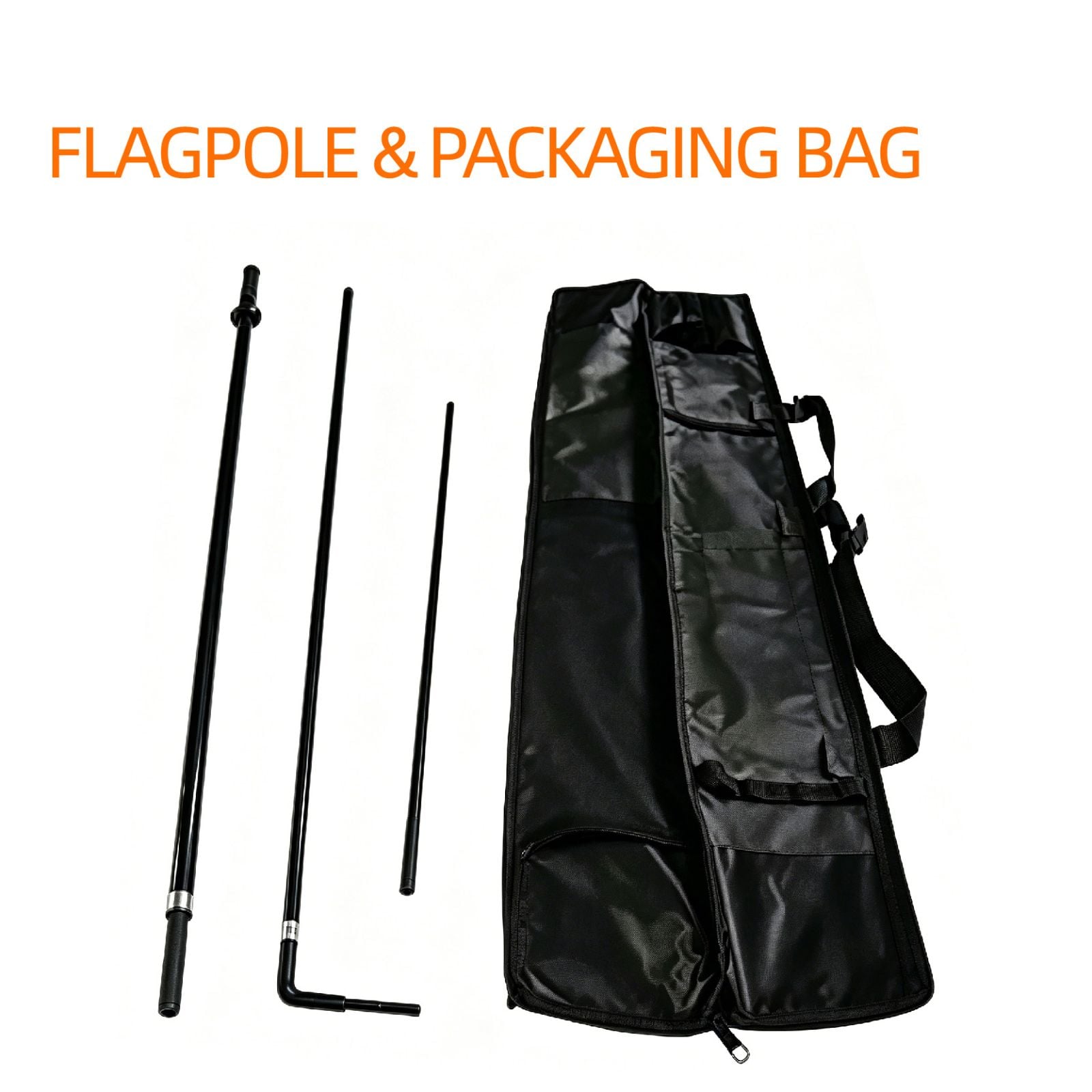
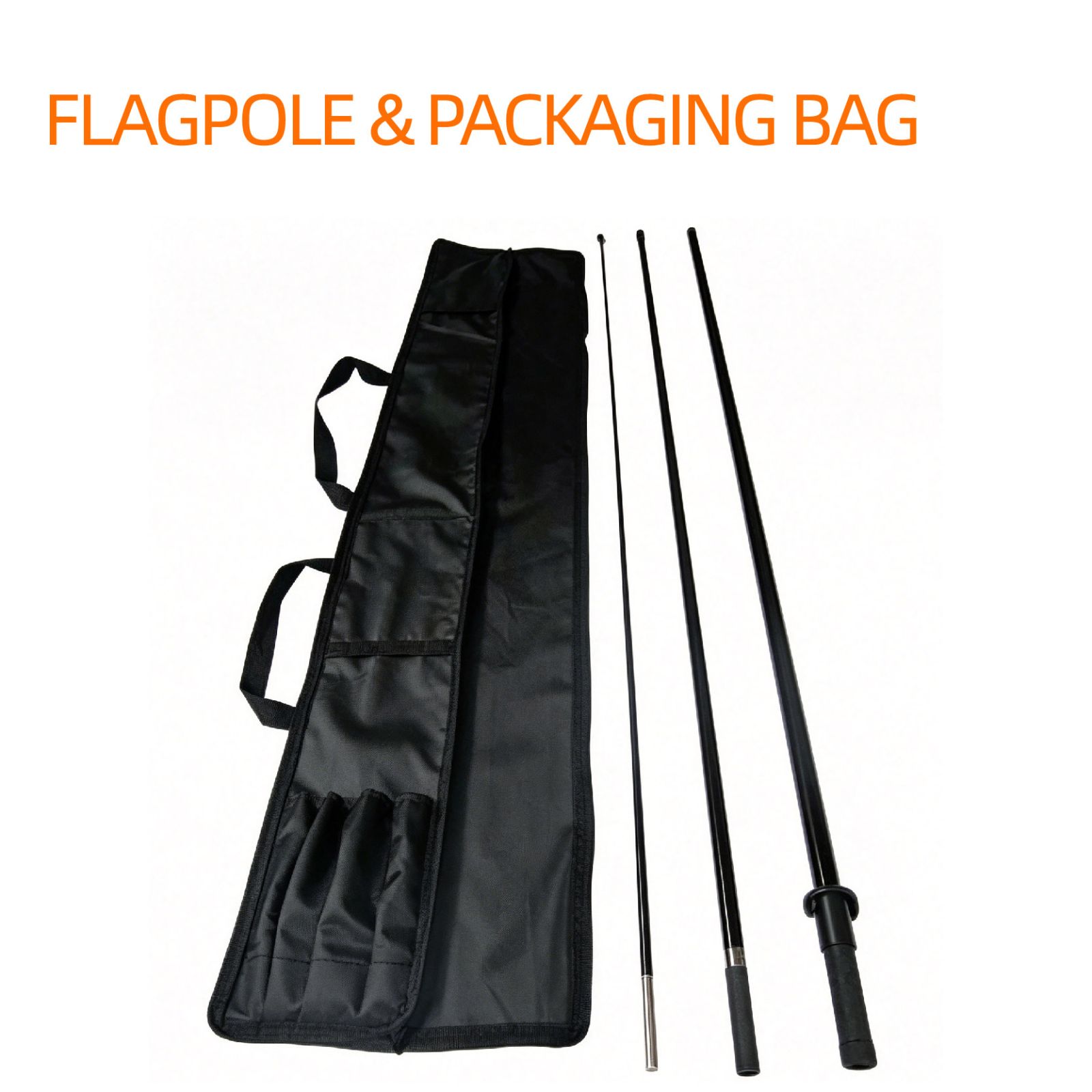
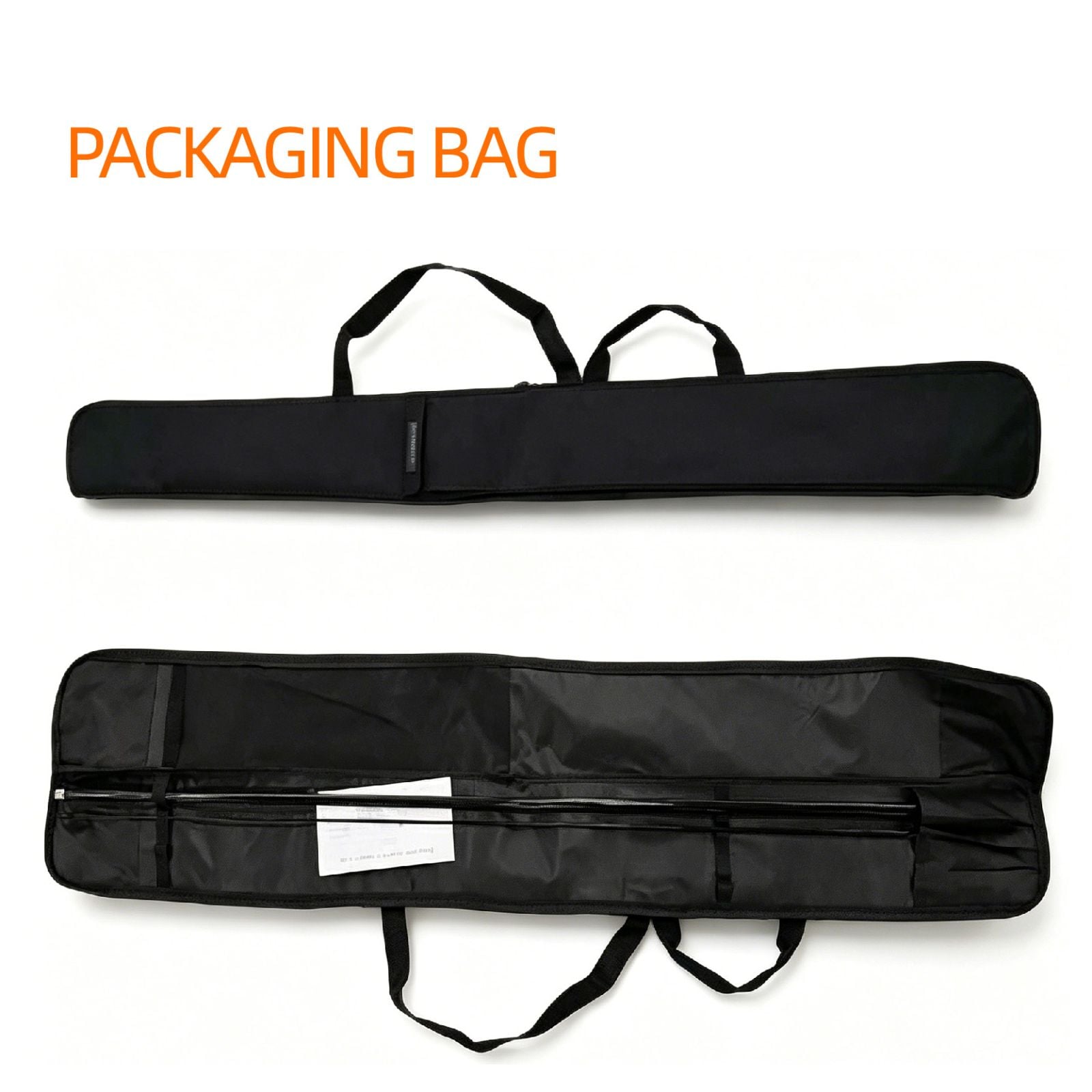
- 600D Carry bag/210D string bag/non-woven bag/PP bag
- Xs
- 2 sections
- S
- 3 sections
- M
- 4 sections
- L
- 5 sections
 Product Description
Shipping & Packaging
- Unit Weight
- 0.800
- Unit Size
- 60X5X5
- Packaging
- Standard export carton
- Lead Time
- 15-30 days
Pricing
- MOQ
- 2 piece
- Price Range
- USD 6.75 – 7.1
- Ladder Price
- 2-100pieces:$2-20
* FOB Qingdao. Excludes shipping & taxes. Accessories & customization confirmed separately.
 Sample Service
- Sample Available
- Yes
- Sample Price
- piece 679.81
- Max Sample Qty
- 1
 Customization Options

Light Custom
Logo, color, size adjustments

Fast Turnaround
Quick custom order processing
Best Flag Poles for Windy Areas: The Survivor's Guide
Best Flag Poles for Windy Areas: The Survivor's Guide
If you sell, specify, or import flag poles, the question that decides your returns policy is simple: what actually survives high wind? The short answer is a pole that bends and recovers instead of resisting rigidly until it yields. In practice, that means carbon composite. Aluminum deforms permanently once it passes its elastic limit — one gust past the threshold and you own a curved pole and an unhappy customer. Carbon composite flexes through the same gust and returns to straight.
This guide is written for people who have to put a number behind that claim: distributors quoting a tender, event planners specifying a system for a coastal venue, importers comparing total landed cost across a season. We'll cover the wind-load math, the failure modes, the system-level details (base, anchor, flag area) that determine whether a pole stays up, and the compliance and freight realities in high-UV, salt-air markets like Australia. WZRODS has been manufacturing carbon composite flag poles since 2005 and ships to 80+ countries — the engineering notes below come from that production floor, not from a brochure.
What Makes the Best Flag Pole for Windy Areas Different
Three material properties separate a wind-rated pole from a fair-weather pole: elastic range, fatigue life, and corrosion resistance under salt exposure. Elastic range is what lets a pole deflect and spring back. Fatigue life is what lets it do that a thousand times across a multi-day event or a full season of weekend shows. Corrosion resistance is what stops the whole assembly from seizing at the joints after a year of coastal air.
Aluminum scores well on weight and cost and poorly on the first two. Once an aluminum tube is bent past yield, the deformation is permanent — the pole is scrap, and in a crowd-facing application it is also a safety issue. Fiberglass has better elasticity but degrades under UV and sheds surface resin over time. Carbon composite sits at the top of that comparison for wind-exposed work: it flexes through the load, returns, and — because the material is 100% rust-proof — does not care about salt air, humidity, or tropical downpours.
WZRODS rates its carbon composite pole systems to wind speeds of 160 km/h+ (44 m/s) as a manufacturer's system rating. Treat that as the starting point of a specification conversation, not the end of one — the pole is only one element of the load path. More on that below.
Wind Load Math: Size the Pole to the Site, Not the Catalogue
Flag drag is not linear with wind speed — it scales with the square of velocity. The standard expression is:
F = 0.5 × ρ × V² × Cd × A
ρ = air density (≈1.225 kg/m³ at sea level) · V = wind velocity (m/s) · Cd = drag coefficient · A = projected flag area (m²)
Flags carry a high drag coefficient — roughly Cd 1.2–1.5 — because the fabric flutters and spills rather than presenting a clean plate (a rigid flat plate is around 1.0). That flutter is exactly why a flag loads a pole harder than its area suggests. As a reference point from WZRODS field data: a 3 m S-banner at 25 m/s (90 km/h) generates roughly 80–120 N of drag, while a 5 m banner in the same wind reaches 200–350 N.
Because velocity is squared, the difference between a breezy site and a storm site is much larger than it feels:
| Condition | Wind speed | Dynamic pressure q = 0.5ρV² |
|---|---|---|
| Fresh breeze | 10 m/s (36 km/h) | ≈61 Pa |
| Strong breeze | 15 m/s (54 km/h) | ≈138 Pa |
| Near gale | 20 m/s (72 km/h) | ≈245 Pa |
| Storm force (Beaufort 10) | 25 m/s (90 km/h) | ≈383 Pa |
| Violent storm (Beaufort 11) | 30 m/s (108 km/h) | ≈551 Pa |
| Hurricane force (Beaufort 12) | 33 m/s (119 km/h) | ≈679 Pa |
| Manufacturer system rating | 44 m/s (160 km/h) | ≈1,210 Pa |
Dynamic pressure calculated from q = 0.5ρV² at ρ = 1.225 kg/m³; Beaufort band definitions per the standard scale. Multiply q by Cd and projected area A to obtain force in newtons.
The practical takeaway for a distributor: doubling wind speed quadruples the load on the pole. A pole that is comfortable in a 60 km/h spring afternoon is under four times the stress in a 120 km/h squall. That is the entire argument for specifying elasticity rather than stiffness.
Why Aluminum Fails and Carbon Composite Recovers
It is worth being precise about the failure mode, because it shows up in warranty claims.
- Permanent deformation. Aluminum takes a set when it passes yield. The pole doesn't break dramatically — it just leans, and after that the flag hangs wrong and the customer wants a replacement.
- Fatigue at the joint. Repeated flexing concentrates stress at the section joints and the base socket. Aluminum fatigues there; carbon composite is engineered to flex along the section.
- Corrosion at the fittings. Aluminum poles in coastal and tropical markets corrode at exactly the points that carry load — the base socket threads, the clip mounts, the top swivel. Salt air accelerates it. A 100% rust-proof carbon composite pole removes that failure path entirely, and pairing it with stainless fittings extends the whole assembly's service life.
There is also a freight and duty angle that matters to importers. A carbon composite pole in this range weighs 0.800 kg per unit — lighter than the aluminum alternative, which lowers freight cost on every shipment. And because carbon composite classifies under a different HTS heading from aluminum structures, it often attracts a lower import duty. We deliberately do not quote specific duty rates here: they depend on the exact HTS classification your broker applies and on origin rules under agreements such as ChAFTA. Confirm the rate with your customs broker before you build a margin model — the difference is usually material, but it is your broker's call, not a supplier's.
The Combo Pole: One SKU, Four Sizes, Four Flag Styles
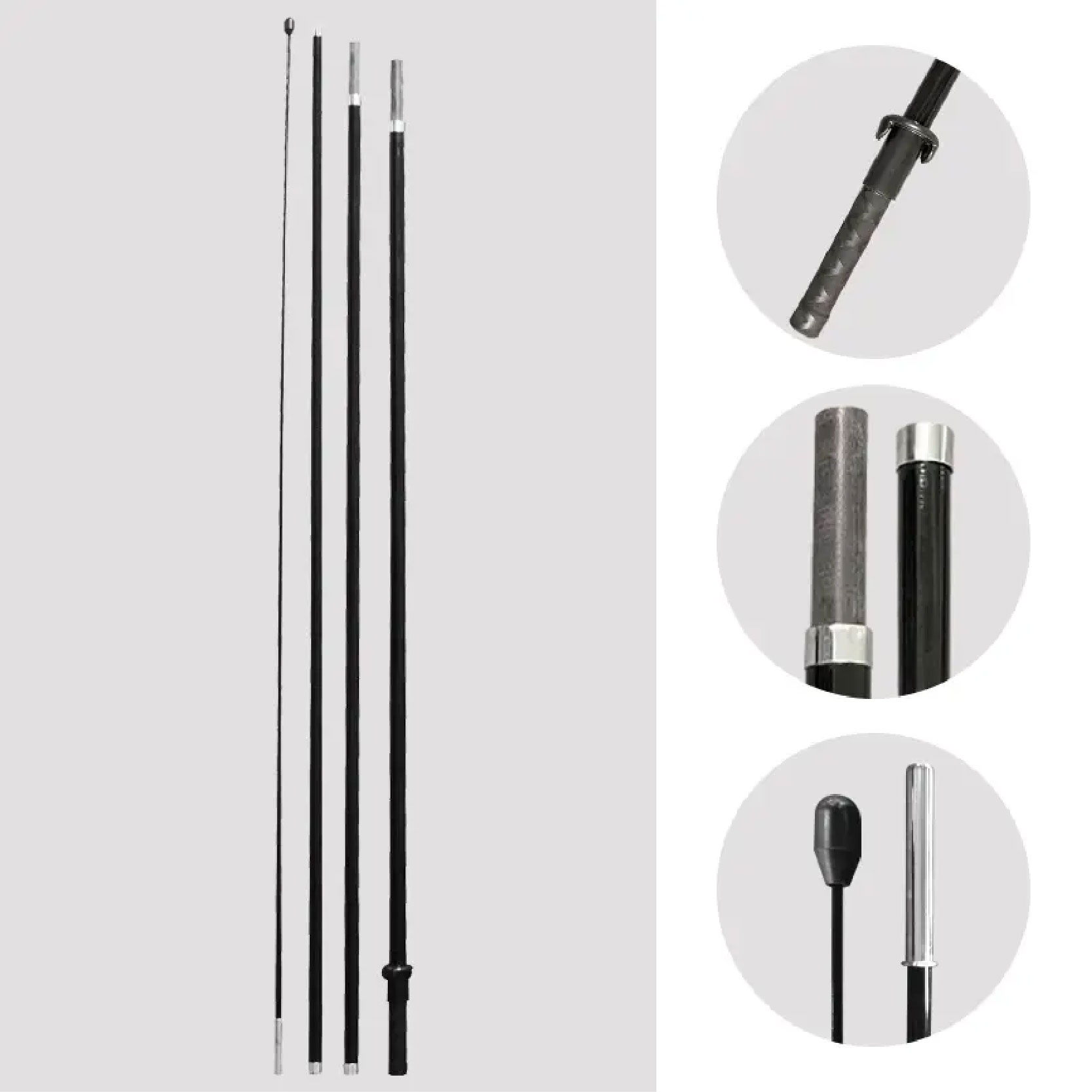
For distributors, the wind question is inseparable from the inventory question. You cannot afford to stock every pole length, every flag shape, every base — and you cannot afford to be out of stock when a customer's event is next week.
The WZRODS Combo Pole was designed around that constraint. One pole system fits four size configurations (XS 2 sections, S 3 sections, M 4 sections, L 5 sections) and four mainstream flag styles — teardrop, feather, rectangle and sharkfin — for 16 display configurations from a single SKU. Sections are 116 cm, plug-in assembly, and every section except the top can serve as a bottom pole for base installation. A slide tie-down clip holds the flag securely at the base of the flying edge, which is the detail that most often fails on cheap poles in gusty conditions.
| Specification | Detail |
|---|---|
| Material | Carbon composite, black |
| Configuration | XS (2 sections) / S (3) / M (4) / L (5) |
| Section length | 116 cm maximum |
| Assembly | Plug-in, tool-free |
| Flag styles supported | Teardrop, feather, rectangle, sharkfin (16 configs) |
| Unit weight | 0.800 kg |
| Packed dimensions | 60 × 5 × 5 cm — sized for EU pallets |
| Carry options | 600D / 210D / non-woven / PP bag |
| MOQ / indicative price | 2 pcs / USD 6.75–7.10 |
| Lead time | 15–30 days |
| Applications | Trade shows, outdoor events, corporate events |
For a distributor, the commercial effect is straightforward: you no longer buy the full range of sizes and styles to cover demand. Procurement cost drops, warehouse space frees up, and rush orders can be filled by switching configurations rather than by holding depth in every variant. It also removes a hidden cost that shows up on long banners — oversized shipping surcharges.
Wind Rating Is a System Number, Not a Pole Number
This is where most specifications go wrong. The pole carries the bending moment; the base resists overturning; the ground decides whether the base stays put. A 160 km/h pole on an inadequate base is a 40 km/h installation.
- Flag area vs. pole length. A short pole with a large flag loads the base harder than a tall pole with a proportionally smaller flag. Match the banner to the configuration, not to the maximum the pole can physically accept.
- Base selection. Hard standing (plaza, tarmac, exhibition hall) needs a cross base or cast plate with ballast. Open ground needs ground stakes or a weighted plate rated well above your calculated load. Coastal sites with gusty, direction-shifting wind should add guy lines regardless of base weight.
- Fittings. Stainless steel top swivels and clips are the difference between a system that lasts three seasons and one that seizes in one. In salt air, this is not a nice-to-have.
- Flag fabric. A pole rated to 160 km/h with a 110 g flag that shreds at 60 km/h is not a wind-rated system. Fabric weight and UV stabilization are part of the wind rating.
Field Case: 30+ Outdoor Events on the Sydney Coast
A Sydney sports event company runs 30+ outdoor events a year, several of them on coastal ground. Two problems compounded: Australia's UV index sits at 11+ for much of the year (summer peaks reach 15+), which faded their flags severely within three months; and coastal wind repeatedly toppled poles, taking the flags with them.
The fix was a system change, not a pole swap alone. Carbon composite poles (100% rust-proof, flex-and-recover) were paired with UPF50+ anti-UV polyester flags at 170 g, cross bases with ballast plates for hard standing, and guy lines added at the coastal venues. The result: flag service life extended from roughly 3 months to 12 months, zero corrosion and zero pole breakage across the carbon composite fleet, no pole-down incidents across 30+ events, and a 60% improvement in client renewal rate.
Note what did the work: the pole stopped the breakage, the fabric stopped the fading, and the bases plus guy lines stopped the toppling. Any one of those three, done alone, would have produced a partial result and a repeat complaint.
Sourcing for High-UV and Coastal Markets: Australia as a Worked Example
Australia is a useful stress test because it combines the harshest UV regime in the world with a large events market and a well-documented import process. China's exports in the HS 761090 structures category to Australia reached USD 256.8 million in 2025 according to trade data compiled from Comtrade summaries (accessed 1 November 2026). Note that HS 761090 is the aluminium-structures heading — carbon composite poles may classify elsewhere, so the recorded figure understates carbon-composite flows and should be read as a proxy for category scale, not a carbon-specific number.
Compliance and logistics notes for that market:
- Customs clearance. The Australian Border Force (ABF) requires the importer to hold an ABN or appoint a licensed customs broker. Documentation is a commercial invoice, packing list, and certificate of origin. Consignments valued under AUD 1,000 use a simplified process — relevant if you are air-freighting samples rather than container-loading.
- RCM. Mechanical display hardware does not require the Regulatory Compliance Mark. If you add electrical components — illuminated bases, lighted poles, powered displays — the product falls under AS/NZS 3820 electrical safety requirements and RCM marking applies. Keep the mechanical and electrical SKUs separate in your catalogue to avoid confusing the compliance question.
- UV. Specify UPF50+ anti-UV fabric at 170 g or above, or fabric with UV stabilizers added. Aluminium components in a coastal spec need salt-spray resistance. This is not optional in a market where a mild 16°C day can still carry a UV index of 8.3 — temperature is a poor proxy for UV exposure.
- Trade terms. Quote FOB for new customers, CIF for established accounts, and DDP only where you have genuine local clearance capability. EXW pushes all risk to the buyer and is not recommended for display hardware. WZRODS supports FOB, CIF and EXW.
Specification Matrix by Wind Exposure
Use this as a starting framework, then confirm against your calculated load for the specific flag area and site.
| Site profile | Pole specification | Base & anchoring | Flag specification |
|---|---|---|---|
| Sheltered urban plaza, occasional gusts | Carbon composite, S/M configuration | Cross base with ballast plate | Standard polyester, 110–130 g |
| Open exhibition ground, multi-day event | Carbon composite, M/L configuration | Cross base + ballast + tie-down clip | 170 g, UV-stabilized |
| Coastal / salt air, gusty | Carbon composite, L configuration, stainless fittings | Weighted plate + guy lines | UPF50+ 170 g+, UV stabilizer |
| Tropical / cyclone-exposed | Carbon composite, L configuration, 316 stainless swivel | Heavy cast base + guy lines, redundant anchoring | UPF50+ 170 g+, reinforced hems |
Bundling for Regional Demand
If you sell into named wind zones, pre-configured kits move faster than individual SKUs. Two formats that WZRODS supplies to distributors building regional catalogues:
- High-wind kit (indicative USD 55–85). Built for typhoon belts and high-load sites — a 3 m S-banner in 170 g fabric, a 3 m pole, a 20 kg cast iron base, and a 316 stainless top swivel. Where wind is the dominant risk, specify the pole in carbon composite rather than the aluminium 6061T6 option.
- Cold-climate kit (indicative USD 55–90). For low-temperature display where plastic components embrittle — a 3 m pole, 15 kg cast iron base, 130 g cold-resistant flag, and a 316 stainless top swivel.
Both kits solve the same commercial problem: the customer buys a working system rather than a pole, and you sell a higher-value basket with fewer compatibility questions.
Ordering, Samples, and Lead Times
The Combo Pole runs from 2 pieces MOQ at USD 6.75–7.10, with mixed-model MOQ structures available for new partners running market tests — you can validate demand for two or three configurations before committing to container volume. Private label and neutral packaging are both supported, along with light and fast customization so you can match a house brand without a full tooling cycle.
Samples are not free: the listed sample price is USD 679.81 for a maximum of one unit, dispatched within the standard 15–30 day lead time. Treat that as a kit-level evaluation cost and confirm exactly what the sample shipment includes with your account contact before ordering — for a distributor, a properly configured sample that you can hand to a client is worth more than a free pole in a plain bag.
On container planning: the packed carton is 60 × 5 × 5 cm, and at 68 CBM a 40HQ yields roughly 45,333 units on pure volume math. Check that against payload before you commit — at 0.800 kg per unit that volume implies around 36 tonnes, well above typical 40HQ payload limits. In practice your load will be weight-capped, so plan mixed containers with bases and flags rather than optimising for pole count alone. The 60 cm carton length is also sized for EU pallets, which simplifies onward distribution in European markets.
Factory Credibility: What to Ask Any Supplier
Wind claims are easy to make and hard to verify. WZRODS has manufactured carbon composite flag poles since 2005, with production running on ERP-based traceability so every batch can be traced to its material and process records. Every complaint triggers a root-cause analysis and a verified corrective action — not a replacement without explanation. Banner fabrics are produced in-house, and the founder's background in fabric structure, flag shape design and sewing detail is the reason the poles match the curve and flying behaviour of the printed flags rather than fighting them. The company has exhibited at SIGN CHINA (Shanghai, 2014) and ships to 80+ countries under a 3-year warranty.
When you evaluate any wind-rated pole, ask for four things: the drag coefficient and area the rating assumes; the base and anchoring configuration the rating assumes; the fabric specification the rating assumes; and the warranty terms when the system is used outside those assumptions. A supplier who can answer all four is selling engineering. One who cannot is selling a tube.
Frequently Asked Questions
What wind speed can a carbon composite flag pole survive?
WZRODS rates its carbon composite pole systems to 160 km/h+ (44 m/s) as a manufacturer's system rating. That figure assumes a correctly matched flag area, an appropriate base for the ground condition, and stainless fittings. Reduce the effective rating if you oversize the flag relative to the pole, use an undersized base, or omit guy lines on an exposed coastal site.
Carbon composite vs aluminium vs fiberglass — which is best for windy areas?
Carbon composite, for three reasons: it flexes through a gust and returns to straight (aluminium deforms permanently once past yield), it does not fatigue at the joints the way metal does under repeated flexing, and it is 100% rust-proof, which matters in coastal, humid and tropical markets where aluminium corrodes at load-bearing fittings. Fiberglass has reasonable elasticity but degrades under UV. Carbon composite also weighs 0.800 kg per unit in this configuration, which reduces freight cost.
Can I test the market before committing to volume?
Yes. MOQ starts at 2 pieces with mixed-model structures for new partners, so you can validate two or three configurations before scaling. Private label and neutral packaging are supported, and light and fast customization let you launch under your own brand. Sample pricing is USD 679.81 for a maximum of one unit, delivered within 15–30 days.
Do flag poles need RCM certification in Australia?
No — pure mechanical display hardware such as flag poles and bases does not require the Regulatory Compliance Mark. If you add electrical components (illuminated bases, lighted poles), the product must meet AS/NZS 3820 electrical safety requirements and carry RCM marking. Keep electrical and mechanical SKUs clearly separated in your catalogue.
How do I calculate the wind load for my specific flag size?
Use F = 0.5 × ρ × V² × Cd × A, with ρ ≈ 1.225 kg/m³, Cd between 1.2 and 1.5 for fluttering fabric, and A as the projected flag area in square metres. As a sanity check, WZRODS field data puts a 3 m S-banner at 25 m/s (90 km/h) at roughly 80–120 N, and a 5 m banner at 200–350 N. Size the base and anchoring to the resulting force with a safety margin.
References
- TradeDataService / Comtrade summary — China exports to Australia, HS 761090, 2025: USD 256.8 million (accessed 1 November 2026). Category proxy only; carbon composite may classify under a different heading.
- WZRODS engineering notes — wind drag relationship F = 0.5 × ρ × V² × Cd × A; field force ranges for 3 m and 5 m banners at 25 m/s; manufacturer system wind rating of 160 km/h+.
- WZRODS Combo Pole product specification sheet — dimensions, weights, configurations, MOQ, pricing, lead times, container loading data.
- Australian Border Force — import clearance requirements for commercial consignments: ABN or licensed customs broker, commercial invoice, packing list, certificate of origin; simplified process for consignments under AUD 1,000.
- Electrical Regulatory Authorities Council — Regulatory Compliance Mark framework; AS/NZS 3820 electrical safety standard for electrical equipment.
- Regional market intelligence brief — Australian UV index data (summer peaks 15+, year-round 11+), flag fading timelines, and UPF50+/170 g fabric recommendations.
- IMF World Economic Outlook — Australia real GDP growth projection of 2.2% (2031); 2025 GDP USD 1.80 trillion.
- Beaufort wind scale — wind speed band definitions used in the dynamic pressure table.
- Live market conditions for Australia — wind 10.8 km/h, temperature 16.2°C, UV max 8.3; USD/AUD reference rate 1 USD ≈ 1.4224 AUD.
 Comments (0)
No comments yet. Be the first to comment!
Leave a Comment
Related Products
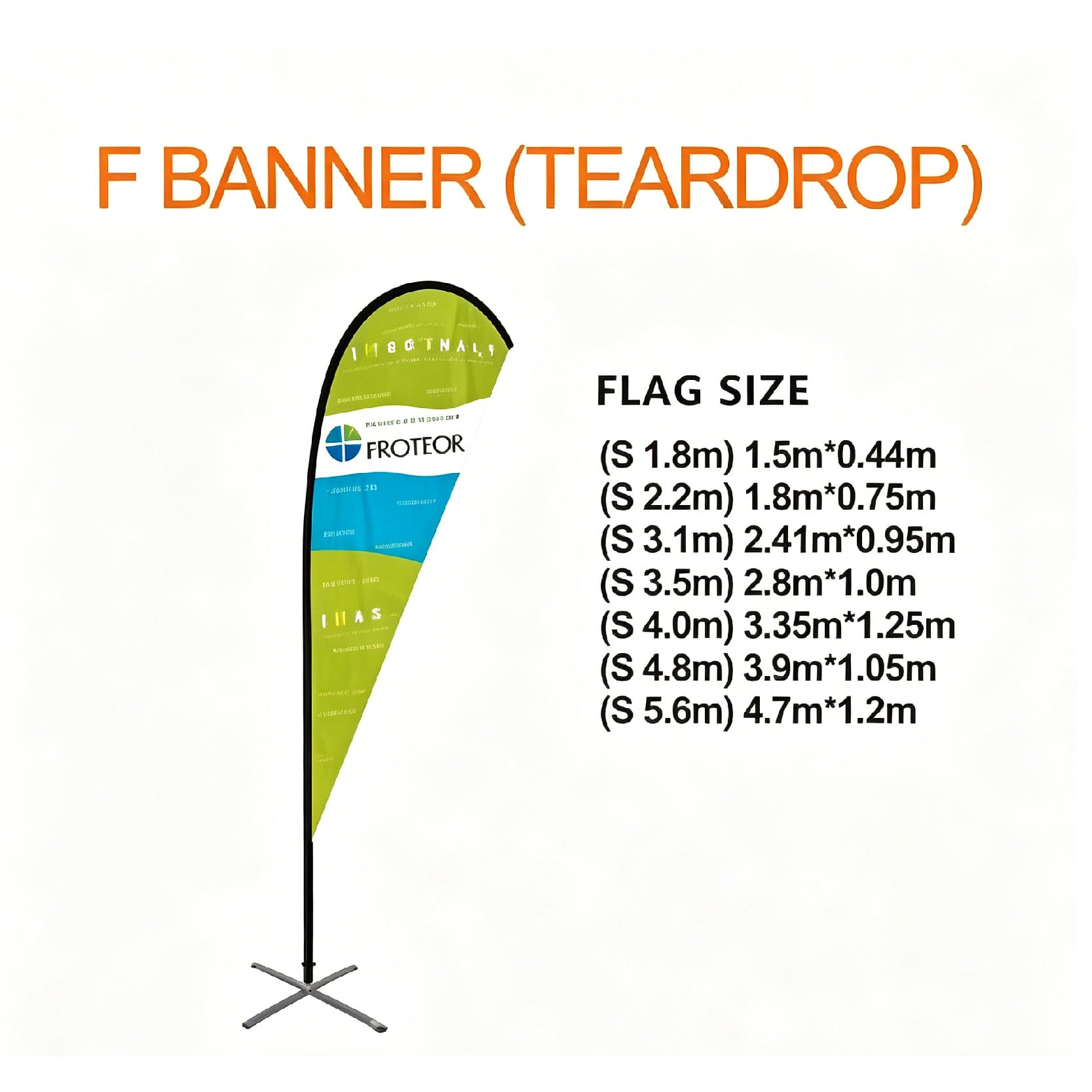
F Banner(Teardrop)
Golf flag pins
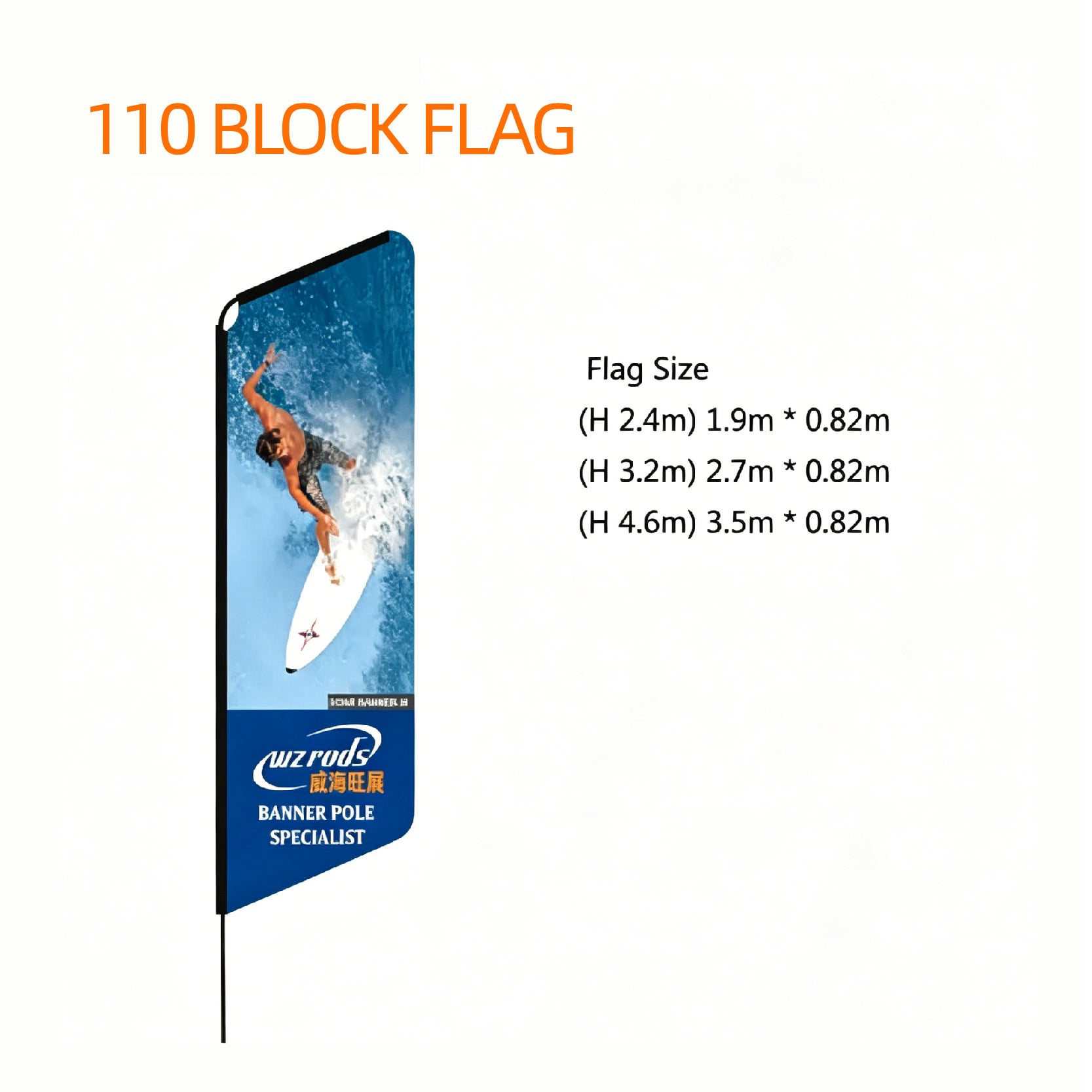
110° H banner
Magnum banner
Wall Mounted Flagpole
SF Banner
Budget 2in1 flag system
4 in 1 flag System
T Banner
H Banner
Related Articles
29kg Concrete Flag Base - The Complete B2B Buyer's Resource - WZRODS
WZRODS DY451B: 29 kg, HDPE shell, concrete core. Stackable, portable, rust-proof. FOB price US$5.75–$6.85 at MOQ 2 units. Those numbers look unremarkable. Factor in landed cost—import duties lower than aluminum’s under relevant HTS codes, freight savings from less weight per unit of stabilizing mas
Wide Tube Cross Base - The Complete B2B Buyer's Resource - WZRODS
The Wide Tube Cross Base, manufactured by Wzrods in Shandong, China, solves one problem: reliable stability for poles under three meters, without the freight costs and warehouse footprint that heavier alternatives demand.
Rectangular Pipe Cross Base - The Complete B2B Buyer's Resource - WZRODS
The pipe cross flag base is a cross of rectangular steel pipe, powder‑coated, weighing 1.3 kg and spanning 78 cm across its arms. Its center holds a C‑ring shaft that lets the flag rotate with the wind.
X-Shape Backpack Banner - The Complete B2B Buyer's Resource - WZRODS
Economic Cross Base - The Complete B2B Buyer's Guide- WZRODS
When you buy an economic cross base—something like the Wzrods DM‑9, a 77 cm‑long, 1.3 kg iron cross—forget “economic” as a synonym for “cheap.” It means value-engineered.
How to Choose the Right Feather Flag Base for Different Surfaces
Feather Flag - Professional Banner Poles & Systems Manufacturer - WZRODS
How to choose a high-quality backpack flag
The backpack flag concept centers on a frame carried on the back, similar to a backpack, specifically engineered to support a raised flag or banner.