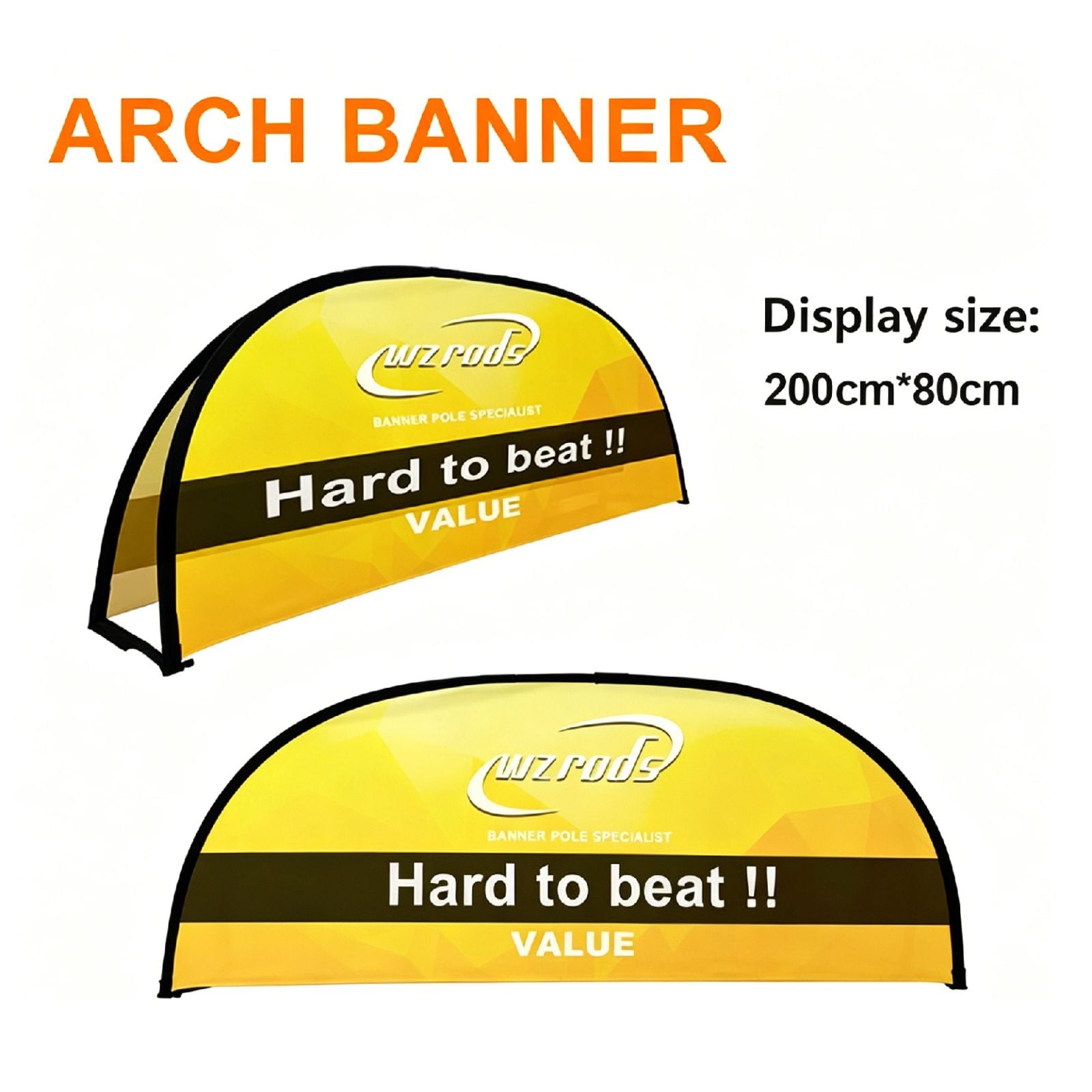
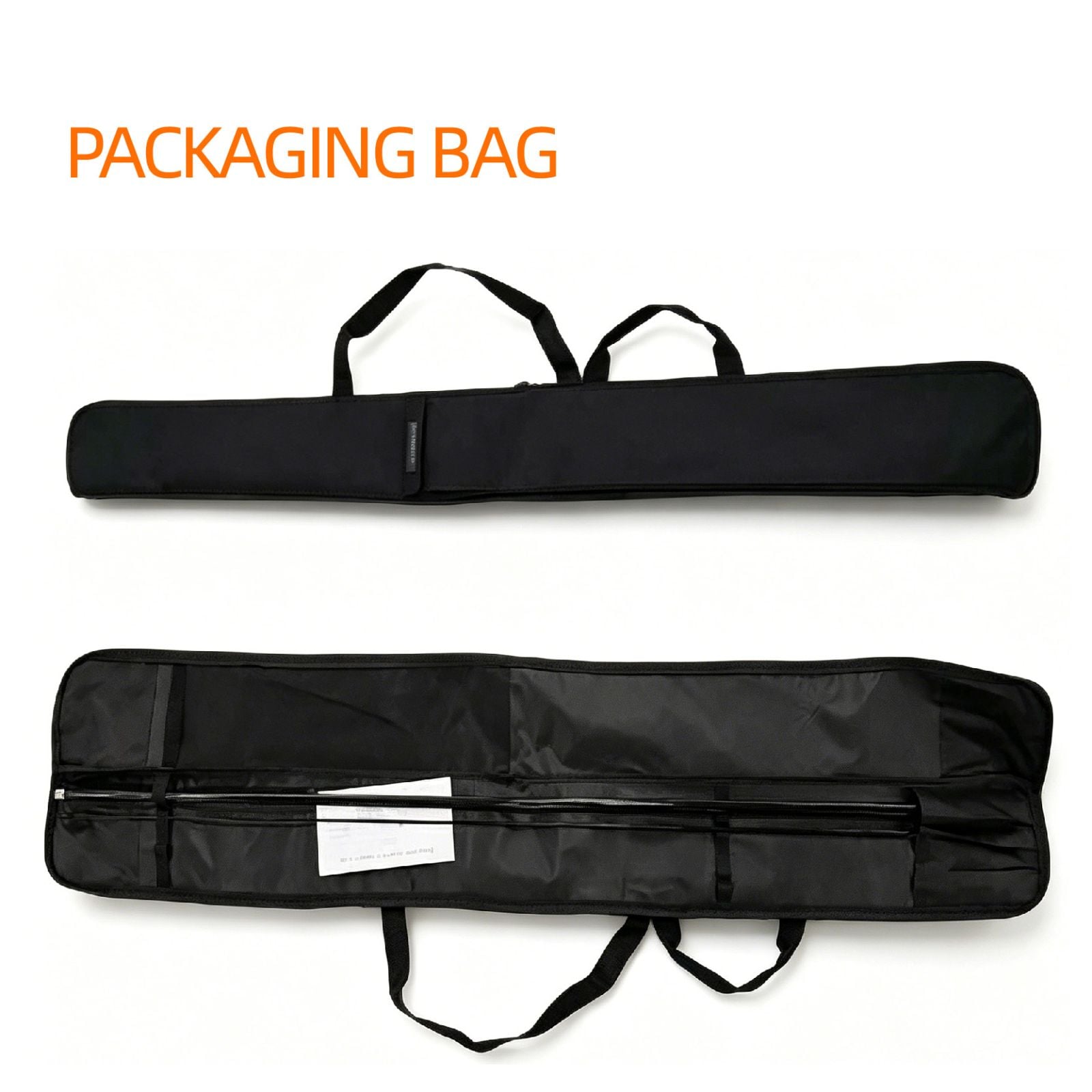
Flag Pole System
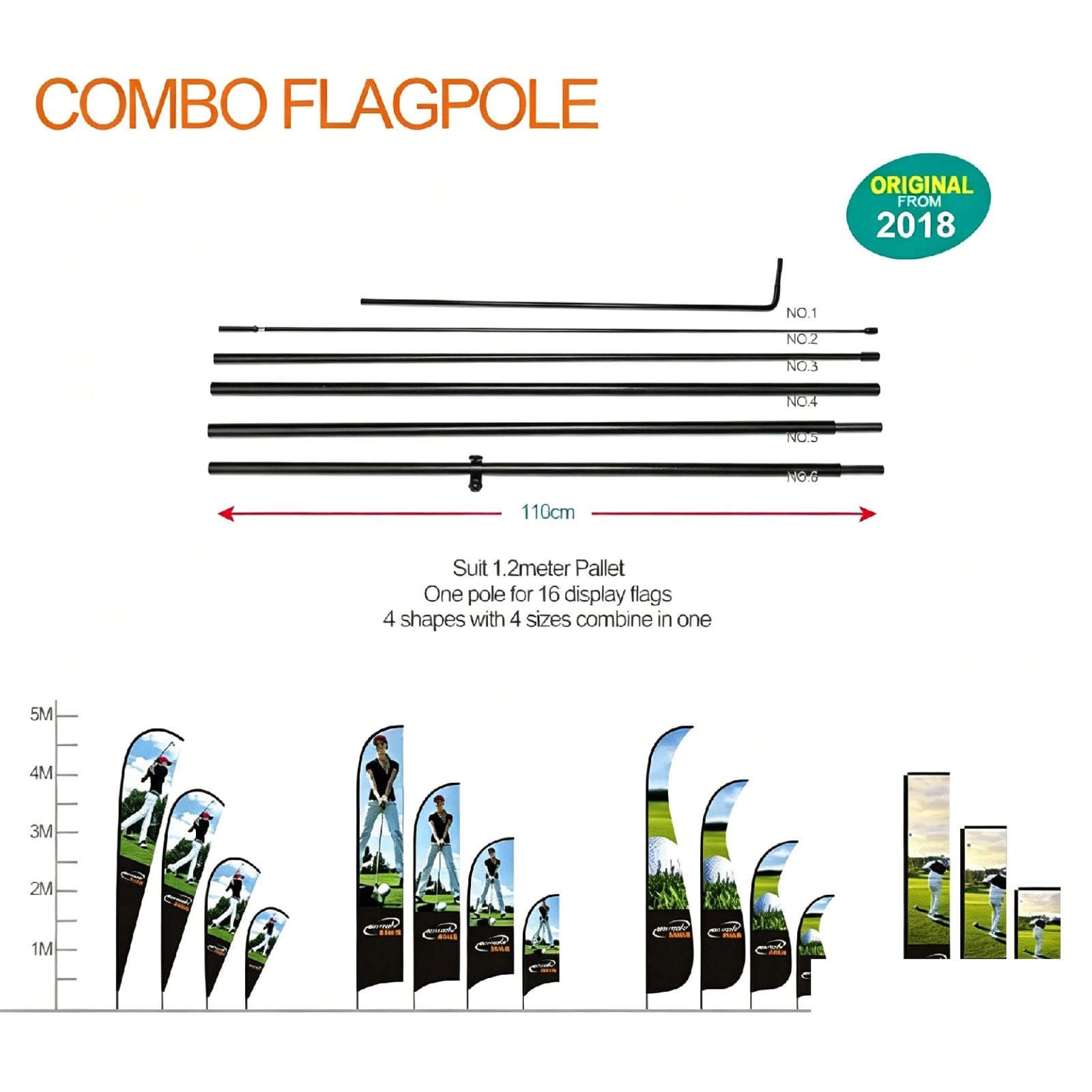
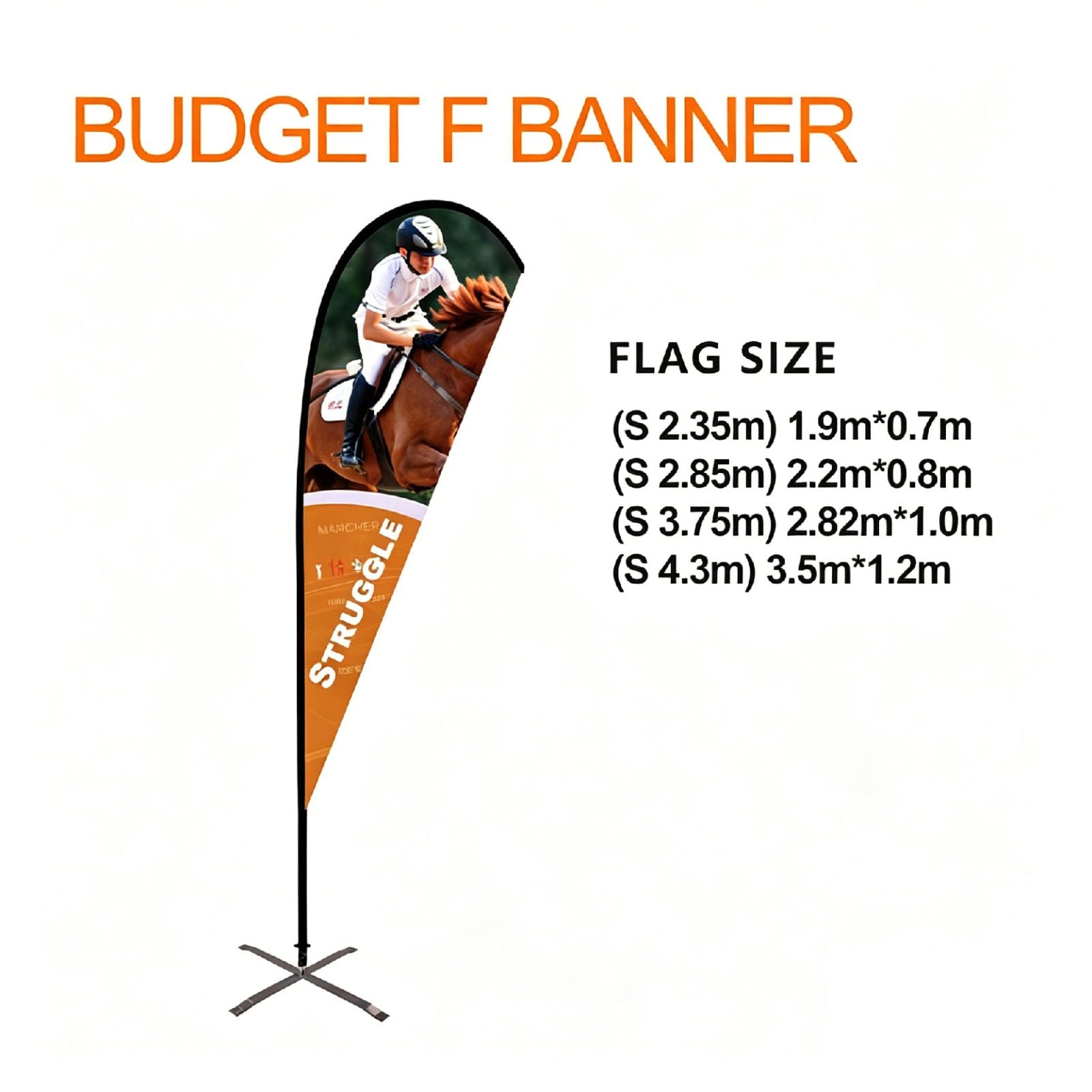
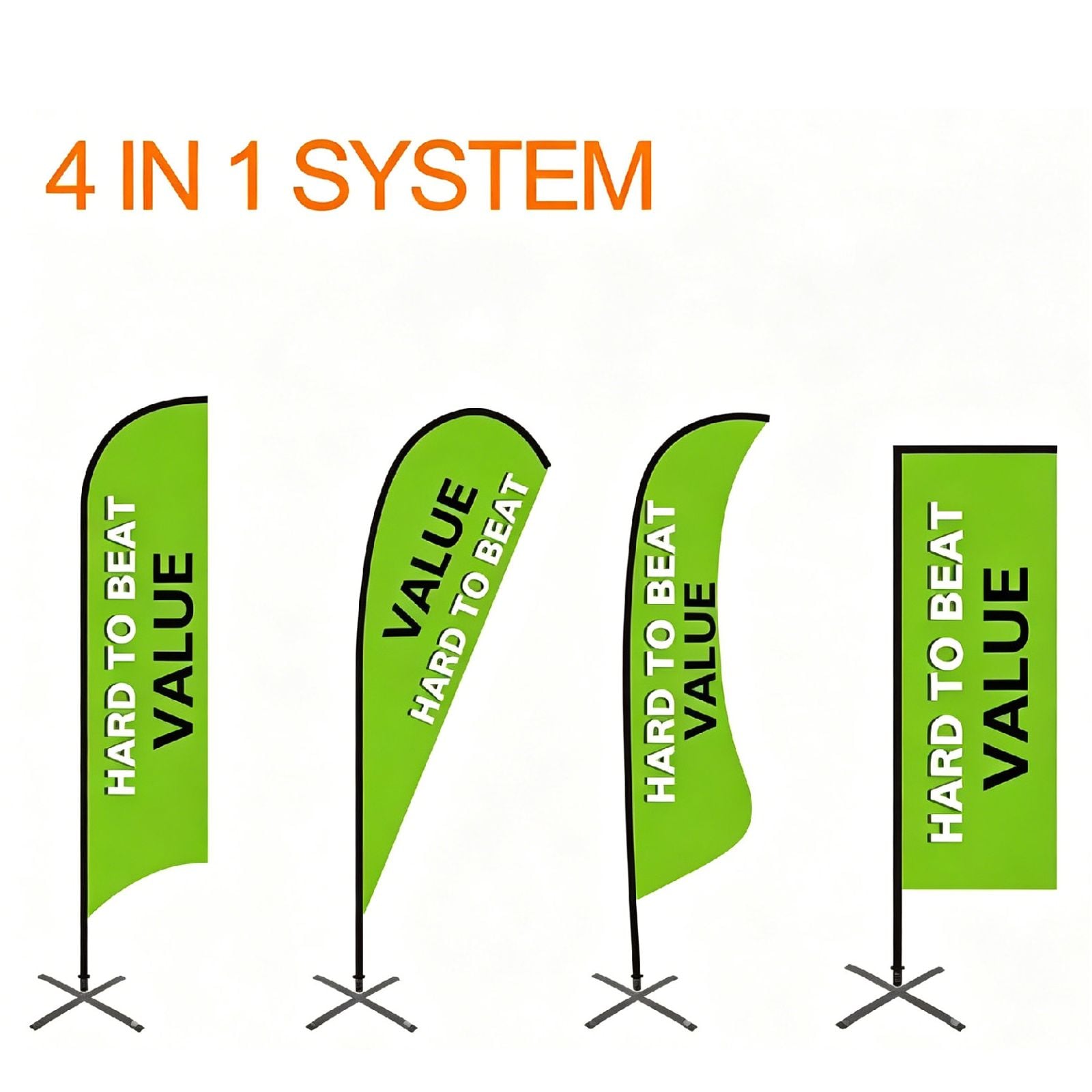
Upgraded combo flag pole fits 4 sizes and 4 flag styles. Versatile multi-functional design cuts purchase cost, lowers inventory and eases flexible order matching.


 Article
 Specifications
- Origin
- Shandong, China
- Brand
- WZRODS
- Pole Material
- Carbon Composite
- Color
- Black
- Application Spec
- Trade Shows, Outdoor Events, Corporate Events
- Target User
- anyone who want brand marketing
- Flag Length
- maximum length 116cm
- Pole Design
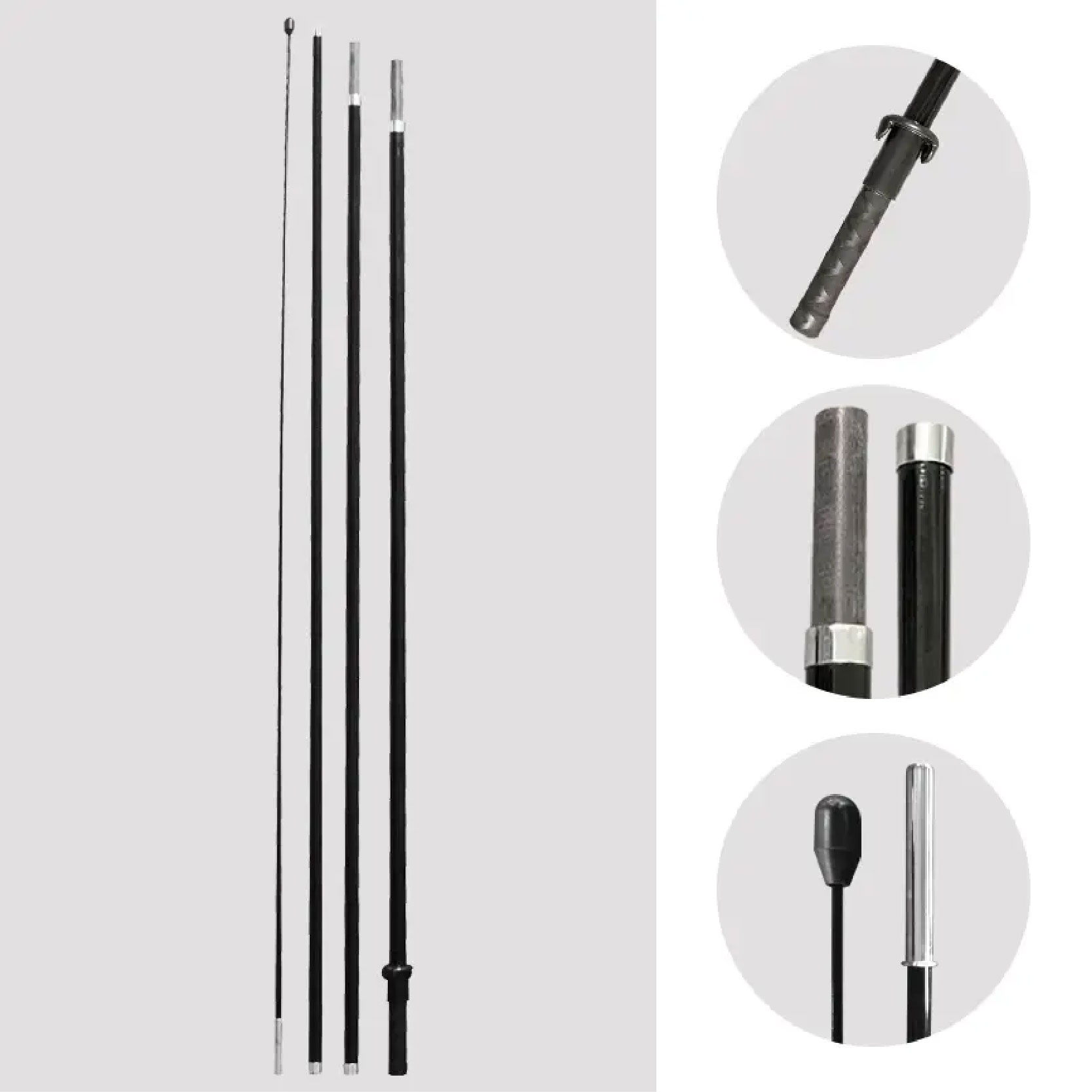
- Plug-in Assembly Design
- Moq
- 1 PCS
- Packing Length
- suit for EU pallet
- Feature
- One pole for 16 display flags
- Packing
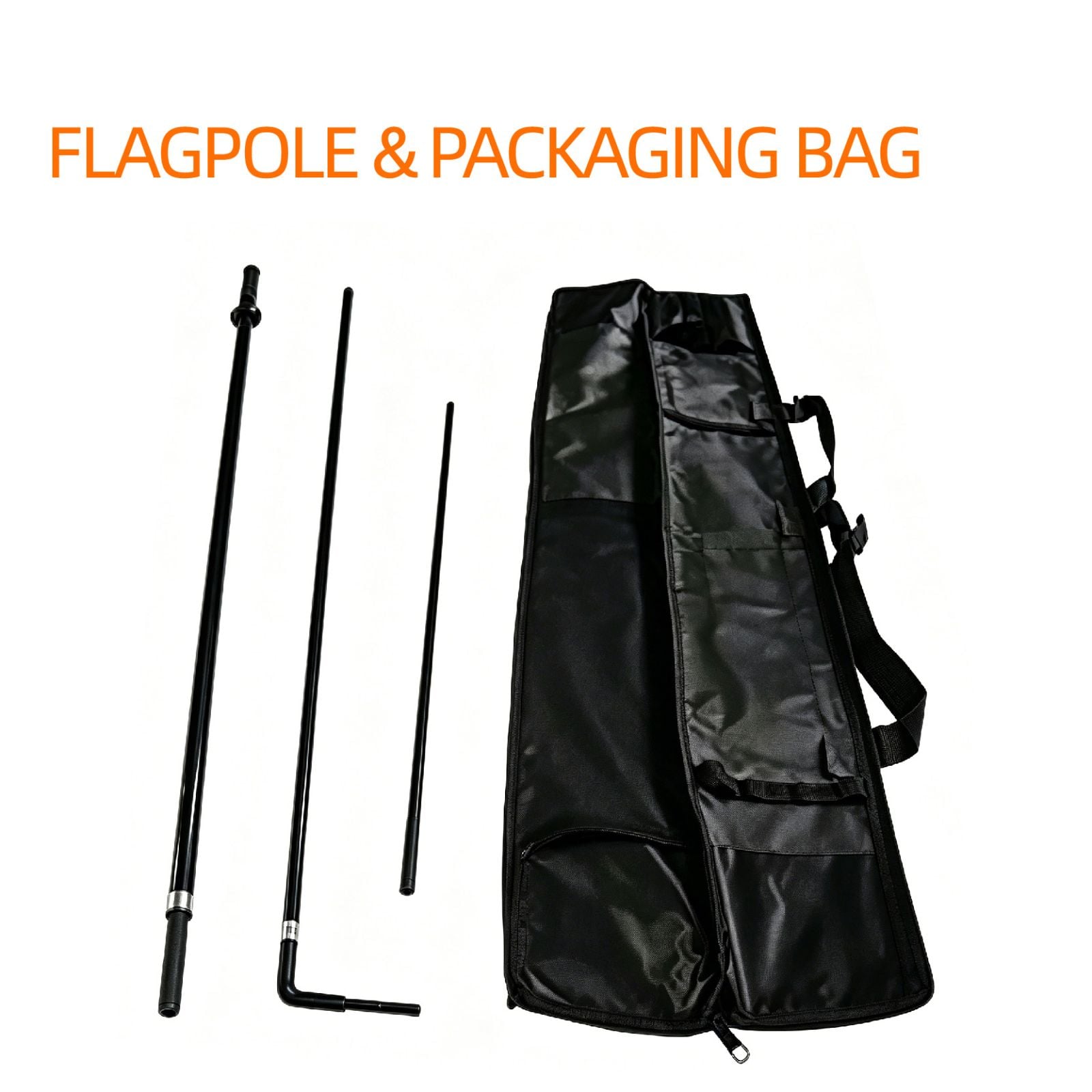
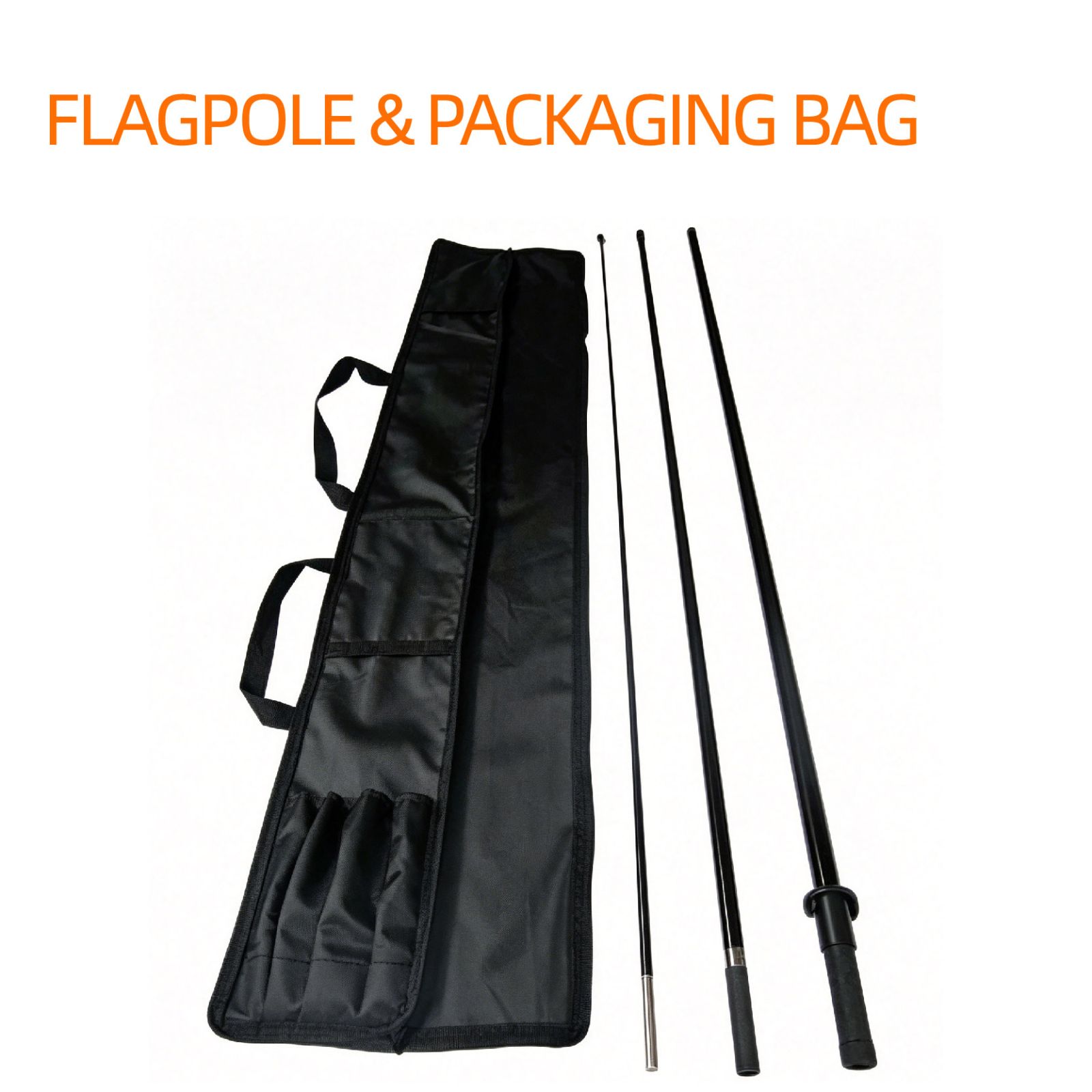
- 600D Carry bag/210D string bag/non-woven bag/PP bag
- Xs
- 2 sections
- S
- 3 sections
- M
- 4 sections
- L
- 5 sections
 Product Description
Shipping & Packaging
- Unit Weight
- 0.800
- Unit Size
- 60X5X5
- Packaging
- Standard export carton
- Lead Time
- 15-30 days
Pricing
- MOQ
- 2 piece
- Price Range
- USD 6.75 – 7.1
- Ladder Price
- 2-100pieces:$2-20
* FOB Qingdao. Excludes shipping & taxes. Accessories & customization confirmed separately.
 Sample Service
- Sample Available
- Yes
- Sample Price
- piece 679.81
- Max Sample Qty
- 1
 Customization Options

Light Custom
Logo, color, size adjustments

Fast Turnaround
Quick custom order processing
Portable Flagpoles: Pack, Carry, and Set Up Anywhere
Portable Flagpoles: Pack, Carry, and Set Up Anywhere
“Portable” is one of those words that means something different to the person writing the purchase order than it does to the person who has to wrestle the case out of a van at 6 a.m. in the rain. For a distributor, Portable Flagpoles are a catalogue line with a packed length and a carton weight. For an event planner, they are a logistical constraint: what fits in the vehicle, what clears airline baggage rules, what one person can carry across a show floor, and what still stands up when the wind picks up on day three of a week-long outdoor festival.
This guide answers the practical question directly — how do you travel with a portable flagpole — and then goes further, into the specifications that determine whether a pole survives the trip and the deployment. Everything here is written from the position of a manufacturer that has shipped carbon composite flagpoles to 80+ countries since 2005, so the emphasis is on what you can verify in a specification sheet rather than what a brochure claims.
Start with packed length, not open height
The single most common specification error in portable flagpole procurement is quoting the open height and assuming the packed length follows. It does not. A portable flagpole is a sectional pole, and the packed length equals the length of the longest section plus fittings, bag end caps and any protective sleeving. A 5 m pole built from three sections does not pack to 5 m — but neither does it pack to 1.67 m once you account for the ferrule joints, the base sleeve and the carry bag's seams.
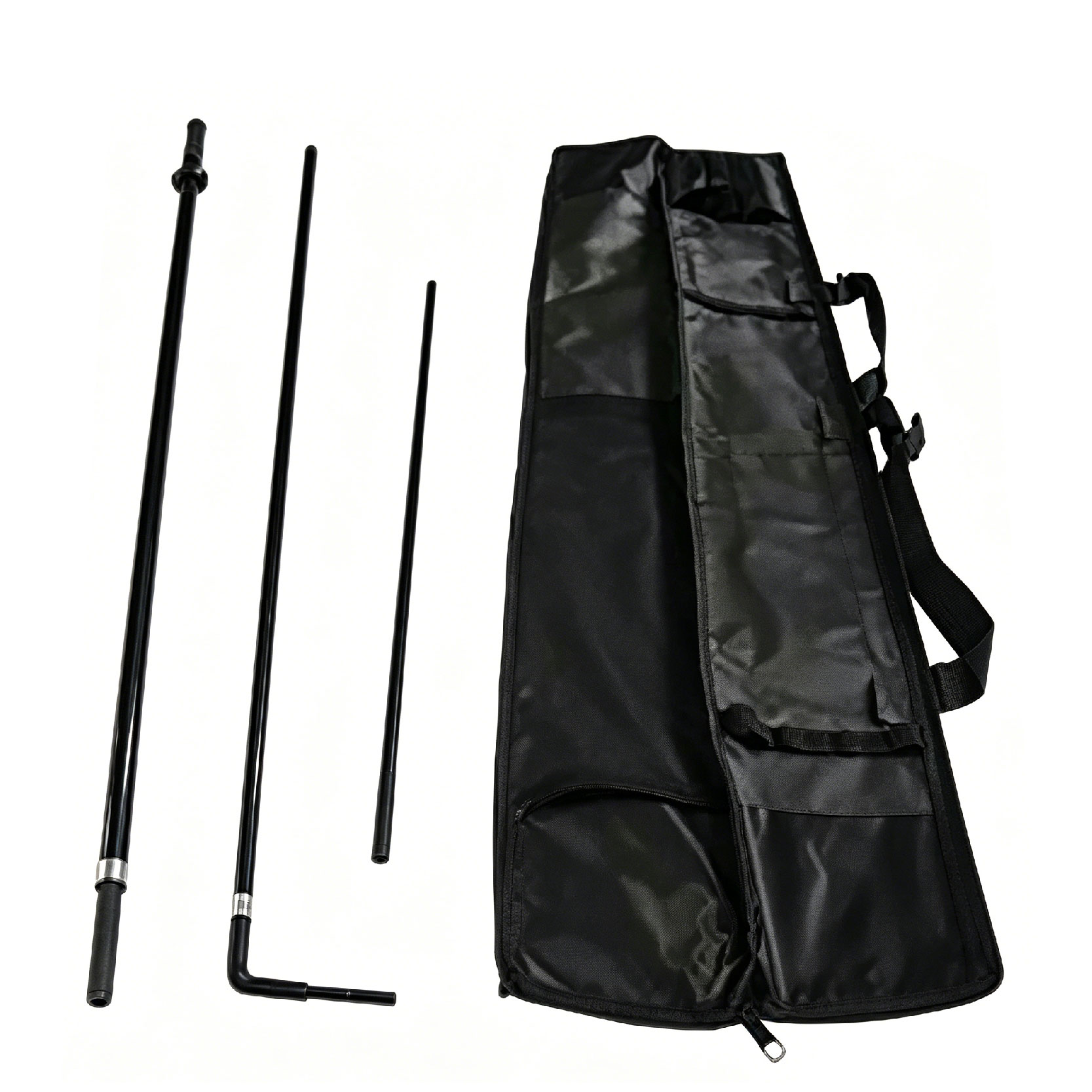
When you request a quotation, ask for these four numbers explicitly, and reject any quotation that gives you fewer:
- Packed length — longest section, end to end, including any fixed ferrule or cap.
- Packed diameter or cross-section — this determines whether the bag fits a car boot, a flight case or a standard pallet footprint.
- Net weight per pole and gross weight per carton with carton count per master carton.
- Carton dimensions — you need these for volumetric weight, not just dead weight.
That last point is where budgets quietly break. Air freight is charged on whichever is greater, actual weight or volumetric weight, and the common air divisor is 6,000 cm³ per kilogram (many express carriers use 5,000). A carton measuring 180 × 20 × 20 cm has a volumetric weight of 12 kg even if the pole inside weighs 3 kg. Confirm the divisor with your forwarder before you cost the shipment — a pole that is cheap per unit can be expensive per cubic metre.
What to specify for travel: a buyer's checklist
| Specification | Why it matters in transit | How to verify |
| Number of sections and joint type | Determines packed length and whether joints loosen over repeated assembly cycles | Ask for the ferrule/connector material and wall thickness; request a sample and assemble it 20 times |
| Section numbering or colour coding | Prevents mis-assembly and lost time on site with casual labour | Request a photo of the numbered set as shipped |
| Carry bag construction | Soft bags fail at the seam and the zip first; hard cases add volume and cost | Specify fabric weight, zip type and whether there is an internal divider per section |
| Surface finish | Carbon composite and aluminium poles abrade against each other in a bag; abrasion reads as “used” on a distributor's shelf | Specify a protective sleeve or matte clear coat; check whether sections ship with individual sleeves |
| Fitting material | Rust-stained collars after one wet outdoor event are the most common quality complaint | Specify aluminium or stainless steel fittings; confirm grade, not just “metal” |
| Packaging compliance | EU Packaging Directive 94/62/EC limits the combined lead, cadmium, mercury and hexavalent chromium content of packaging to ≤100 mg/kg; wood packaging needs ISPM 15 heat treatment or fumigation | Ask for a packaging declaration; for wooden crates, ask for the ISPM 15 mark |
For distributors reselling under their own brand, packaging is part of the portability story: neutral cartons and private label bags can be specified at order stage, and a mixed-model MOQ lets you test several pole lengths in one market before committing to full-container volumes.
Carrying: matching the format to the transport mode
Portable flagpoles travel three ways in practice, and each imposes a different constraint.
Hand-carry and vehicle transport (the event planner's case)
For trade shows and cultural events, the pole usually travels in a van or a car boot and is carried by one or two people across a venue. The governing limits here are human, not mechanical: a single-person carry is comfortable when the packed length allows the bag to be shouldered without dragging, and when the loaded bag stays under roughly what one steward can carry repeatedly over a ten-hour build day. If your crew is rotating and unskilled, favour shorter sections and a bag with a shoulder strap and a reinforced base — the base is where floor contact destroys bags first.
Also check door widths, goods-lift dimensions and the venue's load-in route before you fix the base size. A cross base that is 60 cm across is portable in a van and immovable through a 55 cm service door.
Checked baggage (the international event team)
Airline baggage rules vary by carrier, route and fare class, and they change. Rather than rely on a general figure, confirm with the specific carrier: maximum linear dimensions for checked items, whether poles are treated as sports or odd-sized equipment, and whether a hard case is mandatory. A rigid case with foam cradles is the usual recommendation for any pole travelling in a hold — soft bags survive van life but not baggage handling.
If you are moving the same kit across multiple borders for a season of events, look into an ATA Carnet, which allows temporary admission of professional equipment without paying duties and taxes at each border. It is well suited to repeated multi-country event tours and is worth costing against the alternative of shipping separate kits into each market.
Freight (the distributor's case)
At distributor volumes, the question shifts from portability to density. Long cartons are cheap by sea LCL and expensive by air. If your market is price-sensitive, ship by sea and plan a mixed-model MOQ; if you are replenishing for a show season, pay the air premium and accept the volumetric charge. Factory-direct supply without a middleman markup is what makes the air option viable on mid-volume orders; the arithmetic changes completely once a trading company adds a layer.
Setting up anywhere: match the anchor to the ground
Portability is only half the problem. The other half is that an outdoor event cannot damage the ground surface, cannot close a walkway with guy lines, and cannot leave a pole free to fall into a crowd if the wind turns. The pole is rarely the weak link in a portable setup — the base and the anchor are.
| Ground condition | Anchoring method | Practical notes |
| Grass, turf, soft soil | Ground spike (e.g. 30 cm) | Confirm soil depth and check for buried services before driving; spikes are not suitable for compacted gravel or hardstanding |
| Pavement, plaza, decking | Cross base plus ballast | Use a rubber or neoprene pad under the base to protect the surface; ballast requirement must come from the supplier as a number, not a suggestion |
| Indoor halls and show floors | Low-profile base plate | Check ceiling height against open pole length and confirm the venue permits weighted bases on the floor finish |
| Street lighting and existing infrastructure | Lightpole bracket | Avoids ground anchoring entirely; requires the bracket to be specified against the actual pole diameter on site |
Two standards anchor this section, literally and figuratively. EN 13782 (temporary structures) covers wind load calculation, anchor force requirements and stability verification for outdoor event structures — and gantries or display frames with a span over 3 m generally require a structural calculation document. If your flag system is part of a temporary structure package, the calculation is part of the deliverable, not an optional extra. In the US market, ASCE 7 gives the basic wind pressure relationship p = 0.00256 × Kz × Kzt × Kd × V² × q, where V is basic wind speed in mph and Kz, Kzt and Kd are the height, topographic and directionality factors; a 3 m flagpole at V = 90 mph (40 m/s) sits at a design wind pressure of roughly 0.9 kPa.
Wind load does not scale linearly with pole length — it scales with the square. A 5 m pole carries about 2.78 times the wind load of a 3 m pole at the same wind speed, which is why a 3 m pole in 6063-T5 aluminium with a 1.2 mm wall (roughly 45 N·m bending moment at a 25 m/s basic wind speed, with a 1.5 safety factor) cannot simply be stretched to 5 m without going to a 1.5 mm wall and a 6061-T6 temper. Carbon composite changes that trade-off: the material carries higher bending stiffness per unit weight, which is why carbon fibre flagpoles are specified for wind resistance to 160 km/h and above, and why a portable pole that must be light enough to carry can still be strong enough to stay up. WZRODS has been manufacturing carbon composite poles since 2005 and backs them with a 3-year warranty — a figure that matters most in the repeated-use, multi-event deployment where aluminium poles fatigue at the joint.
Rule of thumb for portable deployments: specify the pole to the wind load you expect once every few seasons, and specify the base to the wind load you expect on the worst afternoon of the event. The pole is engineered; the base is ballast, and ballast is the thing people under-order.
The cross-border cost of “portable”
There is a tariff dimension to portability that distributors discover late. Aluminium flagpoles are classified under HTS 7610.90.00 and, in the US market, currently face a combined burden of up to 73.2% — MFN 5.7% plus Section 232 aluminium duties at 50%, Section 301 at 7.5% and IEEPA at 10%. Carbon composite poles are typically classified elsewhere: HTS 6815.10 (carbon articles for non-electrical uses) or 3926.90 (other articles of plastics), with MFN rates in the 2.9–5.3% range, and they fall outside Section 232 aluminium measures entirely. On a pole with a $20 FOB value, that classification difference is worth roughly $8–15 per pole in duty.
That same dynamic is visible in the trade data. Under HS 761090 — the aluminium structures heading that banner poles and systems are commonly declared under — China's exports to the Netherlands reached $110.4 million in 2025 (TradeDataService, Comtrade summary, updated 1 November 2026). The Netherlands is a distribution hub for the wider European market, and most of that volume is carrying aluminium duty exposure. At an exchange rate of roughly 1 USD ≈ 0.8956 EUR, a European importer's landed cost is sensitive to both the duty line and the freight density — two variables that material choice and sectional design both move.
Classification is a customs determination, not a marketing claim: confirm the code with your customs broker and get the supplier's material composition and country-of-origin documentation before you commit to a landed-cost model.
What travelling well looks like in practice
A European municipal supplier faced a version of this problem with 200 light poles across five countries. Each country applied EN requirements differently, the delivery window was three months, and the original plan involved multiple vendors for brackets, poles and banners — which meant coordinating five national approvals and five delivery schedules. The fix was to standardise: a modular lightpole bracket paired with a single S-Banner specification, supplied as a complete hardware package with installation guidance, shipped in five country batches. Delivery compressed to eight weeks, per-set cost came in 22% below the multi-vendor route, and the package passed wind load certification in all five markets.
The lesson transfers directly to portable flagpole programmes. Standardise the pole diameter and the bracket interface across your SKUs, keep the anchor hardware in the same box as the pole, and buy the whole system from one source. Fragmentation is what makes portable equipment expensive — not the pole itself.
A sensible first order
If you are testing a market, start with a kit rather than components. A standard outdoor flag kit in the $25–45 range — one 3 m S-Banner, one 3 m combo pole, one 3 kg cross base and one 30 cm ground spike — covers grass and hardstanding with one SKU, ships in a single carton, and gives your customer a complete answer to “what do I need?” on the first enquiry. It is also the easiest format to private-label and the easiest to expand into longer poles, bracket mounts and barrier systems once you have sell-through data.
Frequently Asked Questions
Can I take a portable flagpole on a plane?
Usually yes, as checked baggage in a rigid case, but the rules vary by carrier, route and fare class and they change. Confirm your specific airline's maximum linear dimension for checked items and whether the item is classed as odd-sized or sports equipment. Do not ship a pole in a soft bag in a hold; use a hard case with foam cradles. For repeated multi-country travel with the same kit, an ATA Carnet avoids paying duties and taxes at each border.
How short does a portable flagpole pack down?
Packed length equals the longest section plus fittings and bag end caps, so it depends on the number of sections. Ask your supplier for the packed length as a measured figure rather than inferring it from the open height, and get the packed diameter and carton dimensions at the same time — you need all three for baggage planning and for freight volumetric calculations.
Do I need a ground spike or a cross base?
It depends on the ground. A ground spike suits grass, turf and soft soil but not compacted gravel or paved surfaces. A cross base with ballast suits pavement, plazas and indoor floors, and should be used with a protective pad to avoid marking the surface. Many event kits ship with both so one SKU covers both conditions.
What wind speed can a portable flagpole handle?
Carbon composite flagpoles are specified for wind resistance to 160 km/h and above, but the governing limit in a portable deployment is the base and anchor, not the pole. Wind load scales with the square of pole length — a 5 m pole carries roughly 2.78 times the load of a 3 m pole at the same wind speed — so specify the ballast or anchor requirement as a number from the supplier, and for structures with spans over 3 m under EN 13782, request the structural calculation document.
Why does material choice affect my landed cost so much?
Because the tariff classification differs. Aluminium flagpoles under HTS 7610.90.00 currently face a combined US burden of up to 73.2% once MFN, Section 232, Section 301 and IEEPA are stacked; carbon composite poles classified under HTS 6815.10 or 3926.90 typically attract MFN rates of 2.9–5.3% and are outside Section 232 aluminium measures. On a $20 FOB pole that is roughly $8–15 per unit. Confirm the classification with a customs broker before modelling landed cost.
References
- TradeDataService (Comtrade summary), HS 761090 Banner Poles & Systems, China exports to Netherlands, 2025 value $110.4 million; dataset updated 1 November 2026.
- IMF World Economic Outlook — Netherlands real GDP growth forecast (1.2%, 2031); market context data: GDP $1.33 trillion (2025), inflation 3.2% (2025), exchange rate 1 USD ≈ 0.8956 EUR.
- ASCE 7 — basic wind pressure relationship p = 0.00256 × Kz × Kzt × Kd × V² × q.
- EN 13782 — temporary structures: wind load calculation, anchor force requirements, stability verification; structural calculation required for spans over 3 m.
- EU Packaging Directive 94/62/EC — heavy metal limits (Pb + Cd + Hg + Cr VI ≤ 100 mg/kg); ISPM 15 for wood packaging.
- Harmonized Tariff Schedule — headings 7610.90.00, 6815.10 and 3926.90; Section 232, Section 301 and IEEPA measures as described. Rates current at time of writing and subject to change; verify with a licensed customs broker.
- WZRODS factory data — carbon composite flagpole manufacturing since 2005; 80+ countries served; 3-year warranty; private label and neutral packaging; mixed-model MOQ; FOB, CIF and EXW terms; in-house fibreglass production with batch stability verified by incoming inspection.
 Comments (0)
No comments yet. Be the first to comment!
Leave a Comment
Related Products
F Banner(Teardrop)
Golf flag pins
110° H banner
Magnum banner
Wall Mounted Flagpole
SF Banner
Budget 2in1 flag system
4 in 1 flag System
T Banner
H Banner
Related Articles
Ground Banner Stands: The Outdoor Setup Guide
Ground Banner Stands: The Outdoor Setup GuideEvery outdoor banner failure we hear about follows the same script: the pole was fine, the print was fine
Table Flag Stands: The Complete Size Guide
Table Flag Stands: The Complete Size GuideA table flag stand is a small object that fails in very public ways. Too light, and it tips the moment a door opens.
Portable Flag Stands: The Event Pro's Pick
Portable flag stands need balanced portability and wind stability. WZRODS WT-21 stackable solid bases with carbon poles scale weight on-site, outperforming water-fill and aluminum setups.
Best Flag Poles for Windy Areas: The Survivor's Guide
This guide is written for people who have to put a number behind that claim: distributors quoting a tender, event planners specifying a system for a coastal venue, importers comparing total landed cost across a season.
29kg Concrete Flag Base - The Complete B2B Buyer's Resource - WZRODS
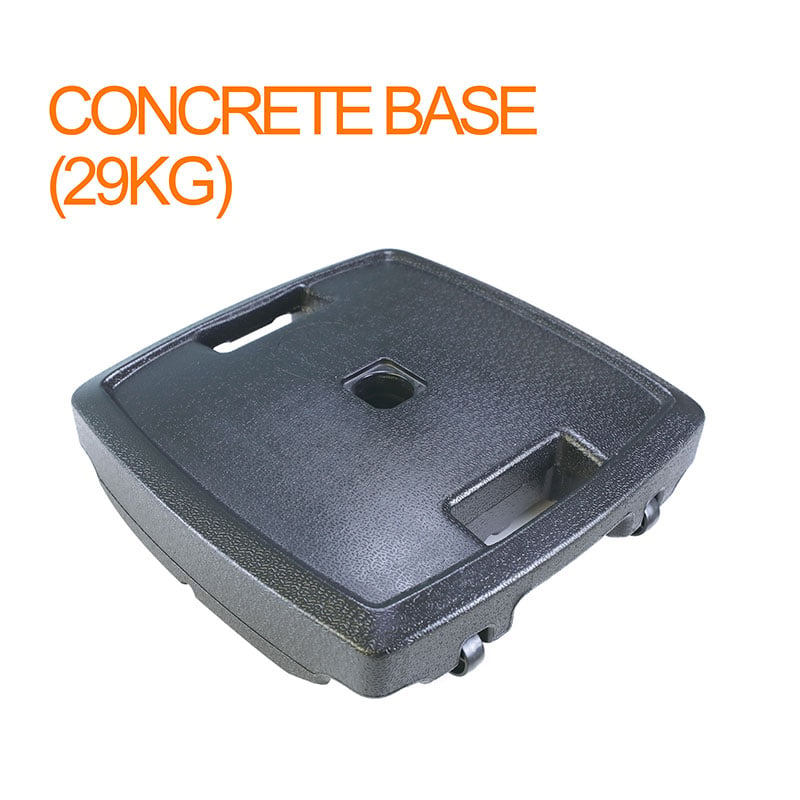
WZRODS DY451B: 29 kg, HDPE shell, concrete core. Stackable, portable, rust-proof. FOB price US$5.75–$6.85 at MOQ 2 units. Those numbers look unremarkable. Factor in landed cost—import duties lower than aluminum’s under relevant HTS codes, freight savings from less weight per unit of stabilizing mas
360° Portable Display - The Complete B2B Buyer's Resource - WZRODS
I remember standing in a convention center in Guangzhou about eight years ago, watching a distributor from Dubai unpack a shipment of aluminum flag stands.
Arch Banner Stand & Foldable Pop-Up Portable Outdoor Display: Wholesale Event Signage
WZRODS arch banner is lighter and more cost-effective than pop-up banners. Compact package, fast assembly, replaceable graphics, comes with composite poles and carry bag, supports extra weights for stable event displays.