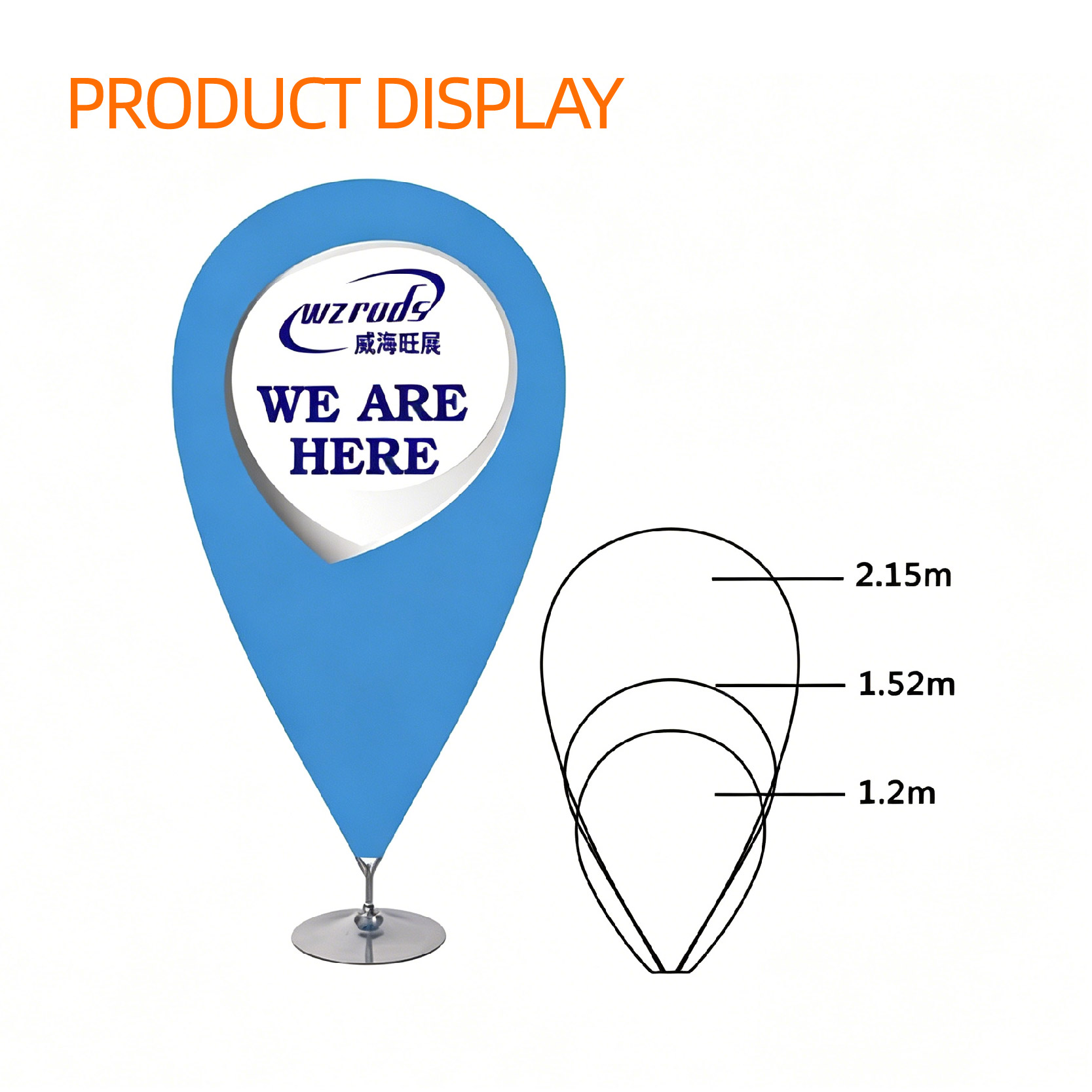
Ground Spike Banner
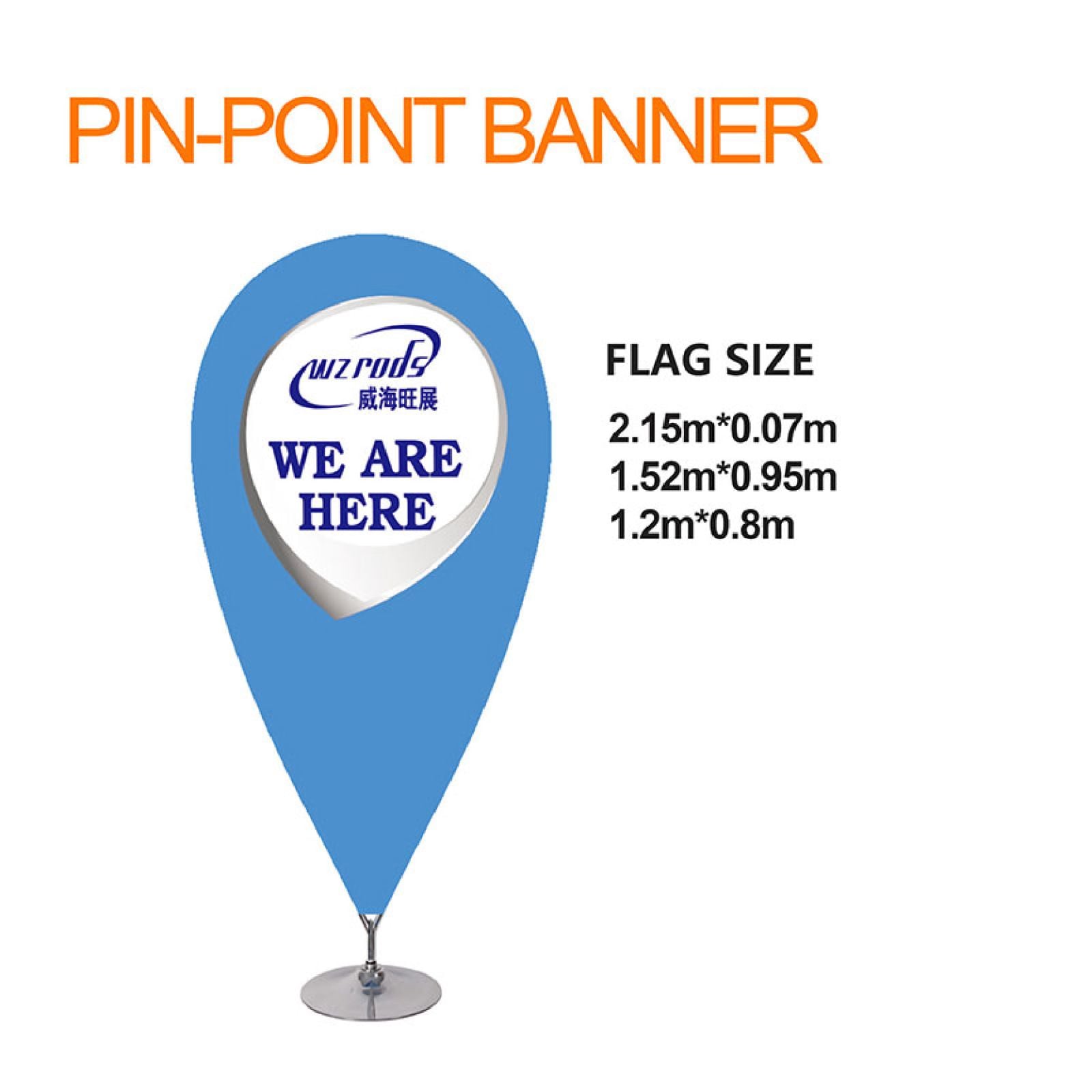
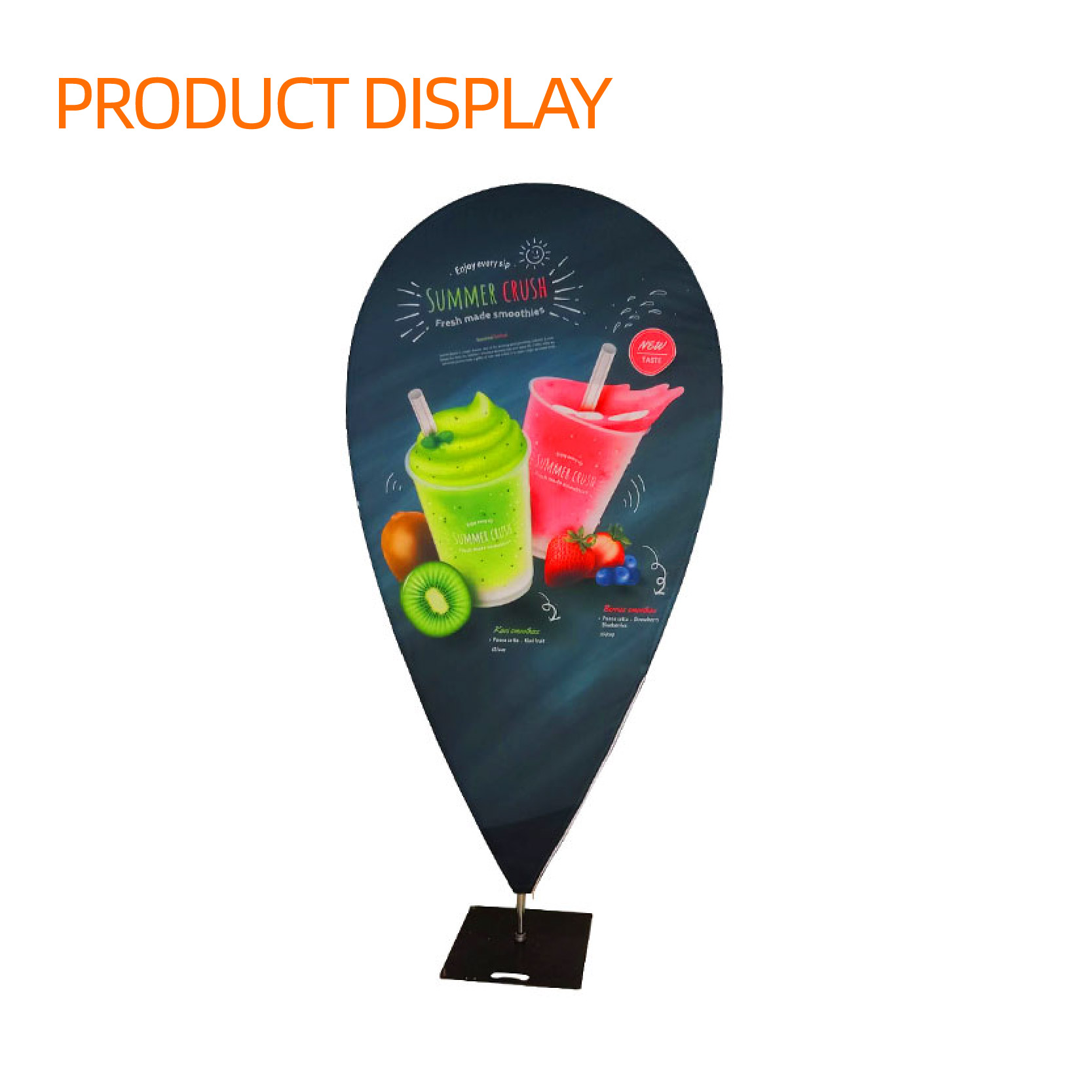
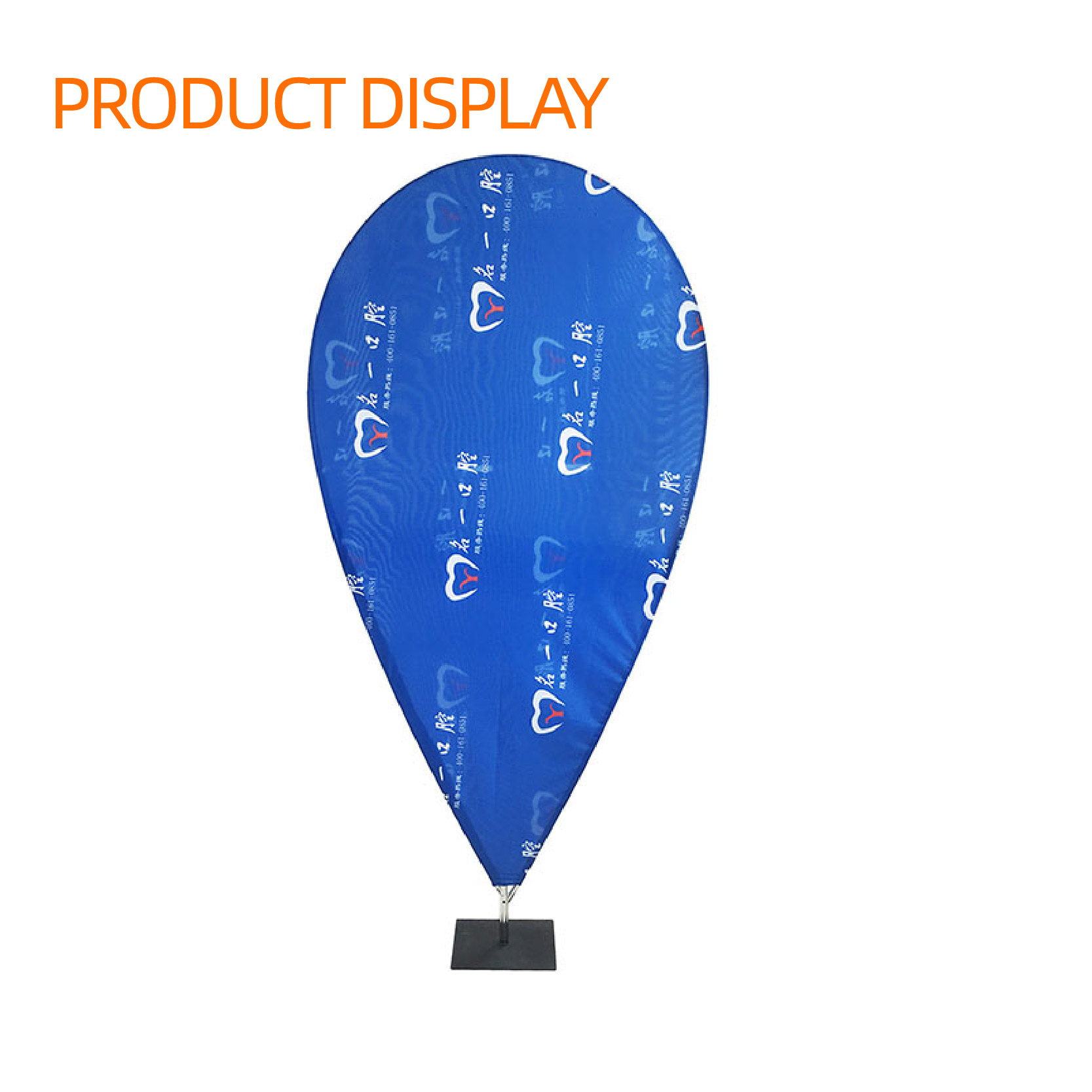
Pin-point banners for indoor & outdoor advertising. Windproof fiber pole, spin design for high visibility, portable with carry bag ideal for events & retail promotion.


 Article
 Specifications
- Origin
- Shandong, China
- Brand
- WZRODS
- Model
- DB12/ DB15/ DB21
- Pole Material
- Carbon Composite
- Banner Material
- 100% Polyester
- Size
- Customized
- Usage
- Indoor & Outdoor
- Print Color
- 4 color
- Printing Method
- Digital printing
- Design
- PSD/AI/PDF/TIF
- Moq
- 1 PCS
- Flag Size(S/M/L)
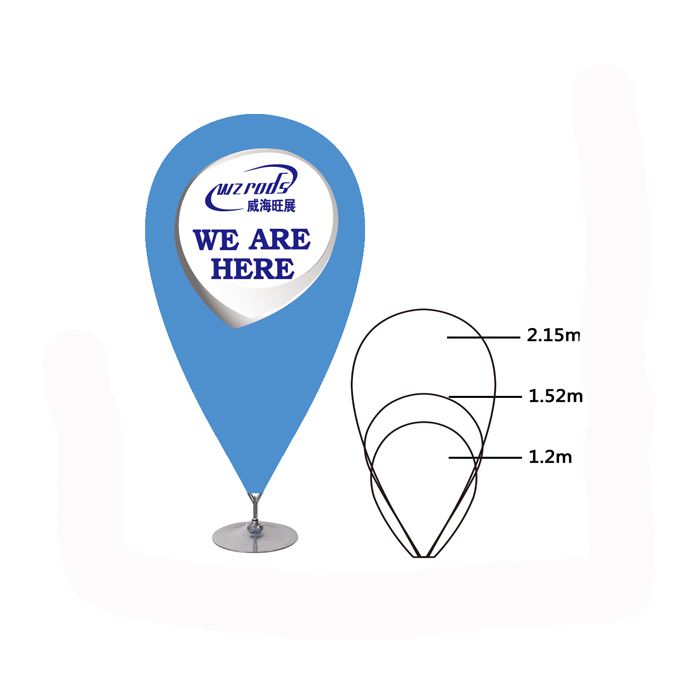
- 1.52m*0.95m/1.38m*0.96m/2.15m*1.07m
 Product Description
Shipping & Packaging
- Unit Weight
- 1.200
- Unit Size
- 156X8X5
- Packaging
- Standard export carton
- Lead Time
- 15-30 days
Pricing
- MOQ
- 1 set
- Price Range
- USD 5 – 15
* FOB Qingdao. Excludes shipping & taxes. Accessories & customization confirmed separately.
 Sample Service
- Sample Available
- Yes
- Sample Price
- set 441.88
- Max Sample Qty
- 1
 Customization Options

Light Custom
Logo, color, size adjustments

Fast Turnaround
Quick custom order processing
Ground Banner Stands: The Outdoor Setup Guide
Ground Banner Stands: The Outdoor Setup Guide
Every outdoor banner failure we hear about follows the same script: the pole was fine, the print was fine, but the base moved. A ground banner stand is only as good as the interface between its foot and the surface underneath. Get that right and a pin-point banner will ride out a full season of events. Get it wrong and you will be chasing a $15 stand across a car park in front of a sponsor.
This guide answers the anchoring question directly — by surface, by wind exposure, by duration — with the weight calculations spelled out so you can plan ballast rather than guess at it.Pin Point banner
The Short Answer: Anchor to the Surface, Not to the Stand
Before you specify a base, answer three questions:
- What is directly under the foot? Concrete, asphalt, turf, gravel, sand, decking and venue carpet each demand a different anchor. There is no universal base.
- What wind will it actually see? Not the forecast average — the gust that funnels between two buildings or comes off the water at 3 p.m. A sheltered plaza and an exposed coastal promenade are different specifications for the same stand.
- How long is it standing? A four-hour activation can live with a weighted cross base. A three-week festival installation in a windy site needs a ground anchor and guy lines, or a different product entirely.
| Surface | Primary anchor | Back-up | What catches people out |
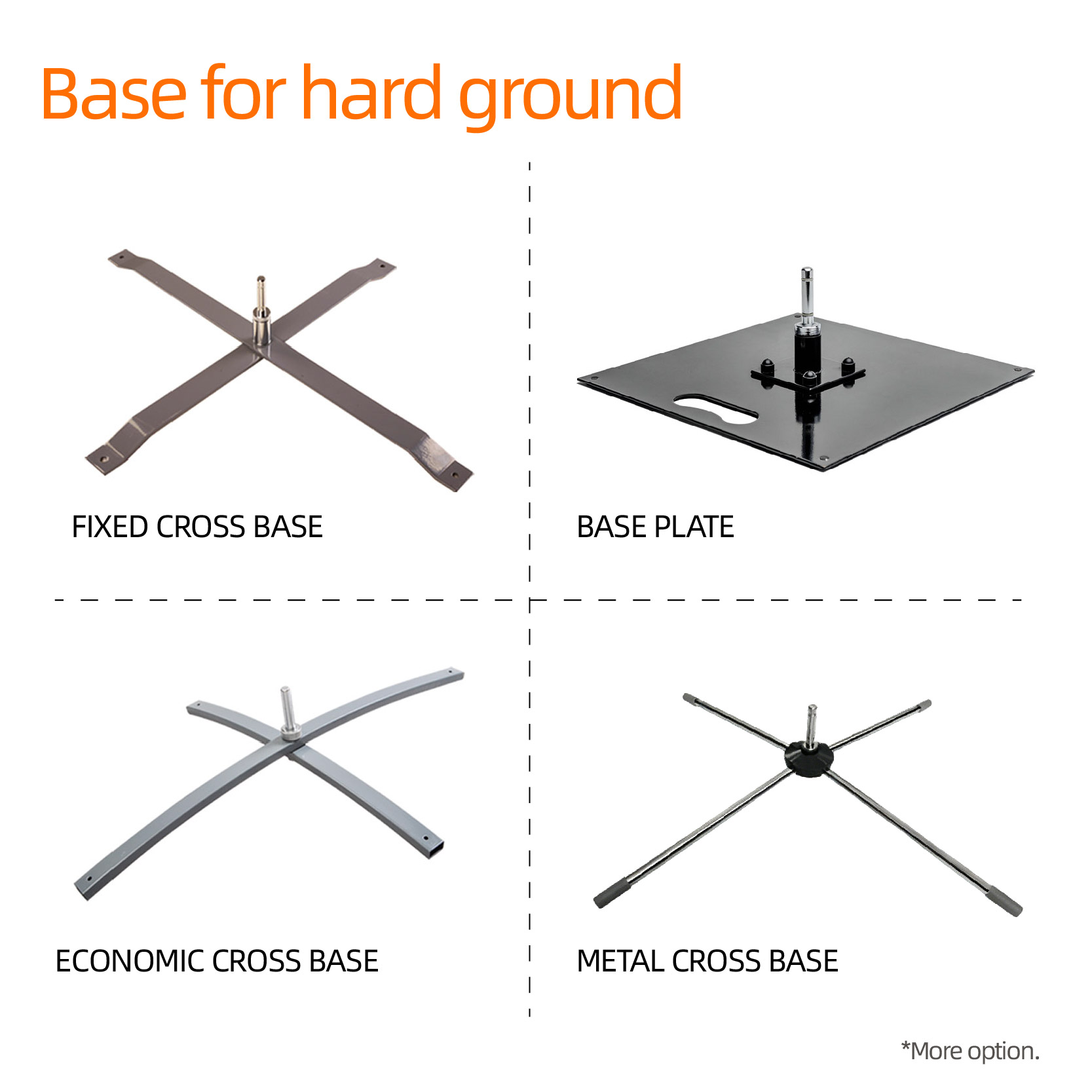
| Concrete / asphalt / paving | Cross base with weight plates | Water-fill ballast base, sandbags over the legs | Wind funnelling between buildings; plate theft or forgetfulness on load-out |
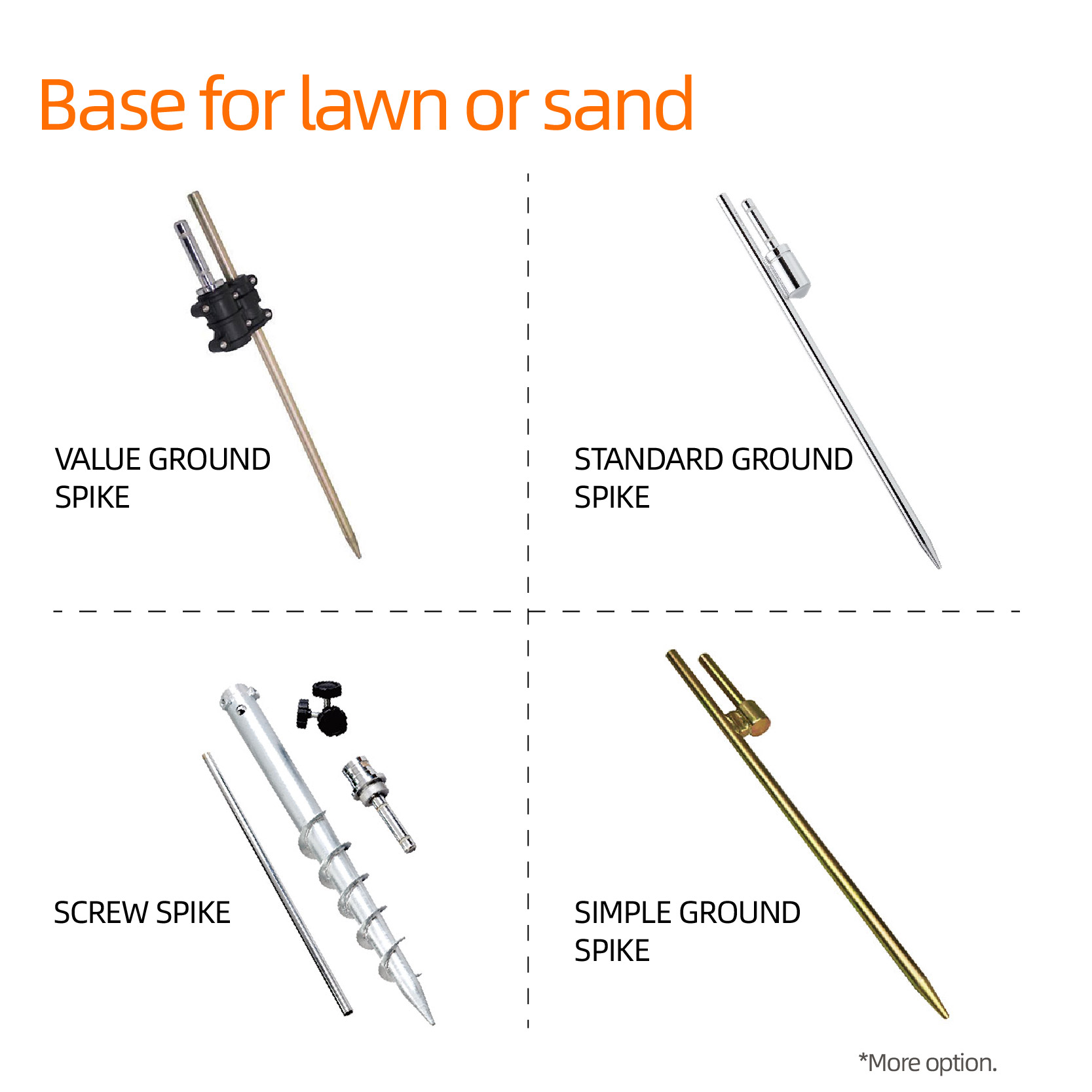
| Grass / soil | Ground spike driven 30 cm+ | Cross base + plates where spike is not viable | Soil softens after rain and releases the spike |
| Compacted gravel / hardcore | Cross base + plates (spike will not penetrate) | Ground screw if the site permits | Assumption that "it's ground, so a spike works" |
| Sand / beach | Long spike plus sandbags, or a screw anchor | Guy lines to independent anchors | Zero lateral holding capacity when dry |
| Decking / artificial turf / indoor carpet | Ballast only — never penetrate the surface | Weight bags spread across the base legs | Venue rules forbidding stakes; point-loading damage to decking |
Why the Base Is the Weak Link, Not the Pole
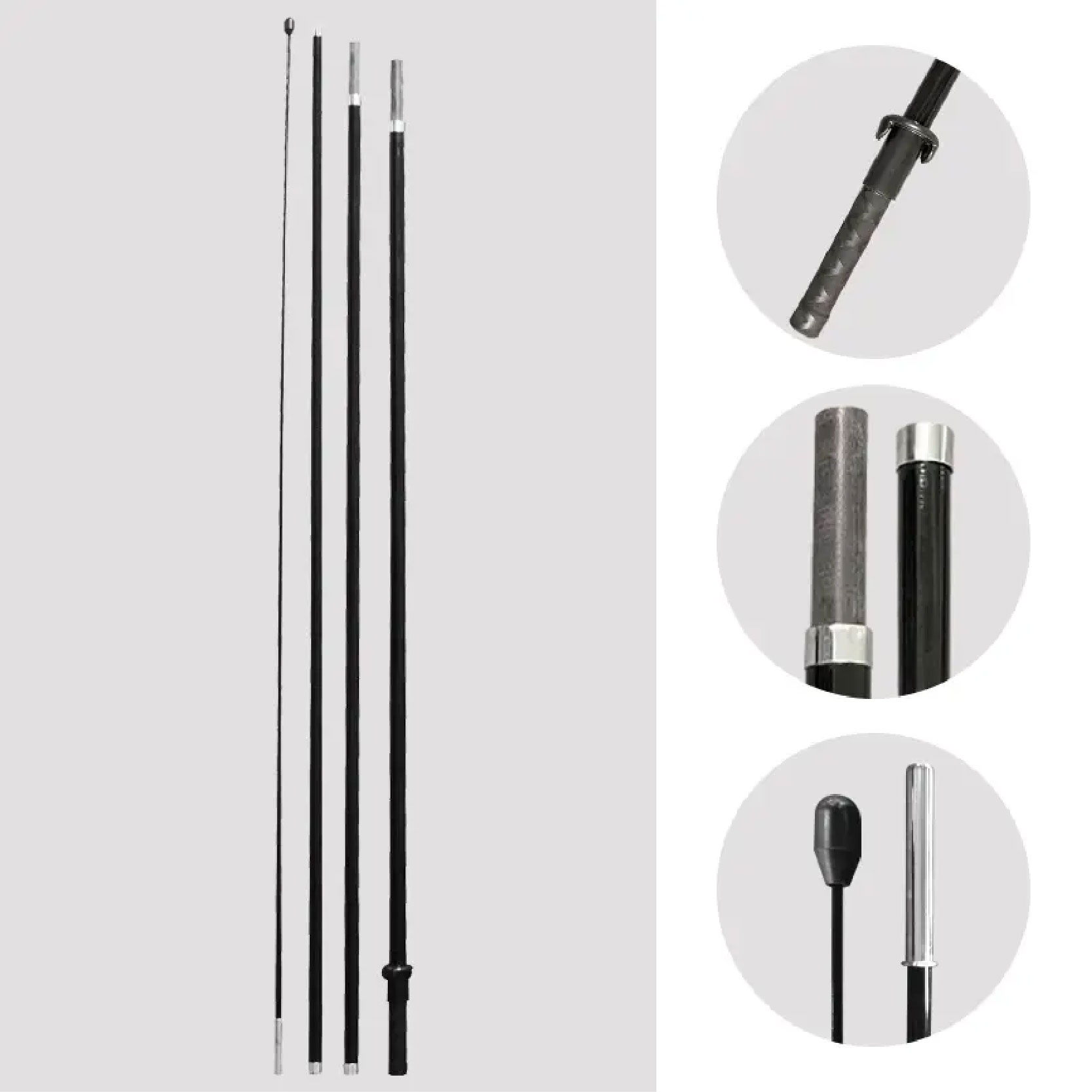
Our carbon composite poles are built to bend under load and recover; aluminium deforms permanently once it passes its yield point. That is the whole reason the material matters outdoors. But a pole that survives a gust while the base slides two metres is still a failed installation — and to the organiser, a fallen banner looks identical whether the pole snapped or the base tipped.
The pole determines whether the stand survives the wind. The anchor determines whether it stays where you put it. Buyers obsess over the first and forget the second.
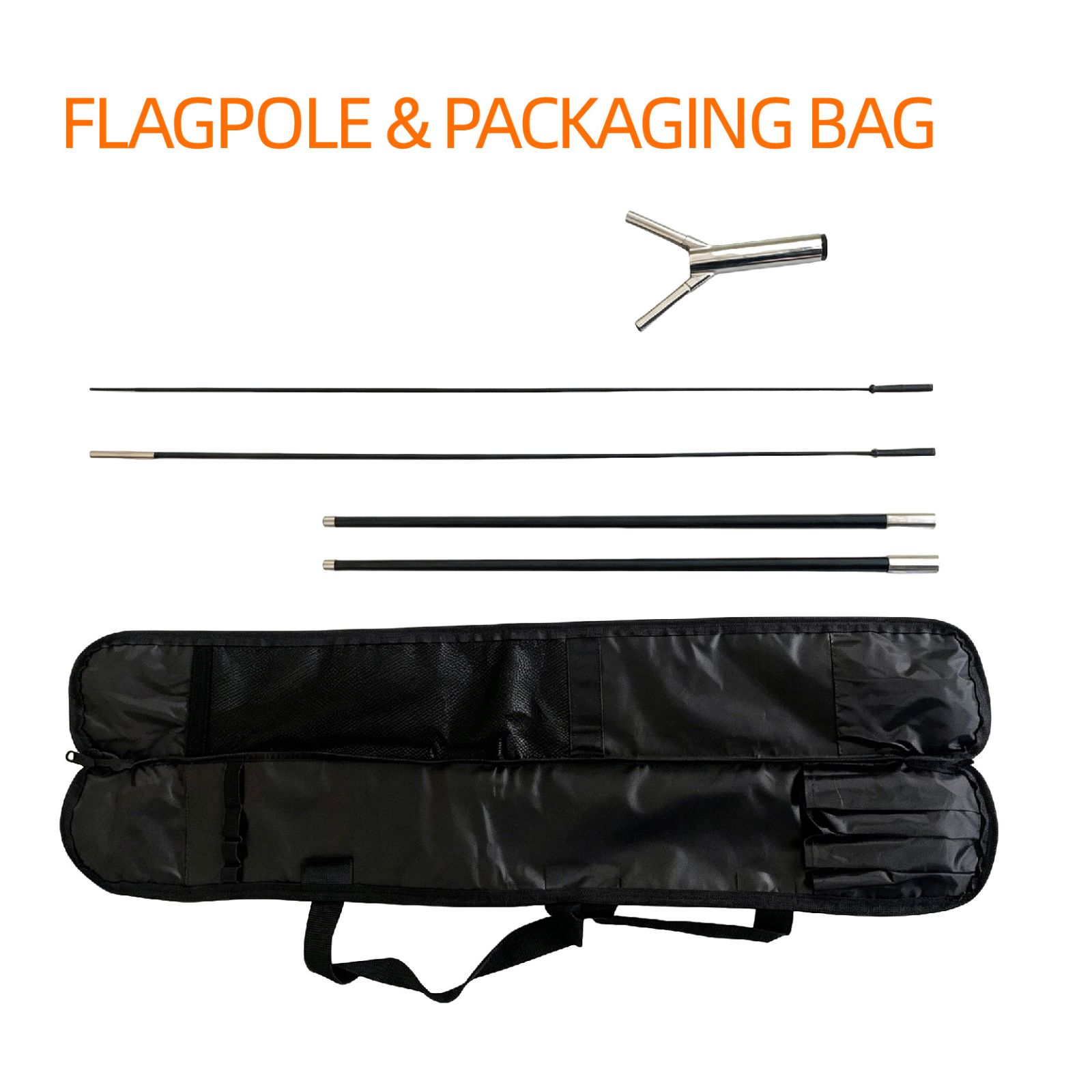
The Pin Point Banner uses a carbon composite pole and a Y-shaped metal connector that seats into multiple base types — cross base, water ballast, ground spike. That connector is the anchor interface, and it is worth checking two things on receipt: that the spigot diameter matches your base inventory, and that the connector is fully seated before you load the banner. A half-seated connector is the most common cause of a stand leaning within an hour of setup.
Because the connector and most bases are metal, coastal programmes need a finishing conversation. Anodised silver aluminium starts showing oxidation in 5–8 years outdoors; bronze and black anodised finishes in 3–5. Powder coating holds above 90% integrity for 10–15 years. For salt-spray environments, specify a Qualicoat Class 2-grade coating — it adds roughly 20% to the component cost and is the difference between a base that lasts a season and one that lasts a decade in a Queensland or NSW coastal programme.
How Much Weight Do You Actually Need?
Most setup crews ballast by feel. Here is the arithmetic, so you can plan instead of guess.
Dynamic wind pressure is calculated as q = 0.613 × v² (N/m²), where v is wind speed in m/s — the same relationship used in AS/NZS 1170.2 and EN 1991-1-4. Wind force on the banner is F = q × A × Cd, using the banner's bounding area for A and a drag coefficient Cd of 1.2 for a flat plate. Overturning moment is F multiplied by the height of the banner's centroid; the restoring moment is ballast multiplied by the base's lever arm (half the base width, measured from the pivot edge).
The table below applies this to our largest pin-point banner, the DB21 at 2.15 m × 1.07 m (2.30 m² bounding area), with a 1.1 m centroid height and a 0.6 m cross base, giving a 0.3 m lever arm. No gust factor and no safety margin are included in the equilibrium column — the recommended column applies a 1.5× margin, which is the minimum we would use for public events.
| Wind speed | Dynamic pressure | Force on banner | Ballast at equilibrium | Recommended (1.5×) |
| 20 km/h | 19 N/m² | 52 N (≈5 kgf) | 20 kg | 29 kg |
| 30 km/h | 43 N/m² | 118 N (≈12 kgf) | 44 kg | 66 kg |
| 40 km/h | 76 N/m² | 209 N (≈21 kgf) | 78 kg | 117 kg |
| 50 km/h | 118 N/m² | 327 N (≈33 kgf) | 122 kg | 183 kg |
Two conclusions follow, and they are the practical heart of this guide:
- Cross base plates alone are a fair-weather solution. Standard plates run 3–5 kg each. Four plates give you 12–20 kg — adequate for the DB12 (1.52 m × 0.95 m, roughly 60% of the DB21's sail area) in light conditions, and nowhere near enough for a DB21 above about 25 km/h.
- Above roughly 30 km/h, stop adding ballast and change method. Stake it, guy it, drop to a smaller banner, or take it down. Hauling 80 kg of plates onto a site is worse for your crew than two guy lines and four pegs.
Three factors move these numbers in your favour or against you:
- Fabric permeability. A 130 g/m² knitted polyester with roughly 25% air permeability sheds wind far better than a solid PVC banner — that is one reason it is the mainstream mid-range flag fabric, alongside 4-grade colour fastness and ~35 N tear strength. But full-surface digital printing reduces that permeability, so do not bank the discount on a heavily inked banner. Heavier 170 g stock with a UPF50+ treatment is the usual upgrade for high-UV markets.
- Rotation. The pin-point banner's spin design lets the graphic weathervane, which drops the effective sail when the swivel is free. A swivel jammed by over-tensioning or grit turns the banner back into a fixed sail at full drag.
- Coatings and water. PU coatings (1000–3000 mm water column) add about 10 g/m²; silicone (3000–5000 mm) adds 5 g/m² but costs roughly 30% more. Neither changes the anchoring plan much, but note that EU PFHxA restrictions affect some water-repellent finishes — check the finish specification if your market is European.
Anchoring Method by Surface
Hard ground: concrete, asphalt, paving
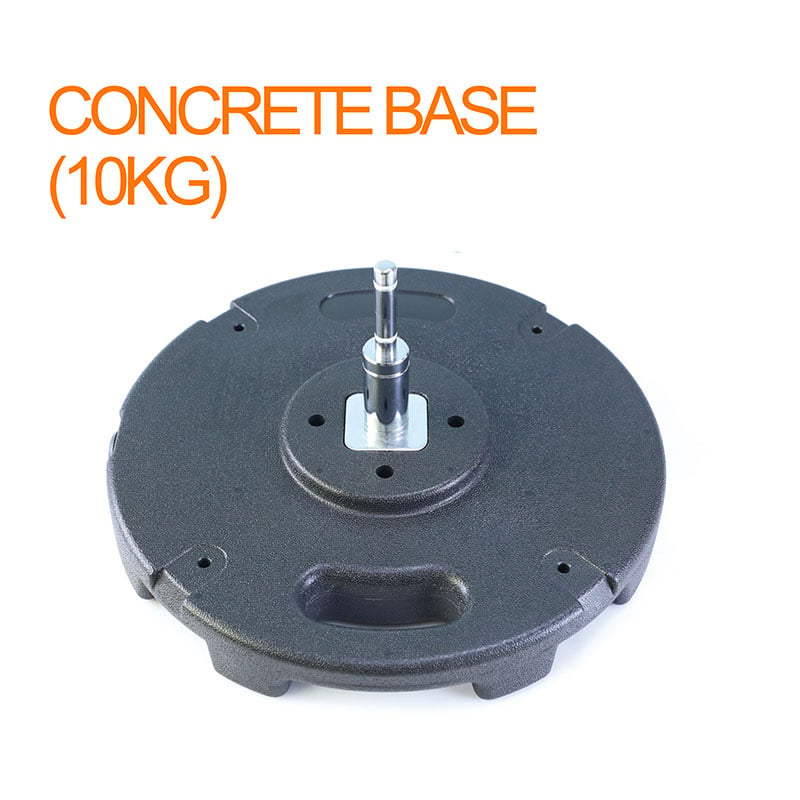
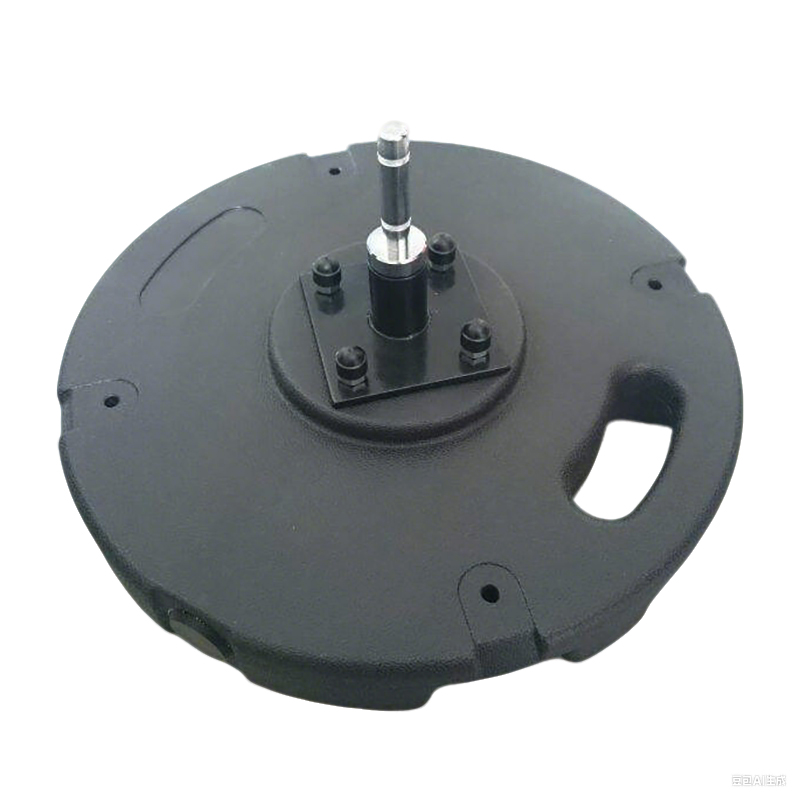
Cross base with weight plates is the default. Distribute plates evenly on opposing arms — loading one side only creates a hinge. Where plates are impractical (public access, theft risk), a water-fill base gives you 10–20 kg per unit at the cost of empty-container logistics on the return leg. On any hard surface, keep the base out of pedestrian desire lines; a 20 kg plate at shin height is a trip hazard and a liability claim.
Soft ground: grass, soil
Drive the ground spike at least 30 cm and at a slight angle away from the prevailing wind. Check the ground beneath the surface crust — event turf laid over hardcore three weeks earlier will not hold a spike. After rain, re-check every spike on site: softened soil loses lateral capacity quickly, and this is the single most common cause of overnight failures at multi-day festivals.
Sand and beach
Dry sand has almost no lateral holding capacity. Use a long spike combined with sandbags, or a screw anchor, and treat guy lines as standard rather than optional. Sand also migrates — a base that was solid at 8 a.m. may be sitting on a scour pocket by midday.
Decking, artificial turf, indoor carpet
Never penetrate the surface. Ballast only, spread across the base legs to avoid point-loading decking boards, and confirm venue rules before you arrive — many venues prohibit both stakes and water ballast (leak risk). For indoor deployments, the same 1.2 kg unit weight that keeps your freight cost down also means the stand itself contributes essentially nothing to stability: all of the holding force has to come from the base.
Exposed and coastal sites
Guy lines to independent anchors — never to a fence, table or vehicle. Two lines at roughly 45° to the prevailing wind, pegged or screwed, in addition to base ballast. If there is no independent anchor point available and the site is exposed, move the installation or use a heavier product category.
Setting Up a Ground Banner Stand in Under Ten Minutes
- Step 1 — Survey the footprint. Confirm the surface, check for underground services before any staking, and look up for overhead lines. Note where wind accelerates: building corners, colonnades, between containers, off water.
- Step 2 — Assemble flat. Feed the carbon composite pole through the banner sleeve on the ground, not standing up. It is faster and it removes the leverage that bends connectors.
- Step 3 — Seat the connector. Insert the pole into the Y-shaped connector until fully home, then seat the connector into the base spigot. Push down firmly and check by eye — a visible gap means it is not seated.
- Step 4 — Ballast evenly. Opposing arms, equal distribution. If using sandbags, place them over the base legs rather than hanging them from the pole.
- Step 5 — Free the swivel. The banner should rotate freely in the wind. If it does not, release tension slightly.
- Step 6 — Add guys if required. Exposed sites, DB21 in anything above a light breeze, or installations of more than a day.
- Step 7 — Run the push test (below).
The Push Test: A 30-Second Pre-Event Check
Apply a firm lateral push at the top of the pole, roughly in line with the direction of the strongest forecast wind, using a force comparable to what you calculated in the table. The base edge should not lift, the plates should not slide and the connector should not creak or shift. If any of those happen, add ballast or change method. Repeat the test at the start of each event day — not just on installation day.
Also run a visual inspection on the same walk-round: connector seating, corrosion bloom on metal components (especially coastal programmes), guy line tension, fabric abrasion at the sleeve, and whether the ground has softened after rain.
What Changes in Australia
Australia is one of the more demanding outdoor markets for this product category, for reasons that go beyond the obvious.
UV and salt. Current readings in the market sit around UV index 8.3, with summer peaks routinely at 11+ — extreme by any standard. Combined with salt air along the populated coastal strip, this accelerates both fabric degradation and metal corrosion. A Sydney events company running 30+ outdoor events a year had banner life cut to roughly three months by UV fading, with coastal wind repeatedly putting stands over. The fix was a carbon composite pole (rust-proof, bend-not-break) with UPF50+ 170 g polyester graphics, a cross base plus weight plates on hard ground, and guy lines added at coastal venues. Banner life went from 3 months to 12, the poles showed zero corrosion and zero breakages, and the 30+ events ran without a single tip-over. The client's renewal rate rose 60%.
Import and clearance. Australia clears through the Australian Border Force, and the importer needs an ABN or a nominated customs broker. Commercial invoice, packing list and certificate of origin should travel with every shipment; consignments valued under AUD 1,000 can use the simplified process. At current exchange rates (1 USD ≈ 1.4224 AUD), it is worth re-running landed cost on every order rather than annually.
Biosecurity is stricter than most first-time importers expect. Wooden packaging must meet ISPM 15 and may require fumigation, declared through the BICON system. Non-compliant pallets are exported or treated at your cost. Specify plywood or plastic pallets on the purchase order — it is the cheapest line on the order and the one that most reliably prevents a five-figure delay.
Duty classification. Carbon composite poles fall under different tariff codes to aluminium, and typically attract lower duty — one of the reasons the total landed cost works out below the aluminium alternative even where the unit price looks higher. Note that the reported trade category for this segment (HS 761090, aluminium structures) is a proxy, not a carbon composite code; always confirm the classification with your broker before committing to a landed-cost model.
Trade flow context. China-origin exports in the HS 761090 category into Australia were recorded at $256.8 million in 2025 (TradeDataService/Comtrade summary). At that scale, a one-percentage-point difference in duty treatment across a container programme is a real budget line — worth a broker conversation before, not after, your first order.
RCM. Purely mechanical ground banner stands do not require RCM marking. If you add LED lighting to a base or an illuminated header, the electrical components must comply with AS/NZS 3820 and carry the mark.
Specifying Ground Banner Stands for Outdoor Use
Our Pin Point Banner (models DB12, DB15, DB21) is the product this guide is written around: carbon composite pole, 100% polyester digitally printed graphic, Y-shaped metal connector compatible with multiple bases, spin design for visibility, carry bag included, unit weight 1.2 kg. MOQ is one set for market testing, unit price USD 5–15, lead time 15–30 days, and roughly 10,897 units fit a 40HQ (68 CBM) — the low unit weight being the reason the freight line stays manageable against heavier aluminium alternatives.
If you are building a broader outdoor kit for your market, the standard outdoor flag set (S-Banner-3m, Combo-Pole-3m, Cross-Base-3kg and Ground-Spike-30cm, landing around $25–45) covers the entry-level enquiry that most distributors field first, and pairs naturally with pin-point banners on the same site plan.
Where we are useful to distributors and importers specifically: factory-direct supply since 2005 with no middleman markup, private label and neutral packaging, mixed-model MOQ for new market testing, a 3-year warranty, and a long-term customer complaint rate of 0.01%. We hold a utility model patent on the advertising flag straight socket (ZL 2017 2 0625972.9), and we introduced our complete composite advertising flag pole system at Signchina & APPPexpo back in 2006 — the categories we serve today across 80+ countries were partly defined by that launch. For European buyers, our distribution centre in Gaia, Portugal covers EU deliveries in 2–5 days.
Samples: one unit maximum at 441.88, dispatched in the standard 15–30 day window, packed in export carton.
Frequently Asked Questions
Can I anchor a ground banner stand without weights?
Only in soft ground where a spike can be driven 30 cm or more, and only in genuinely sheltered conditions. On hard surfaces there is nothing for the stand to grip, so ballast is not optional — work from the calculation table above and apply a 1.5× margin for public events.
How many weight plates do I need for a cross base?
Standard plates are 3–5 kg each. For a DB21 banner at 30 km/h, the equilibrium requirement is around 44 kg, or 66 kg with a 1.5× margin — that is 13–22 plates, which is why staking or guying is the practical answer above roughly 25–30 km/h. For the smaller DB12, four plates (12–20 kg) is workable in light conditions.
Will a ground spike hold in wet weather?
Less reliably than on a dry day. Rain reduces the lateral capacity of soil, and event turf laid over hardcore is especially prone to releasing spikes. Re-check every spike after rain and before each event day, and add base plates or a guy line where the ground has softened.
Do I need to take the banner down at night?
Not automatically — but you should take it down or drop to a smaller size if wind is forecast above the speed your ballast plan was calculated for. Overnight is when most failures happen, because there is nobody on site to react. Where an installation is unattended for days at a time, stake and guy as standard and inspect daily.
Does a heavier banner fabric make the stand less stable?
Marginally, through print-area wind load rather than fabric mass. The larger variable is permeability: a 130 g/m² knit polyester at roughly 25% air permeability sheds wind better than a solid PVC banner, but heavy digital ink coverage reduces that benefit. Do not assume a permeable base fabric guarantees a permeable finished banner.
Are ground banner stands subject to RCM in Australia?
No, unless they incorporate electrical components. Pure mechanical stands are outside the RCM scope; add LED lighting and the electrical assembly must comply with AS/NZS 3820 and carry the Regulatory Compliance Mark.
References
- TradeDataService (Comtrade summary), HS 761090 — China export value to Australia, 2025, updated 2026-11-01.
- IMF World Economic Outlook — Australia real GDP growth projection (2.2%, 2031); market context data (GDP $1.80 trillion, 2025; inflation 2.9%; USD/AUD 1.4224).
- Australian Border Force — clearance requirements, ABN/broker nomination, commercial invoice, packing list, certificate of origin; simplified process for consignments under AUD 1,000.
- Australian biosecurity requirements — ISPM 15 wooden packaging, BICON declaration; plywood or plastic pallet recommendation.
- AS/NZS 3820 and RCM (Regulatory Compliance Mark) framework, formerly C-Tick and A-Tick.
- Wind pressure relationship q = 0.613 v² and drag coefficient assumptions consistent with AS/NZS 1170.2 and EN 1991-1-4; ballast figures are indicative calculations using stated assumptions (2.30 m² area, Cd 1.2, 1.1 m centroid, 0.3 m lever arm) and are not a substitute for site-specific engineering assessment.
- WZRODS product data — Pin Point Banner DB12/DB15/DB21 specifications, pricing, MOQ, lead time, container loading; utility model patent ZL 2017 2 0625972.9; company records (founded 2005, 80+ countries, 3-year warranty, 0.01% long-term complaint rate, Gaia, Portugal distribution centre).
- Internal technical reference — 130 g/m² knitted polyester performance data (25% air permeability, ~35 N tear strength, grade 4 colour fastness, 6–12 month outdoor life in moderate UV); PU and silicone coating specifications; aluminium and powder-coating weathering data including Qualicoat Class 2 salt-spray grade.
- Sydney outdoor events case reference — 30+ events programme, UV and coastal wind conditions, carbon composite pole and UPF50+ 170 g polyester outcome data.
 Comments (0)
No comments yet. Be the first to comment!
Leave a Comment
Related Products
Combo Pole
F Banner(Teardrop)
Golf flag pins
110° H banner
Magnum banner
Wall Mounted Flagpole
SF Banner
Budget 2in1 flag system
4 in 1 flag System
T Banner
Related Articles
Portable Flagpoles: Pack, Carry, and Set Up Anywhere
This guide answers the practical question directly — how do you travel with a portable flagpole — and then goes further, into the specifications that determine whether a pole survives the trip and the deployment.
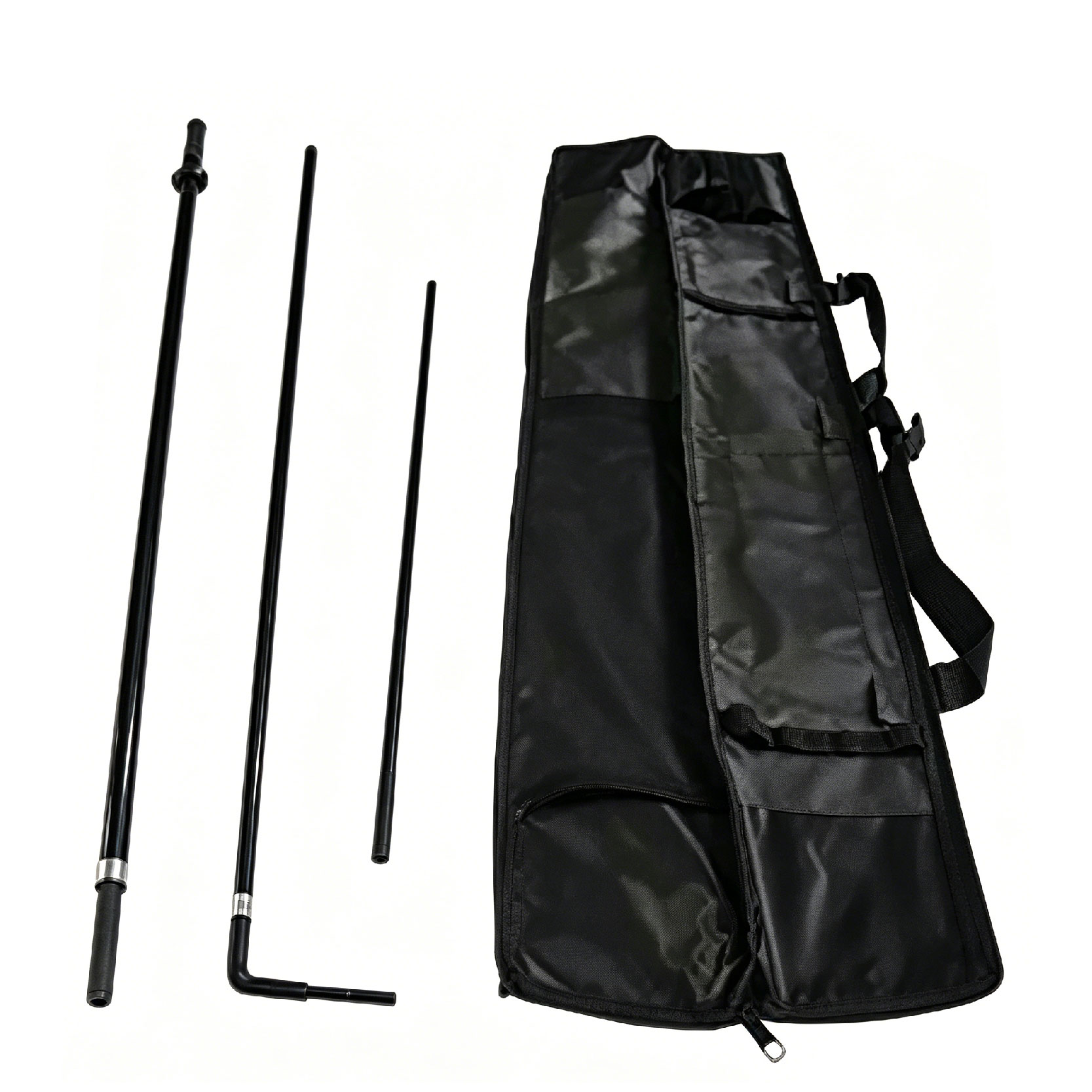
Table Flag Stands: The Complete Size Guide
Table Flag Stands: The Complete Size GuideA table flag stand is a small object that fails in very public ways. Too light, and it tips the moment a door opens.
Portable Flag Stands: The Event Pro's Pick
Portable flag stands need balanced portability and wind stability. WZRODS WT-21 stackable solid bases with carbon poles scale weight on-site, outperforming water-fill and aluminum setups.
Best Flag Poles for Windy Areas: The Survivor's Guide
This guide is written for people who have to put a number behind that claim: distributors quoting a tender, event planners specifying a system for a coastal venue, importers comparing total landed cost across a season.
29kg Concrete Flag Base - The Complete B2B Buyer's Resource - WZRODS
WZRODS DY451B: 29 kg, HDPE shell, concrete core. Stackable, portable, rust-proof. FOB price US$5.75–$6.85 at MOQ 2 units. Those numbers look unremarkable. Factor in landed cost—import duties lower than aluminum’s under relevant HTS codes, freight savings from less weight per unit of stabilizing mas
Feather Flag - Professional Banner Poles & Systems Manufacturer - WZRODS
With U.S. advertising flag shipments up 13% year over year, warranty claims are eroding distributor margins on aluminum feather flags. Learn how carbon fiber rods reshape unit economics for private-label distributors.