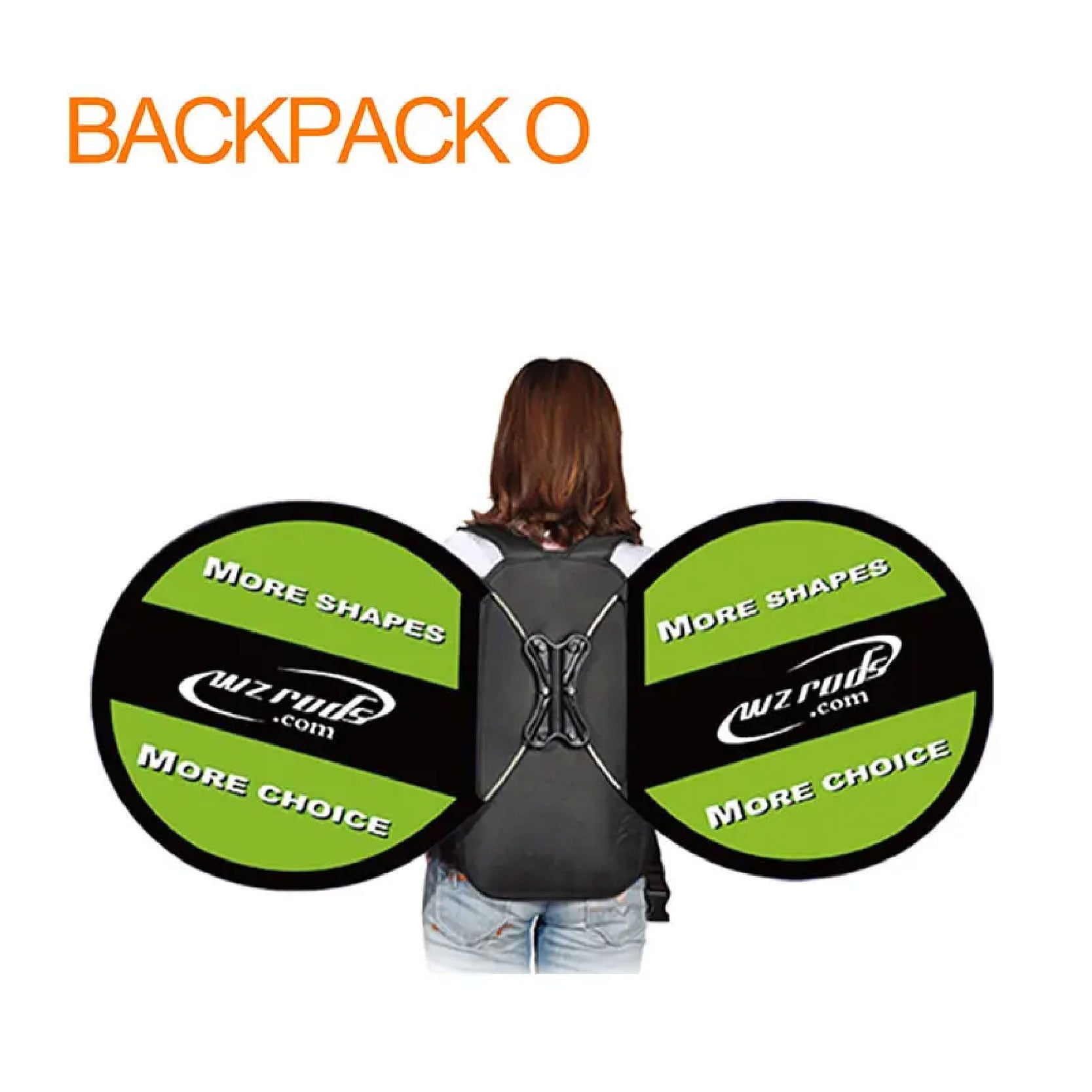
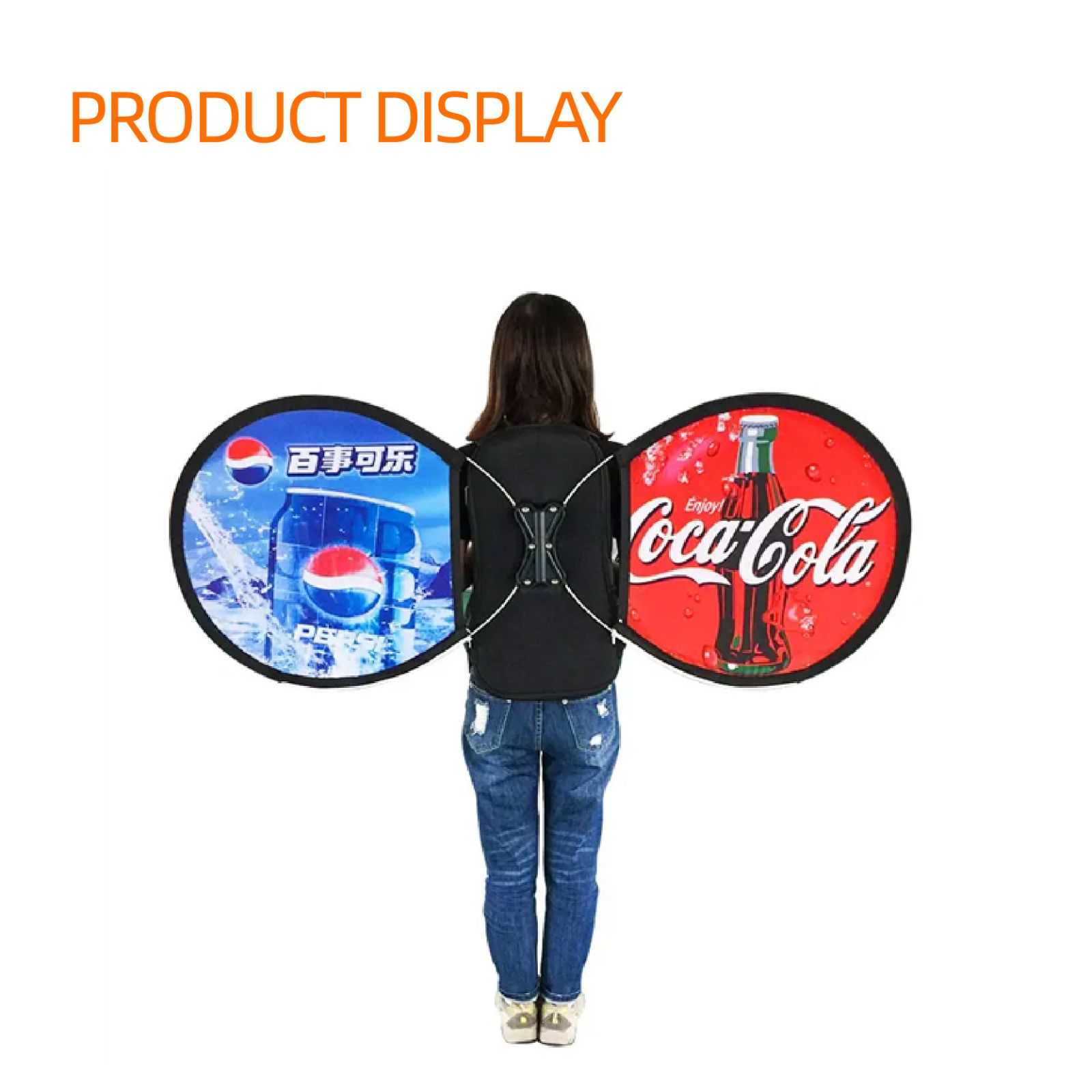
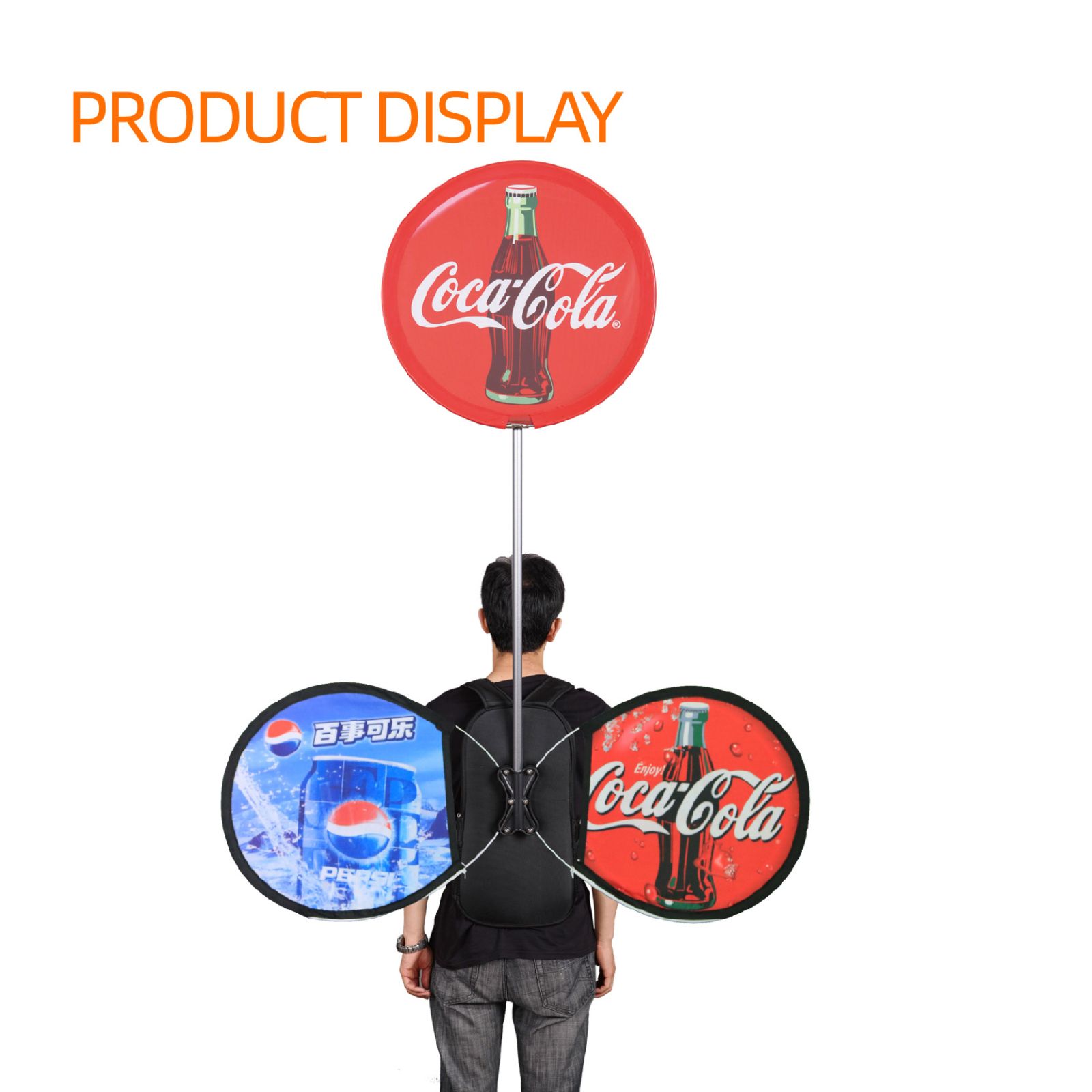
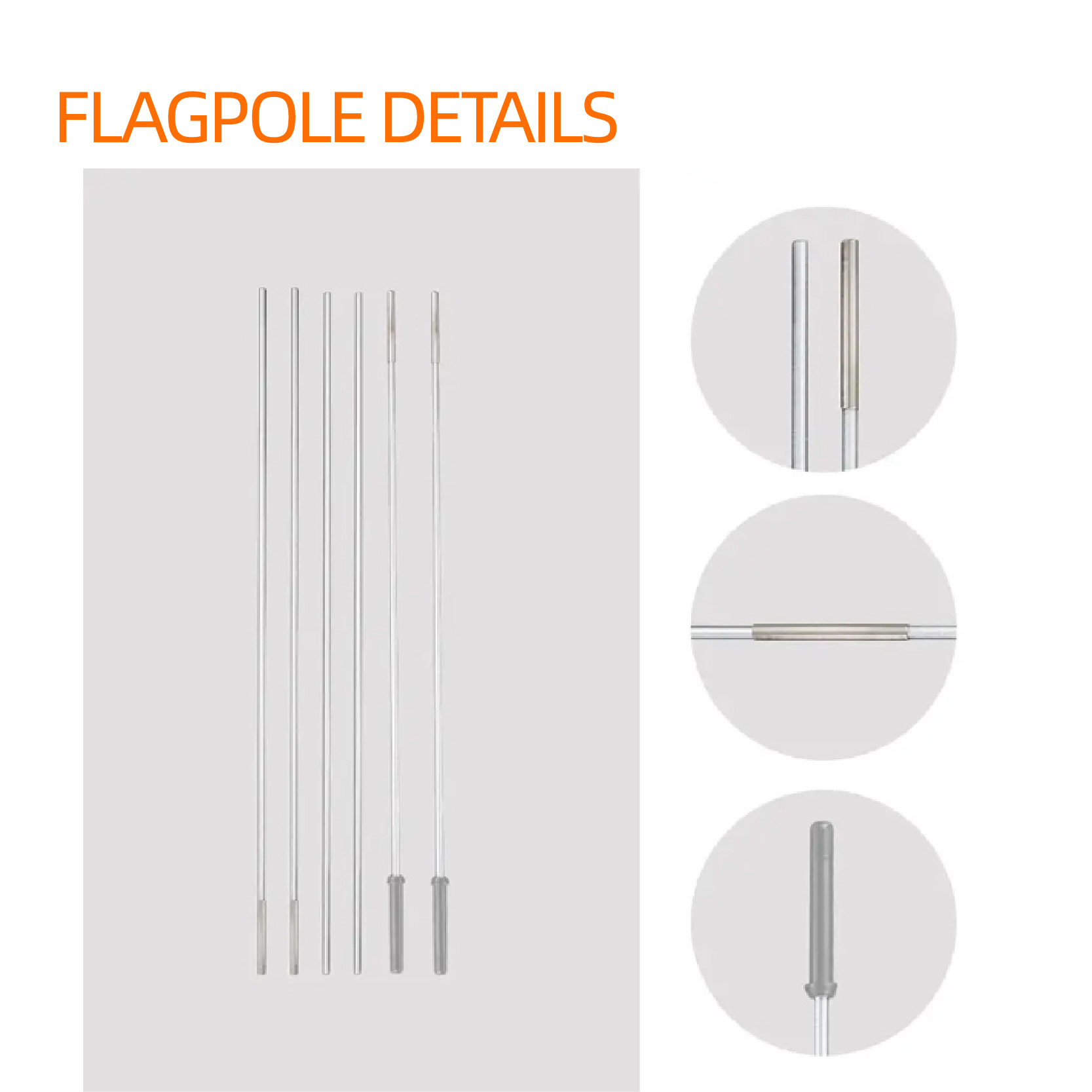
O-Shape Backpack Banner
Patented backpack deluxe (backpack banner) for crowd promotion. 14+ flag shapes, 3D-foam comfort, storage pockets, windproof design, Oxford fabric & carbon composite poles.


 Article
 Specifications
- Origin
- Shandong, China
- Brand
- Wzrods
- Model
- BACKPACK O
- Main Material
- Carbon Composite
- Banner Material
- 100% Polyester
- Flag Fabric
- 100%Polyster
- Usage
- Advertising
- Moq
- 1pc
- Logo Service
- Customized Artwork Printed
- Flag Size
- 53.5*54.5cm*2pcs
- Weight
- 1.2KG
- Artwork Format
- Ai. Pdf. Eps.PSD
- Color
- CMYK 4 Color Printing
- Supply Ability
- 30000 pieces per Month
 Product Description
Shipping & Packaging
- Unit Weight
- 1.2kg
- Unit Size
- 54*30.5*5.5CM
- Packaging
- Standard export carton
- Lead Time
- 15-30 days
Pricing
- MOQ
- 1 piece
- Price Range
- USD 26.1 – 31.3
* FOB Qingdao. Excludes shipping & taxes. Accessories & customization confirmed separately.
 Sample Service
- Sample Available
- Yes
- Max Sample Qty
- 1
 Customization Options

Light Custom
Logo, color, size adjustments

Fast Turnaround
Quick custom order processing
O-Shape Backpack Banner - The Complete B2B Buyer's Resource - WZRODS
The Puzzle of the Flapping Flag
Some years ago, in an Orlando convention hall, a client’s brand message flapped uselessly against a bent aluminum pole. The exhibitor had paid thousands for booth space, graphics, and travel. The one moving element meant to catch attention across the aisle sagged at a forty-five-degree angle. The pole had buckled just above the harness—not in a storm, but from constant low-frequency vibration of foot traffic and HVAC airflow. That should not have happened. What caused that failure?
The question took months to unravel and ultimately changed how trade show hardware gets specified. The problem was not that aluminum is weak. Aluminum is strong in many ways. But the repetitive flexing a backpack flag pole absorbs—a back-and-forth that fatigue-tests the metal at its grain boundaries—is rarely accounted for by engineers designing static masts. Poles that work perfectly for a few shows suddenly develop a permanent bend or snap outright. With no alternative, exhibitors treated the pole as a consumable, reordering sets like faded banners. That is an expensive distraction when the mission is getting the message seen clearly.
The First Principle of Backpack Banners
A backpack banner is not a static display. It is worn on a walking, turning, stopping person. The pole becomes a moving pivot, cycling a bending moment at roughly two steps per second. Over an eight-hour show, that means about 50,000 load reversals. Over a dozen shows, nearly a million cycles—well into the fatigue-failure range.
Aluminum pole manufacturers are not blind to fatigue, but their business model favors cheap stock tubing that passes a static pull test. The failure surfaces later, after the customer pays freight and uses the product. At that point, the remedy is a discount on the next order, effectively baking the failure rate into the price.
A better approach starts with the failure mode and works backward to the material. That path leads to the carbon composite poles used in the Backpack O, manufactured by WZRODS in Shandong, China. The company holds a patent on the mounting design, but the pole material matters most. We've seen the numbers. Carbon composite degrades so slowly under cyclic loading that for trade show lifetimes it is effectively fatigue-free. The complete assembly weighs 1.2 kg, compared to roughly 2 kg for aluminum—a 40% weight reduction that directly cuts logistics costs.
Product Comparison: Thinking Through the Material
In a workshop test, a standard flag—53.5 by 54.5 cm, 100% polyester—was attached to each pole type. The harness was clamped to a motorized arm oscillating at 1 cycle per second. Not a perfect copy of a human gait, but repeatable. That's real money. An aluminum pole lasted about 11 hours before showing a visible 5-degree bend. A second aluminum pole from a different manufacturer failed in 8 hours. The carbon composite pole ran continuously for three weeks—over 1.8 million cycles—with no measurable deformation.
Why the difference? Aluminum is isotropic: cracks can propagate along any grain boundary. Carbon composite is anisotropic. Continuous carbon fibers run the length of the pole, carrying tensile and bending loads far better than aluminum. The resin matrix holds them in place but does not carry the primary load. The pole flexes in wind and returns to straight, with none of the micro-yielding that plagues metals.
Salt corrosion tells a similar story. A section of Backpack O pole was submerged in a saltwater bath for six months. After drying, it looked identical to the control sample. Aluminum in the same conditions develops pitting, white oxides, and unpredictable wall thinning. For distributors in humid coastal markets, corrosion-related returns alone eat margins.
Material Comparison: Carbon Composite vs. Aluminum Backpack Poles
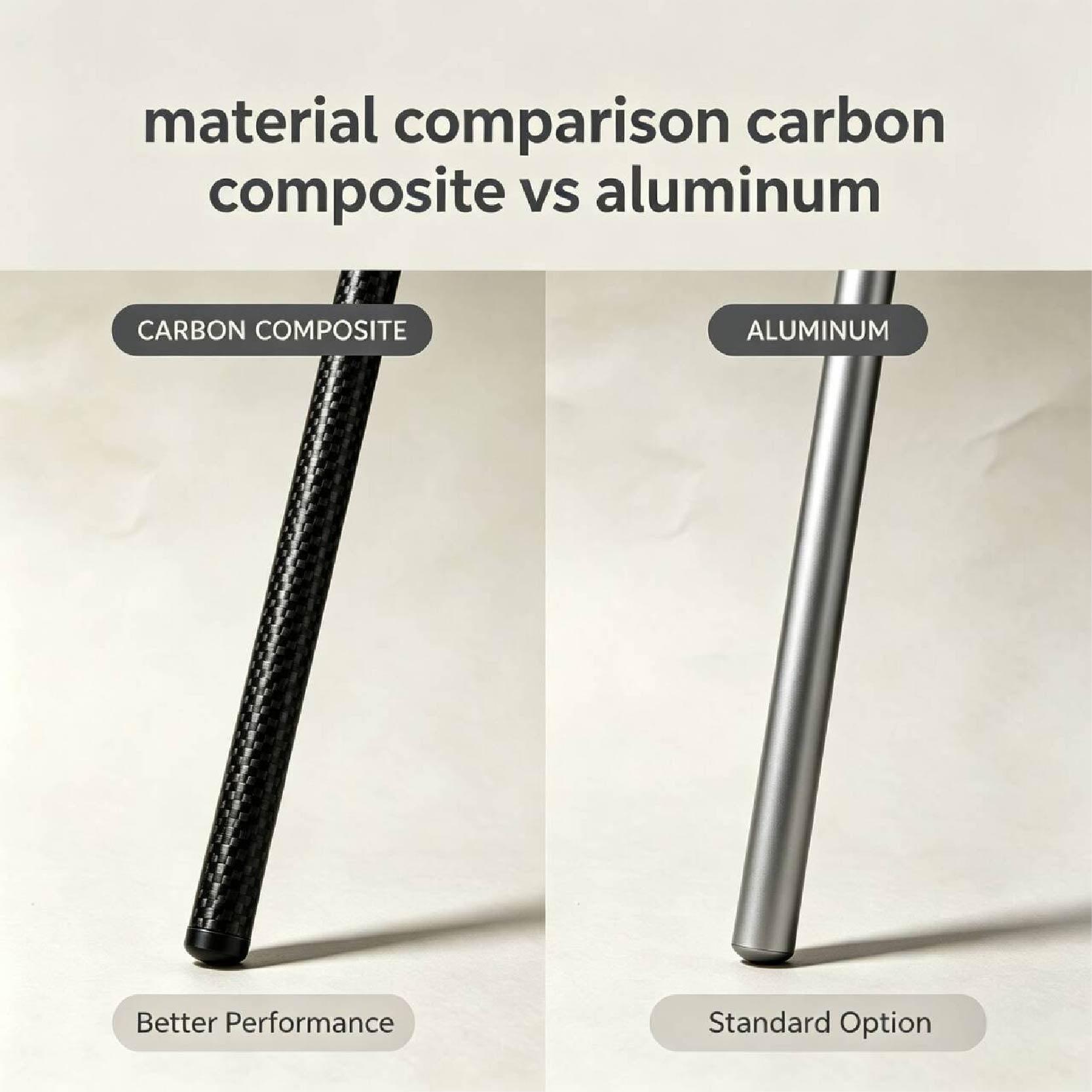
| Property | Carbon Composite (Backpack O) | Aluminum (Typical) |
|---|---|---|
| Unit weight (complete assembly) | 1.2 kg | ~2.0 kg |
| Fatigue life (simulated walking, to 5° set) | Over 1.8 million cycles (no set) | 8–11 hours (approx. 30,000–40,000 cycles) |
| Corrosion in salt spray (ASTM B117, 500 hours) | No visible change | White rust, pitting |
| Flexibility under wind load | Bends and returns; dampens vibration | Permanent deformation beyond elastic limit |
| HTS code category for U.S. import duty | 6815.99 (typically lower) | 7616.99 (typically higher) |
ROI Analysis: What Forty Percent Lighter Actually Means
A purchasing manager comparing unit prices sees the Backpack O at USD 26.10 to 31.30 per piece, FOB Shandong—well above generic aluminum. But the unit price is the smallest slice of the story. Total cost of ownership includes freight, duty, replacement rate, and the hidden cost of a missed impression when a pole fails mid-show.
Freight: Air-freighting 100 units saves 80 kg, because each Backpack O weighs 0.8 kg less. At typical air freight rates, that saves several hundred dollars, more than offsetting any unit-price premium. Ocean freight sees a similar per-kilo advantage without sacrificing volumetric efficiency, as the packed bag measures 54 by 30.5 by 5.5 cm.
Duty: Carbon composite articles generally fall under HTS 6815.99, often at a lower rate than aluminum’s 7616.99. One Netherlands distributor reported an 11% reduction in landed cost after switching, even though the ex-works price was 8% higher. The difference came entirely from lower freight and duty charges.
Replacement rate: A U.S. importer of aluminum backpack flags tracked a 14% warranty claim rate. After switching to the Backpack O, claims dropped so low the company stopped budgeting for them after two quarters. That single change reshapes the profitability math.
Missed-opportunity cost: When a flag sags, the exhibitor loses impressions. Event managers talk. A bent pole damages a distributor’s reputation far faster than a discount builds it. Reliable hardware pulls inquiries.
Total Landed Cost Comparison (500 units, U.S. East Coast, ocean freight)
| Cost Element | Backpack O (Carbon) | Standard Aluminum |
|---|---|---|
| Ex-works unit price (USD) | 28.00 | 22.00 |
| Freight per unit (ocean, LCL) | 3.20 | 5.33 |
| Duty (ad valorem equivalent per unit) | 1.10 | 1.98 |
| Landed cost per unit | 32.30 | 29.31 |
| Estimated replacements per 500 units in first year | 3 | 70 |
| Total replacement cost at landed price | 96.90 | 2,051.70 |
| Effective total cost for 500 functioning units | 16,246.90 | 16,706.70 |
Applications: From Exhibition Halls to Coastal Fairs
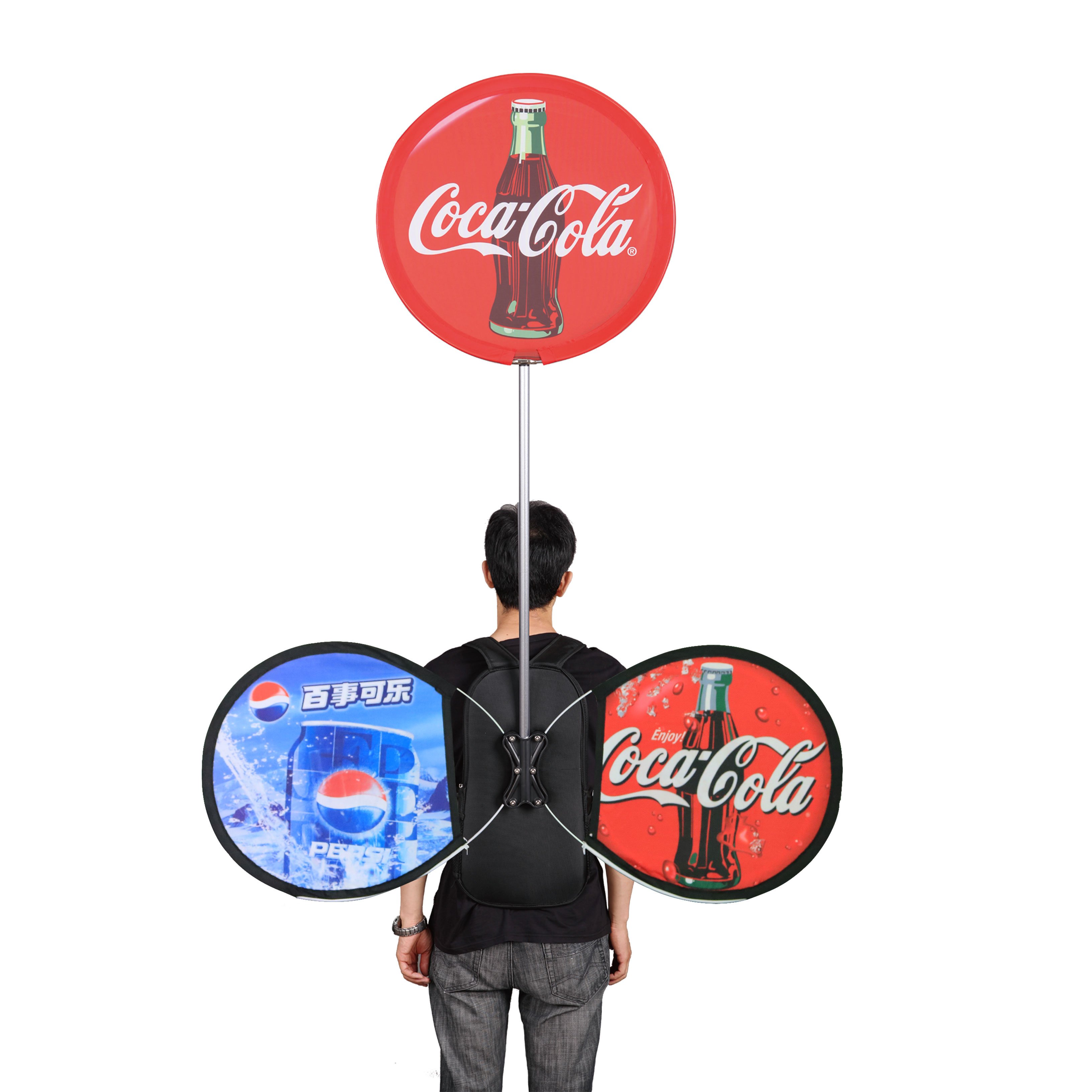
The Trade Show Floor
A booth staffer wearing a backpack flag creates a moving billboard that rises above the crowd. The carbon pole’s high specific modulus shifts the natural frequency upward, so the flag flies steadily without snapping back and blurring the artwork. At a distance, the CMYK print is easy to read. With 14 pole-swappable shapes, a single backpack base adapts to different messages—something no aluminum system matches.
Outdoor Events and Coastal Markets
Beach promotions, seaside concerts, and tropical festivals expose displays to sand, salt mist, and UV. The Backpack O uses abrasion-resistant Oxford fabric for the harness and UV-stabilized polyester for the flag. The carbon pole, however, is the decisive advantage. In the Caribbean, Southeast Asia, and the Arabian Gulf, many customers now refuse aluminum and demand carbon composite. Stocking the Backpack O captures that segment—buyers willing to pay for equipment that does not need seasonal replacement.
Large-Scale Festivals and Stadium Events
When organizers deploy 50 or 100 flag bearers across a concourse, setup and teardown logistics swell. The 3D-foam back panels let wearers go four to five hours without fatigue; waist-belt buckles prevent the backpack from leaning in wind. A zippered compartment and side pockets hold water, flyers, and a phone, so staffers do not need extra bags. In stadium operations, that simplicity matters.
Factory Process: How the Thinking Got Built In
WZRODS’s Shandong facility runs up to 30,000 pieces per month. The manufacturing approach treats the pole as a system, not a commodity. Carbon composite poles start as prepreg sheets—carbon fiber pre-impregnated with epoxy—cut to precise patterns, rolled onto mandrels, and cured in an autoclave. The cure cycle is controlled to prevent voids that could initiate delamination under bending loads. Injection-molded connectors interface with the patented backpack base, distributing bending moment across the wearer’s back, which reduces peak stress on the pole and improves comfort. The 3D-foam pads follow the lumbar curve, and air channels keep perspiration from soaking through.
Quality control includes a dynamic test for every batch. Random samples are mounted on a rig that replicates the walking cycle and run until failure or 2 million cycles without permanent set. Test data shared by the engineering team show a coefficient of variation below 5%—a signature of a mature manufacturing process.
Market Trends: The Wearable Advertising Shift
Event marketing continues moving toward mobility. Static booths still dominate, but the rise of experiential formats has created demand for brand ambassadors who roam the venue. The backpack banner is the simplest way to keep those ambassadors visible. This trend intersects with a broader push toward lighter, more durable materials, driven by both sustainability pressure and shipping economics. Carbon composite, once exotic and expensive, is now cost-competitive in applications where total lifecycle cost matters. The Backpack O sits at that intersection. Its modularity—one base, over 14 pole shapes—reduces inventory complexity and lets event companies reconfigure quickly.
Upgrade Solution: Transitioning from Aluminum to Carbon Composite
For a distributor currently selling aluminum backpack banners, the move to carbon composite is a conversation, not a product swap. Price-focused buyers will not be moved, but anyone who has experienced pole failures in the field will pay the difference once lifetime savings are explained. Calculate the cost per event-day, factoring in expected lifetime and replacement rate. The Backpack O lasts three to five times longer, so per-event cost drops below the cheaper aluminum option. It becomes not an upgrade but a cost reduction.
Ordering is straightforward. MOQ is one piece; bulk orders improve freight efficiency. Lead time is 15 to 30 days, depending on customization. Artwork files can be AI, PDF, EPS, or PSD with CMYK color specification. Payment options include L/C, T/T, Western Union, and others. Samples are not free; the maximum sample quantity is one piece, built to order, allowing hands-on evaluation before bulk commitment.
Frequently Asked Questions
What makes carbon composite better than aluminum for backpack banners?
Carbon composite resists fatigue far better because its continuous fibers absorb cyclic bending without accumulating micro-plastic deformation. It also does not corrode and weighs about 40% less, reducing shipping costs and total landed expense.
Is the Backpack O really rust-proof?
Yes. The carbon composite pole contains no metal; the resin matrix is inert. All metal fittings—buckles, snaps, fasteners—are stainless steel or coated for corrosion resistance.
How many flag shapes can I create with one Backpack O?
By changing the carbon composite poles, you can create over 14 flag shapes, including teardrop, feather, rectangle, and custom cuts. The backpack base and harness remain unchanged.
What is the MOQ, and what is the sample policy?
Minimum order quantity is one piece. Samples are not free; a maximum of one sample can be ordered, typically delivered within 15–30 days. This allows inspection of workmanship and materials before a bulk order.
What payment terms does WZRODS accept?
WZRODS accepts L/C, D/P, D/A, T/T, Western Union, and MoneyGram, covering most international trade payment options.
How is the flag artwork customized?
Supply artwork in AI, PDF, EPS, or PSD format, specifying CMYK color mode. Full-color dye sublimation prints onto 100% polyester, double-stitched for durability.
What is the lead time for a bulk order?
Standard lead time is 15–30 days, depending on order size and customization. Confirm deadlines with the factory at quotation time.
How does the weight affect shipping costs?
The Backpack O weighs 1.2 kg, while a comparable aluminum assembly weighs about 2 kg. For air freight, the weight difference directly reduces cost; for ocean freight, it lowers freight cost per unit. Lower weight can also reduce duty where rates are assessed by weight.
Can the harness fit different body sizes comfortably?
Yes. Adjustable shoulder straps and waist belts with quick-release buckles accommodate a handful of body types. The 3D-foam back panel contours to the spine, and air channels reduce heat buildup for long-wear comfort.
What if a pole breaks during a show?
Breakage is extremely rare with the carbon composite poles, but the modular quick-connect mount lets you swap a pole in under a minute if you carry a spare. The low defect rate makes stocking a few extra poles economical.
Is this product suitable for permanent outdoor installations?
The Backpack O is designed for portable, wearable use. While materials are UV- and weather-resistant, permanent outdoor exposure will eventually degrade the fabric and webbing. It is ideal for day-long events, festivals, and pop-up promotions, not permanent fixtures.
How does the backpack remain stable in strong winds?
Waist-belt buckles secure the backpack against the wearer’s body. The carbon composite pole flexes to spill wind, reducing the overturning moment, and returns upright when the gust passes.
Can I get the product with my own branding on the backpack itself?
Yes, light and fast customization support adding logos to the Oxford fabric backpack, in addition to flag artwork. Minimums and additional lead time apply.
What HTS code should I use for carbon composite flag poles when importing?
Confirm with a customs broker, but carbon composite articles of this type typically fall under HTS 6815.99, often attracting a lower duty rate than aluminum poles under 7616.99. WZRODS provides a detailed materials breakdown to support accurate classification.
This investigation started from a refusal to accept a bent pole as inevitable. Once the physics became clear, the Backpack O was the logical conclusion. It is not the cheapest option, but it is the one that holds up over time—a lesson that applies to any purchasing decision.
About the Author
Sarah Mitchell, Trade Show Consultant
B.A. Marketing, University of Texas; CTSM (Certified Trade Show Marketer)
Event marketing specialist with 200+ trade shows across 15 countries. Helps exhibitors cut setup costs by 30% through smarter hardware choices.
Reviewed by WZRODS Technical Team. Updated: 2026-07-27
 Comments (0)
No comments yet. Be the first to comment!
Leave a Comment
Related Products
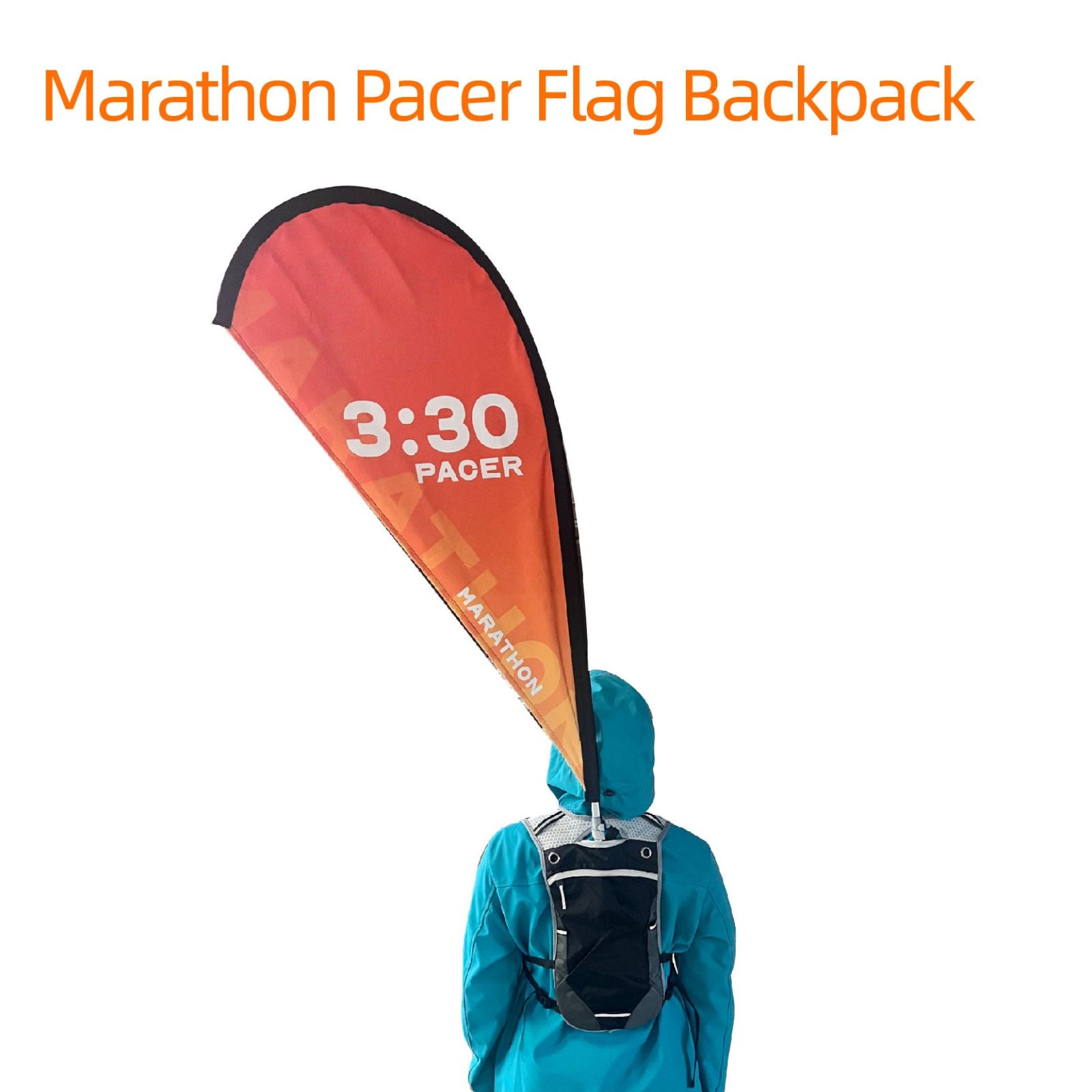
Marathon Pacer Flag
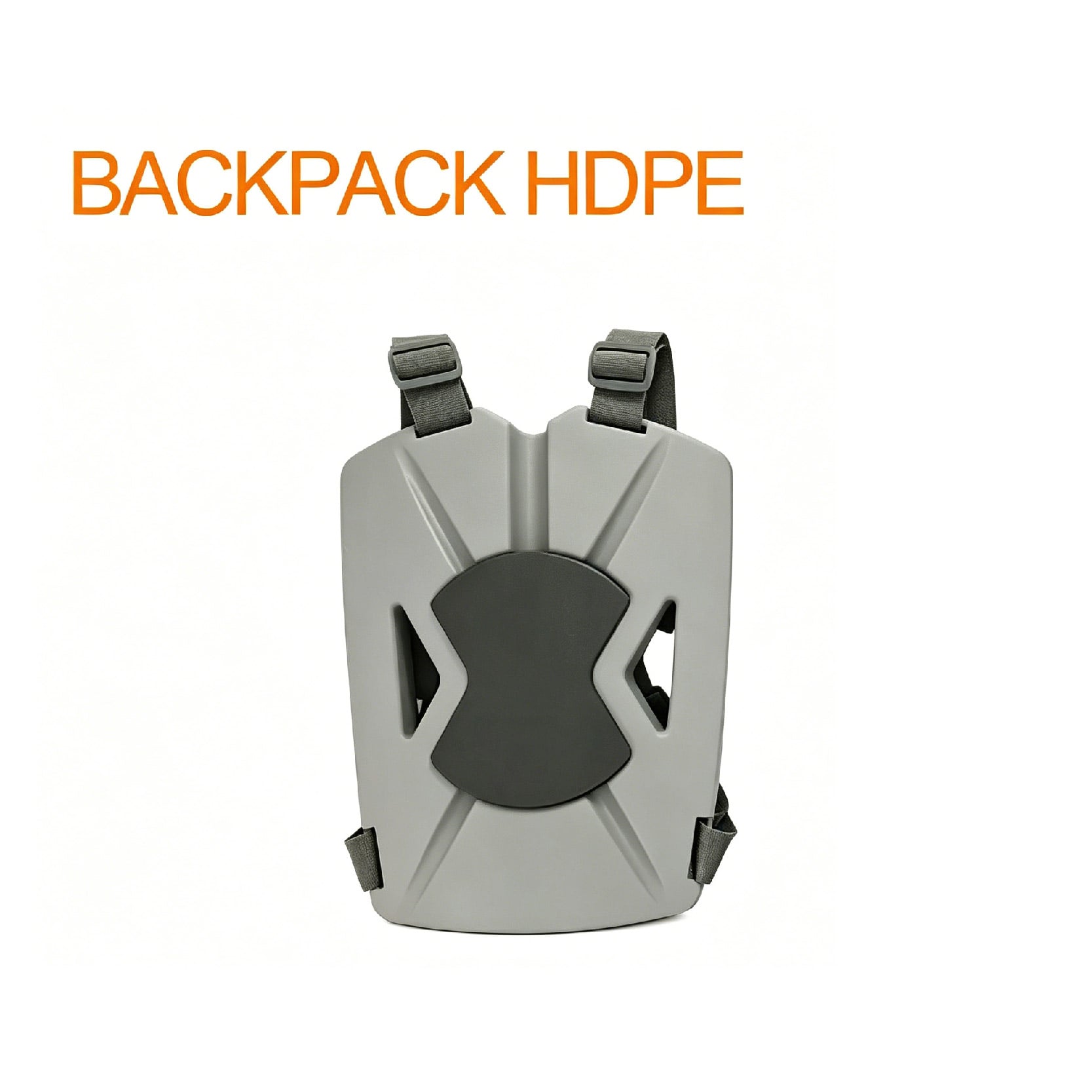
Backpack flag HDPE
Backpack banner SFH
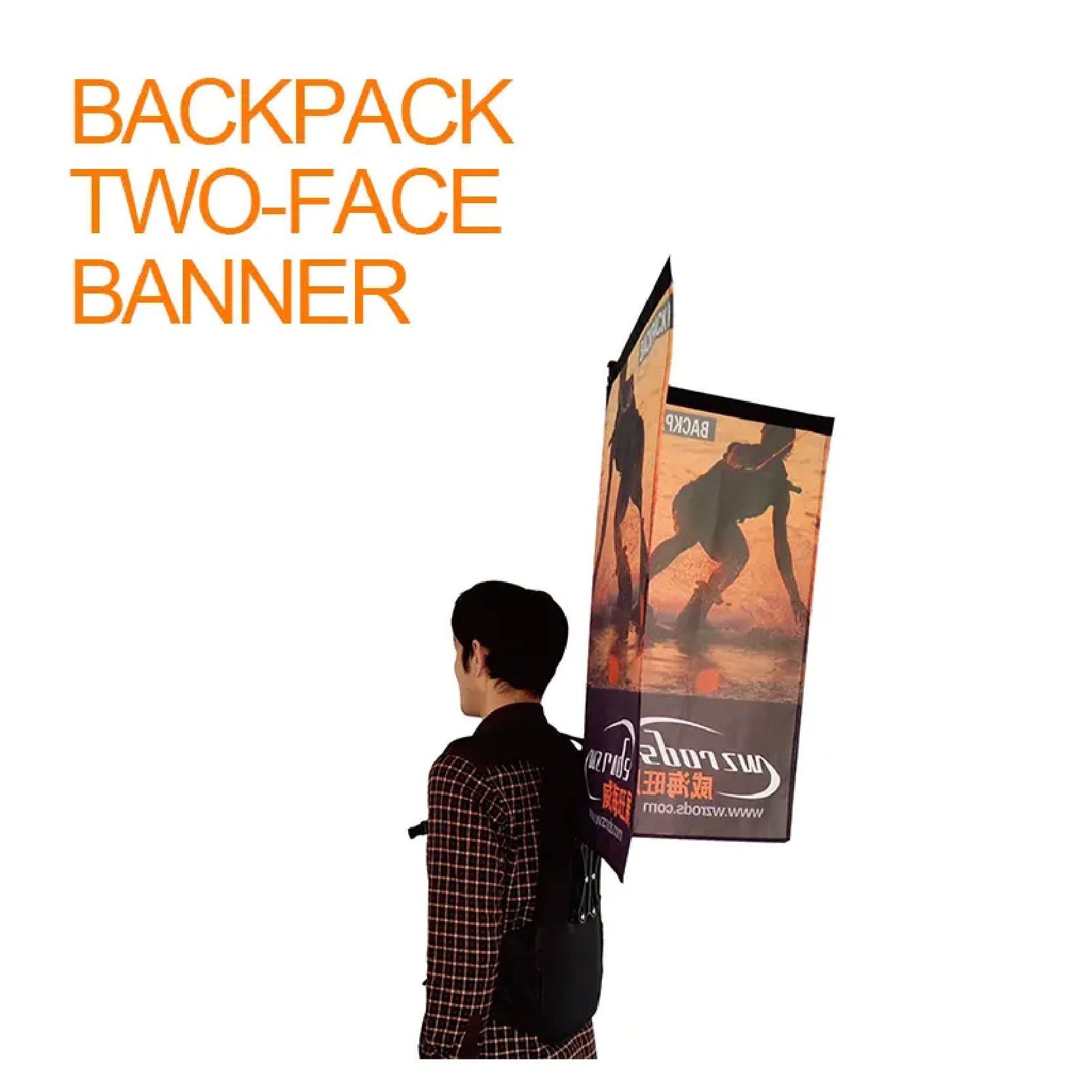
Backpack Two - Face banner
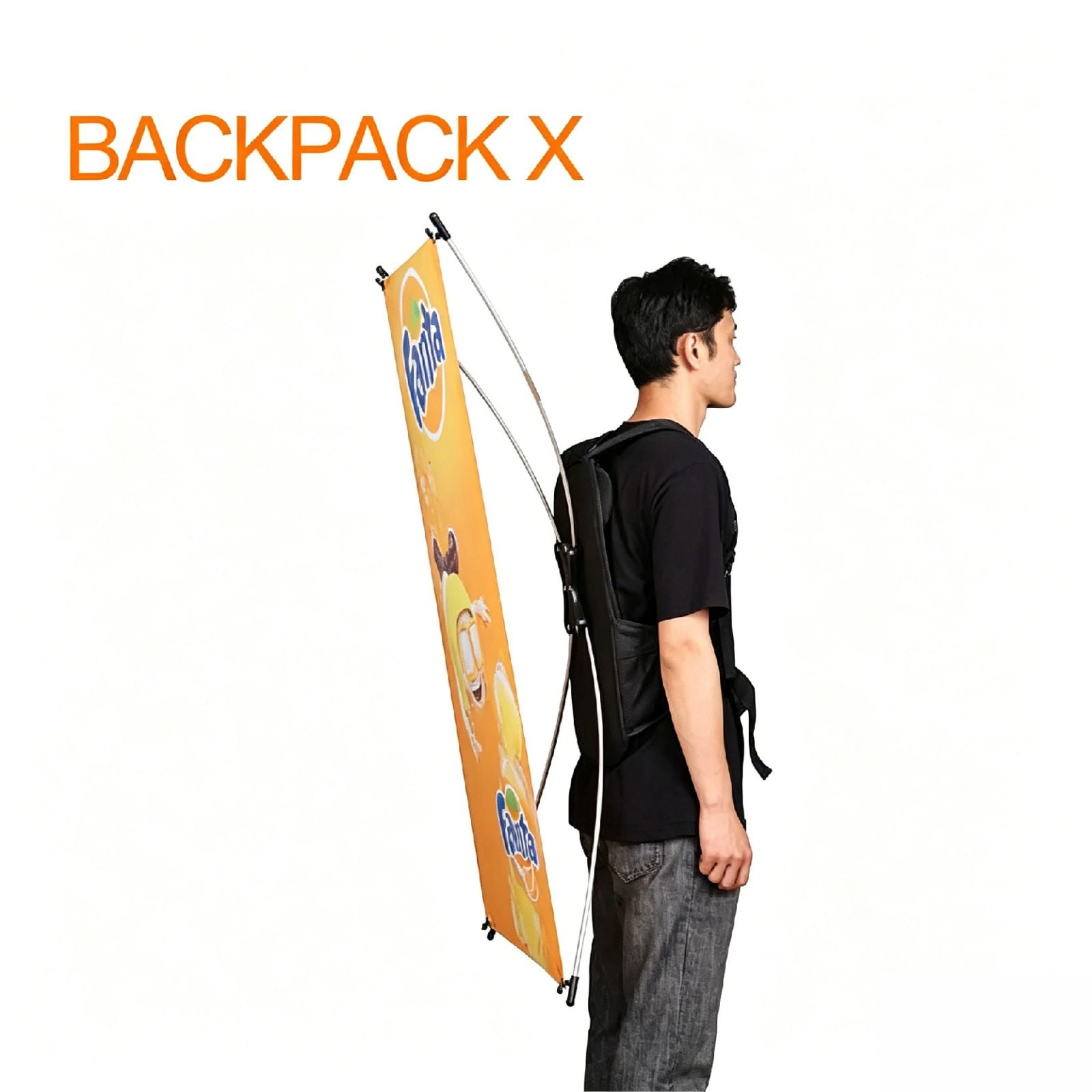
Backpack X
Backpack Umbrella
Backpack From Board
Backpack B
Backpack Budget
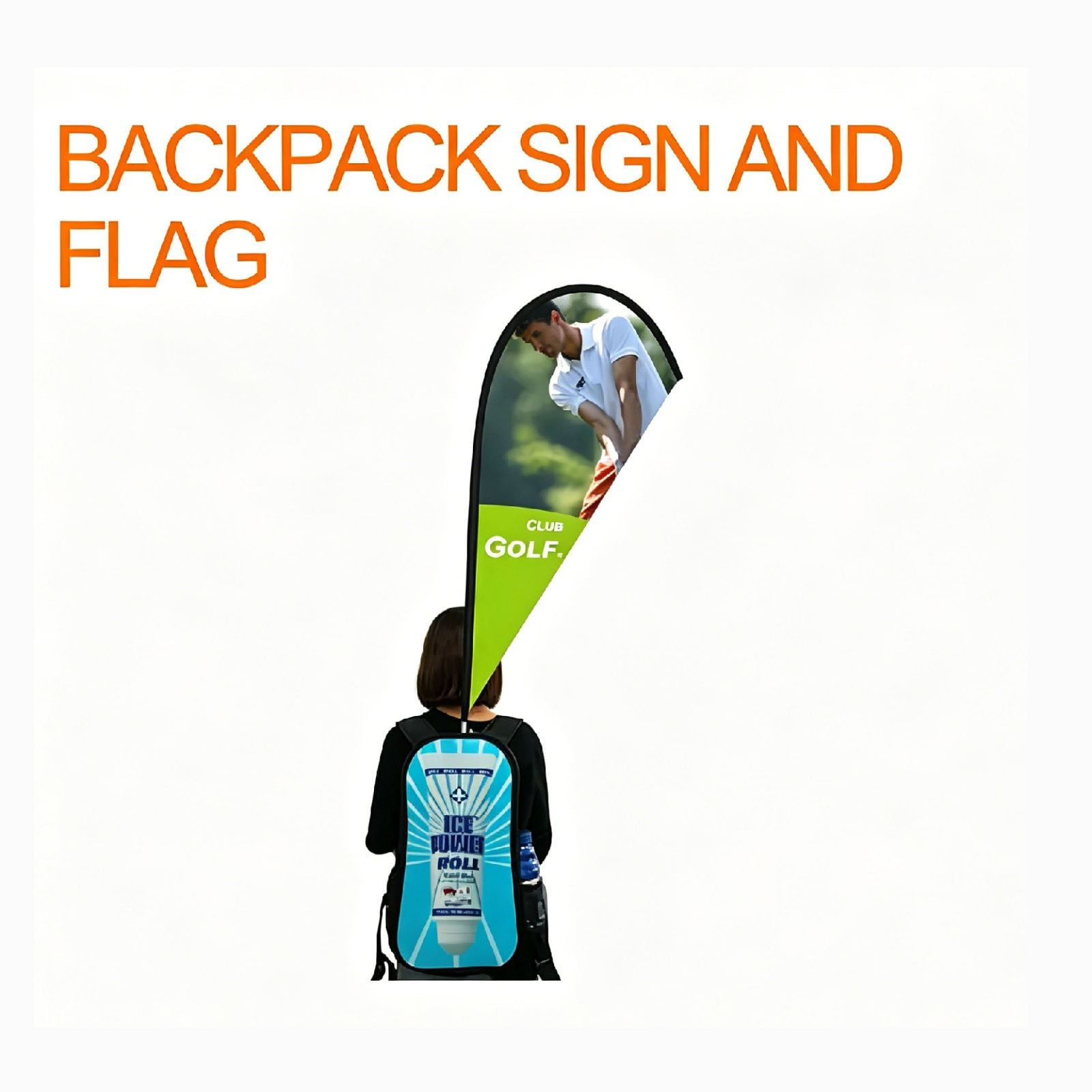
Backpack flag & sign
Related Articles
29kg Concrete Flag Base - The Complete B2B Buyer's Resource - WZRODS
WZRODS DY451B: 29 kg, HDPE shell, concrete core. Stackable, portable, rust-proof. FOB price US$5.75–$6.85 at MOQ 2 units. Those numbers look unremarkable. Factor in landed cost—import duties lower than aluminum’s under relevant HTS codes, freight savings from less weight per unit of stabilizing mas
Wide Tube Cross Base - The Complete B2B Buyer's Resource - WZRODS
The Wide Tube Cross Base, manufactured by Wzrods in Shandong, China, solves one problem: reliable stability for poles under three meters, without the freight costs and warehouse footprint that heavier alternatives demand.
Rectangular Pipe Cross Base - The Complete B2B Buyer's Resource - WZRODS
The pipe cross flag base is a cross of rectangular steel pipe, powder‑coated, weighing 1.3 kg and spanning 78 cm across its arms. Its center holds a C‑ring shaft that lets the flag rotate with the wind.
X-Shape Backpack Banner - The Complete B2B Buyer's Resource - WZRODS
Economic Cross Base - The Complete B2B Buyer's Guide- WZRODS
When you buy an economic cross base—something like the Wzrods DM‑9, a 77 cm‑long, 1.3 kg iron cross—forget “economic” as a synonym for “cheap.” It means value-engineered.
Feather Flag - Professional Banner Poles & Systems Manufacturer - WZRODS
How to choose a high-quality backpack flag
The backpack flag concept centers on a frame carried on the back, similar to a backpack, specifically engineered to support a raised flag or banner.