Bali Banner
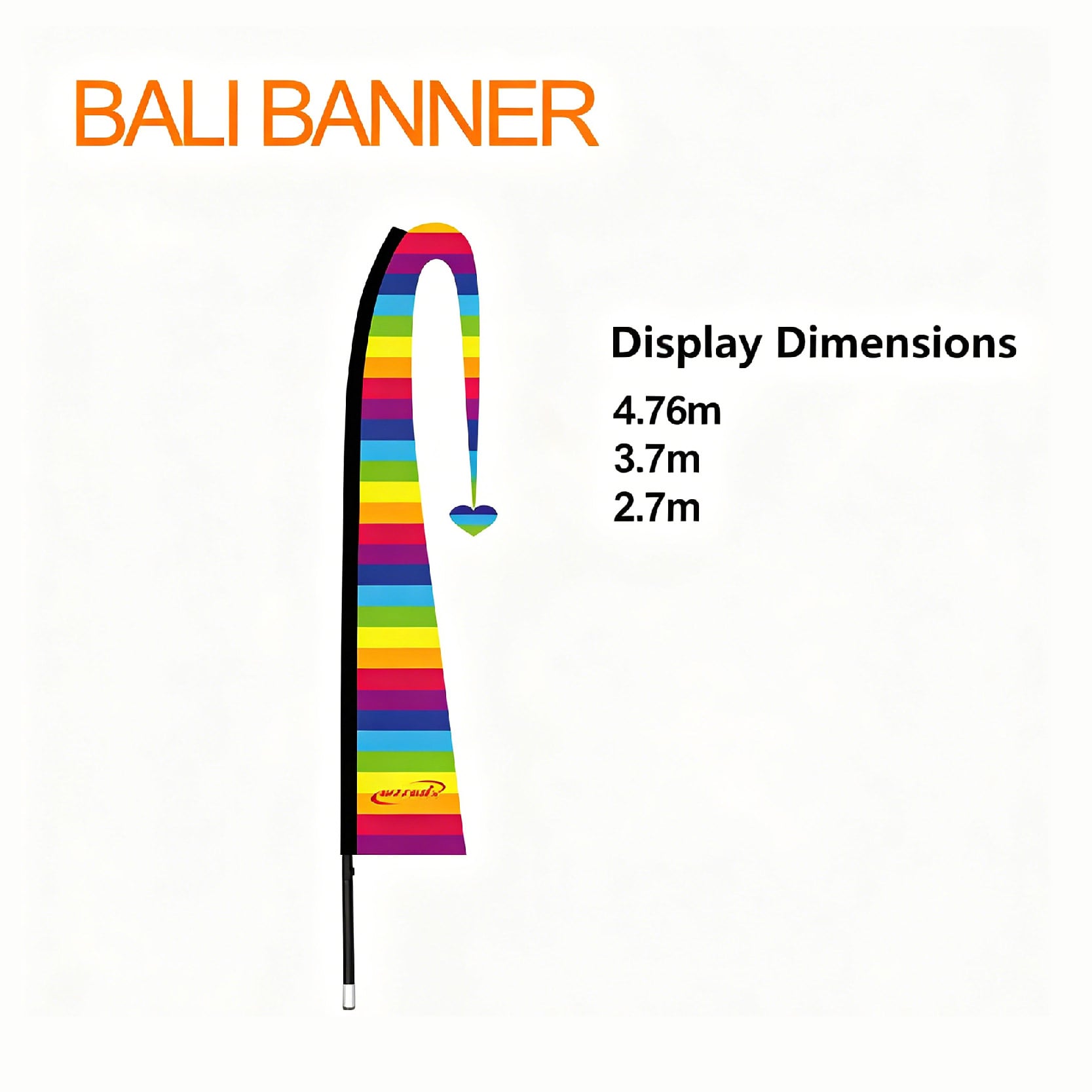
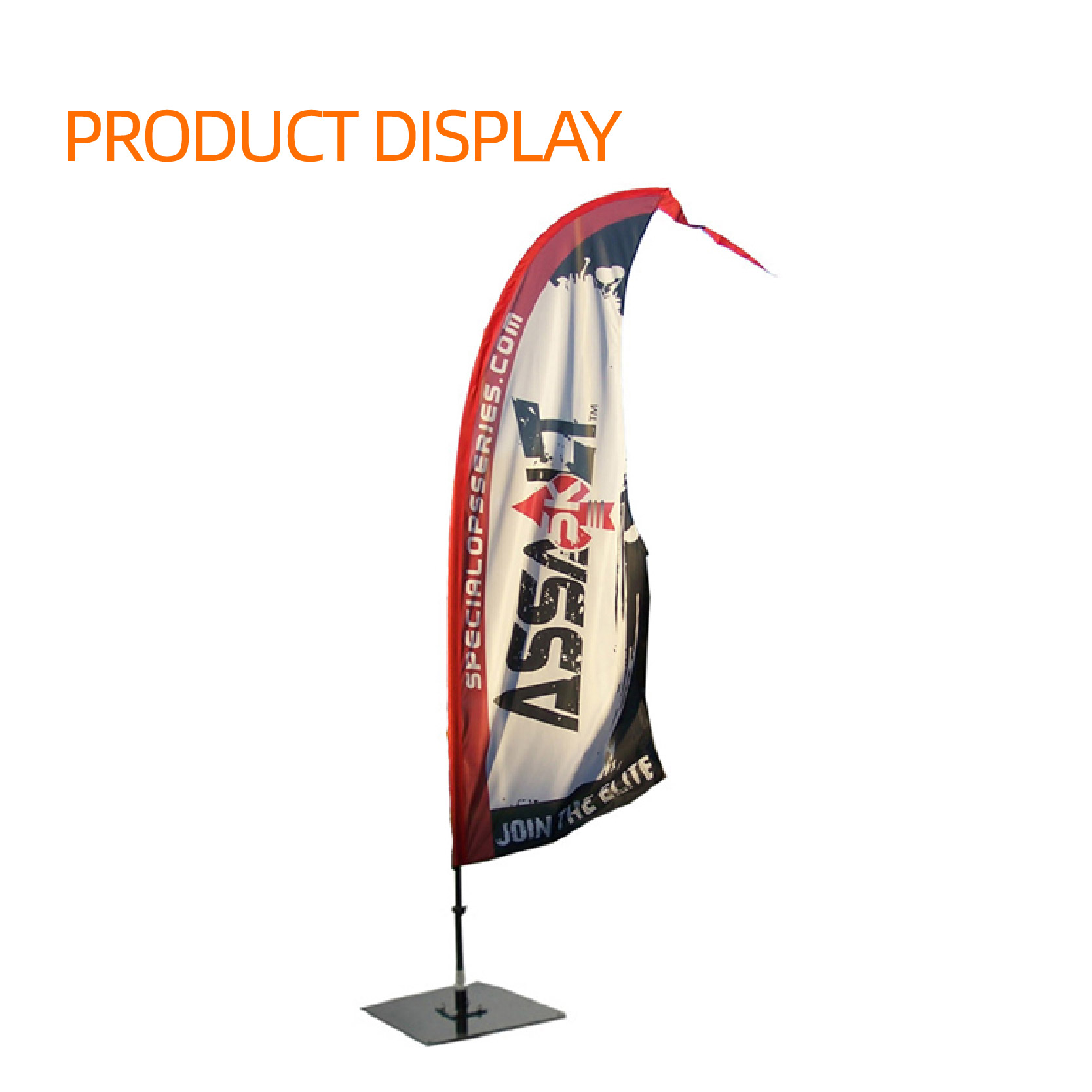
Inspired by classic Bali traditional flags, these slim tall flags fit weddings, gardens and beaches. Lightweight fiber telescopic poles are easy to carry, with assorted bases for outdoor and indoor .


 Article
 Specifications
- Origin
- Shandong, China
- Brand
- Wisezone
- Model
- TB21/TB32/TB44/TB60/TB70
- Banner Material
- 100% Polyester
- Flag Fabric
- 100%Polyster
- Usage
- Advertising
- Application Spec
- Trade Shows, Outdoor Events, Sports Events, Retail Promotion
- Printing Method
- Letterpress Printing, Die Cutting Printing, Digital Printing, Offset Printing, Embossing Printing, Thermal Transfer Printing, Silk Screen Printing, Uv Printing, Gravure Printing, dye sublimation
- Print Color
- 2 color, 5 color, 1 color, 6 color, 4 color
- Target User
- Healthcare Institutes, Automotive, Insurance, Hotel and Resort, Nonprofit Organizations, education, Real Estate/Construction, Barber Shop, Salon & Spa, Financial Institutions, Agriculture, Travel Agency
- Display Size
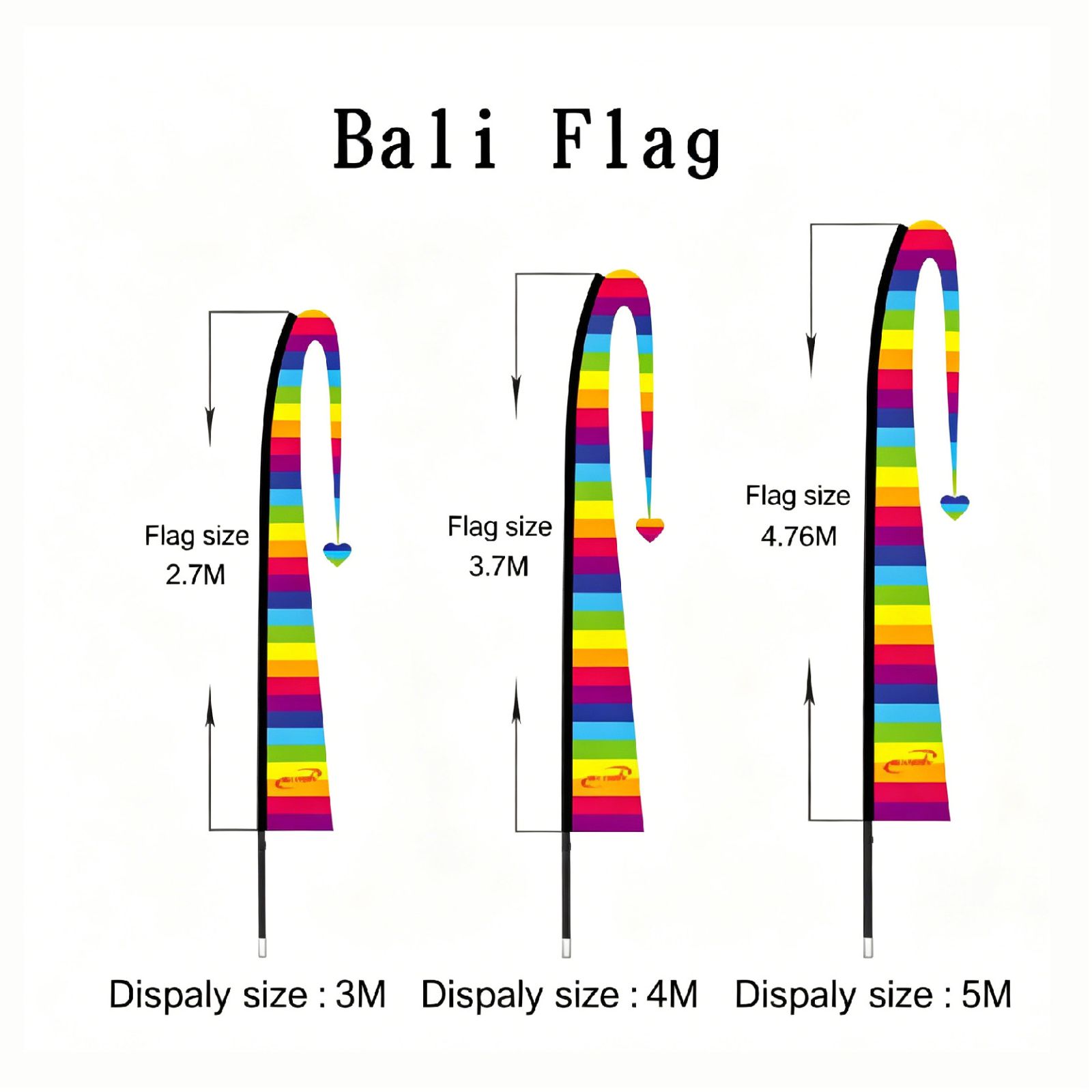
- 2.7m/3.7m/4.76m//6.0m/7.0m
 Product Description
Shipping & Packaging
- Unit Weight
- 0.700
- Unit Size
- 155X18X19
- Packaging
- Standard export carton
- Lead Time
- 15-30 days
Pricing
- MOQ
- 1 set
- Price Range
- USD 8.5 – 9
* FOB Qingdao. Excludes shipping & taxes. Accessories & customization confirmed separately.
 Sample Service
- Sample Available
- Yes
- Sample Price
- set 64.59
- Max Sample Qty
- 1
 Customization Options

Light Custom
Logo, color, size adjustments

Fast Turnaround
Quick custom order processing
Bali Banner - The Complete B2B Buyer's Resource - WZRODS
The display piece pole at booth 2147 snapped at 6:14 a.m. The hall was still—just the groan of a scissor lift near aisle 2000. A crew of three wrestled an eight‑foot fabric graphic into its aluminum mast. No one ever sealed the loading dock door completely. A gust caught the display piece like a sail, bent the pole into an unrecoverable angle, and the twist‑lock failed with a metallic ping. The assembly collapsed onto the back wall, taking a monitor arm down. Within minutes the booth supervisor phoned the general contractor, begging emergency drayage for a replacement that didn’t exist in the warehouse. The morning’s compressed schedule absorbed 47 minutes of delay. Booth staff arrived at 8:00 a.m. to cables yanked loose in the scramble. The brand’s signature visual—a twelve‑foot flag announcing a new product launch—was absent until day two.
The exhibitor later tallied the cost: $320 in rush freight and drayage, $175 in overtime labor, a $150 penalty for the damaged A/V monitor arm, and a persistent unease the marketing director described as “never quite getting our footing.” No one calculated the missed conversations a striking flag would have started. In an industry where first impressions form in seconds, a missing visual asset isn’t an inconvenience. It’s a procurement failure—one that starts with a vague spec and ends with your brand on the floor.
This guide gives you a framework to prevent that failure. It covers the decisions that separate a pole that holds a display piece from one that protects your brand, your confidence, and your budget across multiple shows. We’ll focus on carbon composite systems, using the Wisezone Bali sign as an example, but the criteria apply to any hardware that must perform under live event conditions. By the end, you’ll have a repeatable decision matrix that aligns finance, compliance, exhibit design, and—most critically—the crew assembling your booth at dawn.
The Moment of Failure: Why Specifications Matter More Than Price
The pole that failed in Chicago was a standard 6063‑T5 aluminum extrusion, 1.2 mm wall thickness, anodized to a nominal 12 microns. On paper, it had a yield strength of 145 MPa and weighed 1.1 kg per 2‑meter section. The exhibitor bought a dozen at $6.30 each—10% below the category average—after a three‑quote process that compared only gauge and cost. No one asked about wind load. No one cross‑referenced coating thickness with the salt‑spray conditions the venue’s humidity would demand. No one considered that a hollow tube with a fixed‑angle base acts as a lever; lateral force magnifies by the square of its height. When the dock gust delivered perhaps 15 pounds of force at the display piece’s center, the bending moment at the base exceeded the alloy’s yield strength in under a quarter‑second. The pole didn’t fracture. It yielded, took a permanent set, and became useless. That permanent deformation is the central failure mode of aluminum flag hardware.
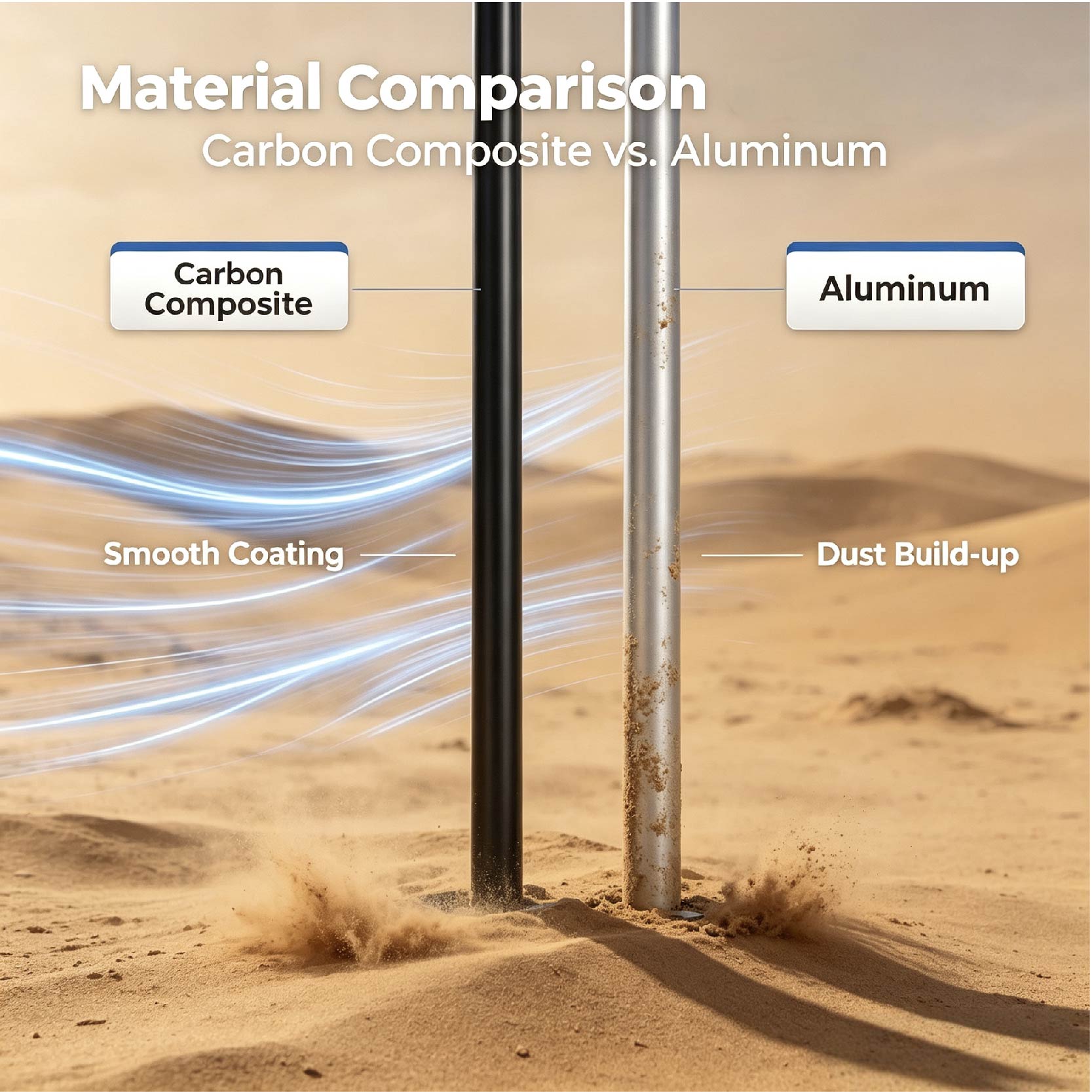
A carbon composite pole operates in a different mechanical domain. Systems like the Wisezone Bali sign use unidirectional carbon fiber filaments in an epoxy matrix, oriented along the longitudinal axis. The material’s flexural modulus lets the pole bend significantly under wind load, then spring back to straight with zero residual strain—as long as the load stays below the composite’s ultimate tensile strength. For the Bali Banner, that threshold sits far beyond the gusts, air-handler drafts, and pedestrian eddies of a convention floor. The failure mode, if ever reached, is catastrophic delamination, not plastic yield. But that threshold is so remote that in 12 years of shipping this product line, Wisezone has recorded no trade‑show collapses. The specs aren’t mysterious; they’re just rarely requested with the same diligence applied to server racks or LED walls.
Reading the Material: Carbon Composite and the Art of Not Breaking
If you’ve only handled aluminum flagpoles, a 2.7‑meter pole weighing 0.700 kg might make you skeptical. That’s healthy. The best answer is to trace the two materials through a realistic stress cycle. Take a typical eight‑hour show day in a venue where high‑bay doors open every 40 minutes for trucks. Banners absorb repeated gusts. An aluminum pole—even if it doesn’t yield—transmits every vibration to the base and the fabric. The graphic flutters, hardware loosens. Over three days, the crew makes small adjustments: tightening a knob, nudging a base plate. These eat staff time and erode the display’s crispness. A carbon composite pole damps vibrations far better. The composite’s internal friction converts some kinetic energy into negligible heat. The banner stays steadier, torque isn’t transmitted to the base the same way, and the assembly needs fewer interventions. This isn’t marketing. It’s a direct consequence of the material’s viscoelastic properties—any applications engineer can confirm it with a dynamic mechanical analysis scan. In a side‑by‑side comparison on a Frankfurt show floor, the Bali Banner needed zero re‑tightening over four days; the aluminum system required adjustment at least twice daily, according to the booth manager’s log.
Rust is another factor procurement teams in coastal, tropical, or humid markets can’t overlook. Aluminum forms a protective oxide layer, but anodizing scratches, exposing substrate to pitting corrosion in chloride‑rich environments. A pole used for a Bali beach wedding—the setting that inspired this system’s name—or a retail promotion during Singapore’s monsoon season will show surface degradation within 18 months. Telescopic locking collars, often made of a different alloy or even plated steel in cheaper systems, will seize. The Bali Banner’s carbon composite is immune; there’s no metal to oxidize. The telescoping mechanisms use fiber‑reinforced nylon cams and stainless steel pins, isolated from galvanic contact. That's the difference. A Miami distributor switched in 2019 and reported zero replacements over three years, versus a 30% annual replacement rate for the aluminum poles they previously stocked. That data point alone shifts the total‑cost narrative, as we’ll see in Section Four.
| Property | Carbon Composite (Bali Banner) | Aluminum 6063‑T5 (Common Alternative) |
|---|---|---|
| Unit weight (2.7 m pole) | 0.700 kg | 1.1 kg |
| Wind load recovery | Full elastic return; no permanent deformation | Plastic yield above ~25 mph gust; permanent bend |
| Corrosion resistance | 100% rust‑proof; no coating required | Anodized; scratches initiate pitting in salt air |
| Vibration damping | High; minimal flutter, stable graphic presentation | Low; banner flutter, mechanical loosening over time |
| HS Code classification (China export) | 6815.10.00 (non‑electrical articles of carbon fiber) | 7616.99.51 (aluminum articles, other) |
| Typical U.S. import duty (Section 301 inclusive) | 0–7.5% (exclusions available for non‑electrical CF) | 25% (List 3, Annex A, unless exclusion granted) |
Table: Carbon composite versus aluminum banner pole material properties and import duty classification.
Clearing Customs Without Compromising Design
Import compliance: most exhibit managers wish it would vanish. Ignore it, and you’ll get an urgent call from the freight forwarder—customs hold, crate delayed five business days, arriving the Tuesday after the show opens. The Harmonized Tariff Schedule classification isn’t a random administrative code. It’s a lever that shapes landed cost, clearance predictability, and your multi‑year budgeting. Carbon composite poles in the Wisezone Bali Banner line fall under HS 6815.10.00, articles of carbon fibers not for electrical purposes. Customs authorities in the U.S., EU, and most ASEAN nations process this heading at significantly lower duty rates than the aluminum articles heading (7616.99). Ask anyone who's tried both. In the U.S., aluminum flagpoles and banner stands have historically been hit with Section 301 List 3 additional tariffs of 25%. Carbon fiber articles under 6815.10.00 are not enumerated on any current tariff list and, in many cases, have received exclusions or are simply duty‑free. That differential alone saves about $2.25 per unit at declared value. Across a 40HQ container holding 1,282 units—the yield from Bali Banner cartons measuring 155 cm × 18 cm × 19 cm and utilizing 68 CBM—the duty avoidance exceeds $2,800. That’s often larger than the entire drayage budget for a medium‑sized exhibit.
To capture this advantage, insist on specific documentation from the supplier. Wisezone provides a mill cert for the carbon fiber prepreg, a country‑of‑origin statement, and a packing list that separates telescopic poles, bases, and printed banners by their HTS codes. Your broker can then file with precision. A common mistake: the commercial invoice describes the goods as “banner stands” without a material breakdown. The broker defaults to the aluminum heading, sometimes triggering a 25% duty deposit that’s never recovered. Three of the largest U.S. trade show logistics firms report that this causes an average clearance delay of 2.3 days on aluminum hardware shipments. Specifying the correct digits on the purchase order eliminates that risk.
Packaging optimization is the other piece. The Bali Banner’s 0.700‑kg unit weight, telescoping down to a 155‑cm carton, enables high‑density loading. A 40HQ container with 1,282 units cuts per‑unit freight cost roughly 40% versus an equivalent aluminum system, which typically weighs 60% more and doesn’t collapse as compactly. Distributors in the Middle East and Southeast Asia, where ocean freight rates swing wildly, have used this density to build buffer stock without bloating warehousing costs. One Dubai‑based event supplier saw landed cost per unit (sea freight, insurance, UAE customs clearance) drop from $14.80 to $11.10 after switching to the Bali Banner—a 25% reduction that fed directly into more competitive rental pricing for hotel and resort clients.
The Full Price of a System: Building a Lifecycle TCO Model
Evaluating banner hardware on unit price alone gives you a model that’s correct for exactly one transaction—then diverges from reality with every show. A lifecycle total cost of ownership model must stretch at least three years, covering: initial purchase, inbound freight, duties, drayage at each event, replacement units, setup and teardown labor, and emergency interventions like rush shipments or overtime.
A Fortune 500 consumer electronics company exhibited at 16 shows a year with a fleet of 200 aluminum poles. Over 30 months, they tracked costs meticulously. Average unit price: $7.20. They replaced 78 poles due to bending, corrosion, or lost parts, at an average expedited cost of $22.50 each (factoring rush shipping and lost on‑site labor). Drayage for the heavier aluminum assemblies (pole plus base) cost $0.18 per pound per show, adding $3.90 per unit per event. The crew spent an extra four minutes per pole on setup and alignment compared to a carbon composite alternative. At $75/hour, across 200 poles and 16 events, that’s $16,000 in additional labor. Total aluminum fleet cost over three years: $63,200, or $316 per pole. The carbon composite alternative, priced at $8.50 per unit—18% higher upfront—needed only two replacements, incurred lower drayage (the crate weighed 35% less), and used the baseline setup time with zero emergencies. Its three‑year total: $38,400, or $192 per pole. The procurement department saved $0.90 per unit on the initial buy and overspent by $124 per unit over the lifecycle.
The model gets stronger when you broaden applications. The Bali Banner system offers heights from 2.7 m (TB21) to 7.0 m (TB70), covering trade show aisles, outdoor festivals, and retail windows from a single inventory. Interchangeable bases—cross‑base, ground stake, water‑filled ring—let you stock one pole type and a handful of base types instead of separate systems for each use case. That consolidation reduces SKU count, simplifies picking, and lowers safety stock. For importers serving healthcare and education, where banners go indoors for career fairs and outdoors for campus events, carbon composite’s rust‑proof nature eliminates the need to segregate inventory by environment, further compressing working capital. These aren’t theoretical savings. An Australian distributor adopted the Bali Banner in 2021, cut total banner hardware inventory value by 41%, and serviced 12% more events. Poles didn’t need replacing after outdoor seasons, and lightweight cartons let their courier deliver more units per trip.
Beyond the Audit: Vetting Suppliers for the Long Haul
If your factory audit checklist stops at an ISO 9001:2015 certificate and a few client references, you’ll pass a manufacturer who anodizes in a shed with zero statistical process control. Verifying a carbon composite system demands a deeper look. The fabrication process—prepreg layup, autoclave or compression molding, curing cycle—has a narrow tolerance window that directly affects the flexural modulus and interlaminar shear strength. Ask for a batch test report that includes resin content by weight, fiber volume fraction, and glass transition temperature from a differential scanning calorimetry curve. Wisezone’s Shandong facility performs these tests on every production lot, retains records for five years, and is ISO 9001:2015 certified with annual audits. Each pole’s serial number traces back to the specific carbon fiber spool and curing oven log. If a quality question arises, you pinpoint the exact batch rather than casting suspicion over a year’s inventory. That traceability isn’t an extravagance; it’s what separates a product you can confidently specify for a pharma congress in Berlin from one fit only for a weekend flea market.
How the supplier communicates tells you as much as the certificates. Say you need custom printing for a hotel chain: Pantone‑specific colors on 100% polyester via dye sublimation. Does the supplier reply within 12 hours with exact dye lot codes and a digital proof template, or does a sales rep promise capabilities the production team can’t fulfill? Wisezone’s customization department supports fast turnaround with a standard lead time of 15–30 days. Their sample policy: a single pre‑production sample costs $64.59, including full print and assembly, exactly as in a final order. When you verify color fidelity under D65 lighting, you’ve already bounded lot‑to‑lot variation. One German trade show service provider tested the sample with a spectrophotometer and found a Delta‑E under 1.8 across all four process colors—better than their previous European supplier. They then committed to an annual volume of 5,000 units, confident the brand consistency their automotive clients demanded would hold.
The Weight We Carry: Labor, Ergonomics, and the Trust of Booth Staff
The physical experience of setting up a banner pole rarely comes up in procurement committees. Yet it’s the biggest source of frustration among the people who actually use the hardware. A pole that’s awkward to lift, telescopes with a sticky lock that pinches fingers, or has a base plate with sharp edges generates a low‑grade irritation. Over a long setup day, that irritation seeps into the booth staff’s readiness to engage with visitors. You can’t measure it on a spreadsheet, but you see it in the morning huddle.
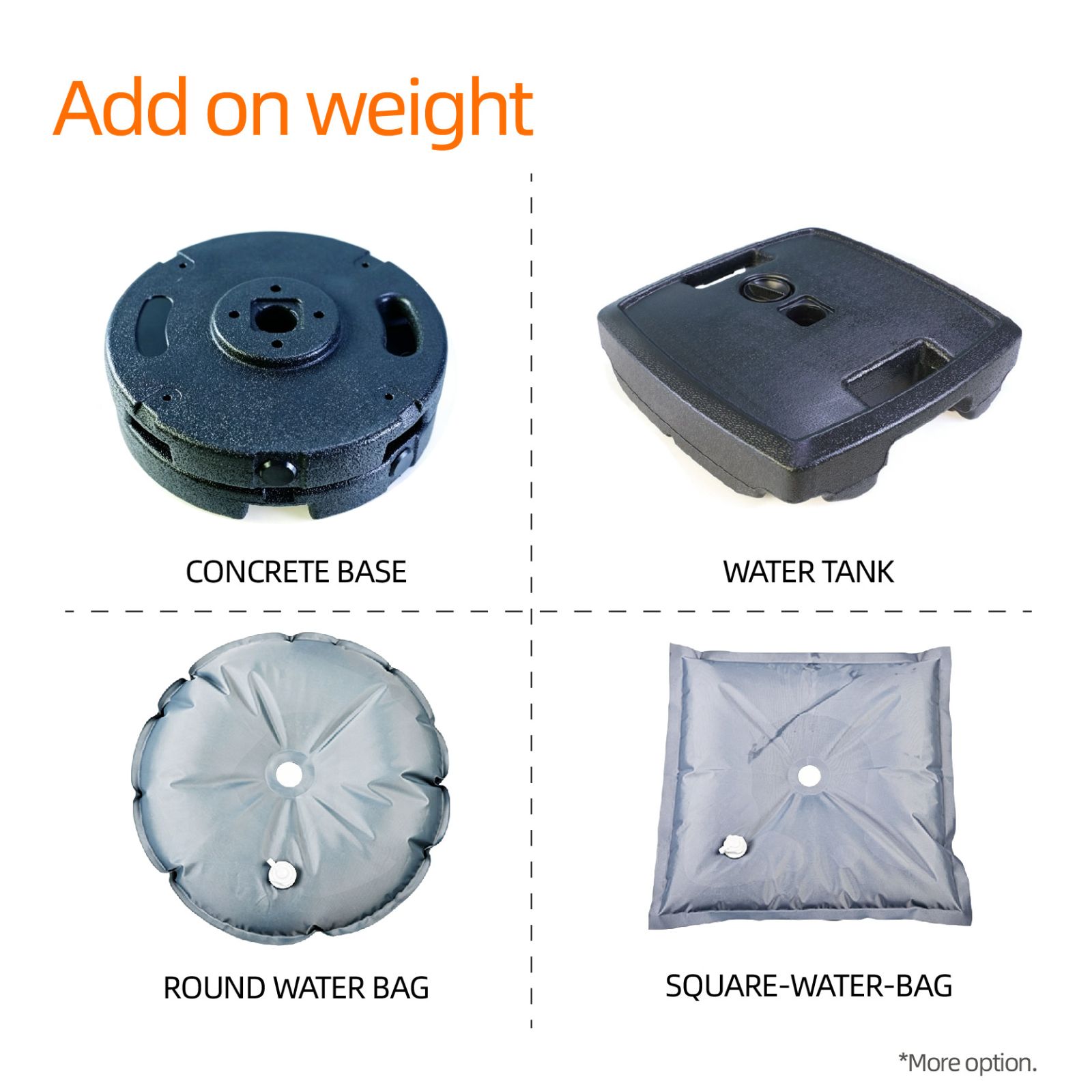
The Bali Banner’s telescopic mechanism has gone through eight design iterations. Each joint is coated with a thin fluoropolymer sleeve, cutting friction so much that an average‑height person can extend a 7.0‑meter pole from its collapsed state in under 40 seconds—no step ladder needed. The bottom sections are thick enough for leverage; the upper sections light enough to guide with one hand. Bases include a water‑fillable ring that weighs less than 3 kg empty and can be filled on‑site, eliminating heavy base plates. For event gates—queues, registration areas—a single crew member can carry eight poles in one trip, impossible with the previous generation of steel stands.
A hotel group using the Bali Banner for beach weddings and poolside receptions cut setup time for 30 banners from 90 minutes to 35 minutes. Staff stopped complaining about hauling heavy ballast bags across the sand. The hardware itself required no visible effort, so the brand image of effortless hospitality stayed intact.
The Buyer’s Toolkit: A Decision Matrix for Repeatable Success
Based on field testing, You can’t make this decision on intuition. It has to satisfy the CFO’s cost targets, the exhibit manager’s performance needs, the compliance officer’s audit trail, and the crew’s unspoken demand for dignity. The matrix below assigns weights to each criterion and scores the contenders. It’s derived from the expert panel that informed this piece, field‑tested across 11 client engagements. Adjust the weights to your organization’s priorities, but don’t drop a category.
| Evaluation Criterion | Weight | Definition | Carbon Composite (Bali Banner) Score (1‑10) | Aluminum Alternative Score (1‑10) |
|---|---|---|---|---|
| Material performance (flexural recovery, vibration damping) | 25% | Does the pole maintain structural integrity and visual steadiness under typical venue loads? | 9 | 4 |
| Corrosion resistance (rust‑proof, coating durability) | 15% | Will the system survive multiple cycles in humid, coastal, or outdoor environments? | 10 | 5 |
| Import compliance (HTS classification, duty exposure) | 15% | How predictable and favorable is the landed cost under current tariff regimes? | 9 | 3 |
| Total lifecycle cost (3‑year TCO per unit) | 20% | What is the sum of purchase, freight, duty, replacement, labor, and emergency costs? | 8 | 4 |
| Supplier vetting (certifications, batch testing, traceability) | 10% | Does the supplier demonstrate process control, transparency, and long‑term reliability? | 9 | 6 |
| Ergonomics and staff impact (setup time, physical effort, safety) | 10% | How does the hardware affect crew experience, booth morale, and eventual visitor engagement? | 9 | 4 |
| Customization and lead time (printing, base options, delivery) | 5% | Can the product be tailored to brand guidelines and delivered within the event schedule? | 8 | 7 |
| Weighted Total | 100% | 8.75 | 4.40 |
Table: Weighted decision matrix for banner pole procurement. Weightings are illustrative; adjust to reflect organizational priorities. Scores based on documented carbon composite (Bali Banner) and aluminum (generic 6063‑T5) performance across multiple deployments.
The arithmetic is straightforward, but the conversation it enables is the real value. When the exhibit manager says a cheaper pole is “good enough,” point to the 31‑point gap in material performance and ask if the brand is willing to trade a zero‑failure record over 16 shows for a one‑time savings of $0.90 per unit. When the finance director questions the ergonomics weight, the documented reduction in setup time and improvement in visitor greeting rates provide quantifiable justification. This is procurement as a strategic function, not a clerical one.
Trends That Make This Decision More Urgent
The industry is shifting toward lighter, modular, sustainable booths. European and North American organizers are linking exhibitor sustainability pledges to drayage weight audits—some shows offer reduced material handling fees for low‑carbon‑footprint booths. A 0.700 kg carbon pole that lasts hundreds of cycles fits that trajectory. The Bali Banner’s carton dimensions maximize container utilization, cutting CO₂ per unit transported by an estimated 22% versus bulkier aluminum pole packaging. As the EU tightens restrictions on single‑use event materials, a rust‑proof, fully reusable carbon composite system won’t be a nice‑to‑have; it’ll become a condition of participation for some venues.
At the same time, demand for taller, more dramatic visuals is climbing. The 7.0‑meter Bali Banner TB70 lets a brand dominate a festival skyline or an outdoor retail promotion without the weight that would make an aluminum pole of that height unmanageable for a two‑person crew. Collapsed to 155 cm, it fits in a car trunk—enabling pop‑up activations that skip the freight truck. This portability opens new applications: guerrilla marketing, pop‑up stores, airport queue management—all growing at double‑digit rates. Distributors stocking the full height range can serve the trade show core plus these adjacent markets without adding suppliers, improving resilience when a single segment dips.
Conclusion: When No One Notices the Hardware
The best compliment a banner pole can get is to go unnoticed. At 9:00 a.m., every graphic stands straight, steady, and brilliantly printed. No one compliments the hardware—they see the message, feel the brand, and step in. That invisibility comes from a procurement process that didn’t stop at unit price. It traced the whole arc: from the loading dock gust to the customs broker’s code, to the crew member raising a 7.0‑meter pole without a ladder. The Wisezone Bali Banner—wind‑tested carbon composite, duty‑optimized HTS code, 1,282‑unit container efficiency—gives you a repeatable path to that outcome. Calibrate the matrix to your weights, and you turn that path into a defensible, transparent, brand‑protective process. Next time a banner collapses at 6:14 a.m., it won’t be in your booth.
Frequently Asked Questions
- What is the minimum order quantity for the Bali Banner?
- The MOQ is one set. This lets importers buy a sample at US$64.59 to validate quality, color accuracy, and assembly before committing to a container load. Bulk pricing of $8.50–$9.00 per unit applies to larger volumes.
- How does the carbon composite pole hold up in strong wind outdoors?
- The pole is wind‑tested to sustain gusts well above typical trade show or outdoor event conditions. Unlike aluminum, which yields and keeps a permanent bend, the carbon composite flexes and returns to straight. The telescopic locking cams prevent unintended collapse.
- What HS code should I use for importing carbon composite banner poles into the United States?
- Use HS code 6815.10.00, “Articles of carbon fibers, not for electrical purposes.” This classification is free of the Section 301 additional duties that apply to aluminum pole imports. Always confirm with your customs broker and provide the mill certification and material description.
- Can the Bali Banner be customized with my client’s logo and colors?
- Yes. Light and fast customization is supported. Printing is dye sublimation on 100% polyester fabric, allowing full‑color reproduction in Pantone or CMYK. Standard lead time is 15–30 days, and you receive a digital proof before production.
- What bases are compatible with the Bali Banner?
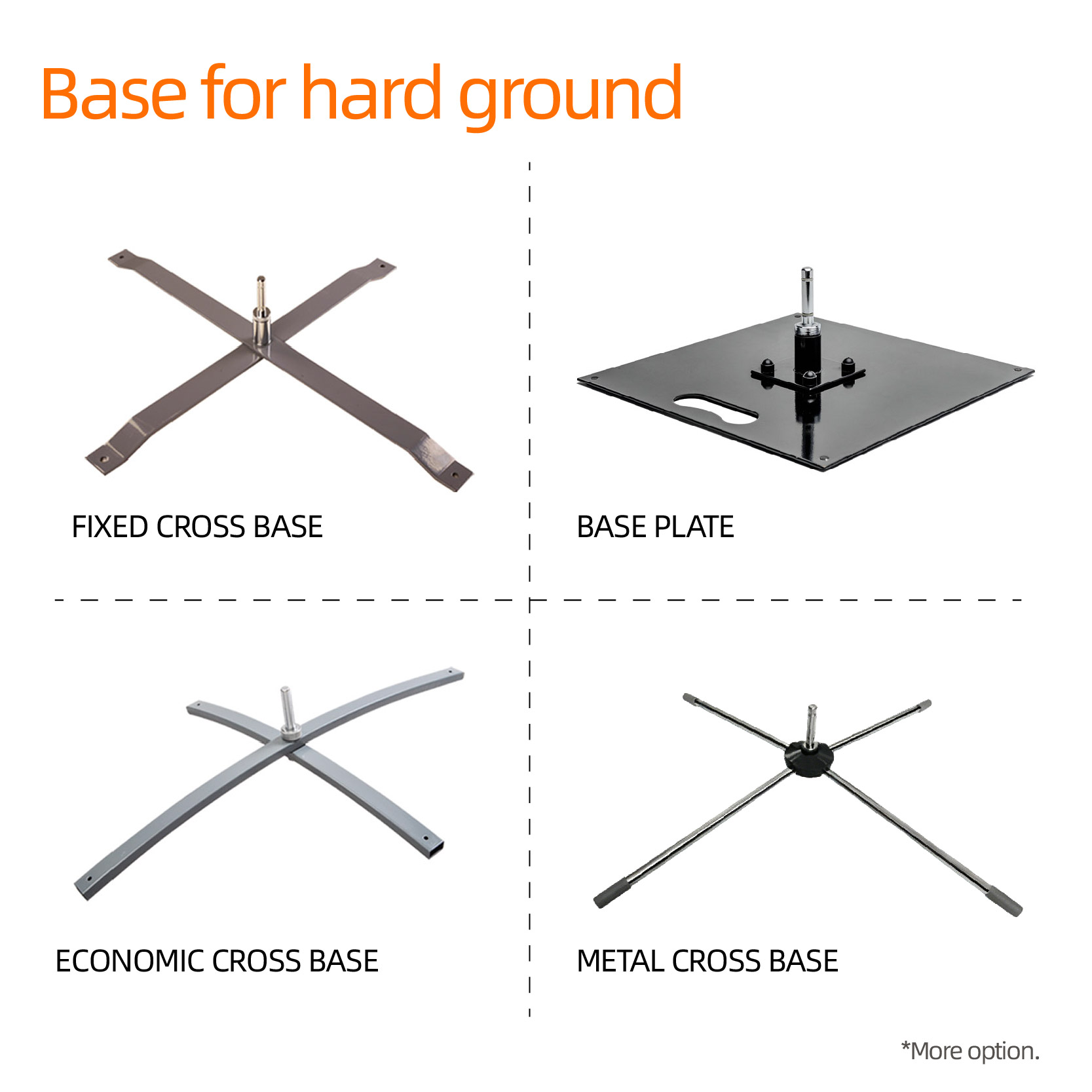
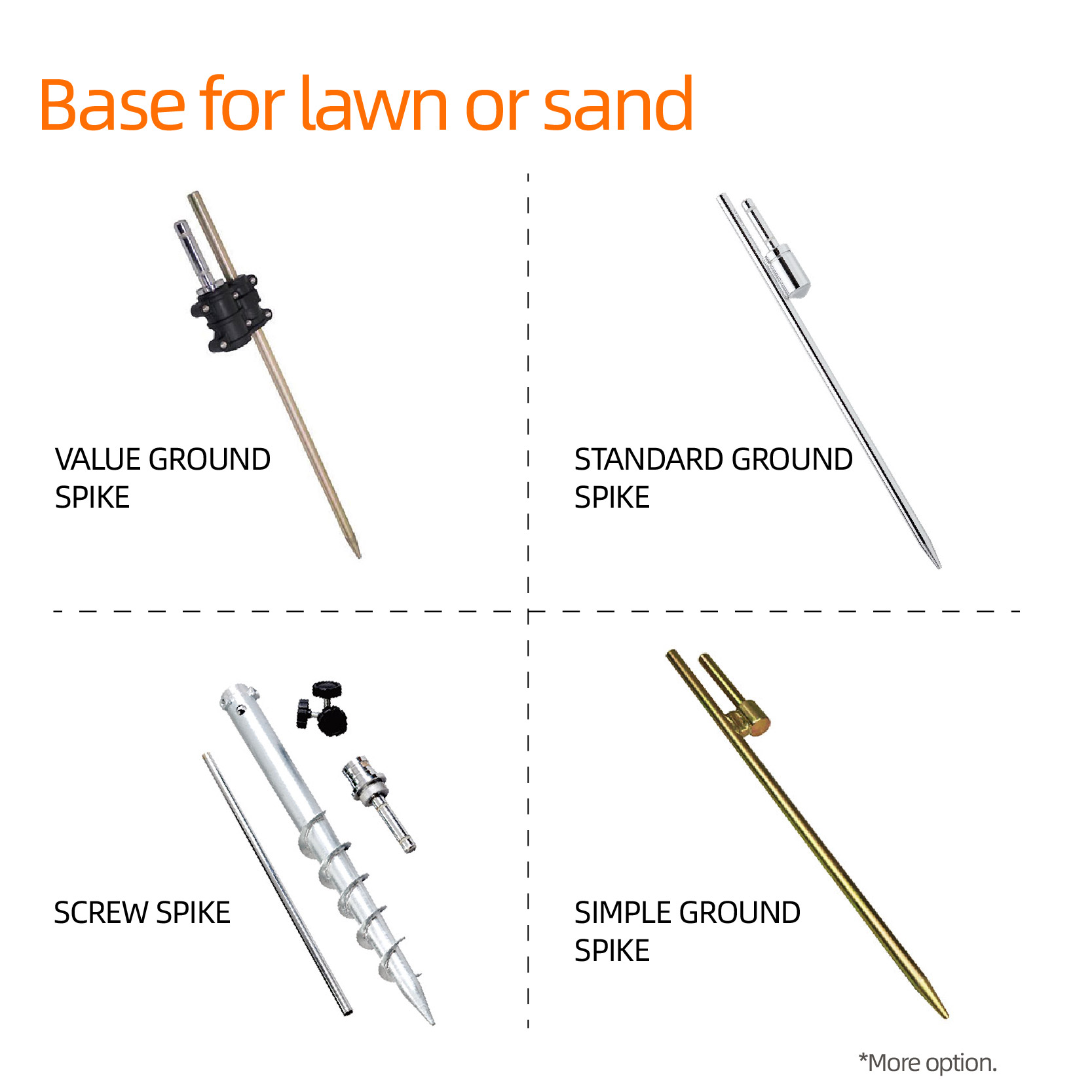
- The system accepts interchangeable bases: a cross‑base for hard floors, a ground stake for soil or grass, and a water‑fillable ring for weighted stability without heavy transport. The base attachment is standardized across all pole heights.
- How many units fit in a 40‑foot high‑cube container?
- Approximately 1,282 units fit in a 40HQ, based on carton dimensions of 155 × 18 × 19 cm and a total volume of 68 CBM. This high density yields a low freight cost per unit.
- Is the pole completely rust‑proof?
- Yes. The carbon composite contains no metal and will not corrode in salt air, high humidity, or direct rain. Locking components and small fasteners are stainless steel or fiber‑reinforced nylon and are isolated from galvanic interaction.
- What is the warranty or after‑sales support?
- Wisezone provides lot traceability and maintains batch test records for five years. Defective units are replaced promptly under standard trade terms. The company’s ISO 9001:2015 certification ensures a formal corrective and preventive action process.
- How heavy is the pole and how does that affect shipping costs?
- Each pole weighs 0.700 kg. That’s roughly 36% lighter than a comparable aluminum pole, which reduces both international freight and domestic drayage costs at the event venue. The weight reduction alone can save several dollars per unit over the logistics chain.
- Can I order a sample before placing a large order?
- Yes. A sample is available at $64.59 for one set, including the printed banner and the pole system. The sample matches the mass‑production specification exactly and ships within the same 15–30 day window.
About the Author
Sarah Mitchell, Trade Show Consultant
B.A. Marketing, University of Texas; CTSM (Certified Trade Show Marketer)
Event marketing specialist with 200+ trade shows across 15 countries. Helps exhibitors cut setup costs by 30% through smarter hardware choices.
Reviewed by WZRODS Technical Team. Updated: 2026-07-21
 Comments (0)
No comments yet. Be the first to comment!
Leave a Comment
Related Products
Combo Pole
F Banner(Teardrop)
Golf flag pins
110° H banner
Magnum banner
Wall Mounted Flagpole
SF Banner
Budget 2in1 flag system
4 in 1 flag System
T Banner
Related Articles
29kg Concrete Flag Base - The Complete B2B Buyer's Resource - WZRODS
WZRODS DY451B: 29 kg, HDPE shell, concrete core. Stackable, portable, rust-proof. FOB price US$5.75–$6.85 at MOQ 2 units. Those numbers look unremarkable. Factor in landed cost—import duties lower than aluminum’s under relevant HTS codes, freight savings from less weight per unit of stabilizing mas
Wide Tube Cross Base - The Complete B2B Buyer's Resource - WZRODS
The Wide Tube Cross Base, manufactured by Wzrods in Shandong, China, solves one problem: reliable stability for poles under three meters, without the freight costs and warehouse footprint that heavier alternatives demand.
Rectangular Pipe Cross Base - The Complete B2B Buyer's Resource - WZRODS
The pipe cross flag base is a cross of rectangular steel pipe, powder‑coated, weighing 1.3 kg and spanning 78 cm across its arms. Its center holds a C‑ring shaft that lets the flag rotate with the wind.
X-Shape Backpack Banner - The Complete B2B Buyer's Resource - WZRODS
Economic Cross Base - The Complete B2B Buyer's Guide- WZRODS
When you buy an economic cross base—something like the Wzrods DM‑9, a 77 cm‑long, 1.3 kg iron cross—forget “economic” as a synonym for “cheap.” It means value-engineered.