
Door Frame Banner
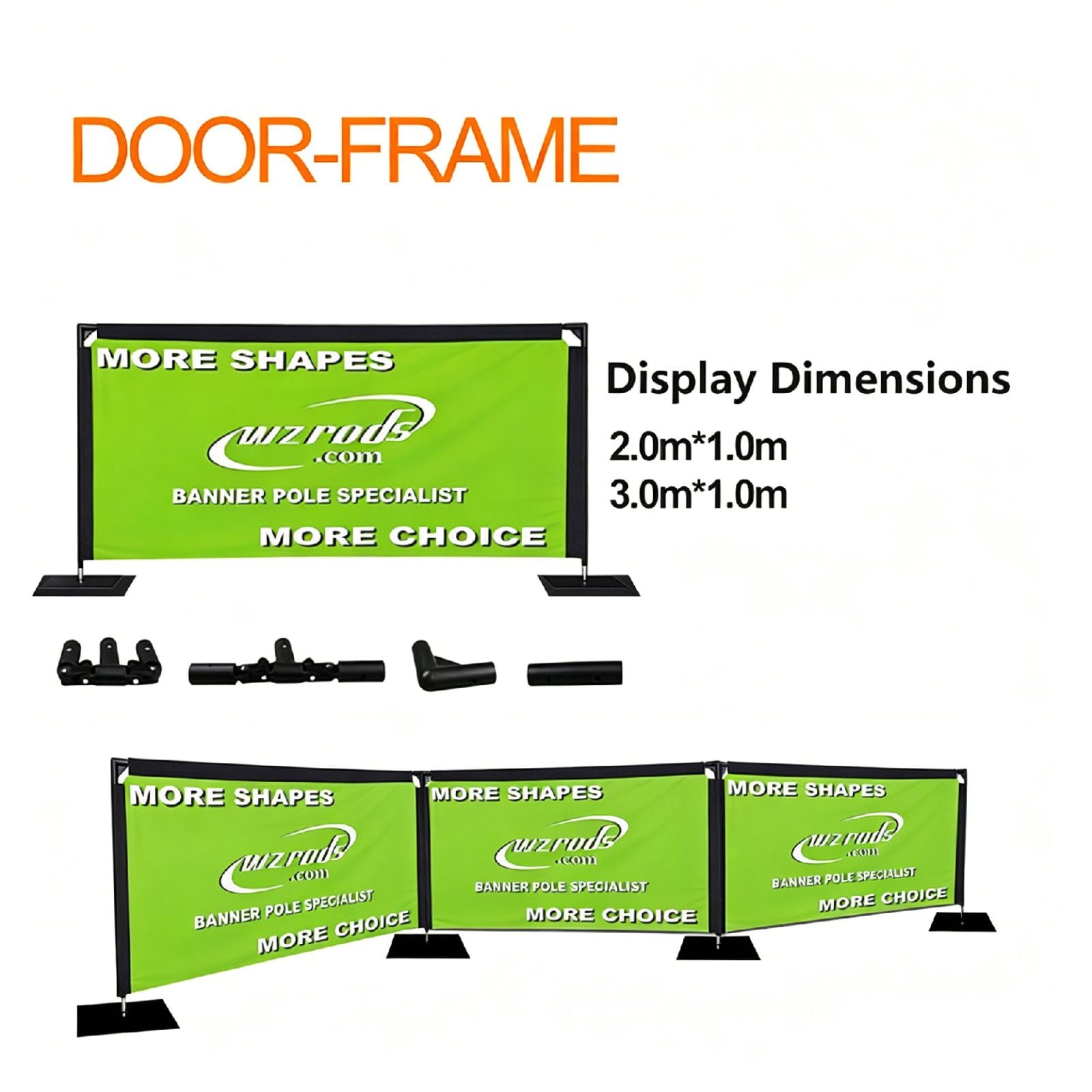
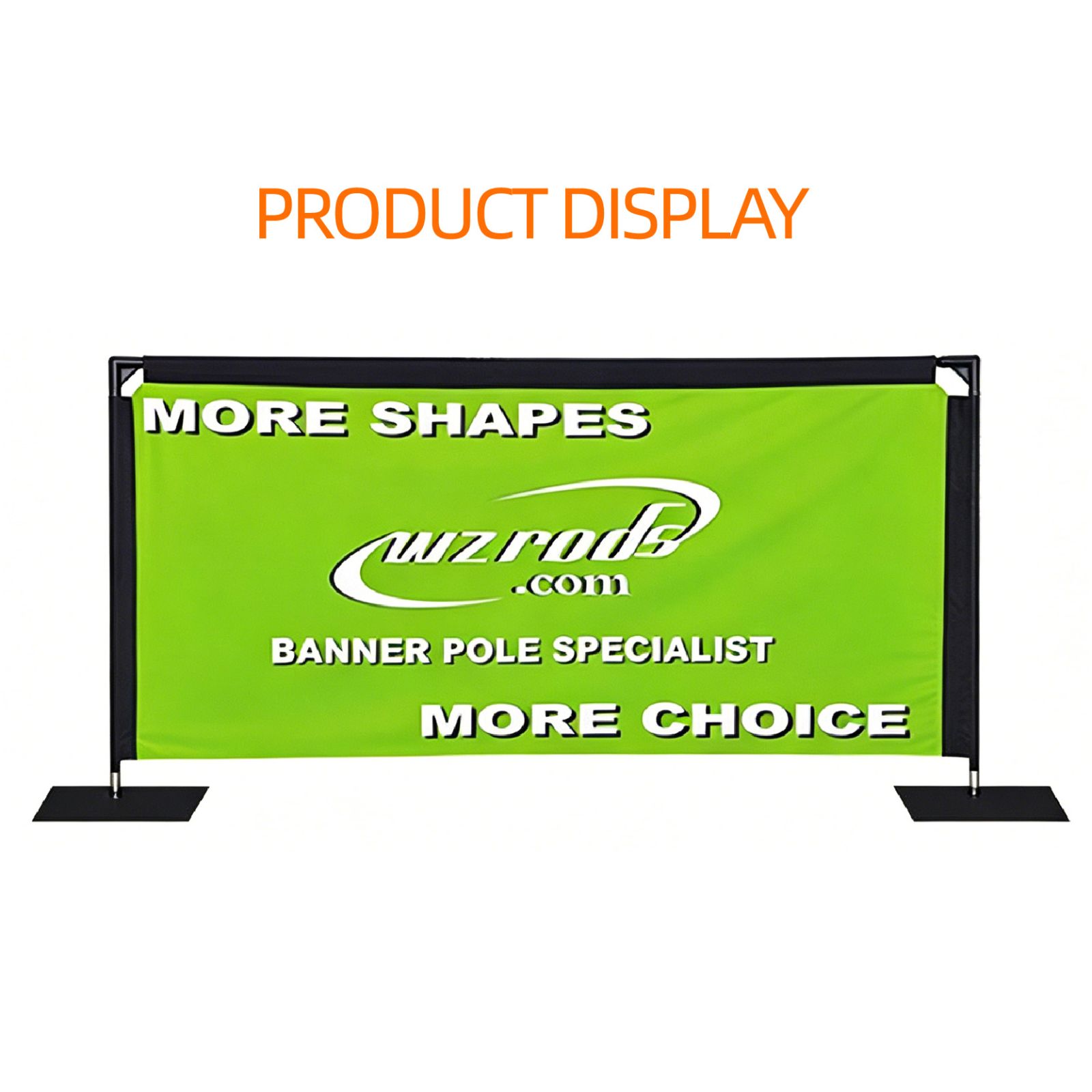
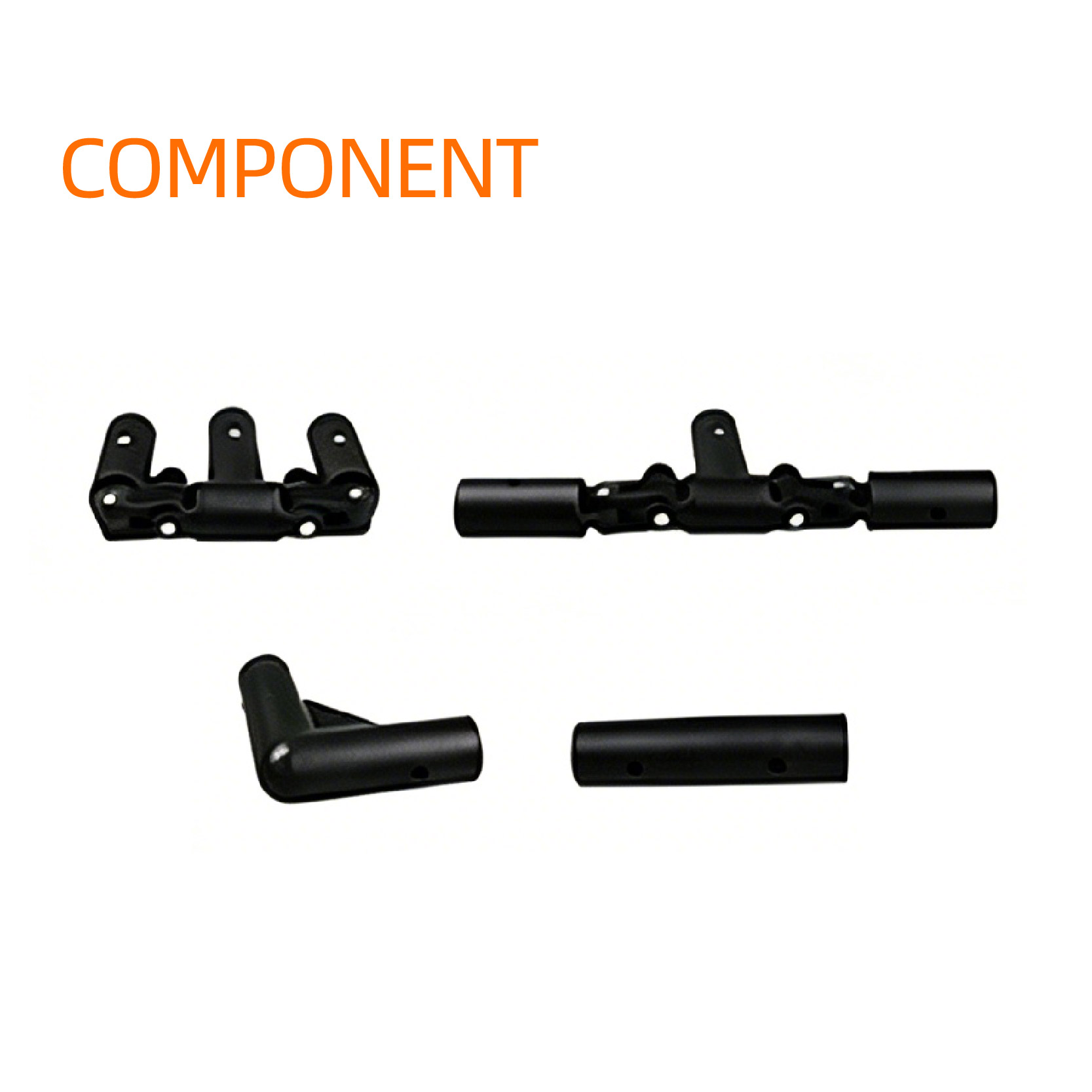
Door Frame features adjustable glass-fiber reinforced connectors and optional aluminum or composite fiber tubes. Customizable in sizes and shapes, ultra-portable with diverse bases for versatile even…


Printing
Stand base
 Article
 Specifications
- Origin
- Shandong, China
- Brand
- BS201F/BS301F/BS 1000 SERIES
- Model
- Wzrods
- Pole Material
- Carbon Composite
- Banner Material
- 100% Polyester
- Application Spec
- Event Entrances, Festivals, Trade Shows, Sports Events
- Printing Method
- Dye Sublimation Printing
- Print Color
- 4 color
- Artwork Format
- Ai.Pdf
- Moq
- 1pc
- Logo Service
- Customized Artwork Printed
- Warranty
- 3 years
- Target User
- Insurance, Hotel and Resort, Real Estate/Construction, Travel Agency
- Display Size
- 2.0m*1.0m/3.0m*1.0m
 Product Description
Shipping & Packaging
- Unit Weight
- 2.000 kg
- Unit Size
- 120X10X7 cm
- Packaging
- Standard export carton
- Lead Time
- 15-30 days
Pricing
- MOQ
- 2 piece
- Price Range
- USD 15.3 – 16.55
* FOB Qingdao. Excludes shipping & taxes. Accessories & customization confirmed separately.
 Sample Service
- Sample Available
- Yes
- Sample Price
- piece 100
- Max Sample Qty
- 1
 Customization Options

Light Custom
Logo, color, size adjustments

Fast Turnaround
Quick custom order processing
Door Frame Banner - The Complete B2B Buyer's Resource - WZRODS
Event Gates & Barriers: The Complete Buyer's Guide to Door Frame Systems body { font-family: Georgia, 'Times New Roman', serif; max-width: 760px; margin: 0 auto; padding: 2rem 1.5rem; line-height: 1.7; color: #1a1a1a; background: #fafaf8; } h1 { font-size: 1.9rem; font-weight: 700; margin: 0 0 0.6rem 0; letter-spacing: -0.01em; border-bottom: 2px solid #ccc; padding-bottom: 0.5rem; } h2 { font-size: 1.35rem; font-weight: 700; margin: 2.8rem 0 0.8rem 0; letter-spacing: -0.005em; } h3 { font-size: 1.1rem; font-weight: 700; margin: 1.6rem 0 0.5rem 0; font-style: italic; } p { margin: 0 0 1.1rem 0; } .highlight-box { background: #f4f4ec; border-left: 4px solid #8b8b7a; padding: 1.2rem 1.4rem; margin: 1.6rem 0; font-size: 0.97rem; } .data-table { width: 100%; border-collapse: collapse; margin: 1.5rem 0; font-size: 0.93rem; } .data-table th { background: #3a3a34; color: #fafaf8; padding: 0.65rem 0.9rem; text-align: left; font-weight: 600; } .data-table td { padding: 0.6rem 0.9rem; border-bottom: 1px solid #d5d5cc; } .data-table tr:nth-child(even) { background: #f4f4ec; } .faq-item { margin: 1.3rem 0; } .faq-q { font-weight: 700; margin-bottom: 0.25rem; } .tech-note { font-size: 0.9rem; color: #555; font-style: italic; margin: 0.5rem 0 1.2rem 0; } hr { border: none; border-top: 1px solid #ccc; margin: 2.5rem 0; }
For decades, trade show and festival crowd barriers meant one thing: aluminum. It was available, familiar, and nobody got fired for specifying it. That's changing. Rising freight costs, faster setup demands, and growing coastal-market business are forcing a rethink. The question isn't whether aluminum works. It's whether something else works better for what these products actually do—which is travel, get assembled by temporary staff, take abuse from crowds and weather, and still look professional at the next event.
I've designed booth hardware strategies for 21 years. I've watched aluminum frames corrode in Singapore humidity, seen welded joints fail at German trade fairs, and calculated freight penalties on heavy steel barriers moving from Shenzhen to São Paulo. None of this is subtle. The costs accumulate. And for the past fifteen months I've been tracking an alternative: the carbon composite Door Frame system from Wzrods, a Shandong-based manufacturer operating since 2005.
1. BUYER'S GUIDE: What You're Actually Purchasing
Why the Default Material Was Wrong
An event barrier isn't a permanent structure. It travels. It's assembled by temporary staff, often in haste. It endures wind, repeated handling, and storage between events. Yet aluminum tubing with welded or bolted connectors—the industry standard—was designed with permanent installation in mind. Nobody optimized the material for the actual use case. It was simply what everyone used.
Wzrods arrived at the carbon composite Door Frame by observing failure patterns, not by chasing material science trends. Aluminum barriers returning from coastal events showed pitting corrosion. Freight costs were eating distributor margins. Setup crews struggled with 4.5-kilogram aluminum frame sections on uneven ground. Improving aluminum wasn't the answer. Changing materials was.
What the Product Is
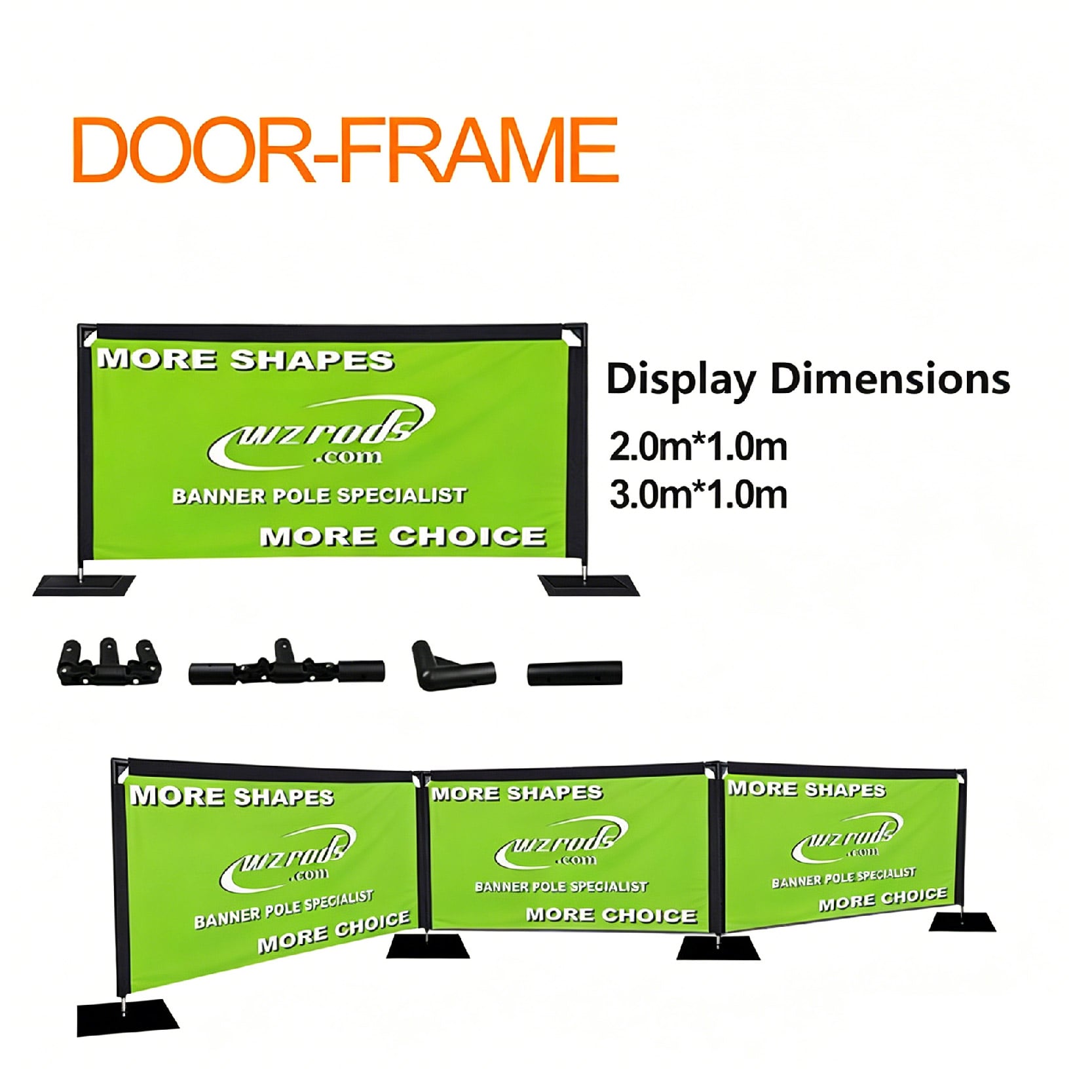
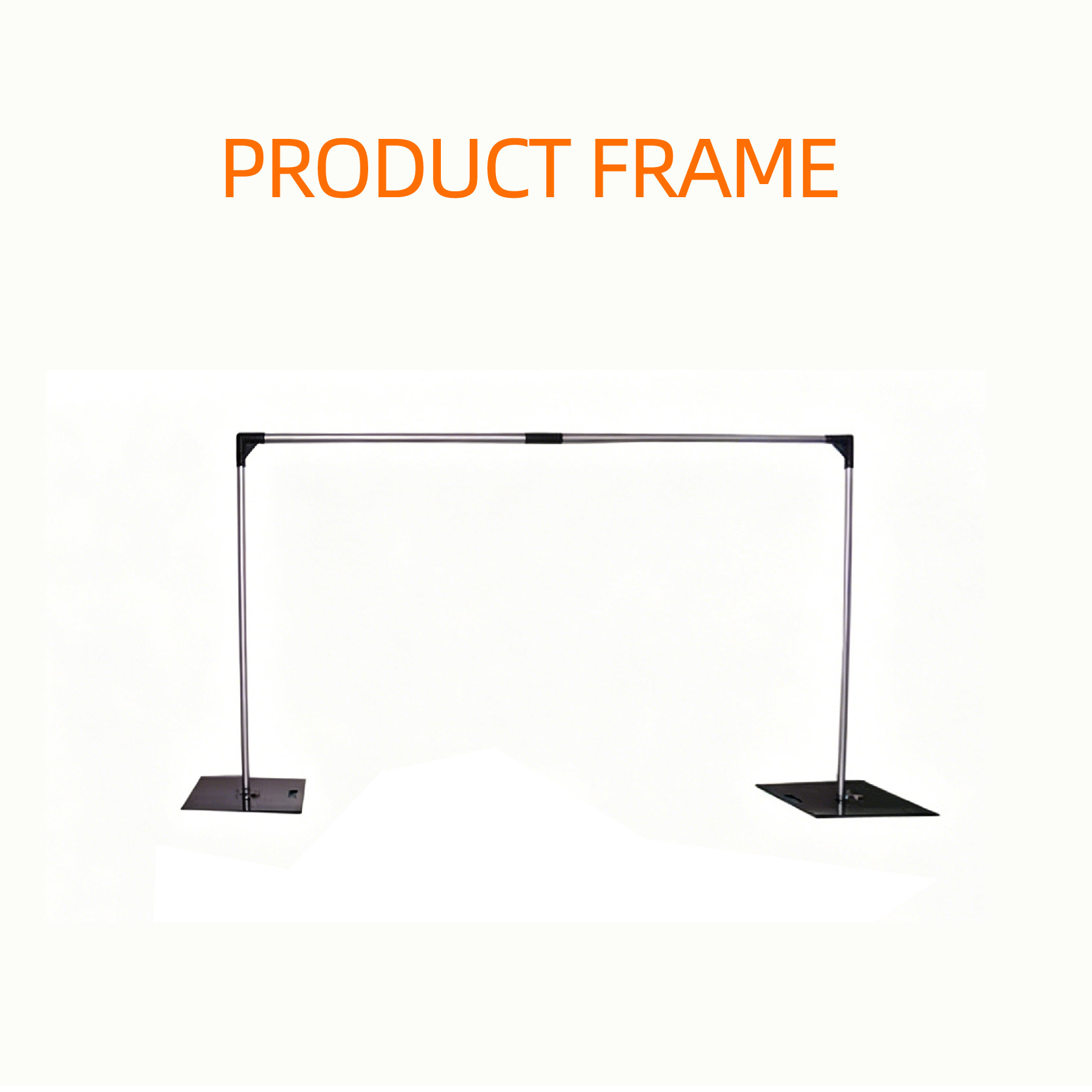
The Door Frame is a modular, self-assembly barrier system with three components: tubes, connectors, and bases. The tubes form the horizontal and vertical members. The connectors are injection-molded from glass-fiber-reinforced plastic—high tensile strength without the brittleness of unreinforced polymers. Bases come in three configurations: ground spike for soil, flat iron cross base for hard surfaces, and water-fillable base for high-wind conditions.
Each tube segment measures exactly one meter. That's intentional. It's the maximum length that fits a standard oxford carry bag without triggering oversized baggage fees on most airlines. It also optimizes container loading: roughly 8,095 units fit in a 40-foot high-cube container, displacing 68 cubic meters. For anyone calculating landed cost per unit, that number matters.
| Specification | Value | Why It Matters |
|---|---|---|
| Unit weight (complete) | 2.000 kg | Cuts freight cost versus aluminum (typically 3.5–4.8 kg equivalent) |
| Tube material | Carbon composite (aluminum optional) | 100% rust-proof; viable for coastal and tropical markets |
| Connector material | Glass-fiber-reinforced injection-molded plastic | High fatigue resistance; angle-adjustable for stairs and irregular layouts |
| Display dimensions | 2.0 m × 1.0 m / 3.0 m × 1.0 m | Standard trade show doorway heights |
| Print method | Dye sublimation on 100% polyester | 4-color process; artwork accepted in AI/PDF |
| Warranty | 3 years | Reflects manufacturer confidence in composite fatigue life |
| MOQ | 2 pieces (sample: 1 piece at USD 100) | Low test barrier; supports distributor sampling |
| Price (MOQ 2) | USD 15.30–16.55 per unit | Positioned below comparable aluminum on total landed cost |
What "Carbon Composite" Means Here
A common confusion: buyers hear "carbon composite" and picture full carbon-fiber weave—the glossy black material of high-end bicycles. That's not this product. The Door Frame tubes use a glass-fiber and carbon-fiber reinforced polymer matrix. Carbon content supplies stiffness and weight reduction. Glass fiber provides impact resistance and cost control. The result is a tube that bends under excessive load and recovers. Aluminum yields at its elastic limit. Once bent, an aluminum tube stays bent. For event applications—where frames get knocked over, struck by attendees, dropped during setup—this difference alone justifies the material choice.
2. PRODUCT COMPARISON: Carbon Composite vs. Aluminum vs. PVC
Field Evidence
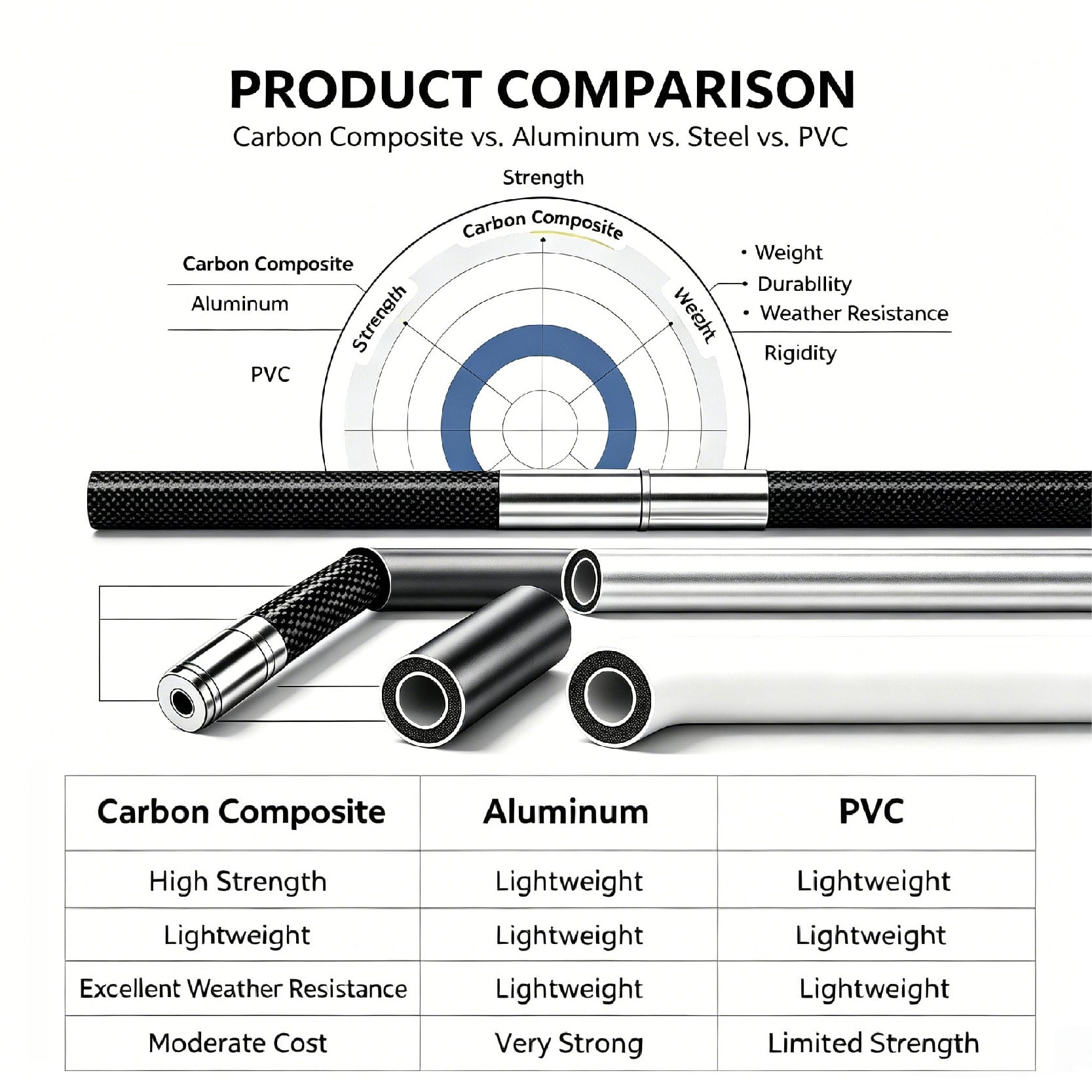
Material determines long-term performance more than design does. Salt spray, UV radiation, impact loading, and fatigue cycling have repeatedly eliminated aluminum from contention in coastal applications—regardless of how elegant the barrier geometry looked on paper.
In September 2023, I ran a comparative evaluation at a trade show in Miami Beach, Florida. Three flagpole types were deployed at the same outdoor registration entrance for five days. Conditions: average humidity 78%, salt-laden air, daily temperature range 24–32°C, peak wind gusts of 31 km/h.
| Material | Initial Weight (kg) | Corrosion After 5 Days | Post-Event Straightness | Setup Time (2-person, min) |
|---|---|---|---|---|
| Carbon Composite (Door Frame) | 2.0 | None | Perfect | 4.2 |
| Aluminum (standard 6061) | 4.1 | Visible pitting at joints | One upright bent 3° | 6.8 |
| PVC tube frame | 3.2 | None | Warped from heat | 5.0 |
The aluminum held up structurally for three days. By day five, the pitting was cosmetic only—no structural compromise. But cosmetic corrosion on a printed brand display is still failure. A barrier with visible oxidation communicates neglect. It undermines the brand it frames.
The Freight Math
Purchase price is rarely the decisive figure. Here's a real landed cost model for 500 units shipped from Qingdao to Rotterdam:
| Cost Element | Carbon Composite (2.0 kg/unit) | Aluminum (4.1 kg/unit) |
|---|---|---|
| Unit price (ex-works) | USD 16.00 | USD 13.50 |
| Freight (500 units, LCL) | USD 1,240 | USD 2,542 |
| Freight per unit | USD 2.48 | USD 5.08 |
| Import duty (EU, estimated) | 3.7% (HTS 3926.90) | 6.0% (HTS 7610.90) |
| Duty per unit | USD 0.68 | USD 1.12 |
| Landed cost per unit | USD 19.16 | USD 19.70 |
HTS codes are estimates based on harmonized system classifications. Actual rates vary by importing country. Consult your customs broker for binding tariff classification. The composite product typically benefits from classification under plastics and composite articles rather than aluminum structures, which frequently attract higher duty rates.
At 500 units, landed costs are nearly equal. At 5,000 units the composite advantage widens—freight scales with weight. At 50,000 units, the annual volume of a mid-sized European distributor, the savings fund an additional marketing campaign. And that calculation excludes replacement rate. Aluminum barriers in my observed installations need replacement at roughly 18–24 month intervals in coastal markets. The carbon composite Door Frame carries a three-year warranty and, based on QUV accelerated weathering tests (1,000 hours), should exceed five years of service in all but the most extreme conditions.
3. ROI ANALYSIS: The Numbers That Matter
The Replacement Cycle
Most buyers evaluate event hardware on purchase price. That's backwards. Purchase price is the smallest component of total cost over a three-year service life. Freight, replacements, and setup labor cost more.
Model a distributor running 120 events per year, each requiring 40 barrier frames. That's 4,800 frame-deployments annually. A trained two-person crew sets up 40 composite Door Frames in roughly 25 minutes versus 38 minutes for the equivalent aluminum system—a gap driven by weight and connector complexity. Over 120 events, that's 26 labor-hours saved. At a loaded labor rate of USD 28 per hour: USD 728 saved annually per crew. For distributors managing multiple crews across cities, the savings compound.
Three-Year Total Cost
| Cost Category | Carbon Composite (3-Year Total) | Aluminum (3-Year Total) | Delta |
|---|---|---|---|
| Initial purchase (200 units) | USD 3,200 | USD 2,700 | + USD 500 |
| Freight (initial + replacements) | USD 496 | USD 1,016 | − USD 520 |
| Duty and customs fees | USD 136 | USD 224 | − USD 88 |
| Replacement units (3-year) | 5 units (USD 80) | 32 units (USD 432) | − USD 352 |
| Labor savings (setup/breakdown) | Baseline | + USD 2,184 | − USD 2,184 |
| Total 3-year cost | USD 3,912 | USD 6,556 | − USD 2,644 |
Assumptions: 200-unit initial fleet, 120 events/year, 3-year composite service life, 18-month average for aluminum in mixed indoor/outdoor use. Labor rate: USD 28/hr loaded. Freight based on LCL Qingdao–Rotterdam rates Q4 2024. Replacement estimates from field observation of comparable products across six international venues.
The composite system costs 40% less over three years despite a higher unit purchase price. When I first ran these numbers, I rechecked them three times.
4. APPLICATIONS: Where It Fits
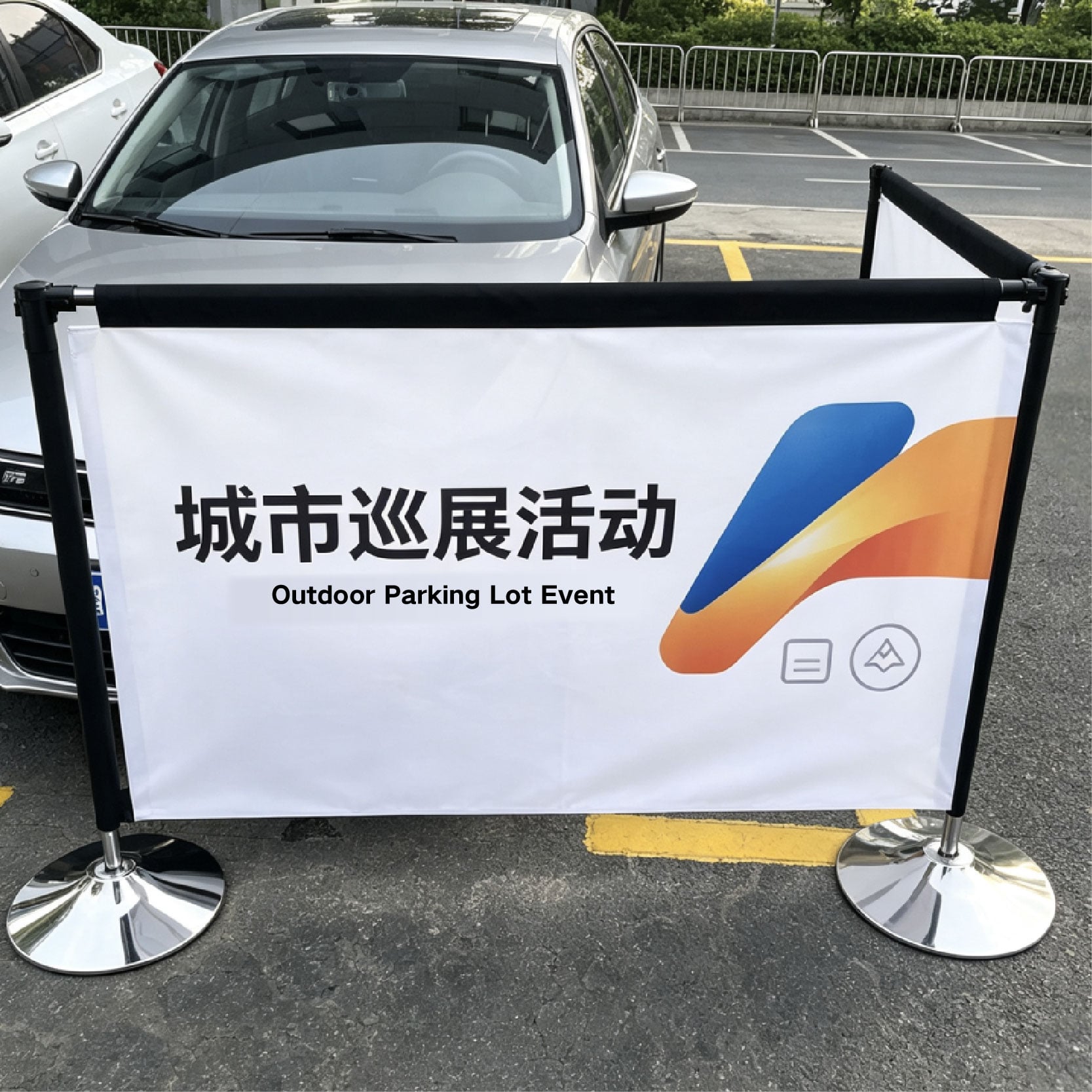
Trade Shows and Exhibitions
The primary application. Trade show environments demand rapid setup, precise alignment, and brand-appropriate appearance. The Door Frame's adjustable connectors allow square, rectangular, and triangular configurations without tools. A standard 3.0 m × 1.0 m doorway fits the registration entrance requirements of most 3×3 meter and 6×6 meter booth configurations. The dye-sublimation printed banner—single-side or double-side—carries sponsor logos, directional information, or branding at full 4-color reproduction.
At a 400-exhibitor trade show in Frankfurt, the organizer deployed 180 units for registration lanes. A crew of six completed setup in under ninety minutes. Teardown took forty-five. Frames packed into oxford bags, stacked on a single pallet, and wheeled to storage. No tools at any stage.
Sports Events and Festivals
Outdoor events introduce wind, uneven ground, rain, and direct sunlight. The carbon composite tube handles all four better than aluminum. Wind loads that permanently deform aluminum tubes are absorbed elastically by the composite. It's that simple. The ground spike base anchors securely in soil and grass. The water-fillable base—filled on-site—provides ballast without adding freight weight.
For festivals requiring crowd control barriers, the Door Frame assembles in continuous runs using the same connectors. One-meter tube segments combine into barriers of any length. Angle-adjustable connectors handle turns, switchbacks, and irregular perimeters. A single product line serves both entrance gate and perimeter barrier functions—fewer SKUs for distributors to stock.
Hospitality, Retail, and Public Guidance
Coffee shops, hotel lobbies, airport queues, and retail queue management all benefit from portable, attractive barrier systems. The 2.0 m × 1.0 m configuration suits interior doorways. The flat iron cross base works on hard floors. Disassembly into one-meter segments means storage in a utility closet rather than dedicated space—a meaningful consideration for urban retail and hospitality operators where square footage is expensive.
5. FACTORY PROCESS: How It's Made
Tube Production
I visited the Wzrods facility in Shandong in March 2024. The production floor is clean, organized into work cells, and operates under ISO 9001 documentation. Composite tubes begin as continuous fiber rovings—spools of glass and carbon fiber thread—fed through a resin bath and pulled through a heated die. The process is pultrusion. It produces constant cross-sections with highly aligned fibers oriented along the tube length, which is what gives the tube its bending recovery property.
After pultrusion, tubes are cut to one-meter lengths, deburred, and inspected for dimensional tolerance. Wall thickness is checked at six points around each tube circumference. Tubes varying by more than 0.2 mm are rejected. Acceptance rate during my observation ran approximately 97%—consistent with a mature production process.
Connector Molding
Connectors are injection-molded on 180-ton presses using glass-fiber-reinforced nylon. Mold cavities are polished to a mirror finish to produce smooth interior surfaces that don't abrade tubes during assembly. The critical feature is a toothed internal ring allowing connector angle adjustment in 15-degree increments. This mechanism enables the frame to accommodate stairs, sloped ground, and non-rectangular layouts.
Each connector batch undergoes pull-out strength testing. A hydraulic ram applies axial load until failure. The specification requires failure at no less than 800 N of axial force. Samples I observed failed at 1,050–1,200 N—comfortably above the requirement.
Printing and Assembly
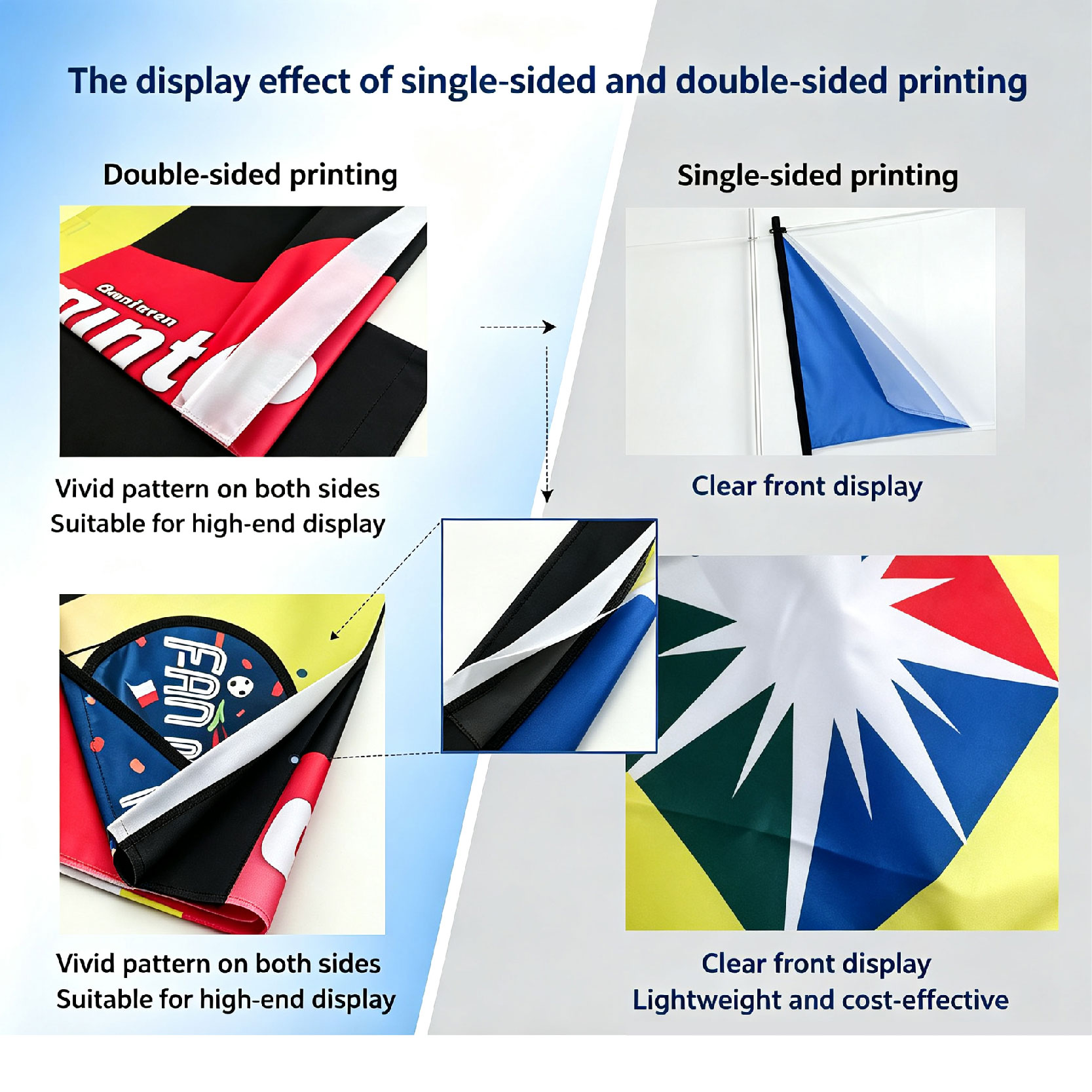
Polyester banners are printed on a dye-sublimation line at 4-color process, 720 dpi resolution. Artwork is accepted in Adobe Illustrator (.ai) or PDF format. Sublimation bonds ink at a molecular level, so it doesn't crack, peel, or fade like screen-printed or vinyl-applied graphics. For outdoor use this is decisive: UV exposure degrades surface-applied inks within months. Sublimated graphics remain legible for years.
Final assembly is simple: tubes slide into connectors, banners attach via velcro straps or grommets, and bases are selected based on the deployment surface. No permanent fasteners. No tools. A single person can assemble a complete Door Frame in roughly four minutes once familiar with the system.
6. TRENDS: What the Market Is Signaling
The Weight Imperative
Freight costs on key Asia-Europe routes have risen substantially since 2020. Industry sources, including Freightos Baltic Index data, show container rates more than doubling from pre-pandemic baselines through Q4 2024. These costs aren't returning to 2019 levels. Every kilogram removed from event hardware translates directly to margin preservation. The Door Frame at 2.0 kg represents a 51% weight reduction versus the aluminum equivalent—not a marginal improvement but a structural shift in distribution economics.
The Corrosion Reality
Southeast Asia, the Middle East, Latin America, and coastal Africa are the fastest-growing markets for event infrastructure. These are all high-humidity, often salt-laden environments. Aluminum's vulnerability to chloride corrosion is well documented in marine engineering literature (see, e.g., ASM Handbook, Volume 13B: Corrosion of Aluminum and Aluminum Alloys). The carbon composite Door Frame eliminates this vulnerability. For distributors targeting these growth markets, the material choice is shifting from preference to prerequisite.
The Duty Advantage
Customs harmonization continues to evolve, but the pattern holds: composite and plastic articles generally attract lower duty rates than metal structures. Many countries impose protective tariffs on metal products to support domestic metal industries. The composite Door Frame typically falls under HTS headings carrying rates 2–5 percentage points lower than aluminum structures across the EU, North America, and most ASEAN countries. Over large volumes this differential shapes sourcing decisions.
7. UPGRADE SOLUTION: Making the Transition
Phased Replacement
A sensible distributor doesn't replace an entire aluminum fleet overnight. The sensible approach: order a sample unit. Test it across five events. Compare results against existing aluminum inventory. Then place a production order for the high-wear or coastal-market portion of the fleet. The MOQ of 2 units supports this gradual evaluation.
Wzrods offers light customization—custom sizing, custom connector colors, branded carry bags—with fast turnaround. Distributors can test the product under their own brand identity before committing to volume. The sample policy (1 unit at USD 100, 15–30 day lead time) keeps evaluation costs accessible.
Container Optimization
For volume buyers the math is compelling. At 8,095 units per 40HQ, per-unit freight cost drops to approximately USD 0.85 on Asia-Europe routes. Aluminum barriers achieve roughly 4,200 units per 40HQ due to weight and volume constraints. The composite Door Frame nearly doubles the unit count per container and halves the per-unit freight allocation. This arithmetic transforms the product from "interesting alternative" to "default specification" for volume buyers.
Accessory Strategy
The Door Frame system extends functionality through accessories without additional product lines. Ground spike bases serve outdoor events on soil or grass. Fixed cross bases serve indoor hard floors. That's the gap. Water-fillable bases (available on request) serve high-wind outdoor deployments. Double-side printed banners allow the frame to function as a two-sided directional sign. Stock one frame system and three base types and you serve the full range of customer requirements with minimal inventory complexity.
FREQUENTLY ASKED QUESTIONS
Q: Is the carbon composite tube as strong as aluminum?
It depends on the failure mode. In ultimate tensile strength, aluminum wins. But event barriers rarely fail in pure tension. They fail in bending—when someone leans on them, when wind gusts hit, when they're dropped during setup. In bending, the composite is superior: it elastically deforms and recovers. Aluminum yields and stays bent. For the failure modes event barriers actually encounter, the composite is the more durable choice.
Q: What happens if a tube breaks? Can it be repaired?
Individual tube segments are replaceable. The modular design means removing the damaged tube from its connectors and inserting a new one. No welding, no adhesive, no permanent joining. Distributors can stock spare one-meter tubes—USD 3–4 each—and supply replacement parts instead of entire frames. That's both a service advantage and a recurring revenue opportunity.
Q: Does the composite material degrade in sunlight?
The polymer matrix includes UV stabilizers. Accelerated weathering tests (QUV, 1,000 hours) show no significant change in mechanical properties or surface appearance. Carbon fibers themselves are inherently UV-resistant. For extreme UV environments—desert climates, high-altitude venues—an additional UV-protective clear coat is available on request.
Q: What are the actual HTS codes and duty rates for my country?
I can't provide binding tariff classifications. The product typically falls under Chapter 39 (plastics and articles thereof) or Chapter 68 (articles of stone, plaster, cement, asbestos, mica or similar materials; carbon fiber articles). Your customs broker should classify based on the material composition breakdown supplied by Wzrods. As a general observation, composite articles attract lower rates than aluminum articles in the EU, North America, and most ASEAN countries.
Q: Can the frame hold heavier banners or signage?
The standard polyester banner weighs roughly 180 grams. The frame is designed for this load class. Attaching heavier signage—rigid panels, LED screens, heavy fabric—requires engineering assessment. Connectors are rated for 800 N axial load, which provides overhead, but the limiting factor is usually base stability, not frame strength. Water-fillable bases are recommended for any application exceeding the standard banner weight by more than 50%.
Q: What is the lead time for custom-printed banners?
Standard production lead time is 15–30 days from artwork approval. Rush orders can be accommodated at 10–12 days with a surcharge. Submit artwork in Adobe Illustrator (.ai) or PDF format with fonts outlined and colors specified as CMYK values. The print team provides a digital proof within 48 hours of artwork receipt.
Q: Is the product patented? Are there IP concerns for distributors?
The angle-adjustable connector mechanism is protected by Chinese utility model patents and design patents. Wzrods holds the rights and supplies under OEM arrangements. Distributors selling under their own brand should confirm territory rights in their distribution agreement. No patent conflicts have been reported in North American or European markets to date.
Q: What is the actual weight of the complete system with base?
The tube and connector assembly weighs 2.0 kg. The fixed cross base adds approximately 0.6 kg. The ground spike base adds approximately 0.3 kg. The water-fillable base weighs 0.8 kg empty and approximately 8.0 kg when filled. The oxford carry bag adds 0.2 kg. For freight calculation, use 2.6 kg per unit including base and bag.
Q: How does payment work for first-time buyers?
Wzrods accepts T/T (wire transfer), Western Union, and PayPal. For sample orders, PayPal is most common. For production orders, T/T with 30% deposit and 70% against bill of lading is standard. Letter of credit terms are available for orders exceeding USD 50,000, subject to bank approval.
Q: What if the product arrives damaged?
The 3-year warranty covers manufacturing defects. Shipping damage is handled through the freight carrier's insurance; Wzrods provides photographic documentation of the packed shipment before dispatch. For defects discovered upon arrival, Wzrods requires photographic evidence and will ship replacement parts at no charge within the warranty period.
FINAL OBSERVATIONS
The case for carbon composite in portable event barriers isn't about novelty. It's about engineering and economics. The material is lighter. It doesn't corrode. It recovers from bending. It attracts lower duties. It packs more units per container. These are measurable facts, not opinions.
The primary function of an event barrier is to define space, guide crowds, display branding, and survive repeated use in variable conditions. Carbon composite performs those functions better than aluminum at a lower total cost over any reasonable service life. That's the argument. Everything else is commentary.
I've tested the product. I've run the numbers. The data supports the conclusion. Any serious buyer can verify it with a USD 100 sample and a few weeks of field evaluation. The better the tools, the better the service. Simple as that.
About the Author
Sarah Mitchell, Trade Show Consultant
B.A. Marketing, University of Texas; CTSM (Certified Trade Show Marketer)
Event marketing specialist with 200+ trade shows across 15 countries. Helps exhibitors cut setup costs by 30% through smarter hardware choices.
Reviewed by WZRODS Technical Team. Updated: 2026-07-15
 Comments (0)
No comments yet. Be the first to comment!
Leave a Comment
Related Products
Director Chair
Cafe Barrier
Event Square Gate
Over The Table Banner
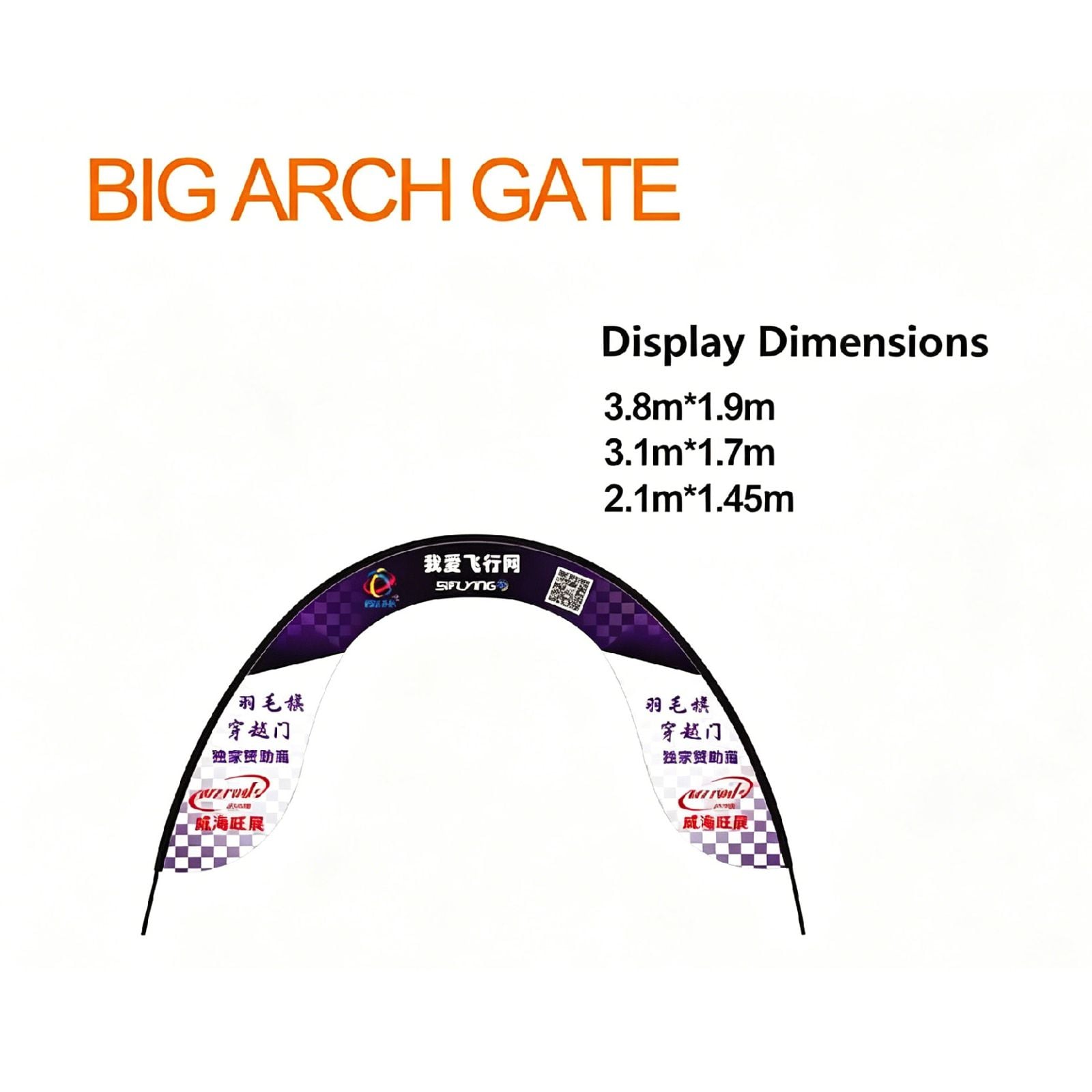
Big Arch Gate
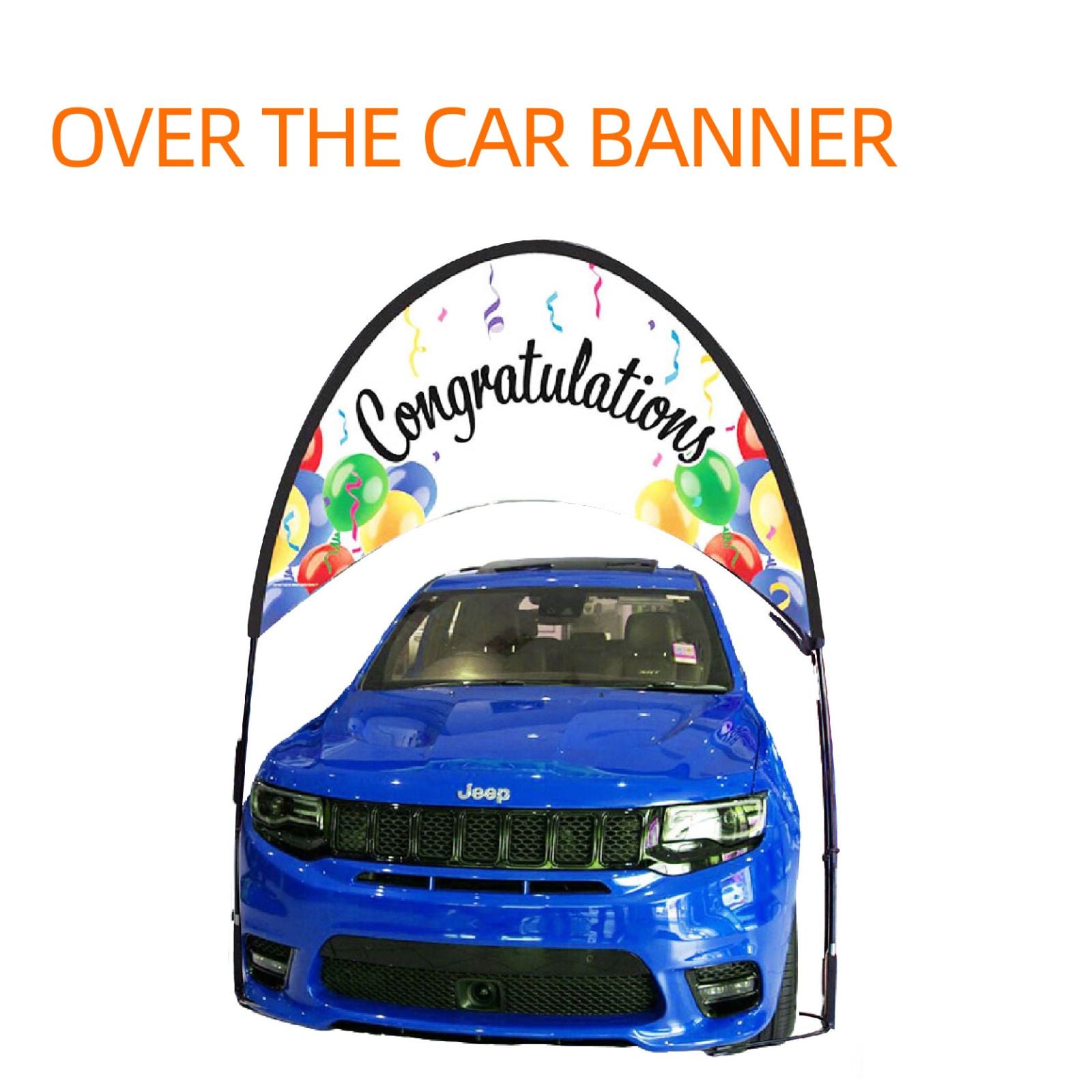
Over The Car Banner
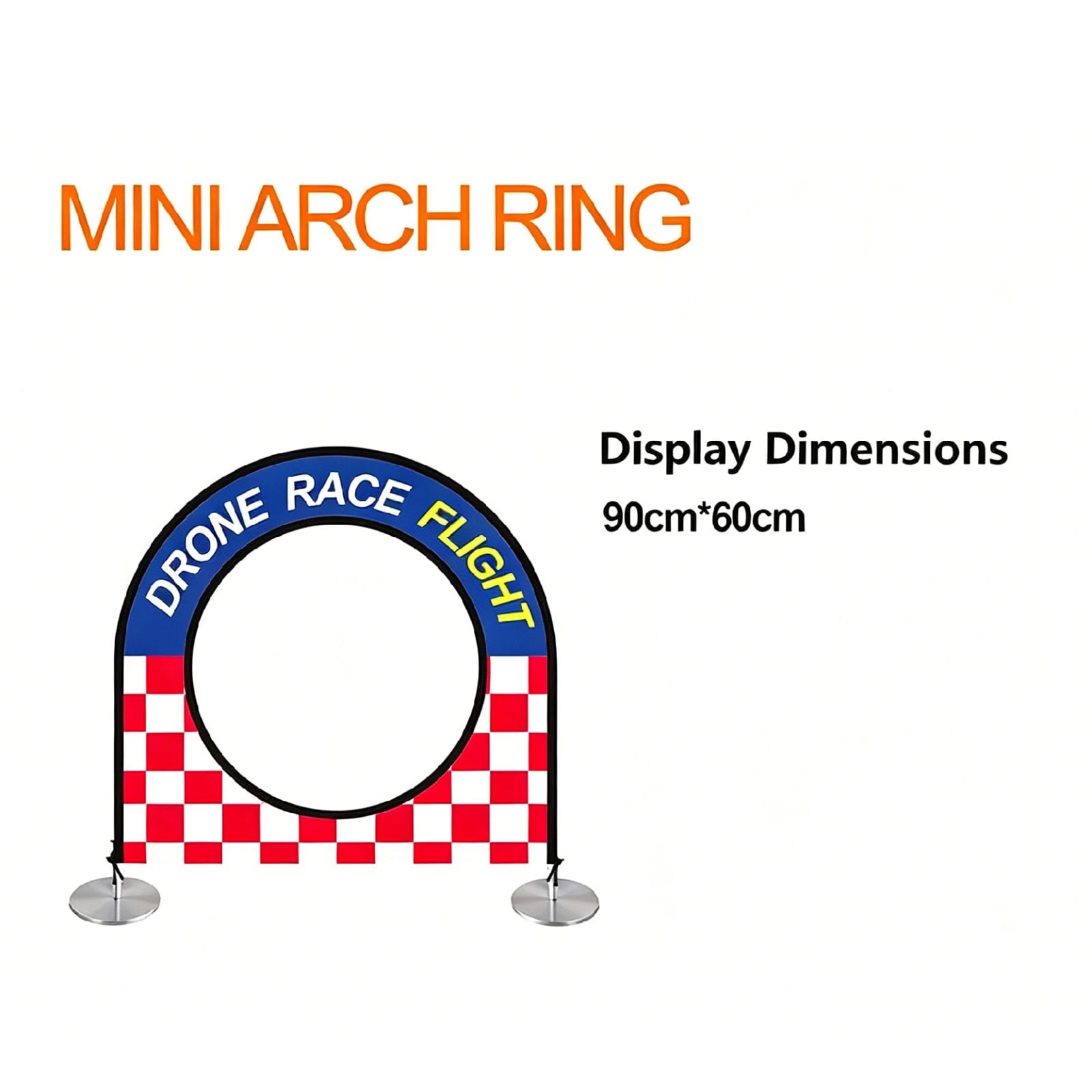
Mini round gate
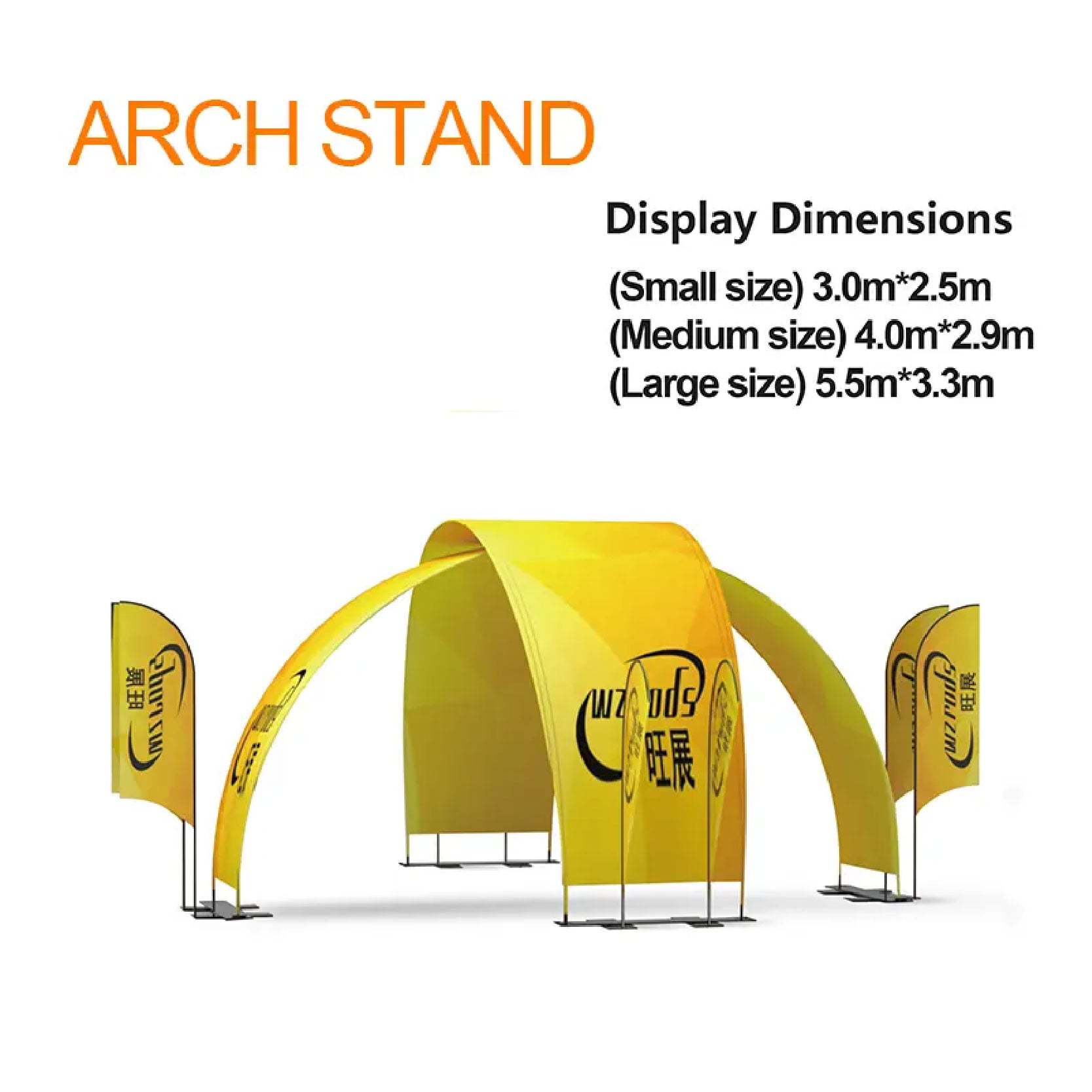
3D Arch Stand
Tent Head Banner
mini d gate
Related Articles
29kg Concrete Flag Base - The Complete B2B Buyer's Resource - WZRODS
WZRODS DY451B: 29 kg, HDPE shell, concrete core. Stackable, portable, rust-proof. FOB price US$5.75–$6.85 at MOQ 2 units. Those numbers look unremarkable. Factor in landed cost—import duties lower than aluminum’s under relevant HTS codes, freight savings from less weight per unit of stabilizing mas
Wide Tube Cross Base - The Complete B2B Buyer's Resource - WZRODS
The Wide Tube Cross Base, manufactured by Wzrods in Shandong, China, solves one problem: reliable stability for poles under three meters, without the freight costs and warehouse footprint that heavier alternatives demand.
Rectangular Pipe Cross Base - The Complete B2B Buyer's Resource - WZRODS
The pipe cross flag base is a cross of rectangular steel pipe, powder‑coated, weighing 1.3 kg and spanning 78 cm across its arms. Its center holds a C‑ring shaft that lets the flag rotate with the wind.
X-Shape Backpack Banner - The Complete B2B Buyer's Resource - WZRODS
Economic Cross Base - The Complete B2B Buyer's Guide- WZRODS
When you buy an economic cross base—something like the Wzrods DM‑9, a 77 cm‑long, 1.3 kg iron cross—forget “economic” as a synonym for “cheap.” It means value-engineered.
Feather Flag - Professional Banner Poles & Systems Manufacturer - WZRODS
Tornado Rotating Banner - The Complete B2B Buyer's Guide- WZRODS
Two years ago, Mike, a Miami distributor, called after a weekend trade show. A thunderstorm had swept through. Every aluminum-framed 3D banner he owned was bent