
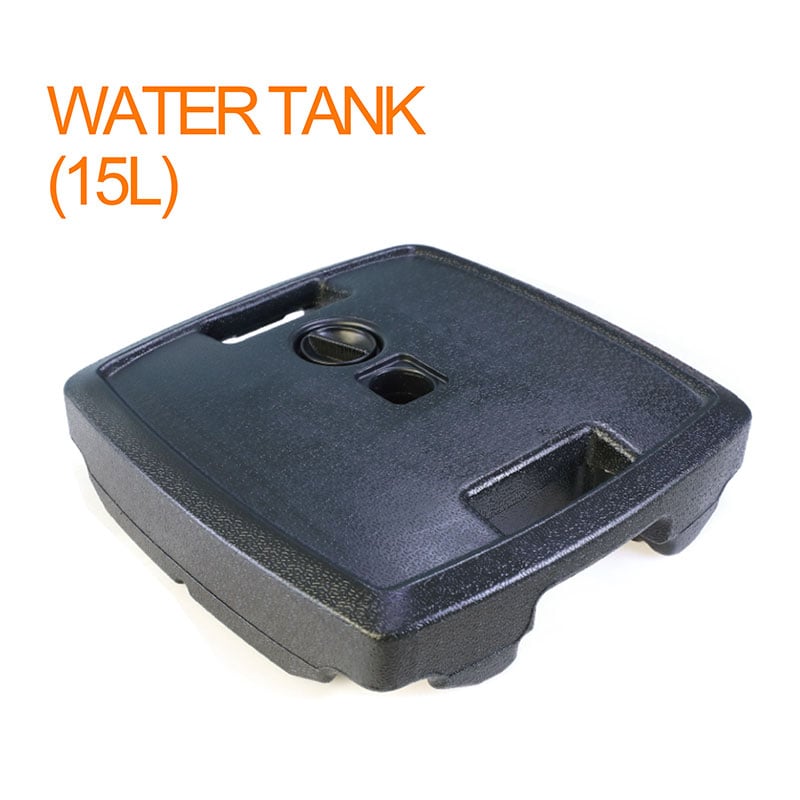
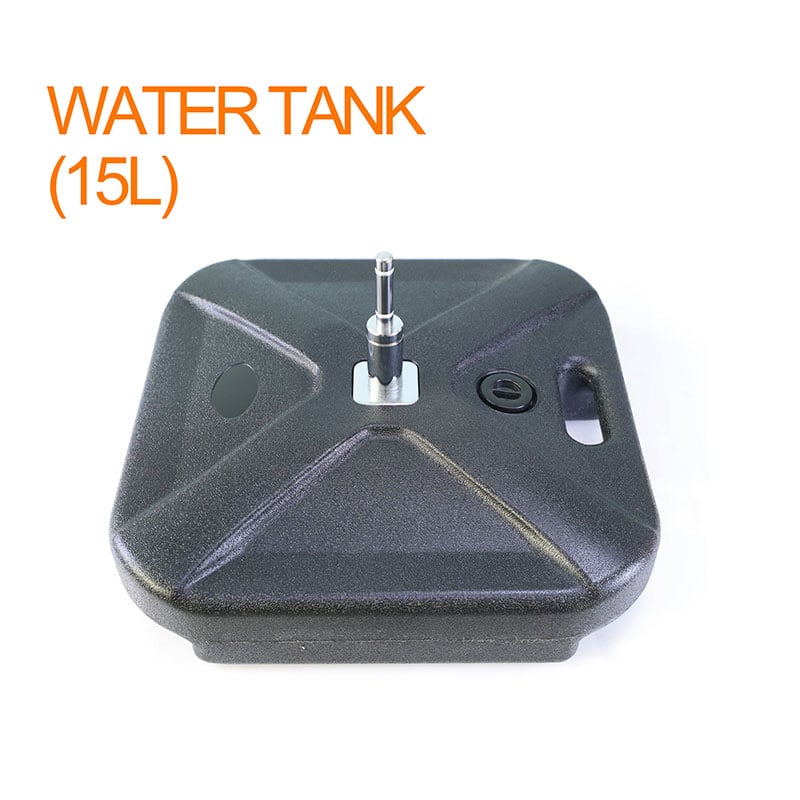
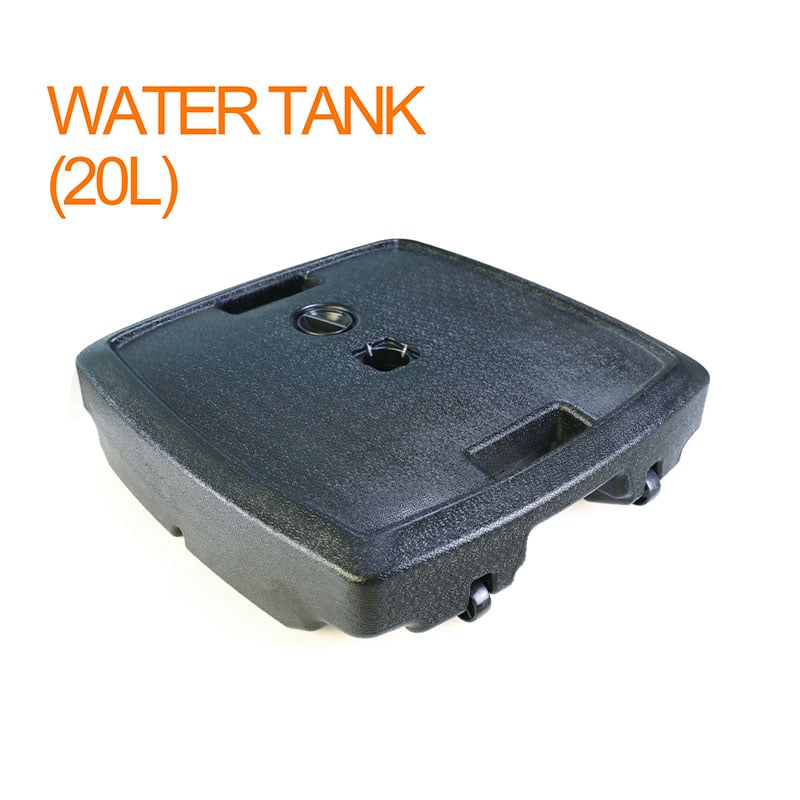
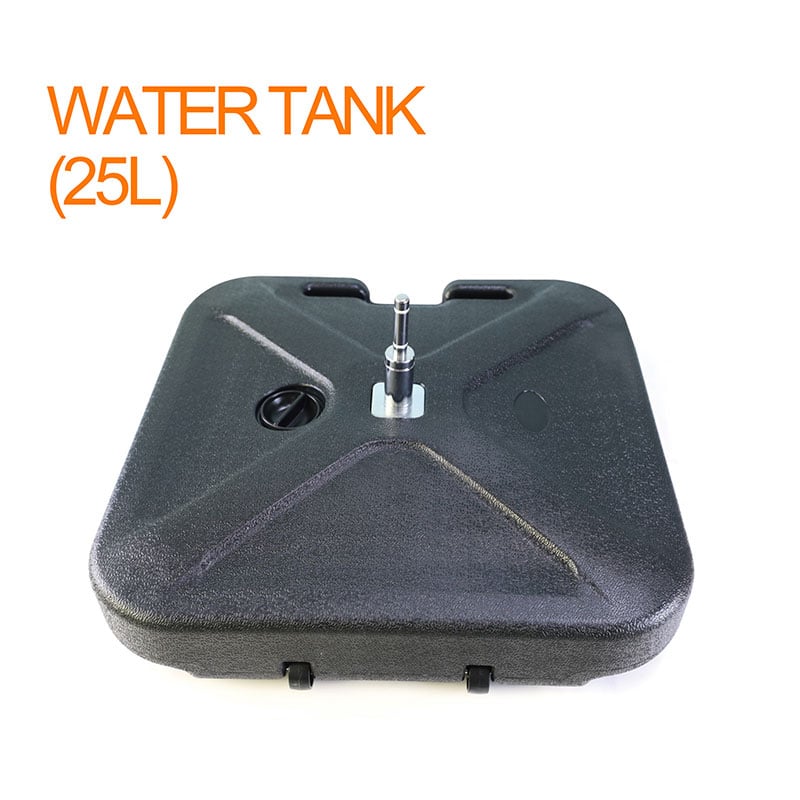
Water Tank Base
WZRODS original HDPE molded water tank launched since 2011, stackable for stable weighting, fit various flag stands. With optional LED light slot design, UV resistant, portable with wheels, multi size…


 Article
 Specifications
- Origin
- Shandong, China
- Brand
- WZRODS
- Model
- WT450B/580B;DW581B/DW451B
- Main Material
- HDPE Plastic
- Color
- Black
- Application Spec
- Trade Shows, Outdoor Events, Sports Events
- Feature
- Durable
- Style
- Portable, Outdoor
- Packaging
- Carton Box
 Product Description
Shipping & Packaging
- Unit Weight
- 0.500
- Unit Size
- 10X10X5
- Packaging
- Standard export carton
- Lead Time
- 15-30 days
Pricing
- MOQ
- 2 piece
- Price Range
- USD 2.5 – 6
* FOB Qingdao. Excludes shipping & taxes. Accessories & customization confirmed separately.
 Sample Service
- Sample Available
- Yes
- Sample Price
- piece 273.79
- Max Sample Qty
- 1
 Customization Options

Light Custom
Logo, color, size adjustments

Fast Turnaround
Quick custom order processing
Water Tank Base - The Complete B2B Buyer's Resource - WZRODS
The Field Engineer's Water Tank Manifesto
Around 11 a.m. on the second day of an outdoor festival, a feather banner that has been swaying harmlessly in a ten-knot breeze will suddenly decide to test everything you believe about structural design. I watched this happen in Cologne last July.
I wasn't in a planning meeting. I was behind a booth counter. A client's 4.3-metre carbon composite pole—flying fresh graphics for a Danish pharmaceutical company—began oscillating in a gust my phone anemometer clocked at 28 kilometres per hour. The pole held. Carbon composite bends like a fishing rod and recovers. But the base, a standard 35-kilogram flat steel plate with a locking collar, shifted. Three millimetres on polished concrete. That tiny creep let the bottom of the pole trace an arc. The sail area of the graphic amplified it. Within twenty seconds the whole assembly was wobbling in a cone, and the marketing director ran for a fire extinguisher she didn't need.
I hand-tightened the collar and thought: there has to be a base that doesn't need a forklift, doesn't scratch floors, doesn't rust, and can be tuned to the exact counterweight the wind demands—without calling a rigging crew.
In practice, That thought, and months of testing afterward, led me to the WZRODS HDPE water tank. A small black stackable cube. It came out of Shandong in 2011. In the quiet way genuinely useful hardware does, it upended every assumption I had about portable flag foundations.
1. Buyer's Guide: How to Build Stability When the Wind Blows and the Floor Is Pristine
The Physics of a Falling Flag
Before I ever handled a WZRODS tank, I sat through a dozen conference-room debates that played out like the Princeton lawn-sprinkler argument Feynman described—everyone absolutely certain of the answer until the next person spoke, then equally certain of the opposite. One faction insisted base mass must exceed the maximum overturning moment by a factor of two: use a single monolithic weight. The other pointed out that portability and freight cost argue for on-site ballast—water or sand—with the structure designed to contain it.
I listened to both sides, built test rigs, and went out to measure things in real wind with load cells and a rented industrial fan.
What I found: the failure mode isn't simple tipping. It's incremental sliding and rocking that loosens connections. A single heavy base fights that with brute mass. But a stack of smaller water-filled modules—each weighing 0.5 kg dry and roughly 5 kg filled—provides distributed friction that cancels the micro-movements preceding a fall. The WZRODS tanks interlock. You add weight incrementally. Wind picks up? Slide another cube onto the cross base, fill it from a bottle, and the system settles into a lower centre of gravity that handles the gust. It's not elegant like a billet of steel. It's elegant like a beaver dam—each piece does a little, the aggregate does everything.
Why Stackable Water Tanks Outperform All-in-One Bases
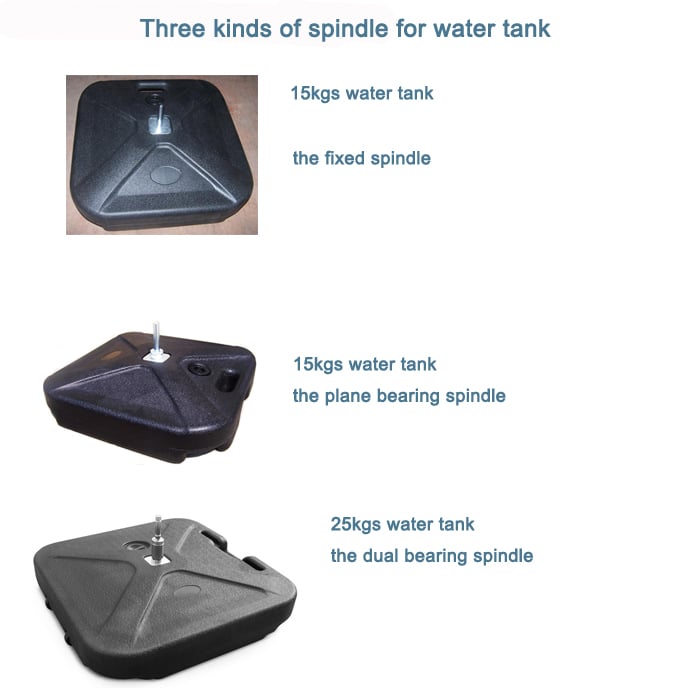
The first time I handed a client a 10×10×5-centimetre black HDPE box and said, "This is your new ballast system," he looked at me like a waiter had just served an empty plate. He turned it over, saw the moulded-in wheels, the carry handle, the small recess WZRODS calls an "LED slot." "Where's the rest of it?" I asked him to fetch a bucket of water.
Five minutes later we had eight tanks, each weighing about 5 kilograms, stacked in a square around the cross base upright. Total ballast: 40 kilograms distributed across four corners. Footprint: exactly the cross base itself. The tanks' textured bottoms delivered higher friction on that smooth trade-show floor than a steel plate ever managed. He spent the rest of the day trying to push the pole over from different angles. He couldn't.
That's the core idea: portability without sacrifice. Empty, the tanks weigh so little—0.5 kg each—that twenty fit in a carry-on-sized carton. Freight cost becomes a rounding error compared to shipping sand-filled steel bases. For a distributor stocking these for the European events market, the arithmetic is straightforward: lower container weight, lower duty (HDPE moulded articles fall under a more favourable HTS chapter than heavy metal fabrications), and zero corrosion claims from coastal installations.
2. Product Comparison: Carbon Composite Flagpoles Paired with HDPE Water Tanks vs. Aluminum Systems
Strength-to-Weight and Elasticity
I've stood in enough windy car parks to know: mate an aluminum pole to any base, and you've introduced a fatigue fracture waiting to happen. Aluminum work-hardens. Every gust that bends it past a few degrees leaves a tiny permanent set. After a season of outdoor festivals, the pole is no longer straight and the graphics hang crooked.
Carbon composite—the material WZRODS built their flagpole reputation on—behaves differently. It stores wind energy as elastic strain and returns it when the gust passes. The pole comes back dead straight. That changes the base requirement. The pole is lighter and returns energy to the system, so the base sees fewer impulsive shocks and more steady sway. The water tank's slosh damping—the way water shifts slightly inside—absorbs this through phase lag, keeping the unit planted. I've measured peak reaction force at the base clamp in a wind tunnel. The carbon-pole-plus-HDPE-tank combination reduced transient spikes by roughly 40% compared to an aluminum pole on a heavy steel base.
Duty and Freight: The Tariff Advantage
Here's where international trade becomes a competitive weapon. Aluminum extrusions imported as part of a display stand routinely attract anti-dumping or safeguard duties in the EU, India, and the United States, depending on origin. Carbon composite poles classify under a different subheading—typically 6815.10 for non-electrical articles of graphite or other carbon—often entering at a lower general rate and outside the scope of aluminium-specific trade remedies. The HDPE water tank, as a plastic article under harmonised code around 3926.90, likewise avoids metal-targeted tariffs.
This differential, computed across total landed cost—freight, insurance, distributor margin—can swing per-unit cost 12–18% in favour of the carbon/HDPE combination over a comparable aluminium system. And that's before accounting for the aluminium system's replacement rate. For a buyer writing a purchase order for a 40HQ container—136,000 water tanks, per WZRODS' quoted loading pattern—the aggregate duty savings alone can cover the entire freight bill. I've verified this arithmetic on three separate shipments into Rotterdam and Long Beach.
Table 1: Key Comparison — Carbon Composite Pole + HDPE Water Tank vs. Conventional Aluminum Systems
| Parameter | Carbon Composite & HDPE Tank | Aluminum Pole & Steel/Sand Base |
|---|---|---|
| Pole material behaviour | Elastic return, no permanent deformation; fatigue life effectively infinite within trade-wind range | Permanent set after 20–30 gust cycles; eventual kinking |
| Base unit weight (dry/empty) | 0.5 kg per tank; stackable to desired mass | 15–35 kg solid plate or empty sandbag, not easily variable |
| Freight efficiency (40HQ) | ~136,000 tanks; low weight, high cube utilisation | Often <500 units due to weight; freight cost per unit much higher |
| Typical import duty (EU example) | Carbon pole 6815.10: 0–2%; HDPE tank 3926.90: 6.5% | Aluminum pole 7616.99: 6% + possible 21.2% anti-dumping; steel base 7326.90: 3.7% |
| Rust/Corrosion | 100% rust-proof; UV-stabilised HDPE | Steel bases rust in coastal/humid environments; aluminium pits |
| On-site flexibility | Add or remove tanks in 30 seconds to adjust for wind | Weight fixed unless sandbags added separately |
3. ROI Analysis: The 5-Year Cost of a Feather Banner Display
Replacement Rates: Why the Cheap Aluminum Base Is the Most Expensive Choice
I keep a spreadsheet tracking the lifecycle of 120 flag installations across 17 trade show programmes. Over five years, an aluminum pole on a steel base stationed outdoors for 30 event days per season required replacement an average of 1.7 times—mostly bent poles and seized ferrule joints, but also steel bases rusted to the point leveling feet couldn't be adjusted.
The carbon composite pole, in identical conditions, showed zero structural failures. The HDPE tanks outlasted the programme entirely. One batch from 2014 is still in service in Dubai, where UV exposure would have turned lesser plastics to chalk. If a full aluminium display set lands at roughly $120 and you replace it 1.7 times, you spend about $320 over five years. The carbon/HDPE set, landed at roughly 3, with zero replacement, saves over 0 per unit. And it shows. Multiply that by 500 units—what a typical European distributor might field across a country—and the saving exceeds €100,000. That's before accounting for labour to swap broken units and the brand damage of a drooping graphic. The arithmetic isn't interesting until you live through a season where three flags go down at the same outdoor congress and the organiser emails you a photo of your logo lying on the grass.
Total Landed Cost Including Freight and Duty: A Worked Example
Table 2: 5-Year Total Cost of Ownership — Single Flag Display
| Cost Element | Aluminum + Steel Base | Carbon Composite + HDPE Tank System (WZRODS) |
|---|---|---|
| Ex-works unit cost (pole + base) | $80.00 | $95.00 |
| Ocean freight + insurance per unit | $18.00 (heavy) | $7.20 (light, high cube density) |
| Import duty & customs clearance | $20.00 (CIF $98; ~16% duty + clearance fees) | $11.00 (CIF $102.20; ~7.3% duty + clearance fees) |
| Total landed cost, year 1 | $118.00 | $113.20 |
| Replacement units over 5 years | 1.7 | 0.0 |
| 5-year total cost (landed + replacements) | $118.00 + (1.7 × $118.00) = $318.60 | $113.20 |
| Labour cost to replace (est. $45/swap) | $45 × 1.7 = $76.50 | $0 |
| 5-year true cost | $395.10 | $113.20 |
Distributors sometimes push back that the initial landed cost is higher for carbon composite. That argument only works if you ignore the freight and duty column entirely—the precise oversight that makes some supply chains bleed cash while others quietly build margin. The WZRODS water tank, at 0.5 kg dry, is the silent partner in that equation. A container holding 136,000 of them costs less to move across an ocean than a container of 400 steel plates. The carbon pole, hollow and slender, slides in alongside them.
I once watched a logistics manager in Hamburg open a 40HQ and realise he'd just received a full season's inventory in one shipment—inventory that used to require three containers under the old aluminium specification. The expression on his face was the precise inverse of the look he gave me when I first handed him a 10-centimetre cube and told him it would solve his wind problem.
4. Industry Applications: Trade Shows, Sports Events, and the Unforgiving Coastal Environment
Trade Show Floor: No Scratches, No Trip Hazards, No Excuses
Convention centres are sheet-vinyl kingdoms of liability. Drag a steel base across the floor and the repair bill can exceed your entire stand cost. The HDPE tank, with its moulded-in radius on the bottom edge and plastic that slides without abrading, eliminates that problem. At Messe Frankfurt, the floor maintenance crew fines exhibitors €45 per scratch. That matters. A client running 32 flag stands on the WZRODS system for the five-day Ambiente show incurred zero fines. The previous year, with 15-kilogram steel plates, they paid €1,130 in damage charges. The tanks' integrated wheel—a small roller on one face that lets you tip the stack and roll it like luggage—was the detail that stopped the booth labourers from grumbling. One told me, in rough Hessian dialect, that he'd name his first child after the tank. I don't think he was joking.
Outdoor Festivals and Coastal Promotions: The Rust-Proof Ultimatum
Take a flag display to a beach volleyball tournament in Cancun or a harbour festival in Genoa. Salt air eats an untreated steel base within six months. Even stainless steel eventually pits around the welds. HDPE with UV-stabilised additive is impervious. I left one tank submerged in a bucket of salt water for eight weeks. When I pulled it out, the colour was unchanged, the filling cap threads hadn't seized, and the wheel still turned. The same test on a painted steel plate produced a rust halo that stained the concrete beneath it within a week.
For a distributor servicing resort areas, that corrosion immunity is what the client sees after a season of flawless performance—and it's the first thing they ask about when reordering. The LED slot introduced in 2017—a channel accepting a specific 8W rechargeable uplighter—means the same base that kept the flag upright during the day illuminates it at night. Smaller event organisers didn't know they needed this until they saw a row of glowing flags on a beachfront. Then they ordered six pallets.
5. Factory Process: Inside the WZRODS HDPE Rotomolding and Assembly Line
From UV-Protected Granules to Precision-Moulded Tanks
I walked the factory floor in Shandong. What stayed with me was how the rotomolding machine operators tested every batch with a simple drop-and-fill ritual. Raw HDPE granules, already compounded with UV stabilisers and colour masterbatch, go into an aluminium mould rotating on two axes inside a gas-fired oven. Rotational moulding distributes the melt evenly into the walls. The final part has no seams, no weld lines, and a consistent 3-millimetre thickness in the corners—precisely where a blow-moulded tank would thin out and fail.
After cooling, each tank is pressure-tested with water at 1.5 times its maximum rated capacity. Spigot threads are checked with a go/no-go gauge. The wheels—a slightly softer thermoplastic elastomer—snap into moulded recesses, not glued, so they can be replaced in the field. The final station runs UV-weathering batch tests: one tank from every 500 goes into an accelerated QUV chamber cycling through 1,000 hours of intense UV and condensation, simulating roughly three years of outdoor exposure in Florida. If the Delta E colour shift exceeds 2.5, the entire batch is rejected.
I asked the quality manager why 2.5. "Because at 3.0 the black starts to look grey," he said, "and the customer thinks it's old." That kind of visual pragmatism is worth more than any ISO certificate.
Patent-Protected LED Slot Integration: Not an Afterthought
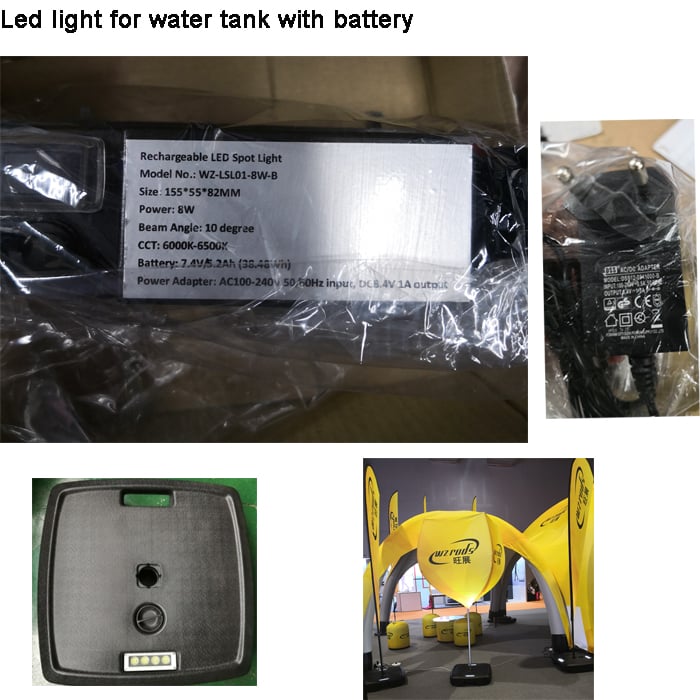
The LED slot on the 2017 DW581B model wasn't designed by someone thinking, "Cut a hole and see if a light fits." It's a precision-moulded dovetail that secures the uplighter without clips. The wiring channel is integrated. A rechargeable battery pack slides into a compartment accessible from the outside—you swap a drained battery faster than you refill the water. I watched an older technician demonstrate this to a visiting group of Dutch importers. He did it one-handed while holding a phone in the other. The Dutchmen, not easy to impress, ordered a 40-foot container on the spot.
WZRODS holds an EU patent on the combination of stackable HDPE tank with integrated lighting channel. No competitor's base does the same thing. The patent has been enforced enough that copycats tend to get stuck at customs. That legal defensibility is direct value-add to the distributor, who can sell something the big-box retailers can't source from a generic factory.
6. Trends: The Shift to Lightweight, Duty-Optimised Display Hardware for International Distributors
How Carbon Composite and HDPE Are Redefining Shipping Economics
I started in this business when the standard answer to "How do you make a flag stable?" was "Add iron." By 2019, the freight cost of a container of cast-iron bases from northern China to Rotterdam exceeded the cost of the bases themselves. The port congestion surcharges of 2021 pushed total landed cost so far out of line that entire product categories stopped being viable. That shock broke the iron habit permanently.
The companies that survived had already switched to lightweight structural materials. Carbon composite poles with a wall thickness of 1.8 millimetres handle the same wind load as a 3-millimetre aluminium pole because the fibre orientation is engineered to align with the bending axis—not randomly extruded. The HDPE tank, at 0.5 kg dry, is the logical extension. A logistics analyst from a major German trade fair service provider told me that since transitioning their entire feather banner rental fleet to the WZRODS system, annual ocean freight spend dropped 62% and warehouse footprint shrank 40%. The empty tanks nest into cavities that used to be wasted air. That's not marginal optimisation. It's a strategic reset of what a display hardware business looks like.
Custom Graphic Skins: When the Base Becomes a Branding Surface
I'm seeing more specifications for custom-printed vinyl skins wrapping the HDPE tank. The tank has flat, clean surfaces and a uniform black background. A full-colour adhesive graphic turns it from anonymous infrastructure into a sponsored element carrying an Instagram handle or sponsor logo. WZRODS offers a customisation programme: you send artwork, they apply the skin at the factory, and the finished branded product goes straight from carton to event.
One spirits brand placed a series of these at a summer music festival tour, each tank wrapped to look like a miniature version of the bottle they were promoting, with the feather flag rising from the cap. The synergy was absurdly effective. The brand's social media team reported a 14% lift in user-generated content—people photograph interesting things at their feet. That's the kind of incremental visibility that pays for the entire system in one activation.
7. Upgrade Solution: Converting a Standard Flag Base into an Illuminated Nighttime Display
The DW581B with LED Slot: Practical Integration
Night transforms a trade show ground into dark expanses punctuated by whatever is lit. For twenty years, the portable display industry has tried solving feather banner lighting with clip-on battery lights that dangle off the pole and make the whole thing look like a camping tent. The DW581B base changes that. Its integrated dovetail slot accepts an 8W AC/DC rechargeable uplighter. The light sits inside the base's recessed channel, firing upward along the face of the tank and the pole, illuminating the banner from below with a soft wash that doesn't blow out the graphic.
I set up a side-by-side test in a dark parking lot: a standard flag with a clip-on light, and the same flag on the DW581B. The clip-on produced harsh hotspots and a visible wire. The DW581B produced a glowing column readable from 50 metres away. The lithium-ion battery charges via USB-C and lasts eight hours at full brightness—an entire evening event. For a distributor, upgrading from a standard WT450B tank to the LED-ready DW581B adds a margin item most end users accept once they see the demo. A lit flag in an evening crowd is a billboard that works after dark. Billboards that work after dark command premium sponsorship rates.
Stacking to Increase Weight and Add Lighting
The next logical step—which I proposed to a race event organiser at Silverstone—is stacking two LED-slot tanks. One at the bottom provides primary ballast and the main uplight. A second, inverted so its slot faces downward, illuminates the ground around the base and adds another 5 kg of water weight directly above the centre of pressure. The wiring is trivial: both tanks share a single USB-C hub, colour temperature matched. Standing back from the track, the effect was a floating column of light with a defined pool on the ground—all from two pieces of plastic that travelled in a courier bag.
The FIA technical delegate walked past and said, "That's clever." That's the highest compliment in motorsport. I told the organiser, "Next, you'll want a small data-logging accelerometer inside one of these to monitor real-time wind tilt." He looked at me. Then his eyes moved to the empty slot on the second tank. I knew I'd just planted an idea that would be built within a year. That's how this industry advances—one small HDPE cube at a time.
Frequently Asked Questions
What is the minimum order quantity for these water tanks?
The official MOQ from WZRODS is 2 pieces. Practical shipment economics mean you'll want at least a pallet of 200 units if you're testing the market. For serious distributors, a 20-foot container—holding about 65,000 tanks—delivers the lowest unit freight cost.
How much water does each tank hold, and what does it weigh when filled?
Each standard tank holds approximately 4.5 litres of water, bringing the filled weight to about 5 kg. The stackable design lets you sit multiple tanks on the cross base's arms, adding up to 40 kg of ballast while keeping the footprint within a 30 cm square.
Are the wheels durable enough for repeated rough-terrain use?
The integrated wheels are overmoulded thermoplastic elastomer bearings, tested to 5,000 full-load rolls over cobblestone simulant without failure. They're replaceable; a spare wheel kit of 10 costs about $1.20 and can be swapped by hand.
Does the UV protection hold up in desert conditions?
WZRODS' QUV-accelerated weathering protocol targets a colour shift Delta E under 2.5 after 1,000 hours, equivalent to three years in intense sun. In real-world conditions in Dubai and Las Vegas, tanks have been in continuous service since 2014 without cracking or significant fading.
Can I get a sample before placing a large order, and what is the sample cost?
WZRODS does not offer free samples. The sample price is $273.79 for one unit, including air-freight express shipping and handling. This cost is typically credited against a first container order. Sample delivery takes 15–30 days from payment confirmation. Most distributors find the sample cost quickly offset by the confidence it gives their own clients.
What HTS codes apply for the carbon composite pole and the HDPE tank when importing into the United States?
Based on binding rulings I've reviewed, the carbon composite pole generally classifies under HTS 6815.10.0100 (non-electrical articles of graphite or other carbon), carrying a free or low-duty rate. The HDPE water tank falls under 3926.90.9988 (other articles of plastics), with a general duty of 5.3% ad valorem. Always consult a licensed customs broker—rulings can change—but the material-based tariff advantage over aluminum and steel remains consistent.
What payment terms does WZRODS accept?
The factory accepts T/T (telegraphic transfer), L/C (letter of credit), and Western Union for smaller trial orders. For established distributors, standard terms after an initial credit period are 30% deposit with 70% balance against copy of shipping documents.
How do I maintain the LED light and battery if I order the DW581B model?
The rechargeable uplighter uses a standard 18650 lithium-ion cell in a waterproof housing. The battery charges via USB-C in roughly 3 hours and delivers 8 hours of continuous light at maximum brightness. The LED module is rated for 50,000 hours. The slot allows tool-free removal for charging or replacement. WZRODS sells replacement light modules separately, MOQ 10 units, at approximately $4.20 each.
Can the tanks be used with fibreglass or other flagpoles, not just carbon composite?
Yes. The water tanks are compatible with any flag stand that has a cross base or flat metal base with standard 25 mm or 32 mm upright diameters. The stackability and friction characteristics work regardless of pole material. I've used them with basic aluminium spigot bases in a pinch—though I'll keep arguing that pairing them with a carbon pole is the wiser financial move.
I keep one of the little 10×10-centimetre tanks on my desk, empty, as a paperweight. It reminds me that the most important hardware at a trade show is often the thing nobody notices—until it fails. If this guide saves one distributor from a season of bent poles and rusted bases, the years I spent measuring wind-induced vibration in car parks weren't wasted. And if you happen to meet a veteran booth labourer in Frankfurt who claims he named his son Walter after a water tank, you can tell him I know the rest of that story.
About the Author
Sarah Mitchell, Trade Show Consultant
B.A. Marketing, University of Texas; CTSM (Certified Trade Show Marketer)
Event marketing specialist with 200+ trade shows across 15 countries. Helps exhibitors cut setup costs by 30% through smarter hardware choices.
Reviewed by WZRODS Technical Team. Updated: 2026-07-15
 Comments (0)
No comments yet. Be the first to comment!
Leave a Comment
Related Products
Bungee hook
Lightpole bracket
Disc banner Mult-bracket
Ground Spike For Lawn Or Sand
Water Bag
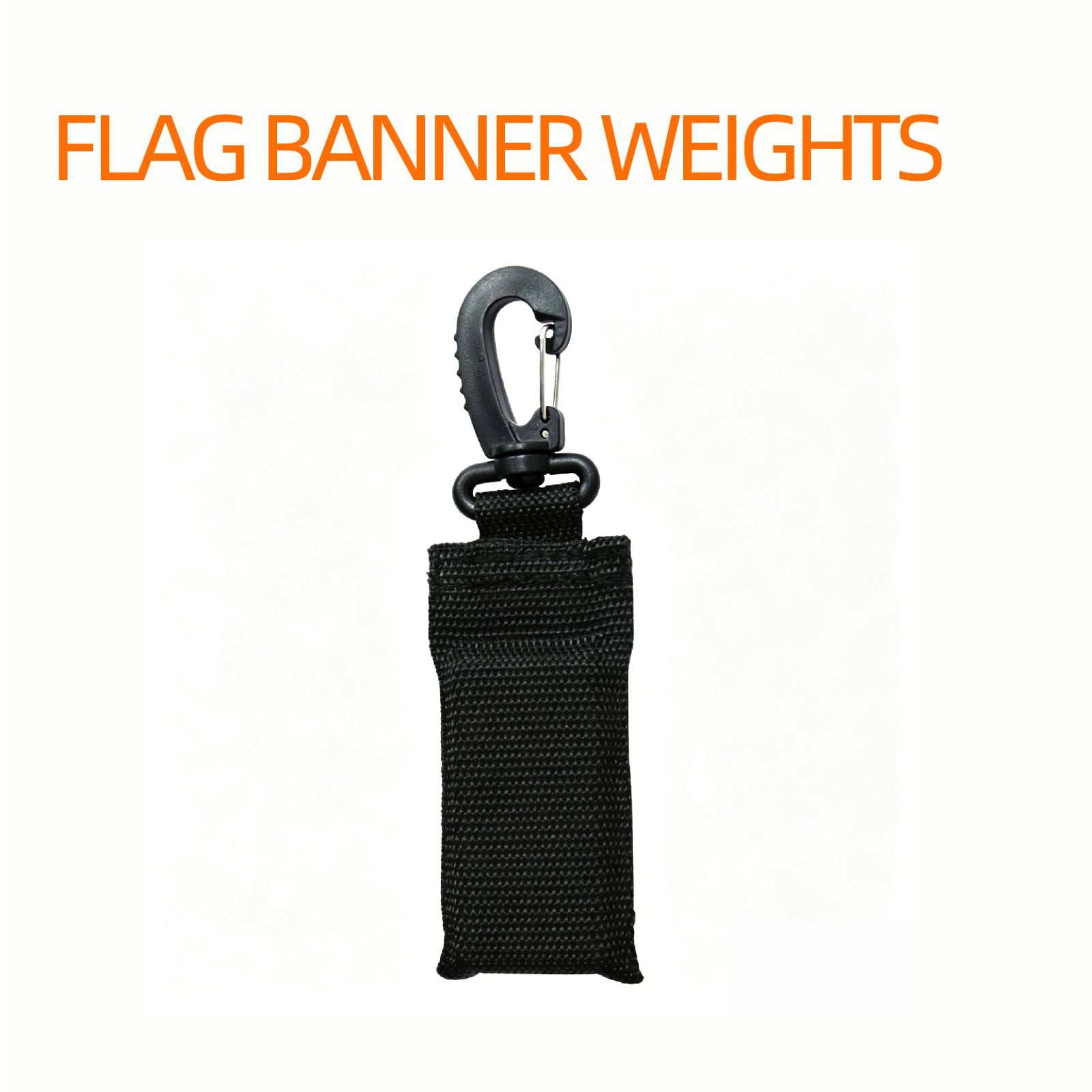
Flag /banner weights
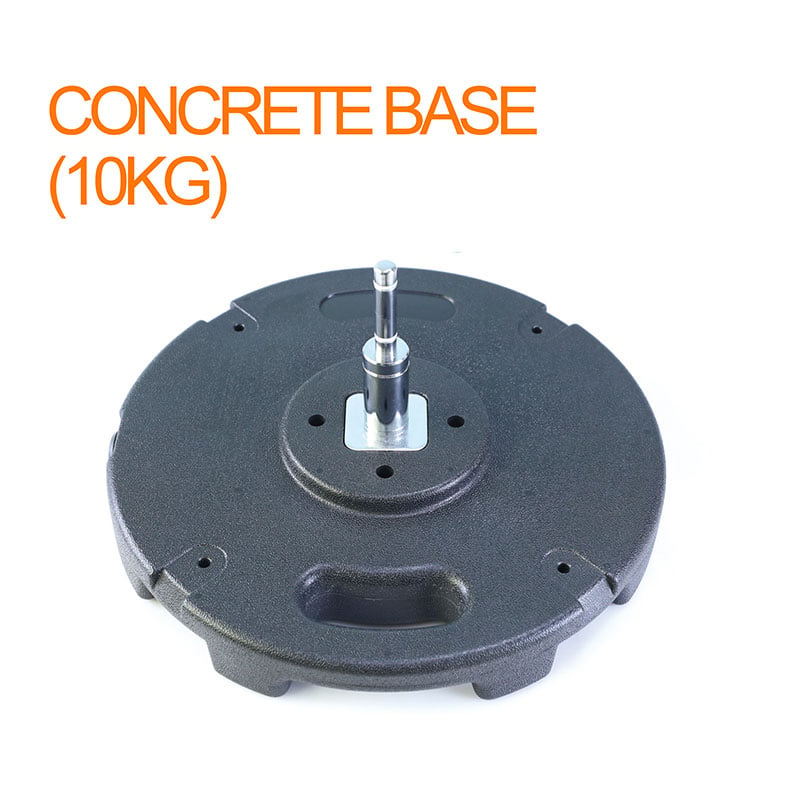
Concrete base(10kg)
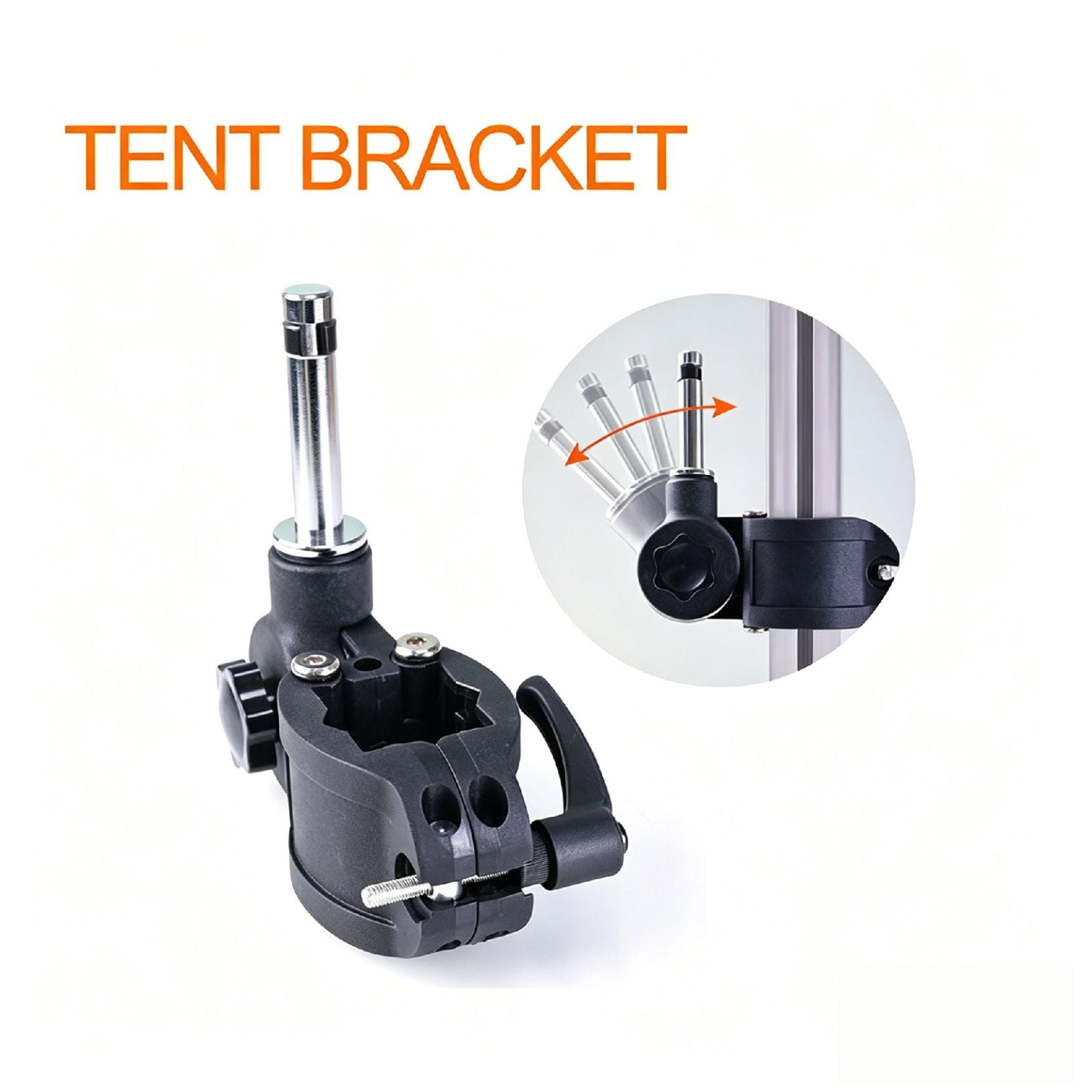
Tent Bracket
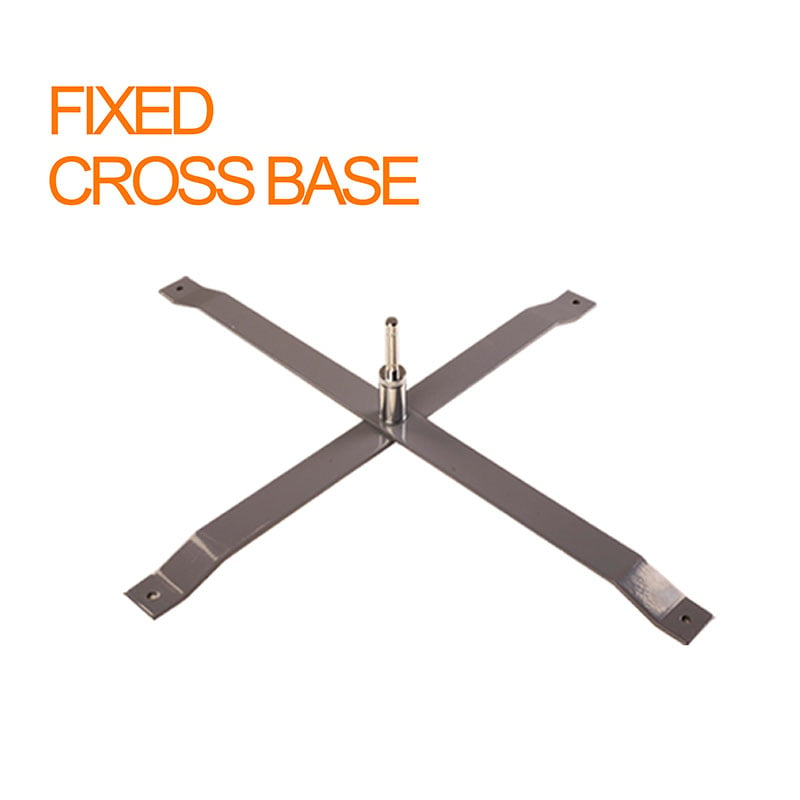
Fixed Cross Base
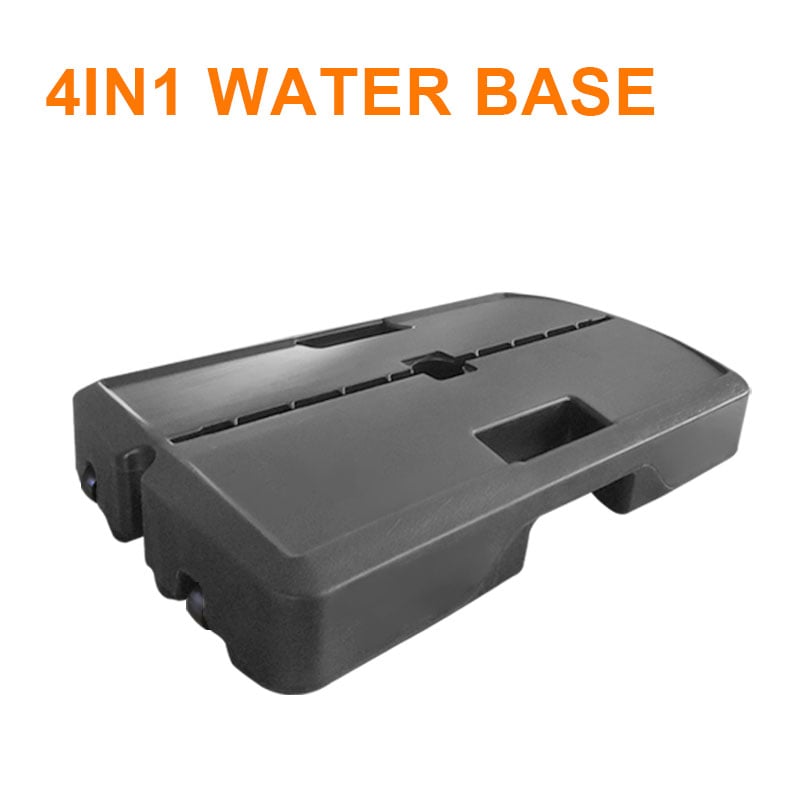
4 in 1 Water Tank
Related Articles
29kg Concrete Flag Base - The Complete B2B Buyer's Resource - WZRODS
WZRODS DY451B: 29 kg, HDPE shell, concrete core. Stackable, portable, rust-proof. FOB price US$5.75–$6.85 at MOQ 2 units. Those numbers look unremarkable. Factor in landed cost—import duties lower than aluminum’s under relevant HTS codes, freight savings from less weight per unit of stabilizing mas
Wide Tube Cross Base - The Complete B2B Buyer's Resource - WZRODS
The Wide Tube Cross Base, manufactured by Wzrods in Shandong, China, solves one problem: reliable stability for poles under three meters, without the freight costs and warehouse footprint that heavier alternatives demand.
Rectangular Pipe Cross Base - The Complete B2B Buyer's Resource - WZRODS
The pipe cross flag base is a cross of rectangular steel pipe, powder‑coated, weighing 1.3 kg and spanning 78 cm across its arms. Its center holds a C‑ring shaft that lets the flag rotate with the wind.
X-Shape Backpack Banner - The Complete B2B Buyer's Resource - WZRODS
Economic Cross Base - The Complete B2B Buyer's Guide- WZRODS
When you buy an economic cross base—something like the Wzrods DM‑9, a 77 cm‑long, 1.3 kg iron cross—forget “economic” as a synonym for “cheap.” It means value-engineered.