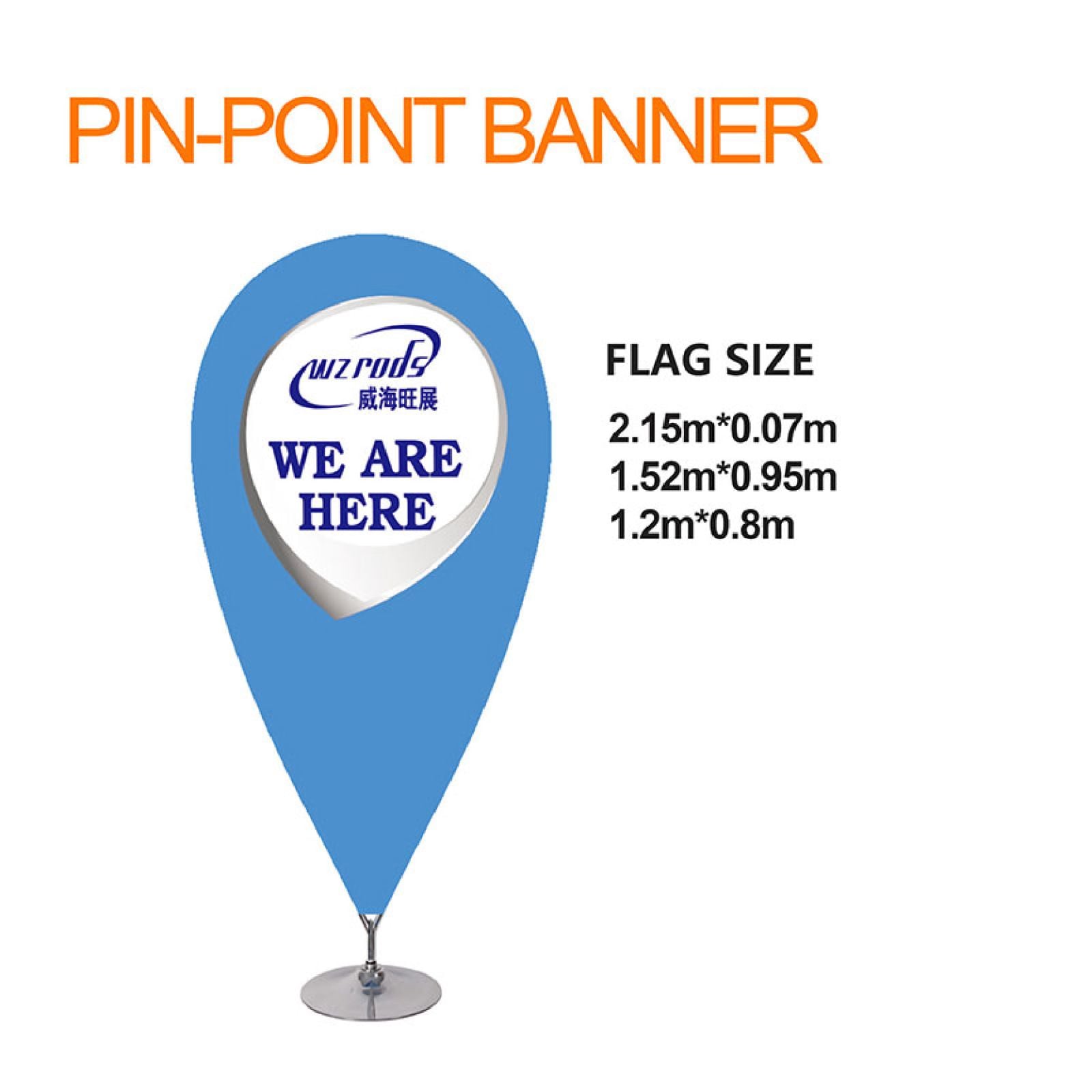
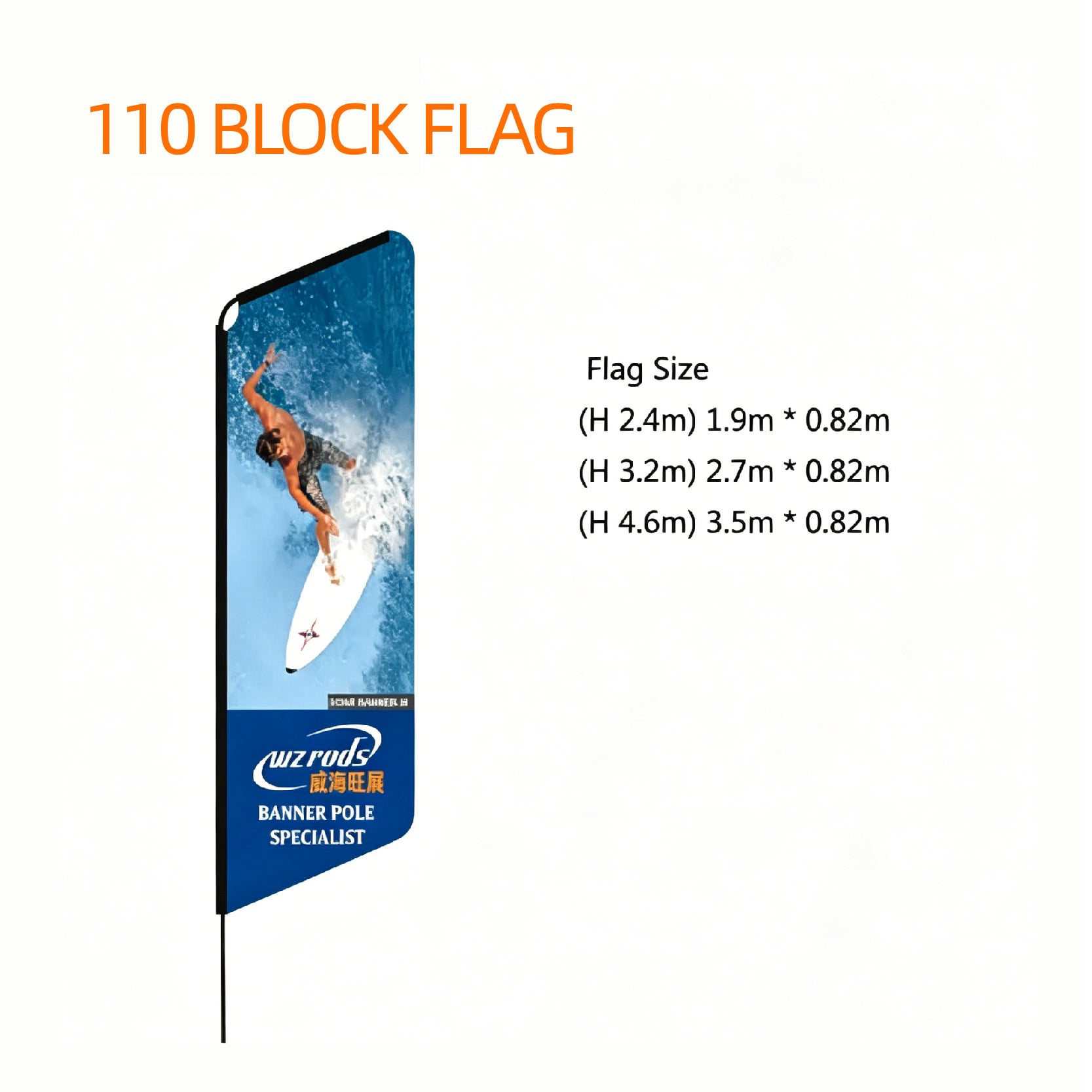
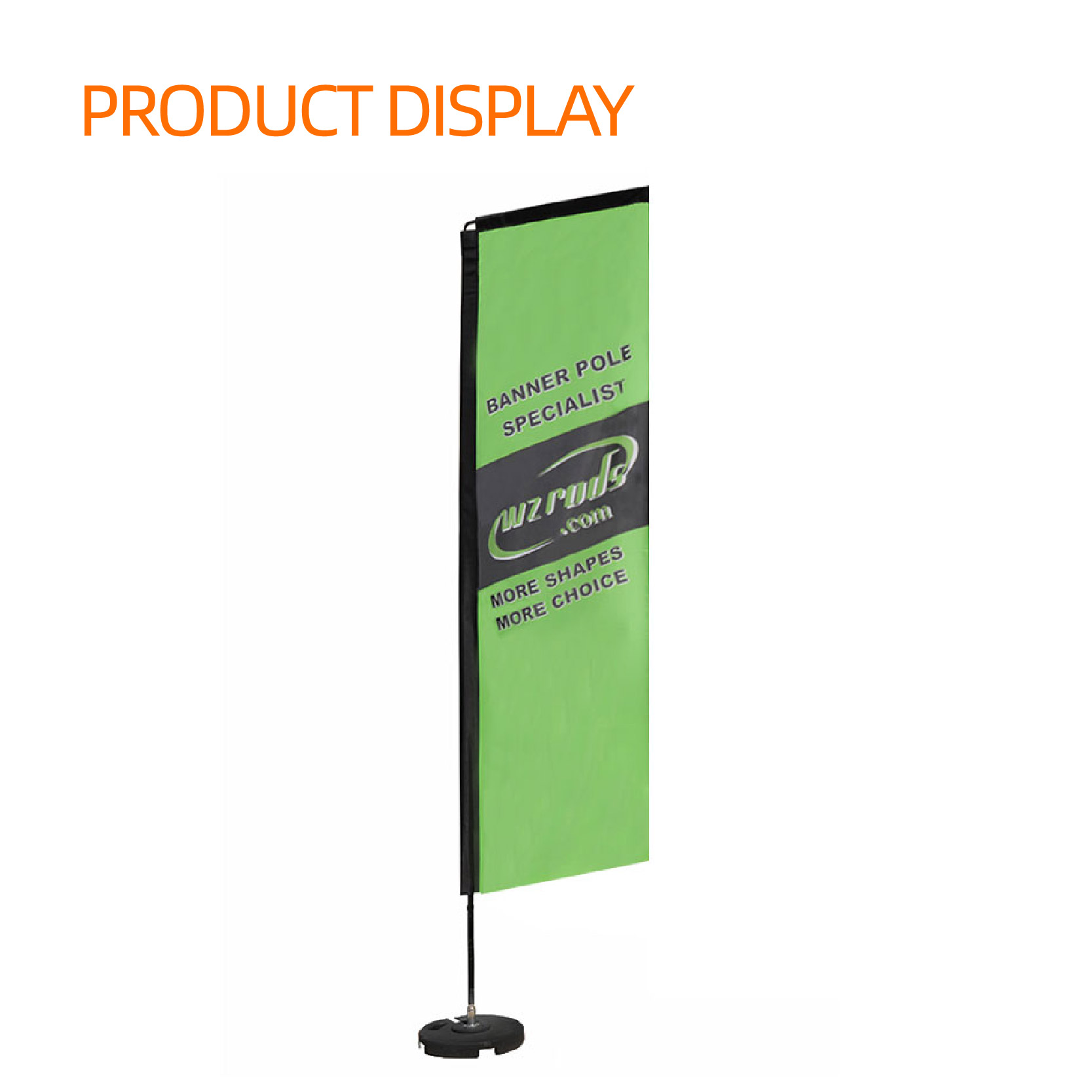
Angled Banner Stand
110° H (Curved banners)banners feature spacious printing. Built with flexible carbon composite pole in 3 sizes, lightweight and portable, equipped with carry bag and base.


 Article
 Specifications
- Origin
- Shandong, China
- Brand
- WZRODS
- Banner Material
- 100% Polyester
- Color
- CMYK 4 Color
- Application Spec
- Trade Shows, Outdoor Events, Sports Events, Retail Promotion
- Printing Method
- Digital Printing, Thermal Transfer Printing, Silk Screen Printing, Digital printing
- Print Color
- 4 color
- Artwork Format
- Ai. Pdf. Eps.PSD
- Moq
- 1 PCS
- Style
- FLYING
- 110H2.5M Size
- 1.77*0.73M
- 110H3.3M Size
- 2.5*0.73M
- 110H4.3M Size
- 3.52*0.73M
- Packaging
- Carry Bag/string rope bag/non-woven bag
- Pole Design
- Plug-in Assembly Design
- Pole Material
- Carbon composite
 Product Description
Shipping & Packaging
- Unit Weight
- HS384:0.9kg; HM385:1.12kg; HL386:1.5kg
- Unit Size
- HS384:115*19*19(cm); HM385:155*17*18(cm); HL386:147*19*20(cm) 10pcs/CTN
- Packaging
- Standard export carton
- Lead Time
- 15-30 days
Pricing
- MOQ
- 1 piece
- Price Range
- USD 8.1 – 19.3
* FOB Qingdao. Excludes shipping & taxes. Accessories & customization confirmed separately.
 Sample Service
- Sample Available
- Yes
 Customization Options

Light Custom
Logo, color, size adjustments

Fast Turnaround
Quick custom order processing
3-Day Design
Free mockup within 3 days
Feather Banner Stands: The Buyer's Quick Guide
Feather Banner Stands: The Buyer's Quick Guide
The honest answer is that there is no single "best" feather banner stand — there is a best configuration for your wind zone, your print brief and your landed-cost target. But if you want the short version: the best feather banner stand for most professional buyers is a carbon composite pole system with a matched heavy-duty base, printed by thermal transfer, and ordered from a factory that can show you a wind-tested pole, a documented duty code and a spare-parts pipeline. Everything else is a detail that either supports that combination or quietly undermines it.
This guide breaks down the four variables that actually decide whether a feather banner stand survives its first outdoor season, and it gives you the numbers to compare suppliers on cost rather than on price tag.
The Short Answer: What Makes a Feather Banner Stand "Best"
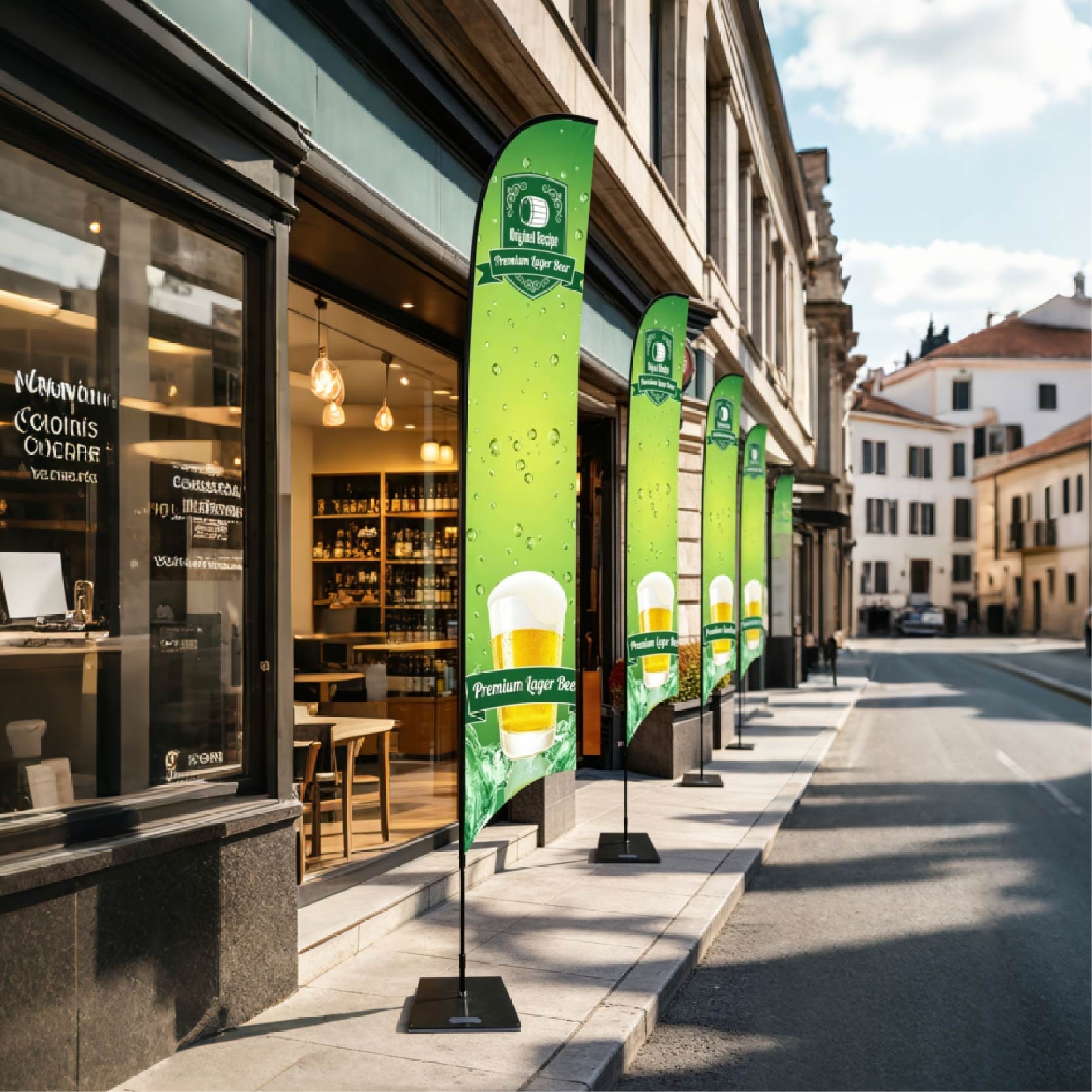
A feather banner stand is a portable, ground- or base-mounted pole system carrying a tall, narrow printed banner — the shape that curves or tapers toward the top and catches attention from a distance. Buyers typically choose between feather (blade), teardrop and curved 110° formats. The stand's job is simple and unforgiving: hold tension in the fabric, stay upright in a gust, and come apart into a bag that fits in a car boot or a courier box.
Four things determine whether it does that job:
- Pole material and wall thickness — this is the difference between a stand that bends and one that stays bent.
- Base type matched to ground conditions — the most common point of failure, and the cheapest to get right at the specification stage.
- Print method — determines colour cost, colour count limits, and whether the banner is reusable.
- Total landed cost — duty plus freight plus replacement rate, not the FOB unit price.
Get those four right and the stand is "best" for your application. Get any one wrong and you will be re-ordering in six months.
1. Pole Material: The Single Biggest Variable
Three materials dominate the category. The differences are not marginal — they change the failure mode, the freight bill and often the import duty line.
| Property | Aluminum | Fiberglass | Carbon composite |
|---|---|---|---|
| Behaviour in a gust | Deforms permanently once past yield | Fatigues and splinters at the joint | Bends and returns to shape |
| Unit weight (110° H range) | Materially heavier per unit | Mid-range | 0.9 kg (HS384) / 1.12 kg (HM385) / 1.5 kg (HL386) |
| Corrosion | Needs anodising; scratches expose the core | Resistant but UV-degrades | 100% rust-proof |
| Freight impact | Highest per unit | Medium | Lowest per unit |
| Import classification | Typically classified as aluminum structures | Varies by composite | Falls under different HTS codes — confirm rates with your broker |
WZRODS has manufactured carbon composite poles since 2005 — the company was China's first carbon composite flag pole manufacturer, and the pole platform is the reason the 110° H banner exists in its current form. In tested configurations the carbon composite pole is rated to wind speeds of 160 km/h+, subject to base selection and ground conditions. That rating is meaningless without the right base, which is the next section.
2. Base Selection: Where Most Failures Actually Happen
Buyers obsess over pole material and then order a 3 kg cross base for an exposed coastal site. Match the base to the ground and the exposure:
| Base type | Ground / condition | Notes |
|---|---|---|
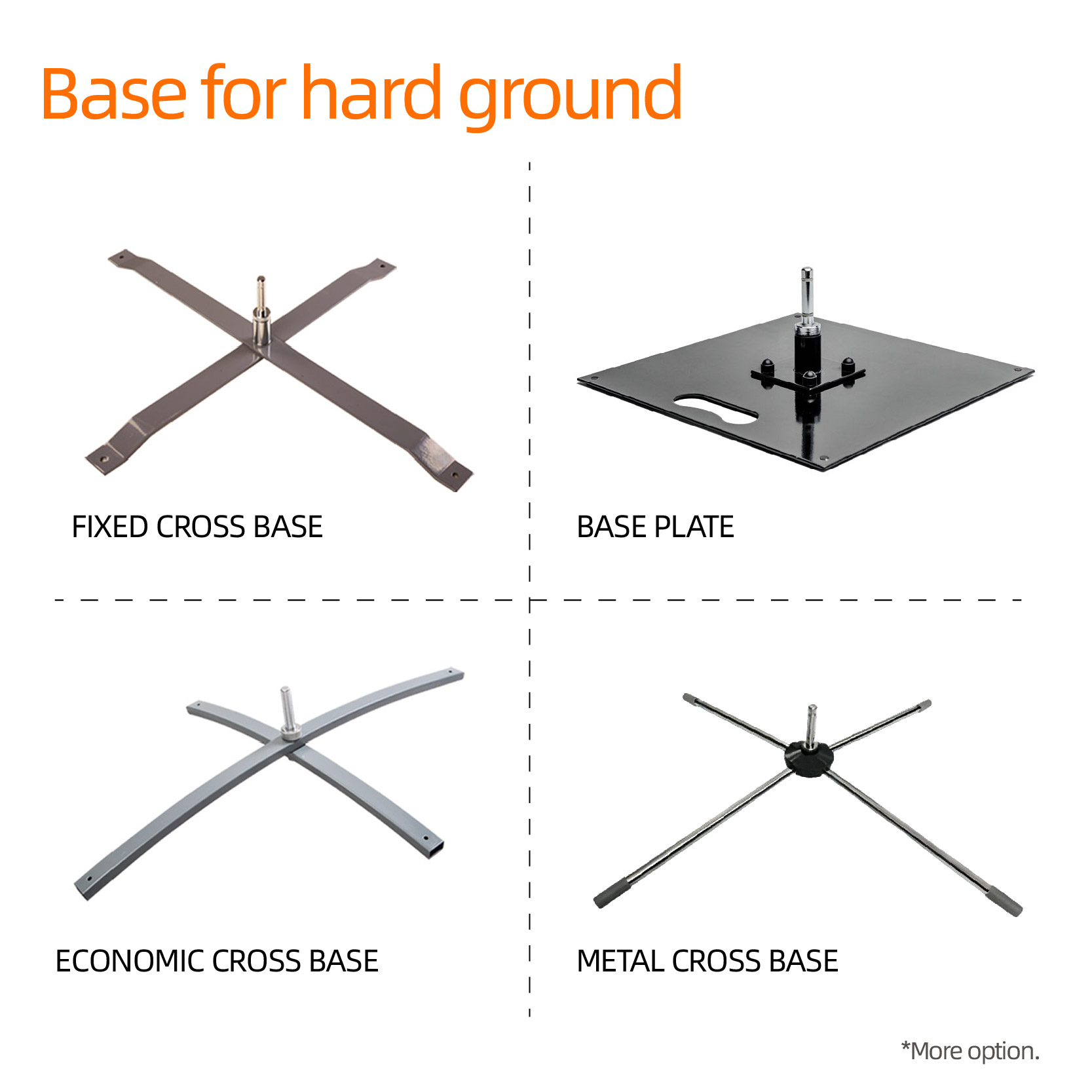
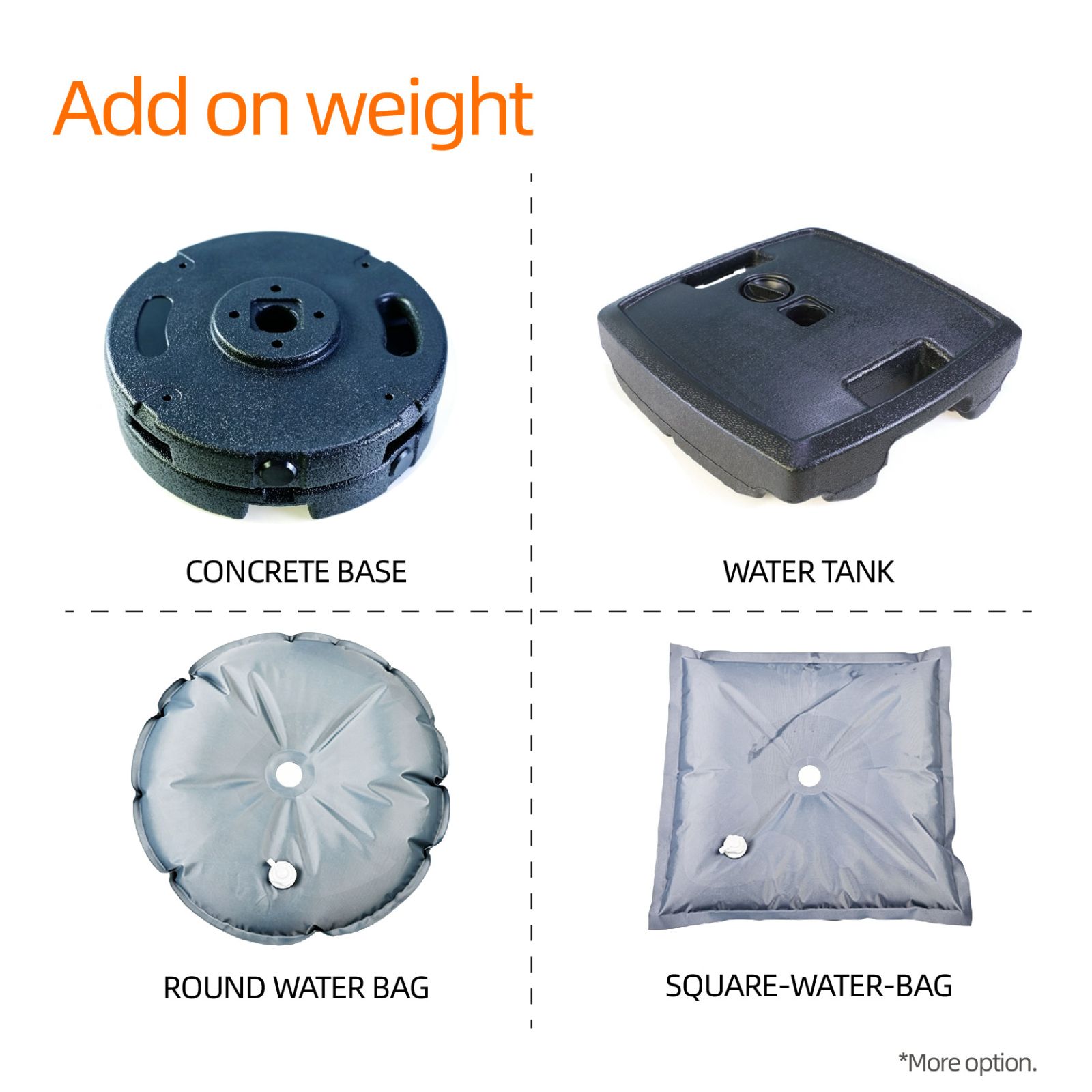
| Folding cross base + water/sand bag | Indoor, hard flat surfaces, sheltered outdoor | Cheapest and lightest to ship; ballast must actually be filled on site |
| Cast iron plate base | Exposed outdoor, hard standing, repeated reuse | Heavier freight, but the ballast is built in and cannot be forgotten |
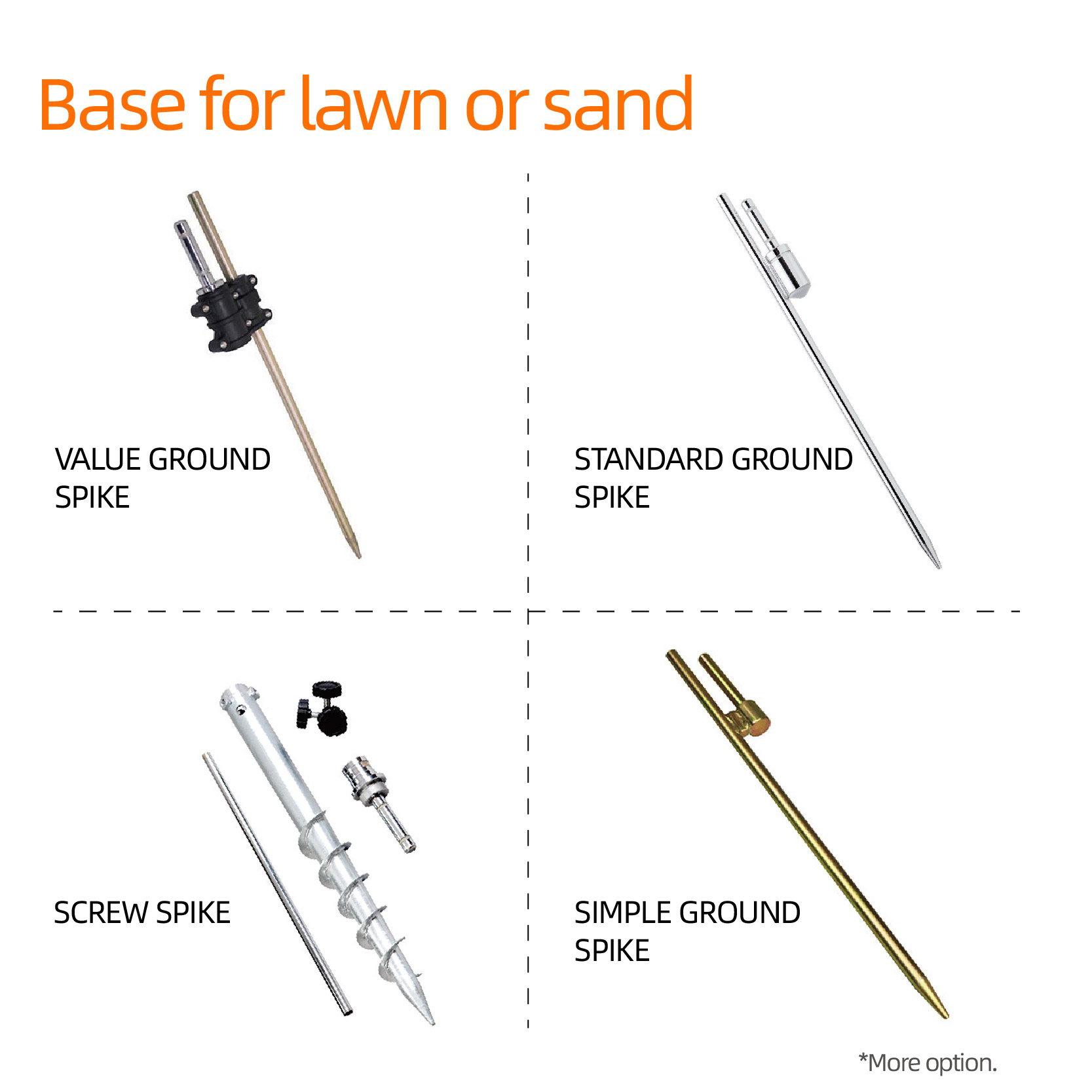
| Ground stake / drill base | Turf, soil, sand | Small-diameter stakes are the turf-friendly option for sports venues |
| Spike with stabiliser | Soft ground, temporary fencing lines | Fast deploy and removal for one-day events |
For high-wind sites, a bundled approach works better than piecemeal specification. A representative high-wind kit — a 3 m 170 g banner, a 3 m 1.5 mm 6061-T6 pole, a 20 kg cast iron base and a 316 stainless top swivel — typically lands in the USD 55–85 range and removes the guesswork about whether the components were designed to work together.
3. Print Method: Where Colour Count Quietly Changes Your Margin
Feather banner artwork usually carries a sponsor logo, a strapline and a colour field — which means colour count matters more than most buyers expect. The industry cost rules are consistent:
- Thermal transfer printing — unlimited colours at the same single-side unit cost. This is the default for anything over four colours.
- Silk screen printing — each additional colour adds roughly USD 0.05–0.10/m² in plate cost. Efficient for one- and two-colour logos in volume; punishing for photographic artwork.
- Digital printing — unlimited colours, but unit price runs 20–30% above thermal transfer. The right call for short runs and complex gradients.
For four-colour-plus designs, specify thermal transfer or digital and stop there. The 110° H banner is offered with digital printing, thermal transfer and silk screen, CMYK four-colour, on 100% polyester, with artwork accepted in Ai, PDF, EPS or PSD. A 3-day image design service is available if your distributor network needs localised artwork turned around fast.
Double-sided printing: three options, three price points
If a sponsor needs readable branding from both directions, you have three routes — and they are not equivalent:
- Independent print both sides plus an opaque liner — highest cost, best result, and the only option that allows a different design on each face. This is what brand clients should specify.
- Single-side print with mirror show-through — lowest cost, but reverse-side colour reads 30–40% lighter. Acceptable for internal wayfinding, not for sponsor contracts.
- Same artwork both sides with a blockout layer — mid-cost, prevents light transmission, keeps the design consistent.
4. Format: Feather, Teardrop, or 110° Curved?
"Feather banner stand" is often used loosely across the whole flying-banner family. Specify the format deliberately, because print area and site fit differ substantially.
| Format | Shape | Best application |
|---|---|---|
| Feather / blade | Tall, narrow, curved top | Roadside visibility, forecourts, entrances, high-traffic perimeter |
| Teardrop | Wide rounded top | Retail promotion, showrooms, indoor displays |
| 110° H curved banner | Rectangle with 110° side arms | Trade shows, sponsor walls, event branding — more usable print area than a standard rectangle telescopic banner |
| Rectangle telescopic | Standard rectangle | Indoor backwalls and simple promotional signage |
The 110° H banner is the format to look at when you want feather-style visual impact but a wider canvas for logos and slogans. It uses a plug-in assembly design, ships with a carry bag, string-rope bag or non-woven bag, and is available in three sizes:
| Model | Pole height | Print area | Unit weight | Packed length |
|---|---|---|---|---|
| HS384 | 2.5 m | 1.77 × 0.73 m | 0.9 kg | 115 × 19 × 19 cm |
| HM385 | 3.3 m | 2.50 × 0.73 m | 1.12 kg | 155 × 17 × 18 cm |
| HL386 | 4.3 m | 3.52 × 0.73 m | 1.5 kg | 147 × 19 × 20 cm |
| Standard export carton: 10 pcs/CTN. MOQ 1 piece. Unit price range USD 8.1–19.3 depending on size and configuration. |
Total Landed Cost: Why the Cheapest Stand Is Rarely the Cheapest Buy
Distributors comparing quotes on FOB unit price are comparing the wrong number. Three cost lines sit behind the invoice:
- Freight. A 0.9 kg pole versus a materially heavier aluminum equivalent compounds across a pallet, a container, and a year of reorders. On a 10-piece carton the difference is small; on a 500-piece season it is not.
- Duty. Carbon composite does not classify in the same HTS line as aluminum, and the rate can be materially lower. Confirm the exact code with your customs broker for your destination — this is one of the few places where a five-minute check changes the landed-cost spreadsheet.
- Replacement rate. A pole that deforms permanently in the first windy weekend becomes a warranty claim, a return, and a customer who does not reorder. That cost never appears in the quotation.
For EU-bound shipments, remember that customs valuation in the EU is based on CIF value — cost plus insurance plus freight. Freight and insurance must be declared accurately; under-declaring invites penalties and cargo detention. For display equipment, freight typically represents 15–25% of CIF value, so a lighter pole has a direct and measurable effect on the duty base as well as on the freight bill itself. New customers are usually best served with FOB terms, moving to CIF on established relationships; DDP only makes sense when you have local clearance capability, and EXW puts all risk on you.
Sourcing Checklist for Importers and Distributors
- Pole specification in writing — material, wall thickness, wind rating and the base it was rated with.
- Base options at order stage — not as an afterthought. Mixed base configurations are usually what your market actually needs.
- Print method locked to artwork — confirm colour count and print method before the proforma, not after.
- Private label and neutral packaging — critical if you sell through resellers who do not want your factory's brand on the carton.
- Mixed-model MOQ for market testing — a factory that lets you combine models in a first order is a factory that expects a second order.
- Warranty — WZRODS offers a 3-year warranty, which is a useful proxy for pole confidence. Ask any supplier what their warranty actually covers.
- Compliance paperwork — California Proposition 65 compliance testing for US-bound product.
- Lead time — 15–30 days is the standard production window for this category; add freight. If you are supplying the EU, a European distribution centre changes the maths: WZRODS operates one in Gaia, Portugal, covering EU countries at 2–5 days delivery.
France Spotlight: What the Trade Data Says
France is a useful worked example for anyone building a market entry model. China's export value to France in the banner poles and systems category (HS 761090, Comtrade summary via TradeDataService, 2025 data) was USD 161.2 million — a mature, well-supplied market with established distribution. At an exchange rate of roughly 1 USD ≈ 0.8956 EUR, and with French inflation at 0.9% in 2025 against GDP of USD 3.37 trillion, there is no currency or pricing tailwind to bail out a badly costed product. Your margin has to come from landed cost discipline and reorder rate.
Weather matters too. Current conditions in France read wind 7.9 km/h, 7°C, UV index 2.6 — benign. That is precisely the trap: a feather banner stand specified in February will be deployed in August at coastal events, outdoor festivals and sports fixtures where gust loading is a different order of magnitude. Specify for the worst week of the year, not the week you place the order.
EU compliance notes
- CE self-declaration — display stands without electrical components can be self-declared by the manufacturer against the relevant directives. If you add LED or motorised elements, a Notified Body is required: EUR 2,000–8,000 and 4–8 weeks. Budget for it before you design the catalogue, not after.
- GPSD (2001/95/EC) — even without a CE mark, display equipment must meet general product safety requirements. As importer you must ensure the product is safe under foreseeable use and retain technical documentation for at least 10 years.
- Customs valuation — CIF basis, as above. Declare freight and insurance honestly.
Where Feather Banner Stands Earn Their Keep
Sports events. The pain points are volume, speed and crowd safety: large numbers of temporary installations that must go up and come down within a tight window, sponsor branding that has to look identical across every position, and outdoor wind exposure with spectators nearby. Carbon composite poles are around 40% lighter than aluminum equivalents, which matters when a ground crew is carrying 60 of them. Modular bases and tool-free assembly cut labour hours, and a 3-year warranty plus shipping experience across 80+ countries is what makes a season-long contract safe to sign.
Outdoor entertainment and cultural events. Multi-day festivals combine unpredictable wind, rain and UV with dense crowds and venues that cannot be damaged. Look for rust-proof fittings (stainless and anodised aluminum), turf-friendly ground stakes, and a pole that returns to shape after a gust rather than requiring replacement mid-event. Long-duration events reward equipment designed for repeat use, not single-use pricing.
Weather and emergency response. Here the requirement is that nothing collapses and creates a secondary hazard, that signage goes up in minutes, and that the system stays usable after the event. Reinforced poles, weighted bases and high-visibility printed banners are the standard configuration — and this is the scenario where the cheapest stand is the most expensive mistake.
Two Field Examples Worth Reading Before You Specify
European Tour golf event, Scotland. A club hosting a European Tour fixture needed sponsor banners across 18 holes, but conventional poles were damaging putting surfaces and event-week gusts commonly reached 40 km/h. The fix was a pin-point banner system with 8 mm diameter ground stakes — reducing turf damage area by around 90% — paired with 110 g breathable fabric to cut wind load. Turf repair costs fell roughly 85%, banners stayed upright at 40 km/h, and the system earned equipment-supplier approval from the Tour.
Retail rollout, Germany. A chain opening 5–8 stores per quarter had storefronts ranging from 3 m to 8 m wide, and each opening ran only three days before teardown. A giant banner system with an adjustable 3 m–8 m crossbar let them use one pre-printed template with only the store name and date changing. Set-up dropped from four hours to one per store, banner reuse rose to 80%, and per-opening display cost fell 55%. The whole system packed into a 1.2 m carry bag.
The lesson in both cases: the pole is a component, not a product. The specification that wins is pole plus base plus fabric weight plus print method, chosen together.
Where to See the Hardware
If you specify at trade-show level, the category's main sourcing venue is APPPEXPO in Shanghai (4–7 March 2026), where new releases this cycle include a 3D arch stand and a French fries cup display stand. It is a practical place to compare carbon composite pole flex side by side rather than from a spec sheet. For buyers who want a faster route, sample delivery for this category typically runs 15–30 days; samples are not free, which is standard at factory-direct level and keeps sample pricing honest.
Frequently Asked Questions
What is the best material for a feather banner stand pole?
Carbon composite, for any application where the stand will be used outdoors more than once. It bends under gust load and returns to shape, whereas aluminum deforms permanently once past its yield point and fiberglass fatigues and splinters at the joint. It is also 100% rust-proof — the decisive factor in humid, coastal and tropical markets — and at 0.9–1.5 kg per unit it reduces freight cost against heavier aluminum alternatives.
How much does a feather banner stand weigh, and why does that matter?
In the 110° H range: 0.9 kg (2.5 m), 1.12 kg (3.3 m) and 1.5 kg (4.3 m). It matters because freight on display equipment typically represents 15–25% of CIF value for EU imports, and the EU duty base is CIF — so unit weight affects both the freight line and the duty line. Across a season's volume, that difference is a margin decision, not a rounding error.
What is the minimum order quantity, and can I mix models?
MOQ is 1 piece on the 110° H banner, with a mixed-model MOQ structure designed for new partners testing a market. That means you can validate a size mix and a base configuration with real sell-through data before committing to container volume. Unit pricing runs USD 8.1–19.3 depending on size and configuration, with production lead times of 15–30 days.
Can I print different artwork on each side of the banner?
Yes, but only with the right process. Independent printing on both faces plus an internal liner allows a different design per side and gives the best result — this is the option to specify for sponsor and brand clients. Single-side print with mirror show-through is cheaper but reverse-side colour reads 30–40% lighter, and same-artwork-both-sides with a blockout layer sits in between. Artwork is accepted as Ai, PDF, EPS or PSD in CMYK.
What warranty and compliance support should I expect?
A 3-year warranty is a reasonable benchmark for carbon composite pole systems and a fair proxy for material confidence. On compliance, ask for California Proposition 65 testing documentation for US-bound product, and for EU-bound product confirm that the manufacturer can support your GPSD technical file obligations (retain for 10 years) and CE self-declaration for non-electrical stands. WZRODS has supplied 80+ countries since 2005, with private label and neutral packaging available for distributors running their own brand.
References
- TradeDataService (Comtrade summary), category HS 761090 — China export value to France, 2025: USD 161.2 million (updated 2026-11-01).
- IMF World Economic Outlook — France real GDP growth projection 2031: 1.1%; GDP 2025: USD 3.37 trillion; inflation 2025: 0.9%.
- Exchange rate reference: 1 USD ≈ 0.8956 EUR.
- Current weather observation for France: wind 7.9 km/h, temperature 7°C, UV max 2.6.
- EU customs valuation rules — CIF basis (cost + insurance + freight) as the dutiable value; display equipment freight typically 15–25% of CIF value.
- GPSD (Directive 2001/95/EC) general product safety requirements; technical file retention of at least 10 years.
- CE self-declaration for non-electrical display stands; Notified Body route for LED/motorised variants at EUR 2,000–8,000 and 4–8 weeks.
- WZRODS manufacturing data: established 2005, Shandong, China; 3-year warranty; 80+ countries served; European Distribution Center, Gaia, Portugal (2–5 days EU delivery); California Proposition 65 compliance testing.
- Product specifications for the 110° H banner (HS384 / HM385 / HL386): dimensions, weights, carton quantities, print methods and pricing as supplied by WZRODS.
- Case references: European Tour golf event, Scotland; multi-store retail rollout, Germany — as documented by WZRODS.
 Comments (0)
No comments yet. Be the first to comment!
Leave a Comment
Related Products
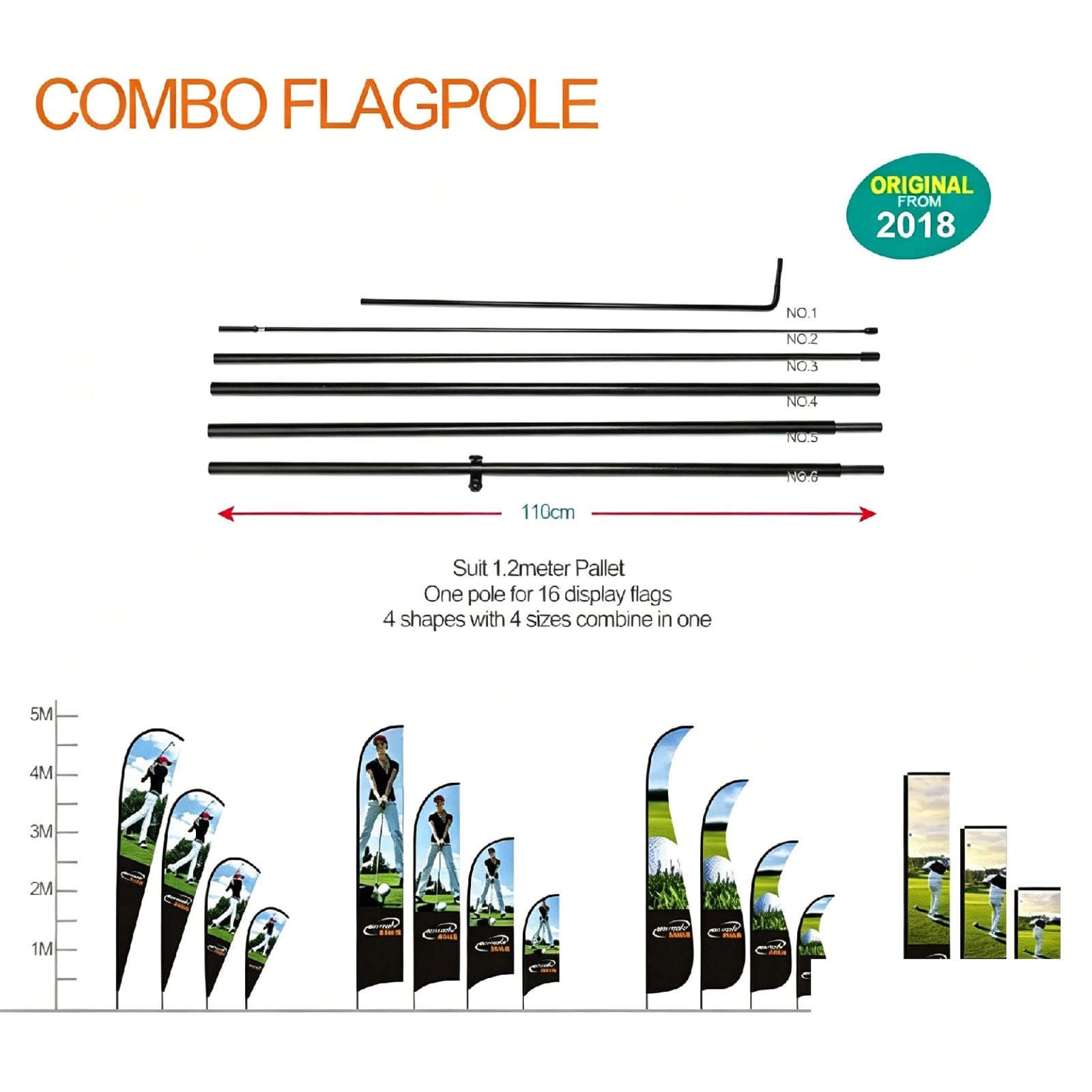
Combo Pole
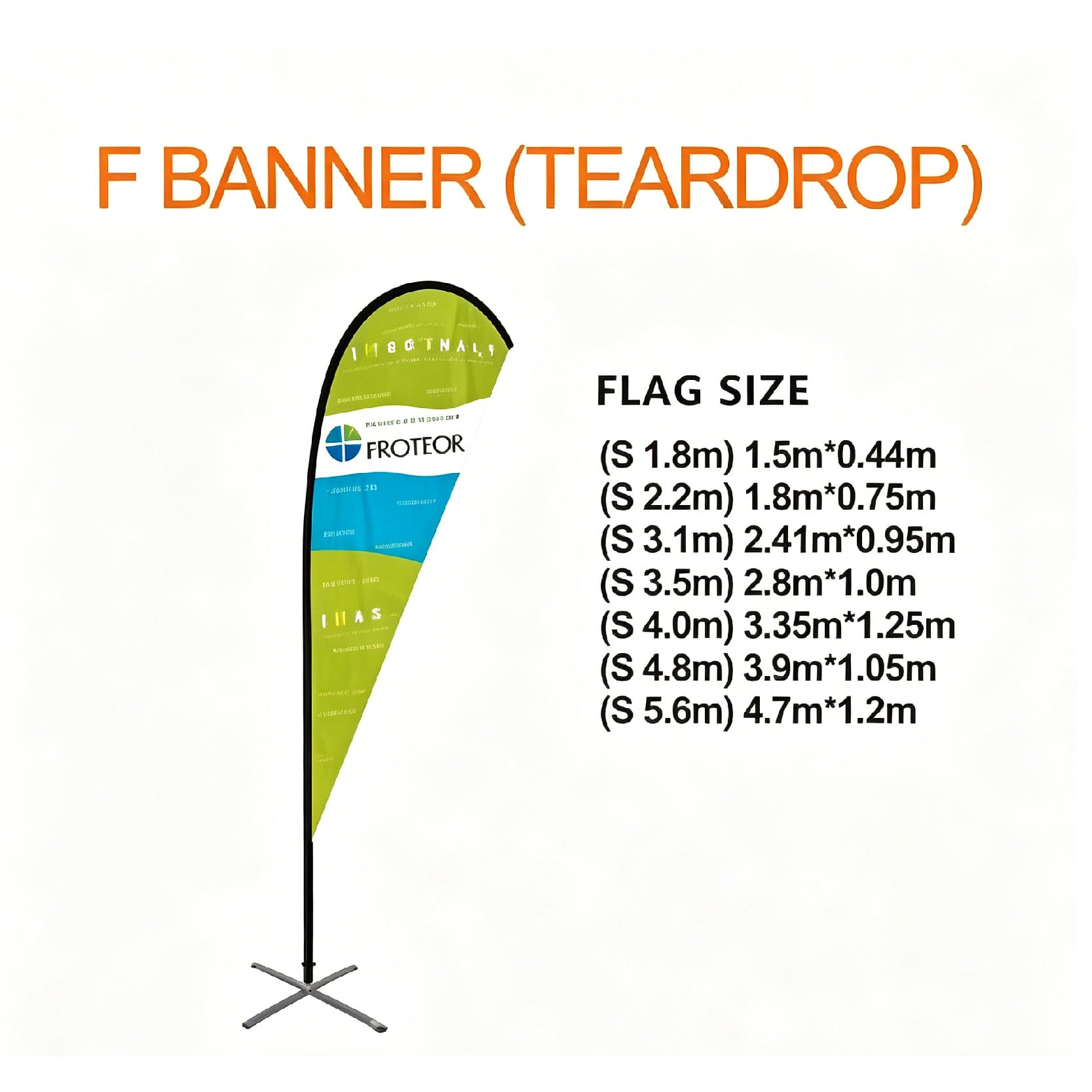
F Banner(Teardrop)
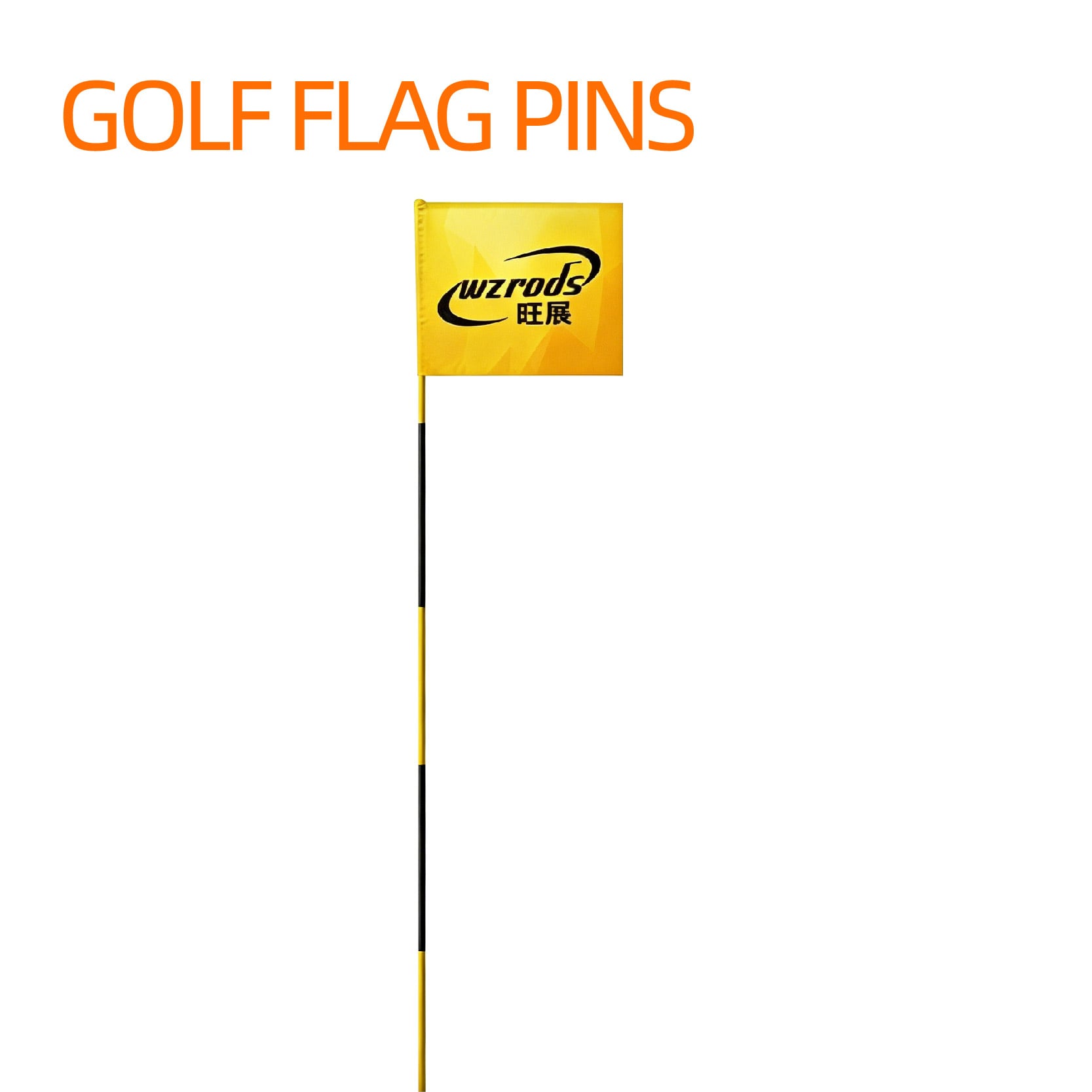
Golf flag pins
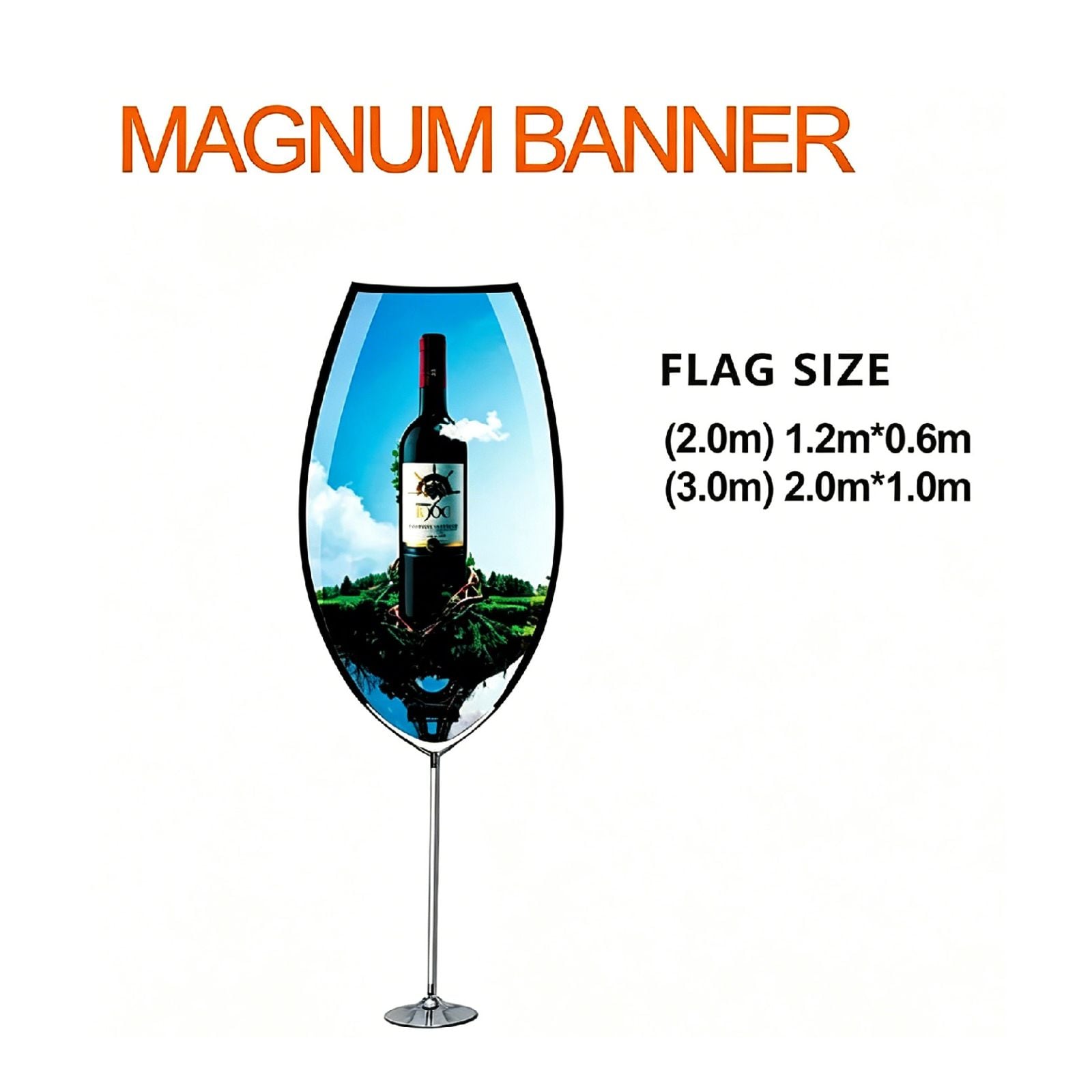
Magnum banner
Wall Mounted Flagpole
SF Banner
Budget 2in1 flag system
4 in 1 flag System
T Banner
H Banner
Related Articles
How to Choose the Right Feather Flag Base for Different Surfaces
The flag earns the attention, but the base decides whether it stays standing. A practical guide to matching feather flag bases to surface and wind load, from cross bases to under-wheel plates.
Feather Flag - Professional Banner Poles & Systems Manufacturer - WZRODS
With U.S. advertising flag shipments up 13% year over year, warranty claims are eroding distributor margins on aluminum feather flags. Learn how carbon fiber rods reshape unit economics for private-label distributors.
How to choose a high-quality backpack flag
The backpack flag concept centers on a frame carried on the back, similar to a backpack, specifically engineered to support a raised flag or banner.
Teardrop Banner - The Complete B2B Buyer's Resource - WZRODS
A 3.5‑meter teardrop banner at a Hamburg automotive expo leaned at an angle that wasn’t in the design brief. The pole bent. Not broken—bent. It stayed bent. The
29kg Concrete Flag Base Buying Guide: What Importers Must Know - WZRODS
For the professional distributor or rental house, evaluating the wholesale 29kg Concrete Base bulk factory price requires understanding how weight, material, and logistics interact to protect your margin.
Half Moon Banners: The Shape That Commands Attention
Half Moon Banners: The Shape That Commands AttentionA half moon banner is a freestanding fabric display built on a curved frame: the printed panel is tensione
Banner Stand Weights: The Formula for Not Falling Over
Banner Stand Weights: The Formula for Not Falling Over"How much weight does my banner stand need?" is the question that separates a first-time buyer from a di
Ground Banner Stands: The Outdoor Setup Guide
Ground Banner Stands: The Outdoor Setup GuideEvery outdoor banner failure we hear about follows the same script: the pole was fine, the print was fine