
Snow Ground Spike
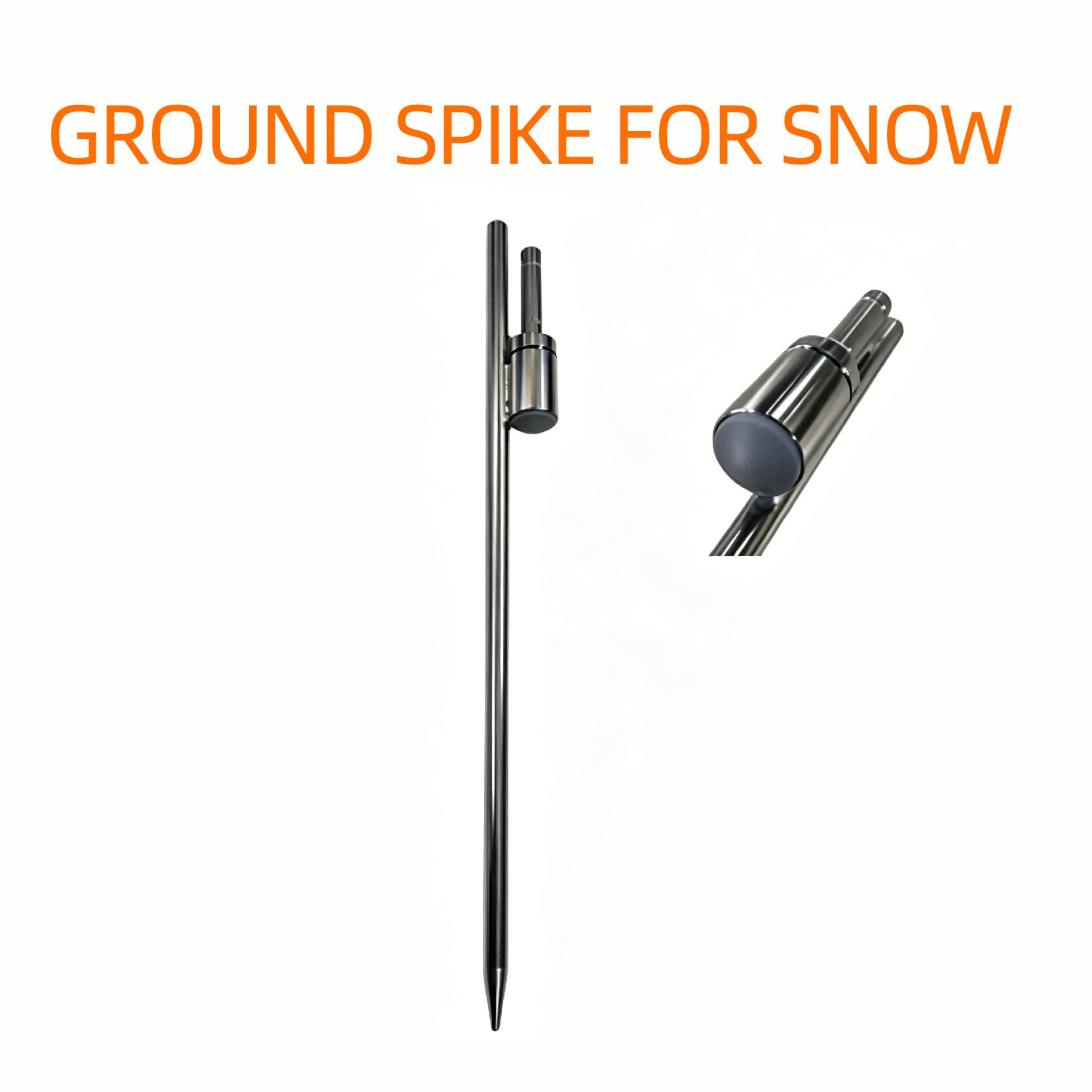
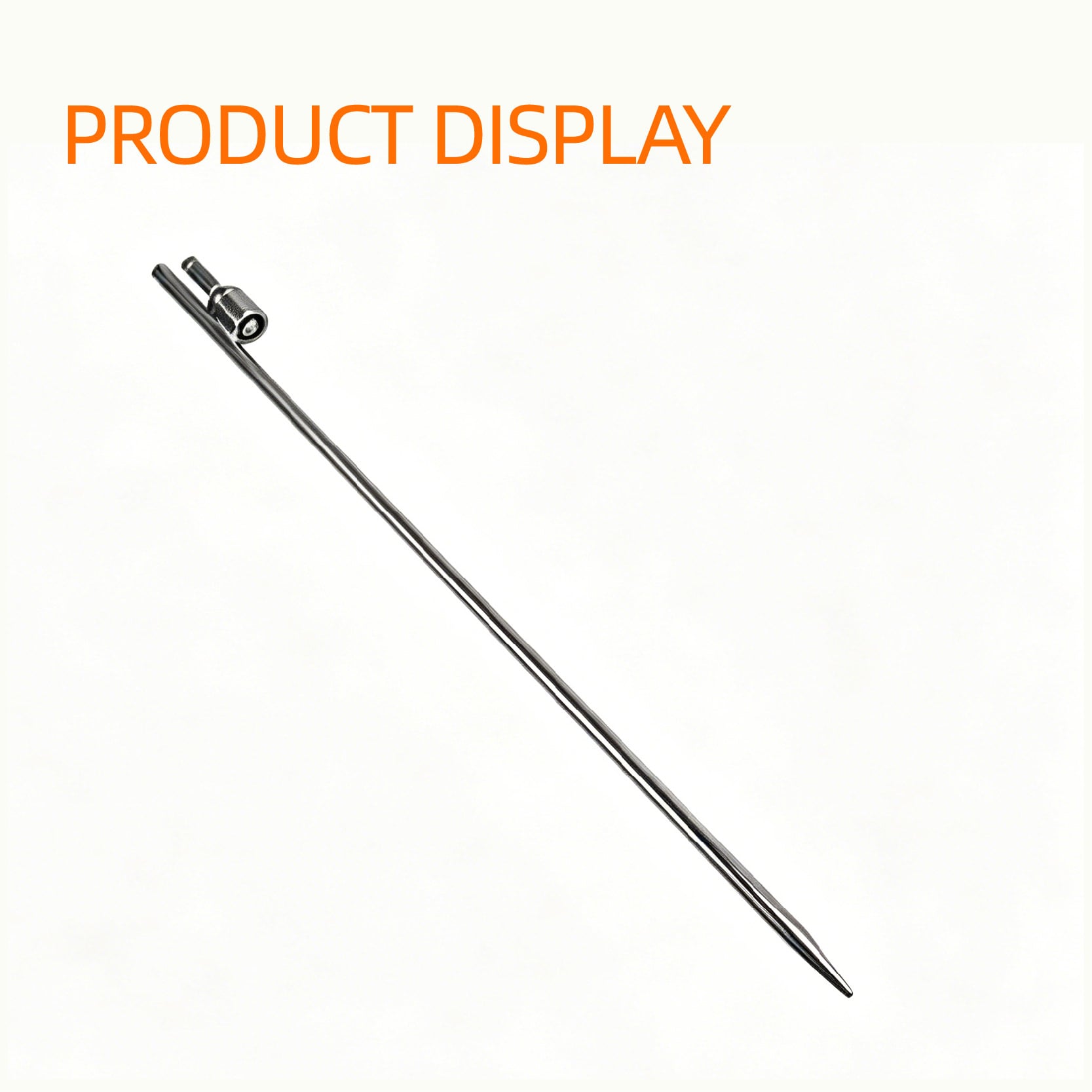
A ground spike for snow is a heavy-duty, wide-bladed or spiral-shaped anchor designed specifically for securing, flags, and other structures in soft, slippery snow. It features a large surface area or…


 Article
 Specifications
- Origin
- Shandong, China
- Brand
- Wzrods
- Item Code
- DS-14
- Material
- Carbon steel
- Moq
- 1pc
- Applicatioans
- Outdoors, skiing competition
 Product Description
Shipping & Packaging
- Packaging
- Standard export carton
- Lead Time
- 15-25 days
Pricing
- MOQ
- 1 piece
- Price Range
- USD 5 – 20
* FOB Qingdao. Excludes shipping & taxes. Accessories & customization confirmed separately.
 Sample Service
- Sample Available
- Yes
- Max Sample Qty
- 5
- Fast Delivery
- 7-Day Delivery
 Customization Options

Light Custom
Logo, color, size adjustments

Fast Turnaround
Quick custom order processing
Snow Ground Spike - The Complete B2B Buyer's Resource - WZRODS
In 2018, a Denver trade show lost a fifth of its entrance‑canopy ground spikes overnight. The wind wasn’t extraordinary – maybe 25 mph – but the spikes had bent and pulled free. The hardware cost was trivial. The hour of crew time to re‑anchor, the delayed exhibitor move‑in, and the bruised reputation were not. That failure rewired how I think about ground spikes. The real cost is never the invoice price. It’s labor, damaged fabric, lost trust. A purchase order has to start with a systematic look at what can fail in the field, not with a unit price.
This guide is for the international buyer – event company, distributor, importer – who has to decide under real uncertainty: weather, soil, shipping timelines. It doesn’t push a single product. It gives you a total‑cost‑of‑ownership framework that ties together material science, operational demands, and U.S. import rules. Every table and checklist is meant to go straight into an RFQ or a supplier negotiation. The snow ground spike looks simple. Its failures are complex and expensive. The following pages show you how to pin down those costs.
1. Procurement Risks of Ground Spike Failure in Winter Conditions
When a spike slips out of frozen snow or snaps in a gust, the troubles don’t stop there. The flag it held gets trampled. The tent canopy collapses and must be replaced. Crews drop their scheduled work to fix the problem. The event timeline slips. Worst case, a heavy pole or frame piece hits someone and opens the organizer to liability. So risk per spike is wildly out of proportion to its price. That’s why a procurement lens matters.
Four failure categories show up again and again in my supply‑chain audits.
- Low‑temperature brittleness. Alloys that feel ductile at room temperature can snap like glass at −20°C. A spike that sails through a summer pull test may fracture along the shaft during a Swedish winter.
- Too little bearing area. Granular snow gives much less lateral resistance than soil. Narrow blades or a small helix diameter loosen under the cyclic wind loads typical of outdoor winter events.
- Corrosion‑fatigue. In coastal air or de‑icing salt, unprotected steel rusts fast. Rust pits become stress risers that cut fatigue life.
- Import compliance failures. A wrong HTS code or missing anti‑dumping documentation can slap 25% or more onto landed cost, erasing any margin you planned for.
A Norwegian distributor ordered 3,000 spikes for a chain of ski resorts. After one season, the galvanized coating flaked off because the factory had skipped the post‑galvanizing passivation. Replacing them, including air freight to meet a critical deadline, cost over $40,000. A coating‑adhesion test clause in the PO would have prevented it. That kind of lesson shapes this guide.
2. Industry Applications: Where Snow Ground Spikes Work and What They Face
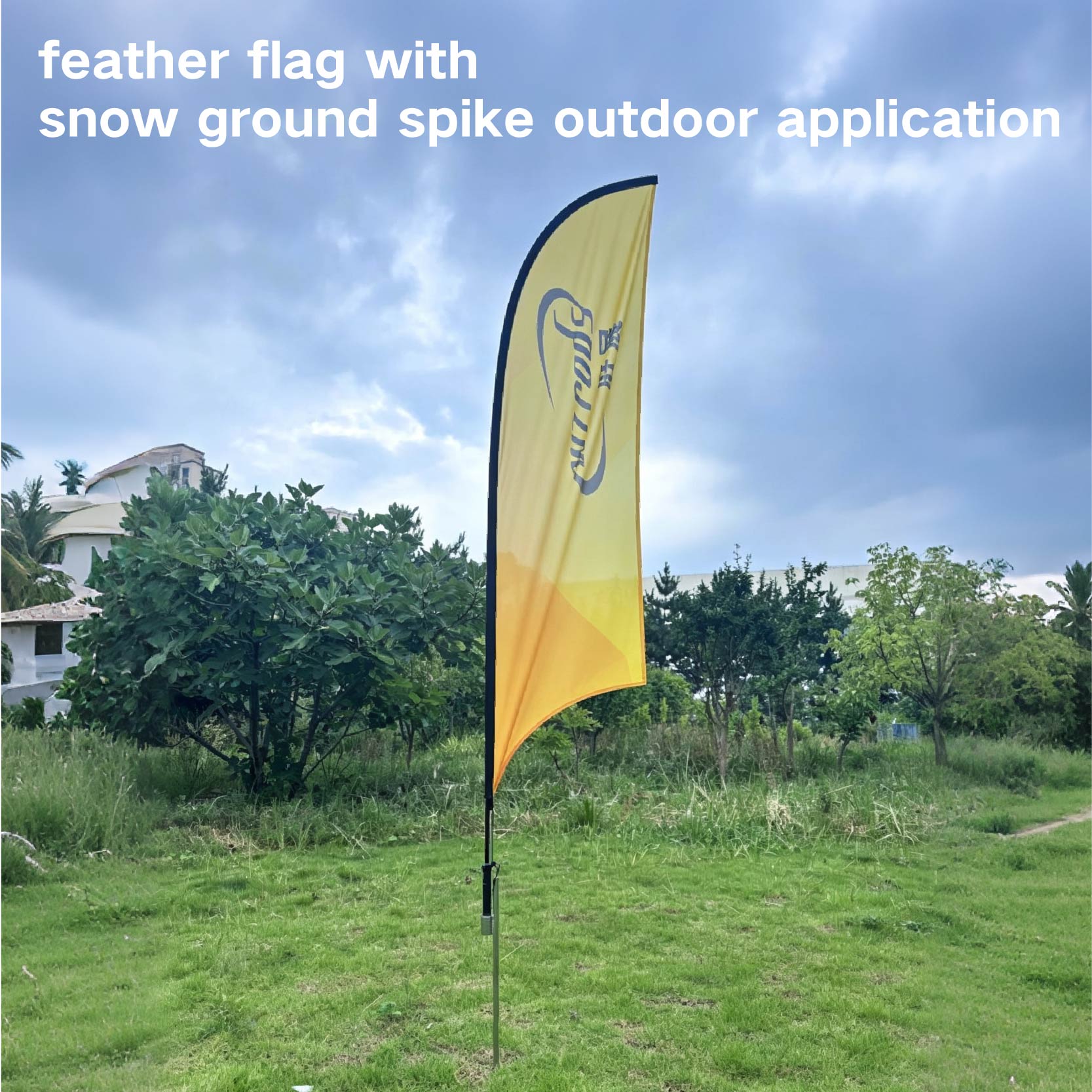
Spikes show up in far more places than people guess. World Cup skiing uses hundreds for timing gear, sponsor flags, safety netting, temporary signs. Northern European Christmas markets and winter festivals anchor stalls, lighting trusses, inflatable decorations in city squares where the ground is rock‑hard under the snow. Outdoor automotive and energy trade exhibits hold large banner frames and canopy tents with them. Arctic‑condition military exercises demand spikes that deploy fast with minimal tools.
Each setting piles on its own stress. A spike for a one‑weekend ski‑cross race might be installed and pulled twice a year, but it endures repeated freeze‑thaw cycles that work it loose. A permanent display at a Nordic ski museum sits for months in steady wind and heavy snow with no inspection. Writing a performance spec starts with knowing the operational profile. As a procurement manager, you need to ask: How many installation‑teardown cycles per season? Hand‑driven or power tool? Maximum sustained wind speed and gust loading? Outdoor storage between seasons? Those answers dictate the material and design choices in the next sections.
2.1 Setup, Transportation, and Storage: The Hidden Cost Drivers
Handling eats budget. A crew in deep snow, wearing gloves at −15°C, cannot spend ten minutes per spike with a sledgehammer. The geometry has to allow fast insertion – a pointed tip and helical thread that bites into packed snow in a few turns. Weight matters too. A case of 50 steel spikes can top 30 kg; a hundred cases for a large event and freight becomes a line item you feel. Then storage: spikes that don’t stack or nest waste warehouse space and get bent or chipped when tossed into bins. Ergonomics, weight, nestability – they all feed landed cost per use. Make sure supplier evaluations include field‑handling trials, not just lab tensile data.
2.2 Failure Modes Observed in the Field
Beyond brittleness and coating failures, three other modes keep turning up. Pull‑out happens when the spike’s surface area isn’t enough to develop friction in dry, granular snow; spiral diameters below 60 mm often fail. Shaft buckling occurs if the diameter‑to‑length ratio is too slender for the bending moment a canopy frame delivers in side winds. Thread stripping – deformation during insertion or removal – can make a spike unusable after just a few cycles. Your specification should therefore require a minimum number of insertion‑removal cycles before visible deformation, verified by a standardized supplier test.
3. Product Comparison: Material Specs for Cold‑Weather Performance
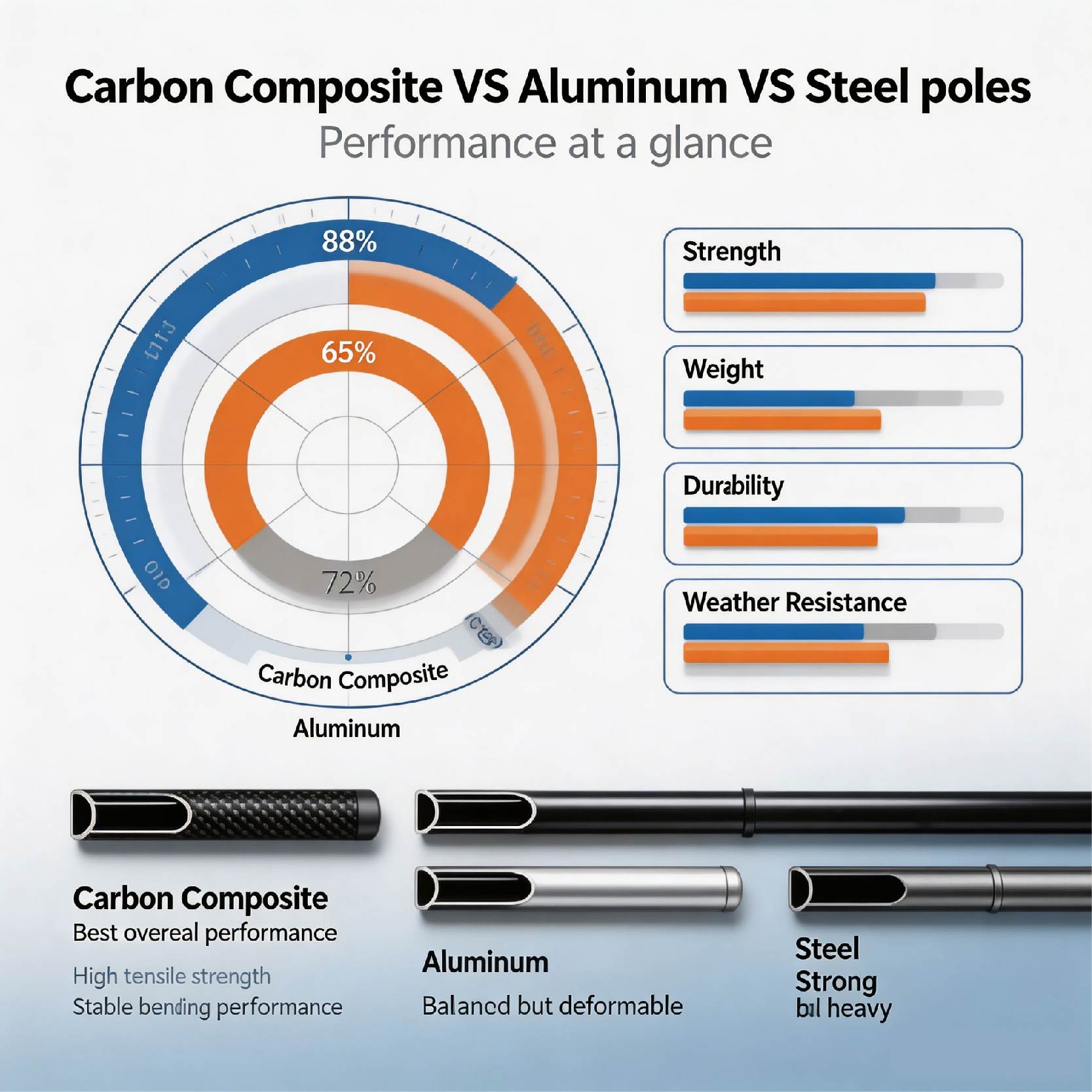
The market splits into three material groups: carbon steel, aluminum alloy, and – creeping in – carbon‑fiber‑reinforced composite. Each behaves differently in the cold, and the choice connects directly to warranty claims, labor hours, and replacement intervals. The table below summarizes key properties at −20 °C, based on ASTM E8/E8M tensile tests and ASTM E23 Charpy V‑notch tests. Data come from supplier‑certified reports and independent validation at a central European laboratory.
| Property | Carbon Steel (Q235, hot‑dip galvanized) | Aluminum Alloy (6061‑T6) | Carbon‑Fiber Composite (CFRP, epoxy matrix) |
|---|---|---|---|
| Yield Strength (MPa) | 235 | 240 | — (brittle bending failure, ultimate ~800) |
| Elongation at Break (%) | 22 | 12 | <2 |
| Charpy Impact Toughness (J) at −20 °C | 27 | 18 | N/A (linear‑elastic) |
| Density (g/cm³) | 7.85 | 2.70 | 1.55 |
| Salt Spray Resistance (ASTM B117, hours to red rust) | 1000 (HDG) | 300 (bare), >2000 (anodized) | No corrosion |
| Typical Ex‑Works Unit Price (USD) | 5–20 | 12–35 | 40–80 |
| Re‑usability After Repeated Driving | Excellent (proper heat treatment) | Good, risk of thread galling | Good, limited impact tolerance |
For cold‑weather procurement, elongation and impact toughness top the list. A material with less than 15% elongation can fracture suddenly when driven into frozen ground or hit at an angle. Carbon steel with hot‑dip galvanizing and proper post‑weld heat treatment routinely exceeds 20% elongation at −40 °C, so it’s the workhorse for demanding jobs. Aluminum 6061‑T6 saves weight but is less tough and risks galvanic corrosion where it meets carbon‑steel clamps in road‑salt slush. That's the difference. Composites don’t rust and are featherweight, but they fail catastrophically – crack, splinter – and a surface scratch lets in water that freezes and delaminates the laminate. For most snow spikes, well‑specified carbon steel remains the most reliable and cost‑effective choice. Composite materials are advancing, and some manufacturers (including Wzrods, which pioneered carbon‑composite flagpoles) are testing hybrid designs: a steel core inside a composite shell. We’ll touch on that in Section 6.
3.1 Coating Systems: Hot‑Dip Galvanizing vs. Powder Coating
The coating is as critical as the flying banner base metal. Hot‑dip galvanizing to ISO 1461, minimum 85 µm thickness, gives sacrificial protection: scratch it, and the surrounding zinc corrodes first, sparing the steel. Powder coating alone provides only a barrier and tends to chip at low temperature when the spike is hammered. For snow, a duplex system – hot‑dip galvanizing followed by a polyester powder topcoat – delivers durability and looks. Specify the coating thickness and demand a salt‑spray test report per ASTM B117 with a 1,000‑hour red‑rust threshold.
3.2 Structural Design: Bearing Area and Load Distribution
Whether a spike stays in the ground comes down to geometry. The key parameter is projected bearing area normal to the pull‑out direction. For a spiral in granular snow, pull‑out capacity can be modeled as Q = A · σ · tan φ + π · D · L · c, where A is the plate or helix area, σ the overburden stress, φ the snow’s internal friction angle (15–25° for packed snow), D shaft diameter, L embedded length, and c snow cohesion (up to 50 kPa for well‑compacted snow). The practical takeaway: a helix diameter of at least 70 mm and an embedment of 300 mm are needed to resist a 2 kN pull – roughly the lateral load from a 3 m² flag in a 30 km/h wind. Many cheap spikes have 40 mm blades, which explains their repeated washout. Your spec must state a minimum pull‑out force, verified by the supplier in compacted snow simulant (crushed ice of known density).
4. Factory Process: Manufacturing Quality Control, Testing, and Traceability
To get repeatable quality, know how the spike is made. For a carbon steel spiral, a hot‑rolled rod is cut to length, then forged or machined into the tip and helix. Some factories cold‑form the helix with a rolling machine; others weld pre‑formed plates. Welding without post‑weld heat treatment leaves residual stresses that slash low‑temperature toughness. That's the catch. During a site visit, check whether the factory normalizes or stress‑relieves after welding and has a calibrated furnace. After forming comes shot‑blasting to SA 2.5 cleanliness, then hot‑dip galvanizing. Bath temperature must be controlled – too hot, and the zinc‑iron alloy layer grows brittle. Topcoating and inspection follow.
Request these QC documents: material mill test certificates (EN 10204 3.1) for every batch, galvanizing process records (bath temperature, immersion time), salt‑spray reports, pull‑out test results, and dimensional inspection reports. U.S. importers should also insist on lot traceability so that a failed batch can be isolated. An ISO 9001 certificate is the floor; batch‑level records tell you the real story. I once walked the floor of a candidate supplier in Shandong and found their annealing furnace wasn’t energized for small batches. All spikes with welded helixes had dangerously low toughness. We rejected the order and moved to a factory with the right equipment. The inspection cost less than 1% of the order value and avoided a likely 100% replacement.
5. ROI Analysis: A Five‑Year Lifecycle TCO Model
Judging a spike by its unit price alone is a guaranteed way to overspend across its life. The model below compares three options for a distributor buying 1,000 spikes and running two major winter events per year for five years. All costs are in USD and shown to the nearest dollar.
| Cost Category | Supplier A: Budget Steel | Supplier B: Premium Steel | Supplier C: Composite Hybrid |
|---|---|---|---|
| Unit ex‑works price | $5.00 | $12.00 | $50.00 |
| Total ex‑works cost (1,000 units) | $5,000 | $12,000 | $50,000 |
| Freight & insurance (CIF U.S. port) | $1,200 | $1,200 | $900 |
| U.S. customs duty1 | $1,730 (27.9% of CIF) | $3,683 (27.9% of CIF) | $1,527 (3% of CIF) |
| Brokerage & port fees | $350 | $350 | $350 |
| Installation labor (20 events × 2 persons × 4 h × $25/h) | $4,000 | $4,000 | $3,200 |
| Failure replacement purchase2 | $7,500 (1,500 @ $5) | $3,000 (250 @ $12) | $5,000 (100 @ $50) |
| Failure replacement labor (0.17 h per failure @ $25/h) | $6,255 | $1,043 | $417 |
| Maintenance & repair over 5 years | $2,000 | $500 | $200 |
| Storage damage | $500 | $200 | $100 |
| Total 5‑Year TCO | $28,535 | $25,976 | $61,694 |
| TCO per spike per event | $2.85 | $2.60 | $6.17 |
According to industry data, 1 Steel spikes (HTS 7326.90) carry 2.9% MFN duty plus 25% Section 301 tariff on Chinese‑origin goods, applied to CIF value. The composite hybrid is classified under a non‑steel HTS code with a 3% duty rate and no Section 301 surcharge. All rates are as of this writing; verify with a customs broker. 2 Failure rates: Supplier A 30%/year, B 5%/year, C 2%/year.
The premium steel spike costs $2.60 per spike per event over five years, about 9% less than the budget steel’s $2.85. The composite hybrid, despite lighter freight and near‑zero corrosion maintenance, still lands at $6.17 per spike per event because its $50 unit price overwhelms the other gains. The lesson: a higher purchase price can pay for itself if it cuts failure and handling labor enough. Run the lifecycle numbers before your controller sees only the invoice line.
6. Trends: U.S. Import Compliance, Supply Chain Shifts, and Evolving Materials
Bringing ground spikes into the U.S. means dealing with a tariff picture that changed sharply after 2018. Carbon steel spikes typically fall under HTS 7326.90.8688, MFN duty 2.9%. If the goods originate from China, an extra 25% Section 301 tariff applies unless you hold an exclusion. As of now, there is no blanket exclusion for spikes or similar hardware, so the effective rate stands at 27.9%. Aluminum spikes travel under HTS 7616.99 with a different base rate but usually the same Section 301 hit. Composites may land in Chapter 39 or 68, potentially escaping the surcharge. Get a binding ruling from a licensed customs broker before you commit to a large buy; misclassification can saddle you with back duties and penalties.
Anti‑dumping risk also lurks. While ground spikes aren’t specifically named in current orders, scope inquiries happen. A prudent importer writes a clause into the PO: the supplier certifies the goods aren’t covered by any anti‑dumping or countervailing duty order and indemnifies the buyer. For temporary import – say for a World Cup event – a Temporary Importation Bond (TIB) under HTS 9813 can clear goods duty‑free if they’re re‑exported within a year. Few event planners use this; it’s worth discussing with your broker. On Incoterms, FOB gives you control of the forwarder and visibility into the ocean leg. CIF shifts rate‑fluctuation risk to the seller, but you lose some grip on logistics. Most experienced importers go FOB.
Two material trends matter for the future. High‑strength, low‑alloy (HSLA) steels now offer yield strengths above 350 MPa with genuine low‑temperature toughness, meaning thinner and lighter spikes without loss in performance. Modular designs are also appearing: a replaceable anchor tip that threads onto a permanent shaft, so a damaged helix doesn’t mean trashing the whole spike. Wzrods is testing a modular carbon‑fiber sleeve that slides over a steel core – corrosion protection and a larger bearing diameter for a fraction of a composite spike’s weight. For now, though, a chemically hardened, hot‑dip galvanized steel spike still holds the center of the market.
7. Upgrade Solution: Supplier Evaluation Framework and RFQ Action Plan
The final piece is choosing a supplier who can deliver the specs consistently, and building an RFQ that surfaces the data you actually need. Most RFQs ask only for unit price and lead time. That won’t separate a reliable factory from one that cuts corners. The checklist below goes as an attachment to your RFQ. Adapt the weights to your own priorities.
| Evaluation Criterion | Requirement | Evidence to Request | Weight |
|---|---|---|---|
| Material certification | Steel grade, mill test certificates per EN 10204 3.1 | MTCs for last three batches | 15% |
| Low‑temperature mechanicals | Yield >230 MPa, elongation >20%, Charpy >20 J at −20 °C | Independent lab report (ISO 17025‑accredited) | 15% |
| Coating durability | Hot‑dip galvanized ISO 1461, min 85 µm, salt spray >1,000 h | Coating thickness records, salt spray test reports | 10% |
| Dimensional accuracy | Helix diameter ±1 mm, shaft straightness ≤1 mm per 300 mm | Production lot inspection reports | 5% |
| Cycle testing | Min 500 insertion‑removal cycles in compacted snow simulant without failure | Test video and signed report | 15% |
| Pull‑out resistance | ≥2 kN at 300 mm embedment in standard snow simulant | Pull‑out test report | 10% |
| Warranty | Two‑year warranty against fracture or coating failure under normal winter use | Warranty certificate text | 5% |
| Spare parts | Ability to ship replacement helixes or top caps within 15 days | Separate spare‑parts price list | 5% |
| Field references | At least three B2B customers who used the spikes for two or more winter seasons | Contact details and brief case summaries | 10% |
| Import compliance support | Signed anti‑dumping certification, country‑of‑origin proof, HTS classification assistance | Compliance statement | 10% |
Also ask every bidder to break out ex‑works price, packaging, inland freight to port, ocean freight, insurance, and bank charges. That lets you compute total landed cost next to the TCO model. The supplier who scores highest on technical criteria and still delivers a competitive TCO gets shortlisted. In my experience, factories that voluntarily share failure‑rate data and offer a no‑questions replacement for spikes that snap or bend beyond a stated limit are the ones worth betting on.
7.1 Action Plan for Procurement Managers
- Collect your event‑specific requirements: spike geometry, insertion method, wind load, number of seasons.
- Draft a performance spec around the pull‑out and cycle parameters in Section 3.2.
- Send the RFQ with the evaluation checklist attached.
- Request samples from the two or three top scorers and run a small‑scale field trial before ordering volume.
- Set up a lifecycle log. Record each spike’s failure date and mode so you can validate the predicted failure rate and renegotiate if reality doesn’t match the promise.
Procurement is never a one‑time decision. It’s an ongoing cycle of measurement and improvement. That’s what separates a strategic buyer from someone who just chases the lowest sticker price.
8. Frequently Asked Questions
Q: What’s the best material for a snow ground spike?
For most winter event work, hot‑dip galvanized carbon steel with verified low‑temperature toughness (Charpy >20 J at −20 °C) delivers the best combination of strength, ductility, and cost. Aluminum is lighter but less tough and prone to galvanic corrosion. Carbon composites don’t rust, but they’re pricey and intolerant of impact damage.
Q: How do I choose the right helix diameter?
It depends on snow density and the expected pull‑out load. In packed snow under moderate wind, a helix diameter of 70–80 mm works for most flag and canopy anchoring. Insist on a pull‑out test report that mirrors your worst‑case conditions.
Q: Can I use the same spike in summer soil?
The helical design that works in snow will work in loose soil, too. But in hard, compacted dirt the helix may not bite well. For year‑round use, look for a dual‑purpose design with a sharp tip, a helical thread, and a broad spade blade.
Q: What does shipping cost?
A 40‑foot container from Qingdao to Los Angeles currently runs $4,000–$6,000 in freight, excluding fuel surcharges. Steel spikes are dense, so weight caps the container at about 20–22 tonnes – roughly 50,000 spikes. That works out to $0.10–$0.12 per spike in freight, a minor slice of total cost.
Q: Does the 25% Section 301 tariff always apply?
For Chinese‑origin goods classified under HTS 7326.90, yes, absent a product exclusion. Always check with a customs broker at the time of order. Sourcing from Vietnam or India can avoid the tariff, but you may trade away some consistency in quality or price.
Q: What’s the minimum order quantity for custom spikes?
Standard catalog models from some suppliers (like the Wzrods DS‑14) can ship as 1 piece. For custom designs, MOQs typically run 500–1,000 pieces. Small‑batch production is possible, but unit price climbs noticeably under 100 pieces.
Q: How long does delivery take?
Production in Shandong usually takes 15–25 days. Ocean transit to the U.S. West Coast adds 15–20 days. Air freight is available for rush orders. Always tack on two extra weeks for customs clearance and inland hauling.
Q: Can I brand the spikes with our logo?
Yes, laser engraving or silk‑screen printing on the spike head is standard. Include branding specs in the RFQ.
Q: Are free samples available?
Free samples aren’t typical. A nominal fee for up to 5 pieces, delivered in 15–25 days, is a wise investment before committing to a container.
Q: What warranty should I expect?
Reputable suppliers offer two years against manufacturing defects, including fracture during normal driving. Hammer damage and rocky‑soil use are excluded. Get the warranty terms in writing.
Q: How do I store spikes for the longest life?
Keep them indoors or under cover, stacked in crates with foam spacers protecting the helixes. Don’t toss them loose. Clean off salt and grit after each event, inspect for rust, and touch up damage with zinc‑rich spray paint. Treated this way, a premium spike can serve ten years or more.
Prepared by Wei Chen, B.S. Supply Chain Management, CPSM, Senior Product Specialist at Wzrods, drawing on fifteen years of display‑hardware procurement experience. For the full supplier‑evaluation toolkit, contact the Wzrods trade desk.
About the Author
Wei Chen, Senior Product Specialist
B.S. Supply Chain Management, Michigan State University; Certified Professional in Supply Management (CPSM)
12 years in B2B display hardware sourcing. Former procurement manager for a top 20 US promotional products distributor. Specializes in aluminum pole systems and import compliance.
Reviewed by WZRODS Technical Team. Updated: 2026-07-29
 Comments (0)
No comments yet. Be the first to comment!
Leave a Comment
Related Products
Bungee hook
Lightpole bracket
Disc banner Mult-bracket
Ground Spike For Lawn Or Sand
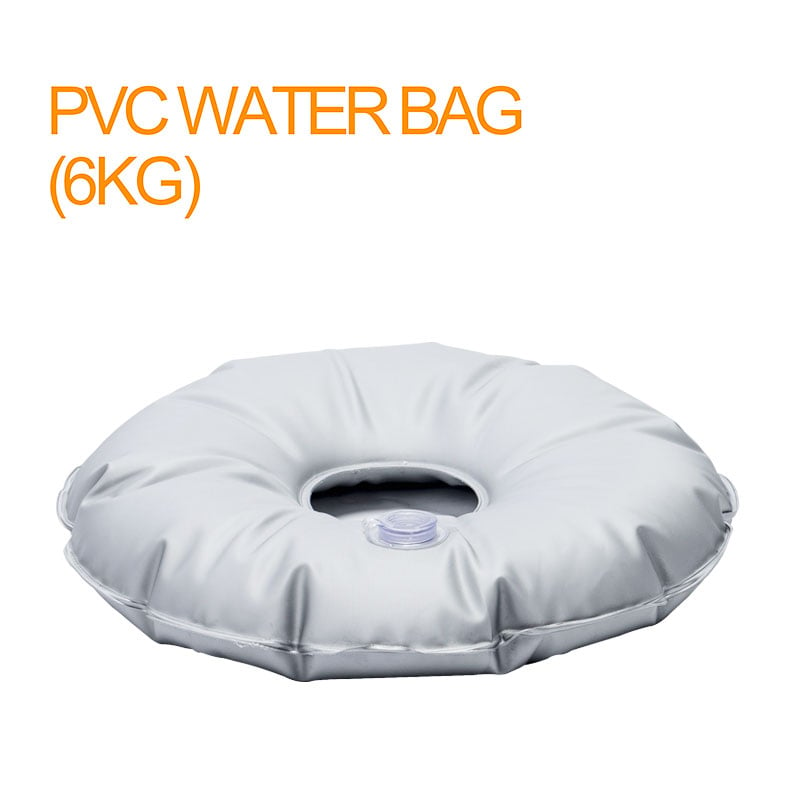
Water Bag
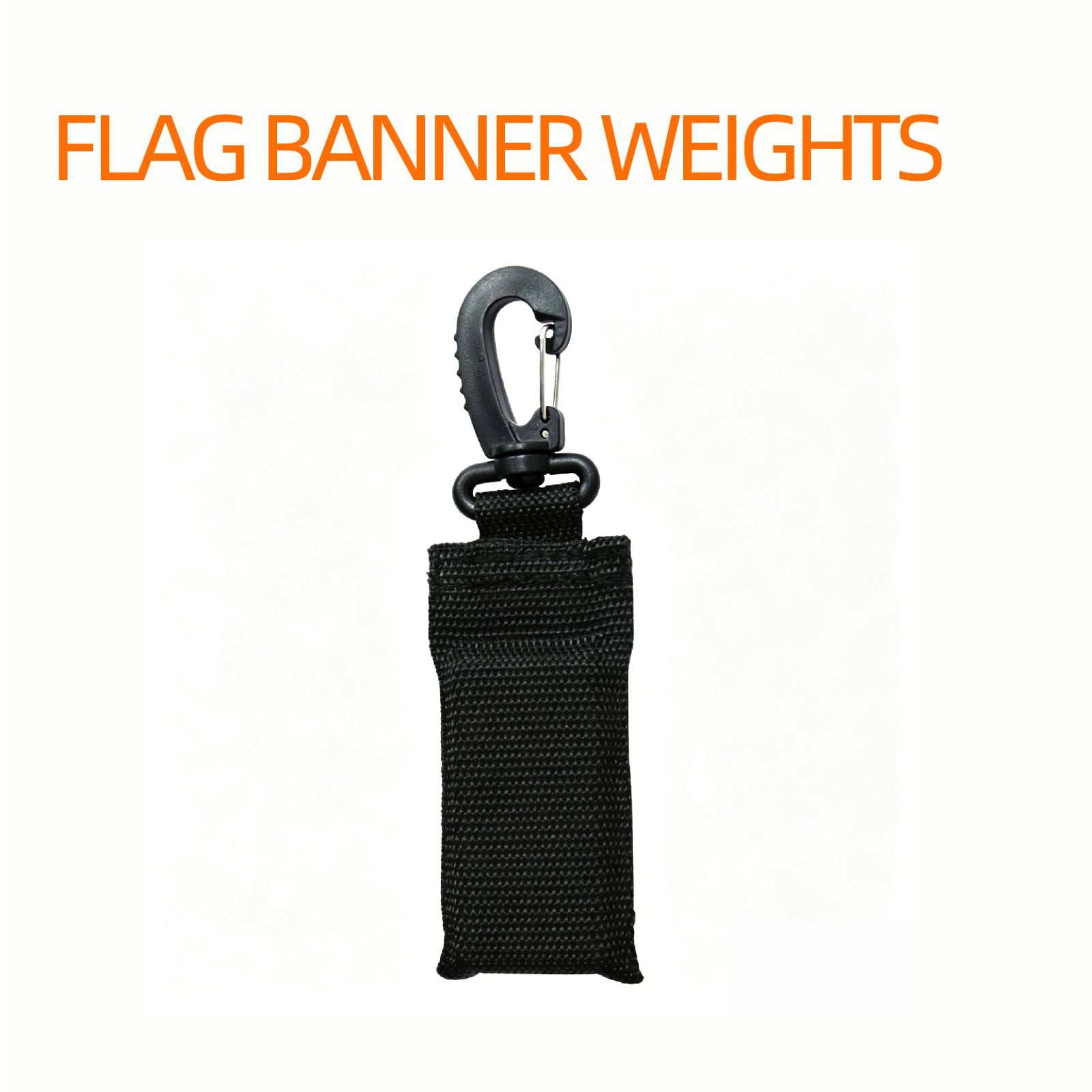
Flag /banner weights
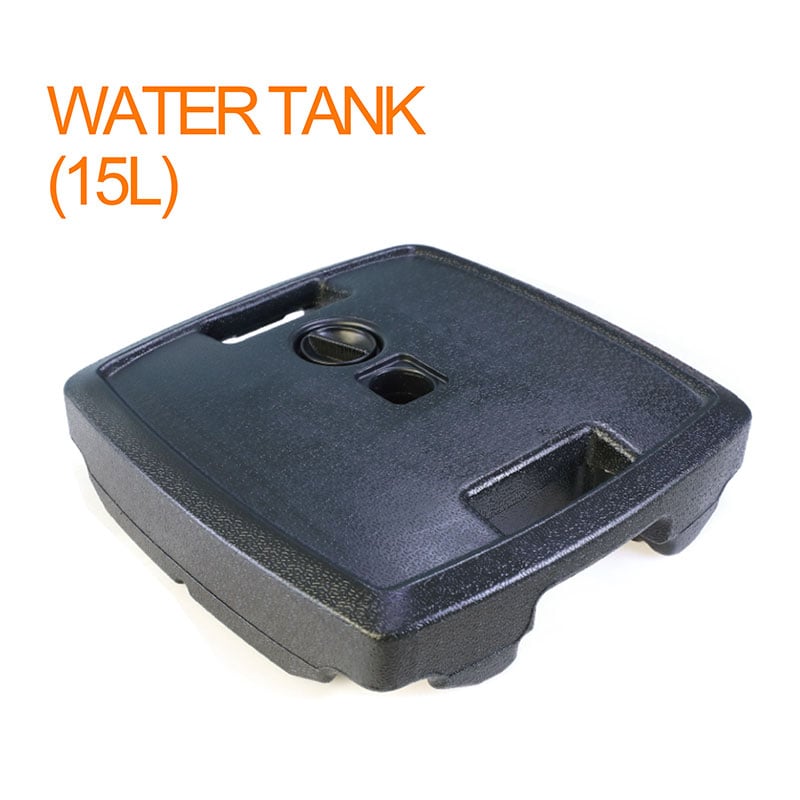
Water tank
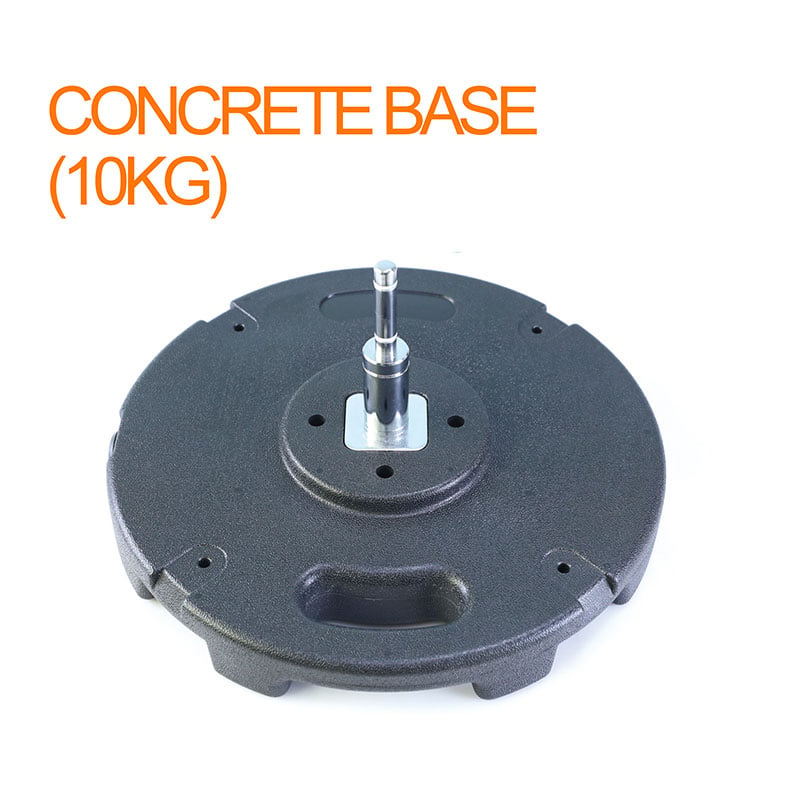
Concrete base(10kg)
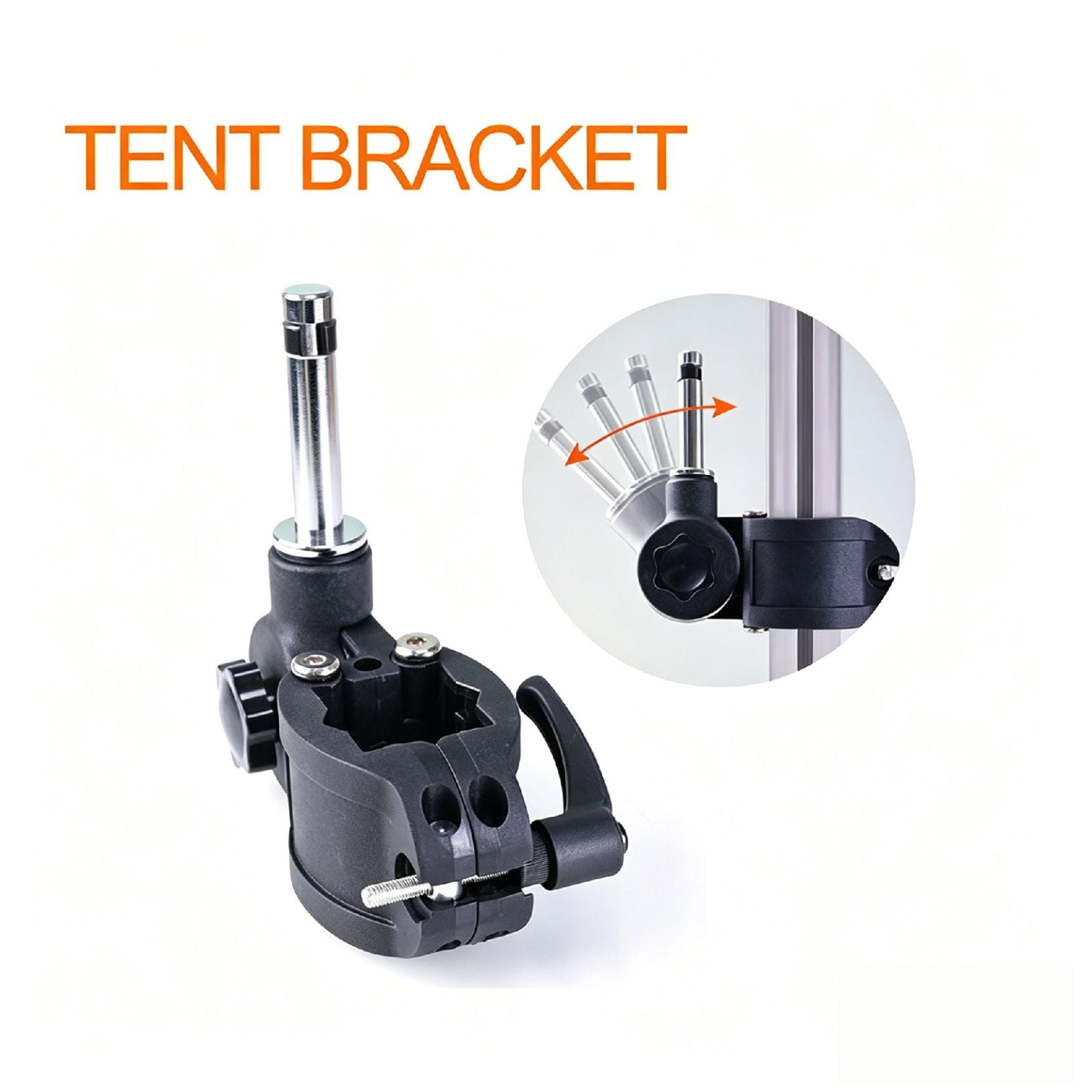
Tent Bracket
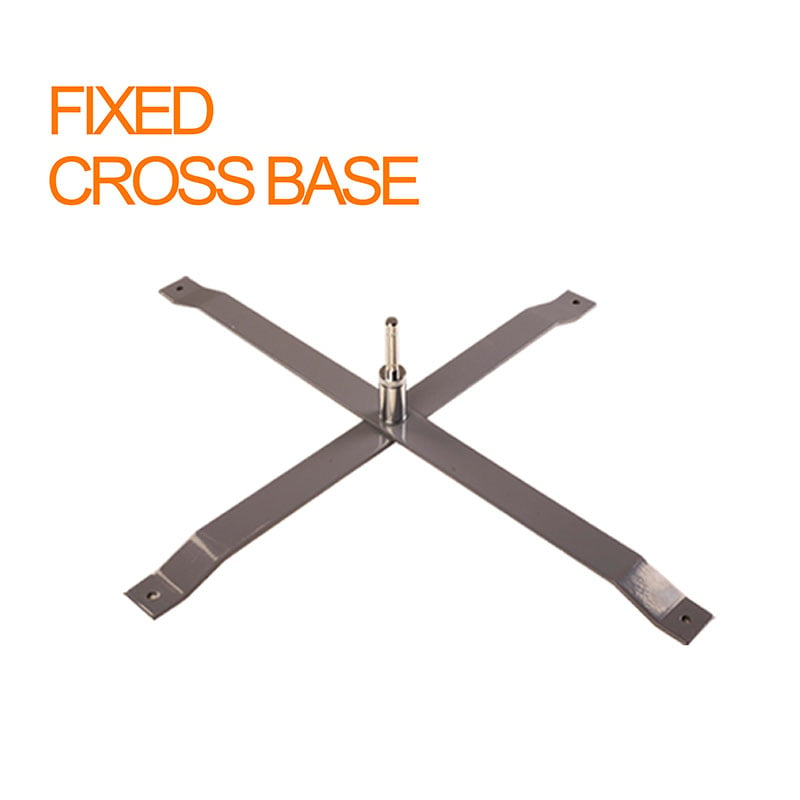
Fixed Cross Base
Related Articles
29kg Concrete Flag Base - The Complete B2B Buyer's Resource - WZRODS
WZRODS DY451B: 29 kg, HDPE shell, concrete core. Stackable, portable, rust-proof. FOB price US$5.75–$6.85 at MOQ 2 units. Those numbers look unremarkable. Factor in landed cost—import duties lower than aluminum’s under relevant HTS codes, freight savings from less weight per unit of stabilizing mas
Wide Tube Cross Base - The Complete B2B Buyer's Resource - WZRODS
The Wide Tube Cross Base, manufactured by Wzrods in Shandong, China, solves one problem: reliable stability for poles under three meters, without the freight costs and warehouse footprint that heavier alternatives demand.
Rectangular Pipe Cross Base - The Complete B2B Buyer's Resource - WZRODS
The pipe cross flag base is a cross of rectangular steel pipe, powder‑coated, weighing 1.3 kg and spanning 78 cm across its arms. Its center holds a C‑ring shaft that lets the flag rotate with the wind.
X-Shape Backpack Banner - The Complete B2B Buyer's Resource - WZRODS
Economic Cross Base - The Complete B2B Buyer's Guide- WZRODS
When you buy an economic cross base—something like the Wzrods DM‑9, a 77 cm‑long, 1.3 kg iron cross—forget “economic” as a synonym for “cheap.” It means value-engineered.
Hard Ground Cross Base - The Complete B2B Buyer's Guide- WZRODS
This guide features WZRODS 9WT-33 dual-purpose steel cross base for indoor and outdoor flag displays. With duplex anti-corrosion coating and a precision welded ground spike, it delivers outstanding stability and durability. It boasts low replacement rates and superior long-term ROI.