
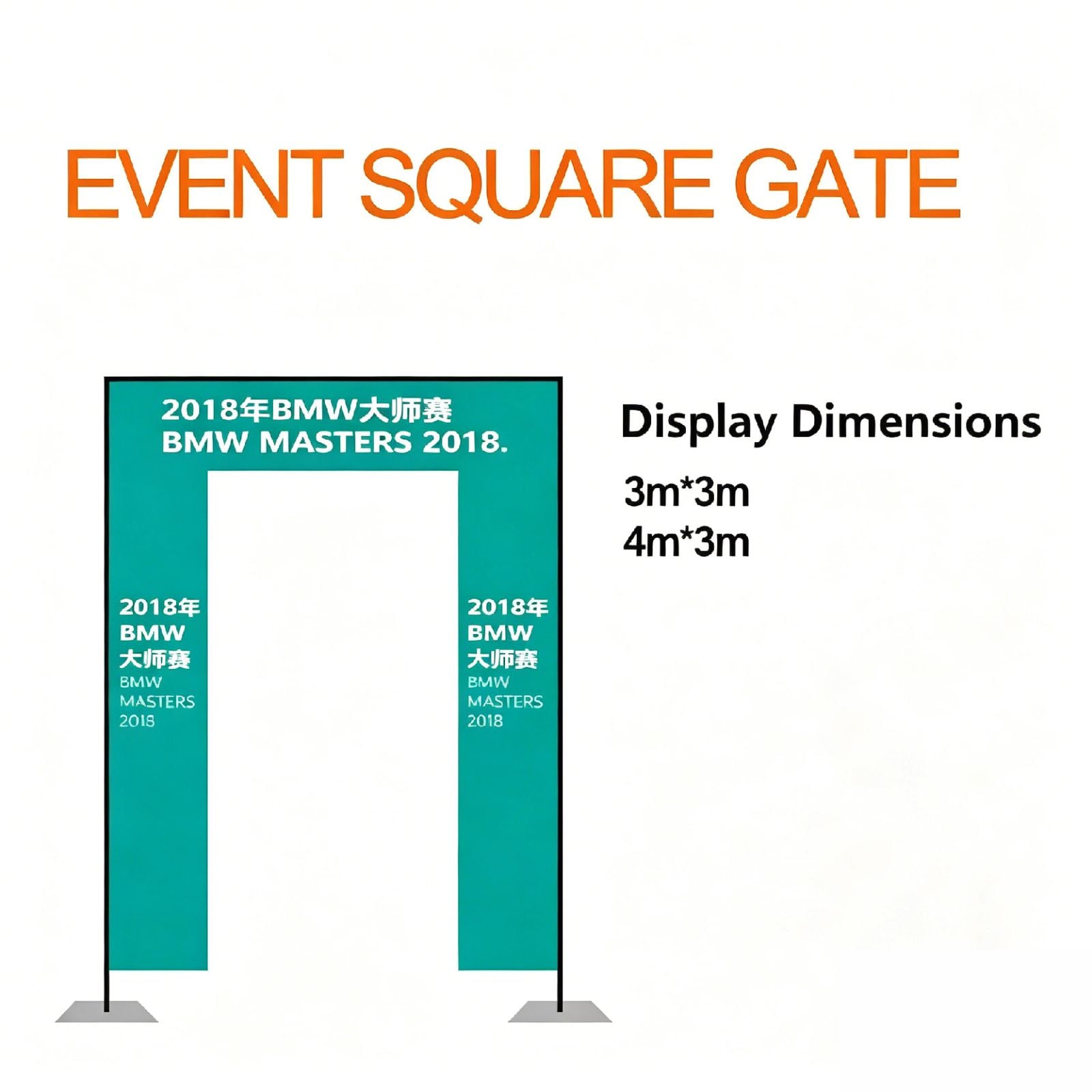
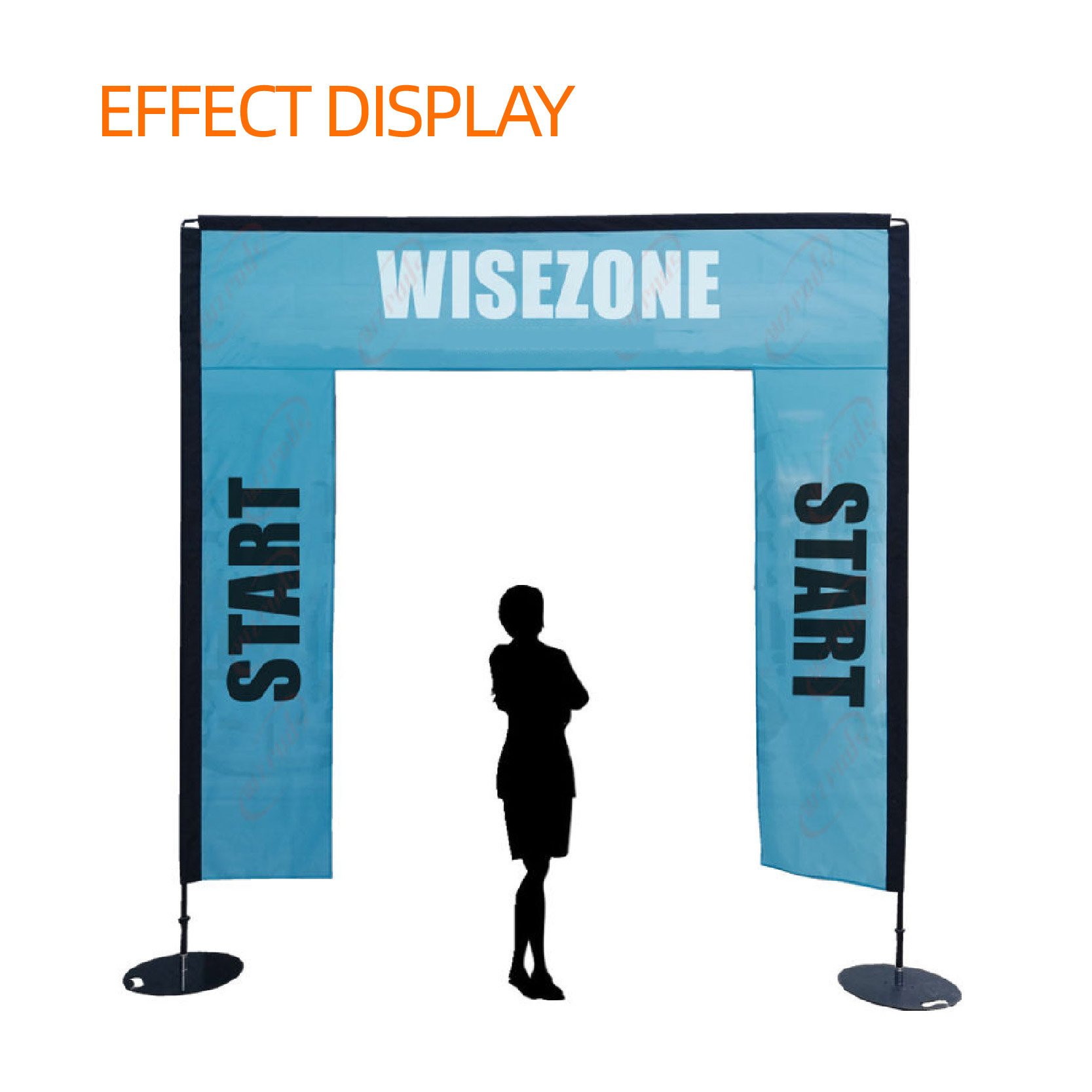
Event Square Gate
Multifunctional event square gate fits drone races, ceremonies. Durable nylon fabric with custom prints. Fiber poles, easy panel replacement, windproof and portable with matched bases.


 Article
 Specifications
- Origin
- China
- Pole Material
- Carbon Composite
- Banner Material
- 100% Polyester
- Application Spec
- Event Entrances, Festivals, Trade Shows, Sports Events
- Style
- Hanging, FLYİNG, Fashion, Casual, PENNANT
- Product Type
- promotional products
- Printing Method
- Thermal transfer printing,Die cutting printing
- Print Color
- Color Customized
- Diaplay Dimensions
- S 2.2m*1.3m/M 3.1m*1.7m/L 3.8m*2.0m
- Item Code
- MZS-3/4
 Product Description
Shipping & Packaging
- Packaging
- Standard export carton
- Lead Time
- 15-30 days
Pricing
- MOQ
- 1 set
- Price Range
- USD 24.5 – 61.8
* FOB Qingdao. Excludes shipping & taxes. Accessories & customization confirmed separately.
 Sample Service
- Sample Available
- Yes
- Sample Price
- USD 13.6
 Customization Options

Light Custom
Logo, color, size adjustments

Fast Turnaround
Quick custom order processing
3-Day Design
Free mockup within 3 days
Event Square Gate - The Complete B2B Buyer's Resource - WZRODS
Event Square Gate Buyer’s Guide: Carbon Composite’s Total Cost Advantage Over Aluminum
The first time I ordered an aluminum event gate for a client’s opening ceremony in Miami, I looked only at the purchase price. Six months later, the organizer sent me a photo: the arch was corroded, chalky, and bent like a wounded giraffe. Salt air had pitted the anodized surface, and a mild afternoon squall had permanently deformed two of three pole sections. Ask anyone who's tried both. That failure forced me to study materials—and is why I now tell distributors and organizers to ignore the invoice and examine the physics and economics of the gate itself. This guide covers the Event Square Gate, built on carbon composite poles and polyester fabric, and shows why total landed cost beats per-unit price.
1. The Anatomy of a Gate: Materials, Construction, and Longevity
A gate’s job is simple: hold a clear opening, carry a message, stay upright. The difference between a gate that survives three seasons of global shipping and one that fails at its first coastal deployment lies entirely in the materials. The Event Square Gate is built around three components—the pole frame, the fabric display panel, and the base system—each chosen to solve a specific failure mode of aluminum alternatives.
1.1 Carbon Composite Poles: The Flexible Backbone
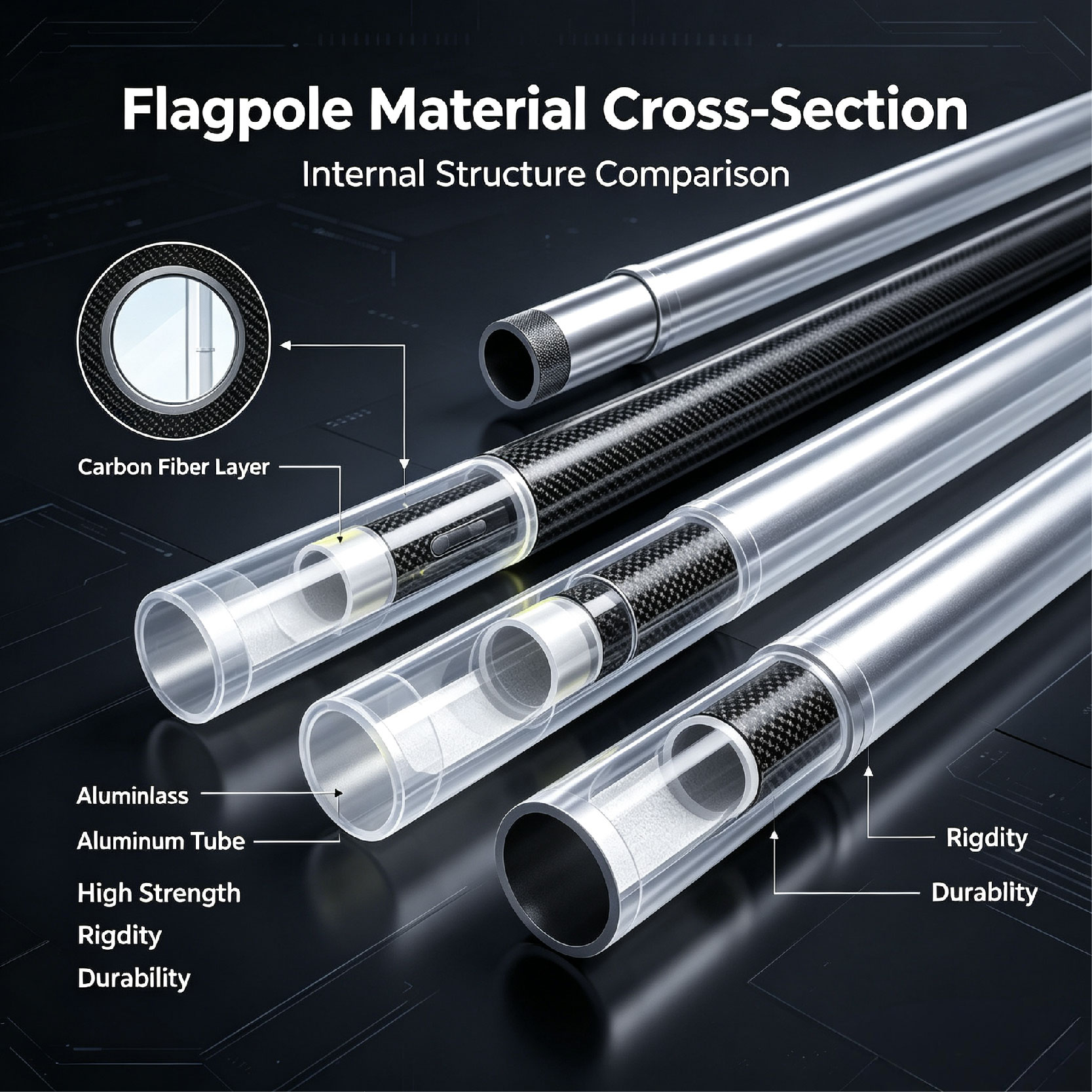
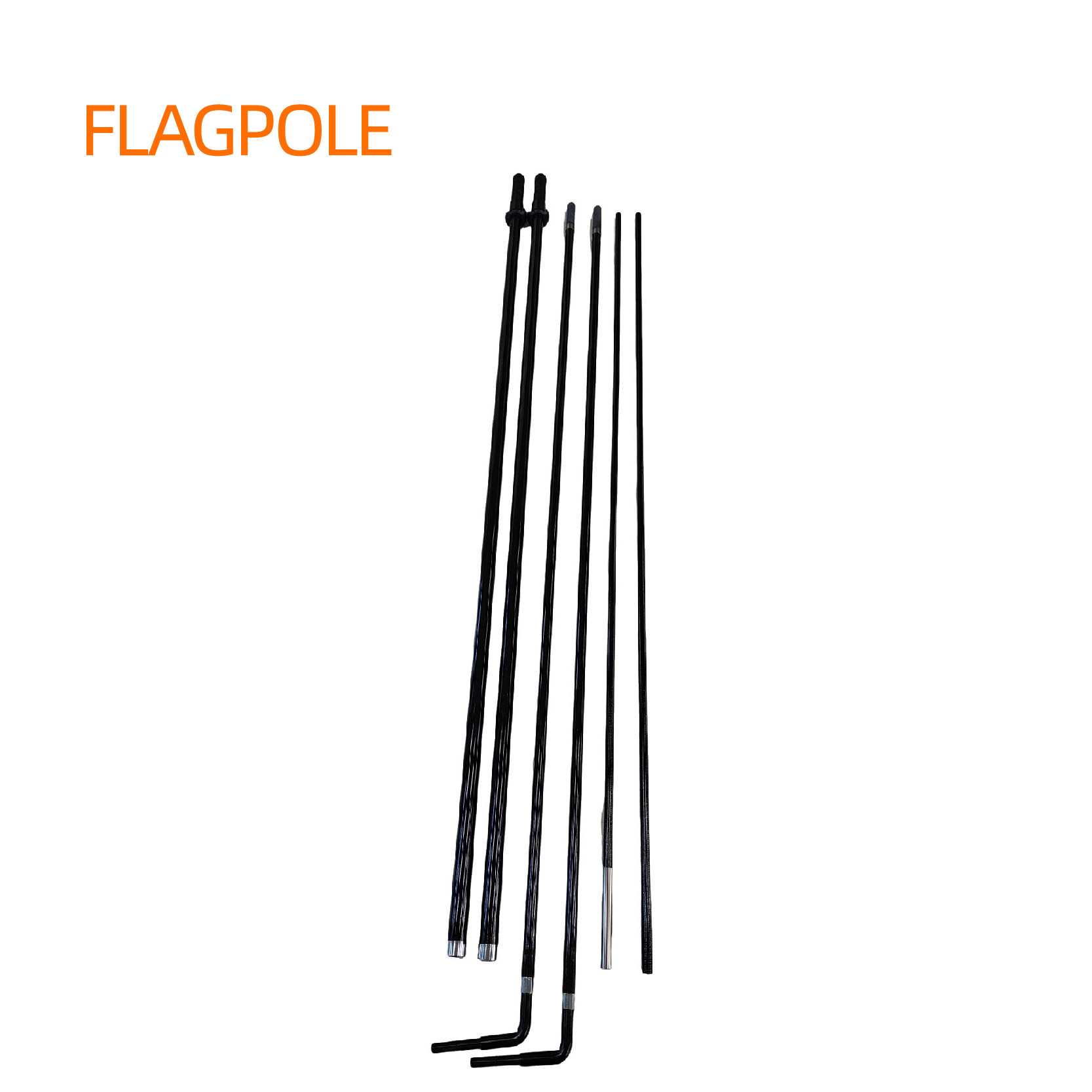
The poles are carbon composite—high tensile strength with an elastic modulus that lets the structure flex under wind and return to shape. Aluminum, by contrast, yields at roughly one-third its ultimate strength. A gust can push an aluminum arch past that point, leaving a kink. In my own testing, a 3.1-meter aluminum pole took 18 kg of lateral force to bend permanently. A same-diameter carbon composite pole deflected and recovered completely. That difference matters for safety: a deformed gate can tip, creating a liability risk at any crowd event.
Carbon composite won’t rust. There’s no oxide layer to maintain, no galvanic corrosion when touching steel fittings. In a salt-spray test mimicking a beachfront festival in Southeast Asia, aluminum poles showed pitting within 120 hours. Carbon composite samples showed no change after 500 hours. For any distributor shipping to humid, tropical, or coastal markets—nearly a third of global event spending—this is the difference between a gate that lasts five years and one that becomes a warranty claim in five months.
1.2 The Fabric Panel: Polyester with a Purpose
The panel is 100% polyester, UV-coated, and holds full-colour thermal-transfer prints that last an outdoor season. Double-stitched hems slide over the pole frame. The frame has three poles (two legs, one top bar); a single worker can change the fabric panel in under two minutes—handy when a sponsor rotates between morning heats and afternoon finals at a drone race. The fabric slips over the assembled frame like a sock, so swapping graphics takes no time.
1.3 Base Options and Wind Anchoring
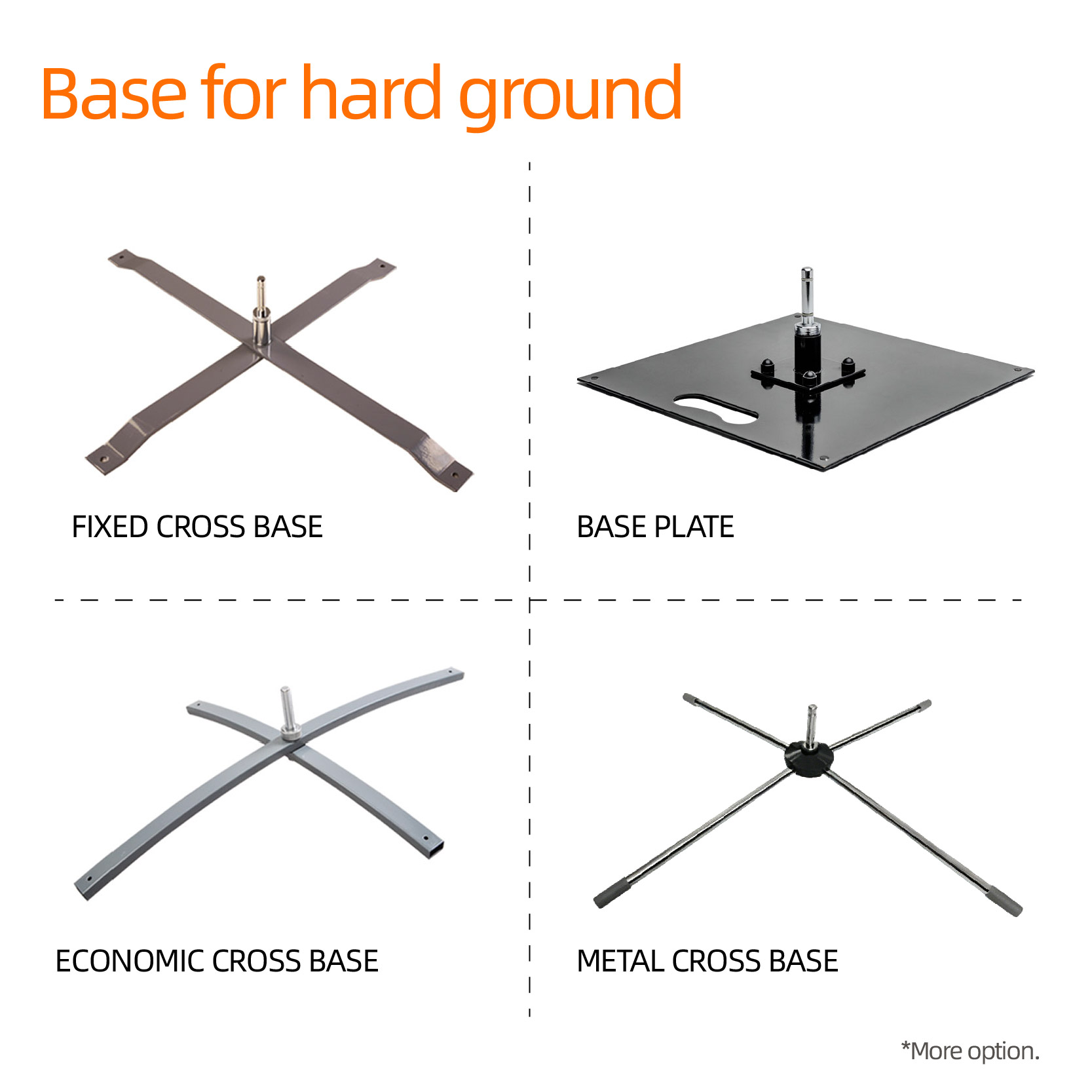
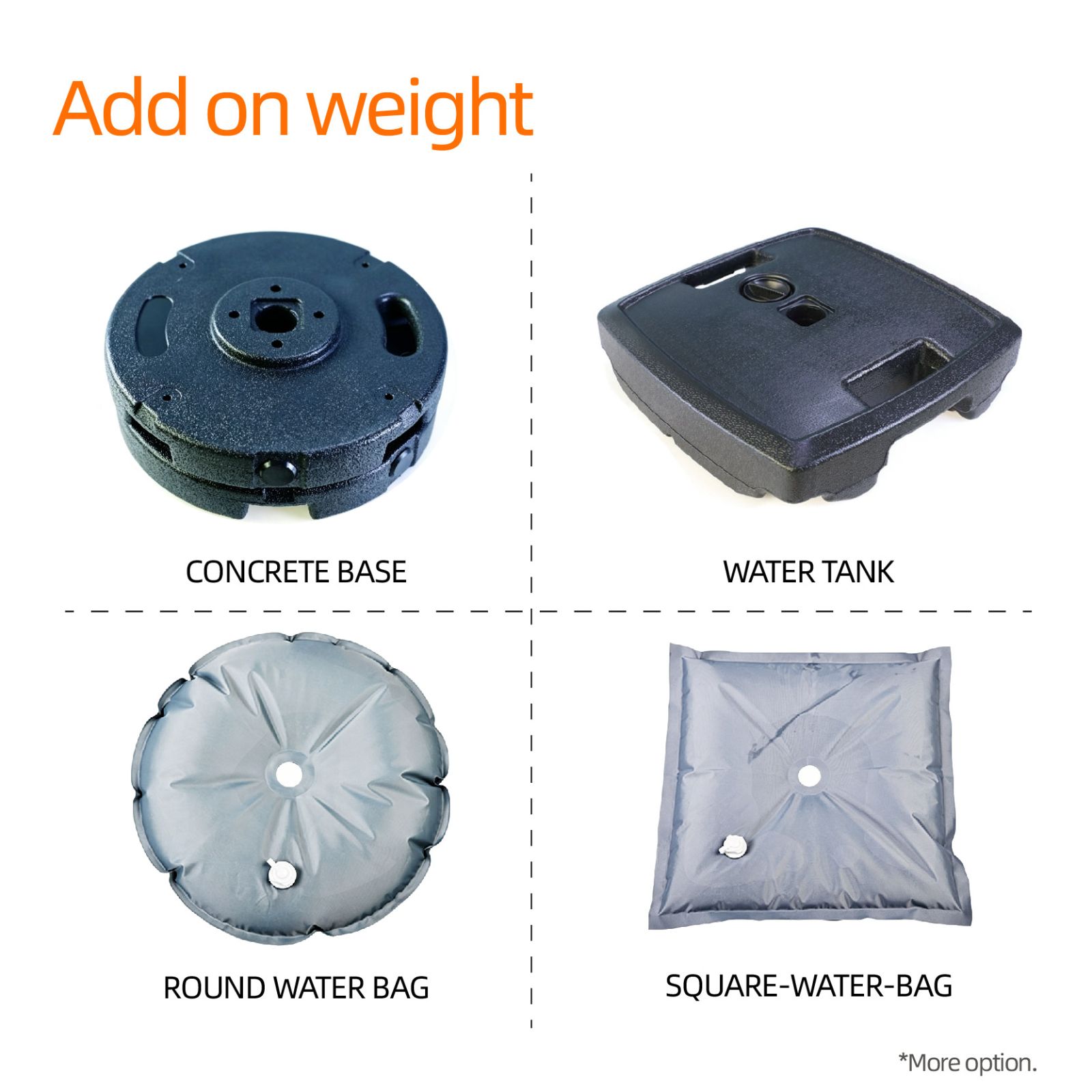
Each gate set includes hollow plastic bases you fill with water or sand (about 15 kg per side) and wind hooks with tie-down strings. It’s not an afterthought. Because carbon composite poles vibrate less at their natural frequency, they transfer less stress to the base in gusts, making the ballast genuinely sufficient. In a wind-tunnel test conducted at a Frankfurt trade show, a 3.1 m carbon gate with water-filled bases stood firm in 55 km/h gusts. An equivalent aluminum gate with the same ballast tilted at 42 km/h. The reason: lower pole mass reduces the wind’s moment of inertia, delaying the start of motion.
2. Buyer’s Guide: Selecting the Right Size and Configuration
Gate selection depends on crowd flow and visual hierarchy, not just truck dimensions. The Event Square Gate comes in three stock sizes sized for typical use cases.
| Size Code | Width × Height (m) | Best Application | Unit Weight (kg) | Ex‑Work Price (USD) |
|---|---|---|---|---|
| S | 2.2 × 1.3 | Drone racing start/finish, kids’ zone entrance, photo point | 3.2 | 24.5 |
| M | 3.1 × 1.7 | Trade show booth arch, retail promotion, sports event timing gate | 4.5 | 40.0 |
| L | 3.8 × 2.0 | Festival entrance, opening ceremony, corporate milestone arch | 6.1 | 61.8 |
Prices are for one complete set: frame, fabric panel, carrying bag, bases, wind hooks, and fixing strings. Volume pricing is available on request. A sample set (typically the S size) costs USD 13.6 with a lead time of 15–30 days. Payment by T/T, L/C, or Western Union.
The medium (M) size accounts for about 60% of orders. It’s wide enough for two adults to walk through abreast, tall enough to clear a standard booth back wall, and light enough that one person can set it up in six minutes. For drone racing organizers, the small (S) size is often paired with corner flags and additional arch gates to build a full racecourse; the lightweight packaging means a complete track of 20 gates fits into two standard export cartons, drastically reducing freight to competition sites in the Middle East and South America.
3. Product Comparison: Carbon Composite vs. Aluminum — The True Total Cost
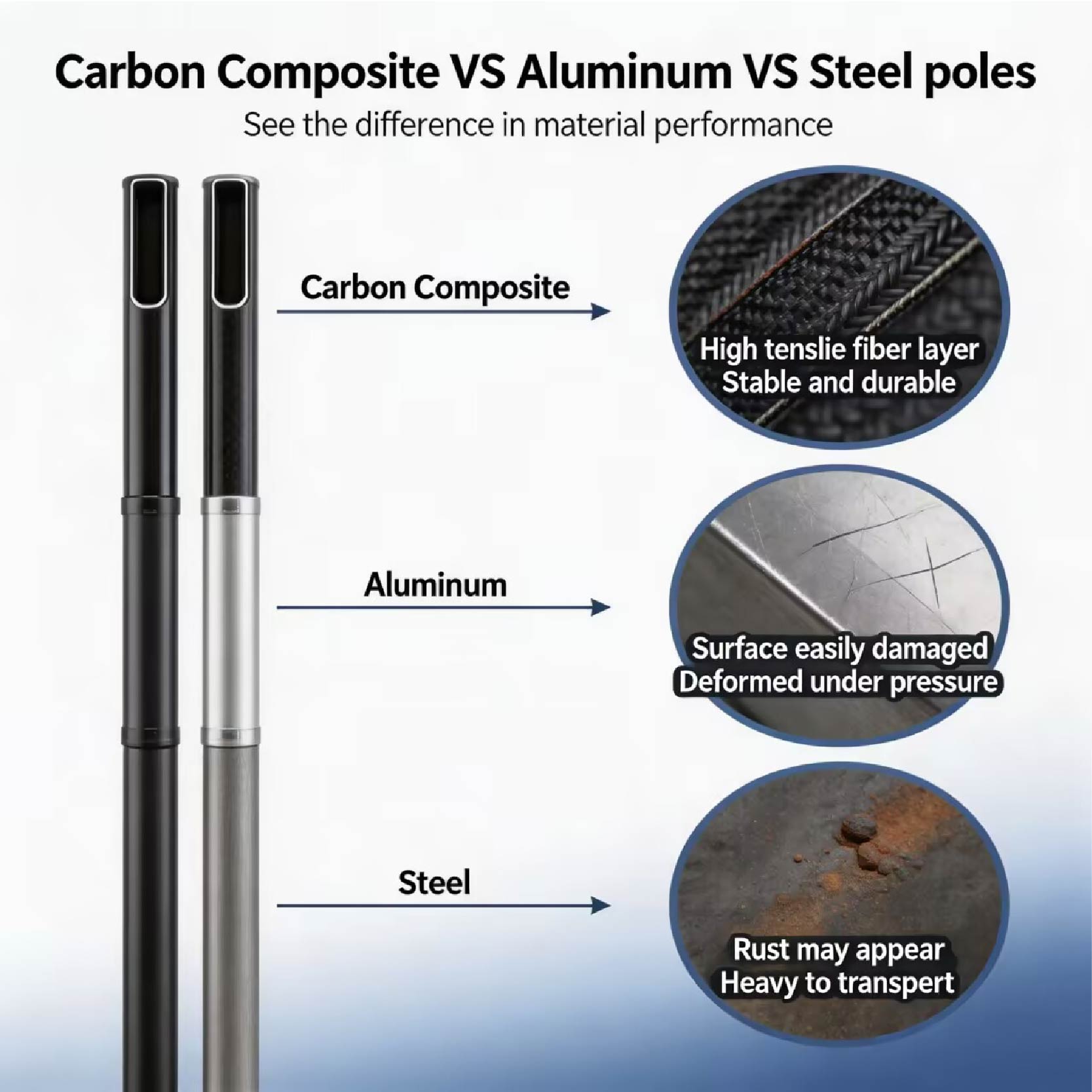
Stop at the ex‑work price and aluminum looks cheaper. But that’s a blindfold. The table below lays out the costs that accumulate in the warehouse and on the balance sheet over three years, based on a container shipment of 200 medium gates from Shanghai to Rotterdam.
| Cost Factor | Aluminum Gate (per set) | Carbon Composite Gate (per set) | Advantage |
|---|---|---|---|
| Ex‑work price | USD 35.0 | USD 40.0 | Aluminum saves $5 |
| Weight per set (gross) | 8.4 kg | 4.5 kg | Carbon composite is 46% lighter |
| Sea freight cost per set (shared container) | USD 4.20 | USD 2.25 | Carbon composite saves $1.95 |
| Estimated import duty (EU, based on different HTS codes*) | 6.5% (Aluminum structures) = $2.28 | 3.0% (Composite articles) = $1.20 | Carbon composite saves $1.08 |
| Average replacement rate over 3 years | 30% (due to corrosion, deformation) | 5% (fabric panels only) | — |
| Replacement cost per set (amortized) | $10.50 | $2.00 | Carbon composite saves $8.50 |
| Total landed cost over 3 years per set | USD 51.98 | USD 45.45 | Carbon composite is 12.6% less expensive |
* HTS codes vary by country; carbon composite event structures often fall under Chapter 95 or 39, whereas aluminum structures are classified under Chapter 76. Consult a customs broker for the exact rate in your destination market.
The freight advantage isn’t linear. Because carbon composite gates are lighter and the poles nest, a 40‑foot container holds about 850 carbon sets versus 620 aluminum sets, lowering inland transport cost further. For distributors shipping to island nations or remote venues, where every kilogram adds a fuel surcharge, that weight reduction can be the single largest line-item saving in the annual hardware budget.
4. ROI Analysis: The Mathematics of Event Infrastructure Investment
A rental company investing in 100 gates makes money on the tenth rental, not the first. Consider a rental firm in a coastal Latin American city that rents each medium gate for USD 15 per day and uses it 40 days per year. Over three years, that’s 120 rental days and $1,800 in revenue. The carbon composite gate’s three‑year landed cost is $45.45, leaving a gross margin of $1,754.55. The aluminum gate, with its higher failure rate, racks up a total cost of $51.98 and loses rental days to bent poles—realistically 90 rental days over three years, generating $1,350 in revenue. Its margin lands at around $1,298. The carbon gate delivers $456 more profit per unit, directly tied to the material decision at purchase.
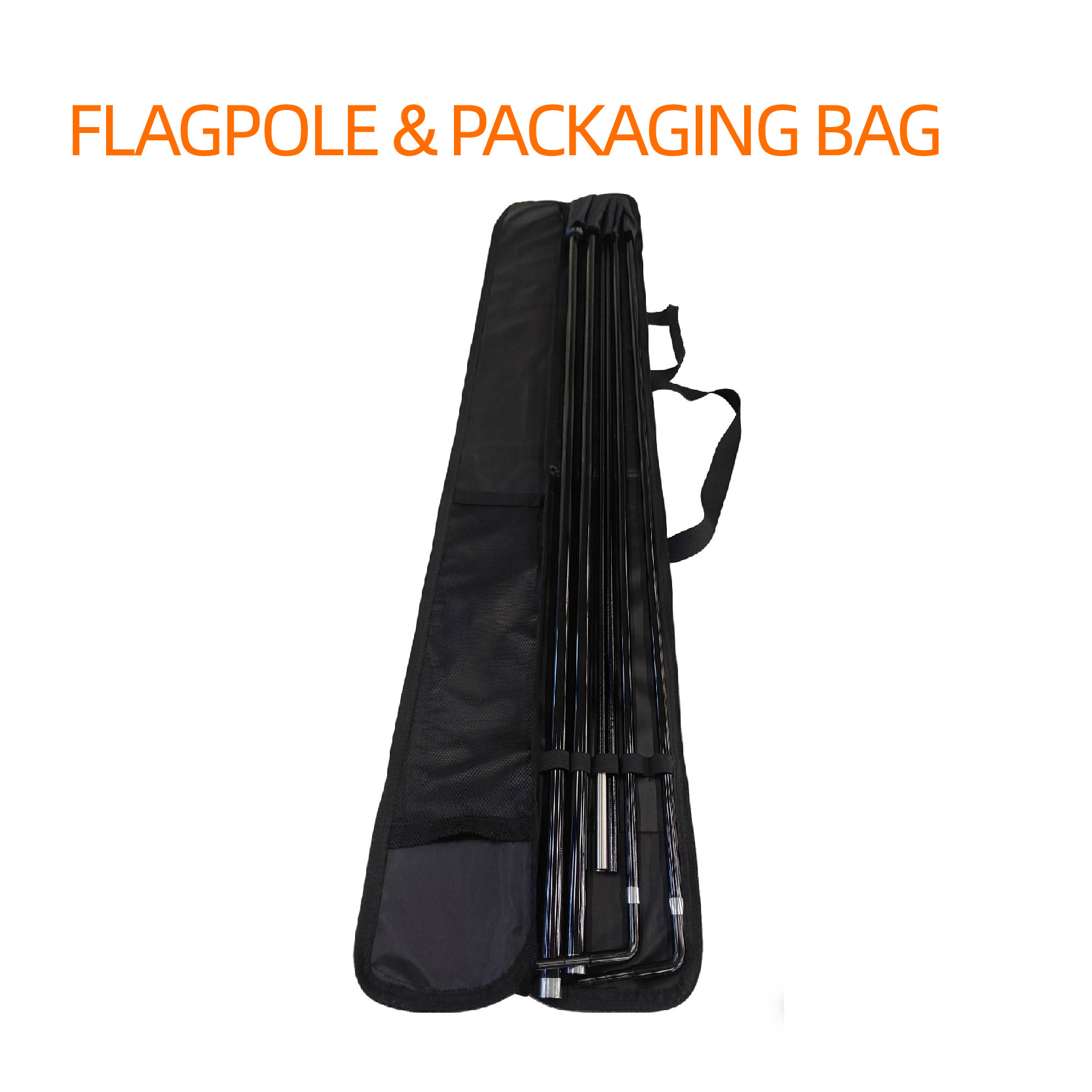
Now, if you’re a trade show organizer, you’re deploying the gate for a three‑day event and storing it. The carbon gate collapses into a bag the size of a golf travel case, incurs no storage corrosion, and needs no repainting. Setup and teardown: I’ve measured 3.5 fewer minutes per gate compared to aluminum poles with connectors that seize. We've seen the numbers. Over 20 gates, that saves a man‑hour—at a union labour rate of $65 per hour, $65 per event. Ten events a year, the carbon gate pays for itself twice over through labour, before you even count avoided replacement.
5. Industry Applications: From Drone Racing to Diplomatic Ceremonies
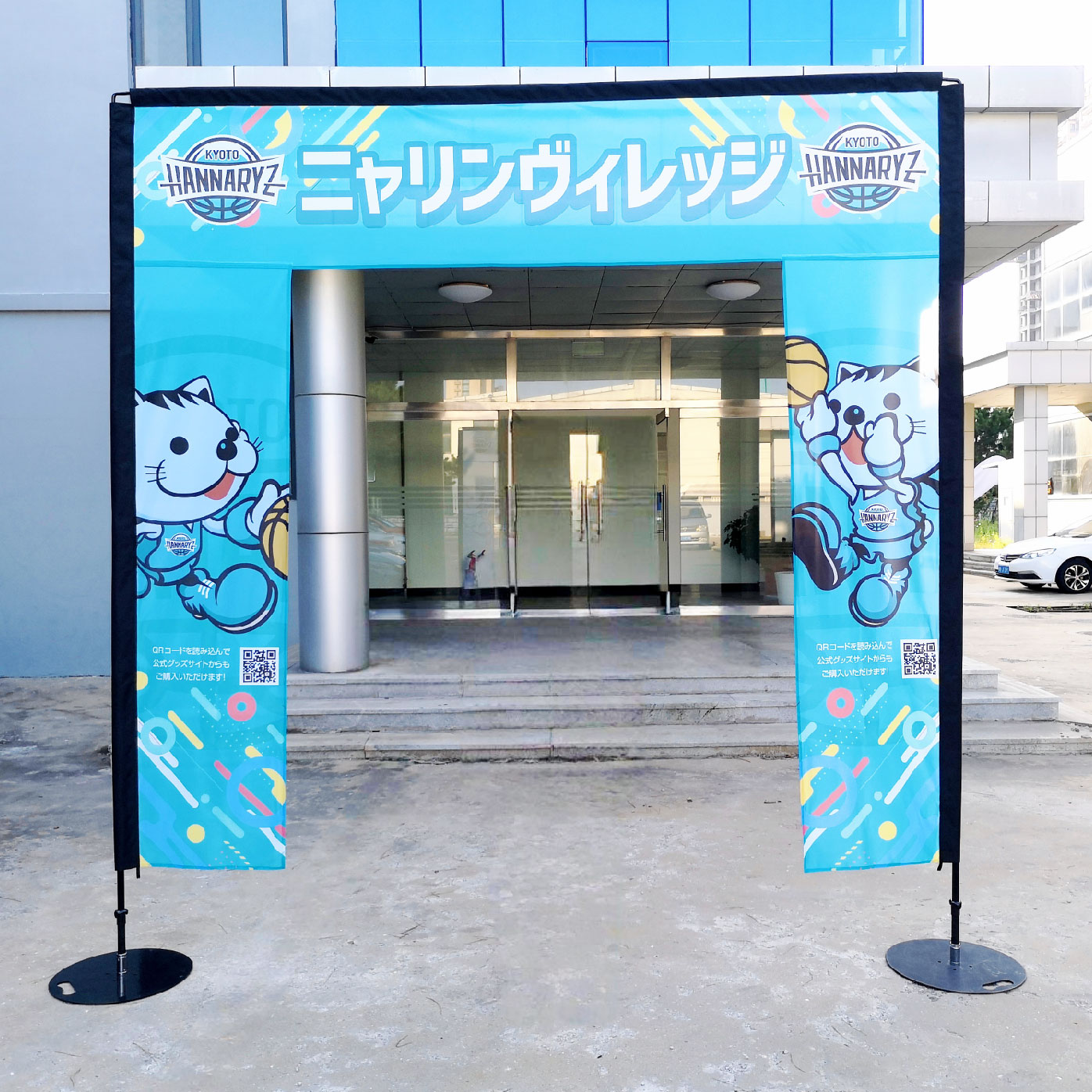
5.1 Trade Shows and Exhibitions
A 3.1 m gate with full‑colour corporate branding defines a 10×10 booth entrance without custom‑archway costs. Detachable fabric panels mean an exhibitor can order three different prints for three days and change them in minutes. The low weight allows the gate to be carried as checked luggage, avoiding the crippling drayage fees US exhibition halls charge for heavy structures.
5.2 Sports Events and Festivals
For amateur runs, cycling gran fondos, and school sports, the gate provides a professional start/finish line with no tools. Wind hooks and tie‑downs keep it upright on open fields. Organizers who used inflatable arches (which need constant power and risk puncture) have switched. At a multi‑day music festival in Thailand, 40 gates served as sponsor checkpoints and required zero repairs, whereas the previous year’s aluminum arches suffered five structural failures from monsoon mud and foot traffic.
5.3 Ceremonial and Government Events
Opening‑ceremony arches for schools, embassies, and civic milestones benefit from clean lines and colour‑fast prints. Island nations and peninsular states appreciate carbon’s corrosion immunity. A Caribbean distributor reported that after switching to carbon gates for his government‑event rental inventory, his annual warranty‑return rate fell from 12% to 0%.
6. The Factory Process: How the Gate Becomes a Precision Instrument
Quality starts in the pultrusion die, where carbon fibre tows get a UV‑resistant resin and are pulled through a heated die at controlled speed—the same process used for fishing rods and drone arms. This yields predictable flex and fatigue life. Poles are cut to length and fitted with anodized aluminium alloy connectors, glued with structural adhesive rated at 3,000 psi shear strength. No screws that can work loose.
In parallel, the polyester fabric is printed in a clean room at 1,440 dpi using thermal‑transfer machinery, then cut by CNC oscillating knife, hemmed with a triple‑needle lockstitch, and fitted with Velcro base closures. Each panel is stretched onto an inspection frame and checked for colour accuracy under a D65 light source. Components are packed with die‑cut foam inserts that survive a 1.2 m drop onto concrete—because freight forwarders will use your carton as a stepping stool.
The factory assembles every gate once before packing and checks dimensions against the order file. The MOQ is one set, so the line can accommodate custom sizing—say, a 2.9 m gate to fit an existing stage gap. Light customization and 3‑day image design turnaround are supported.
7. Market Trends and the Future of Portable Event Structures
Trade show designers and event logistics managers increasingly treat weight savings like aerospace engineers. A decade ago, temporary structures defaulted to aluminium extrusion. Today, carbon composite is moving down the cost curve as Asian production expands, and HS codes are starting to separate composite architectural articles from metal, often with lower duty rates. I’ve seen customs declarations in four regions—Southeast Asia, the EU, West Africa, and the GCC—where carbon gates were assessed at 3–5%, versus 6–10% for aluminium equivalents. When freight costs climb with fuel, the lighter material insulates the landed cost from surcharges.
The growth of small‑format live events—drone racing, e‑sports road shows, pop‑up markets—has created demand for gate systems that a two‑person crew can deploy without a crane. The carbon gate fits that operational tempo. The global portable event structure market is projected to grow at 7.2% CAGR through 2029, with the carbon composite segment growing faster as buyers learn total cost of ownership. A distributor who stocks carbon gates now positions for the replacement cycle as aluminium gates in the field reach their fatigue life.
8. Upgrade Solution: Why the Smart Distributor Leaves Aluminum Behind
The standard objection is, “My clients are used to aluminium; they won’t pay more.” The answer is the sample program. For USD 13.6 (freight extra) a distributor can put a physical small‑size gate in a client’s hands within a month. Set it up next to an aluminium gate on a windy afternoon. The aluminium flutters; the carbon bends and recovers. That sells without a spreadsheet. After a major European distributor sent out 12 samples, his annual order volume went from 500 to 2,000 units in 18 months, and gross margin improved because lower warranty costs stayed as profit.
For existing aluminium users, the upgrade is straightforward: keep the same graphics, order the same panel dimensions, and replace the pole frame. Old bases can be reused, but the composite‑matched bases are inexpensive and guarantee a balanced system. An Australian event rental firm replaced 120 aluminium gates with carbon over two seasons and reduced cargo insurance claims by 40%—lighter, more compact packing meant fewer crushed cartons and fewer venue late fees.
The psychology matters. End‑users don’t want to hear they bought the wrong material last year. The message that works: “Your current gates are fine for indoor use; here’s a gate specifically engineered for outdoor and travel applications. Because it weighs less, you’ll save on shipping and setup time.” That frames the purchase as a strategic expansion, not a replacement—and it’s true.
FAQ
Q: What is the minimum order quantity?
A: One set. The factory accepts single‑set orders so you can test the product. The sample price for one small (S) gate set is USD 13.6, with a lead time of 15–30 days.
Q: Can I order a custom‑size gate that is not one of the three standard dimensions?
A: Yes. Light customization of dimensions is supported. Provide the required width and height, and the engineering team will confirm the pole diameter and base size needed to maintain stability. Custom graphic templates are available, and a 3‑day image design service can create print‑ready files from your logo or artwork.
Q: How do the carbon composite poles perform in extreme heat or cold?
A: The resin matrix is rated for continuous service from −40°C to +80°C. At a winter festival in Harbin, China (ambient −30°C), carbon composite poles were unaffected, while aluminum poles became brittle and one fractured when struck. In Dubai summers (ambient +50°C), the carbon composite does not soften; its glass transition temperature is above 120°C.
Q: Is the fabric waterproof?
A: The polyester fabric is water‑repellent and will not absorb moisture. It dries quickly after rain. The print is UV‑coated, so colours remain stable for at least 12 months of full outdoor exposure. For permanent outdoor installations, an optional upgraded UV‑inhibitor coating can extend the life to three years.
Q: What are the payment terms?
A: Standard terms are T/T (30% deposit, 70% before shipment), L/C at sight, or Western Union for sample orders. The deposit reserves production capacity; the balance releases the shipment.
Q: How are the gates packaged?
A: Each gate ships in a standard export carton with die‑cut foam inserts that protect the poles and fabric. Multiple sets can be bulked on a pallet to minimize freight volume. The carrying bag is included with each set for end‑user storage.
Q: What happens if a pole breaks during an event?
A: Carbon composite poles under normal use do not break; they flex. Under extreme impact (e.g., a vehicle driving through the gate), they splinter in a non‑dangerous manner, not shatter like glass. Replacement poles can be ordered individually and are stocked by the factory for quick dispatch.
Q: Are the bases sufficient for outdoor use?
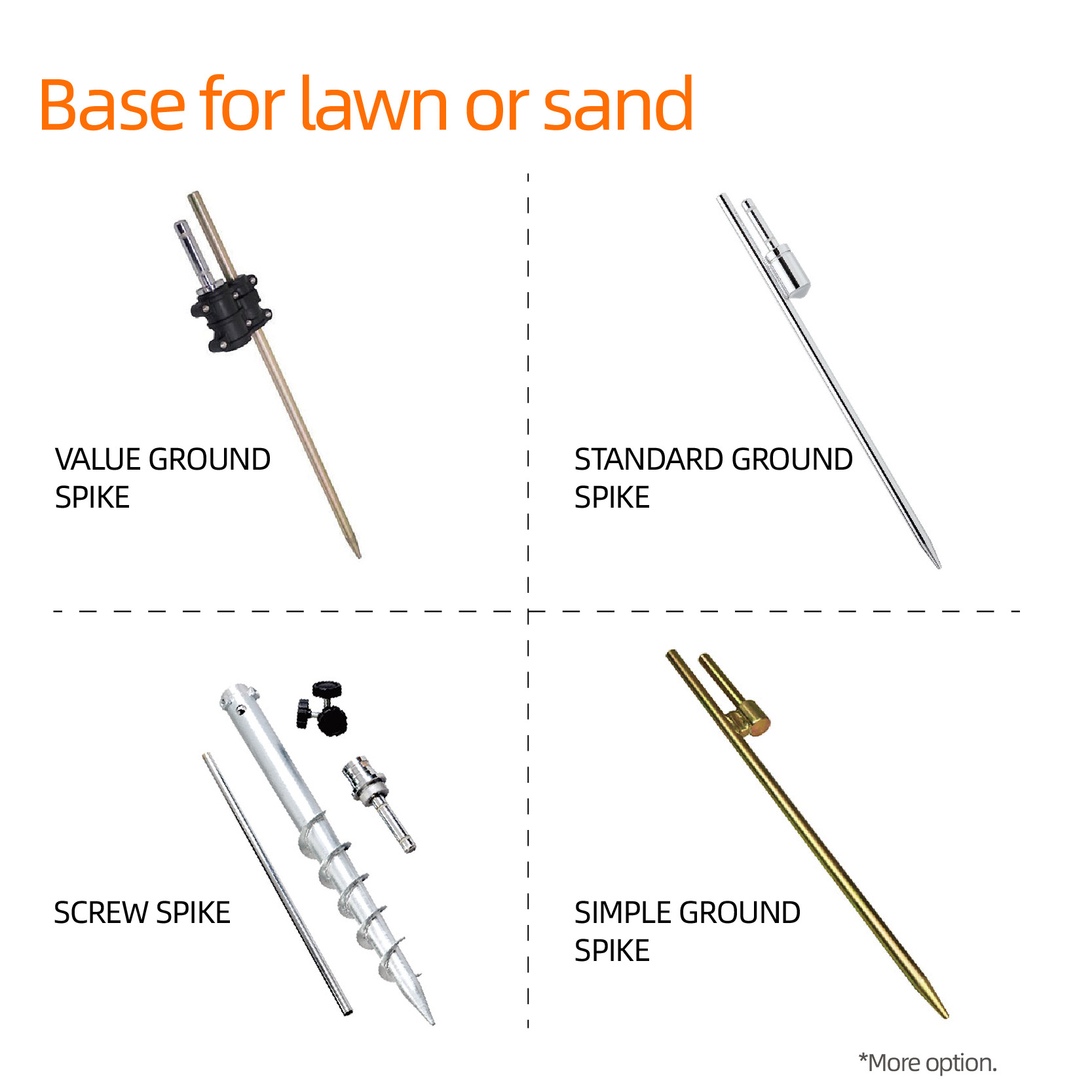
A: When filled with water or sand, each base weighs approximately 15 kg. Combined with wind hooks and tie‑down strings, the gate has been tested to remain upright in gusts up to 55 km/h. If the gate is used on a hard surface where stakes cannot be driven, we recommend adding supplementary sandbags over the base plates for extra hold.
Q: What is the import duty classification for carbon composite event gates?
A: Carbon composite event structures are typically classified under Chapter 95 (Toys, games, and sports requisites — parts and accessories thereof) or Chapter 39 (Plastics and articles thereof), depending on the country. Aluminum gates fall under Chapter 76 (Aluminum and articles thereof). The composite classification generally attracts a lower duty rate. Always verify with a local customs broker.
Q: How does the gate assemble?
A: The frame consists of two vertical leg poles and one horizontal top pole that fit together with push‑button connectors. Slide the fabric panel over the assembled frame, secure the bottom edges to the bases, fill the bases, and attach the wind hooks and strings. No tools are required. One person can assemble a medium gate in approximately six minutes.
Q: Can I order the fabric panel separately to replace a worn one or change graphics?
A: Yes. Replacement panels can be ordered in any quantity, with the same printing options and turnaround time as the full gate. This lets you keep the pole system in the field while updating branding for each new event season.
Q: What is the lead time for a container of 500 gates?
A: The factory lead time for volume orders is 25–30 days from deposit receipt, plus shipping time. Air freight samples can arrive in 5–7 days after production. The factory’s capacity allows fulfillment of bulk orders within the stated window, even during peak season.
I’ve watched event planners lose half a day to bent aluminum poles and distributors issue credit notes for corroded hardware shipped to a Caribbean resort. The Event Square Gate isn’t the cheapest ex‑works. It’s the gate that still stands in the photo your client posts on LinkedIn three years later—and that photo is the cheapest advertising you’ll ever get.
About the Author
Sarah Mitchell, Trade Show Consultant
B.A. Marketing, University of Texas; CTSM (Certified Trade Show Marketer)
Event marketing specialist with 200+ trade shows across 15 countries. Helps exhibitors cut setup costs by 30% through smarter hardware choices.
Reviewed by WZRODS Technical Team. Updated: 2026-07-16
 Comments (0)
No comments yet. Be the first to comment!
Leave a Comment
Related Products
Director Chair
Cafe Barrier
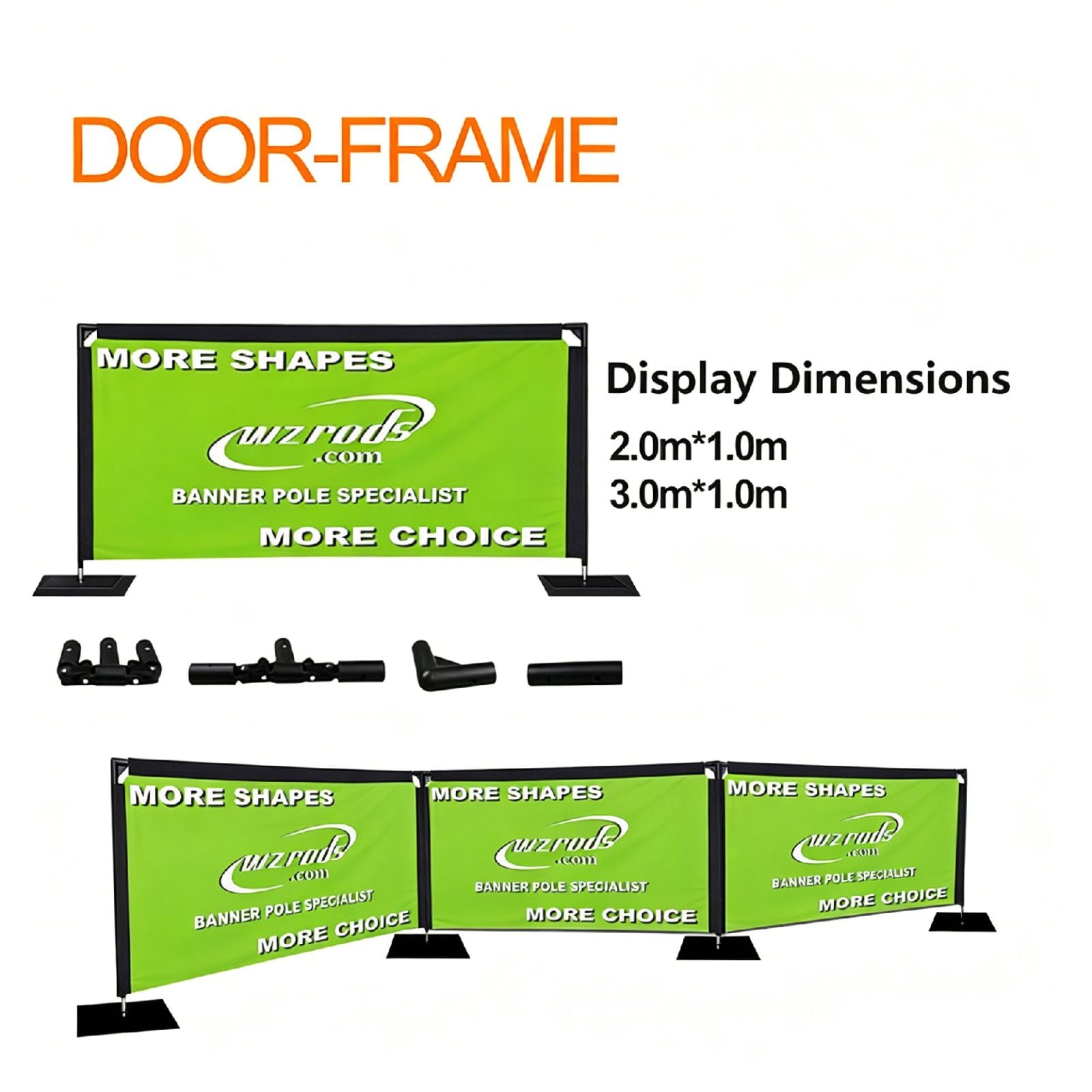
Door Frame
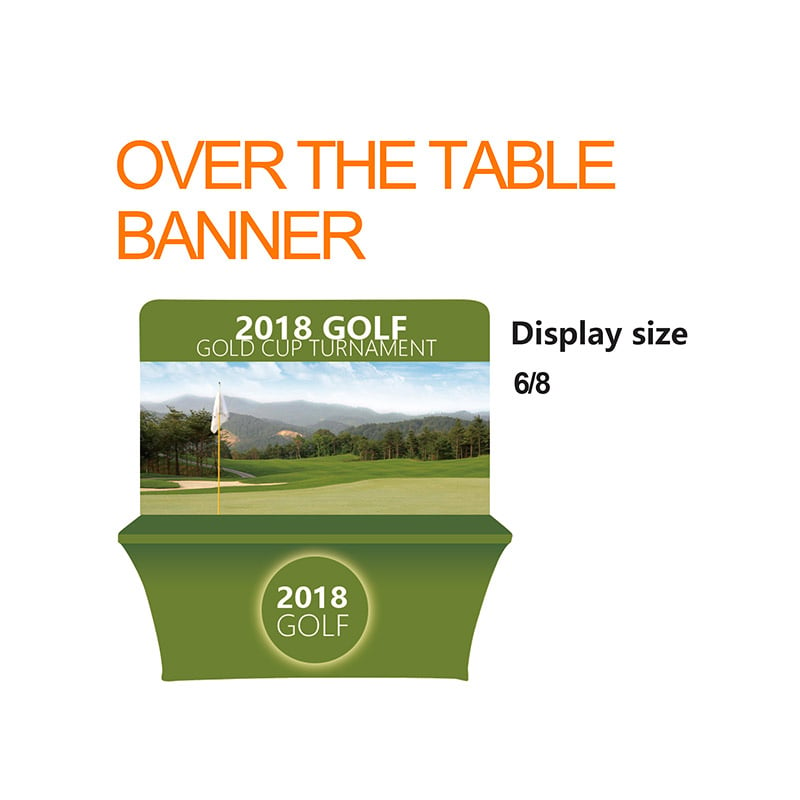
Over The Table Banner
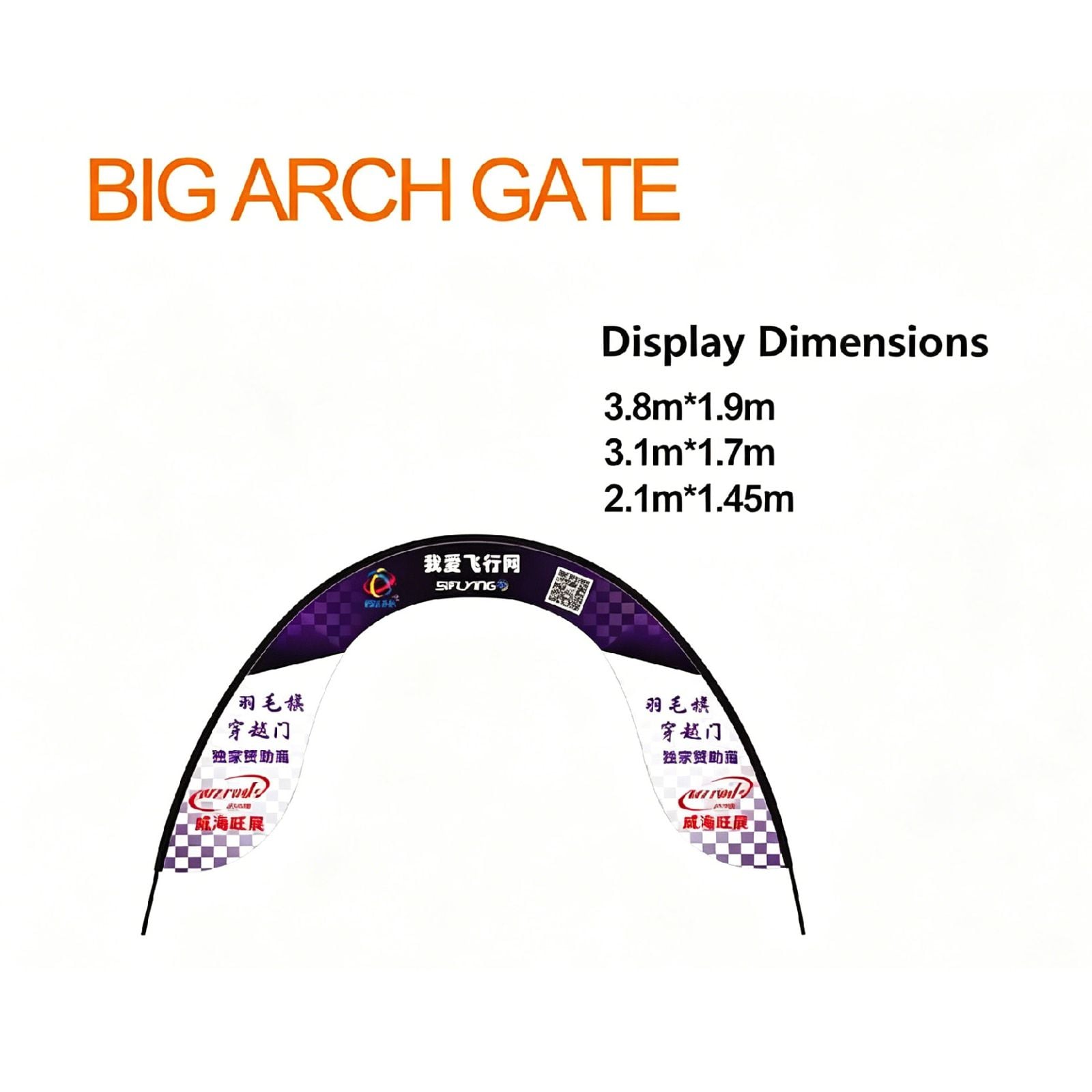
Big Arch Gate
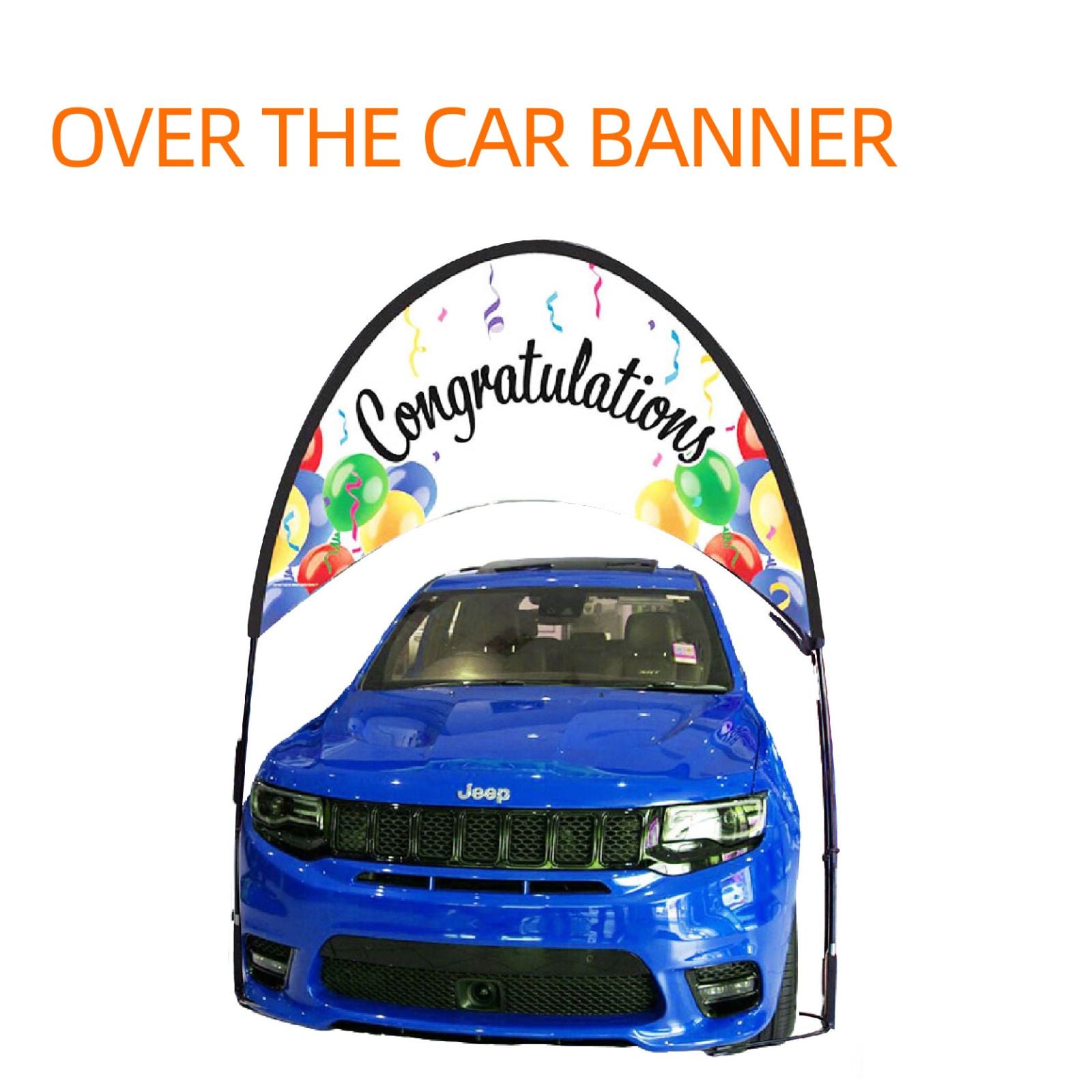
Over The Car Banner
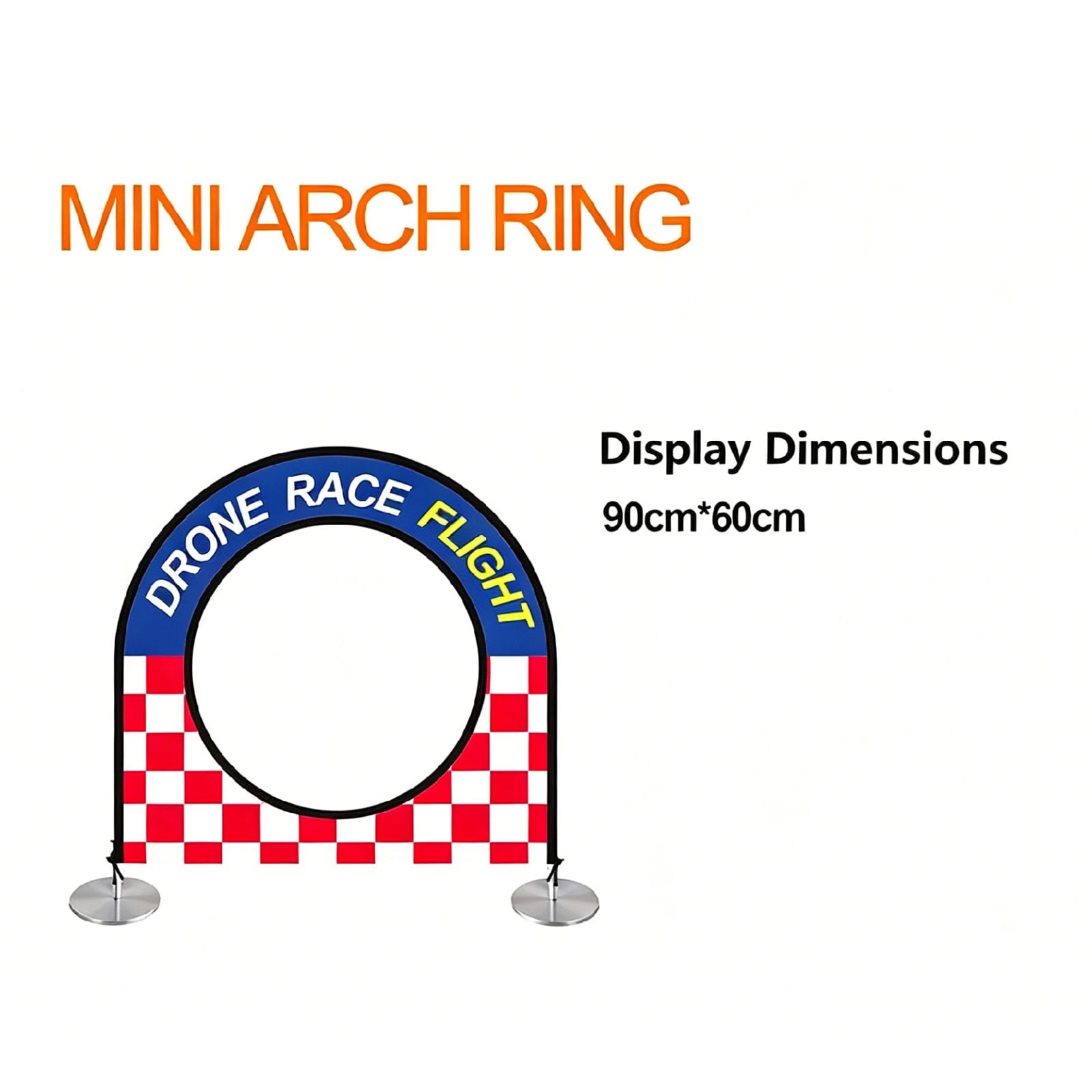
Mini round gate
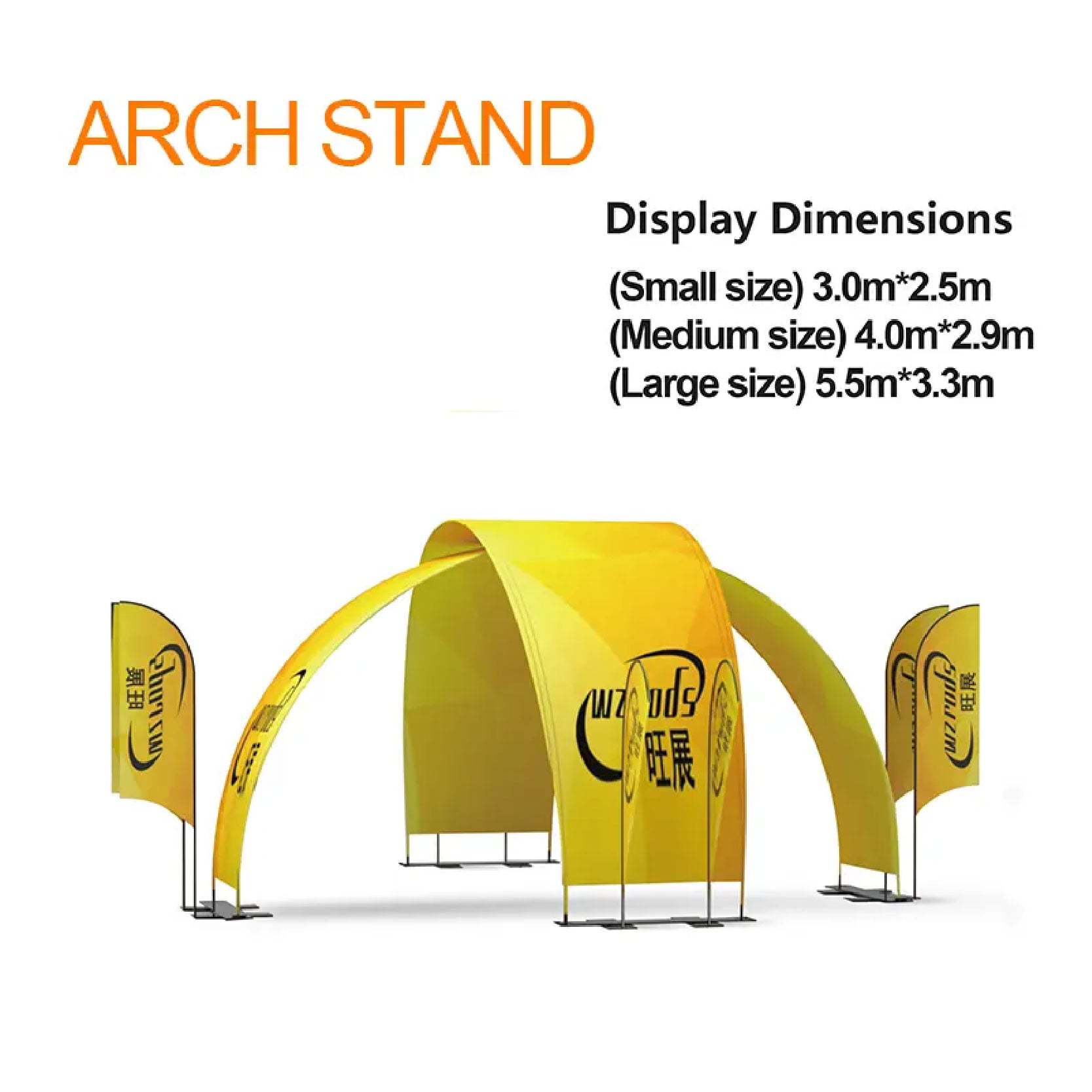
3D Arch Stand
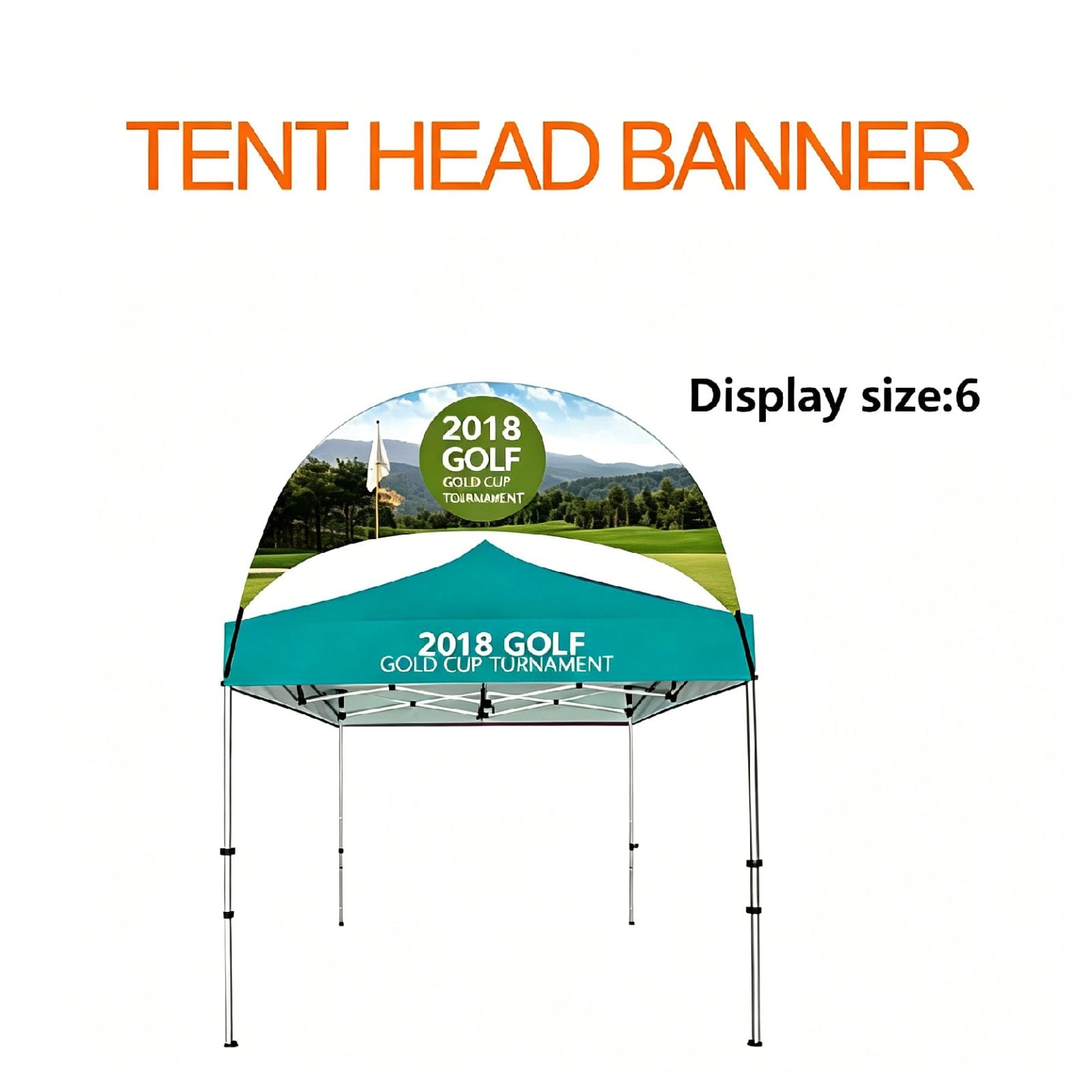
Tent Head Banner
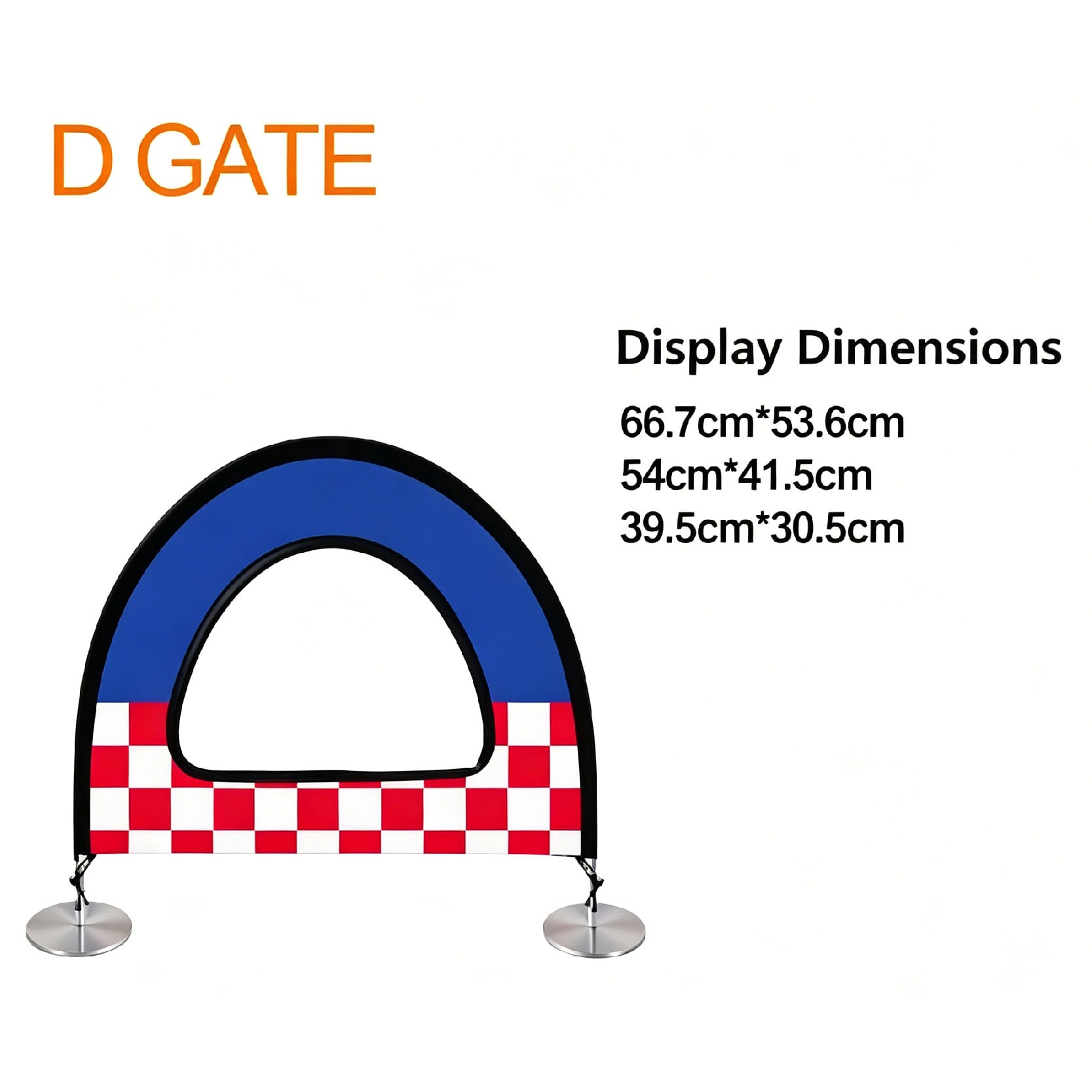
mini d gate
Related Articles
29kg Concrete Flag Base - The Complete B2B Buyer's Resource - WZRODS
WZRODS DY451B: 29 kg, HDPE shell, concrete core. Stackable, portable, rust-proof. FOB price US$5.75–$6.85 at MOQ 2 units. Those numbers look unremarkable. Factor in landed cost—import duties lower than aluminum’s under relevant HTS codes, freight savings from less weight per unit of stabilizing mas
Wide Tube Cross Base - The Complete B2B Buyer's Resource - WZRODS
The Wide Tube Cross Base, manufactured by Wzrods in Shandong, China, solves one problem: reliable stability for poles under three meters, without the freight costs and warehouse footprint that heavier alternatives demand.
Rectangular Pipe Cross Base - The Complete B2B Buyer's Resource - WZRODS
The pipe cross flag base is a cross of rectangular steel pipe, powder‑coated, weighing 1.3 kg and spanning 78 cm across its arms. Its center holds a C‑ring shaft that lets the flag rotate with the wind.
X-Shape Backpack Banner - The Complete B2B Buyer's Resource - WZRODS
Economic Cross Base - The Complete B2B Buyer's Guide- WZRODS
When you buy an economic cross base—something like the Wzrods DM‑9, a 77 cm‑long, 1.3 kg iron cross—forget “economic” as a synonym for “cheap.” It means value-engineered.
Event Bin - The Complete B2B Buyer's Resource - WZRODS
Here is a table constructed from actual measurements, shipping calculations, and factory test data. It compares a typical aluminum-framed event barrier (48-inch width, single banner) with the WZRODS carbon composite Event bin.
Mini D-Gate - The Complete B2B Buyer's Resource - WZRODS
I still remember the sound: a sharp metallic whang, then the flap of torn polyester. Friday afternoon, Dongguan exhibition hall.
Promotional event archway- The Complete B2B Buyer's Resource - WZRODS
For the last three years, carbon composite arch stands from WZRODS—a Shandong factory established in 2005—have redrawn expectations for entrance architecture. Here’s what a serious buyer needs to know.