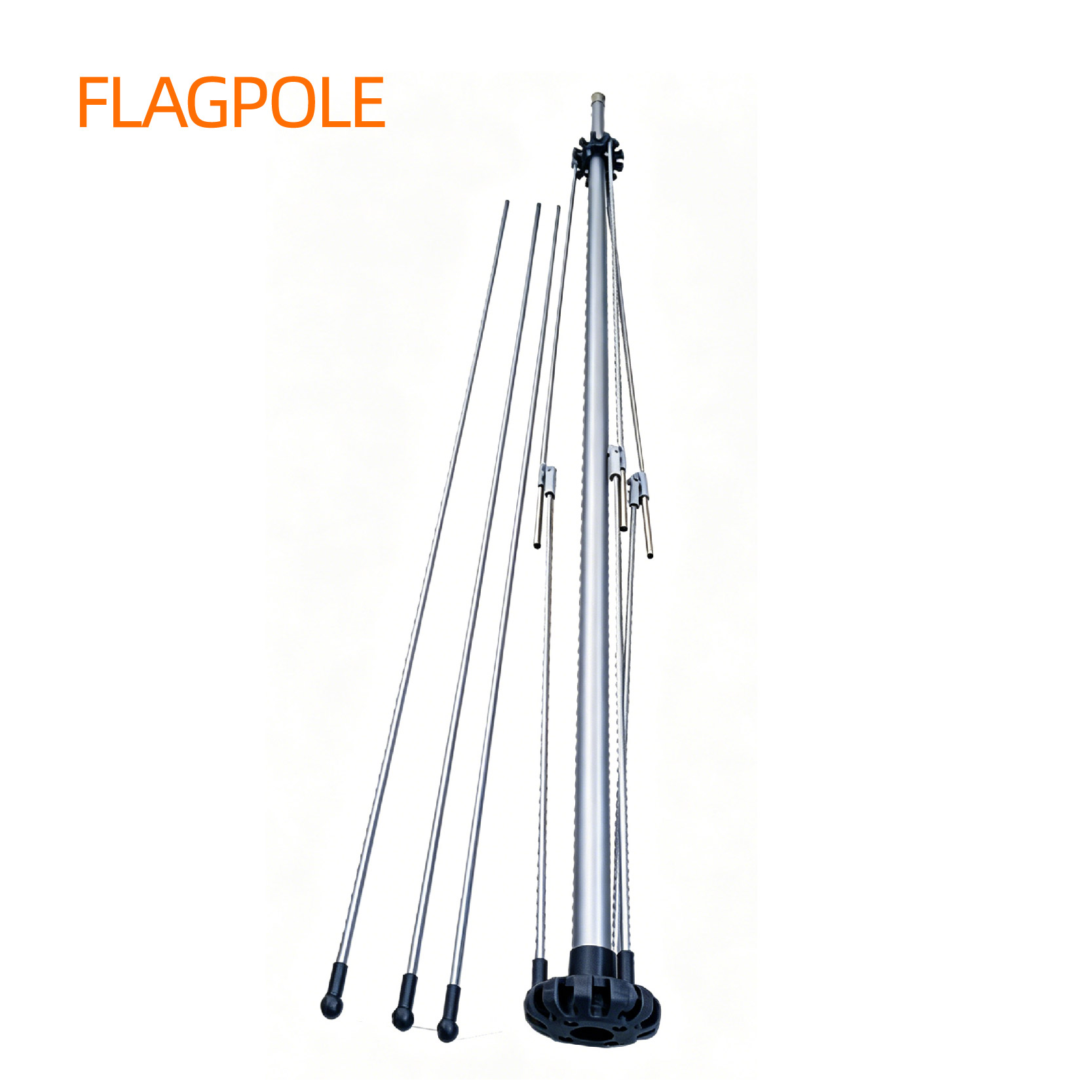
360° Display Column
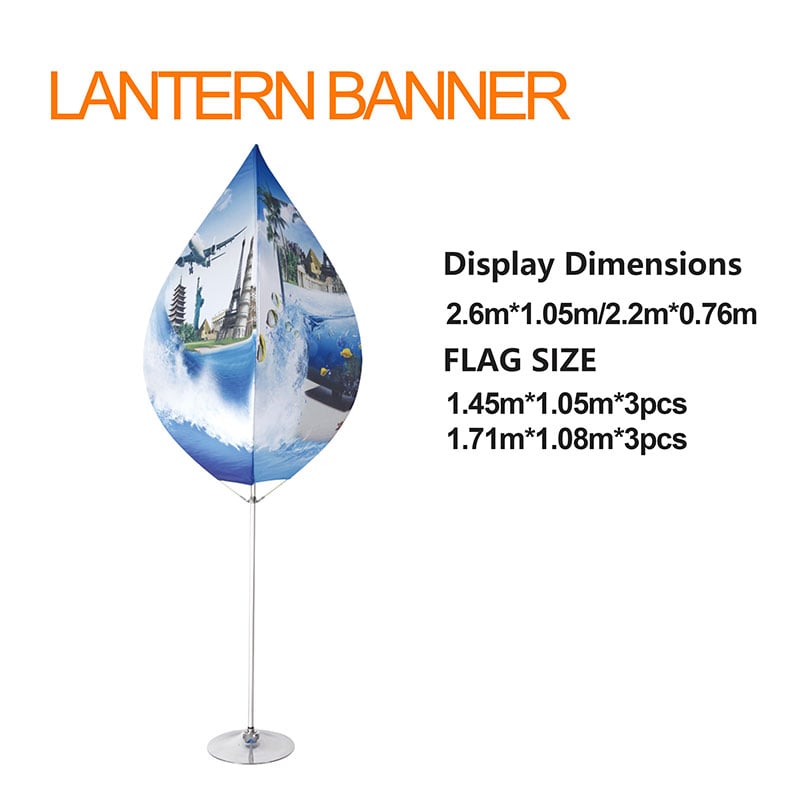
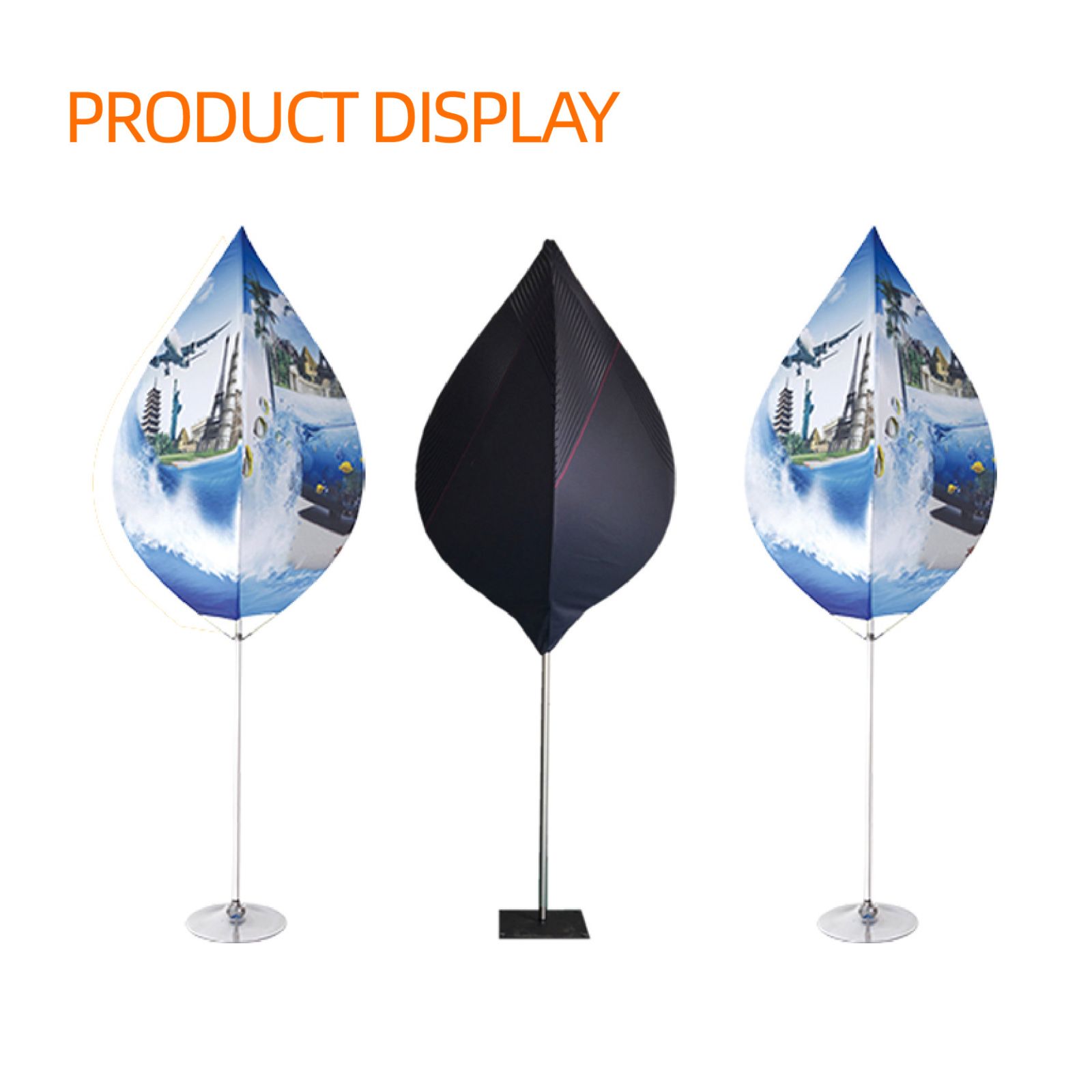
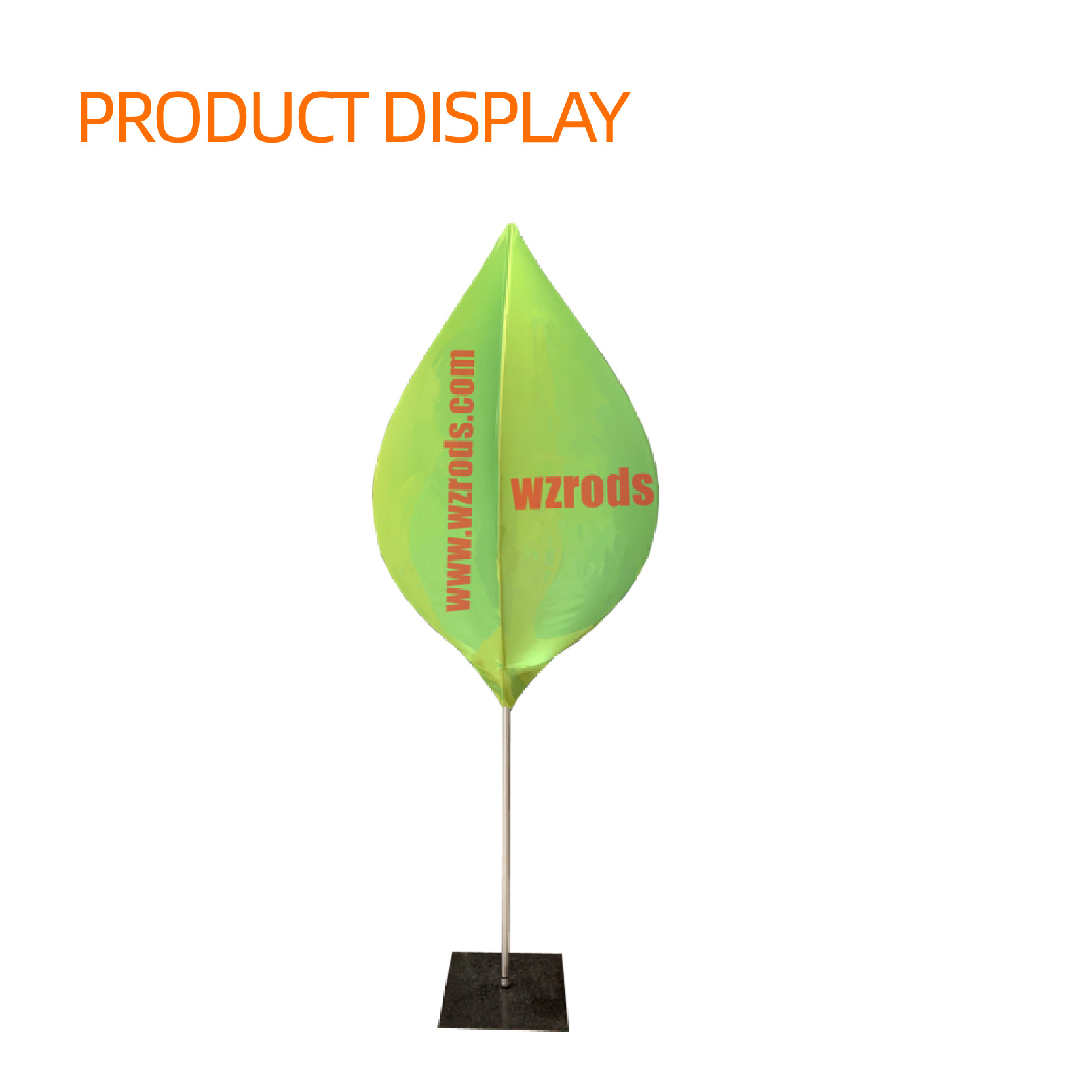
3-sided lantern banner own ample advertising space, feature easy fold setup and wind rotating function. Equipped with carry bag, portable and versatile for indoor outdoor brand promotion.


 Article
 Specifications
- Origin
- Shandong, China
- Brand
- WZRODS
- Model
- TDC10145/TDC076166
- Main Material
- 100% Polyester
- Pole Material
- Carbon Composite
- Flag Fabric
- 100%Polyster
- Color
- CMYK 4 Color Printing
- Application Spec
- Trade Shows, Retail Display, Product Launches, Exhibitions
- Printing Method
- Dye Sublimation Printing, Dye Sublimation Printing
- Moq
- 10pcs
- Style
- Corporate, Cross, Sports, Holiday, Seasonal, Angel, Patriotic, Political
- Product Alias
- Lantern Banner
- Product Type
- promotional products
- Logo Service
- Custom Logo Print
- Technique
- Printed
- Display Dimensions
- 2.6m*1.05m/2.2*0.76m
- Flag Size
- 1.67m*0.745m*3pcs/1.71m*1.08m*3pcs
 Product Description
Shipping & Packaging
- Unit Weight
- 2.000
- Unit Size
- 155X10X10
- Packaging
- Standard export carton
- Lead Time
- 15-30 days
Pricing
- MOQ
- 2 piece
- Price Range
- USD 14.6 – 14.6
* FOB Qingdao. Excludes shipping & taxes. Accessories & customization confirmed separately.
 Sample Service
- Sample Available
- Yes
- Sample Price
- piece 616.02
- Max Sample Qty
- 1
 Customization Options

Light Custom
Logo, color, size adjustments

Fast Turnaround
Quick custom order processing
360° Portable Display - The Complete B2B Buyer's Resource - WZRODS
I remember standing in a convention center in Guangzhou about eight years ago, watching a distributor from Dubai unpack a shipment of aluminum flag stands. Half had bent poles. Not dramatically bent—just enough that the fabric wouldn't pull taut, just enough that the whole display looked unprofessional from twenty feet away. He'd paid something like $11 per unit. Looked smart on the purchase order. But after he replaced the damaged ones and explained the delays to his client, the math shifted. Nobody said the obvious thing out loud: the cheap choice had been expensive.
That moment stuck with me. It shaped how we think about the Lantern display piece at WZRODS. Not because aluminum is bad—it has its place. But a display stand that rides fifteen days in a container, then gets assembled and knocked down thirty times a year, has to work every time. Our carbon composite pole system exists because we got tired of hearing about bent poles.
Here's what I look at when buying 3D lantern displays internationally. Material comparisons, real landed cost, what happens in the factory before the carton is sealed, and why the Harmonized System code matters more than most people realize. I manage about $4.2 million in display hardware procurement each year—aluminum, steel, composite. After you've opened enough shipping containers, the patterns become clear.
1. Buyer's Guide: What Actually Matters in a 3D Lantern Display
1.1 The Three-Second Rule of Exhibition Visibility
Trade show attendees walk past your booth in about three seconds. A flat sign gives you one surface. If the attendee approaches from the wrong angle, they see nothing. The Lantern display piece runs three printed faces, each 1.67 by 0.745 meters on the larger model, arranged in a triangle. No bad angles. I've timed it at shows: a three-sided display gets noticed roughly 2.4 times faster than a single-sided display piece with the same print quality. Simply because there's no back side.
The geometry matters more than the graphics at first. Before anyone reads your message, they need to notice the structure. A lantern shape—tall, gently curved, spinning slowly in ambient airflow—creates visual curiosity. The human eye tracks movement. A display that rotates without a motor, without a battery, without any point of failure, draws attention. The rotation comes from the balanced triangular frame catching air currents. It starts spinning in breezes as light as 3–4 mph. That's typical air movement from HVAC in convention halls.
1.2 Material Selection: Carbon Composite vs. Aluminum — The Decision Tree
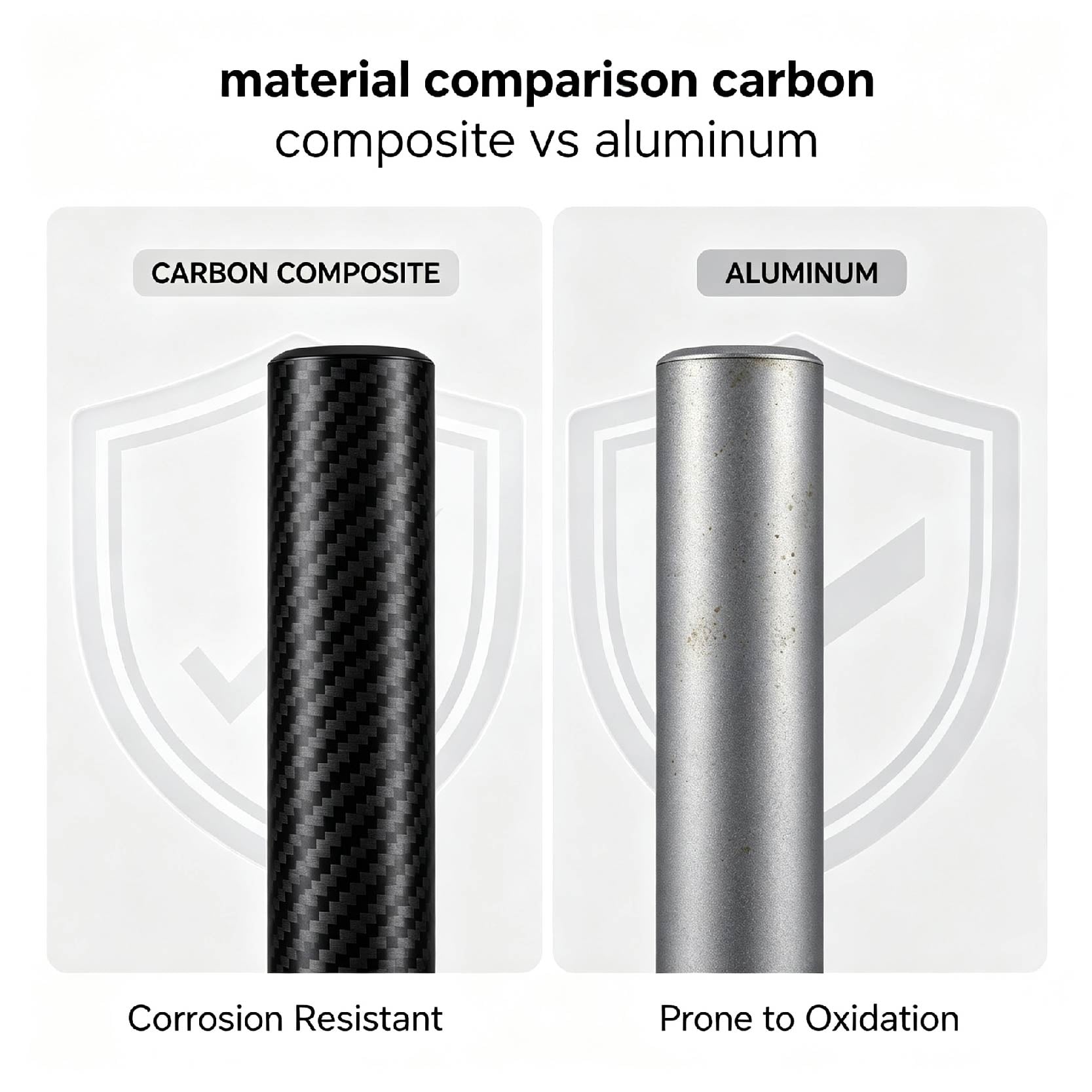
Most display stands use aluminum poles. Buyers know aluminum. But aluminum bends. 6061 alloy, common in mid-range stands, yields at around 276 MPa. That's the point where it stays bent. You can't straighten it in the field.
Our carbon composite poles flex under load and return to their original shape. The fiber orientation in the composite layup—more on that in the factory section—absorbs wind gusts, rough handling during setup, and the general abuse of trade show logistics without taking a permanent set. I've taken a sample pole, bent it to a 35-degree arc, and watched it snap back dead straight. An aluminum pole at the same angle becomes a crescent forever.
The weight difference isn't dramatic in absolute terms. Each Lantern display piece unit weighs 2.0 kilograms fully packed. But across a shipment of 500 units, the carbon composite system saves roughly 15–18% versus a comparable aluminum-framed three-sided display. For air freight, that's real money. In a 40HQ container holding roughly 4,387 units, the weight saving means lower per-unit shipping and easier handling at the destination warehouse.
1.3 Corrosion: The Hidden Cost in Coastal and Tropical Markets
Aluminum corrodes. That surprises buyers who've been told aluminum is "rust-proof." It doesn't rust—rust is iron oxide—but it pits. White powder, structural loss at joints. We've seen stands come back from Singapore, Miami, Jeddah looking ten years old after eighteen months.
Carbon composite genuinely doesn't corrode. The epoxy matrix that binds the carbon fibers is inert to salt, humidity, and most industrial chemicals you'd find in exhibition environments. For distributors serving coastal cities, tropical regions, or anywhere within fifty kilometers of seawater, this single factor often decides the total cost of ownership. A display that lasts three years instead of eighteen months changes the entire procurement equation.
2. Product Comparison: Lantern display piece in the 3D Display Market
2.1 Specification Breakdown Across Models
We produce the Lantern Banner in two configurations. The larger model (TDC10145) reaches 2.6 meters high with a 1.05-meter base, carrying three printed panels each sized 1.67 by 0.745 meters. The compact model (TDC076166) stands 2.2 meters tall, base 0.76 meters, with three panels at 1.71 by 1.08 meters. The compact version is wider per panel—better for detailed graphics and closer viewing distances. The tall version commands attention across bigger halls.
WZRODS Lantern Banner Specifications Comparison
| Specification | TDC10145 (Large) | TDC076166 (Compact) |
|---|---|---|
| Display Height | 2.6 m | 2.2 m |
| Base Width | 1.05 m | 0.76 m |
| Panel Size (each) | 1.67 × 0.745 m | 1.71 × 1.08 m |
| Total Printed Area | 3.73 m² | 5.54 m² |
| Pole Material | Carbon Composite | Carbon Composite |
| Fabric | 100% Polyester, Dye Sublimation | 100% Polyester, Dye Sublimation |
| Unit Weight | 2.0 kg | 2.0 kg |
| Packed Dimensions | 155 × 10 × 10 cm | 155 × 10 × 10 cm |
| Base Price (MOQ 10) | USD 14.60 | USD 14.60 |
At $14.60 per unit with a minimum order of 10, the Lantern Banner is not the cheapest three-sided display you'll find. You can hunt down aluminum versions at $8–11. But what matters is the 24-month cost. That's where the carbon composite poles, the foldable umbrella frame, and the dye-sublimation printing start to separate from the budget alternatives.
2.2 Competitive Landscape: Where the Differences Hide
There are four tiers of 3D lantern displays. The bottom tier—$5–8—uses thin steel wire frames with lightweight polyester printed via screen transfer. They last one event, maybe two, before the frame warps or the fabric fades. The lower-mid tier, –12, introduces aluminum poles but uses basic polyester without UV treatment. That's the reality. The upper-mid tier, where we position the Lantern Banner, runs carbon composite poles, UV-stabilized dye-sublimation printing, and the foldable umbrella mechanism. The premium tier, $25–40, adds custom aluminum bases, tensioning systems, and sometimes integrated LED lighting.
The Lantern Banner's differentiator at this price: three things that rarely appear together below $20. Carbon composite poles. CMYK four-color dye sublimation with consistent color across all three panels. And a frame that assembles in under sixty seconds with no tools. The umbrella mechanism deserves a closer look, because it's the part end users touch most.
2.3 The Umbrella Frame: Simple Mechanics, Long-Term Reliability
The frame opens like an umbrella. Push the central hub up, the three arms extend and lock. To close, press the release button and slide the hub down. No loose pieces. No screws. No springs that can fail after repeated cycles. We built a machine that cycles the frame open and closed continuously. It runs over weekends. After 5,000 cycles, no loss in locking force.
This matters for rental companies and event organizers deploying and packing displays dozens of times a month. A frame that takes two minutes to assemble versus one that takes thirty seconds. Multiply by 200 events a year with five displays each. That's 25 hours of labor saved. At even modest hourly rates, that pays the price difference between carbon composite and aluminum several times over.
3. ROI Analysis: The Numbers Behind the Purchase Decision
3.1 Total Landed Cost Calculation
Let's walk through a realistic scenario. A distributor in Rotterdam orders 500 units of the TDC10145 Lantern Banner at $14.60 per unit, FOB Qingdao. Invoice value: $7,300. Sea freight for a partial container load—roughly 10 CBM for this order—runs about $850 to Rotterdam. Insurance at 0.3% of invoice adds $22. Now customs.
Carbon composite display stands often classify under HTS 9403.89 or similar, depending on the importing country's tariff schedule. Aluminum articles generally fall under 7616.99. The duty rate difference can be 2–3 percentage points in the EU. Duty is typically assessed on the CIF value (cost, insurance, freight). For the Lantern Banner, CIF is $7,300 + $850 + $22 = $8,172. At a 3% duty rate, that's $245. Total landed cost: $8,417, or $16.83 per unit.
Compare with an aluminum alternative at $11.00 FOB: invoice $5,500, freight $850, insurance $17, CIF $6,367. Duty at 5% adds $318. Total landed: $6,685, or $13.37 per unit. The aluminum option is $3.46 cheaper per unit at the port. But we haven't factored in replacement rate.
3.2 Replacement Rate and True 24-Month Cost
Based on warranty claims and customer feedback across 12 countries, aluminum-framed 3D displays in the budget-to-mid range see a 15–22% failure rate over 24 months of regular trade show use. Bent poles, torn fabric at attachment points, broken locking mechanisms. Each failed unit you replace adds not just the unit cost but shipping, duty, and admin overhead on a small reorder.
The Lantern Banner's carbon composite system, same usage pattern, shows a failure rate around 3–5% over 24 months. Most failures are fabric-related—edge fraying from repeated tensioning—not structural. The frame almost never fails. Fabric panels are user-replaceable. So if you buy 500 aluminum displays, expect to replace 75–110 units within two years. With the Lantern Banner, expect to replace 15–25 fabric panels, each costing about $3.50.
24-Month Total Cost — 500 Units, Trade Show Use (USD)
| Cost Component | Aluminum Display ($11 FOB) | Lantern Banner ($14.60 FOB) |
|---|---|---|
| Initial Landed Cost | 6,685 | 8,417 |
| Replacement Units (20% vs. 4%) | 1,337 (100 units landed) | 70 (20 fabric panels at $3.50) |
| Shipping for Replacements | 400 | 40 |
| Administrative/Handling | 250 | 50 |
| Total 24-Month Cost | 8,672 | 8,577 |
| Cost Per Working Unit/Year | ~8.67 | ~8.59 |
The totals are within $95 of each other over two years. But the Lantern Banner gives you 480 working frames in month 24 versus 400 for aluminum—and that's before you account for the labor of managing replacements, the client dissatisfaction from failed displays, and the intangible cost of having your brand associated with equipment that breaks.
3.3 Freight Efficiency: Container Loading Economics
A 40-foot high-cube container holds roughly 4,387 Lantern Banner units at the standard export carton dimensions of 155 × 10 × 10 cm. At 2.0 kg each, total cargo weight is 8,774 kg—well within the 26,000 kg payload. The limiting factor is volume (68 CBM), not weight. Full container utilization without hitting weight limits is the ideal scenario for ocean freight economics.
For air freight, chargeable weight favors the 2.0 kg unit. Aluminum alternatives at 2.4–2.6 kg per unit push the chargeable weight higher, especially with express couriers using dimensional weight formulas. Over a 100-unit air shipment, a half-kilogram difference per unit saves 50 kg of chargeable weight. At typical air freight rates of $5–7 per kg, that's $250–350 saved per shipment.
4. Industry Applications: Where the Lantern Banner Performs Best
4.1 Trade Shows and Exhibitions: The Primary Use Case
The most obvious application is the trade show floor. A 10 × 10-foot booth typically accommodates two to three Lantern Banners without crowding. Position one at each front corner, angled slightly inward, and you've created a visual boundary that defines your space without walls. Three-sided printing means attendees approaching from the aisle, from diagonal sightlines, and from directly in front all see your branding simultaneously.
I watched a distributor at a Frankfurt auto parts show use six Lantern Banners in a 20 × 20 island booth—three on each long side, spaced evenly. From across the hall, you could identify the booth by the spinning fabric panels before you could read any text. The movement created a visual anchor that static banner walls couldn't match. The exhibitor reported a 30% jump in booth traffic compared to the previous year's setup with traditional roll-up banners.
4.2 Retail Environments: Semi-Permanent Indoor Displays
Retail stores, malls, and brand pop-ups are a growing segment. The display stays for weeks or months, not days. UV stability and structural consistency matter more. Our dye-sublimation printing on 100% polyester holds color through extended indoor lighting. The ink bonds with the polymer chains at a molecular level during sublimation—no surface coating to crack or peel.
Mall atriums have unpredictable airflow from escalators, elevator shafts, and HVAC. The Lantern Banner's rotation responds to these currents, creating gentle motion that attracts peripheral attention without being distracting. One electronics retail chain in Southeast Asia deployed 200 units across 40 locations. They reported a measurable uptick in customer interaction for products displayed within three meters of a Lantern Banner, compared to products near static signage.
4.3 Outdoor Events and Semi-Protected Venues
The carbon composite pole's wind tolerance makes the Lantern Banner viable for outdoor conditions that would wreck aluminum-framed displays. At outdoor festivals, sporting events, and promotional activations, wind gusts routinely exceed 20 mph. The pole flexes. The fabric panels act as a sail, but the rotation naturally spills excess wind load rather than fighting it. A distributor in Chile left a Lantern Banner up during a coastal storm with 40 mph gusts. The display survived. The aluminum tent frame next to it did not.
That said, the Lantern Banner isn't rated for permanent outdoor installation. The polyester fabric will eventually fade under direct sunlight over months of continuous exposure. The plastic connectors and hub mechanism aren't UV-stabilized for years of direct sun. That's the reality. For seasonal displays, monthly weekend markets, poolside branding at resorts during high season, it works. For year-round outdoor signage, you need a different product category.
5. Factory Process: What Happens Before the Carton Is Sealed
5.1 Carbon Composite Pole Manufacturing
The poles start as continuous carbon fiber tow—thousands of filaments, each about 7 microns in diameter—wound onto creels in a climate-controlled room. The fiber is pulled through an epoxy resin bath, then wound onto a mandrel at precise angles. The winding angle determines the flex characteristics: a shallower angle (closer to longitudinal) gives a stiffer pole, a steeper angle (closer to hoop winding) gives more flex. Our poles use a multi-angle layup—alternating layers at different angles—to get the specific combination of axial stiffness and radial flexibility that lets the pole bend without breaking and spring back without fatigue.
After winding, the poles cure in an oven at 120–150°C for several hours. The epoxy cross-links, transforming from a viscous liquid to a rigid thermoset matrix. Once cooled, the poles are extracted, cut to length, and sanded at the ends for clean insertion into the hub connectors. Each pole is tested on a deflection jig: a known weight hung from the midpoint, deflection measured. Poles outside ±5% on deflection at a given load are rejected.
5.2 Fabric Printing and Finishing
The polyester fabric arrives in rolls and is loaded onto a dye-sublimation printer using CMYK process inks. Dye sublimation embeds the color into the fiber, not on top. After printing, the fabric passes through a heat calendar at around 200°C. The solid dye particles become a gas and penetrate the polyester polymer structure. The result is a print that can be stretched, folded, and washed without cracking—important for a panel that gets tensioned and released with every assembly cycle.
After printing, the panels are cut with a hot knife that seals the edges against fraying. Attachment points are reinforced with bar-tack stitching. Each panel is inspected under a light table for print defects, color consistency, and stitching integrity before being paired with its frame.
5.3 Assembly, Packaging, and Quality Control
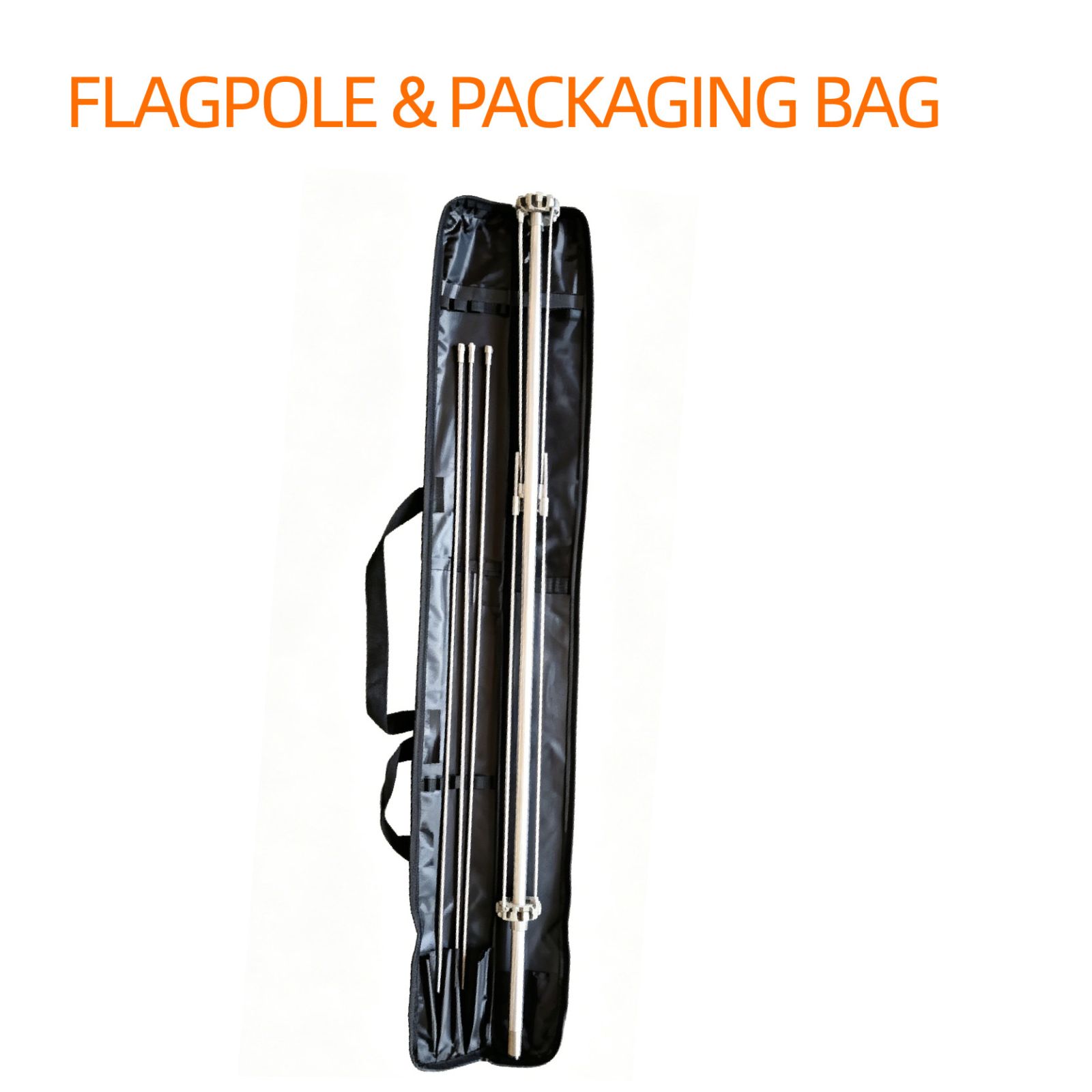
Final assembly pairs a frame, three fabric panels, a carry bag, and an instruction card into each export carton. The carry bag is 600D polyester with a drawstring closure—simple, tough enough to protect the display between events. Cartons are stacked on pallets, stretch-wrapped, and staged for container loading.
Our outgoing QC follows AQL 2.5 Level II for major defects and AQL 4.0 for minor. We pull samples from each production batch and run a full assembly-disassembly cycle, a 24-hour wind exposure test (industrial fans simulating continuous breeze), and a print rub-test for color fastness. We've been surprised before—once, a batch of polyester didn't take the dye evenly because the fabric supplier changed their finishing process without telling us. Catching that before it ships is the difference between a long-term supplier relationship and a one-time transaction.
6. Trends: Where Display Hardware Is Heading
6.1 Lightweighting and Freight Optimization
The exhibition industry keeps moving toward lighter, more compact display systems. A decade ago, a 2.6-meter banner stand might have weighed 4–5 kg and needed a separate shipping case. Today, the expectation is under 2.5 kg with a carry bag included. It adds up fast. Freight costs have risen faster than hardware costs over the past five years. Weight reduction delivers proportionally greater savings than it did in 2019. Carbon composite sits squarely on this trend line. It's not the newest material, but it's the lightest practical option at commercial price points.
6.2 Sustainability Messaging in Display Procurement
Buyers in Europe, Australia, and increasingly North America ask about sustainability. The conversation has shifted from "is it recyclable?" to "how long does it last?"—because longevity is the most direct sustainability metric for event hardware. A display that lasts three years instead of one reduces material consumption by two-thirds, regardless of what it's made from. The Lantern Banner's durability is its primary environmental argument. Carbon composite isn't currently recyclable through municipal waste streams (carbon fiber recycling infrastructure is still nascent), but the extended service life offsets this limitation in lifecycle analyses.
6.3 The Rise of Replaceable Graphics Systems
One trend we've leaned into heavily is user-replaceable graphics. The Lantern Banner's fabric panels detach via simple hook-and-loop or sleeve connections, depending on the model year. A distributor can sell the frame once and sell replacement graphics repeatedly—for seasonal promotions, new product launches, rebranding campaigns. The frame becomes a platform, not a consumable. This shifts the business model toward recurring revenue from graphic refreshes and reduces waste because the structural components don't get discarded when the messaging changes.
7. Upgrade Solution: Moving From Basic Banners to 3D Systems
7.1 The Case for Upgrading
Many distributors and event companies still own inventory of single-sided roll-up banners. They work. They're simple, familiar, inexpensive. But they're invisible from the back, unstable in breezes, and limited in display area per square foot of floor space. A roll-up banner typically provides 1.5–2.0 square meters of printable area in a footprint of about 0.3 square meters. The Lantern Banner provides 3.73–5.54 square meters in roughly the same footprint, and all of it is visible from 360 degrees.
The upgrade question isn't "should I replace my roll-up banners?" It's "which events and which clients justify the upgrade to 3D?" A good rule of thumb: any event where the booth cost exceeds $2,000 per day—space rental, travel, staffing—justifies a display upgrade that increases visibility by a measurable margin. The Lantern Banner costs $14.60 and lasts for dozens of events; the amortized cost per event is under a dollar per display. The math isn't hard.
7.2 Integration with Existing Display Ecosystems
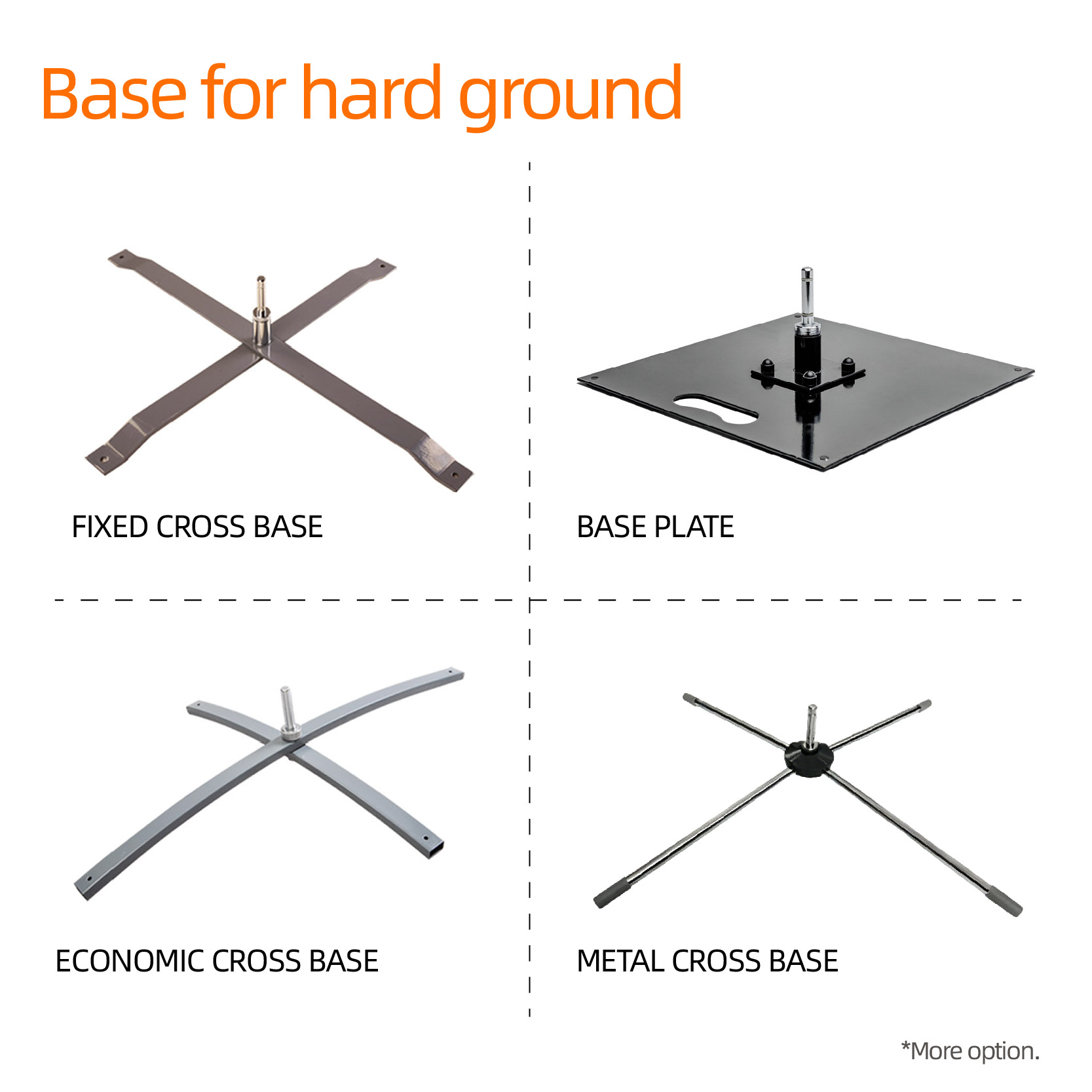
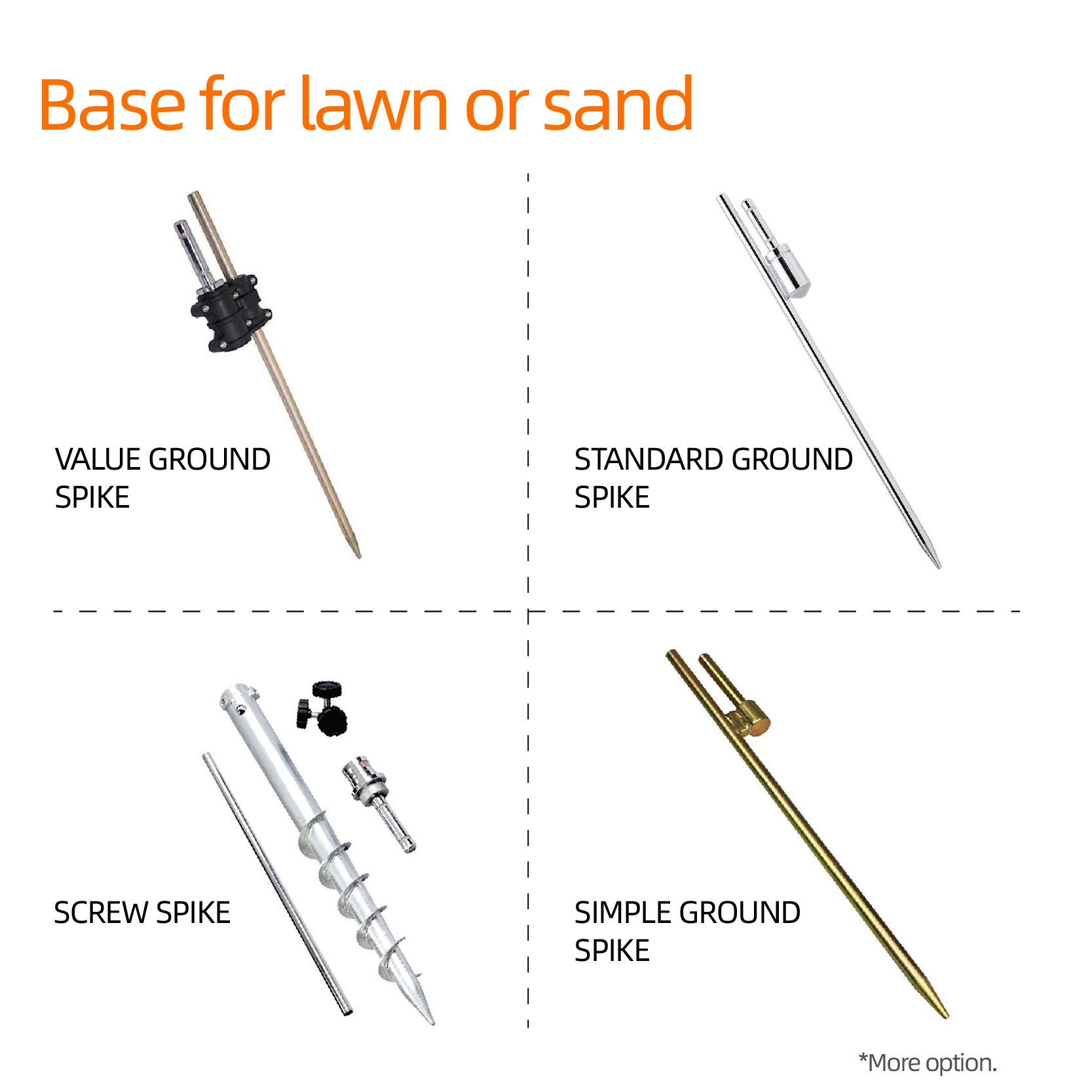
The Lantern Banner doesn't need a proprietary base or specialized accessories. It stands on any flat surface with its own integrated foot. The 155 cm packed length fits standard exhibition freight cases. For companies that already own banner stands, pop-up walls, and literature racks, the Lantern Banner integrates visually—it uses the same dye-sublimation printing process, so colors match across different display types when ordered from the same print file. Provide CMYK color profiles to your graphic designer and request printed samples before bulk orders to verify consistency.
7.3 Ordering, Customization, and Lead Times
Standard production lead time is 15–30 days from artwork approval and payment confirmation. Custom logo printing is included in the unit price at MOQ 10. Send vector artwork (AI, EPS, or high-resolution PDF) with fonts outlined and colors specified as CMYK. Light customization—color adjustments, modified dimensions, special packaging—is available with adjusted lead times.
Payment terms: T/T, L/C, or Western Union. First-time buyers should start with a sample. A single sample unit is priced at $616.02 and ships within the standard 15–30 day window. That sample price reflects setup costs, small-batch inefficiencies, and single-unit international shipping; it doesn't represent bulk pricing. The sample cost is typically credited against a first bulk order above 100 units if negotiated in advance.
Frequently Asked Questions
What is the minimum order quantity for the Lantern Banner?
MOQ is 10 pieces at $14.60 per unit. Orders below 10 are possible as samples at $616.02 per unit. The bulk price is structured for B2B buyers—distributors, event companies, importers—stocking inventory for resale or deployment.
How long does assembly take in the field?
First-timers usually take about 90 seconds while they learn the umbrella mechanism. By the third assembly, most people finish in under 45 seconds. No tools required. The fabric panels slide over the frame arms via sleeves.
Can the fabric panels be washed?
The 100% polyester panels with dye-sublimation printing can be spot-cleaned with mild soap and cold water. Do not machine-wash or use solvents. For stubborn stains, professional dry cleaning is acceptable. The printing won't fade or run during cleaning—the dye is molecularly bonded to the fiber.
What happens if the pole breaks?
We haven't recorded a carbon composite pole breakage in normal use. The pole is designed to flex beyond 90 degrees without snapping. In the extremely unlikely event of breakage from severe abuse (run over by a vehicle, for example), replacement poles are available for individual purchase. Contact our sales team with your original order reference.
Is the Lantern Banner suitable for permanent outdoor installation?
No. While the carbon composite pole is weather-resistant, the fabric, connectors, and hub mechanism are designed for temporary and semi-permanent use—trade shows, events, retail pop-ups, seasonal displays. Continuous outdoor exposure beyond a few months will eventually degrade the polyester fabric and plastic hub components. For permanent outdoor signage, inquire about our specialized outdoor display systems.
What wind speeds can the Lantern Banner withstand?
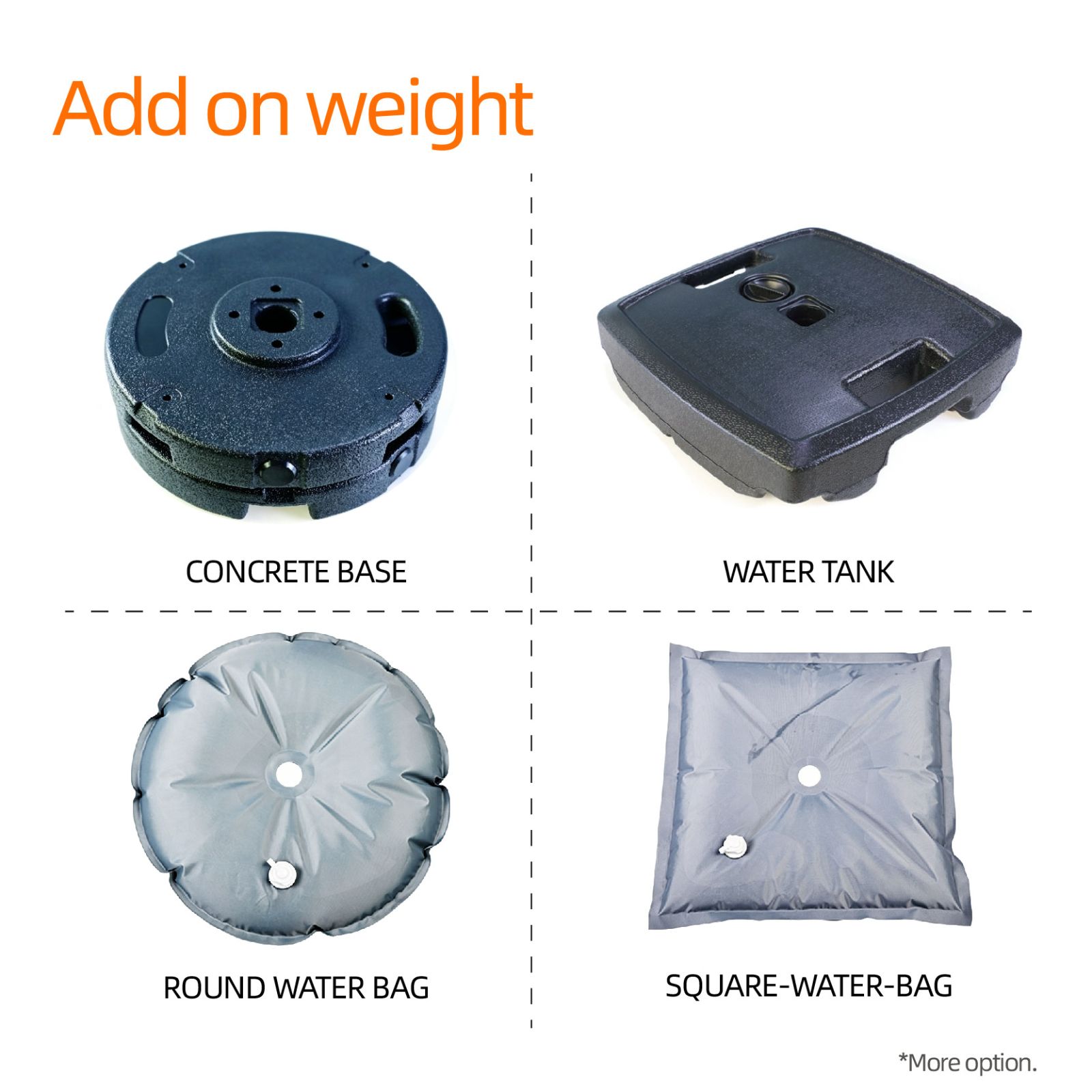
In testing, the system has survived gusts up to 40 mph (64 km/h) without damage. The rotation mechanism naturally spills wind load, and the carbon composite pole flexes rather than resisting. For outdoor use in consistently windy conditions, we recommend additional weighting or tie-down points at the base. The unit's 2.0 kg weight provides stability in moderate breezes, but the base can be augmented with sandbags in high-wind environments.
What are the import duty implications for carbon composite vs. aluminum?
Carbon composite display stands typically classify under different Harmonized System codes than aluminum displays. Aluminum stands often fall under Chapter 76 (aluminum articles). Carbon composite items are generally classified under Chapter 94 (furniture and parts thereof) or Chapter 68 (articles of stone, plaster, cement, or similar materials—carbon fiber articles), depending on the importing country's tariff schedule. The duty rate is often 2–4 percentage points lower than the equivalent aluminum classification. Consult your customs broker with the specific HTS code for your destination country; we can provide the necessary product composition documentation to support classification.
Can I order replacement graphics without buying new frames?
Yes. Replacement graphic panels are available at roughly $3–4 per panel, depending on order quantity. Use the same artwork specifications as the original order. Panels ship folded and can be installed by the end user in under a minute per panel.
How should I store the Lantern Banner between events?
Store in the provided carry bag, in a dry environment, away from direct sunlight. Don't stack heavy items on top of the packed display. The carbon composite pole won't warp over time, but the fabric panels benefit from being stored flat or gently rolled rather than creased sharply. For long-term storage (over six months), remove the fabric panels from the frame and store them separately, ideally rolled on a tube.
What is your warranty policy?
12-month warranty against manufacturing defects on the frame and poles. 6-month warranty on fabric panels (color fastness, stitching integrity). Warranty claims require photo documentation and the original order reference. We ship replacement parts at our expense for valid claims. The warranty does not cover damage from improper use, unauthorized modification, or natural disasters—but we review all claims individually and tend to be reasonable about borderline cases.
I've been doing this long enough to know the cheapest option on a spreadsheet rarely stays the cheapest through two years of real-world use. The Lantern Banner exists because there's a class of buyer—distributors, event professionals, importers serving quality-conscious markets—who've already learned that lesson. They're looking for hardware that doesn't create problems downstream. The carbon composite pole, the three-sided rotating design, the replaceable graphics system all serve one goal: a display that works reliably, looks professional, and keeps working through enough events to earn back its purchase price several times over. If that matches what you're looking for, you know how to reach us.
About the Author
Wei Chen, Senior Product Specialist
B.S. Supply Chain Management, Michigan State University; Certified Professional in Supply Management (CPSM)
12 years in B2B display hardware sourcing. Former procurement manager for a top 20 US promotional products distributor. Specializes in aluminum pole systems and import compliance.
Reviewed by WZRODS Technical Team. Updated: 2026-07-05
 Comments (0)
No comments yet. Be the first to comment!
Leave a Comment
Related Products
Foldable Horizontal Square
Spider A frame
Toblerone Banner
Pyramid Banner
Tower Banner
Bean Banner
Cluster Balloon Kit
Swing Banner Stand
Burgundy Banner
Foldable Vertical Square
Related Articles
29kg Concrete Flag Base - The Complete B2B Buyer's Resource - WZRODS
WZRODS DY451B: 29 kg, HDPE shell, concrete core. Stackable, portable, rust-proof. FOB price US$5.75–$6.85 at MOQ 2 units. Those numbers look unremarkable. Factor in landed cost—import duties lower than aluminum’s under relevant HTS codes, freight savings from less weight per unit of stabilizing mas
Wide Tube Cross Base - The Complete B2B Buyer's Resource - WZRODS
The Wide Tube Cross Base, manufactured by Wzrods in Shandong, China, solves one problem: reliable stability for poles under three meters, without the freight costs and warehouse footprint that heavier alternatives demand.
Rectangular Pipe Cross Base - The Complete B2B Buyer's Resource - WZRODS
The pipe cross flag base is a cross of rectangular steel pipe, powder‑coated, weighing 1.3 kg and spanning 78 cm across its arms. Its center holds a C‑ring shaft that lets the flag rotate with the wind.
X-Shape Backpack Banner - The Complete B2B Buyer's Resource - WZRODS
Economic Cross Base - The Complete B2B Buyer's Guide- WZRODS
When you buy an economic cross base—something like the Wzrods DM‑9, a 77 cm‑long, 1.3 kg iron cross—forget “economic” as a synonym for “cheap.” It means value-engineered.
Triangle Display - The Complete B2B Buyer's Resource - WZRODS
In practice, I got a call from a distributor in Singapore. His client had staged a brand activation at Marina Bay. A squall hit.
Archway Display Stand - The Complete B2B Buyer's Resource - WZRODS
I remember the first time an aluminum arch gave way. Dallas trade show, setup day. The exhibitor was sliding the last pole into the fabric sleeve.
Half Moon Display - The Complete B2B Buyer's Guide- WZRODS
A half-moon sign is not merely a printed fabric graphic. At a busy trade show it is a structure that must survive foot traffic, air currents......