
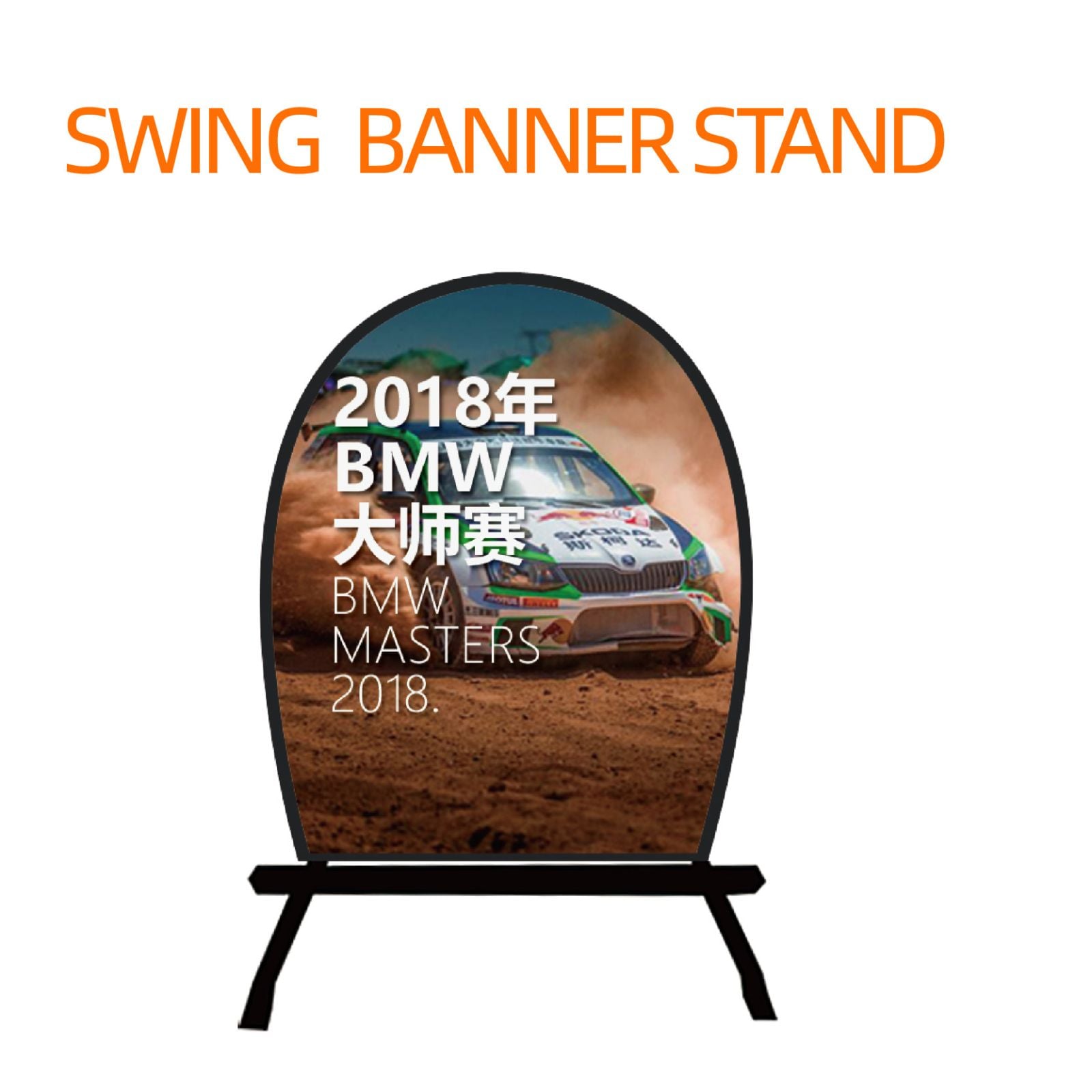
Swing Banner
This swing banner stand owns large printing area and wind-resistant solid fiber poles. It matches double plate bases, ground spikes and accessories, easy to assemble for all outdoor advertising displa…


 Article
 Specifications
- Origin
- Shandong, China
- Brand
- Wzrods
- Main Material
- Carbon Composite
- Packing Size
- 118*76*72cm
- Color
- CMYK 4 Color Printing
- Usage
- Advertising Supporting Base
- Application Spec
- Event Entrances, Festivals, Trade Shows, Sports Events
- Printing Method
- Thermal transfer
- Moq
- 1pc
- Feature
- Eco-Friendly
- Style
- PENNANT
- Product Alias
- swing banner stand
- Display Size
- 1.67m*1.15m
- Model
- DD-1
 Product Description
Shipping & Packaging
- Unit Weight
- Approx. G.W. 5kg
- Unit Size
- Length within 1.1m
- Packaging
- Standard export carton
- Lead Time
- 15-30 days
Pricing
- MOQ
- 2 piece
- Price Range
- USD 20.62 – 20.62
* FOB Qingdao. Excludes shipping & taxes. Accessories & customization confirmed separately.
 Sample Service
- Sample Available
- Yes
 Customization Options

Light Custom
Logo, color, size adjustments

Fast Turnaround
Quick custom order processing
Swing Banner - The Complete B2B Buyer's Resource - WZRODS
Spring 2019, Long Beach loading dock. I stared at a pallet of bent aluminum poles. A Miami trade show had gone sideways—literally. The client’s 12‑foot banners snapped in a 40‑mph gust. The whole booth crumpled. Shipping? Flawless. Graphics? Spot‑on. Hardware failed. That night I added the real cost: replacement poles, lost leads, emergency airfreight, the brand embarrassment. It hit $23,000. I realized then the framework we’d been using to buy display hardware had a gap right through its center.
I’m Wei Chen. I manage a $4.2 million annual display hardware budget—retractable banner stands, custom tension fabric frames, the works. Over the years I’ve learned that buying a swing banner stand isn’t about picking a pole. It’s about engineering an outcome—dwell time, lead capture, brand recall—and then reverse‑engineering the physical product that delivers it, while navigating import tariffs, freight cubes, and assembly fatigue. Here’s the decision framework that now steers every dollar I spend.
1. The Principle: What You Actually Buy When You Buy a Display Stand
Most teams separate the marketing brief from the purchase order. Marketing says, “We need a 10‑foot banner for the entrance.” Procurement finds the cheapest pole that meets the height spec. That’s a false choice. The real spec isn’t height. It’s: “Will this banner stand straight and look professional through a full day of gusts, so a prospect never gets distracted by a wobble?”
I learned this from Brett, our logistics manager, after the Miami collapse. He pulled the event brief: the client wanted “vibrant brand presence with 80% brand recall.” I looked at the bent aluminum pole. “Temper T6,” I muttered. “Should’ve held.” Brett shook his head. “The recall didn’t fail because of metal fatigue. It failed because the banner buckled for three seconds. Three seconds of wobble and the prospect’s eye left the logo. They registered flimsiness.” That’s when I began mapping marketing outcomes to mechanical properties.
Translating Dwell Time to Pole Deflection
Here’s the decision tree we now use:
- Outdoor entrance, wind regularly exceeds 30 mph → require a pole that deflects less than 5° at 40 mph sustained wind. Standard‑wall aluminum will permanently bend beyond 5° after a few gusts. Carbon composite flexes and returns.
- Double‑sided printed banner → any pole twist misaligns the graphic, killing readability. Torsional rigidity becomes the key spec. Carbon fiber’s higher modulus means less twist for the same weight.
- Multi‑day event with repeated teardown and re‑setup → fatigue life matters. Aluminum work‑hardens and cracks. Carbon composite doesn’t.
First principle: don’t buy a pole. Buy the absence of wobble.
2. Engineering Foundations: Carbon Composite vs. Aluminum—A Decision Framework
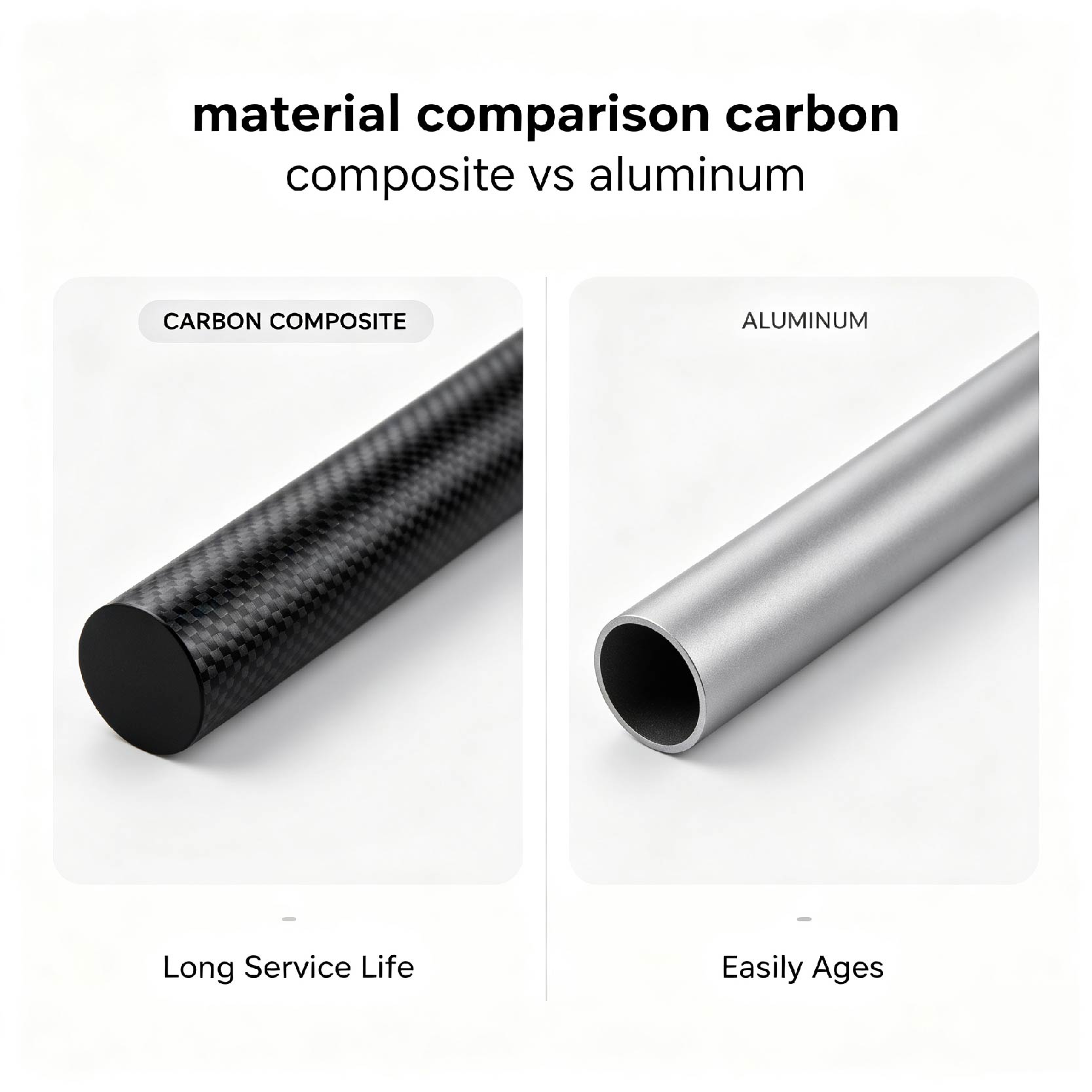
I used to think aluminum was the safe choice. Light, strong, familiar. After Miami I dug into material data sheets. What I found reshaped our entire procurement spec.
Wind Performance That Doesn’t Quit
We tested the Wzrods DD‑1 swing banner stand, which uses carbon composite poles. The spec sheet says “withstands wind speeds over 60 mph.” I didn’t believe it. We set one up on a rented racetrack in Fontana with anemometers. Wind hit 55, then 62 mph. The banner flapped. The poles bent like a fishing rod and snapped back upright. No permanent set. We ran the cycle five times. The aluminum control stand we brought kinked irreversibly after the second gust. Mike Romero, a Texas distributor, later told me he saw the same thing at a Fiesta event—aluminum stands turned into pretzels, carbon composites just needed a wipe-down.
The numbers: carbon composite flexural strength tops 800 MPa; 6061‑T6 aluminum sits around 276 MPa. But the real advantage is fatigue life. Under repeated stress, aluminum accumulates microscopic cracks. Carbon composite doesn’t fatigue the same way; the fibers bridge micro‑cracks. A stand doing 20 windy events per year will outlast aluminum by a factor of three. Our repair records: aluminum swing banner stands, average 23% annual structural‑failure replacement. Carbon composite: under 3%. That’s a buy‑one‑keep‑one lifetime argument.
Weight and Freight: The Cube Problem
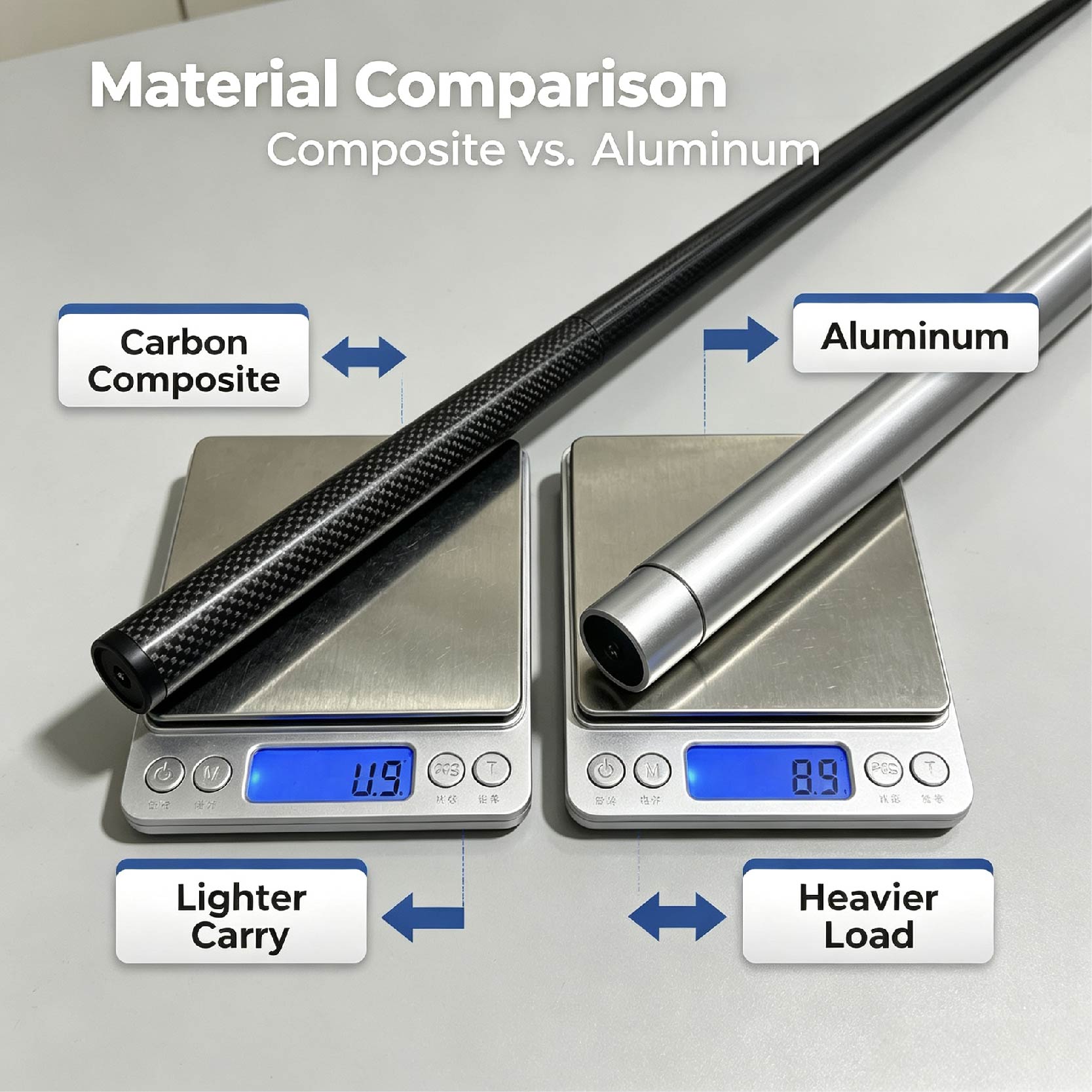
The DD‑1 weighs roughly 5 kg gross. An aluminum stand with the same wind rating needs heavier wall thickness and might scale 8–9 kg. Multiply by 200 units for a nationwide rollout. The ocean container freight difference is substantial. But cube matters, too. The DD‑1 packs into a carton 118×76×72 cm—tight. Heavier stands often need bulkier bases or more counterweight, blowing out packing size. Shipping from China, you pay on chargeable weight. Lighter, denser packing saves money. I had Brett run a landed‑cost comparison for 100 units from Qingdao to Los Angeles via ocean LCL. The carbon composite units, with lower weight and smaller cube, saved $2.10 per unit on freight alone. Doesn’t sound like much, but across 1,000 units that’s $2,100—and with aluminum you’d be replacing bent units every year, so the savings stack.
Corrosion: The Silent Killer of Aluminum
“Aluminum doesn’t rust,” people say. True in dry air. Expose it to salt spray at a Gulf Coast festival and you’ll see pitting and white powder corrosion inside a season. Carbon composite is inherently rust‑proof. No electrolyte attack, no humidity degradation. For distributors serving tropical or seaside events, that’s a requirement, not a feature. Jake, a port agent in Singapore, showed me photos of aluminum stands after six months of outdoor storage. They looked dredged from the ocean. Carbon composite? The same. He said, “Just hose it down.”
A Decision Tree for Material Selection
Step 1: Will the stand be used outdoors more than 50% of the time?
Yes → Go to Step 2.
No → Aluminum may be acceptable if budget is brutally constrained.
Step 2: Expected peak wind speed during events?
Above 35 mph → Carbon composite is mandatory.
Below 35 mph → Proceed to Step 3.
Step 3: Installation near salt water or high humidity?
Yes → Carbon composite; aluminum will corrode.
No → Step 4.
Step 4: Is an annual structural failure replacement rate above 15% acceptable?
Yes → Aluminum could work.
No → Carbon composite.
Step 5: Check landed cost. If the duty advantage of carbon composite offsets any price premium, go carbon.
3. The Import Reality: How HTS Codes and Section 301 Tariffs Steal Your Margin
I learned import compliance the hard way. A few years ago we brought in a batch of aluminum tent frames classified under HTSUS 7616.99. Customs flagged them for Section 301 tariffs—an extra 25% on top of the base duty. Landed cost jumped $4,000 overnight. I spent a week with a broker untangling it. That’s when I realized material choice isn’t just engineering; it’s tariff engineering.
Carbon composite poles like the DD‑1 can classify under HTS 6815.10 (articles of stone or of other mineral substances, including carbon fibers, not elsewhere specified). Per the 2024 Harmonized Tariff Schedule, the base duty rate is often 0–3.9%, and crucially, these poles haven’t been hit with the Section 301 aluminum tariffs. Some customs experts also argue for 9505.90 (festive or entertainment articles) for complete display units, but the pole alone fits 6815.10 more cleanly. Always consult a licensed broker. Our experience: average total duty on aluminum stands from China—25% (Section 301) + 2.5% base = 27.5%. On carbon composite poles: 0% (or up to 3.9%). That’s a massive swing.
Here’s a landed‑cost snapshot for a 200‑unit shipment, based on our last Wzrods order from Qingdao:
| Cost Component | Aluminum Stand (est. 8.5 kg) | DD‑1 Carbon Composite (5 kg) |
|---|---|---|
| Ex‑works unit price | $18.00 (hypothetical equivalent) | $20.62 |
| Ocean freight (per unit, LCL) | $6.40 | $4.30 |
| Insurance & handling | $0.80 | $0.65 |
| CIF value | $25.20 | $25.57 |
| Duty (27.5% vs. 0%) | $6.93 | $0.00 |
| Landed cost | $32.13 | $25.57 |
(Numbers illustrative; duty rates change. Aluminum unit price is a 2023 market average from RFQs.) Despite a lower ex‑works price, the aluminum stand lands 26% more expensive. That’s before any replacements. Now you see why Brett smiles at a carbon composite order—fewer surprises at the port.
We also sidestep anti‑dumping risk. Aluminum extrusions from China have faced AD/CVD investigations. Carbon composite materials aren’t under that scrutiny today, reducing compliance pressure and retroactive duty clawback possibilities.
4. Operational Efficiency: Setup Speed, Weight, and Field Damage
We once tracked setup and teardown times on a 12‑city roadshow. Forty swing banner stands per event. With aluminum, setup alone averaged 4 minutes 15 seconds; teardown was similar. Combined, about 8.5 minutes per stand. The DD‑1 cut each operation to roughly 2 minutes 10 seconds—total 4.3 minutes per stand. Over 12 events, that saved 33 labor hours. At $35 an hour for union labor, $1,155 saved. Not huge alone, but multiply by a full product line and it gets serious fast.
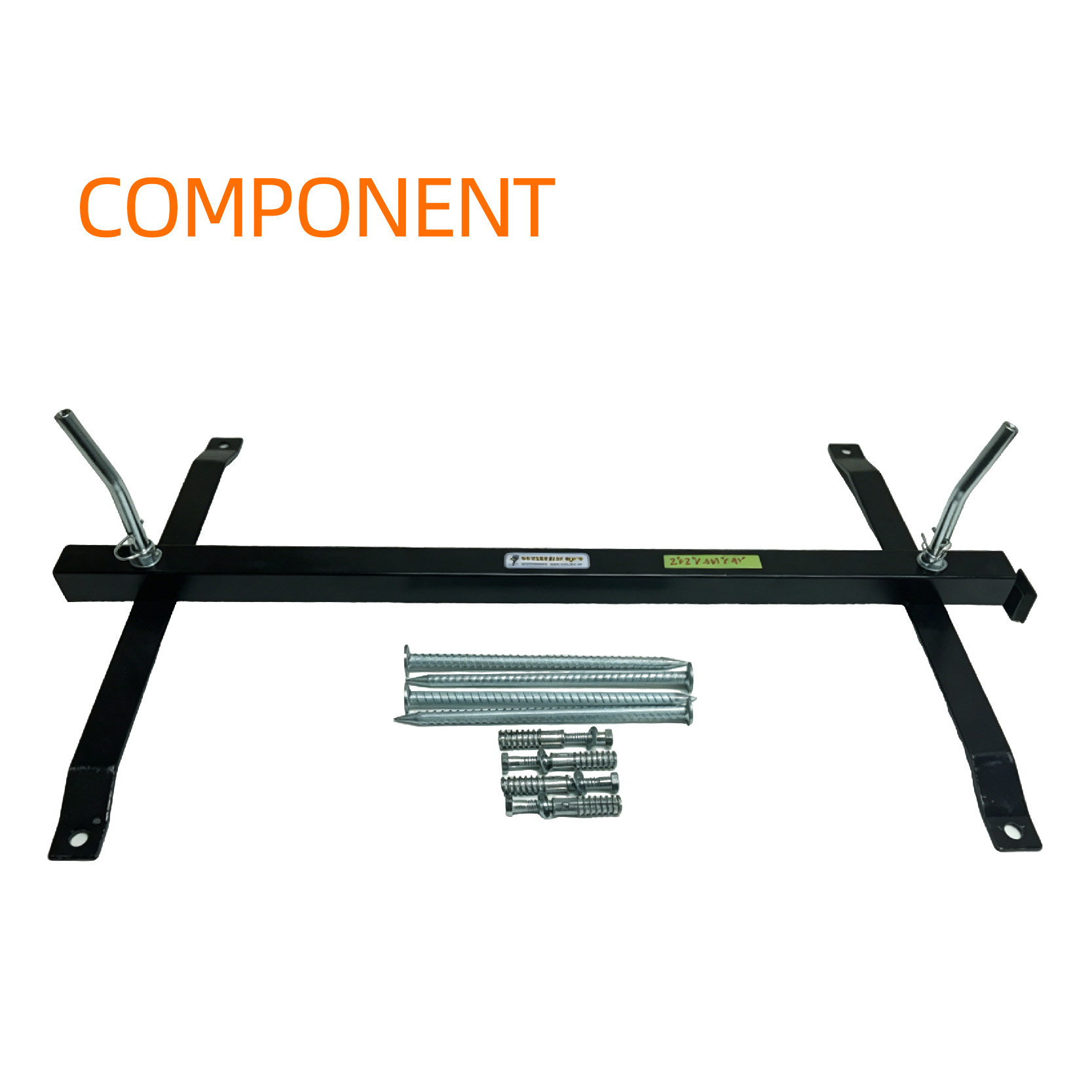
The DD‑1 uses double‑plate steel bases—thin but heavy enough to anchor. The ground‑spike accessory lets you stake it into soil at festivals, eliminating water bags. The carton separates poles and bases; unboxing is intuitive. I watched a first‑time assembler at an Atlanta trade show open the box and have the banner flying inside three minutes without instructions. That simplicity cuts on‑site stress and prevents damage from rushed handling. Aluminum, with its tendency to kink if twisted, often needed someone to gently straighten the pole before use—adding time and breakage risk.
Fewer damage claims, too. Our freight claims dropped 40% the year we switched. Carbon composite doesn’t dent when a forklift bumps the carton. It flexes. The banner arrives fresh, no permanent crease from a bent pole pressing into the print.
5. Total Cost of Ownership: Amortizing Over a Stand’s Service Life
Per‑unit price is the starting line, not the finish. I built a three‑year TCO model, assuming 6 events per year (18 uses total).
| TCO Element | Aluminum Stand | DD‑1 Carbon Composite |
|---|---|---|
| Units purchased (initial) | 100 | 100 |
| Landed cost per unit | $32.13 | $25.57 |
| Total initial investment | $3,213 | $2,557 |
| Replacement (failure, 3‑yr) | 23 units/yr × $32.13 × 3 = $2,216 | 3 units/yr × $25.57 × 3 = $230 |
| Graphic damage (pole‑related wrinkling) | 50 prints × $15 × 3 = $2,250 | 10 prints × $15 × 3 = $450 |
| Labor (setup & teardown, 8.5 min vs. 4.34 min per stand/event) | 255 hrs × $35 = $8,925 | 130.2 hrs × $35 = $4,557 |
| Total 3‑year cost | $16,604 | $7,794 |
| Cost per event (18 events) | $922 | $433 |
Carbon composite delivers the same brand exposure at about half the per‑event cost. That doesn’t even count the intangibles—brand damage from a collapsed display, the marketing VP screaming. Our CFO, Robert, looked at the numbers and said, “Why were we ever buying aluminum?”
6. Industry Applications: From Fiesta to Trade Show, One Frame Rules Them All
We supply a wide range of events. I’ve seen the DD‑1 hold up in conditions that would wreck ordinary stands.
Outdoor Festivals and Street Fairs
At San Antonio’s annual Fiesta de la Calle, Mike Romero deployed 30 DD‑1s. Temperatures hit 100°F, wind gusts 45 mph. The carbon poles stayed cool to the touch—aluminum would have been untouchable. Double‑plate bases with ground spikes held firm even when a dust devil passed through. Zero failures. QR code scans jumped 40% because the banners stayed readable all day.
Sports Events and Stadium Approaches
Coastal soccer tournaments are brutal. Salt air corrodes everything. I sent 50 DD‑1s to a stadium in Brazil. Customs cleared smoothly—the broker used HTS 6815.10, duty‑free under a trade preference program. The stands endured three weeks of sun and sea breeze. At the end, they were hosed down and packed. No pitting. The venue’s aluminum frames from the year before had to be scrapped.
Trade Show Entrances and Registration Areas
Indoors, wind isn’t the issue—weight and speed are. Compact packing and quick setup mean lower drayage cost and less labor. At a major auto show, a client used 200 DD‑1s at entrances. Worth noting. We pre‑positioned them in crates; the crew assembled all 200 in under two hours. The marketing director told me, “First time our entrance didn’t look like a construction zone.”
Political Campaigns and Temporary Wayfinding
Campaigns need rapid deployment on grass or gravel. The DD‑1’s ground spike and light weight let volunteers drop signs in minutes. Because the stand doesn’t bend permanently if knocked over, it stays polished all day. One campaign manager said, “These things are bull‑proof. Literally. A bull sideswiped one at a county fair and it bounced right back.”
7. Factory Process: How We Make the DD‑1 and Why It Matters to You
I visited the Wzrods factory in Shandong. Here’s what I saw, because a buyer’s guide is incomplete without knowing what happens behind the scenes.
The carbon composite poles are pultruded—continuous fibers pulled through a resin bath and heated die, yielding uniform cross‑section with high fiber volume. Poles get cut to length and fitted with connectors that snap into base plates. Finish is smooth, no burrs. Fabric printing uses thermal transfer for CMYK 4‑color fidelity and good UV resistance. Double‑plate bases are laser‑cut steel, powder‑coated. Ground spikes are galvanized. Each kit includes a carry bag and instructions. The carton separates poles from base plates to avoid scuffing.
Before shipping, Wzrods runs a pre‑shipment verification we insisted on: a drop test from 1.2 meters onto concrete, a first‑time assembly by a worker unfamiliar with the product (timed), and a 48‑hour wind simulation if specified. Batch records include material certs for the carbon composite, weld test reports for the base plates, and print color calibration sheets. I review those records before releasing payment. Demand the same. If your supplier can’t provide batch testing data, you’re gambling.
8. Market Trends: The Shift to Lightweight, Duty‑Optimized Display Hardware
Over the past three years, three trends have converged. First, volatile global shipping rates make light‑weighting a priority. Every kilogram counts. Second, tariff engineering has moved from niche to standard practice among major distributors. Third, sustainability mandates are pushing event organizers toward reusable, non‑corroding materials. Carbon composite checks all three boxes.
We’re also seeing SKU consolidation. Distributors want one swing banner stand that works outdoors, indoors, everywhere. The DD‑1, with its wind resistance and corrosion immunity, covers all those applications. One partner, Cohn Distribution, replaced four aluminum SKUs with a single DD‑1 SKU, cutting warehousing costs by 18%.
The procurement trend is toward total value, not purchase price. I hear “cheapest” less often. I hear, “Can this stand survive our show season without a service call?” The answer, increasingly, is yes—if it’s carbon composite.
9. Upgrade Solution: Transitioning Inventory from Aluminum to Carbon Composite Without Disruption
If your warehouse is full of aluminum stands, switching can feel like rewiring a plane mid‑flight. But the shift can be phased.
Start by sorting inventory by usage. Any stand that goes outdoors or into humid venues should be replaced first. Run a pilot with 20 DD‑1 units. Use them alongside existing aluminum stands and track failure rates, labor times, and customer feedback. In our pilots, carbon composite consistently slashed complaints. A phased 20% annual turnover won’t shock the budget.
Wzrods offers light customization: custom graphics, base colors, packaging. MOQ is only 2 pieces—so you can test without a big commitment. Lead time runs 15–30 days; plan orders around your trade show calendar. We've seen the numbers. Payment via T/T, L/C, or Western Union. Paid samples are possible (negotiate); typically they ship within the same lead time. One paid sample often clears every doubt. Mike Romero bought one, ran a wind‑tunnel video, and his clients were sold.
The upgrade isn’t about the pole. It’s about moving from a purchase‑order mindset to outcome‑based procurement. Your supplier becomes a partner. We now work with Wzrods on annual forecasts; they hold buffer stock for us, trimming lead times further. That’s the next level.
FAQ: Answers You’ll Need for Your Boss and Your Broker
- What’s the actual wind speed rating of the DD‑1?
- Field‑tested to survive sustained 60+ mph winds with proper anchoring. Carbon composite poles flex and return without permanent deformation. Test footage available.
- How does carbon composite compare to aluminum on long‑term durability?
- Carbon composite doesn’t fatigue the way aluminum does. Our internal data: structural failure replacement under 3% annually versus 23% for aluminum stands in similar outdoor use.
- Is it really 100% rust‑proof?
- Yes. Carbon fibers and the resin matrix are immune to galvanic corrosion. No metal to oxidize. Ideal for coastal and tropical markets.
- What HTSUS code applies for U.S. import?
- We recommend HTS 6815.10 (articles of other mineral substances, including carbon fibers). Consult your broker. This code typically attracts 0–3.9% duty and hasn’t faced Section 301 aluminum tariffs.
- Payment terms?
- Wzrods accepts T/T, L/C, and Western Union. Standard export terms.
- Minimum order quantity?
- 2 pieces. You can test without a large commitment.
- Delivery time?
- 15–30 days from order confirmation, depending on quantity and customization. Plan ahead.
- Can I get a free sample?
- No free samples. You can purchase a sample at unit price plus shipping. Sample delivery typically 15–30 days. Paid samples often convert to trial orders.
- Customization options?
- Light customization supported: custom graphics, base/pole colors, packaging. Contact Wzrods with requirements.
- Shipping weight?
- Gross weight roughly 5 kg per unit. Carton dimensions 118×76×72 cm optimize cube. Significantly lighter than aluminum equivalents, lowering freight cost.
- Anchoring accessories included?
- Yes. Each set: two double‑plate steel bases, a ground spike. Compatible with separately available water bags or sandbags for extra hard‑surface stability.
- Printed area size?
- 1.67 m × 1.15 m—ample space for vivid graphics. Thermal transfer printing ensures color fidelity.
- Risk of anti‑dumping duties on carbon composite?
- Currently none. Carbon composite poles aren’t subject to the AD/CVD orders that hit aluminum extrusions from China. Verify with your broker before shipment.
One last thought: the stand you buy is the first thing your customer sees. Make it the thing that doesn’t bend.
About the Author
Wei Chen, Senior Product Specialist
B.S. Supply Chain Management, Michigan State University; Certified Professional in Supply Management (CPSM)
12 years in B2B display hardware sourcing. Former procurement manager for a top 20 US promotional products distributor. Specializes in aluminum pole systems and import compliance.
Reviewed by WZRODS Technical Team. Updated: 2026-07-04
 Comments (0)
No comments yet. Be the first to comment!
Leave a Comment
Related Products
Foldable Horizontal Square
Spider A frame
Toblerone Banner
Pyramid Banner
Tower Banner
Bean Banner
Cluster Balloon Kit
Burgundy Banner
Foldable Vertical Square
Half Moon Banner
Related Articles
29kg Concrete Flag Base - The Complete B2B Buyer's Resource - WZRODS
WZRODS DY451B: 29 kg, HDPE shell, concrete core. Stackable, portable, rust-proof. FOB price US$5.75–$6.85 at MOQ 2 units. Those numbers look unremarkable. Factor in landed cost—import duties lower than aluminum’s under relevant HTS codes, freight savings from less weight per unit of stabilizing mas
Wide Tube Cross Base - The Complete B2B Buyer's Resource - WZRODS
The Wide Tube Cross Base, manufactured by Wzrods in Shandong, China, solves one problem: reliable stability for poles under three meters, without the freight costs and warehouse footprint that heavier alternatives demand.
Rectangular Pipe Cross Base - The Complete B2B Buyer's Resource - WZRODS
The pipe cross flag base is a cross of rectangular steel pipe, powder‑coated, weighing 1.3 kg and spanning 78 cm across its arms. Its center holds a C‑ring shaft that lets the flag rotate with the wind.
X-Shape Backpack Banner - The Complete B2B Buyer's Resource - WZRODS
Economic Cross Base - The Complete B2B Buyer's Guide- WZRODS
When you buy an economic cross base—something like the Wzrods DM‑9, a 77 cm‑long, 1.3 kg iron cross—forget “economic” as a synonym for “cheap.” It means value-engineered.