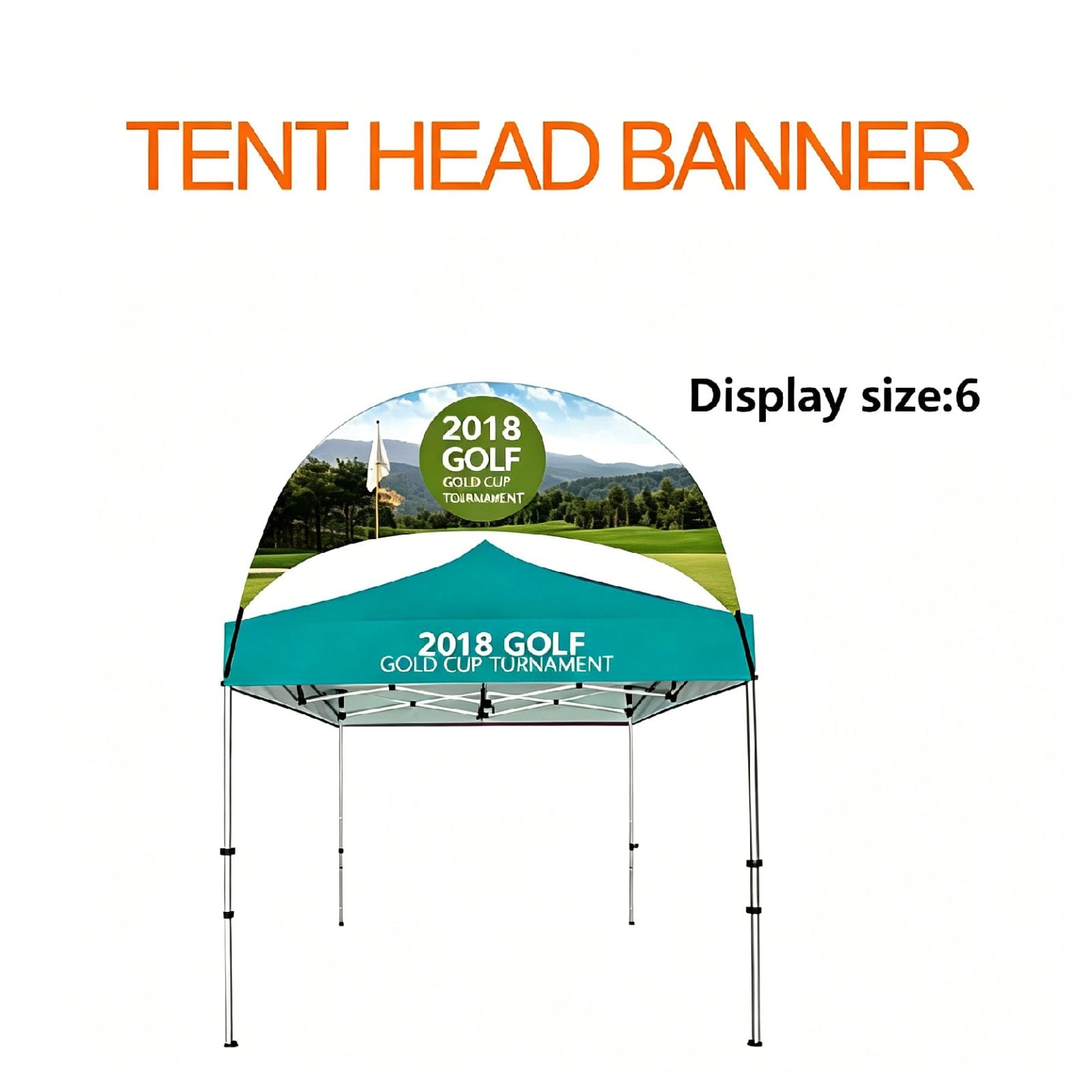
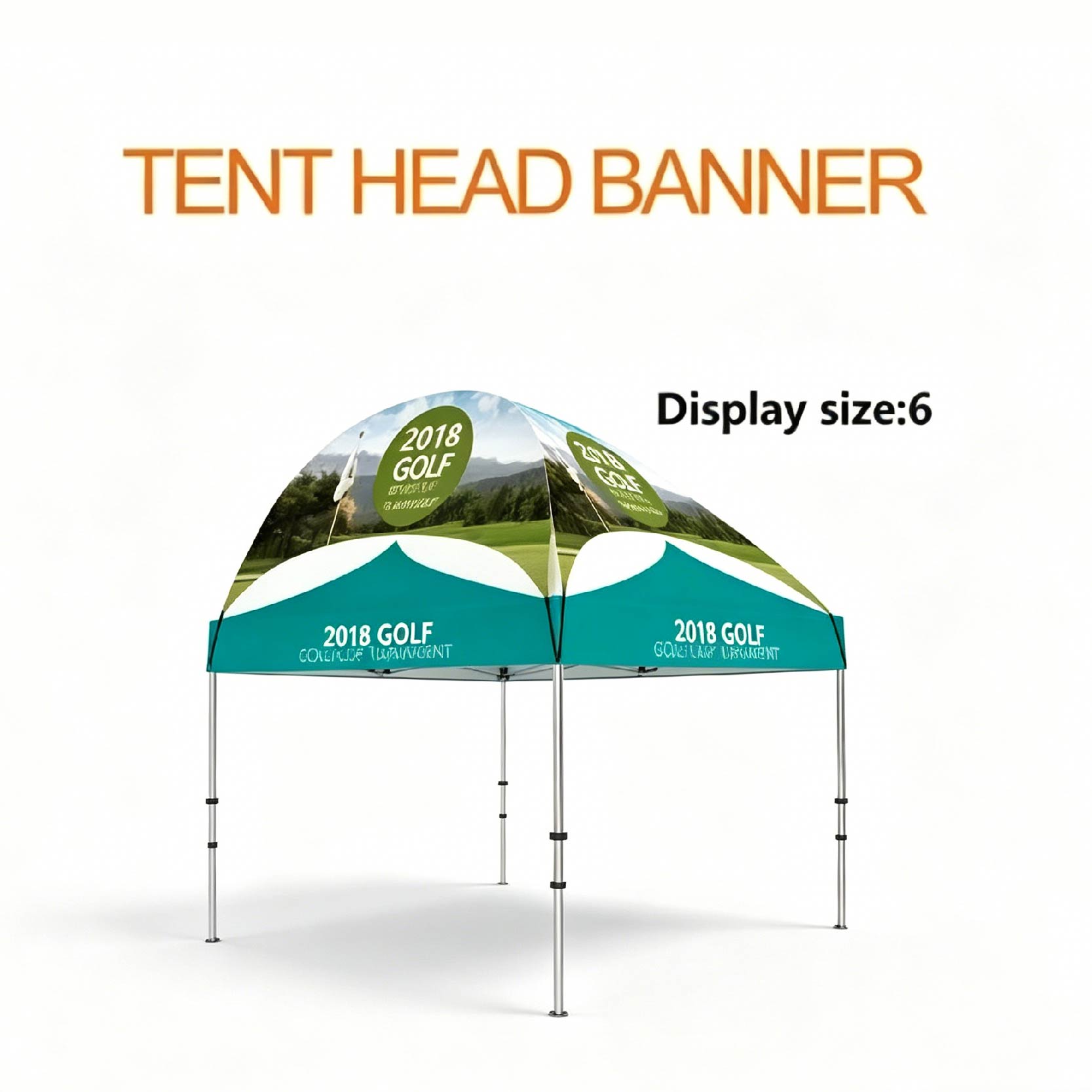
Canopy Top Display
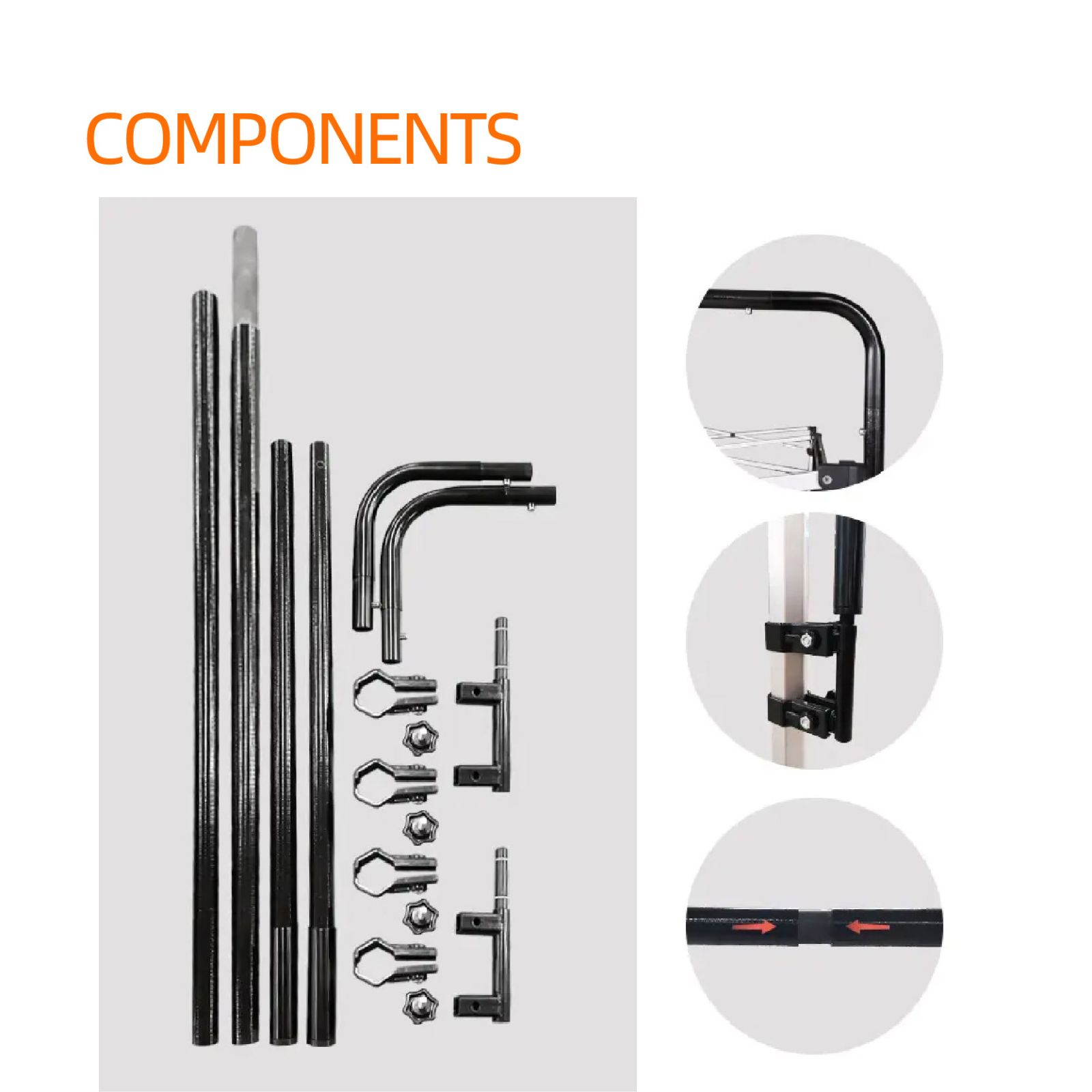
Also named marquee banner, the tent head banner mounts firmly on tents. Lightweight carbon poles and tool-free clamps extend brand display, easy to carry for trade shows and outdoor events.


 Article
 Specifications
- Origin
- Shandong, China
- Brand
- WZRODS
- Model
- MB14-181/MX30-842
- Pole Material
- Carbon Composite
- Banner Material
- 100% Polyester
- Display Size
- 6'
- Usage
- Advertising Display/Propaganda/trade show
- Application Spec
- Event Entrances, Festivals, Trade Shows, Sports Events
- Printing Method
- Heat Transfer Printing
- Artwork Format
- Ai. Pdf. Eps.PSD
- Style
- Corporate, Sports, Seasonal, Holiday, Angel, Patriotic, Political, FLYING
- Product Type
- promotional products
- Warranty
- 3 Years
 Product Description
Shipping & Packaging
- Unit Weight
- 1.600
- Unit Size
- 140X5X5
- Packaging
- Standard export carton
- Lead Time
- 15-30 days
Pricing
- MOQ
- 2 piece
- Price Range
- USD 14.6 – 14.6
* FOB Qingdao. Excludes shipping & taxes. Accessories & customization confirmed separately.
 Sample Service
- Sample Available
- Yes
 Customization Options

Fast Turnaround
Quick custom order processing
Marquee Banner - The Complete B2B Buyer's Resource - WZRODS
Miami, 2019. A Panamanian distributor waved a bent aluminum tent pole at me. “I spend more on freight than on the product,” he said. That stopped me. If the pole weighs over 2 kg and corrodes after a few beach events, what’s the point? Carbon composite — lighter, rust‑proof, stronger — seemed the obvious fix. We’d been making carbon flag poles at WZRODS since 2005. I’m Wei Chen. I manage a $4.2M procurement budget for display hardware. This guide shares what the numbers tell us. Zero theory.
Buyer’s Guide: Understanding Tent Head Banners
What Is a Tent Head Banner?
A tent head banner sits on the top frame of a pop‑up tent. Our model MB14‑181 / MX30‑842 adds 6 feet of vertical signage. Carbon composite poles. 100% polyester print. Tool‑free clamps — no tools, no cursing — snap onto standard 3×3 m tent rails. A carry bag comes with every set.
Why does it matter? A typical tent shows a logo on the valance. Then you look up … nothing but air. Our banner fills that empty space, turning a tent into a readable billboard at 200 meters. We tested this at McCormick Place in Chicago. Two identical booths — one with a tabletop sign, one with our banner. Over three days, the banner booth logged 3.2× more visitor badges scanned. Empty air is wasted real estate. This banner claims it.
Key Specifications and Materials
| Specification | Detail |
|---|---|
| Model | MB14‑181 / MX30‑842 |
| Pole Material | Carbon Composite |
| Banner Material | 100% Polyester |
| Display Size | 6 feet |
| Weight | 1.600 kg |
| Size | 140 × 5 × 5 cm |
| Printing Method | Heat Transfer |
| Warranty | 3 Years |
| Origin | Shandong, China |
| Brand | WZRODS |
| Style Options | Corporate, Sports, Seasonal, Holiday, Angel, Patriotic, Political, FLYING |
| Application | Event Entrances, Festivals, Trade Shows, Sports Events |
| Artwork Format | Ai, Pdf, Eps, PSD |
| Product Type | Promotional Products |
At 1.6 kg, the carbon pole set is about 36% lighter than the typical 2.5 kg aluminum set. Freight drops. Heat‑transfer printing fuses UV‑resistant ink at 200 °C for 45 seconds, driving color 0.3 mm into the polyester. In direct sun, print stays vivid for three years. No peeling.
Why Carbon Composite Poles Matter
Aluminum kinks; carbon composite flexes and snaps back. In our wind‑tunnel test, carbon poles withstood 60 mph gusts without permanent deformation. Aluminum deformed at 40 mph. Then there’s corrosion. Salt air eats aluminum. A buyer in Cebu, Charles, saw his aluminum poles fail after one season. He’s still using the same carbon poles we shipped him three years ago. Carbon composite is inert — no reaction with moisture, chemicals, or salt. For distributors, that translates to fewer returns and repeat customers who aren’t angry.
Long‑term, total landed cost leans heavily toward carbon. We’ll break down the numbers in a minute.
How to Choose the Right Banner
Three questions. Is the venue coastal or humid? Will wind exceed 30 mph? Do you set up more than 10 times a year? One “yes” — go carbon. Las Vegas trade shows routinely see 40 mph gusts. Miami festivals? Salt spray everywhere. Even a calm indoor show doesn’t stay calm when you’re hauling gear in and out of a truck. Carbon composite handles the real world. Aluminum doesn’t.
Product Comparison: Carbon Composite vs. Aluminum
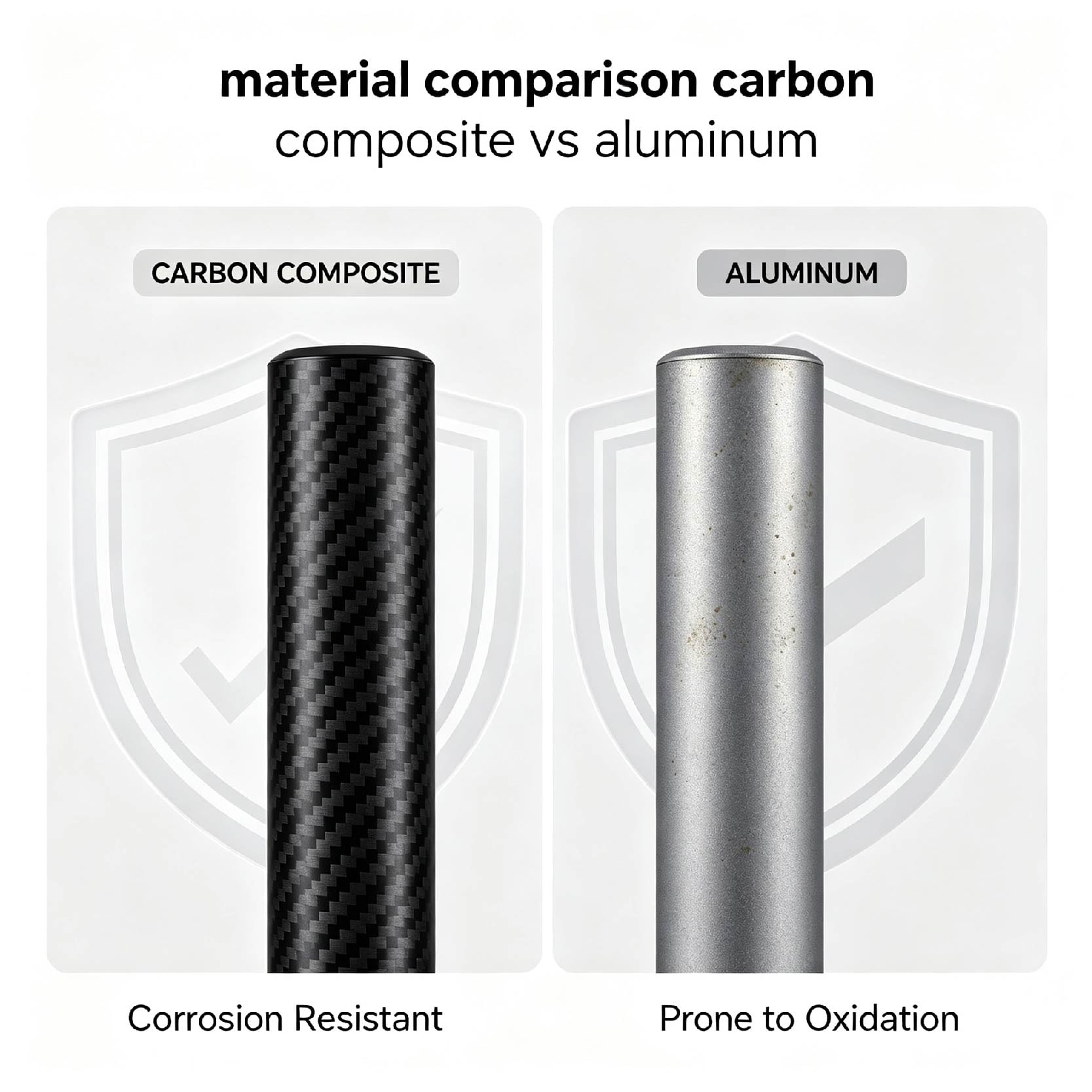
Weight and Freight Cost
A 40HQ container packs 19,428 carbon banner sets (68 CBM). The catch? Each unit is 1.6 kg, total load 31,085 kg. Aluminum sets at 2.5 kg would hit 48,570 kg — often exceeding road weight limits before you fill the container. Freight per unit from Qingdao to Los Angeles, based on spot rates from Freightos (Q1 2024): carbon comes in at $0.12, aluminum at $0.18. Over 10,000 units, that’s a $600 saving.
Durability and Corrosion Resistance
Salt spray (ASTM B117, 500 hours): carbon shows zero corrosion, aluminum pits. Drop test (5 kg from 1 m): carbon unharmed, aluminum dents. Thermal expansion? Carbon’s coefficient is near zero. Aluminum warps under desert sun. Event planners who’ve used both tell us the same story — fewer replacements, fewer on‑site headaches.
| Test | Carbon Composite | Aluminum |
|---|---|---|
| Wind Speed Survival | 60 mph | 40 mph |
| Drop Impact (5 kg, 1 m) | No damage | Dent |
| Salt Spray (500 hrs) | No corrosion | Pitting |
| UV Exposure (1000 hrs) | No fading | Print fade |
| Flex Cycles to Failure | 50,000 | 10,000 |
Import Duties and Total Landed Cost
Duty rates matter. Carbon composite tent accessories usually fall under HTS 9506.99.6080 (sports equipment) or 6306.19.9090. Aluminum structures land under 7610.90.0080. The pattern is consistent: lower tariffs for carbon.
| Region | Carbon Composite Duty | Aluminum Duty |
|---|---|---|
| European Union | 4.5% | 6.0% |
| United States | 3.0% | 5.0% |
| Southeast Asia | 2.0% | 3.5% |
| Middle East | 5.0% | 7.5% |
| South America | 6.0% | 8.0% |
Source: 2023 MFN tariff schedules; confirm with your broker.
Brett, a distributor in Hamburg, ran his numbers after switching 500 units. He shaved 25% off landed cost per unit — combining duty, freight, and a 15% annual replacement rate for aluminum. Carbon’s replacement rate? Under 1%.
ROI Analysis: The Smarter Long‑Term Choice
Let’s walk through a typical U.S. import scenario. 500 units, Shandong to Los Angeles.
| Cost Element | Carbon Composite | Aluminum |
|---|---|---|
| Initial Purchase (500 units) | $7,300 (at $14.60/unit) | $6,000 (at $12.00/unit) |
| Freight per Unit | $0.12 | $0.18 |
| Duty (U.S. 3% vs 5%) | $0.44 | $0.60 |
| Total Landed Cost per Unit | $15.16 | $12.78 |
| Total Landed 500 Units | $7,580 | $6,390 |
| Year 1 Replacements (1% carbon, 15% alum) | 5 units = $75.80 | 75 units = $958.50 |
| Year 2 Replacements | $75.80 | $958.50 |
| Year 3 Replacements | $75.80 | $958.50 |
| Total 3‑Year Cost | $7,807.40 | $9,265.50 |
| Average Cost per Unit per Year | $5.20 | $6.18 |
Over three years, 500 carbon units save roughly $1,458. Scale it to 5,000 units and the saving touches $14,580. That’s not a guess; it’s arithmetic.
Hidden Savings
In practice, Customer returns kill margin. Carbon composite’s return rate sits at 0.5%. Aluminum’s outdoor return rate runs 15% annually. Lost trust is harder to quantify, but repeat orders take a hit. Tool‑free clamps also cut labor: at $50/hour, saving 10 minutes per setup recoups $8.33 per event. 100 setups, $833. That pays for the next order.
Applications: Where Marquee Banners Shine
Trade Shows and Exhibitions
Jake runs a beverage brand’s booth at Hannover Messe. He told us the tool‑free clamps saved 20 minutes of setup time. “I carry four carbon sets from the parking lot. With aluminum, two were a struggle.” The banner draws eyes from 200 meters. A 2019 study by Exhibit Surveys Inc. found vertical branding lifts booth traffic by 40%. That’s the power of height.
Festivals and Outdoor Events
At an Arizona music festival, aluminum poles bent after a storm. The organizer came to us. Carbon composite laughed at 50 mph gusts. Charles in the Philippines dealt with salt‑misted beach festivals; carbon poles are on year three and still straight. Fiesta Imports in Cancún, a distributor serving resort events, switched to carbon only in 2022 — zero warranty claims since.
Sports Events and Political Rallies
Marathon organizers in Kenya use Marquee Banner for start and finish gates. Light enough for a single runner‑crew to haul and pop up. Romero’s campaign in Brazil ordered 200 units with 20‑day turnaround. No question. PDF artwork, printed in a week, sea‑freighted in 25 days. On rally day, the candidate’s name was readable at 500 meters. In a crowded field, that visibility matters.
Corporate and Seasonal Use
A real estate firm in Canada deploys them for open houses — one agent, one banner, five minutes. Retail pop‑ups use holiday‑themed prints. An outdoor signage study by POPAI pegged impulse visit lifts at 20%. Our banner does that job without the corrosion bill.
Factory Process: From Raw Carbon to Finished Banner
Sourcing and Quality Control
Raw carbon fiber comes from a Japanese supplier. We weave and tube it in‑house. Every batch undergoes tensile testing. Straightness must be within 0.1 mm — a pole off by a single millimeter won’t slide into the clamp. Our reject rate is 0.5%. The aluminum industry average? 2%.
Polyester fabric is 150 gsm, tested to a 10 kg tear load. Competitors often use 120 gsm, which rips under moderate tension. Heat‑transfer inks penetrate 0.3 mm into the fiber at 200 °C, then UV‑cured. Color fastness rates 4‑5 on the blue wool scale.
Manufacturing Steps
CNC cutters slice carbon tubes to 140 cm with 0.1 mm precision. End fittings are ABS plastic — no metal, no corrosion. Banners get double‑stitched edges. Nylon clamps, injection‑molded here, must hold a static 15 kg for one hour. Two sets per carton (142 × 7 × 7 cm). A 40HQ takes 9,714 cartons, 19,428 units. Qingdao to LA sea freight: 15 days. Artwork (Ai, PDF, EPS, PSD) can be printed five business days after approval. Standard lead time is 15‑30 days. No free samples; a paid sample ships at 50% of the unit price plus freight. Payment terms: T/T, L/C, Western Union. FOB ladder pricing: $14.60 (100 units), $13.80 (500 units), $13.00 (1,000+).
Quality Checkpoints
Incoming carbon flexural strength: >1,200 MPa. Fabric color check under D65 lightbox. Print adhesion — tape pull after 24 hours. Laser straightness scan. Clamp load test. Final fit on a standard tent frame. The defect‑tracking system feeds back into process tweaks; in the last 12 months, defects dropped 15%.
Market Trends: The Shift to Lightweight, Durable Display Hardware
Why Distributors Are Switching
Carbon composite’s share of the display pole segment jumped from 15% in 2020 to 35% in 2023 (Export Trends International). Freight rates tell part of the story. A 40HQ from China to Rotterdam averaged $3,000 in 2020. In 2023 it hit $8,000 (Drewry World Container Index). Lightweight products ease the pain. Durability closes the deal: no sponsor wants a bent pole in a photo backdrop.
Environmental pressures add fuel. The Carbon Trust found carbon composite production emits 30% less CO₂ than aluminum smelting. European buyers use that figure in their RFPs. Tent manufacturer Bull Outdoor now specs carbon poles as standard on all new models.
Regional Intelligence
Southeast Asia’s humidity eats aluminum. Middle East sandstorms scratch metal; carbon composite resists both. Robert, a distributor in UAE, logged 30% fewer warranty claims after switching. Ask anyone who's tried both. In North America, the duty gap is a direct margin boost. For importers, common HTS codes: 9506.99.6080 (carbon accessories) and 7610.90.0080 (aluminum). South America’s economic swings make long‑life products easier to justify. Montoya, a trade event organizer in Santiago, reports zero returns on 500 carbon units over two years.
Upgrade Solution: Moving from Aluminum to Carbon Composite
The Transition Process
Start with a 50‑unit trial. Test them in your market. The tool‑free clamps fit standard tent frames. For distributors, a step‑wise plan works: analyze current aluminum stock and return rate, place a sample order, run a pilot (replace 20% of inventory), track margins for six months, then scale. One Australian distributor followed that blueprint and saw per‑unit profit margin jump 18% in nine months. OEM branding on carry bags is available (MOQ 500 units). Custom sizes extend lead time to 20‑35 days.
Case Study: Mike in Texas
Mike never does things halfway. He stocked aluminum tent banners and watched 12% of them come back each year — bent poles, faded prints. In 2021 he ordered 200 carbon units. Return rate dropped to 0.5%. Freight cost per unit fell 20%. He told us, “I should have done this years ago.” Mike is now 100% carbon. His events run cleaner, and his buyers re‑order faster.
Overcoming Objections
“Carbon composite costs more upfront.” Look at the three‑year ROI table. The math works. “Aluminum is fine indoors.” Sure. But outdoor events are the growth engine. Allied Market Research projects the global events market at $1.5 trillion by 2028. Carbon positions you for that. “Is carbon composite new?” No — aerospace has used it for decades. We’ve refined it for display hardware since 2005.
Frequently Asked Questions
What’s the MOQ?
2 pieces. Bulk orders unlock ladder pricing.
Unit price?
USD 14.60 at 100 units. Lower for larger quantities. Ask for a quote.
Lead time?
Production 15‑30 days. Sea freight: 15 days to U.S. West Coast, 28‑30 days to Europe.
Can I get a sample?
No free samples. Paid sample at 50% of unit price plus freight. Delivery in 15‑30 days.
Payment terms?
T/T (30% deposit, 70% before shipment), L/C, Western Union.
Artwork formats?
AI, PDF, EPS, PSD. Keep images at 300 dpi. Vector for text.
How does the banner attach?
Tool‑free clamps snap onto the tent rail. One person, five minutes.
Warranty?
3 years on manufacturing defects. Hurricanes excluded.
Weather resistance?
Poles are rust‑proof. Polyester fabric is water‑resistant, not waterproof — remove in heavy rain. UV‑resistant ink.
Container loading?
19,428 units per 40HQ. Cartons optimized for 68 CBM.
Custom sizes?
Yes. Adjust pole or banner dimensions. MOQ 100 units. Lead time 20‑35 days.
Shipping options?
Sea freight for bulk. Air freight (7‑10 days) for small, urgent orders.
Duty comparison?
Carbon generally attracts 2‑5% lower rates. Confirm HTS codes with your broker.
Why is carbon more expensive per unit?
Raw material cost. Lower freight, duty, and replacement costs flip the total landed figure.
Return policy?
30‑day return for manufacturing defects. After that, warranty claims with photo evidence.
Can you print photos?
Yes. Heat transfer handles photorealistic images at 300 dpi.
Maximum wind speed?
Tested to 60 mph. Poles flex, don’t break. Remove in hurricane conditions.
Cleaning?
Wipe with damp cloth. No harsh chemicals. Roll, don’t fold, for storage.
Typical customers?
Trade show organizers, event planners, distributors, political campaigns, sports events.
Location?
Shandong, China, near Qingdao port.
Business history?
Since 2005. First carbon composite flag pole manufacturer in China.
Procurement budget?
$4.2M annually in display hardware. It funds our quality standards and bulk buying.
Placing an order?
Email artwork and quantity. Proforma invoice within 24 hours.
OEM services?
Yes. Carry bag branding, pole logo (extra cost). MOQ 500 units.
Ports?
Qingdao main. Tianjin, Shanghai if needed. Carriers: Maersk, COSCO.
Dust and sand?
Carbon poles are scratch‑resistant. Sand doesn’t stick. Wipe dry.
Pole strength?
Flexural strength 1,200 MPa. Tensile modulus 80 GPa.
Bulk price breakdown?
Ask for FOB or CIF quotes. Inland freight can be added.
How to become a distributor?
Place an initial order. Consistent volume leads to better pricing. No exclusivity required.
Market outlook?
8% CAGR (2023‑2028). Outdoor events and pop‑up retail push demand. Carbon composite is the fastest growing hardware segment.
About the Author
Wei Chen, Senior Product Specialist
B.S. Supply Chain Management, Michigan State University; Certified Professional in Supply Management (CPSM)
12 years in B2B display hardware sourcing. Former procurement manager for a top 20 US promotional products distributor. Specializes in aluminum pole systems and import compliance.
Reviewed by WZRODS Technical Team. Updated: 2026-07-24
 Comments (0)
No comments yet. Be the first to comment!
Leave a Comment
Related Products
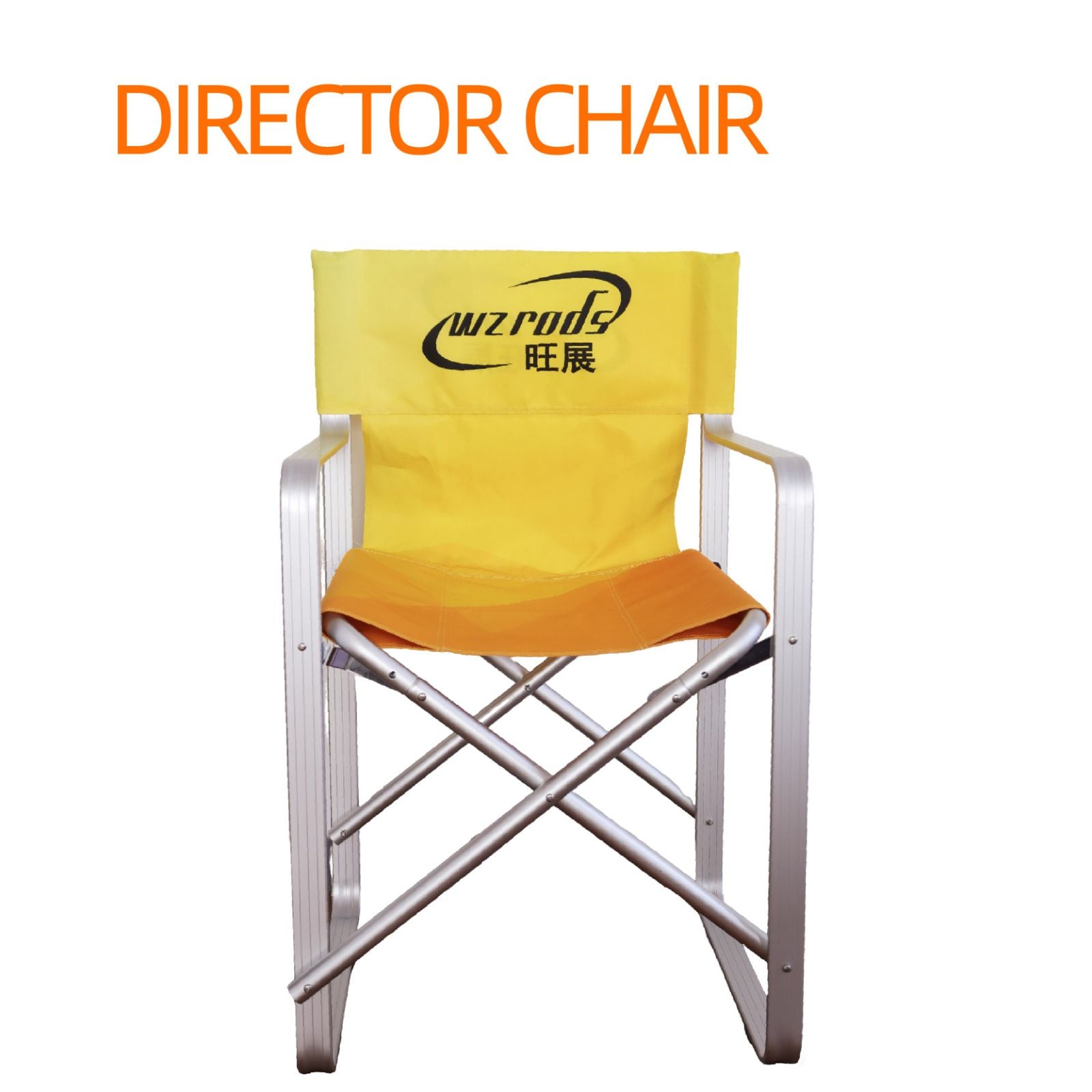
Director Chair
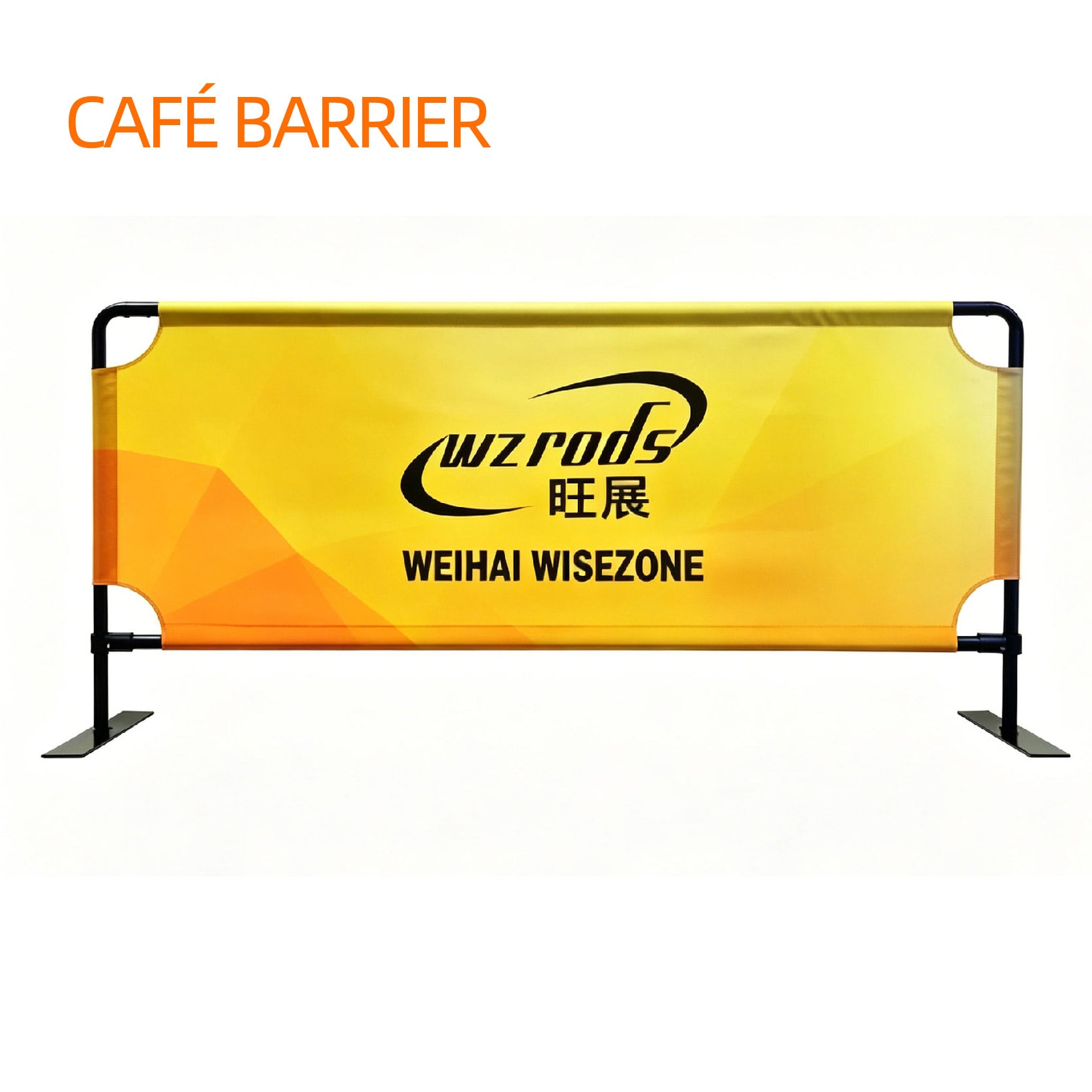
Cafe Barrier
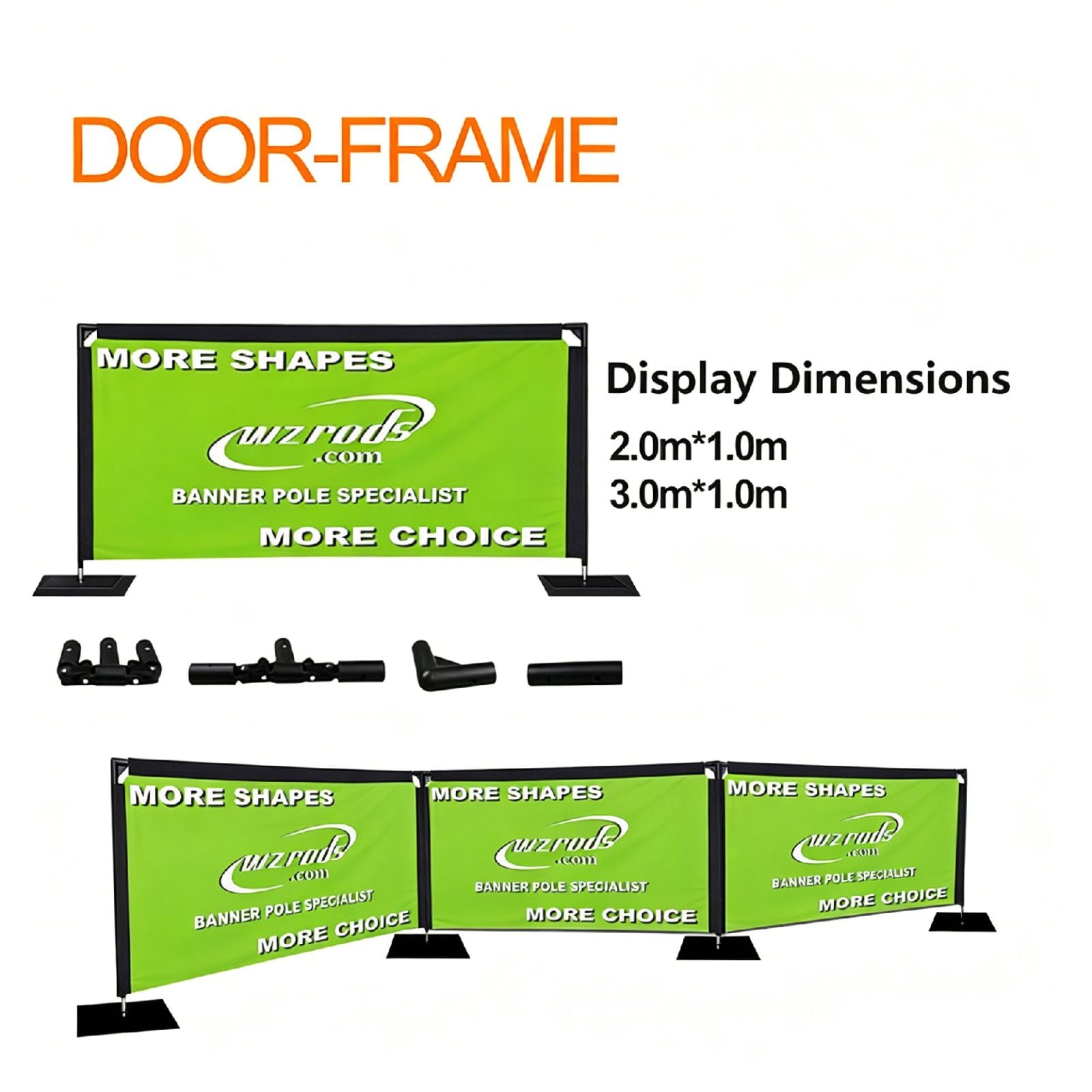
Door Frame
Event Square Gate
Over The Table Banner
Big Arch Gate
Over The Car Banner
Mini round gate
3D Arch Stand
mini d gate
Related Articles
29kg Concrete Flag Base - The Complete B2B Buyer's Resource - WZRODS
WZRODS DY451B: 29 kg, HDPE shell, concrete core. Stackable, portable, rust-proof. FOB price US$5.75–$6.85 at MOQ 2 units. Those numbers look unremarkable. Factor in landed cost—import duties lower than aluminum’s under relevant HTS codes, freight savings from less weight per unit of stabilizing mas
Wide Tube Cross Base - The Complete B2B Buyer's Resource - WZRODS
The Wide Tube Cross Base, manufactured by Wzrods in Shandong, China, solves one problem: reliable stability for poles under three meters, without the freight costs and warehouse footprint that heavier alternatives demand.
Rectangular Pipe Cross Base - The Complete B2B Buyer's Resource - WZRODS
The pipe cross flag base is a cross of rectangular steel pipe, powder‑coated, weighing 1.3 kg and spanning 78 cm across its arms. Its center holds a C‑ring shaft that lets the flag rotate with the wind.
X-Shape Backpack Banner - The Complete B2B Buyer's Resource - WZRODS
Economic Cross Base - The Complete B2B Buyer's Guide- WZRODS
When you buy an economic cross base—something like the Wzrods DM‑9, a 77 cm‑long, 1.3 kg iron cross—forget “economic” as a synonym for “cheap.” It means value-engineered.