U-Shape Banner Stand
We supply U banners with large display space, supporting single and double sided printing. Durable carbon composite poles ensure long use. Easy assembly, portable with carry bag and bases.


Printing
Stand base
 Article
 Specifications
- Origin
- Shandong, China
- Brand
- Wisezone
- Model
- UB185/UB285/UB425
- Banner Material
- 100% Polyester
- Flag Fabric
- 100%Polyster
- Usage
- Advertising
- Application Spec
- Trade Shows, Outdoor Events, Sports Events, Retail Promotion
- Printing Method
- Thermal Transfer Printing
- Logo Design
- Min. order: 500 pieces
- Style
- FLYİNG, Hanging, Sporty, Casual, PENNANT, Scrolling, Fashion, Luxury, automatic raise flag pole
- Pole Material
- Carbon Composite
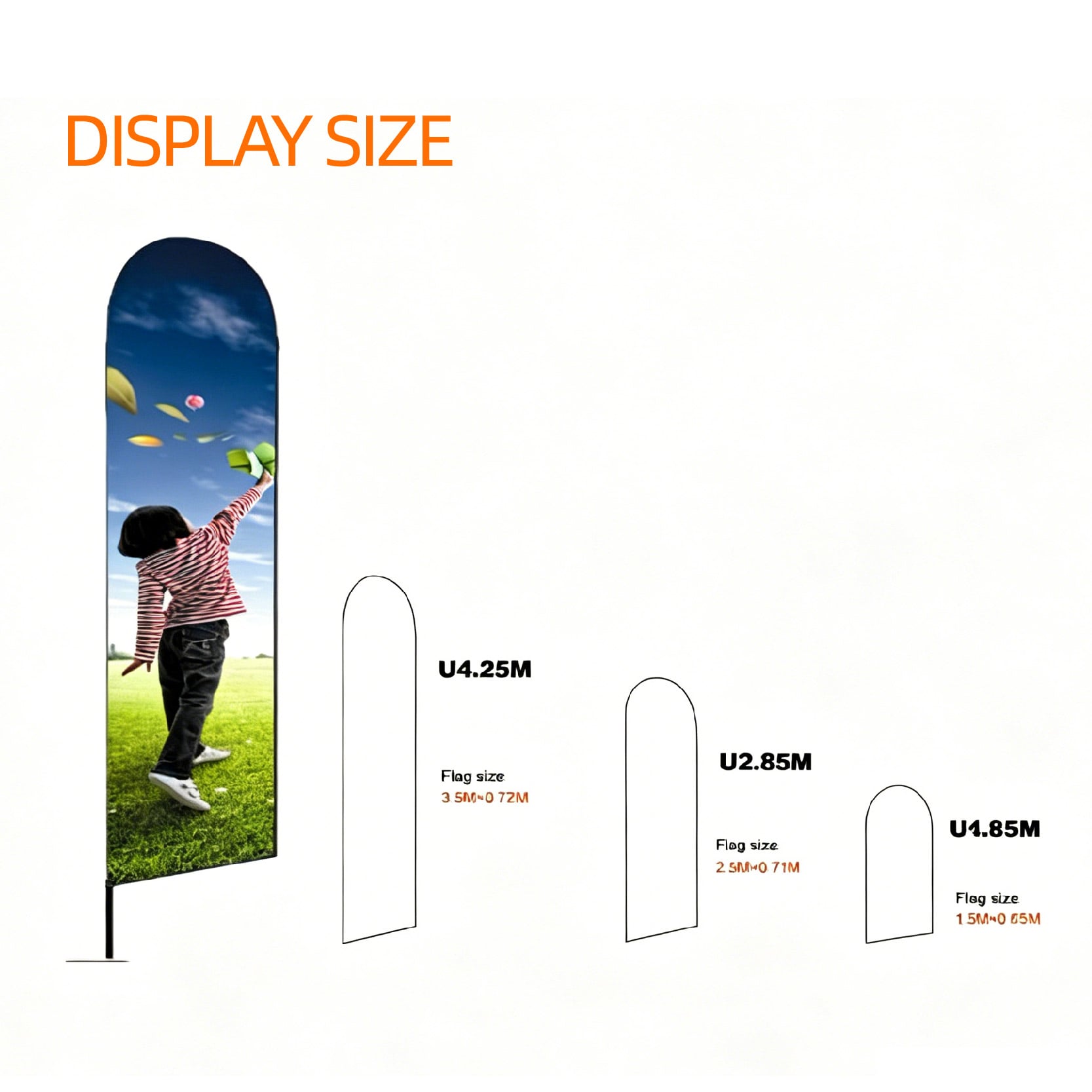
- Flag Size(U1.85M)
- 1.5m*0.63m
- Flag Size(U2.85M)
- 2.5m*0.71m
- Flag Size(U4.25M)
- 3.5m*0.7m
 Product Description
Shipping & Packaging
- Unit Weight
- 0.700
- Unit Size
- U185:1.5m; U285/U425:1.4m
- Packaging
- Standard export carton
- Lead Time
- 15-30 days
Pricing
- MOQ
- 2 set
- Price Range
- USD 11.9 – 14.2
* FOB Qingdao. Excludes shipping & taxes. Accessories & customization confirmed separately.
 Sample Service
- Sample Available
- Yes
- Sample Price
- set 45.5
- Max Sample Qty
- 1
 Customization Options

Light Custom
Logo, color, size adjustments

Fast Turnaround
Quick custom order processing
U-Shape Banner - The Complete B2B Buyer's Resource - WZRODS
Here's the bottom line: By Sarah Mitchell, CTSM, Trade Show Consultant
First Impressions Start With the Hardware
Attendees walking an aisle are scanning for signals. Something novel catches the eye and stirs anticipation. A display that looks solid and professional inspires confidence. And an environment that feels predictable—where nothing wobbles or collapses—builds trust. A flag that sags on a bent pole or a flag that tips in a light breeze triggers the opposite reaction: unease. The prospect keeps moving.
The hardware holding your message is not just structure. It sets the emotional tone for every interaction that follows. This guide, based on booth hardware strategy for major exhibitors across more than 200 events, examines why the carbon composite U flag system from Wisezone changes how international distributors should assess portable signage. The framework: total landed cost, real-world durability, and what makes a display worth stocking.
Buyer’s Guide: What to Look for in display piece Poles and Systems
The Material Decision: Carbon Composite vs. Aluminum vs. Fiberglass
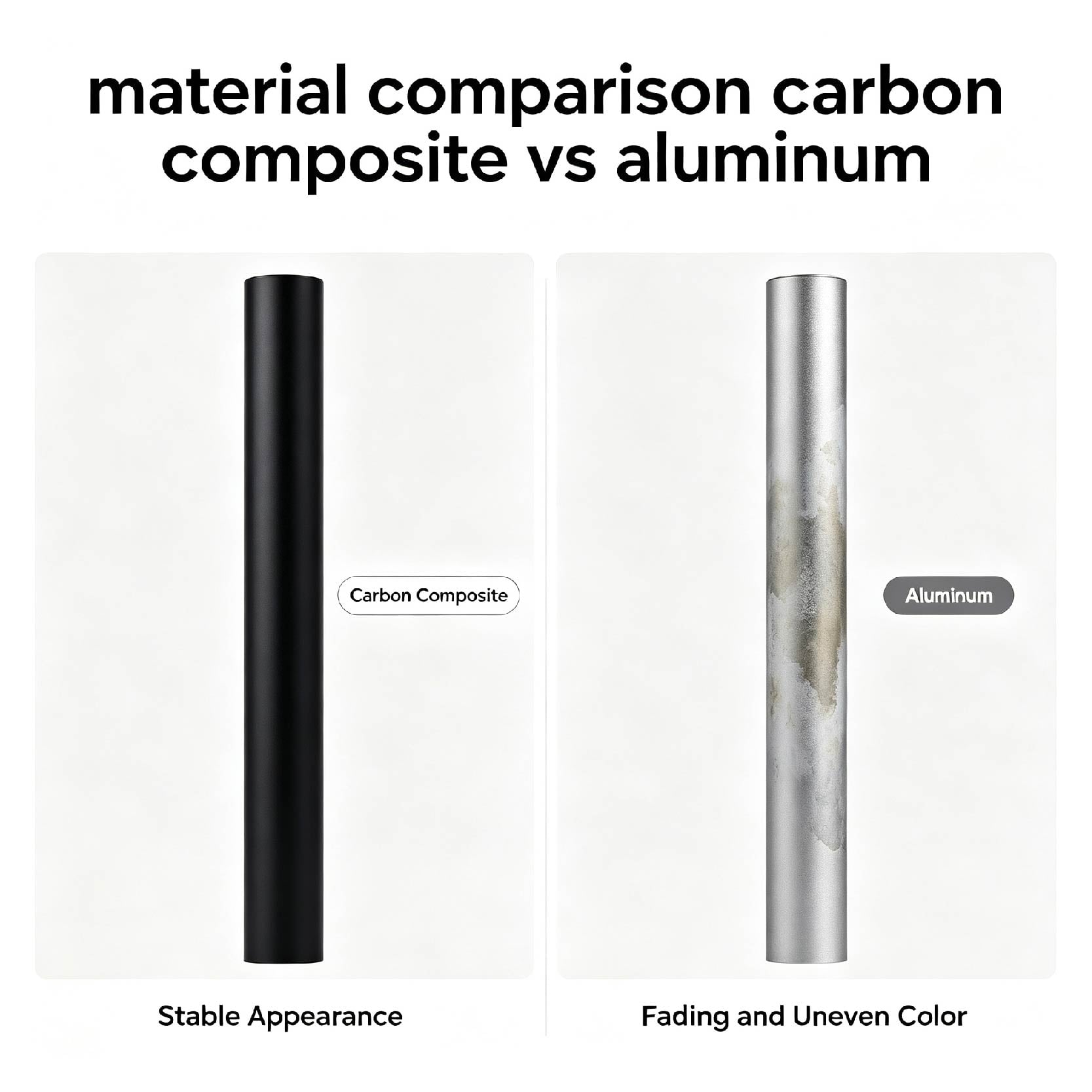
Most portable display piece systems sold internationally still use aluminum tubing. Aluminum is common, but it has three drawbacks for professional event use. First, it deforms permanently once bent. A gust of wind during an outdoor activation can kink the pole, wrecking the visual line and eventually causing cracks. Second, aluminum corrodes. The process is slow inland, but accelerates in coastal, humid, and tropical environments where salt air eats through anodized coatings. Third, weight adds up in shipping. A typical aluminum pole for a 2.5-meter flag weighs around 1.2 kilograms. The carbon composite pole from Wisezone for the same application weighs 0.700 kilograms. Over a container of 500 units, that difference cuts hundreds of dollars in ocean freight and can reduce import duties under certain HTS classifications.
Carbon composite poles solve all three issues. They flex under load and return to true, they are completely rust-proof, and the low weight creates a permanent logistics advantage. Fiberglass resists rust but weighs more than carbon composite and tends to splinter under impact. For a buyer calculating total cost of ownership, material choice is the first filter.
Sizing and Visual Real Estate
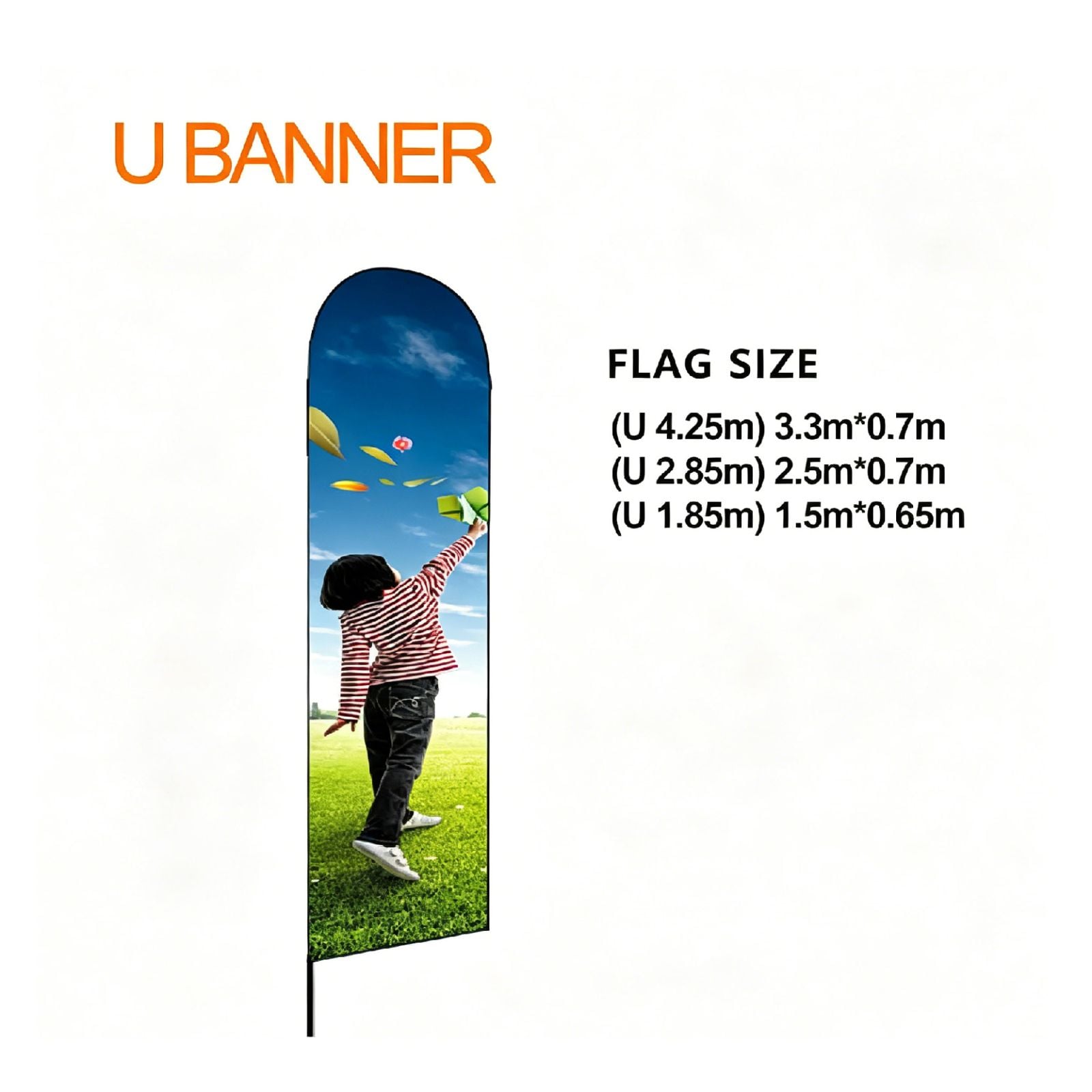
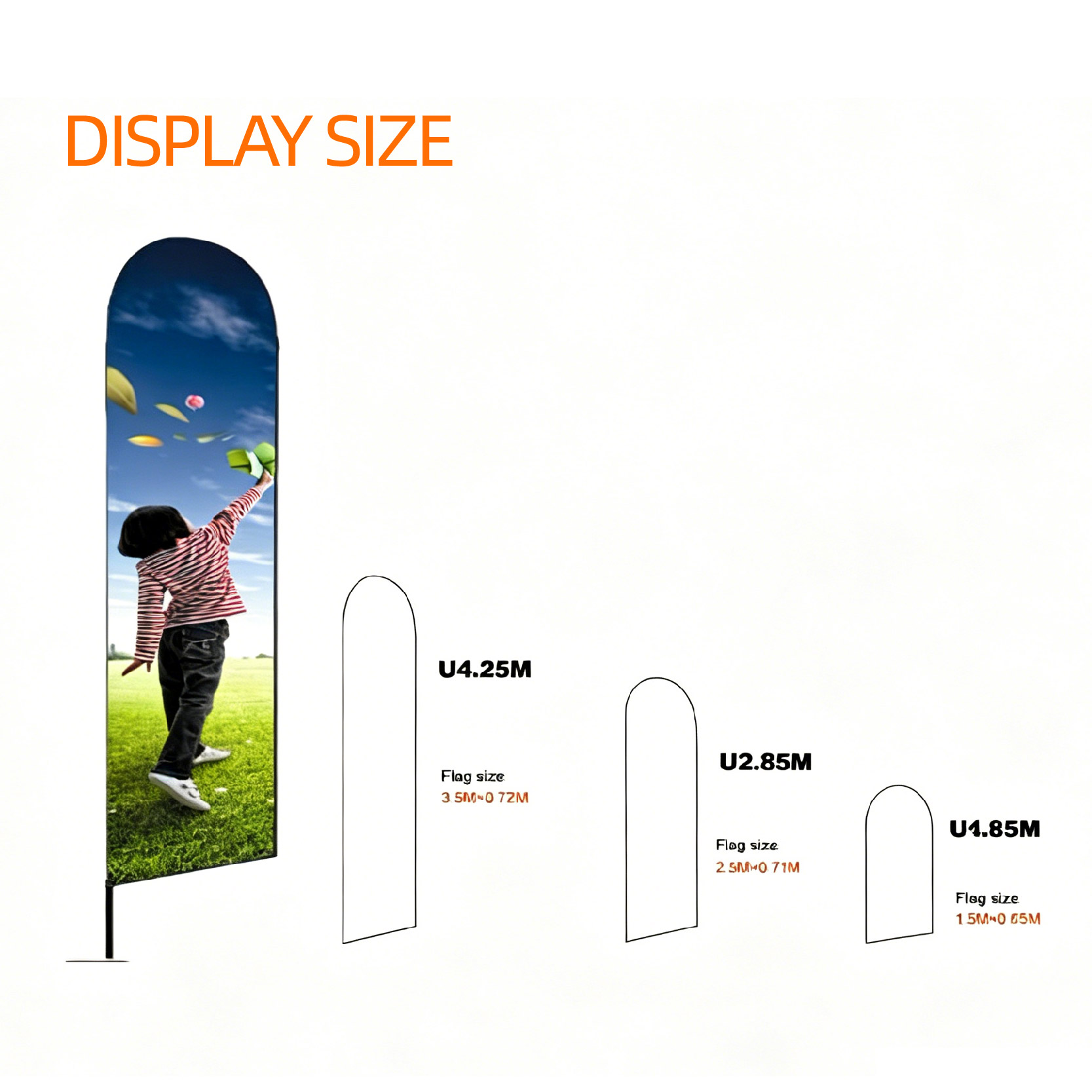
The U sign series comes in three heights to match venue ceilings and outdoor sightlines. The truth is: The U1.85 (UB185) stands 1.85 meters, holds a flag of 1.5m x 0.63m, and fits tabletop exhibitor booths, retail counter displays, and indoor events with lower lines of sight. The U2.85 (UB285) rises to 2.85 meters with a graphic area of 2.5m x 0.71m—the most versatile size for standard exhibition halls and outdoor market stalls. The U4.25 (UB425) reaches 4.25 meters, displaying a 3.5m x 0.7m graphic, and dominates open-air festivals, stadium entrances, and large-format brand activations. Each size can be ordered with single- or double-sided printing. A double-sided graphic doubles the impressions per pole without adding hardware.
Assembly Speed and Portability
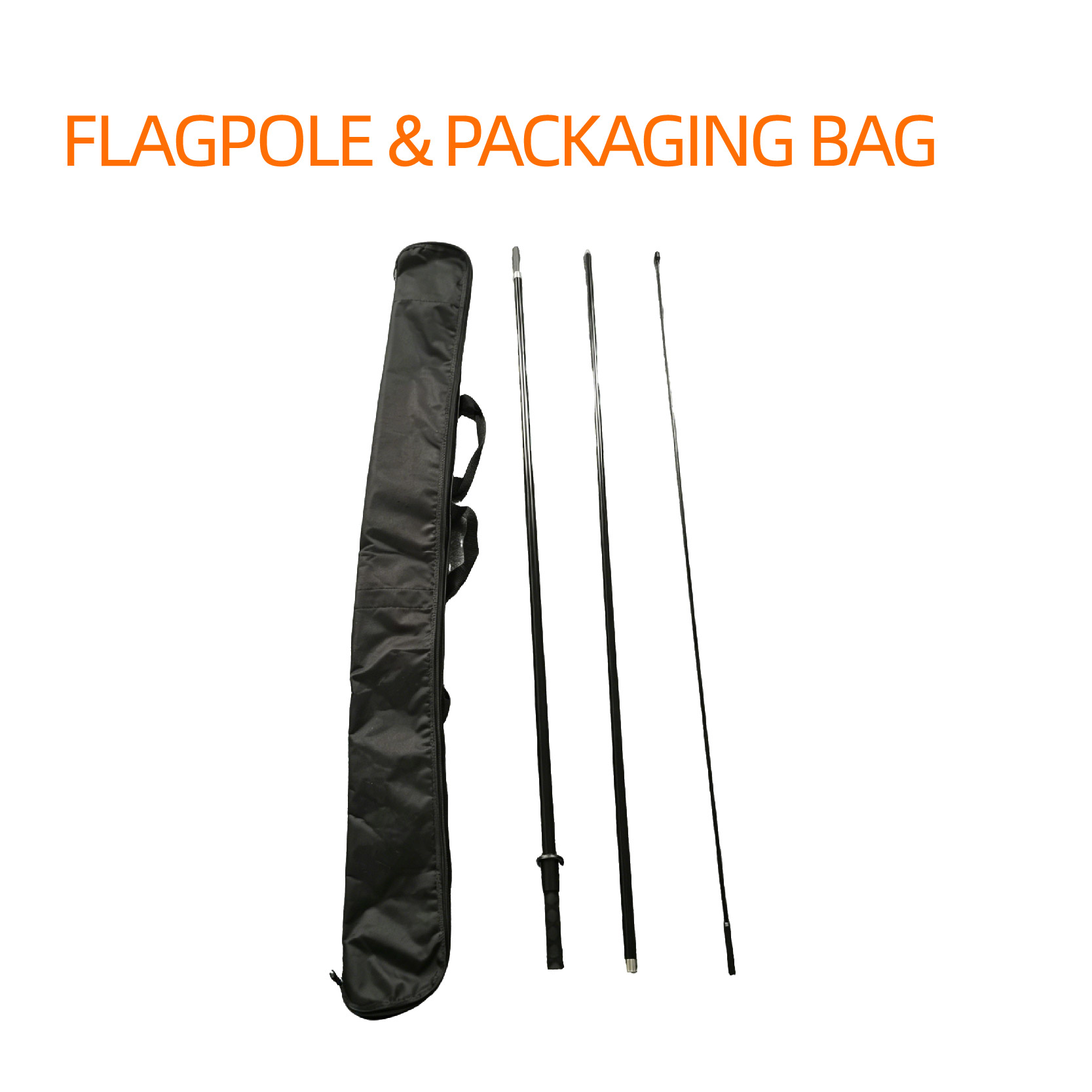
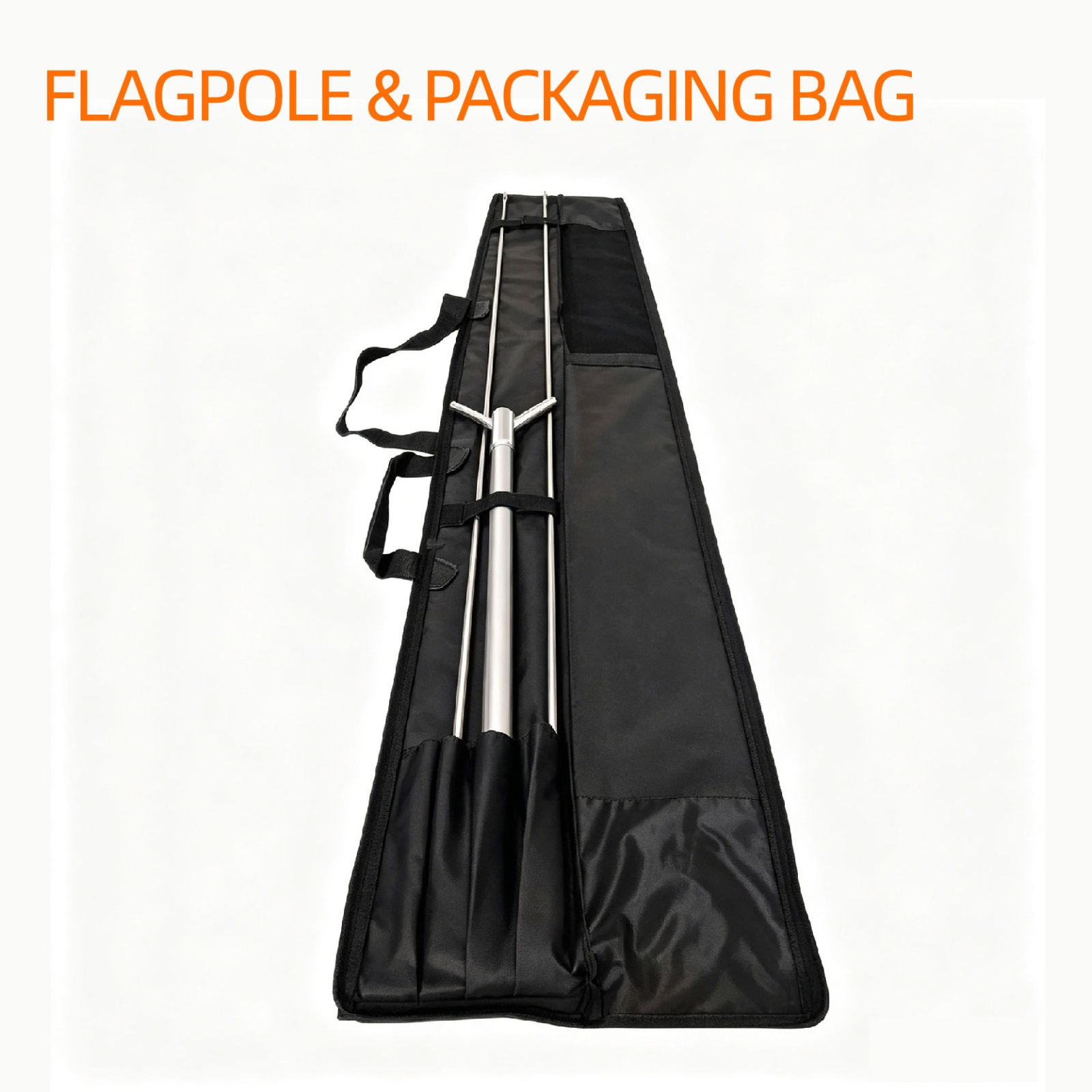
Setup time matters. The U Banner system assembles without tools. Carbon composite pole sections connect via an internal shock-corded bungee system that locks segments in seconds. The banner graphic slides over the pole like a sleeve and is tensioned at the base. Full disassembly takes under two minutes. Each set includes a padded carry bag that holds the pole, graphic, and base. Packed lengths of 1.4 to 1.5 meters (depending on model) fit in standard cargo vans and airline check-in luggage. The light weight lets one team member carry four complete sets across a convention center without fatigue.
Bases and Terrain Adaptability
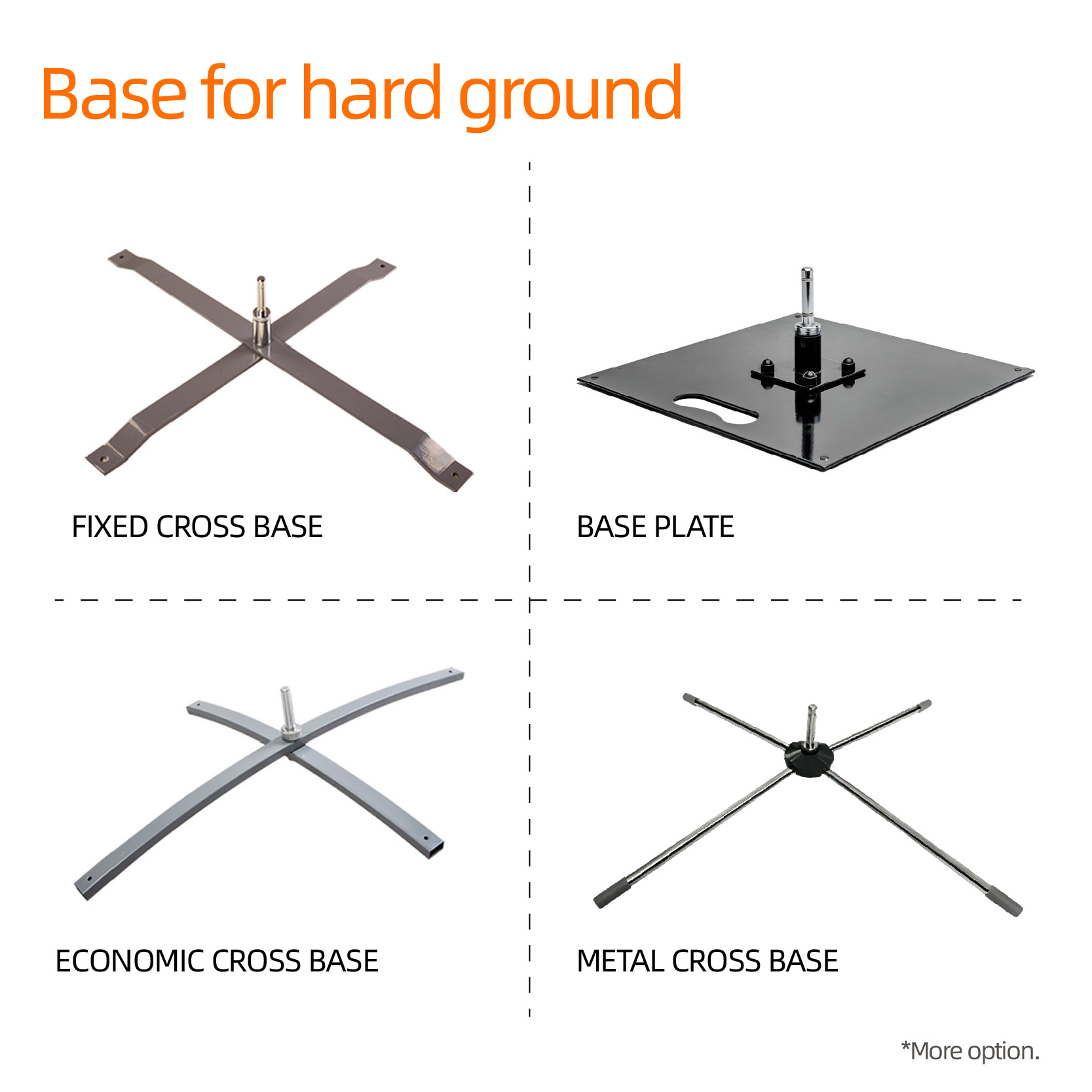
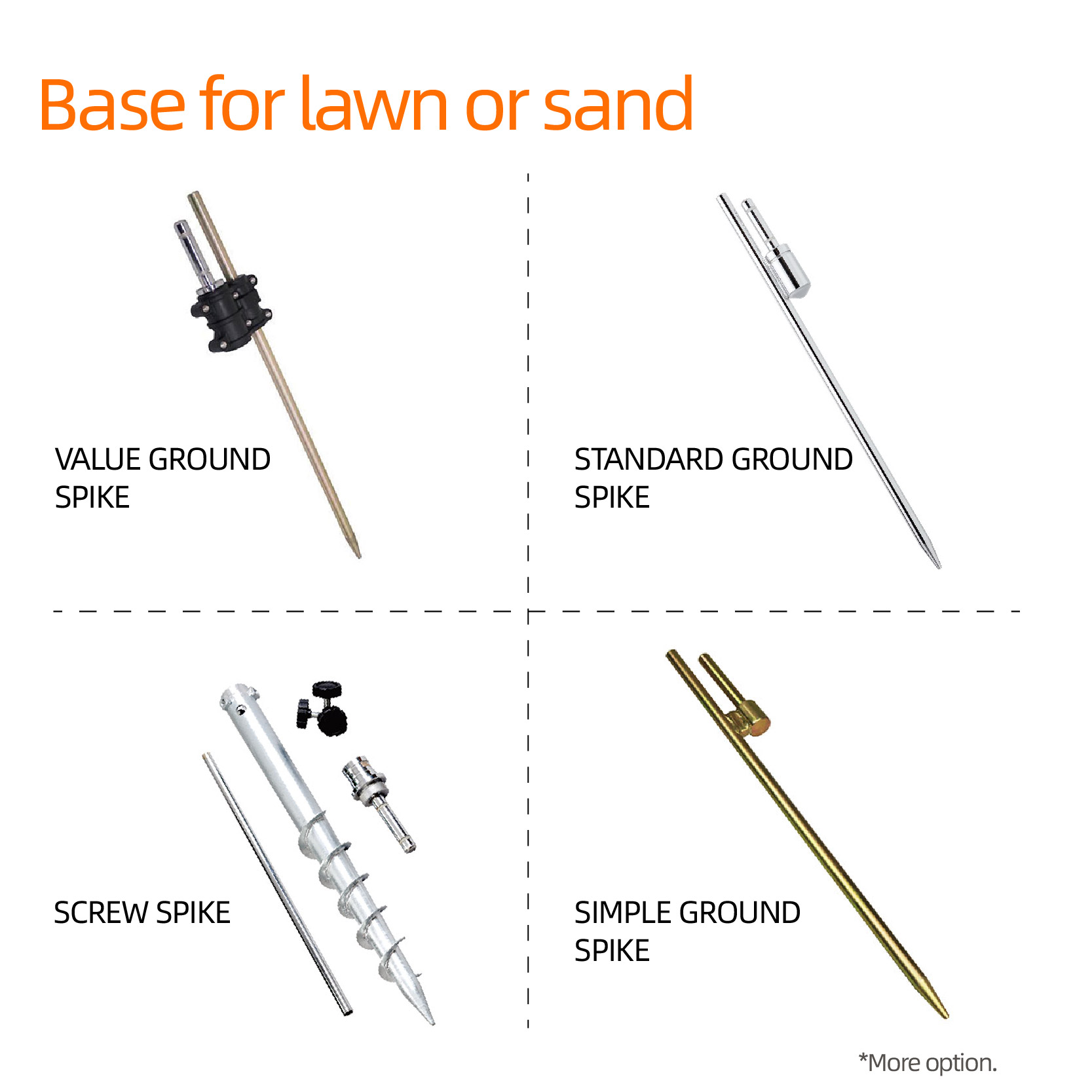
Weihai Wisezone offers two base configurations: the fixed cross base for hard, flat floors, and the ground spike for sail, grass, or sand. The cross base is steel with a powder-coated finish to resist scratches and corrosion. It folds flat for transport. The ground spike is stainless steel and penetrates most turf with foot pressure alone—no tools, water ballast, or sandbags required. For exhibitors who move between indoor and outdoor venues, ordering a combination of bases lets the same banner hardware adapt to any surface. The bases are interchangeable with the pole system, reducing the number of SKUs a distributor must stock.
Product Comparison: U Banner vs. Traditional Aluminum Alternatives
Based on field testing, To make an informed sourcing decision, international buyers should compare materials across criteria that affect cost, lifespan, and customer satisfaction. The table below aggregates data from trade show logistics managers, import distributors in three climate zones, and Wisezone’s internal testing and logistics records.
| Criteria | U Banner (Carbon Composite) | Aluminum Banner Pole | Fiberglass Banner Pole |
|---|---|---|---|
| Weight (2.85m model) | 0.700 kg | 1.1–1.4 kg | 1.2–1.5 kg |
| Corrosion Resistance | 100% rust-proof | Surface oxidation; pitting in salt air | Rust-proof, but gel-coat can UV-degrade |
| Wind Resilience | Flexes to 40°; returns to true | Permanent deformation beyond 15° | Flexes but can splinter at extreme load |
| Lifespan (outdoor, seaside) | 5+ years | 1–2 years before visible degradation | 2–3 years |
| Freight Cost per 500pcs (FCL, estimated) | ~$1,250* | ~$2,100* | ~$2,400* |
| Import Duty (HTS sample) | Lower (carbon fiber articles, chapter 68 or 39) | Higher (aluminum articles, chapter 76) | Variable (glass fiber, chapter 70) |
| Customer Replacement Rate | <2% annually | 8–12% annually | 5–7% annually |
*Freight estimates based on Wisezone’s 2024 export data for FCL shipments from Qingdao to U.S. West Coast, subject to carrier fluctuations.
The carbon composite pole’s primary advantage is not the lowest per-unit factory cost—its ex-works price of $11.90–$14.20 for a UB285 set positions it above some basic aluminum systems—but that it eliminates hidden costs that erode distributor margins: freight, duty, after-sales replacement claims, and the brand damage caused by collapsed displays. For B2B buyers, the total landed cost comparison is the deciding factor.
ROI Analysis: Total Landed Cost and the Mathematics of the Long View
Freight, Duty, and the HTS Code Advantage
An importer ordering 1,000 U Banner UB285 units from Shandong, China, to a West Coast U.S. port can expect ocean freight charges roughly 40% lower than an equivalent load of aluminum pole systems, because the total shipment mass drops by approximately 500 kilograms. Carbon composite articles also generally attract lower import duties. According to the U.S. Harmonized Tariff Schedule, aluminum poles fall under Chapter 76 with a duty rate around 5.7% ad valorem. Carbon fiber composite articles, depending on composition, often classify under Chapter 68 or 39, with rates between 2.9% and 4.2%. On a $12,000 shipment, that two-to-three-point difference saves $240–$360 immediately. In the European Union, similar tariff divergences exist; some importers have reported additional reductions under recent adjustments to the Generalized Scheme of Preferences for composite articles sourced from qualifying developing countries.
The Replacement Cycle: Why Aluminum “Savings” Disappear
Consider a European event rental company that deploys 50 banner poles per weekend across summer festivals along the Mediterranean. One bent aluminum pole means one scrapped pole. Even careful crews typically see 10% annual loss. At a wholesale replacement cost of roughly $8 per aluminum pole (based on typical distributor pricing for standard poles from China), that translates to $400 per year. Carbon composite poles, with flex memory and corrosion immunity, experience a loss rate below 2% in the same environment. Over five years, the composite investment yields a net saving of over $1,800. When you also avoid onsite labor for pole swaps and the reputational damage of a banner collapsing during a client’s keynote, the ROI becomes compelling. The U Banner does not need to be the cheapest pole on the market; it needs to be the last one the buyer purchases for that application.
Applications: Exhibition Halls, Festivals, and Retail
Trade Shows and Exhibition Booths
Inside a convention center, the U Banner’s advantage shifts from sheer durability to visual consistency. Aluminum poles that get assembled repeatedly develop scratches, dents, and a dull finish that reads as tired. Carbon composite holds a matte black surface that doesn’t reflect spotlights in a distracting way. And it shows. The sleeve-tension graphic system yields a flat, wrinkle-free surface that lets the message dominate. Booth staff appreciate the two-minute setup and the ability to reposition without tools as they study foot traffic early in the show. Some event organizers in the Middle East, where venues expect flawless presentation, now specify carbon composite hardware to avoid the worn look of aluminum that has done multiple shows.
Outdoor Sports and Festival Events
Wind is the ultimate test. A sideline banner at a soccer tournament, an entrance arch at a marathon, a sponsor flag at a beach volleyball event—all face gusts that turn an aluminum pole into a bent hazard. The carbon composite U Banner pole bends gracefully to 40 degrees off vertical and returns to true when the gust passes. The graphic stays legible at all angles because fabric tension is maintained by the pole’s continuous flex. Event safety officers also note that a carbon composite pole, if pushed beyond design limits, will not snap into sharp metallic shards. It fails gradually, with visible splintering of the composite matrix, giving crews time to respond.
Retail Promotions and Semi-Permanent Installations
For retail chains rotating in-store promotions monthly, the U Banner’s portability and rust-proof construction allow it to shift from a parking lot grand opening to an indoor product launch without changing bases. A single ground spike handles turf outside; the cross base handles tile inside. Double-sided printing doubles the chance a shopper sees the offer from either direction. Graphics are printed via thermal transfer on 100% polyester; they hold color through repeated washing cycles that mall displays require.
Factory Process and Quality Assurance at Wisezone
Wisezone’s production line in Shandong handles carbon composite pultrusion and final assembly. Raw carbon fiber tows are pulled through a resin bath, shaped in a heated die, and cut to precise lengths for each U Banner model. This process ensures uniform wall thickness and fiber alignment, critical for flexural strength. Every pole segment undergoes a 48-hour salt spray test per ASTM B117 to confirm corrosion immunity. During assembly, staff manually check shock cord tension; the bungee must retract the segments into full lock with less than 2mm of play. Graphics are thermal-transfer printed on controlled-tension textile machines and inspected under 5000K lighting to catch any color shift. The cross base and ground spike are stamped steel, jig-welded, and powder-coated. A random sample from each batch is load-tested to 150% of rated capacity. Export cartons are built to pass a 2-meter drop test, a practical requirement for stacked and shifted freight containers.
Industry Trends: The Carbon Composite Shift in Display Hardware
Sustainability and Logistics Pressure
The exhibitions industry faces growing pressure to reduce its carbon footprint. Lighter hardware directly cuts transportation emissions. Based on Wisezone’s packaging analysis, a cubic meter of container space filled with U Banner packs holds about 35% more units than the same cube of aluminum pole sets. Major exhibition contractors are starting to calculate the CO₂ per impression of each display element. Carbon composite poles, with their longer service life and reduced weight, show a meaningfully lower lifetime carbon cost. Meanwhile, aluminum ingot prices—driven by energy costs and geopolitical shifts on the London Metal Exchange—make aluminum hardware budgets hard to predict. Carbon composite raw material costs have been more stable over the past five years, according to Wisezone’s procurement records, letting distributors set longer-term pricing.
The Disappearing Premium
Five years ago, carbon composite display hardware carried a 60% price premium over aluminum. Advances in pultrusion speed and scaled production in China have narrowed that gap to roughly 15–20% at the factory door. When the total landed cost calculation includes duty, freight, and replacement cycles, the composite product is already price-competitive for the professional segment. Wisezone’s factory pricing, with an MOQ of just 2 sets for sample evaluation and volume orders starting at 500 pieces for custom logo printing, makes it possible for mid-sized distributors to test the market without a massive inventory commitment. The sample policy—$45.50 for one complete set delivered within 15–30 days—provides a low-risk entry point.
The Upgrade Path: Why Distributors Should Add U Banner Now
From Commodity to Solution Provider
Distributors who only stock aluminum banner poles compete on price in a race to the bottom. The U Banner carbon composite system lets a distributor reposition as a solution provider: “We supply hardware that handles the monsoon season in Mumbai, the salt spray of a Florida beach expo, and the rough handling of a Frankfurt setup crew.” This narrative supports higher margins. End customers who have experienced a display failure will pay a premium for reliability—if the distributor offers it. By adding U Banner as a premium tier, you capture the low-end replacement market with existing aluminum stock and the high-end reliability market with carbon composite, expanding wallet share without cannibalization.
Implementing the Change Without Disruption
The transition can be phased. An importer can start with a mixed container: 70% aluminum for price-sensitive customers, 30% U Banner for the premium tier. Carry bags and base accessories are compatible enough that warehouse logistics stay simple. Sales staff need only a single comparison: “This pole bends and returns; that pole bends and stays bent.” A live flex test serves as a powerful closing tool. One trade show distributor in Southeast Asia reported that after bringing a U2.85 sample to client meetings and bending it into a deep arc while the client watched, the close rate on the carbon composite line jumped above 60%. The physical proof built trust instantly.
Frequently Asked Questions from International B2B Buyers
- What is the minimum order quantity for custom-printed U Banners?
- Logo-printed banner graphics require an MOQ of 500 pieces. For blank hardware sets (poles, base, bag), the MOQ is as low as 2 sets for initial evaluation. The single-set sample, at $45.50 with a single-sided printed graphic, can be ordered directly.
- How does the carbon composite pole handle extreme cold or UV exposure?
- Carbon composite has a very low coefficient of thermal expansion and retains its mechanical properties down to -40°C. The resin system incorporates UV inhibitors that prevent yellowing and embrittlement over years of direct sun. Field testing under Middle Eastern desert conditions showed no loss of flexural strength after 18 months of continuous outdoor exposure, according to Wisezone’s test reports.
- Are replacement graphics available separately?
- Yes. Distributors can order replacement graphics in any of the six size/printing combinations: small, medium, large, each in single- or double-side. The MOQ for replacement graphics alone is 50 pieces per size. This lets end-users refresh campaigns without buying new hardware.
- What HTS code should I use for import?
- Classification varies by country. In the U.S., many carbon composite articles fall under HTS 6815.99.4070 (articles of stone or other mineral substances, not elsewhere specified, of carbon fibers). We always recommend confirming the correct code and current duty rate with a licensed customs broker. Based on our experience, carbon composite items consistently attract lower tariffs than aluminum articles under Chapter 76.
- Can the U Banner be used with water ballast or other heavy bases for extreme wind?
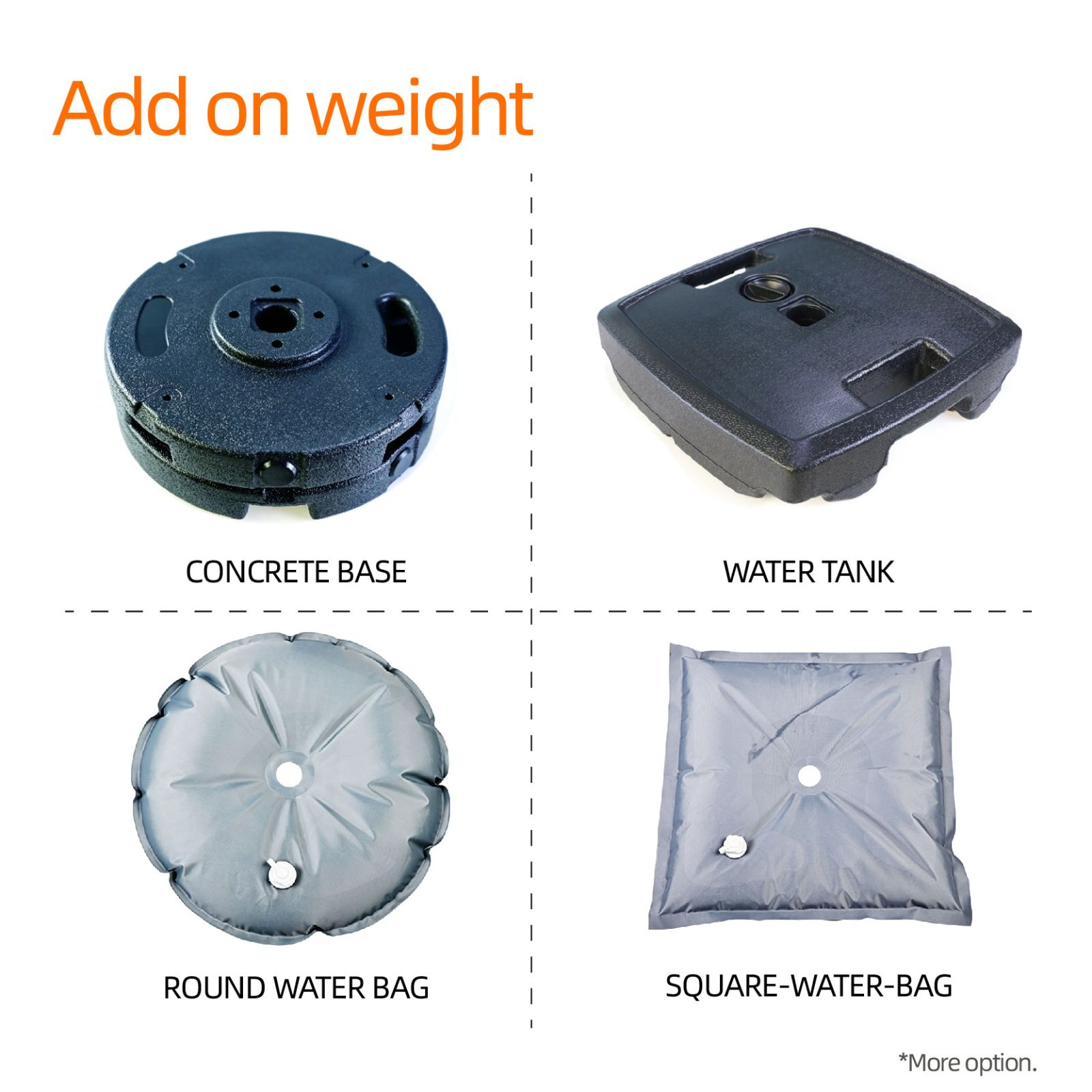
- The fixed cross base has pre-drilled holes for staking or bolting to a plywood platform. While the ground spike works well in soil, for paved surfaces in gale-force winds a simple field modification—adding sandbags over the cross base arms—adds stability. Because the carbon composite pole sheds load through flex rather than transferring all force to the base, the base does not need to be as heavy as for aluminum systems.
- What is the lead time for bulk orders?
- Standard production lead time is 15–30 days, depending on order volume and factory schedule. Custom graphic printing may add 5–7 days for file preparation and proof approval. Wisezone accepts payment via L/C, T/T, Western Union, and PayPal.
- Is the carry bag durable enough for airline luggage handling?
- The bag is made from 600D polyester with reinforced seams and a padded interior sleeve for the poles. It has survived multiple commercial flights as checked luggage in our own field testing. For rental fleets, the bag is considered a consumable item that can be reordered.
Trade shows demand equipment that works without excuses. The carbon composite U Banner system is light to ship, fast to set up, and built to survive rough treatment and weather. Its upfront cost is an investment in consistent, professional presentation over years of events. For the international distributor, it turns a commodity line into a differentiated, higher-margin offer.
Sarah Mitchell, CTSM, has specified booth hardware for global brands at more than 200 events worldwide. Her work combines logistical discipline with insight into what makes exhibitors succeed.
About the Author
Sarah Mitchell, Trade Show Consultant
B.A. Marketing, University of Texas; CTSM (Certified Trade Show Marketer)
Event marketing specialist with 200+ trade shows across 15 countries. Helps exhibitors cut setup costs by 30% through smarter hardware choices.
Reviewed by WZRODS Technical Team. Updated: 2026-07-23
 Comments (0)
No comments yet. Be the first to comment!
Leave a Comment
Related Products
Combo Pole
F Banner(Teardrop)
Golf flag pins
110° H banner
Magnum banner
Wall Mounted Flagpole
SF Banner
Budget 2in1 flag system
4 in 1 flag System
T Banner
Related Articles
29kg Concrete Flag Base - The Complete B2B Buyer's Resource - WZRODS
WZRODS DY451B: 29 kg, HDPE shell, concrete core. Stackable, portable, rust-proof. FOB price US$5.75–$6.85 at MOQ 2 units. Those numbers look unremarkable. Factor in landed cost—import duties lower than aluminum’s under relevant HTS codes, freight savings from less weight per unit of stabilizing mas
Wide Tube Cross Base - The Complete B2B Buyer's Resource - WZRODS
The Wide Tube Cross Base, manufactured by Wzrods in Shandong, China, solves one problem: reliable stability for poles under three meters, without the freight costs and warehouse footprint that heavier alternatives demand.
Rectangular Pipe Cross Base - The Complete B2B Buyer's Resource - WZRODS
The pipe cross flag base is a cross of rectangular steel pipe, powder‑coated, weighing 1.3 kg and spanning 78 cm across its arms. Its center holds a C‑ring shaft that lets the flag rotate with the wind.
X-Shape Backpack Banner - The Complete B2B Buyer's Resource - WZRODS
Economic Cross Base - The Complete B2B Buyer's Guide- WZRODS
When you buy an economic cross base—something like the Wzrods DM‑9, a 77 cm‑long, 1.3 kg iron cross—forget “economic” as a synonym for “cheap.” It means value-engineered.