Angled Banner Stand
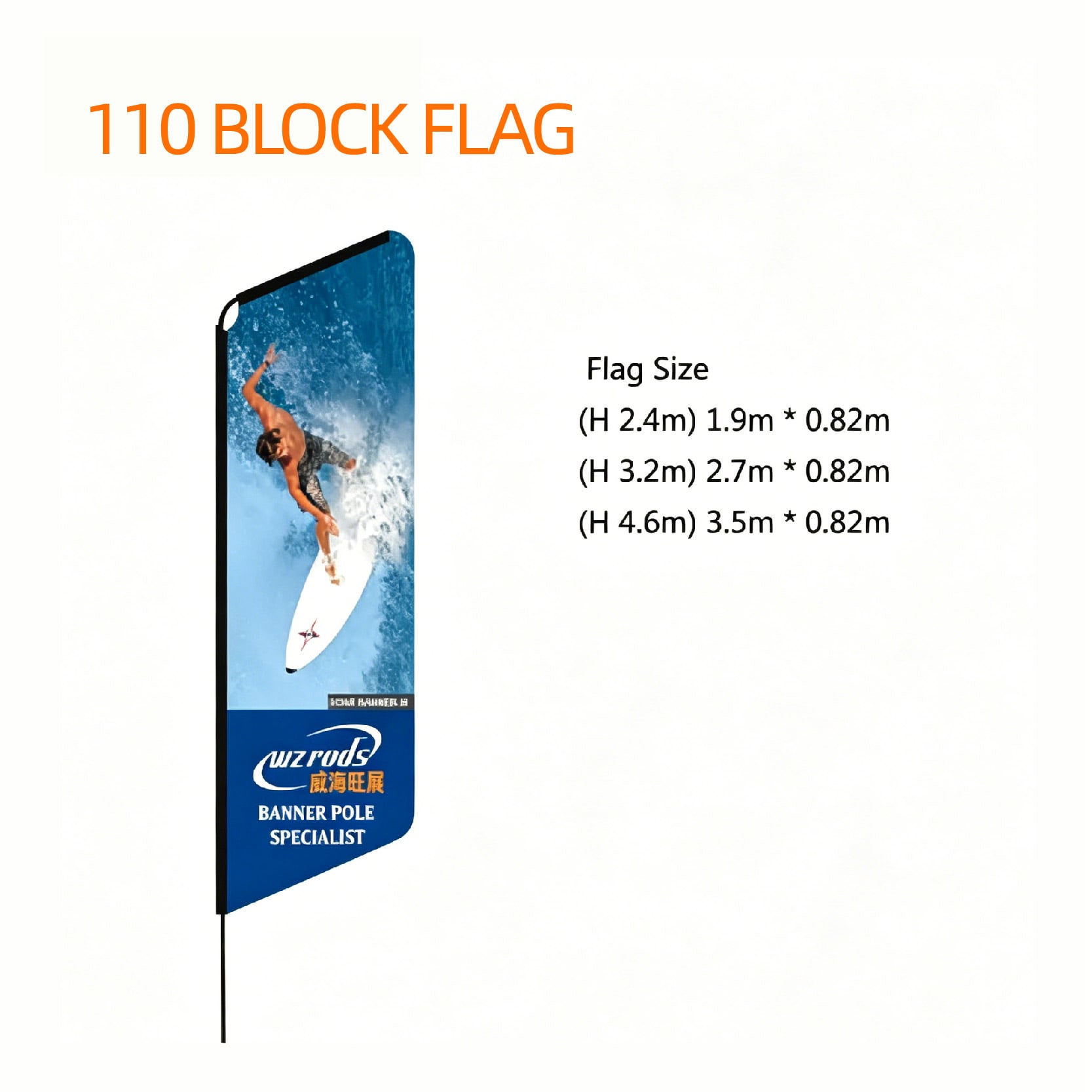
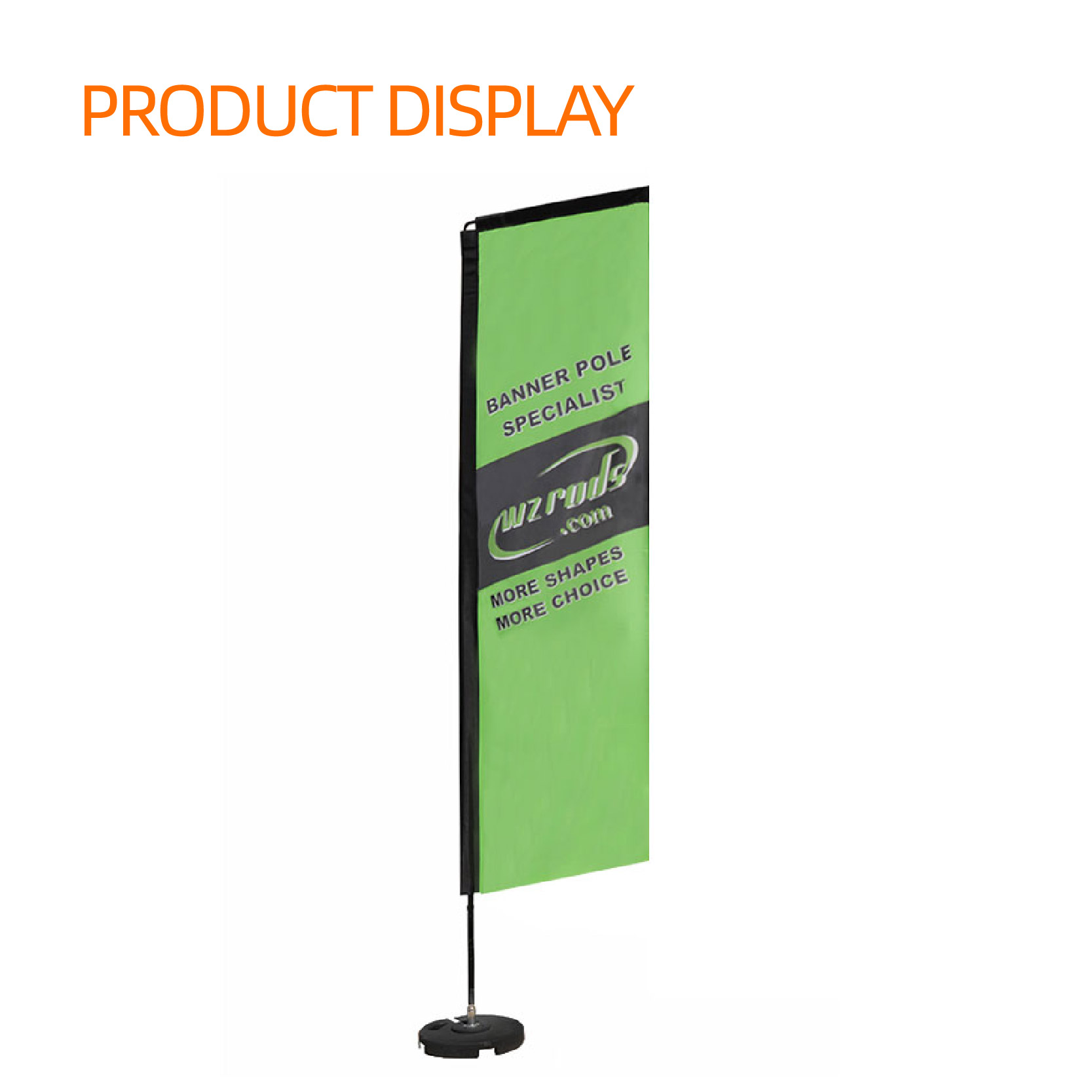
110° H (Curved banners)banners feature spacious printing. Built with flexible carbon composite pole in 3 sizes, lightweight and portable, equipped with carry bag and base.


 Article
 Specifications
- Origin
- Shandong, China
- Brand
- WZRODS
- Banner Material
- 100% Polyester
- Color
- CMYK 4 Color
- Application Spec
- Trade Shows, Outdoor Events, Sports Events, Retail Promotion
- Printing Method
- Digital Printing, Thermal Transfer Printing, Silk Screen Printing, Digital printing
- Print Color
- 4 color
- Artwork Format
- Ai. Pdf. Eps.PSD
- Moq
- 1 PCS
- Style
- FLYING
- 110H2.5M Size
- 1.77*0.73M
- 110H3.3M Size
- 2.5*0.73M
- 110H4.3M Size
- 3.52*0.73M
- Packaging
- Carry Bag/string rope bag/non-woven bag
- Pole Design
- Plug-in Assembly Design
- Pole Material
- Carbon composite
 Product Description
Shipping & Packaging
- Unit Weight
- HS384:0.9kg; HM385:1.12kg; HL386:1.5kg
- Unit Size
- HS384:115*19*19(cm); HM385:155*17*18(cm); HL386:147*19*20(cm) 10pcs/CTN
- Packaging
- Standard export carton
- Lead Time
- 15-30 days
Pricing
- MOQ
- 1 piece
- Price Range
- USD 8.1 – 19.3
* FOB Qingdao. Excludes shipping & taxes. Accessories & customization confirmed separately.
 Sample Service
- Sample Available
- Yes
 Customization Options

Light Custom
Logo, color, size adjustments

Fast Turnaround
Quick custom order processing
3-Day Design
Free mockup within 3 days
Angled Banner Stand - The Complete B2B Buyer's Resource - WZRODS
A Miami distributor ran a beachfront promotion from January through April. The curved sign poles faced salt spray and steady trade winds. By June, 37 percent had been replaced — a margin drain. The distributor’s email ended with one line: “Are these poles not supposed to bend?”
Aluminum poles are the industry standard: easy to extrude, cheap to anodize, fast to source. But the Miami experience points to a material mismatch. Aluminum yields. A gust that pushes the curved graphic beyond the alloy’s elastic limit leaves permanent deformation. The next wind increments the bend. Salt water accelerates grain-boundary corrosion. Within months the flag lists and wobbles. The failure is not a manufacturing defect — it is the wrong material for the environment.
A carbon composite pole behaves differently. The pultruded carbon fiber-epoxy matrix aligns fibers along the pole axis. When you bend a composite pole until the tip nearly meets the base, it snaps back straight — full elastic recovery up to the failure load. No yield point. No corrosion. That difference underpins everything that follows.
This guide aggregates months of supplier evaluation, cost modeling and field testing. It equips B2B buyers to assess the 110° H sign — a curved display built around a carbon composite pole — and to weigh total landed cost, not just unit price.
1. What a 110° H Banner Is and Why the Arc Works
A 110° H banner is a telescopic banner stand with a horizontal arm that extends at a 110-degree angle from the vertical pole. The printed panel is not a flat rectangle; it is a softly arcing surface. The geometry increases the visible area that faces a passing crowd while keeping the footprint compact. It's that simple. The banner appears to wrap toward the viewer, catching the eye earlier than a flat sign. In a busy trade show aisle, that extra visibility can mean the difference between a prospect noticing a logo or walking past.
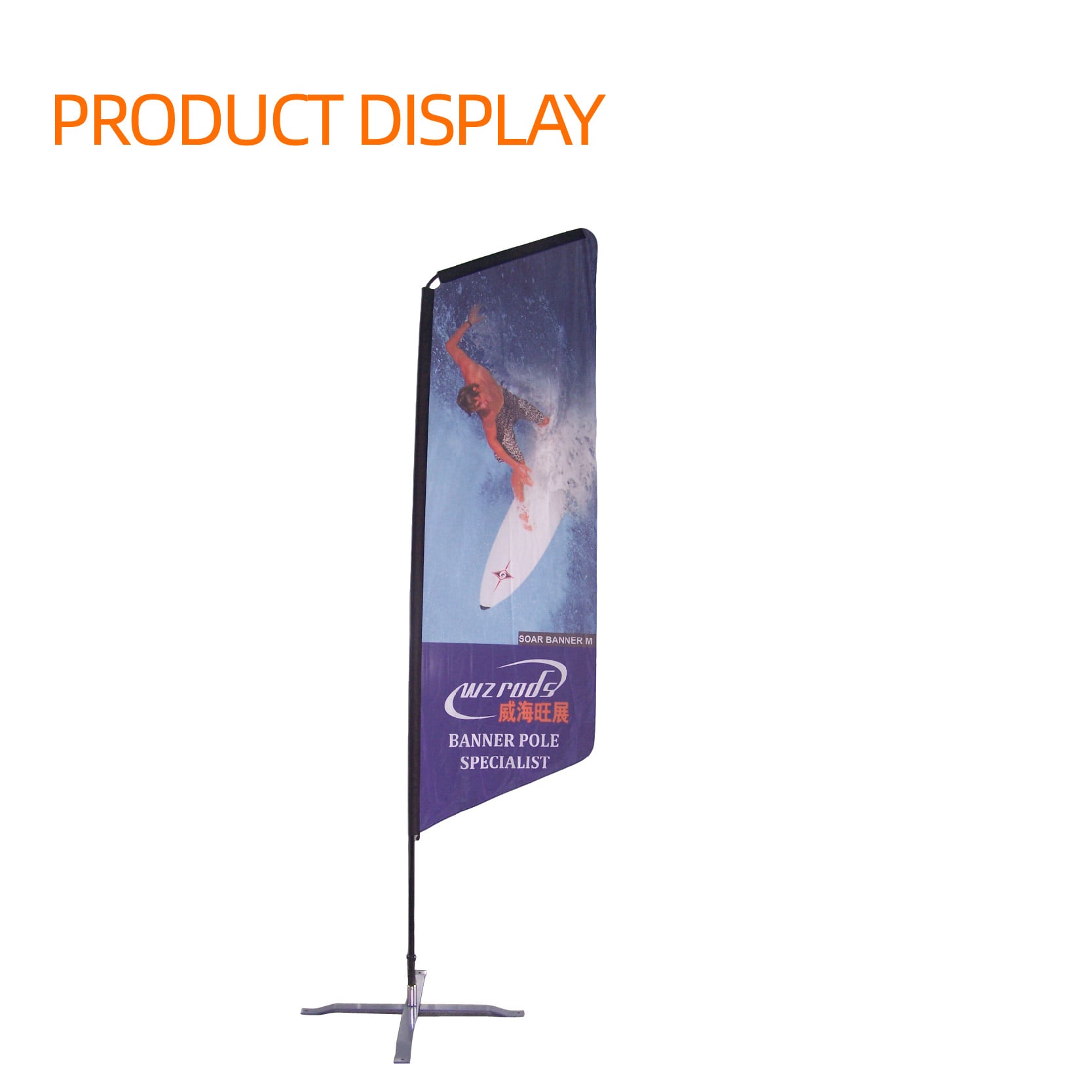
The system comes in three sizes, defined by pole height. HS384 extends to 2.5 meters and holds a 1.77 × 0.73 meter graphic. HM385 reaches 3.3 meters with a 2.5-meter-wide print. HL386 goes to 4.3 meters and covers 3.52 × 0.73 meters. All share the 110-degree arm geometry and carbon composite pole construction. The trade-off among them is visibility versus portability.
For a buyer planning inventory or a large event, dimensions directly affect freight and setup. Packed lengths range from 115 cm to 155 cm. Unit weights run from 0.9 kg (HS384) to 1.5 kg (HL386). Comparable aluminum poles weigh 50 to 70 percent more, depending on wall thickness. That weight gap accumulates cost advantages throughout the supply chain.
The Carbon Composite Difference
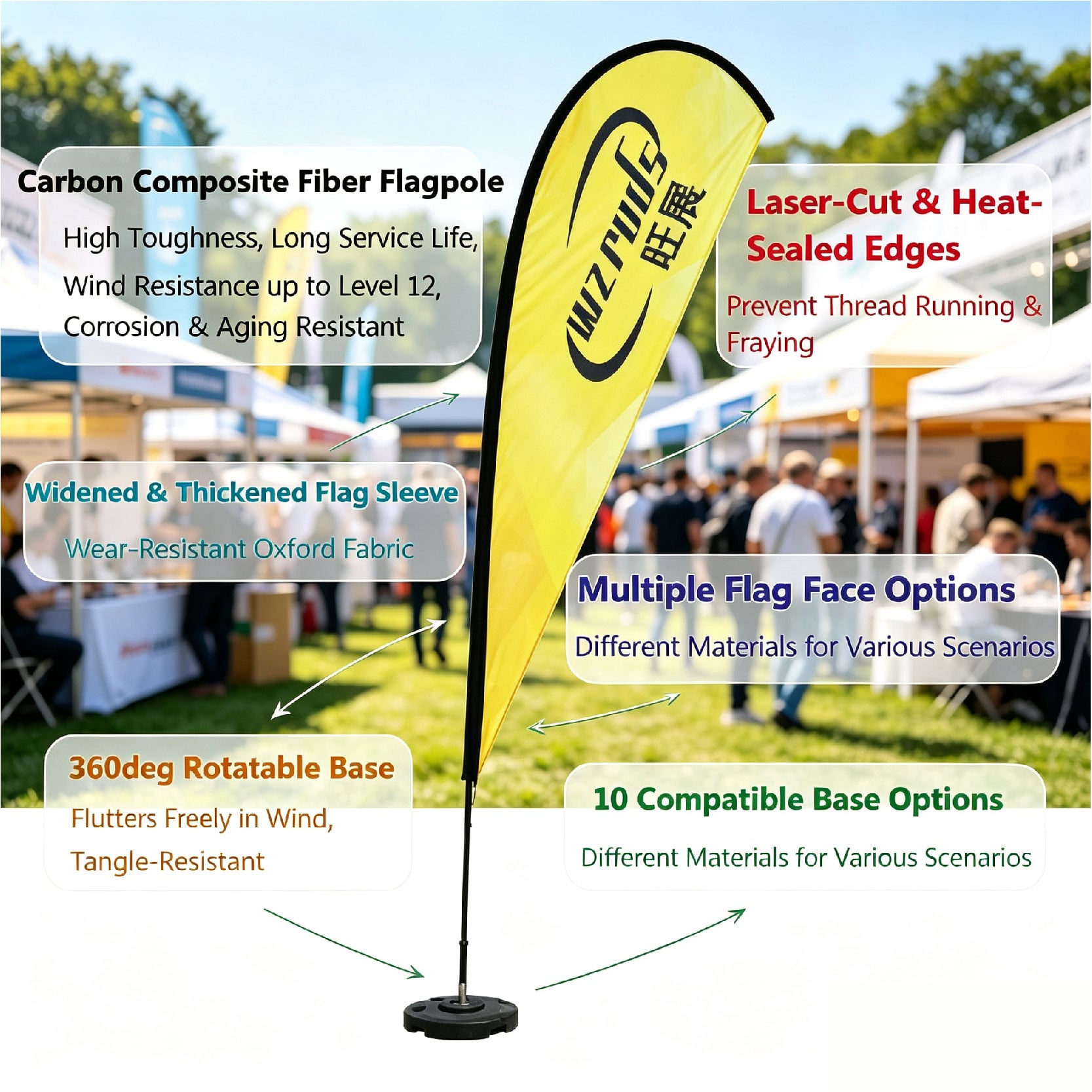
The pole is a plug-in assembly of pultruded carbon composite segments. Carbon fiber rovings are pulled through a resin bath and a heated die, aligning the fibers axially. This orientation gives high bending strength and near-complete elastic recovery. Aluminum, an isotropic metal, has a defined yield stress; exceed it and the deformation stays.
A side-by-side test makes the point. Apply a 10 kg side load at the tip of an aluminum pole of similar diameter. It bends, and upon release the tip may remain 2–3 mm off center. The carbon composite pole returns to zero. Over hundreds of wind cycles, the aluminum accumulates a growing set, while the composite does not. That is the difference between replacing poles every season and using them for years.
Weight and International Freight
In ocean or air freight, grams multiply fast. One HS384 kit — pole, base, graphic, carry bag — weighs 0.9 kg. An aluminum equivalent with a steel base often exceeds 2 kg. Multiply by a thousand units, and the total shipment weight drops by more than a metric ton. The reduction lowers freight cost directly and can shift a shipment from volumetric to actual weight, trimming air freight bills by 15–25 percent. For distributors importing from China to Europe or North America, the weight saving alone can offset a higher pole unit cost.
2. Buyer’s Checklist: Evaluating a Curved Banner System
Comparing only the ex-works unit price is an expensive shortcut. The true cost includes freight, duties, setup labor, replacement frequency and the missed opportunity when a banner fails during a show. The checklist below addresses four areas: material, manufacturing tolerances, logistics classification and supplier capability.
Material: Carbon Composite vs. Aluminum vs. Fiberglass
| Property | Carbon Composite (WZRODS) | 6061-T6 Aluminum | Fiberglass Rod |
|---|---|---|---|
| Weight per linear meter (approx.) | 0.12 kg | 0.25 kg | 0.20 kg |
| Elastic recovery after bending | Complete up to failure | Permanent set after yield | Partial; microcracking over time |
| Corrosion resistance | 100% rust-proof; no coatings needed | Anodizing wears; salt spray causes pitting | Resin can degrade under UV |
| Typical lifespan in outdoor use | 3–5 years | 1–2 years (coastal: less than 1 year) | 2–3 years |
| Duty classification benefit | Often under lower-rate composite/plastic HTS headings | Subject to Section 232 tariffs in some markets | Mixed; often similar to composites |
In humidity, salt air or wide temperature swings, the carbon composite pole eliminates the corrosion variable. The fibers and resin do not oxidize, pit or require protective coatings that eventually scratch. This is not a hypothetical — it is proven in fishing rods, aircraft components and marine hardware. The same principle holds for a display stand on a trade show floor in Singapore or an outdoor promotion in Dubai.
Manufacturing Tolerances and Pole Fit
A plug-in pole with loose joints will rattle and wobble. WZRODS machines carbon composite tube segments to a diameter tolerance of ±0.1 mm and fits them with interference-fit connectors. The result: a pole that assembles with a smooth, solid click and retains that fit after hundreds of cycles. When evaluating a sample, assemble and disassemble five times. Listen for grinding, feel for play. A quality carbon composite pole mates with quiet certainty.
Logistics and Import Classification
Harmonized Tariff Schedule (HTS) classification is often overlooked but directly affects landed cost. Aluminum display poles frequently fall under metal structures (heading 7610 or 7616), attracting duty rates of 5–7 percent in the U.S., plus a Section 232 tariff of 10 percent on aluminum articles. Carbon composite poles, imported as parts of display stands, can be classified under plastics or composite headings (e.g., 3926.90), which often carry lower rates in the EU and U.S. Exact rates depend on the country and a binding ruling. WZRODS supplies the HTS classification used for prior shipments to North America and Europe, but buyers should confirm with their own broker. The consistent pattern: containers of carbon composite systems incur measurably lower total duties than aluminum ones.
Combined with lower weight, the total landed cost of a carbon composite system can be 10–15 percent less than a comparable aluminum system, even if the ex-works price is higher. The truth is: The ROI model in Section 4 details the numbers. The principle holds: a cheaper unit price is a mirage when freight and duties consume the margin.
Supplier Capability and Lead Times
WZRODS has manufactured carbon composite flag poles since 2005, starting with straight telescopic models and later developing the curved 110° H banner. The Shandong factory runs pultrusion lines that produce kilometer-length batches of composite tubing, cut and fitted with connectors, then assembled into pole sets. Polyester banners are printed in-house via digital, thermal transfer or screen printing, depending on volume and graphic complexity. Vertical integration keeps lead times independent of outside vendors. Standard production lead time is 15–30 days, plus shipping. During the trade-show peak (January to March), adding a buffer is prudent. An order placed in early October for 200 units should ship by mid-November, well before spring shows.
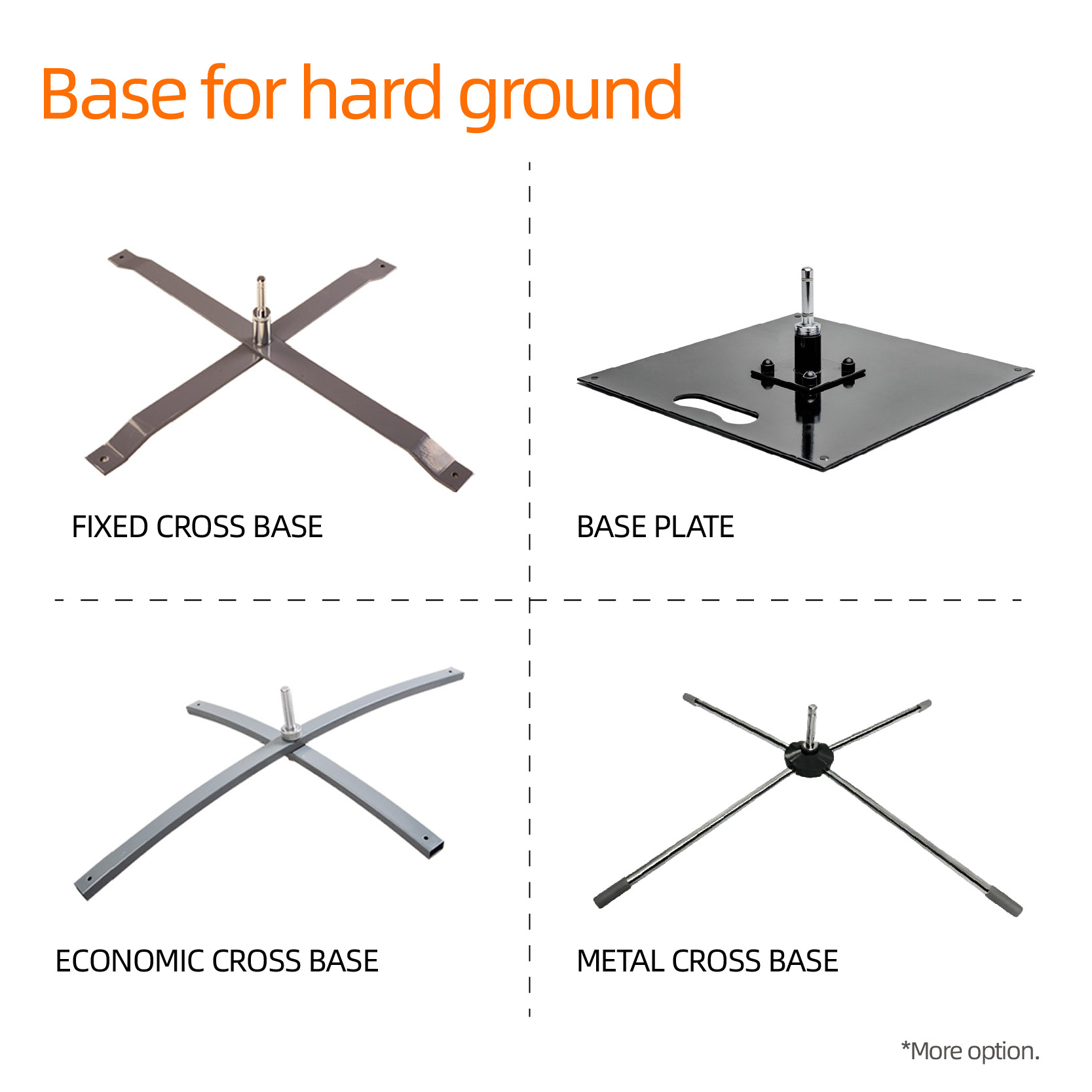
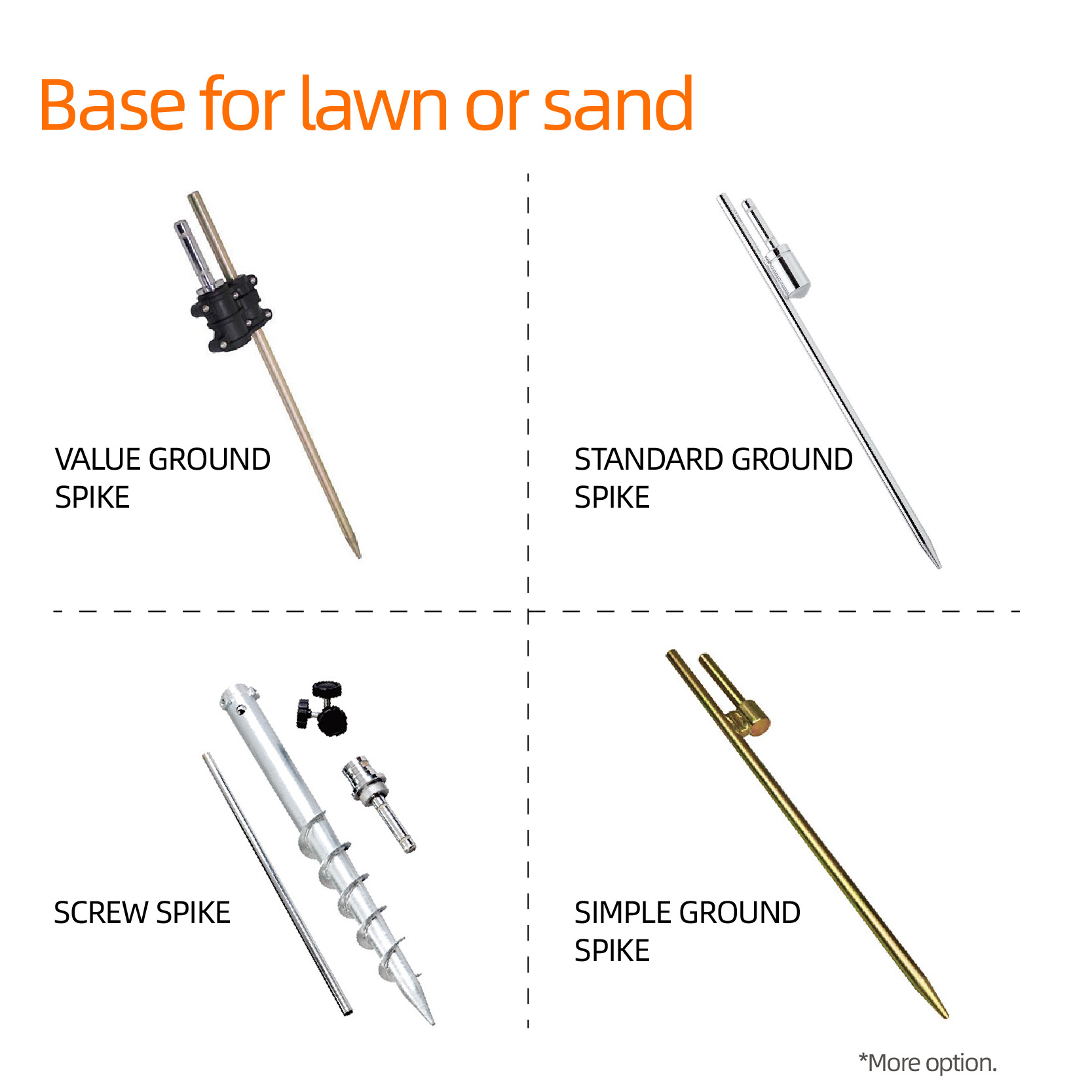
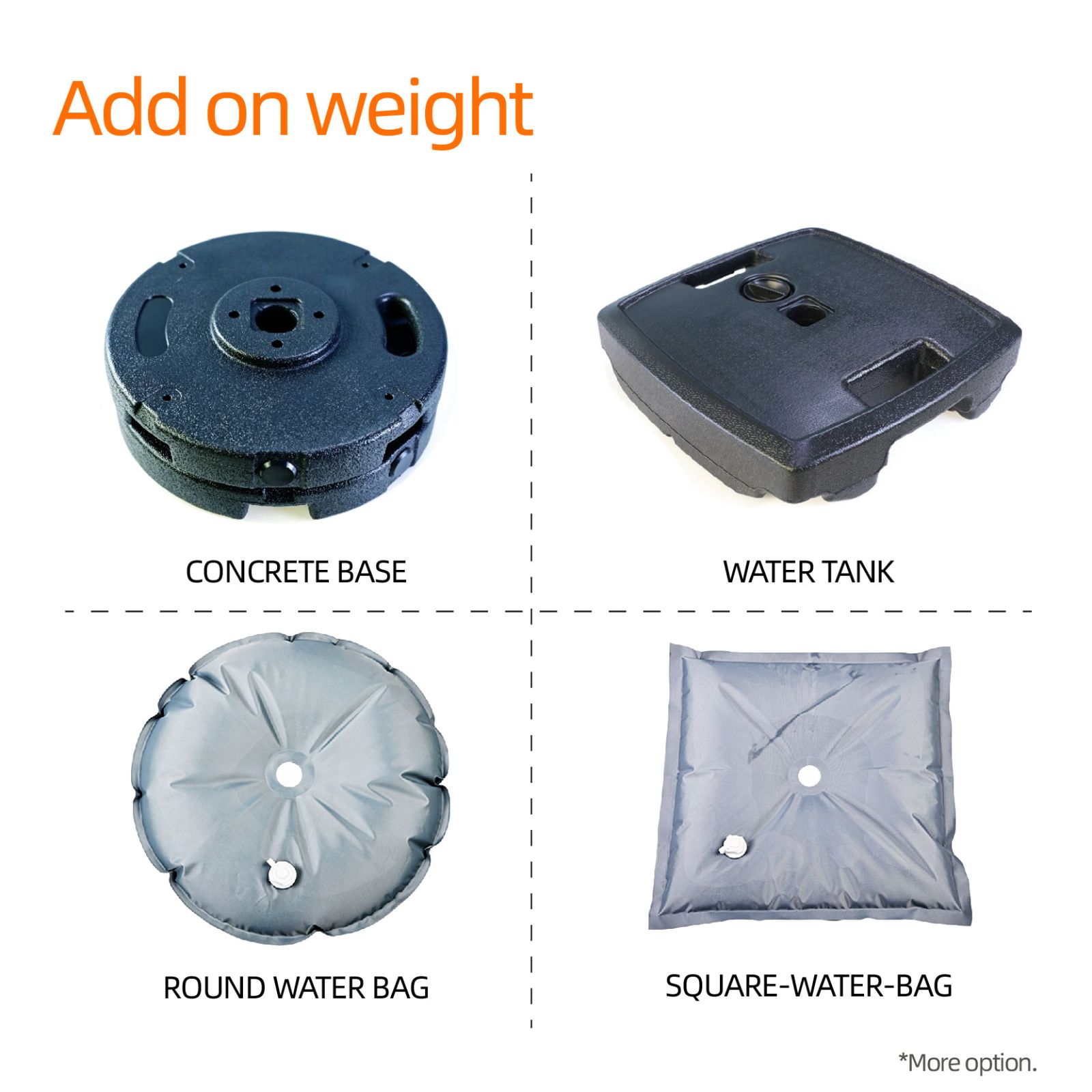
Customization covers: printed graphics from Ai, PDF, EPS or PSD files; pole length adjustments for special heights; base types (cross base, ground stake, heavy-duty water-filled base); carry bag material (non-woven, polyester string rope bag, custom logo bag). Minimum order quantity is one piece, allowing a test before commitment. Samples are not free but are charged at the standard unit cost, with the amount credited against the first bulk order. Sample delivery mirrors production lead time: 15–30 days.
3. Product Comparison: 110° H Banner vs. Alternatives
An aluminum straight banner may work indoors with no wind and a lower upfront price. But for outdoor reliability, frequent setup/teardown or air freight efficiency, the total picture matters. The table below compares the 110° H carbon composite system, a typical aluminum curved banner and a standard straight telescopic banner.
| Feature | 110° H Banner (Carbon Composite) | Aluminum Curved Banner | Standard Straight Banner (Aluminum/Steel) |
|---|---|---|---|
| Display angle | 110° curved top, spacious print | Usually 90°–120° | Flat rectangular |
| Printed area (largest size) | 3.52 × 0.73 m (HL386) | ~3.5 × 0.75 m | ~3.0 × 0.8 m |
| Unit weight (packed, largest size) | 1.5 kg | 2.6–3.0 kg | 2.2 kg |
| Wind behavior | Flexes without permanent deformation; recovers | Permanent bend above 20 km/h gusts | Flaps and may tip; rigid frame vibrates |
| Rust/corrosion | None | Anodizing erodes; pitting occurs | Steel base rusts |
| Typical FOB price range (full kit) | USD 8.1–19.3 | USD 7.0–12.0 | USD 5.0–9.0 |
| Lifetime (outdoor, coastal) | 3–5 years | 1–2 years (coastal About the Author Wei Chen, Senior Product Specialist B.S. Supply Chain Management, Michigan State University; Certified Professional in Supply Management (CPSM) 12 years in B2B display hardware sourcing. Former procurement manager for a top 20 US promotional products distributor. Specializes in aluminum pole systems and import compliance. Reviewed by WZRODS Technical Team. Updated: 2026-07-04 |
 Comments (0)
No comments yet. Be the first to comment!
Leave a Comment
Related Products
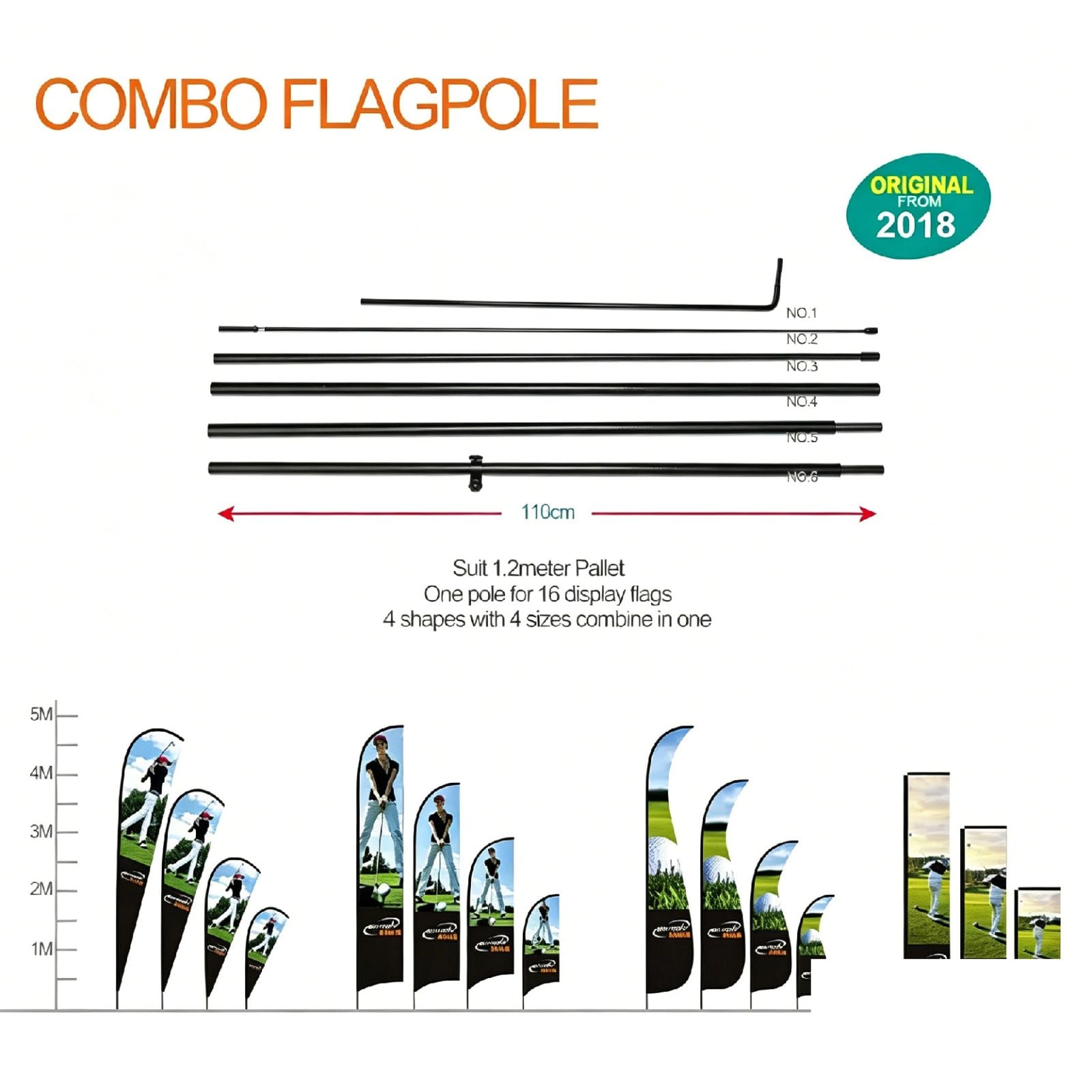
Combo Pole
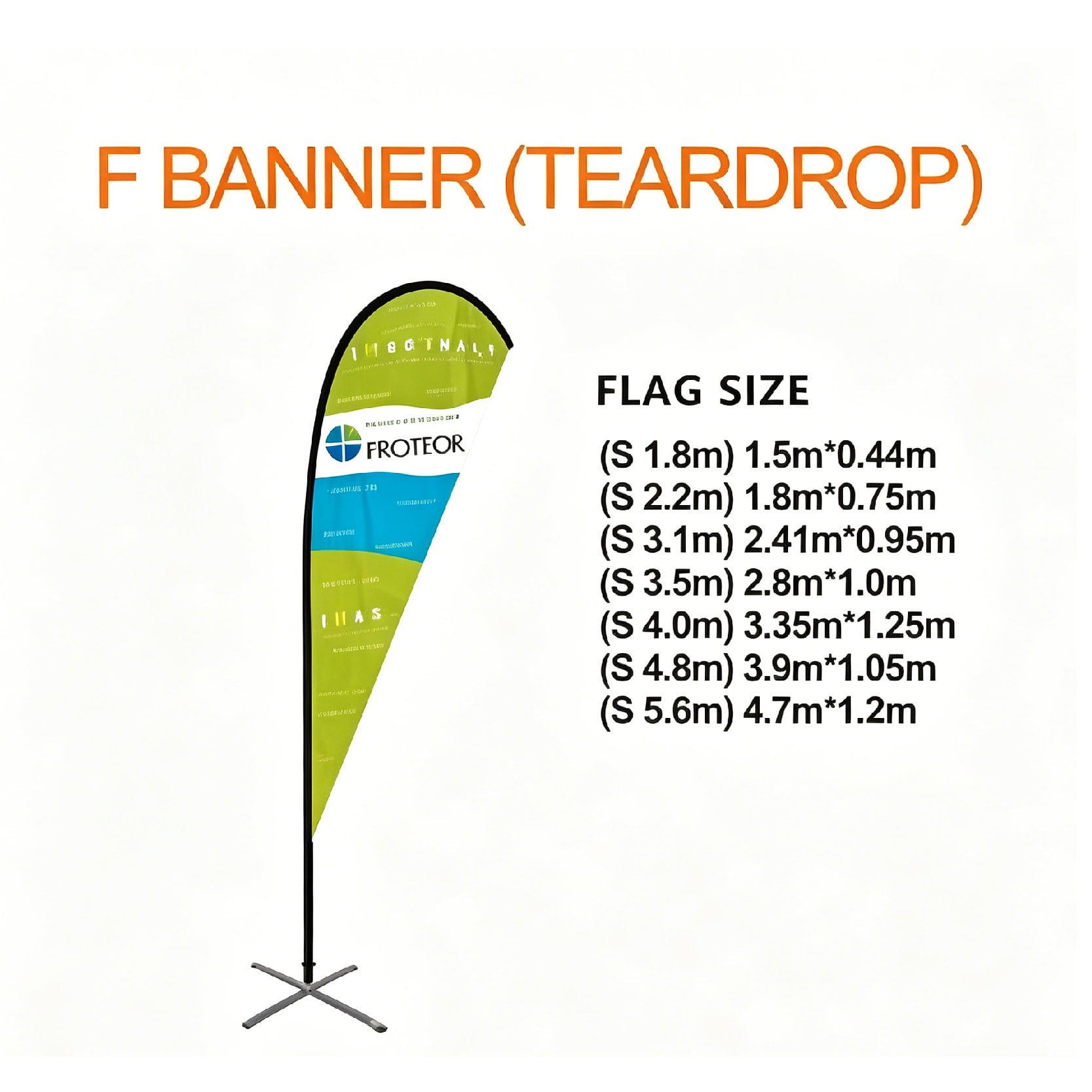
F Banner(Teardrop)
Golf flag pins
Magnum banner
Wall Mounted Flagpole
SF Banner
Budget 2in1 flag system
4 in 1 flag System
T Banner
H Banner
Related Articles
29kg Concrete Flag Base - The Complete B2B Buyer's Resource - WZRODS
WZRODS DY451B: 29 kg, HDPE shell, concrete core. Stackable, portable, rust-proof. FOB price US$5.75–$6.85 at MOQ 2 units. Those numbers look unremarkable. Factor in landed cost—import duties lower than aluminum’s under relevant HTS codes, freight savings from less weight per unit of stabilizing mas
Wide Tube Cross Base - The Complete B2B Buyer's Resource - WZRODS
The Wide Tube Cross Base, manufactured by Wzrods in Shandong, China, solves one problem: reliable stability for poles under three meters, without the freight costs and warehouse footprint that heavier alternatives demand.
Rectangular Pipe Cross Base - The Complete B2B Buyer's Resource - WZRODS
The pipe cross flag base is a cross of rectangular steel pipe, powder‑coated, weighing 1.3 kg and spanning 78 cm across its arms. Its center holds a C‑ring shaft that lets the flag rotate with the wind.
X-Shape Backpack Banner - The Complete B2B Buyer's Resource - WZRODS
Economic Cross Base - The Complete B2B Buyer's Guide- WZRODS
When you buy an economic cross base—something like the Wzrods DM‑9, a 77 cm‑long, 1.3 kg iron cross—forget “economic” as a synonym for “cheap.” It means value-engineered.
Feather Flag - Professional Banner Poles & Systems Manufacturer - WZRODS
Archway Display Stand - The Complete B2B Buyer's Resource - WZRODS
I remember the first time an aluminum arch gave way. Dallas trade show, setup day. The exhibitor was sliding the last pole into the fabric sleeve.