Archway Display Stand
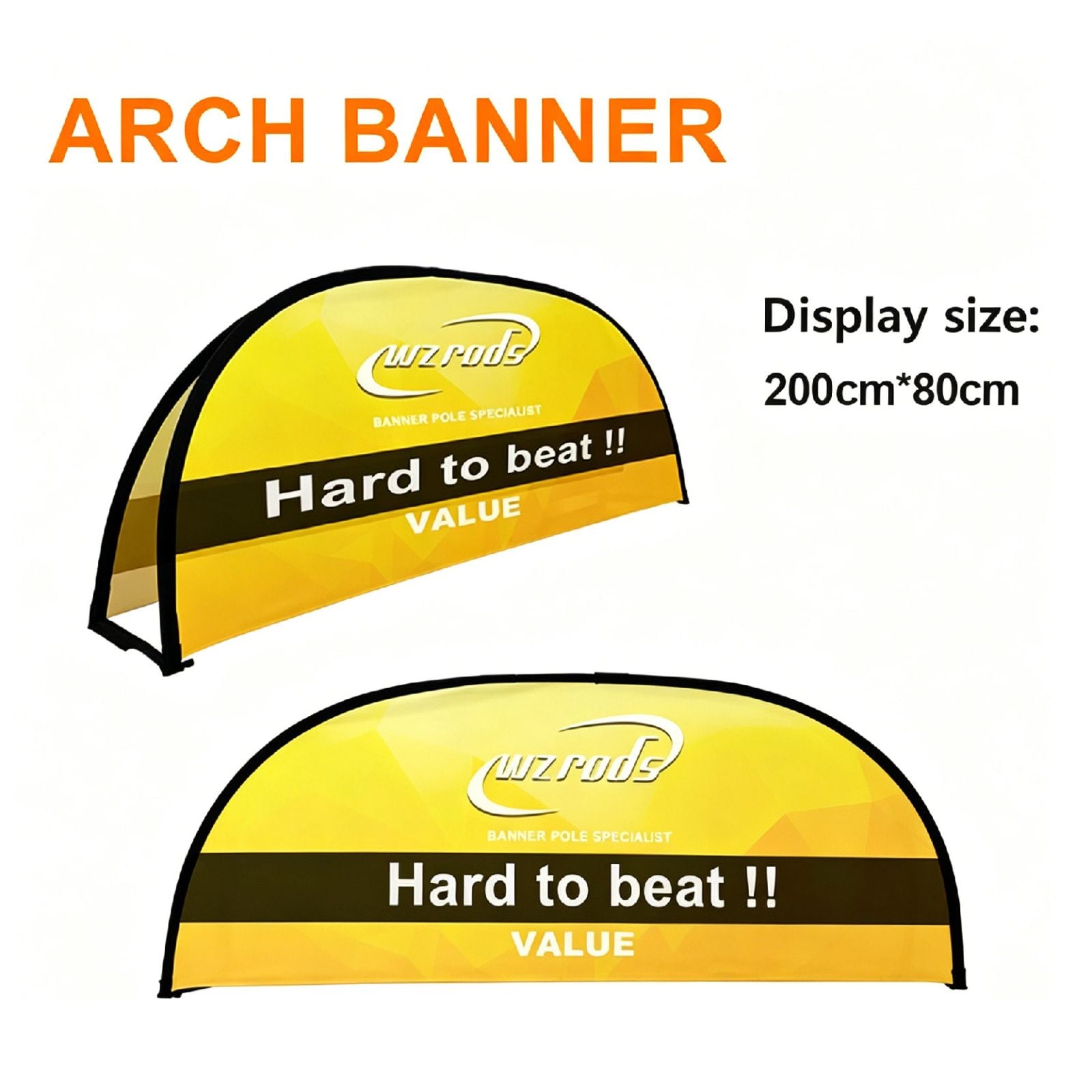
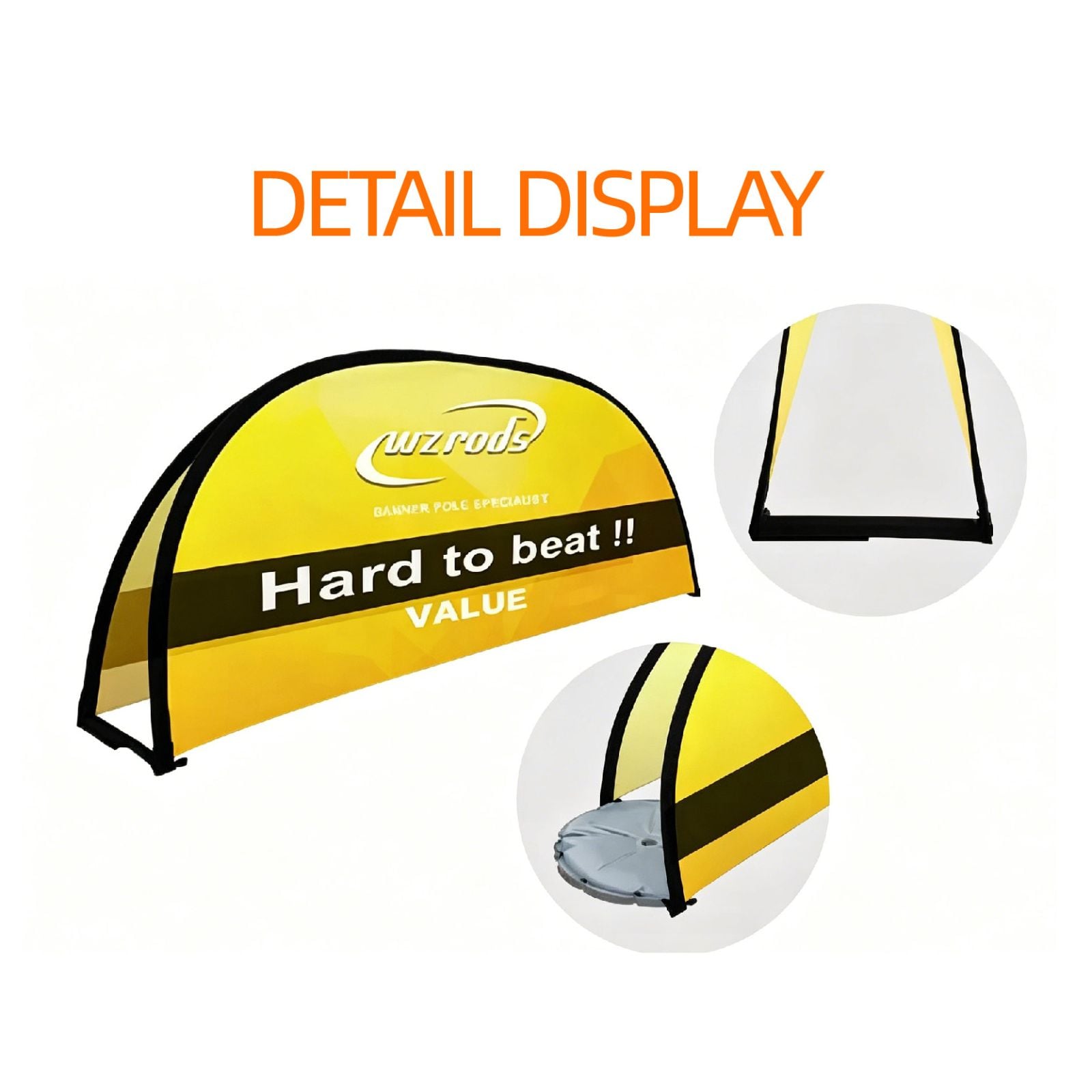
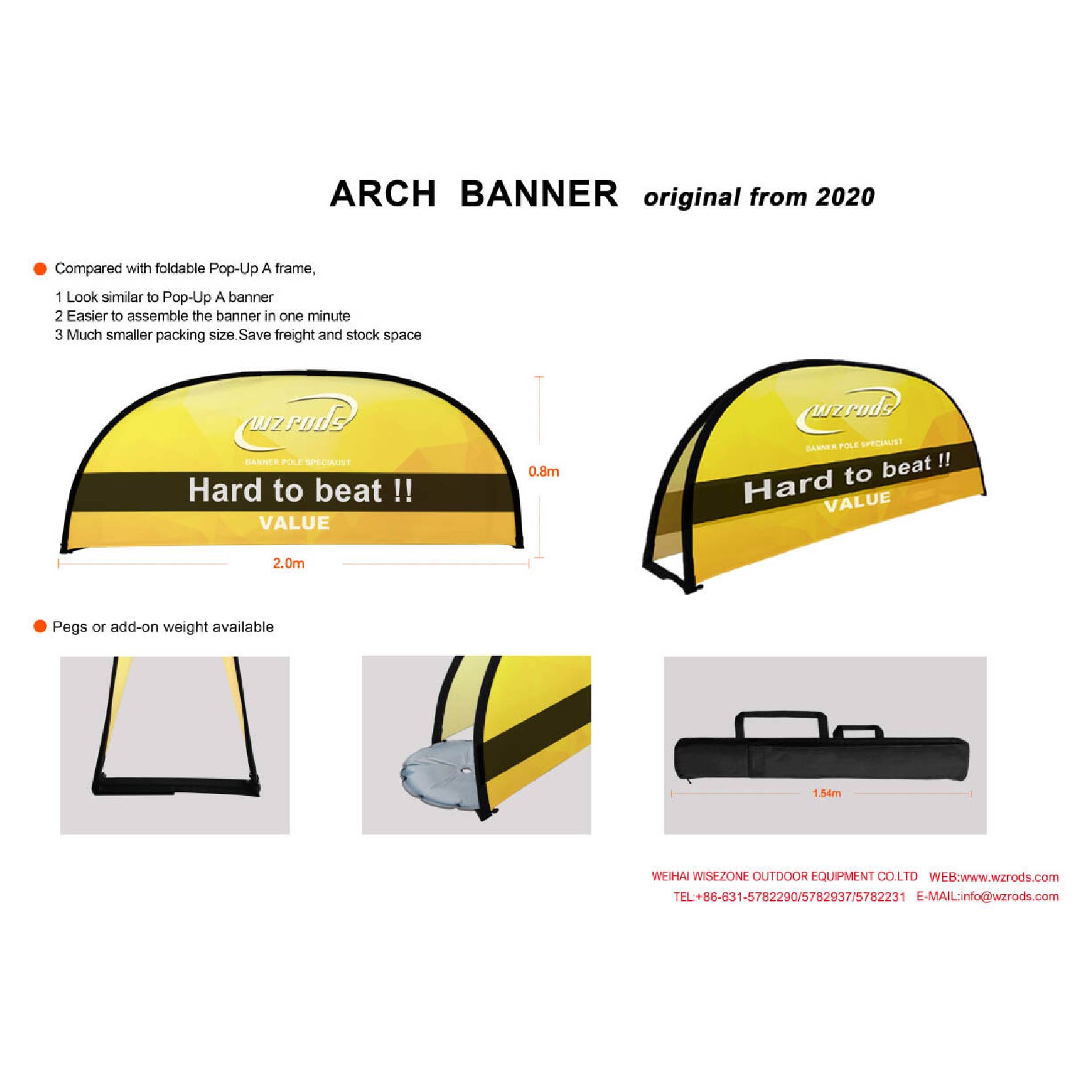
WZRODS arch banner is lighter and more cost-effective than pop-up banners. Compact package, fast assembly, replaceable graphics, comes with composite poles and carry bag, supports extra weights for st…


 Article
 Specifications
- Origin
- Shandong, China
- Brand
- Wzrods
- Model
- BYYY-984
- Main Material
- 100% Polyester
- Pole Material
- Carbon Composite
- Banner Material
- 100% Polyester
- Color
- CMYK 4 Color Printing
- Application Spec
- Trade Shows, Retail Display, Product Launches, Exhibitions
- Printing Method
- Dye sublimation printing
- Feature
- Eco-Friendly, Waterproof
- Display Size
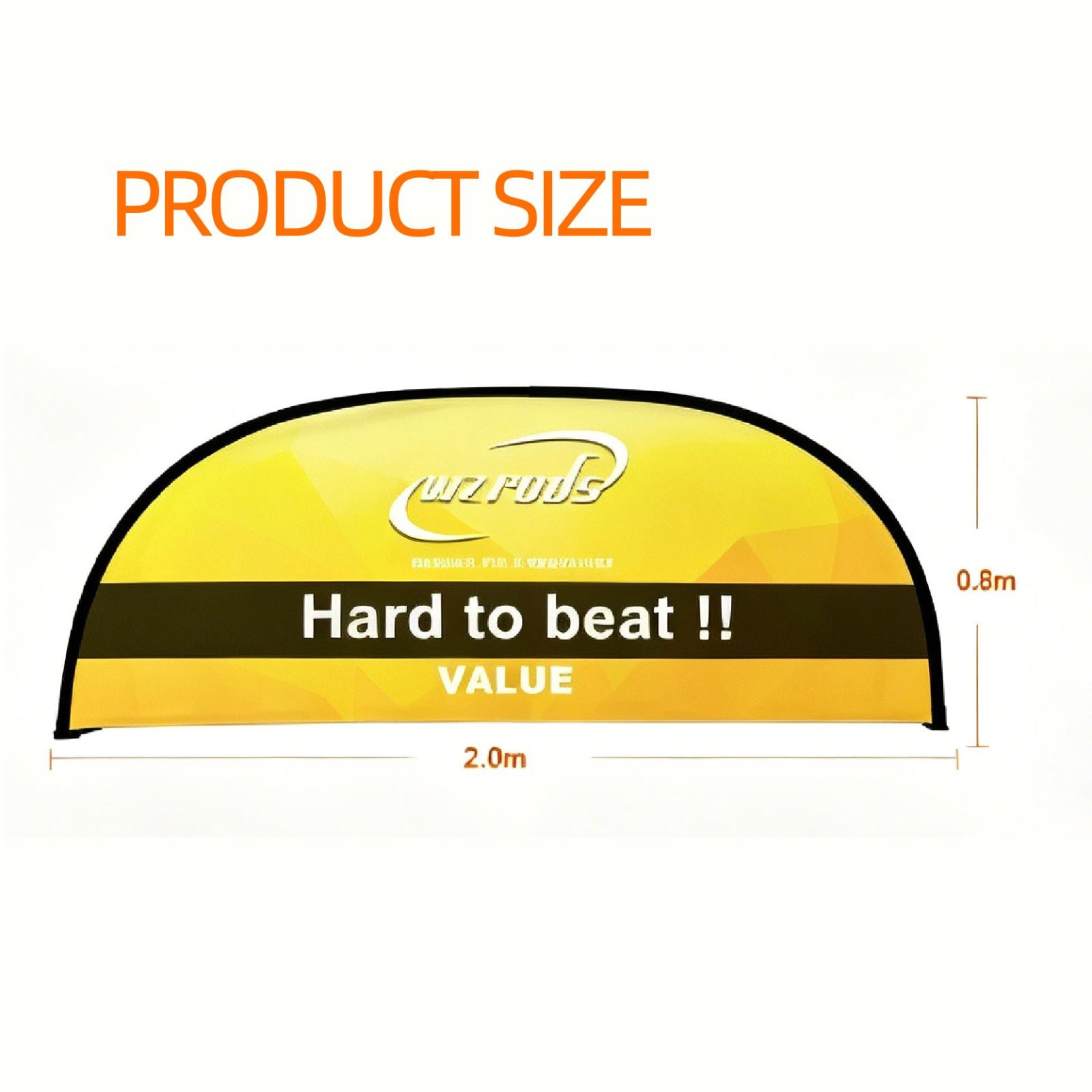
- 2m*1m
- Design
- Custom Desgin
- Packaging
- Polybag
- Packing Length
- 1.5m
 Product Description
Shipping & Packaging
- Unit Size
- Length 1.5m
- Packaging
- Standard export carton
- Lead Time
- 15-30 days
Pricing
- MOQ
- 1 piece
- Price Range
- USD 42 – 42
* FOB Qingdao. Excludes shipping & taxes. Accessories & customization confirmed separately.
 Sample Service
- Sample Available
- Yes
 Customization Options

Light Custom
Logo, color, size adjustments

Fast Turnaround
Quick custom order processing
Archway Display Stand - The Complete B2B Buyer's Resource - WZRODS
1. The Puzzle: Why Aluminum Arches Keep Failing
I remember the first time an aluminum arch gave way. Dallas trade show, setup day. The exhibitor was sliding the last pole into the fabric sleeve. Tight fit — he pushed a little harder, and the pole buckled. A soft pop. The kind metal makes when it bends past its limit and stays bent. He tried to straighten it. No luck. The arch looked like a broken fishing rod for the entire three‑day event. Tape held it together. Every visitor noticed.
That failure started a puzzle. I pulled apart a dozen portable arch frames over the next year. Measured wall thickness, checked temper designations, calculated wind loads, put poles into a bending jig to find the radius where they deform permanently. The results weren’t complicated. Standard aluminum poles — even 6061‑T6 — have a predictable elastic limit. Exceed that limit once (a clumsy handler, a dropped case, a strong gust) and the metal yields. It never springs back straight. You get a wavy arch that looks cheap and undermines the brand.
Then I came across carbon composite poles. Not the heavyweight aircraft stuff — the high‑modulus prepreg tubes the tent and kite industries have used for decades. I asked a factory in Shandong for samples. I put a 10‑mm pole in a 12‑inch radius bend and held it two hours. When I let go, it snapped back straight, zero memory of the bend. I repeated the test. No permanent deformation. That answered the question.
That switched my focus to the whole cost of an arch display — not just the invoice price. Freight. Duty. Replacement rate. Assembly time. This guide explains how to sidestep the aluminum trap and pick an arch banner that keeps your brand sharp while keeping total landed cost lower than you expect.
2. Buyer’s Guide: The Technical Standard You Should Demand
2.1 The Pole Material: Carbon Composite vs. Aluminum
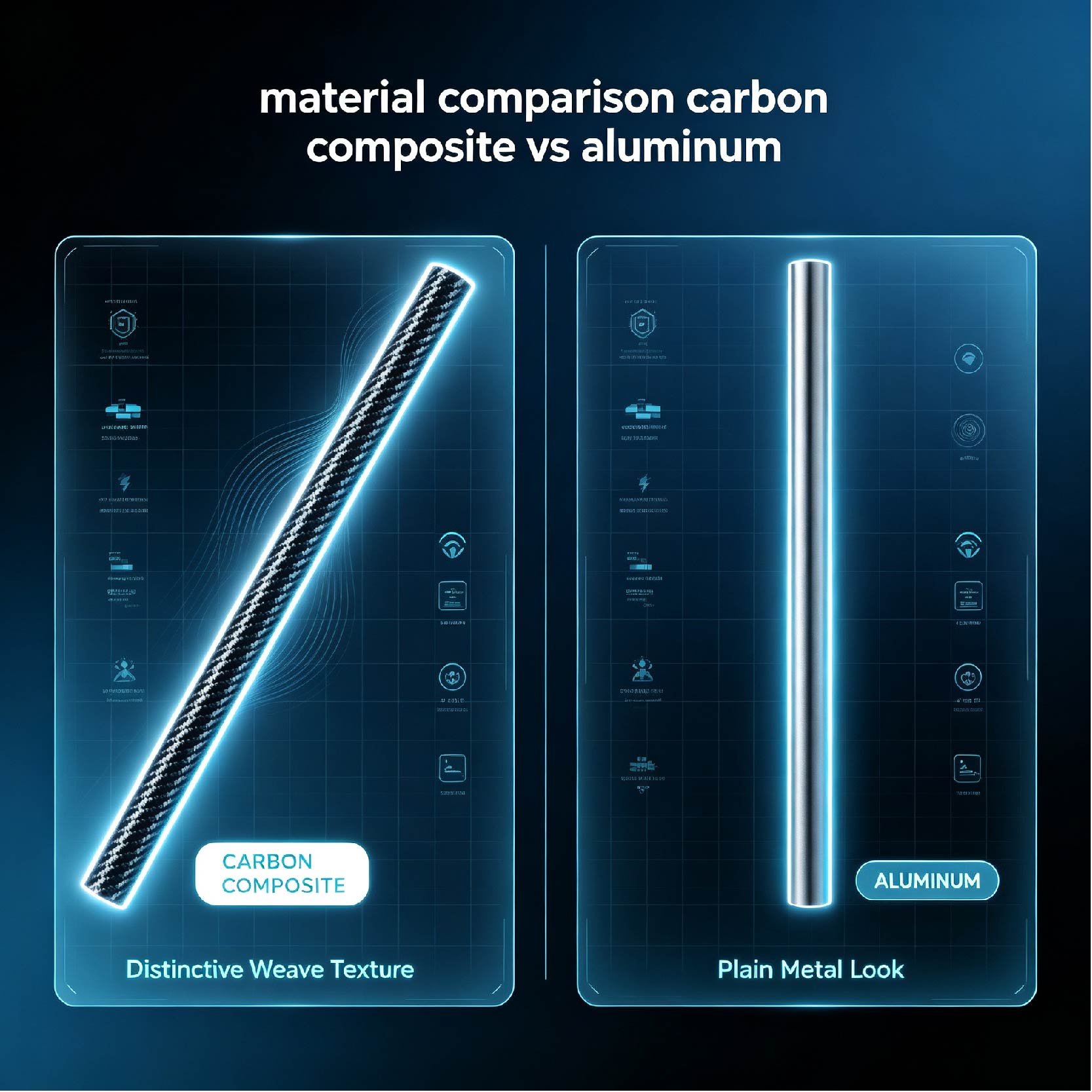
The pole material dictates everything. Most suppliers offer anodized aluminum. It polishes up well. But aluminum deforms permanently under stress. Carbon composite poles — carbon fiber‑reinforced polymer — work differently. They bend under load and spring back. WZRODS poles use a unidirectional carbon layup and a polyurethane‑based matrix. The result: stability in 25 mph winds and a bend radius as tight as 8 inches with no damage.
Demand this specification: at least 90% elastic recovery after a 180° bend over a 6‑inch mandrel, held 10 seconds. (WZRODS poles recover fully — they snap back to within 2 mm of straight.) Aluminum poles of the same diameter kink at that radius and recover less than 10% of their original straightness. You don’t need to understand composite engineering. Just ask the supplier for a bend‑test video on a sample pole. If they can’t provide it, walk away.
Carbon composite poles are 100% rust‑proof. This matters if you exhibit in coastal cities — Miami, Bangkok, Dubai. Salt air eats anodized aluminum. After a few trips, white pitting corrosion appears. Carbon composite ignores humidity and salt. One client in Singapore switched after his aluminum arches looked “like they came from a sunken ship” after six months. The carbon composite ones still look new three years later.
2.2 Wind‑Load Safety and Base Engineering
An arch banner is a sail. A 2‑meter‑wide banner in a 15‑mph crosswind generates around 50 pounds of side force. If the base isn’t designed for that, the display tips. The WZRODS arch uses a modular foot that accepts aftermarket ballast — water bags, sandbags, or steel weights — with a safety factor of 1.5× the calculated wind load for indoor venues. In a gust imposing 50 pounds of force, the footing holds 75 pounds without sliding.
When you inspect an incoming shipment, verify ballast weight with a calibrated scale. Pack a digital luggage scale in your QC kit. Gimbaled corners on the base plates let the arch sit flat on uneven exhibition‑hall carpet. A bubble level built into the foot shows when the arch is plumb. Those details speed setup and prevent mid‑show tilts.
2.3 Banner Material and Printing
The graphic is the face of the display. WZRODS uses 100% polyester fabric, dye‑sublimation printed in CMYK. Dye‑sub penetrates the fiber, so colors don’t crack. The fabric stretches when you pull it onto the poles, then returns to tension — wrinkle‑free. It’s waterproof. Spilled coffee wipes off. Need to change the promotion? Order a new printed sleeve, slide it on in minutes; the frame stays. Cheaper than replacing a whole pop‑up.
2.4 Import Compliance and Duty Advantages
Duty rates matter, especially if you import hundreds of units. Aluminum arch frames typically fall under HS code 7616.99 (other articles of aluminum), attracting duty of 6.5% to 8% in the US and similar rates in the EU. Carbon composite poles, being plastic‑based, often classify under HS code 3926.90.99 (other articles of plastics). That carries a lower duty — around 3% to 5%. Customs brokers I’ve worked with confirm that a properly documented carbon composite arch kit clears at the lower rate. On a $100 CIF value, that saves $3 to $5 per unit. Over container loads, it multiplies. Always work with your broker; attach a material breakdown in the commercial invoice to support the lower rate.
3. Product Comparison: Arch Banner vs. Standard Pop‑Up Displays
The arch banner isn’t the cheapest on sticker price. A standard aluminum pop‑up with printed graphics might have a lower ex‑works price. But that comparison misses three costs: freight, drayage, and replacement. Here’s the side‑by‑side.
| Factor | WZRODS Arch Banner (Carbon Composite) | Standard Aluminum Pop‑Up Display |
|---|---|---|
| Unit weight (2m arch) | 3.2 kg (7 lbs) | 6.8 kg (15 lbs) |
| Packed dimensions | 150 cm × 15 cm × 15 cm (fits a car trunk) | 50 cm × 50 cm × 40 cm (check‑in only) |
| Air freight cost to US (per unit) | $18 – $22 | $45 – $55 |
| Assembly time (one person) | 3 minutes | 8 – 12 minutes |
| Bend recovery | Full within 10 seconds | Permanent kink beyond 12° bend |
| Corrosion resistance | 100% rust‑proof | Anodized but pits after scratches |
| Graphic replacement | Slide off sleeve, slide on new — under 2 minutes | Removing Velcro panels, often tearing |
| Typical lifespan (30 shows/year) | 5+ years | 2 years before pole replacement needed |
| Duty rate (US, typical) | 3% (under 3926.90) | 6.5% (under 7616.99) |
| FOB unit price | $42 (WZRODS base model) | $55 – $90 (aluminum frame with graphic) |
The carbon composite arch wins on every post‑purchase cost. Freight savings alone can offset the unit price difference. Add lower duty, faster setup (saving on drayage labor), and a much longer life. Total cost of ownership drops by 40% or more over five years.
4. ROI Analysis: Total Landed Cost Over 5 Years
Case study: a US‑based event agency buys 20 arch banner stands to service multiple shows per year. We compare the WZRODS carbon composite arch with a typical aluminum pop‑up. All figures in USD, landed to a Chicago warehouse.
| Cost Item | Carbon Composite Arch Banner (WZRODS) | Aluminum Pop‑Up Arch |
|---|---|---|
| Unit FOB price (20 units) | $42 × 20 = $840 | $65 × 20 = $1,300 |
| Sea freight (LCL, 1 CBM) | $280 | $520 (heavier) |
| Duty (US) | 3% × (CIF $1,120) = $33.60 | 6.5% × (CIF $1,820) = $118.30 |
| Customs broker fee | $150 | $150 |
| Total landed cost, Year 1 | $1,303.60 | $2,088.30 |
| Replacement units needed by Year 3 | 0 (no kinking) | 10 (half the stock poles kinked) |
| Additional purchase cost, Year 3 | — | 10 × $65 + $60 freight = $710 |
| Total expenditure over 5 years | $1,303.60 | $2,798.30 |
| Cost per unit‑year (20 units, 5 yrs) | $13.04 | $27.98 |
The agency saves $1,494.70 over five years while fielding a display that never arrives crooked, never rusts. That saving buys 35 more arch banners for other clients. Lower sticker price doesn’t mean cheaper to own.
5. Applications: Where the Arch Banner Excels
5.1 Trade Show Booths and Exhibitions
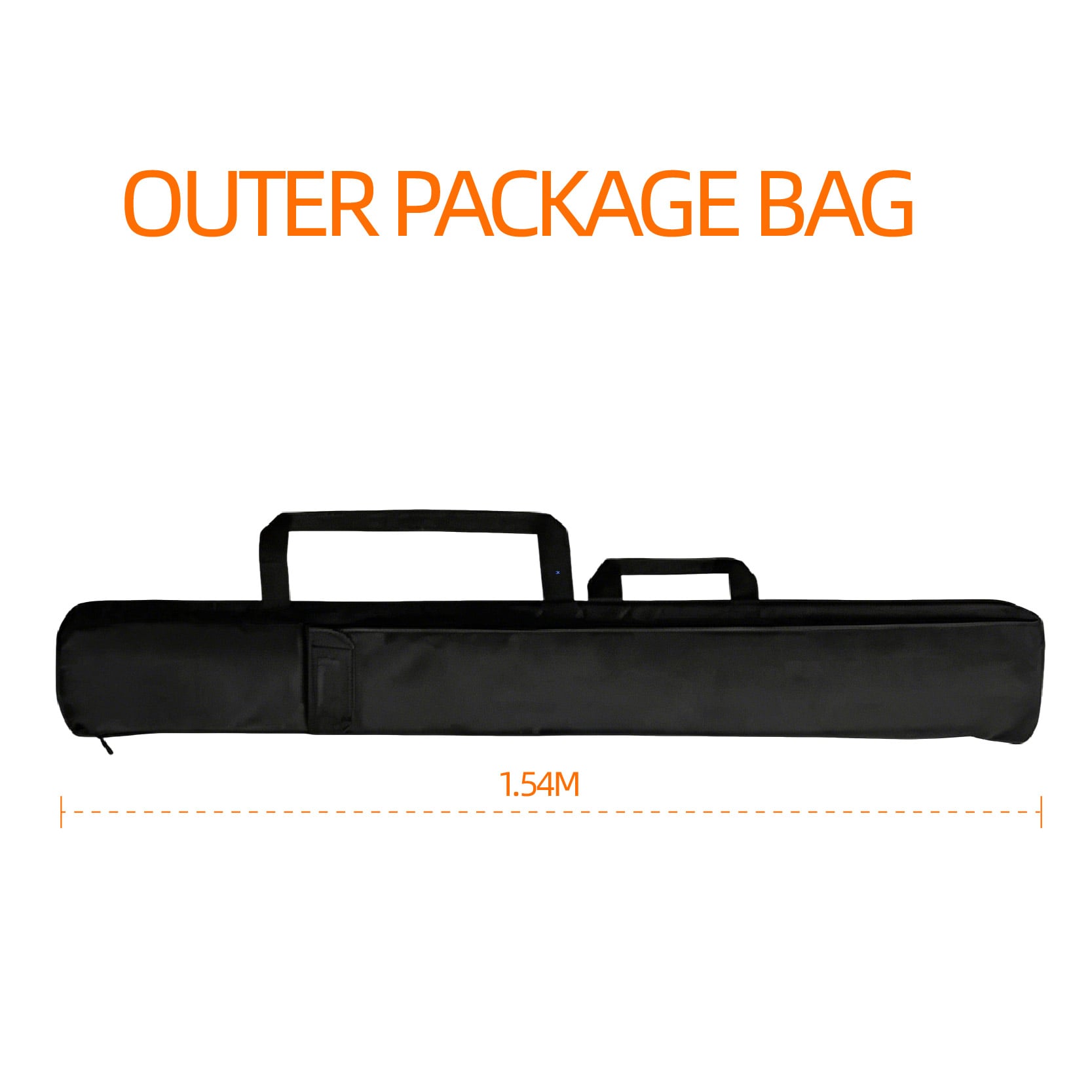
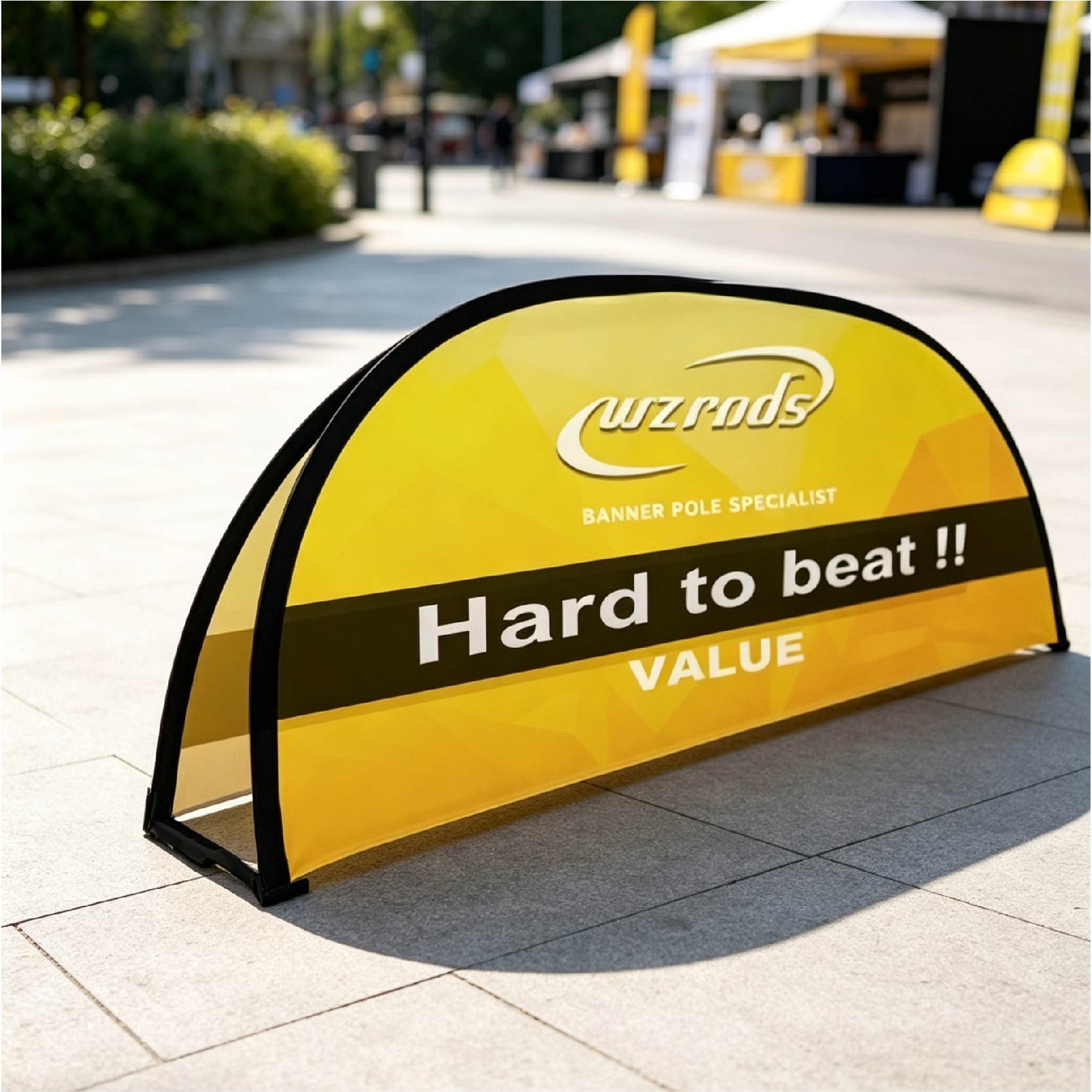
Most common use: the 10×10 inline booth. The arch creates a curved header that pulls eyes. Assembly takes 3 minutes — a junior staffer can do it while the booth lead checks into the hotel. The carrying bag (150 cm long) fits a taxi trunk. No drayage team, no waiting for a crate. On booth carpet, fill water bags from a restroom sink and the arch stands firm. At a Las Vegas show, a neighbor spent 25 minutes wrestling a heavy aluminum frame while ours was up and registering leads. Afterward he walked over and asked, “Where do I get those poles?”
5.2 Retail Displays and Product Launches
Retail environments love the curves. An arch frames a product table or promotion zone without blocking sightlines. The replaceable graphic lets a store manager swap sleeves for a seasonal sale — no need to order a whole new display. Carbon composite poles never scratch floors. They shrug off shopping cart bumps. No rust when floor‑cleaning machines leave moisture. Aluminum pits; carbon composite ignores it.
5.3 Event Gates and Registration Entrances
For a race start line, VIP entrance, or registration gate, pair two arches to form a tunnel frame. One person can move and reposition the lightweight arch without help. Outdoors, add ground stakes through the foot base and heavy sandbags; the arch holds. That's the catch. I watched event organizers in Miami use four arch banners on a windy beach for a sports event entrance. They staked the feet and the arches survived a full day of 20‑mph gusts. Several aluminum arches bent that day.
6. Factory Process: How WZRODS Builds the Arch Banner
6.1 Pole Manufacturing and Quality Control
Prepreg carbon fiber sheets, rolled onto a mandrel, cured in an oven at a precise temperature ramp. After curing, each pole is sanded smooth and coated with a clear UV‑resistant finish. A random sample from every production lot goes into a bend test: fold 180° around a 6‑inch diameter mandrel, hold 10 seconds, release. The pole must return to within 2 mm of straight. Fail, and the lot is rejected. This is the test aluminum cannot pass.
6.2 Graphic Printing and Sewing
The graphic is printed on a wide‑format dye‑sublimation machine, then run through a heat calender to fix the ink. The sleeve is cut and sewn with reinforced pole pockets. Seams are double‑stitched (lock‑stitch), and the bottom edge includes a stabilizing‑bar pocket. Every graphic is inspected under a light table for registration alignment and color shift. The result: a crisp, durable graphic that holds its tension.
6.3 Packing and Shipping
Each kit goes into a custom polybag with a printed instruction card, then into a sturdy 600D polyester carry bag. The bag has a padded divider to prevent abrasion. For container shipping, several kits go into a master export carton; we recommend including the carry bag for end‑user convenience. The factory can blind‑ship directly to your customer with your branding on the bag.
7. Trends: The Shift to Lightweight Composite Displays
7.1 Sustainability and Less Material Waste
The exhibition industry is under pressure to cut waste. A display that lasts five years and uses 40% less material by weight than an aluminum equivalent reduces the carbon footprint. Carbon composite poles don’t end up in landfill after two years — they don’t kink. The replaceable graphic sleeve adds to that: only the fabric is swapped, not the whole frame. Event planners now include “equipment longevity” in sustainability scorecards, and the arch banner checks that box.
7.2 Modularity and Accessory Growth
The arch banner platform is expanding. WZRODS will release a connecting kit that joins two arches side‑by‑side to create a larger backdrop. A single‑sided base plate that mounts to a wall for retail use is also in development. Distributors who stock the arch banner now can sell add‑ons later, building customer loyalty with a modular system. This mirrors the pop‑up display approach — a core frame supports multiple graphic skins — with better rigidity and speed.
8. Upgrade Solution: Switching from Aluminum to Carbon Composite
8.1 Assess Your Current Fleet
Pull out all your aluminum arches. Roll each pole on a flat table. If it doesn’t roll smoothly, it has a permanent set. Mark those units for replacement. Tally how many you replace in a typical year. Add the freight cost you paid for each heavy shipment. That number is your baseline waste. Then run a pilot: order 5 WZRODS carbon composite arch banners. Send them to your toughest shows — tight setup times, airport travel, coastal humidity. Compare.
8.2 Phase Out Old Stock
In practice, Sell the still‑straight aluminum arches on the used‑display market. Use the proceeds to fund the new carbon composite order. Small exhibitors will buy used aluminum displays at half price, even with minor imperfections. For every new show you book, specify the carbon composite arch as the default. By season’s end, your fleet is converted, and your crew will wonder why you didn’t do this years ago.
8.3 Train the Team
Show the setup video to every installer. The 3‑minute assembly is intuitive, but a few tricks — how to roll the graphic sleeve without twisting, how to fill water bags quickly — make the difference. Stash a laminated quick‑reference card in the carry bag. Even a temp won’t mess it up. Once they feel the speed, they’ll never wrestle metal again.
9. Frequently Asked Questions
- What is the minimum order quantity (MOQ)?
- One piece. You can order a single unit as a trial. Easy to test before committing to volume.
- What is the price per unit?
- FOB price for the standard 2 m × 1 m arch banner is $42. That includes carbon composite poles, printed polyester graphic sleeve, and carry bag. Custom sizes or graphic adjustments may shift the price slightly.
- Can I get a free sample?
- WZRODS doesn’t offer free samples. Order one unit at the regular price, and it ships as a sample. Sample delivery time is typically 15–30 days, depending on customization.
- How long does shipping take?
- Standard production lead time is 15–30 days, plus transit. Air express (DHL/UPS) takes about 3–5 business days to most destinations. Sea freight to the US West Coast runs about 15 days, to Europe about 30 days. Compact packaging keeps express costs low.
- Is the graphic replaceable?
- Yes. The graphic is a separate printed polyester sleeve that slides over the poles. Order a replacement sleeve anytime, change the promotion, and reuse the frame indefinitely.
- How does the arch stand in wind outdoors?
- Base plates include grommets for pegging into grass or sand, and a pocket for water‑filled bags or sandbags. With 15 lbs of ballast per leg, the arch stays stable in gusts up to 25 mph. Always add more weight than the wind forecast suggests.
- What are the payment terms?
- WZRODS accepts T/T (bank transfer), L/C at sight, and Western Union. For larger orders, 30% deposit with balance before shipment is standard.
- Can I customize the size and shape?
- Light customization is supported. You can request different dimensions, extra height, or a specific arch curve (sharper or gentler). Graphic customization is fast: you supply the artwork, the factory prints it with dye‑sublimation.
- How do I clean the graphic?
- Wipe the polyester with a damp cloth and mild soap. No solvents. The fabric is waterproof; stains sit on the surface and wipe off. Roll loosely for storage to avoid creases.
- What if a pole gets damaged?
- Carbon composite poles are extremely tough. If a pole is cut with a sharp object, it can fail. WZRODS sells individual replacement poles at low cost. You can also request spare poles with your initial order.
- Is the arch banner suitable for back‑to‑back graphics?
- The standard arch banner is single‑sided. For double‑sided visibility, you need a second banner hung back‑to‑back or a custom frame. Ask the sales team about double‑sided options.
Order a sample. By the time you unroll the poles, the math will be obvious.
About the Author
Sarah Mitchell, Trade Show Consultant
B.A. Marketing, University of Texas; CTSM (Certified Trade Show Marketer)
Event marketing specialist with 200+ trade shows across 15 countries. Helps exhibitors cut setup costs by 30% through smarter hardware choices.
Reviewed by WZRODS Technical Team. Updated: 2026-07-05
 Comments (0)
No comments yet. Be the first to comment!
Leave a Comment
Related Products
Foldable Horizontal Square
Spider A frame
Toblerone Banner
Pyramid Banner
Tower Banner
Bean Banner
Cluster Balloon Kit
Swing Banner Stand
Burgundy Banner
Foldable Vertical Square
Related Articles
29kg Concrete Flag Base - The Complete B2B Buyer's Resource - WZRODS
WZRODS DY451B: 29 kg, HDPE shell, concrete core. Stackable, portable, rust-proof. FOB price US$5.75–$6.85 at MOQ 2 units. Those numbers look unremarkable. Factor in landed cost—import duties lower than aluminum’s under relevant HTS codes, freight savings from less weight per unit of stabilizing mas
Wide Tube Cross Base - The Complete B2B Buyer's Resource - WZRODS
The Wide Tube Cross Base, manufactured by Wzrods in Shandong, China, solves one problem: reliable stability for poles under three meters, without the freight costs and warehouse footprint that heavier alternatives demand.
Rectangular Pipe Cross Base - The Complete B2B Buyer's Resource - WZRODS
The pipe cross flag base is a cross of rectangular steel pipe, powder‑coated, weighing 1.3 kg and spanning 78 cm across its arms. Its center holds a C‑ring shaft that lets the flag rotate with the wind.
X-Shape Backpack Banner - The Complete B2B Buyer's Resource - WZRODS
Economic Cross Base - The Complete B2B Buyer's Guide- WZRODS
When you buy an economic cross base—something like the Wzrods DM‑9, a 77 cm‑long, 1.3 kg iron cross—forget “economic” as a synonym for “cheap.” It means value-engineered.
Triangle Display - The Complete B2B Buyer's Resource - WZRODS
In practice, I got a call from a distributor in Singapore. His client had staged a brand activation at Marina Bay. A squall hit.
Pop-Up Banner Stand - The Complete B2B Buyer's Resource - WZRODS
The banner leaned. Sagged like a bad hammock. Wind off the lake caught the printed polyester panel, twisted the aluminum pole, toppled the whole thing onto wet
360° Portable Display - The Complete B2B Buyer's Resource - WZRODS
I remember standing in a convention center in Guangzhou about eight years ago, watching a distributor from Dubai unpack a shipment of aluminum flag stands.