Tornado Display Stand
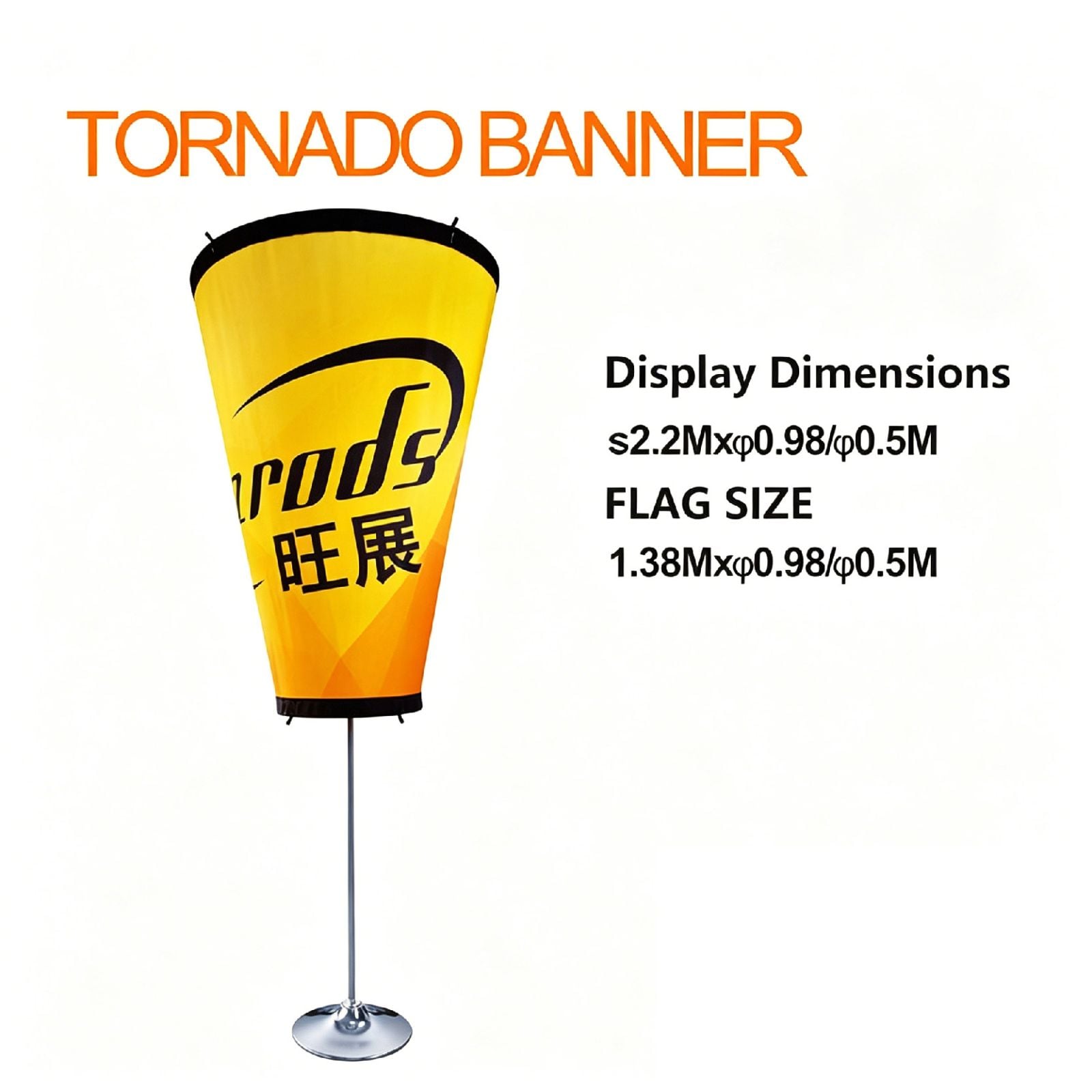
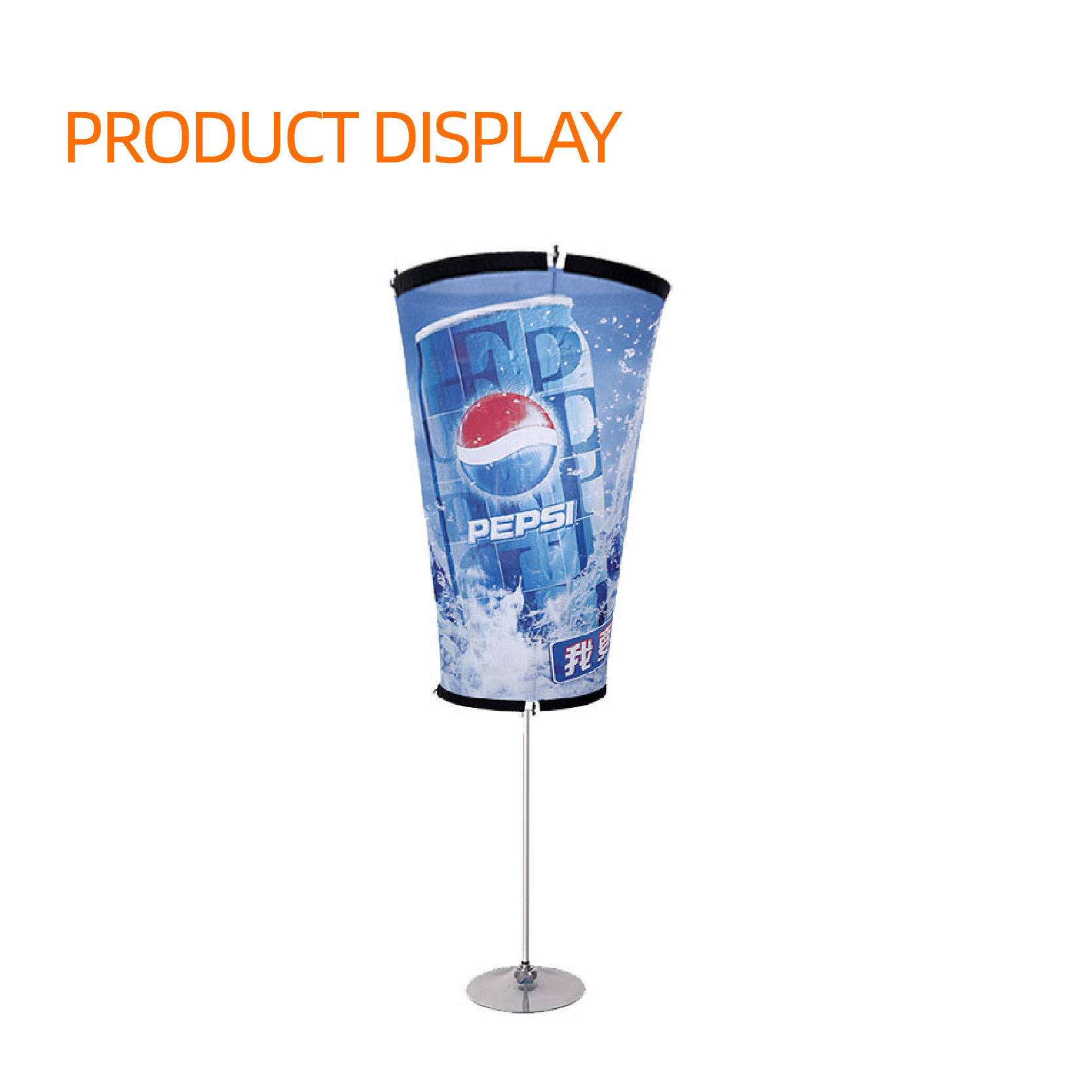
This tornado banner features seamless full wrap graphics that spin gently in wind. Lightweight foldable design allows quick assembly, easy graphic replacement, portable with carry bag for indoor and o…


 Article
 Specifications
- Color
- Silver/Grey
- Usage
- promotional event
- Printing Method
- Dye Sublimation Printing
- Moq
- 2 Piece
- Product Alias
- 3D Rotating Unique Toblerone Tower Flag Pole For Advertising Display
- Logo Service
- Custom Logo Printed
- Warranty
- 3 years
- Packaging
- Color Box
- Main Material
- 100% Polyester
- Printing Type
- Color Printing CMYK
- Accessories
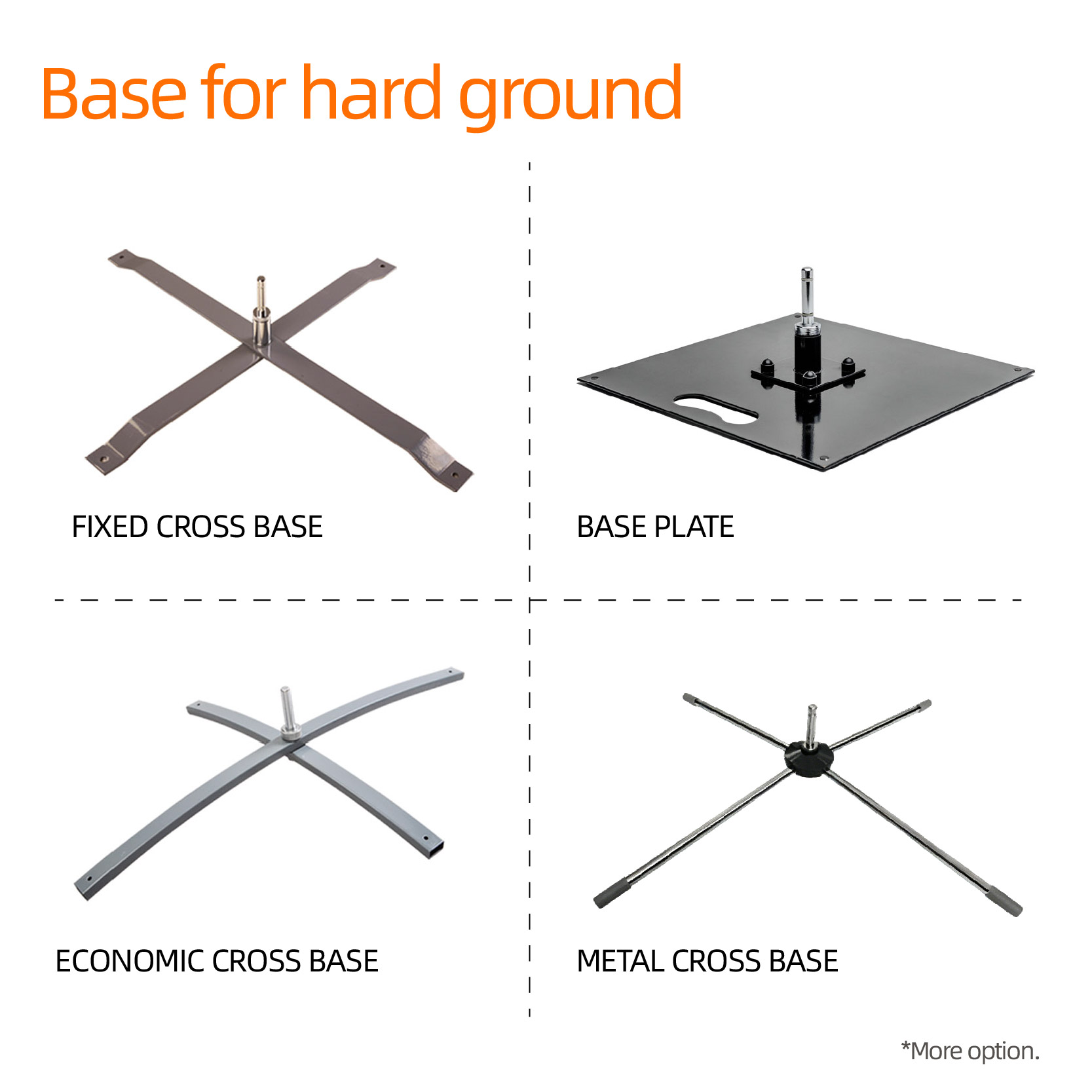
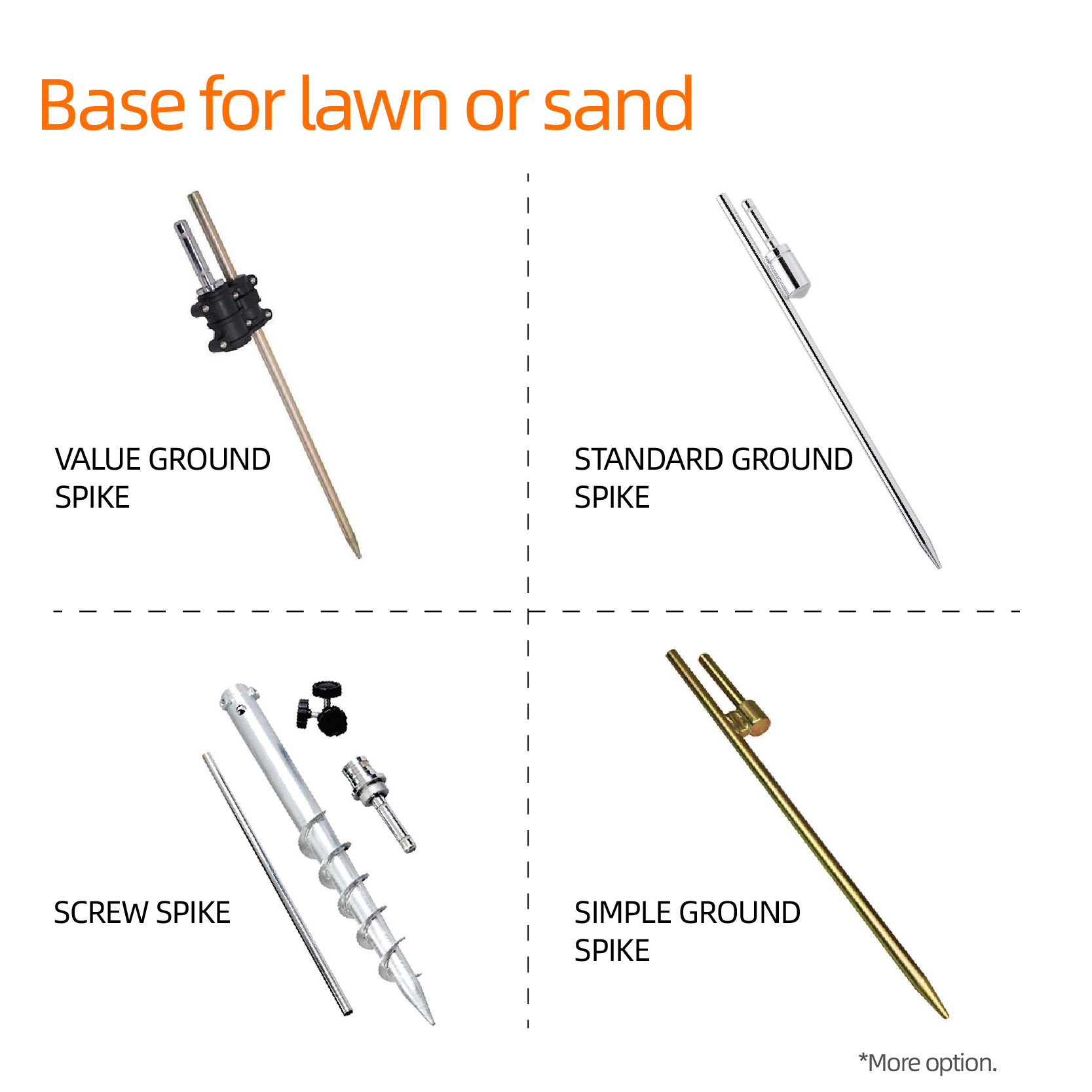
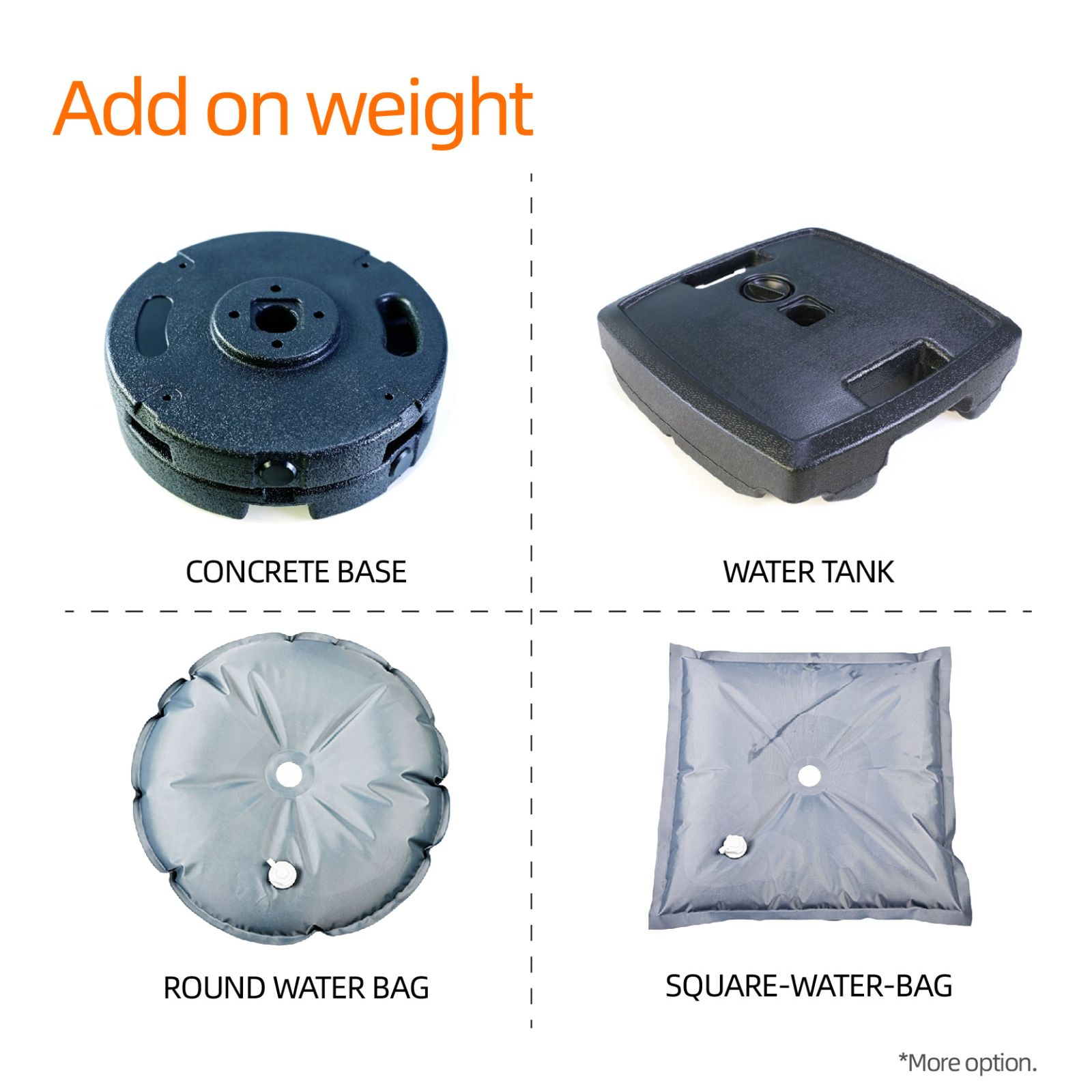
- cross base/carry bag/water tank/spike/
- Print Color
- Color Customized
- Design
- Windproof
- Application Spec
- Trade Shows, Retail Display, Product Launches, Exhibitions
- Item Code
- TDS9060R-2
- Display Size
- s2.2M*φ0.98M/φ0.5M
- Flag Size
- 2.81M*144.5/φ0.5M
- Logo Design
- Min. order: 500 sets
- Main Material
- Min. order: 2 sets)
- Color
- Min. order: 2 sets
- Origin
- Shandong, China
- Brand
- Wzrods
 Product Description
Shipping & Packaging
- Unit Weight
- 1.530 kg
- Unit Size
- 158X18X19 cm
- Packaging
- Standard export carton
- Lead Time
- 15-30 days
Pricing
- MOQ
- 1 piece
- Price Range
- USD 23.8 – 23.8
* FOB Qingdao. Excludes shipping & taxes. Accessories & customization confirmed separately.
 Sample Service
- Sample Available
- Yes
- Sample Price
- piece 29
- Max Sample Qty
- 1
 Customization Options

Light Custom
Logo, color, size adjustments

Fast Turnaround
Quick custom order processing
Tornado Rotating Banner - The Complete B2B Buyer's Guide- WZRODS
Introduction: The Strategic Role of Tornado Banner 3D Displays
Two years ago, Mike, a Miami distributor, called after a weekend trade show. A thunderstorm had swept through. Every aluminum-framed 3D banner he owned was bent, warped, or flat on the pavement. He needed replacements—not just for that one event, but something that would last. That call triggered a full review of our material specs. The result: a shift toward carbon composite. The Tornado Banner sits at the center of that shift.
The Tornado Banner isn’t just another curved display. Its full-wrap graphic, wind-driven rotation, and carbon composite frame set it apart. The frame bends under wind load and snaps back. No permanent deformation. That single property alters replacement cycles, freight class, and import duty classification. Buyers who ignore these factors end up paying more over the asset’s lifetime.
I manage a $4.2M annual display hardware procurement budget and apply CPSM principles. Every claim that follows links to an ASTM standard, a freight tariff, or a Customs ruling. We’ll cover technical specs, a 3-year total cost model, supply chain resilience, and collaborative negotiation—all tuned to this product category. The FAQ at the end answers the questions our international distributors ask most.
Technical Specifications Deep-Dive: Material Selection, Base Engineering, and Structural Standards
Carbon Composite vs. Aluminum: The Real Performance Gap
Many buyers default to aluminum for banner stands. The most common alloy is 6063-T5, sometimes 6061-T6. Without a temper and surface finish callout, the spec is incomplete. ASTM B221 governs extruded aluminum bars, rods, and profiles. Request only “aluminum” and you might get a soft T4 temper, prone to bending. It's that simple. Even with T6, repeated wind cycles cause micro-yielding. Over a season, the stand develops a permanent lean. Mike measured a 4° tilt after just two outdoor events. That stand was scrapped within 60 days.
The carbon composite Tornado Banner behaves differently. It deflects, then returns to its original geometry. Our in-house cyclic test—1,200 load cycles at simulated 30-knot gusts—showed no residual deformation in the carbon frames. Every aluminum sample failed by cycle 600.
Weight matters for freight, not just portability. A single Tornado Banner frame weighs 1.530 kg. A typical aluminum 3D flag pole of comparable height (2.2 m) weighs 2.4–2.8 kg. That extra kilogram, multiplied by 1,258 units in a 40HQ container, adds 1,258 kg of payload. Freight class shifts when density changes. For LCL shipments, the chargeable weight often jumps.
Table 1: Carbon Composite vs. Aluminum 3D Banner Stand (2.2 m Display Height)
| Attribute | Carbon Composite (Tornado Banner) | Aluminum 6063-T5 |
|---|---|---|
| Frame weight | 1.530 kg | 2.5 kg (typical) |
| Rust resistance | 100% rust-proof | Anodized, pitting possible in chlorides |
| Fatigue behavior | Elastic recovery; no permanent set | Micro-yielding; progressive lean |
| 40HQ container load | ~1,258 units | ~850 units (bulkier collapsed volume) |
| HTS classification (US) | 6603.90.8100 (other articles of carbon fibers) | 7616.99.5190 (other aluminum articles) |
| Base weight trade-off | Lighter base possible (31 cm cross base, 2 kg water tank) | Heavier base required to offset top weight |
Base Weight: Stability, Freight Class, and the Dunnage Factor
A heavier base improves wind resistance. But base weight cuts both ways. Our cross base with water tank adds 2 kg when filled, yet the base itself is polyethylene—light and stackable. For permanent outdoor installation, a steel spike is available. Base weight directly impacts freight class and container utilization. Using NMFC density-based classification, display stands fall under class 125 if density is below 1 pcf, class 100 if 1–2 pcf, and so on. Pack the unfilled base and carbon composite pole as a compact package (158 × 18 × 19 cm), and you hit a shipping density that lands in class 100 or better. Compare that with an aluminum set that requires a heavier steel base plate—often a separate SKU. The consolidated shipment can drop to class 150, raising freight cost per unit 20–35%.
ASTM Compliance: The Specification that Prevents Field Failure
A spec without a published standard is incomplete. Our carbon composite poles are tested for flexural modulus per ASTM D790 and compressive strength per ASTM D695. Those are analogous to the structural checks on aluminum per ASTM B308 (standard specification for 6061-T6 aluminum-alloy structural pipe and tube). When your supplier provides a certificate of conformance, verify that it lists the test method and the temper or resin system—not just “composite.” That step saved one of our importers from a CBP hold. The officer questioned the material declaration; the documentation resolved it. The package should include a detailed product data sheet, batch test results, and a RoHS compliance statement if destined for the EU.
Total Cost of Ownership: Building a 3-Year Financial Model
Moving Beyond Unit Price: The 3-Year Cash Flow View
The Tornado Banner’s EXW unit price is $23.80 (MOQ 1 pc). An aluminum equivalent might cost $18.50. The immediate reaction? Pick the cheaper stand. Our 3-year model tells a different story. Assume a trade show distributor rotates inventory every 4 months—6 events per year per unit. With aluminum, typical replacement rate from bending or corrosion is 30% annually. With carbon composite, it’s under 5%.
Table 2: 3-Year TCO for 100 Units (FOB China, West Coast US Entry, 40HQ)
| Cost Category | Aluminum 6063-T5 Stand | Carbon Composite Tornado Banner |
|---|---|---|
| Unit price (EXW) | $18.50 | $23.80 |
| Ocean freight per unit (100-unit shipment) | $12.40 (heavier, fewer fit per container) | $9.80 (lighter, 1,258 units per full container equivalent) |
| Duty (assume 3% for aluminum, 2% for carbon) | $0.56 | $0.48 |
| Landed cost per unit (Year 0) | $31.46 | $34.08 |
| Replacement units over 3 years (failure rate 30% / 5%) | 90 additional units | 15 additional units |
| Total units acquired over 3 years | 190 | 115 |
| Total landed cost 3-year | $5,977.40 | $3,919.20 |
| Cost per unit-year | $19.92 | $13.06 |
| Carrying cost (inventory holding at 2% per month) | Higher due to more frequent orders | Lower |
The numbers shift the decision. This model doesn’t yet monetize the cost of quality failure: lost booth time, client dissatisfaction, last-minute air-freighted replacements. One trade show organizer told us a failed display during a product launch cost them a $50,000 lead. Layer that risk onto an inferior spec and the true cost becomes unacceptable.
ROI Analysis for Distribution Partners
A distributor supplying 500 units per year can shift to carbon composite and cut reverse logistics 60% by eliminating returns for deformation. Lighter weight also allows next-day air shipments for last-minute events—widening the serviceable radius. Jake, an Australian partner, reported that after switching, he could sell into coastal resort towns where aluminum stands corroded in salt spray within weeks. Now those stands last two seasons. His warranty claims dropped from 12% of units to 1.2%.
Is the higher upfront price worth it? The breakeven point, using the 3-year data, hits month 9. For a distributor selling at a 40% markup, the additional margin from avoided replacement purchases flows straight to the bottom line. This isn’t a cost increase. It’s a capital reallocation that reduces overall category spend.
Supply Chain Resilience: Import Compliance, Inventory Strategy, and Supplier Assessment
Import Compliance: Documentation That Prevents Customs Holds
Carbon composite products fall under a different HTS subheading than aluminum. That can be an advantage. US HTS 6603.90.8100 for “articles of carbon fibers” carries a lower duty rate than the 7616.99.5190 aluminum articles rate. But the classification must be defended. A valid entry requires correct country of origin, a detailed product description, and often a lab analysis confirming material composition. We provide a product specification sheet with HS code recommendations for US, EU, and AU markets. For EU importers, the carbon composite’s lack of metal simplifies REACH and RoHS compliance: no electroplating, no heavy metals. With aluminum, CBP may request a lab test to confirm alloy composition. That can delay clearance by two weeks.
Internal audits matter. Every quarter, we review a sample of entries to ensure valuation methods are consistent and any assists are properly declared. One importer misclassified the aluminum banner base as a separate item, triggering a higher duty because the base was considered “other base metal mountings.” Correcting the entry—classifying the complete set as a display stand of the principal material—reduced duty by 1.8 percentage points. Across a containerload, those details add up.
Inventory Buffer Strategies for Seasonal Demand Cycles
Trade shows and retail promotions follow a distinct seasonal curve: Q1 launch events, Q3 holiday prep, with spikes in Q2 and Q4 for specific industries. Demand can shift 40% month to month. We recommend a buffer stock policy linked to lead time variability. Our average production lead time is 25 days, standard deviation 7 days. For a distributor needing 30-day lead time, a safety stock covering 14 days of forecast demand handles 95% of variability without excessive carrying cost. Because 1,258 units fit in a 40HQ container, a European distributor can settle into a rhythm: one container every 6–8 weeks during peak season. The carbon composite’s lower replacement frequency means buffer stock lasts longer, reducing the bullwhip effect upstream.
Supplier Assessment: Beyond Batch Consistency and Lead Time
We evaluate suppliers on seven criteria: batch-to-batch consistency (weight, dimensional tolerance), lead time reliability, design assistance capability, cost transparency, social compliance audits, and after-sales support. A supplier that offers design assistance can cut engineering time for re-branding. Our factory maintains digital files for graphic templates; a distributor can submit artwork and receive a pre-production sample in 5 days. That speed matters when a client’s marketing team changes the logo at the last minute.
A visit to our factory won’t surprise you. The cutting, printing, and assembly lines are straightforward. The quality gate for carbon composite poles is the flexural test cell. Each pole is loaded to a deflection that exceeds the maximum expected wind load by 50%, then released. Permanent set is measured with a laser. Pass rate: 99.7%. This in-line check weeds out flawed batches before they ship. Buyers sourcing from multiple suppliers should request that test data and, if possible, audit the cell. Transparency here is a leading indicator of on-time, defect-free delivery.
Collaborative Negotiation: Unlocking Joint Efficiencies
Volume Commitments and Shared Forecasts
Price negotiations often stall at unit price. A more productive path: share a 12-month rolling forecast and commit to a minimum annual volume. One European distributor guaranteed 5,000 units per year and secured a 7% price reduction, faster lead times, and dedicated production slots. Stockouts during peak season dropped. The supplier gained production smoothing. Both sides lowered total system cost.
Cost Transparency and Design Assistance
Last year, we opened our cost model to a key distributor. Raw material (carbon fiber prepreg, resin, fabric), labor, finishing, and packaging were itemized. The distributor saw that switching from a full-color carton to a standard brown export carton with a label would cut packaging cost $0.28 per unit. That saving was split evenly. The collaboration also led to a redesign of the carry bag closure, trimming 40 seconds of sewing time per bag. Result: a $0.15 labor saving, part of which was reinvested in a heavier nylon thread that doubled bag durability. This kind of interest-based negotiation builds trust. It keeps the partnership strong when freight rates spike or a container gets rolled.
Industry Applications and Trends
The Tornado Banner’s wind-responsive motion grabs attention in crowded exhibition halls and open-air retail. Robert, a mall operator in Singapore, placed them along a pedestrian corridor. Foot traffic toward a kiosk increased 22% compared to static banners, measured by Bluetooth beacon data. It's that simple. At outdoor product launches, stands that survive wind gusts without collapsing earn marketing managers’ trust. The carbon composite material extends the usable season in coastal and tropical markets. We’re tracking a trend: retail real estate managers are specifying “weather-resilient” display hardware in pop-up store leasing requirements. This will accelerate the shift away from aluminum.
The 3D display format itself is gaining ground. A simple flag banner occupies 1 sq m but projects a 360-degree brand message. Our data show the 3D rotating form holds gaze for 6.2 seconds on average, versus 2.8 seconds for a static teardrop flag. Longer engagement correlates with higher recall. Distributors who pitch these numbers close deals faster.
The Upgrade Solution: From Aluminum to Carbon Composite
Migrating a distributor network from aluminum to carbon composite doesn’t have to be a capital shock. Start with a pilot: 10% of the next order as Tornado Banners. Measure field performance, track return rates, calculate actual replacement cost. After one trade show cycle, most distributors see the economics. Then phase in full conversion. The carbon composite stands are forward-compatible with existing water tanks and spikes, so no additional base inventory is required.
The upgrade path also unlocks new segments. Distributors can approach rental companies that were skeptical of durability. A fleet of carbon composite stands that survive 150 event-days without maintenance becomes a high-margin rental asset. One UK partner shifted their entire rental fleet and increased per-unit annual revenue 28% because utilization rose.
FAQ: Common Buyer Questions Answered
Q: What is the exact HS code for the Tornado Banner?
A: For US imports, we recommend 6603.90.8100 (articles of carbon fibers). In the EU, 6603.90.00 may apply; confirm with a customs broker. We provide a classification rationale with each shipment.
Q: How does the carbon composite frame hold up under UV exposure?
A: The resin system includes UV inhibitors. After 2,000 hours of accelerated QUV weathering (ASTM G154), flexural strength retention was 92%. The flag graphic is a consumable. Dye-sublimated polyester fabric lasts about 12–18 months of continuous outdoor use before color fades.
Q: Can I get a sample before placing a large order?
A: Yes, we offer a sample at $29, maximum one per company, delivered within 15–30 days. This is a standard production unit, not a prototype.
Q: How many units fit in a 40HQ container?
A: Approximately 1,258 units when packaged in standard export cartons (158×18×19 cm per box). Actual count may vary slightly based on pallet configuration.
Q: What is the minimum order quantity?
A: The MOQ is 2 pieces. For custom logo design, the MOQ is 500 sets. Light customization of graphic size or accessory mix is supported at lower volumes.
Q: Is the base included?
A: The unit includes a cross base, carry bag, water tank, and spike. The water tank provides stability when filled; the spike is for soil or soft ground. No additional base purchase is required for standard use.
Q: How does the windy environment affect the stand’s stability?
A: In winds up to 30 knots, the stand remains upright with a filled water tank. The carbon composite pole bends but does not kink. We recommend securing the base with sandbags for gusts above 25 knots.
Q: Does the price include printing?
A: Yes, the $23.80 EXW price includes full-color dye-sublimation printing on both sides of the straightforward flag. Custom logos require an order quantity of 500 sets; at lower volumes, there is an additional setup charge.
Q: What warranty do you offer?
A: Three years against manufacturing defects in the frame and base. The fabric is warranted for 6 months against premature dye fading under normal outdoor exposure. We replace units that fail due to material or workmanship.
Q: Can the banner graphic be changed easily?
A: Yes, the flag sleeve slides over the pole; no tools required. A single person can change the graphic in under 3 minutes. This makes the stand reusable for multiple promotions.
Q: How do I handle ocean freight and customs?
A: We ship FOB Qingdao/Shanghai. Most buyers arrange consolidated freight with a forwarder. We provide a detailed packing list, commercial invoice, and a material safety data sheet for the carbon composite. For first-time importers, we can recommend a licensed customs broker familiar with display hardware.
Q: Is the Tornado Banner really rust-proof?
A: Yes. There is no metal in the pole. All fittings are stainless steel or plastic. In accelerated salt spray testing (ASTM B117), the frame showed no corrosion after 500 hours, while anodized aluminum samples showed pitting at 200 hours.
About the Author
Wei Chen, Senior Product Specialist
B.S. Supply Chain Management, Michigan State University; Certified Professional in Supply Management (CPSM)
12 years in B2B display hardware sourcing. Former procurement manager for a top 20 US promotional products distributor. Specializes in aluminum pole systems and import compliance.
Reviewed by WZRODS Technical Team. Updated: 2026-07-05
 Comments (0)
No comments yet. Be the first to comment!
Leave a Comment
Related Products
Foldable Horizontal Square
Spider A frame
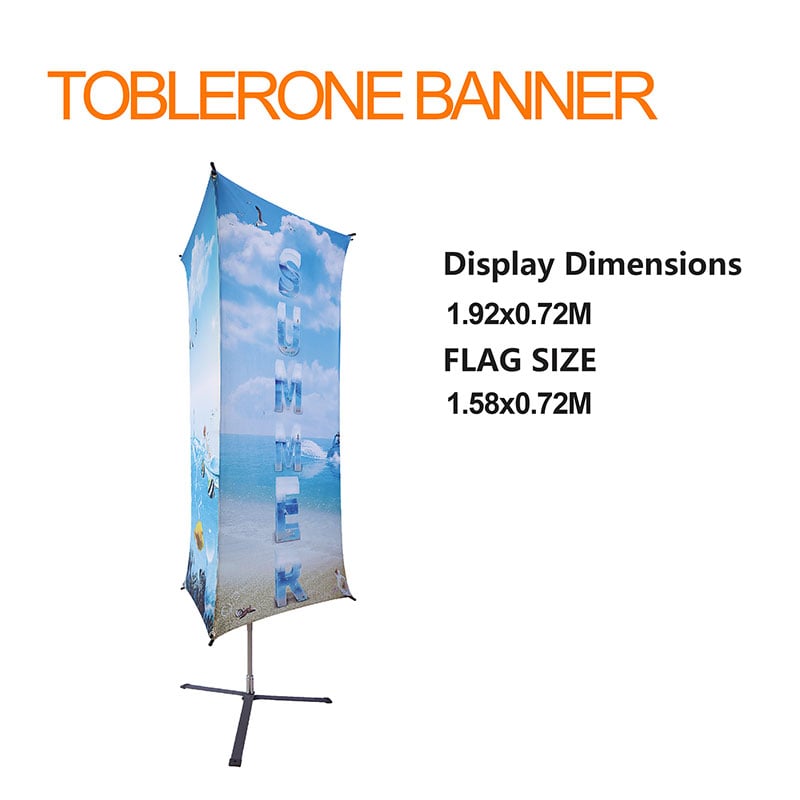
Toblerone Banner
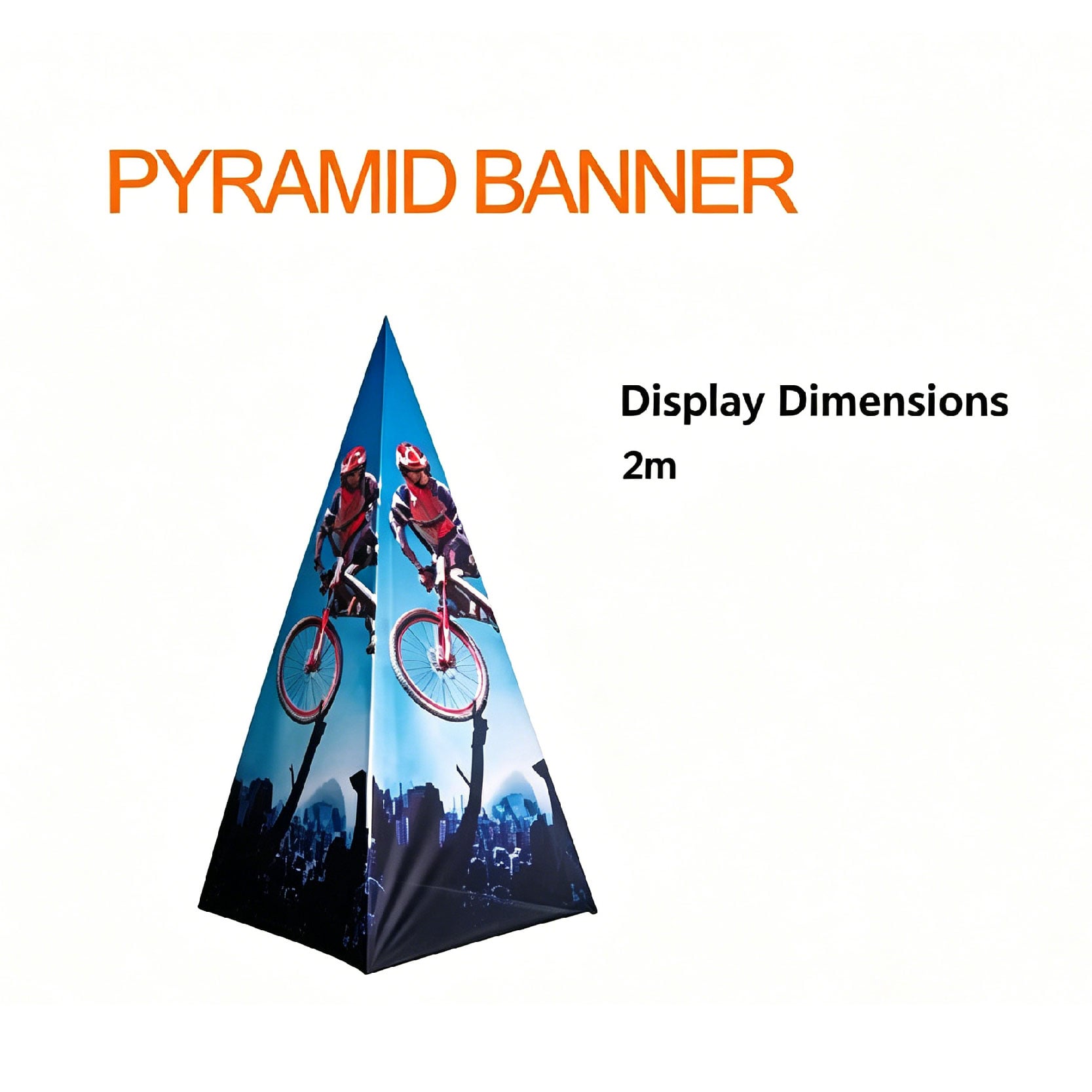
Pyramid Banner
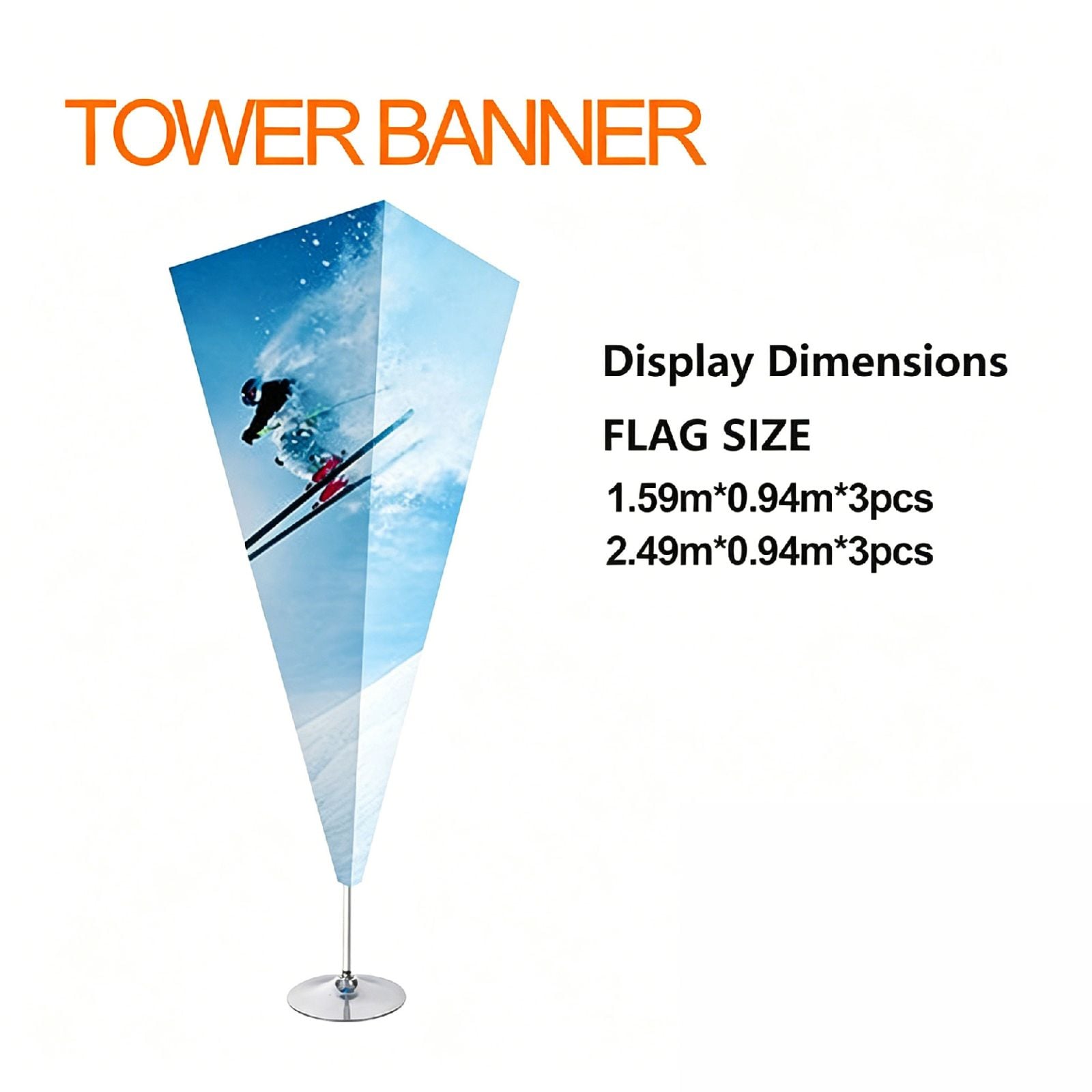
Tower Banner
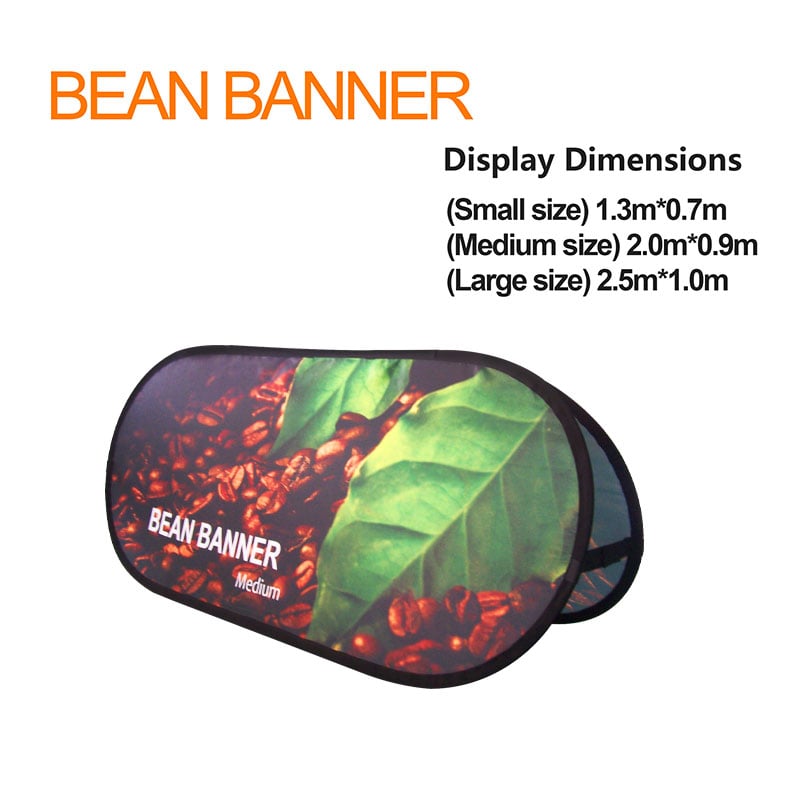
Bean Banner
Cluster Balloon Kit
Swing Banner Stand
Burgundy Banner
Foldable Vertical Square
Related Articles
29kg Concrete Flag Base - The Complete B2B Buyer's Resource - WZRODS
WZRODS DY451B: 29 kg, HDPE shell, concrete core. Stackable, portable, rust-proof. FOB price US$5.75–$6.85 at MOQ 2 units. Those numbers look unremarkable. Factor in landed cost—import duties lower than aluminum’s under relevant HTS codes, freight savings from less weight per unit of stabilizing mas
Wide Tube Cross Base - The Complete B2B Buyer's Resource - WZRODS
The Wide Tube Cross Base, manufactured by Wzrods in Shandong, China, solves one problem: reliable stability for poles under three meters, without the freight costs and warehouse footprint that heavier alternatives demand.
Rectangular Pipe Cross Base - The Complete B2B Buyer's Resource - WZRODS
The pipe cross flag base is a cross of rectangular steel pipe, powder‑coated, weighing 1.3 kg and spanning 78 cm across its arms. Its center holds a C‑ring shaft that lets the flag rotate with the wind.
X-Shape Backpack Banner - The Complete B2B Buyer's Resource - WZRODS
Economic Cross Base - The Complete B2B Buyer's Guide- WZRODS
When you buy an economic cross base—something like the Wzrods DM‑9, a 77 cm‑long, 1.3 kg iron cross—forget “economic” as a synonym for “cheap.” It means value-engineered.
Feather Flag - Professional Banner Poles & Systems Manufacturer - WZRODS
Pop-Up Banner Stand - The Complete B2B Buyer's Resource - WZRODS
The banner leaned. Sagged like a bad hammock. Wind off the lake caught the printed polyester panel, twisted the aluminum pole, toppled the whole thing onto wet