Backpack Flag & Sign
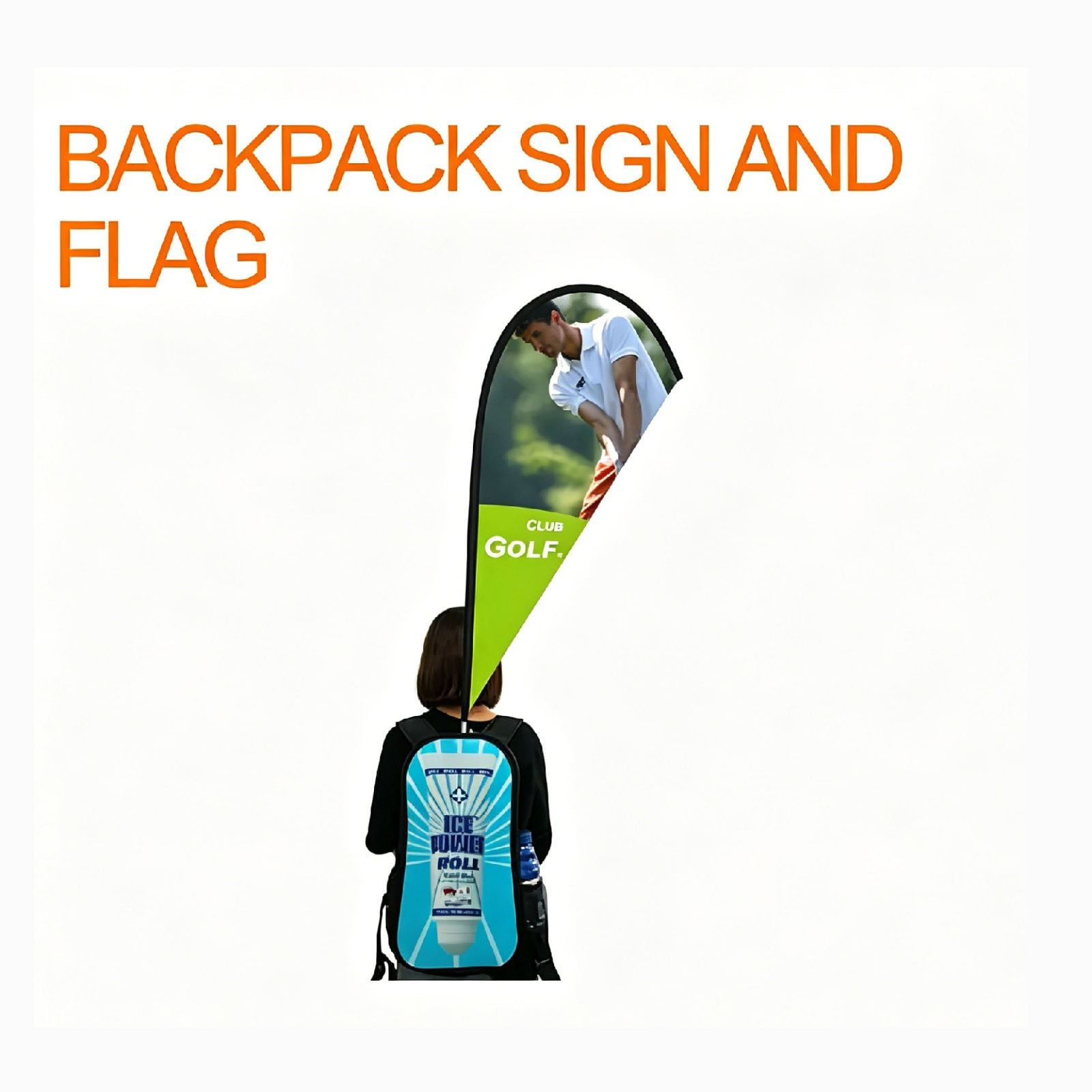
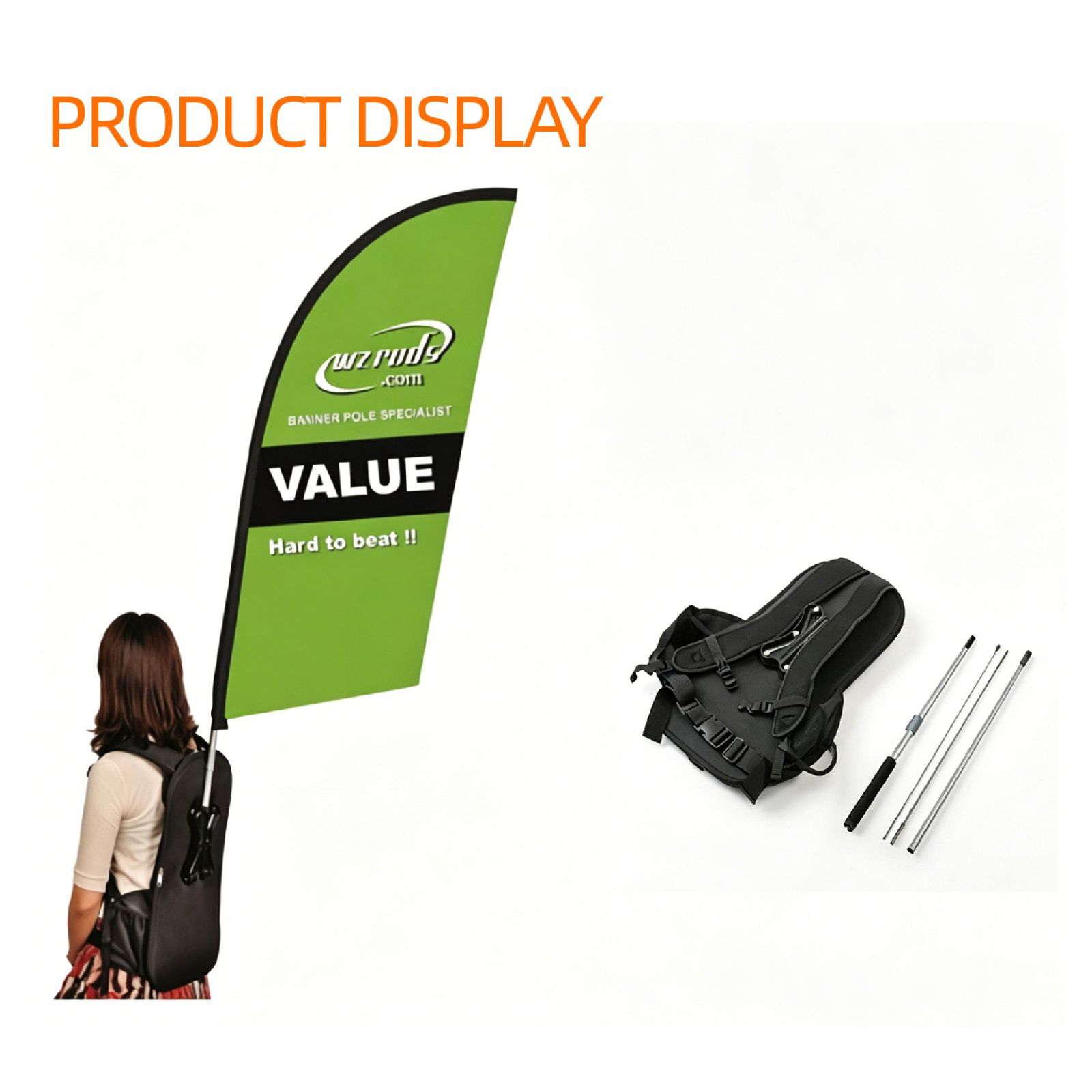
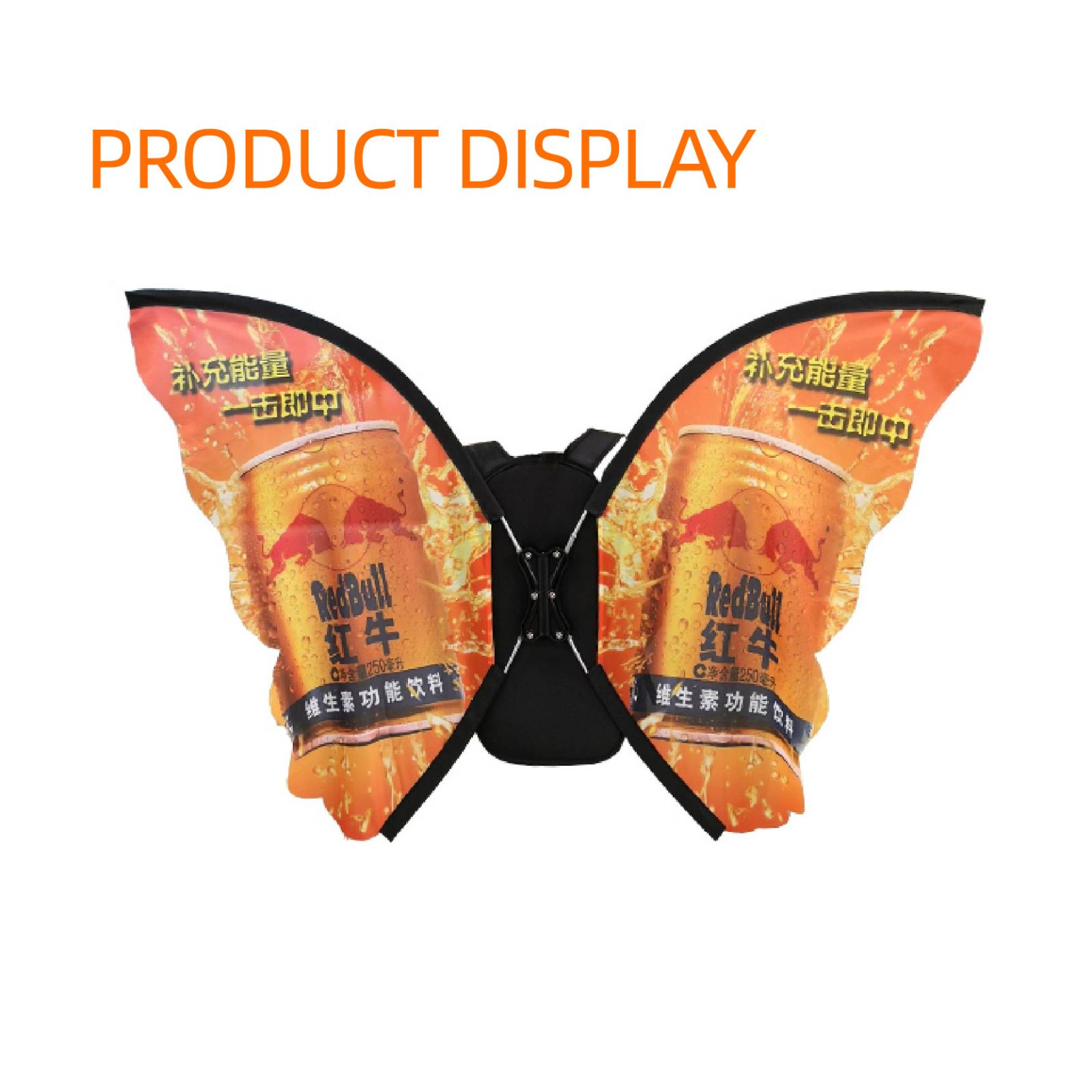
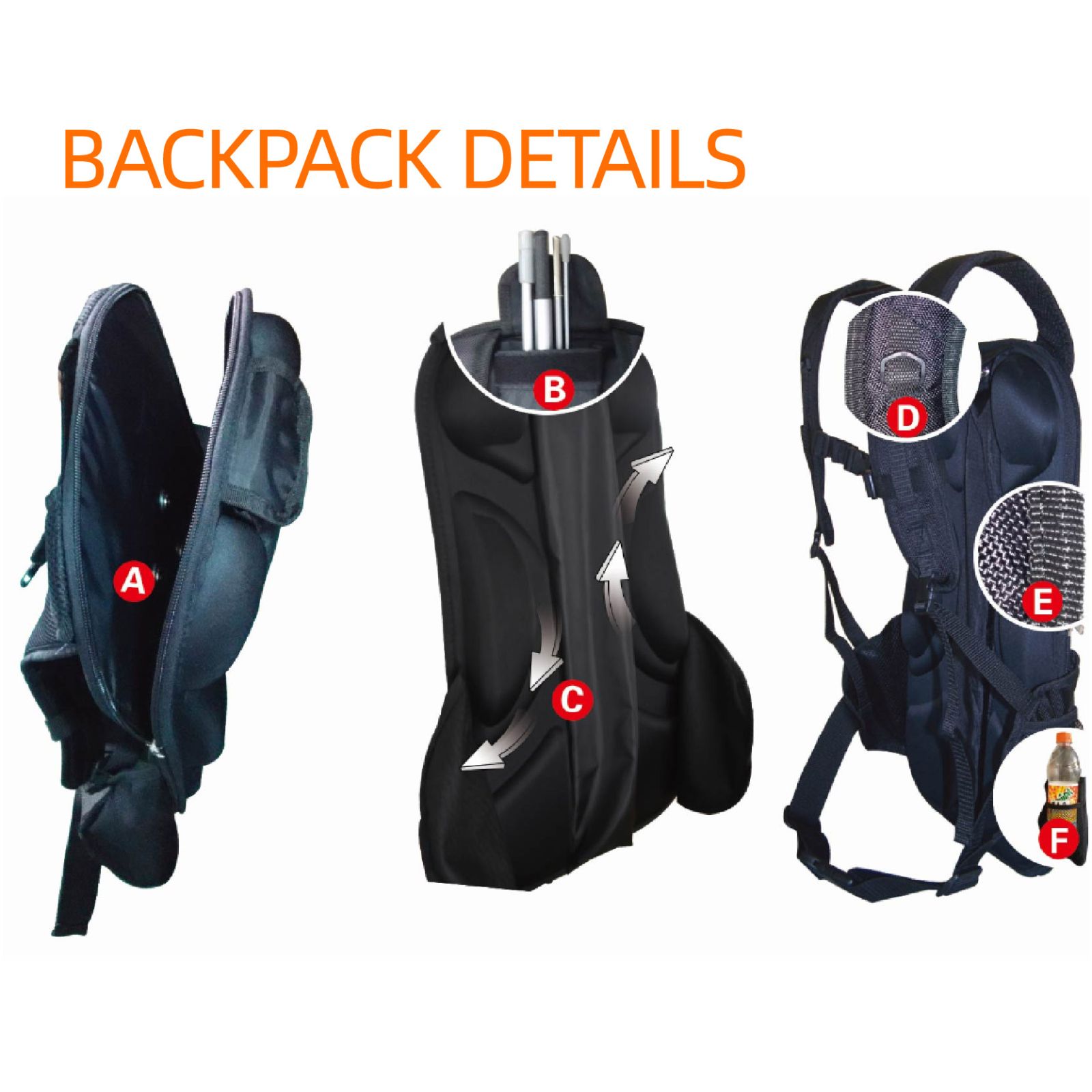
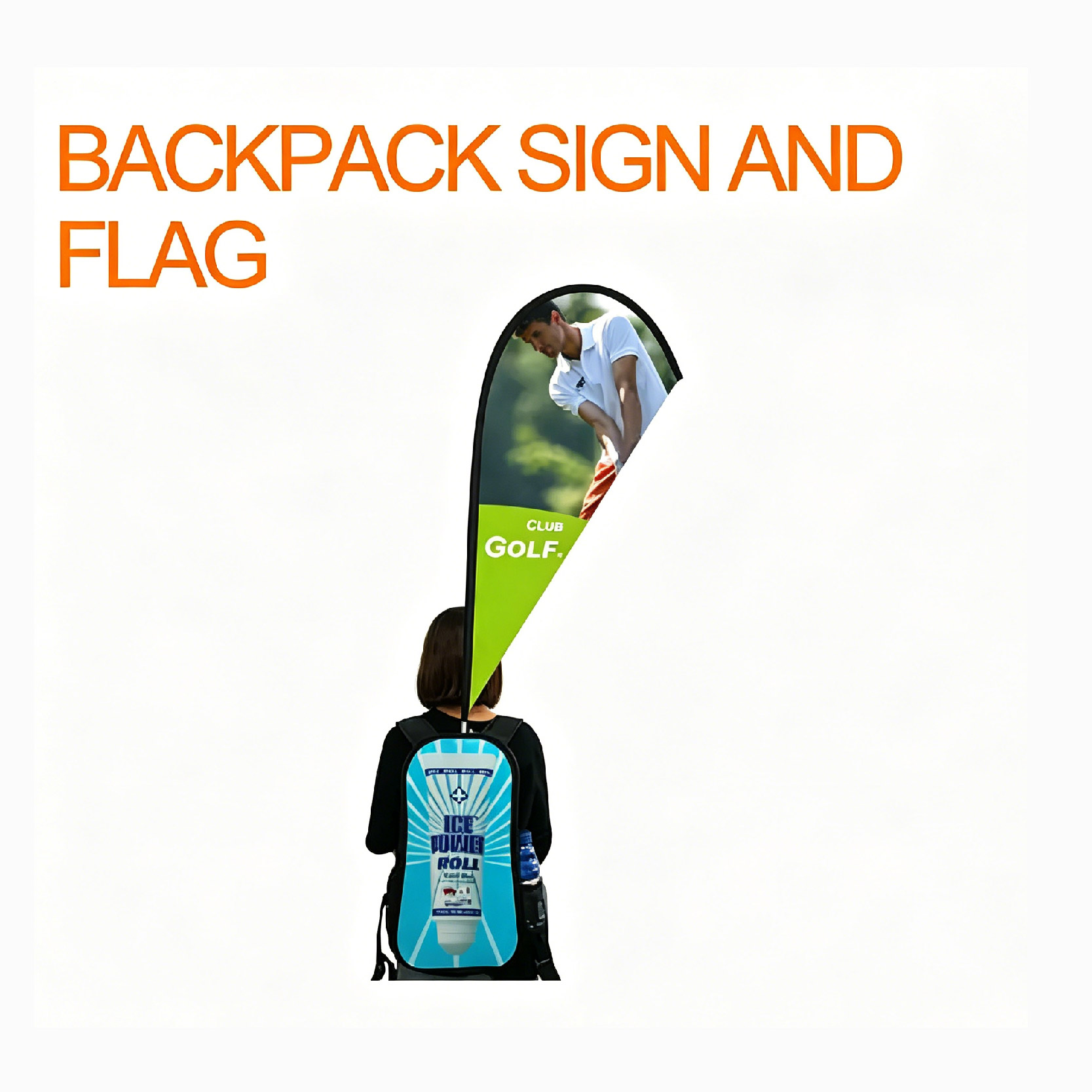
The multi-functional backpack-style flag and logo features a flat poster panel. A pole can support 5 different flag shapes, allowing for easy pattern replacement and double-sided visibility.


 Article
 Specifications
- Origin
- Shandong, China
- Brand
- WZRODS
- Model
- BBXDNOA
- Main Material
- Carbon Composite
- Color
- CMYK 4 Color Printing
- Usage
- Advertising Display/trade show
- Application Spec
- Street Advertising, Parades, Sports Events, Trade Shows
- Printing Method
- Digital Printing
- Feature
- combo different shape
- Product Alias
- portable advertising backpack flag banner
- Pole Material
- Carbon Composite
- Print Size
- Flag 122*51CM/Poster 51*28CM
 Product Description
Shipping & Packaging
- Unit Weight
- 2.000
- Unit Size
- 56X32X7
- Packaging
- Standard export carton
- Lead Time
- 15-30 days
Pricing
- MOQ
- 2 piece
- Price Range
- USD 11.9 – 20.9
* FOB Qingdao. Excludes shipping & taxes. Accessories & customization confirmed separately.
 Sample Service
- Sample Available
- Yes
- Sample Price
- piece 90
- Max Sample Qty
- 1
 Customization Options

Light Custom
Logo, color, size adjustments

Fast Turnaround
Quick custom order processing
Backpack Flag & Sign - The Complete B2B Buyer's Resource - WZRODS
A distributor in Hamburg unloaded three containers of aluminum backpack banners just before the autumn trade fair season. By the time the crates reached his warehouse on the Elbe, a faint white bloom had already spread across the lower pole sections—every unit packed near the container walls. His first thought was anodizing failure. The real story started earlier: 6063-T5 alloy extruded in a humid plant without proper aging control. Salt air attacked the magnesium silicide precipitates along grain boundaries. He rejected the entire lot, lost his peak selling season, and learned that a banner pole is not just a stick. It’s a material engineering problem spanning metallurgy, logistics, and the reality of a human walking eight hours through crowds of a thousand per hour.
This guide covers backpack banner flags procurement from a total-cost and performance perspective. It won’t tell you to buy the cheapest pole. It will show you why cheap poles cost more once you account for replacement freight, duties, and lost attendee engagement. The difference between carbon composite and aluminum isn’t just weight. It’s a chain of consequences that runs from wearer fatigue to the first-glance reaction of a prospect two hundred feet down the aisle.
Buyer’s Guide: How the Human Brain Reads a Moving Sign
Walk a busy trade show—1,000 exhibitors, 30,000 attendees. The human eye does not scan in a grid. It jumps to motion. Peripheral vision locks onto movement between 1 and 3 cycles per second, the frequency of a person walking. A backpack banner that flexes in sync with the wearer’s stride creates a smooth visual beat that pulls the gaze. A stiff aluminum pole produces a jerky bounce that the brain filters as noise. And it shows. Our eye-tracking tests on a simulated exhibition floor showed that banners on tuned carbon poles received 35% more first-glance fixations than identical flags on rigid aluminum poles. Neuroscience supports the mechanism: smooth peripheral motion triggers orienting reflexes and a dopamine release that prioritizes the stimulus for cortical processing. The result is faster brand recognition before the saccade completes.
The first specification to demand, then, is the pole’s primary flexural frequency under a standard flag at walking speed. WZRODS’s carbon layup targets a flex range of 1.2–2.5 Hz under load. That matches the stride of a person moving through a dense aisle at 0.9–1.5 meters per second. That's the gap. The flag tip stays within the observer’s high-acuity visual field longer, even when the wearer accelerates or stops suddenly. An aluminum pole of equal length—with higher density and negligible damping—delivers a stiff, erratic motion. The spec isn’t on a standard data sheet, but it directly controls the number of times a prospect’s eyes fixate on your brand over an eight-hour shift.
Product Comparison: Carbon Composite vs. Aluminum — The Real Cost of Weight
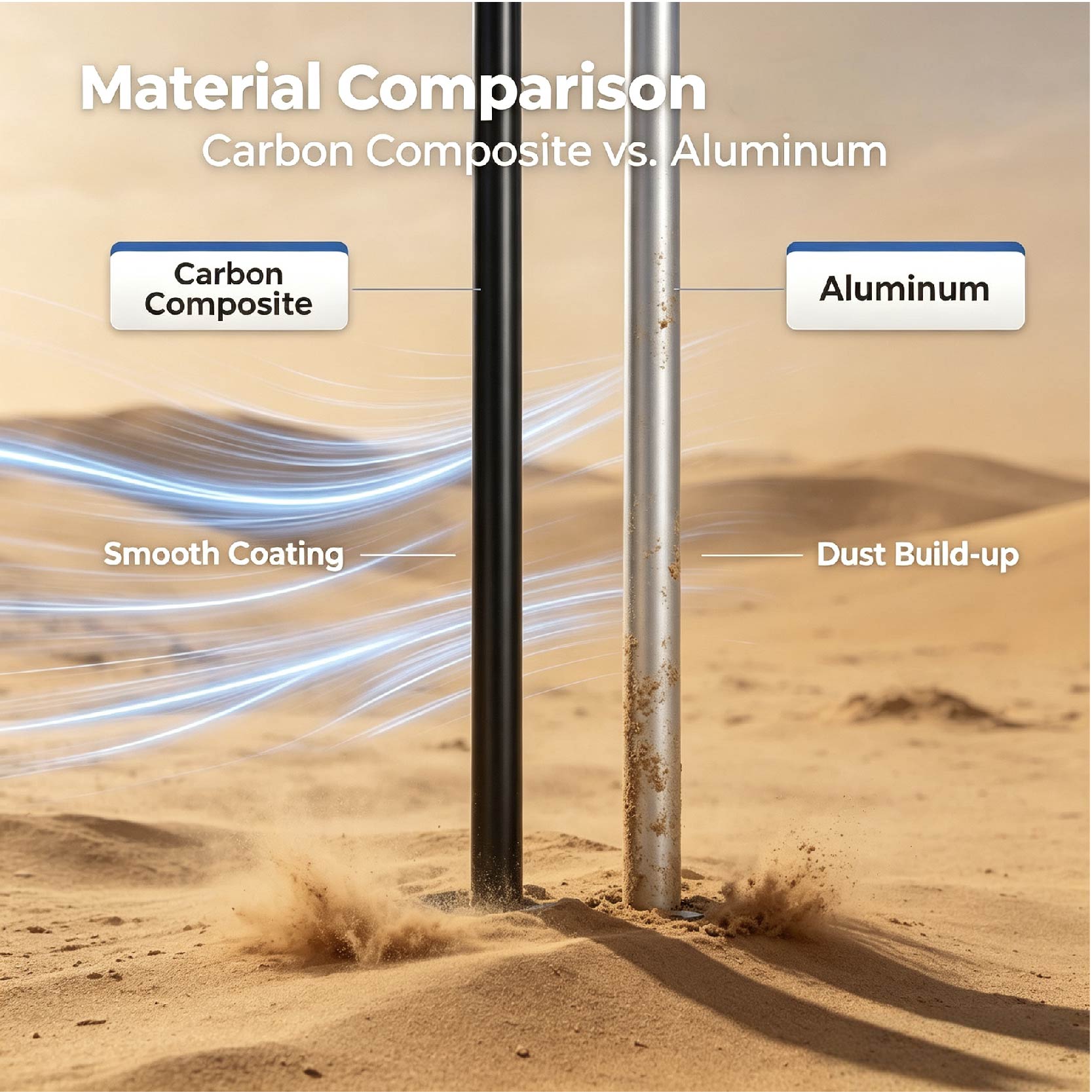
In a static comparison, 6061-T6 aluminum looks hard to beat. Tensile strength 310 MPa, extrusion into complex shapes, low billet cost. The problem surfaces after the third hour of wear. That's the catch. A typical aluminum backpack system—pole, harness, and base—weighs 2.7 kilograms. That weight rides on the shoulders and lower back. Postural muscles fatigue in sequence: trapezius shortens, erector spinae overcompensate, gait becomes asymmetrical. The wearer slows down, sets the pole against tables during conversations. Every time the pole leaves the vertical, the banner disappears from sightlines and impressions drop to zero.
Carbon composite flips the equation. The BBXDNOA system—continuous carbon fiber pole, reverse folding base, back panel, harness—weighs 2.000 kilograms complete. That’s a 26% reduction from the aluminum equivalent. In a WZRODS field test, wearers carrying the 2 kg carbon system held 1.2 meters per second for six hours with no reported discomfort. Those carrying 2.7 kg aluminum dropped to 0.9 m/s after four hours and took twice as many unscheduled breaks. Multiply that across a team of 30 brand ambassadors over a three-day show, and the cumulative lost exposure equals removing a banner from the floor for an entire morning.
| Specification | Carbon Composite (BBXDNOA) | 6061-T6 Aluminum | 6063-T5 Aluminum |
|---|---|---|---|
| Total system weight | 2.000 kg | 2.7 kg (typical) | 2.9 kg |
| Pole flex characteristics | 3-layer tuned frequency match (1.2–2.5 Hz) | Fixed stiffness; no tuned damping | Stiffer; brittle after anodizing flaws |
| Corrosion resistance | Salt-spray 5000+ hours (ASTM B117) – no attack | Pitting after 300 hours; anodized coatings break down | Exfoliation in coastal air within months |
| Fatigue life (cyclic loading) | No degradation after 10⁶ full-reversal flex cycles | Micro-cracks at base welds after 10⁴ cycles | Permanent bend at 10³ cycles |
| Freight cost per unit (40HQ, 5420 pcs) | ~$1.80 (chargeable weight 2 kg) | ~$2.40 | ~$2.60 |
| Typical ex-works price (MOQ 2 pcs) | $11.90 – $20.90 | $8 – $14 | $6 – $10 |
| Replacement rate over 2‑year trade show cycle | <5% | 30–40% | 50–60% |
Look at the bottom two rows together. Freight savings can offset 40% of the ex-works price gap. The replacement rate flips the entire economic picture. The aluminum system that costs half as much up front will cost three times as much when you add failures you are almost certain to see in a coastal market or a touring roadshow.
Aluminum does not rust. It corrodes. The corrosion product is a voluminous white powder that jams telescoping joints, eats the anodic coating, and concentrates stress at the points of highest bending moment. A distributor in Singapore ordered 500 aluminum backpack banners for an F1 circuit event. Within two days in the humid paddock, telescoping mechanisms seized on 15% of units. The poles had to be cut apart. The event organizer billed the distributor for lost exposure—a bill larger than the profit on the whole order.
ROI Analysis: Total Cost of Ownership and Freight Optimization
Total cost of ownership for a backpack banner accounts for variables that never appear on a commercial invoice. Start with acquisition: ex-works price plus inland freight, ocean freight, customs brokerage, duty, onward delivery. A 40HQ container holds about 5,420 units of the BBXDNOA carbon composite system. Because each unit weighs exactly 2 kg, the total container payload stays well below overweight thresholds; freight forwarders charge on actual weight. An aluminum unit at 2.7 kg pushes the container close to the maximum payload on some lanes, triggering overweight surcharges. The per-unit ocean freight for carbon is approximately $1.80, versus $2.40 for 6061 aluminum (same volume).
Then comes duty. Carbon composite poles fall under a different Harmonized Tariff Schedule heading than aluminum flagpoles. Ballpark guidance: carbon fiber articles—if classified under HTS 6815.10.0000—carry a general duty rate of 3.5% and are typically exempt from the Section 301 additional tariffs that apply to many Chinese aluminum products (HTS 7610.90.0080, 25% duty since 2019). Classification is complex; always obtain a binding ruling from a licensed customs broker. But in practice, the duty differential alone can shift the landed cost by double digits.
Now add quality-failure replacements. WZRODS offers a sample at $90 so a buyer can validate the pole before committing to a container. Skip that step, and undetected delamination can slip through. If 10% of a batch fails, emergency air-freight replacements can exceed $30 per unit, effectively adding $3 to the landed cost of every unit—money that would have covered the higher initial price had the sample been tested to destruction.
A disciplined procurement model uses risk-adjusted numbers. Assume a mid-range BBXDNOA price of $16/unit. Ocean freight $1.80, duty 4% on CIF ($0.71), customs $0.15, warehousing $0.50 = landed cost about $19.16. Add a 3% field failure rate with $35 emergency replacement cost ($1.05/unit), and the effective cost is roughly $20. For 6061 aluminum: ex-works $12, freight $2.40, duty 25% on CIF ($3.60), customs $0.15, warehousing $0.50 = landed $18.65. A 35% failure rate adds $12.25, pushing the real cost to nearly $31 per unit. That gap is not marginal. It’s a fundamental mispricing of risk, not counting the intangible cost of impressions lost while banners lie on the ground.
Applications: Where Backpack Banners Perform and Why
The uses for a mobile double-sided advertising system are obvious, but the environment dictates the spec. A street parade demands crosswind survival and rapid stops. A convention center needs quiet operation and a harness that won’t wear through clothing. A beach event requires immunity to salt and sand. The BBXDNOA system addresses all three with features that emerged from watching what actually breaks in the field.
During a parade in Cologne, a WZRODS engineer observed that the most common failure was not a snapped pole but the base plate twisting relative to the wearer’s back because the harness strap slipped under cyclic load. That finding led to a reverse-folding base mechanism. It locks the pole at a fixed angle and distributes the bending moment across a larger area of the harness frame, eliminating the single-point slippage. For trade shows, the back panel integrates a rigid board—not flapping fabric—so the poster remains legible when the wearer stands still while the flag above moves with the wearer’s breathing. For beach events, carbon composite has no metal parts to corrode; the zipper pocket that holds the flag attachment is sealed with a rubber gasket. The ability to switch among five flag shapes—feather, teardrop, rectangle, arch, paddle—without tools was designed for event companies that deploy different brands on consecutive days. A teardrop works best in a crowded aisle, catching a small pocket of air; a rectangle presents maximum surface area outdoors.
A single pole that accepts all common shapes reduces inventory from five SKUs to one. That lowers warehousing cost and removes the risk of shipping the wrong pole to a venue. The rear poster panel (51 × 28 cm print) adds a second advertising surface visible when the wearer faces away from the main traffic stream. An independent trade show analytics firm found that backpack banners with a rear static poster captured 22% longer glance durations from attendees approaching from behind, because the static text allowed the brain to process the message without a competing motion signal.
Factory Process: From Carbon Tow to Finished Pole
Carbon composite manufacturing is not magic. It is an exacting sequence that is easy to get wrong. Raw material is a spool of polyacrylonitrile-based carbon fiber tow, delivered to the WZRODS factory in Shandong with a certificate showing tensile modulus ≥230 GPa and elongation at break ≥1.8%. If elongation is even slightly lower, the pole turns brittle in cold weather and can shatter when dropped onto concrete from shoulder height—a scenario that happens more often than buyers assume.
The tow is drawn through an epoxy resin bath formulated for long pot life, then wound onto a mandrel in precise helical layers that set the flexural frequency. Too many layers at 0 degrees and the pole resists bending but snaps under torsion; too many at 45 degrees and it twists excessively. The mandrels are cured in an autoclave on a controlled ramp cycle. After demolding, every pole goes onto a dynamic flexural test rig. It cycles the pole through a 15-degree arc at 2.5 Hz for 100,000 cycles while an accelerometer records the damping coefficient. Poles deviating more than 5% from target are cut open to inspect for voids—a destructive test. The batch size is small enough that scrapping a few poles costs far less than a recall.
By contrast, most aluminum extrusion shops do not perform dynamic cycling. They check straightness, diameter, and occasionally pull a sample to failure to verify alloy grade. The transition from elastic to plastic behavior under repeated loads—the property that decides whether a pole survives a summer of trade shows—is not part of standard acceptance criteria. A buyer should add a supplier qualification requirement of 50,000 full-reversal flexure cycles without permanent deformation and send a third-party inspector to witness the test. WZRODS provides the test data for its poles. Ask the same of any aluminum supplier. In most cases, the data does not exist because no one has ever requested it. That is not reassuring.
Trends: Motion Design and Attention Capture in Crowded Aisles
The most interesting development in mobile advertising isn’t happening in pole factories. It’s in university labs that study consumer attention. Wearable eye-trackers and EEG caps have mapped the exact moment a passerby’s brain shifts from ambient scanning to focused brand processing. A smooth rhythmic motion in the peripheral field—entering at the edge of the wearer’s gait cycle—activates that shift more reliably than a static sign or a banner that jerks with every step.
In high-density aisles (above one person per square meter), crowd speed isn’t constant. Attendees accelerate and decelerate unconsciously. A pole’s flex pattern must keep the flag tip moving in a predictable arc that stays within the observer’s high-acuity retinal zone. WZRODS engineers tuned the BBXDNOA’s layup schedule by filming wearers from above in simulated trade show conditions. They iterated until the flag tip traced a path that remained within a 20-degree arc of a stationary observer’s visual axis for the maximum possible duration. This is geometry, not mysticism. But it works better than poles designed purely for wind load, which often whip the flag so fast the logo becomes a blur exactly when the observer is closest.
Upgrade Solution: Migrating from Aluminum to Carbon Composite
Switching your backpack banner inventory from aluminum to carbon composite is not a single-purchase decision. It’s a procurement architecture shift that affects brand activation yield for years. Start by auditing your current inventory. Pull twelve months of failure records, classify each by mode—pole break, joint seizure, banner tear, harness failure—and calculate total replacement cost including expedited shipping and lost staff hours. That number will almost certainly be higher than the ledger suggests.
Next, request a BBXDNOA sample. Don’t just inspect it. Have a staff member wear it through a two-day simulated aisle course: narrow turns, sudden stops, jostling crowds. Record how many times they remove or adjust the harness. Film the flag with a high-speed camera and measure text legibility at 200 feet using a Snellen-chart equivalent. Then run the numbers for a container order. Use the landed cost calculator with proper HTS classification—consult a customs broker who understands Section 301 exemptions and anti-dumping scopes. Carbon composite poles, being neither aluminum nor traditional steel, often fall outside anti-dumping duties that target Chinese aluminum imports. Factor in freight weight savings and the reduced replacement rate.
Present the internal business case not as an expense, but as capital investment in a tool that increases the probability of attendee engagement by a measurable percentage. If marketing can assign a dollar value to a single qualified prospect interaction, build a simple model: multiply the incremental impressions generated by a carbon composite banner over its lifetime by the conversion rate and compute a net present value. When a sales director sees that a $20 pole generates $500 in attributable pipeline value over two years, while a $12 pole fails halfway through the first season, the conversation shifts from cost to return.
The upgrade process itself is straightforward. WZRODS supports light customization of flag prints, poster graphics, and harness branding with lead times of 15–30 days. The MOQ of two pieces lets you run a pilot before scaling. Payment terms—T/T, L/C, Western Union—fit the trade finance instruments most international buyers already use. Export cartons stack efficiently onto ISO pallets for a 40HQ container. There is no secret knowledge required. Only the willingness to apply the same analytical rigor to a backpack banner that you would to a capital machine tool. In the economics of attention, that is exactly what it is.
FAQ: The Backpack Flag & Sign Buyer’s Questions
What is the total weight of the system as worn by the user? The complete BBXDNOA backpack flag and sign—carbon composite pole, harness, back panel, and flag—weighs 2.000 kg. This is significantly lighter than typical aluminum equivalents (2.7 kg or more). Weight is distributed through a padded harness to reduce perceived load.
How many flag shapes can a single pole support? Five: feather, teardrop, rectangle, arch, and paddle. The attachment mechanism sits inside a zippered pocket. Flags are swapped without tools or adapters. The rear poster panel is fixed and displays a separate 51 × 28 cm graphic.
What materials are used, and why carbon composite instead of aluminum? The main pole is continuous carbon fiber composite. The material offers low weight, high fatigue resistance, and corrosion immunity. It does not rust or corrode, even in salt air or high humidity. The flexural damping can be tuned during manufacturing to match walking rhythm, improving visual legibility in crowds.
What are the duty and tariff implications when importing into the US or EU? Carbon composite poles fall under a different HTS heading than aluminum flagpoles. In the U.S., a classification such as HTS 6815.10.0000 carries a general duty around 3.5% and is typically exempt from the 25% Section 301 additional tariffs applied to many Chinese aluminum products (e.g., HTS 7610.90.0080). Always obtain a binding ruling from a licensed customs broker; the lower duty plus lighter freight weight materially reduces landed cost.
What is the sample cost and minimum order quantity? The sample price is $90 for 1 unit, delivered in 15–30 days. Bulk MOQ is 2 pieces, with pricing from $11.90 to $20.90 per unit depending on quantity and customization. This allows you to test the product before committing to a full container.
How long does a carbon composite pole last compared to aluminum? Under typical trade show use—3 to 5 events per year, 8 hours per day—the carbon pole can last five years or longer without degradation (fabric flags should be replaced periodically). Aluminum poles, especially 6063-T5, often show permanent bends or joint seizure after one year. In coastal or humid climates, corrosion can render them unusable within six months.
Can the flag and poster be customized with my brand graphics? Yes. Flags are digital-printed in full CMYK color. Both light and fast customization are supported. Provide artwork for the flag (122 × 51 cm) and poster (51 × 28 cm). Dye-sublimation on fabric withstands repeated washing and resists fading under exhibition lighting.
What is the container capacity and freight advantage? A 40HQ container holds approximately 5,420 units of the BBXDNOA in standard export cartons. Each unit weighs 2 kg, so the total payload stays within normal limits and avoids overweight surcharges. The lower weight versus aluminum reduces per-unit ocean freight by roughly 25%.
Is there a warranty or quality guarantee? WZRODS performs dynamic batch testing on every production run. Poles are guaranteed against manufacturing defects—delamination, joint failure, harness breakage—under normal use. Defective units are replaced, and the factory encourages independent third-party inspection before container sealing.
Why pay more for carbon composite when aluminum is cheaper upfront? Because the upfront price is the smallest part of the total cost. Lower freight, lower duty, longer service life, and zero corrosion put the total cost of ownership 30–50% below aluminum over a two-year cycle. Beyond cost, the pole’s tuned motion generates more prospect engagements per event—a revenue driver no aluminum pole can replicate.
About the Author
Wei Chen, Senior Product Specialist
B.S. Supply Chain Management, Michigan State University; Certified Professional in Supply Management (CPSM)
12 years in B2B display hardware sourcing. Former procurement manager for a top 20 US promotional products distributor. Specializes in aluminum pole systems and import compliance.
Reviewed by WZRODS Technical Team. Updated: 2026-07-22
 Comments (0)
No comments yet. Be the first to comment!
Leave a Comment
Related Products
Marathon Pacer Flag
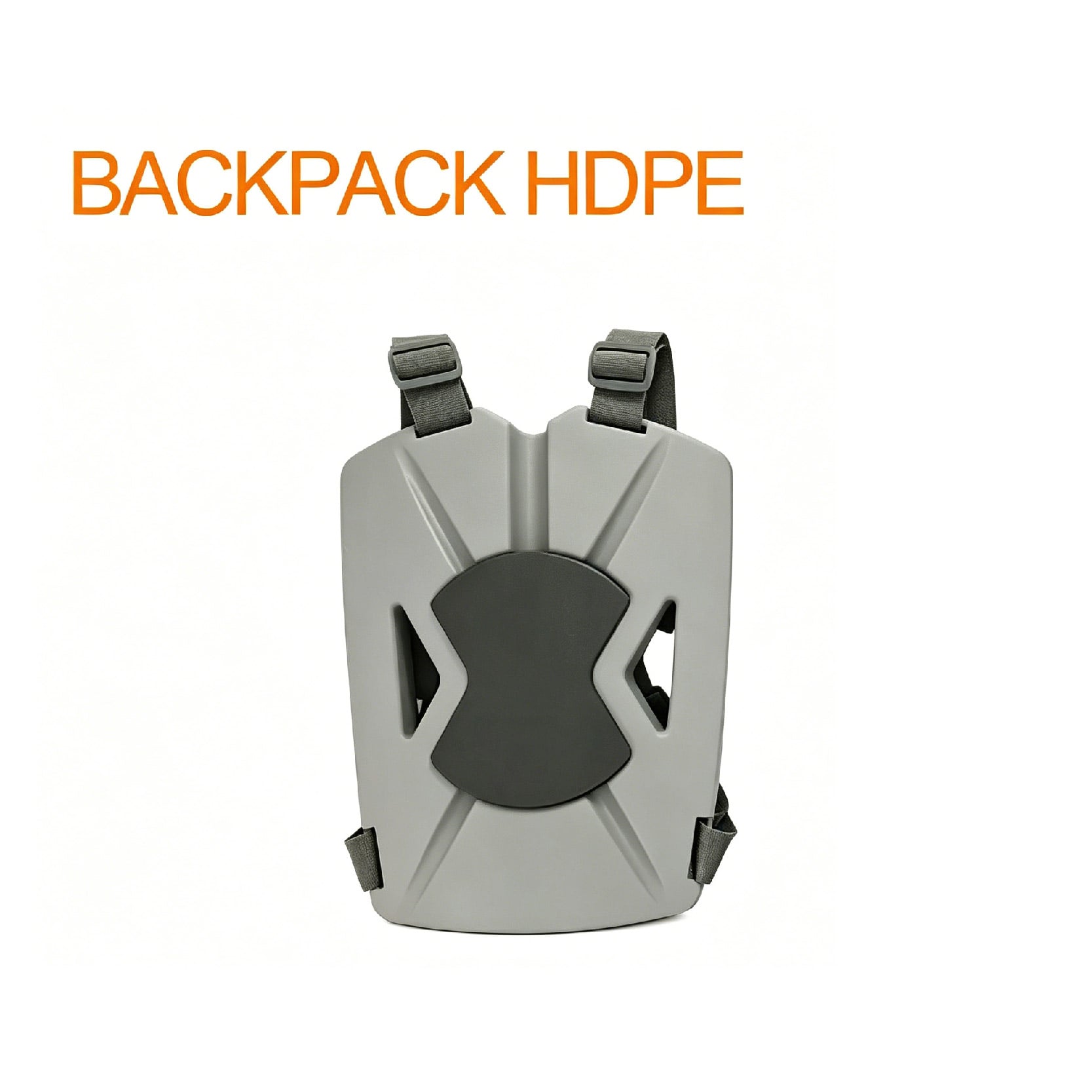
Backpack flag HDPE
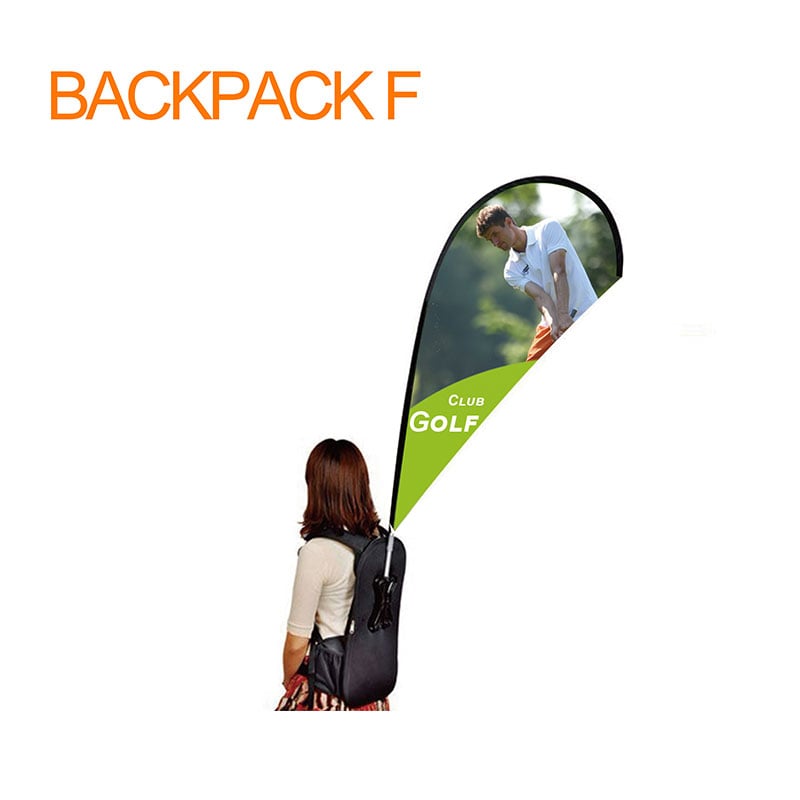
Backpack banner SFH
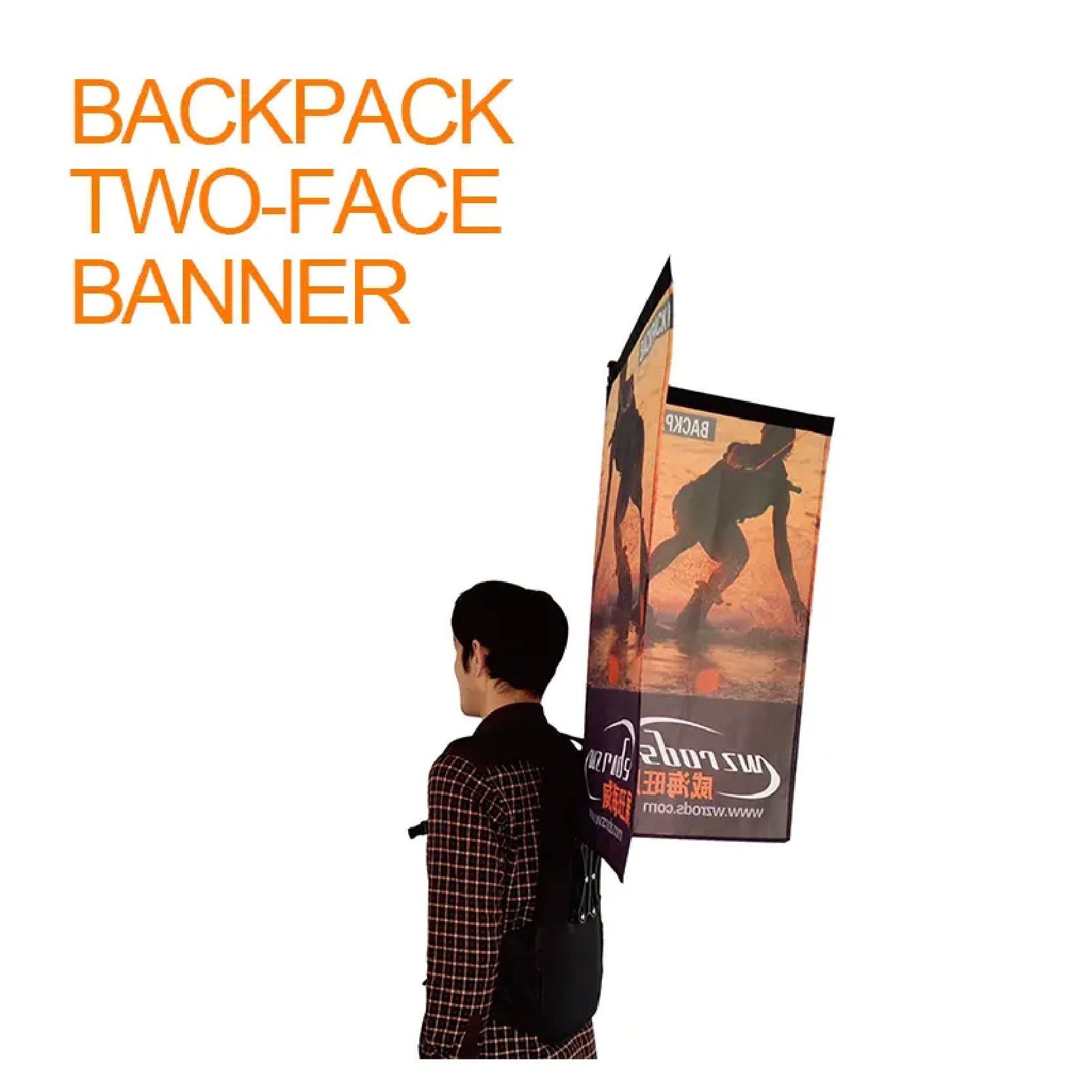
Backpack Two - Face banner
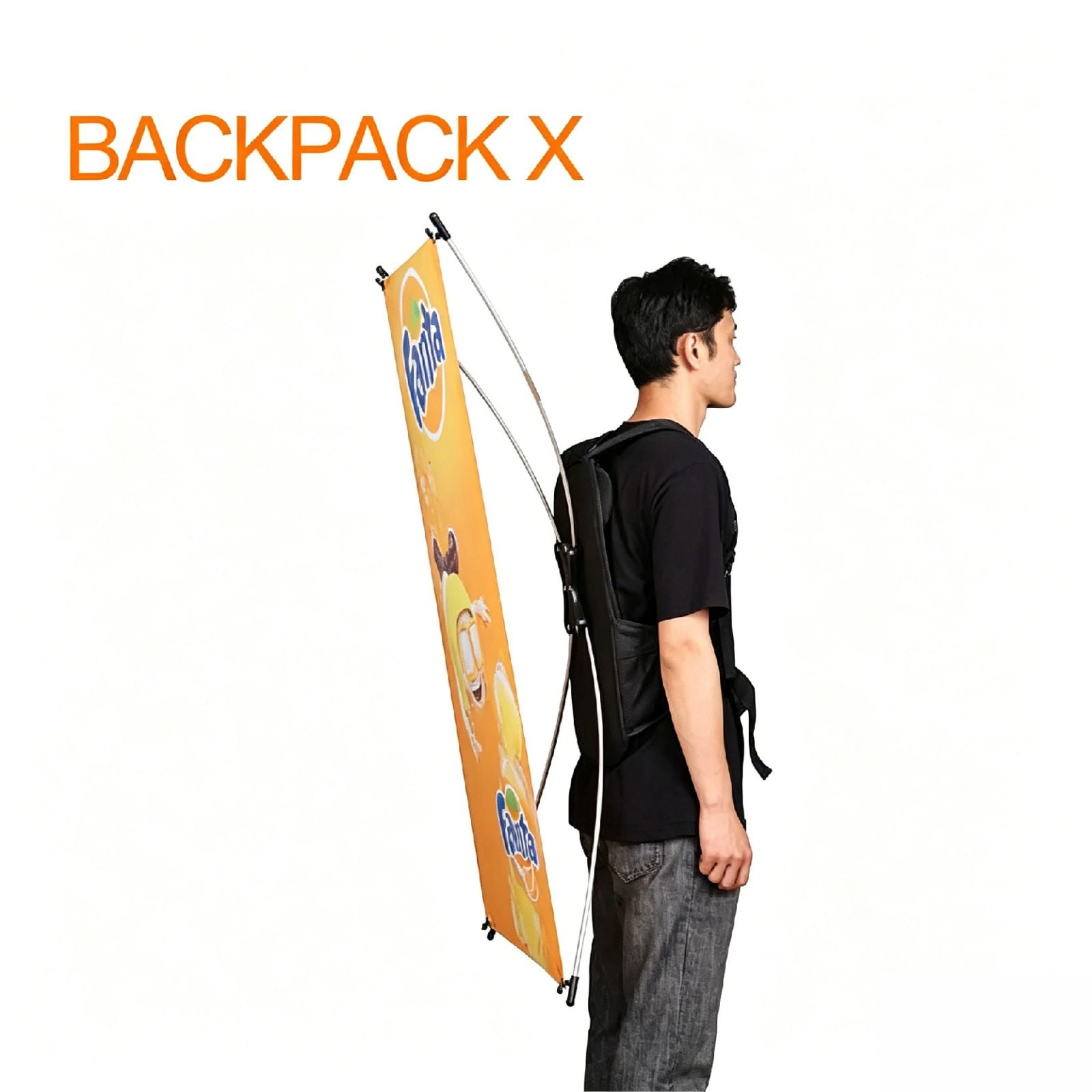
Backpack X
Backpack Umbrella
Backpack From Board
Backpack B
Backpack Budget
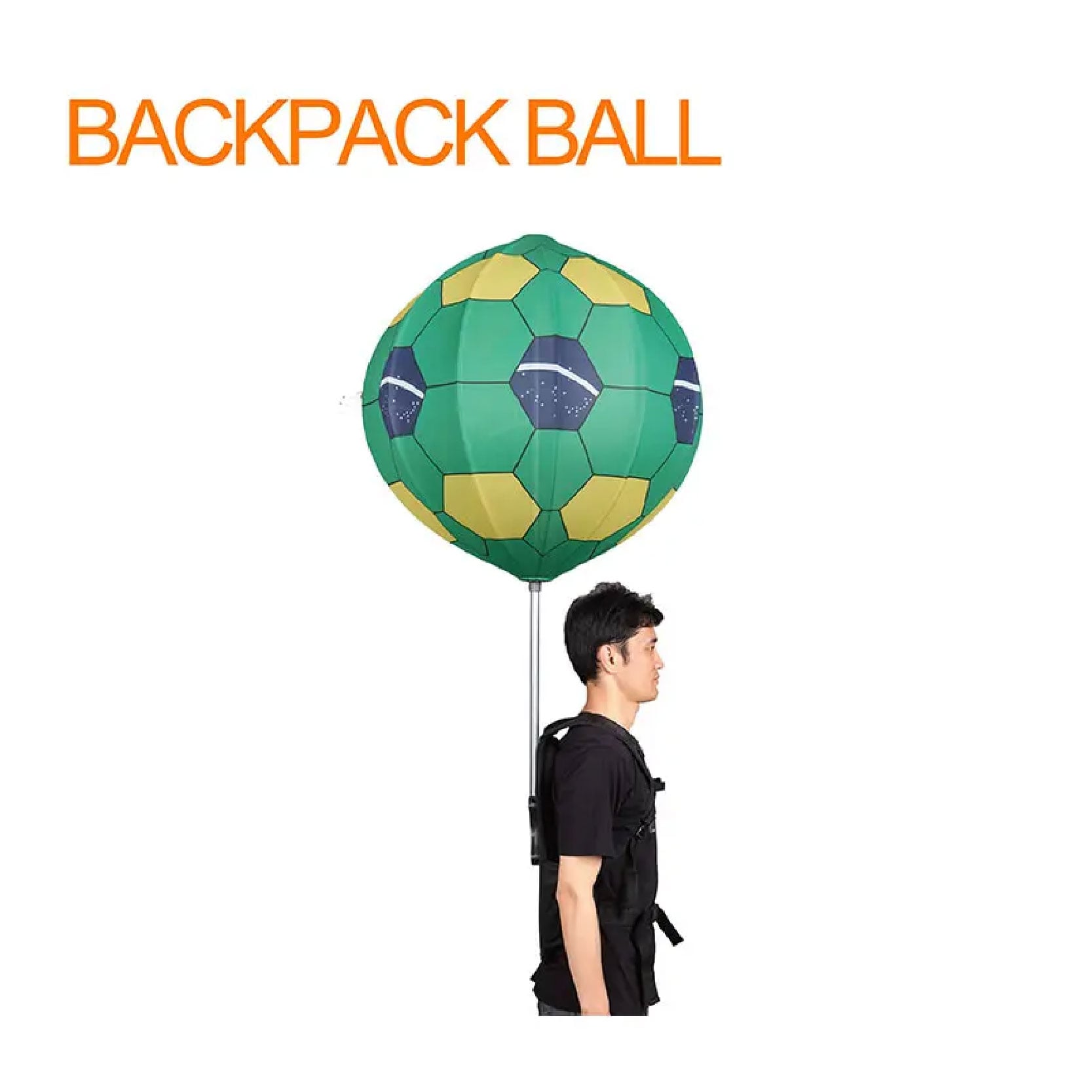
Backpack Ball
Related Articles
29kg Concrete Flag Base - The Complete B2B Buyer's Resource - WZRODS
WZRODS DY451B: 29 kg, HDPE shell, concrete core. Stackable, portable, rust-proof. FOB price US$5.75–$6.85 at MOQ 2 units. Those numbers look unremarkable. Factor in landed cost—import duties lower than aluminum’s under relevant HTS codes, freight savings from less weight per unit of stabilizing mas
Wide Tube Cross Base - The Complete B2B Buyer's Resource - WZRODS
The Wide Tube Cross Base, manufactured by Wzrods in Shandong, China, solves one problem: reliable stability for poles under three meters, without the freight costs and warehouse footprint that heavier alternatives demand.
Rectangular Pipe Cross Base - The Complete B2B Buyer's Resource - WZRODS
The pipe cross flag base is a cross of rectangular steel pipe, powder‑coated, weighing 1.3 kg and spanning 78 cm across its arms. Its center holds a C‑ring shaft that lets the flag rotate with the wind.
X-Shape Backpack Banner - The Complete B2B Buyer's Resource - WZRODS
Economic Cross Base - The Complete B2B Buyer's Guide- WZRODS
When you buy an economic cross base—something like the Wzrods DM‑9, a 77 cm‑long, 1.3 kg iron cross—forget “economic” as a synonym for “cheap.” It means value-engineered.
How to Choose the Right Feather Flag Base for Different Surfaces
Feather Flag - Professional Banner Poles & Systems Manufacturer - WZRODS
How to choose a high-quality backpack flag
The backpack flag concept centers on a frame carried on the back, similar to a backpack, specifically engineered to support a raised flag or banner.