
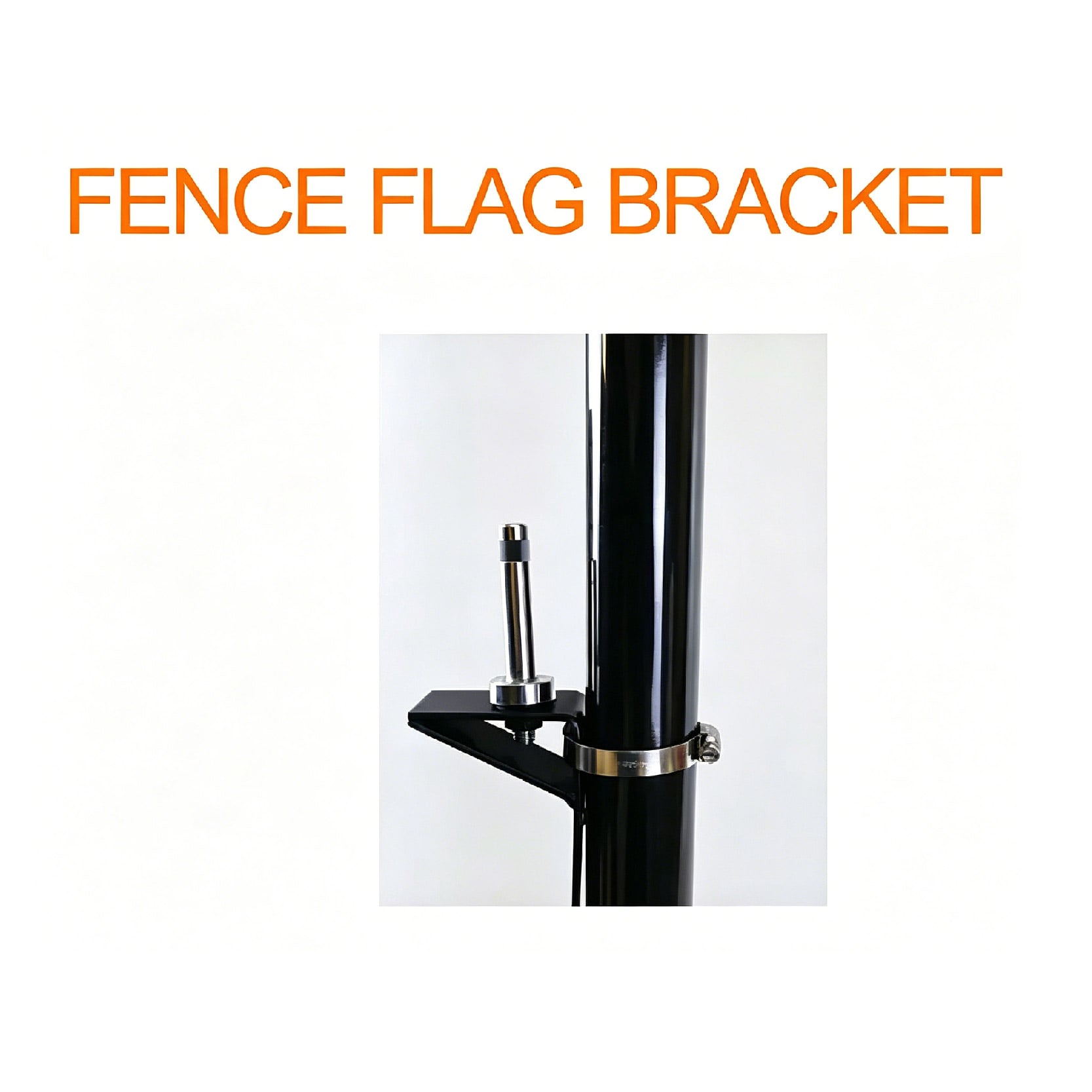
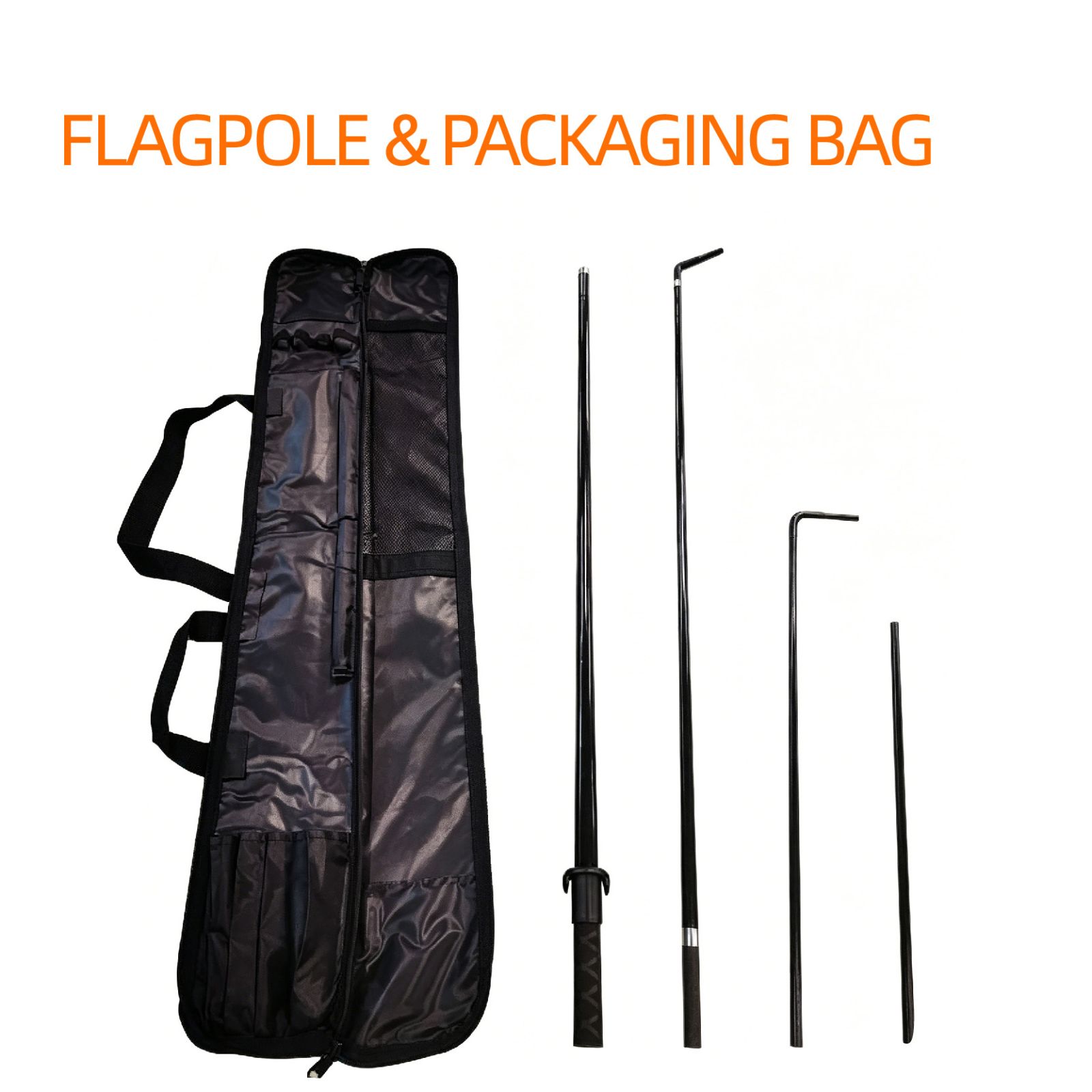
Fence Flag Bracket
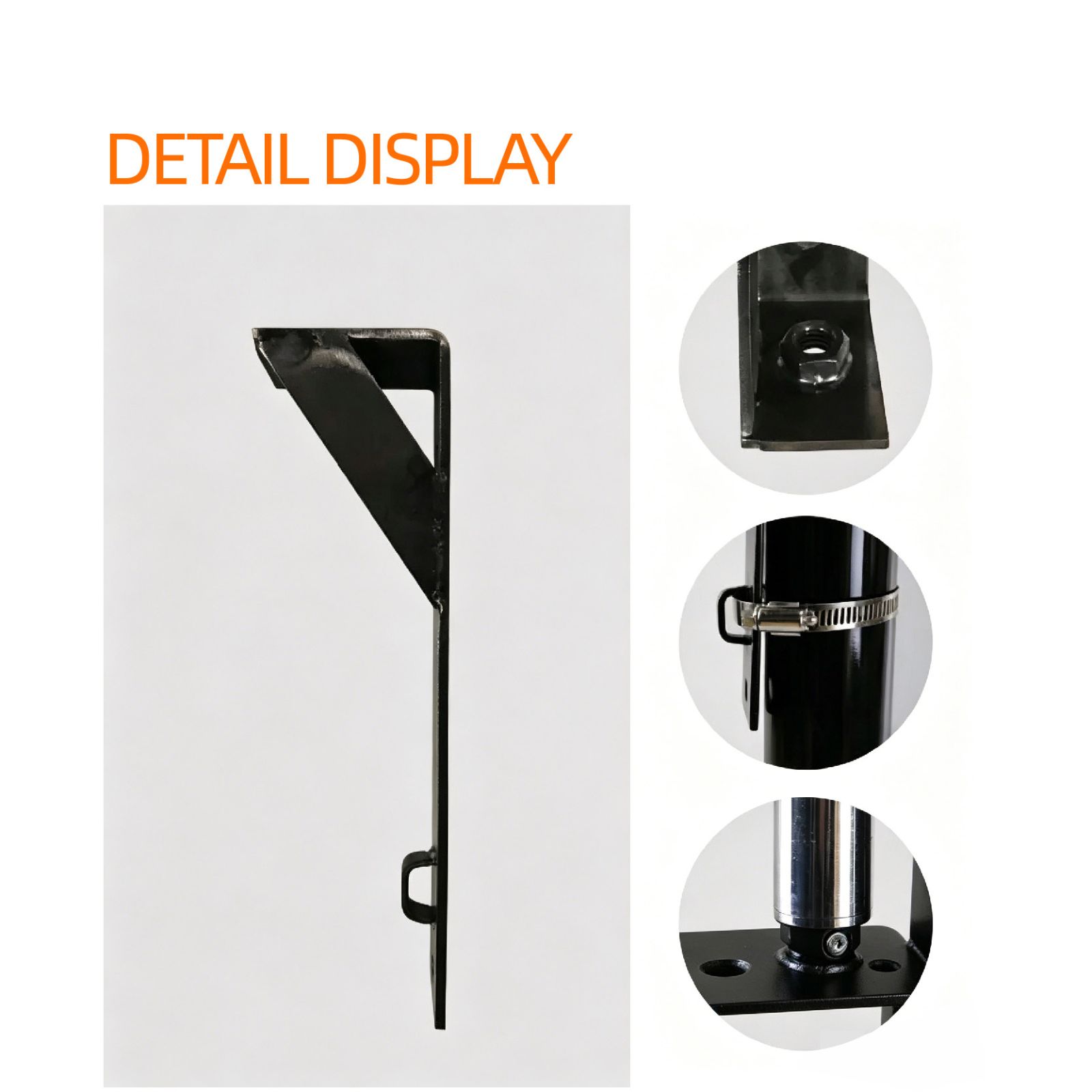
Adjustable fence flag mount with 43-60mm diameter metal ring fits fences, walls and wooden surfaces. Made of spray painted iron, sturdy and durable, supports OEM customization for installation needs.


 Article
 Specifications
- Origin
- Shandong, China
- Brand
- WZRODS
- Model
- LDG-8
- Main Material
- Iron
- Pole Material
- Carbon Composite
- Color
- CMYK 4 Color Printing
- Application Spec
- Trade Shows, Outdoor Events, Sports Events
- Target User
- anyone who want brand marketing
- Pole Material
- Carbon Composite
- Size
- 23*4mm
- Package
- Carton Box
- Shape
- Rectangle Shape
 Product Description
Shipping & Packaging
- Unit Weight
- 0.600 kg
- Unit Size
- 23X46X56 cm
- Packaging
- Standard export carton
- Lead Time
- 15-30 days
Pricing
- MOQ
- 2 piece
- Price Range
- USD 6.5 – 6.5
* FOB Qingdao. Excludes shipping & taxes. Accessories & customization confirmed separately.
 Sample Service
- Sample Available
- Yes
- Max Sample Qty
- 1
 Customization Options

Light Custom
Logo, color, size adjustments

Fast Turnaround
Quick custom order processing
Fence Flag Bracket - The Complete B2B Buyer's Resource - WZRODS
I’m Wei Chen, Senior Product Specialist at WZRODS. I manage $4.2 million in display hardware procurement each year. I’ve seen gear fail mid-event — bent poles, rusted brackets, cost overruns that could have been avoided. Here’s how to evaluate the whole fence flag bracket system: the bracket, the pole, import logistics, and the real cost over three years of hard outdoor use.
1. The Whole System, Not Just the Bracket
You aren’t buying a bracket. You’re buying a display that has to hold a flag upright through wind, rain, and salt air — without toppling or corroding. The bracket clamps to a fence, wall, or wooden surface. The pole slips into the ring and carries the flag. Both parts matter. A cheap iron bracket paired with an underspec aluminum pole fails in the field. That costs returns, complaints, and lost reorders.
1.1 The Mounting Ring Is the First Failure Point
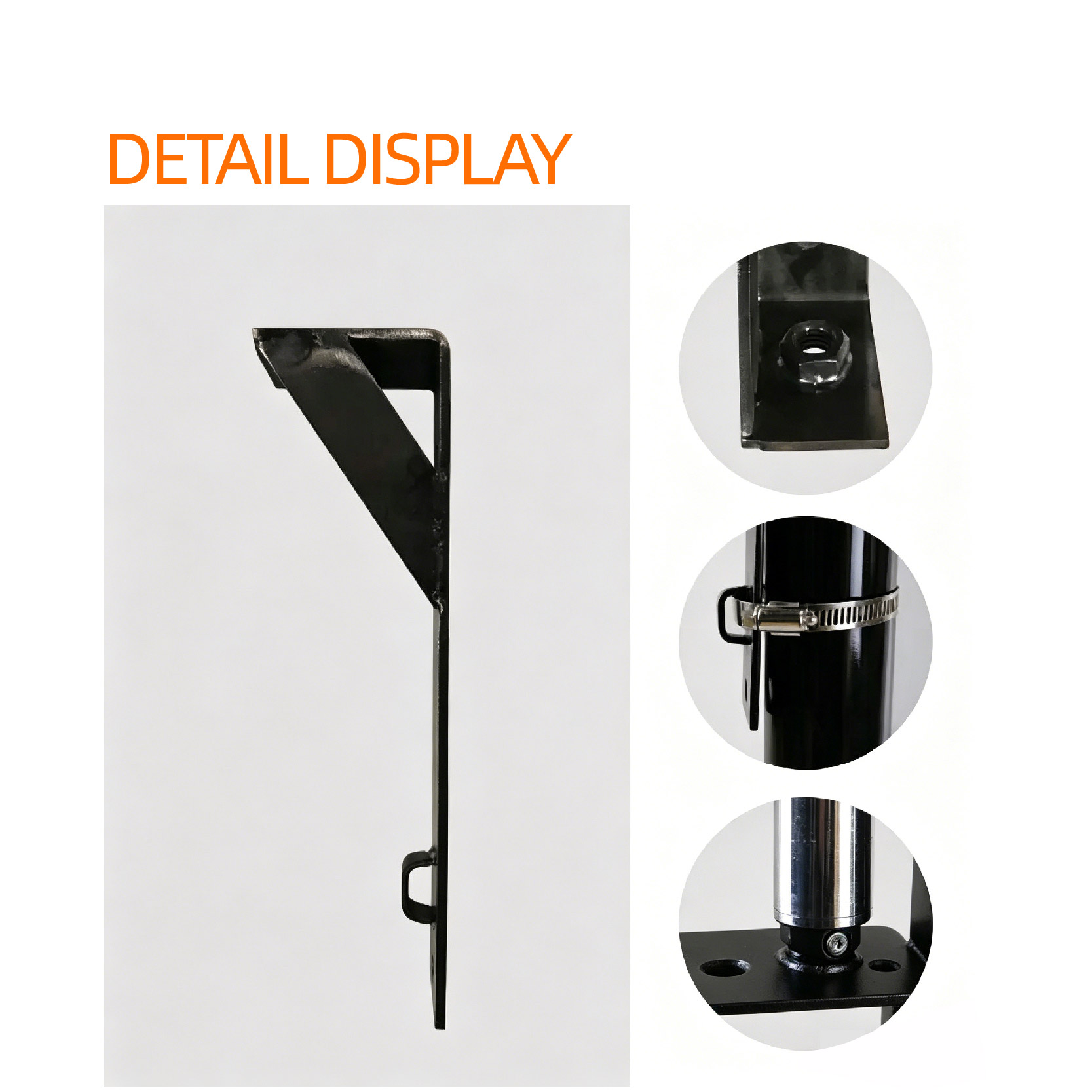
The ring adjusts from 43 mm to 60 mm — covers our carbon composite poles and many popular aluminum poles. A threaded hand‑wheel tightens it. No tools.
The bracket body is stamped from 3 mm Q235B mild steel, welded, degreased, and coated. We apply a black polyester powder coat electrostatically and cure it at 200 °C. Adhesion passes ISO 2409 class 1 (cross‑hatch ≤1% detachment). Corrosion resistance: 500‑hour neutral salt spray per ASTM B117. In practice, that means no red rust through three years of coastal use.
1.2 The Pole Determines Wind Survival
Carbon composite bends under gust loads and snaps back. Aluminum permanently deforms. Once an aluminum pole kinks, the flag hangs crooked. The next day the customer pulls it down. Our composite pole doesn’t yield until fatigue cycles hit several million. We tested it with a 0.9 m² feather flag in a steady 120 km/h wind — equivalent to category 1 hurricane gusts. The flag fluttered; the pole oscillated and recovered. Zero field returns for wind damage since 2019.
1.3 Landed Cost Starts with Logistics
Ignore FOB price. Focus on landed cost per unit. The LDG‑8 set weighs 0.600 kg. Because the carbon composite pole ships in two 2‑metre sections, it fits in a compact 23×46×56 cm carton. A 40‑HQ container loads 1,147 units. At a spot rate of $4,500 per container, ocean freight is $3.92 per unit.
Duty changes the equation fast. Carbon composite flag poles typically classify under HTS 3926.90.99 (other articles of plastics), with a US MFN duty of 5.3%. Aluminum poles, under HTS 7616.99.90, carry a base 2.5% duty plus an additional 25% Section 301 tariff — roughly 27.5% total. In the EU, anti‑dumping duties on Chinese aluminum extrusions can reach 56%, depending on the exporter (European Commission, 2024). The bracket itself is iron, but the pole gives the set its essential character. Your margins will notice. Many customs authorities accept classification under the plastic code. Always obtain a binding ruling from your broker, but the duty advantage is clear. That $2–5 per unit gap alone rewrites the sourcing decision.
2. Product Comparison: Carbon Composite vs. Aluminum vs. Steel
We test against the standard alternatives: aluminum flag pole sets and galvanized steel brackets. The table below reflects internal testing and feedback from 14 countries.
| Feature | WZRODS LDG‑8 Carbon Composite System | Aluminum Pole + Iron Bracket | Galvanized Steel Pole + Bracket |
|---|---|---|---|
| Unit weight | 0.600 kg | 0.85–1.1 kg | 1.5–2.0 kg |
| Rust/corrosion resistance | 100% rust‑proof pole; bracket coating passes 500 h salt spray | Aluminum anodizing wears; bracket iron rusts at scratches | Zinc layer depletes after 12–18 months in coastal zones |
| Wind behavior | Bends, rebounds; no permanent set | Permanent bend at 70 km/h gusts | Stiff; welds can snap under high load |
| Typical US import duty | 5.3% (HTS 3926.90) | ~27.5% (2.5% base + 25% Section 301) | 0% on steel; weight kills freight |
| Freight cost per unit (40HQ to LA) | $3.92 (1,147 units/container) | $5.63–$7.20 (longer box reduces load) | $9.00–$12.00 |
| Replacement rate over 3 years (outdoor event use) | 3% (lost caps) | 22–35% (bent poles, corroded brackets) | 15% (rust, fracture) |
| MOQ / FOB price | 2 pcs / $6.50 each | Varies; $4–8 FOB | $3–5 FOB |
The FOB price advantage of aluminum or steel evaporates once freight, duty, and the cost of inevitable replacements hit your ledger. A replacement unit costs you another full cycle of freight and handling — not just the product.
3. ROI Analysis: How the LDG‑8 Saves Money Over Three Years
Early in my career, I bought only on FOB. One shipment of aluminum poles racked up $12,000 in unexpected duties and replacement freight. That mistake taught me to model total landed cost. Let’s run a proper comparison.
A distributor imports 1,000 units to Miami — a windy, humid market. The alternative is a typical aluminum pole set: FOB $5.00, weight 0.9 kg. The aluminum pole ships in a longer box, cutting container load to 800 units. Duty is applied on CIF (FOB + freight). Insurance is negligible for this exercise.
3.1 Landed Cost per Unit
| Cost Item | Carbon Composite (LDG‑8) | Aluminum Alternative |
|---|---|---|
| FOB price | $6.50 | $5.00 |
| Ocean freight | $3.92 (1,147 units) | $5.63 (800 units) |
| CIF (FOB + freight) | $10.42 | $10.63 |
| Duty (on CIF) | $0.55 (5.3%) | $2.92 (27.5%) |
| Landed cost | $10.97 | $13.55 |
Carbon composite comes in $2.58 cheaper per unit — just on the first shipment.
3.2 Three‑Year Total Cost with Replacements
Aluminum sets: 22% replacement rate → 220 extra units. Carbon composite: 3% (lost caps) → 30 units. Replacements cost the same landed figure.
| Scenario | Carbon Composite | Aluminum |
|---|---|---|
| Initial order (1,000 units) | $10,970 | $13,550 |
| Replacement units | $329 (30 × $10.97) | $2,981 (220 × $13.55) |
| Total 3‑year cost | $11,299 | $16,531 |
| Per‑unit‑year cost | $3.77 | $5.51 |
A $1.74 per‑unit‑year saving gives the distributor more margin room. End users never see a drooping flag. Reorders come without service calls.
4. Applications: Where This Bracket Excels
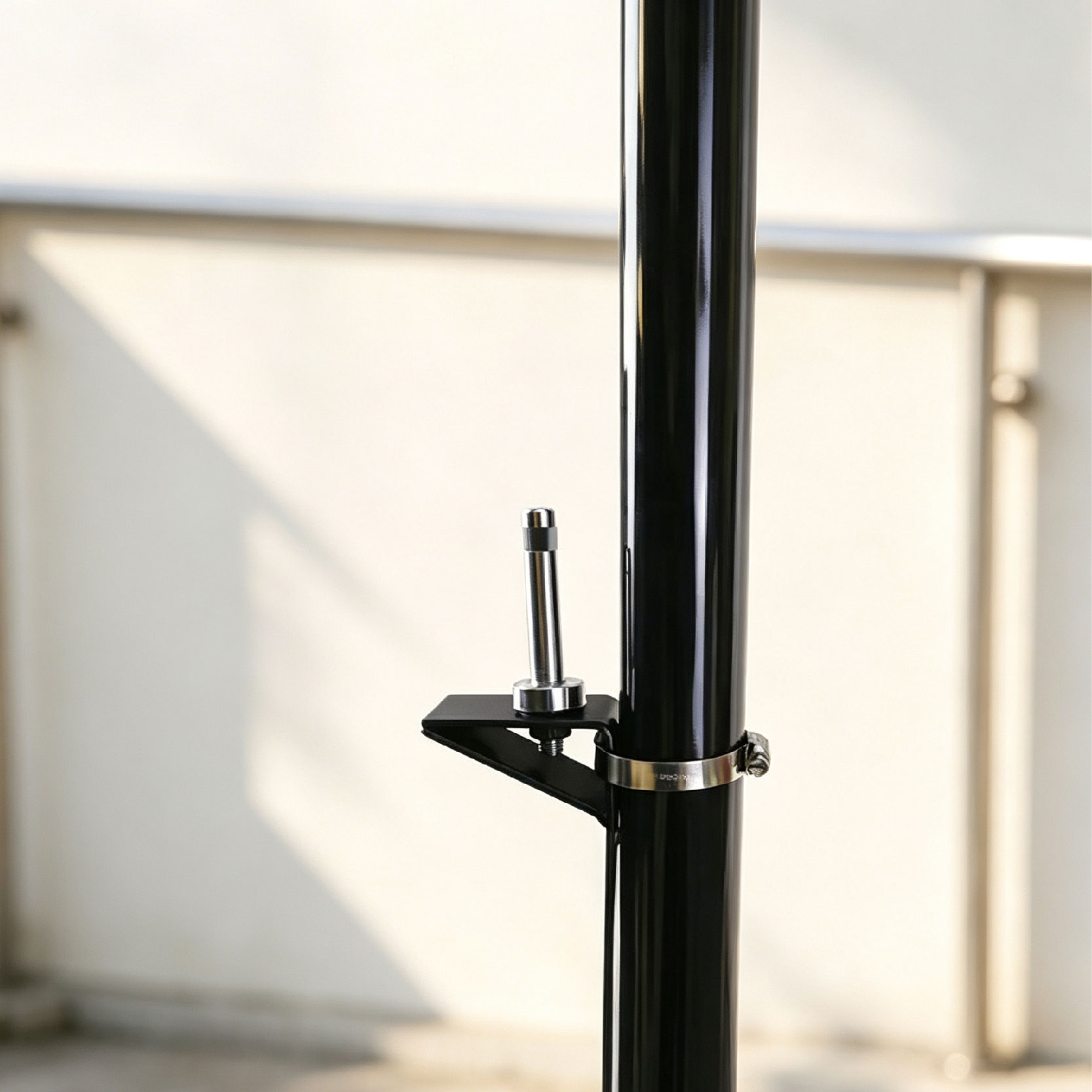
The LDG‑8 mounts to fences, woode boards, concrete walls, or metal railings. The ring diameter adjusts from 43 mm to 60 mm, so it fits many pole sizes. Below are the segments where it beats traditional hardware.
4.1 Trade Shows and Exhibition Stands
Indoor halls have drafts. The carbon composite pole weighs 0.6 kg; one person carries 20 sets without a cart. Setup is fast. No rust stains on exhibition carpet from a corroding bracket. Labor hours drop.
4.2 Outdoor Sports Events and Beach Promotions
Salt air kills aluminum in weeks. We supply a distributor in Cancún. Before switching, they replaced 35% of their aluminum poles after every spring‑break season. With carbon composite, they see 2% missing caps — no bent poles. The powder‑coated bracket survives UV and salt. They now stock only LDG‑8 and reorder every 18 months instead of quarterly.
4.3 Retail and Real Estate Signage
Agents mount feather flags on wooden fence posts or walls. The bracket holds firm. The pole sways but doesn’t break. One user left a flag up through a Chicago winter storm; the pole flexed under ice and returned to straight. Aluminum would have crumpled.
5. Factory Process: What the Quality Numbers Mean
Our Shandong facility runs a lean, semi‑automated line. We control everything from raw material to packaging. When a product comes from three different subcontractors, hidden quality drift bleeds into your inventory. We avoid that.
5.1 Iron Bracket Fabrication
HRC steel coil (Q235B) is slit, stamped on a 160‑ton press, and the ring is roll‑formed. What actually happens: Semi‑automatic CO₂‑shielded welding; every seam checked for porosity. Parts are shot‑blasted to SA 2.5 and zinc‑phosphate pre‑treated. Electrostatic powder coat cures at 200 °C. Adhesion test: cross‑hatch ≤1% detachment, exceeding ISO 2409 class 1.
5.2 Carbon Composite Pole Pultrusion
We pull our own poles. Carbon fiber roving and biaxial glass veil run through a UV‑stabilized polyester resin bath and a heated die. The result is a thin‑wall tube with 90% fiber content by volume, wall thickness 1.8 mm. Each batch undergoes a 3‑point bend test to 150% design load. The pole must return to within 2 mm of straight. Any matrix cracking — reject. This isn’t plastic; it’s a composite that behaves like a spring.
5.3 OEM Customization
Different ring sizes, custom powder coat colors (RAL or Pantone), laser‑engraved logos on the bracket. Pre‑production sample in 10 days. Custom color MOQ: 500 pieces. Standard black LDG‑8 ships from stock, MOQ just 2 pieces. Test it before you commit.
6. Trends: Why the Market Is Moving Away from Metal
Three shifts are pushing buyers away from heavy, rust‑prone flag hardware toward carbon composite.
6.1 Freight Cost Sensitivity
Container rates have swung from $2,000 to $12,000. Every kilogram — and every cubic metre — counts. A 0.6 kg unit packed in a short carton loads 1,147 units in a 40HQ. A heavier aluminum unit in a long box loads only 800. It adds up fast. That’s a 40% freight saving per unit, with nothing else changed. Multiply by 10,000 units and the saving alone covers an entire duty bill.
6.2 Duty Optimization
Importers now reverse‑engineer HTS codes before finalizing a product. Carbon composite poles sit under plastics chapters, away from metal duties. Several European clients have dropped aluminum entirely to bypass the 56% anti‑dumping rate on Chinese aluminum extrusions. That's the difference. The iron bracket is there, but the pole defines the set’s essential character. We give you a technical sheet that supports classification under 3926.90. Always get a binding ruling.
6.3 Durability as a Brand Statement
A drooping flag makes a brand look weak. Event managers want zero‑maintenance hardware. Carbon composite delivers. One global beverage brand runs 5,000 units across Latin America. The old aluminum fleet needed a mobile repair crew. Now there is no crew.
7. Upgrade Path: From Aluminum to Carbon Composite
Switching your catalogue isn’t just a product change. It’s a profitability play. Here’s the step‑by‑step.
Step 1: Order two LDG‑8 samples at $6.50 each. Test them on your own fence, in worst‑case weather, for 30 days. We ship in 15–30 days because we don’t hold many samples — lean inventory keeps costs down for both of us.
Step 2: Run the landed cost model with your freight forwarder using our spec sheet (0.600 kg, 23×46×56 cm). Compare against your current aluminum landed cost. Use your own returns data for the replacement rate.
Step 3: Start with a mixed container — half aluminum, half carbon composite — to transition customers. We support split shipments. Standard lead time 15–30 days. Container‑load pricing kicks in at 500 units. At 1,147 units per 40HQ, you maximize freight efficiency.
Step 4: Brand it. Put your logo on the bracket. Offer a 3‑year warranty you can actually afford because field failure is near zero. That builds loyalty.
Last year a tent rental company in Texas told me, “Wei, we have no money to replace poles mid‑season.” They bought 300 units on a tight budget. Six months later they reordered 1,000. That’s the hustle: less money forced a smarter material choice. Now their cost base is lower than competitors who still buy aluminum.
8. Frequently Asked Questions
- Q: What does the fence flag bracket include?
- The set includes one iron bracket with adjustable ring (43–60 mm), all mounting screws, and one carbon composite pole: diameter 23 mm, wall thickness 1.8 mm, length 4 metres. The pole ships in two 2‑metre sections to fit the 23×46×56 cm carton.
- Q: What is the MOQ?
- 2 pieces for standard black. Custom color MOQ is 500 pieces. Low MOQ lets you test the market without a big commitment.
- Q: Can I get a free sample?
- No. Samples are charged at FOB price plus freight. The sample cost is creditable against your first bulk order over 200 units. This filters out requests for free personal flag poles. We’ve done it since 2005; it works.
- Q: What is the lead time?
- 15–30 days for standard orders. Customized orders add 7–10 days for color matching and pre‑production sample approval.
- Q: What HTS code should I use for customs?
- We recommend 3926.90.99 for the carbon composite pole (other articles of plastics). The iron bracket may be classified separately as 7326.90.85. The set’s essential character is the pole, so many authorities accept a single classification under the pole’s code. Consult your broker with our material breakdown sheet.
- Q: Is the bracket completely rust‑proof?
- The iron bracket is powder‑coated, not intrinsically rust‑proof. The coating gives excellent barrier protection. A deep scratch in a marine environment may show surface oxidation over years. Units in service in the Maldives for 4 years show no red rust. The carbon composite pole cannot rust.
- Q: What wind speeds can the system handle?
- With a standard 0.9 m² feather flag, the pole withstands 120 km/h gusts. The ring grip prevents pull‑out up to 80 km/h on a 50 mm round fence post, assuming the post itself is sturdy.
- Q: Can I use my existing aluminum pole with this bracket?
- Yes, if the pole diameter is between 43 mm and 60 mm. The ring tightens securely. But the system performs best as a matched set.
- Q: How many units fit in a 20‑ft container?
- A 20GP (28 CBM) holds about 475 units. A 40HQ fits 1,147 units. We provide stacking plans.
- Q: Do you accept L/C payment?
- Yes. L/C at sight, T/T (30% deposit, 70% against copy of B/L), Western Union, MoneyGram for small orders.
- Q: Is the carbon composite pole brittle?
- No. It’s fiber‑reinforced polymer designed to flex. A direct hammer blow will splinter it, but normal use won’t. We’ve bent a pole into a U‑shape; it returns straight. Try that with aluminum and you get a permanent crease.
- Q: What warranty do you offer?
- 12 months against manufacturing defects. Factory defect rate is under 0.3%. For OEM customers we can negotiate extended terms based on volume.
If you have more questions, contact me directly. I read every inquiry. When you’re ready to move beyond aluminum that fails after one storm, we’ll be here.
About the Author
Wei Chen, Senior Product Specialist
B.S. Supply Chain Management, Michigan State University; Certified Professional in Supply Management (CPSM)
12 years in B2B display hardware sourcing. Former procurement manager for a top 20 US promotional products distributor. Specializes in aluminum pole systems and import compliance.
Reviewed by WZRODS Technical Team. Updated: 2026-07-23
 Comments (0)
No comments yet. Be the first to comment!
Leave a Comment
Related Products
Bungee hook
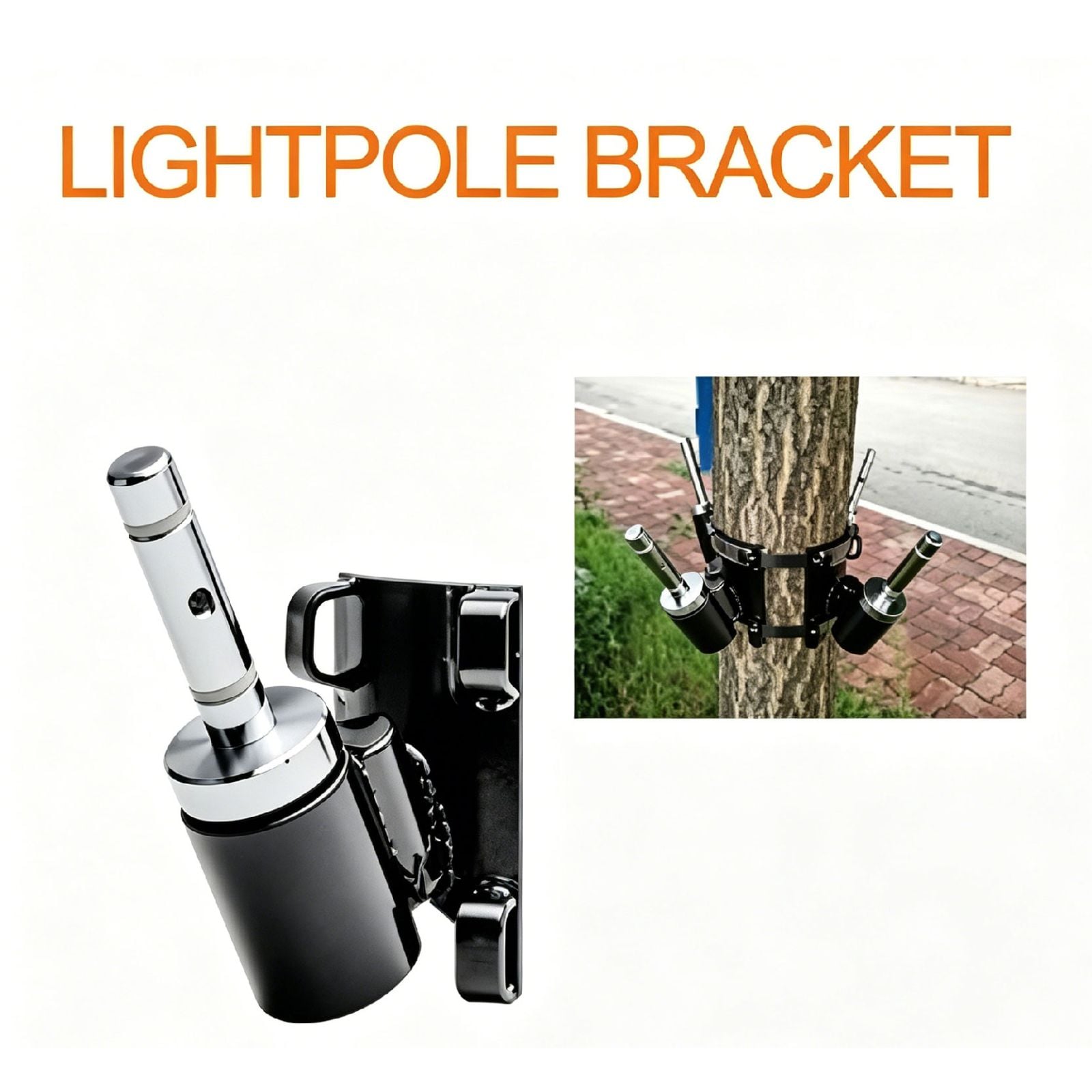
Lightpole bracket
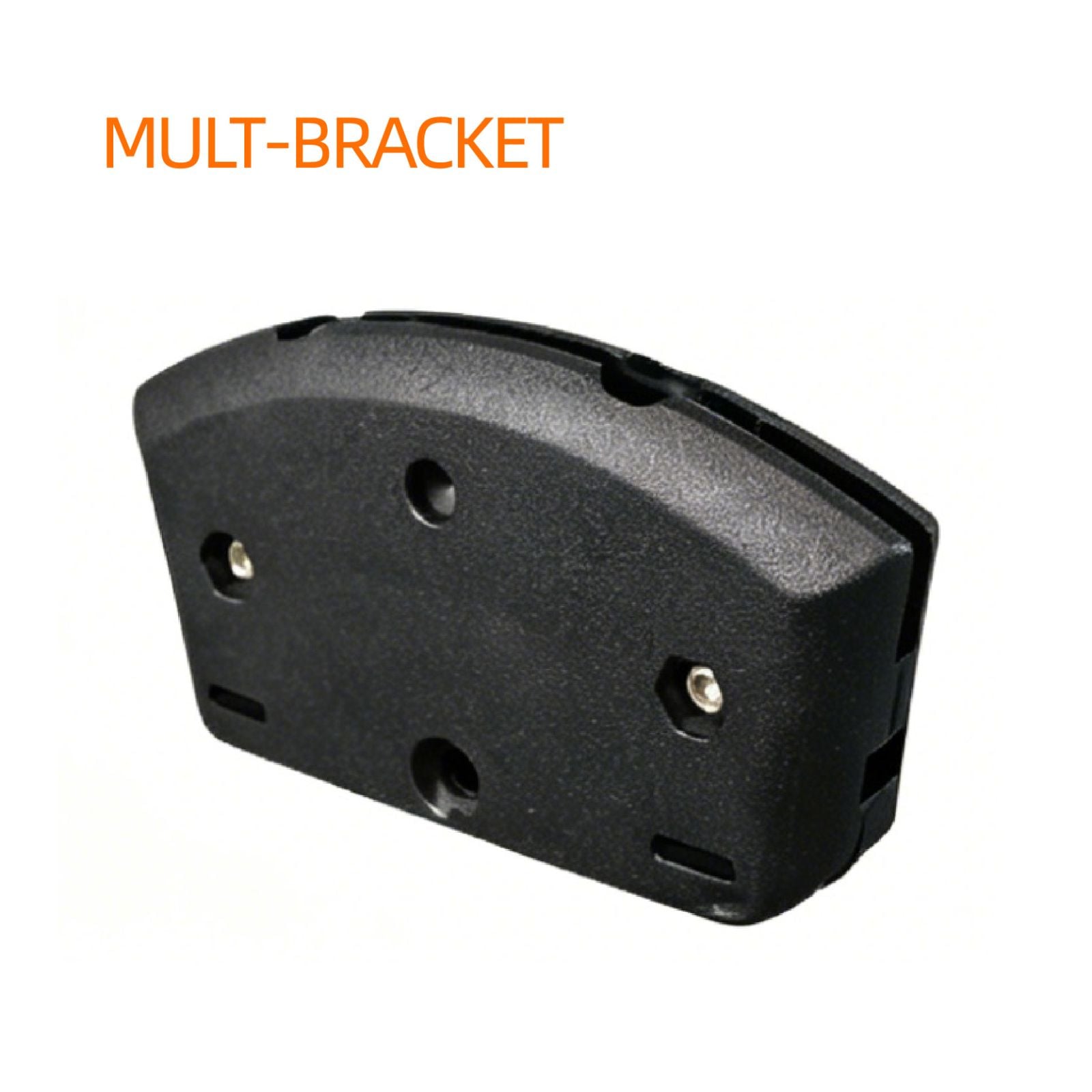
Disc banner Mult-bracket
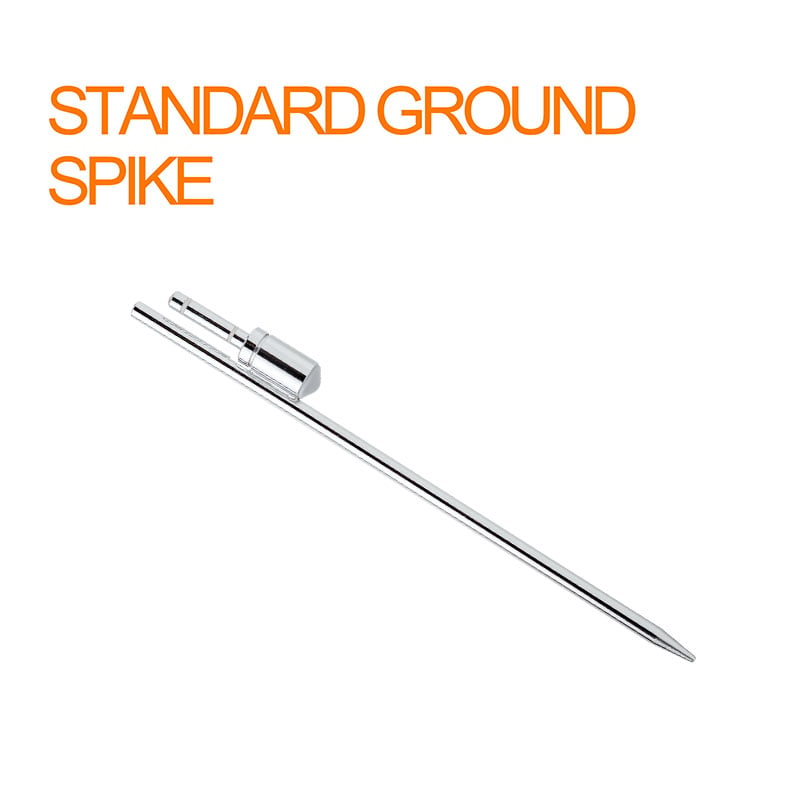
Ground Spike For Lawn Or Sand
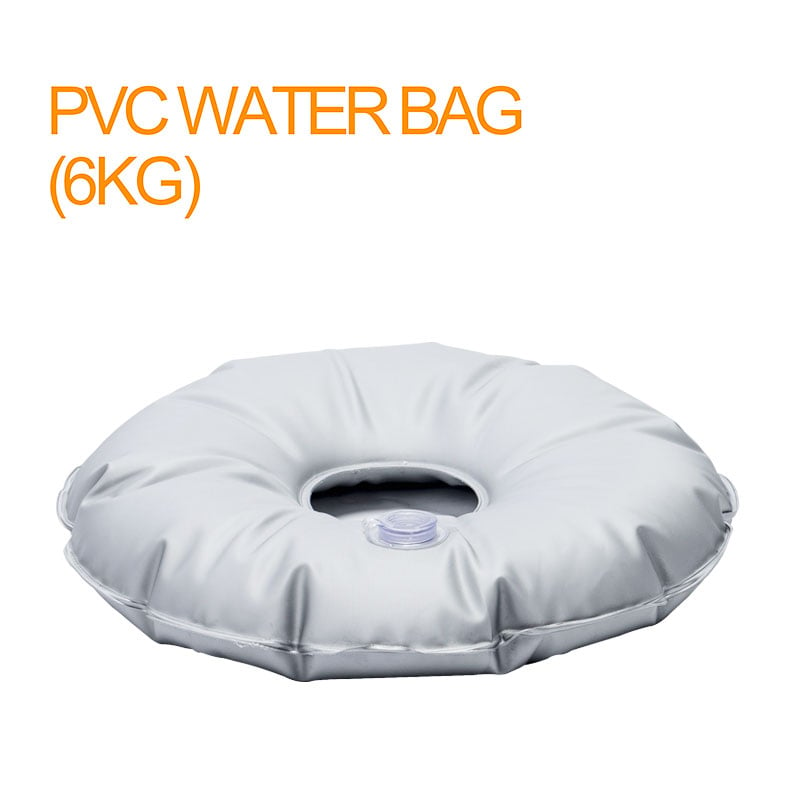
Water Bag
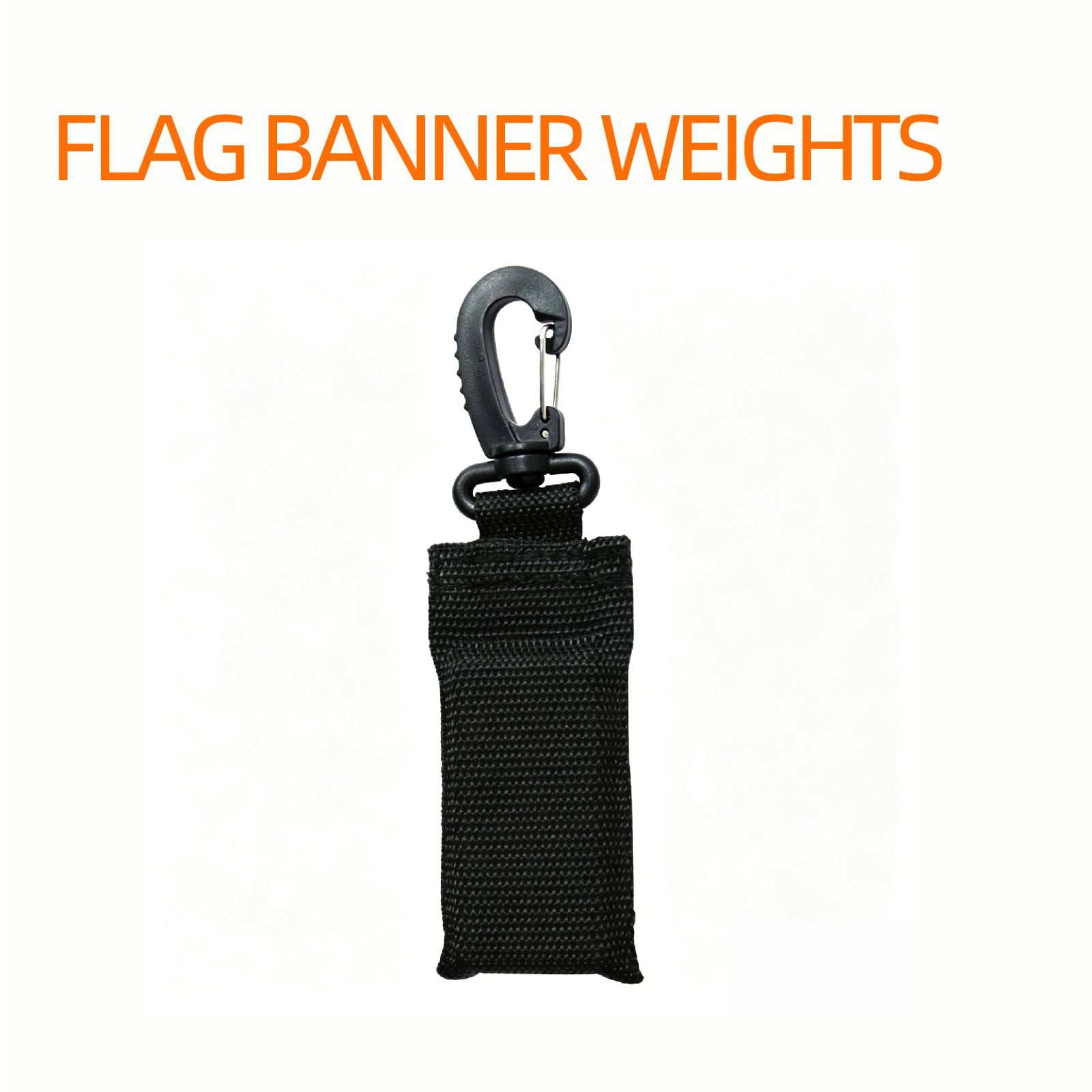
Flag /banner weights
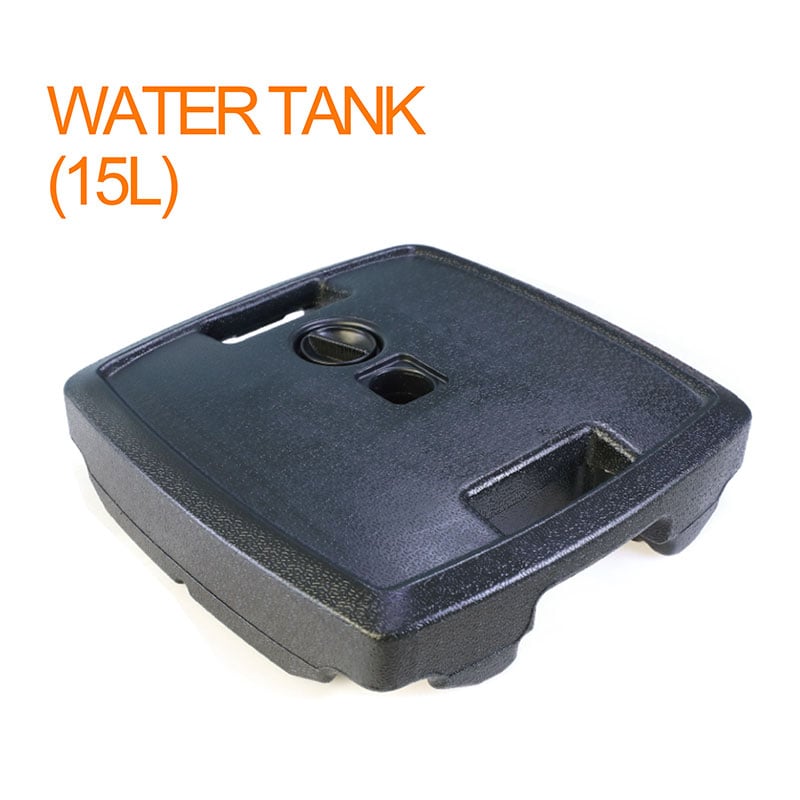
Water tank
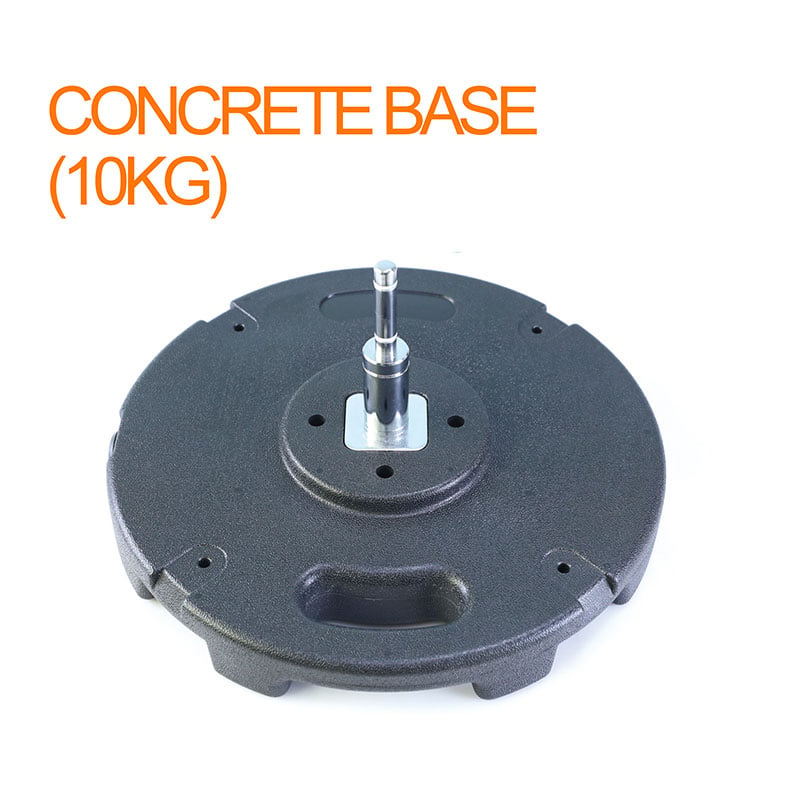
Concrete base(10kg)
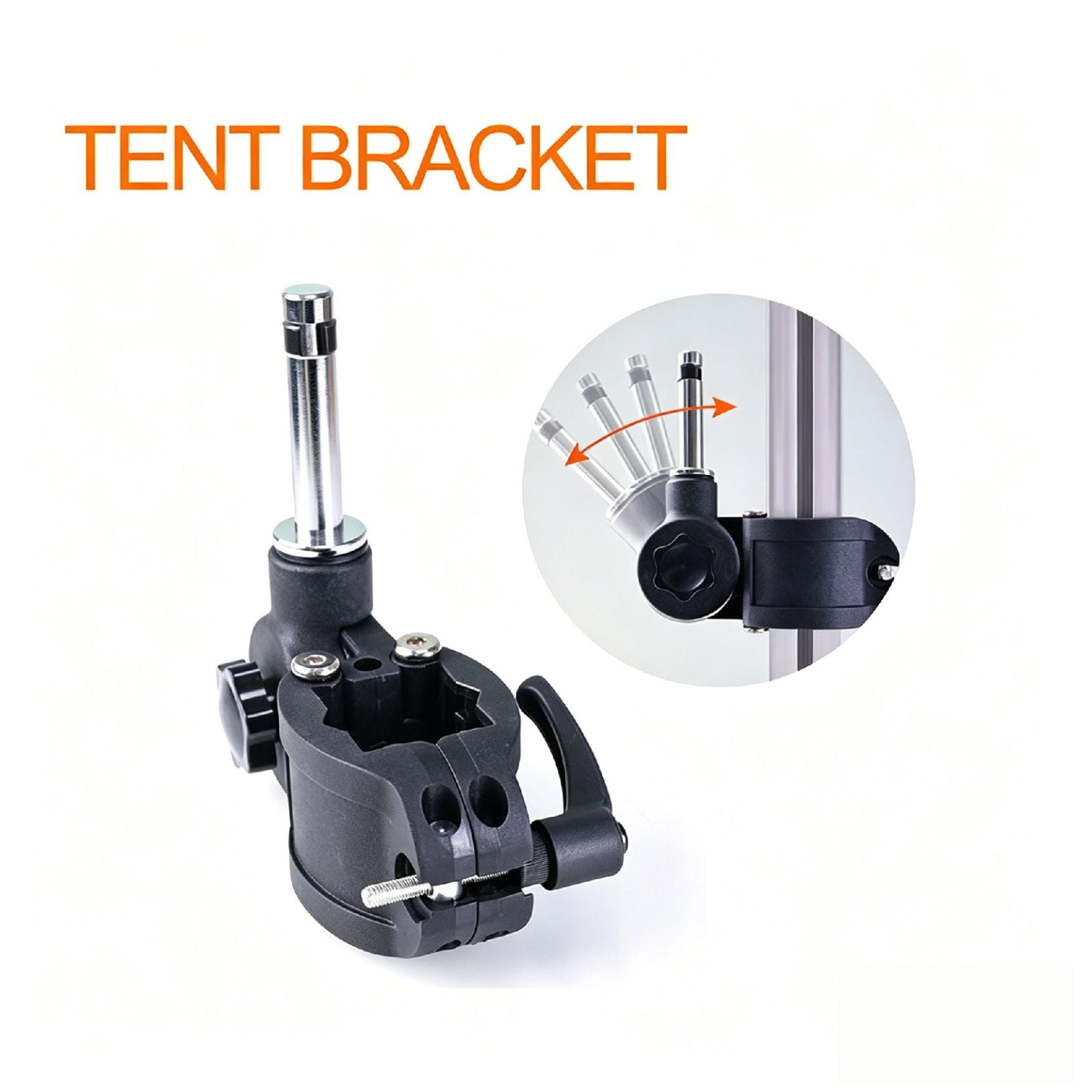
Tent Bracket
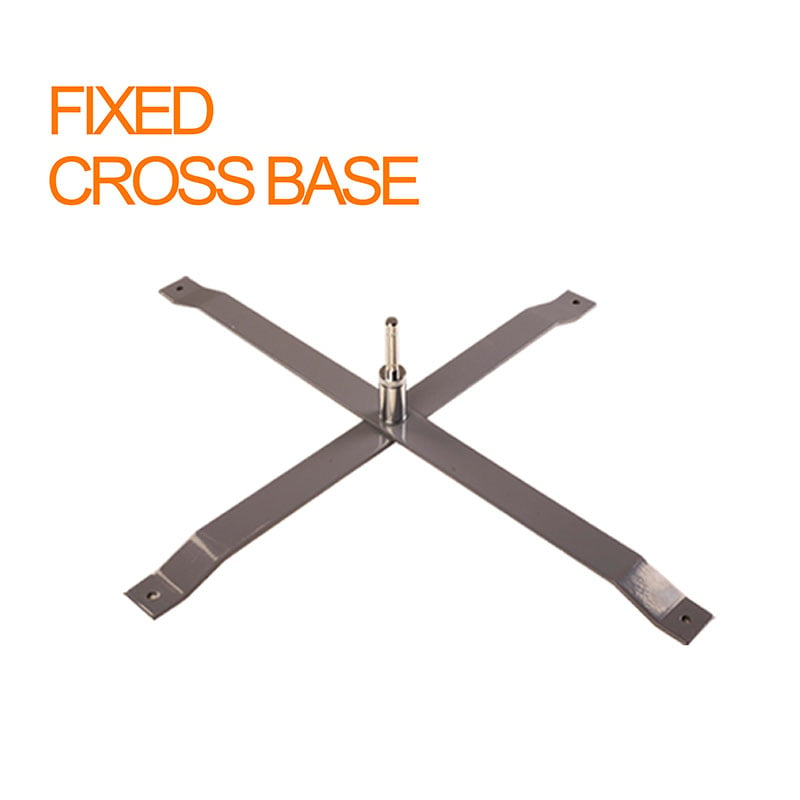
Fixed Cross Base
Related Articles
29kg Concrete Flag Base - The Complete B2B Buyer's Resource - WZRODS
WZRODS DY451B: 29 kg, HDPE shell, concrete core. Stackable, portable, rust-proof. FOB price US$5.75–$6.85 at MOQ 2 units. Those numbers look unremarkable. Factor in landed cost—import duties lower than aluminum’s under relevant HTS codes, freight savings from less weight per unit of stabilizing mas
Wide Tube Cross Base - The Complete B2B Buyer's Resource - WZRODS
The Wide Tube Cross Base, manufactured by Wzrods in Shandong, China, solves one problem: reliable stability for poles under three meters, without the freight costs and warehouse footprint that heavier alternatives demand.
Rectangular Pipe Cross Base - The Complete B2B Buyer's Resource - WZRODS
The pipe cross flag base is a cross of rectangular steel pipe, powder‑coated, weighing 1.3 kg and spanning 78 cm across its arms. Its center holds a C‑ring shaft that lets the flag rotate with the wind.
X-Shape Backpack Banner - The Complete B2B Buyer's Resource - WZRODS
Economic Cross Base - The Complete B2B Buyer's Guide- WZRODS
When you buy an economic cross base—something like the Wzrods DM‑9, a 77 cm‑long, 1.3 kg iron cross—forget “economic” as a synonym for “cheap.” It means value-engineered.
How to Choose the Right Feather Flag Base for Different Surfaces
Feather Flag - Professional Banner Poles & Systems Manufacturer - WZRODS
How to choose a high-quality backpack flag
The backpack flag concept centers on a frame carried on the back, similar to a backpack, specifically engineered to support a raised flag or banner.