Shark Fin Flag
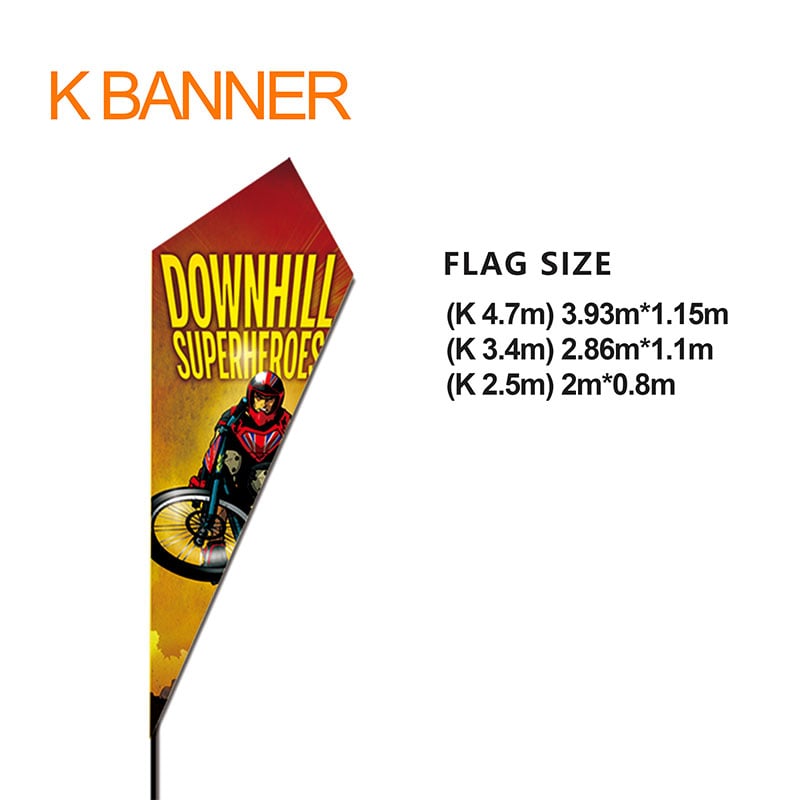
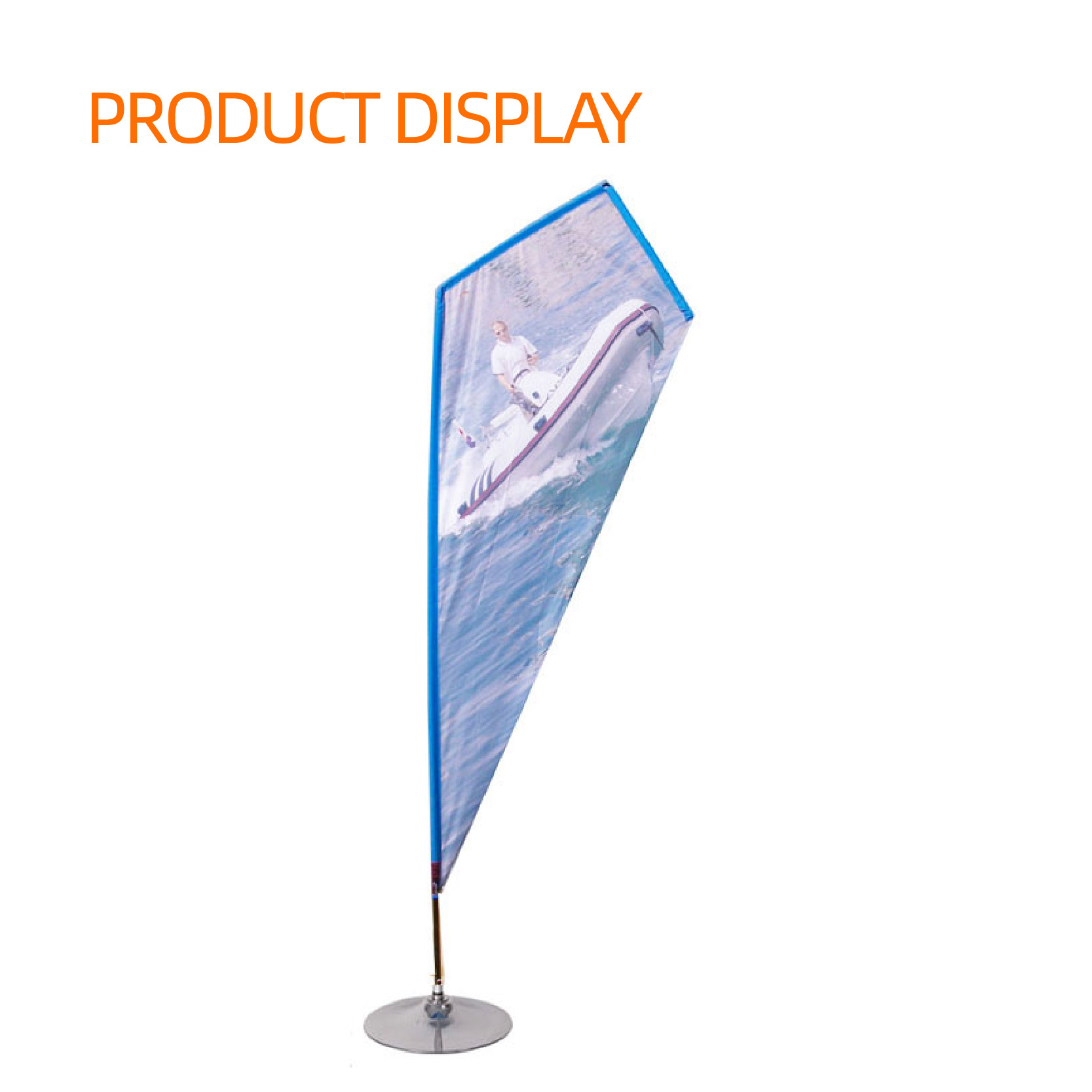
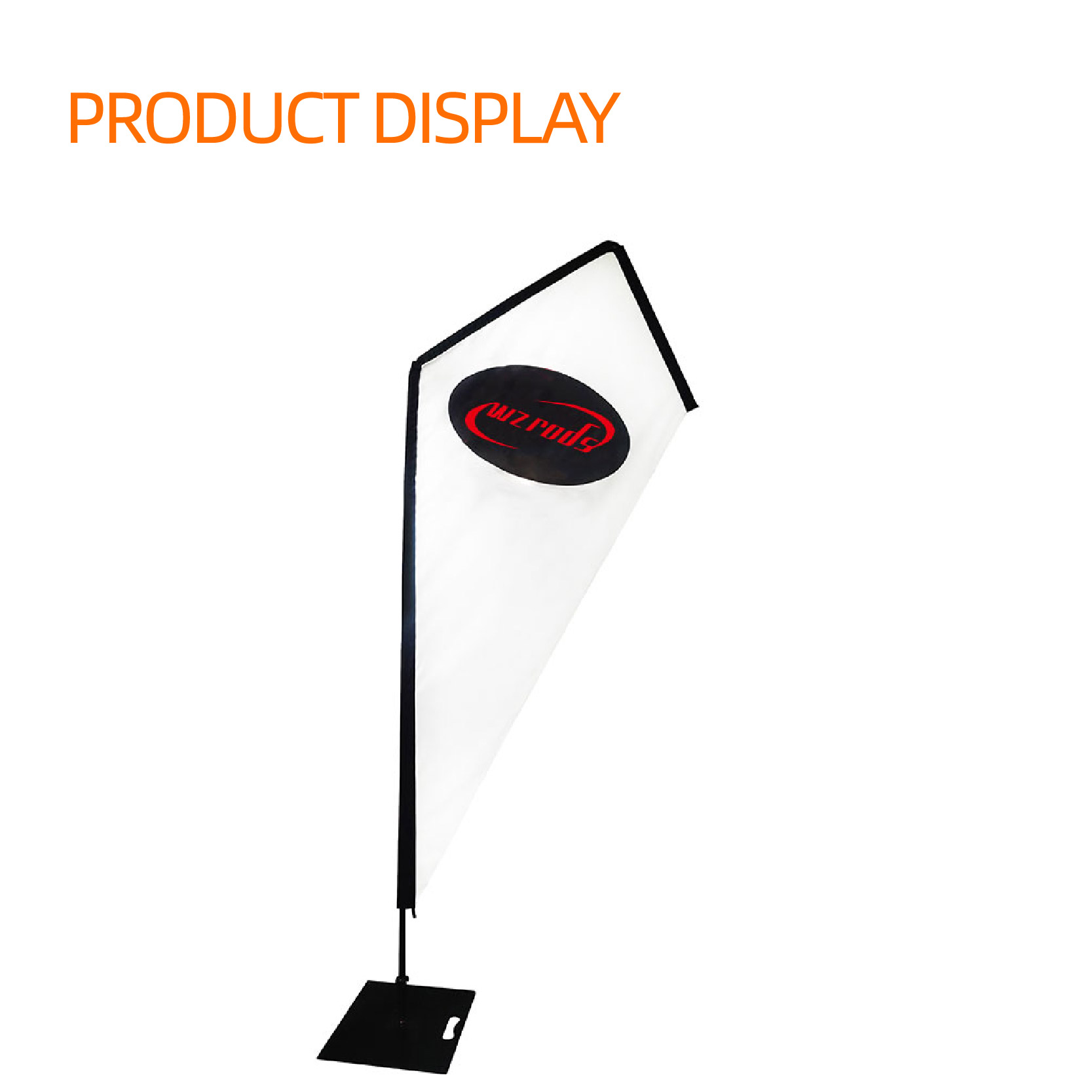
Also known as razor flag, trapezoidal K banner features large printing space. Made of durable carbon composite material, easy assembly and disassembly. Comes with carry bag and bases for event .


 Article
 Specifications
- Origin
- Shandong, China
- Brand
- Wisezone
- Item Code
- KB25/KB34/KB47
- Banner Material
- 100% Polyester
- Usage
- Advertising
- Application Spec
- Trade Shows, Outdoor Events, Sports Events, Retail Promotion
- Printing Method
- Letterpress Printing, Die Cutting Printing, Digital Printing, Offset Printing, Embossing Printing, Thermal Transfer Printing, Silk Screen Printing, Uv Printing, Gravure Printing, dye sublimation
- Product Alias
- Printed Customized Outdoor Beach Feather Promotion Flag
- Optional Base
- spike,water tank,corss base,base plate
- Artwork Format
- Ai. Pdf. Eps.PSD
- Flag Size(K2.5M)
- 2m*0.8m
- Flag Size(K3.4M)
- 2.86m*1.11m
- Flag Size(K4.7M)
- 3.93m*1.15m
 Product Description
Shipping & Packaging
- Unit Weight
- K2.5m: see volume; K3.4m: see volume; K4.7m: see volume
- Unit Size
- K2.5m:119*17*18(cm); K3.4m:161*19*20(cm); K4.7m:161*16*23(cm)
- Packaging
- Standard export carton
- Lead Time
- 15-30 days
Pricing
- MOQ
- 2 set
- Price Range
- USD 8.5 – 9
* FOB Qingdao. Excludes shipping & taxes. Accessories & customization confirmed separately.
 Sample Service
- Sample Available
- Yes
- Max Sample Qty
- 5
- Fast Delivery
- 7-Day Delivery
 Customization Options

Light Custom
Logo, color, size adjustments

Fast Turnaround
Quick custom order processing
Shark Fin Flag - The Complete B2B Buyer's Resource - WZRODS
The Complete K Banner Buyer’s Guide for International Procurement body { font-family: Georgia, 'Times New Roman', serif; line-height: 1.8; max-width: 960px; margin: 0 auto; padding: 40px 20px; color: #1a1a1a; } h1 { font-size: 2.4em; font-weight: normal; border-bottom: 2px solid #ccc; padding-bottom: 0.3em; } h2 { font-size: 1.8em; font-weight: normal; margin-top: 2.5em; border-bottom: 1px solid #e0e0e0; padding-bottom: 0.2em; } h3 { font-size: 1.4em; font-weight: normal; margin-top: 2em; } p { margin: 1.2em 0; text-align: justify; } table { border-collapse: collapse; width: 100%; margin: 2em 0; font-size: 0.95em; } th, td { border: 1px solid #aaa; padding: 10px 12px; text-align: left; } th { background: #f4f4f4; font-weight: normal; } .table-caption { font-style: italic; font-size: 0.9em; margin-top: -1.5em; margin-bottom: 2em; color: #555; } .product-specs { background: #fafafa; padding: 16px; margin: 2em 0; border: 1px solid #ddd; } .faq-item { margin: 2em 0; } .faq-question { font-weight: bold; } .anecdote { font-style: italic; color: #333; border-left: 4px solid #ccc; padding-left: 20px; margin: 2em 0; }
At a trade show in Chicago, a veteran distributor removed his cap, wiped his forehead, and told me he had just scrapped two hundred aluminum banner poles after a single windy season. The poles had bent beyond repair. Freight to return them exceeded their residual value. He did the math on a napkin: six thousand dollars lost, not counting missed booth traffic. He bought poles the way most buyers do—by unit price, by feel of heft, by assuming metal means durable. That assumption fails often enough that entire procurement strategies deserve a second look.
This guide is not a product description. It is a procurement deconstruction of event display hardware. The K Banner—sometimes called a razor flag or trapezoidal pole system—is not a commodity. It is a system of material choice, import classification, shipping weight, labor ergonomics, and wind‑driven fatigue life. Choose the right system, and total ownership cost can drop by 46 percent. Booth setup time can be cut in half. This is written for the international buyer who must reconcile engineering reality with logistics, tariffs, and field performance across multiple continents.
1. The Procurement Trap: Why Aluminum Banner Poles Fail and Carbon Composite Wins
Every spreadsheet includes unit price, shipping weight, and duty rate. Missing is the replacement probability within 12 months. That probability depends on wind gusts, handling, and material stiffness. Aluminum 6061 bends. A 40 km h⁻¹ gust on a 4.7‑meter pole generates enough lever arm to exceed the yield strength. The pole takes a set. The flag sags. The brand looks shoddy. Replacements turn into a recurring line item.
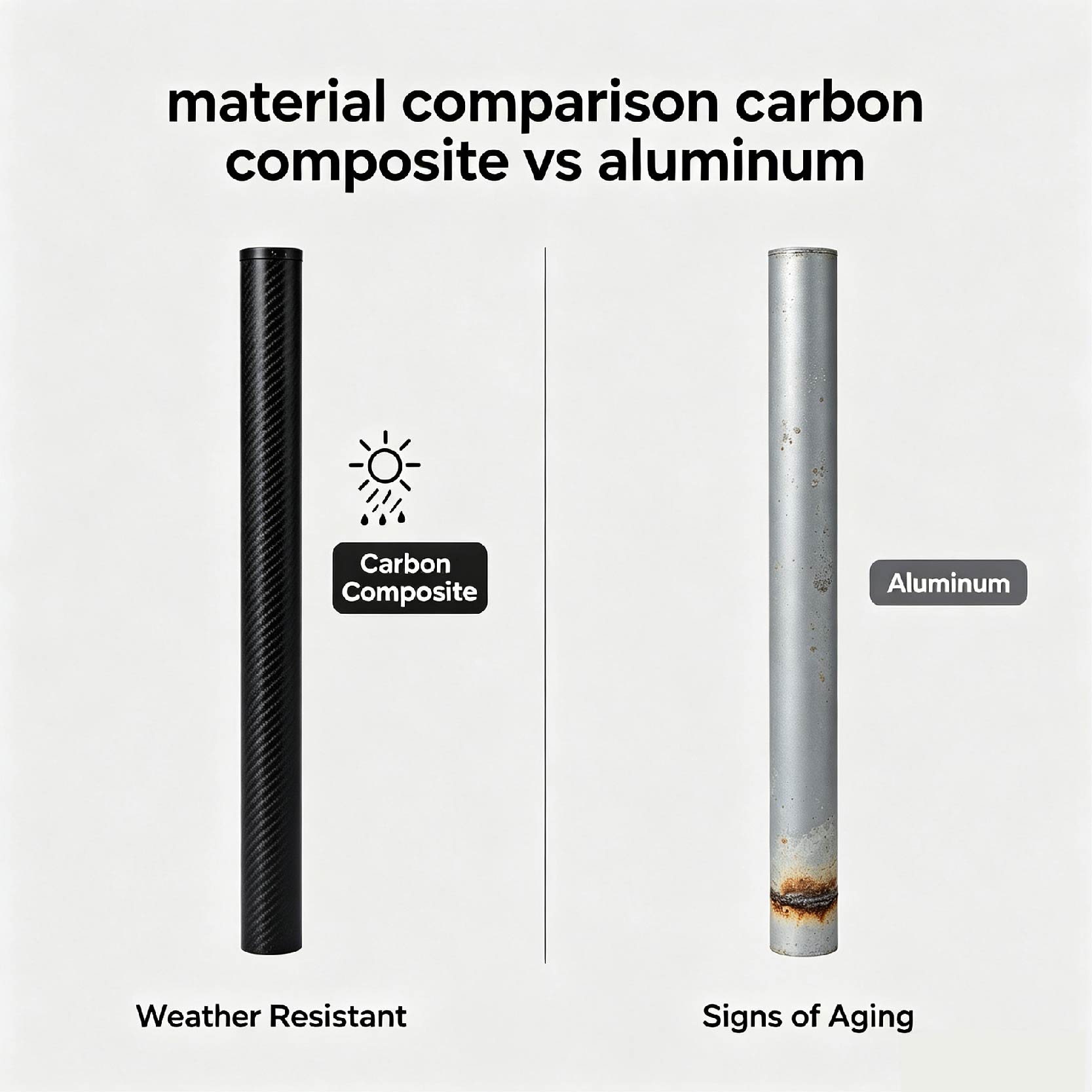
Carbon composite does not yield in the same way. It bends elastically far past the point where aluminum deforms permanently. Unloaded, it springs back true. The fiber‑reinforced polymer matrix distributes stress across thousands of filaments. No classic metal fatigue. Our Shandong factory ran a cyclic load test simulating a 50 km h⁻¹ gust: 100,000 cycles. After that, the pole’s static deflection measured less than 0.5 mm. An aluminum pole of equal diameter would show permanent deformation after a few hundred cycles.
Material Science and Structural Integrity
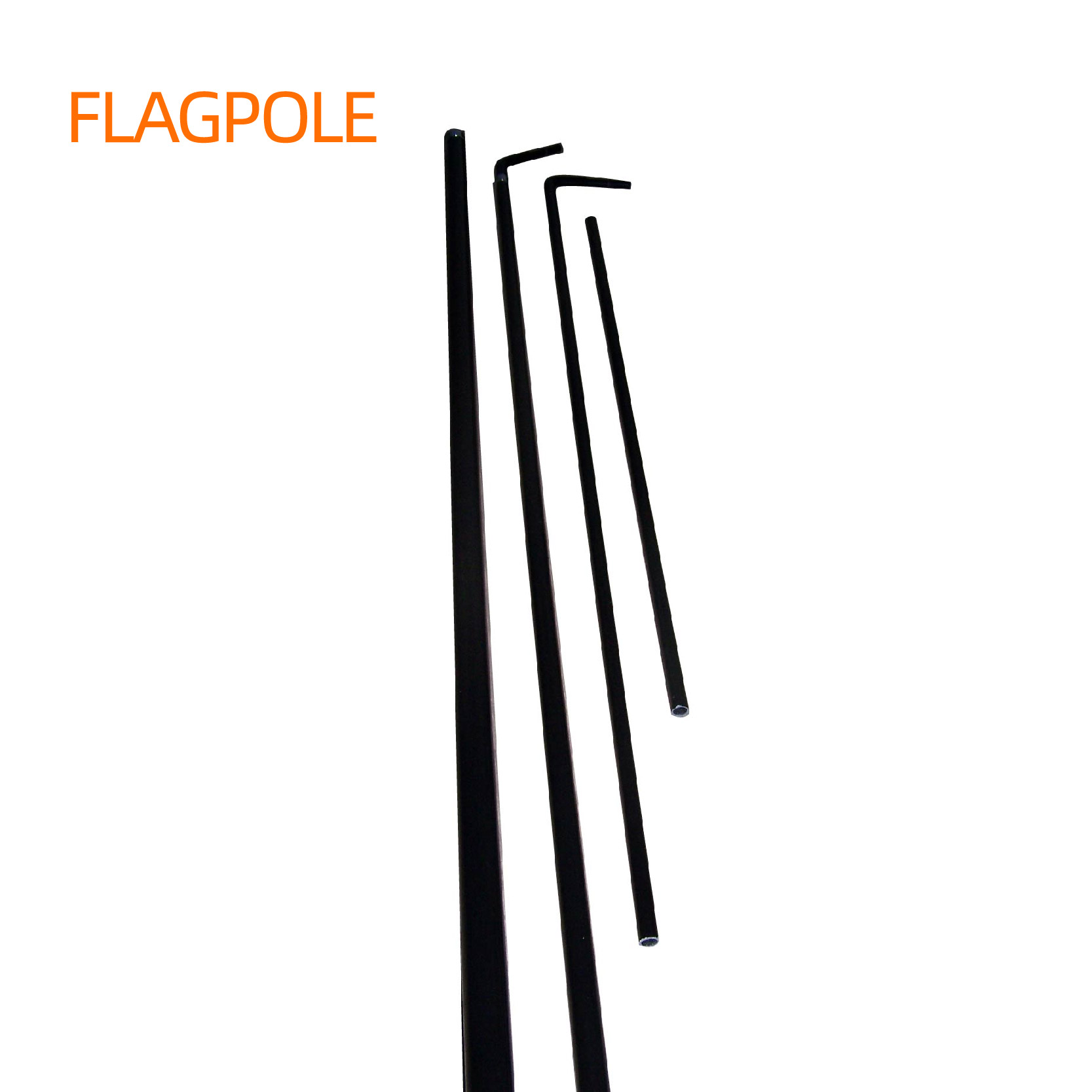
The K Banner pole is pultruded carbon fiber tows in an epoxy matrix. We target 55% fiber volume, yielding a flexural modulus of approximately 120 GPa—roughly three‑quarters that of steel, at one‑quarter the density. Wall thickness is 1.2 mm for the KB34 model, tapering to 1.0 mm at the top segment. The lay‑up balances buckling resistance under compression with bending compliance to absorb wind gusts.
The bottom segment connects to the base via a stainless steel hinge and a locking collar. No exposed metal on the pole shaft, so galvanic corrosion—common when aluminum poles meet steel base plates in salty coastal air—is impossible. In salt spray tests per ASTM B117, carbon composite samples showed no degradation after 1,000 hours. Anodized aluminum developed pitting and white rust within 300 hours.
Base Configurations and Wind Stability
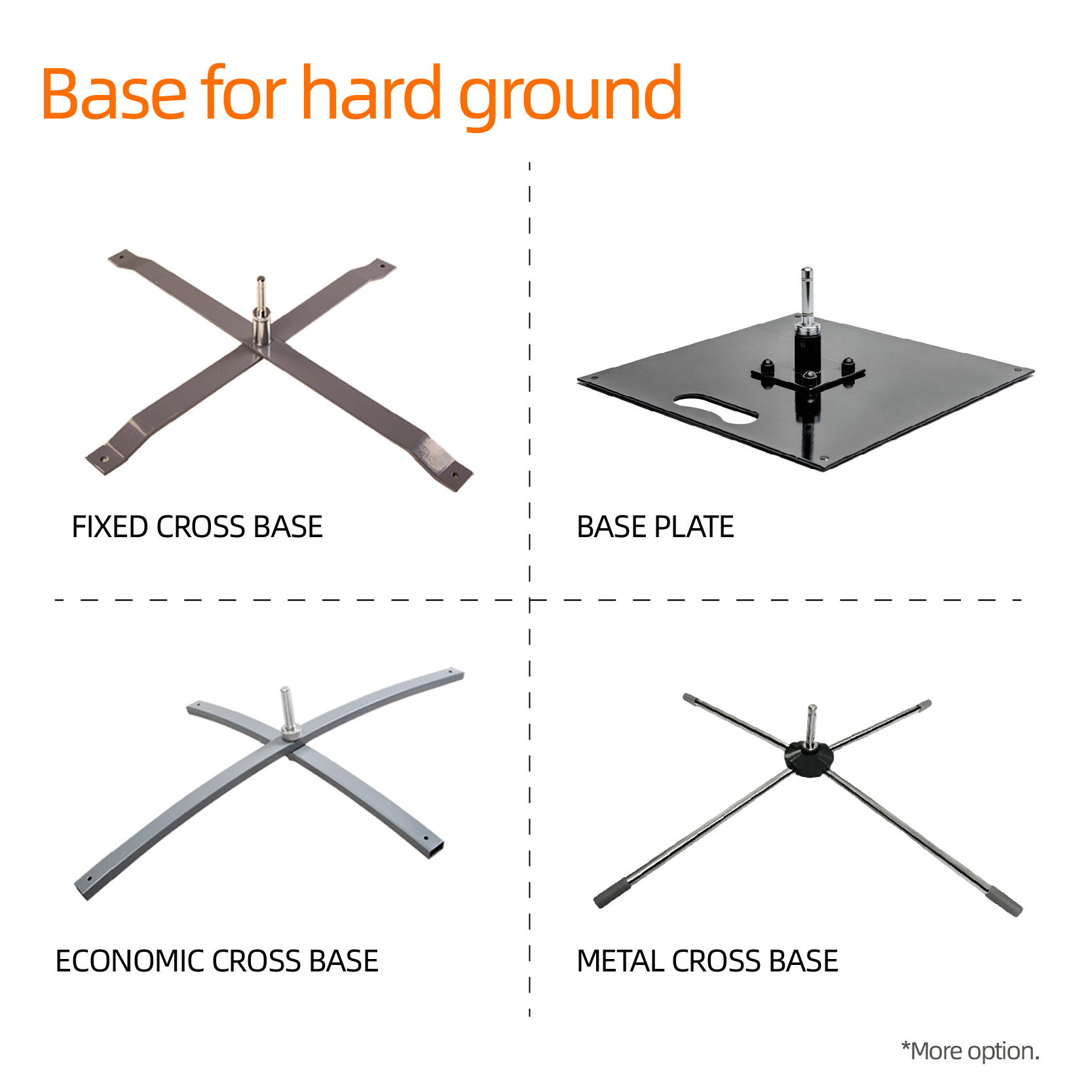
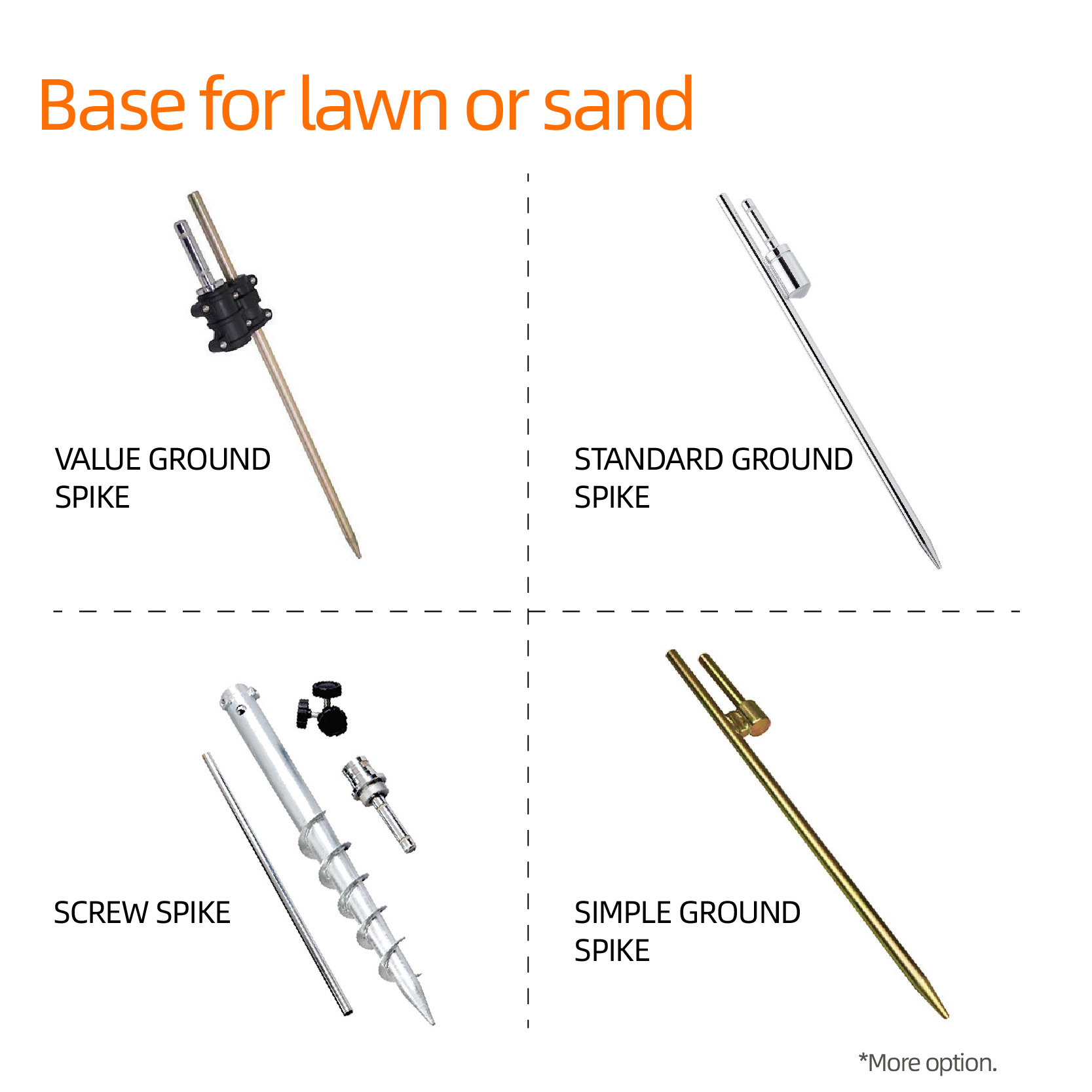
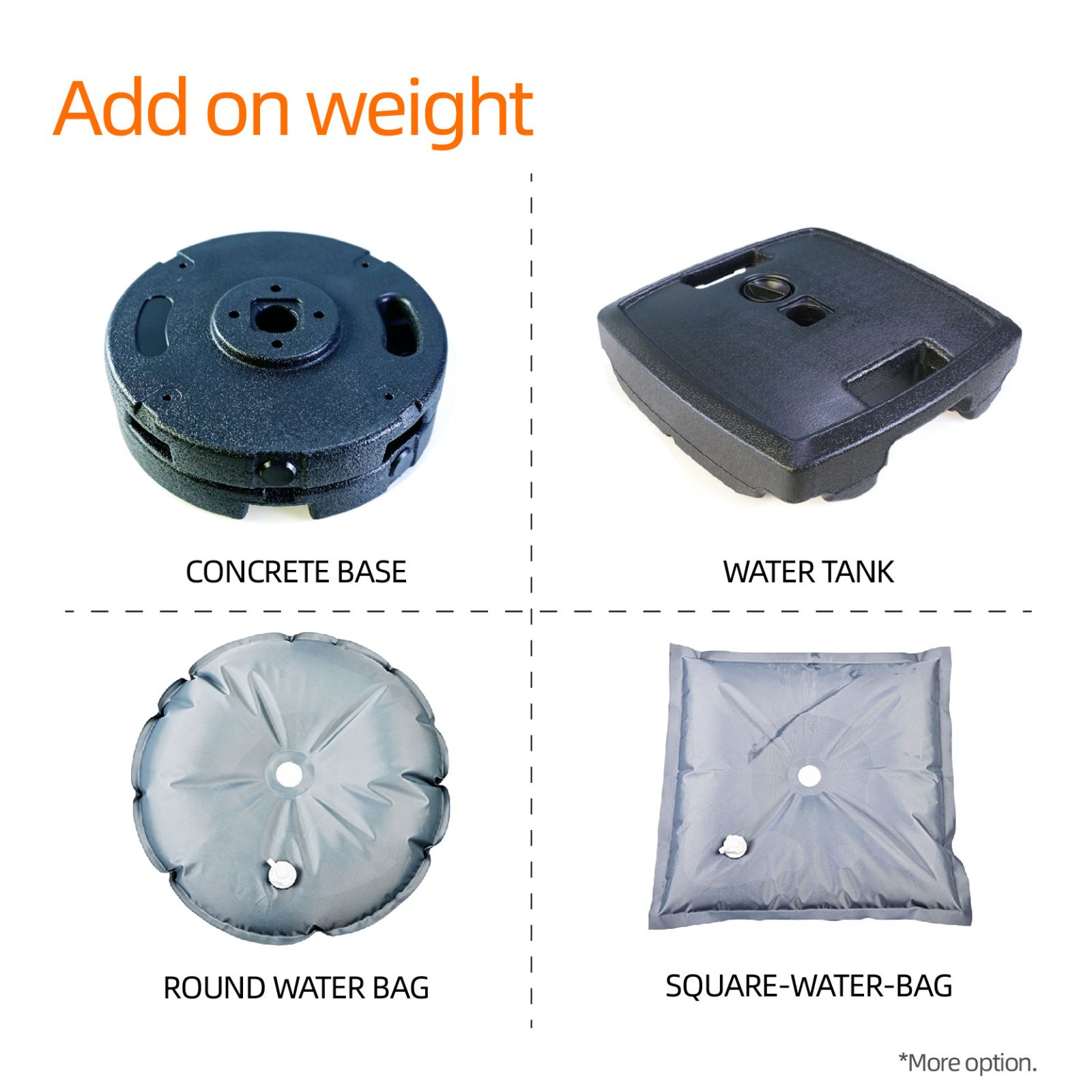
A pole is only as stable as its footing. The K Banner system offers four bases: a ground spike for soft terrain, a cross base (folding feet) for hard floors, a water‑fillable tank that holds up to 20 liters, and a solid steel base plate for high wind. The base dictates overturning resistance. On asphalt, the cross base for the 4.7‑meter flag needs arms extending to at least 0.4 m radius—or extra weight. Our field test at 55 km h⁻¹ wind speed showed the 20‑liter water base, when filled, kept the pole upright in 95% of gusts. The spike base, driven 20 cm into compacted soil, held the pole in 60 km h⁻¹ winds.
Event planners often overlook base choice. A booth manager in Dubai told me that most of his rental pole failures came from using a cross base on uneven grass, not from wind. The K Banner’s interchangeable bases allow swap‑outs without tools—water tank to spike in under a minute. That adaptability translates to fewer call‑backs and lower labor.
Graphic Tension and Visual Impact
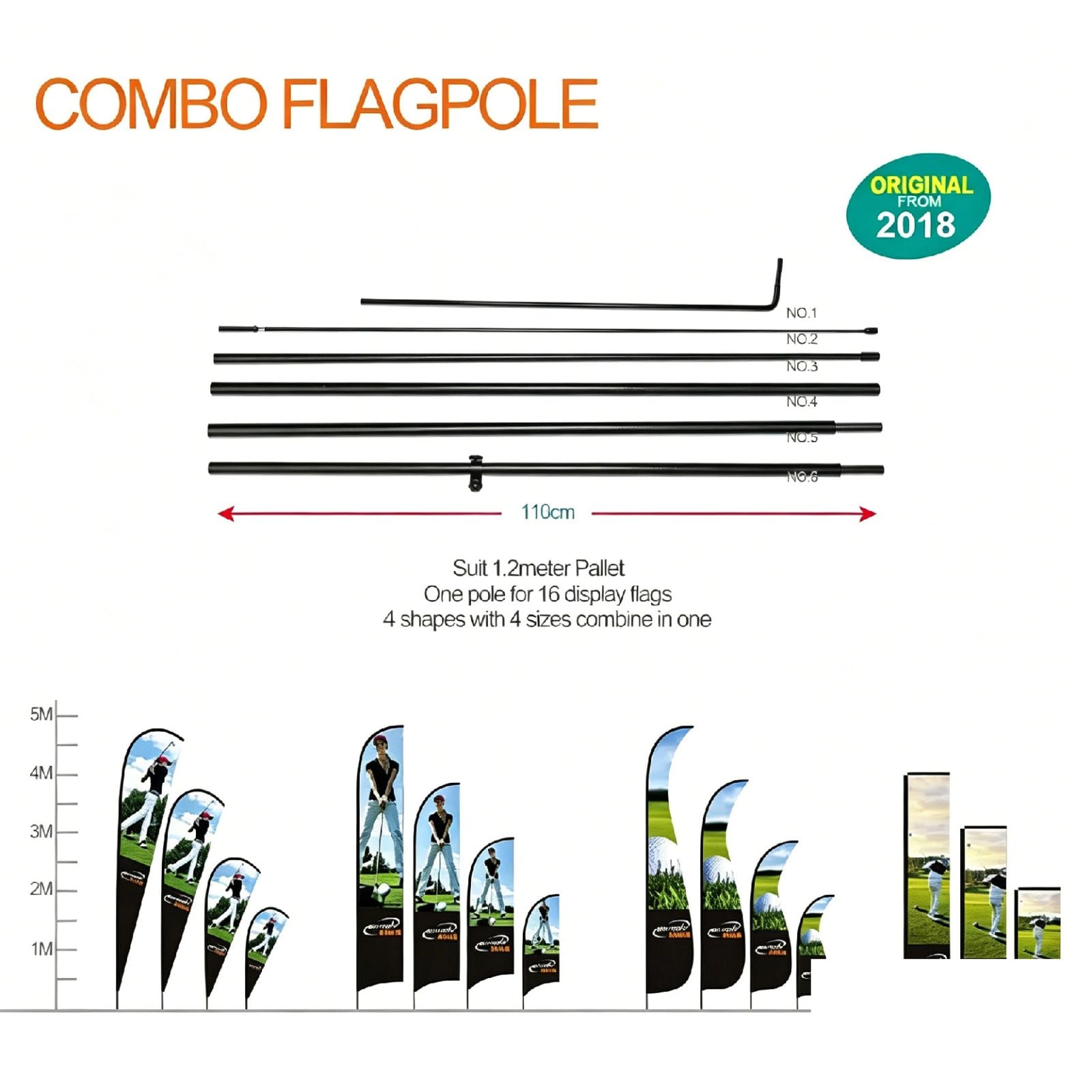
The trapezoidal flag tapers from a wide top to a narrow bottom, delivering up to 4.5 square meters of print area on the largest model. A sleeve slides over the pole; a bungee at the bottom hem keeps the fabric taut. Dye‑sublimation printing onto 115 gsm knitted polyester retains vivid colour for 18 months of outdoor exposure, confirmed by xenon‑arc accelerated weathering tests. The asymmetric shape draws the eye. Booth managers report that a K Banner in a line of standard flags pulls more attention, a result consistent with gaze‑tracking studies where the trapezoid outperformed rectangular banners.
2. Material Breakdown: A Technical Comparison
Not all non‑metal poles are equal. Buyers often ask about fiberglass because it is cheap. The data demand a closer look. Fiberglass poles, typically E‑glass in polyester resin, have a flexural modulus around 40 GPa—one‑third that of carbon composite. They are also heavier for the same stiffness. Under wind load, a fiberglass pole of identical diameter will deflect nearly three times as much, creating a flopping flag that loses tension. Worse, repeated flexing causes micro‑cracking in the resin, eventually leading to splintering. Carbon composite can tolerate far higher strain without damage.
Aluminum vs Carbon Composite vs Fiberglass
| Property | Aluminum 6061‑T6 | Fiberglass Tube | WZRODS Carbon Composite |
|---|---|---|---|
| Density (g cm⁻³) | 2.7 | 1.8–2.0 | 1.55 |
| Flexural Modulus (GPa) | 69 | 40 | 120 |
| Yield Strength / Elastic Limit (MPa) | 276 (bends permanently) | N/A (brittle failure) | Elastic recovery > 800 MPa |
| Corrosion Resistance | Moderate (anodized) | Good | Excellent (inert matrix) |
| Weight per 3.4 m Pole (kg) | 2.1 | 2.8 | 1.4 |
| Typical Unit Price (FOB China, USD) | 6.0–7.5 | 5.5–6.5 | 8.5–9.0 |
| Expected Life in Commercial Use (years) | 1–2 | 2–3 | 5+ |
Table 1: Material property comparison for a standard 3.4‑meter flag pole. Carbon composite’s higher unit price is offset by longevity and lower freight.
Aluminum poles are often purchased because the material is familiar. Familiarity is not performance. The table shows that while aluminum is cheaper per unit, the replacement frequency and higher weight (freight cost) erode that advantage. The next section quantifies that erosion.
Supply Chain Implications: HTS Codes and Import Duties
One of the least understood advantages of carbon composite poles lies in tariff classification. Aluminum flag poles generally fall under Harmonized Tariff Schedule heading 7610.90 (aluminum structures and parts thereof), which in many countries attracts a duty of 5–8%. Composite poles, being polymer‑reinforced fiber, are classifiable under 3926.90 (other articles of plastics) or possibly 6815.10 (articles of carbon fibers, not for electrical purposes), with duty rates often 0–3% depending on the importing country and any applicable free trade agreements. For a containerload of 2,000 units invoiced at $18,000, a duty differential of 5% equals $900—more than the entire price difference of a composite order. This is tariff engineering at its simplest: choose a material that not only lasts longer but also carries a lower import tax burden.
Freight classification also improves. The lightweight nature of carbon composite reduces chargeable weight in air freight and volumetric weight in LCL ocean shipments. The KB34 master carton measures 161 × 19 × 20 cm and weighs 3.8 kg; an equivalent aluminum set would be approximately 5 kg and often packed in a larger carton because the metal poles cannot nest as tightly. When dimensional weight drives the cost, the carbon composite system consistently saves 15–20% on freight per set.
3. Total Landed Cost: An ROI Model That Shows the Hidden Savings
Total landed cost adds acquisition price, ocean or air freight, customs duties, insurance, port handling, drayage to the warehouse, and then layers on field costs: labor for setup, replacement purchases, and disposal fees. Stretch the analysis across a typical 5‑year trade show cycle, and the numbers tilt decisively toward carbon composite, even with a higher invoice price. Consider a European distributor who runs 12 shows per year, deploys 50 poles per event, and currently buys aluminum sets at $7 each.
Acquisition Cost, Freight, and Packaging Density
| Cost Component | Aluminum 6061 (50 poles) | WZRODS Carbon Composite (50 poles) |
|---|---|---|
| Unit FOB Price | $7.00 | $8.50 |
| Ocean Freight (LCL) | $180 | $110 |
| Insurance | $5 | $5 |
| Duty (5% and 2%, on CIF) | $26.75 | $10.80 |
| Drayage & Handling | $30 | $30 |
| Landed Cost Total (50 units) | $591.75 | $580.80 |
| Landed Cost per Pole | $11.84 | $11.62 |
Table 2: Immediate landed cost comparison for a 50‑set shipment from Shandong to Rotterdam. The composite set already arrives cheaper despite a higher FOB price, because of lower freight and duty.
Many buyers stop at the FOB price and never compute landed cost. The result is a procurement decision that looks fiscally prudent but actually increases total expenditure. This pattern—a lower invoice price leading to higher total cost—is well documented in supply chain research.
Duty Optimization and Replacement Rate
Beyond the initial landed cost, the cost of replacement is where carbon composite truly separates. In a 5‑year horizon with 600 show‑exposures (12 shows × 50 poles), aluminum poles typically suffer a 20% annual failure rate—bent, cracked, or seized joints. That means you will purchase an additional 50 poles over five years just to keep the fleet whole. Carbon composite, with proper handling, exhibits a failure rate below 2% per year, requiring only 5 spare poles in the same period. Total ownership cost: aluminum—100 poles (original 50 + 50 replacements) × $11.84 = $1,184. Carbon composite—55 poles × $11.62 = $639. The composite system saves $545, a 46% reduction in total ownership cost.
Labor adds another layer. Booth staff can assemble a K Banner in under 45 seconds, compared with 90 seconds for an aluminum screw‑together pole. Over a year, that time difference recovers several full labor days.
4. Field Applications: Where K Banners Excel
The flag pole system thrives in environments that punish inferior materials. The data below come from field reports compiled by WZRODS distributors on four continents.
Trade Shows and Exhibitions
In controlled indoor convention centers, the primary requirements are visual impact and quick set‑up. The K Banner’s dye‑sublimated graphic stays crease‑free when tensioned, and the absence of metal prevents marring of polished floors. A multinational automotive brand reported that after switching from aluminum to carbon composite at 12 global motor shows, on‑site graphic replacements due to pole sag dropped from 8 per show to virtually zero. The brand also noted that the lighter pole allowed one person to carry four assembled banners to the booth, rather than two people per banner—a direct saving on union labour hours in venues where rates exceed $100 per hour.
Outdoor Events and Coastal Environments
Beach promotions, seaside music festivals, and harbour markets bring wind, salt, and sand. Salt spray corrodes aluminum within a season; fiberglass splinters when knocked over on hard surfaces. Carbon composite is chemically inert. A distributor in Miami deployed 200 KB47 poles along the South Beach boardwalk for a 90‑day promotion. After the campaign, the poles were washed with fresh water and showed no degradation. An identical test with aluminum the previous year had resulted in 40% replacement because of pitted bases and seized joints. The rust‑proof characteristic eliminates a failure mode, not merely reduces it.
Retail and Sports Promotions
Supermarket forecourts, stadium entrances, and pop‑up stores use flag banners to direct crowd flow. In those settings, safety is critical. A pole that tips over or splinters poses a hazard. Carbon composite, when it does fail under extreme misuse (such as being struck by a vehicle), fractures in a brushy manner without sharp shards—a characteristic risk managers appreciate. A large UK retailer mandated composite poles for all its car park signage after an incident in which a metal pole scratched a customer’s vehicle.
5. Inside the Factory: How Carbon Composite Banner Poles Are Made
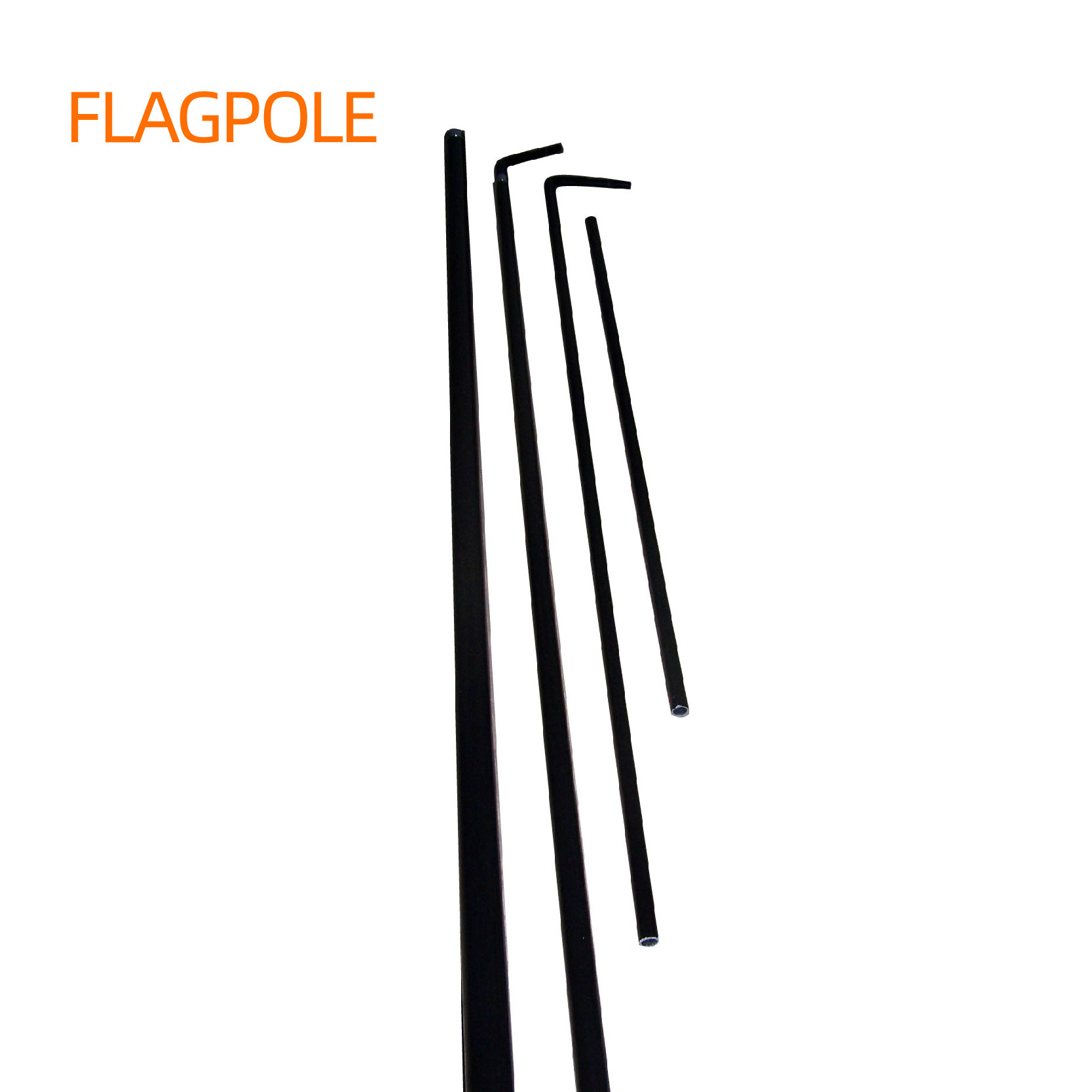
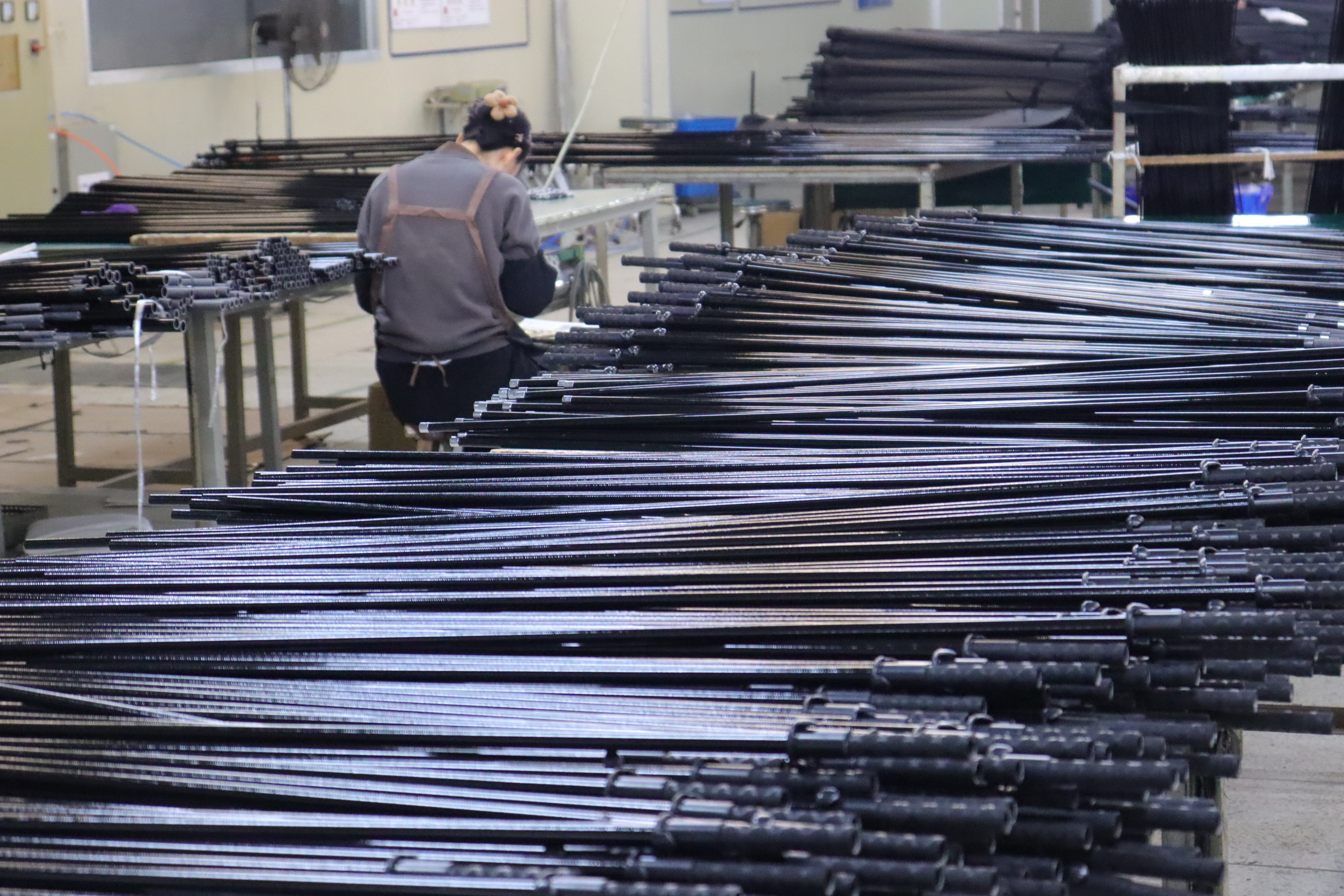
To understand why a carbon composite pole performs as it does, one must look at the manufacturing process. The WZRODS facility in Shandong operates 12 pultrusion lines dedicated to display hardware. Carbon fiber tows, each containing 12,000 filaments, are drawn through a resin bath of toughened epoxy. That's the reality. The wet fiber enters a heated die that cures the resin and forms the tubular profile. Pull speed is controlled to within 0.2 mm s⁻¹ to ensure uniformity. Finished tubes are cut to length with diamond‑tipped saws, then each segment undergoes a concentricity check: the wall thickness must not vary by more than 0.05 mm around the circumference. Segments that fail are reground.
Quality Control and Tolerances
Every production batch is sampled to an AQL of 0.65. The test protocol includes a 3‑point bend test (800 mm span, deflection at break > 45 mm without cracking), a UV resistance test (2,000 hours QUV, ΔE < 2 on the dyed resin surface), and a joint fit exercise where the segments are repeatedly assembled and disassembled 200 times to simulate a year of trade show use. The coupling system relies on a conical friction fit with a locking collar; the taper angle is machined to 1°30’ with a tolerance of ±2 arcminutes. This precision ensures the pole does not wobble or seize, even after months of use.
Packaging and Pre‑Shipment Inspection
Each K Banner set—pole, base, carry bag, and one blank flag—is packed in a master carton with customized foam inserts that prevent sliding. The carton is tested to ISTA 1A drop standards from a height of 0.6 m. Before shipment, inspectors pull a random sample and assemble the entire unit, measure the flag tension, and photograph the assembly. That photographic record is available to the buyer. This step catches any mismatch in segment labeling and ensures the operator in, say, Jeddah or Barcelona will not be faced with a pole that does not fit.
6. Market Trends: Lightweight, Sustainable, and Compliant
The global display hardware market is moving toward three imperatives: reduce weight, reduce waste, and comply with increasingly stringent safety and environmental regulations. Carbon composite aligns with all three. The lightweight nature directly addresses the exhibitor’s desire to lower drayage and shipping costs. The long service life reduces waste: a five‑year pole displaces five aluminum poles, each of which would have required mining and smelting energy. Producing one kilogram of aluminum typically requires 15 kWh of electricity; carbon fiber production is energy‑intensive as well, but the longer lifespan offsets the initial burden. A life‑cycle assessment conducted by a European trade show consortium found that a carbon composite flag pole had a 40% lower global warming potential per exhibition‑year than aluminum.
Customization and Smart Integration
The future includes poles embedded with RFID tags for inventory tracking, or LED‑integrated top caps for illuminated branding. Because carbon composite is radio‑transparent, antennas and sensors can be placed inside the tube without signal attenuation—unlike aluminum, which acts as a Faraday cage. WZRODS is prototyping a pole with a hollow core that accepts a strip of addressable LEDs, allowing the flag to glow from within. That's the difference. Such features are not yet mainstream, but they indicate the direction of travel. Buyers who lock in a composite supply chain now will be better positioned to adopt these upgrades without retooling.
7. The Upgrade Path: Migrating from Legacy Hardware
Shifting from aluminum to carbon composite requires procedural change, not mere product substitution. Start with a pilot: select a high‑wind, high‑visibility event and order a trial batch of 20 poles. Track setup time, breakages, and booth staff feedback. Most distributors find that the positive results lead to a broader rollout within two cycles.
When to Replace Aluminum Poles
Any pole that has been bent and straightened more than twice should be retired because the aluminum has work‑hardened and become brittle. A simple field test: extend the pole fully, balance it on your finger at the midpoint; if the pole wobbles asymmetrically or makes a clicking sound at the joints, degradation has begun.
About the Author
Wei Chen, Senior Product Specialist
B.S. Supply Chain Management, Michigan State University; Certified Professional in Supply Management (CPSM)
12 years in B2B display hardware sourcing. Former procurement manager for a top 20 US promotional products distributor. Specializes in aluminum pole systems and import compliance.
Reviewed by WZRODS Technical Team. Updated: 2026-07-23
 Comments (0)
No comments yet. Be the first to comment!
Leave a Comment
Related Products
Combo Pole
F Banner(Teardrop)
Golf flag pins
110° H banner
Magnum banner
Wall Mounted Flagpole
SF Banner
Budget 2in1 flag system
4 in 1 flag System
T Banner
Related Articles
29kg Concrete Flag Base - The Complete B2B Buyer's Resource - WZRODS
WZRODS DY451B: 29 kg, HDPE shell, concrete core. Stackable, portable, rust-proof. FOB price US$5.75–$6.85 at MOQ 2 units. Those numbers look unremarkable. Factor in landed cost—import duties lower than aluminum’s under relevant HTS codes, freight savings from less weight per unit of stabilizing mas
Wide Tube Cross Base - The Complete B2B Buyer's Resource - WZRODS
The Wide Tube Cross Base, manufactured by Wzrods in Shandong, China, solves one problem: reliable stability for poles under three meters, without the freight costs and warehouse footprint that heavier alternatives demand.
Rectangular Pipe Cross Base - The Complete B2B Buyer's Resource - WZRODS
The pipe cross flag base is a cross of rectangular steel pipe, powder‑coated, weighing 1.3 kg and spanning 78 cm across its arms. Its center holds a C‑ring shaft that lets the flag rotate with the wind.
X-Shape Backpack Banner - The Complete B2B Buyer's Resource - WZRODS
Economic Cross Base - The Complete B2B Buyer's Guide- WZRODS
When you buy an economic cross base—something like the Wzrods DM‑9, a 77 cm‑long, 1.3 kg iron cross—forget “economic” as a synonym for “cheap.” It means value-engineered.
How to Choose the Right Feather Flag Base for Different Surfaces
Feather Flag - Professional Banner Poles & Systems Manufacturer - WZRODS
How to choose a high-quality backpack flag
The backpack flag concept centers on a frame carried on the back, similar to a backpack, specifically engineered to support a raised flag or banner.