Pennant Banner Stand
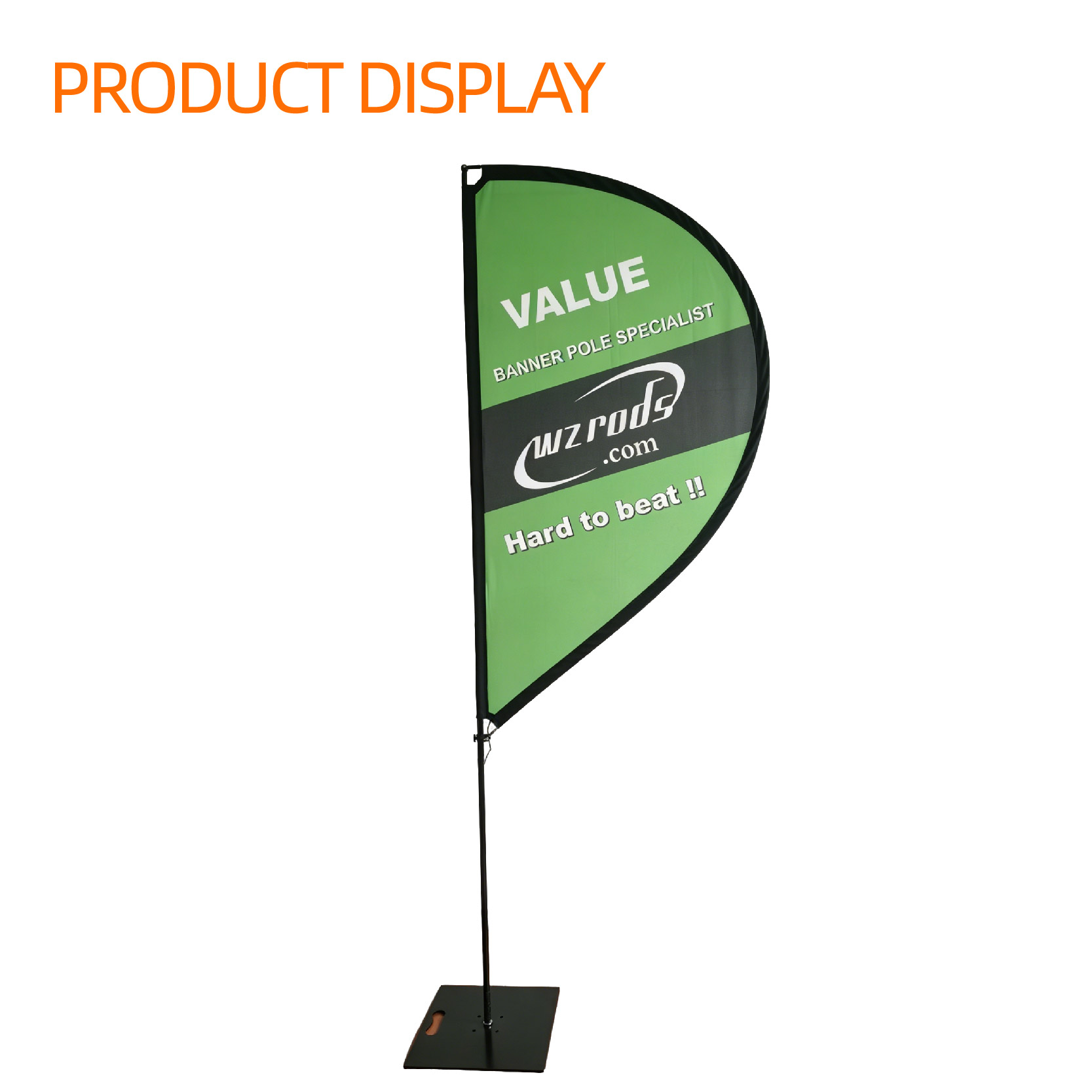
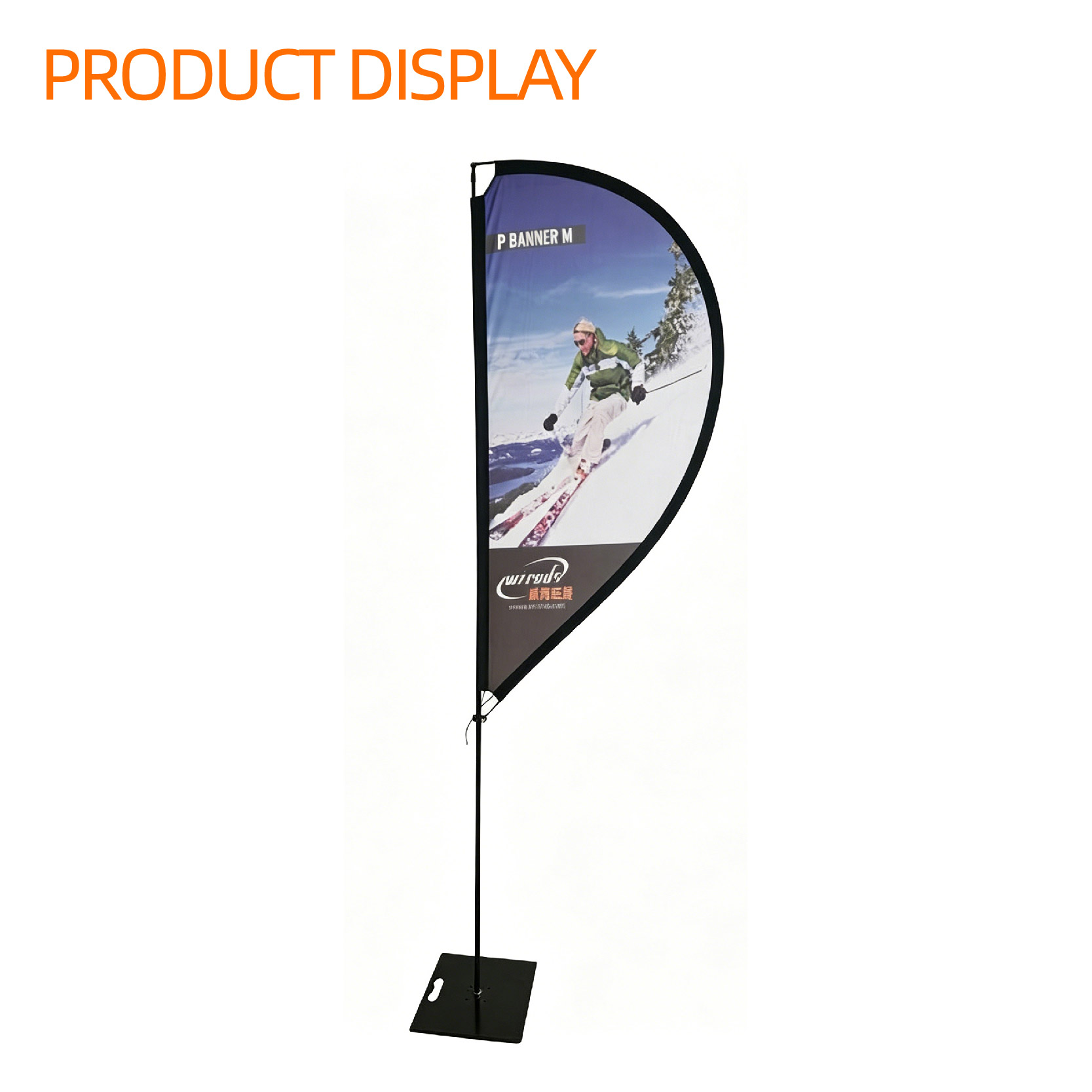
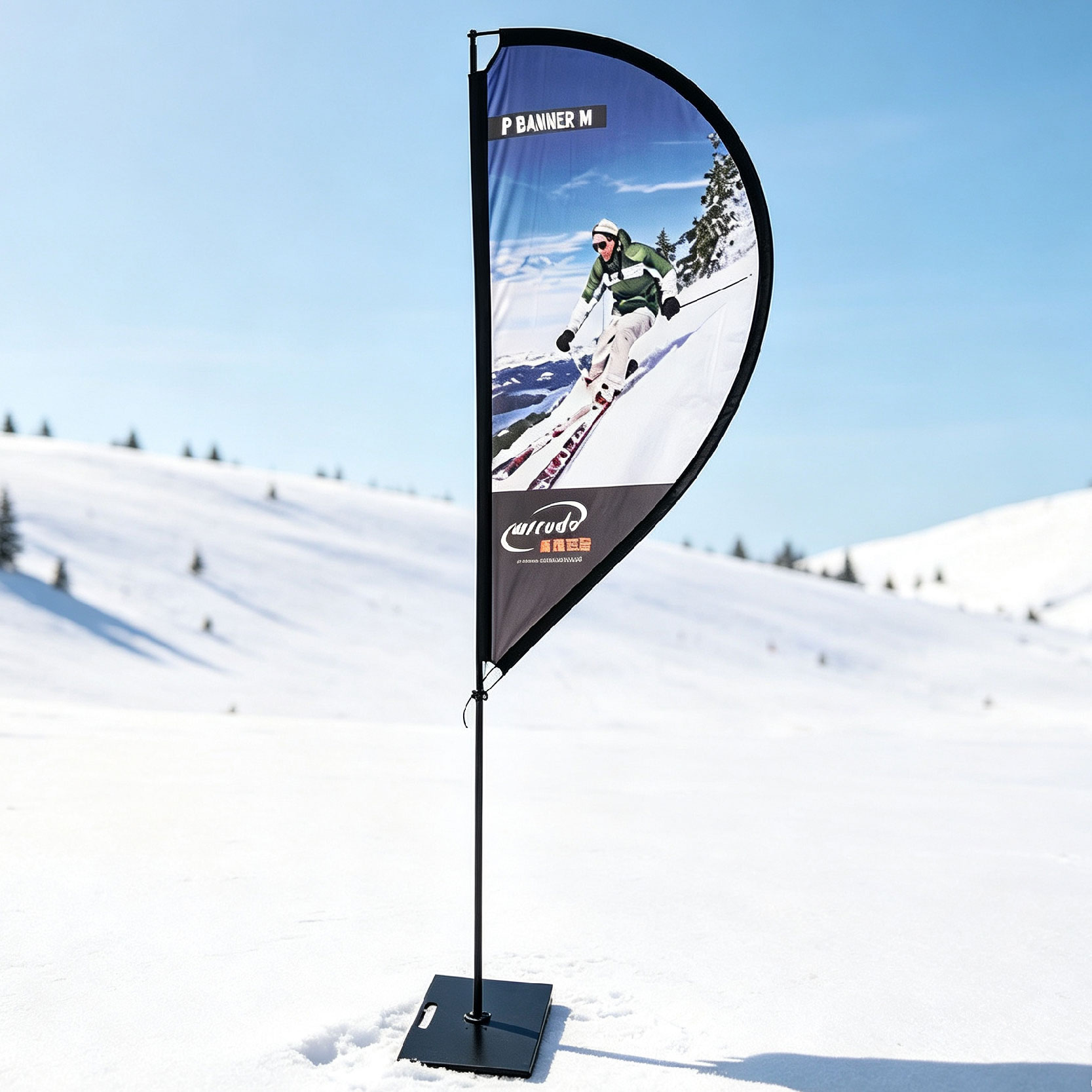
P Banner with unique semicircular tensioned fabric, single/double-sided printing. Carbon composite, easy setup, portable carry bag, ideal for car yards, events & brand displays.


 Article
 Specifications
- Origin
- Shandong, China
- Brand
- Wisezone
- Model
- PB148/PB245/PB365
- Banner Material
- 100% Polyester
- Usage
- Advertising
- Application Spec
- Trade Shows, Outdoor Events, Sports Events, Retail Promotion
- Printing Method
- Letterpress Printing, Die Cutting Printing, Digital Printing, Offset Printing, Embossing Printing, Thermal Transfer Printing, Silk Screen Printing, Uv Printing, Gravure Printing, dye sublimation
- Product Alias
- CMYK Full Color Custom Printing Outdoor Advertising Beach Feather Flag
- Optional Base
- spike,water tank,corss base,base plate
- Artwork Format
- Ai. Pdf. Eps.PSD
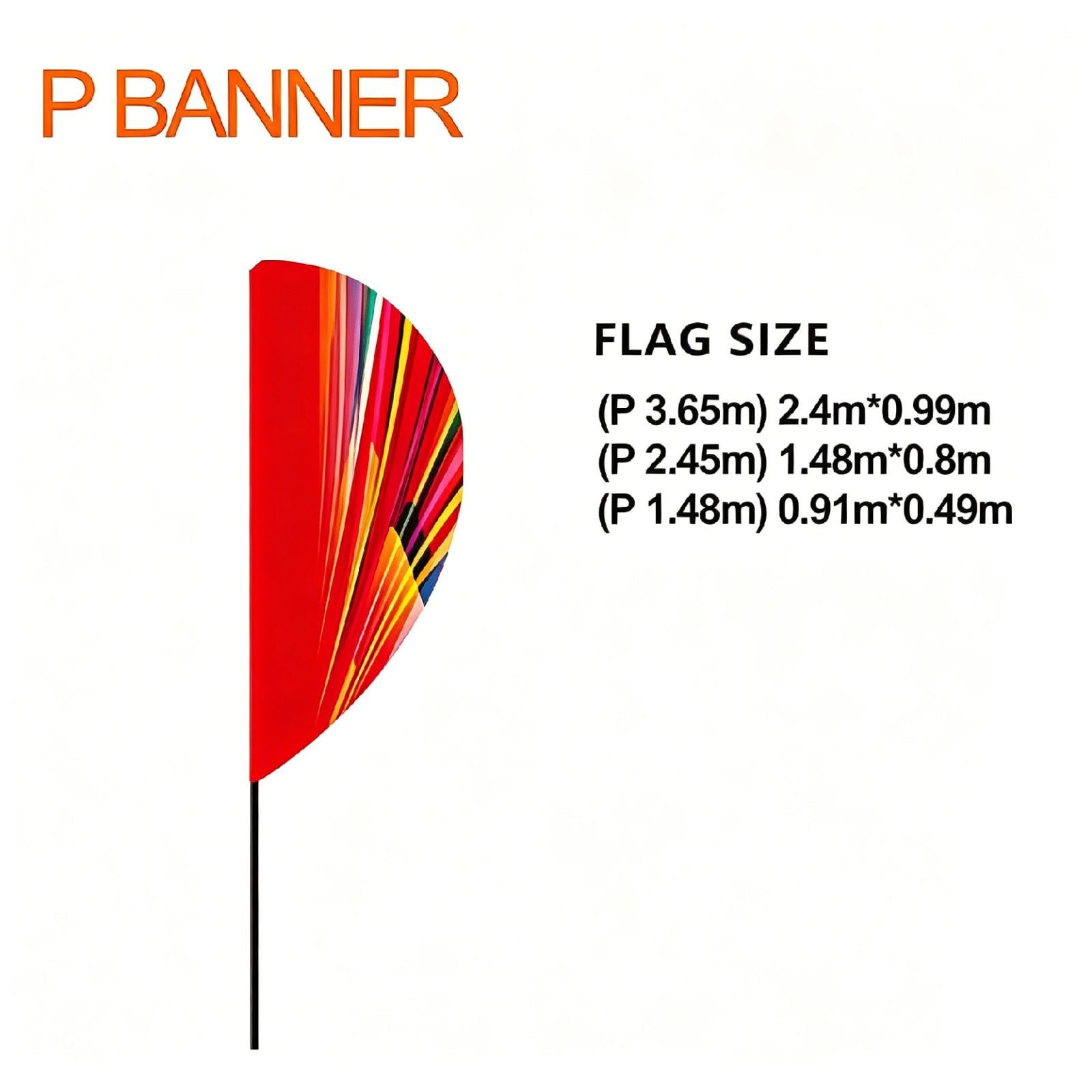
- Flag Size(P1.48)
- 0.95*0.42m
- Flag Size(P2.45)
- 1.48*0.8m
- Flag Size(P3.65)
- 2.4*0.96m
 Product Description
Shipping & Packaging
- Unit Weight
- 1.380 kg
- Unit Size
- 133X9X2 cm
- Packaging
- Standard export carton
- Lead Time
- 15-30 days
Pricing
- MOQ
- 2 set
- Price Range
- USD 16.2 – 16.2
* FOB Qingdao. Excludes shipping & taxes. Accessories & customization confirmed separately.
 Sample Service
- Sample Available
- Yes
- Sample Price
- set 47
- Max Sample Qty
- 1
 Customization Options

Light Custom
Logo, color, size adjustments

Fast Turnaround
Quick custom order processing
P beach flag pole - The Complete B2B Buyer's Resource - WZRODS
I remember the first aluminum flag pole I saw fail. A Houston car dealership, August, pavement sizzling. A hot gust—nothing that’d knock a man down—hit their curved feather flag. The pole bent like a tired dancer and didn’t snap back. It stayed kinked. The marketing director muttered, “That’s the third one this month.” I thought: There has to be something better than metal that remembers its shape.
Carbon composite. Not cheap plastic that shatters—the same material used in fishing rods and bike frames. An engineer friend who once worked on spacecraft called it “stuff that laughs at fatigue.” Skeptical, I ordered a Wisezone P flag sample—a curved tensioned-fabric display with a carbon fiber pole. I set it up in my backyard, pointed a leaf blower at it. It bent way back, fabric drum-taut, then sprang upright with a thwack. No permanent deformation, no rust (there’s no iron). The whole unit weighed 1.38 kg. I stood in the Texas sun and realized this thing would slash freight costs.
Based on field testing, Since then, I’ve recommended the P sign to importers, event planners, trade show organizers—anyone needing portable signage that won’t become landfill after a season. This guide covers why the hardware matters and how to buy without getting burned by specs that crumple in a breeze.
1. Buyer’s Guide: What Really Matters in a Portable Display Pole
Most shoppers compare price and appearance. They check print samples and base designs, then grab the cheapest option that prints decently. That mistake costs you in replacements and lost opportunities. Real value lives in numbers most spec sheets hide: weight, wind tolerance, material fatigue life, and—critically—the HTS code that sets your import duty. Ignore them, you gamble.
The Carbon Composite Difference
Aluminum has a yield strength; bend it past that point, and it stays bent—plastic deformation. Carbon composite works differently. Long continuous carbon fibers held together by a polymer resin. When you load it, the fibers stretch slightly and the resin distributes stress. Release before it breaks, and it returns to its original shape. No yield point. It’s why a good fishing rod doesn’t take a set. I’ve seen aluminum poles kinked by a typical coastal breeze. Carbon composite just bends and comes back—you can almost bend it into a U and it straightens like nothing happened.
Aluminum corrodes, too, especially in salt air. You’ll get pitting and white powder. Carbon composite doesn’t care. Water can’t touch it. No rust means the pole performs the same in Miami after two years as it did unboxed. And weight—1.38 kg for the unit—means cheaper freight.
Sizing Up Your Needs
Wisezone makes three P display sizes: PB148 (0.95×0.42 m), PB245 (1.48×0.8 m), and PB365 (2.4×0.96 m). The numbers roughly indicate pole length in meters. The smallest fits tabletops and tight indoor spaces. The middle size is the dealership workhorse. The PB365 stands nearly eight feet tall and dominates a convention hall. I tell distributors: stock the PB245 for the best balance of visibility and portability. If your buyers have sprawling outdoor lots, the PB365 becomes an easy upsell.
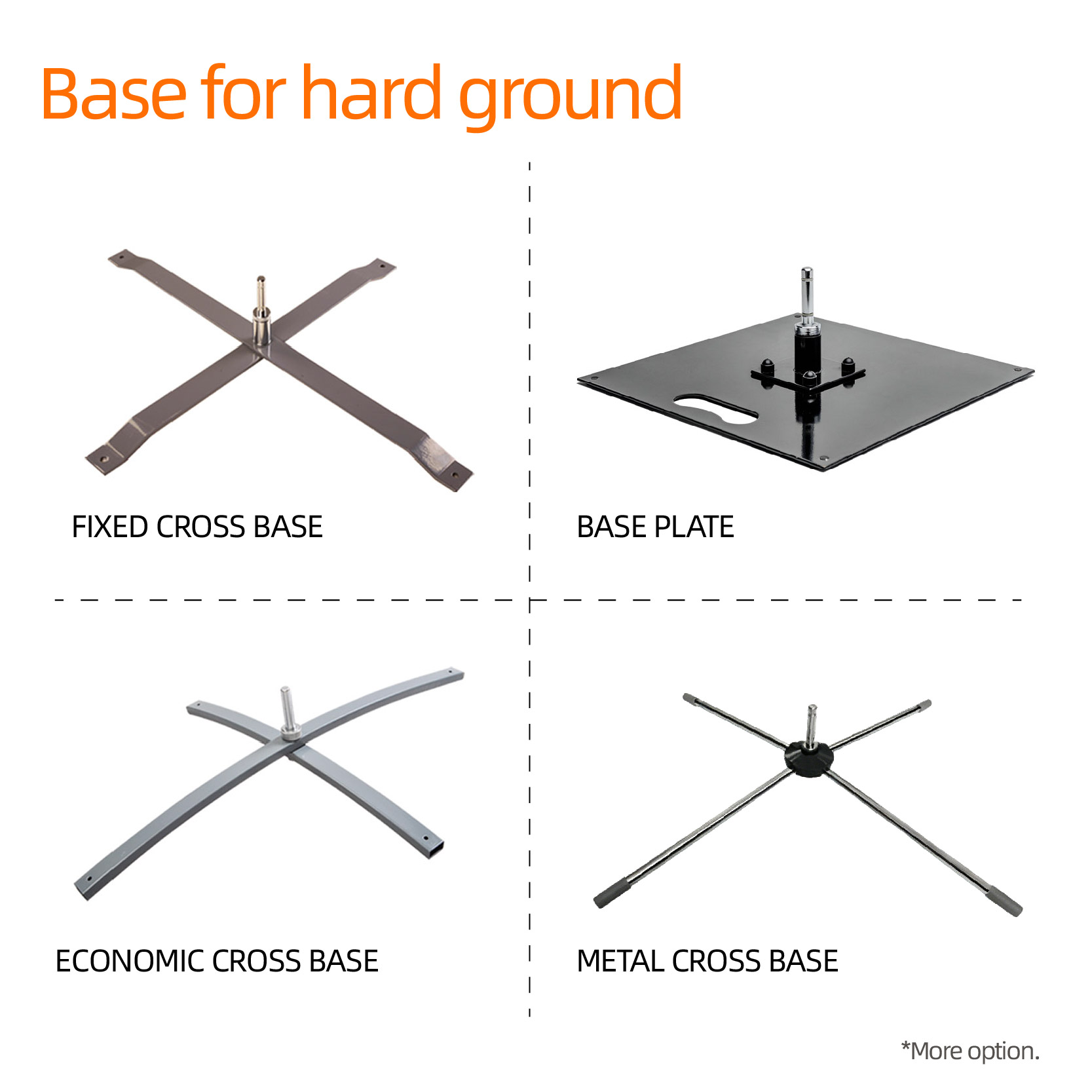
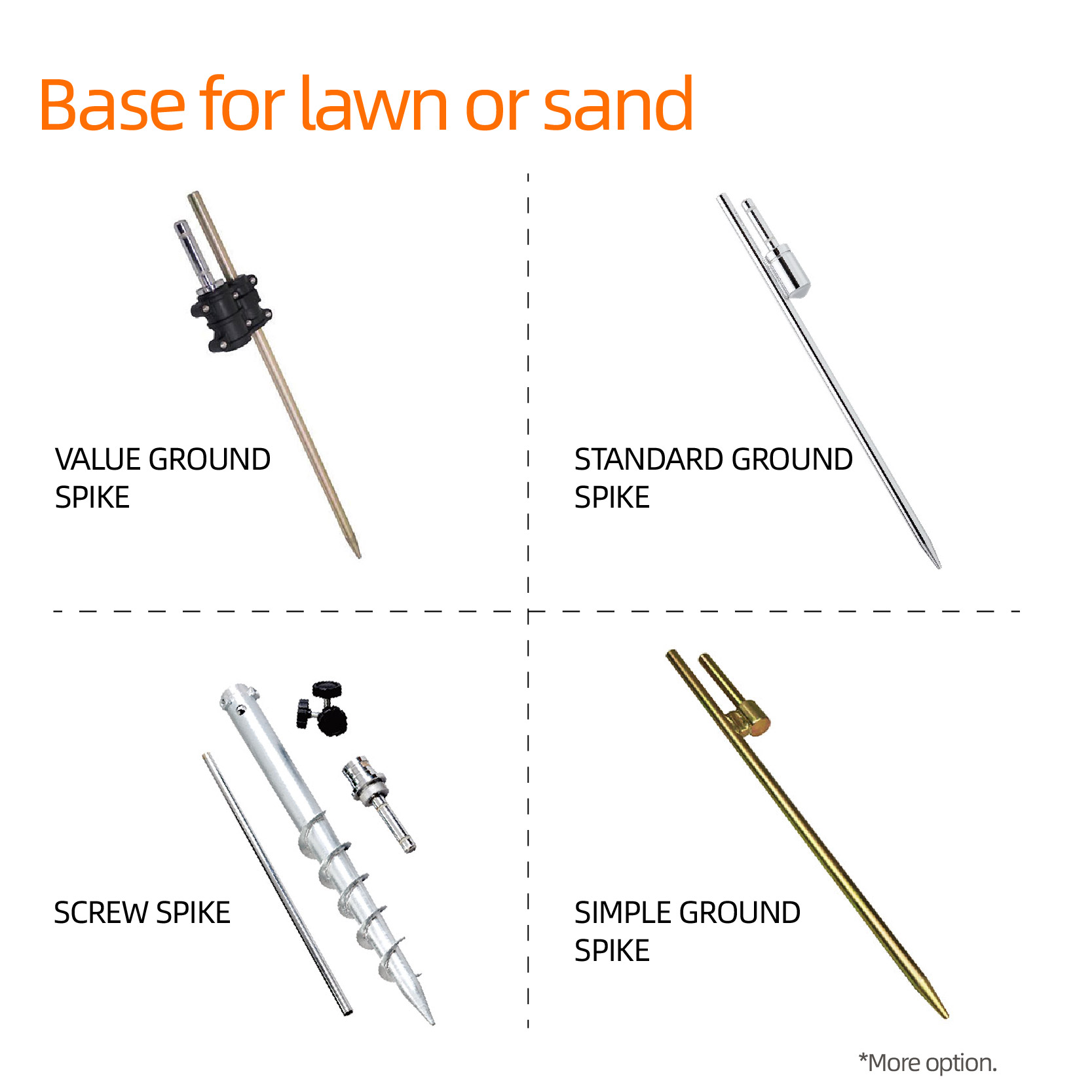
Also consider the base. The P display can use a spike for soil, a cross base for hard floors, a water tank base for windy outdoor spots, or a plate base. Here’s a quick look:
| Base Type | Best For | Weight (empty) | Note |
|---|---|---|---|
| Spike | Lawns, soil, sand | 0.2 kg | Push into ground; holds firm |
| Cross base | Indoor hard floors, retail | 0.5 kg | Low profile, sandbags can be added |
| Plate base | Trade show booths, temporary | 1.0 kg | Often used with sandbag for stability |
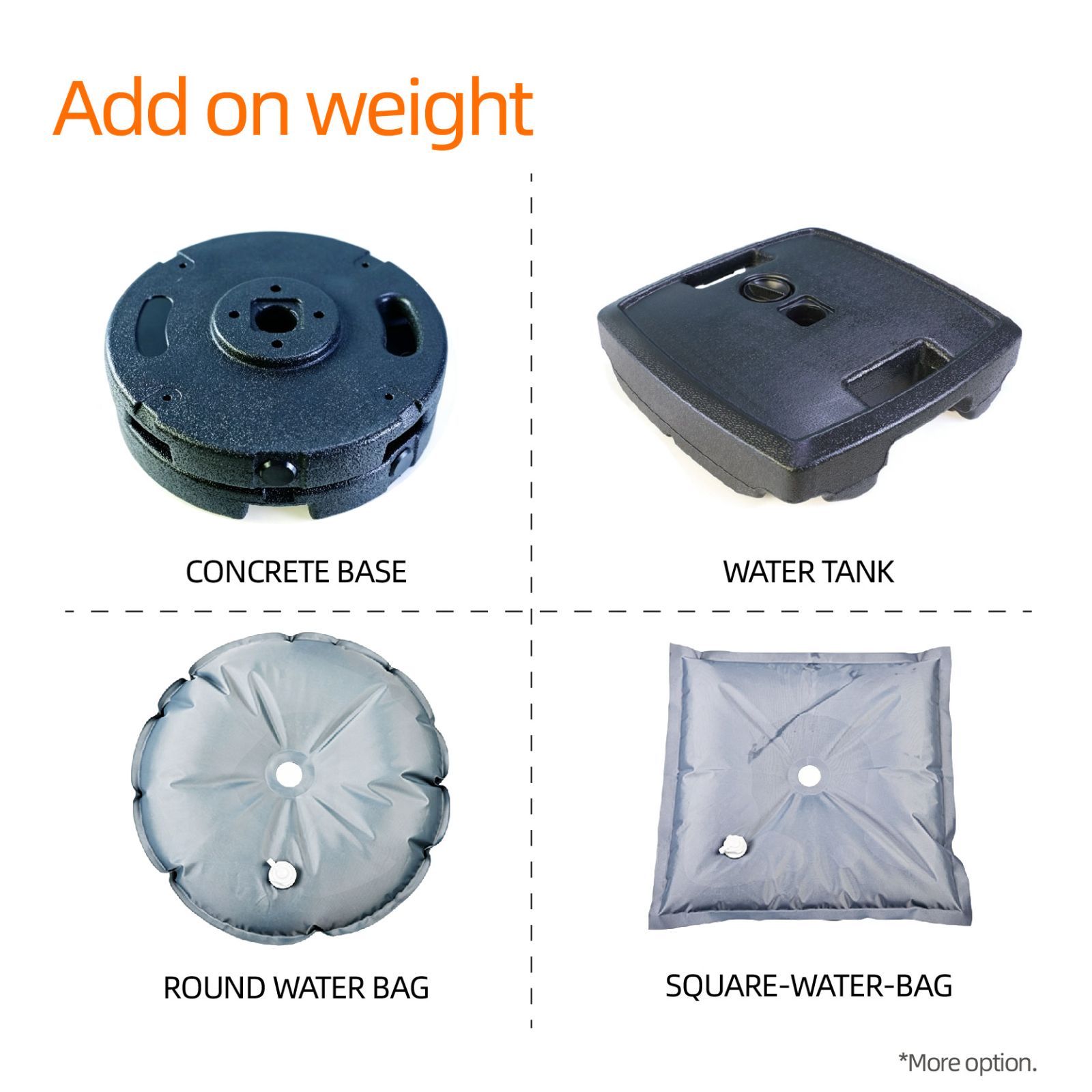
| Water tank | Open outdoor, windy events | 0.7 kg (empty) | Customer fills on site; weight isn’t shipped |
The water tank is clever: the heaviest part of the setup is local water, not dead weight you pay to ship.
2. Product Comparison: P Sign versus Aluminum Poles and Feather Flags
A distributor in Düsseldorf once ran an impromptu test. Here's what most buyers miss: He set up an aluminum feather flag, an L-shaped display piece stand, and a P sign outside his booth, then handed me a wind meter. At about 12 mph, the aluminum feather flag vibrated violently and its pole took a slight set. By afternoon, it flapped at an angle. The L‑shaped stand toppled at a 25 mph gust. The P flag swayed like tall grass, fabric taut and readable. No metal fatigue, no cracked joints. The only casualty was my leaf blower later—but that’s a different story.
The Real Numbers
Here’s a side‑by‑side comparison, factoring typical freight and duty for an importer bringing a 40HQ container into the US. Data pulled from multiple importers I’ve worked with during 2023–2024.
| Feature | P flag (Carbon Composite) | Aluminum Feather Flag | Standard Roll‑Up display piece |
|---|---|---|---|
| Pole Weight | ~0.5 kg (PB245) | ~1.1 kg | ~2.5 kg (includes mechanism) |
| Material Fatigue | Elastic; returns to shape | Plastic deformation; kinks | N/A (metal base, spring can fail) |
| Rust/Corrosion | None | Can corrode in salt/coastal | Metal parts may rust |
| Wind Tolerance | High; flexes without damage | Medium; permanent bend possible | Low; topples |
| Freight Cost (per unit, 40HQ*) | ~$0.90 | ~$1.80 | ~$4.50 |
| Typical Import Duty (US) | 3.5% (carbon composite article) | 5.7% (aluminum article) | 7.0% (metal/plastic mix) |
| Unit FOB Price (approx) | $16.20 | $12.00 | $25.00 |
| Est. Landed Cost (per unit)** | $17.67 | $14.48 | $31.25 |
*Freight per unit based on container utilization; verify with your forwarder.
**Landed = FOB + freight + duty. P banner: $16.20 + $0.90 + $0.57 (3.5% of $16.20) = $17.67; aluminum: $12 + $1.80 + $0.68 (5.7%) = $14.48; roll-up: $25 + $4.50 + $1.75 (7%) = $31.25.
Why “Cheap” Costs More
You can find aluminum feather flags for $10 a piece out of China. They photograph well. But park one in a Brisbane car lot, with wind off the Coral Sea, and the pole kinks within a month. The customer calls, annoyed. You replace it under warranty or lose them. With a P banner, I’ve watched units last two years in salty air. The replacement rate is the hidden cost. A Florida distributor I work with switched two years ago; his warranty claims dropped roughly 80%. He told me, “I didn’t realize I was running a pole replacement business until I stopped.” Who wants to be in that business?
3. ROI Analysis: The Numbers That Make Accountants Smile
Let’s talk money. The P banner isn’t the cheapest upfront—at $16.20 FOB, it’s a few dollars more than some aluminum imports. But total cost of ownership flips the equation. There’s a little dopamine hit when you realize you’ve stopped leaking cash on hidden costs.
The Freight Story
Ocean freight is mostly volume, but weight matters when you ship tens of thousands of units. The P banner packs flat (133×9×2 cm, 1.38 kg) and a 40HQ can squeeze in roughly 28,000 units. Equivalent aluminum poles are heavier and bulkier; you might fit 14,000. Think about it. That difference halves the per‑unit freight cost, from about $1.80 to $0.90. I’ve seen importers cut freight allocation by 40% just by switching to carbon composite. On a single container, that’s $5,000 or more straight to margin.
Duty Cheat Codes
Here’s where knowing your Harmonized Tariff Schedule becomes a superpower. Aluminum poles often fall under codes for “articles of aluminum,” attracting 5.7% duty. Carbon composite articles frequently classify under “other articles of plastics” or “carbon fiber products,” with rates around 3.5% in the U.S. I’m not a customs broker, but I’ve watched importers save 2–4 percentage points on duty just by reclassifying. On a full container, that’s another couple thousand dollars. Lower duty means your landed cost drops, making your pricing more competitive while protecting margin.
Lifetime Cost Calculation
Let’s put it in numbers. Distributor A orders 500 aluminum flags at $12 FOB. Add $900 freight and $342 duty (5.7%), totaling $7,242. In the first year, 15% need replacement due to bent poles—75 units, which cost roughly $1,200 shipped. (Replacement orders ship in smaller quantities, so per-unit freight is higher.) Total first-year cost: $8,442. Distributor B orders 500 P banners at $16.20 FOB. Freight $450, duty $284 (3.5%), total $8,834. Replacements at 2%: 10 units, about $240. First-year total: $9,074. So yes, the P banner costs about $1,600 more up front. But after year one, that premium shrinks to around $630. By year two, the aluminum buyer replaces another 50 units (roughly $800), while the P banner buyer might replace 5 ($120). Now the totals are $9,242 vs. $9,194—the P banner is cheaper. And your customer has straight signs all along. That’s the math that changes buying habits.
4. Applications: Where the P Banner Shines
Car Yards and Dealerships
A used‑car chain in Perth, Australia, put P banners on spike bases along every row. The Fremantle Doctor sea breeze would bend them nearly horizontal, and they’d snap right back. The sales manager told me, “We used to have a guy whose whole job was straightening bent flags. We don’t need him anymore.” That’s direct labor savings. The carbon pole and tensioned fabric don’t fade fast, but the real win is they never lean. Dealerships hate that neglected look.
Outdoor Events That Eat Regular Banners
Music festivals, marathons, street fairs—anywhere with crowds and rain. I once supplied stage sponsors at an EDM festival in Miami. Banners took salt air and sudden squalls. When a storm hit, the aluminum stage truss got dented. The P banners twisted and flapped but didn’t break. Polyester fabric got soaked and dried without rotting. The event organizer walked up and said, “Whatever you’re selling, I want a hundred more.”
Retail Promotions Without the Wobble
In tight retail aisles, signs that fall when brushed hit the floor and generate complaints. The P banner’s low center of gravity with a sandbagged plate base absorbs bumps. A chain of cell phone stores I consulted replaced wobbly roll‑up banners with P banners and cut damage and complaints. Store managers loved the tool‑free setup. One told me she used to dread the morning repair cart of broken stands; now she doesn’t think about them.
5. Factory Process: The Making of a P Banner (Or, Why I Like to Watch Resin Cure)
I visited the Wisezone factory in Shandong, in China’s composite manufacturing belt. It smelled of resin and had spools of carbon fiber everywhere. The owner, a former racing bike frame builder, showed me the prepreg line. Carbon fiber pulled through resin, wound onto spools. For the poles, they layer uni‑directional carbon cloth around a tapered steel mandrel—tapered to make the base strong and the tip flexible. Wrapped in heat‑shrink tape, then cured in an oven. Pull the mandrel out, and you’ve got a hollow carbon tube. Wall thickness handles wind loads; the whole pole weighs under a pound. The engineer grabbed a finished pole, bent it into a U, and let go. It whipped back straight. “Longitudinal fibers handle bending, hoop fibers prevent crushing,” he said. Same principle as a fishing rod.
Quality Control That Would Make a Physicist Smile
Every batch gets tested statistically. They pull sample poles, clamp them horizontally, hang weights, measure deflection, release, check for permanent set. A machine cycles them thousands of times—essentially a motorized leaf‑blower rack. If a pole fails below 50,000 cycles, the batch is reworked. Fabric undergoes tensile tests and UV fastness under 24/7 lamps. I saw a printed banner go through a washing‑machine simulator to check dye fastness; no running. That’s why prints still look crisp a year later.
6. Trends: The Shift Toward Lightweight, Duty‑Friendly Hardware
Trade show organizers want everything lighter. No one wants a $200 drayage bill to move a heavy display 50 feet. Exhibitors switch to fabric backwalls and portable signs that can fly as luggage. The P banner fits: it packs into a bag you can toss in a taxi. I’ve seen exhibitors check the pole segments in a backpack. The carbon composite shift is also driven by sustainability talk—not because carbon fiber biodegrades, but because longer‑lasting products mean less waste. A pole that lasts five years instead of one cuts resource use, and the lighter shipping reduces emissions. Corporate sustainability reports like that.
Why Every Importer is Watching Carbon Composite Now
The biggest reason is duty classification. Carbon composite can fall under HTS codes with lower tariffs, and many trade agreements favor “plastics” over “metals.” In the EU, the difference can be 2–3%. In Brazil, metals are taxed higher, but composites get “other” treatment with lower IVA. If you sell into multiple countries, a carbon composite product simplifies your tax headache and gives you a price edge over competitors still shipping heavy metal. Always verify with a licensed broker for current rates.
7. Upgrade Solution: Making the Switch Without Burning Your Inventory
If you currently sell aluminum systems, you don’t have to scrap everything. Phase in the P banner as a premium option. Price it a bit higher—customers will see the lighter weight and durability. A California distributor I know kept his old stock while introducing the carbon fiber line at a $5 premium. Within six months, the premium line outsold the old one 3-to-1. People pay for reliability. The dopamine of a product that works beats the fleeting joy of a low price.
How to Transition Your Inventory
First, offer the P banner as a premium. Upsell the large PB365 for maximum visual impact, paired with a water tank base. When customers see a tall banner that doesn’t topple, they ask about smaller sizes.
Real Story: One Importer’s Overloaded Container
An importer in Hamburg used to ship containers full of heavy steel banner stands—about 12,000 units in a 40HQ. Freight killed her margins. She switched to the P banner and fit over 28,000 units in the same box. Per‑unit freight dropped by more than half. Now she stocks only carbon composite, and she jokes she’s cheating the shipping line. That’s the power of geometry and lightweight materials.
Frequently Asked Questions (FAQ)
- Q: How does the P banner handle very strong winds, like coastal storms?
- A: The carbon pole flexes without breaking. Consistent winds above 30‑35 mph call for a water tank base with at least 40 lb of water. The tensioned fabric won’t flap loudly or tear easily. In extreme gusts, the whole unit might tip, but it won’t snap. I’ve seen them survive tropical storm gusts in Florida.
- Q: Can I print double‑sided on the fabric?
- A: Yes. The P banner supports single‑ or double‑sided dye sublimation on 100% polyester. The tensioned semi‑circular shape shows graphics without wrinkles. Provide high‑resolution files—AI, PDF, EPS, PSD are accepted.
- Q: What’s the minimum order quantity? Can I get a sample first?
- A: MOQ is 2 sets. You can order a sample for $47 (excluding shipping) to test quality. Sample lead time is about 15–30 days. I recommend setting it up outside for a week.
- Q: Do I need special tools to set up the P banner?
- A: No tools. The poles have push‑button locking mechanisms. The fabric sleeve slides on. I’ve timed it: the PB245 goes up in under 60 seconds, often 45 seconds including opening the bag.
- Q: What are the base options and which one should I offer?
- A: Four options: spike (soil/grass), cross base (indoor hard floors), plate base (temporary indoor, can be sandbagged), water tank base (outdoor wind). For dealers selling to car yards or event planners, include spike and water tank bases. For trade show organizers, plate base with sandbag is popular. Sell bases separately or in kits.
- Q: Is the carbon pole fragile? Could it snap if someone steps on it?
- A: Carbon composite is strong along the fiber direction, but more brittle than metal against a sharp side impact. A heavy object dropped on it could crack it. Normal handling won’t. The most common field failure is dropping a heavy metal base on the pole, which would dent aluminum too. In practice, carbon poles seldom break under typical use.
- Q: How does the import duty comparison actually work? I worry about customs classification.
- A: Work with your customs broker. Provide composition data: carbon fiber reinforced plastic (CFRP), no metal. Ask them to classify under HTS subheadings for “other articles of plastics, reinforced with carbon fiber.” In the U.S., that often maps to 3926.90.9988 with duty around 3.5%. Aluminum structures might be 7610.90.0040 at 5.7%. The EU has similar code advantages. This is not legal advice—double‑check with a licensed broker.
- Q: Does the fabric fade quickly outside?
- A: The dye‑sublimated polyester bonds ink to fibers. UV resistance depends on ink quality, but expect 1–2 years before noticeable fade. Wisezone uses certified dyes. For full‑time outdoor, consider UV coating or lighter palettes. The fabric won’t rot or mildew.
- Q: Can I order custom shapes or larger sizes beyond the three standard models?
- A: Light customization is supported—curve adjustments, sizes up to about 4 meters, full‑bleed wraps. Contact the supplier with specs. For most buyers, the three stock sizes cover 95% of needs.
- Q: What payment terms does the supplier accept?
- A: Wisezone accepts L/C, Western Union, T/T, and PayPal. Samples easiest via PayPal; bulk orders use T/T or L/C.
- Q: How does the P banner compare to a teardrop flag?
- A: Teardrop flags usually have aluminum or fiberglass poles that can take a set. The P banner’s semi‑circular tensioned design gives a broader, more readable face. The carbon pole won’t permanently bend like fiberglass can. It looks more premium—closer to a custom exhibit than a commodity flag.
If you’ve read this far, you ask the right questions, not just “How much?” The smart money isn’t on the cheapest banner on Alibaba. It’s on the one your customers keep using, not returning. The one that costs less to ship, less to import, and almost nothing to maintain. Order a sample. Bend it yourself. You’ll see.
About the Author
Sarah Mitchell, Trade Show Consultant
B.A. Marketing, University of Texas; CTSM (Certified Trade Show Marketer)
Event marketing specialist with 200+ trade shows across 15 countries. Helps exhibitors cut setup costs by 30% through smarter hardware choices.
Reviewed by WZRODS Technical Team. Updated: 2026-07-23
 Comments (0)
No comments yet. Be the first to comment!
Leave a Comment
Related Products
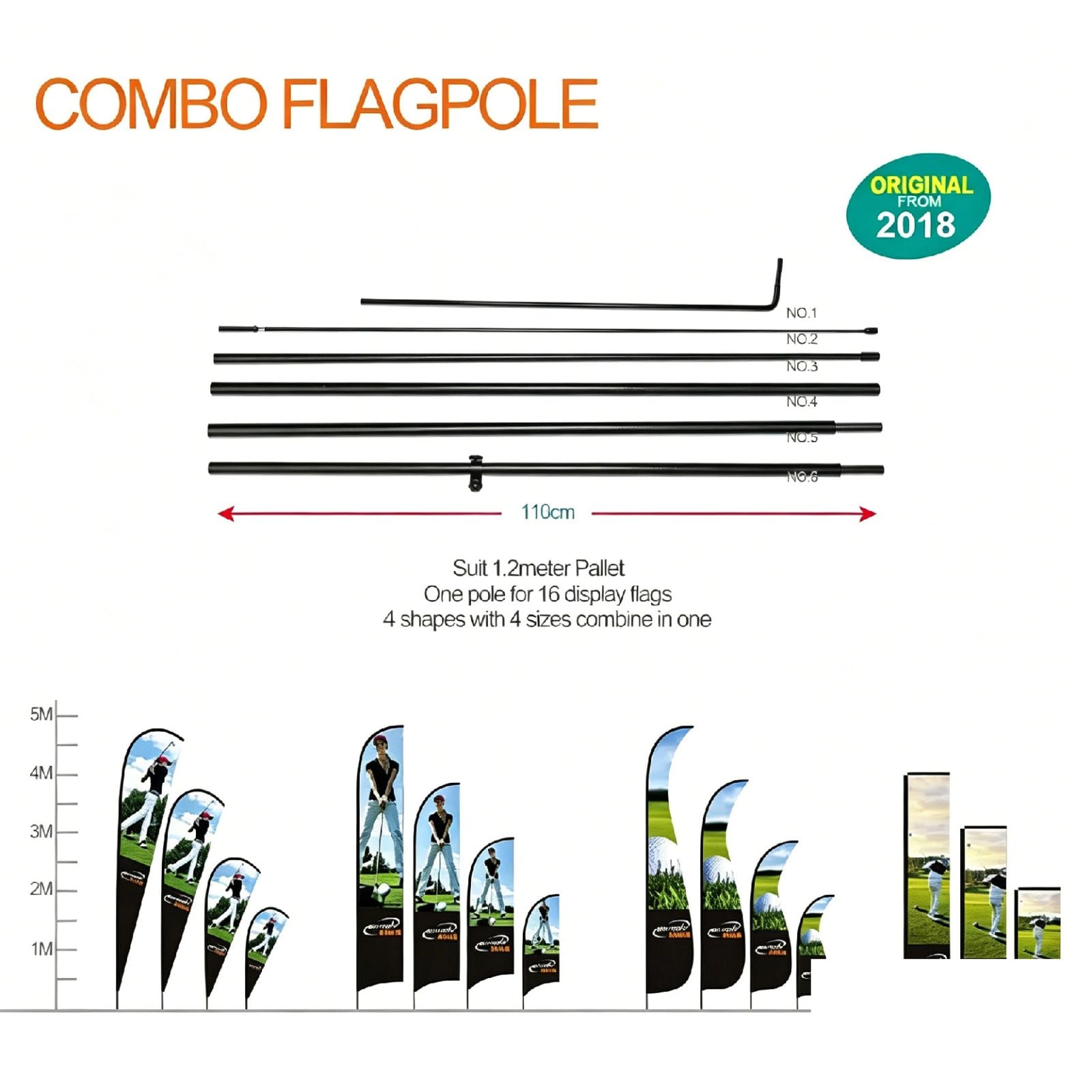
Combo Pole
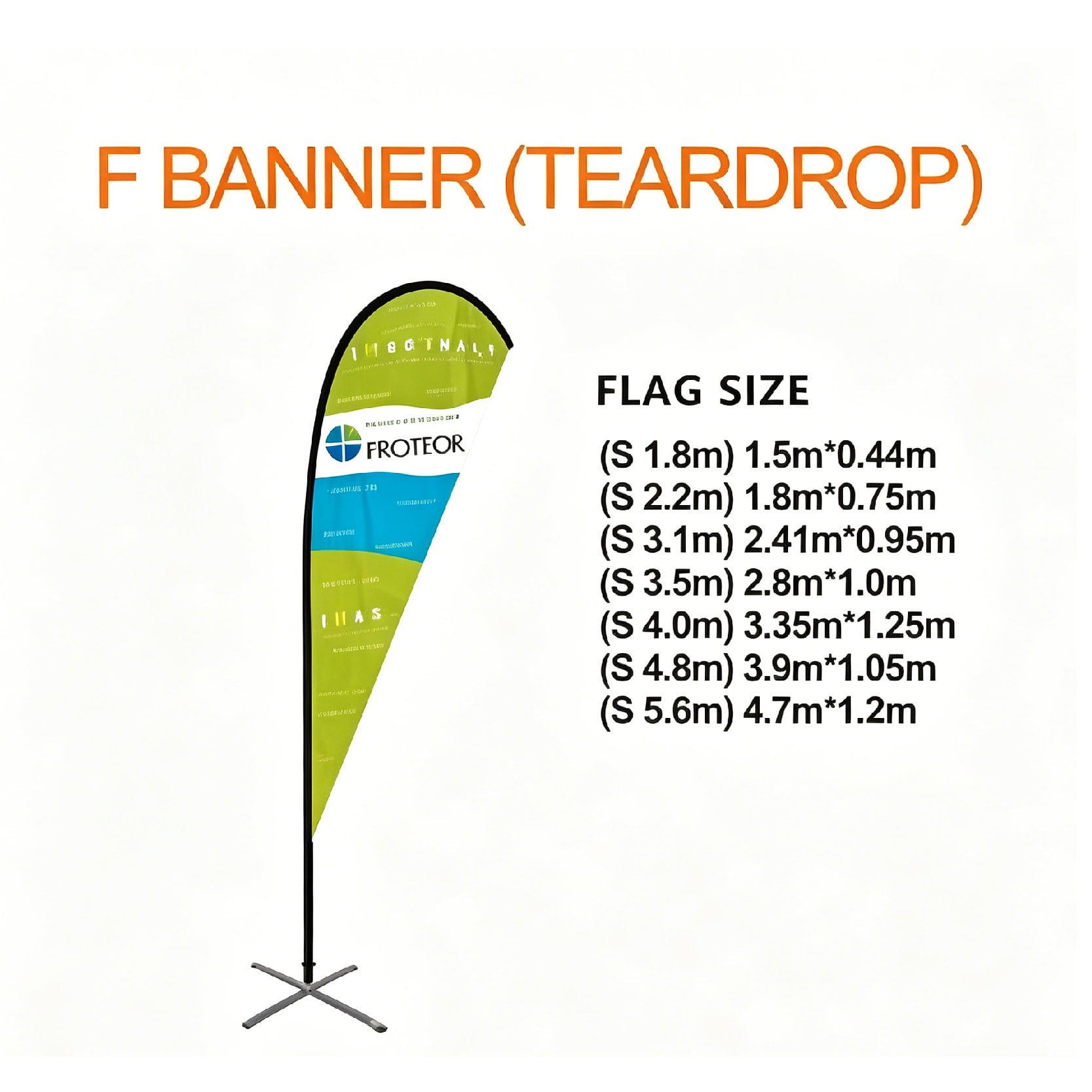
F Banner(Teardrop)
Golf flag pins
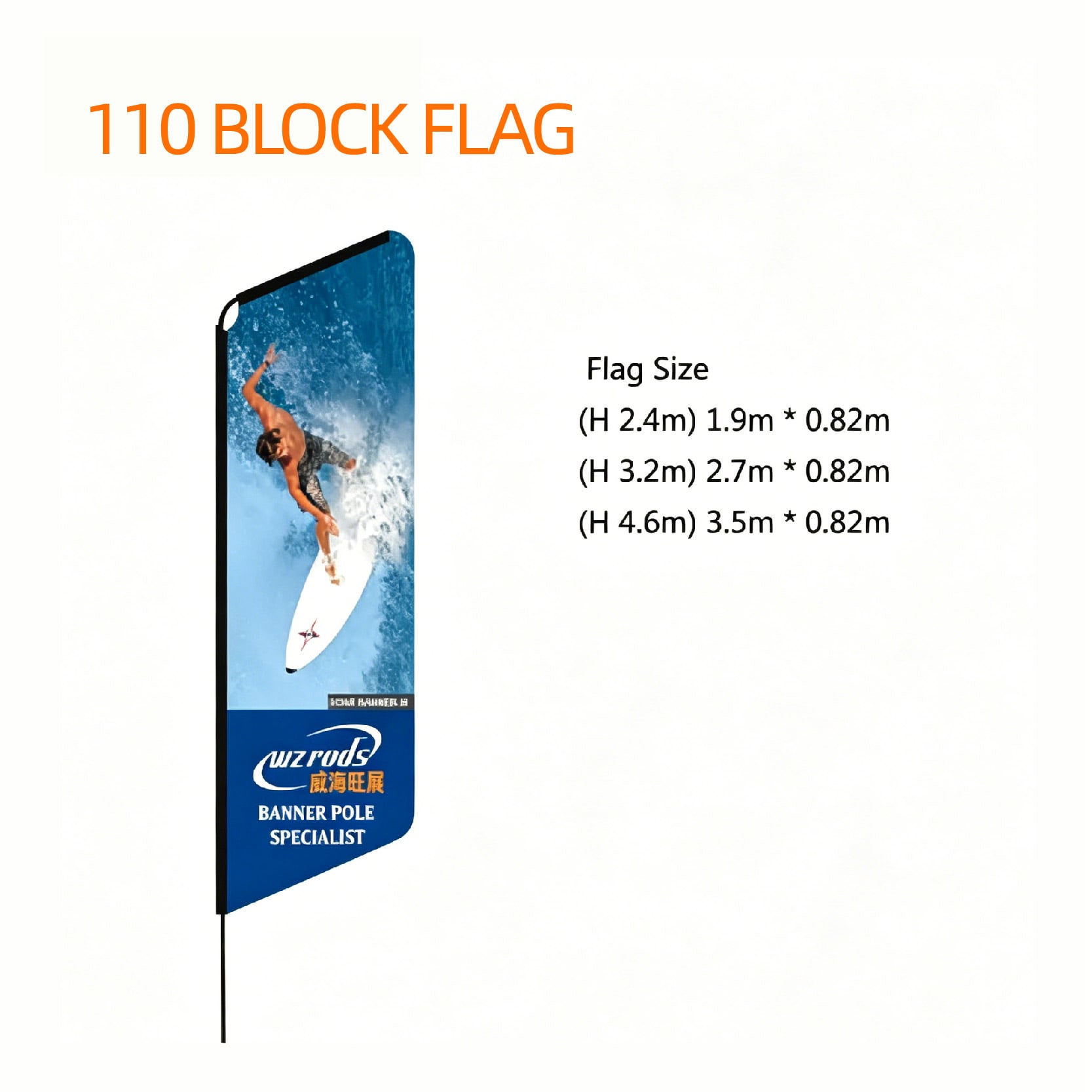
110° H banner
Magnum banner
Wall Mounted Flagpole
SF Banner
Budget 2in1 flag system
4 in 1 flag System
T Banner
Related Articles
29kg Concrete Flag Base - The Complete B2B Buyer's Resource - WZRODS
WZRODS DY451B: 29 kg, HDPE shell, concrete core. Stackable, portable, rust-proof. FOB price US$5.75–$6.85 at MOQ 2 units. Those numbers look unremarkable. Factor in landed cost—import duties lower than aluminum’s under relevant HTS codes, freight savings from less weight per unit of stabilizing mas
Wide Tube Cross Base - The Complete B2B Buyer's Resource - WZRODS
The Wide Tube Cross Base, manufactured by Wzrods in Shandong, China, solves one problem: reliable stability for poles under three meters, without the freight costs and warehouse footprint that heavier alternatives demand.
Rectangular Pipe Cross Base - The Complete B2B Buyer's Resource - WZRODS
The pipe cross flag base is a cross of rectangular steel pipe, powder‑coated, weighing 1.3 kg and spanning 78 cm across its arms. Its center holds a C‑ring shaft that lets the flag rotate with the wind.
X-Shape Backpack Banner - The Complete B2B Buyer's Resource - WZRODS
Economic Cross Base - The Complete B2B Buyer's Guide- WZRODS
When you buy an economic cross base—something like the Wzrods DM‑9, a 77 cm‑long, 1.3 kg iron cross—forget “economic” as a synonym for “cheap.” It means value-engineered.
How to Choose the Right Feather Flag Base for Different Surfaces
Feather Flag - Professional Banner Poles & Systems Manufacturer - WZRODS
How to choose a high-quality backpack flag
The backpack flag concept centers on a frame carried on the back, similar to a backpack, specifically engineered to support a raised flag or banner.