
Foldable Vertical Display
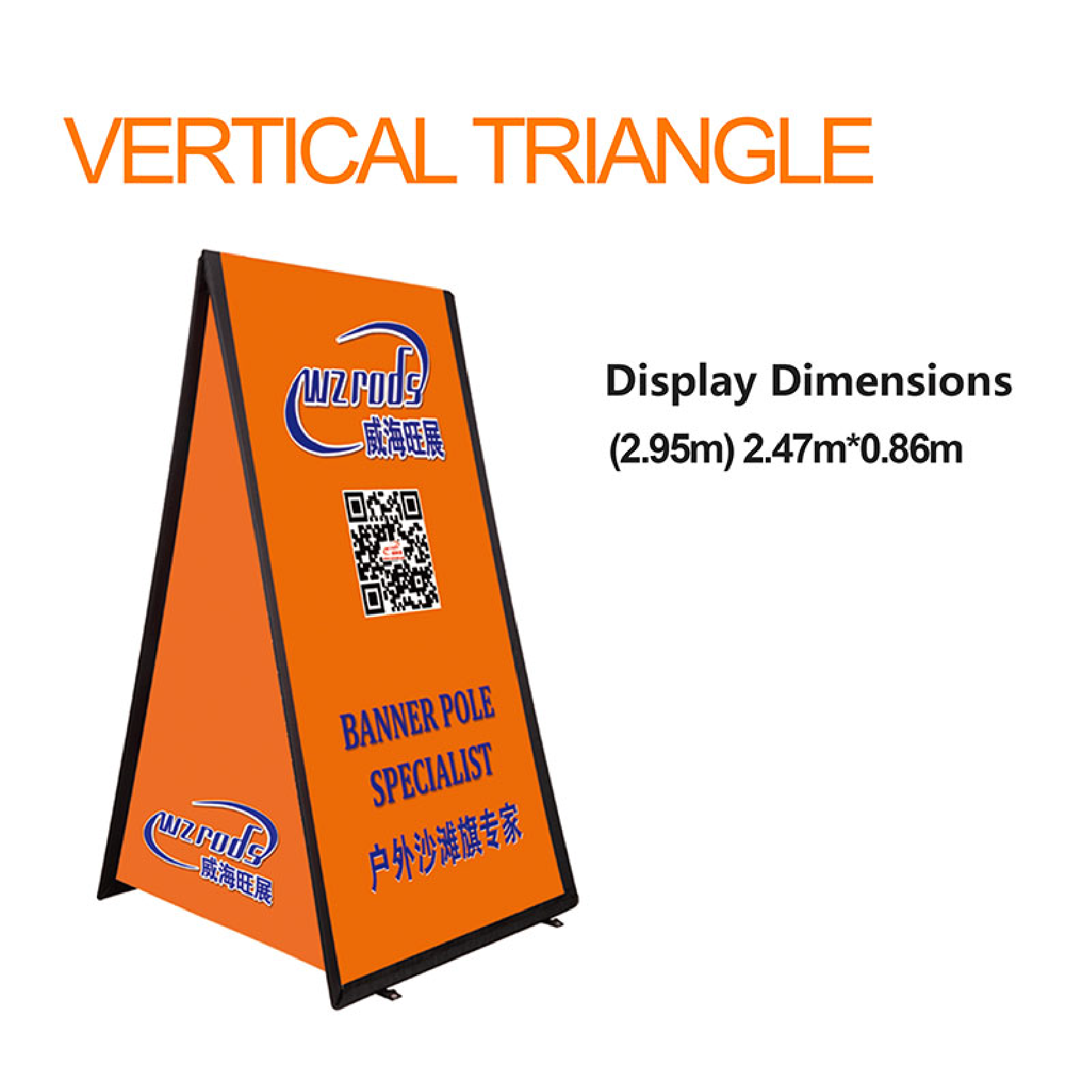
Foldable vertical square banner features space-saving twist design and sturdy composite frame. Tension straps fix graphics firmly, supports extra weights, comes with carry bag for event promotion use.


 Article
 Specifications
- Origin
- Shandong, China
- Brand
- Wzrods
- Item Code
- HT21
- Main Material
- 100% Polyester
- Pole Material
- Carbon Composite
- Banner Material
- 100% Polyester
- Color
- CMYK 4 Color Printing
- Application Spec
- Trade Shows, Retail Display, Product Launches, Exhibitions
- Printing Method
- Dye sublimation printing
- Display Size(2.95M)
- 2.47m*0.86m
- Packaging
- Packaging Bags
- Design
- Custom Desgin
- Packaging
- Oxford packing
 Product Description
Shipping & Packaging
- Unit Weight
- 5.000
- Unit Size
- 101X101X4
- Packaging
- Standard export carton
- Lead Time
- 15-30 days
Pricing
- MOQ
- 1 piece
- Price Range
- USD 42 – 42
* FOB Qingdao. Excludes shipping & taxes. Accessories & customization confirmed separately.
 Sample Service
- Sample Available
- Yes
 Customization Options

Light Custom
Logo, color, size adjustments

Fast Turnaround
Quick custom order processing
Foldable Vertical Display - The Complete B2B Buyer's Guide- WZRODS
Fresh out of Michigan State with a supply chain degree, I had zero sense of how real weather interacts with cheap metal. My boss Robert had one rule: keep the landed cost under thirty bucks a unit. I believed him. That’s how I ended up in a Long Beach parking lot at 6 a.m., surrounded by fifty bent aluminum poles, while a client named Mike screamed about his ruined launch. I learned the hard way: pole material makes or breaks your reputation. This guide is everything I wish I’d known before I signed that first big PO. It starts, as most disasters do, with a phone call.
1. The Buyer’s Guide: What Brett’s Fiasco Taught Me About Wind, Weight, and Wisdom
Brett runs the Fiesta Expo, a traveling Latin-themed trade show. In spring 2015, he ordered 200 vertical square display stands for an outdoor automotive event in El Paso. His previous vendor, a guy named Cohn in Atlanta, swore by aluminum frames. “They’re light, they’re cheap, everybody uses them.” Brett bought the pitch. The stands weighed nearly eight kilos apiece. Aluminum poles slid together with a clank. Everything looked fine until the first afternoon, when a valley gust rolled off the Franklin Mountains. I wasn’t there, but Brett told me later: one by one, the aluminum poles folded mid-shaft, bent into shallow V-shapes like straws in a furious child’s hand. Banners flapped and tore. Exhibitors cursed in Spanish. Brett lost two days of the show and a client who never called back.
A week later, Brett called my office. He’d found WZRODS through a hardware store owner on Montoya Avenue. “What material do you use?” “Carbon composite.” “Does it bend?” “It’s designed to flex—like a fishing rod. Give it enough wind, and it’ll bend clear over, then snap right back. No permanent deformation.” That was the first thing Brett should’ve known. The second was weight. Those aluminum stands were 7.8 kilos. Our HT21 foldable vertical square weighs 5.000 kilograms—factory-tested on a calibrated scale. That matters when you’re shipping 500 units from Shandong to Laredo by sea. My logistics coordinator, Romero, later spelled out the freight savings in painful detail.
Rule number one for any buyer: don’t fixate on unit price. Landed cost—freight, duty, breakage, replacement—tells the real story. And this foldable vertical square has a bonus: the twist design. The frame collapses to half its display size. From 2.47 m tall by 0.86 m wide, it folds into a 101 by 101 by 4 cm package that fits an Oxford carry bag. Brett, still traumatized, ordered a sample. We shipped it from Shandong in 18 days. He set it up in his warehouse, hung a test graphic, then climbed a ladder and sprayed it with a high-pressure hose to simulate a thunderstorm. The carbon composite poles held. The straps and Velcro kept the graphic flat. Next day he ordered 400 units. I still have the email: “Wei, this thing is the bull.” I assume he meant it in the market sense.
The Wind Testing Reality
At the WZRODS factory in Shandong, Jake runs a pull test that makes aluminum salesmen sweat. He mounts an assembled vertical square on a platform, hooks a digital force gauge to the top corner, and pulls sideways. He takes it to 45 degrees. An aluminum pole permanently deforms at just 15–20 degrees—kinked, trash. Our carbon composite bends to 55 degrees and snaps back with that whip sound. The resin-impregnated fibers act like microscopic springs. I’ve stood in that bay and pulled it myself. Smooth resistance, then immediate recoil. If your venue sees gusts above 60 km/h, carbon composite is the only sane choice. Coastal buyers—Miami, Singapore, Mumbai—face another angle: corrosion. Salt air eats through aluminum anodizing within a season. Our poles are polymer and carbon; 100% rust-proof. Mike, the Tampa distributor, can confirm.
Freight Math and HTS Codes
Romero, my customs broker of 15 years, doesn’t smile much. He cracked a grin when I showed him the HT21 shipping data. “You’re telling me 1,666 of these fit in a 40-foot high-cube?” I nodded. Folded dimension is 101×101×4 cm; cartons stack like hardcover books. Weight per carton: 5 kilos. Compare an aluminum display of similar size: six units per carton, 40 kilos. Romero ran the numbers. For a 1,000-unit shipment from Qingdao to Los Angeles, the carbon composite option saved roughly $1.40 per unit on ocean freight. Then he pointed out tariff codes. Aluminum stands often fall under HTS 7616.99, with a 2.5% MFN duty, plus the 10% Section 232 tariff on aluminum (unless you have an exemption). Carbon composite fiber articles classify under 6815.99. That rate? Zero. Romero faxed me the latest CBP ruling—yes, he still uses a fax—and there it was. Duty-free. For a thousand stands, that’s real money.
2. Product Comparison: The Miami Beach Test That Killed Aluminum Forever
Mike, the Tampa distributor, had bought aluminum vertical stands from a factory in Zhejiang for three years. Every August, angry calls came in. “Mike, the pole snapped while I was setting up at the Sandpiper Hotel.” “Mike, there’s white powder on the graphic.” The powder was aluminum oxide—corrosion. He tried clear lacquer, but Florida heat cracked it off. He switched to thicker 6061-T6 alloy, but weight jumped to 9.2 kilos, and freight followed. About 30% of his stands failed within 12 months of salt-air exposure.
One Monday, we met at Caf del Sol in Tampa. I pulled an HT21 sample from the trunk. We set it up in the parking lot next to a corroded aluminum unit. The difference hit immediately. Matte black, smooth, no joints to catch salt. The folding mechanism isn’t a slip-fit that jams with grit; it’s a continuous elastic cord inside the pole segments, like a tent pole. Tension straps on the sides and bottom made getting the graphic flat easy. Mike ran his finger along the pitted aluminum. “How long will yours last?” I told him about our salt-spray chamber test: 1,000 hours, simulating five years of coastal exposure. Carbon composite shows zero change—no pitting, no strength loss. Mike bought ten units on the spot. Six months later, replacement rate: zero. He replaced his whole inventory by the following spring.
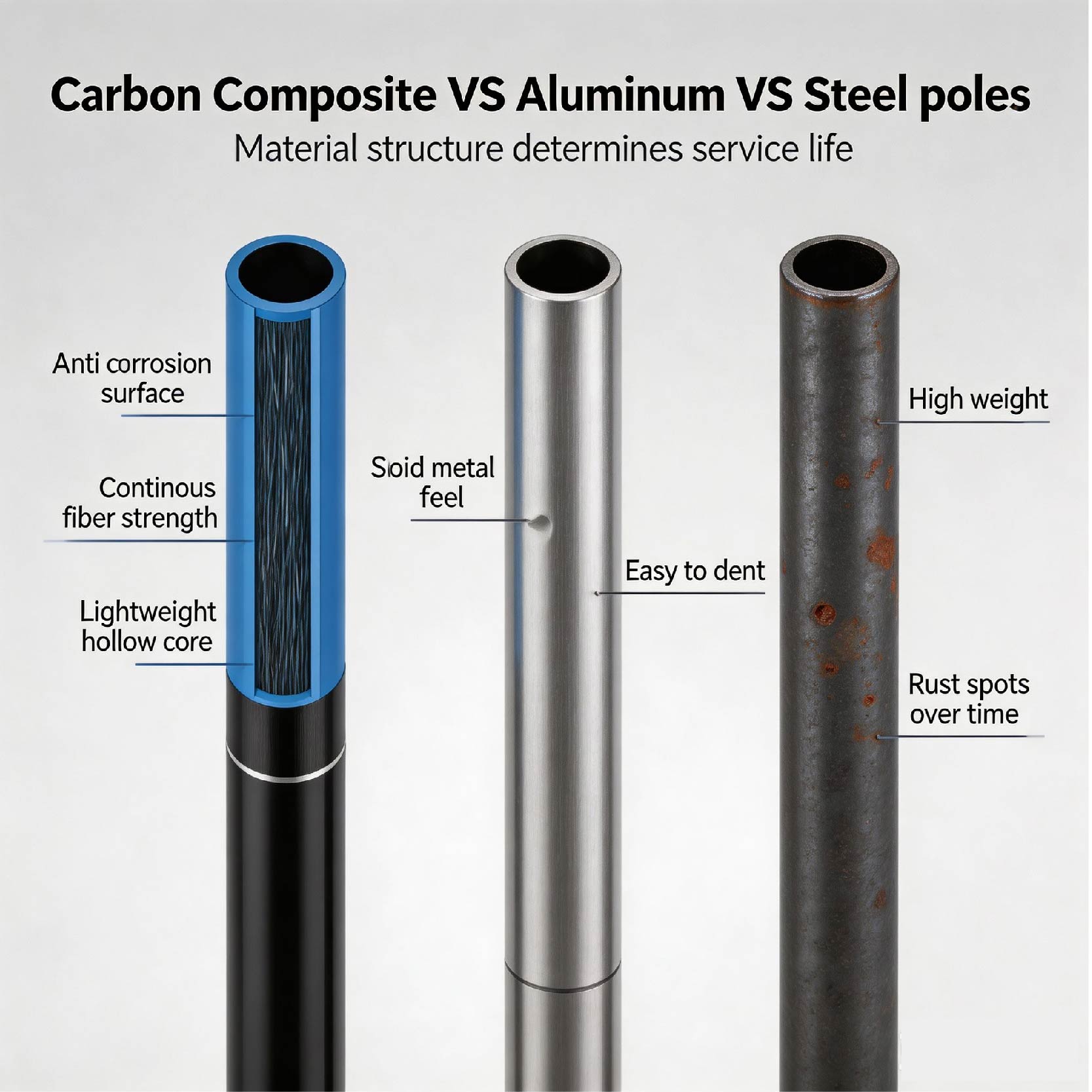
| Feature | WZRODS Carbon Composite HT21 | Typical Aluminum Stand | Steel Base Alternative |
|---|---|---|---|
| Unit weight | 5.0 kg | 7.5–9.2 kg | 12+ kg |
| Corrosion resistance | 100% rust-proof | Anodized, pits after 6–12 months | Galvanized; rust eventually |
| Wind flexibility | Bends to 55° without damage | Permanent deformation at 15–20° | Rigid; shears in high wind |
| Fold-down size | 101×101×4 cm | 120×15×15 cm typical | Not foldable |
| Freight cost (per unit, LCL) | ~$2.80 | ~$4.20 | $6.00+ |
| US Import duty (HTS) | 0% (6815.99) | 2.5%+ (7616.99) | 0–2.5% varies |
| Replacement rate/year in coastal use | <2% | 25–35% | 15% |
Notice the replacement rate. If you buy 200 stands, you’ll reorder 60 or more aluminum units each year just to stay operational. That hidden cost dwarfs the initial price difference.
3. ROI Analysis: The Spreadsheet That Changed Mike’s Business
Back at Caf del Sol, I pulled out a notepad. Mike and I ran total cost of ownership on 500 units. WZRODS foldable vertical square, $42 FOB Qingdao, versus the aluminum model at $28 FOB Ningbo. Mike winced. “Fifty percent more.” “Wait,” I said. “Let’s stack up three years, including 8 shows a year, each requiring setup and teardown.”
| Cost Component (500 units) | Aluminum ($28 ea.) | Carbon Composite ($42 ea.) |
|---|---|---|
| Product FOB | $14,000 | $21,000 |
| Ocean freight (40HQ, ~$3,500) | $3,500 | $2,800 |
| Import duty (US, on CIF) | $437.50 (2.5%) | $0 (0%) |
| Total Landed Cost Year 1 | $17,937.50 | $23,800 |
| Storage volume (cubic meters) | 18.75 m³ | 10.5 m³ |
| Year 1 failed unit replacements (30% vs 2%) | 150 units @ $35 landed = $5,250 | 10 units @ $56 landed = $560 |
| Year 2 replacements (same rate) | 150 units: $5,250 | 10 units: $560 |
| Year 3 replacements | 150 units: $5,250 | 10 units: $560 |
| Total 3-year expenditure | $33,687.50 | $25,480 |
Even with the higher upfront price, the carbon composite stand saved Mike over $8,000 across three years. That doesn’t count the value of his reputation when banners stay upright. He stared at the napkin. “Why didn’t anyone show me this before?” “Because nobody sells on total cost,” I said. “They sell on sticker shock.” We ordered another cafecito.
4. Applications: From Trade Show Booths to Rainy Street Fairs
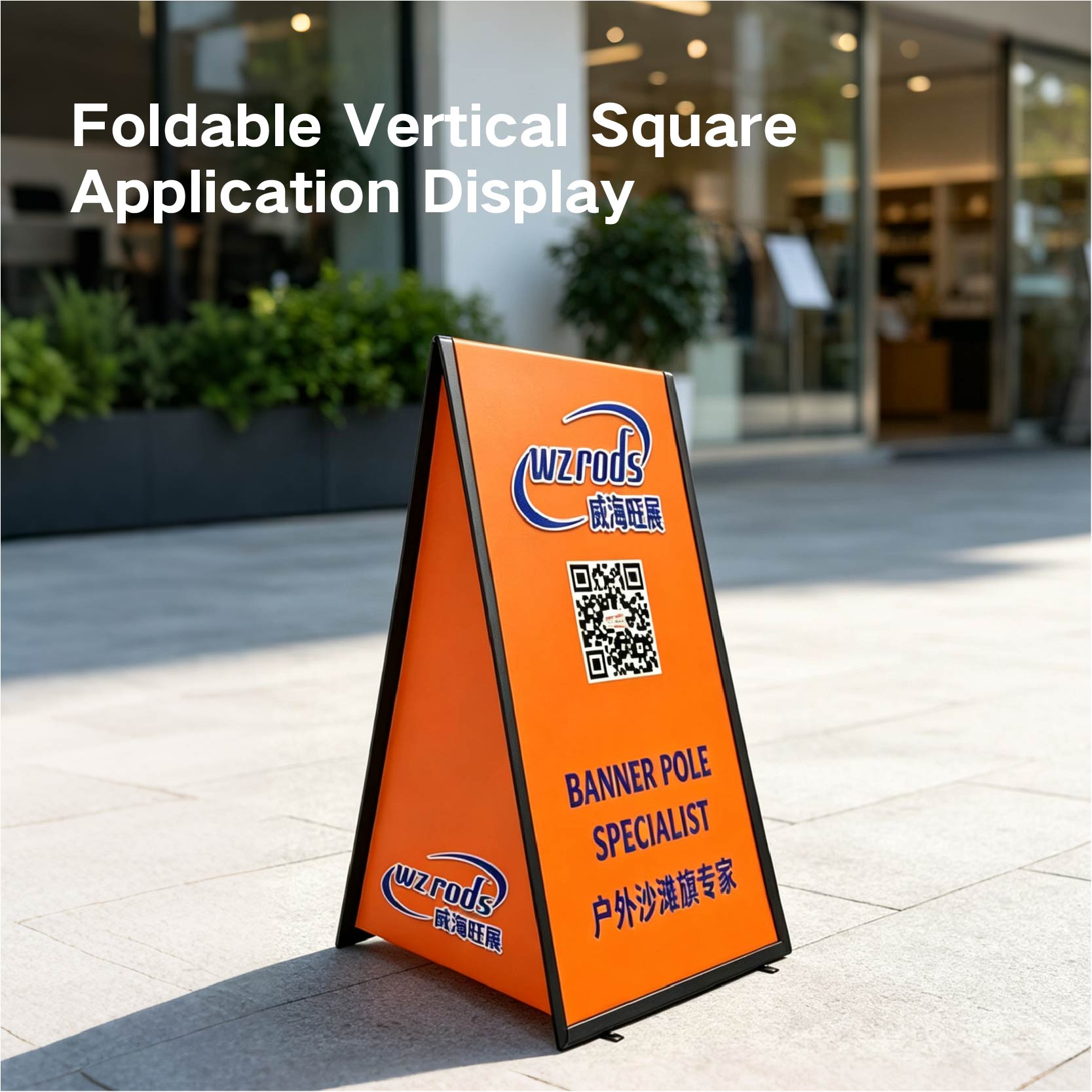
Trade Show: The Las Vegas Nightmare
Jake—not the factory Jake, a convention manager I met at a Vegas hotel—told me about the Bull Expo, an investment conference where pristine graphics matter. His old aluminum stands scratched and snagged fabric. He switched to the HT21 twist-fold. “Like a fishing rod in a bag,” he said. Crew opens it in thirty seconds: grab the ends, pull, and the elastic cord snaps the frame into shape. Secure the tension straps. The dye-sublimation polyester graphic (100% polyester, CMYK) stays taut under halogen lights. He now checks the stands as regular luggage when flying. No more oversized charges.
Retail Display: The Window That Sold Itself
Brett later expanded into permanent retail displays for café windows. He needed stands that wouldn’t fade or droop over three months. HT21’s UV-resistant polyester and carbon composite frame do the job. It adds up fast. The frame doesn’t expand in sunlight like aluminum, so tension stays constant. He stacked two back-to-back, added water-filled base bags, and the store manager reported zero complaints. Stands still looked perfect at the next promotion change.
Outdoor Festivals: Rain, Mud, and Glory
Romero volunteered at a Portland street fair during a downpour. Eight vertical squares, each pegged with steel stakes and sandbag weights. Wind howled, rain flew sideways, every pop-up tent around collapsed. Not one carbon composite frame bent. Fabric got soaked, but dye-sublimation ink doesn’t run—graphic was crisp by morning. Romero texted me a photo: “These things are indestructible.” That sells itself.
5. Factory Process: How Jake in Shandong Builds a Pole That Bounces Back
I visited the WZRODS plant in 2019. Bright, airy, rows of winding machines and wide-format dye-sub printers. Jake, the lead engineer, is wiry, in his fifties, speaks slow technical English. He walked me through each step.
Carbon composite pole material arrives as spools of raw carbon fiber thread from Japan. Thread pulls through a thermoset epoxy resin bath, then wound under tension onto a mandrel. Winding angle is controlled precisely: flexibility along the length, hoop strength so it doesn’t crush if stepped on. Not even close. After winding, poles are heat-cured in an oven, cut to length, end caps inserted. Then an elastic shock cord threads through the hollow core. That’s the magic: when you twist the square frame, the elastic pulls the segments into alignment. It’s tent-pole design, scaled up. The twist-to-fold mechanism means no loose parts. Grab opposite corners, twist, and the whole frame collapses to a flat coil about 101 cm across, 4 cm thick. Fabric banners are printed on high-speed dye-sublimation machines—ink vaporizes directly into polyester fibers, won’t crack or peel. Stitching on tension pockets is double-stitched, with Velcro straps. Each unit gets packed with an Oxford carry bag, water bag weights as throw-ins, and an instruction card. Jake’s QC station randomly pulls units, sets them up, twists them closed 200 times to ensure elastic tension holds. That’s the detail that keeps replacement rates near zero.
6. Trends: Why Aluminum Is Fading and Foldable Is the Future
I attended the last industry summit in Shanghai. A panel of 11 countries. Three signals stood out. First, environmental regs: the EU penalizes single-use plastics. Aluminum does recycle, but corrosion often sends it to landfill because oxide layers raise recycling costs. Carbon composite isn’t biodegradable, but its longer lifespan means less waste per event. Second, logistics costs have spiked since 2020. Weight and volume savings from foldable stands are now a critical factor. Ocean carriers charge by volume-weight; shaving 30% off dimensional weight swings profit on a container. Third, event organizers demand faster setup and tear-down. The twist-fold lets one crew member set up ten stands in the time it took to assemble three aluminum ones. At a trade show in Cologne, I watched a German competitor demonstrate a knock-off aluminum pin-lock model. It jammed after two cycles. The crowd drifted to my booth where I twisted an HT21 closed with my eyes shut. People notice ease.
Plus, tariff policy. As mentioned, aluminum gets hit with Section 232 tariffs in the US and anti-dumping duties in the EU. Since 2021, EU anti-dumping duties on Chinese aluminum extrusions range from 21.2% to 48%. That can turn a $28 aluminum stand into a landed cost of $41.50 or more, nearly matching carbon composite without the durability. Meanwhile, HTS 6815.99 stays duty-free in many markets. Smart importers are reclassifying now.
7. Upgrade Solution: How to Replace Your Old Fleet Without Burning Your Budget
You’ve got a warehouse full of bent aluminum and faded graphics. What now? I worked through this with Robert, who ran a national rental chain. We designed a phased plan. Step one: audit your inventory. Pull every stand, check for corrosion, bends, torn fabric. Scrap bent poles—aluminum scrap value offsets some cost. Step two: pilot. Order one HT21 (MOQ is one piece, $42 FOB). Send it to your toughest customer or venue. Get feedback. Step three: calculate per-event cost. If you do 20 events a year and an aluminum stand lasts 8 events before replacement, its per-event cost with acquisition, shipping, duty is roughly $5. The carbon composite stand that lasts 40+ events costs about $1.50 per event. Math works at any scale. Step four: gradual conversion. Keep old aluminum for indoor, low-wind backup. Order new carbon composite for outdoor and high-visibility assignments. Within two years, your fleet is upgraded without a massive capital hit.
Don’t overlook the carry bag. Oxford fabric, but it protects the graphic from snagging. Romero calculated the swap to foldable bags saved his crew 12 minutes per event setup. At 200 events a year, that’s 40 hours of labor. At $20/hour, $800 annual savings. Small things add up.
Frequently Asked Questions
Q: What exactly is the MOQ? Can I really buy just one?
Yes, the minimum order is one piece. No volume discount on a single unit, but it’s perfect for testing. Price: USD 42 per unit FOB Shandong.
Q: How long from order to delivery?
Lead time is 15–30 days, depending on custom graphics and shipping method. Sea freight to the US West Coast typically runs 25–30 days, plus customs clearance. Air freight is faster, obviously.
Q: Can I put my own design on the banner?
Absolutely. We support light, fast customization. Send CMYK artwork and we print via dye sublimation on 100% polyester. Colors stay vibrant and won’t peel. We can match Pantone colors reasonably well.
Q: What if a pole breaks? Is there a warranty?
They rarely break. If you manage to snap one (close a door on it, for instance), we sell replacement poles individually. I recommend ordering a few spares with your initial shipment.
Q: How do I classify this for customs in my country?
We provide HS code 6815.99 for carbon composite fiber articles. Check with your broker. In the US, that’s duty-free. In the EU, TARIC for carbon fiber is often 0–2%. For aluminum, duty plus anti-dumping can now exceed 20%.
Q: What’s the wind rating?
We don’t certify to a specific wind speed, but the pole flexes beyond 55° and returns. Properly weighted with the included water bag or stakes, it handles 60 km/h gusts. Higher sustained winds need additional tethering, like any outdoor signage.
Q: Can I use the stand outdoors on grass?
Yes, we supply pegs. For hard surfaces, use the water bag weights. Heavier base plates are available separately.
Q: How big is it when packed?
Folded, it’s a coiled square: 101 cm long, 4 cm thick, 101 cm across. It fits the included Oxford carry bag with a shoulder strap. That’s how we get 1,666 units into a 40HQ.
Q: Does the printing fade?
Dye-sublimation embeds ink into the polyester fibers, so it resists fading and can be wiped down. Graphics have come back after a year outdoors looking fresh. Prolonged direct sun will eventually fade any fabric, though.
Q: Is the carbon composite frame recyclable?
Recycling is developing; the material can be chopped and used as filler in other products. It’s not as easy as aluminum, but the longer lifespan means far less waste overall.
Q: Can you do custom sizes?
The standard display area is 2.47 m high by 0.86 m wide. We can customize within reason, but the twist-frame tooling limits the range. For large custom runs, we’ll involve engineering.
Q: How do I pay?
We accept T/T (wire transfer), L/C at sight, and Western Union. For new buyers, typical terms are 30% deposit with order, balance before shipment.
Q: Where do you ship from?
Port of Qingdao, Shandong. We arrange FOB, CIF, or DDP based on your preference.
I’m not going to send you a glossy catalog. You’ve seen too many bent poles. The foldable vertical square costs more up front. It also outlasts everything else. That’s why Mike, Brett, Jake, and Robert switched. That’s why I put my name on it. Questions? Reach out. We’re WZRODS—China’s first carbon composite flag pole manufacturer, now doing the same for display stands.
About the Author
Wei Chen, Senior Product Specialist
B.S. Supply Chain Management, Michigan State University; Certified Professional in Supply Management (CPSM)
12 years in B2B display hardware sourcing. Former procurement manager for a top 20 US promotional products distributor. Specializes in aluminum pole systems and import compliance.
Reviewed by WZRODS Technical Team. Updated: 2026-07-27
 Comments (0)
No comments yet. Be the first to comment!
Leave a Comment
Related Products
Foldable Horizontal Square
Spider A frame
Toblerone Banner
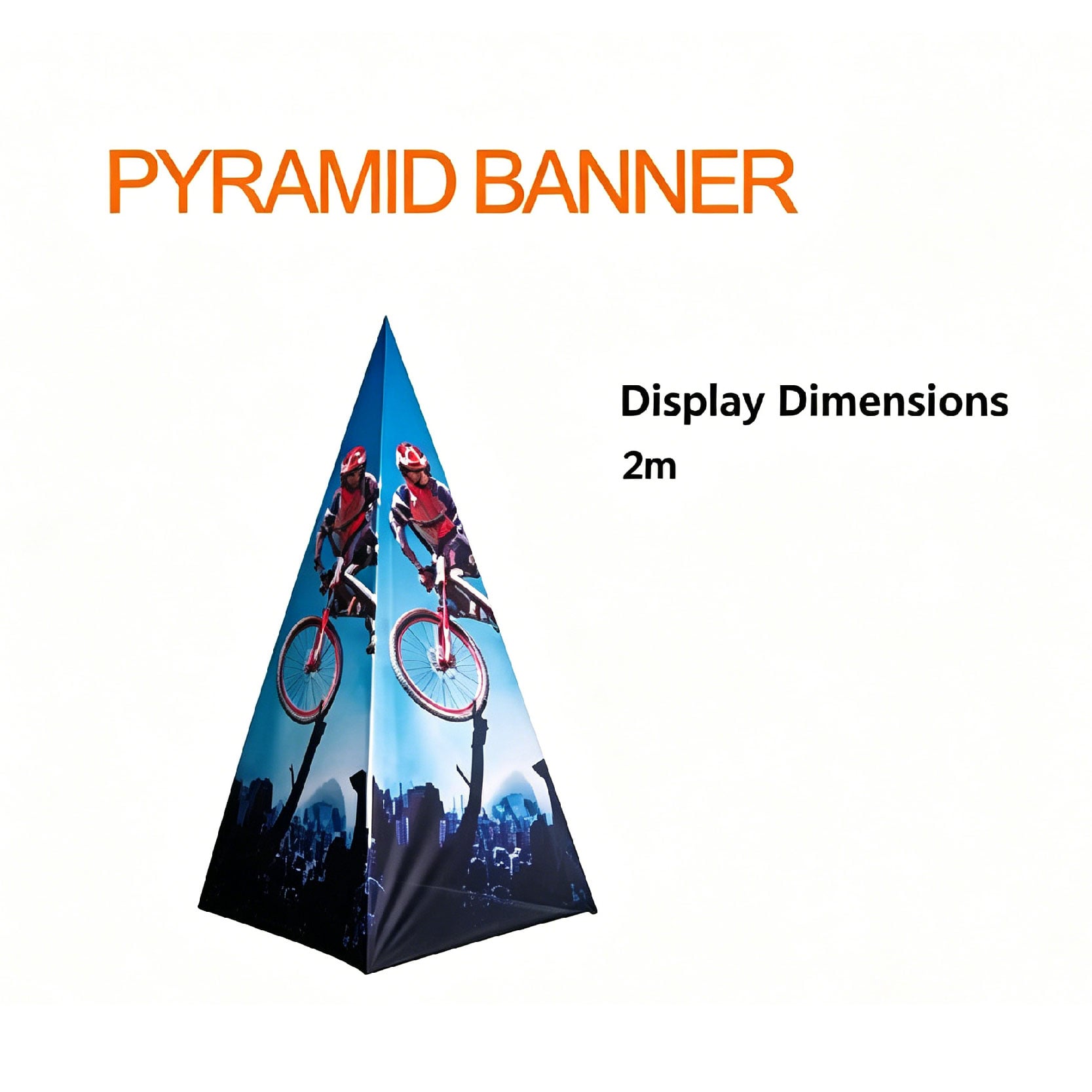
Pyramid Banner
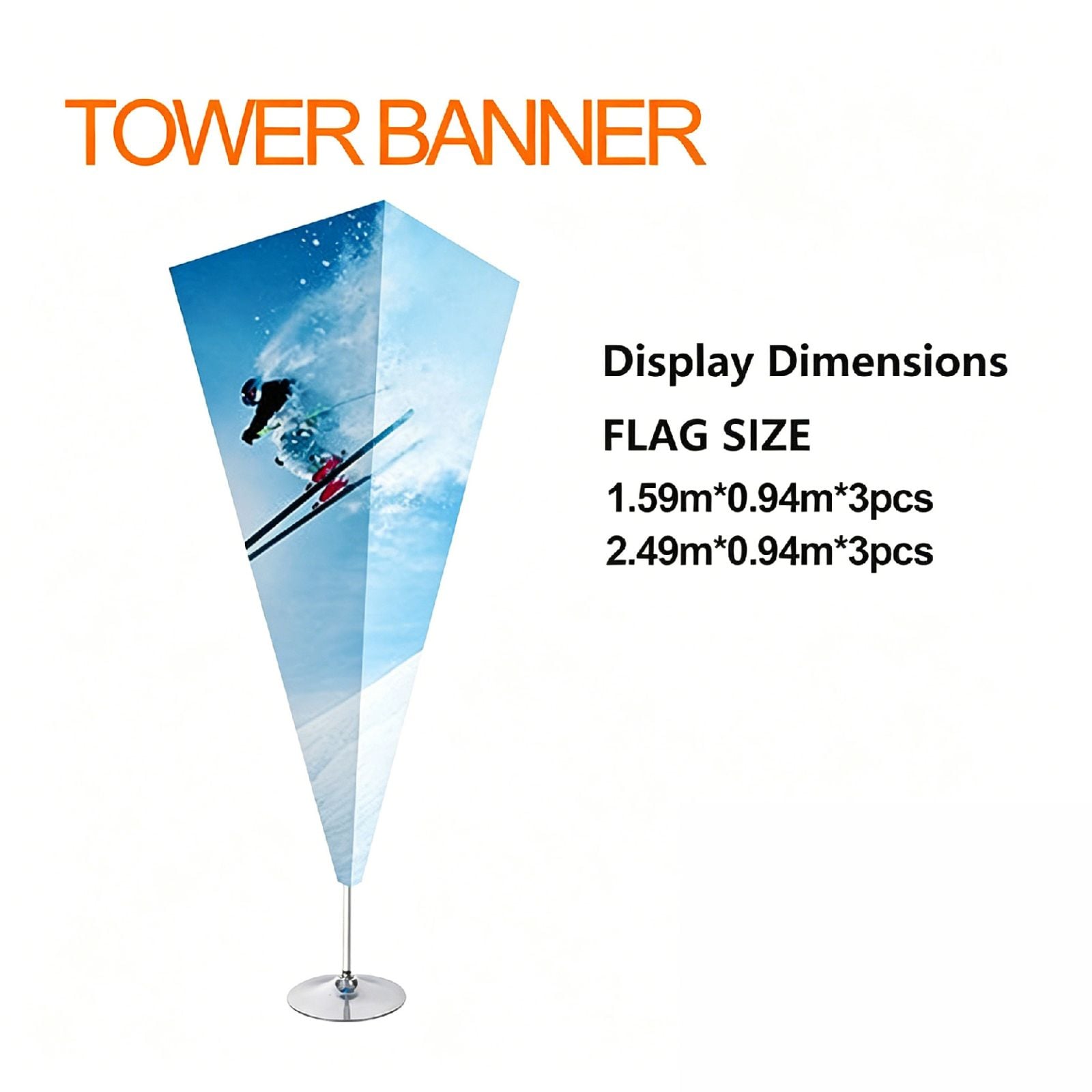
Tower Banner
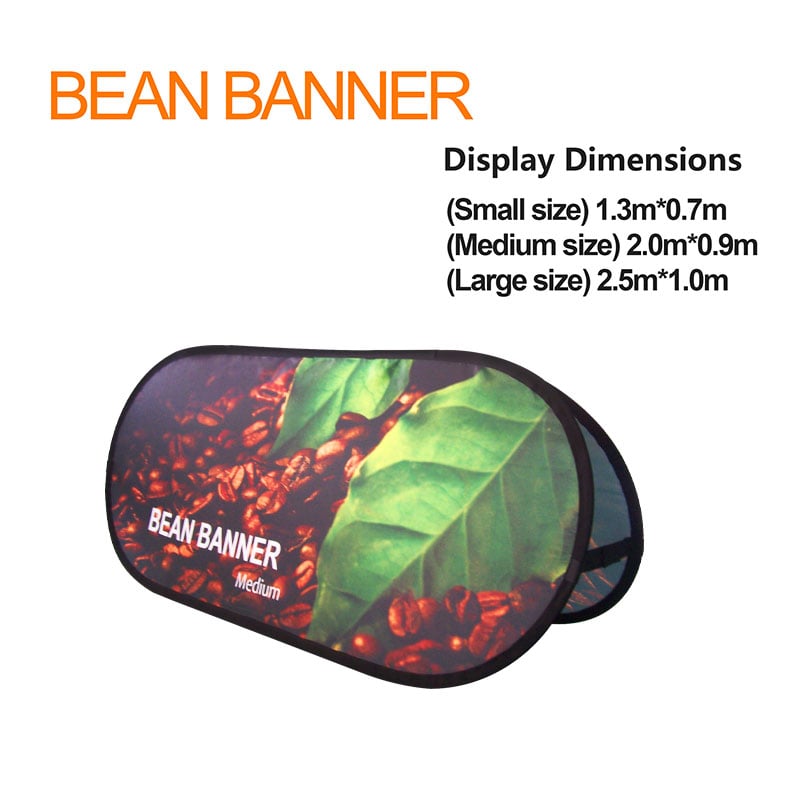
Bean Banner
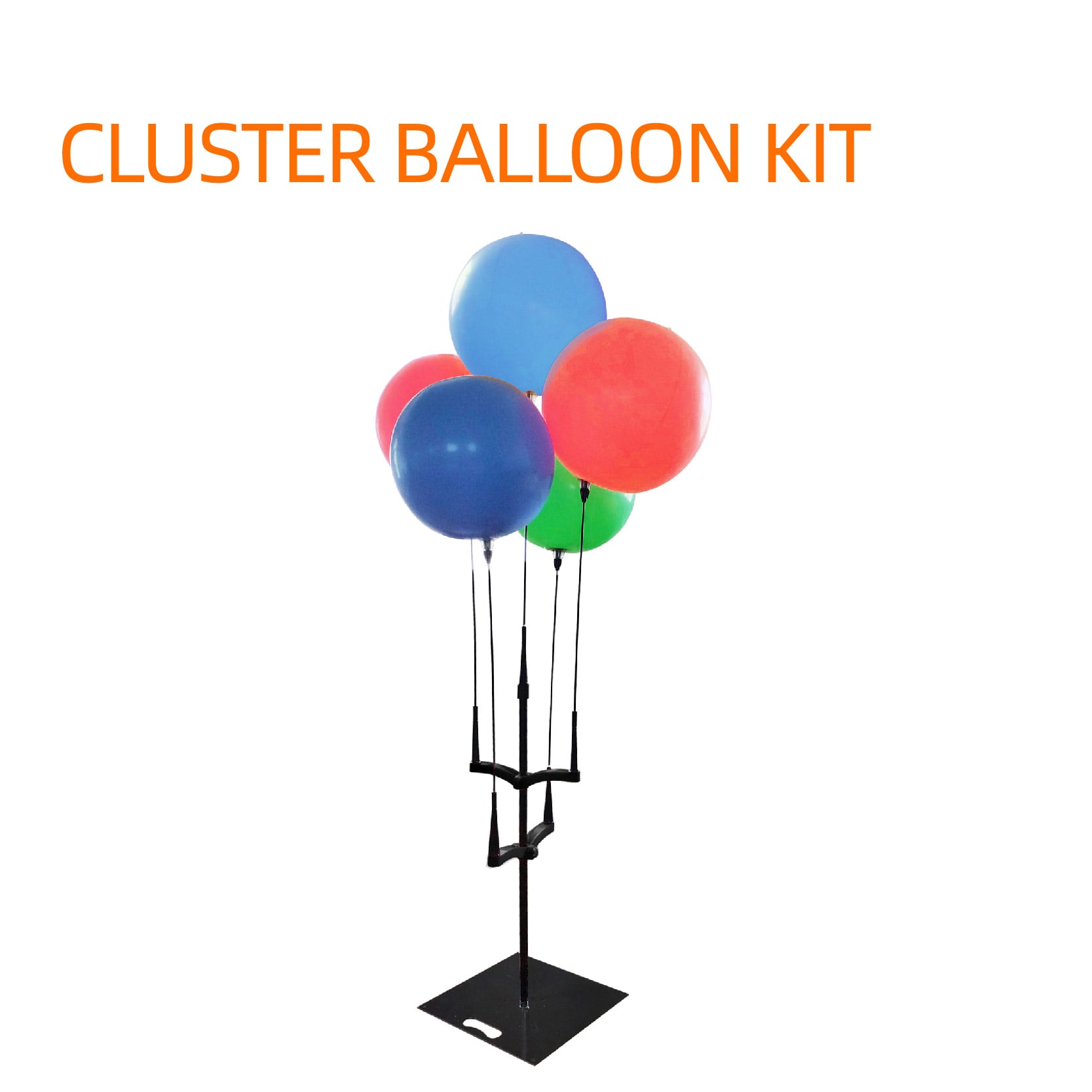
Cluster Balloon Kit
Swing Banner Stand
Burgundy Banner
Half Moon Banner
Related Articles
29kg Concrete Flag Base - The Complete B2B Buyer's Resource - WZRODS
WZRODS DY451B: 29 kg, HDPE shell, concrete core. Stackable, portable, rust-proof. FOB price US$5.75–$6.85 at MOQ 2 units. Those numbers look unremarkable. Factor in landed cost—import duties lower than aluminum’s under relevant HTS codes, freight savings from less weight per unit of stabilizing mas
Wide Tube Cross Base - The Complete B2B Buyer's Resource - WZRODS
The Wide Tube Cross Base, manufactured by Wzrods in Shandong, China, solves one problem: reliable stability for poles under three meters, without the freight costs and warehouse footprint that heavier alternatives demand.
Rectangular Pipe Cross Base - The Complete B2B Buyer's Resource - WZRODS
The pipe cross flag base is a cross of rectangular steel pipe, powder‑coated, weighing 1.3 kg and spanning 78 cm across its arms. Its center holds a C‑ring shaft that lets the flag rotate with the wind.
X-Shape Backpack Banner - The Complete B2B Buyer's Resource - WZRODS
Economic Cross Base - The Complete B2B Buyer's Guide- WZRODS
When you buy an economic cross base—something like the Wzrods DM‑9, a 77 cm‑long, 1.3 kg iron cross—forget “economic” as a synonym for “cheap.” It means value-engineered.
Triangle Display - The Complete B2B Buyer's Resource - WZRODS
In practice, I got a call from a distributor in Singapore. His client had staged a brand activation at Marina Bay. A squall hit.
Archway Display Stand - The Complete B2B Buyer's Resource - WZRODS
I remember the first time an aluminum arch gave way. Dallas trade show, setup day. The exhibitor was sliding the last pole into the fabric sleeve.
360° Portable Display - The Complete B2B Buyer's Resource - WZRODS
I remember standing in a convention center in Guangzhou about eight years ago, watching a distributor from Dubai unpack a shipment of aluminum flag stands.