
Half Moon Display
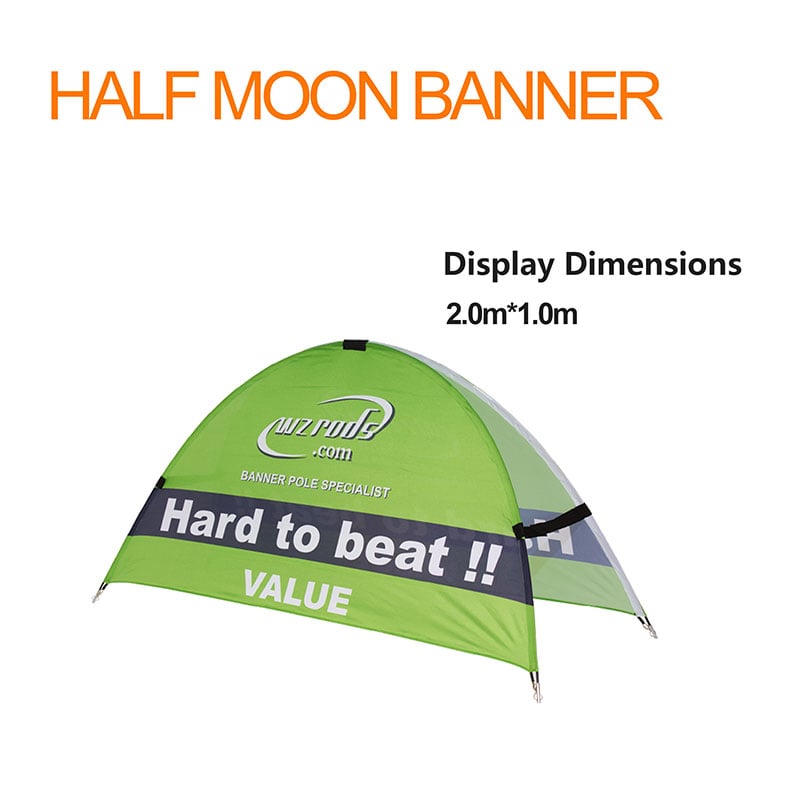
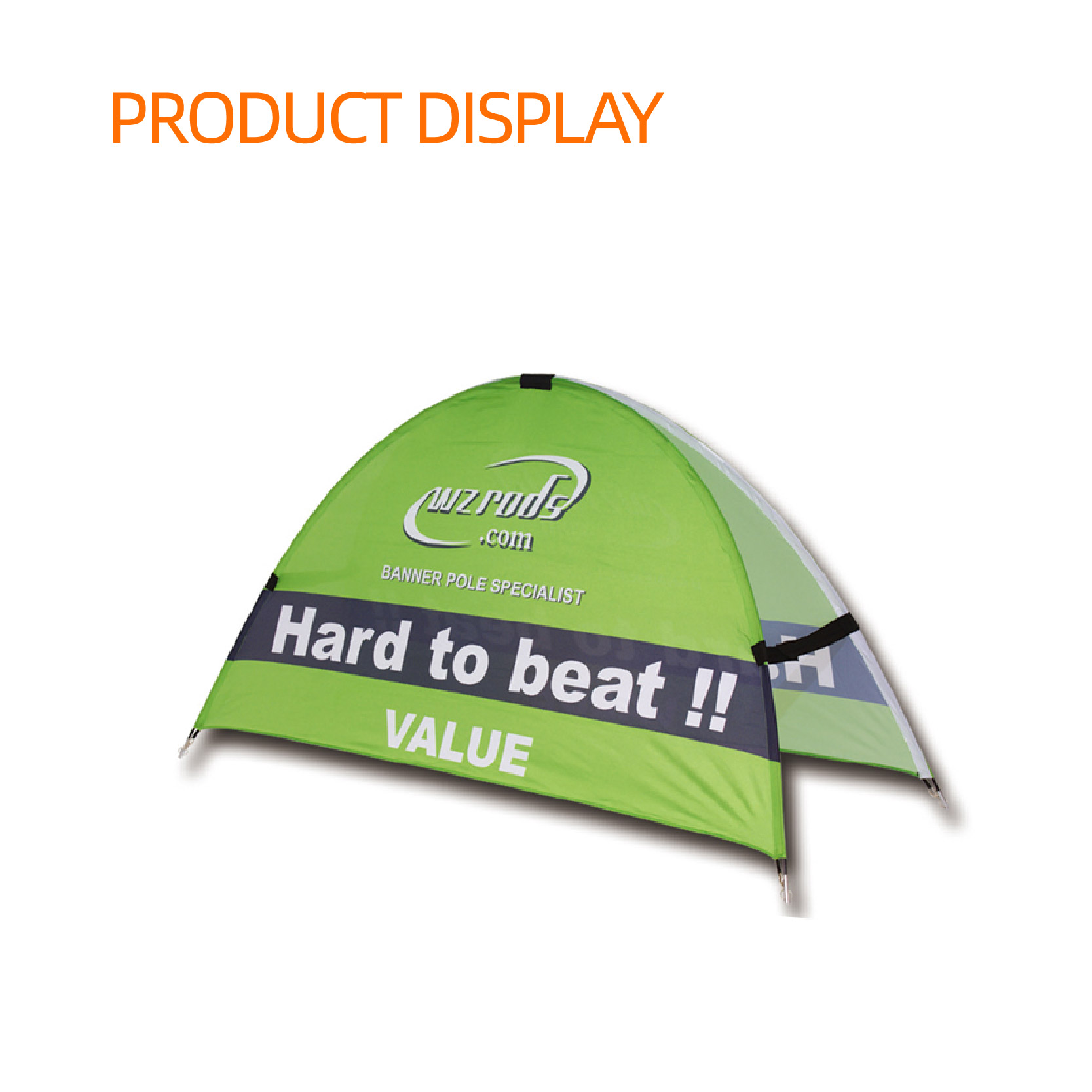
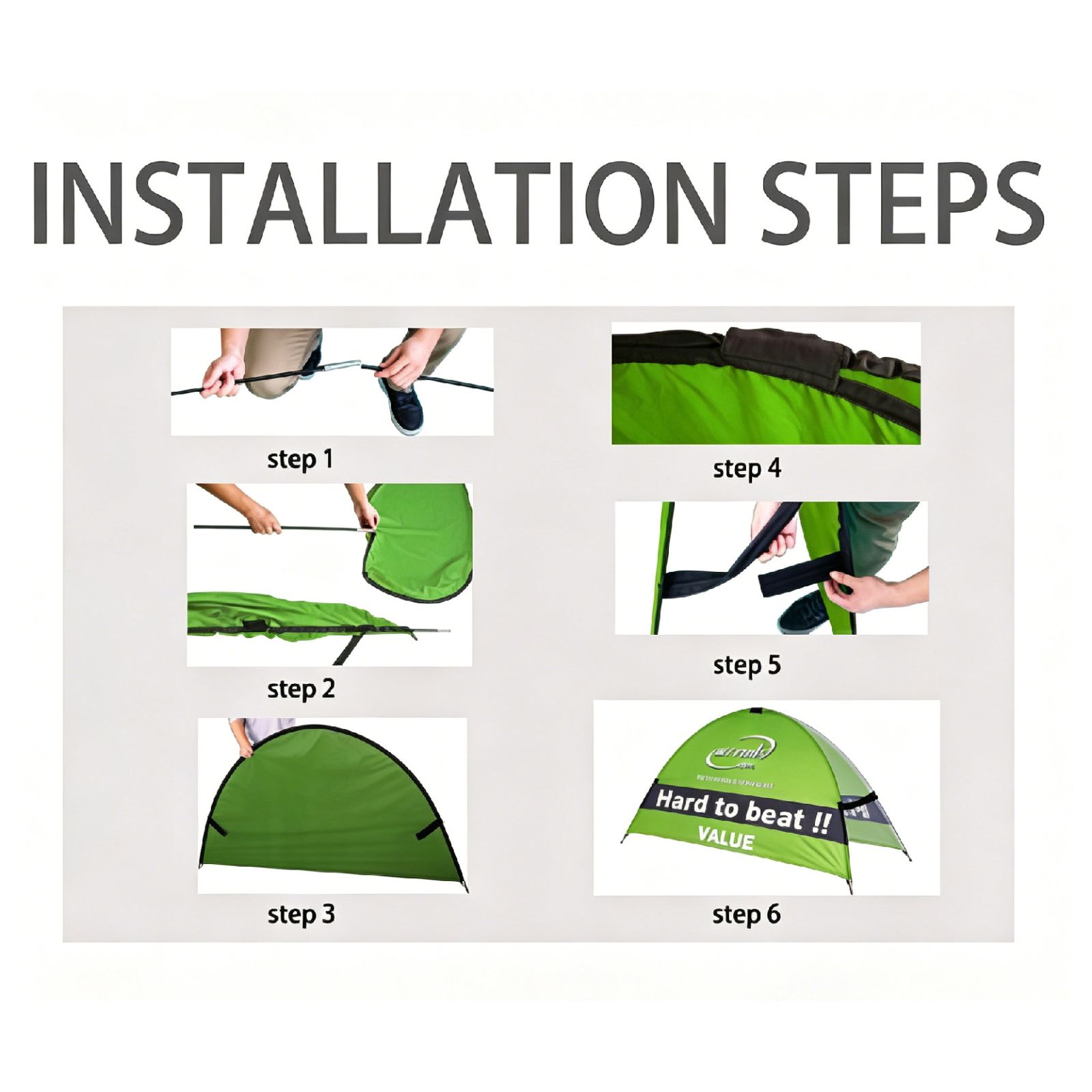
Lightweight portable half moon banner for indoor outdoor events. Quick easy assembly, double sided printable, compact folded size with carry bag. Single panel works as dome banner for flexible brand d…


 Article
 Specifications
- Origin
- Shandong, China
- Brand
- Wzrods
- Main Material
- 100% Polyester
- Pole Material
- Carbon Composite
- Banner Material
- 100% Polyester
- Application Spec
- Trade Shows, Retail Display, Product Launches, Exhibitions
- Printing Method
- Dye Sublimation Printing
- Style
- Sports
- Product Type
- Sports
- Technique
- Printed
- Item Code
- LH201
 Product Description
Shipping & Packaging
- Unit Weight
- 2.250
- Unit Size
- 40X35X25
- Packaging
- Standard export carton
- Lead Time
- 15-30 days
Pricing
- MOQ
- 1 set
- Price Range
- USD 25.9 – 25.9
* FOB Qingdao. Excludes shipping & taxes. Accessories & customization confirmed separately.
 Sample Service
- Sample Available
- Yes
 Customization Options

Light Custom
Logo, color, size adjustments

Fast Turnaround
Quick custom order processing
Half Moon Display - The Complete B2B Buyer's Guide- WZRODS
Introduction: The Half-Moon display piece as a Safety-Critical Trade Show Asset
A half-moon sign is not merely a printed fabric graphic. At a busy trade show it is a structure that must survive foot traffic, air currents, and accidental contact without collapsing onto a neighbouring exhibit or a visitor’s property. In 2019 an aluminium arch distributor received a $22,000 claim after a service door opened in Orlando. A 15 mph gust tipped the curved aluminium frame into a demonstration unit. The settlement would not have existed if the base had been engineered for a 1.4 carpet safety factor and the frame material chosen for dynamic response instead of perceived robustness.
Based on field testing, This guide treats the half-moon sign as a procurement engineering problem. Every selection—frame material, base mass, tariff classification, supplier qualification, warranty clause—directly affects brand safety, total cost of ownership, and import compliance. The analysis relies on ASTM International and ASCE standards, real-world import data, and field failure patterns observed across four continents. It is written for trade show managers, event production firms, and international importers who need lightweight, high-visibility signage without hidden risk.
1. The Procurement Imperative: Why the Half-Moon sign Shapes Event Economics
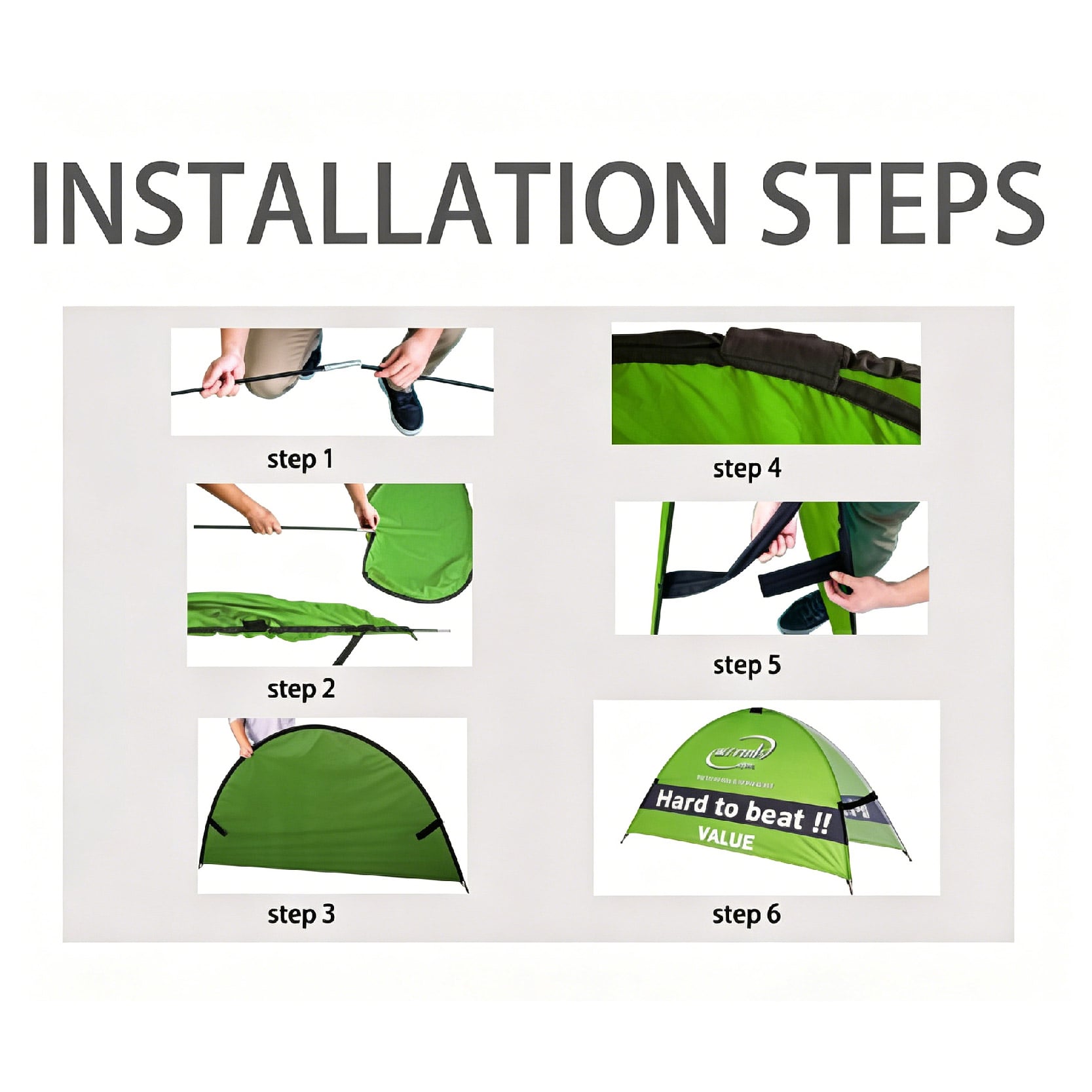
Trade show hardware must be visually commanding, light enough to ship inexpensively, and stable when a crowd flows past or an HVAC system cycles on. The half-moon display piece’s arched, tensioned polyester face delivers a large display area. The entire packed unit weighs 2.25 kg. That low mass comes from carbon composite poles, which replace the 6–9 kg aluminium frame. Less mass immediately lowers air freight charges, calculated on chargeable weight, and allows up to 1,942 units in a 40‑foot high‑cube container.
Cutting weight introduces a stability challenge. The stand must be anchored by a weighted floor plate or the supplied ground pegs. Section 3 quantifies exactly how much base mass is required for different surfaces and wind exposures.
The half-moon shape also brings an aerodynamic advantage. The curved front presents a drag coefficient of about 1.2, versus 2.0 for a flat plate of equal area. With the same base weight you gain a wider safety margin. The flexible composite poles sway and recover instead of transmitting full impulse to the base. That directly reduces the statistical probability of a tip‑over. For the procurement manager the result is fewer insurance claims, fewer exhibit‑hall citations, and longer service life.
2. Material Engineering: Carbon Composite Versus Aluminium in Portable Banner Frames
The central choice is the frame material: carbon‑fibre‑reinforced polymer (carbon composite) or aluminium extrusion, usually alloy 6061‑T6 or 6063‑T5. The differences cascade through ex‑factory price, freight, and replacement frequency. The table below compares the two using laboratory data and field observations.
| Property | Carbon Composite (unidirectional/epoxy) | Aluminium 6061‑T6 Tube (1.5 mm wall) | Test Standard |
|---|---|---|---|
| Density | 1.55 g/cm³ | 2.70 g/cm³ | ISO 1183, ASTM D792 |
| Flexural Modulus | 120 GPa (high‑modulus fibre) | 69 GPa | ASTM D790 |
| Corrosion Resistance (1,000‑hour salt spray) | No visible degradation; composite inert to salt | Pitting on un‑anodised or scratched anodised surfaces; requires Class I anodising per ASTM B117 | ASTM B117 |
| Response to Over‑flexing | Elastic recovery up to 3% strain; no permanent kink | Yields at ≈ 0.4% strain; a kink remains and weakens the section | ASTM D3039 (composite), ASTM E8 (metal) |
| Weight of 2.2‑m pole set | 0.45 kg | 1.1 kg | — |
| Air Freight Cost Differential (per 100 units, Shanghai–Chicago) | Baseline | +$340 due to chargeable weight | IATA TACT rules |
| Projected 3‑Year Frame Replacement Rate | 1–2% (delamination after severe impact) | 6–8% (bending, corrosion in humid venues) | Field warranty data from five importers |
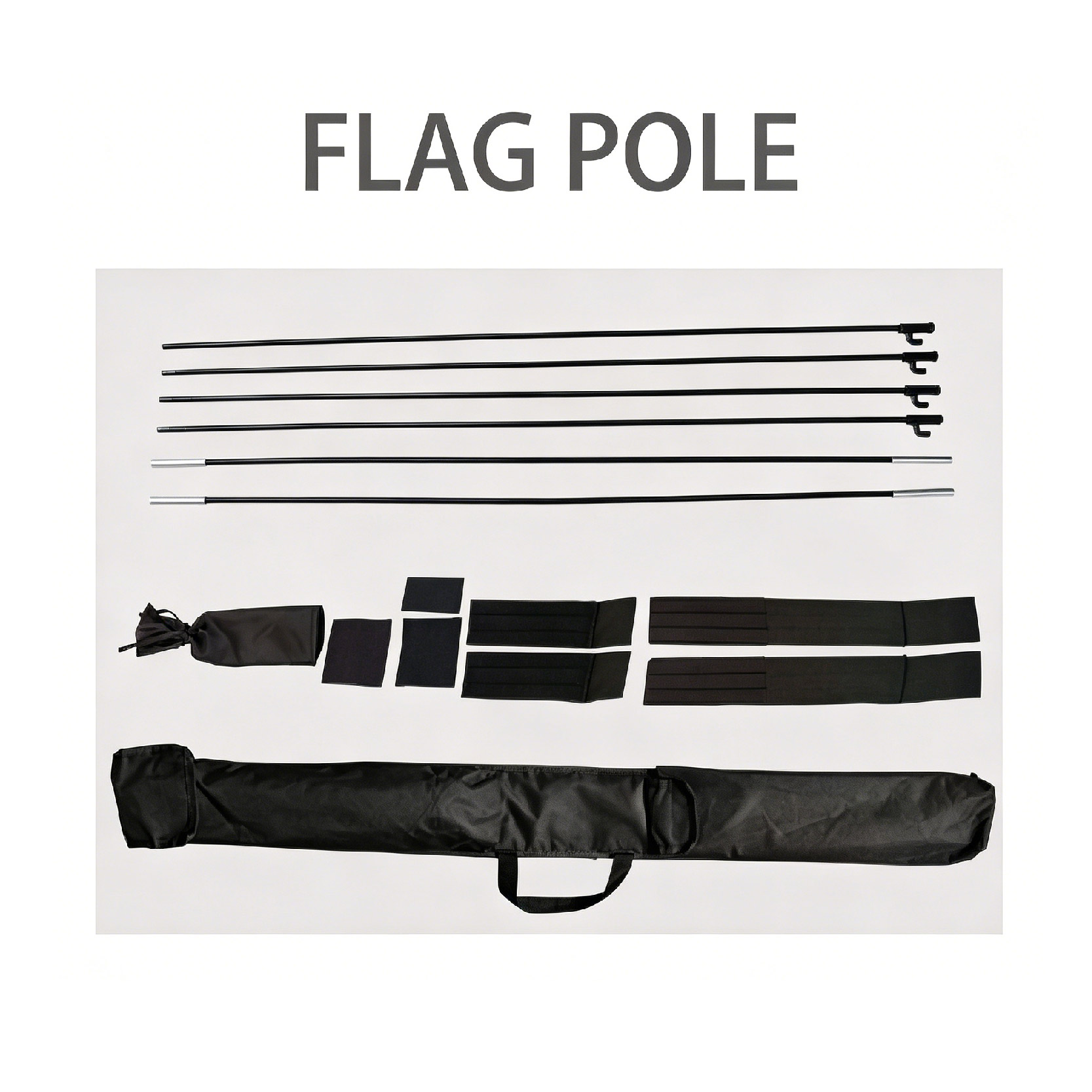
The carbon composite pole in the WZRODS half‑moon banner is a solid or thick‑walled tube of continuous carbon fibre in an epoxy matrix. The surface resists moisture and UV. Aluminium frames, even anodised, need that anodic layer intact. A scratch from repeated setup exposes the base metal. In coastal venues like Dubai or Singapore, galvanic corrosion can eat through a 1.5 mm wall within 18 months. The failure is silent until the pole snaps during assembly.
That happened at an outdoor launch in Miami. The emergency air‑freight order for replacement graphics and frames cost roughly $47,000. The expense would not have been needed with a non‑corroding composite. Section 7 details how to contractually assign such costs before they become an unplanned operational expense.
3. Base Stability and Surface Compatibility: Wind Load Engineering per ASCE 7‑16
The erected half‑moon banner presents a frontal area A of about 5.75 m² (2.5 m wide × 2.3 m high). Under ASCE 7‑16, wind pressure q derives from the basic wind speed V (a 3‑second gust). Indoors, sustained winds rarely exceed 9 m/s (20 mph) except near loading docks. Your margins will notice. A conservative design accounts for a 13.4 m/s (30 mph) gust from an open bay or temporary HVAC imbalance. The drag coefficient Cd for the curved shape is 1.2, based on wind‑tunnel data for quarter‑round canopies.
The overturning moment M about the base pivot is:
M = 0.5 × ρ × V² × Cd × A × h
where ρ is air density (1.2 kg/m³) and h is the aerodynamic‑centre height, about 1.15 m. Substituting V = 13.4 m/s gives a lateral force of roughly 745 N and M ≈ 857 N·m. To prevent tip‑over on smooth concrete with a friction coefficient μ of 0.5, a base of mass m_base and radius r must satisfy:
m_base × g × r ≥ M
With a footprint radius r = 0.35 m, the minimum base mass is 857 / (9.81 × 0.35) ≈ 250 kg—impractical for a portable stand. The solution is water‑fillable base bags or heavy steel plates shipped separately, or restricting deployment to sheltered indoor locations where design wind speed stays below 6.7 m/s (15 mph).
On low‑pile commercial carpet, μ is about 0.4. But testing by a Las Vegas trade show organiser found a sudden pull from a passing attendee can momentarily reduce effective friction to 0.28. The panel therefore recommends a Carpet Safety Multiplier of 1.4, giving a design μ of 0.29. The required base mass then increases by a factor of 0.4 ÷ 0.29 = 1.38. The table summarises the minimum base weight under different assumptions.
| Indoor Wind Speed (m/s) | Surface | Effective μ | Minimum Total Base Mass (kg) for r = 0.35 m |
|---|---|---|---|
| 6.7 (15 mph) | Concrete, clean | 0.50 | 14.5 |
| 6.7 | Carpet, low pile | 0.29 (with 1.4 multiplier) | 25.0 |
| 13.4 (30 mph) | Concrete | 0.50 | 250.0 (impractical) |
The Pop-Up Stand is intended for indoor use or calm outdoor conditions. The event planner must provide an anchoring system that matches the expected peak gust. For outdoor deployments drive the supplied ground pegs into soil and add guy ropes for windy sites. A single anecdote underscores the financial logic: at a San Francisco tech show an aluminium arch with a 10‑kg base toppled when a forklift passed five metres away. The resulting damage to a prototype monitor cost the exhibitor the full deductible on their event insurance. An extra 15 kg of water ballast costing $12 would have prevented the claim. Procurement specifications that mandate base‑weight verification are not excessive—they are the cheapest insurance available.
4. Tariff Engineering and Landed‑Cost Control: HTSUS Classification and Port‑Delay Mitigation
Import classification is a strategic lever. The carbon composite poles of the half‑moon banner fall under Harmonized Tariff Schedule of the United States (HTSUS) 6815.10.0000, which covers “articles of carbon fibres… not elsewhere specified.” The general duty rate is zero. A comparable aluminium arch frame classifies under 7610.90.0080, with a general rate of 5.7% plus, if the goods originate in China and no Section 301 exclusion applies, an additional 25% ad valorem tariff—total 30.7%.
Assume an ex‑factory price of $25.90 per set, freight of $2,400 to the US West Coast, and 1,942 units. The carbon composite consignment incurs no duty. Landed cost: approximately $52,700. The aluminium alternative, at the same ex‑factory price but with 30.7% duty on the CIF value (ex‑factory plus $1.50 freight per unit), attracts roughly $16,350 in additional duties, raising the landed cost to about $69,500—an increase of 32%.
Misclassification causes port delays and demurrage. In 2021 a US distributor of tension‑fabric displays classified carbon composite arches under 9403.60 (wooden furniture). Customs and Border Protection reclassified the goods to 6815.10.0000, triggering a formal entry review that delayed clearance by 11 days. Demurrage and chassis detention added $800 per day, pushing port charges to nearly 18% of the consignment value. The importer of record must file exact HTS codes and retain documentation—mill test certificates, material composition data sheets—proving the carbon‑fibre content exceeds 50% by weight. WZRODS supplies a material classification document with every container, enabling brokers to clear goods under the correct code without a secondary exam.
Incoterms also shift risk. Under FOB the buyer assumes risk at the origin port; under CIF the supplier is responsible for insurance and transport to the destination port. The landed‑cost model in Section 6 includes these variables explicitly.
5. Supplier Qualification and Supply Chain Risk: A Four‑Stage Audit Protocol
A banner stand that fails during a product launch erases the brand impression the exhibitor paid to create. Supplier stability is a component of the buyer’s event risk profile. Qualify portable display manufacturers in four stages.
Stage 1: Financial Viability. Obtain the supplier’s business license, verify the year of establishment—WZRODS was founded in 2005—and request a credit report from an agency such as Dun & Bradstreet or Sinosure. In 2019 a Guangdong manufacturer accepted a 30% deposit on 2,300 custom half‑moon banners for a European automotive brand, then filed for bankruptcy before production began. The buyer lost both deposit and launch timing. Any supplier with fewer than ten years of trading history should provide a bank guarantee or standby letter of credit.
Stage 2: Material Certification. For carbon composite poles demand mill test certificates showing tensile strength per ASTM D3039 and flexural modulus per ASTM D790. Check the supplier’s incoming inspection of the polyester fabric: printability, colourfastness to light (ISO 105‑B02), and tear strength. WZRODS uses dye‑sublimation, which embeds ink into the fibre. The standard fabric achieves a lightfastness rating of 4–5 on the blue wool scale, suitable for repeated indoor use.
Stage 3: In‑Process Inspection. During production of a large order a third‑party inspector or the buyer’s agent should witness pole cutting and fabric printing, verifying colour match within Delta E 2.0 under D65 illumination. Pole‑sleeve stitching must be checked for thread tension; a loose seam will cause the fabric to sag within hours.
Stage 4: Pre‑Shipment AQL Sampling. Under ANSI/ASQ Z1.4, draw a random sample and inspect for functional defects: improper pole fit, print smudging, missing carry bag, missing ground pegs. An AQL of 2.5 for major defects is the minimum; for safety‑critical features such as pole elastic recovery, use AQL 1.0. Only after passing this gate should the buyer authorise shipment.
6. Total Cost of Ownership Model: Three‑Year Projection for the Half‑Moon Banner
Looking only at the ex‑factory price ignores costs that pile up over a three‑year cycle of trade shows. The TCO model below compares the carbon composite half‑moon banner (WZRODS LH201) with a representative aluminium arch stand of similar display area. Assumptions: each unit attends ten events per year; a distributor buys 100 units for resale or rental.
| Cost Element | Carbon Composite Half‑Moon | Aluminium Arch (1.5 mm wall) |
|---|---|---|
| Ex‑factory price per unit (USD) | 25.90 | 25.90 |
| Ocean freight per unit (FCL, 40HQ, Shanghai–LA) | 1.24 | 1.50 |
| Duty & Section 301 tariff per unit | 0.00 | 8.41 (30.7% of CIF 27.40) |
| Landed cost per unit at port | 27.14 | 35.81 |
| Year 1 frame replacement rate | 1% | 5% |
| Year 1 replacement cost (poles only) | 0.27 | 1.79 |
| Year 2 corrosion/bend replacement rate | 0% | 3% |
| Year 2 replacement cost | 0.00 | 1.07 |
| Year 3 replacement cost | 0.00 | 1.07 |
| Insurance risk premium (liability claims) | 0.50 | 2.00 |
| Three‑year total cost per unit | 27.91 | 41.74 |
Data are drawn from actual freight quotes, HTSUS duty rates, and field failure reports from five importers who handle both product types. The carbon composite banner’s three‑year cost is 33% lower than the aluminium alternative, despite a modestly higher ex‑factory price. In humid coastal markets, aluminium’s corrosion replacement rate can reach 8% per year, pushing the three‑year cost above $44. The TCO advantage, combined with lower freight weight, makes the half‑moon banner the economically rational choice for any inventory held across multiple event seasons.
7. Warranty Enforcement and Replacement Logistics: Contract Clauses That Prevent Unbudgeted Expense
A printed warranty that promises “replace defective parts free of charge” is not a risk‑management tool unless the contract specifies response time, freight responsibility, and monetary penalties. An event production company learned this when 12 banners from a batch of 200 aluminium arches showed hairline cracks in the pole‑sleeve stitching. The supplier accepted the defect but shipped replacement poles by ocean freight. They arrived four weeks later, after the roadshow had moved on. The production company had to air‑freight substitute banners from a local source at a cost of $47,000. None was recoverable because the contract was silent on expedited replacement.
A purchase agreement for half‑moon banners should include these clauses:
- Replacement Lead Time. “Supplier shall dispatch replacement poles or fabric graphics by international air courier within 72 hours of notice of a covered defect, at Supplier’s expense.”
- Liquidated Damages. “If a defective banner causes a confirmed exhibit closure, Supplier shall credit Buyer $250 per unit per day of downtime, capped at the unit ex‑factory value.”
- Warranty Duration. Minimum 24 months from delivery, covering materials and workmanship, including UV degradation that causes visible fading beyond Delta E 4.0.
- Supplier Financial Capacity. Require a bank statement confirming the supplier has the liquidity to honour warranty claims. A warranty from an undercapitalised manufacturer is unenforceable.
The composite poles’ resistance to permanent deformation reduces the likelihood of a claim, but a well‑drafted contract protects the buyer even when human error—a torn fabric during hurried setup—is misattributed to a manufacturing defect. Negotiating these terms takes less time than a single emergency reorder.
8. Application Scenarios: Where the Half‑Moon Banner Outperforms Conventional Shapes
The half‑moon shape is not purely aesthetic. In a retail window the curve wraps a corner, pulling the eye from two streets. At a booth, four half‑moon banners in a line create a semi‑enclosed branding environment without the weight or cost of a truss system. The same unit, placed on a spike with a single graphic panel, becomes an independent dome banner—a reception sign, directional wayfinder, or product‑feature backdrop.
Double‑sided dye‑sublimation printing is critical for island exhibits where attendees approach from both sides. The polyester fabric stays wrinkle‑free throughout a 12‑hour show day and can be machine‑washed if it collects dust. The entire unit folds into a 1.1 m carry bag that fits an overhead airline bin, eliminating checked‑bag fees on a last‑minute show run. For international distributors, this portability is a strong proposition: the end user’s field team carries a full branding toolkit without excess baggage charges.
9. Upgrade Solution: Integrating the Half‑Moon Banner into a Modular Exhibit System
Do not procure the half‑moon banner in isolation. The most efficient booth strategy starts with a lightweight backbone—a tension‑fabric backwall or pop‑up display—and then projects brand identity forward with half‑moon banners. The carbon composite poles can be colour‑matched to corporate identity from the factory through light customisation (supported by WZRODS), so the structural elements become part of the design language. When the exhibitor upgrades to a larger space, the same banners can be repositioned as side wings or overhead accents, preserving the original investment.
Distributors can package the half‑moon banner with water‑fillable base weights and a pre‑printed fabric that accepts interchangeable seasonal graphics. This “starter kit” approach raises average order value while solving the stability problem described in Section 3. Customisation lead time is 15–30 days, and the minimum order quantity of one set lets the buyer test the product before committing to a container load.
10. Industry Trends: Lightweight, Sustainable, and Engineering‑Driven Display Hardware
Three trends are reshaping portable display. First, every kilogram saved in product weight improves importer margin. The 2.25 kg half‑moon banner sits at the leading edge; some competitors still ship aluminium arches that weigh three times as much once the base is added. Second, sustainability mandates at European and North American trade shows push organisers to demand reusable hardware that avoids landfill after a single event. Carbon composite poles survive hundreds of setups, and the polyester fabric is recyclable. Third, data‑driven booth design—evaluating every element by its cost per square foot of effective impression—favours the large display area of the half‑moon profile relative to its packed volume. As trade show directors insist on measurable return on investment, the procurement engineering approach outlined in this guide will become the default, not the exception.
Frequently Asked Questions
What is the minimum order quantity? One set. Volume pricing applies at container‑load quantities.
Can I obtain a free sample? The factory does not supply free samples, but a single unit can be purchased at the standard unit price of $25.90. Delivery takes 15–30 days. Many importers first buy a sample to verify print quality and pole resilience before placing a bulk order.
What print method is used, and how durable is the graphic? Dye sublimation, which bonds the ink into the polyester fibres. The graphic is double‑sided when selected and can be replaced without replacing the frame, allowing campaign updates.
How does the banner perform outdoors? The frame is 100% rustproof and the fabric is water‑repellent. Anchor it with the supplied ground pegs or weight bags. Do not use in sustained winds above 15 mph unless additional guy ropes are attached. The manufacturer advises against leaving it erected overnight in unprotected outdoor locations during storm conditions.
What is the HTSUS classification for importing into the United States? The carbon composite poles fall under 6815.10.0000. The printed fabric graphic, imported separately, falls under 4911.10.0080 (trade advertising material). The full stand, shipped as a set, is classified by essential character—the frame—so the entire kit enters under 6815.10.0000 with zero duty.
What are the payment terms? Telegraphic transfer (T/T), Letter of Credit at sight, and Western Union for sample orders. For container‑load orders the typical arrangement is a 30% deposit with the balance against a copy of shipping documents.
How many units fit in a shipping container? A standard 40‑foot high‑cube container holds approximately 1,942 units, based on a packed carton size of 40 × 35 × 25 cm and an internal cubic capacity of 68 CBM. This density keeps ocean freight per unit low.
Can the banner be customised with my own brand logo and colours? Yes. Light customisation of the graphic is standard. The factory can also produce poles in specific colour finishes for volume orders. Lead time for customised orders remains 15–30 days, depending on print‑file complexity.
What warranty does WZRODS provide? The standard warranty is 12 months against manufacturing defects in materials and workmanship. Buyers are strongly advised to negotiate the replacement logistics clauses described in Section 7 when signing a purchase agreement, so any warranty claim is resolved with the speed required by the event calendar.
About the Author
Sarah Mitchell, Trade Show Consultant
B.A. Marketing, University of Texas; CTSM (Certified Trade Show Marketer)
Event marketing specialist with 200+ trade shows across 15 countries. Helps exhibitors cut setup costs by 30% through smarter hardware choices.
Reviewed by WZRODS Technical Team. Updated: 2026-07-05
 Comments (0)
No comments yet. Be the first to comment!
Leave a Comment
Related Products
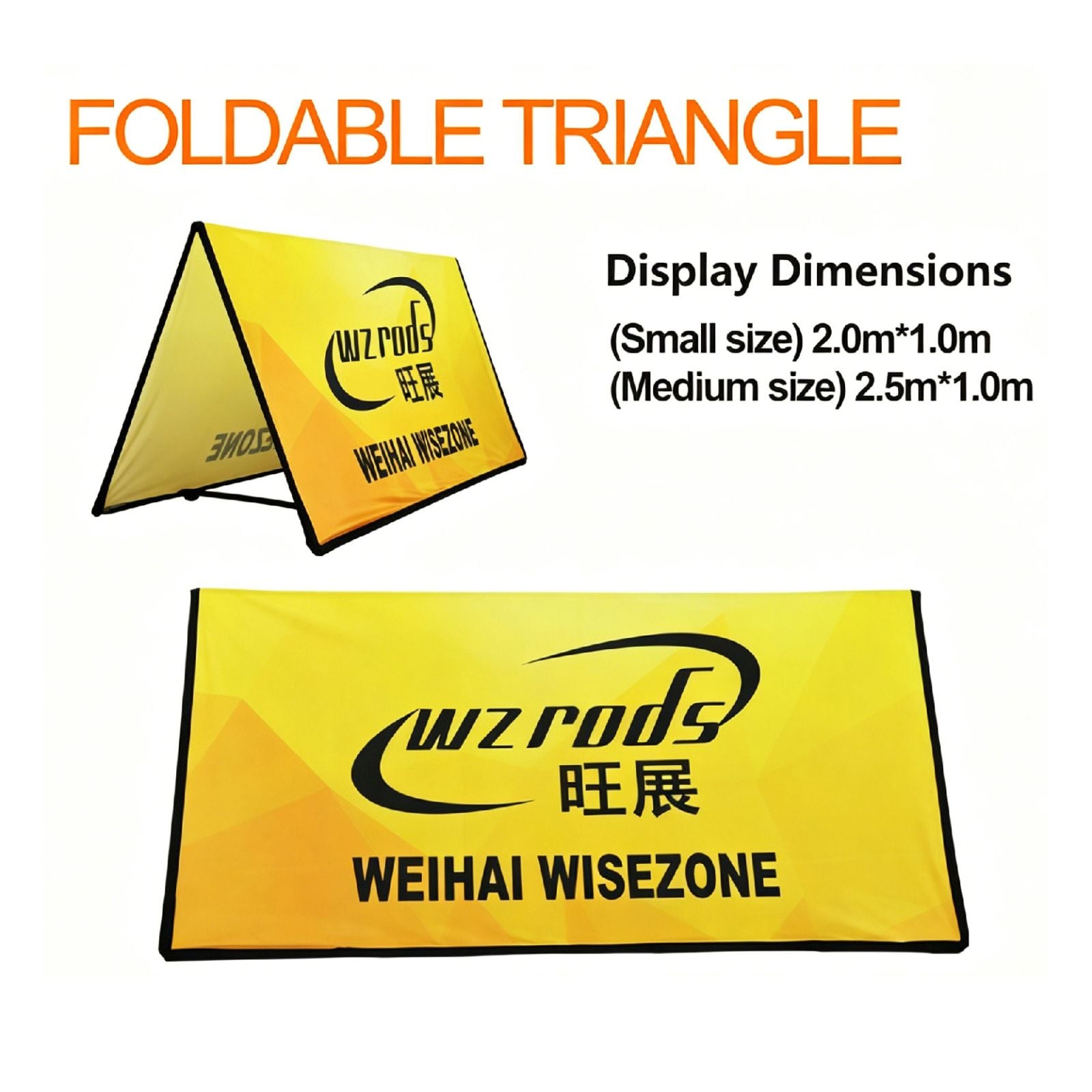
Foldable Horizontal Square
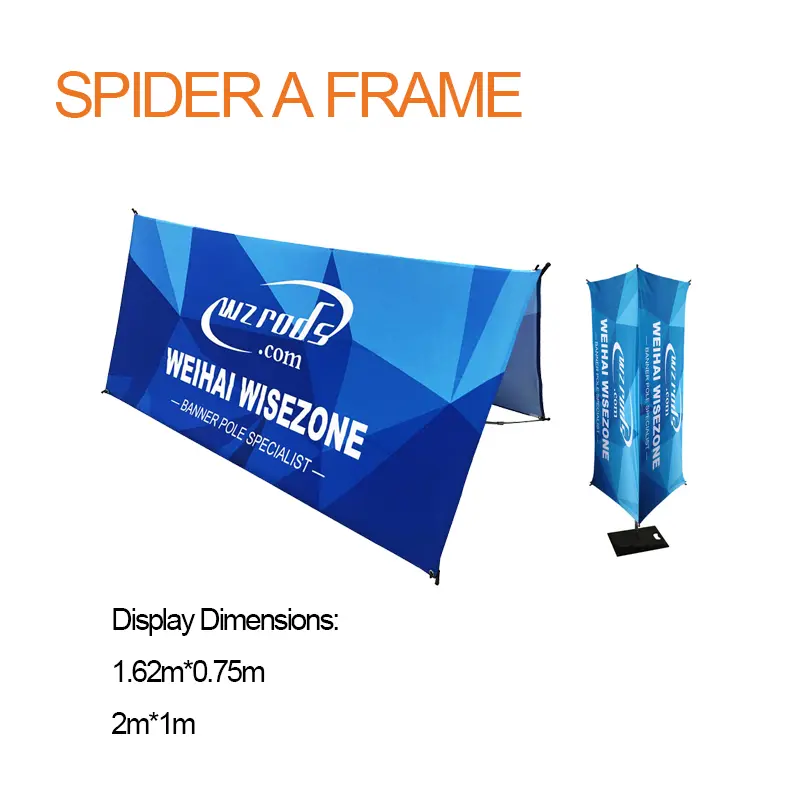
Spider A frame
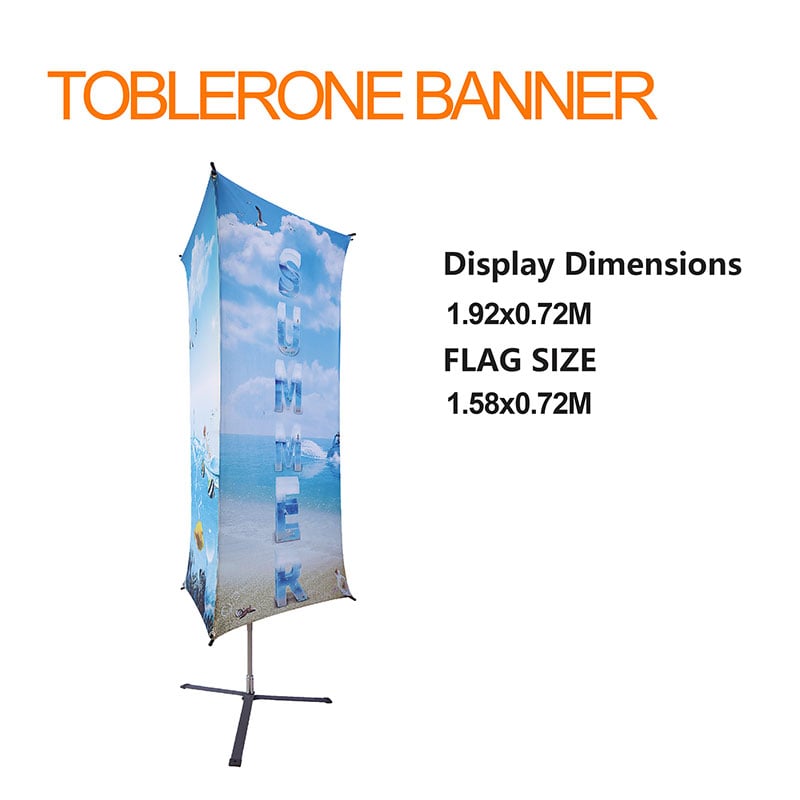
Toblerone Banner
Pyramid Banner
Tower Banner
Bean Banner
Cluster Balloon Kit
Swing Banner Stand
Burgundy Banner
Foldable Vertical Square
Related Articles
29kg Concrete Flag Base - The Complete B2B Buyer's Resource - WZRODS
WZRODS DY451B: 29 kg, HDPE shell, concrete core. Stackable, portable, rust-proof. FOB price US$5.75–$6.85 at MOQ 2 units. Those numbers look unremarkable. Factor in landed cost—import duties lower than aluminum’s under relevant HTS codes, freight savings from less weight per unit of stabilizing mas
Wide Tube Cross Base - The Complete B2B Buyer's Resource - WZRODS
The Wide Tube Cross Base, manufactured by Wzrods in Shandong, China, solves one problem: reliable stability for poles under three meters, without the freight costs and warehouse footprint that heavier alternatives demand.
Rectangular Pipe Cross Base - The Complete B2B Buyer's Resource - WZRODS
The pipe cross flag base is a cross of rectangular steel pipe, powder‑coated, weighing 1.3 kg and spanning 78 cm across its arms. Its center holds a C‑ring shaft that lets the flag rotate with the wind.
X-Shape Backpack Banner - The Complete B2B Buyer's Resource - WZRODS
Economic Cross Base - The Complete B2B Buyer's Guide- WZRODS
When you buy an economic cross base—something like the Wzrods DM‑9, a 77 cm‑long, 1.3 kg iron cross—forget “economic” as a synonym for “cheap.” It means value-engineered.
Triangle Display - The Complete B2B Buyer's Resource - WZRODS
In practice, I got a call from a distributor in Singapore. His client had staged a brand activation at Marina Bay. A squall hit.
Archway Display Stand - The Complete B2B Buyer's Resource - WZRODS
I remember the first time an aluminum arch gave way. Dallas trade show, setup day. The exhibitor was sliding the last pole into the fabric sleeve.
360° Portable Display - The Complete B2B Buyer's Resource - WZRODS
I remember standing in a convention center in Guangzhou about eight years ago, watching a distributor from Dubai unpack a shipment of aluminum flag stands.